


The day after arriving in Siem Reap, we reported to our new volunteer position, at a little school on the outskirts of town. We were a bit apprehensive, since this school was a last-minute arrangement, a replacement of a replacement, and we weren’t sure what to expect.
Initially, we’d been scheduled to spend the next month at a school in Phnom Penh. But when the director there didn’t respond to our messages, we had no choice but to cancel and look elsewhere. The next thing we hit upon was another school listed on Workaway, one that was located here in Siem Reap.
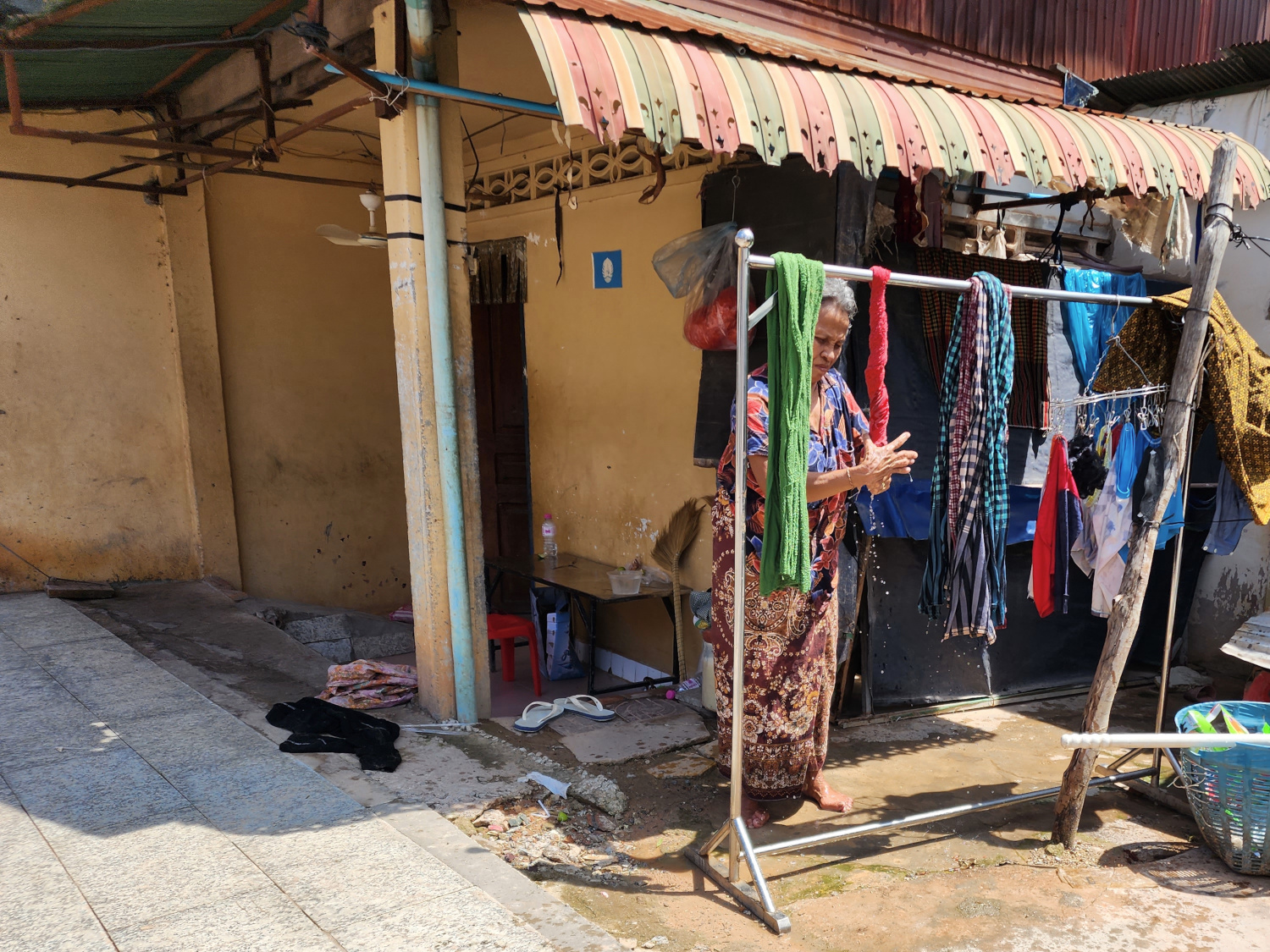
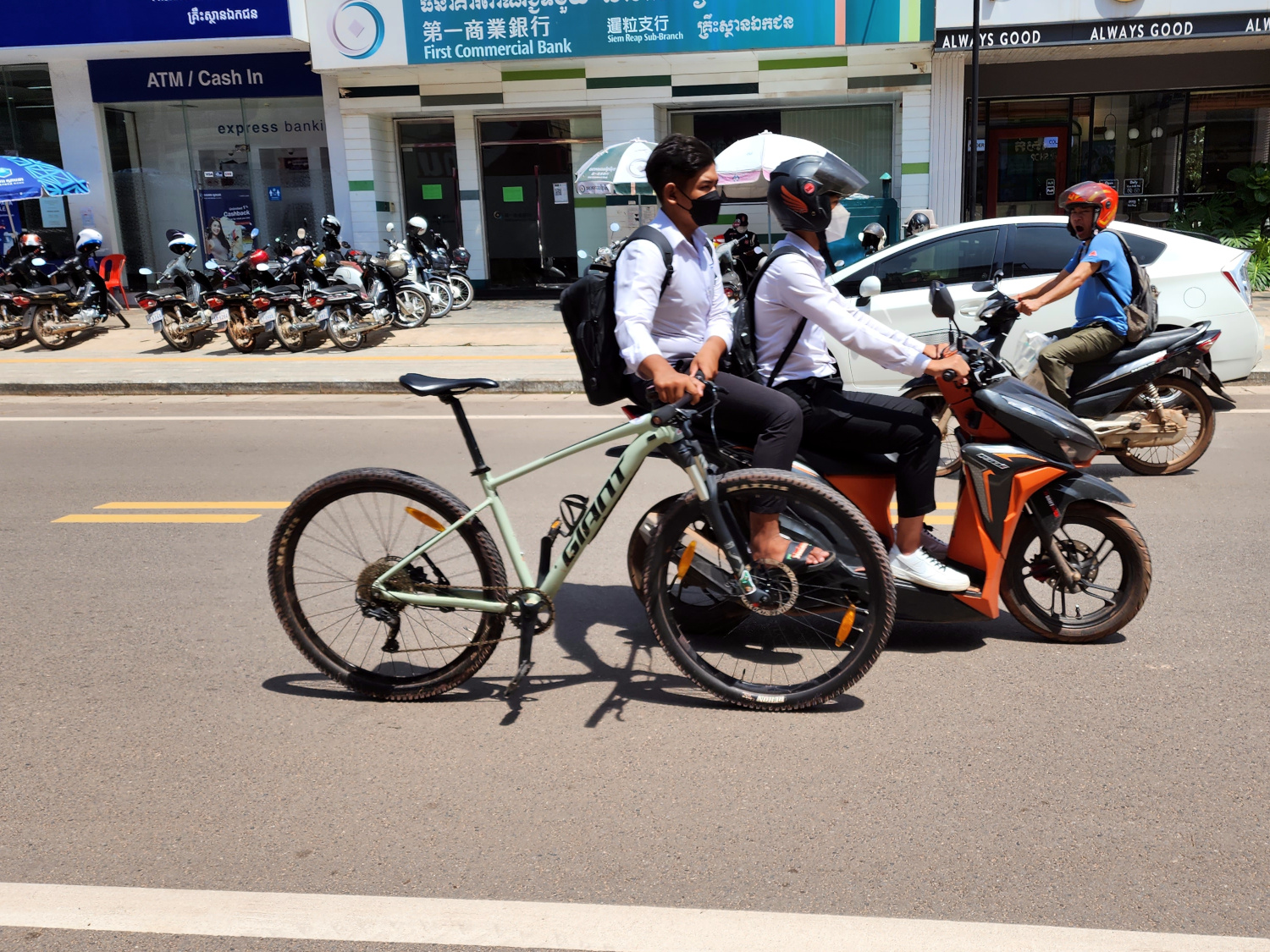
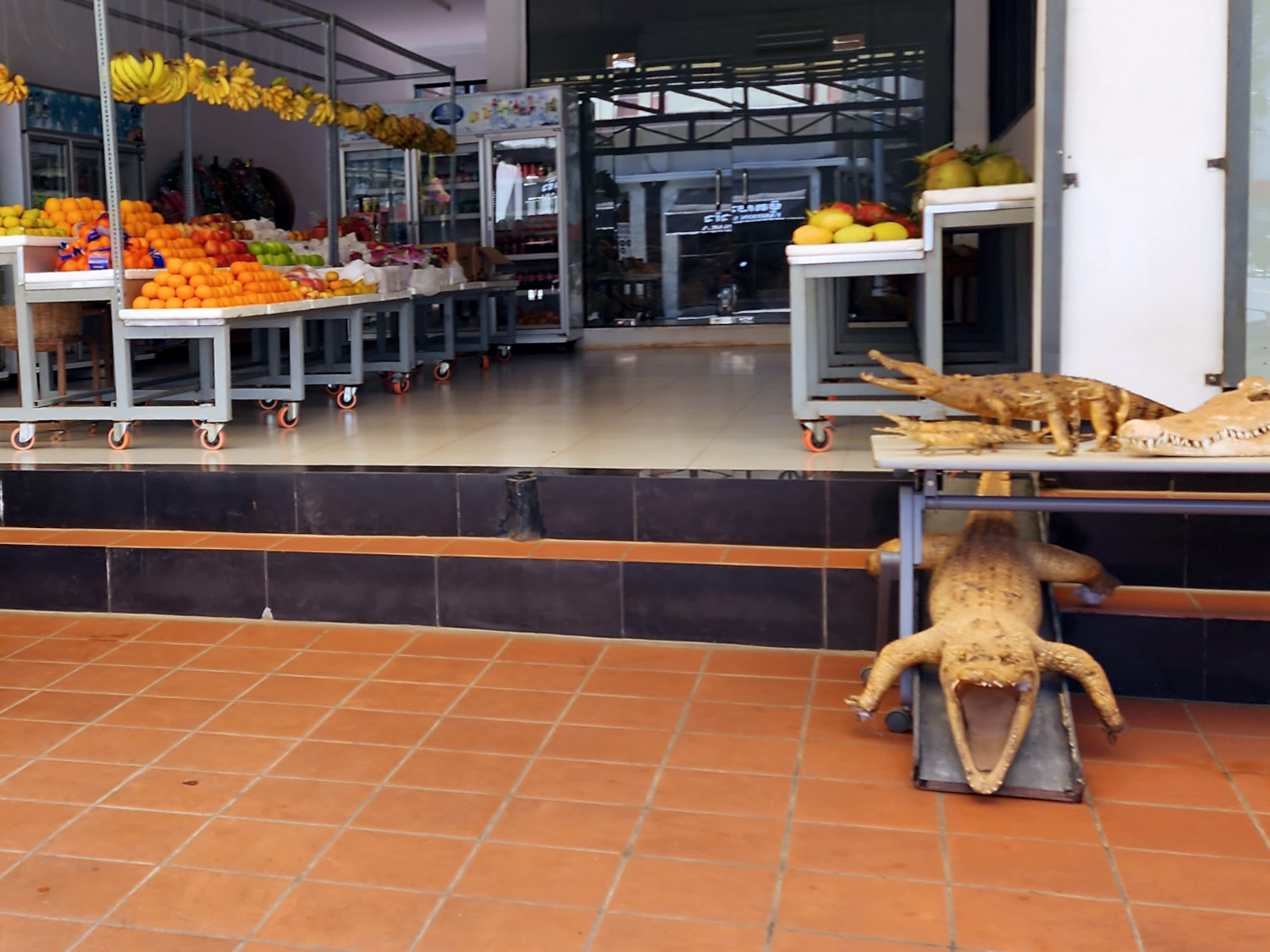

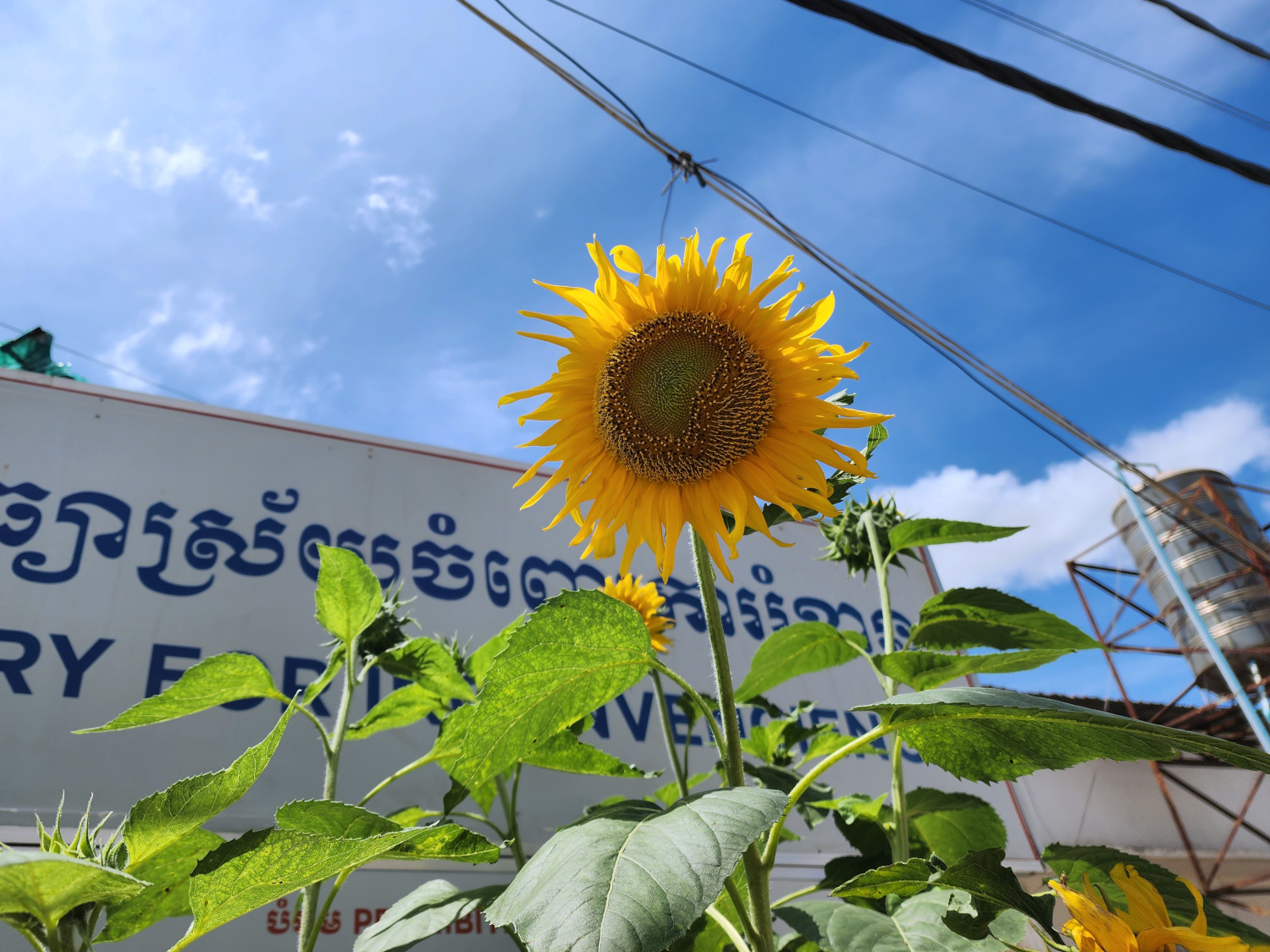

After making contact with the director there and discussing a few details, everything looked like a go. But then we were informed that, oh yes, we’d be expected to pay for our upkeep during our stint. Well, we’d already gone down that road a couple of times before (once in Guatemala and once in Morocco), and both experiences had left much to be desired. In fact, they both left a very bad taste in our mouth. Plus, the whole idea of paying to volunteer just seemed a bit inequitable to us — not to mention a bit costly. And we swore off ever doing it again.
So we had to turn down that position. Not to worry, that school put us in touch with another school in Siem Reap that might be interested in hosting us. So we contacted that school, which was not listed on Workaway, and in fact had never hosted volunteers before, and the director there was indeed enthusiastic about the idea of having us aboard. And that was where we were headed.
The tuk-tuk driver we’d engaged had no idea where the place was, just a general concept that it was south of town, near Wat Po Banteaychey. (Its location on Google Maps was marked incorrectly.) And we couldn’t be much help, because we were unable to get phone/ Internet service — the Solis device we normally used for such contingencies refused to cooperate. (This was before we’d hooked up with Telegram, the phone app that just about everyone in Cambodia uses.) The driver tried calling for us, but initially was unable to get through in several attempts.
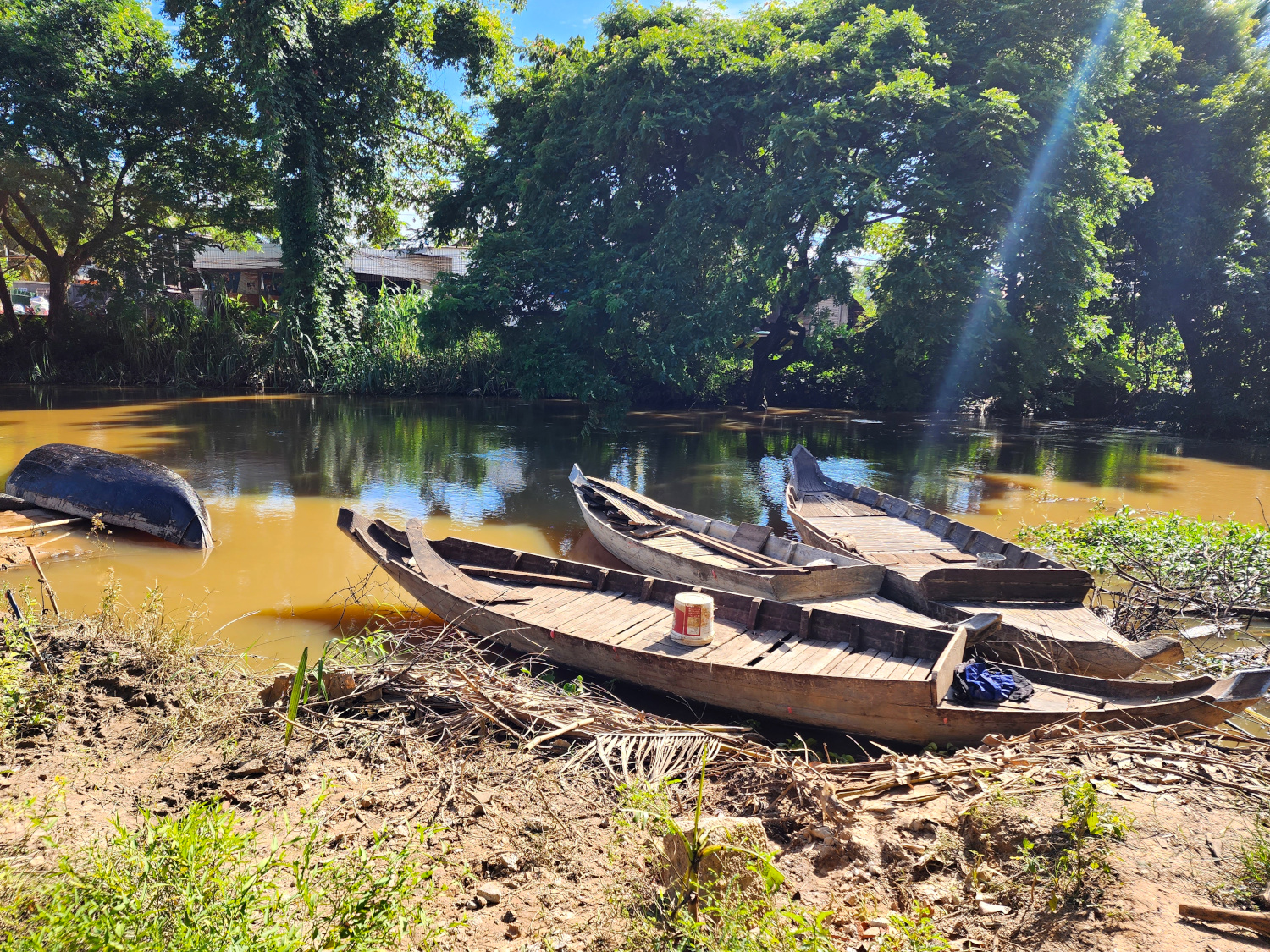
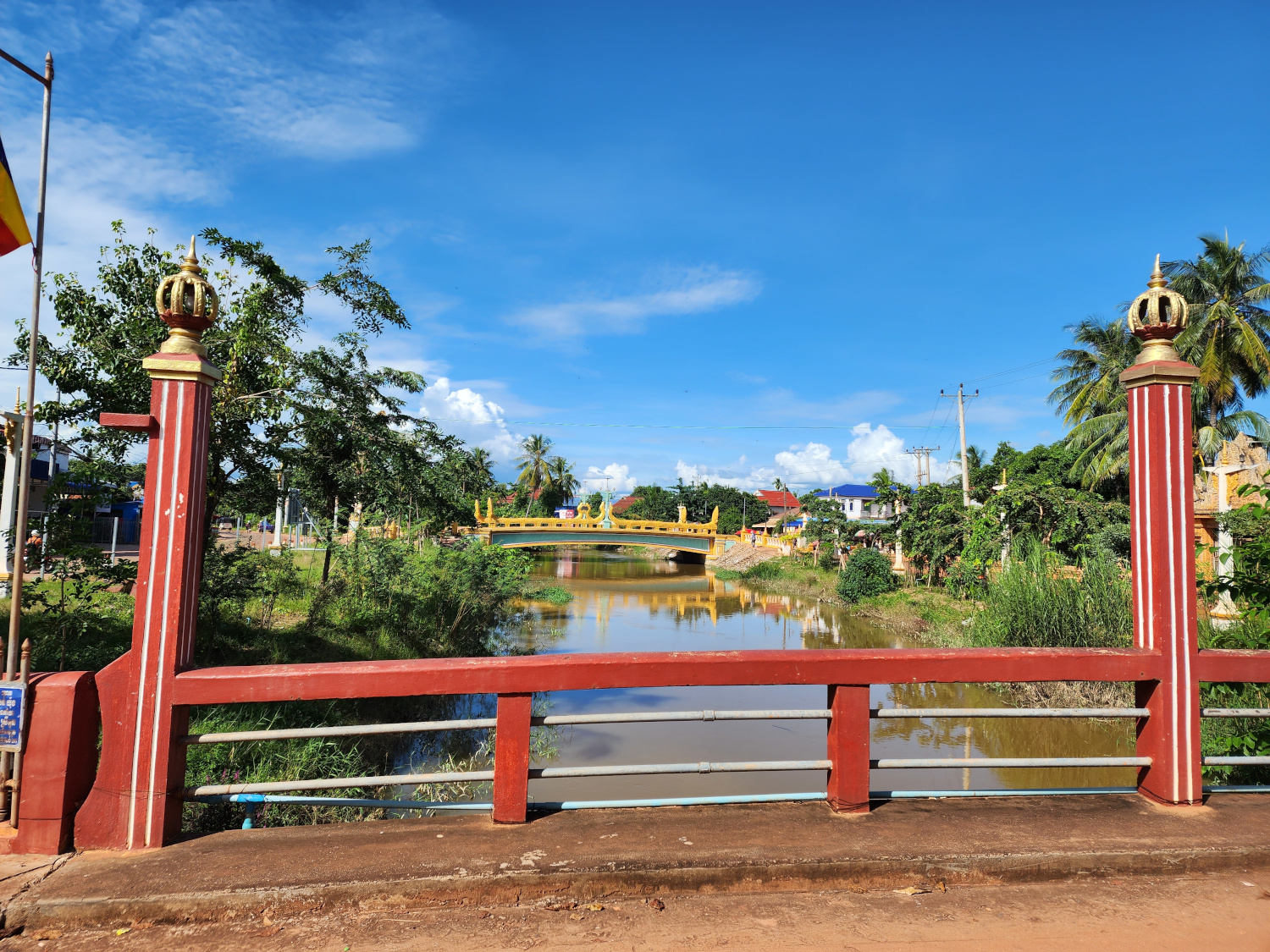
When we got to the right general neighborhood, he pulled over into the shade in front of Wat Po Banteaychey (a temple) and tried calling again. This time, the school picked up, and was able to give him more explicit directions. Turns out that they were almost directly across the road — over the very narrow Siem Reap River.
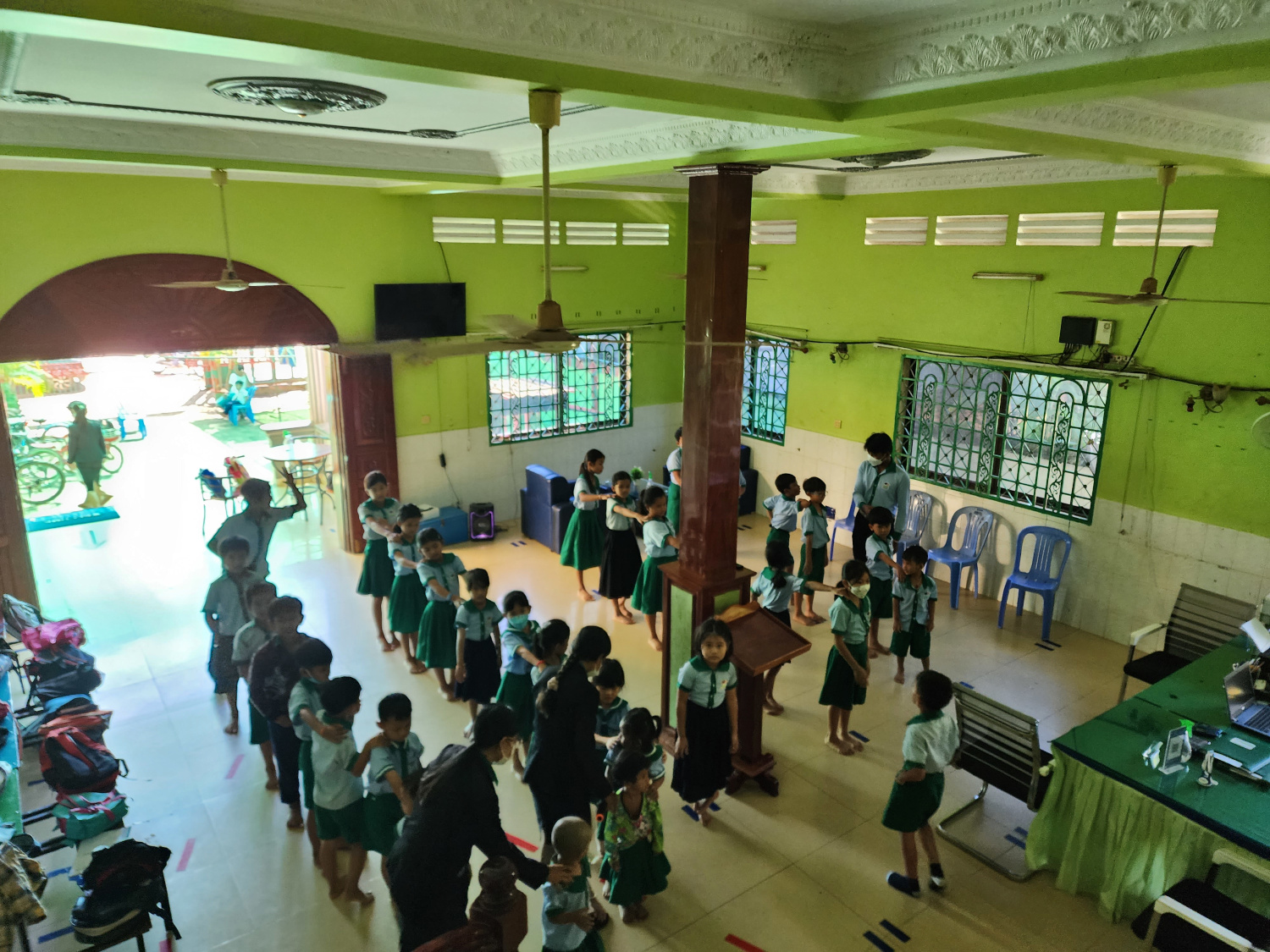

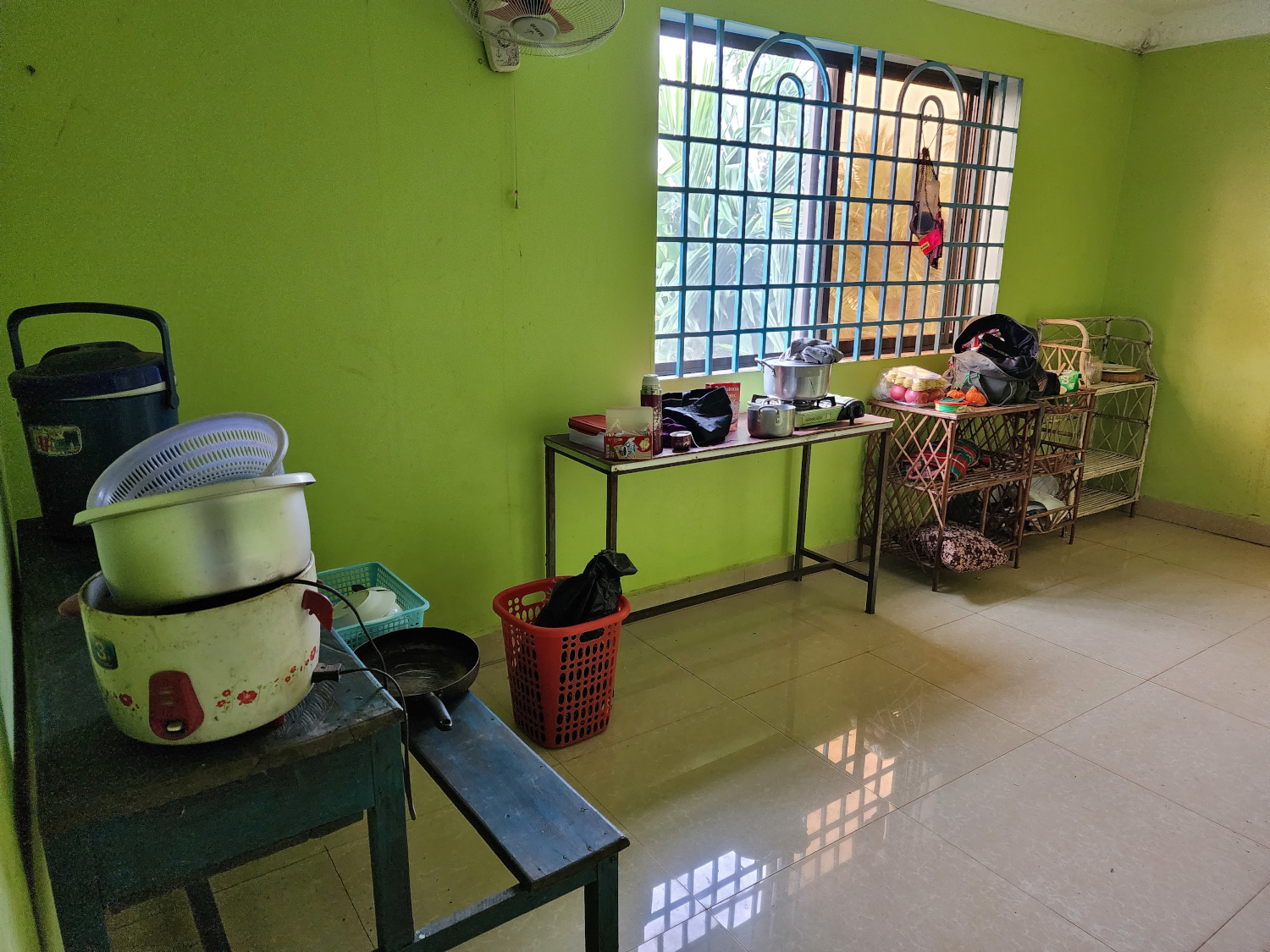
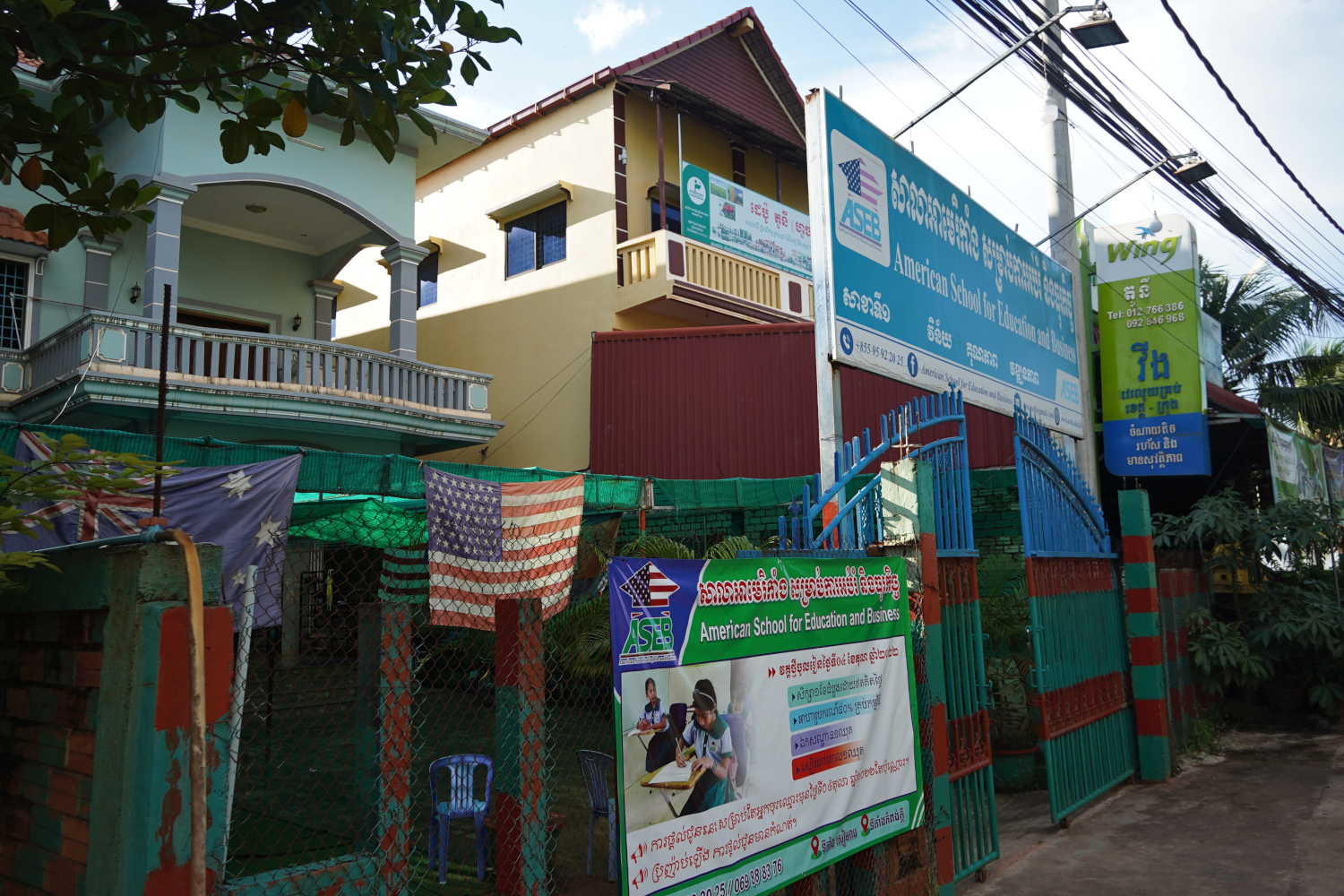
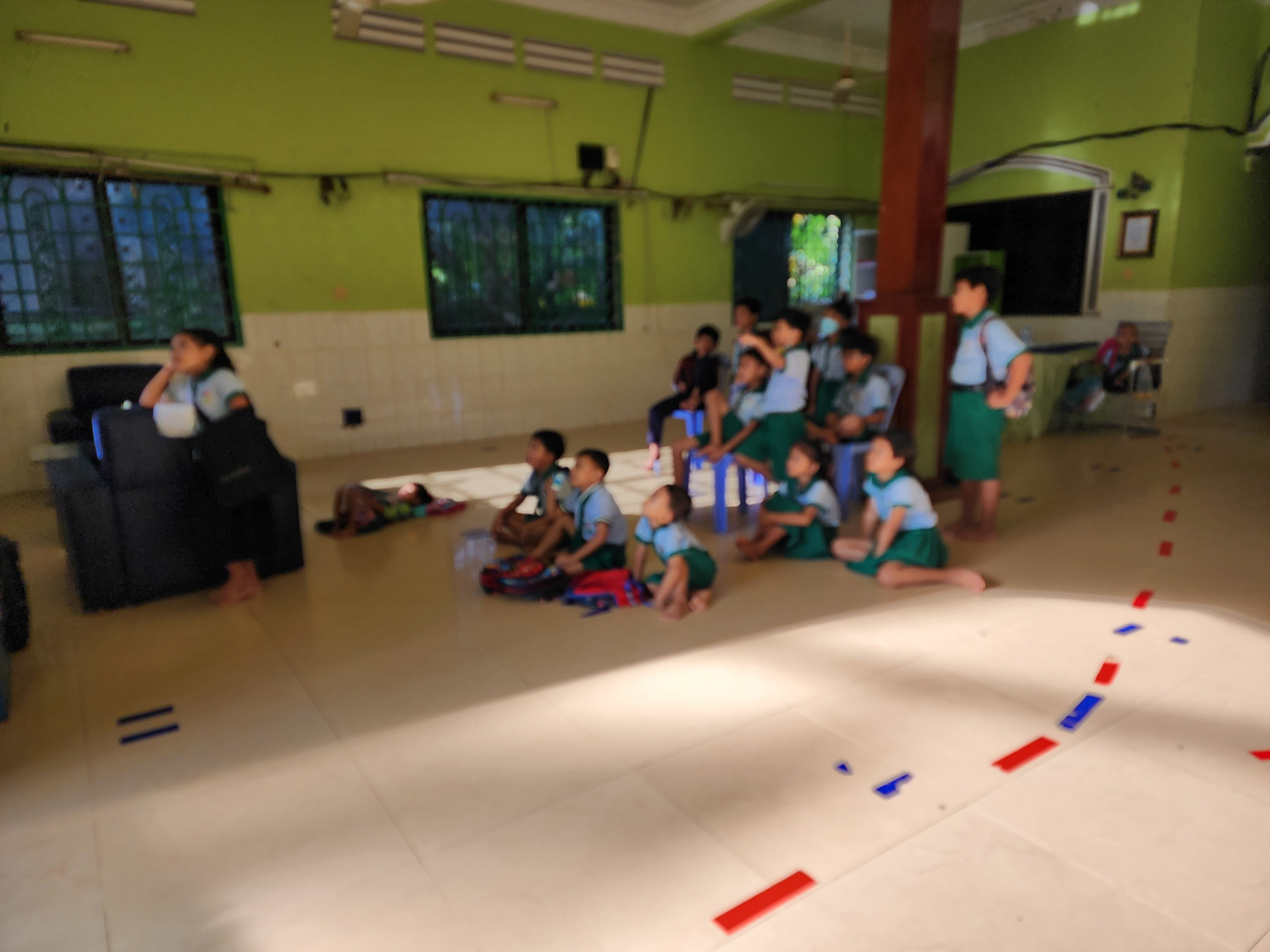
The school’s director, teachers and students warmly welcomed us. But before we could move into our living quarters, we had to wait for some of the students to finish cleaning. And by “living quarters”, we mean two former classrooms on the third floor. Since the school had never had any volunteers or other live-in personnel, there were no actual accommodations, so they had to improvise.
One room had a few odds and ends of kitchen utensils and dishes — there was no refrigerator. The other had a wooden platform to serve as a bed, covered with a mattress/ futon that had seen better days. It had a big clump in the center, but fortunately there was still ample space on either side for our respective bodies. The bottom of the mattress was somewhat moldy, but the staff had done their best to scrub and disinfect it. And they’d at least brought in brand new linens. How did we know they were brand new? Because they were still packaged.

As we started making up our bed, out from underneath it scampered a cockroach the size of Montana to say howdy. That prompted us, as we have done in other living spaces, to leave our clothes in our backpacks and keep our backpacks zipped up, lest we pick up any hitchhikers. It wasn’t the Waldorf, but we supposed we could make do.


The school director issued us green uniform shirts with the school logo on them, and gave us our respective schedules. We were all set to go to work the next day.
Kimberly’s shift at the school was in the morning, and Dennis’s shift was in the afternoon; there were also a couple of evening sessions with older (teen and adult) students who came just to learn English. So that left each of us a chance during the day to do some work on our shared laptop, catch a nap, run some other errands, and do whatever. Though it took a couple of days, and the assistance of the staff, to train the kids about the fact that our upstairs quarters were off limits to them.
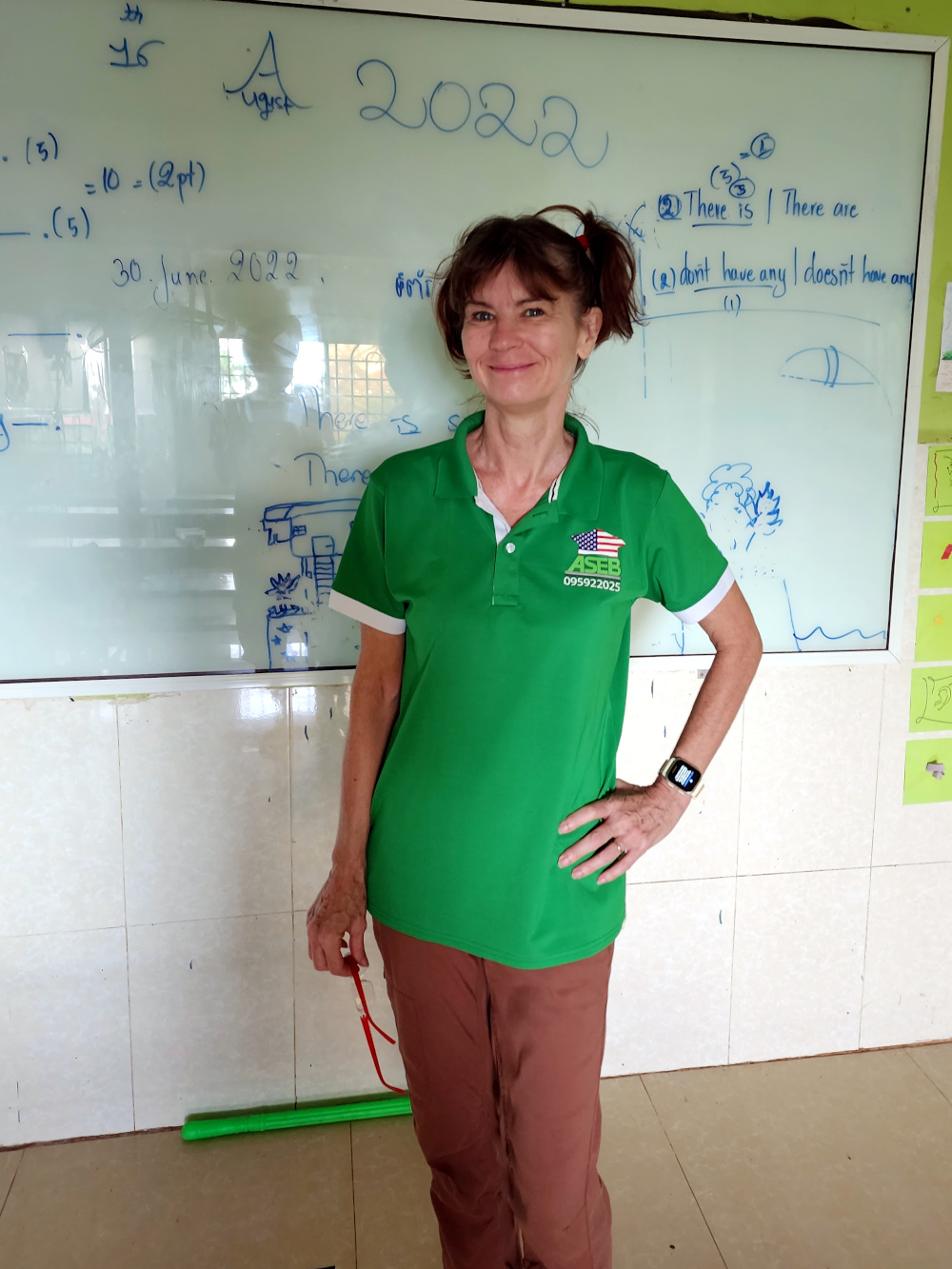
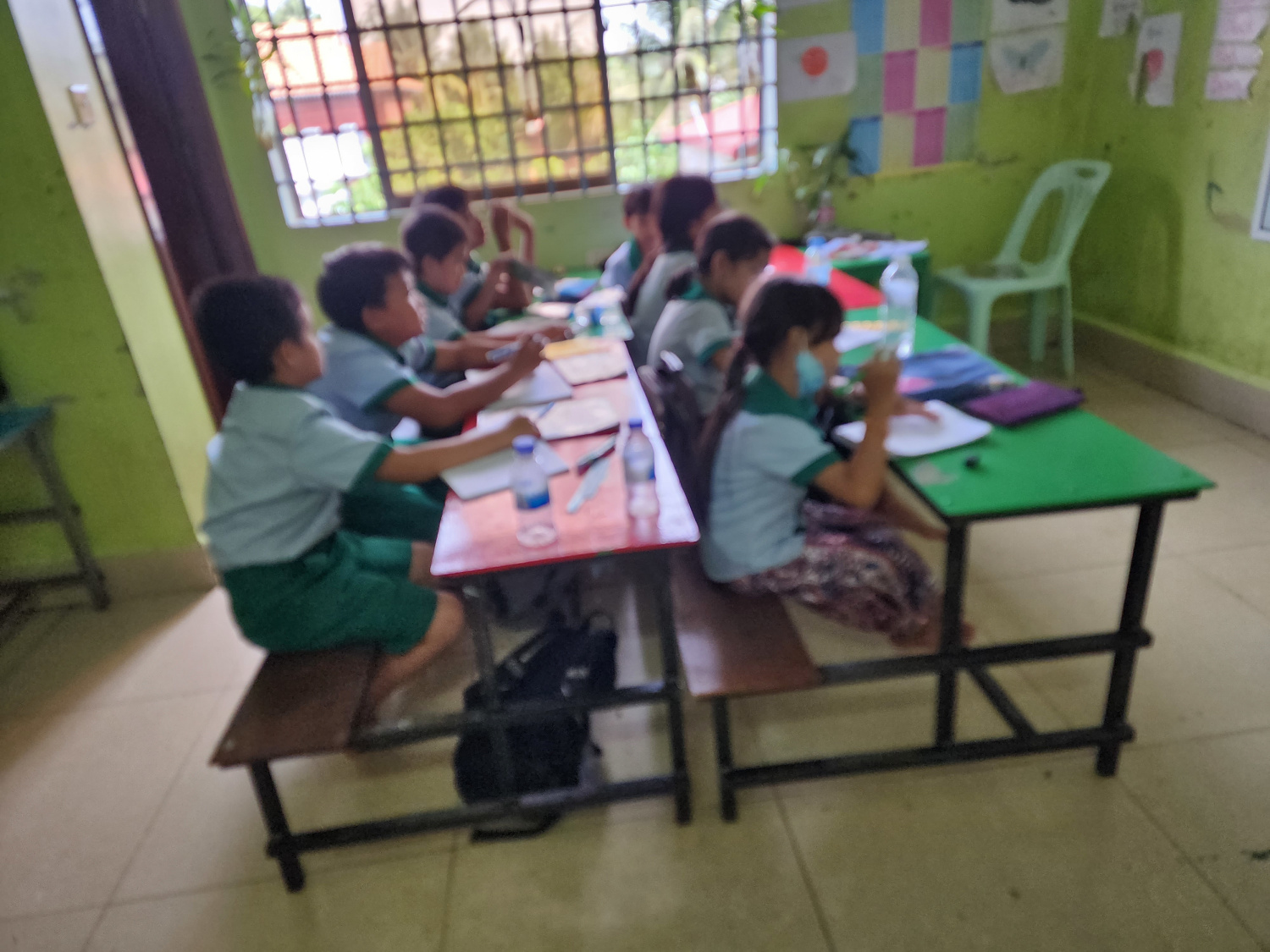
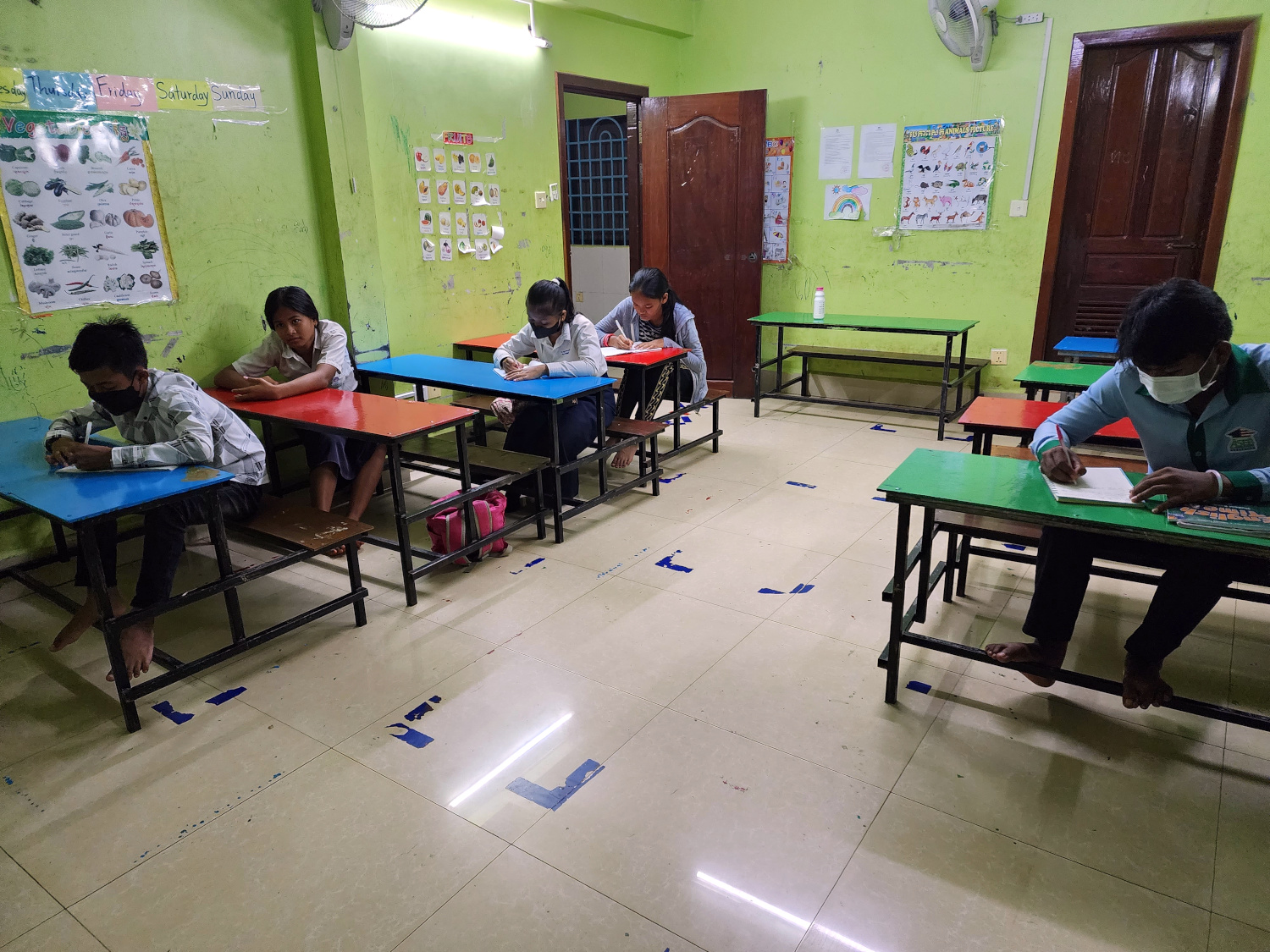
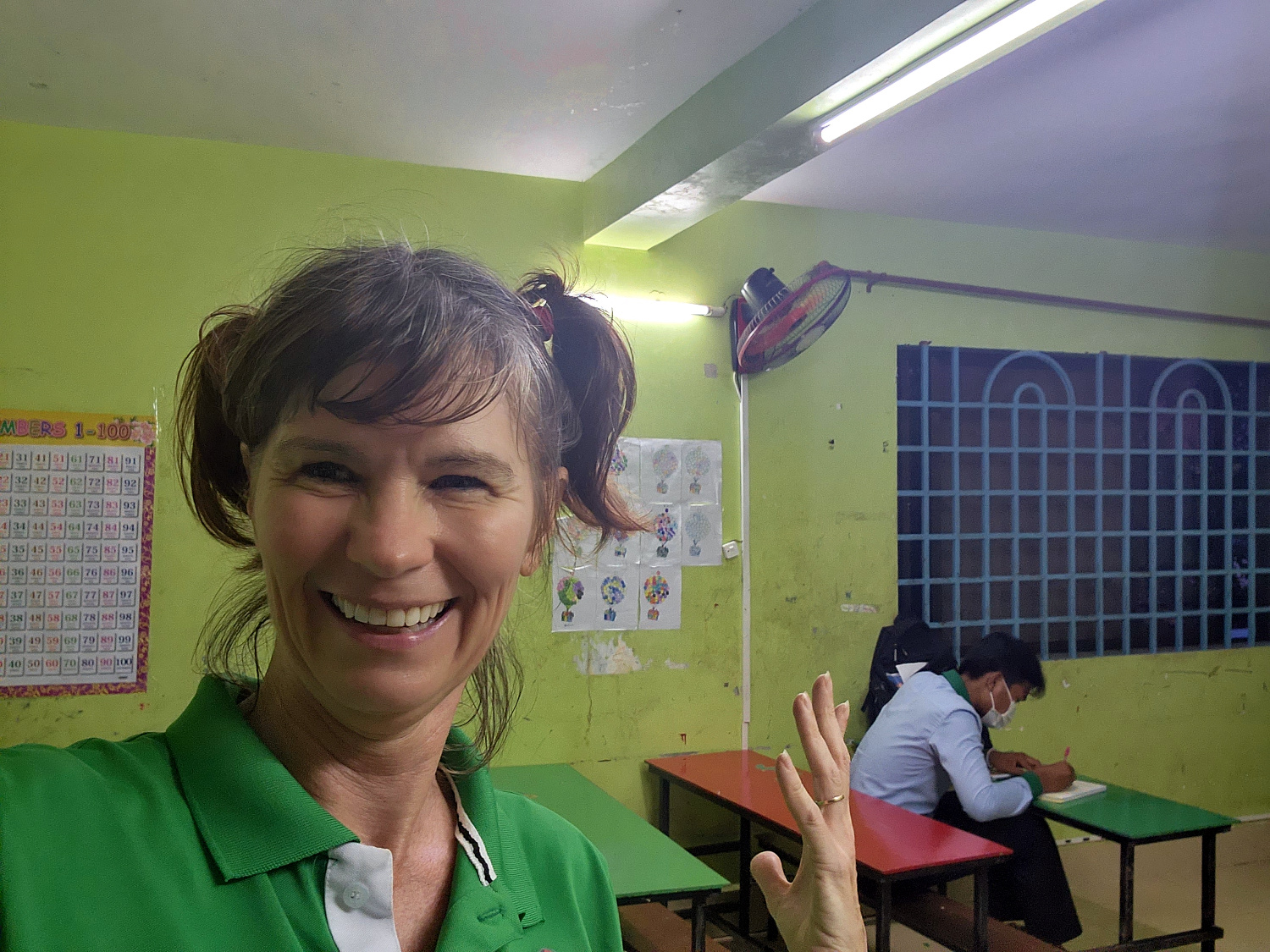
Each of us worked with a different group of students. All of them were rambunctious and rather undisciplined, though of course the younger ones tended to be worse. And to top it off, the classrooms had very poor acoustics, with bad reverb.
But the worst thing is that we were just left to our own devices. Theoretically, volunteering is supposed to mean assisting teachers, not replacing them entirely. But at this school, it was standard practice to just dump us in a classroom and leave us be. And the students, many of whom spoke little or no English, saw this as an opportunity to let the freak flag fly.
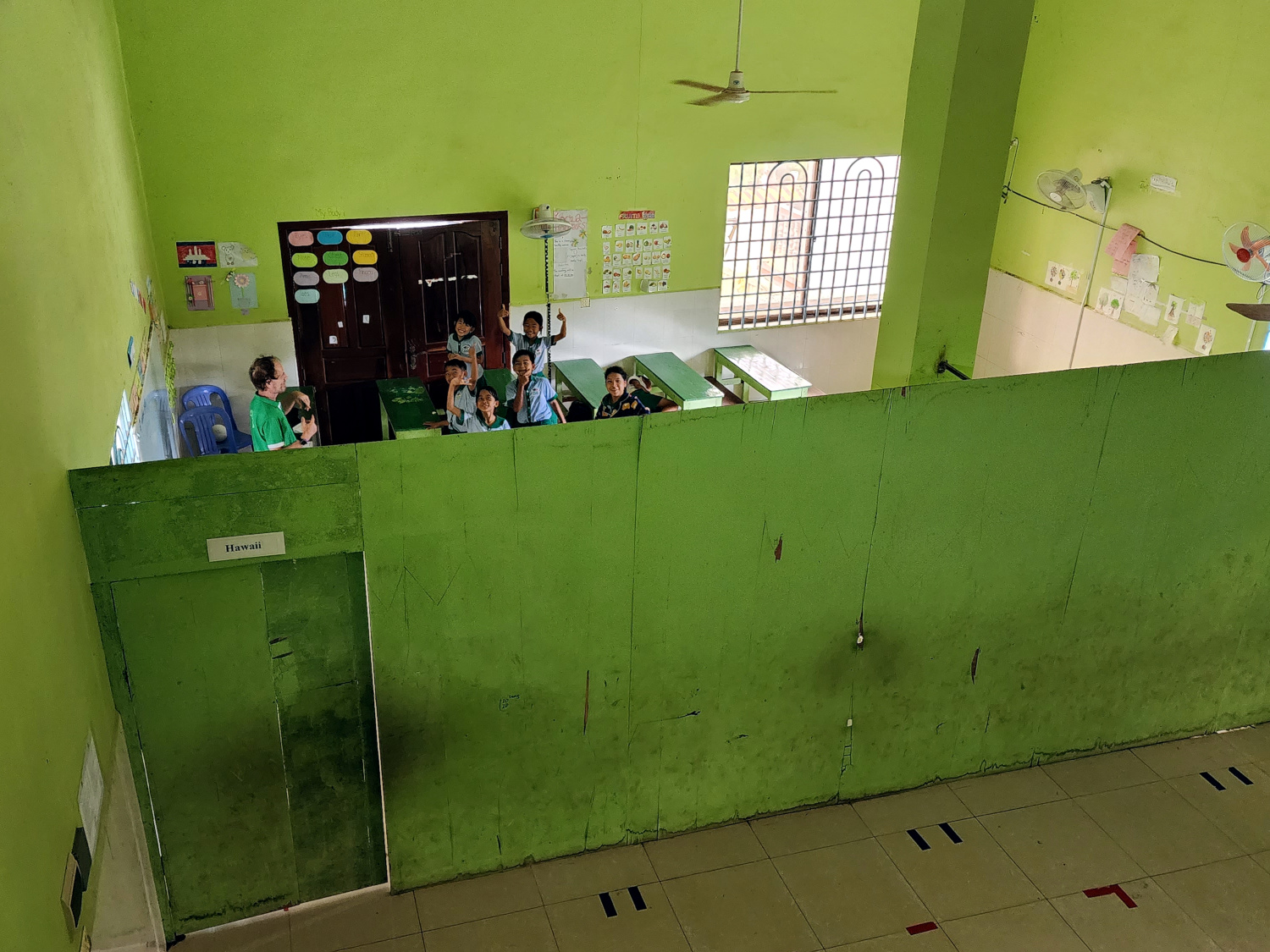
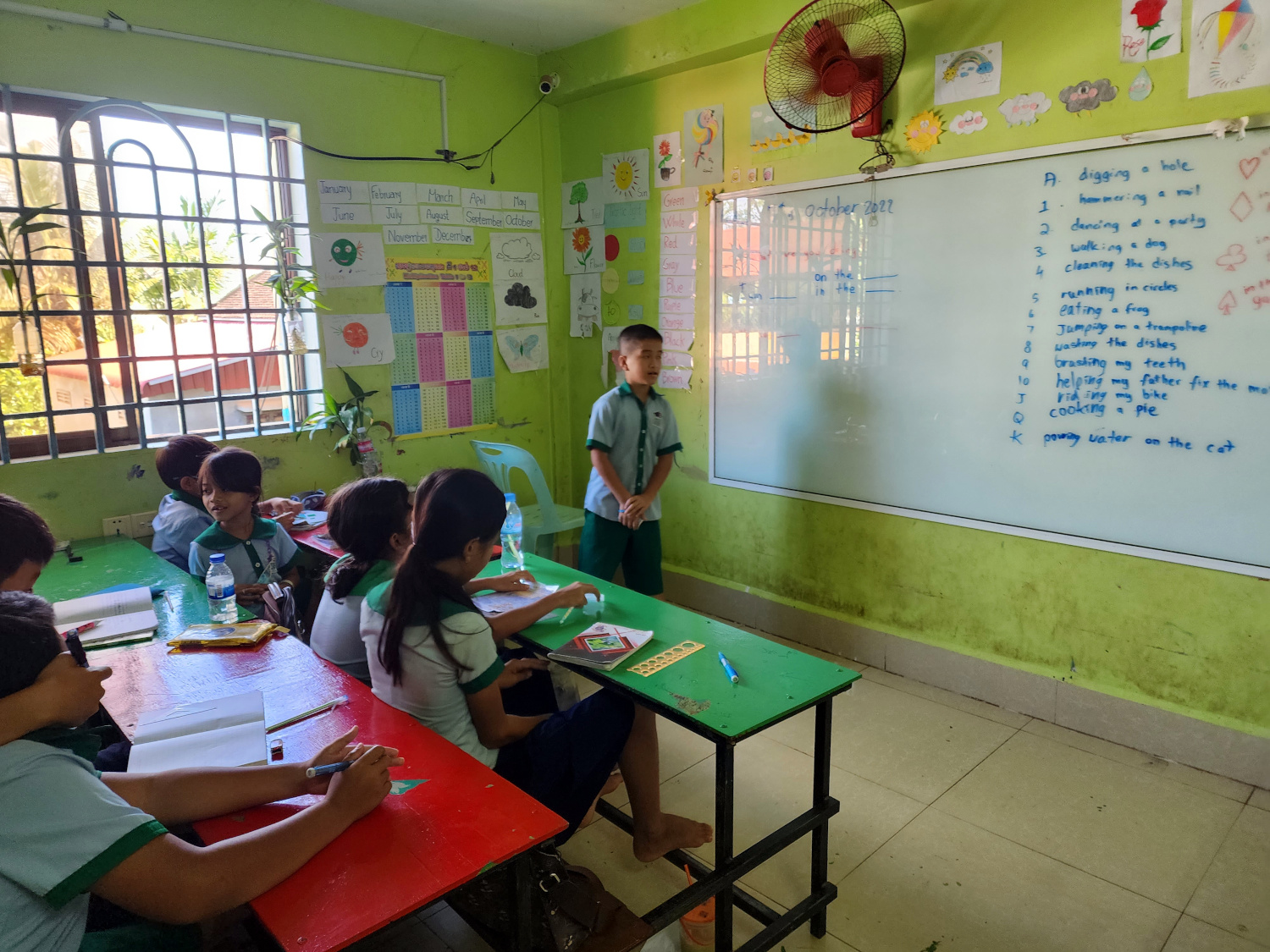

It was promising to be a very interesting month of neon green walls.
Tips for Teaching English in Siem Reap:
- Prepare for limited resources: Schools may have limited resources and technology. Consider bringing your own teaching materials or downloading some in advance.
- Download essential apps: like Telegram for communication.
- Be open to cultural differences: Teaching styles and student behavior may differ from what you’re used to. Embrace the opportunity to learn and adapt.
- Focus on communication: Even with limited English, focus on clear communication and positive reinforcement to help students learn.
- Be patient and persistent: Learning takes time. Celebrate small victories and focus on building relationships with your students.
10/4-7/2022

 world travel with a theatrical flair
Leave a comment