

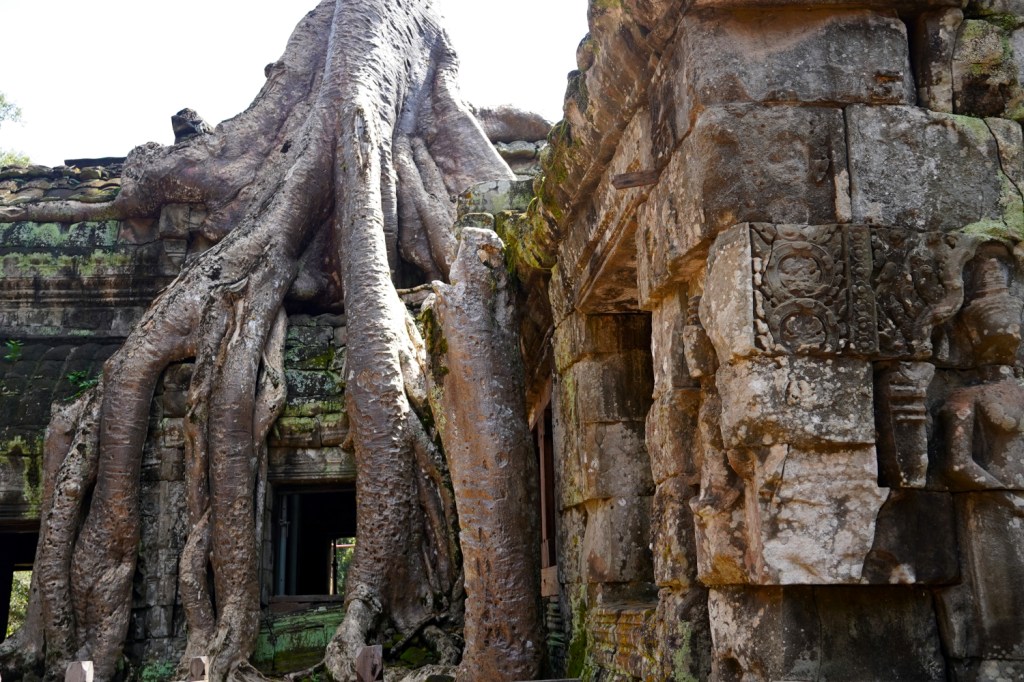
Entwined by the jungle’s embrace, the ancient temple of Ta Prohm exudes a mystical charm, its weathered stones whispering tales of a bygone era. While Lara Croft’s adventures may have brought it fame, Ta Prohm’s true magic lies in its mesmerizing blend of nature’s power and human artistry.


On Saturday October 22 we returned to Angkor Wat, this time so both of us could be awestruck by Ta Prohm — otherwise known as the Tomb Raider Temple, because it plays a key role in the 2001 hit action flick Lara Croft, Tomb Raider, with Angelina Jolie in the title role (and her real-life father, Jon Voight, playing her father).
Beyond Tomb Raider in Cambodia
The film takes, shall we say, certain liberties — and not just because Jolie speaks with a British accent. It places a floating market, of all things, in front of the central temple, and it puts Ta Prohm near a waterfall that’s actually a good 20 miles away. But Cambodians don’t seem to mind, because at least the movie has brought in more tourists, who love to take photos of themselves in one particular spot at Ta Prohm. The locals have even designated an Angelina Jolie Street — though it’s really just a little unassuming stretch of road, hardly more than a long driveway.
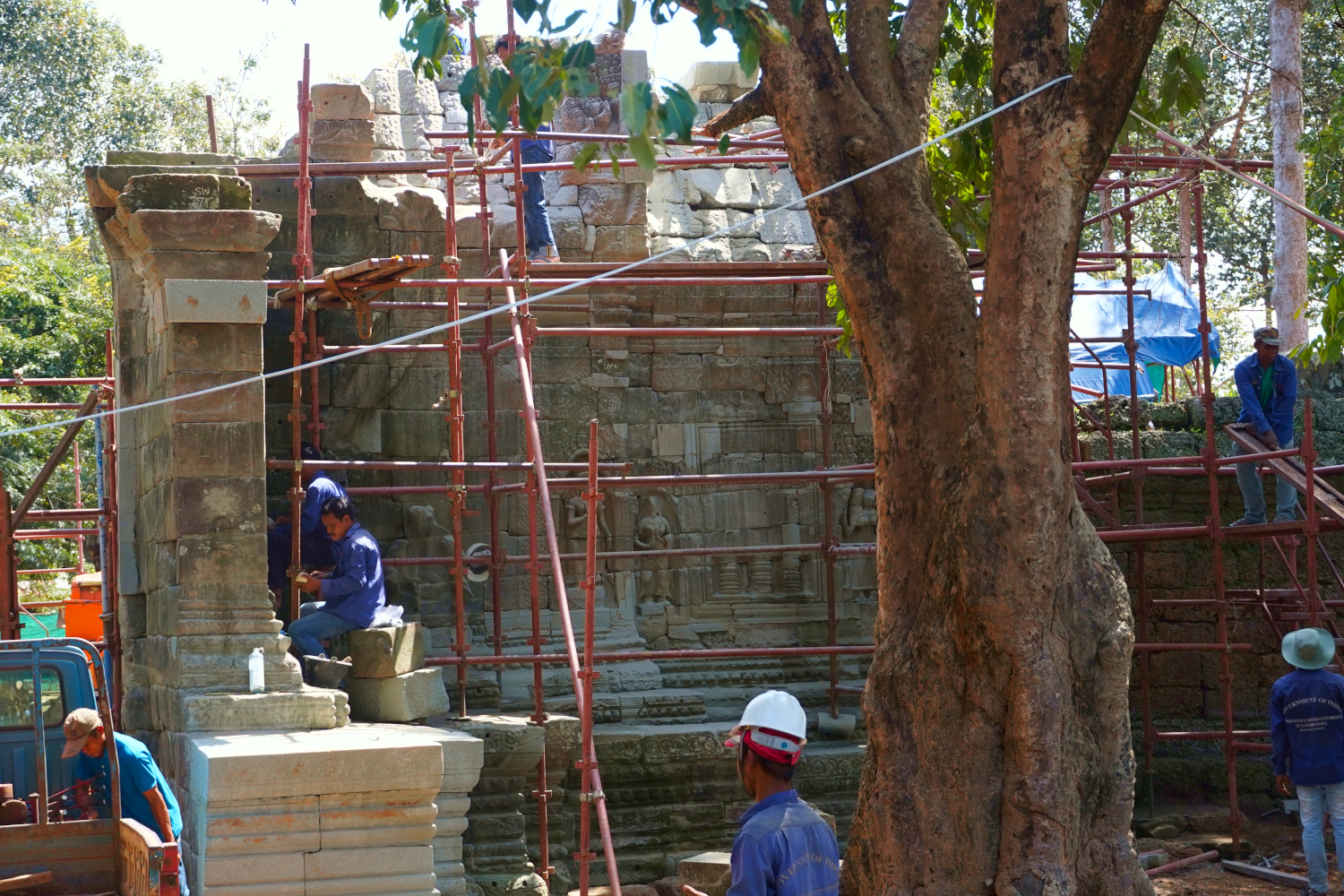
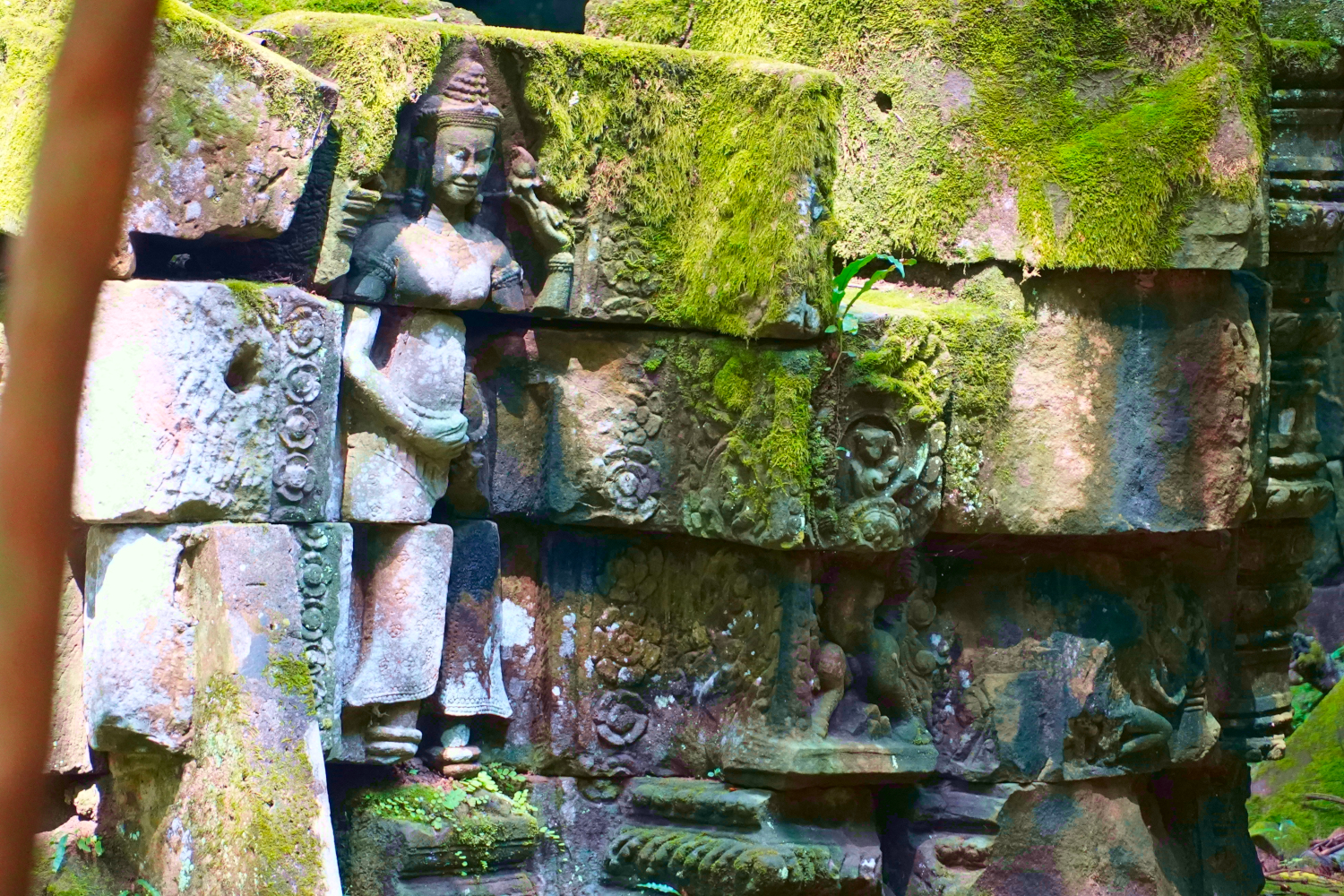

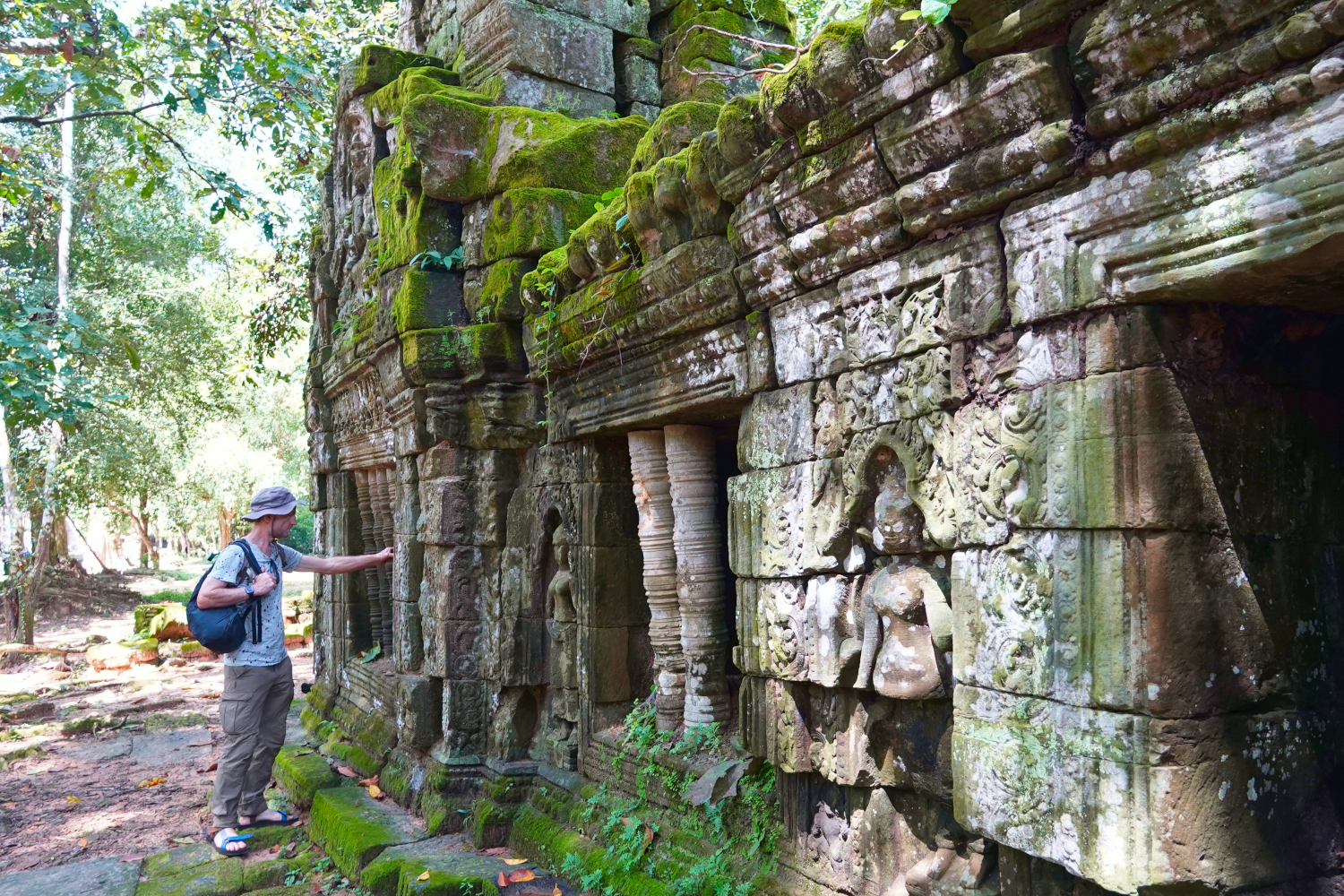
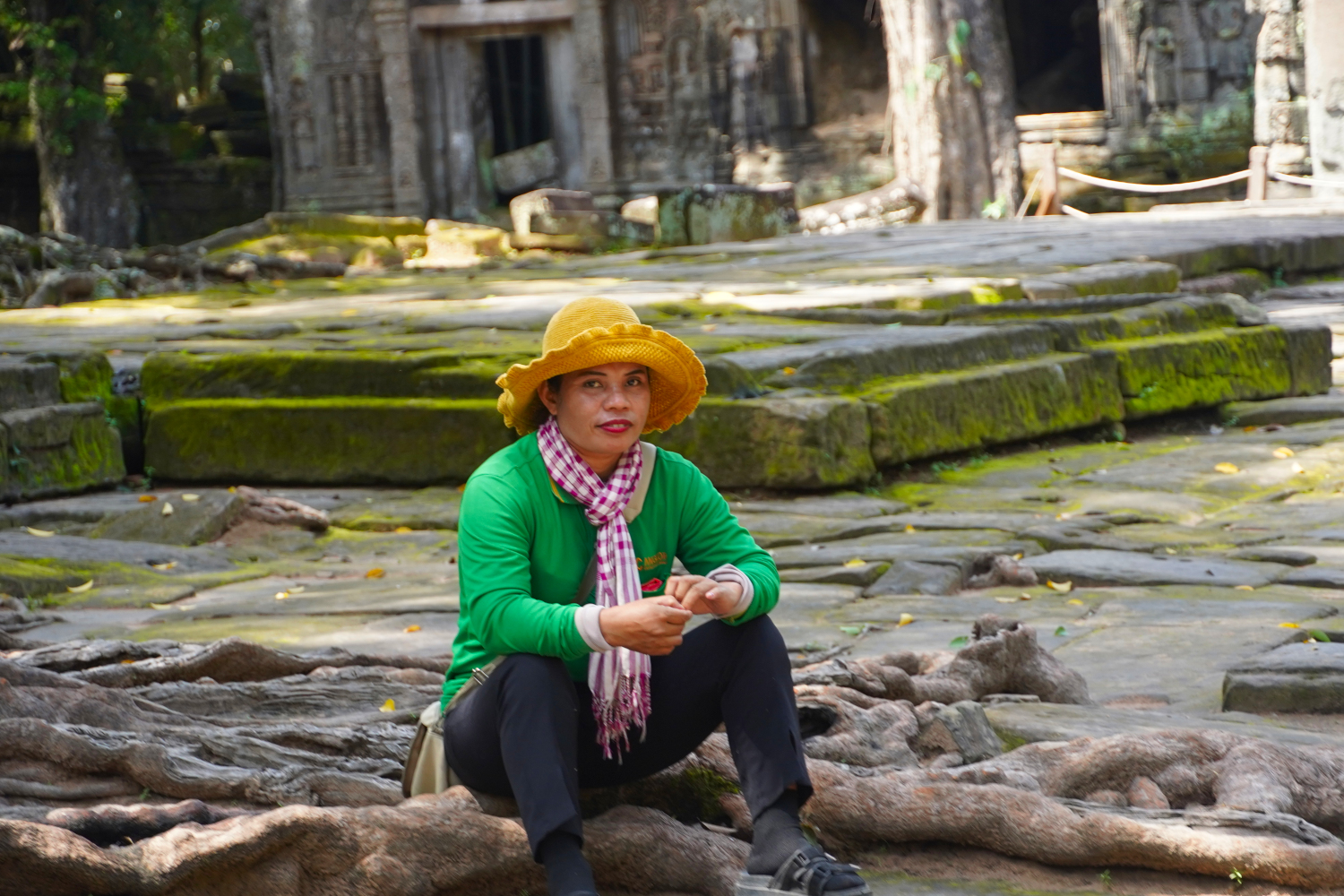
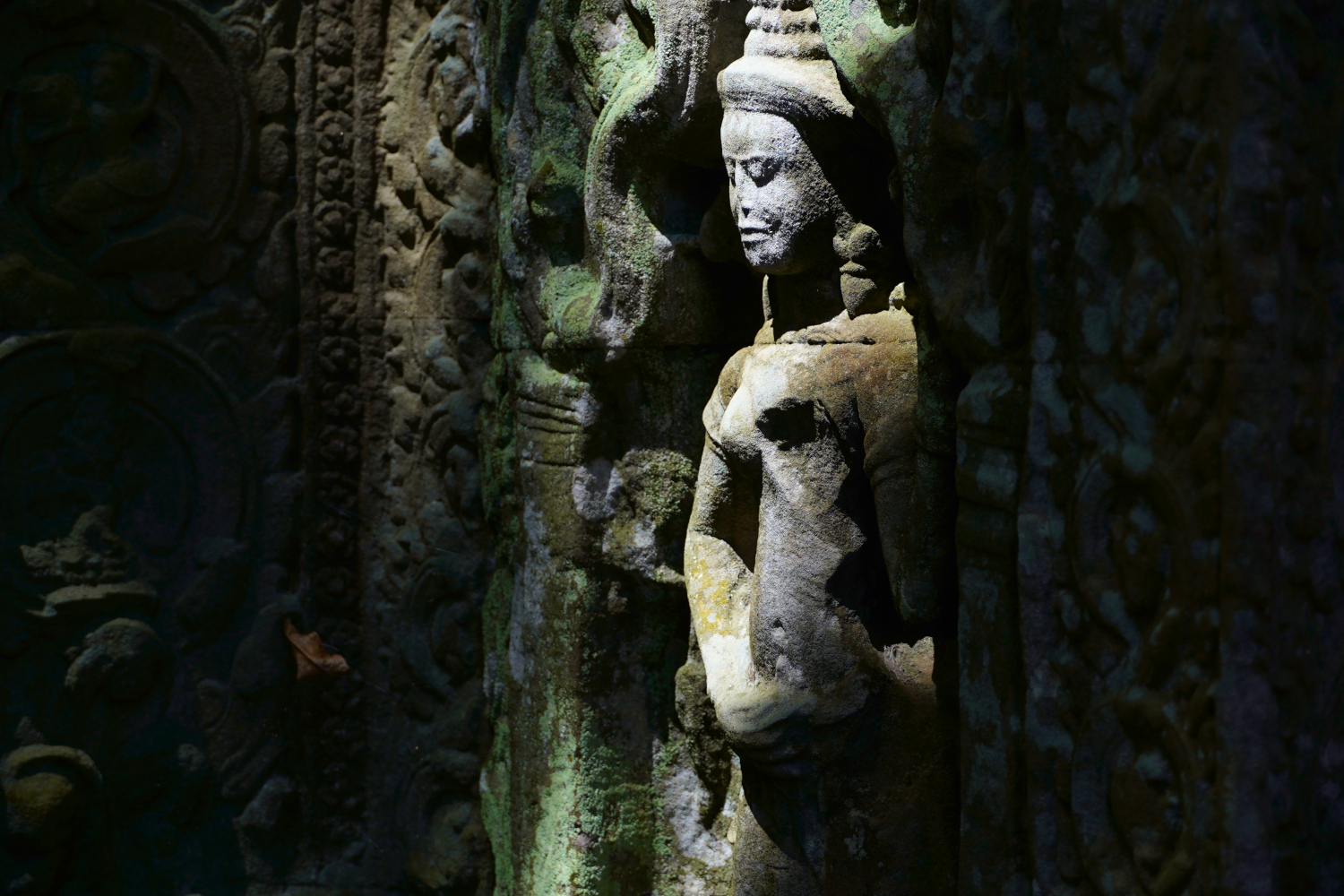
Ta Prohm, which was completed around 1200 CE is, for our money, the most photogenic of the many magnificent temples in this ancient city. Even more photogenic than the iconic main temple, which appears on the national flag of Cambodia — as well as on bottles of Angkor beer, and many, many other places.
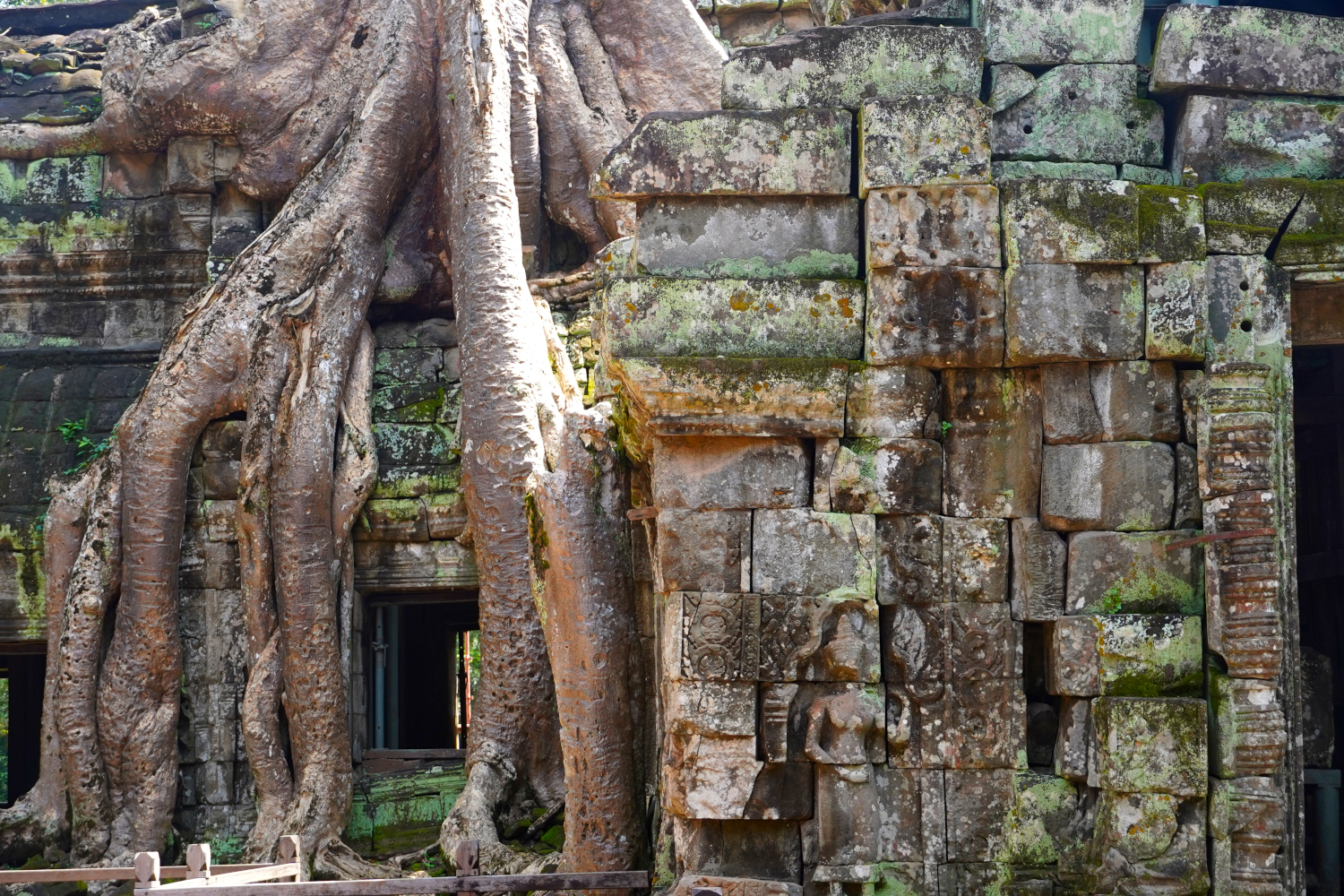
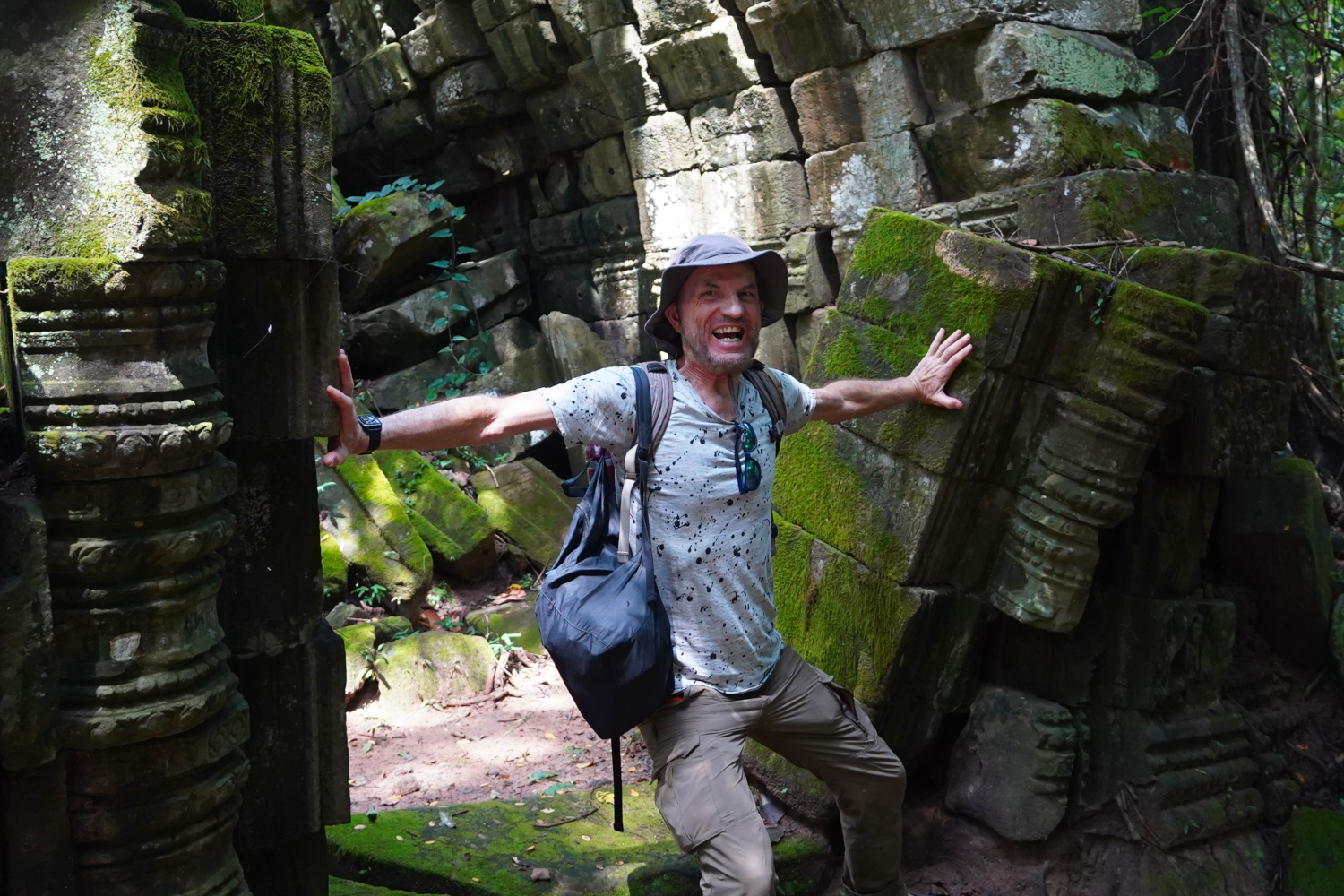
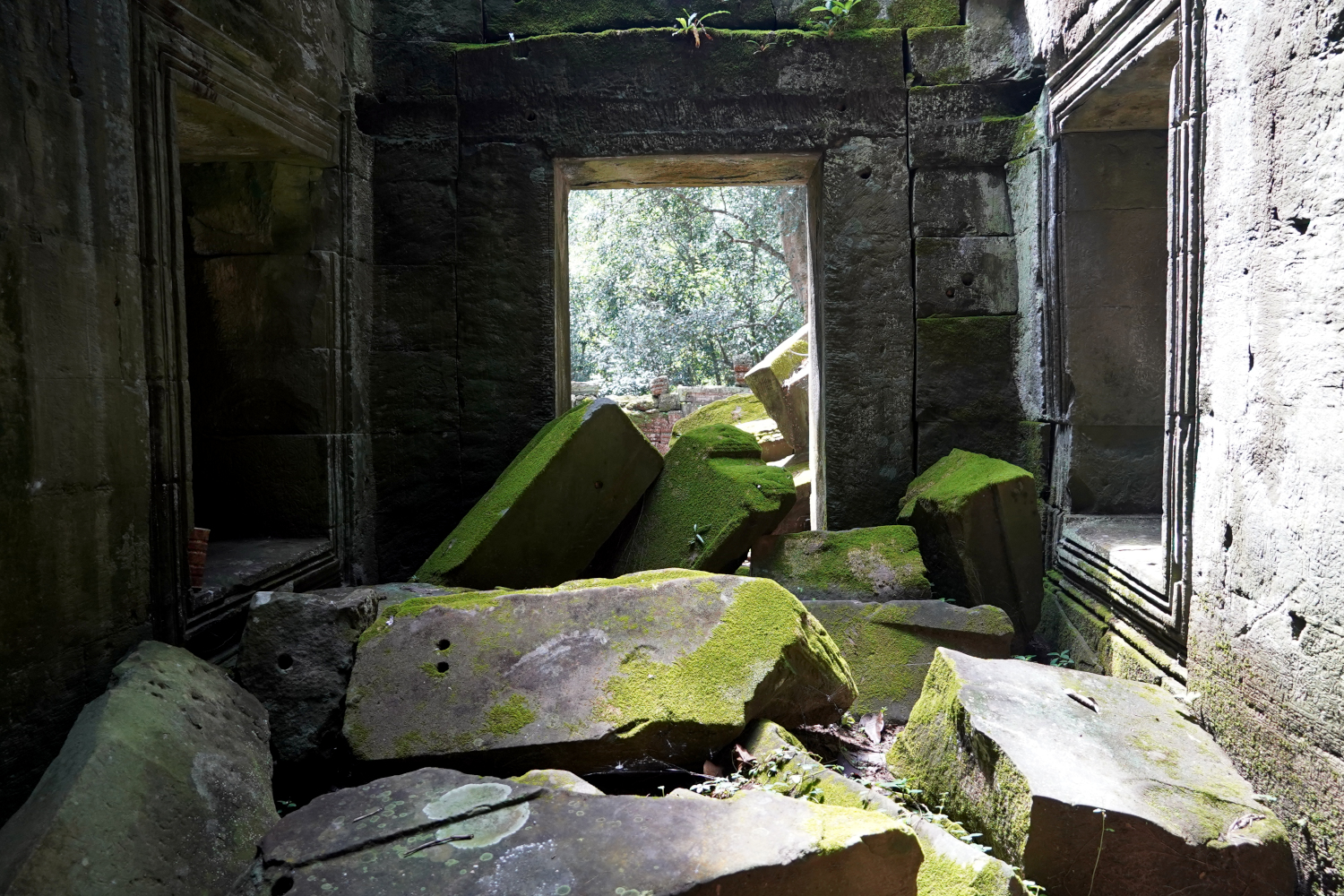
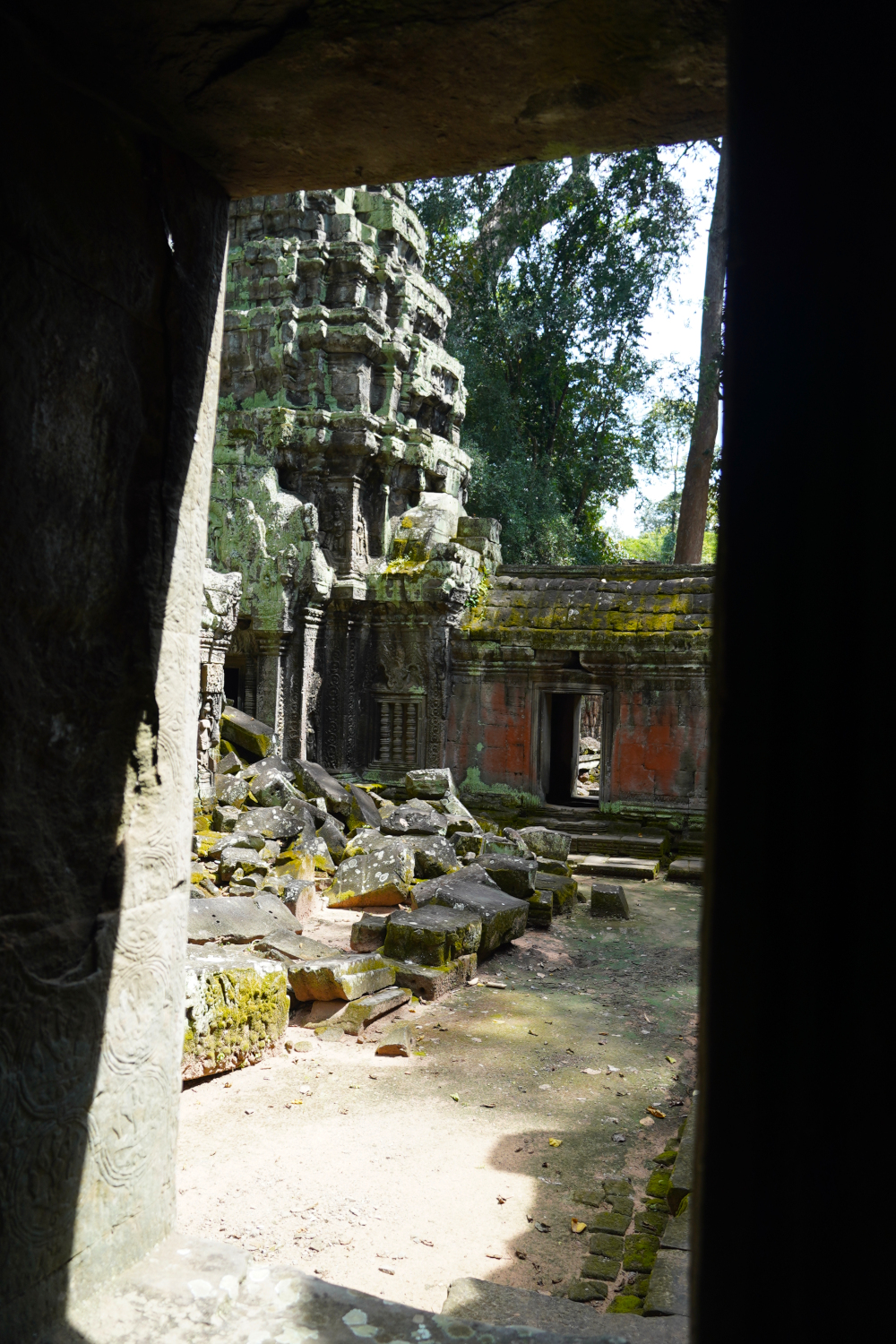
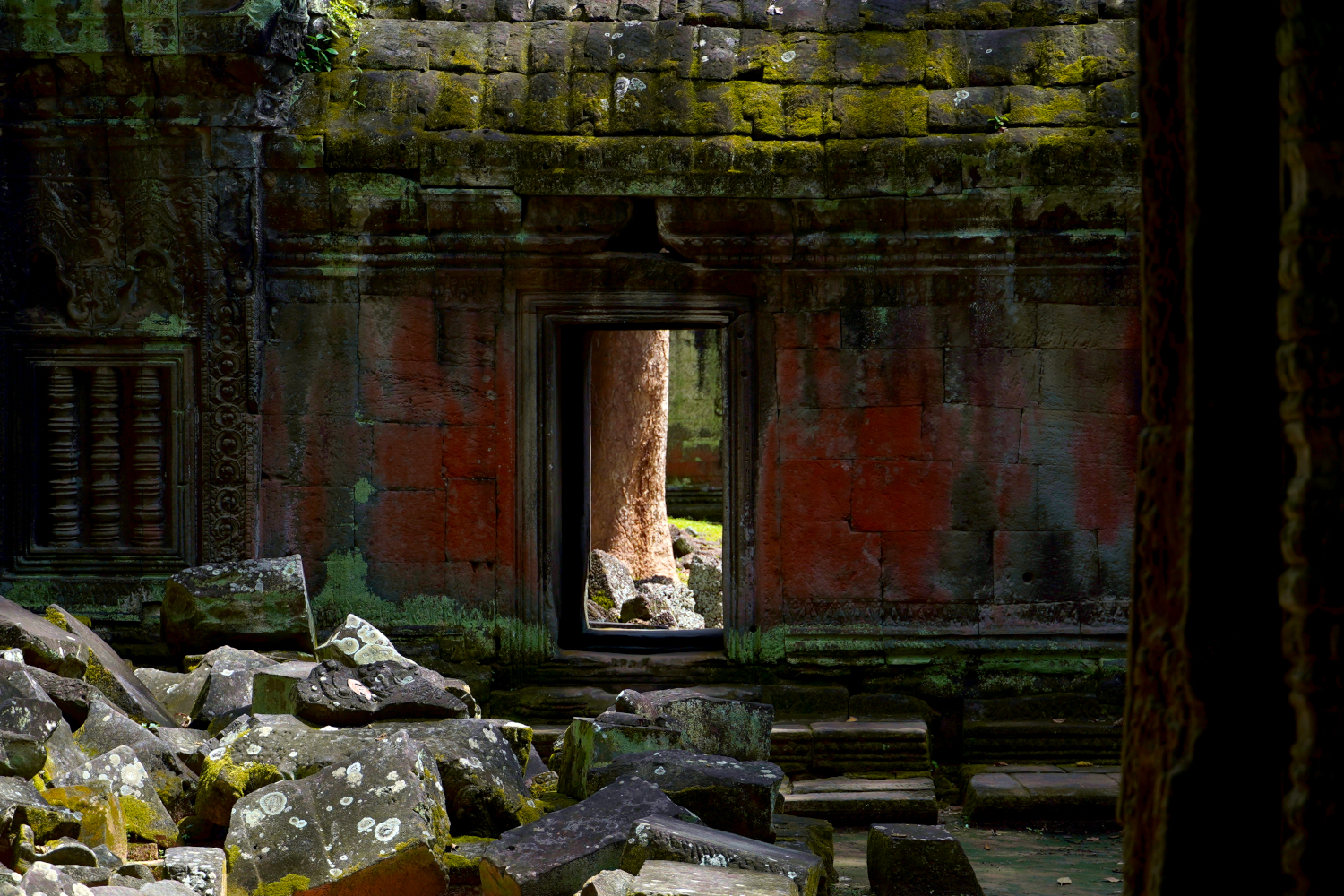
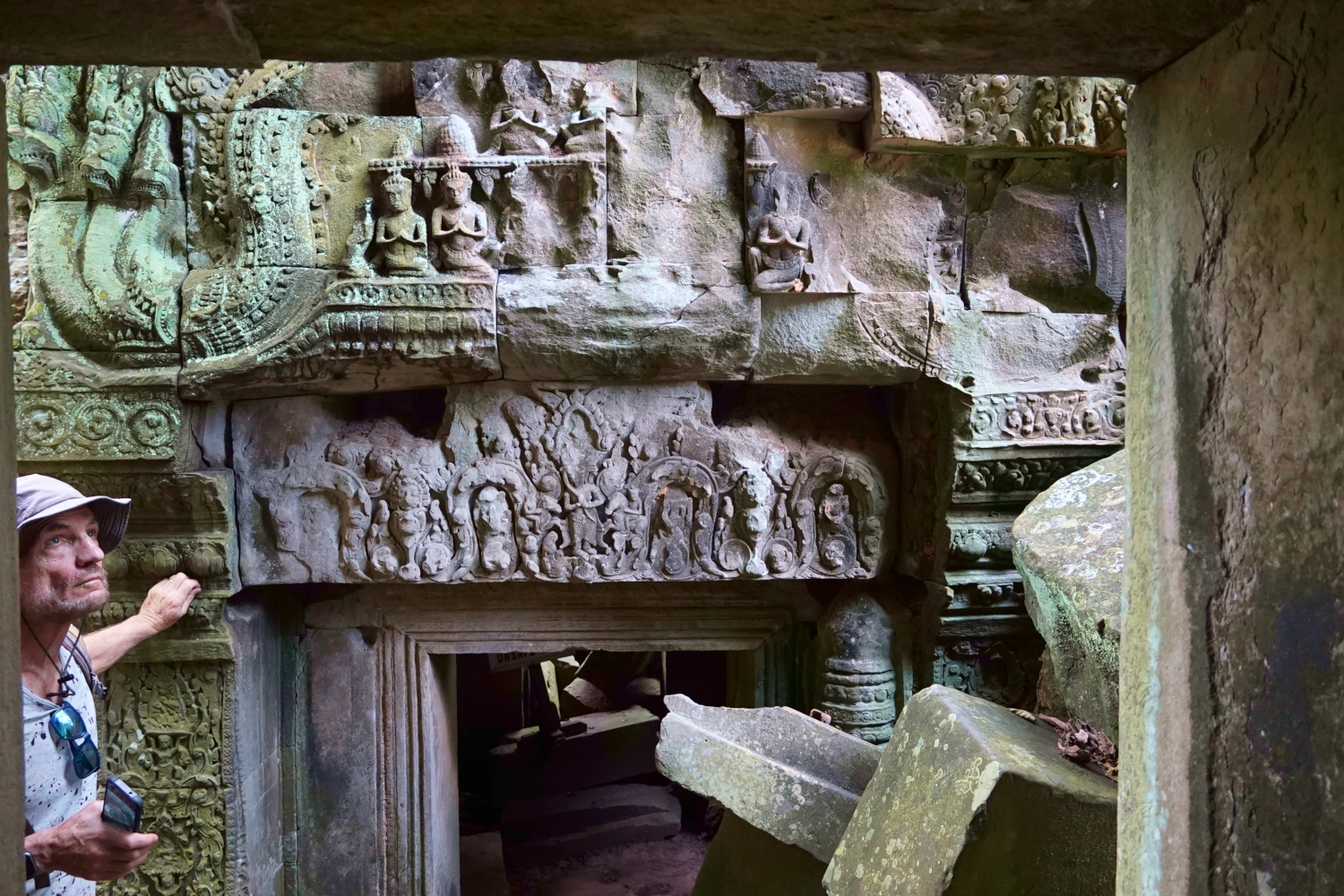
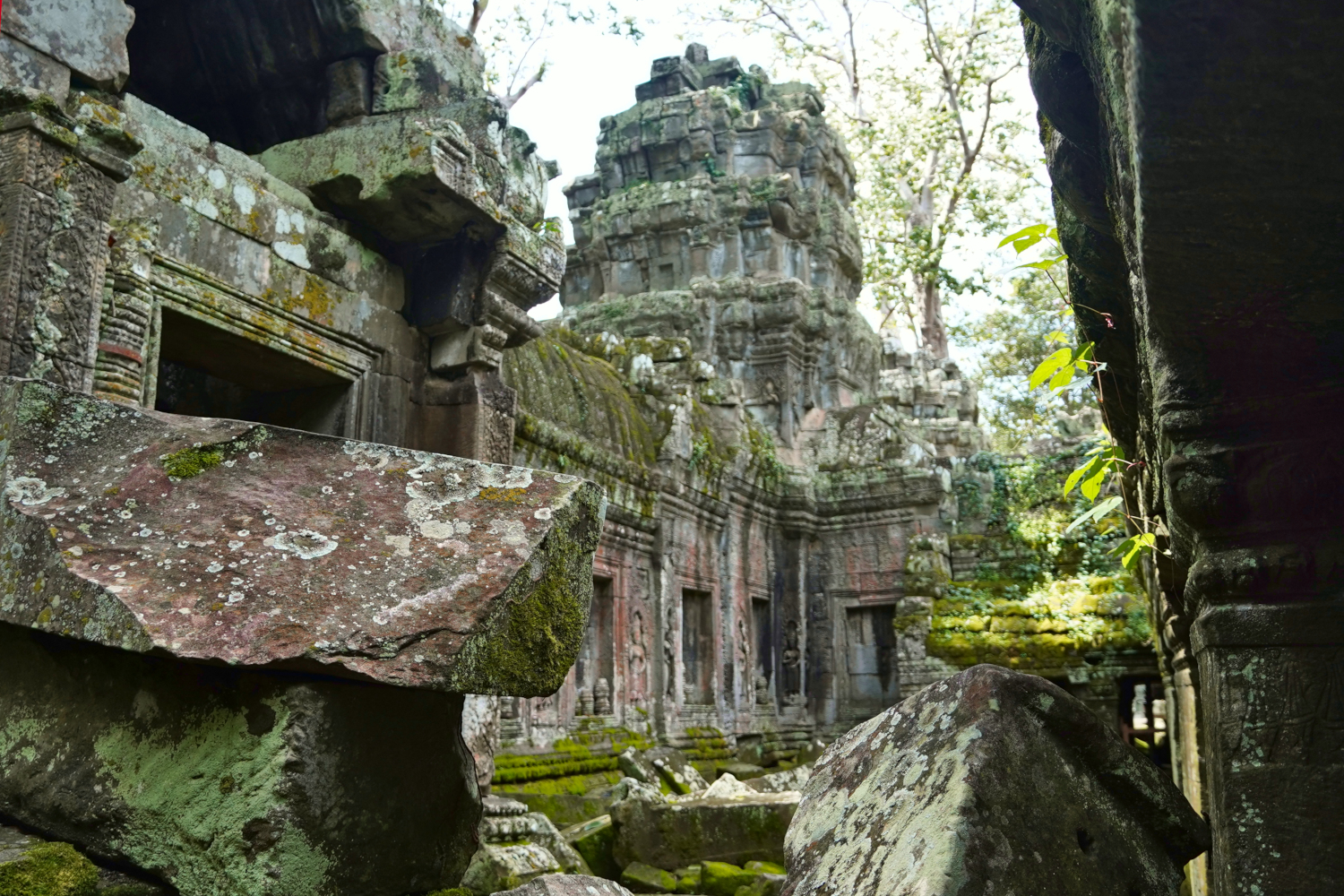
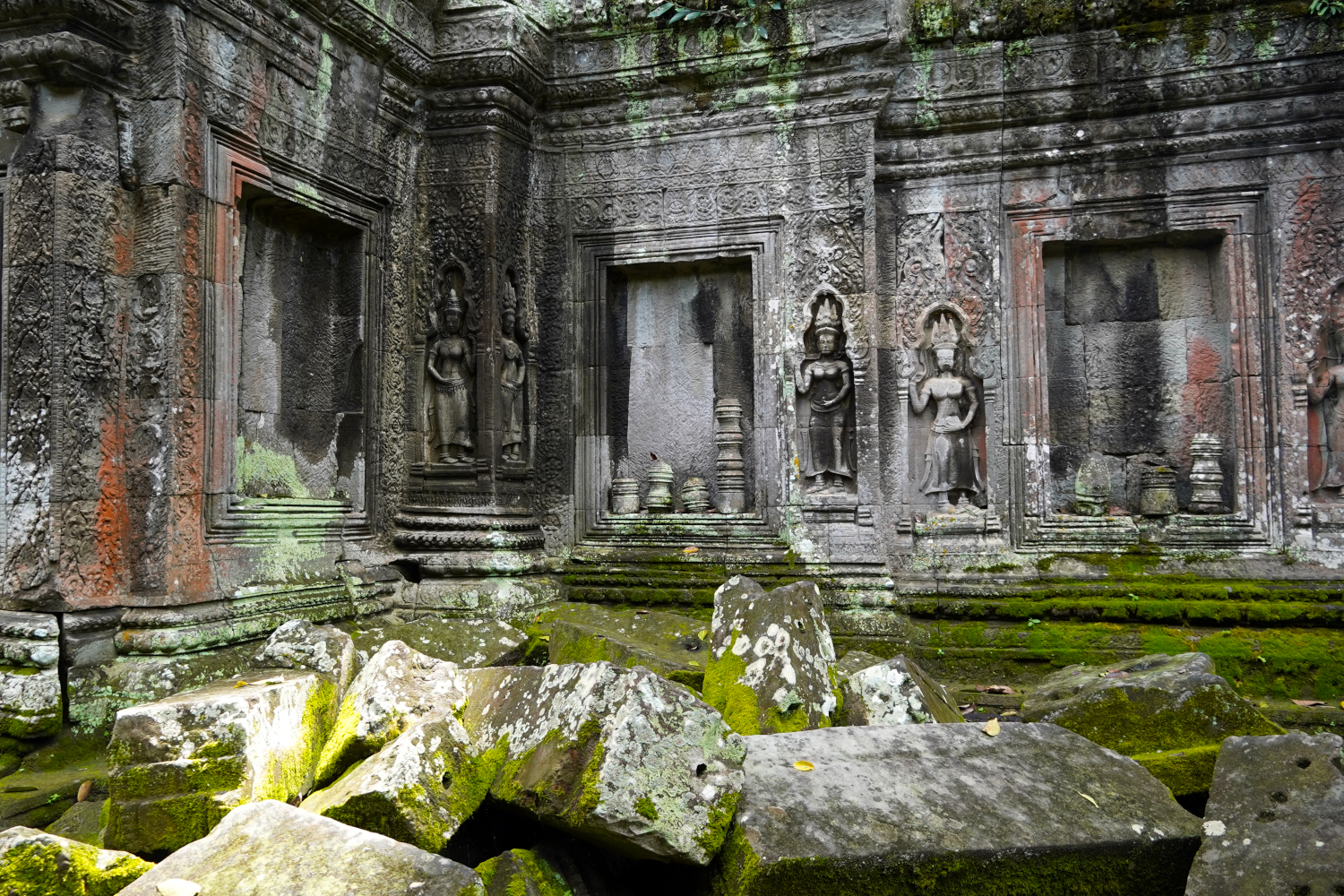
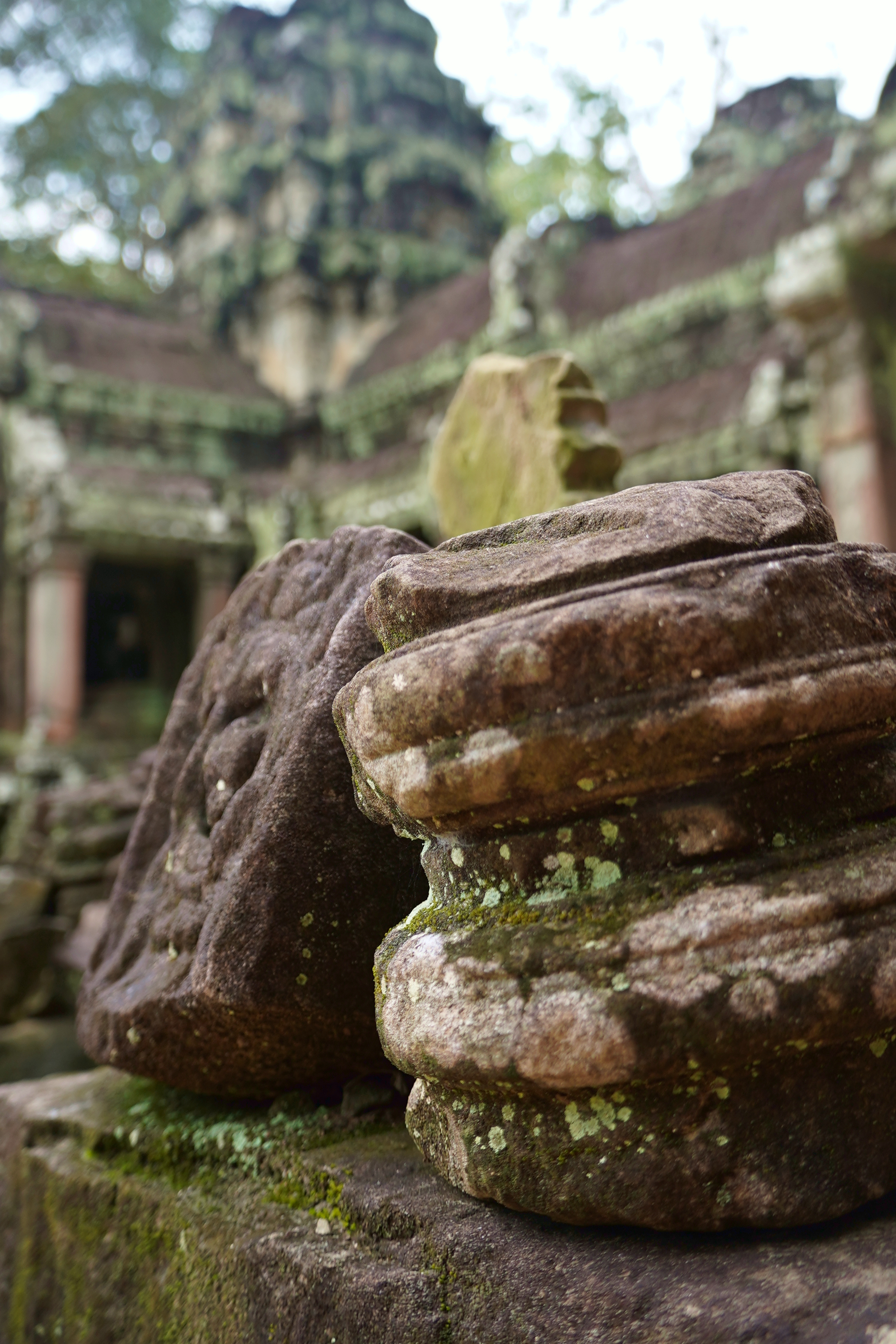
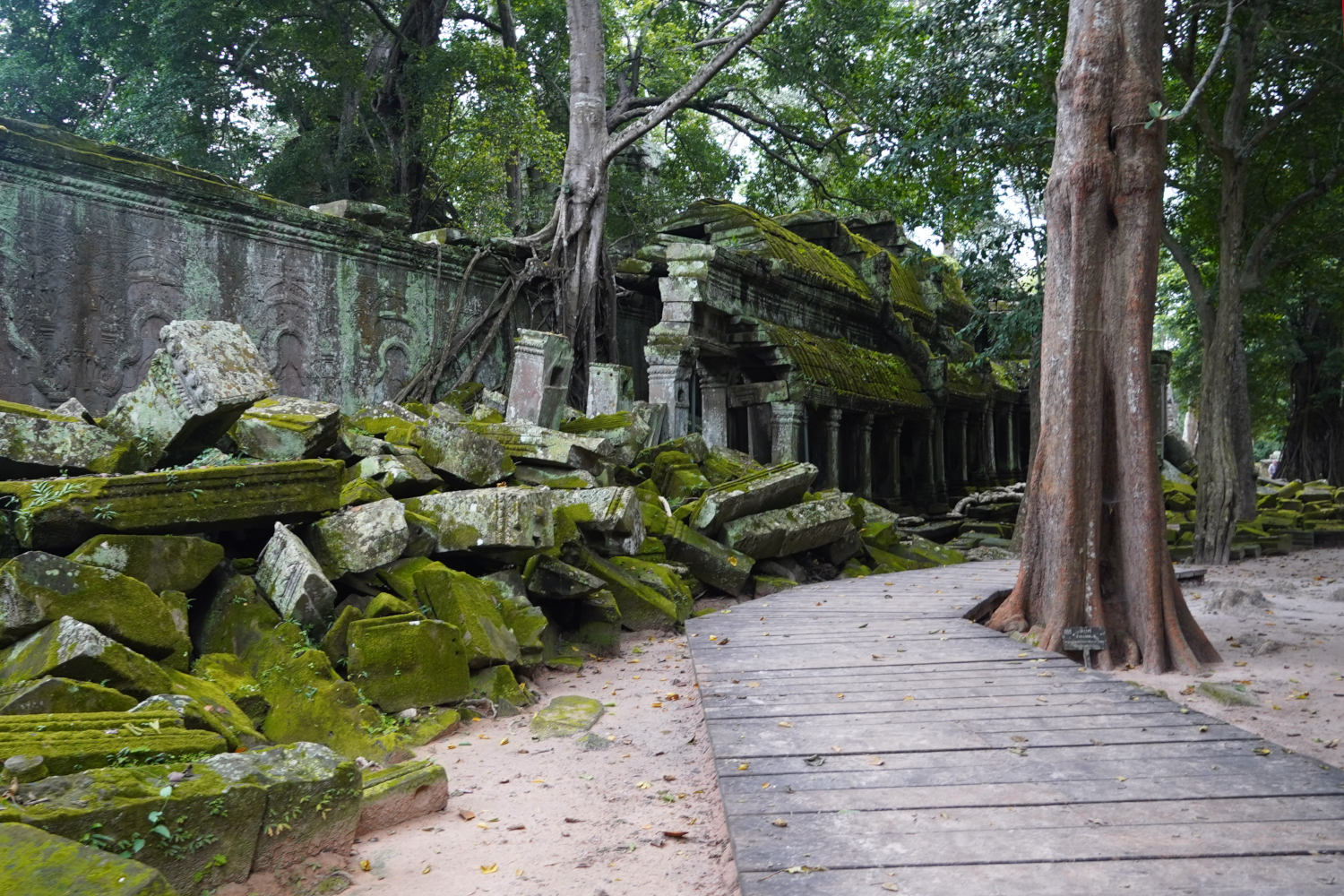
For one thing, Ta Prohm has a bewitching asymmetry to it that disorients you a bit, making you feel a little lost in time (at least if you’re lucky enough to avoid swarms of tourists). And there are the big slabs of stone that have become dislodged from the structure, and are lying in chaotic heaps , making you feel almost like an archaeologist discovering the place for the first time (at least if you’re lucky enough to avoid swarms of tourists).

Ta Prohm: Where Nature and History Collide
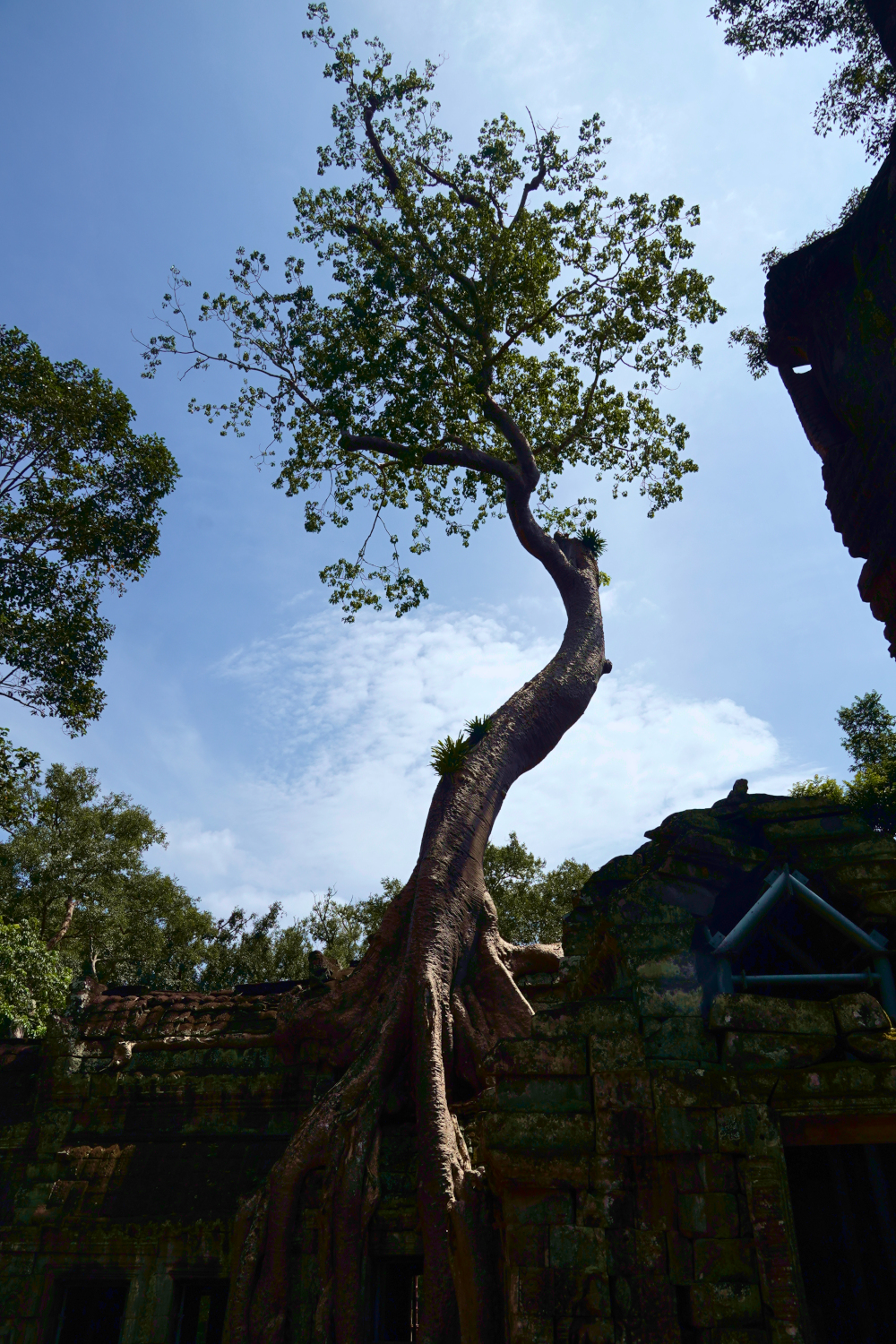
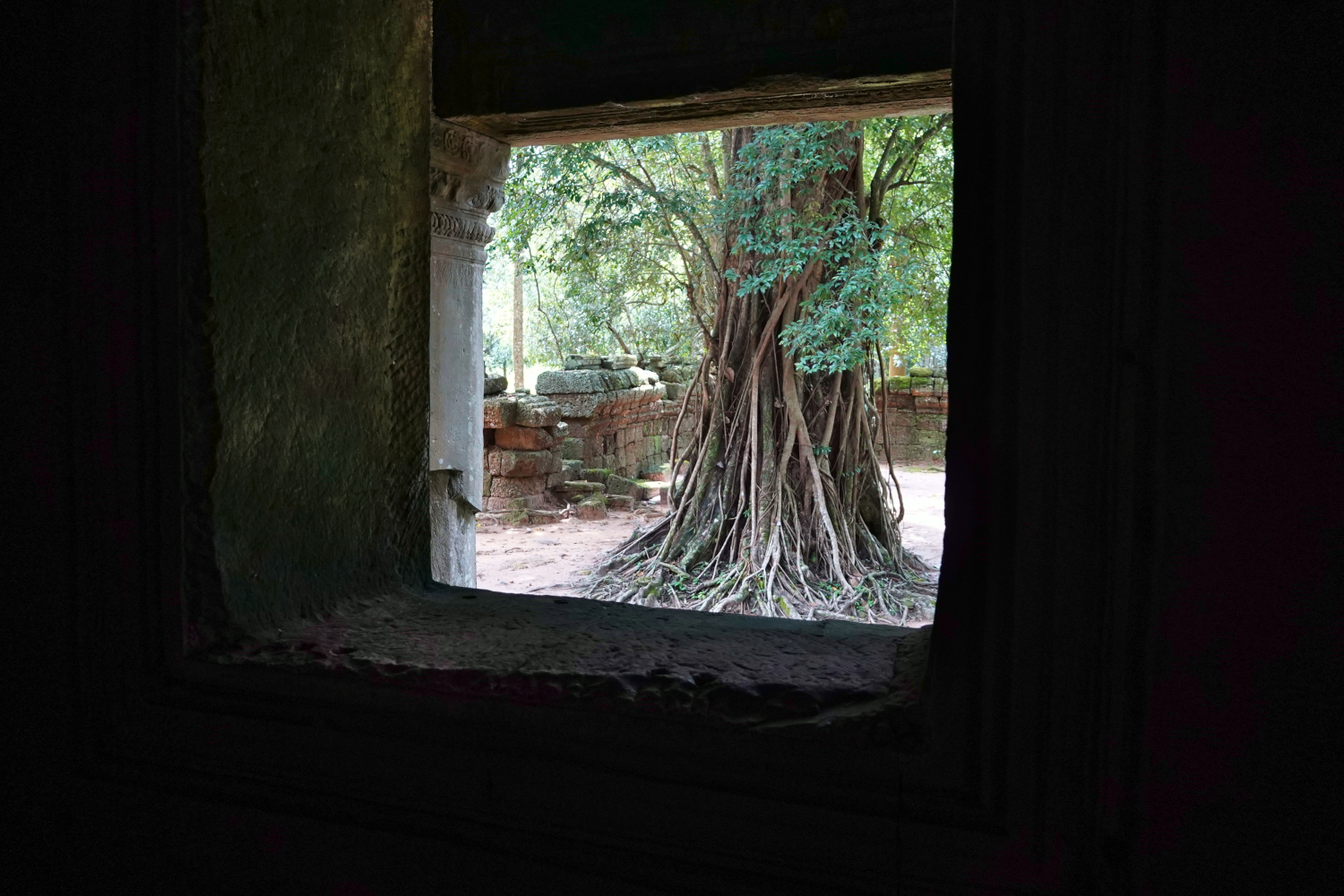
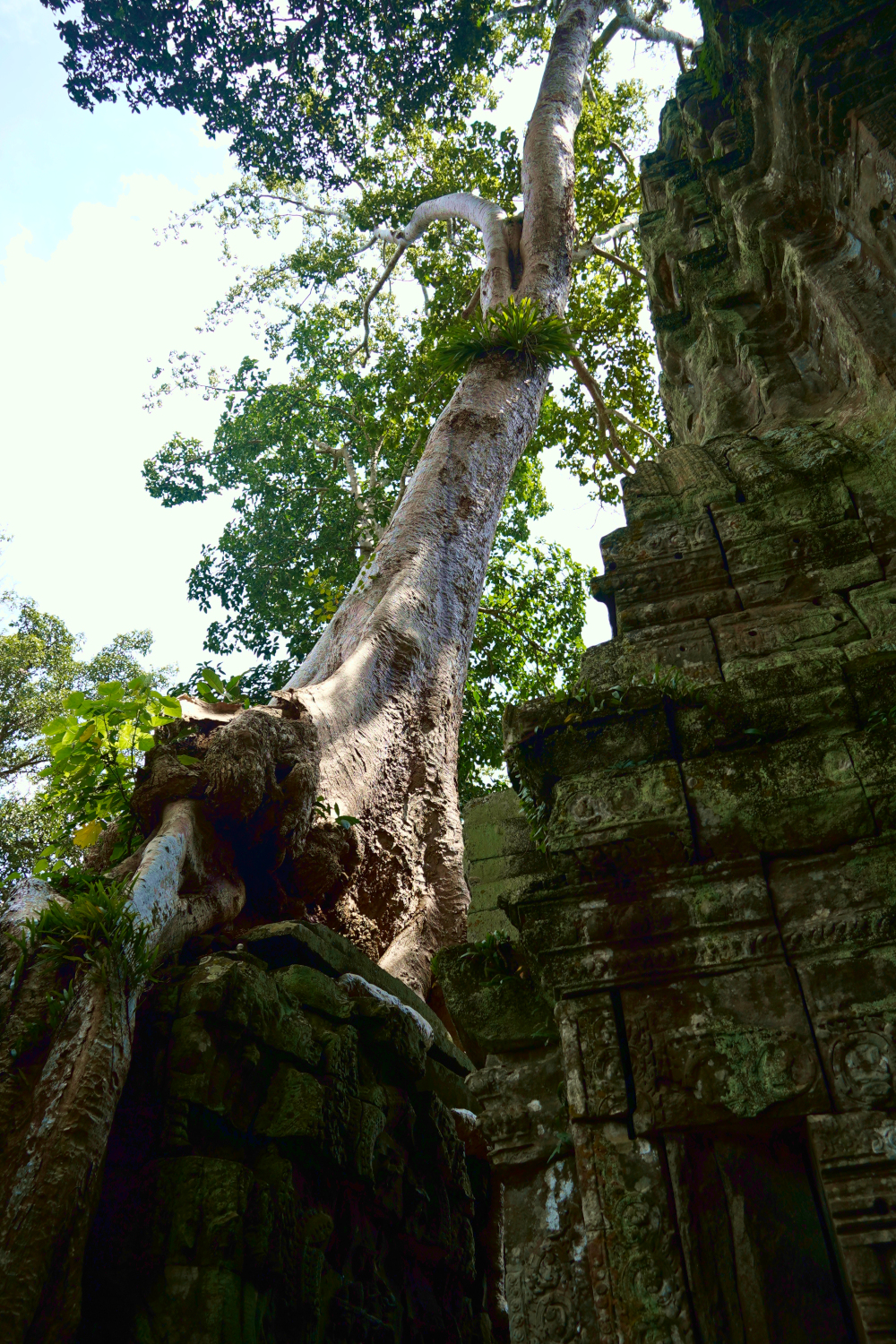
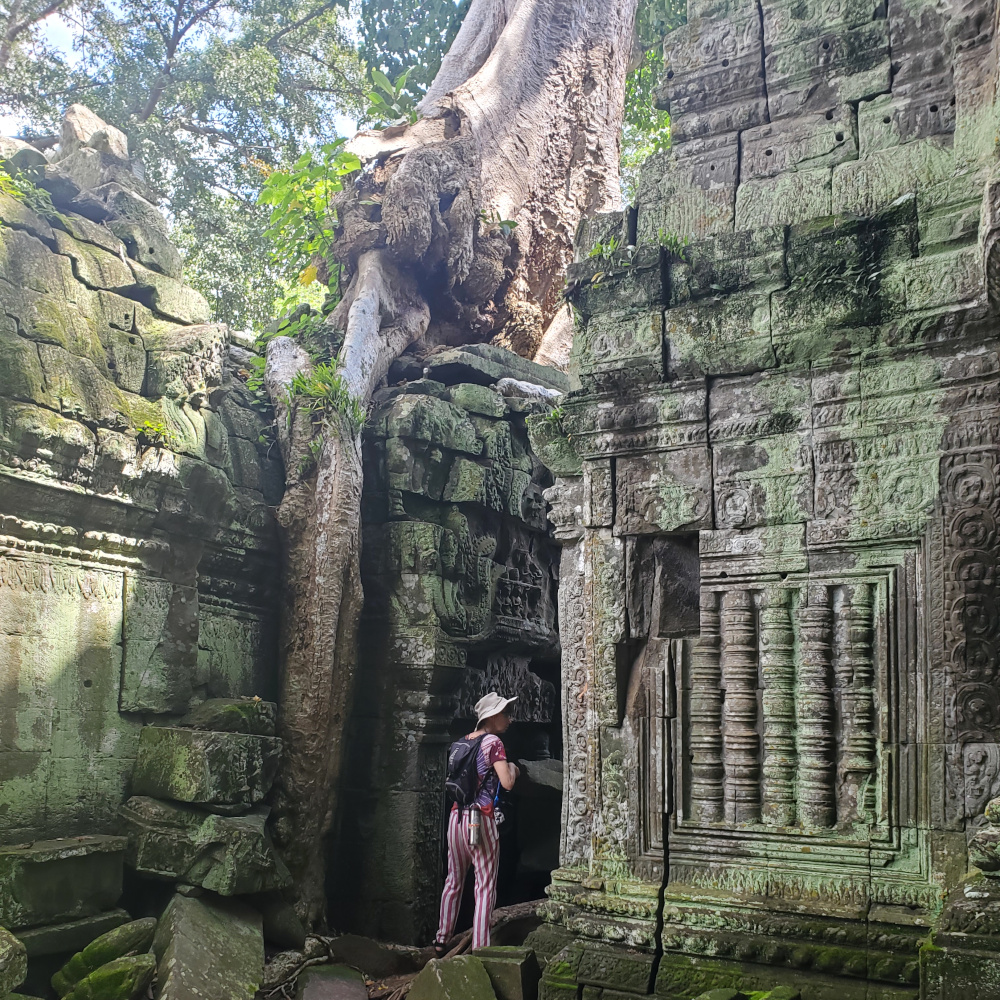
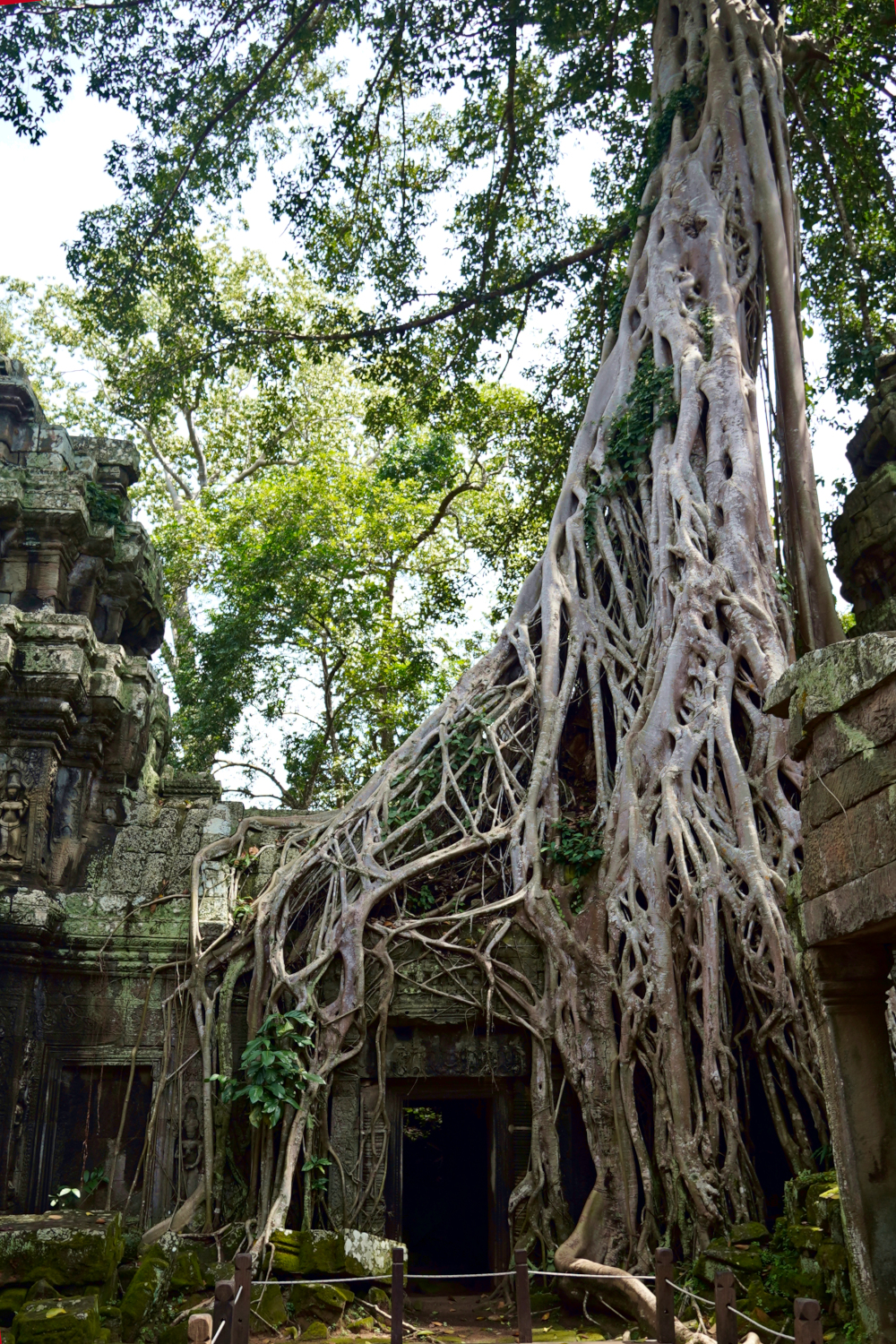
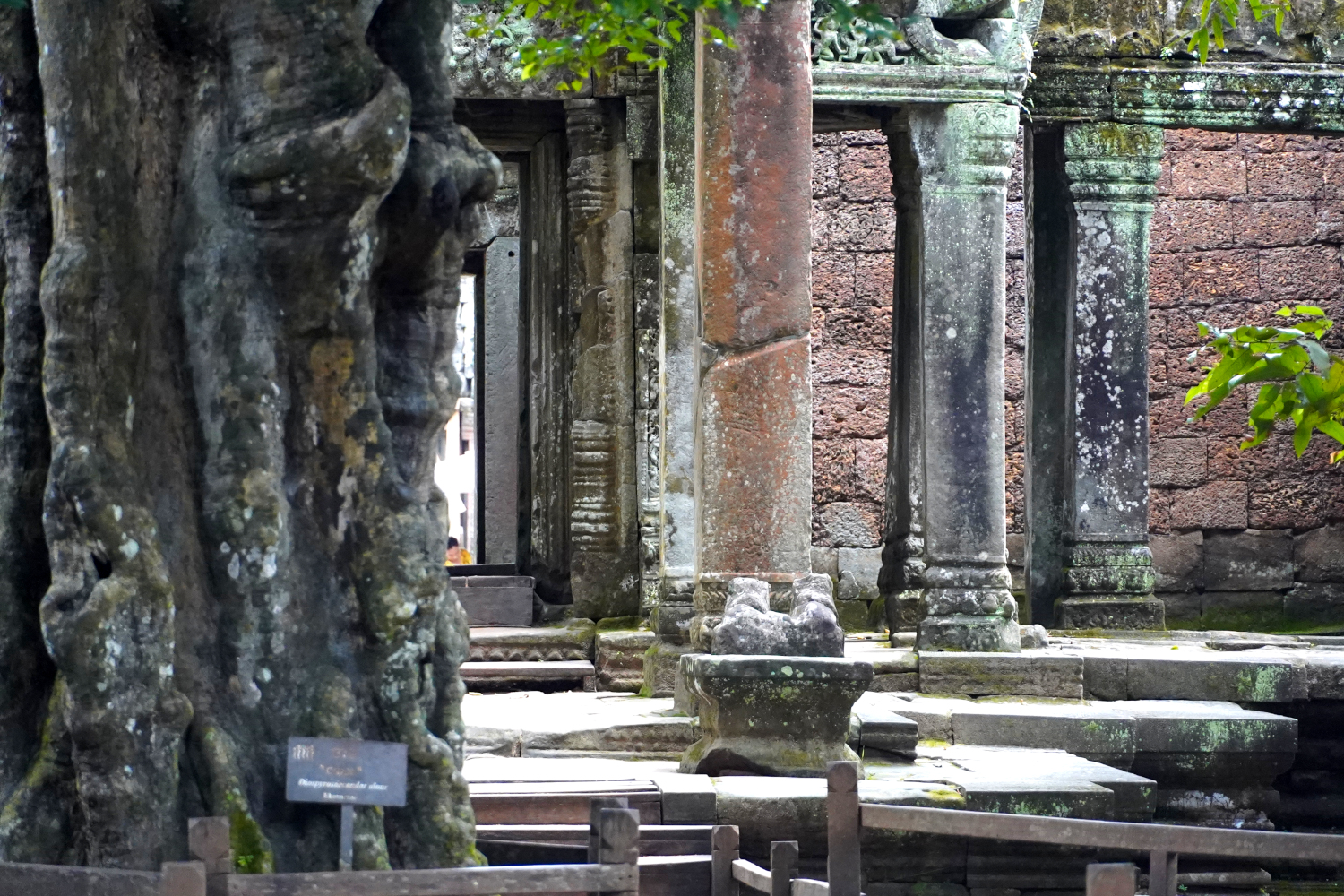
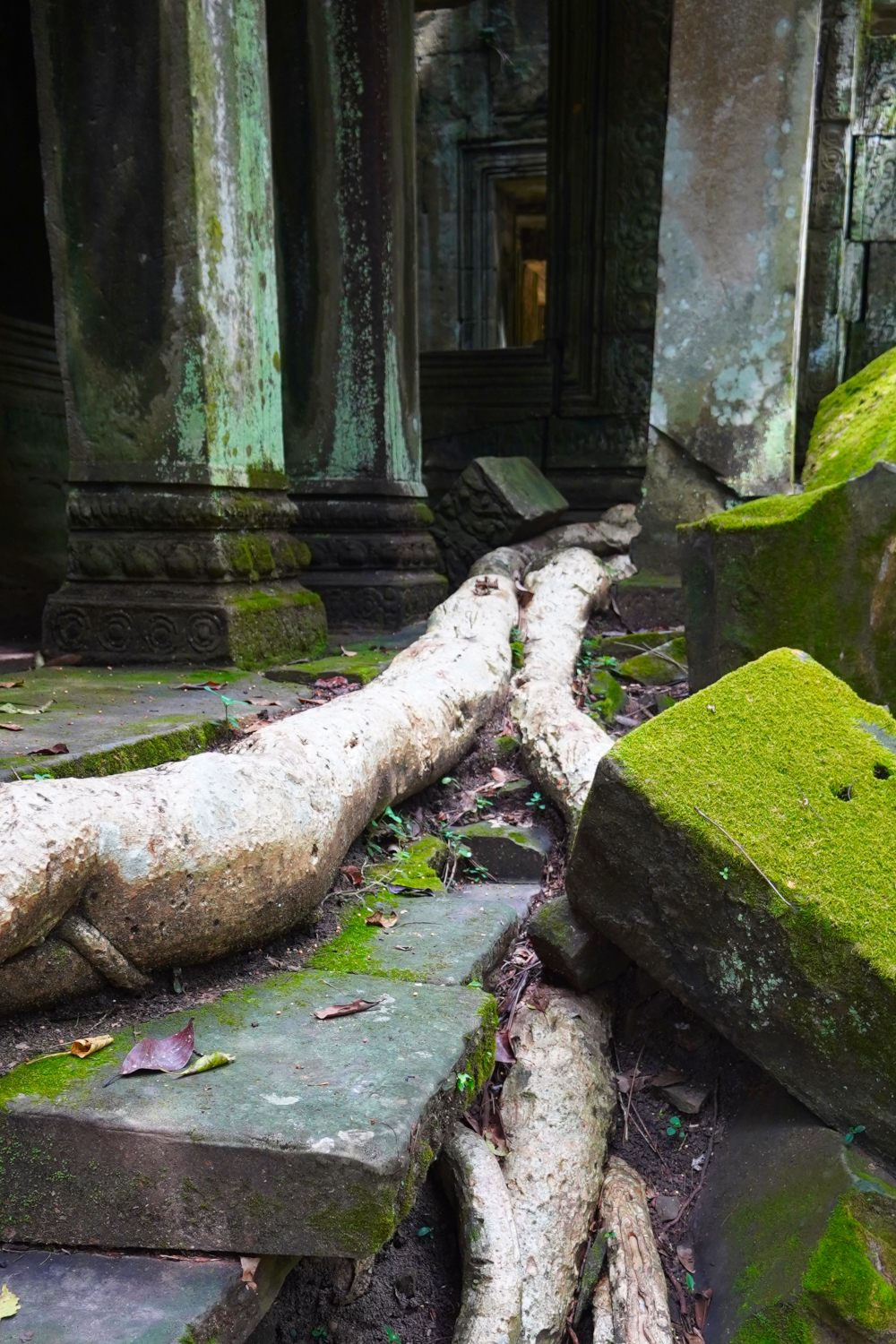
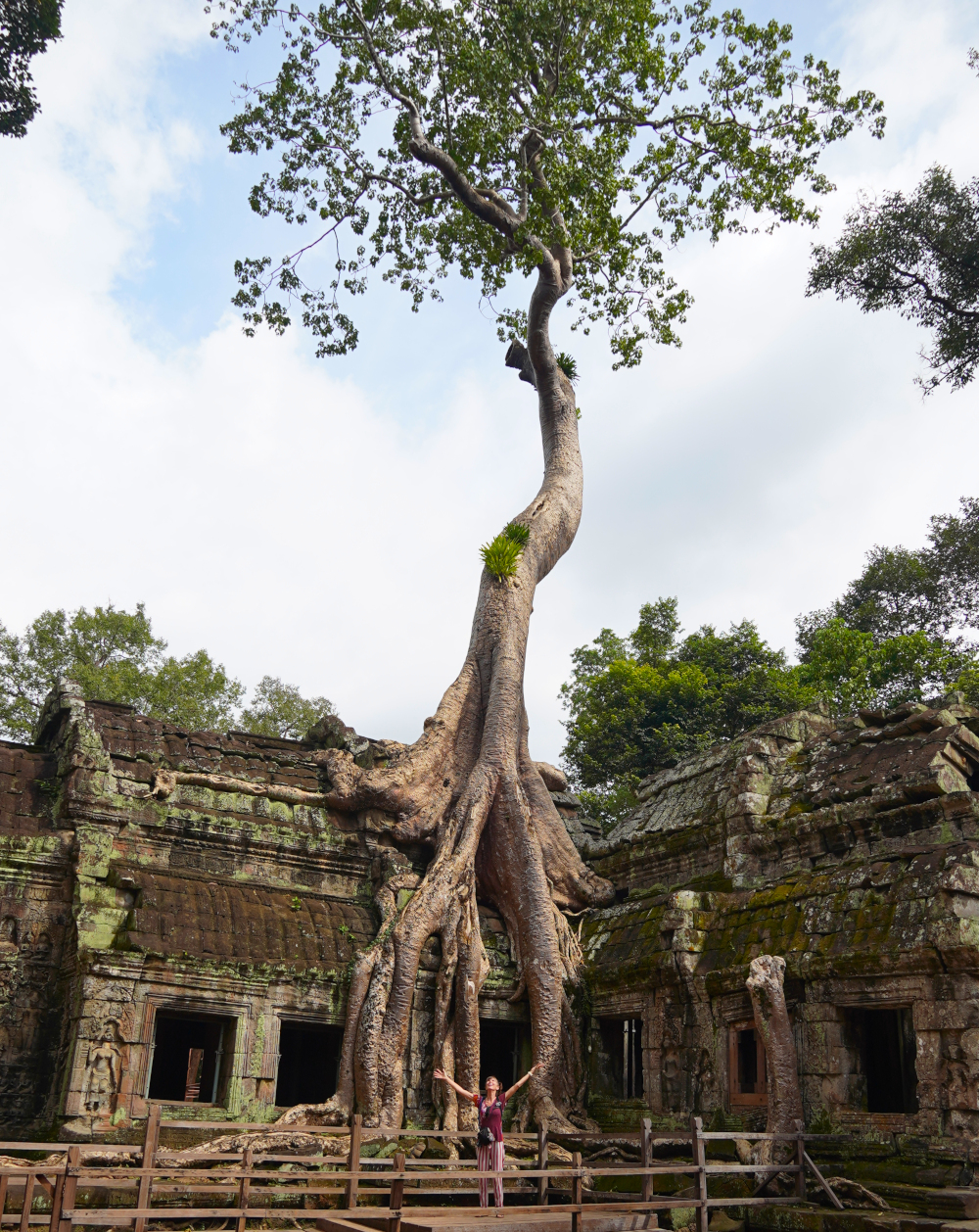
And then there are the trees. They are the thing that grabs your attention right away; and they look as if they are about to grab you as well. Towering, brooding monsters with long tentacles for roots, clutching at the stone and refusing to let go, and even gradually displacing the whole temple. These trees, shooting up through solid rock, are what have created the ruins at their feet — the temple was constructed without mortar, which makes the slow-motion demolition a little easier.
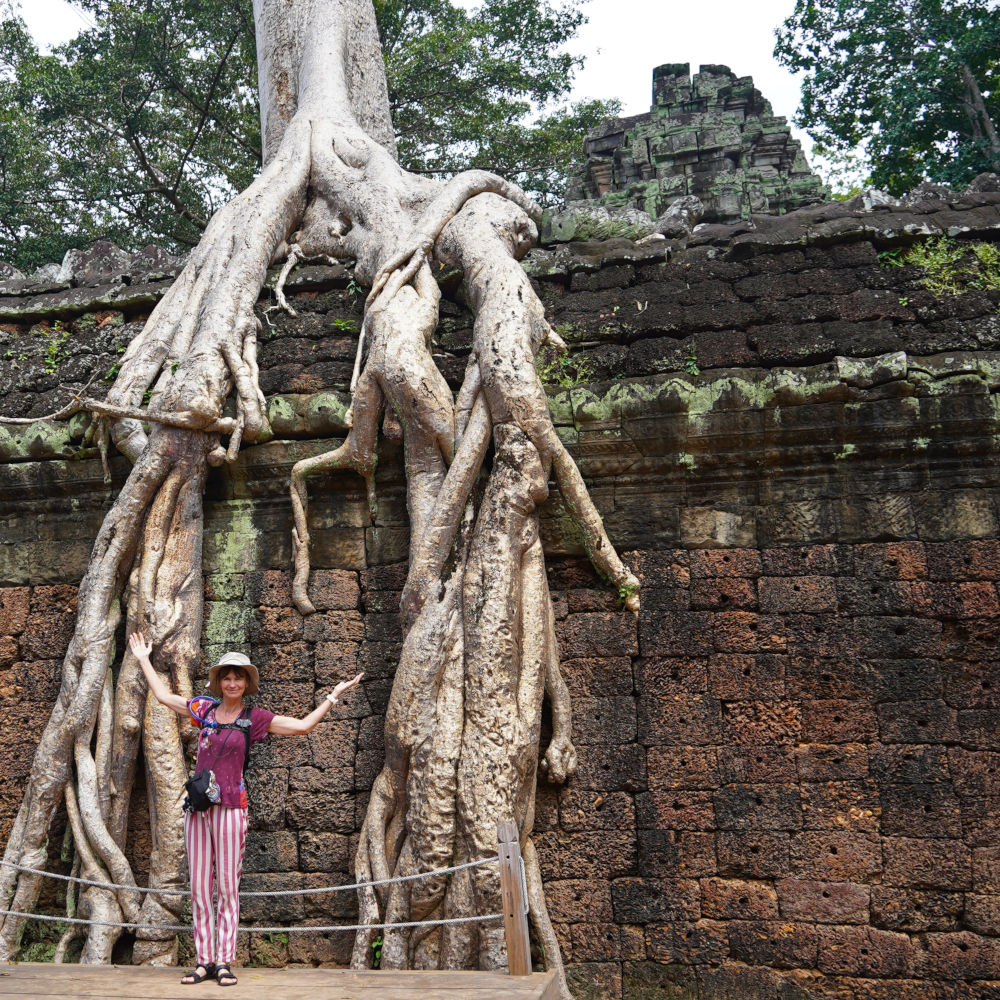
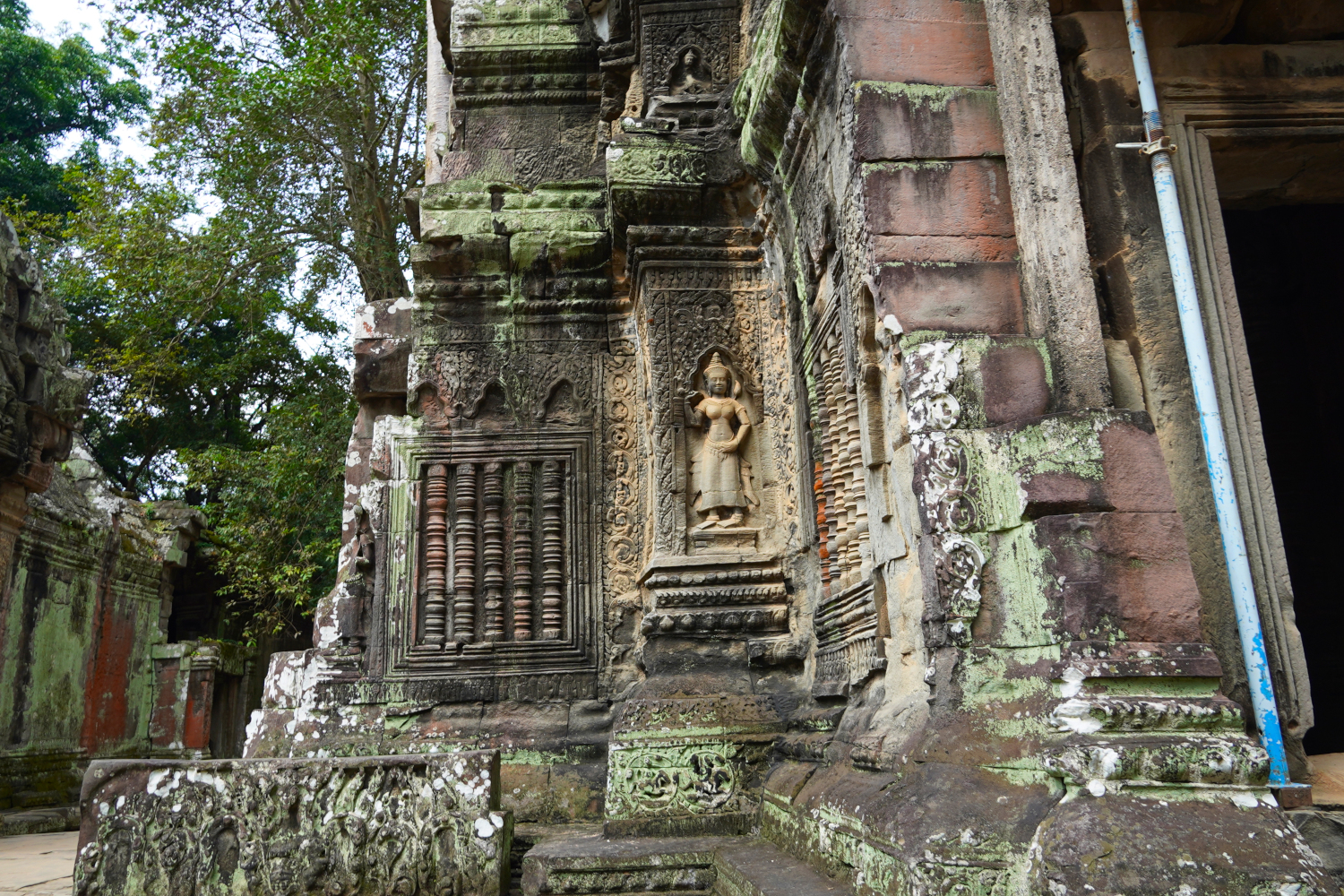
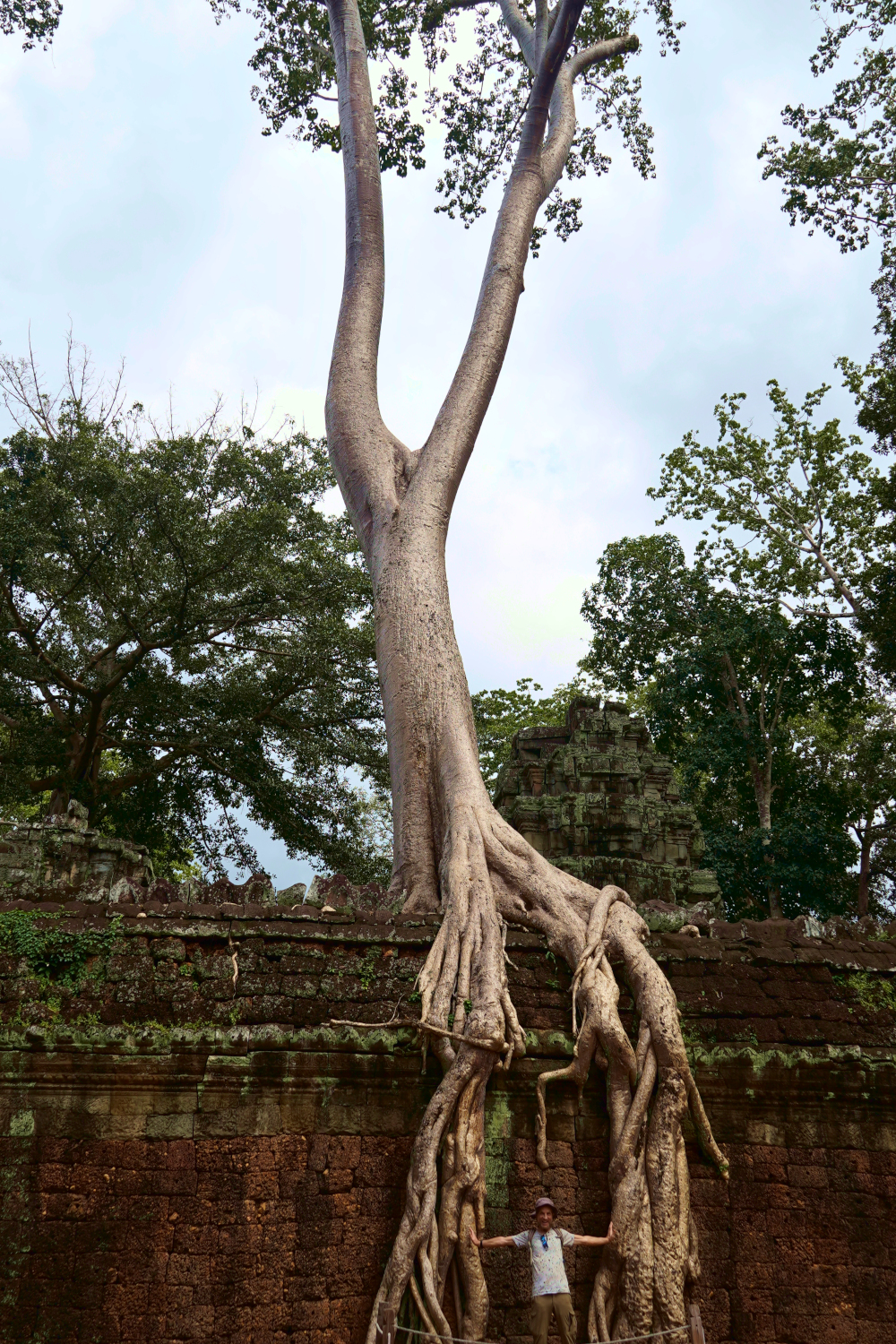
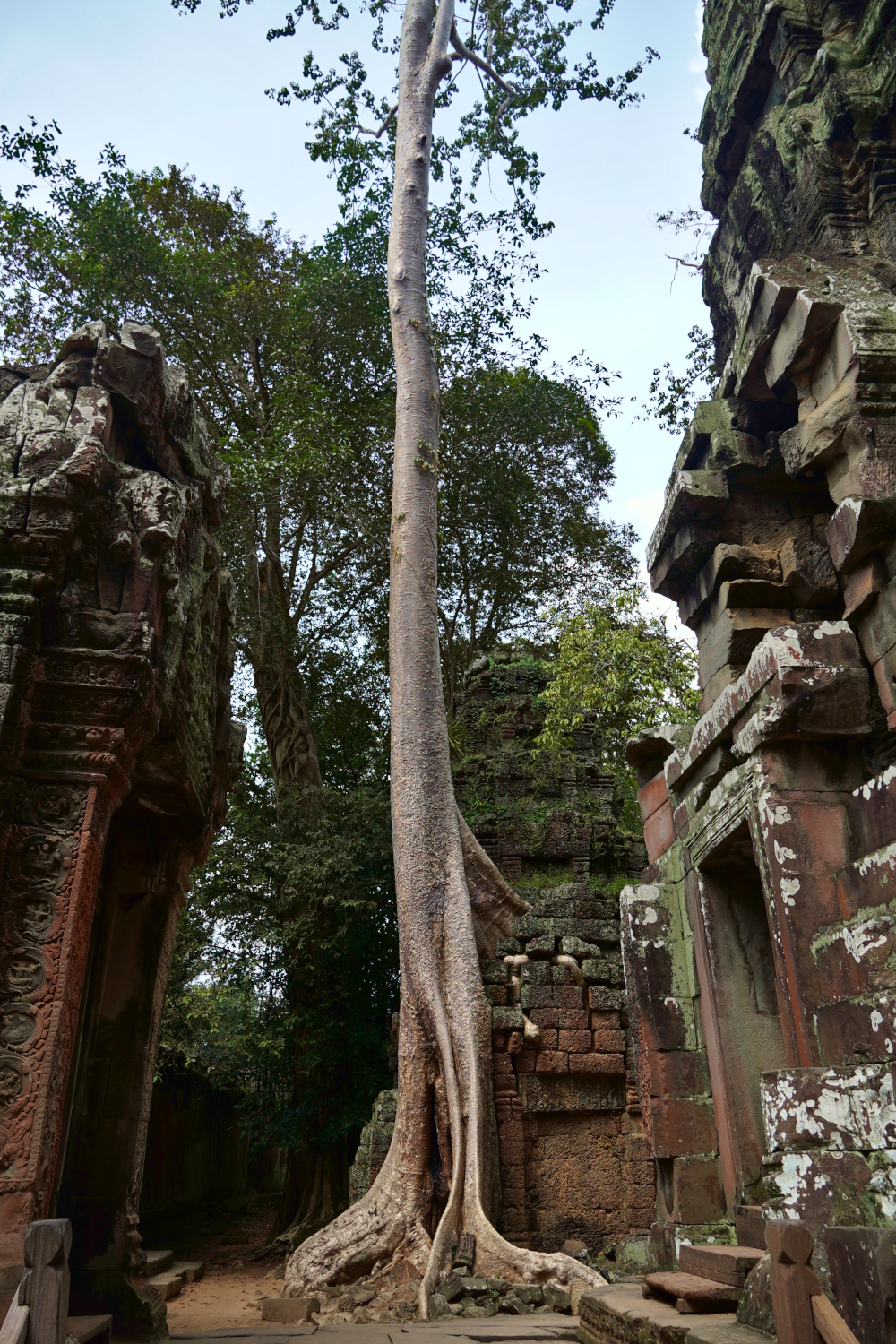
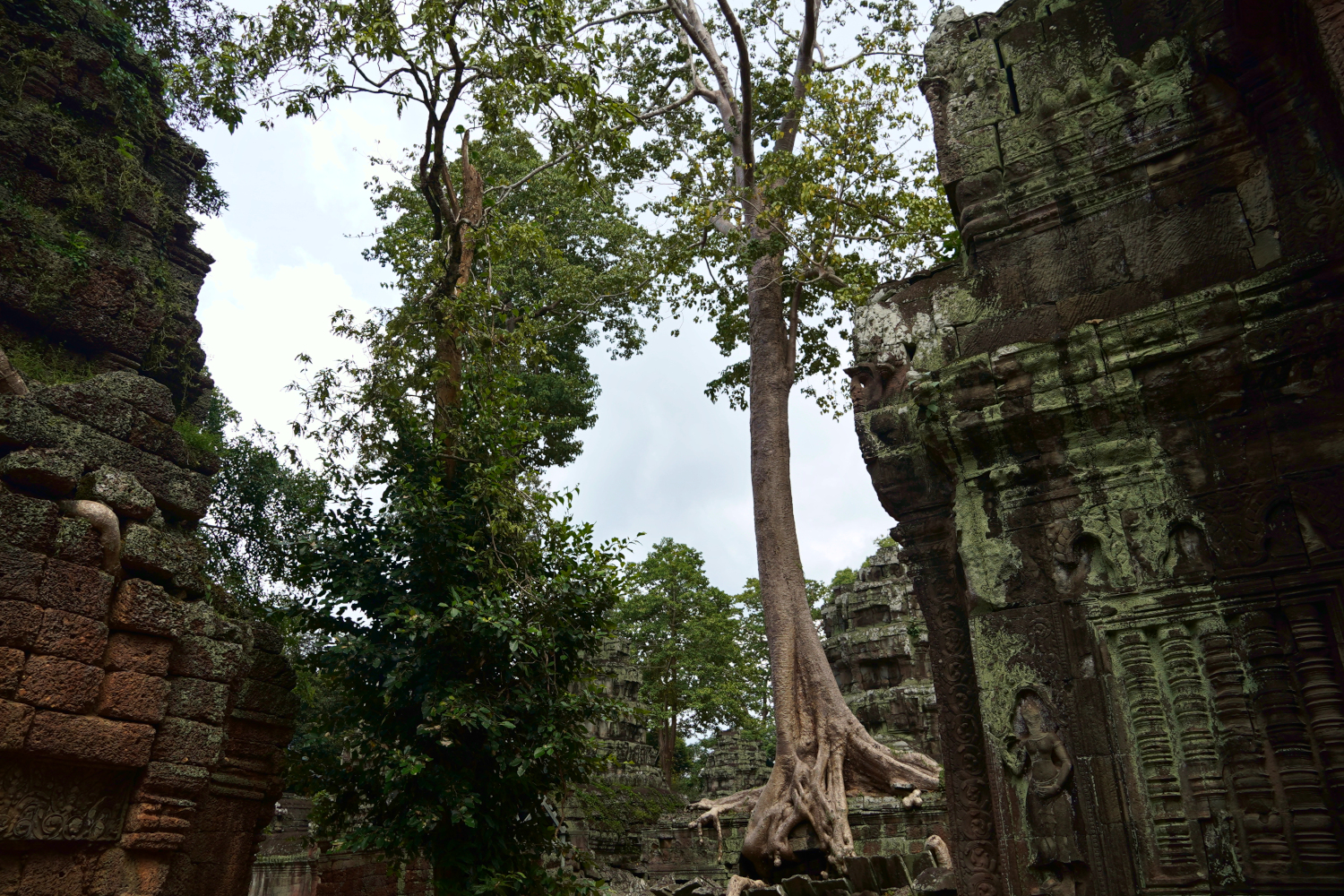
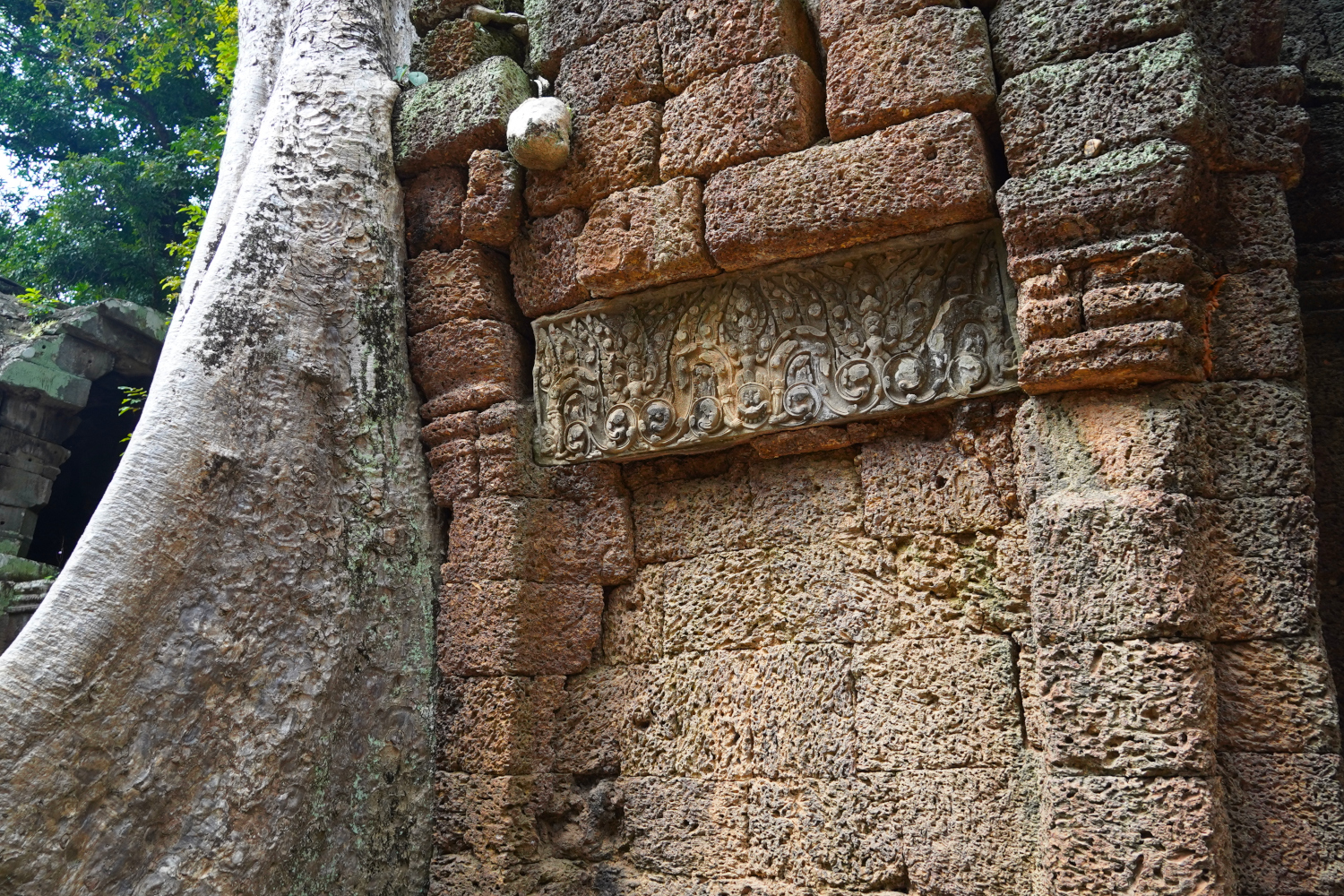
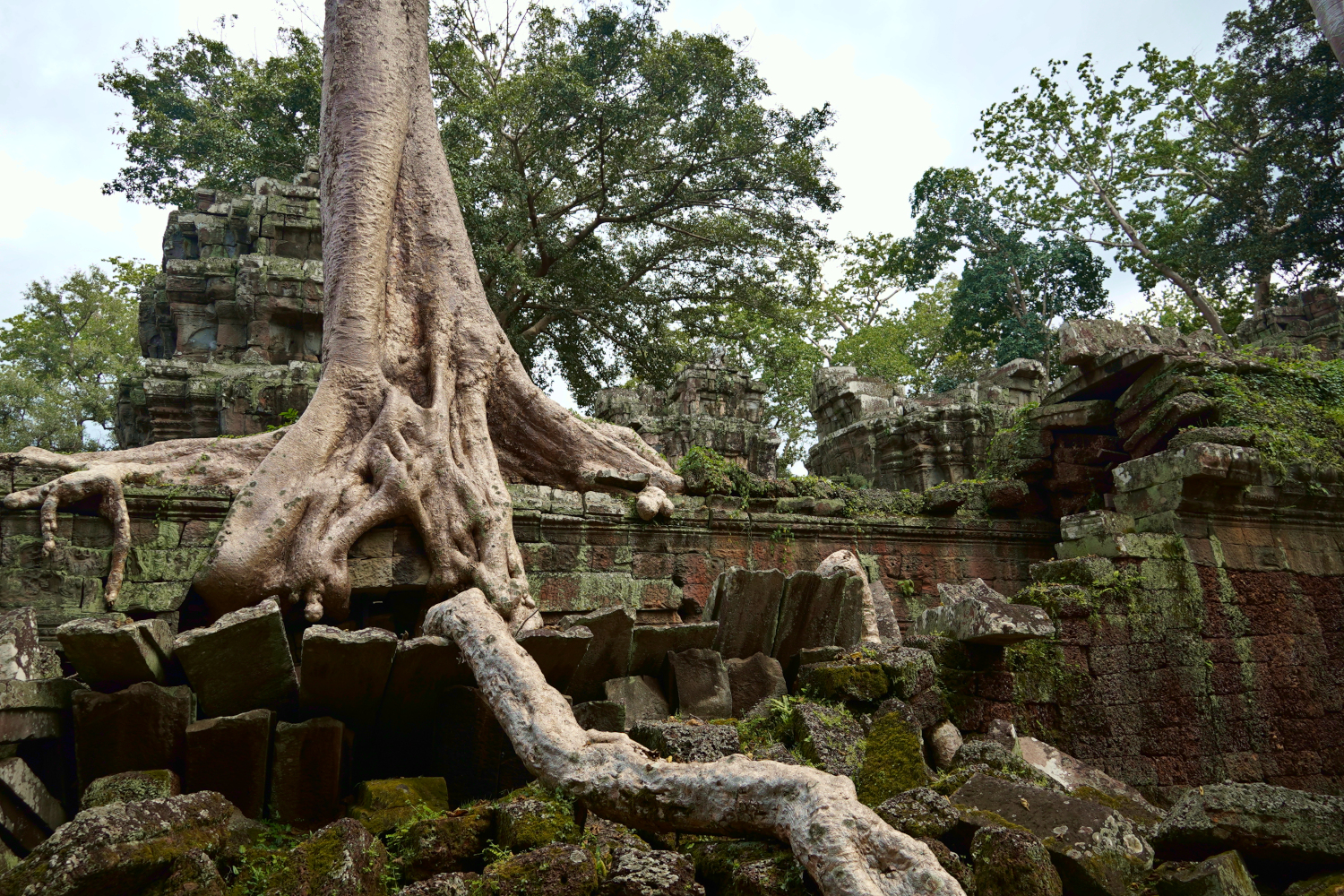
The odd thing is that nobody is really certain what species these arboreal titans are, though the options have been narrowed down to two. Most commonly, they’re thought to be silk-cotton trees. There’s also a smaller variety of tree, but their taxonomy is also uncertain — they’re possibly strangler figs, which sounds fitting.
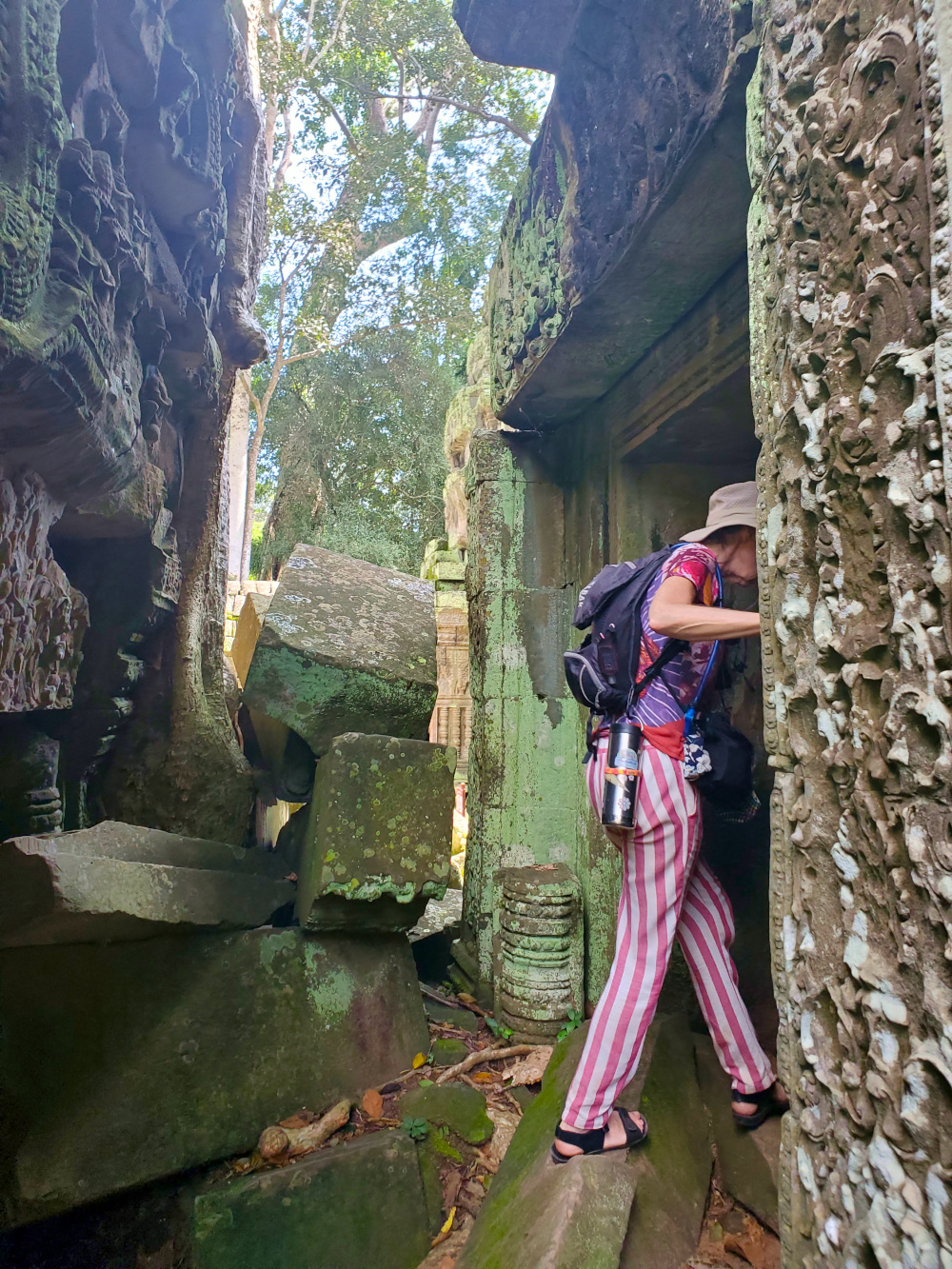

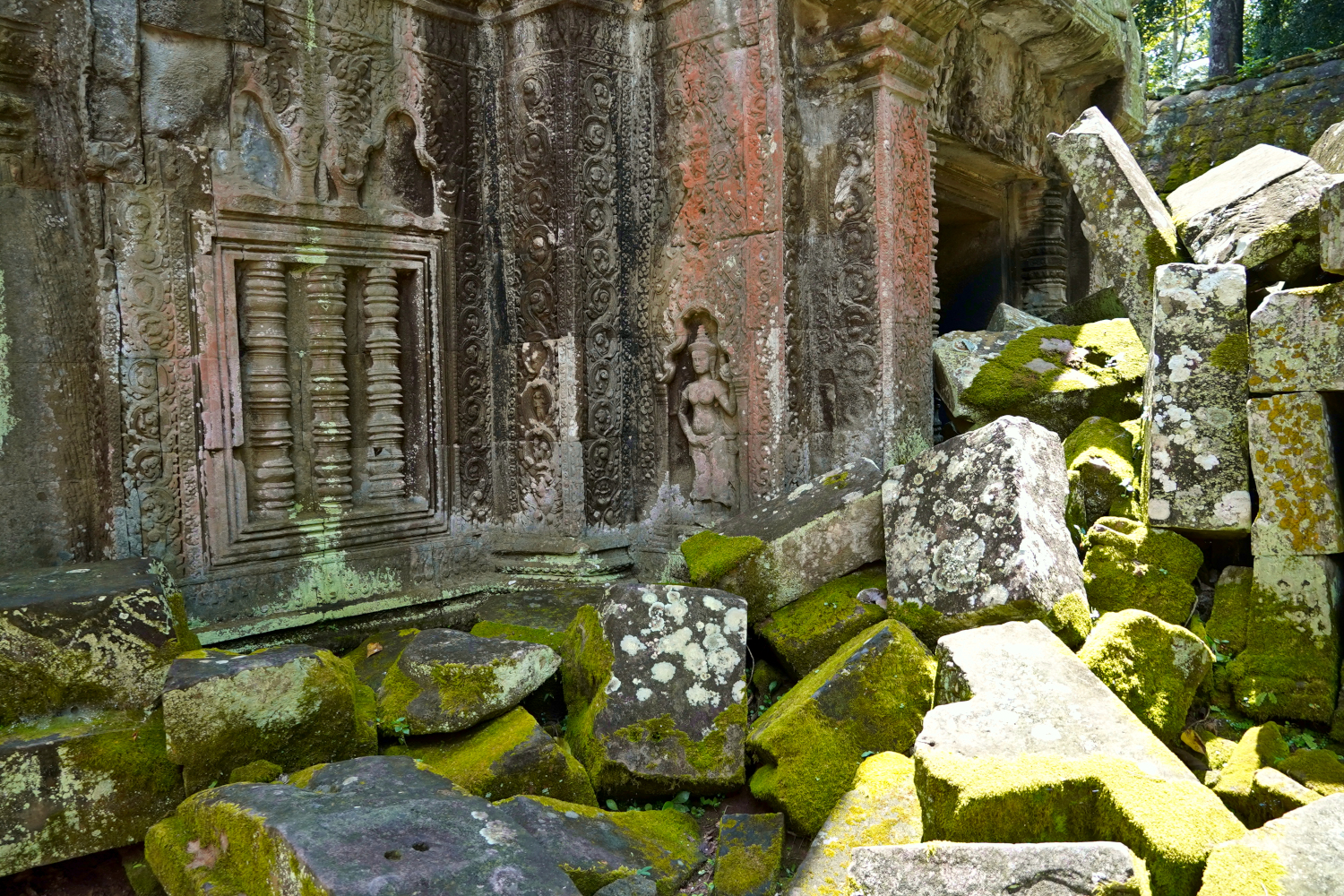
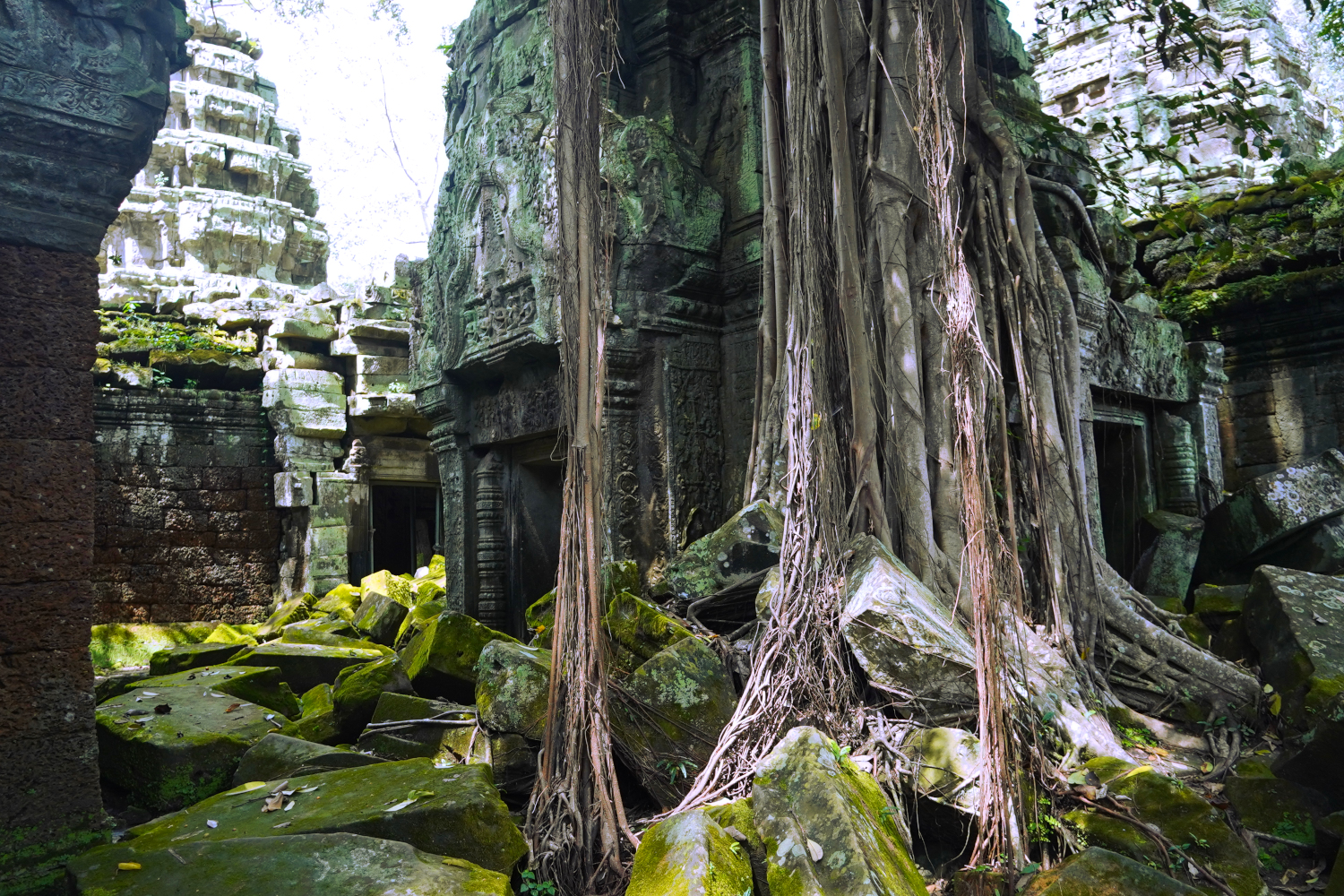

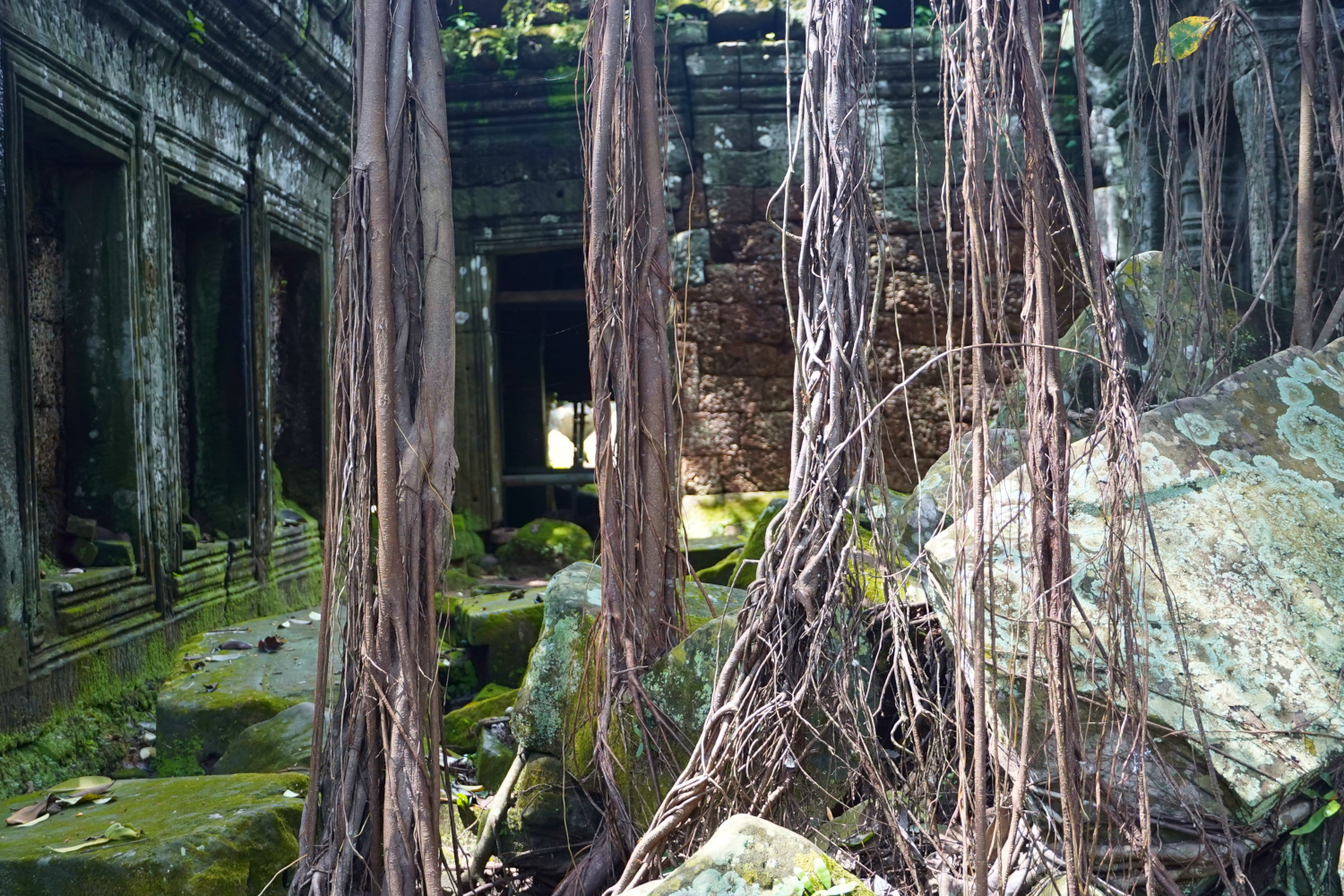

Whatever you call them, these trees are a stark metaphor for Mother Nature reclaiming her land from even the loftiest undertakings of us puny mortals.

Expedition Retrieve Glasses
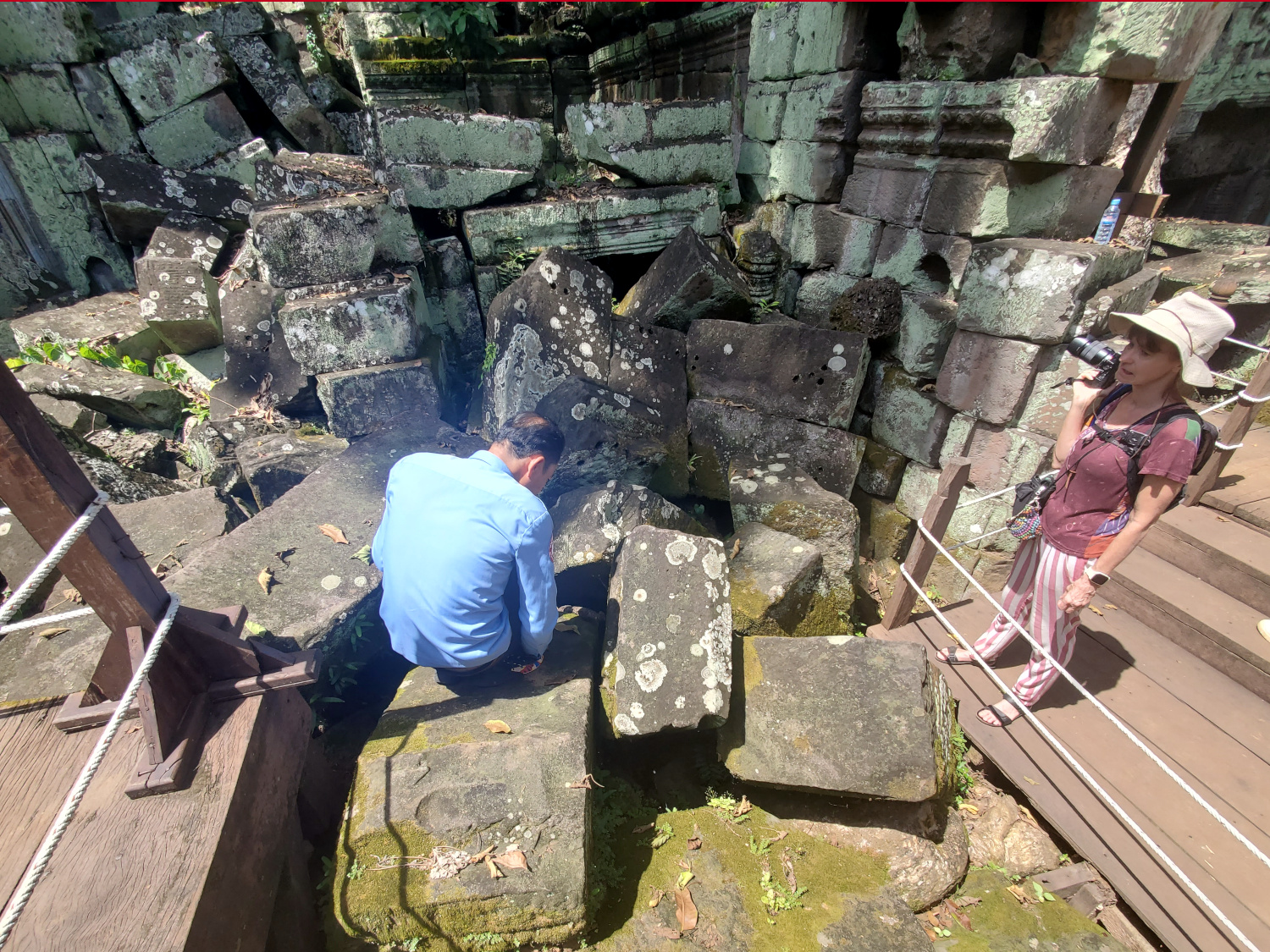
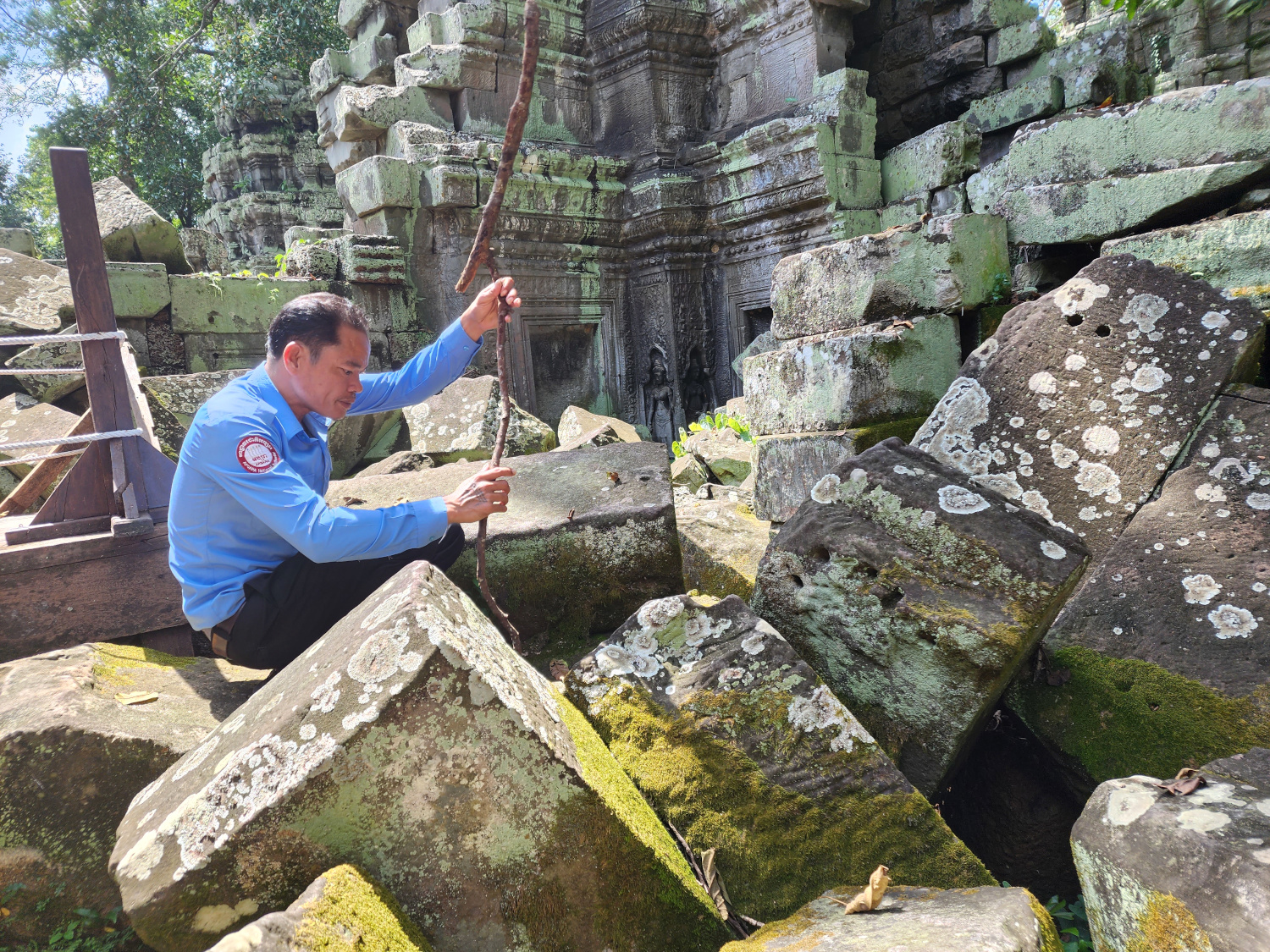
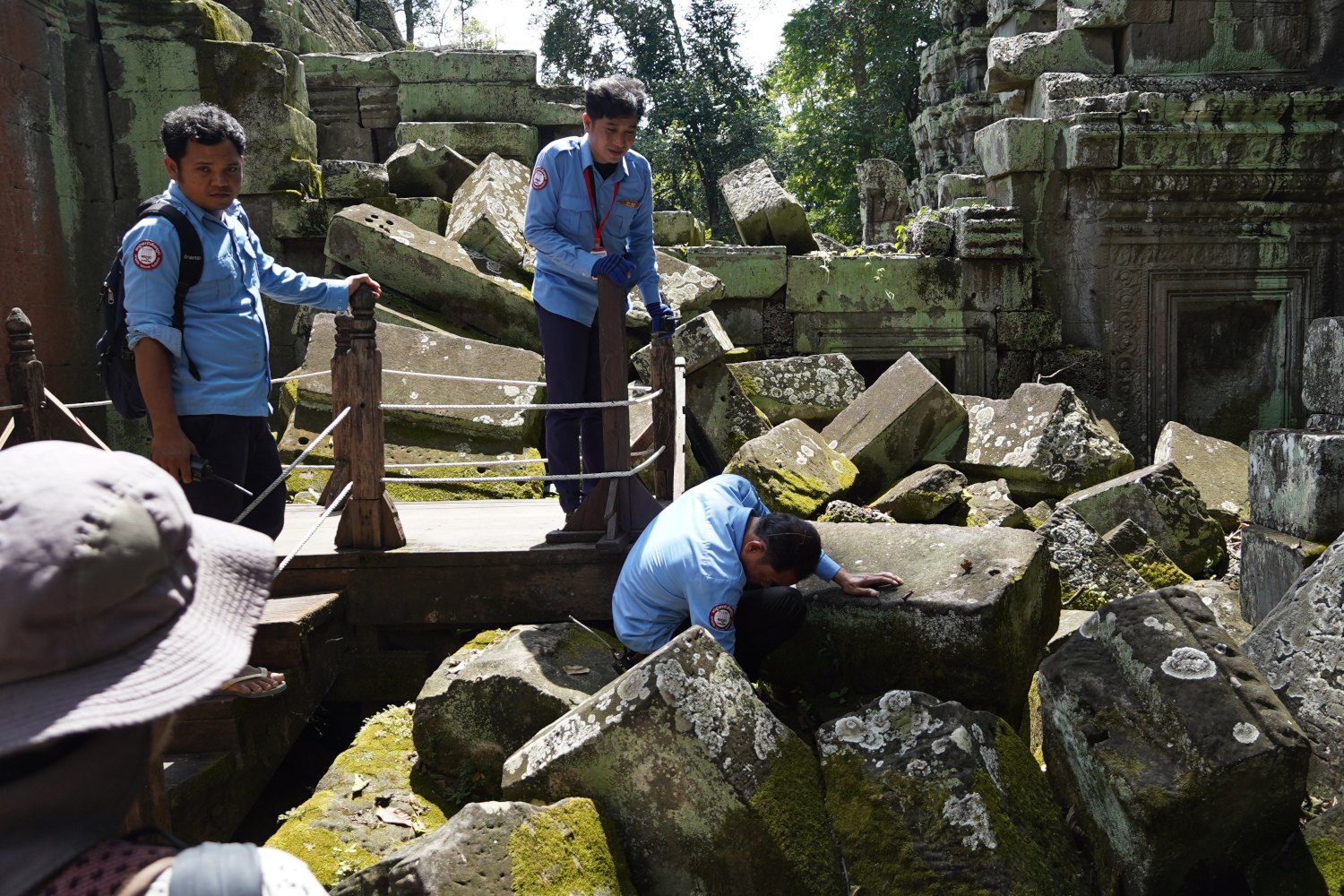
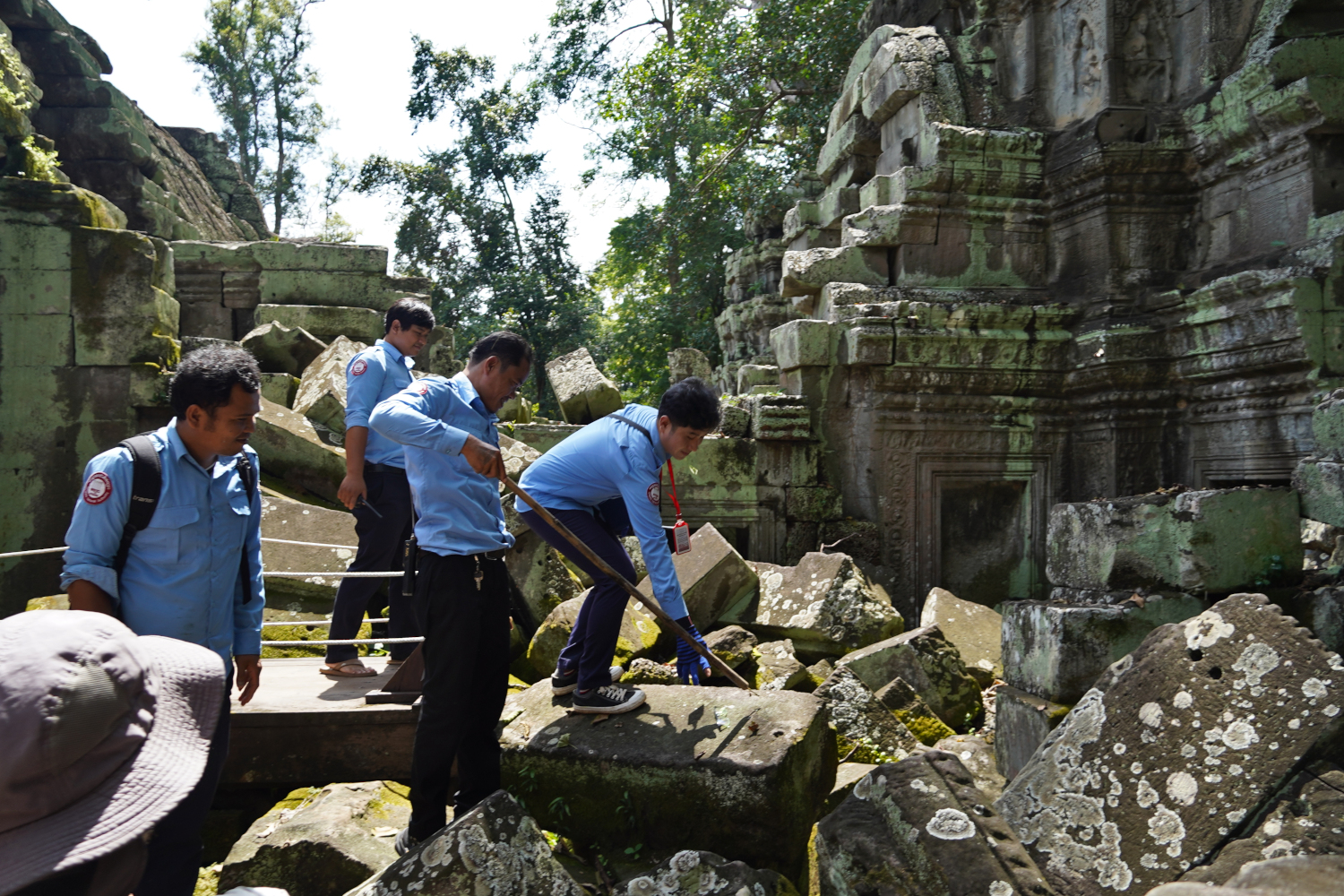
At one point we prompted several park attendants to play archaeologist when Kimberly’s glasses slipped and fell into a crevice between rocks. She was unable to retrieve them herself, as they were in a roped-off area accessible only to personnel.
So we got the attention of one of these personnel, and he made an effort to fish it out. Ultimately, he had to enlist the help of three of his comrades (or else they had nothing else to do and just helped him to relieve boredom), and finally the mission was accomplished. So Kimberly didn’t have to spend the rest of the day not being able to read, and archaeologists of the distant future won’t have to wonder what that strange object is, and how the ancient Cambodians used it.
Beyond Angkor Wat: Unveiling the Allure of Ta Prohm
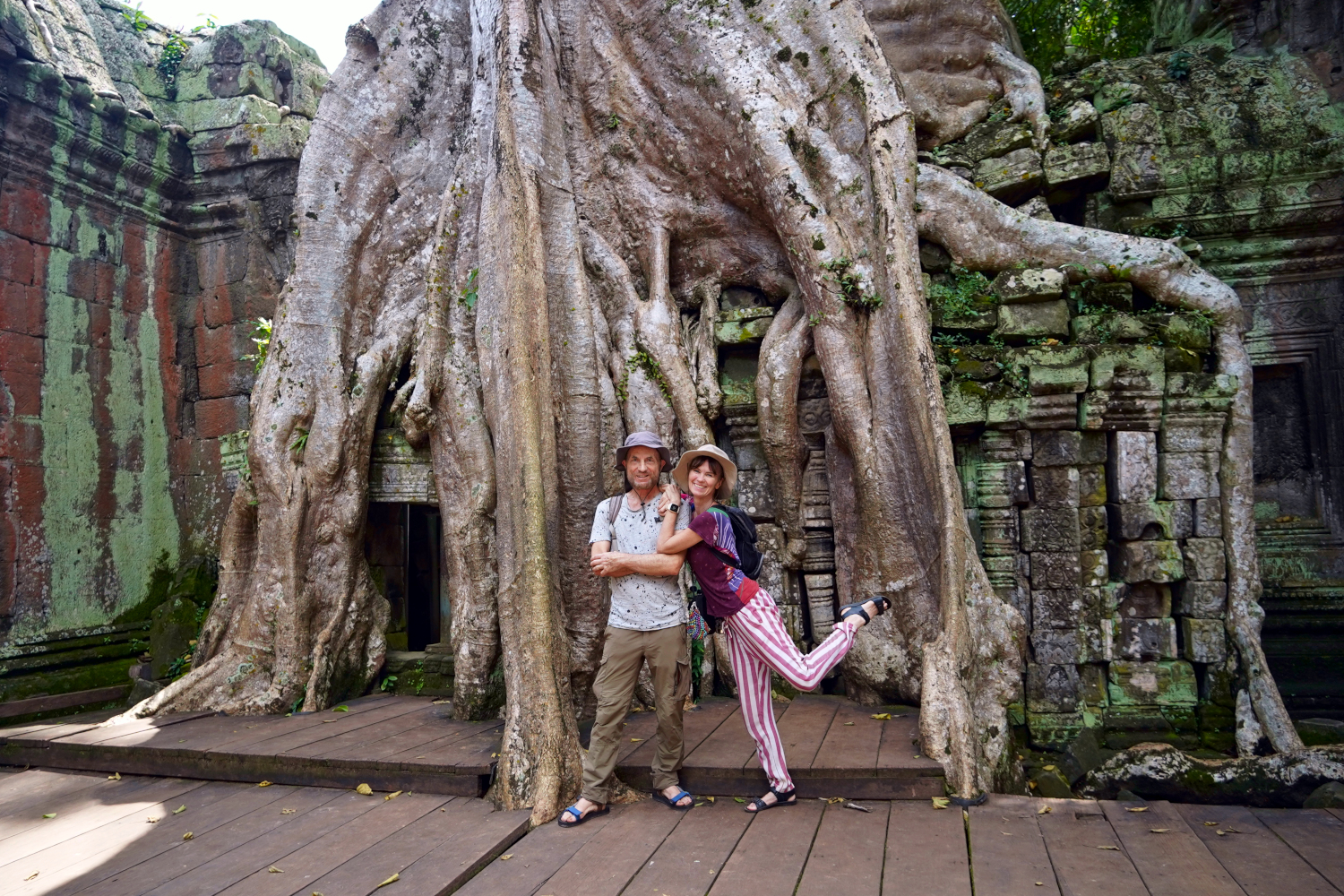
There are a couple of especially popular photo op spots at Ta Prohm, with wooden platforms where the visitor can stand to have a photo taken with the ruined temple and an intergalactic- looking tree in the background. Sometimes you have to stand in line to get a shot of one of these prime real estate locations, but we managed to do it more than once, even competing with tour groups.
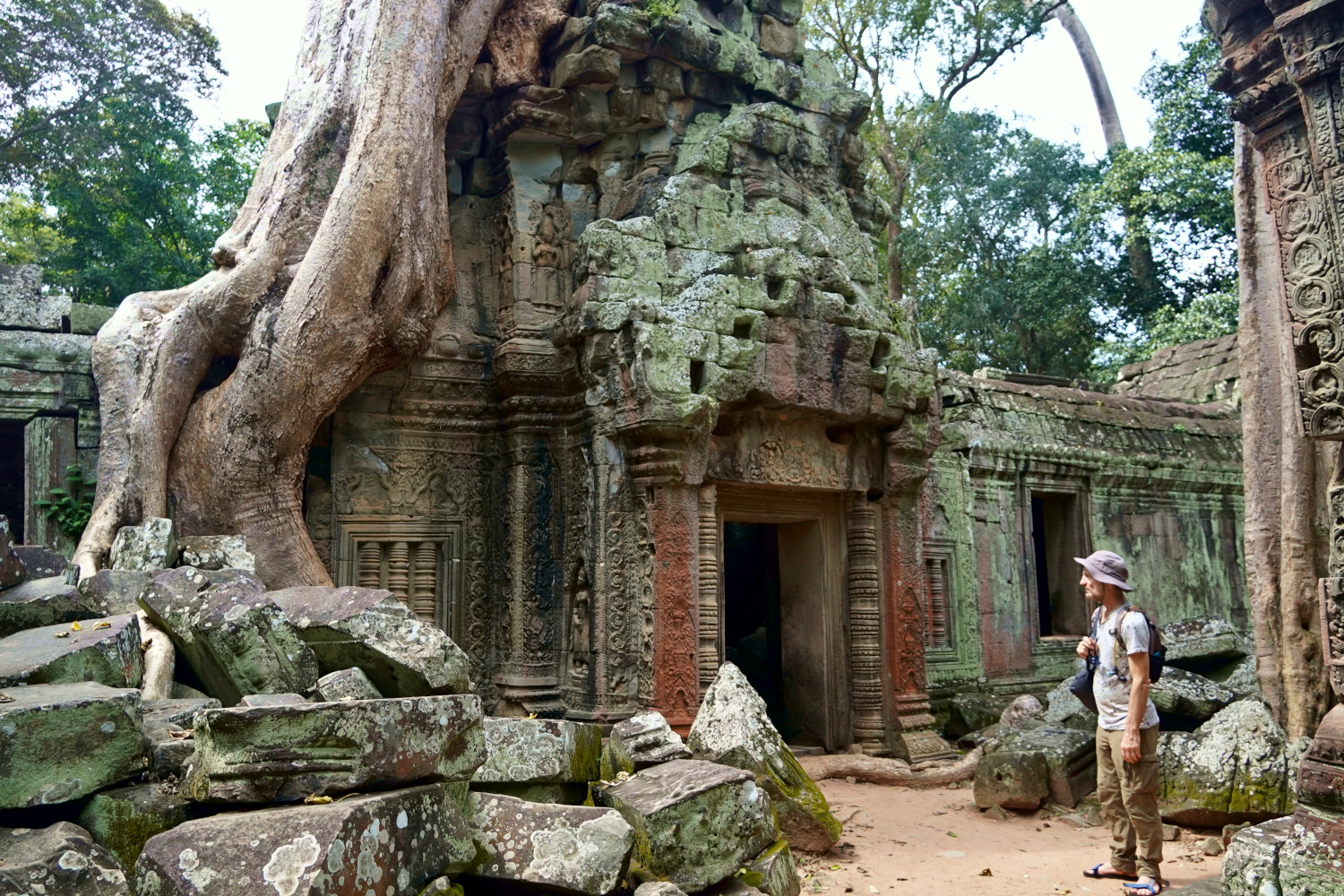

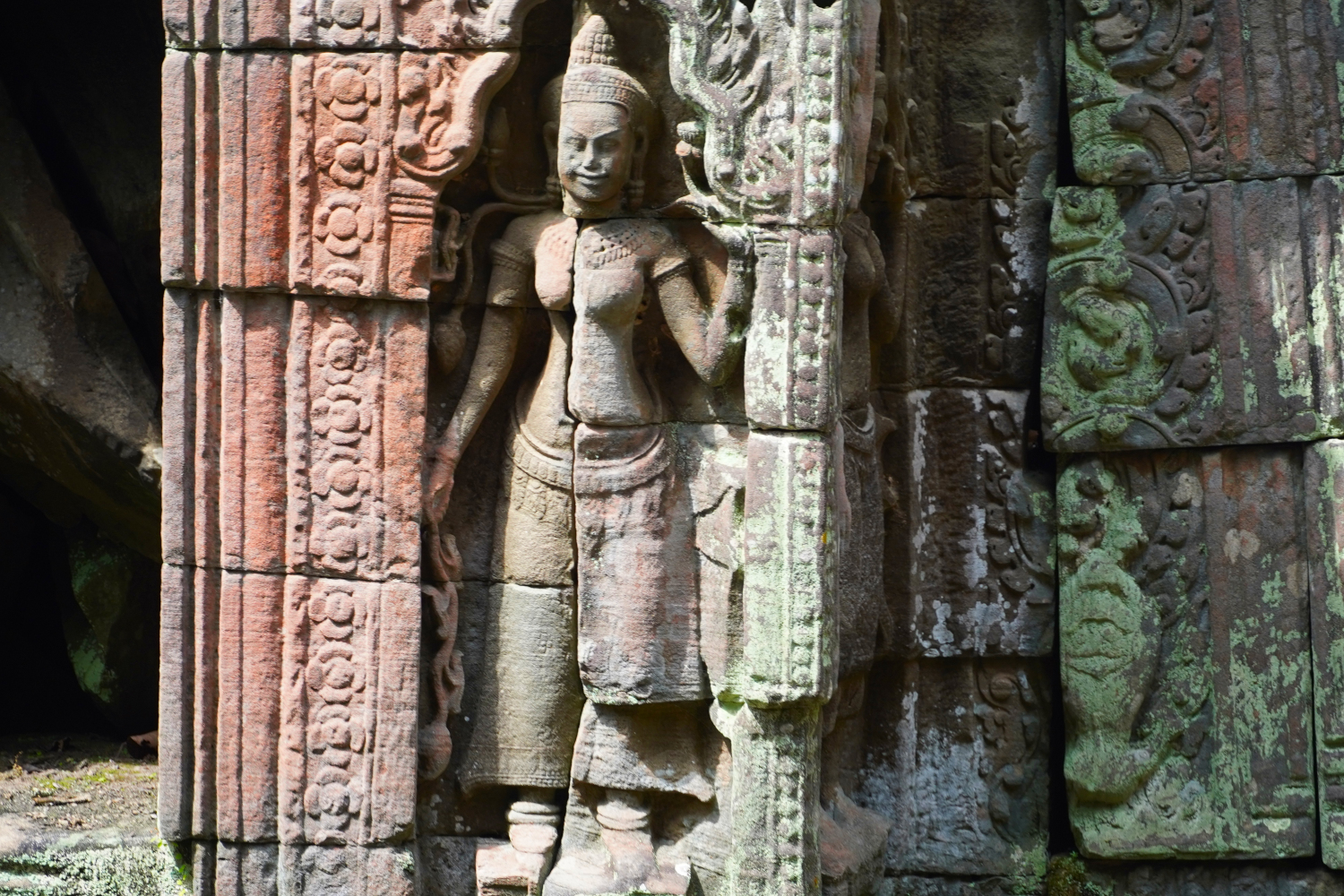
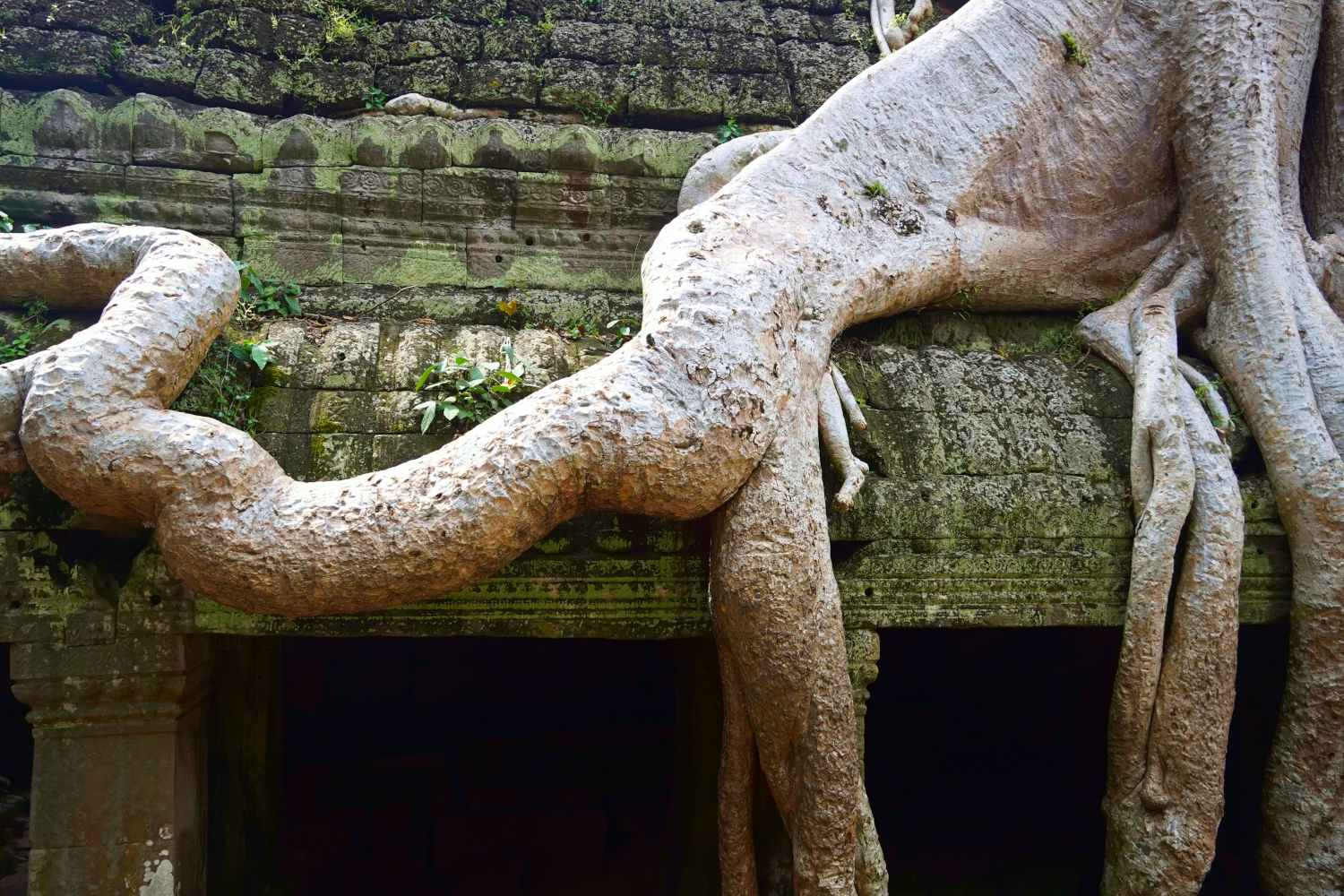
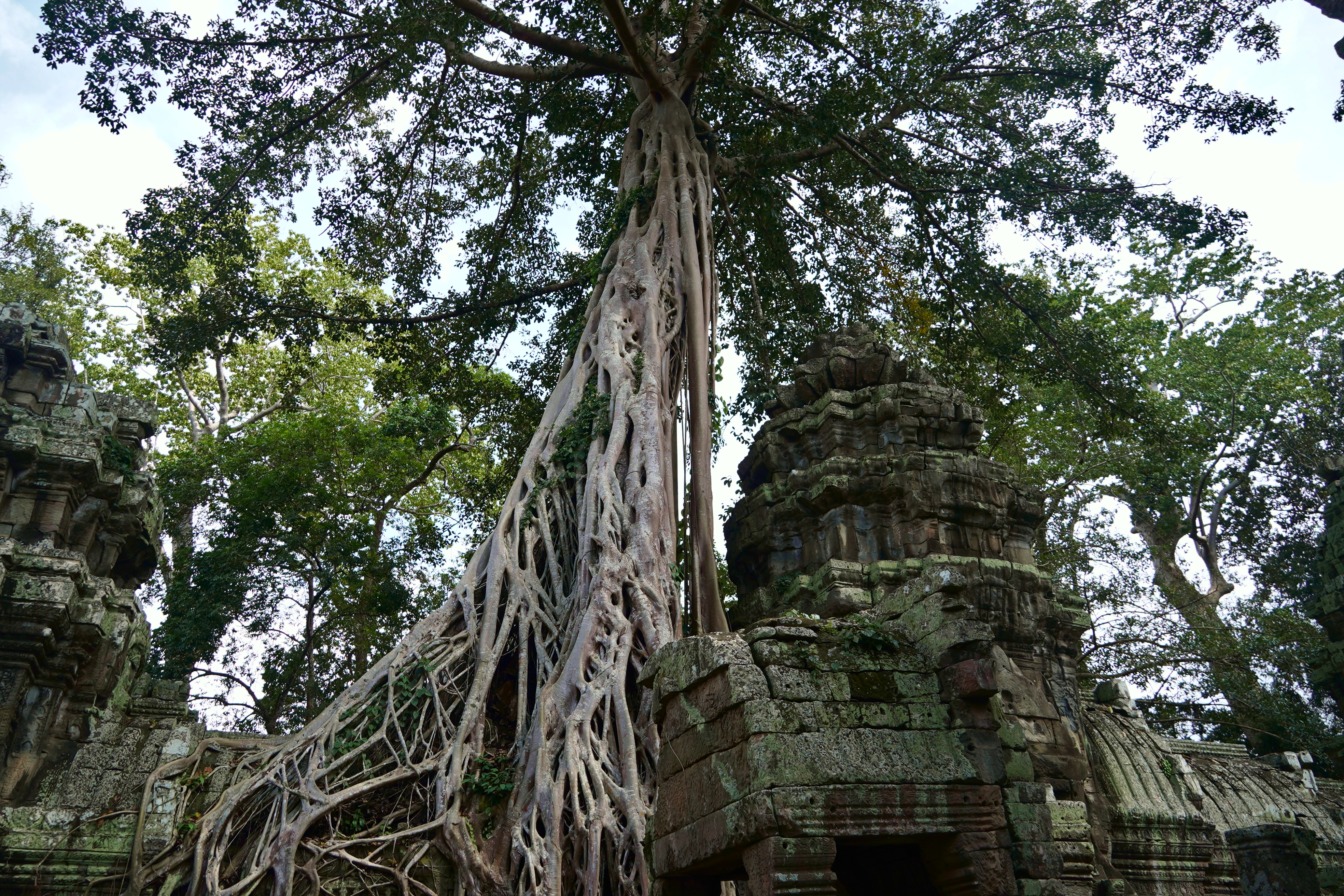


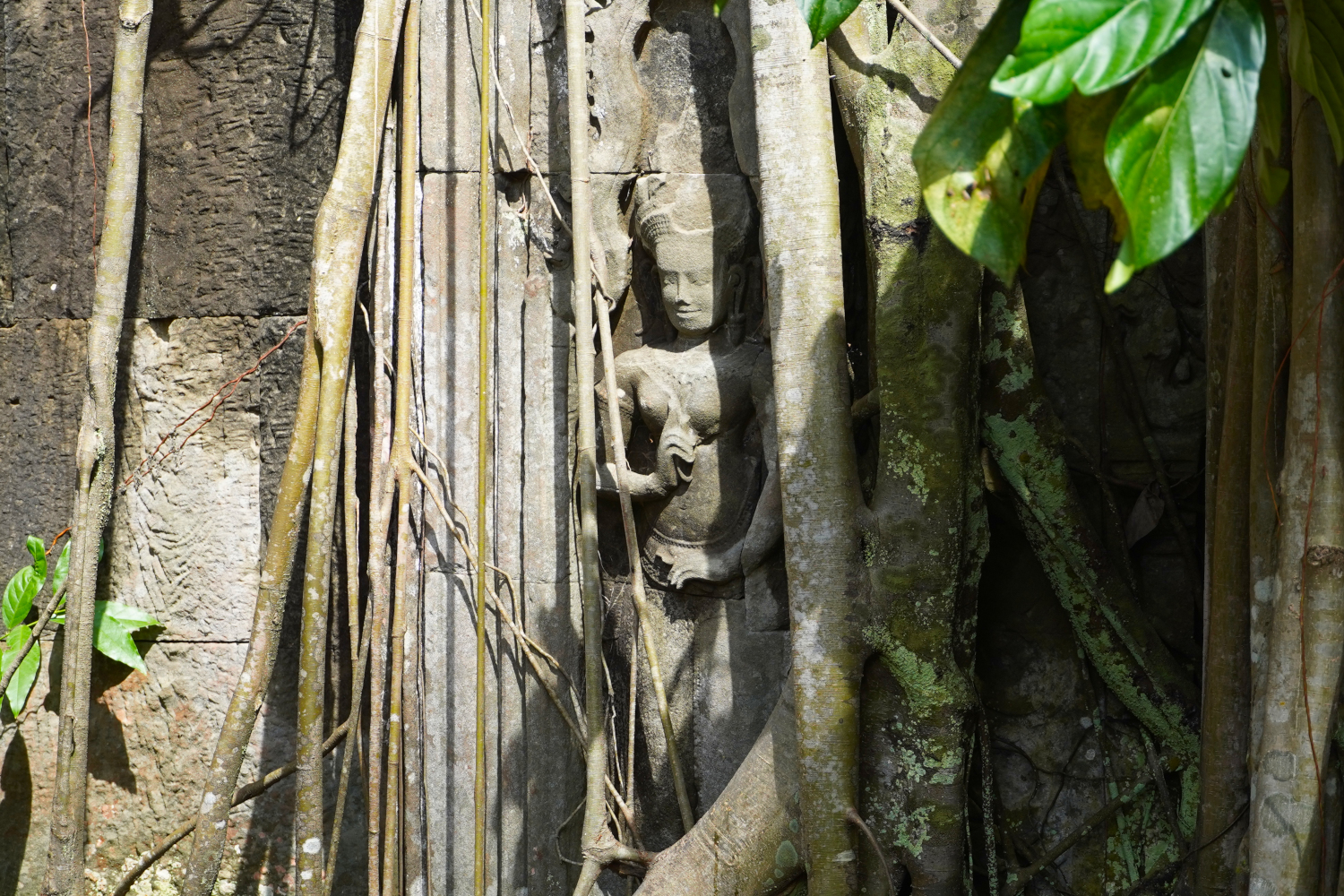
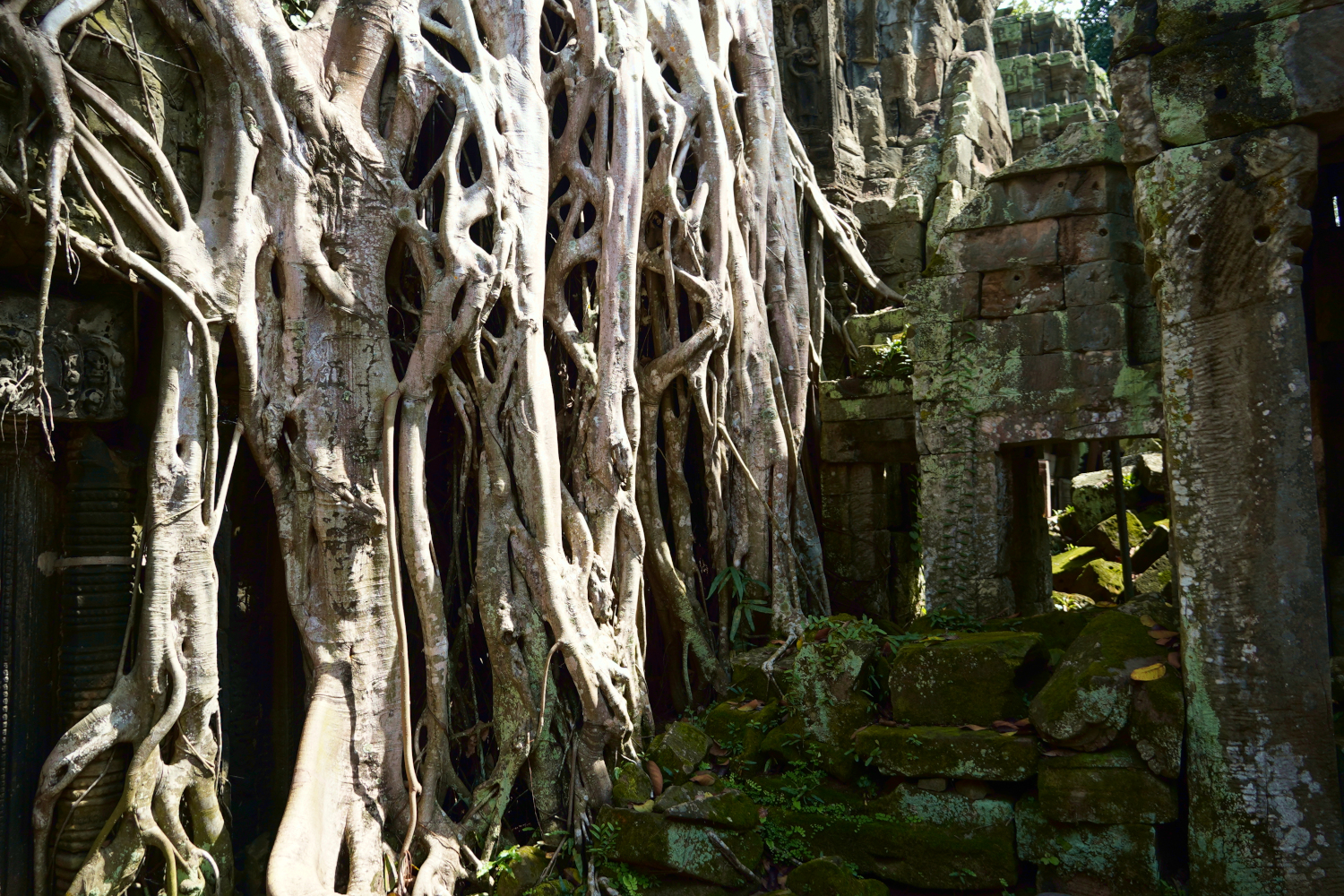
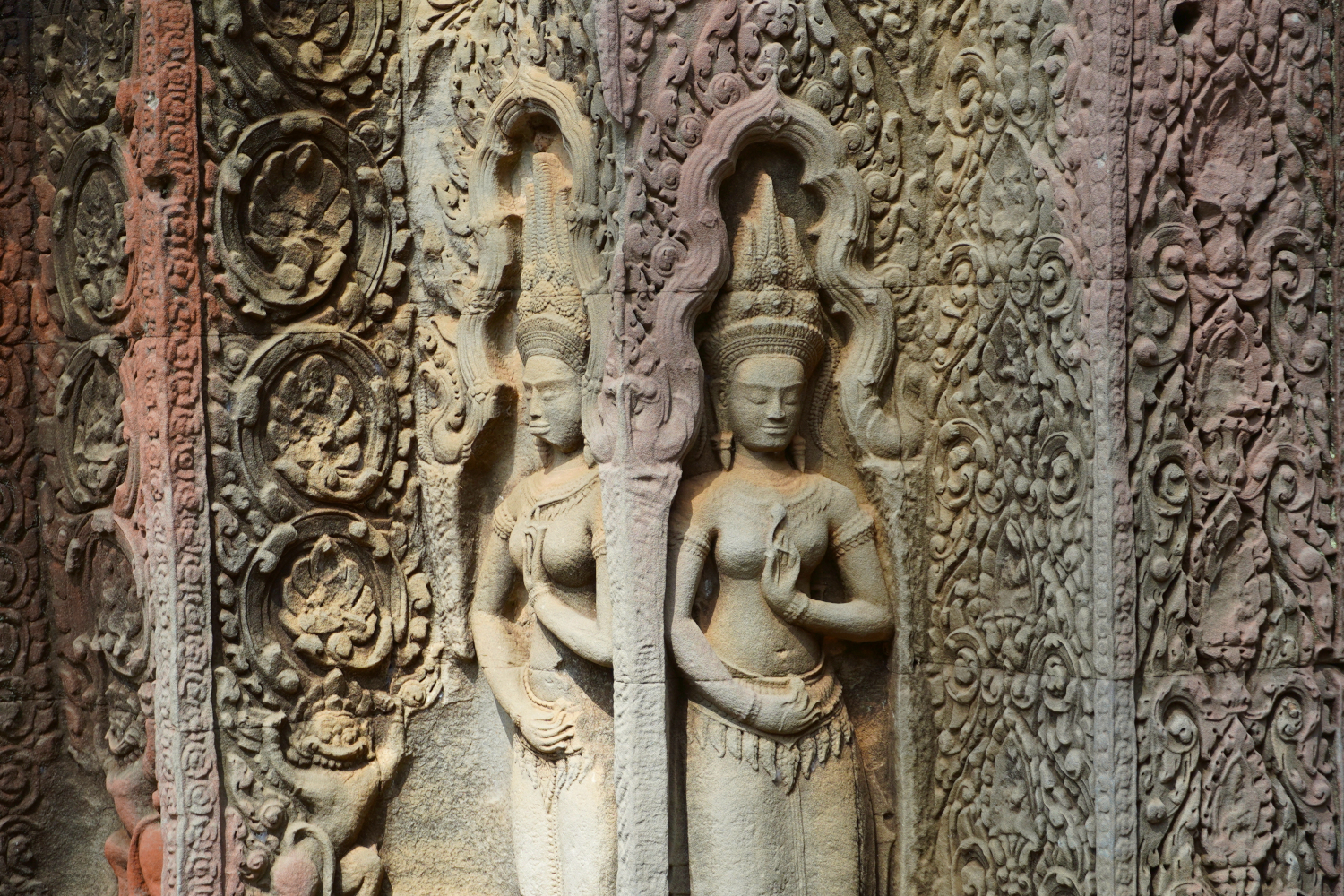

Ta Prohm is one of the most memorable and surreal places on earth. We are surprised it hasn’t figured in more blockbuster movies.
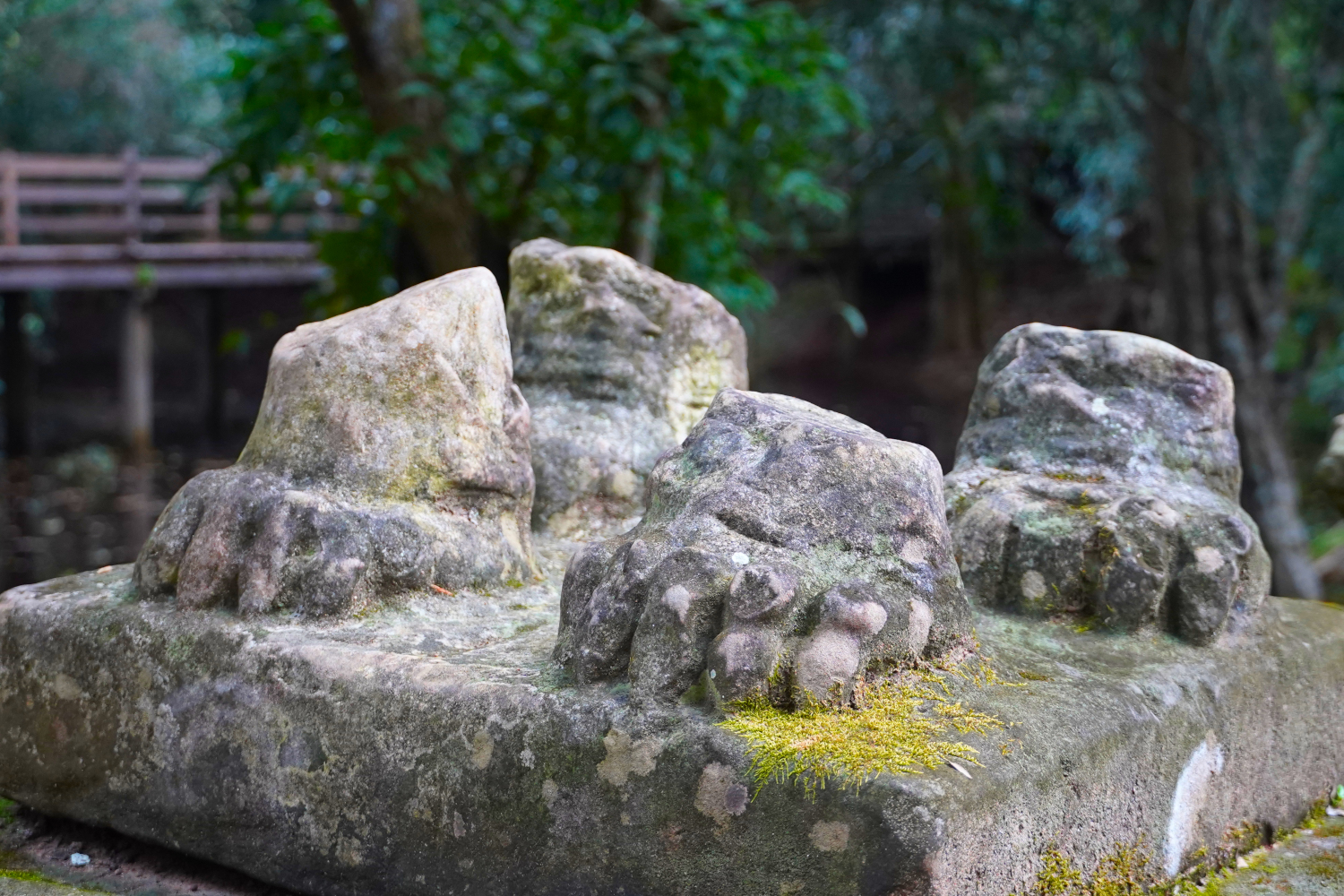
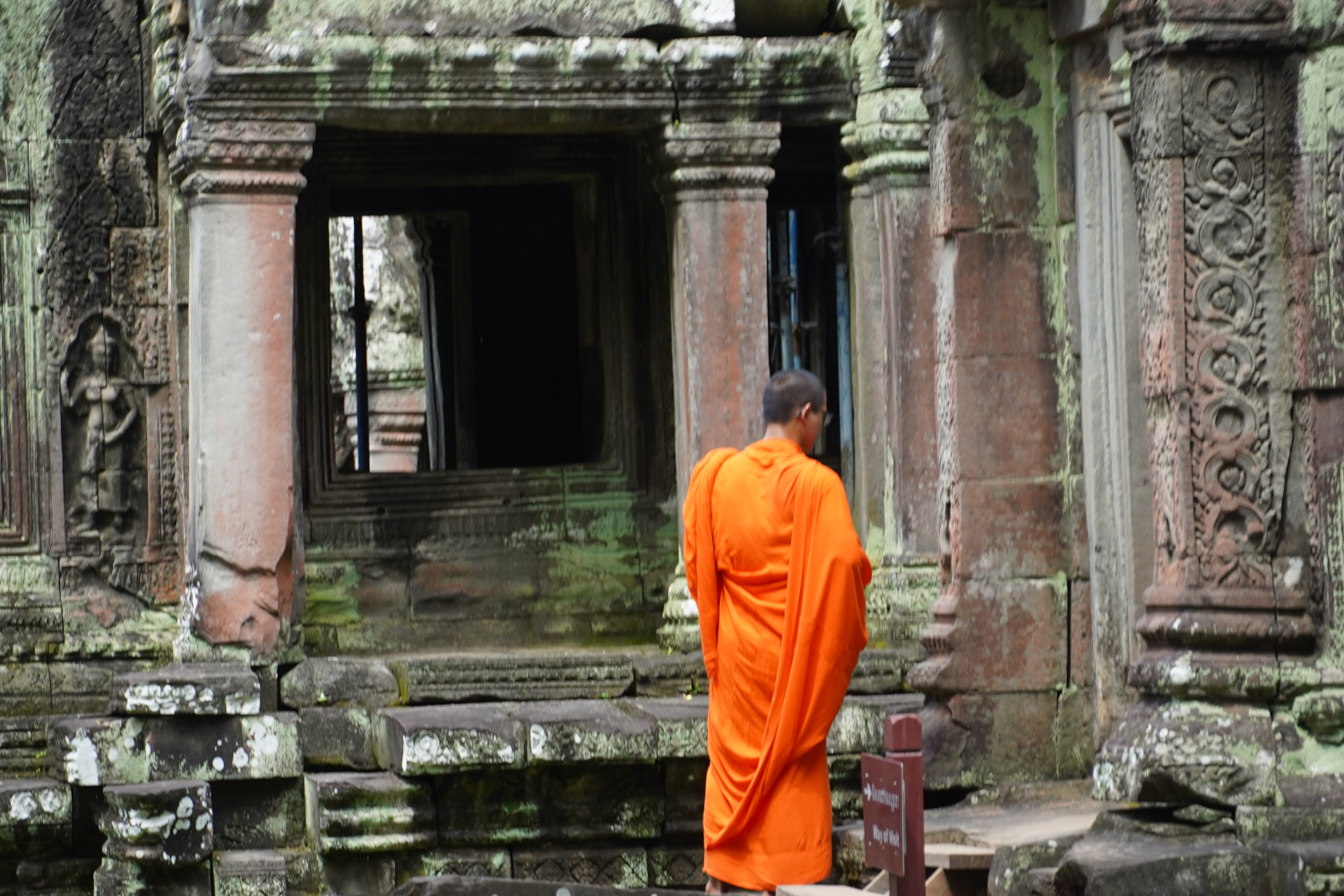
On the way out, we passed a group of musicians playing traditional Khmer instruments. All were either blind or maimed, victims of landmines. Millions of these explosive devices were placed in mostly rural areas during Cambodia’s three decades of war in the Twentieth Century; and as many as TEN MILLION of them are still in place. Visitors to the country are warned not to stray off designated trails, and it’s advice well heeded.
These musicians probably met with their accidents long ago, perhaps when they were children. They now perform at Angkor Wat on a regular basis, selling CD’s and raising funds to help other landmine victims.
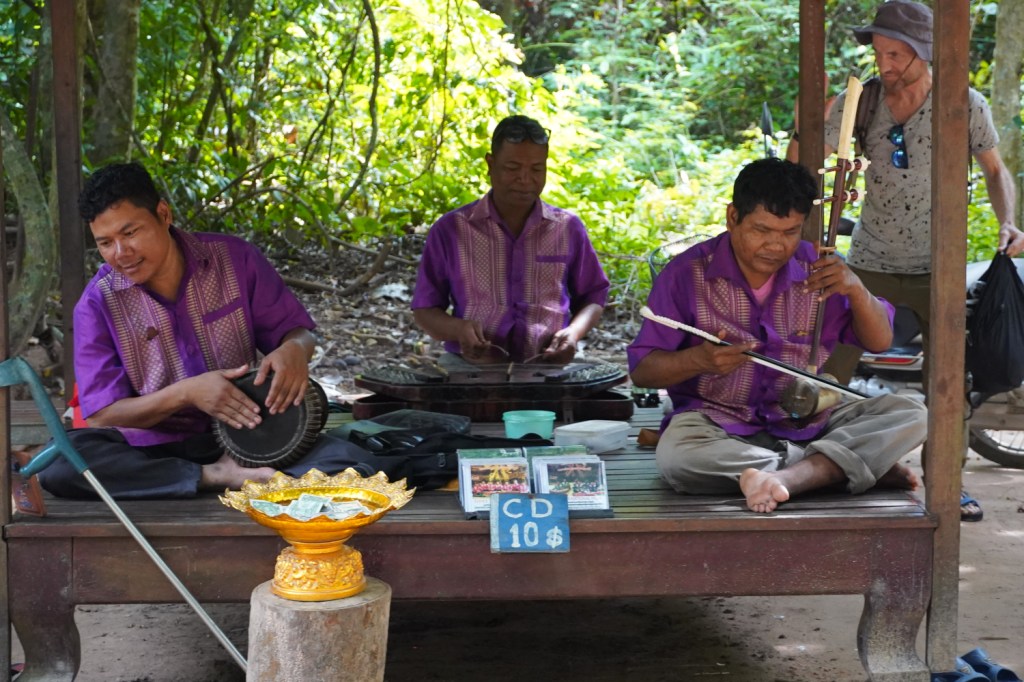
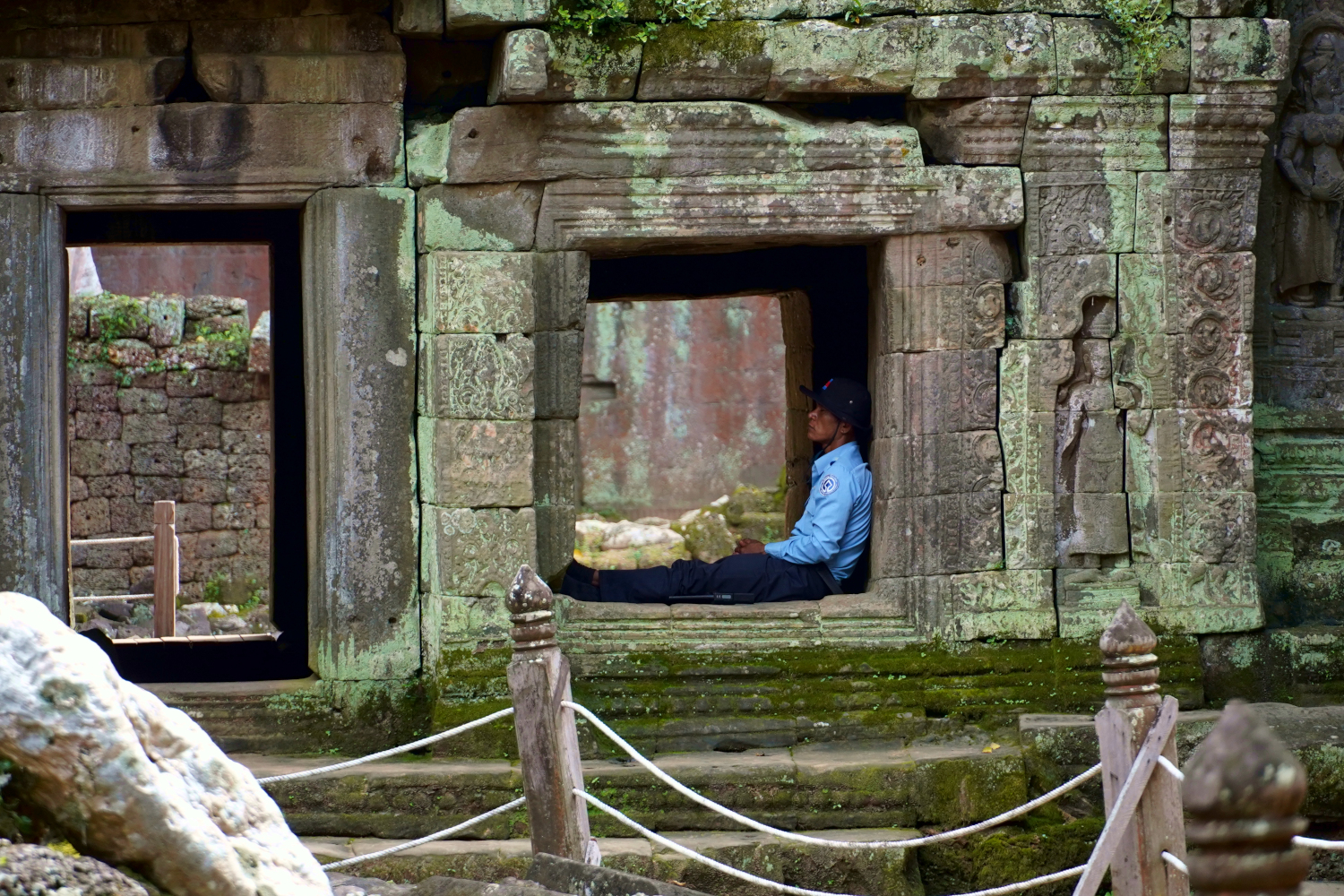
The lunch we’d packed along included several bananas, more than we could eat — the parents of one of our students had brought us a huge clump of them. So we decided we wanted to share them with the musicians. We asked the attendant standing guard if we could leave some for them, and he said yes. So we did.
After catching a tuk-tuk back home, we first stopped at a store in Siem Reap to pick up a few things. And our eye was caught by a couple of items popular in these parts: “snow flavored” rice chips. And bird’s nest beverage. We have no idea exactly how they flavor chips like snow — is each one unique? And the process that must be involved in deriving some potable concoction from an actual bird’s nest must be quite interesting. In any case, our day was bracketed by unique remnants of ancient Cambodia and strikingly idiosyncratic features of contemporary Cambodia.


Know Before You Go
Ta Prohm, the “Tomb Raider Temple,” is a captivating blend of nature and ancient Khmer architecture. Here are some tips to maximize your visit as a history and photography enthusiast:
Tips for History Buffs:
- Brush up on Khmer history: Understanding the Angkor civilization and its role in Southeast Asia will enhance your appreciation of Ta Prohm’s significance.
- Hire a knowledgeable guide: Guides can explain the temple’s symbolism, stories behind the carvings, and its role in the Angkor complex. Guides are readily available near the entrances.
- Download a guidebook app: Consider apps with audio guides or AR features to bring the temple’s history to life.
- Visit the Angkor National Museum: This museum provides context for the temples, showcasing artifacts and explaining Khmer culture.


Tips for Photographers:
- Embrace the light: Arrive early or later in the day for softer light and avoid harsh midday shadows.
- Explore different angles: Don’t just stand in front – capture details, carvings, and the interplay of trees and architecture.
- Use wide apertures: To blur the background and highlight specific elements.
- Bring a tripod: (if possible) For low-light shots or long exposures to capture the temple’s atmosphere.
- Mind the crowds: Be patient and wait for opportunities to frame your shot without people. HDR (High Dynamic Range) photography can help if crowds are unavoidable.
- Remember: Your experience is just as important as capturing the perfect shot. Soak in the atmosphere, appreciate the history, and let Ta Prohm’s magic unfold before you.
Bonus Tips:
- Dress modestly: Shoulders and knees should be covered, especially if you plan to hire a guide.
- Carry water and a hat: It can get hot and there’s limited shade.
- Bring small bills: There might be vendors selling drinks or souvenirs near the entrance.
- Respect the temple: Don’t climb on structures or disturb the fragile ecosystem.
10/22/2022

 world travel with a theatrical flair
Leave a comment