

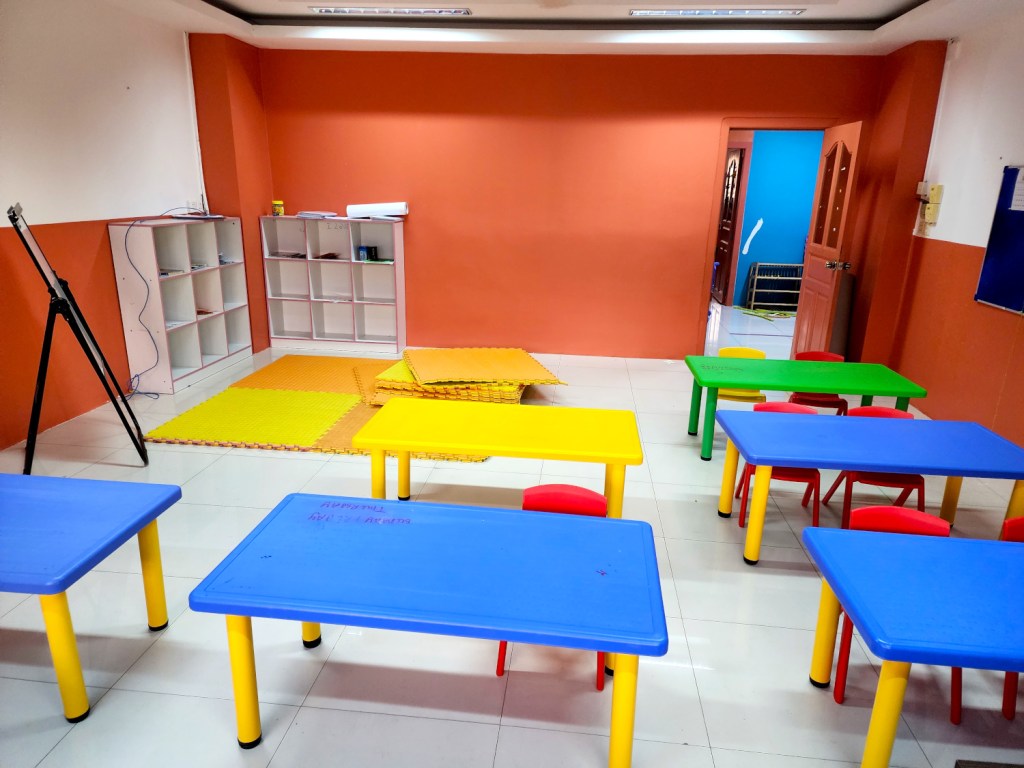
For thirty years, we’d traveled constantly all over the United States, seldom spending more than two days in one place. And then for two years after that, we’d traveled all over the world, seldom spending more than a month in one place. And now, here we were planning to live for an entire year in Phnom Penh. It was going to be quite a change of pace for us. And quite a challenge. A full year without Trader Joe’s, Citibank, pecans and clothes dryers. But also a full year without astronomical grocery and medical bills, school shootings, golden arches, Confederate flags and Fox “News”. Having already lived in Cambodia for 4 months previously, we expected it to be, on balance, a rather pleasant 12 months. (And as it would turn out, we weren’t disappointed.)
Our first order of business was getting our new apartment set up. That meant, among other things, preparing to fight the relentless heat you confront most of the time in Southeast Asia. Our apartment, in addition to having the luxury of a washing machine, came equipped with an air conditioner and a portable fan. But since we’d be paying for electricity in addition to rent (the latter a whopping 250 dollars per month), we wanted to minimize the use of the A.C. So we went looking for an additional fan to take up the slack.
The logical place to start was just down the street at a popular marketplace called Psaa Tuol Tumpung, or as Westerners call it “Russian Market” — though the only thing Russian about it is its name. It’s a sprawling, cramped, labyrinthine complex of stalls selling everything from produce to clothes to motorcycle parts. There are also tailors, cobblers and barbers lurking in its twisted depths.
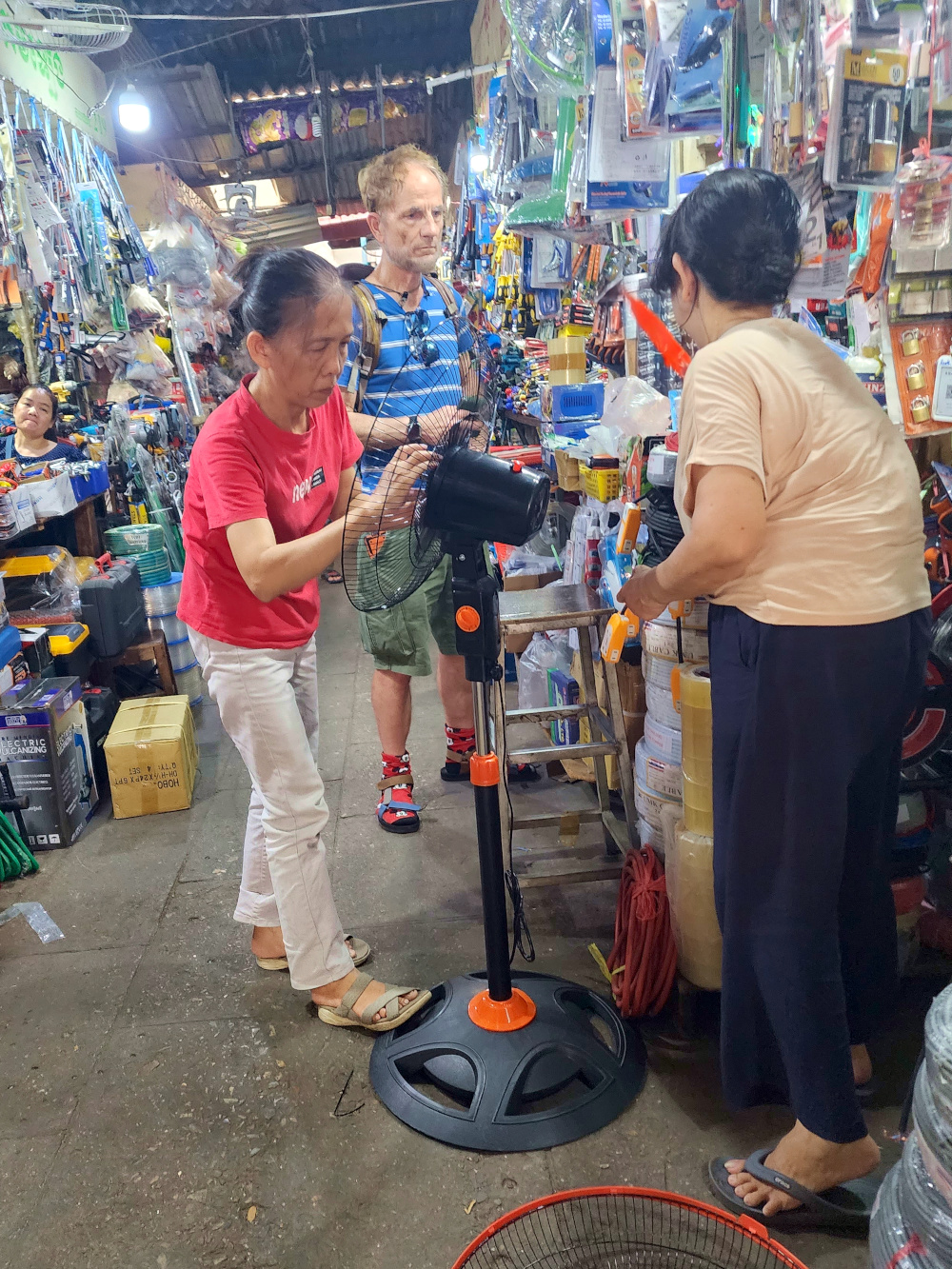
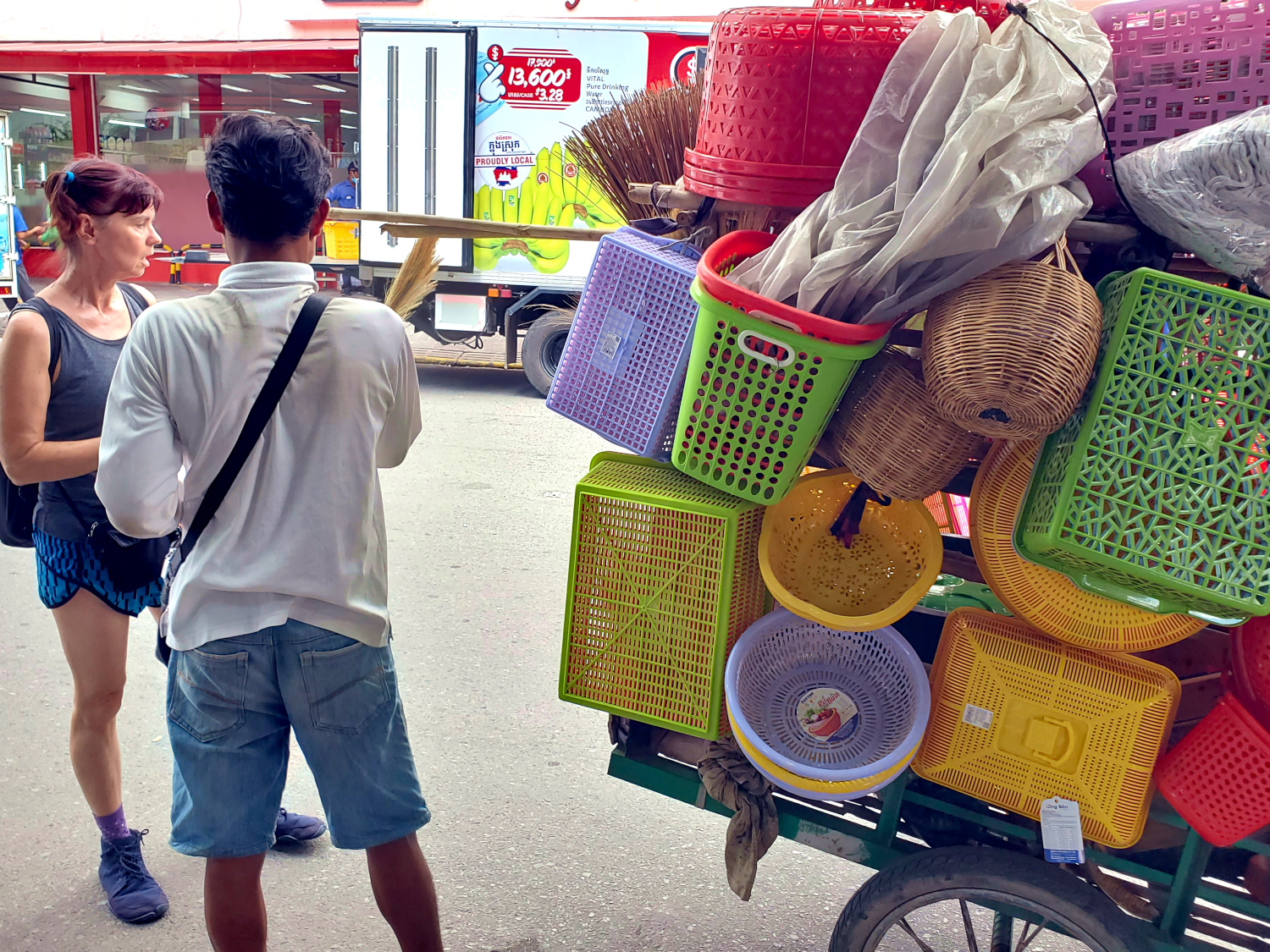
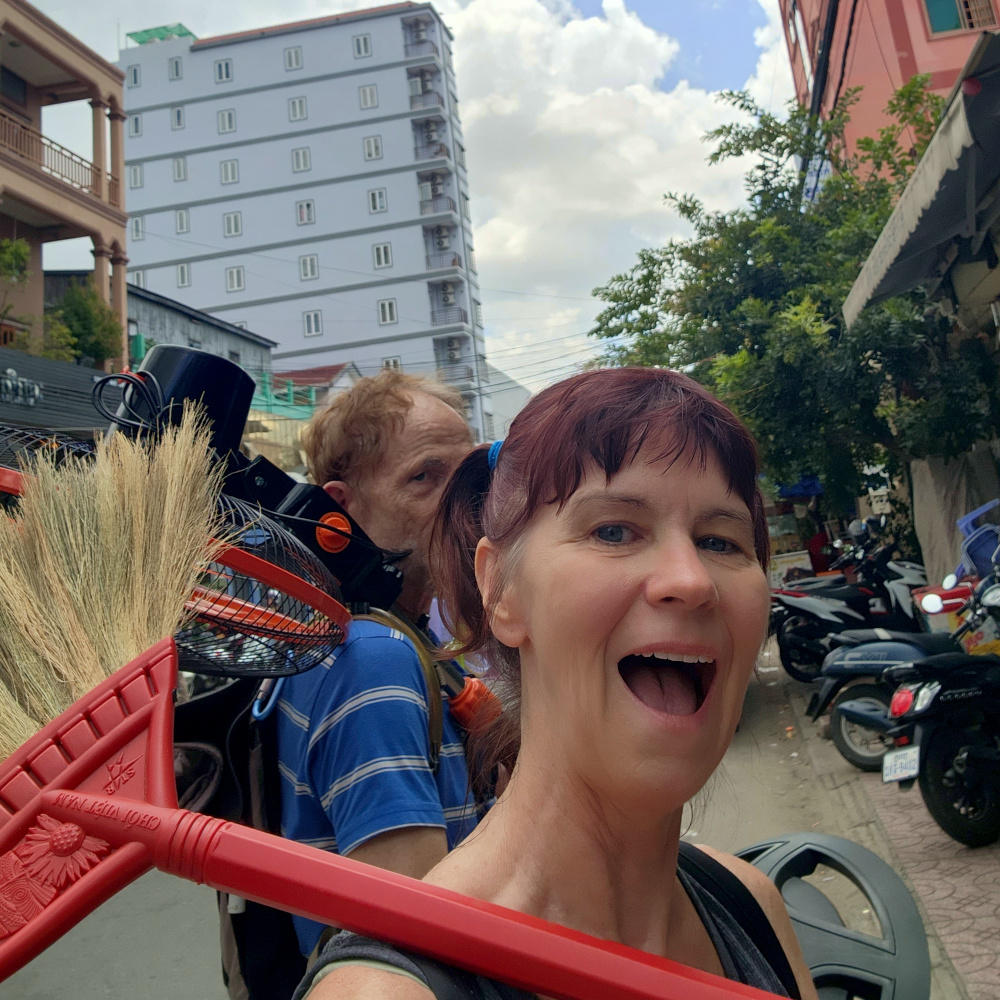
And we found just what we were looking for: an inexpensive but effective floor fan, some assembly required. And the salesladies assembled it for us. So we slung it over our shoulder and headed back home. Along the way, we passed another vendor selling household goods from a cart he was pulling — a not uncommon sight. So we obtained a broom from him — two birds in one trip.

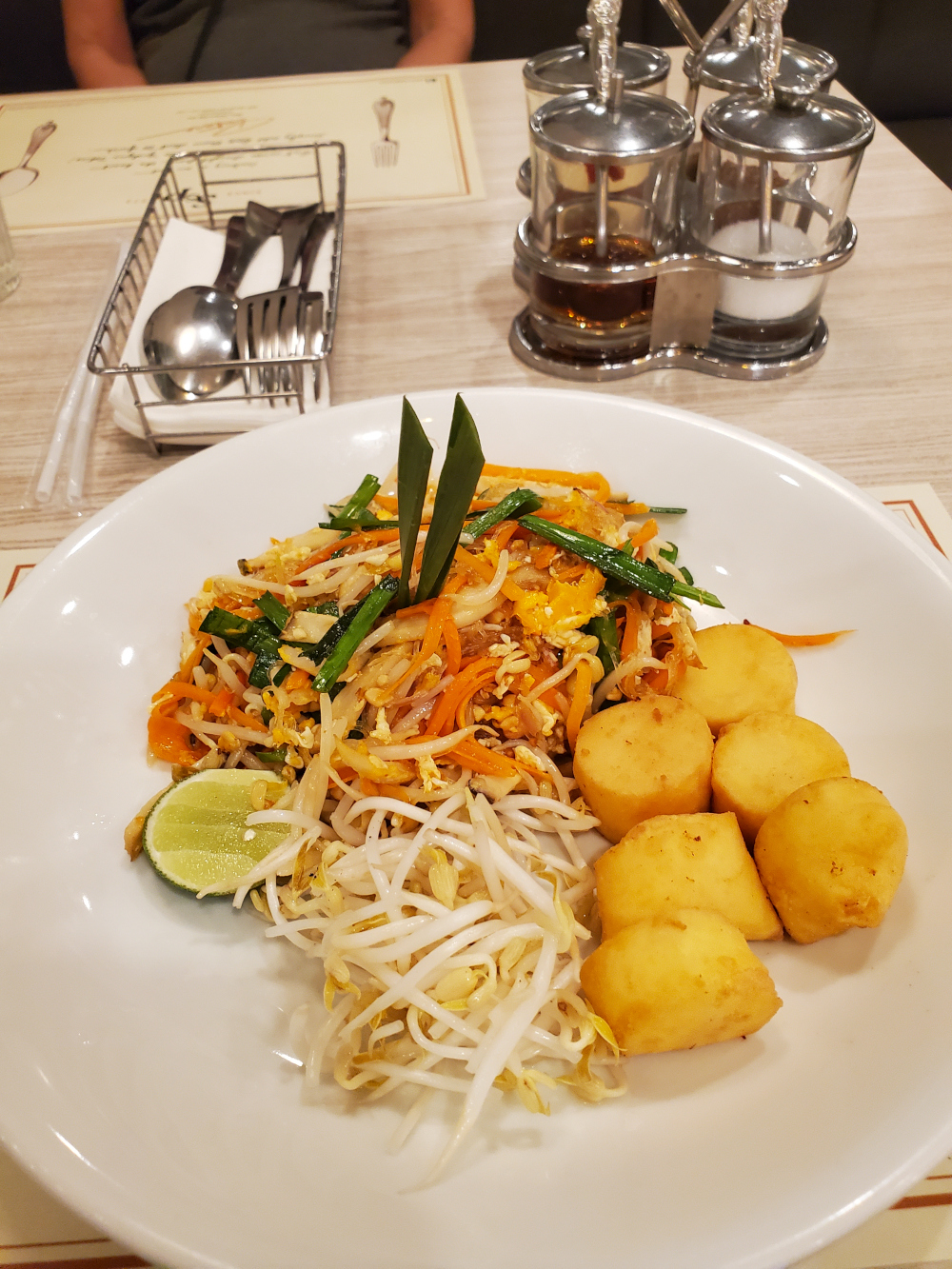
Then we caught a tuk-tuk out to Aeon Mall to look for some more items we needed. That is, we went to one of the Aeon Malls; there are three in Phnom Penh, each with its own unique personality and features. One has an outdoor adventure park for kids. One has an indoor theme park with rides for kids. One has a swimming pool. (Aeon, by the way, is a Japanese company, nearly 100 years old, that operates malls in several other countries as well.) We ended up staying so late there that we decided to have dinner before heading back. And we found a Thai restaurant that offered some excellent vegetarian choices, and was — like almost everything else in Cambodia — quite reasonably priced. It would become a place we’d dine at more than once during our year in Phnom Penh.
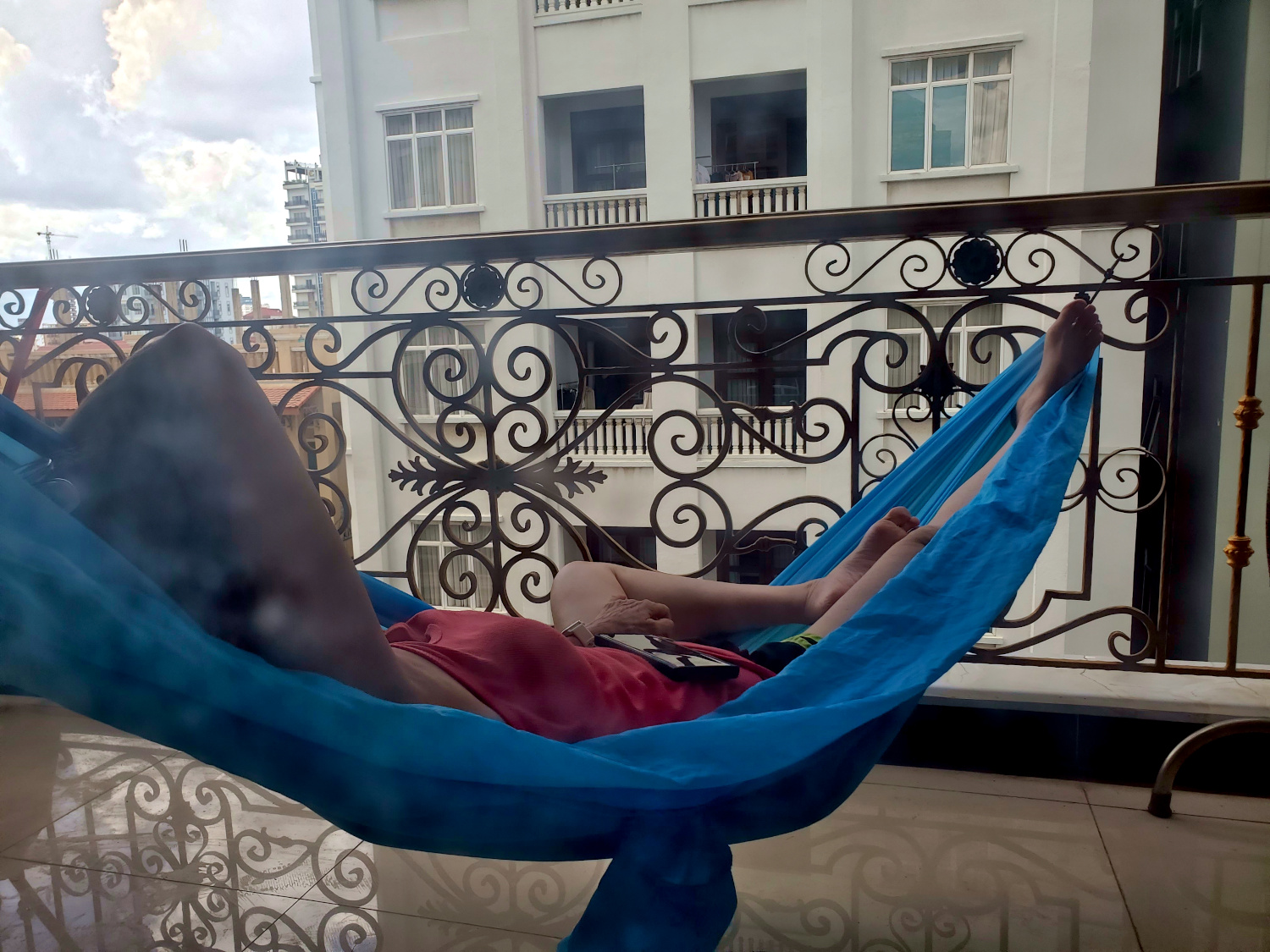
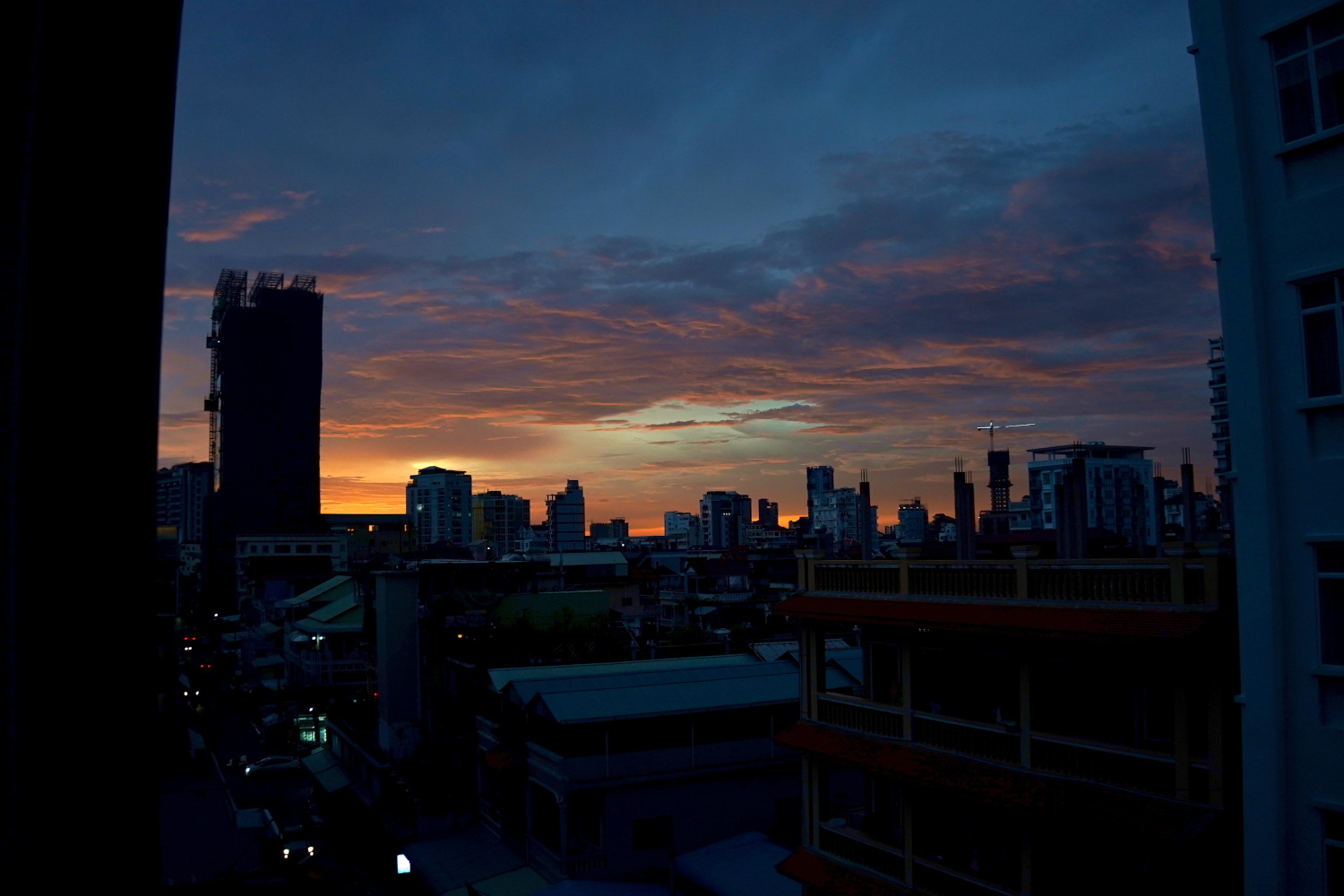
Taking home the additional items we’d acquired to make our home more homey, we finally felt we were settled in. As the crowning touch, Kimberly even found that she could hang her hammock on the balcony, a good place to watch the sunset over the city. Any place she can hang her hammock is home to her.
There were other stores we wanted to check out before the school year began. And our shopping expeditions required ferreting out a number of them. There are no Wal-Marts here (which is another plus, come to think of it), nor is there any comparable Goliath outlet that carries such a broad variety of merchandise. So sometimes you have to buy one thing here, and another thing there, and something else yonder — all part of the experience of exploring and getting acquainted with the city and the culture.
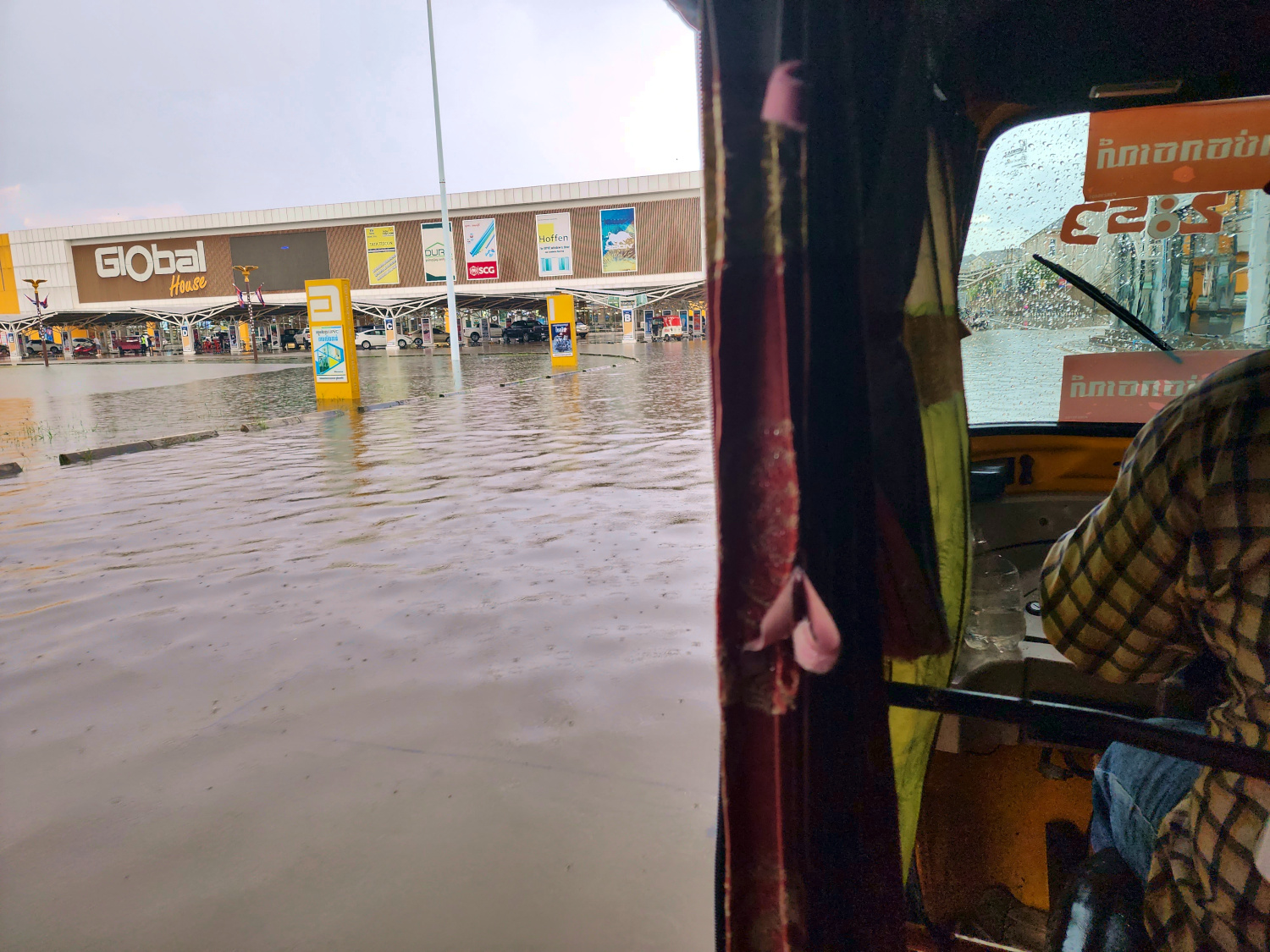
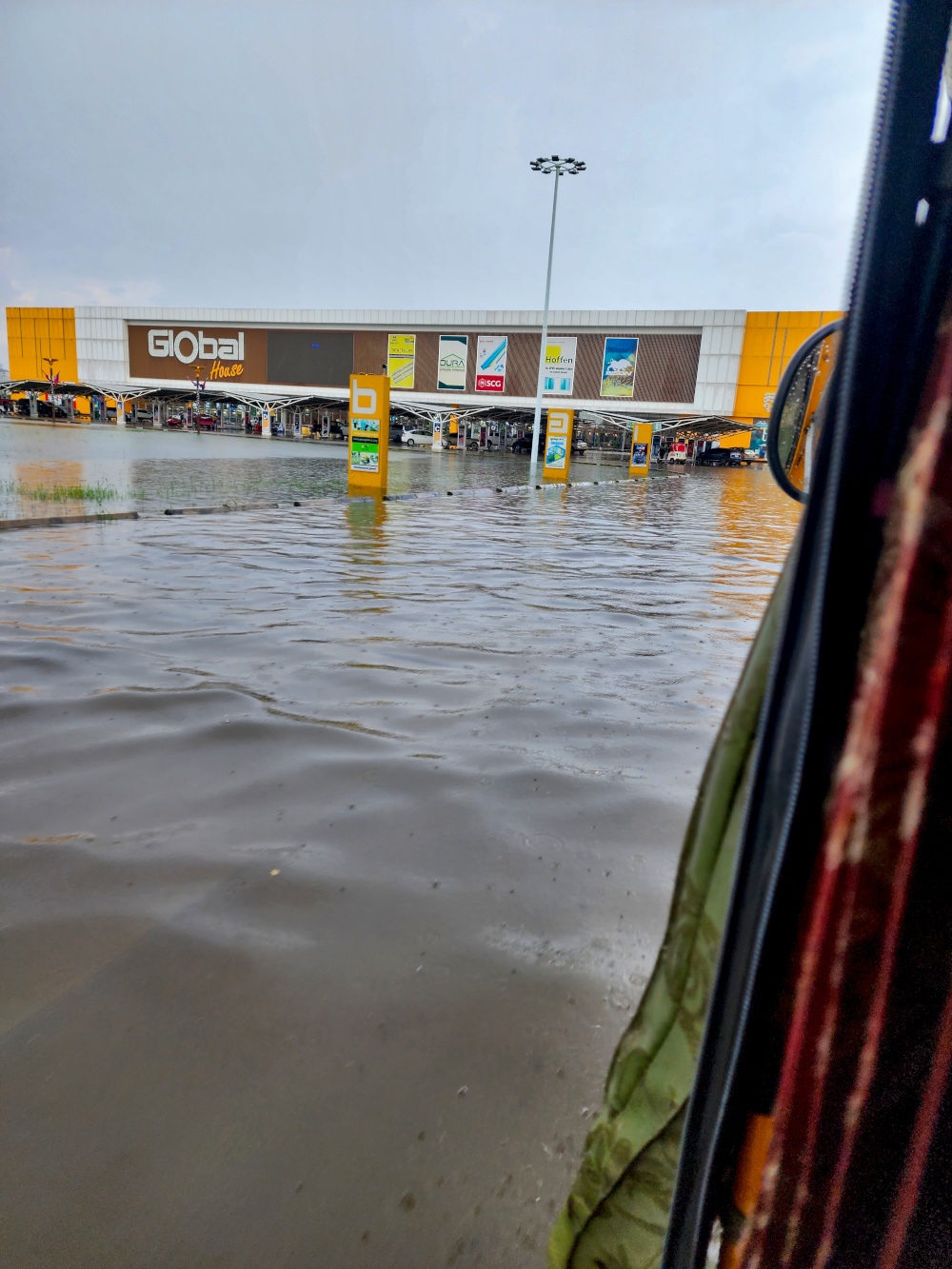
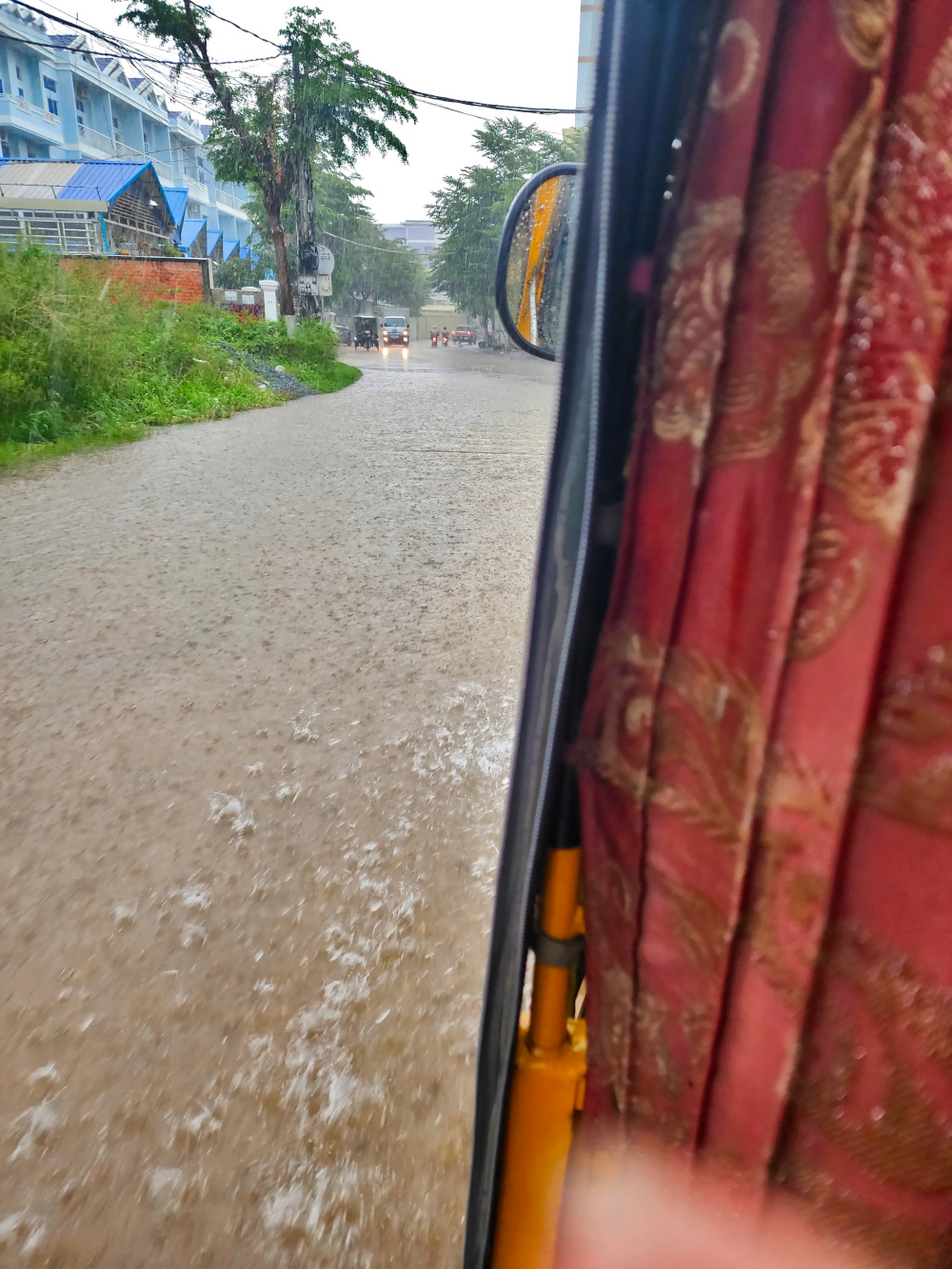
This was monsoon season; half the year in Cambodia is dry and unrelentingly hot, and the other half is soggy and mostly hot. On one of these soggy days, we went out on a quest when the streets were flooded. Our tuk-tuk slogged through the water okay, almost doubling as a boat, but we spotted a couple of others that were stranded, with their delicate little motors drowned out. Fortunately, that didn’t happen to us.


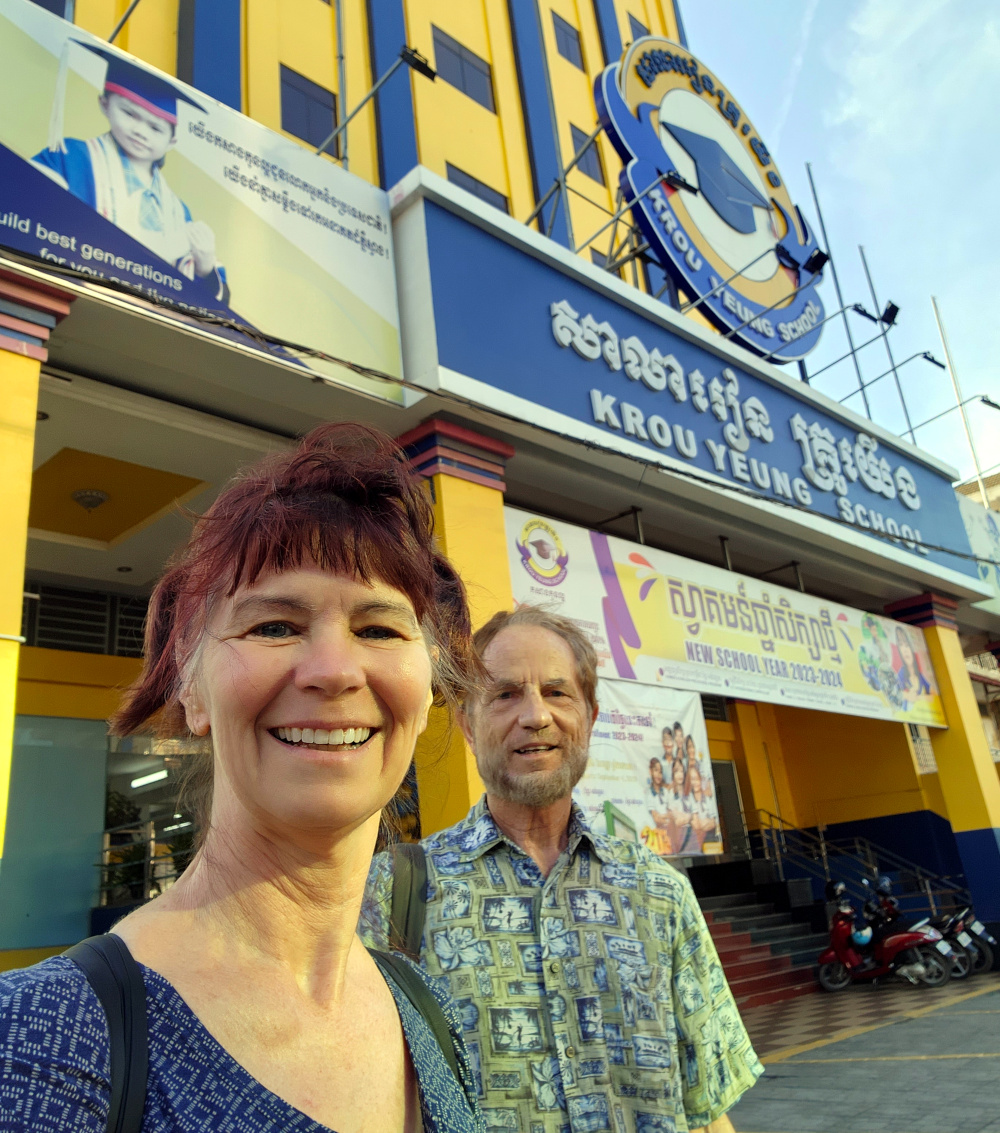
Finally the day came for us to report to Krou Yeung school and begin orientation for the coming year as teachers. Krou Yeung (meaning “our teacher” in Khmer) was the school where we had volunteered for two months the previous year. The administration was pleased with our efforts, and invited us to return this year as salaried teachers. So here we were.
Everyone was happy to see us, and we were happy to see them. The staff at the school are all uniformly pleasant to work with, which was certainly a factor that enticed us to return. The school has a media department that’s on the ball, and they wanted to interview us for the Youtube channel.


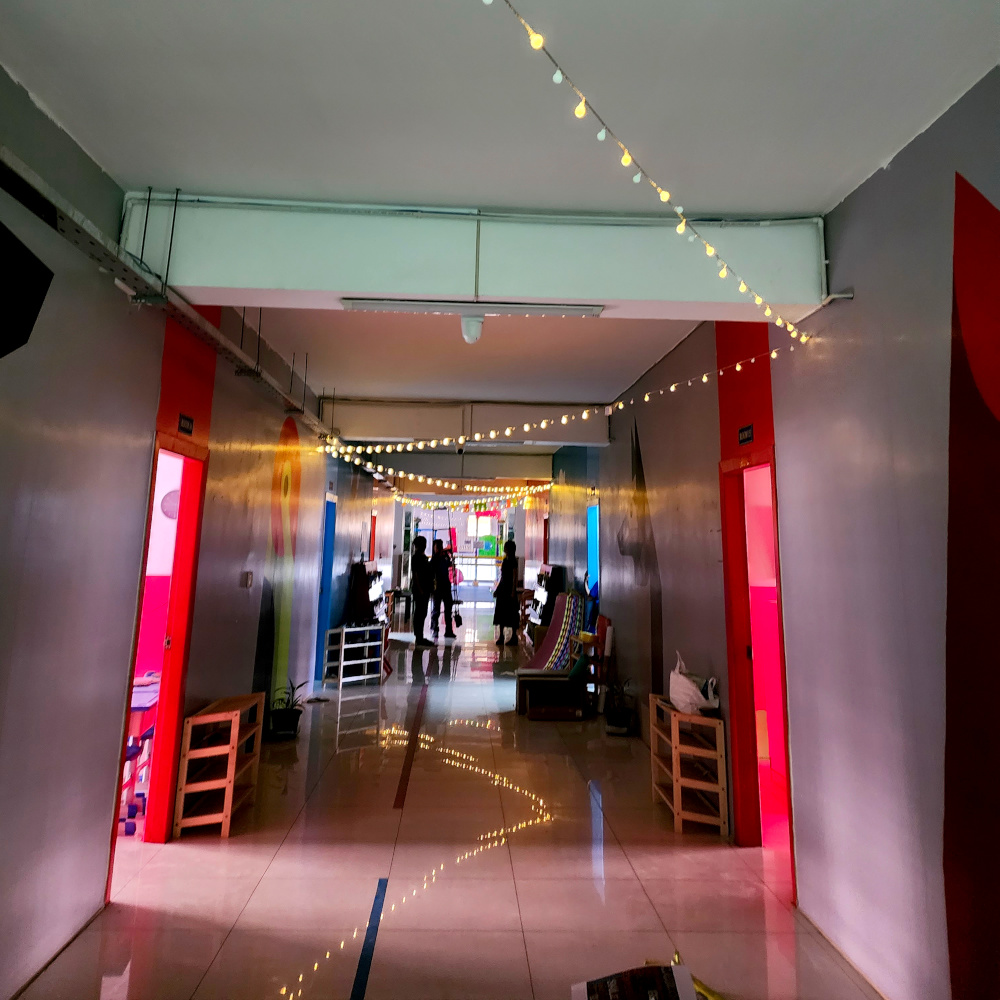
We had a few days before classes began to get our classrooms decorated to our liking. We also had a chance to get acquainted or reacquainted with the students; during the week before the term actually started, most of them came to school, and spent the time just playing games or doing other fun activities. This seemed to us like not a terribly good idea; we were afraid it would give them the impression that the classroom was a place to play, and thus make it more difficult for them to settle down when it was time to get to business. (As it turned out, there was some truth to this.)
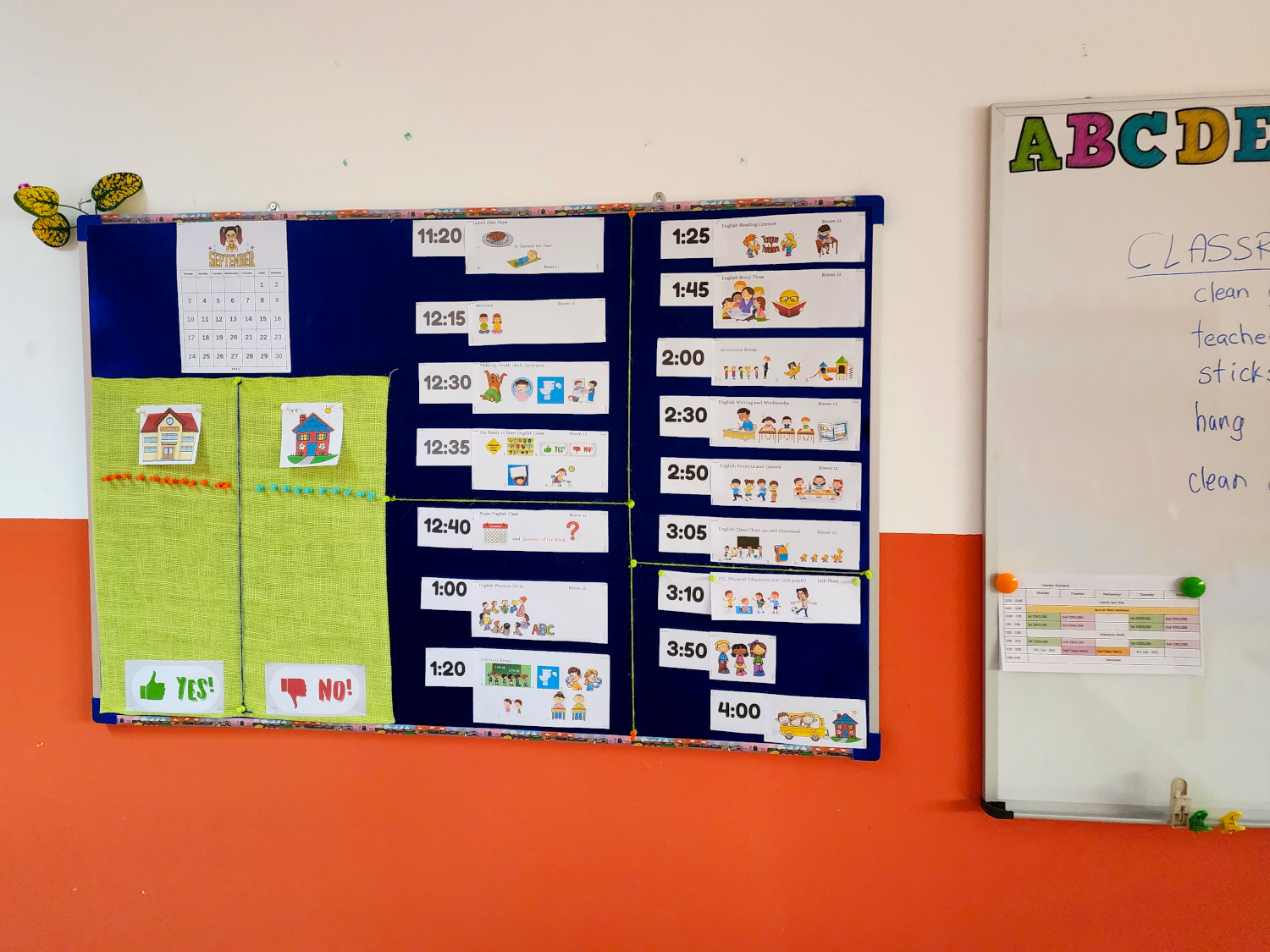

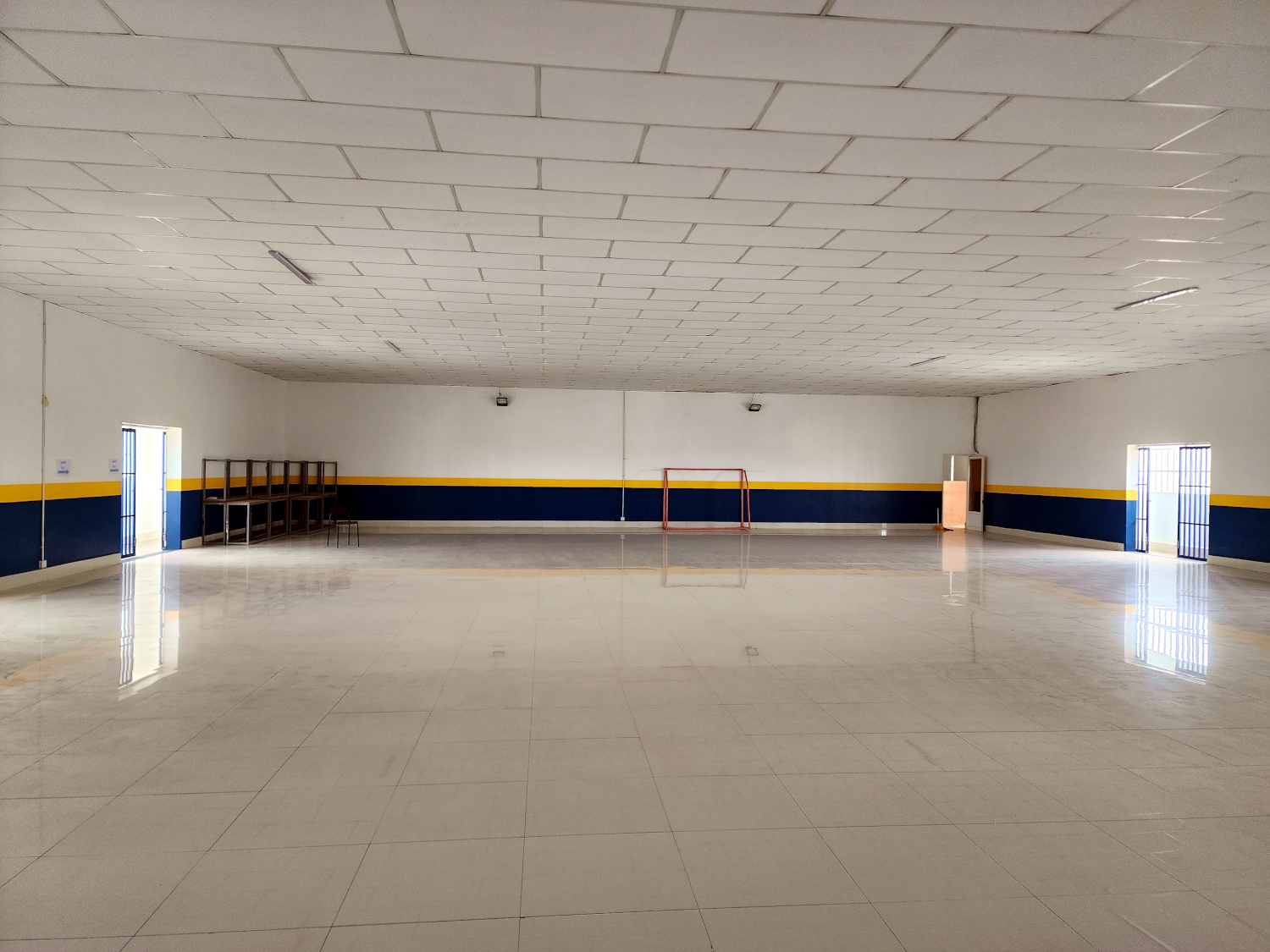
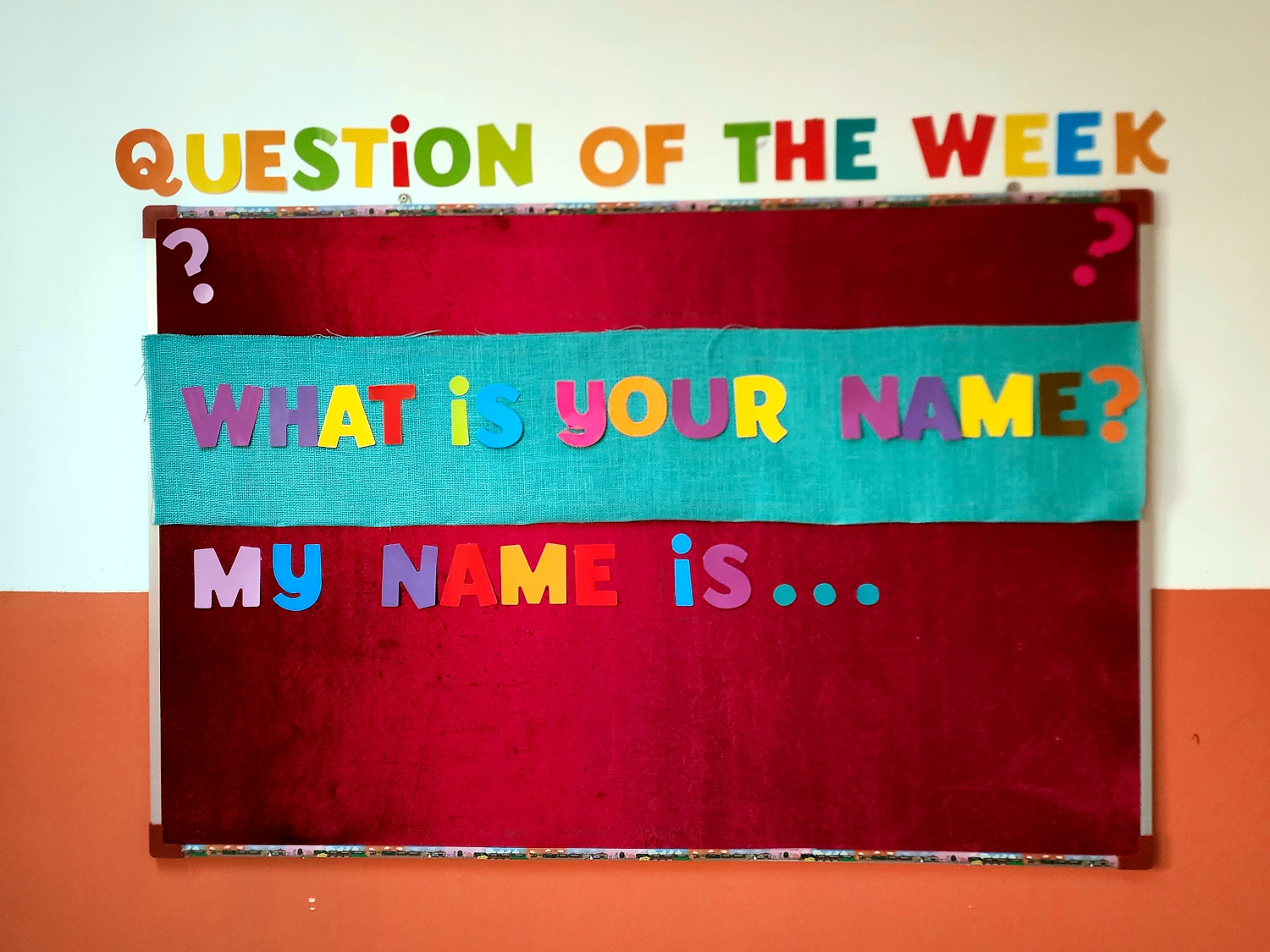
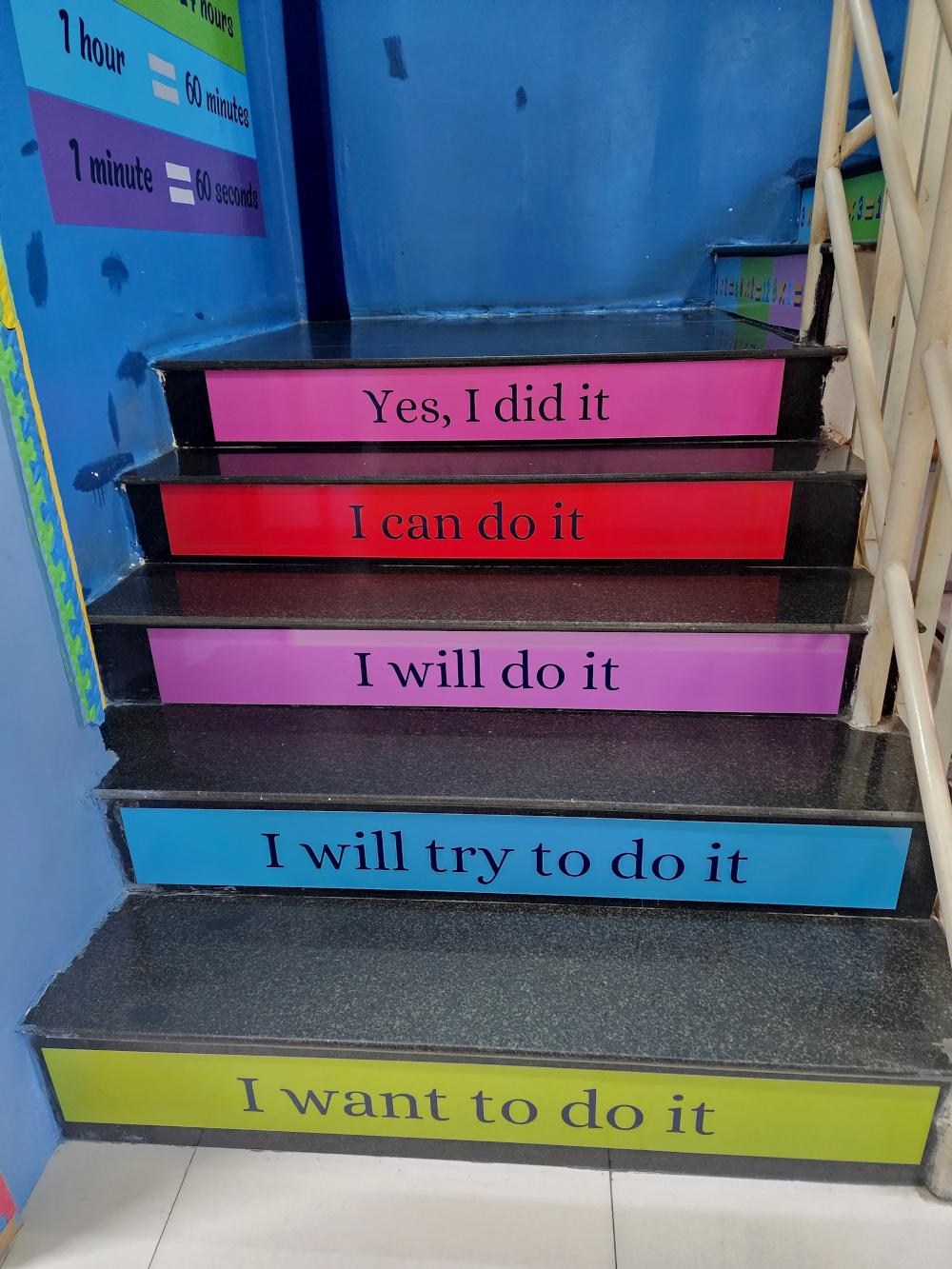

There was paperwork to take care of, including applying for our work permits and extended visas — initial visas are only for 30 days. All of which, of course, required coughing up big wads of cash. The good news was that income tax in Cambodia is delightfully simple: all Cambodians pay 10 percent, and foreigners pay 20 percent for the first 6 months, after which they qualify for the lower rate too. The even better news for us was that residency is cumulative; so the 4 months we’d already lived in Cambodia counted toward the requirement, and we had to work only 2 months before being taxed like natives. (We had to produce our old visas, which were inside our old passports, which were back in the States; but fortunately we had copies of everything, and that was sufficient.)
And we signed our contracts. It was official now: we were residents of Cambodia, working as fulltime teachers in a Cambodian school. A very different and intriguing new chapter in our lives.
8/25-31/2023

 world travel with a theatrical flair
Leave a comment