

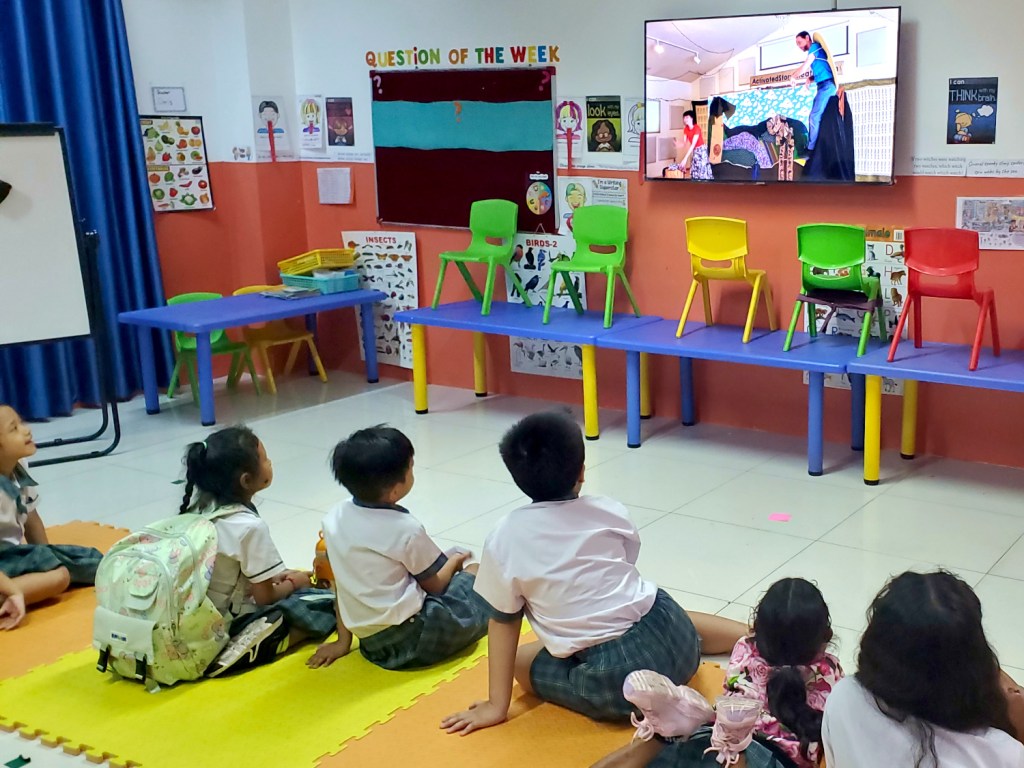
Back in the U.S February is a month of holidays and special occasions, with President’s Day, Mardi Gras and Black History Month thrown into the mix. The month isn’t quite so festive in Cambodia, but we’ve been bringing some American culture to our students.
We told some classes about Groundhog Day, showing them video clips of the iconic celebration in Punxsutawney, Pennsylvania. They’d never heard of this occasion before, and were quite fascinated and amused.
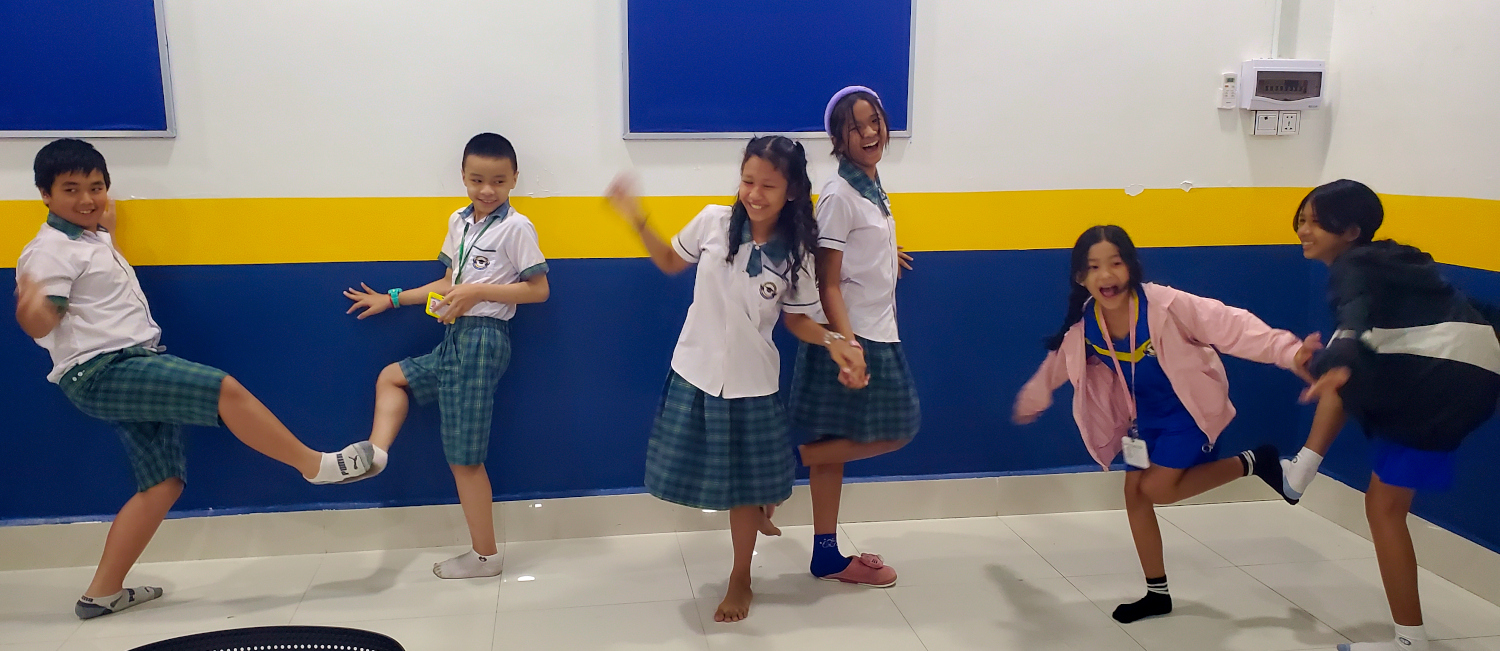

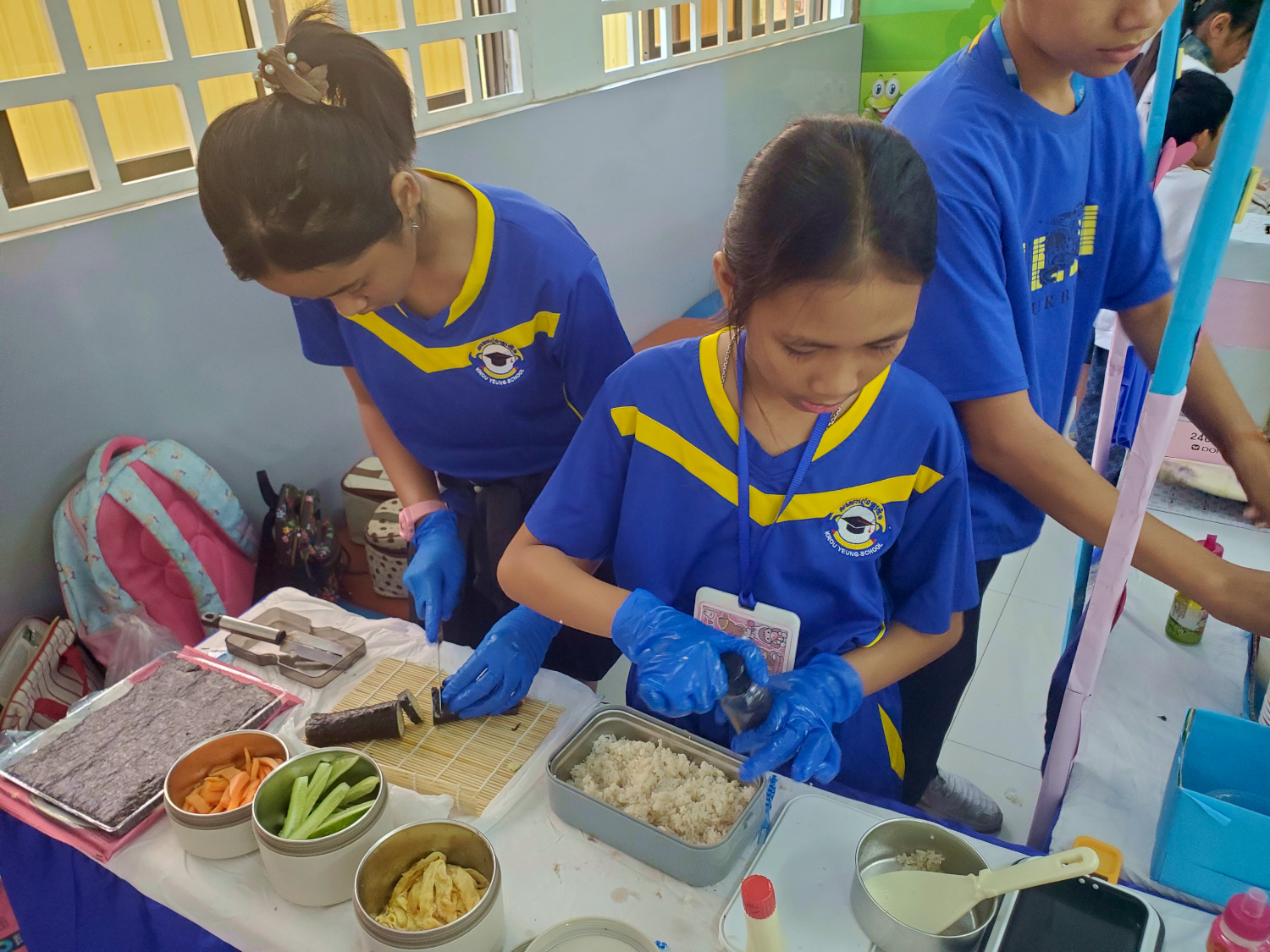
They were already familiar with Valentine’s Day, and the younger students enjoyed creating heart-shaped crafts. But the real draw on Valentine’s Day was a food fair, held in the school lobby all day long. Each of the classes from grades 3 through 6 put together a booth at which they cooked/ assembled food and sold it, with the proceeds going to charity. And best of all, these kids essentially got out of classes all day. The lower grades, however, still had classes as usual; and unfortunately, in a big glitch of planning and organizing, one teacher was stuck with both classes all day because the other teachers were participating in the food fair. Ouch.
But the biggest holiday in Cambodia of the month is Chinese New Year. That’s right — Chinese New Year. Cambodia has its own new year celebration later in April, but many Cambodians also make a big deal out of Chinese New Year. In fact, during the 2-week period the holiday is commemorated (and especially the first couple of days), many businesses in the city are shuttered — it was even hard to get drinking water. As for the kids, one reason they look forward to the occasion is the custom of asking adults for, and often receiving, red envelopes with money in them. Sort of like trick-or-treating without the tooth decay.
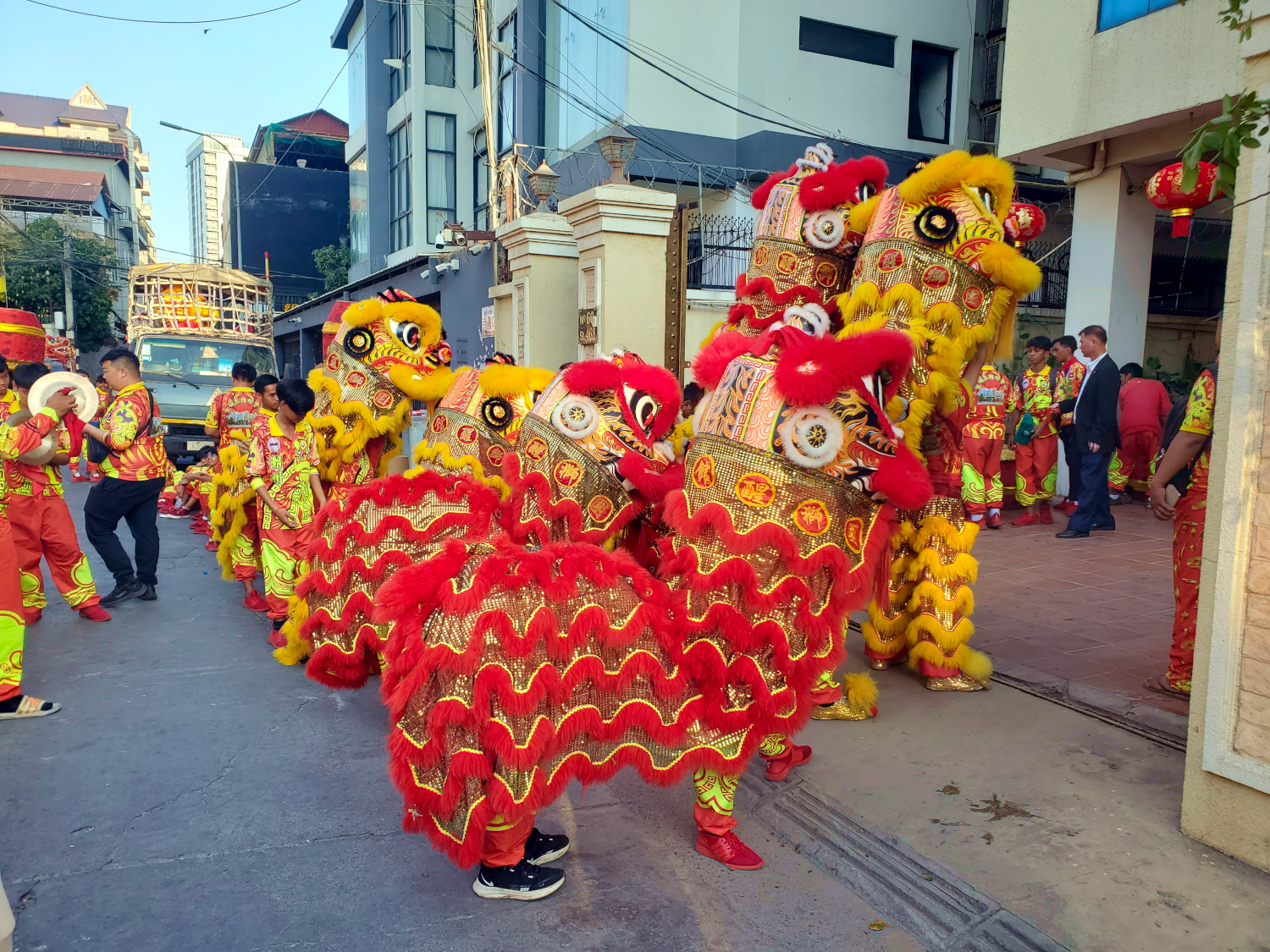


Between Western New Year in January, Chinese New Year in February, and Khmer New Year in April, Cambodians have plenty of opportunity to get in some resolutions. Or at least a party.
Books, Reading, Star Students
It’s not unusual for us to receive messages of appreciation from our students of the schools where we teach. And sometimes we get them from fellow teachers and school officials as well (along with little gifts at times). But Kimberly received such a message, with the highest praise, from the sister of one of her students, a sibling she’s never even met. She wrote in part: “She told and show our family the activities she did at school. We just want to tell you that you are the best teacher ever!” We’ll take that as a compliment.
Also in February, Krou Yeung School held its first-ever Book Talk Day. Books are often hard to come by in Cambodia, even in the major city of Phnom Penh. Public libraries are pretty much nonexistent, and the few bookstores in town are mostly high-priced emporiums that cater to foreigners.
When we first arrived at the school, its library was mostly an empty room, sparsely stocked with an odd variety of what appeared to be donated volumes — and many of them were black-and-white knockoffs of books that originally had been published in color.


Nonetheless, we did our best to get the students involved in reading. Each of the upper grades now has one class period per week dedicated to spending time in the library, which is now much better organized, and somewhat better stocked. The school even had an official librarian for a while.
And now we’ve had Book Talk Day, which consumed virtually an entire day — so it provided the added benefit of giving the students a break from classes. They spent almost the whole day listening to each other give short talks about about specific books — except for when they took breaks to shake out the cobwebs by engaging in some directed play activities.

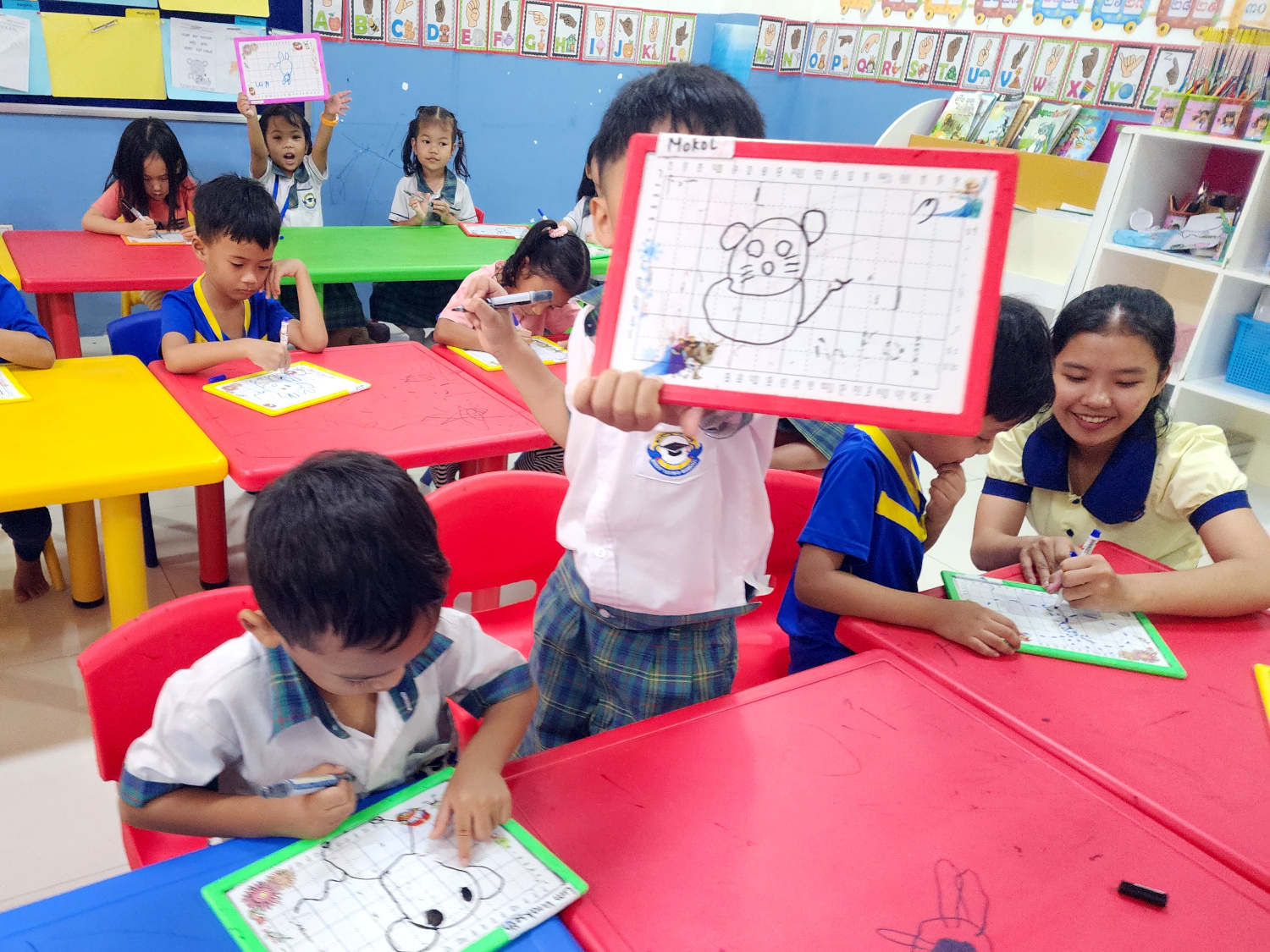


The books chosen included both fiction and nonfiction. They ranged from folktales to a book on how to make a weathervane. One of the folktales selected was the Russian story Ivan the Fool, which we’ve performed many many times during our years as a touring theatre company. (We called it “Simple Ivan”.) We’ve also taught it to students and had them perform it at the various schools where we’ve volunteered around the world. (including this one) Another book contained another Russian story, Baba Yaga, which is a variant of another tale we’ve performed in the past.
Switching from Fulltime to Part-Time
Dennis had been needing more time to get some writing done (among other things he’s had a number of poems published in literary journals in recent months, and is really chomping at the bit to ramp up his output), and it’s been very difficult to do with the demands of fulltime teaching. So he informed the administration — a couple of months earlier, in fact — that he would like to reduce his hours (with a concomitant reduction in pay, naturally) for the second half of the school year. This is entirely in accordance with the terms under which we signed up; we initially just committed to a 6-month stint as fulltime teachers, with the stipulation that we’d let them know within a couple of months if we’d be continuing after that.
But despite the advance notice, the gears had been grinding very slowly. As he neared the end of the first half, there was still no addition to the teaching staff to take up the slack. In fact, the administration initially proposed a revised schedule that indeed would have had him teaching only 3 days instead of 5 — but with all the same classes crammed into those days! Which would not have solved any problems at all. Actual class time may not be just the tip of the iceberg for teachers, but it’s certainly not the whole shebang; many other hours are required to plan lessons, grade papers, and so on.


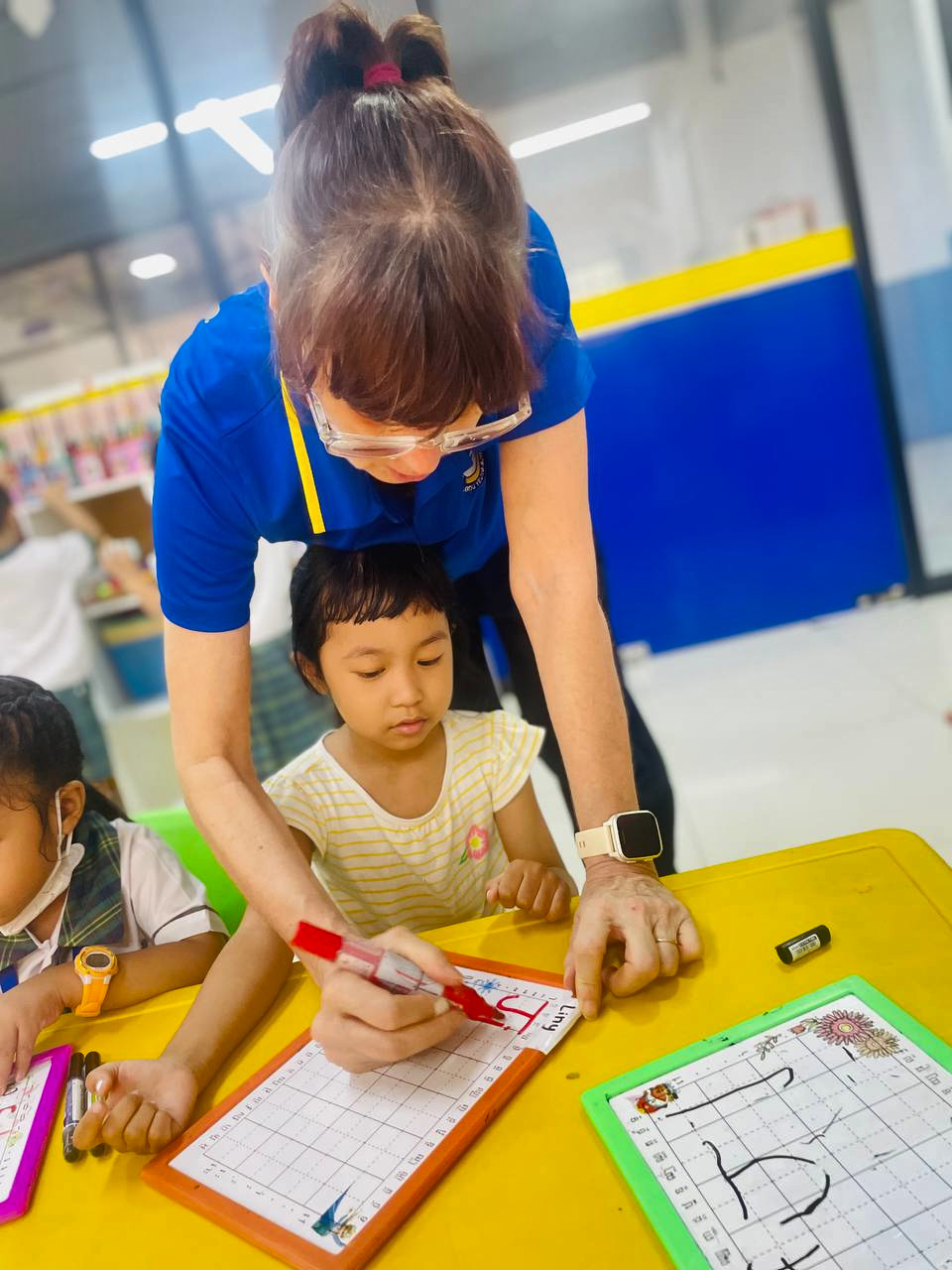
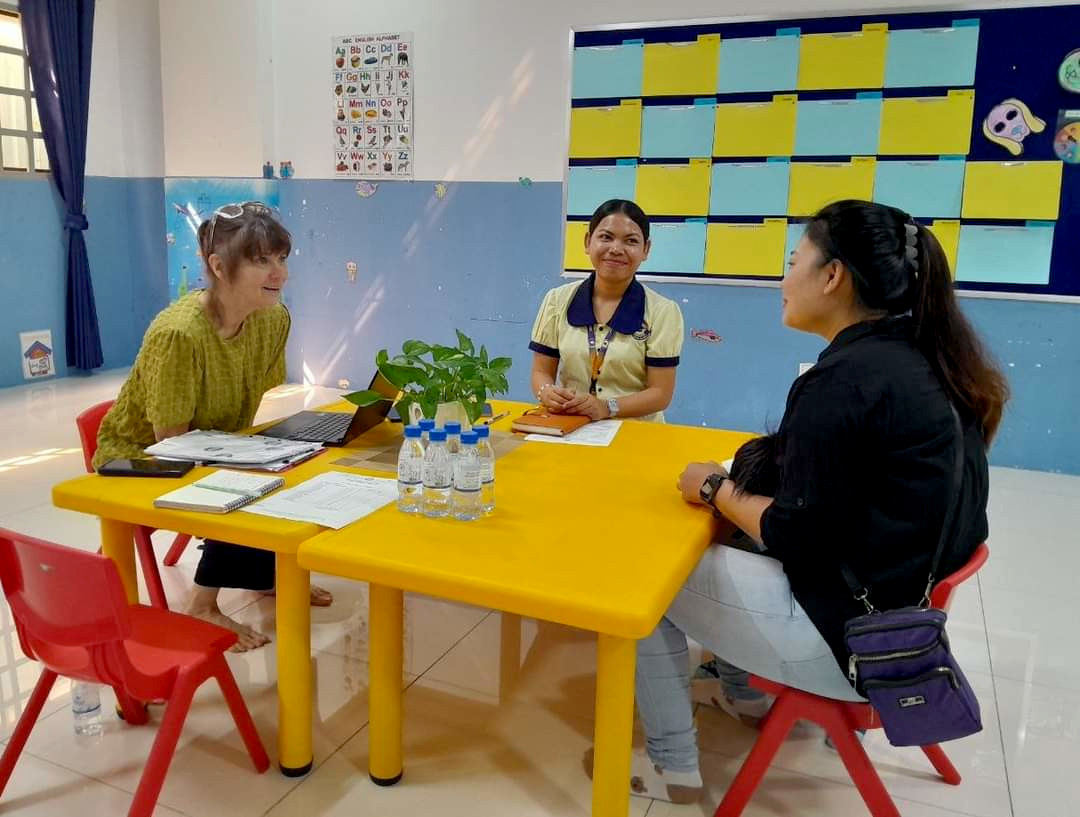
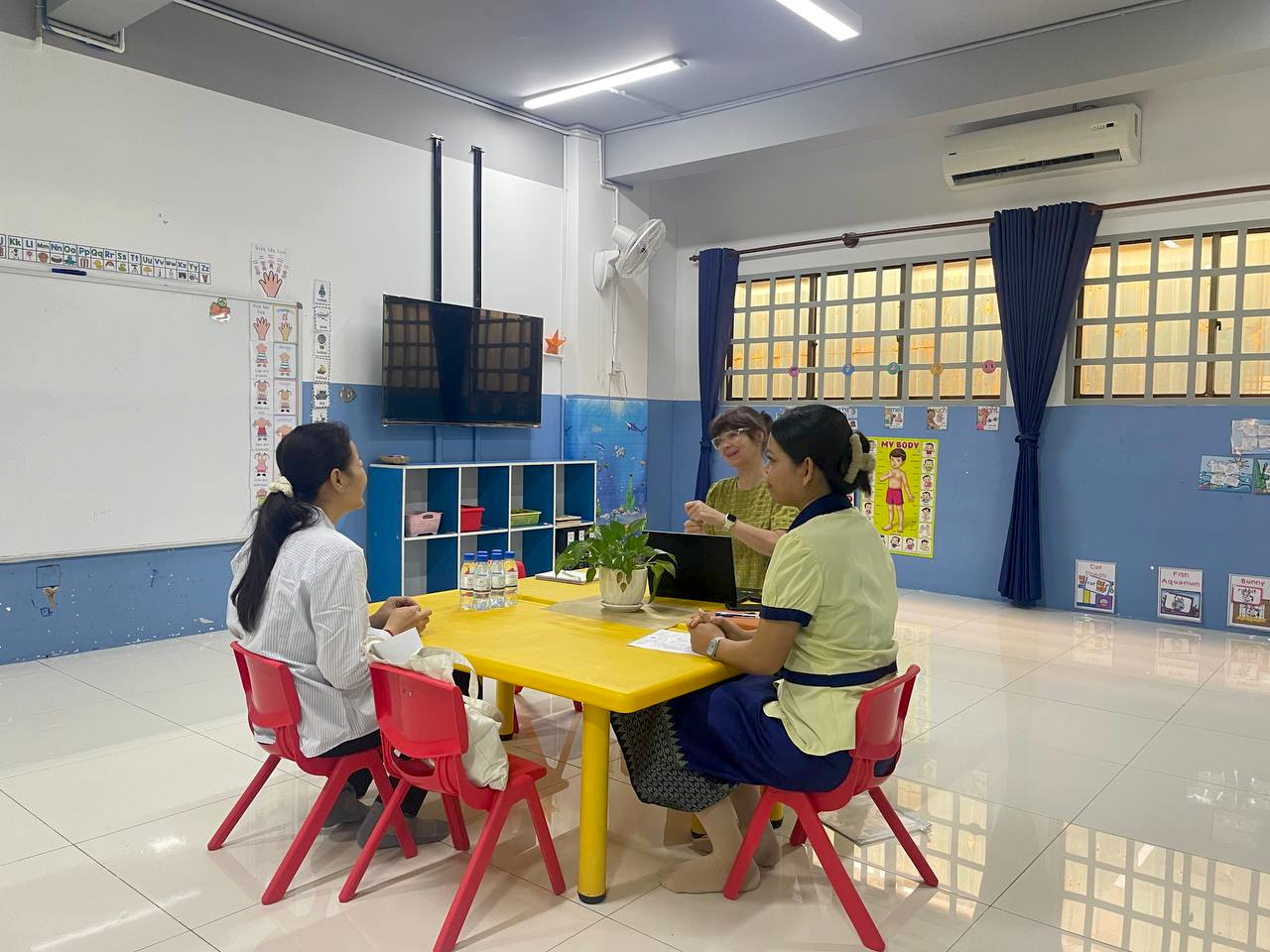

One day, someone mentioned to us that there would be someone from the immigration department visiting the campus to make certain our papers were in order. Okay, fine. What we didn’t expect, however, was that instead of a single official wearing a suit, there were 5 or 6 men in military style khaki uniforms. When we saw them piling out of the car, we started to wonder if there was some problem; but there wasn’t. They didn’t even need to talk to us, but just to the administration. Apparently, this show of force is just routine. But it certainly seems like overkill — as do just about all immigration procedures in any country, come to think of it. Back in the States, the government is expending whopping sums of taxpayer money in pursuit of xenophobic hysteria over “illegals”, based entirely on malicious — and easily discredited — myths and lies (they’re bringing crime, they’re bringing drugs, they’re stealing our jobs, etc.). We don’t know if Cambodian authorities are guilty of similar foolishness and waste; but they do send out half a dozen guys to do the job of one.
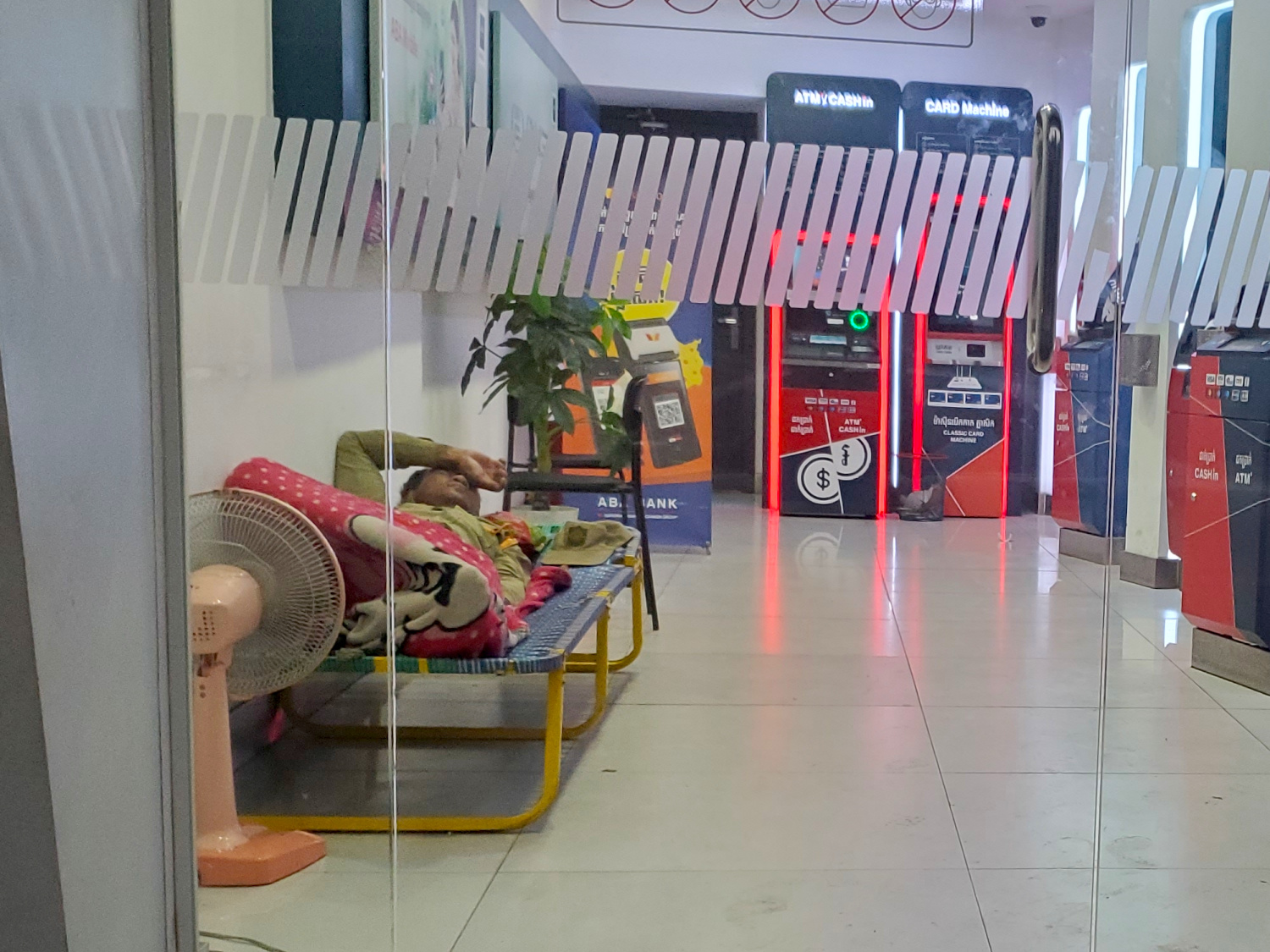
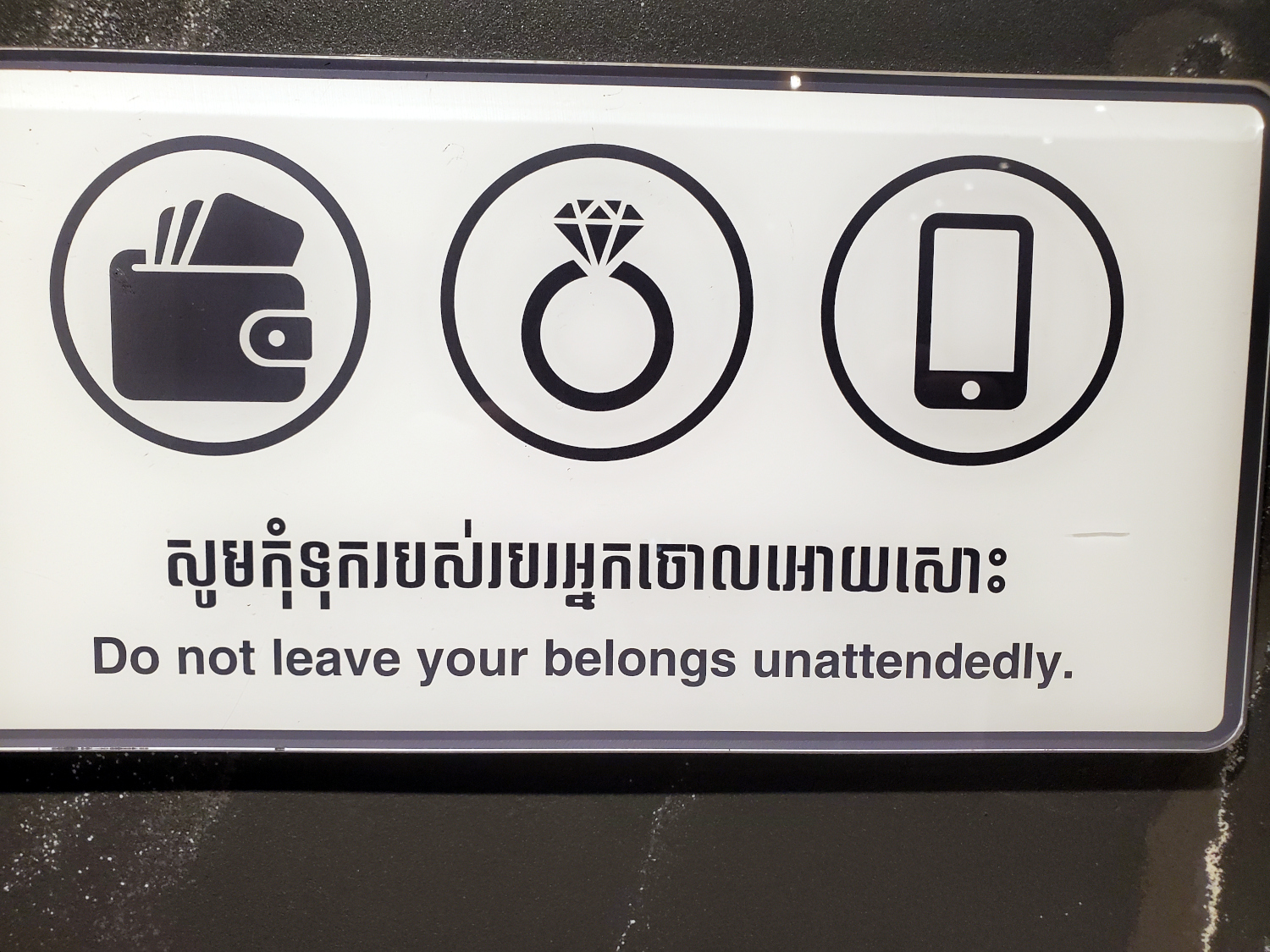
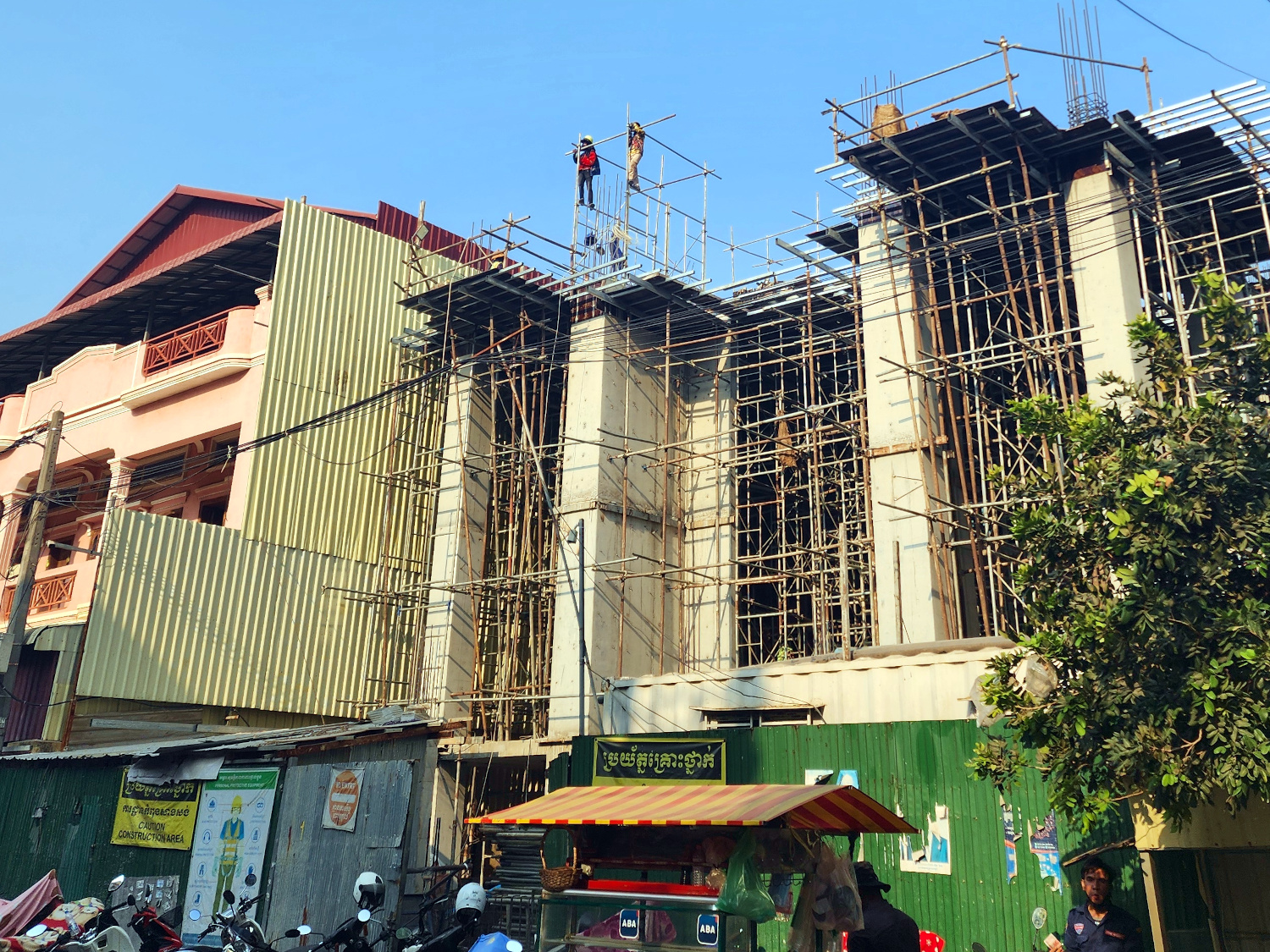
Cambodians love their holidays. Which is understandable, considering there are so few of them and that the rest of the time, they work almost around the clock. It’s not at all unusual to see people sleeping at their place of work — tuk-tuk drivers in their vehicles, security guards on a cot on the street in front of the buildings they guard (or for one lucky guard in our neighborhood, inside the lobby of an ATM station). They’ll take any excuse to take a day off from work and school — or even a few days. So on March 8, our school was closed in observance of International Women’s Day, which we have no recollection of ever happening in U.S. schools.
But on the day before, our students commemorated the occasion by making cards to present to their mothers. Which was a bit of a challenge because the idea was not announced until the night before. And we were in short supply with materials to make these cards — we would have been willing to buy some things ourselves (as we often do) had we known in time.
Still, the students put together some pretty cool items with what we had on hand, and in the limited time they had to do it. Leave it to the kids to come through in flying colors!




Feb/March 2024

 world travel with a theatrical flair
Leave a comment