

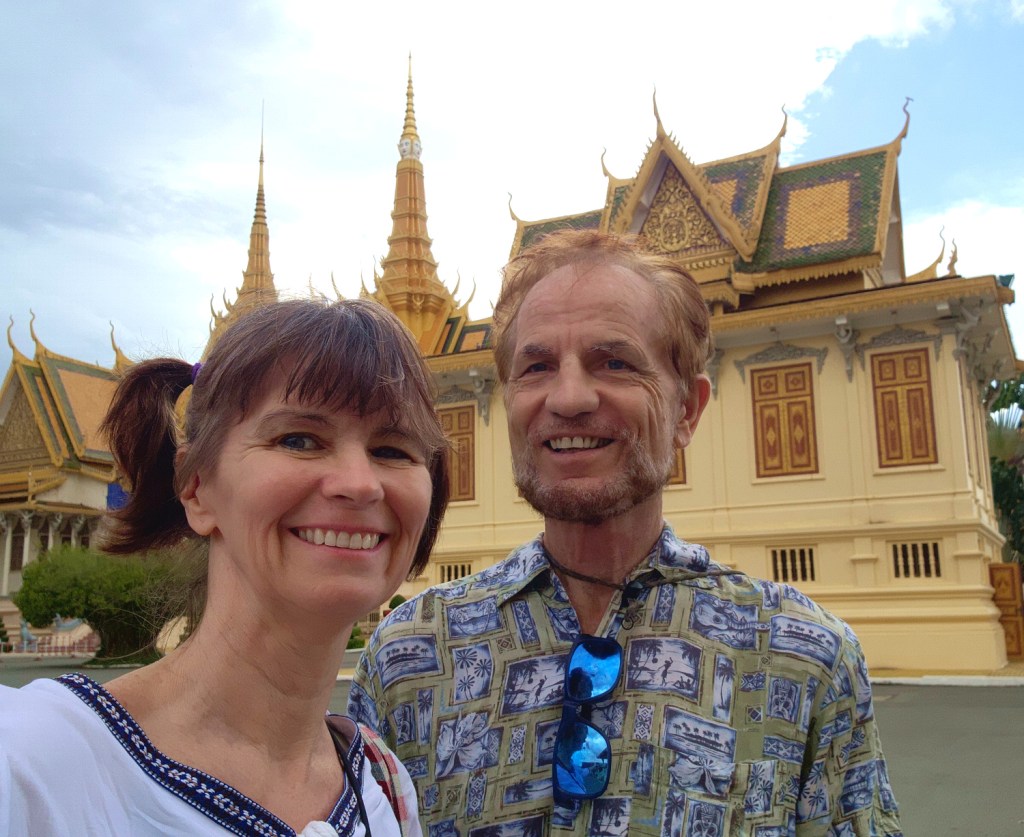
During the year that we were teaching in Phnom Penh, we didn’t get out a whole lot. On the weekends, we needed time to catch our breath, and take care of errands, and prepare for the next week of classes. Which didn’t leave a great deal of time to play tourist, nor much enthusiasm for doing so. So when the school year finally ended, we of course had to catch up on a little sightseeing that we’d been postponing. And the number one attraction on our list was the Royal Palace.
Constructed between 1866 and 1870, the Royal Palace has been the home of Cambodia’s reigning monarch ever since. Well, except for a few years back in the Seventies, during the Khmer Rouge’s reign of terror. One good thing about the Khmer Rouge — surely the ONLY good thing about the Khmer Rouge — was that they didn’t cotton to the royalty business, nor, theoretically to social hierarchy in general. (In practice they established a very harsh and brutal hierarchy of two tiers.) But after they were defeated, the monarchy resumed. And thus hath it been ever after.
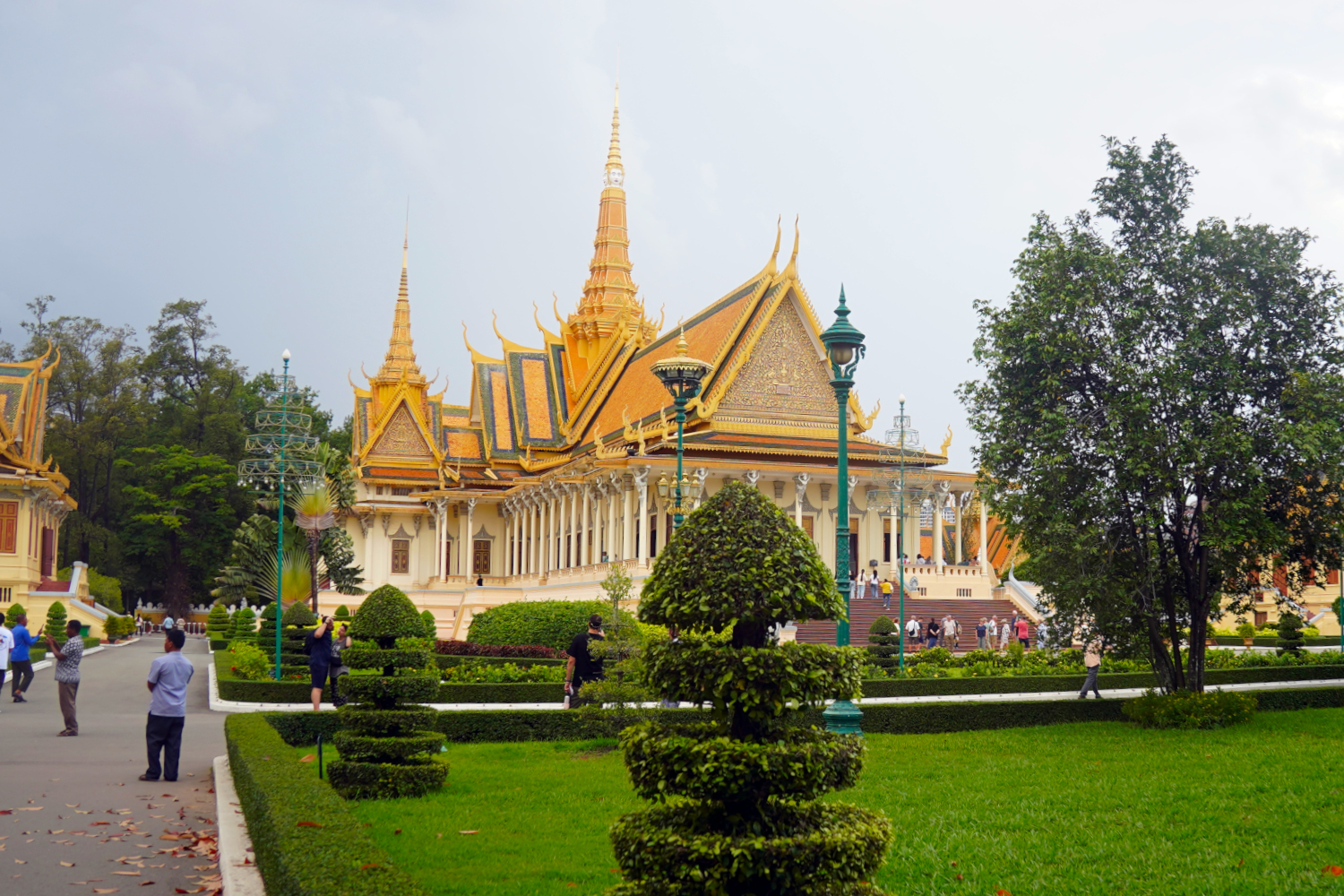
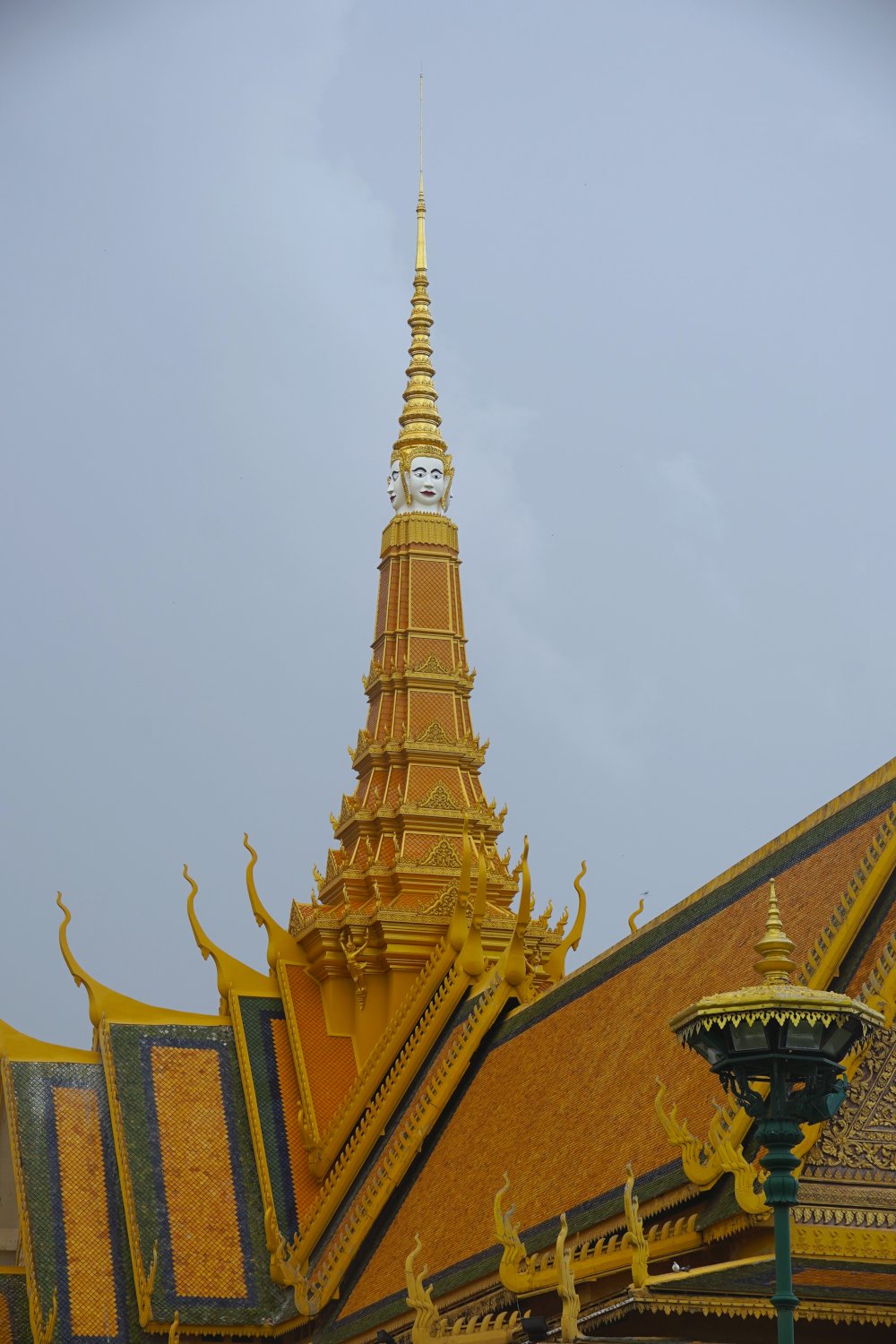
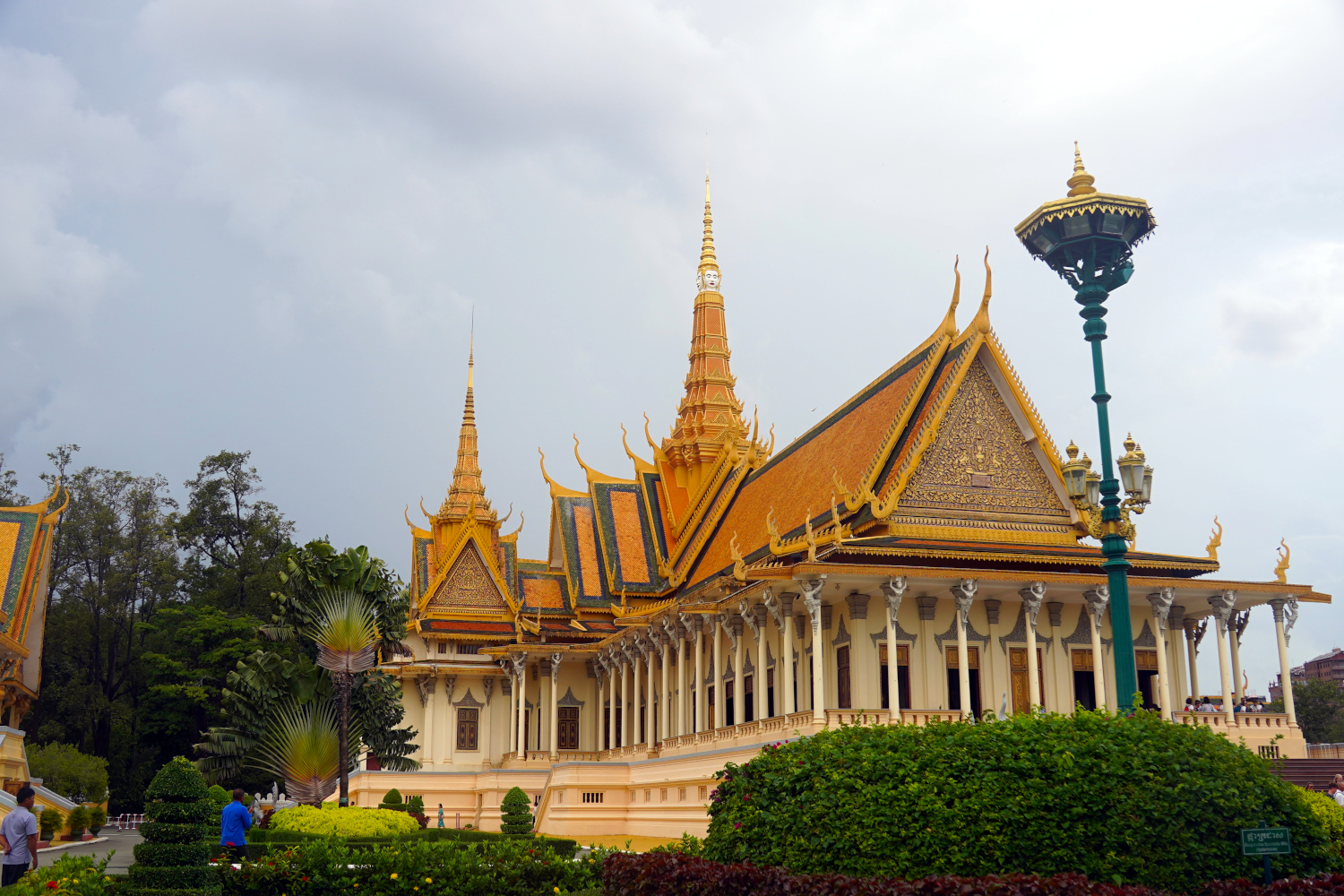
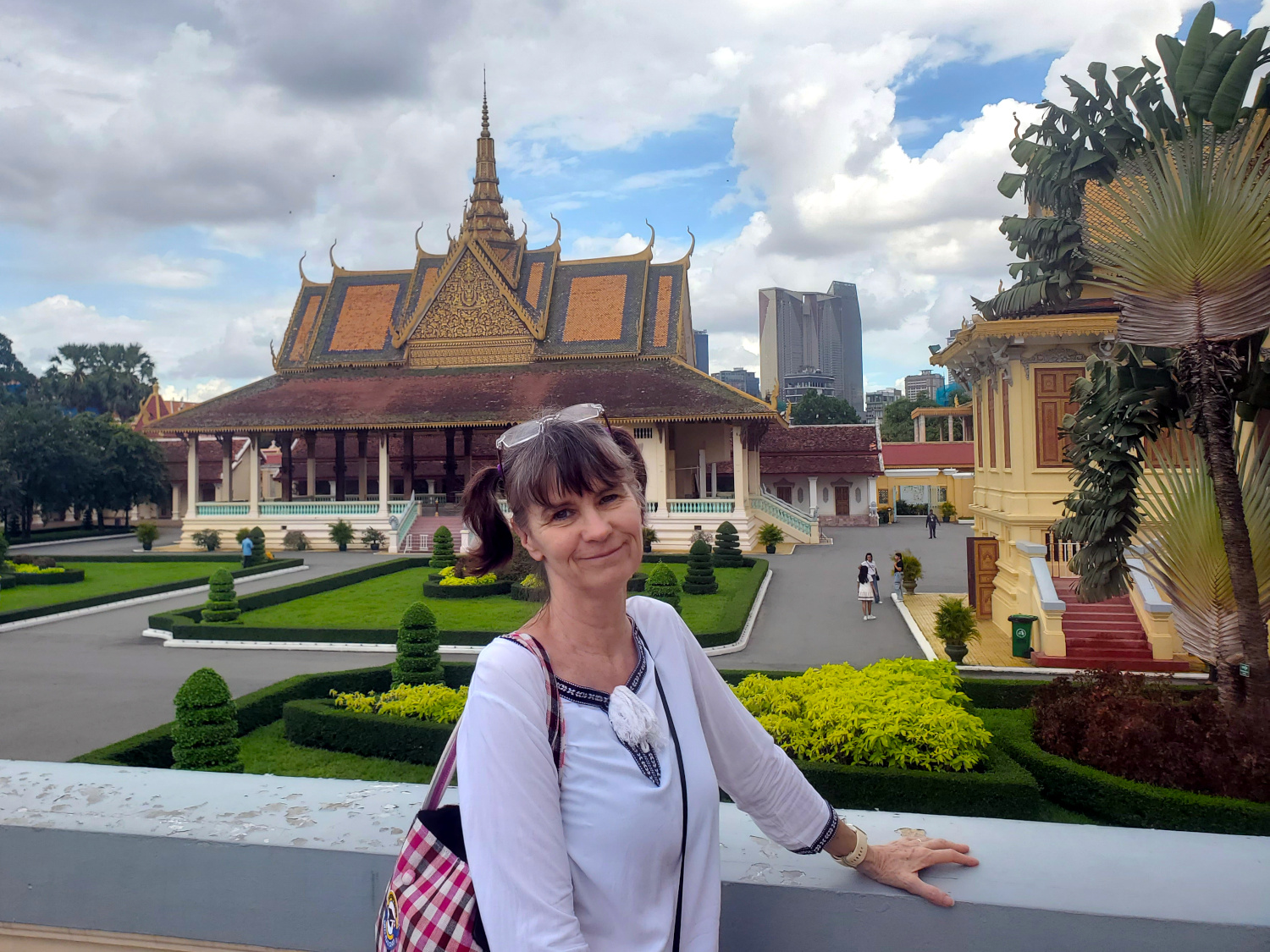
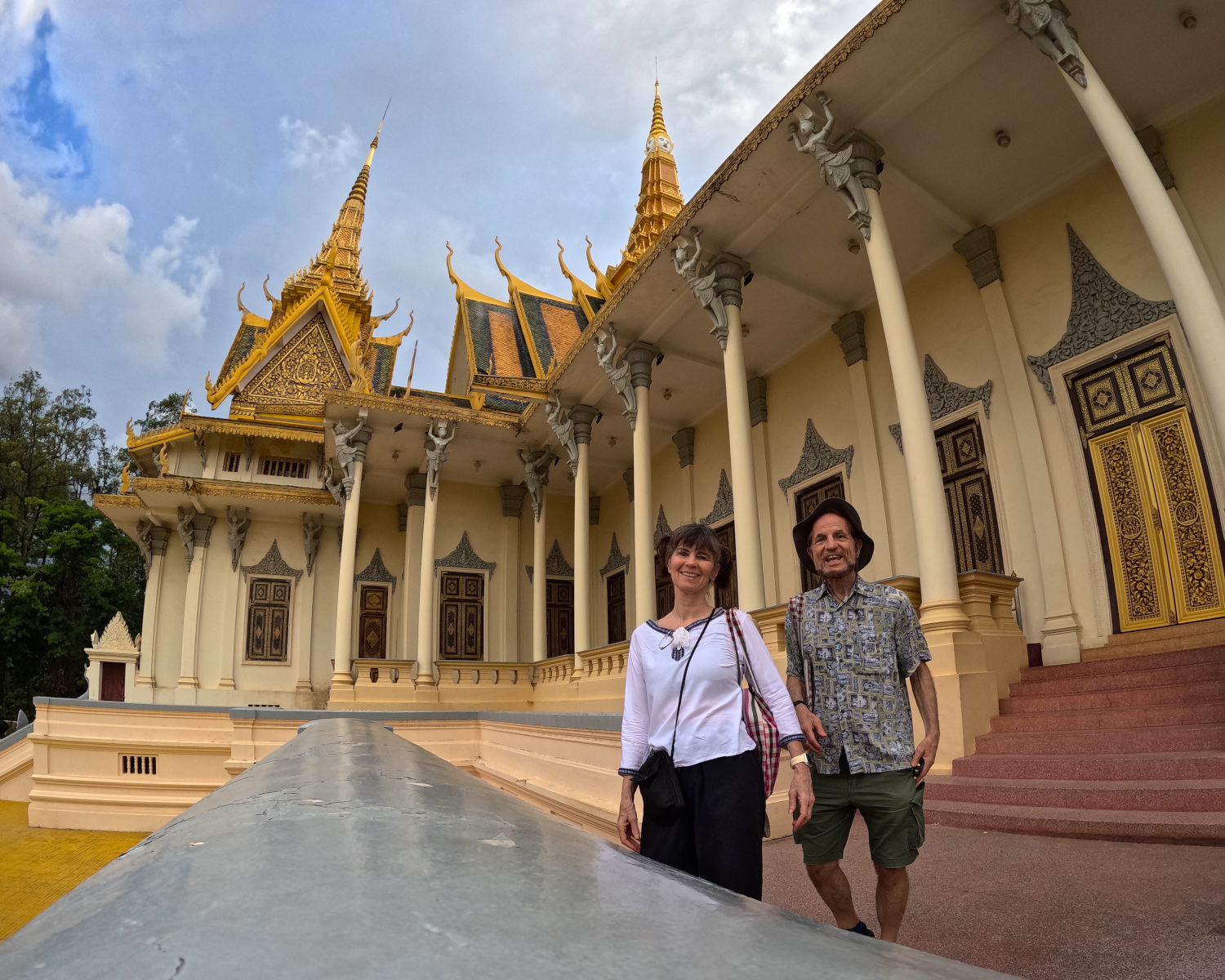
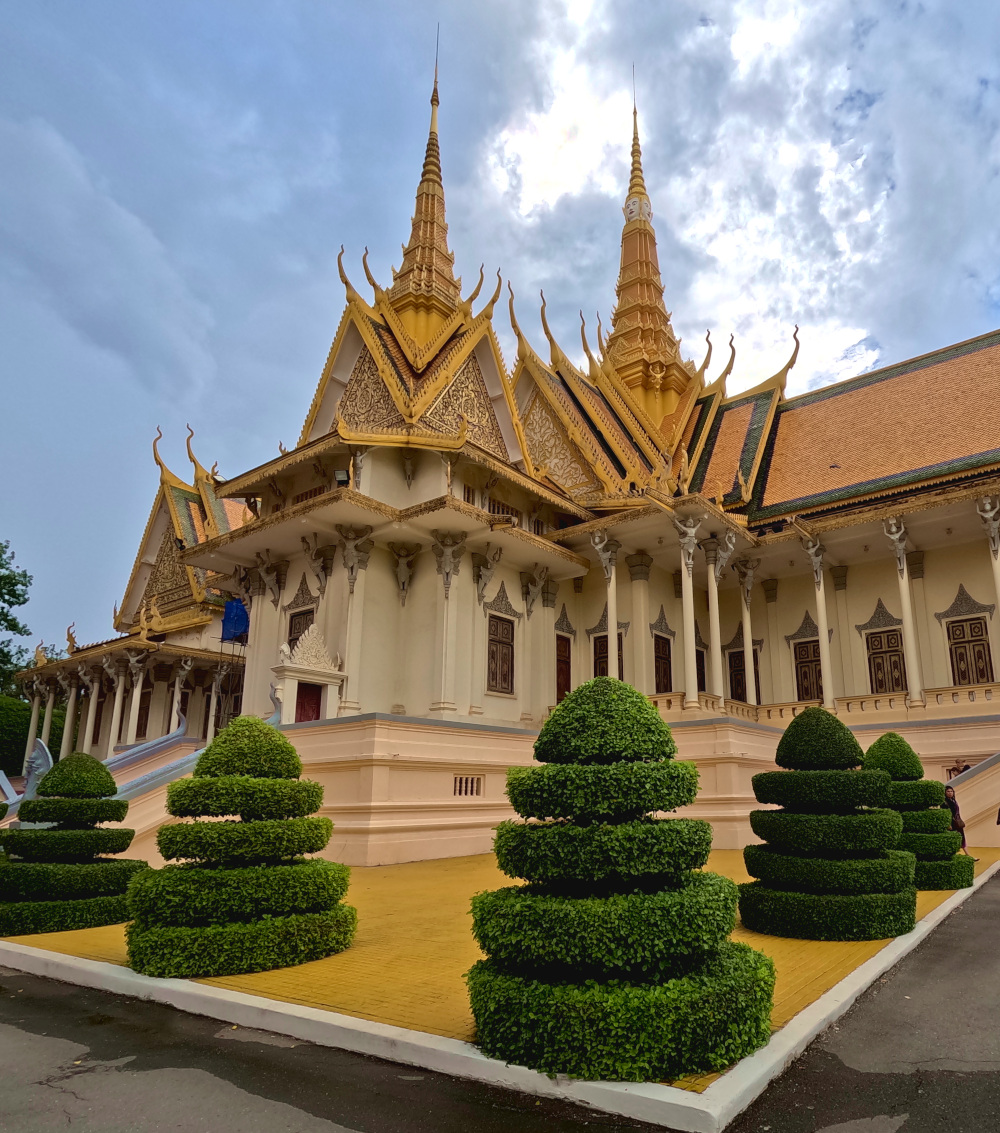
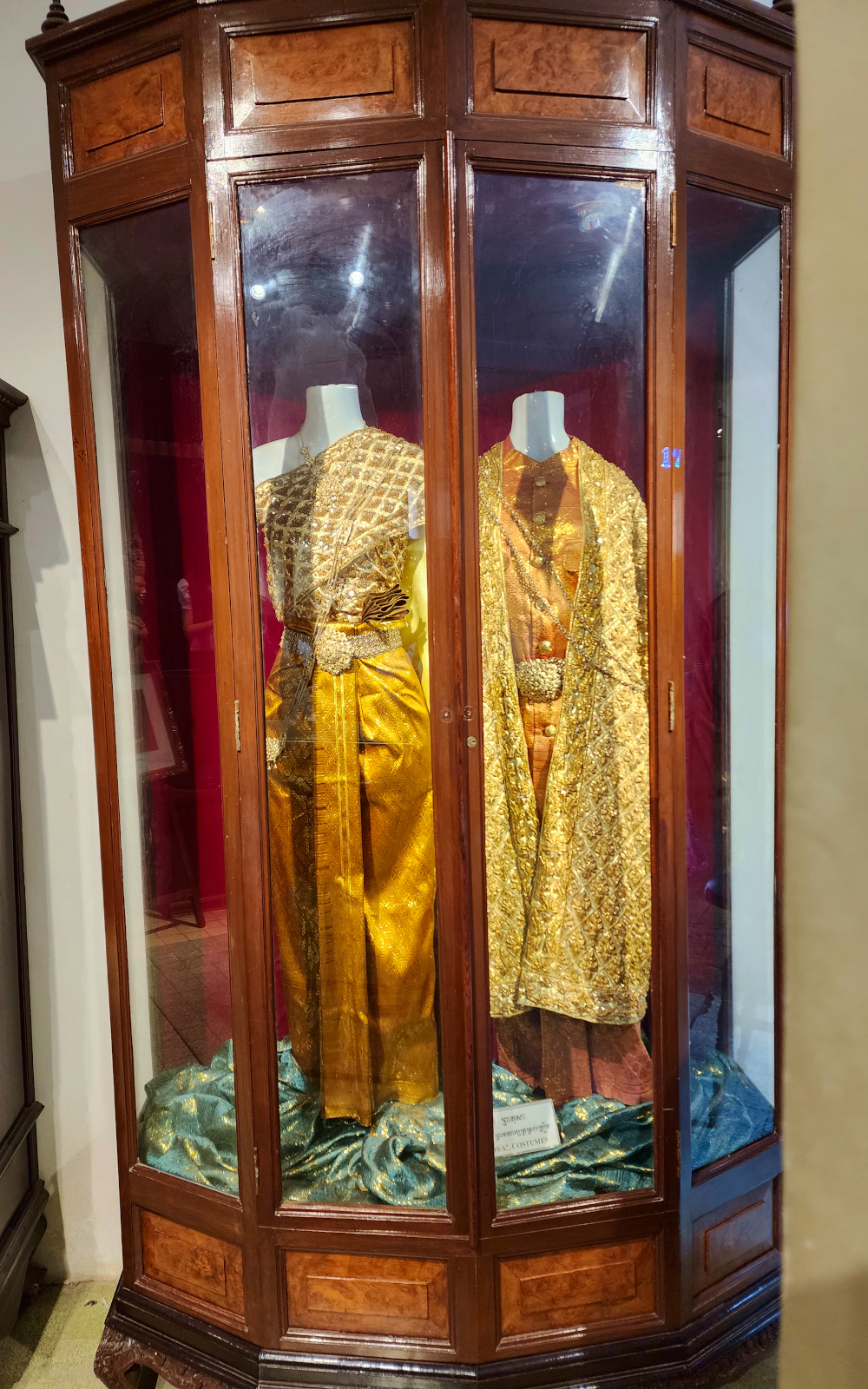
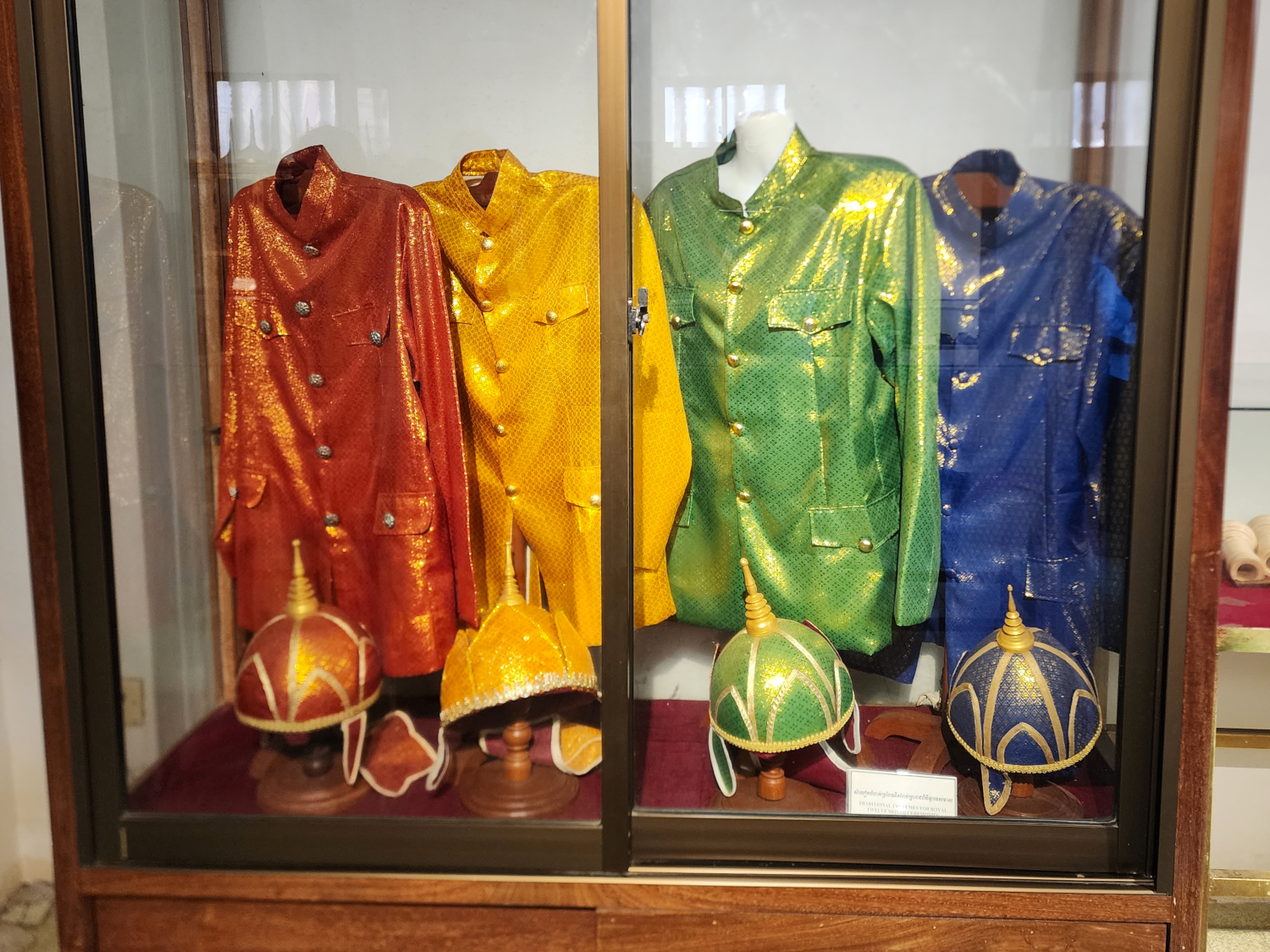
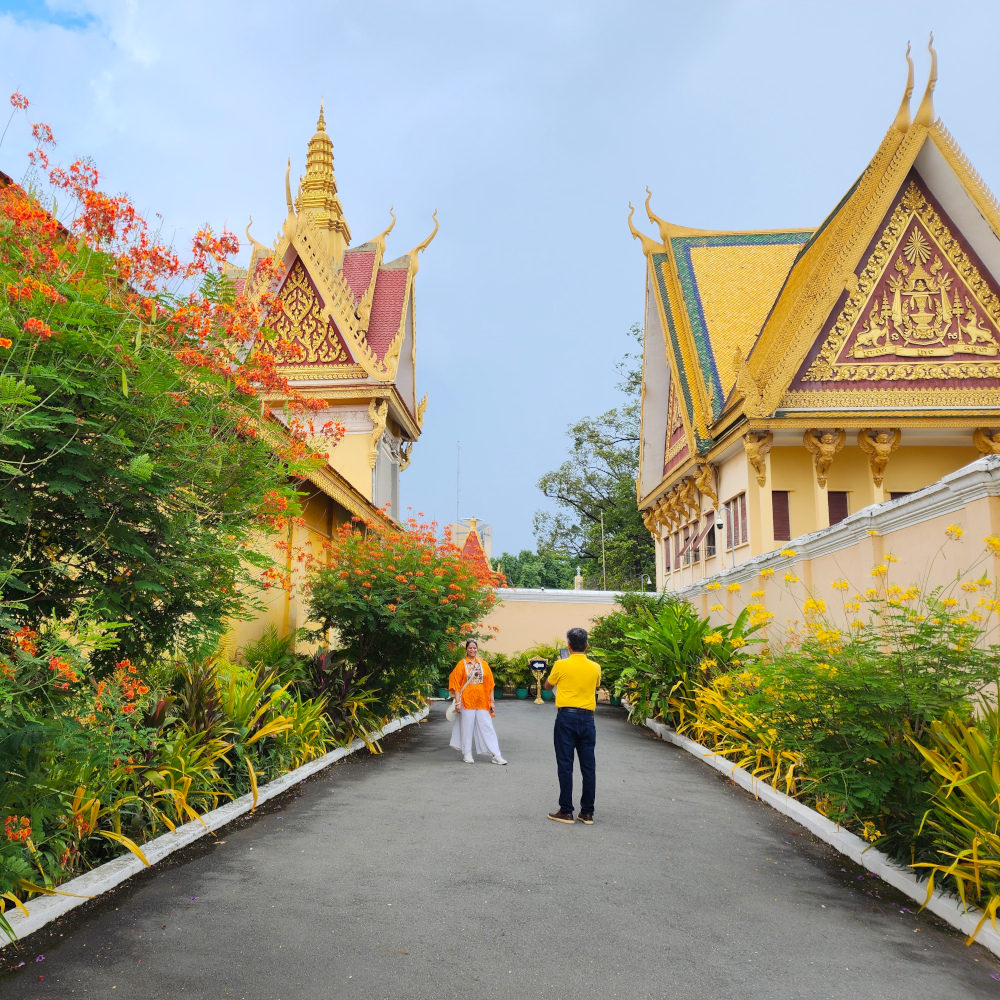
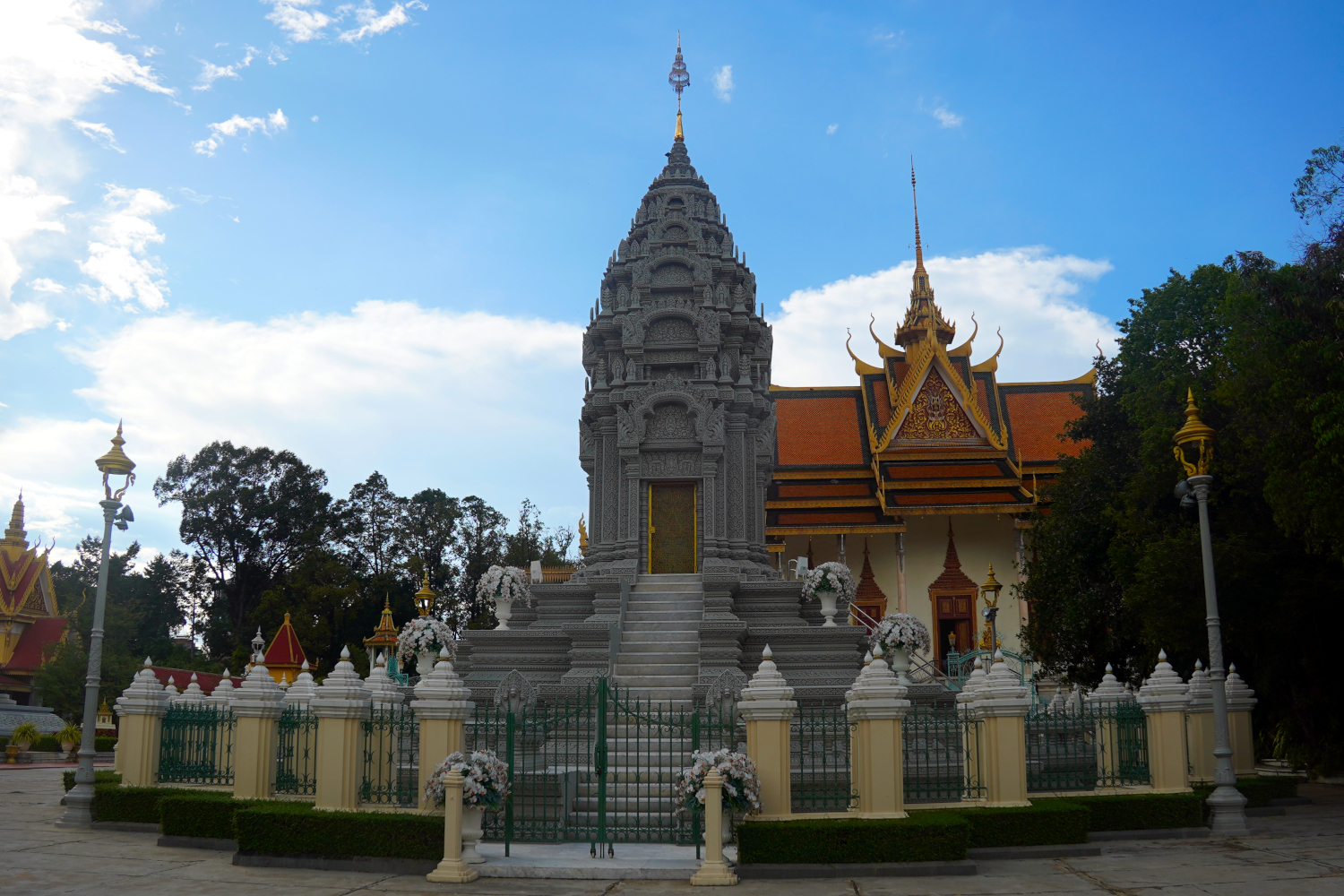
The Royal Palace, sitting at the fork of the Mekong and Sap rivers in the heart of Phnom Penh, is sequestered behind walls, thus requiring an admission fee (10 bucks for us outlanders) to get inside. But its ornate towers loom well above the walls and are visible for miles around, enticing non-royal folk to enter and have a peek. Of course, we don’t get to see how the king lives, because the residential section, comprising about half the compound, is off limits to hoi polloi.
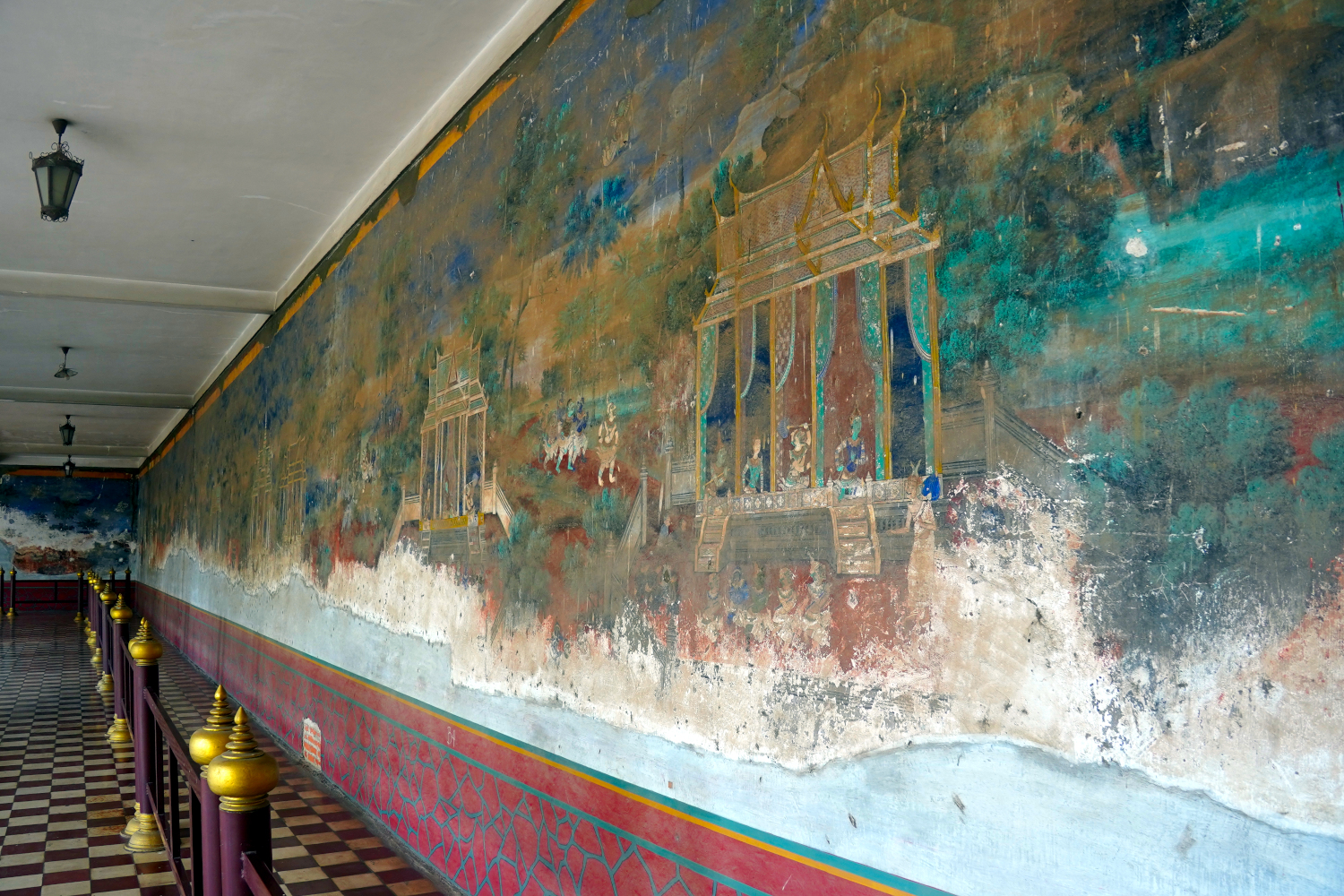
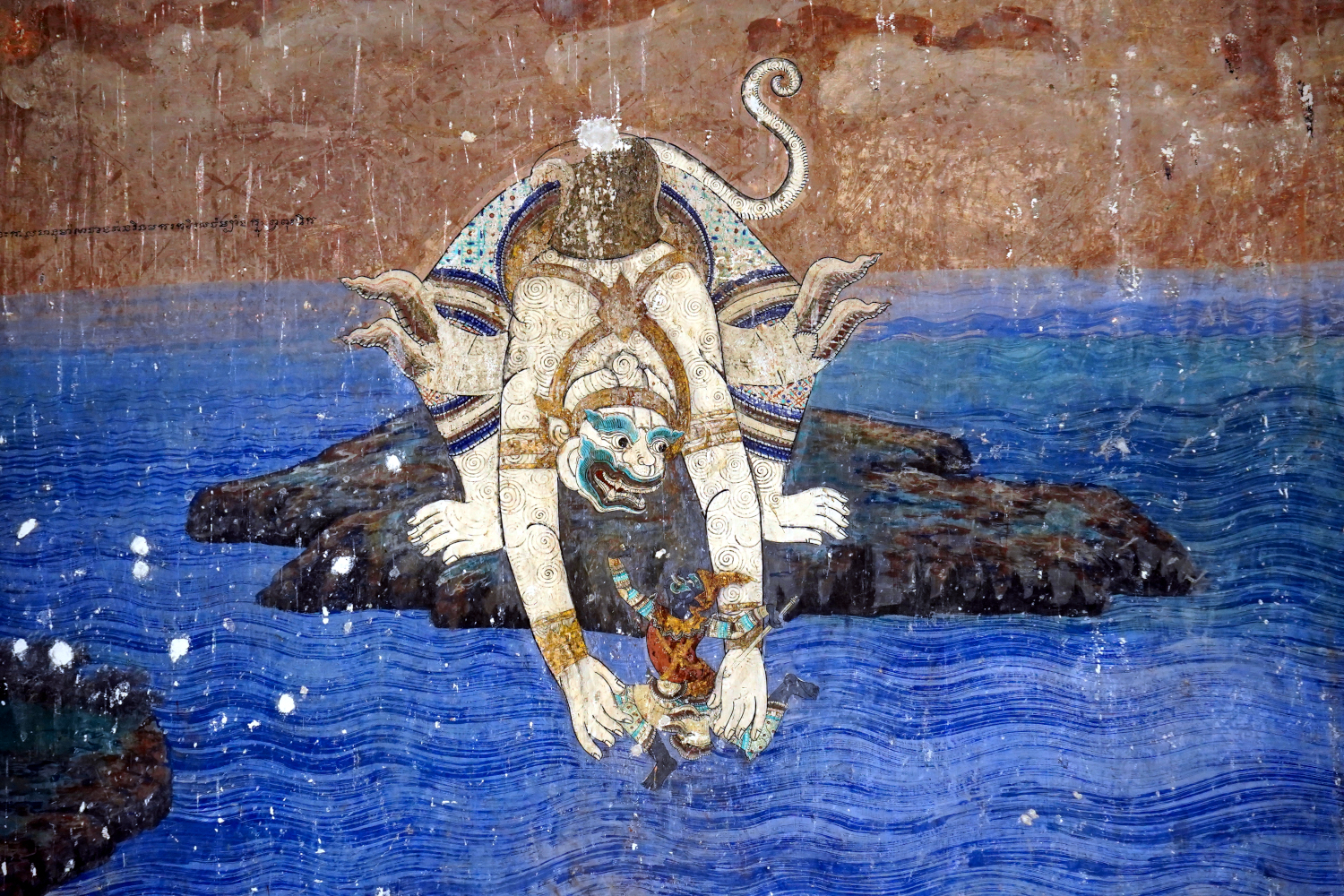
The accessible section is in several parts. There are gardens and courtyards, adorned with statuary and tropical plants. There are also wall paintings depicting scenes from the Khmer epic poem Reamker, which is actually an adaptation of the Sanskrit epic Ramayana. When we were there, a couple of artists were doing restorative work on these frescos.
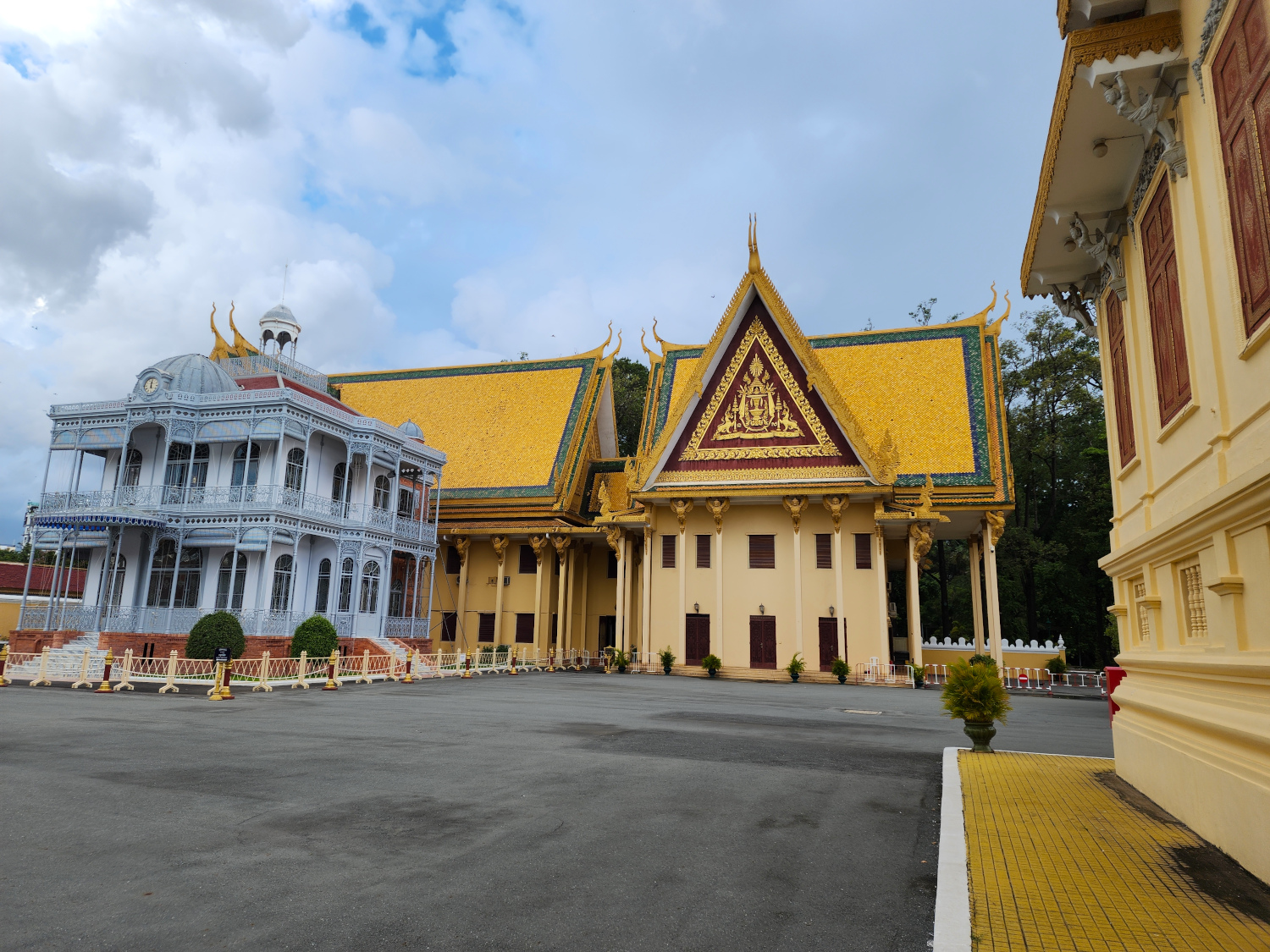
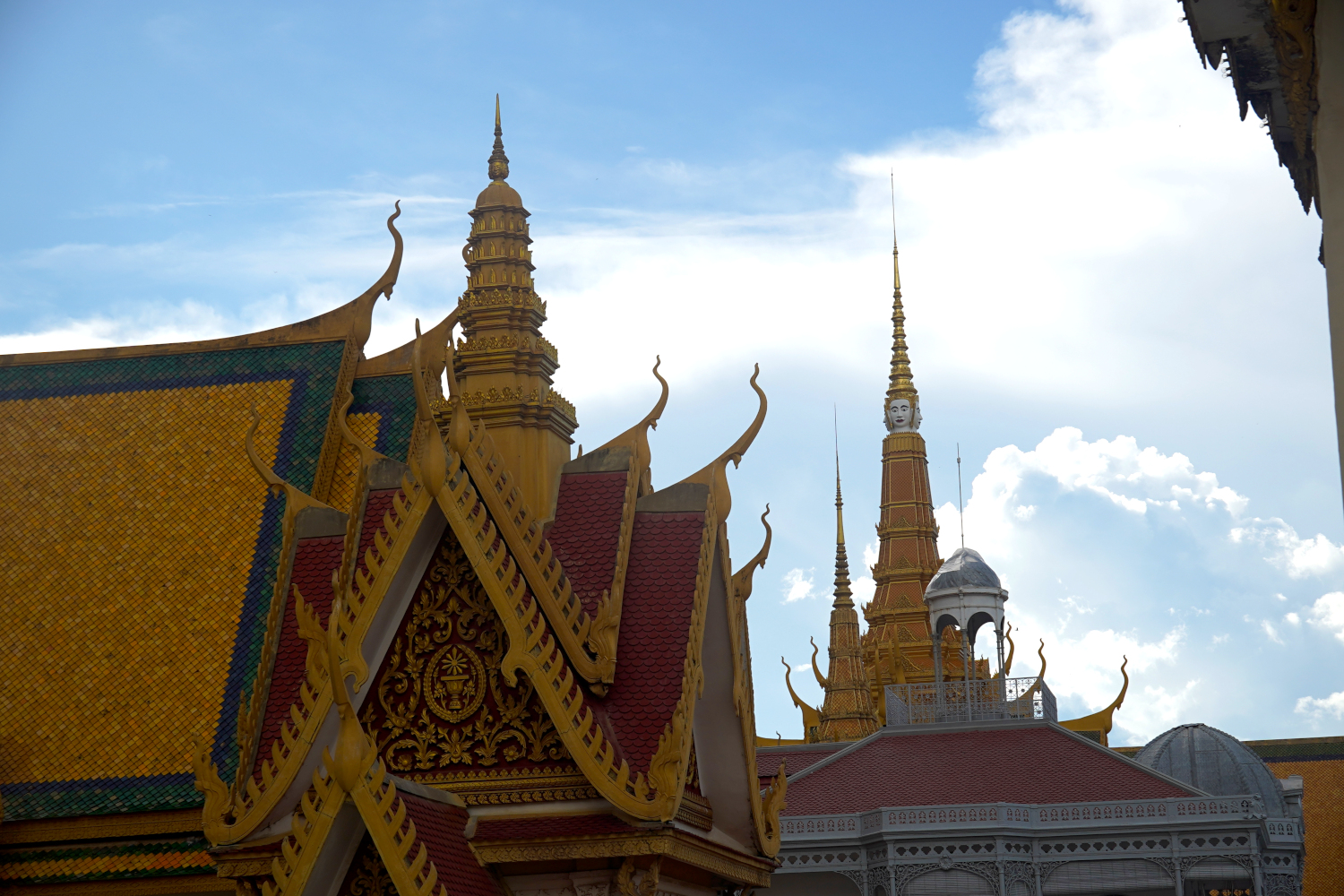
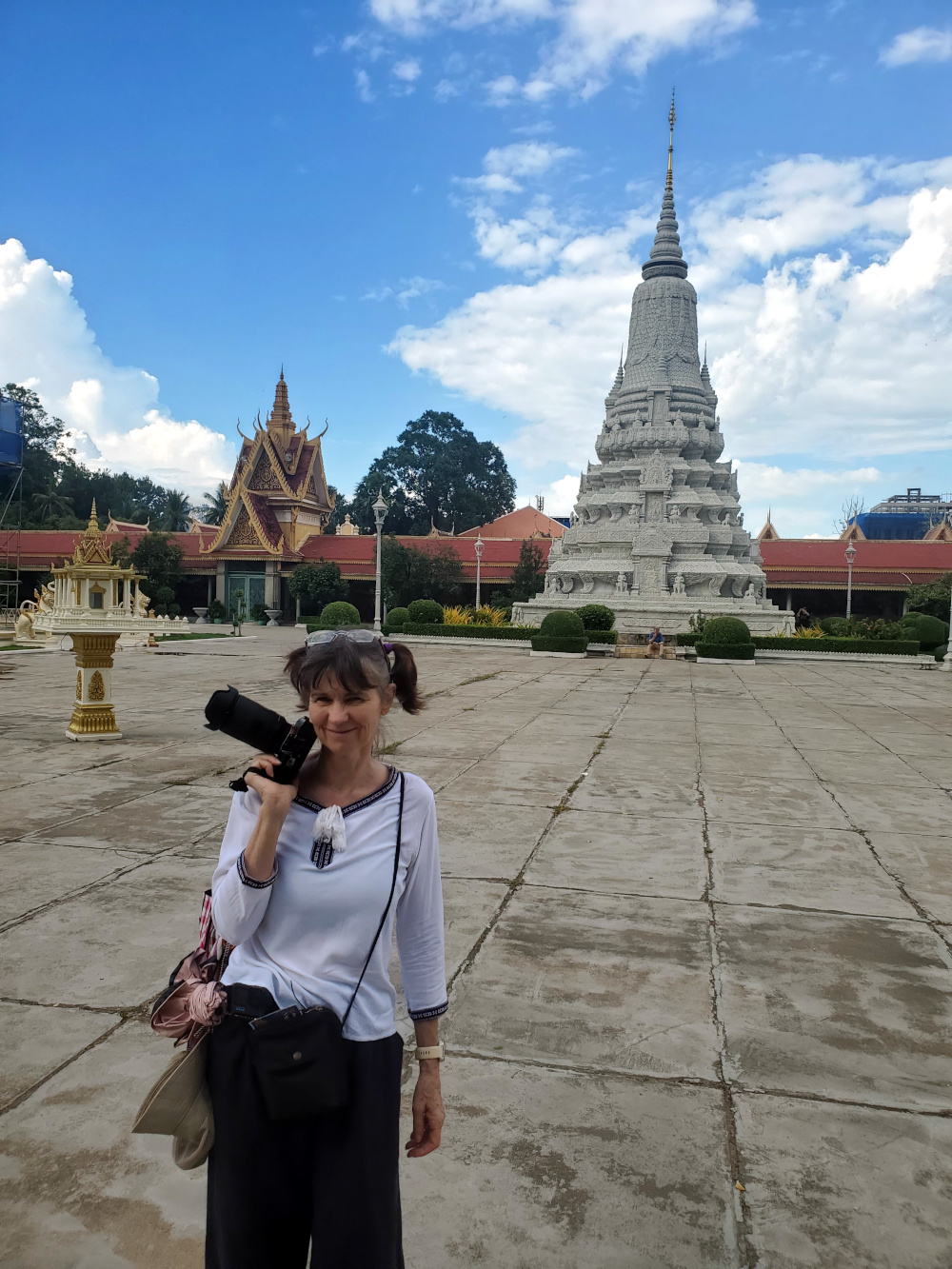
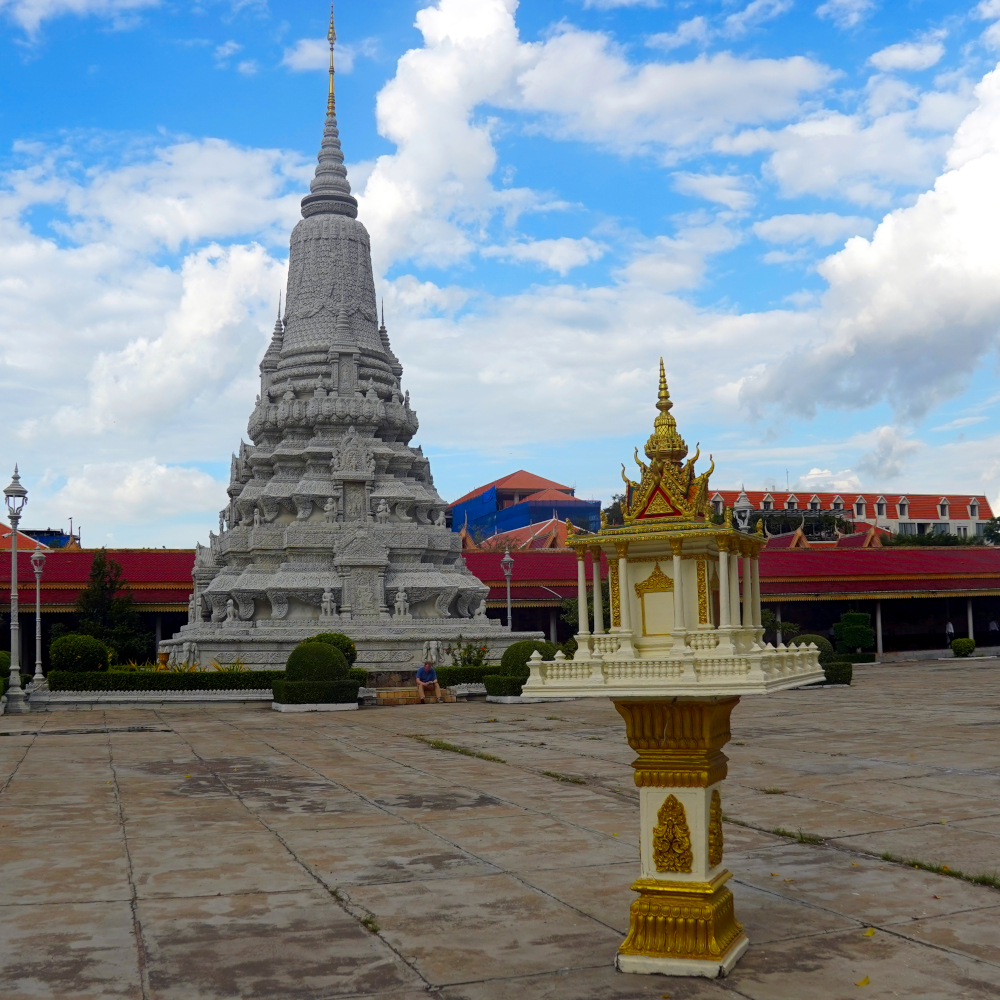

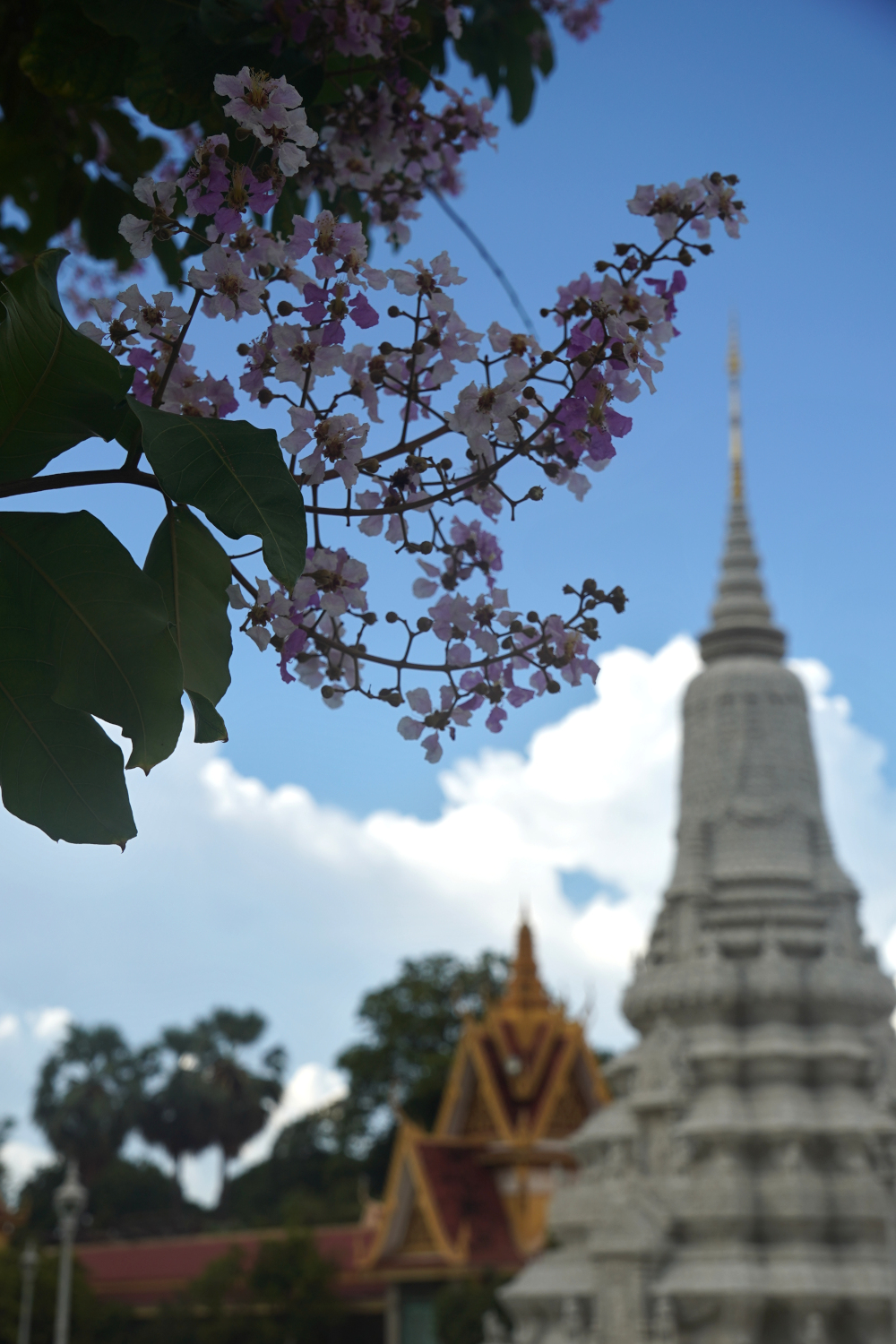
There are a couple of pavilions; one of them, known as the Moonlight Pavilion, was traditionally the venue for royal entertainment spectacles. The other one, called the Napoleon Pavilion, is thought to have been a gift to the king from France’s Emperor Napoleon III. It certainly has a “foreign” flavor to it, being the only building made of cast iron.
The Throne Hall, which has perhaps the most conspicuous — i.e., noticeable from the outside — stupa in the whole complex, is the site of royal and regal and official ceremonies.
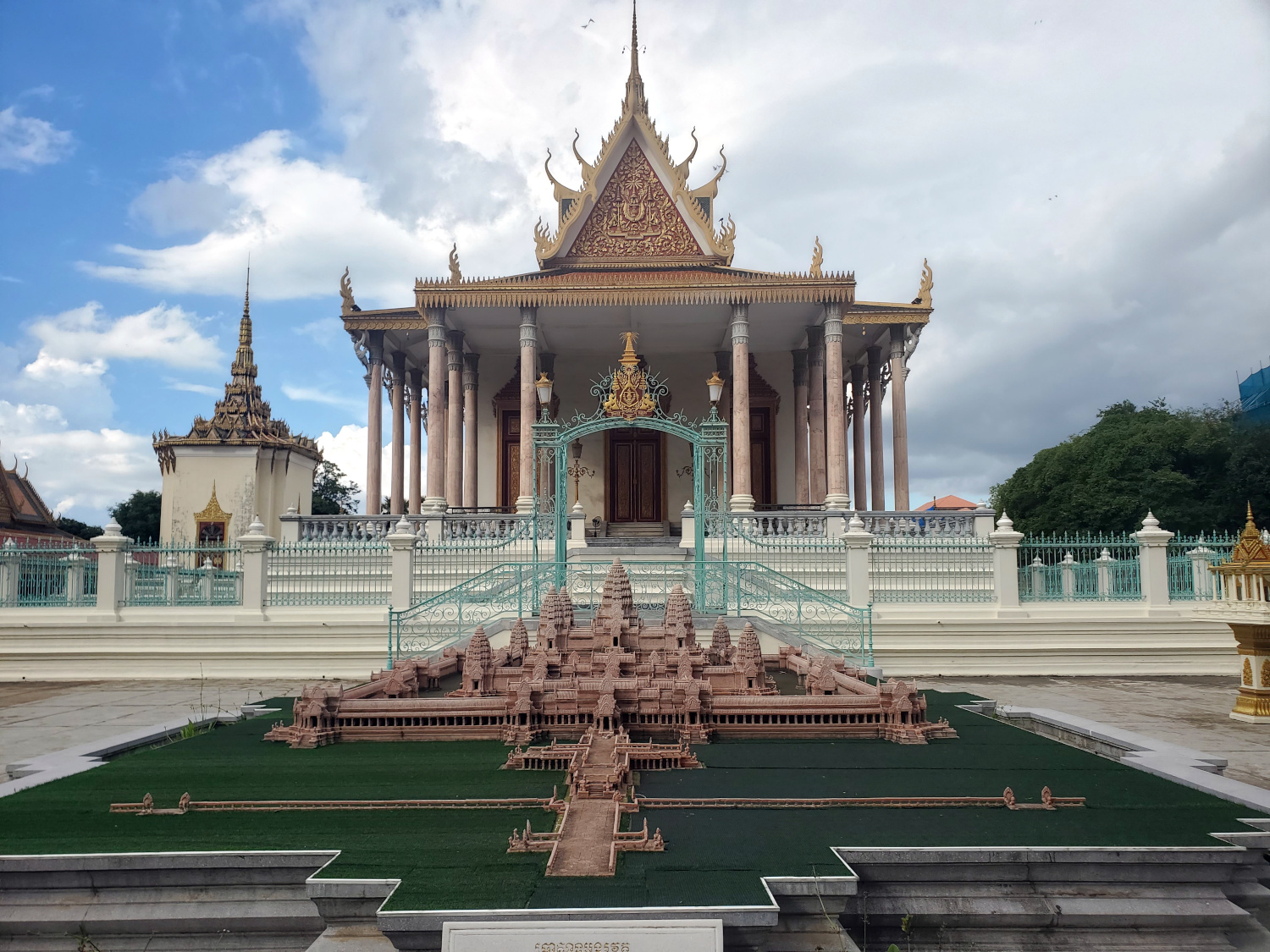
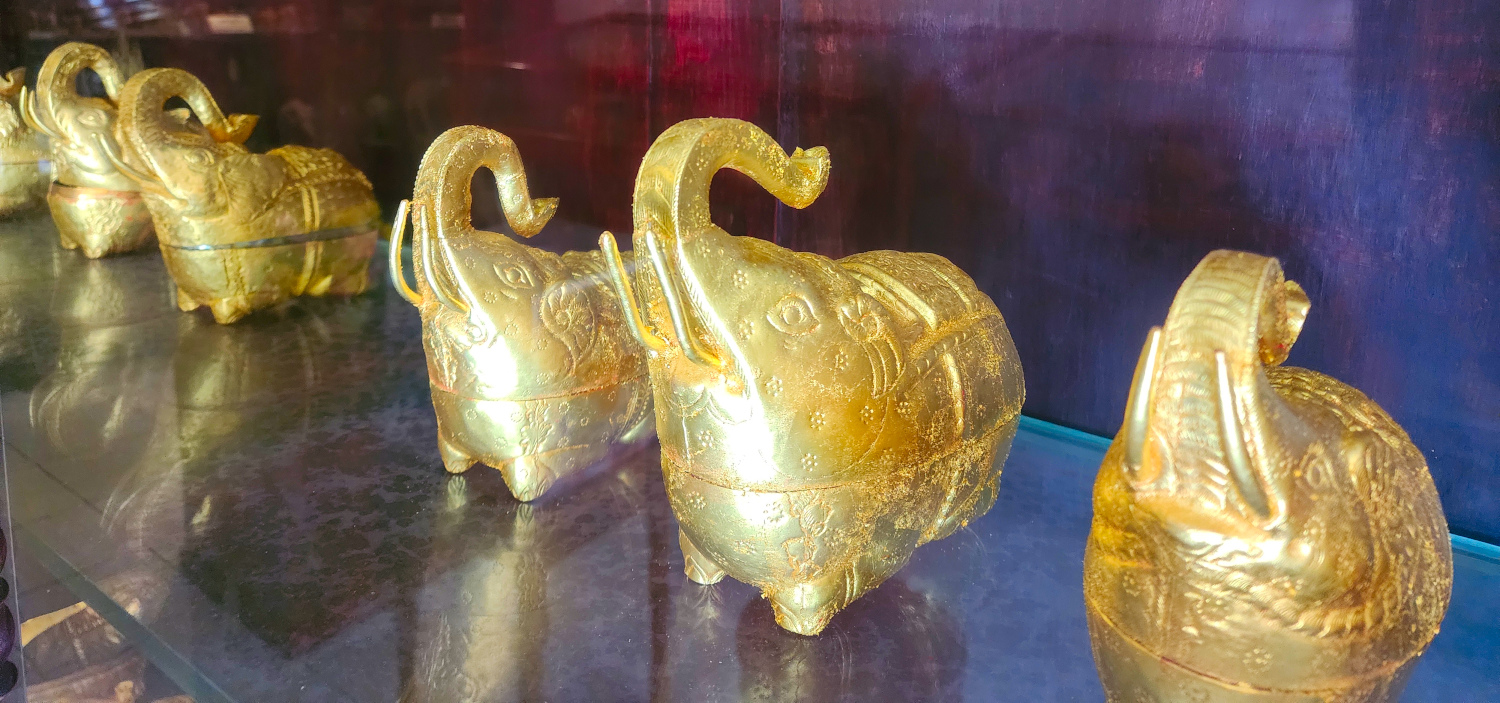
But the piece de resistance, as far as we’re concerned, is the Silver Pagoda. While a pagoda is normally a place of worship, this one has become an exhibit hall for some of the most impressive royal treasures, including gold and emerald buddhas, and all manner of gifts from VIP visitors over the years. There are a couple of big disappointments about this edifice, however. One is that the nickname of the structure is derived from silver tiles on the floor, which are mostly covered up with rugs and carpeting so that they’re not visible. The other thing is that we can’t show you the items we did see, because no photography is allowed in the building.
This, in fact, is an annoying reality of tourist attractions in general. Many of them prohibit photography in all or part of their facilities — and it’s invariably in the part(s) most worthy of photography. This is one of our travel pet peeves. (Does anybody still use that expression?)

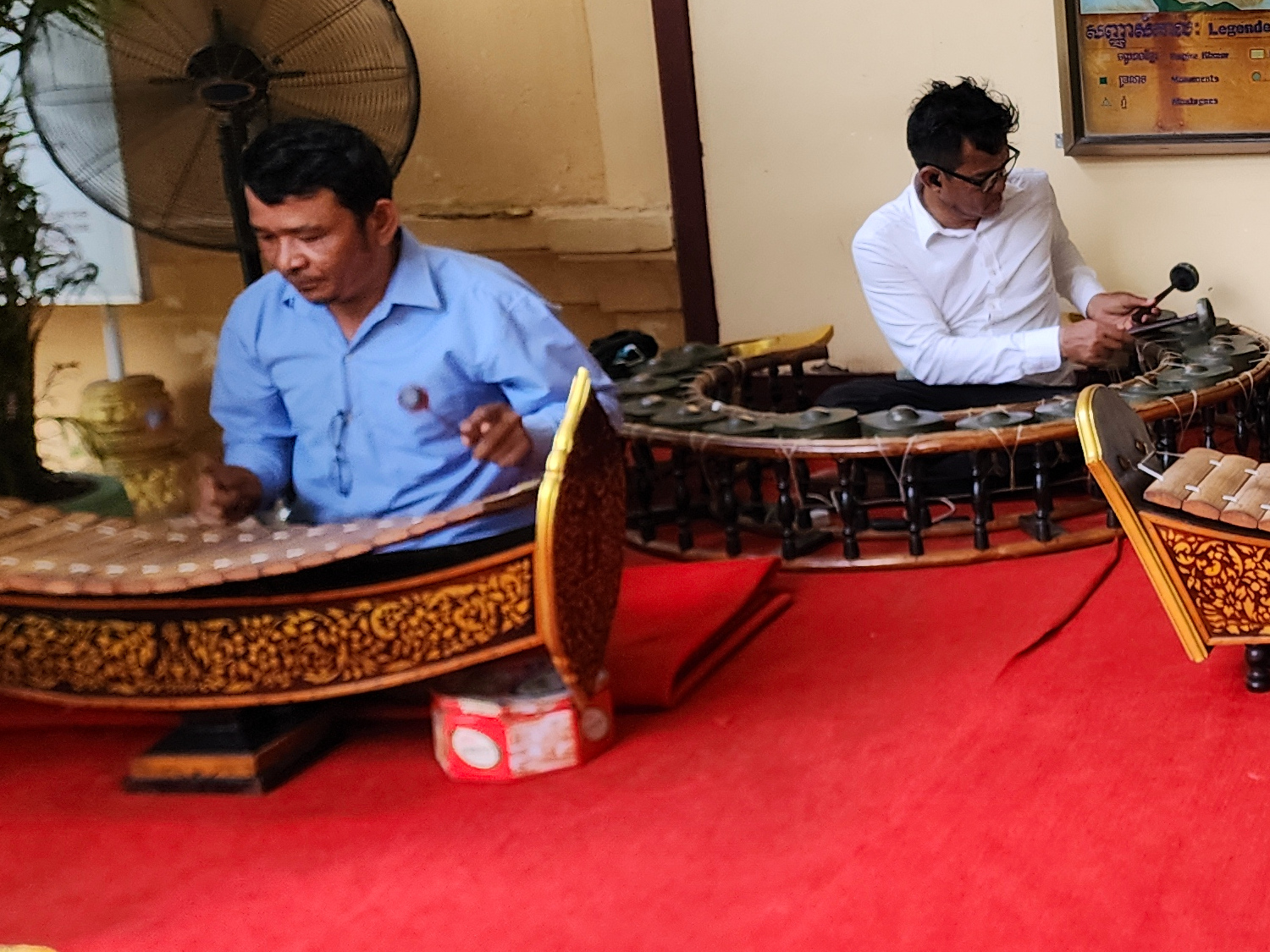
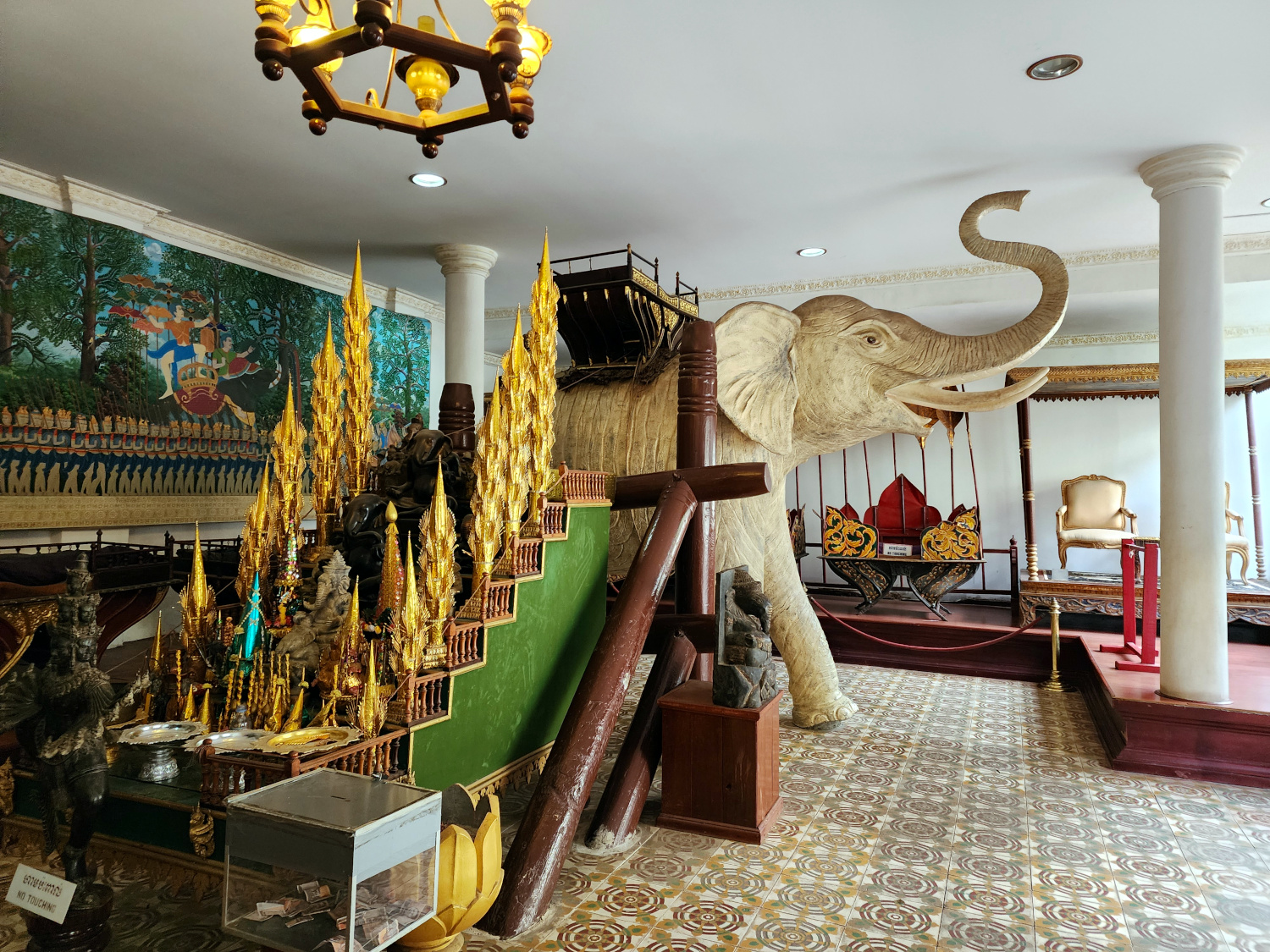
For us, the highlight of this particular visit was the live “soundtrack”. We started hearing traditional Cambodian music in the background, as it were, and at first assumed it was recorded and being piped in. But as it got closer to us (actually, it was the other way around), we realized that it must be live. And when we ferreted out the source, we discovered, to our delight, that it was indeed being performed by four musicians with Cambodian folk instruments. We stood and listened and watched for a few minutes, and were impressed enough to leave a donation in their collection plate.
You might say that we received a bit of the royal treatment ourselves when we returned to our school. This was on a Sunday, when there was a special gathering for the teachers and staff, with lunch served; and afterward the principal expressed his appreciation for our efforts, and presented us with farewell gifts. These included traditional Cambodian scarves, tote bags, a certificate of recommendation, and an oversized picture “postcard” signed on the back by everyone present. And of course, we were called upon to say a few words ourselves, and managed to do so without choking up too much.
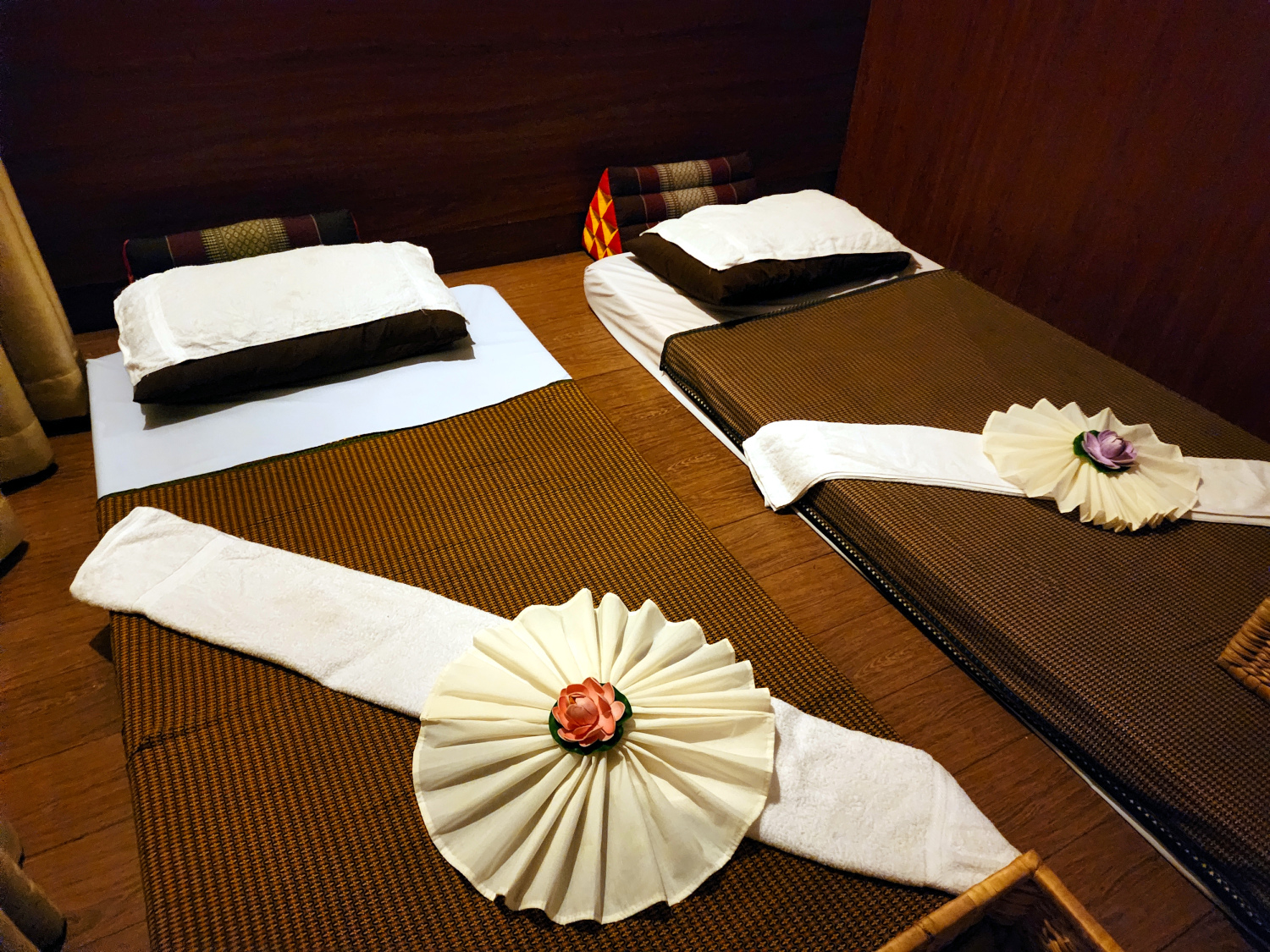
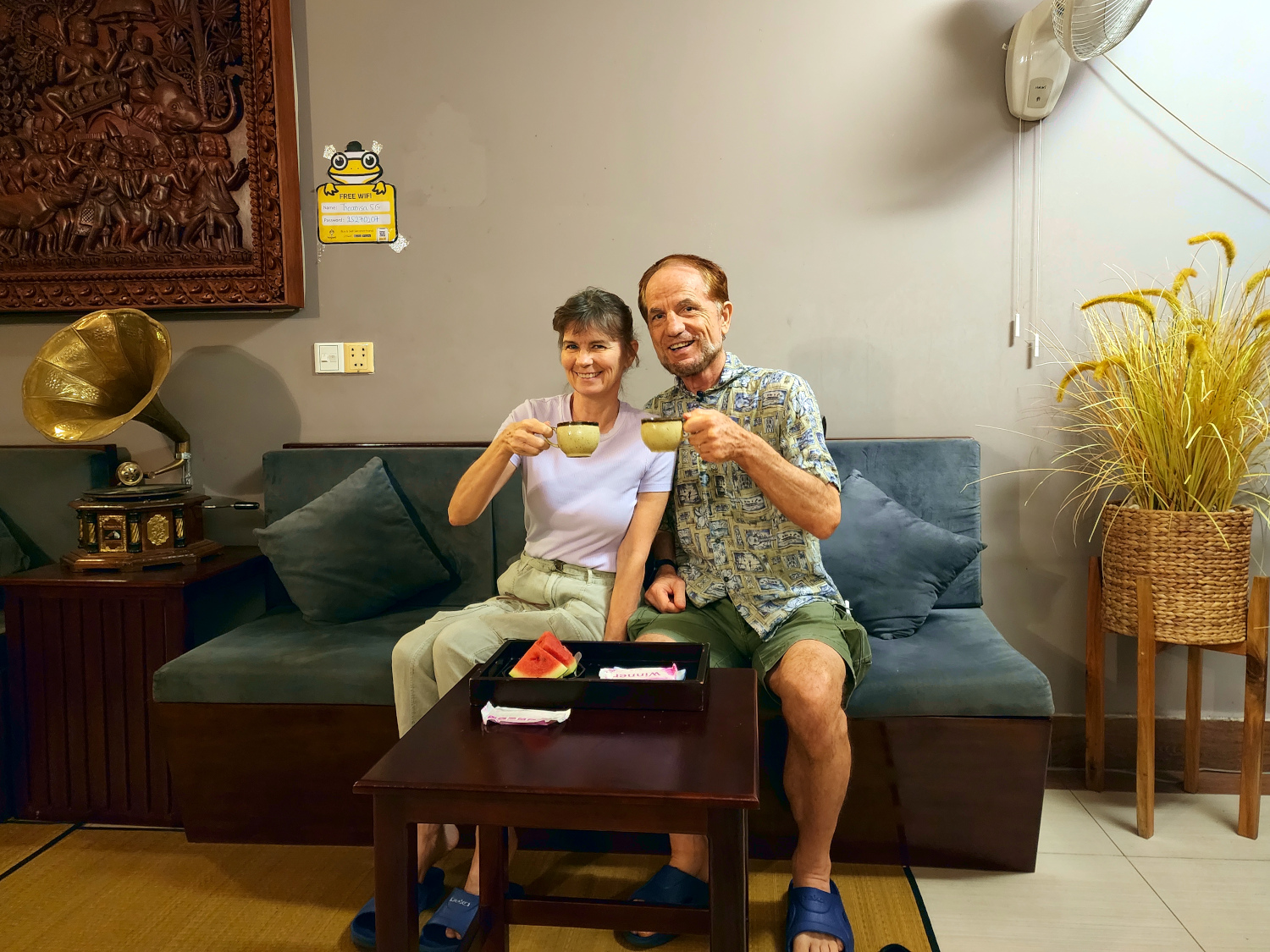
But for a real royal treatment, it’s hard to beat a Cambodian massage, such as we’ve been treating ourselves to at the end of every school quarter — so naturally we felt obliged to do it one more time at the end of the final quarter. After the masseuses thoroughly work out your kinks and knots and bottlenecks, they serve you tea (usually an herbal variety), and serve you either some kind of sweet or fruit — in this case, slices of watermelon — which we savored in the lobby next to the antique Victrola which our favorite massage place keeps on display for whatever reason. You can have the palace, Mr. King. We’ll take this instead.
08/14-15/2024

 world travel with a theatrical flair
Leave a comment