

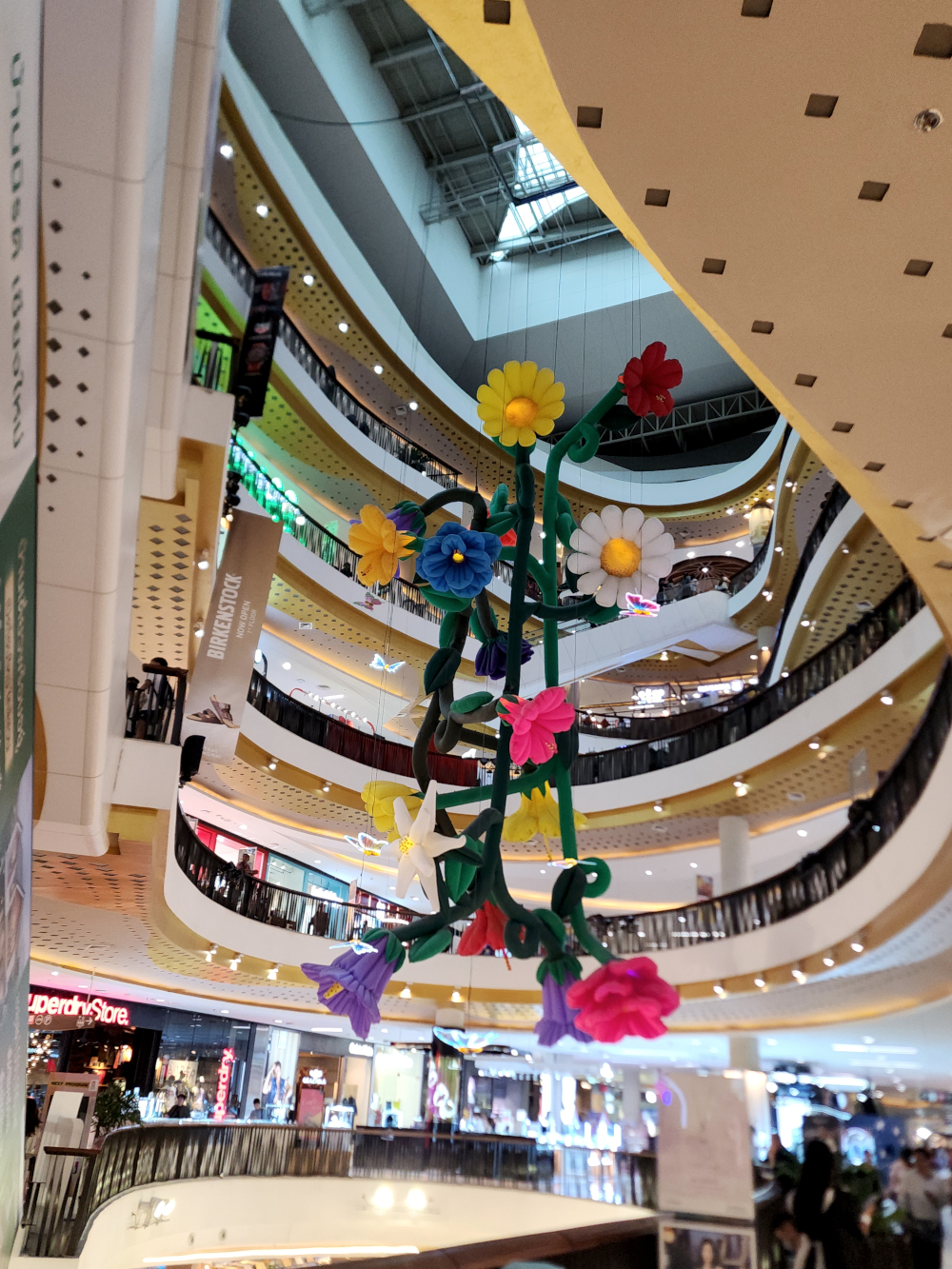
Although we came to Chiang Mai mostly for the elephants, it’s a city we’d never been to before, so we decided to stick around for a few days and be explorers. Chiang Mai means “new city” but it was new only when it was founded way back in 1296. So it has a few historic sites worth checking out, as well as modern conveniences like a major mall.
All of the above are within walking distance of where we are staying, a comfortable and quiet little apartment with everything we need, including a washing machine. There’s also a balcony, though we don’t use it much, because the next-door neighbor goes out to his own balcony every morning, and sometimes at other times, and lights up some devil’s lettuce. We don’t actually see him do it, but we get the drift.
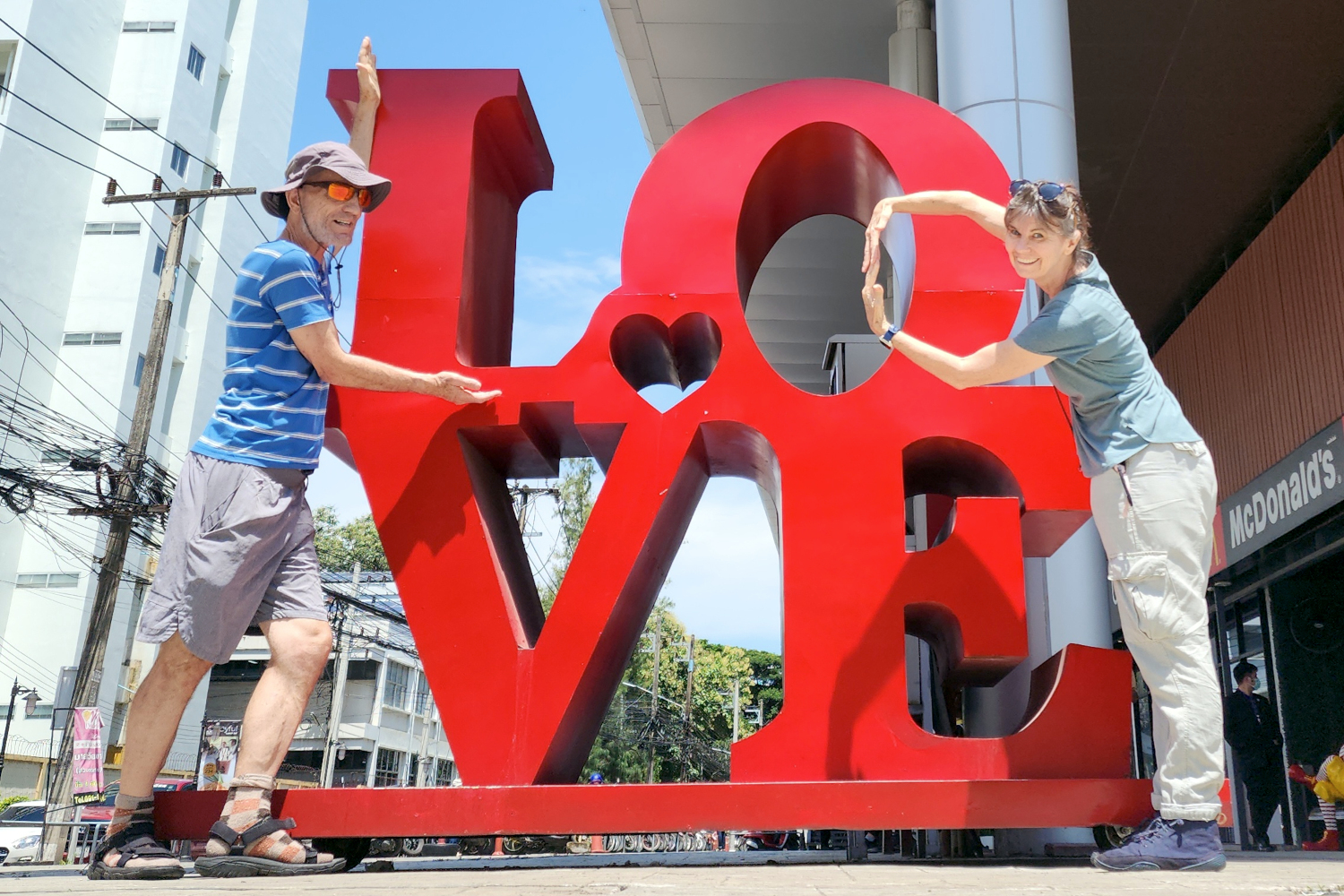
On our excursions, we come upon a large metal sign that says “Love”, somewhat similar to one we found in Bentonville, Arkansas a few years earlier. So naturally we have to pose for a photo with it. We make our way to the mall, in quest of shoes and a power adaptor. At the entrance to the mall, uniformed guards greet us with a salute, which they also provide when we exit. It’s a touch that seems quite appropriate for Thailand, a country that seems to operate with military precision and orderliness; we’ve also noticed that it seems th neational anthem is played every morning in (at least some) public spaces.
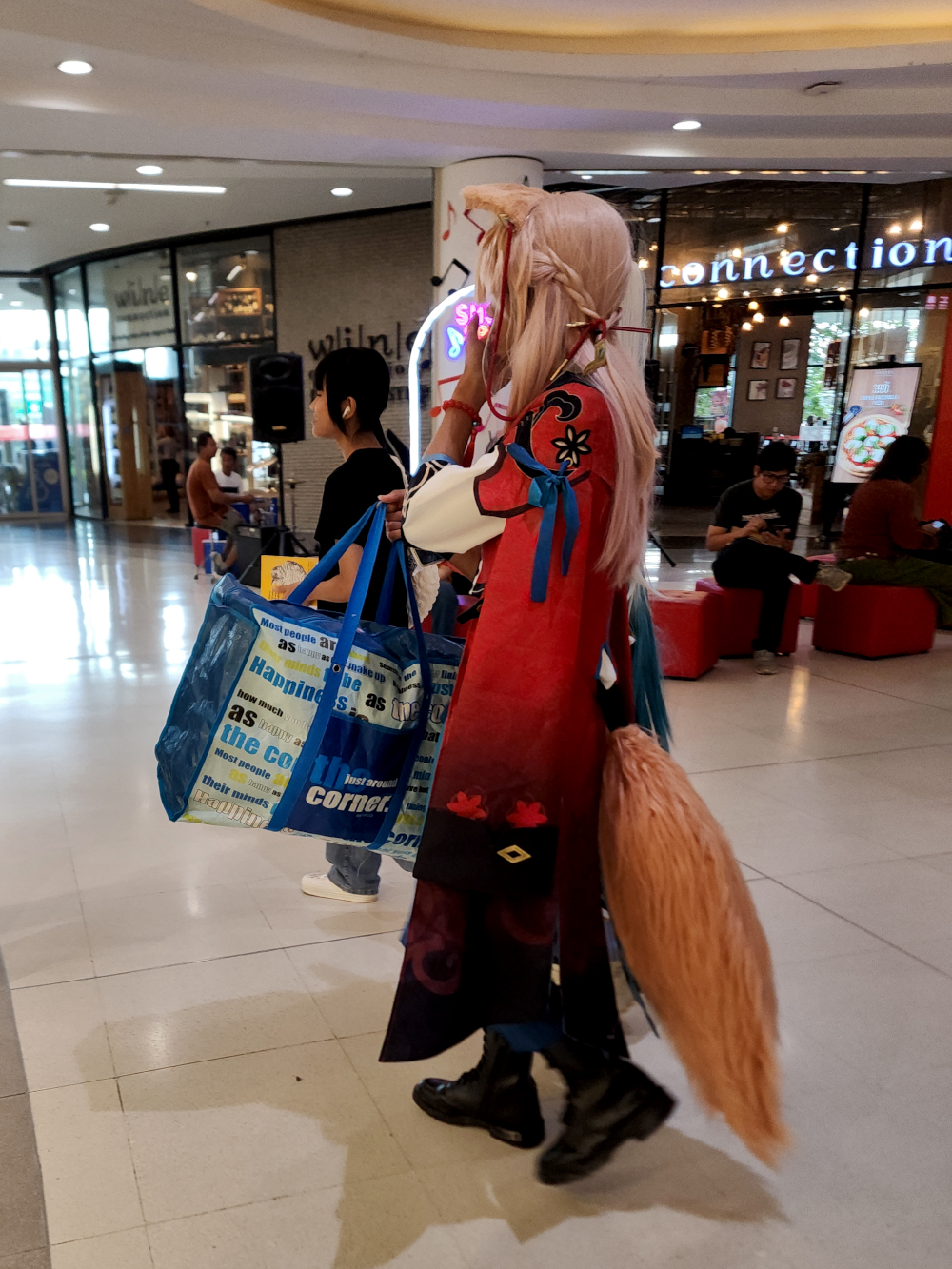
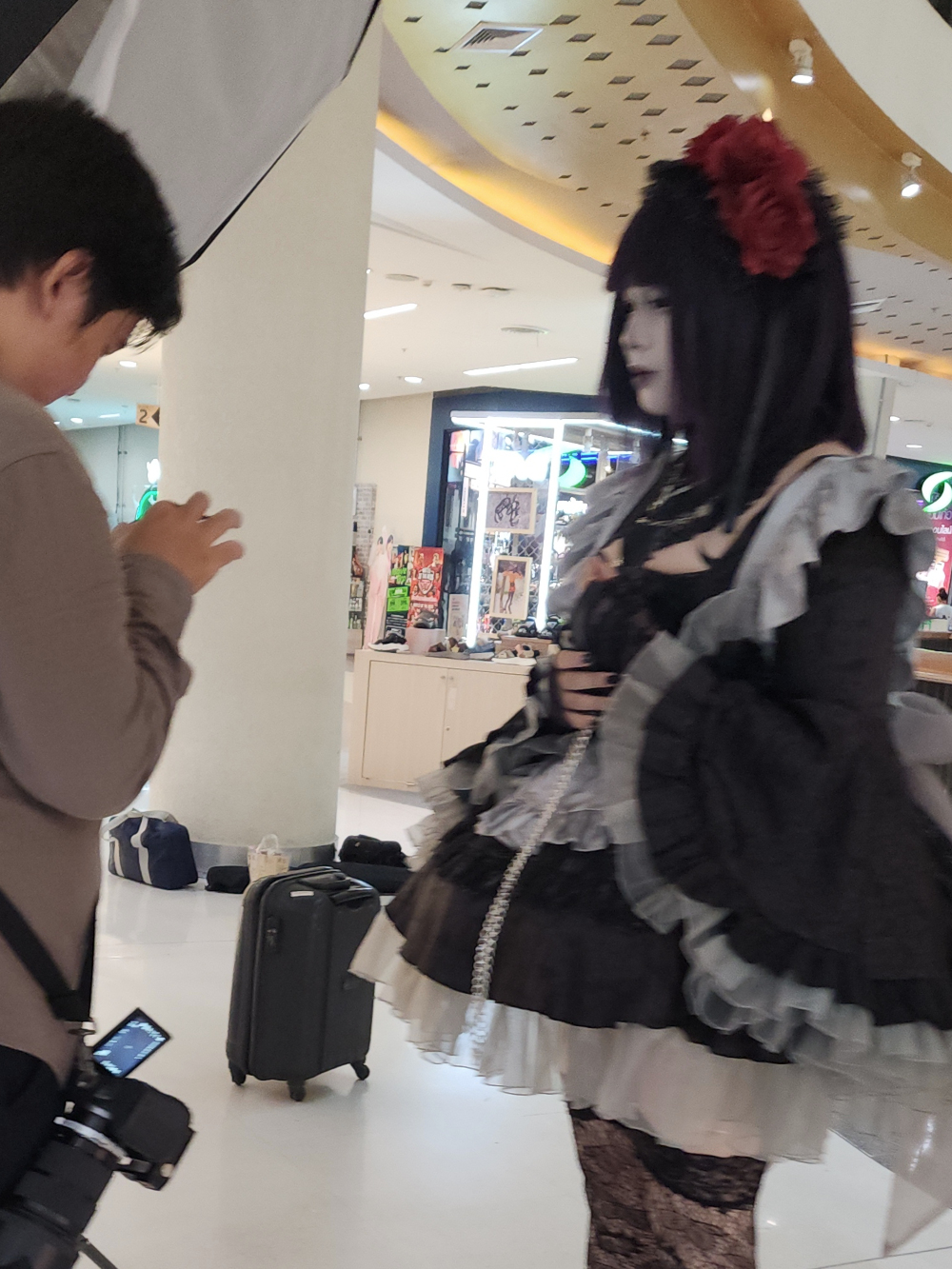

The mall is quite crowded today, more so than usual. There’s some kind of special event going on, for which young people cosplaying as Manga characters are all over the place. Kimberly manages to find a pair of shoes she likes and buys them, but we are not able to locate the AC adaptor.
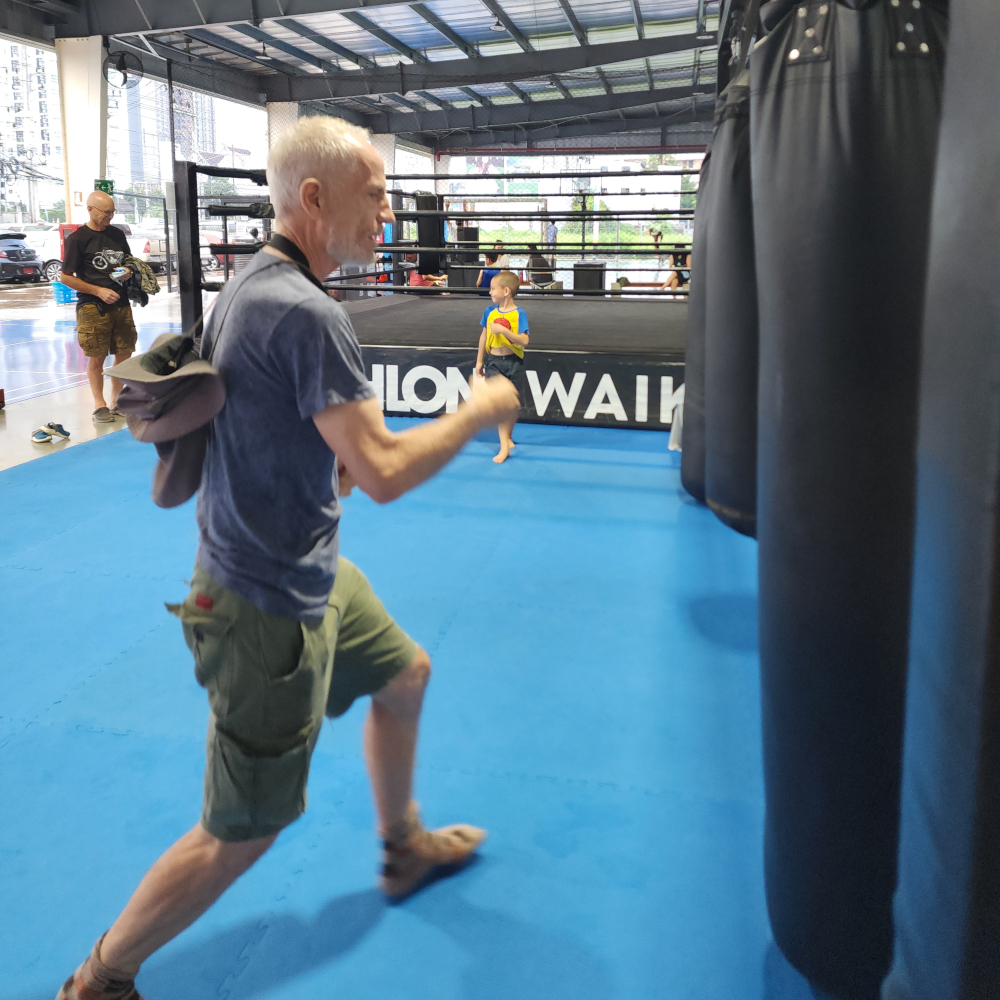
So on to Decathlon, a few blocks away. Decathlon is a pretty good outdoor store that carries quite a few useful items for the camper, backpacker and global vagabond. But it does not, alas, have the adaptor. What it does have is a play area where you can shoot some hoops and punch punching bags. So who could resist the opportunity to get physical?
So much for the new side of the New City. Then we are focused on exploring the Old side of the old New City. This, of course, included visiting wats (temples), as religious structures are invariably the historic heart of a culture; that’s where the bulk of the money, creative design and manpower efforts are channeled, so the temples are what last the longest. In Chiang Mai there are more than 300 wats to choose from.
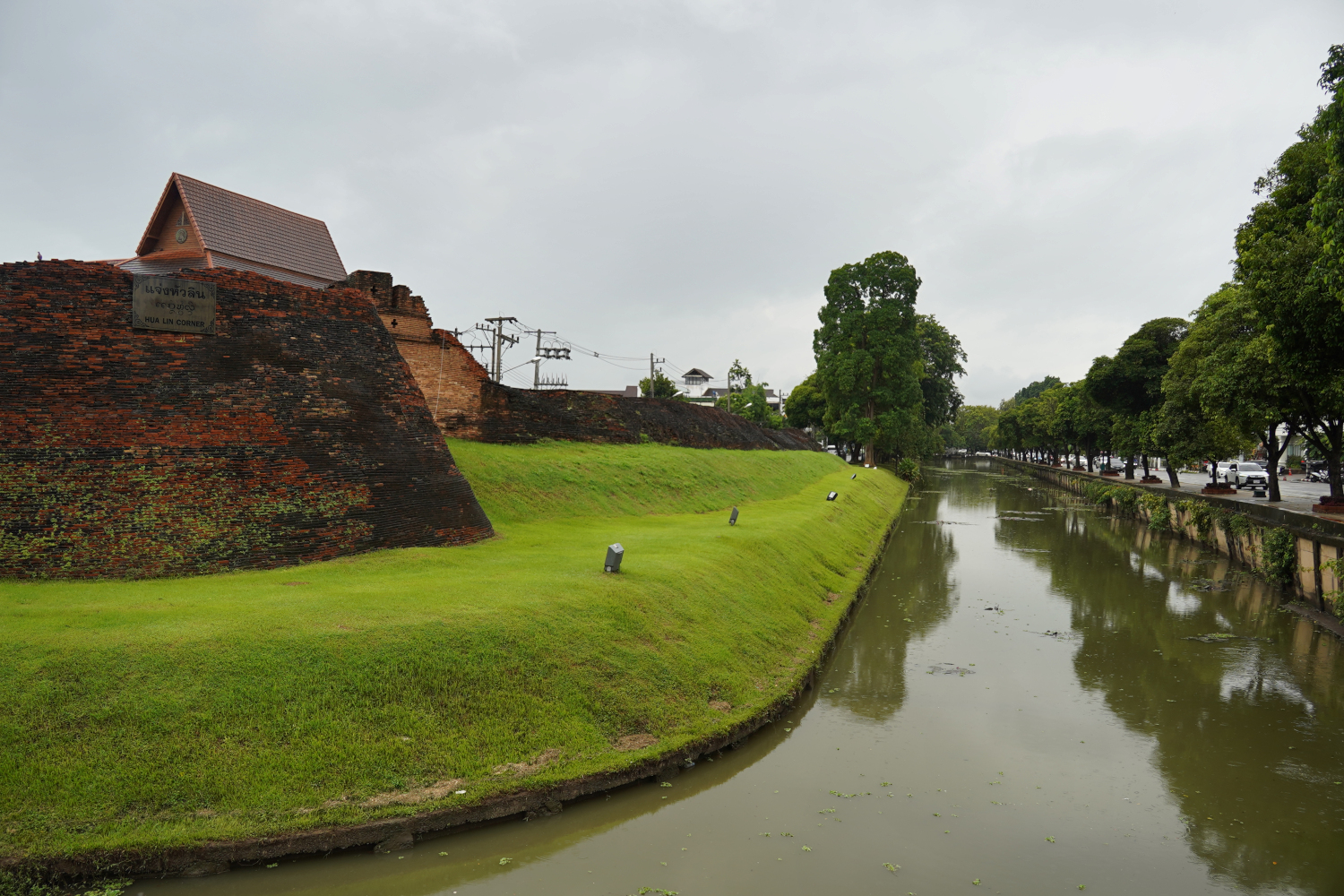
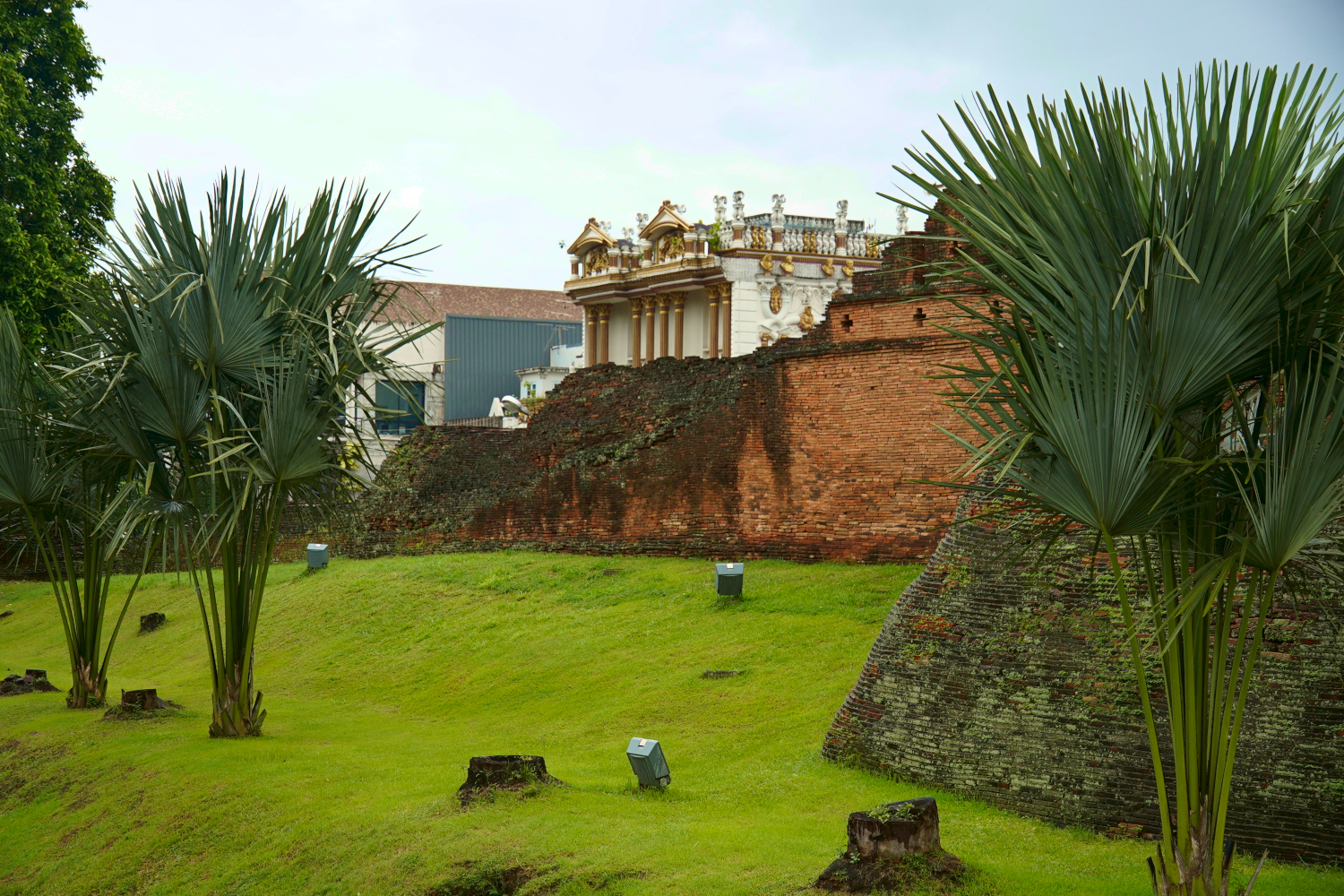
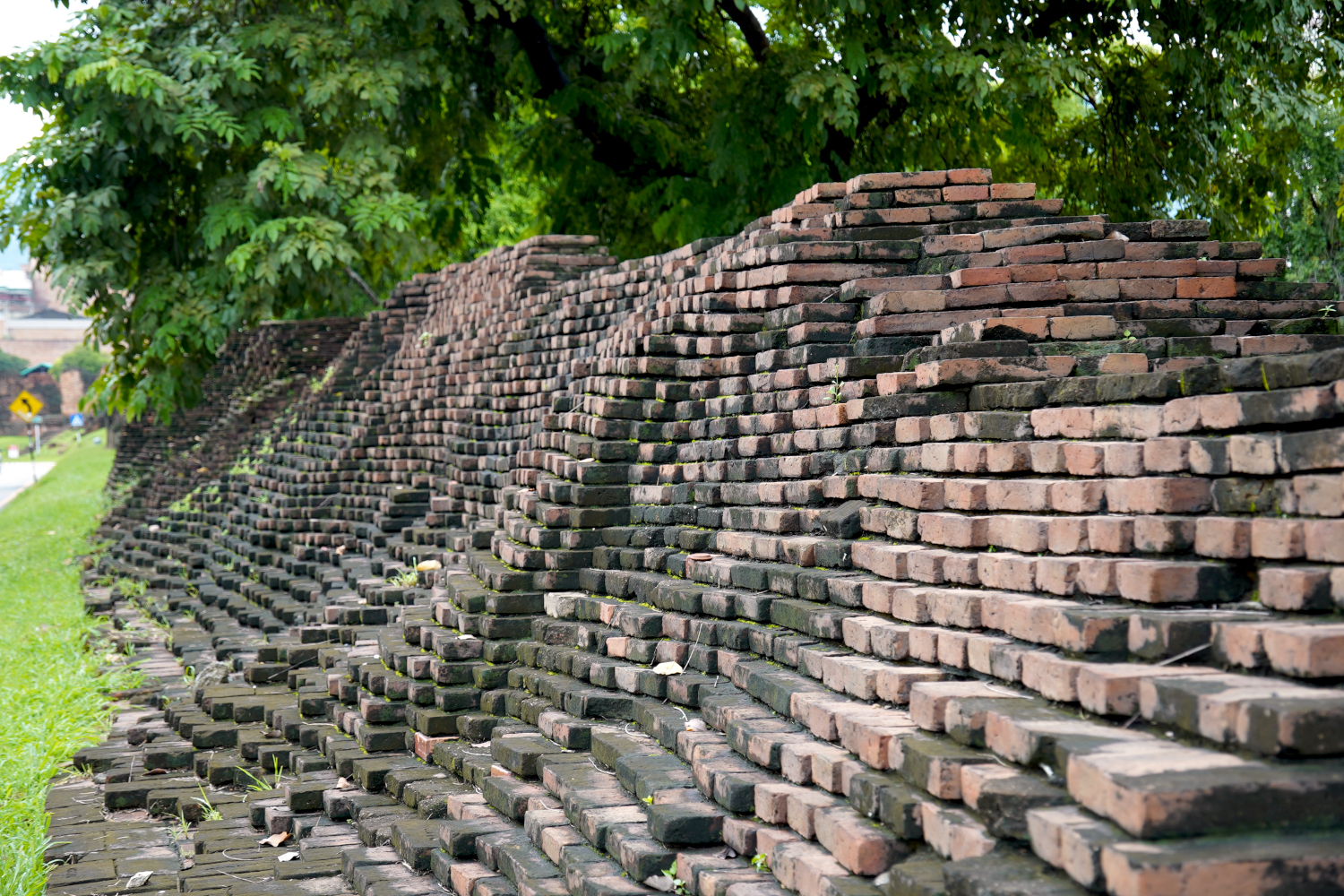
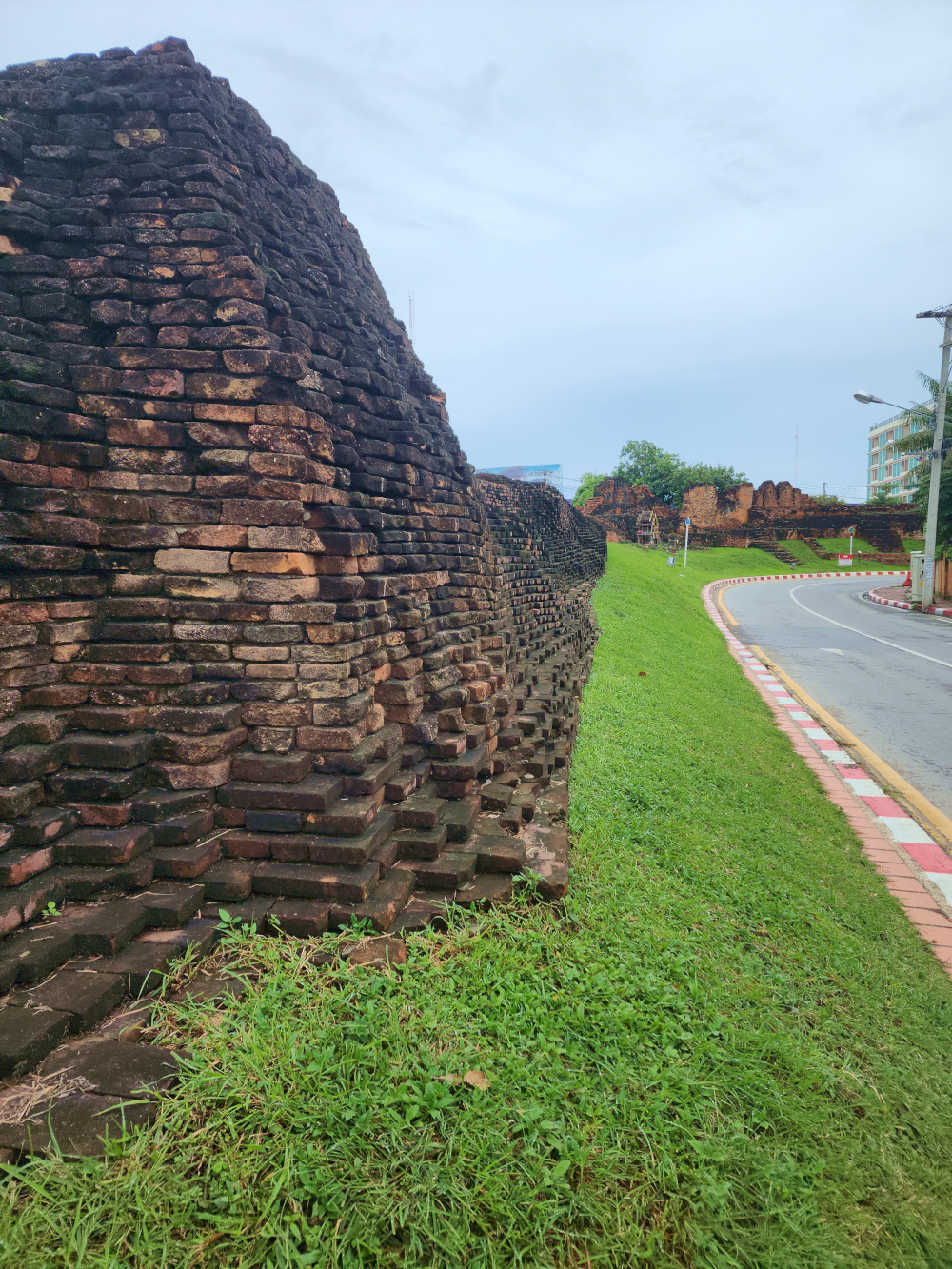
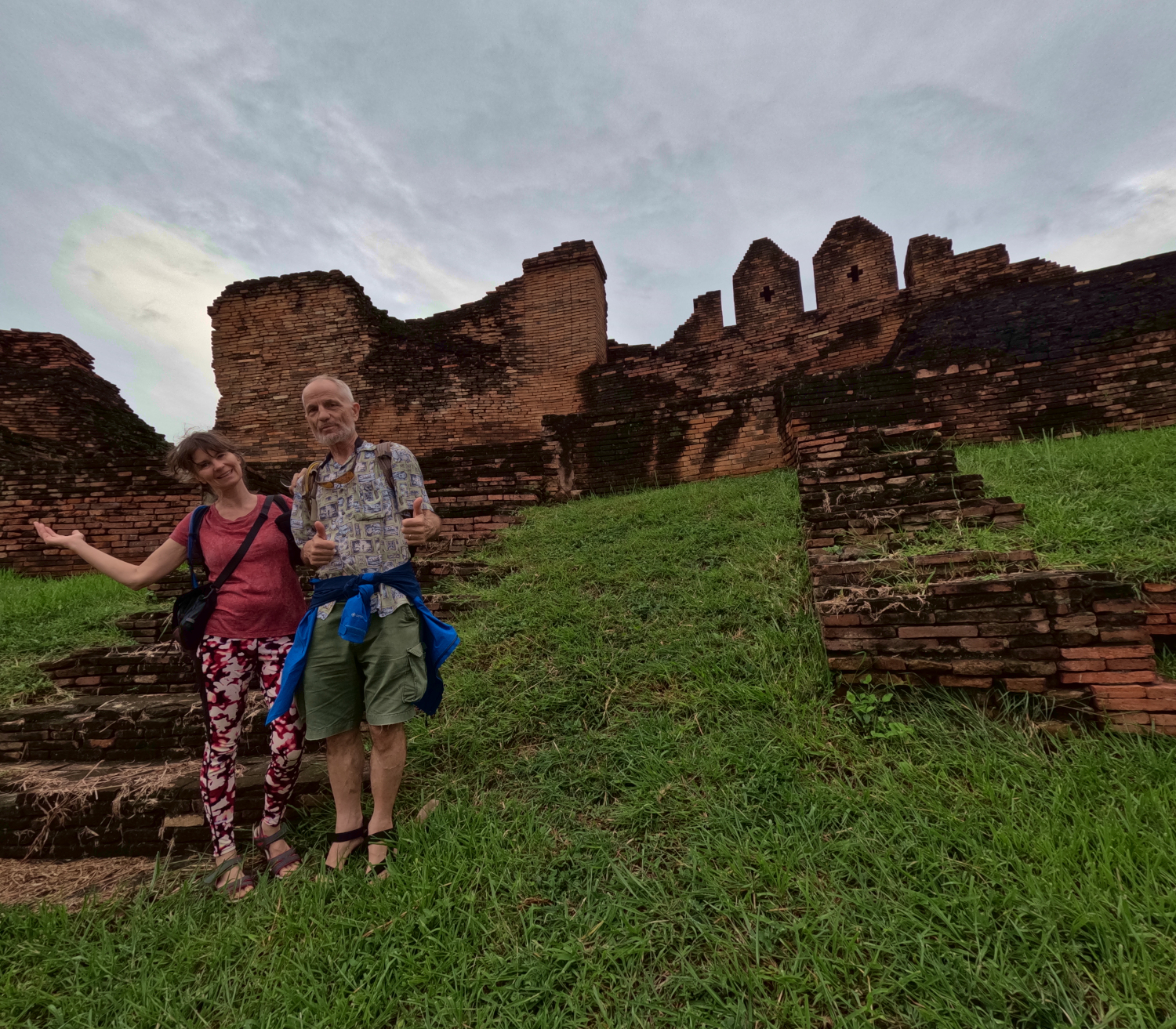

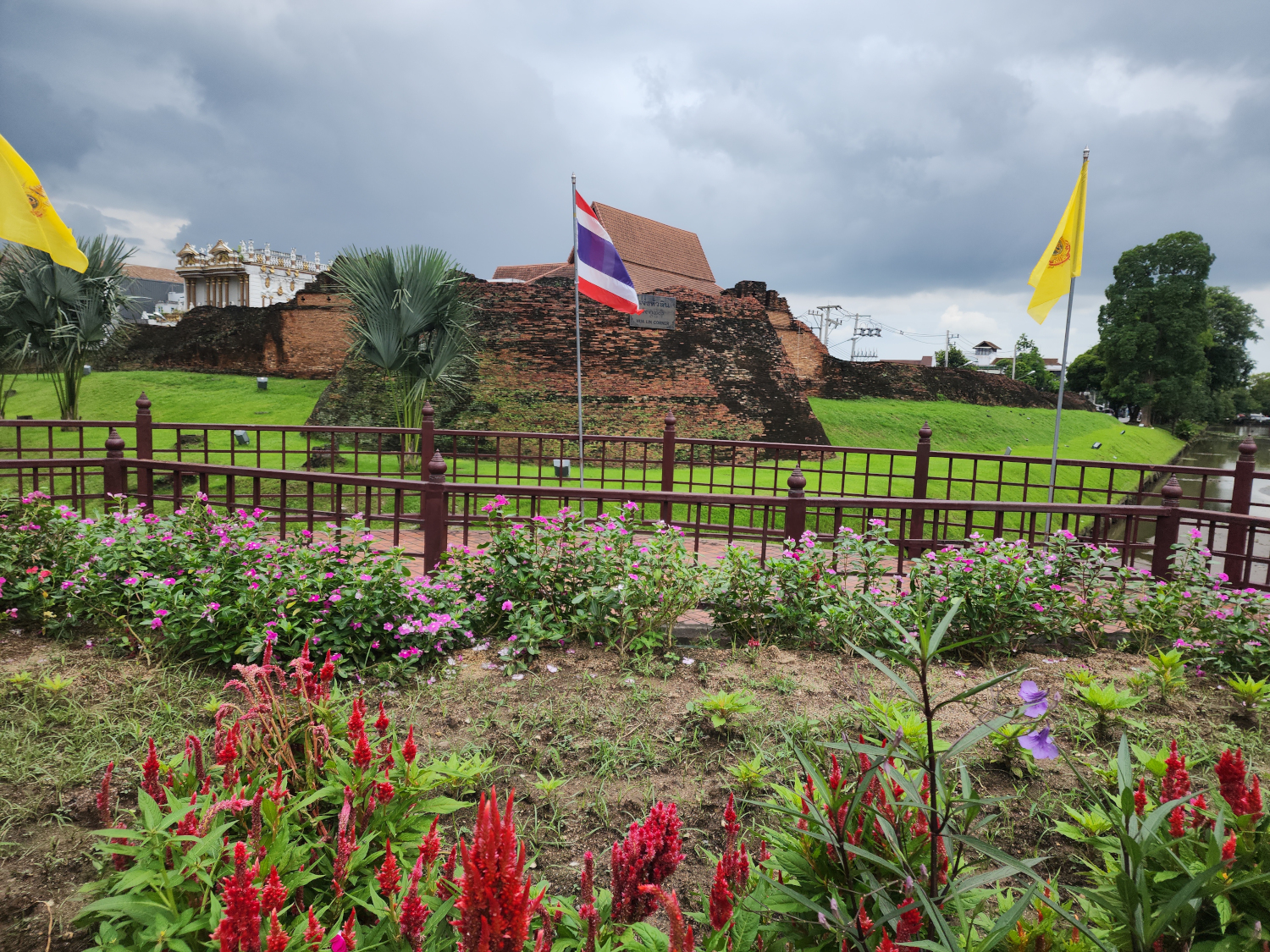
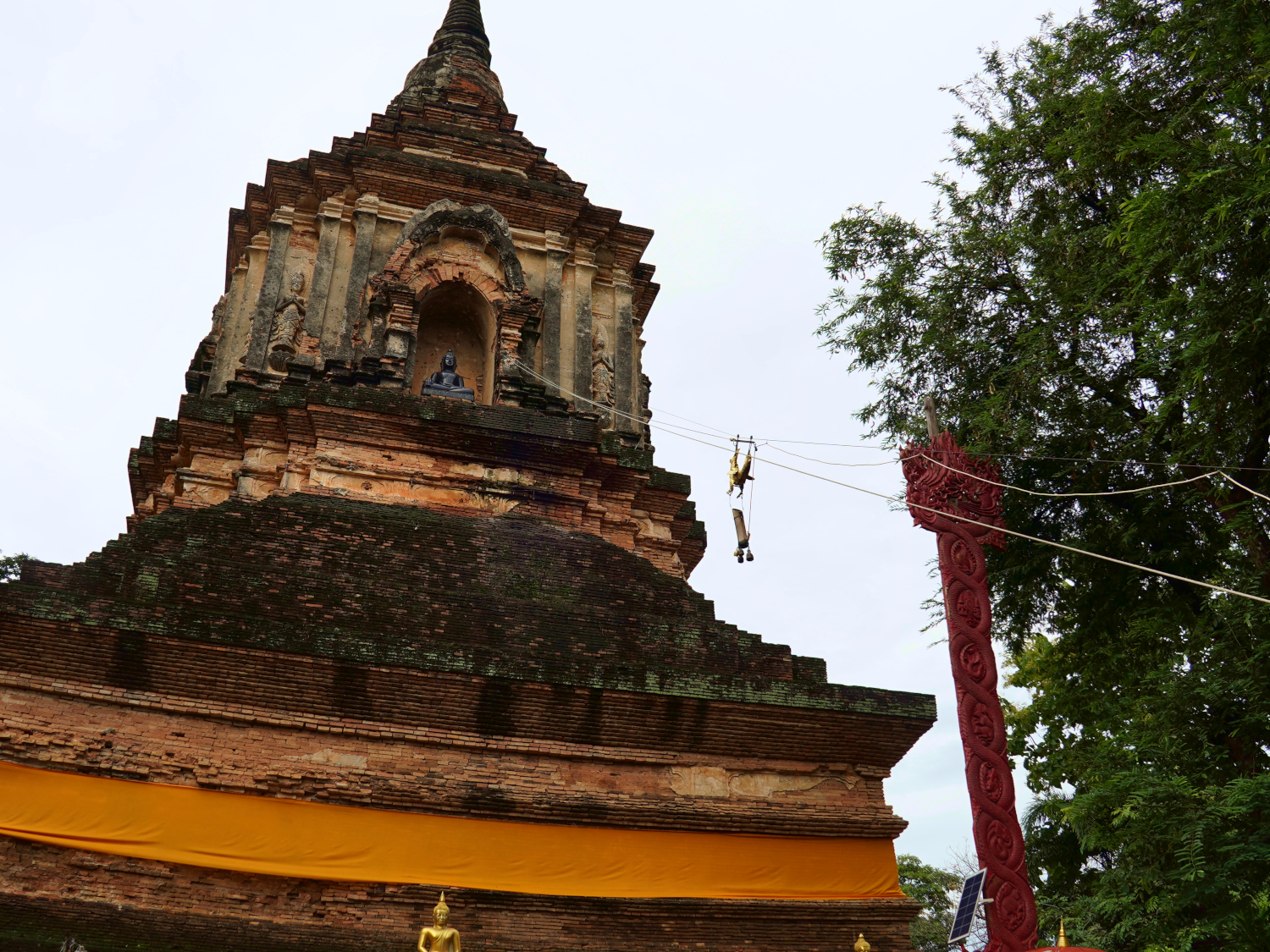
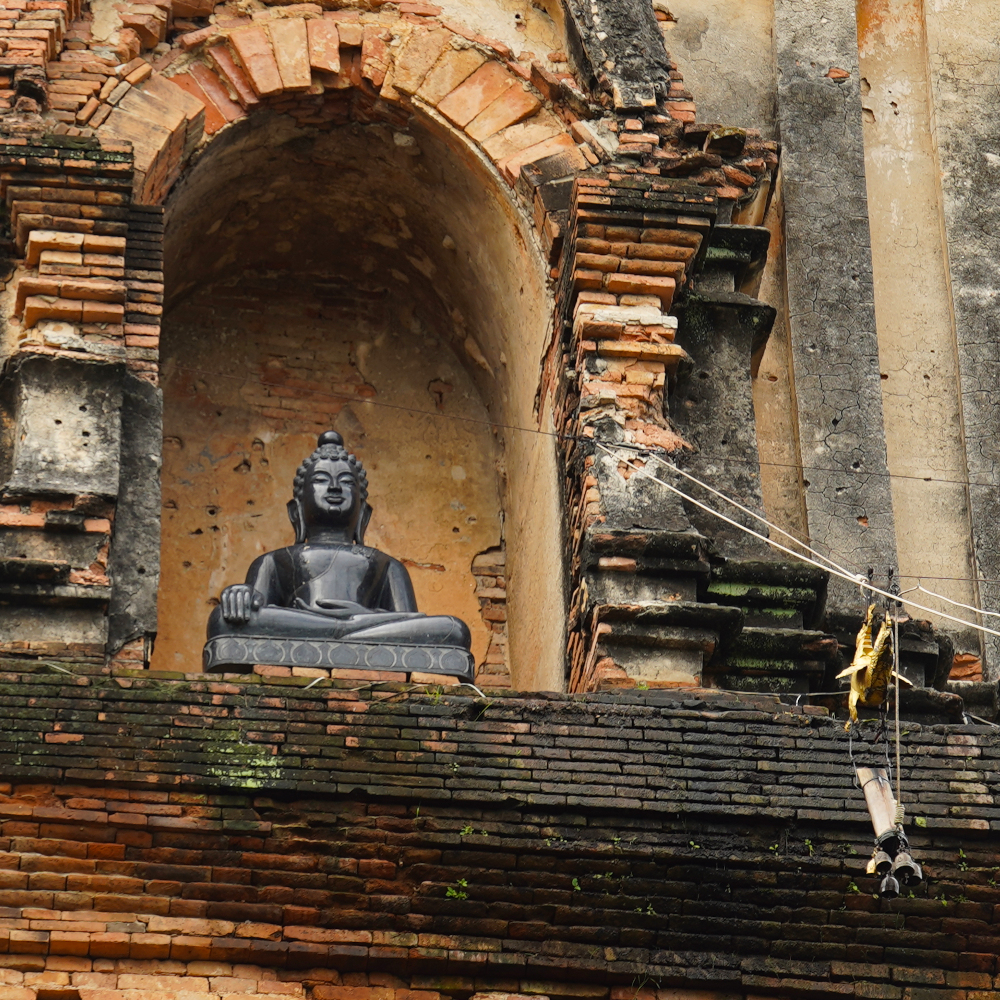
Old Town features an ancient wall, crumbled but still standing, surrounded by a moat; and it’s really in its own way as cool as all the wats. But we check out the wats too, as many as we can. So many that it’s hard to keep track of them all. One of them (Wat Lok Moli) has old, faded bricks that look more intriguing to us than those which are restored and refurbished, perhaps to the extent of replicating and replacing original features.
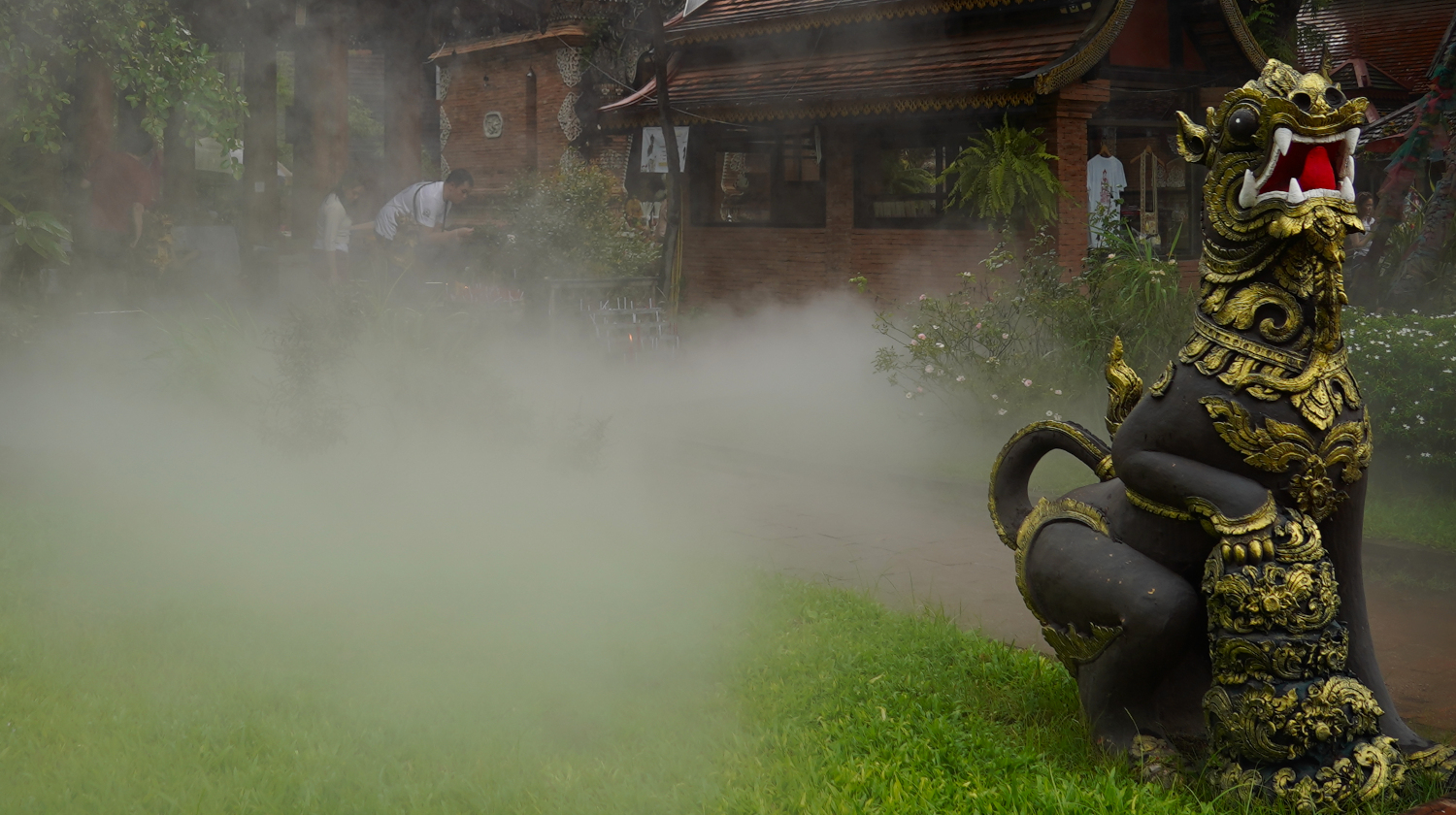
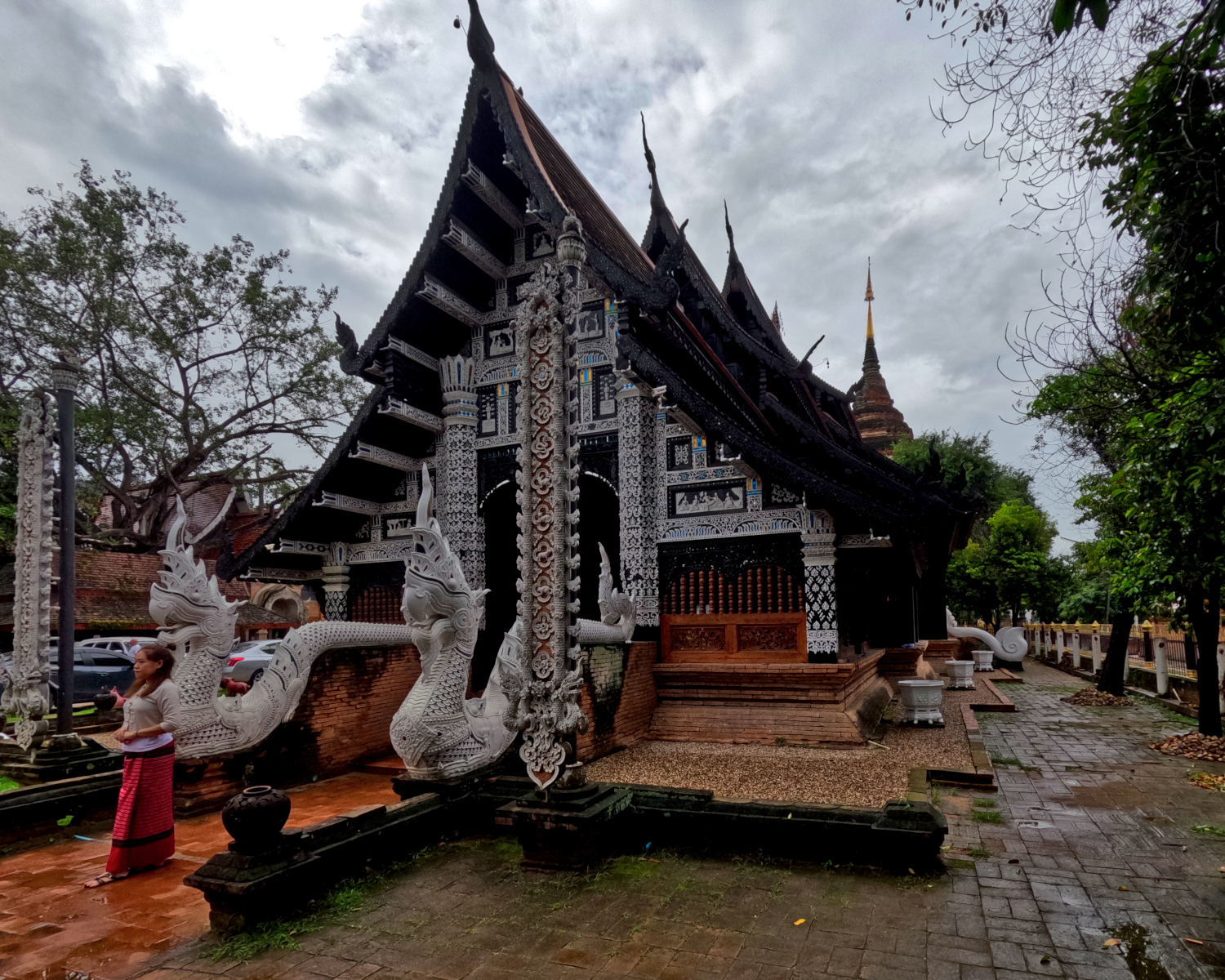
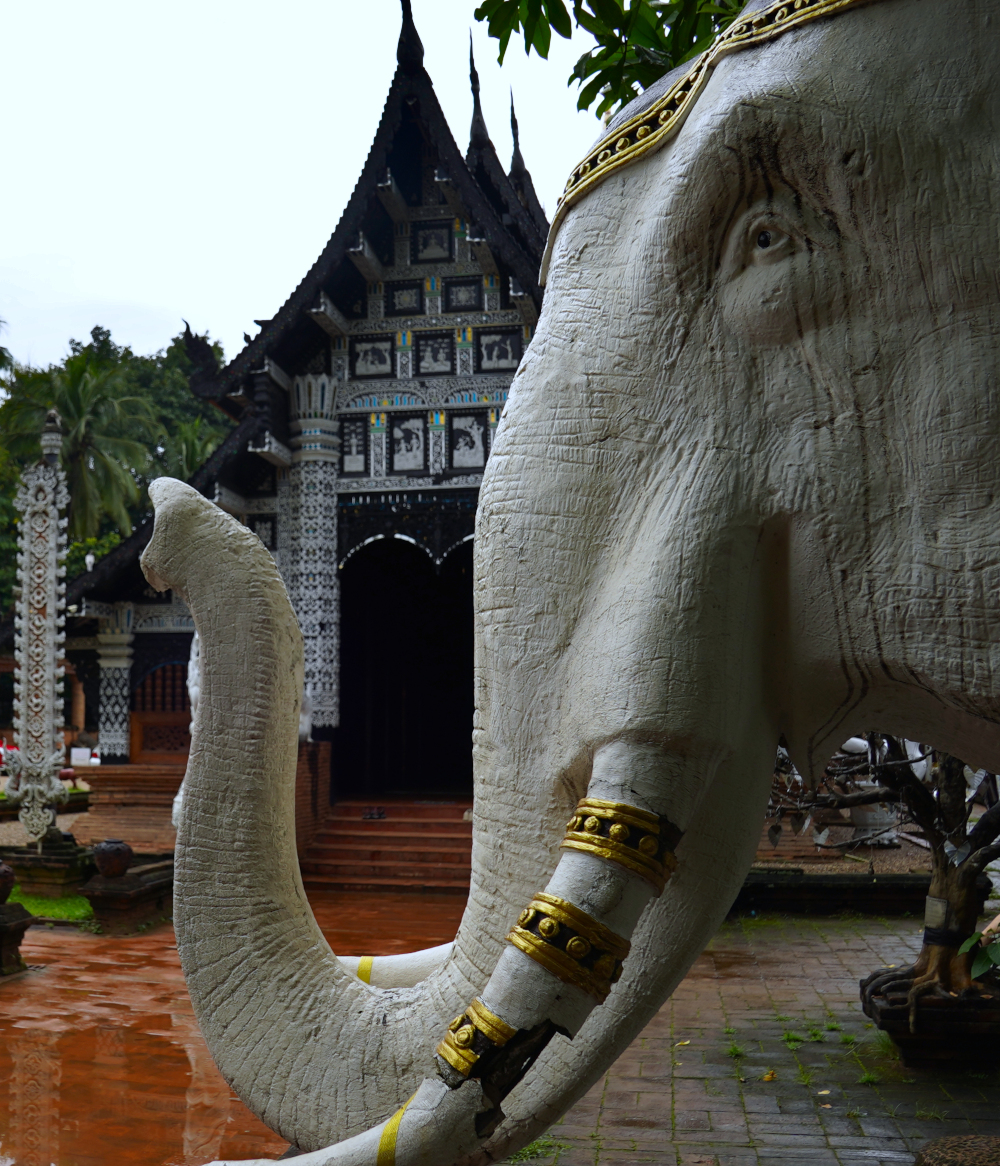
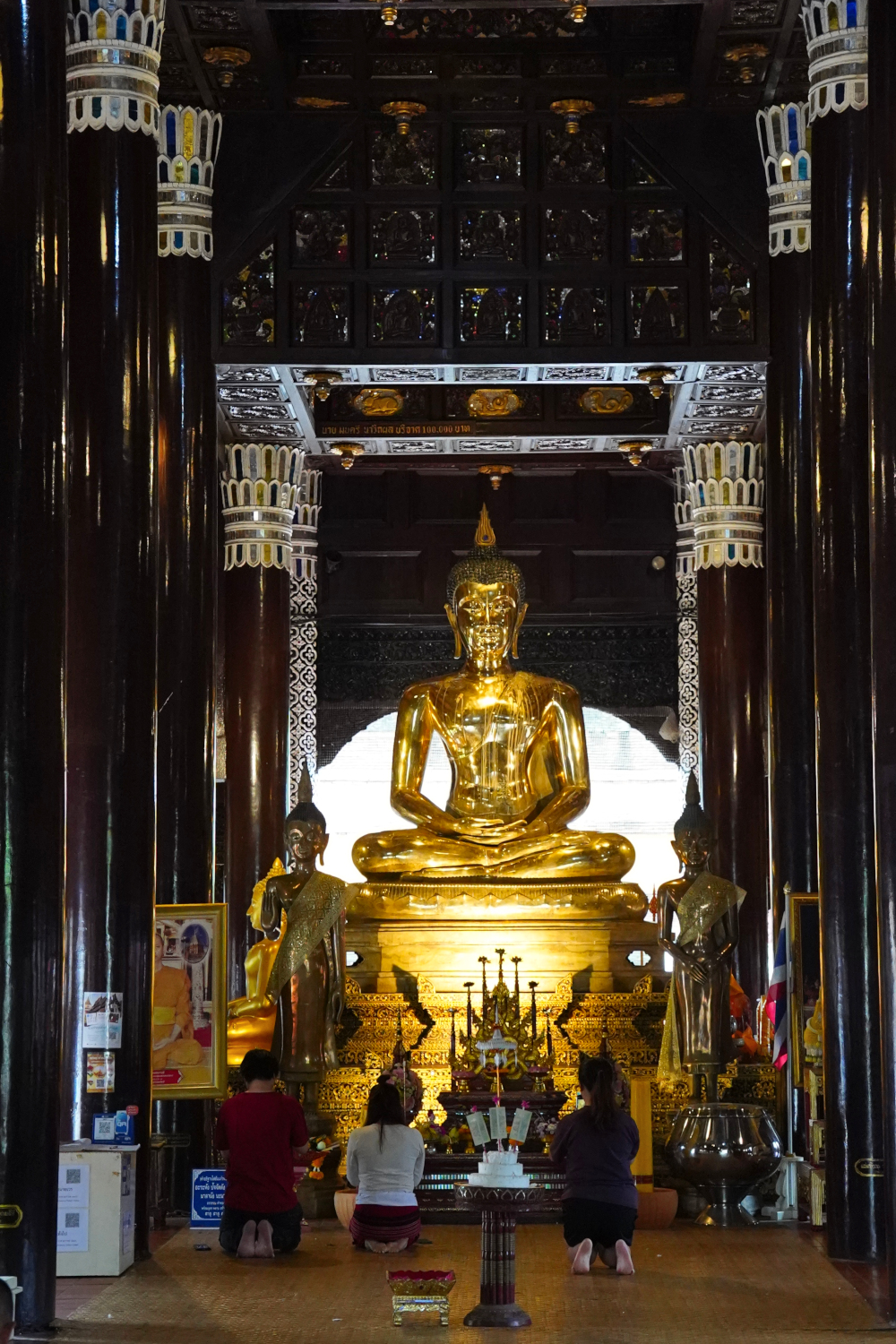
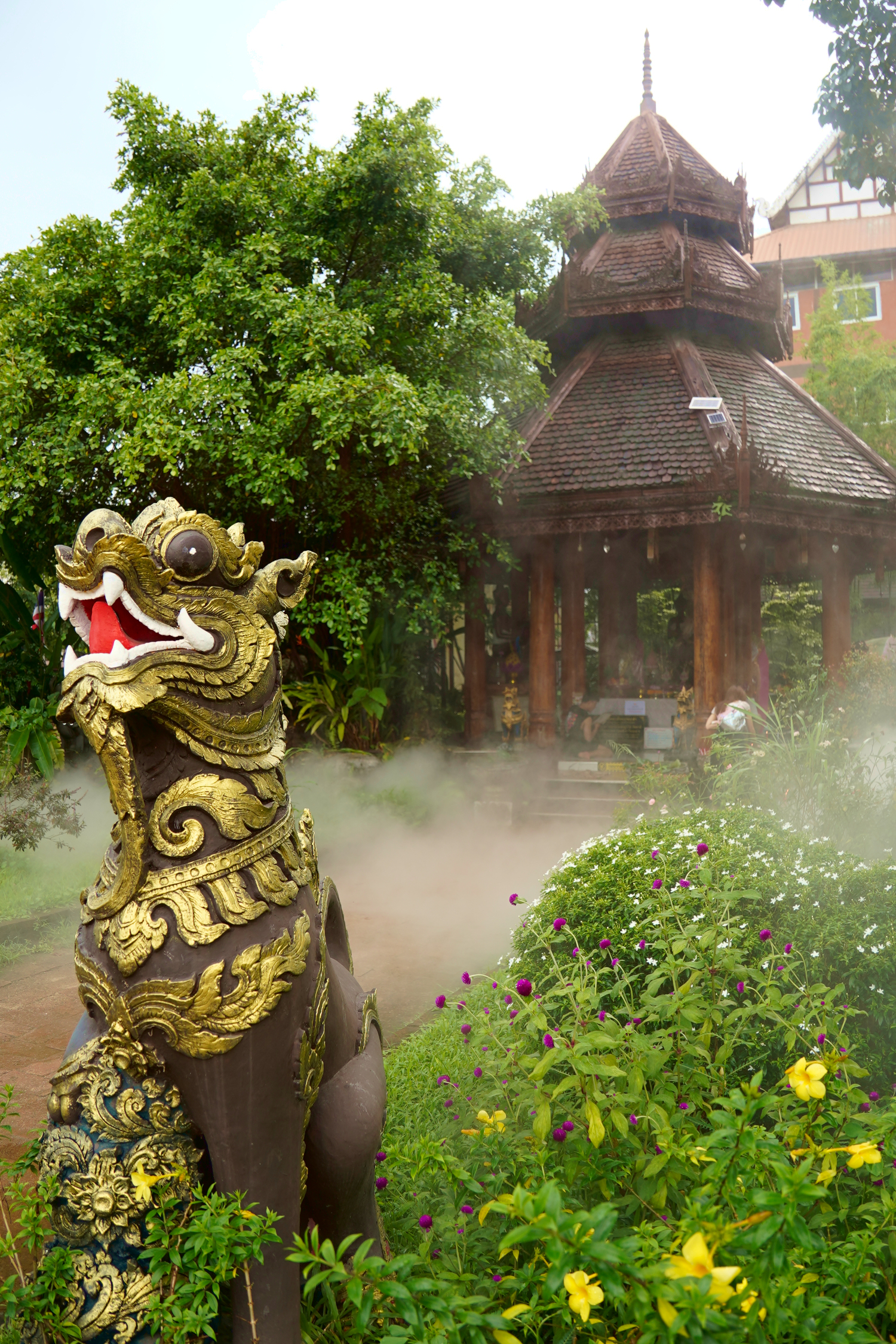
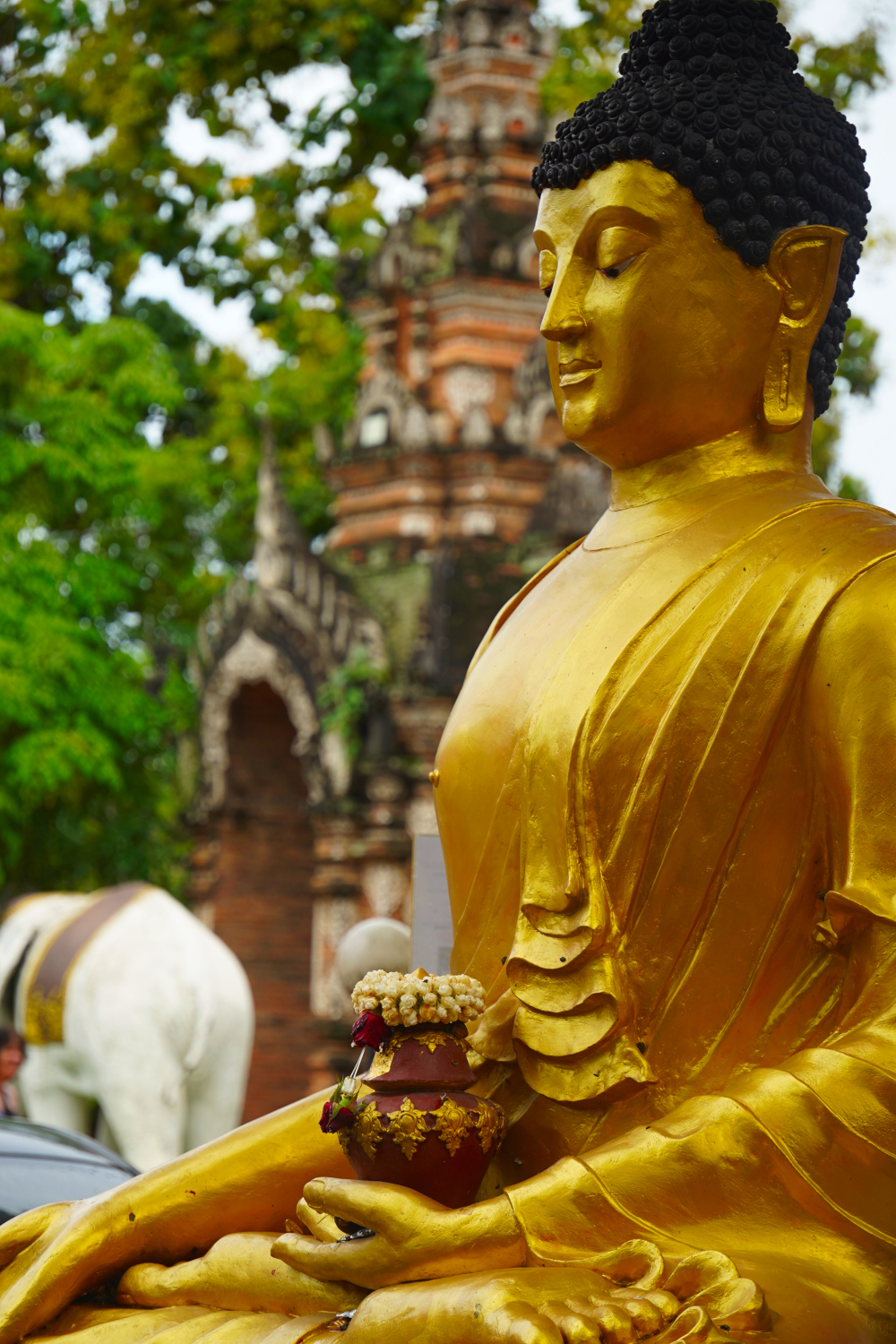
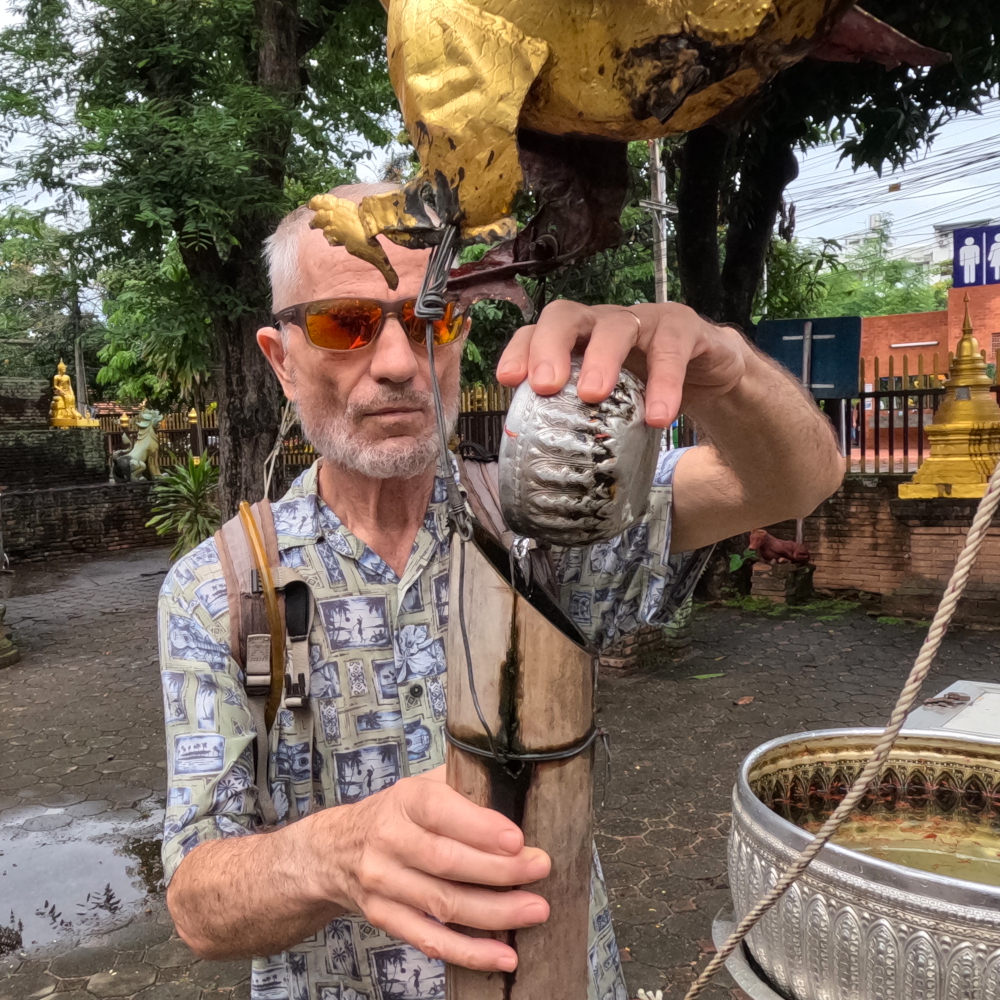
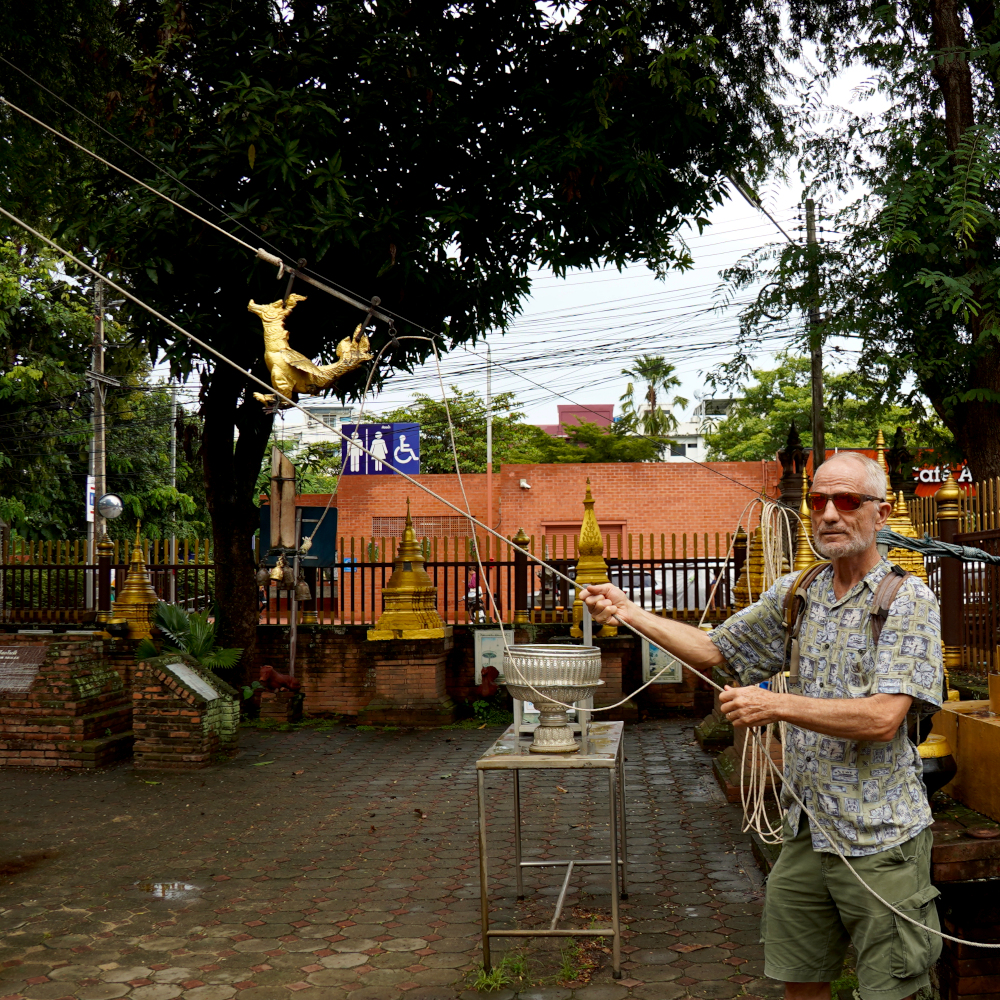
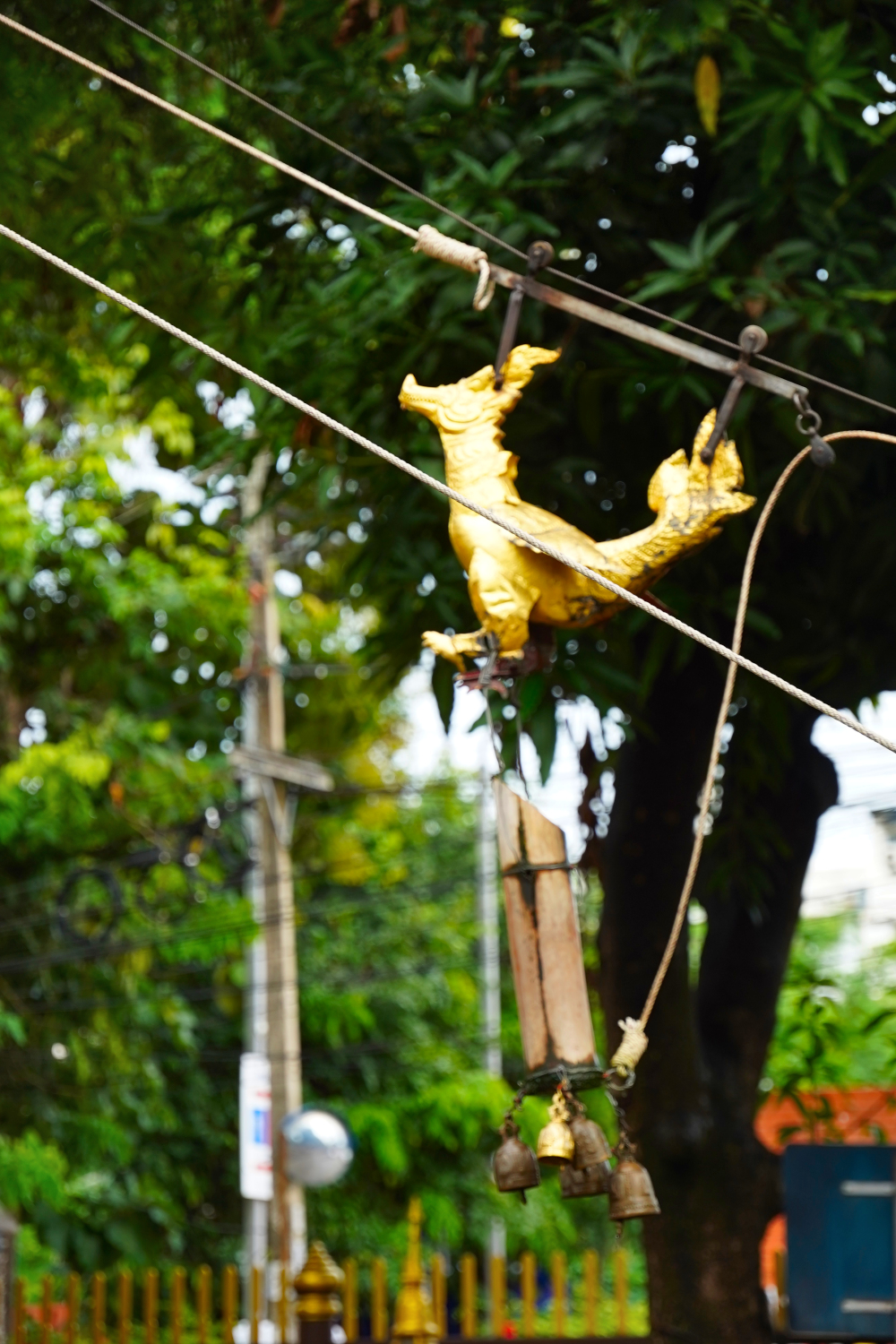
In front of this wat is a station with a bucket attached to a rope and pulley. Visitors can fill the bucket with water and pulley it up to the Buddha sitting atop the portico. This tradition of offering a drink to Buddha is a ritual of purification, generosity, devotion and so on. Water represents clarity, impermanence and serenity; and offering it to the Buddha is a symbolic gesture of letting go of earthly attachments. Of course, we don’t have a Buddhist bone in our bodies (though we have a lot of respect for Buddhism’s core principles); but we can’t resist partaking anyway.
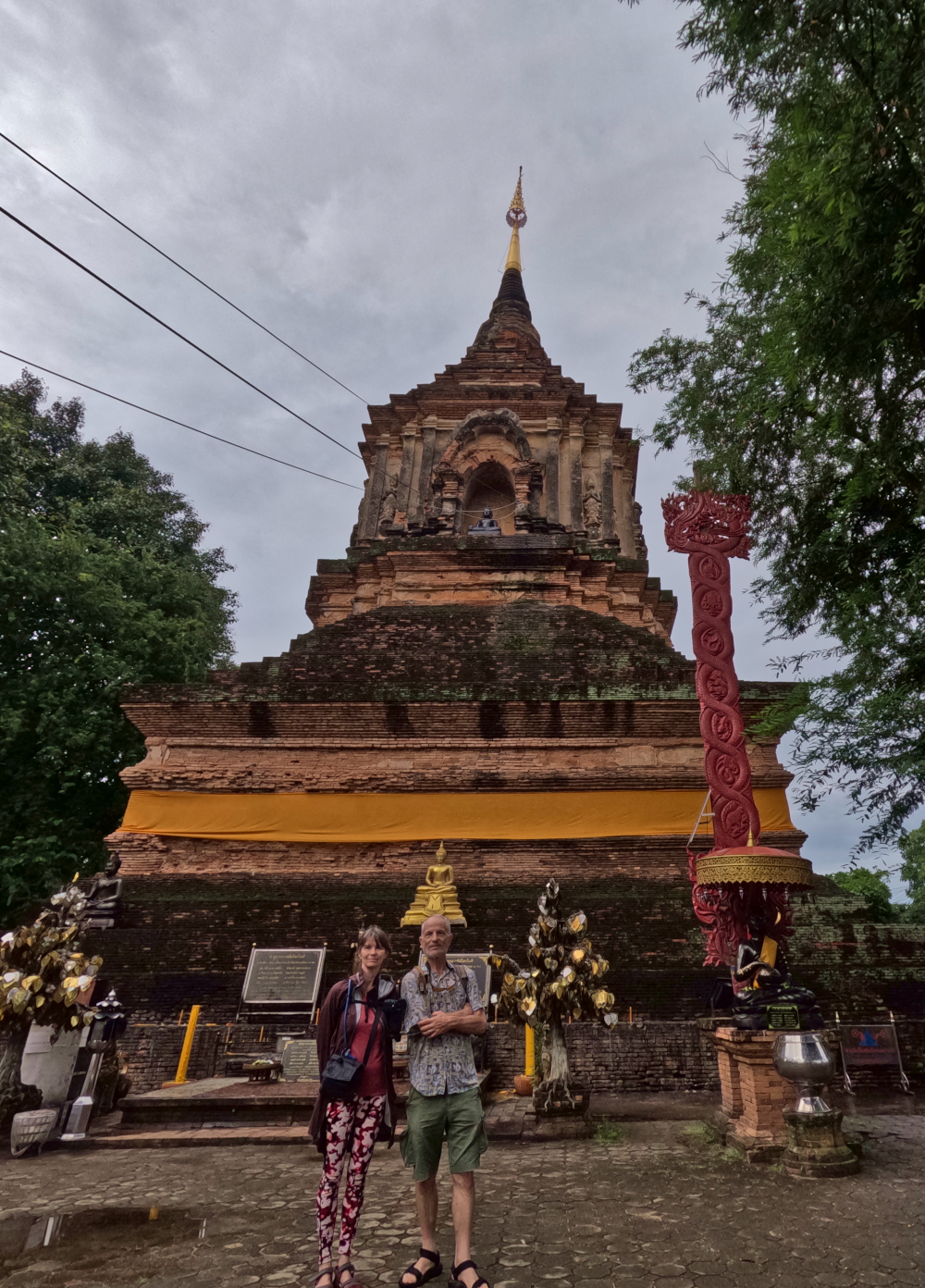

When we enter we find a Buddhist scholar inside who is there to explain some facts about Buddhism to those who are interested (he is not there to proselytize). He explains that about 30 percent of Thais are Buddhist, 30 percent are Hindus, and 30 percent are Animists; and that many people get them confused. So he is just there to help set the record straight.
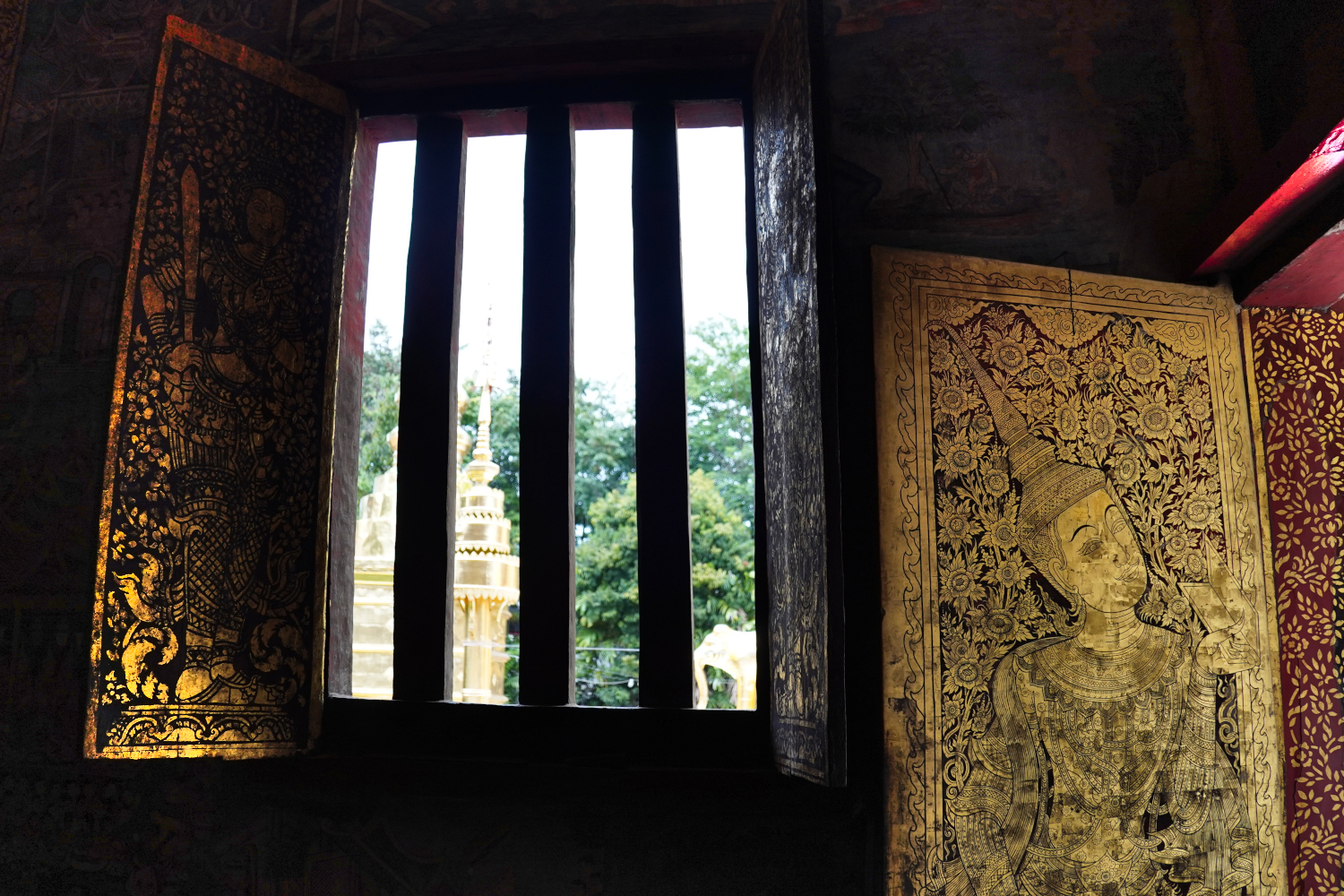


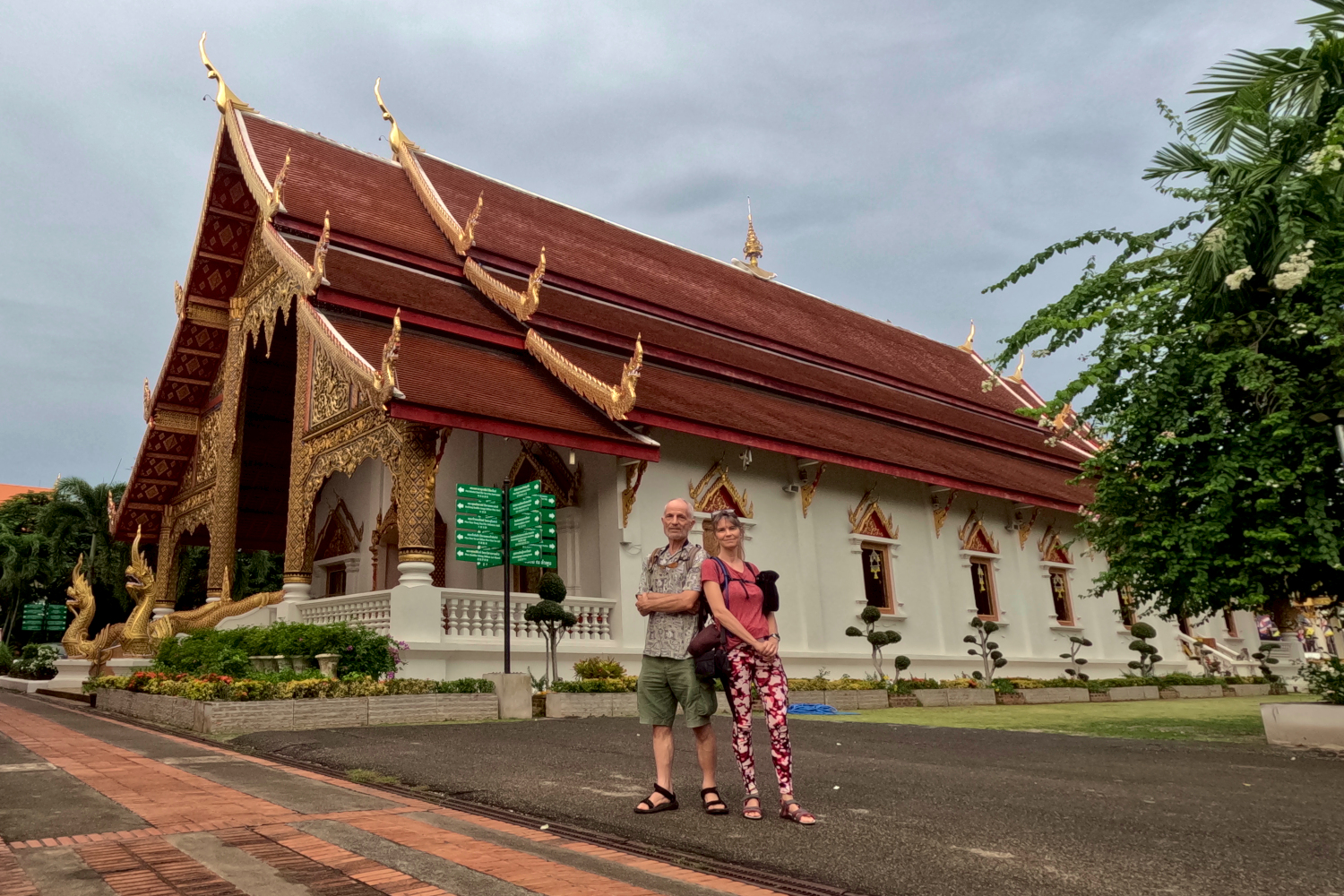
There is a Thai zodiac on display; it’s the same as the Chinese zodiac, except the pig has been changed to the more majestic and more Thai mascot of the elephant. He informs us that many Thais still believe in the superstition that if the wind blows away the zodiac signs, it brings bad luck.
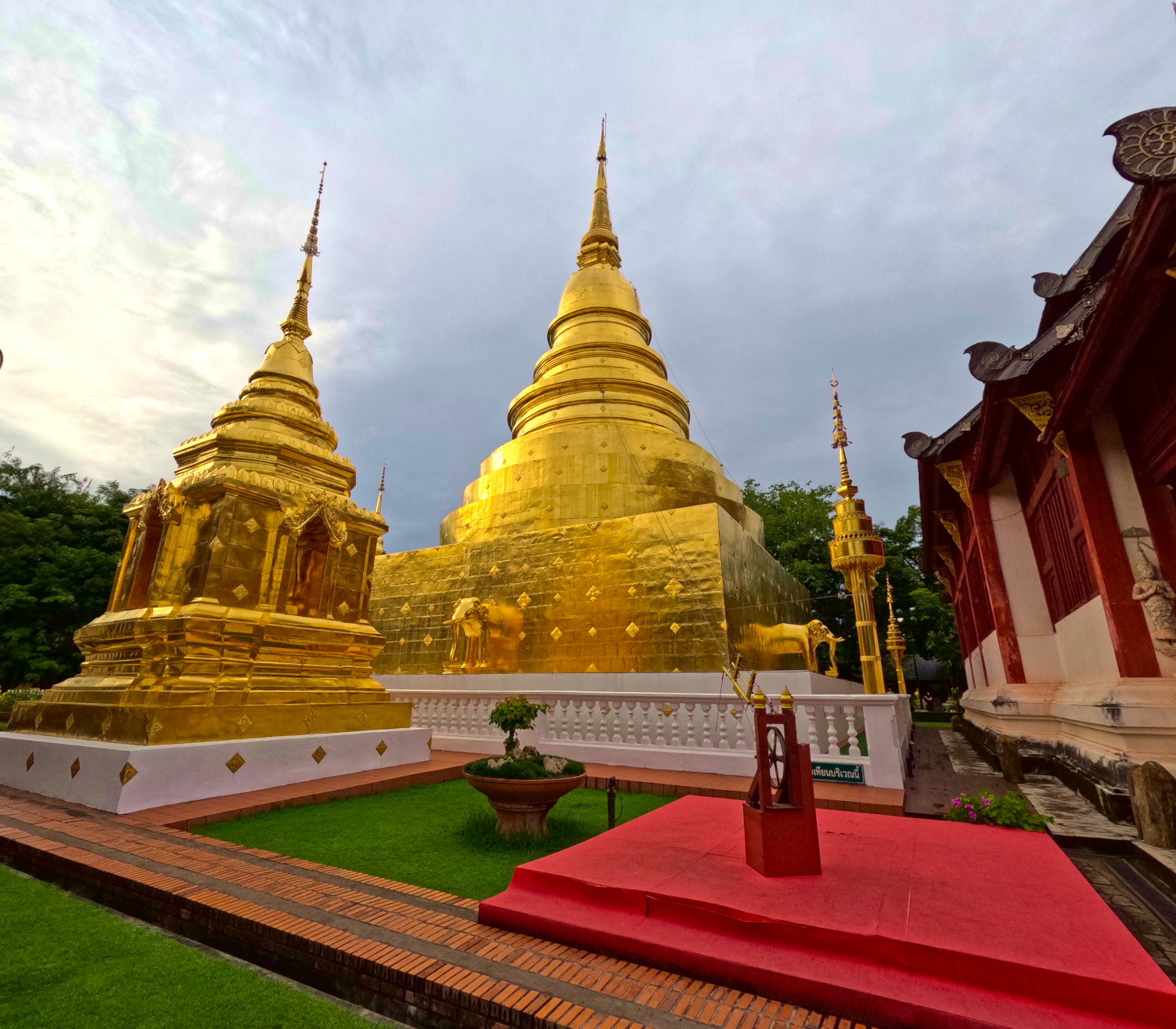
On the same day, we visit Wat Phra Sing, with its distinctive round golden chedi and other golden structures. They’re not really gold, of course,; they’re just covered with brassy paint. But they look practically new, in contrast to the aged look of the smaller temple we’ve just visited. It appears that the public prefers the shiny and bold to the modest and weathered, because there is quite a crowd at Wat Phra Sing. And the stray dogs know where the people are (and therefore where the best chance of snagging a handout is), so they meander among the structures too. And when a monk rings a big bell at the appointed hour, they howl their approval and/ or disapproval.
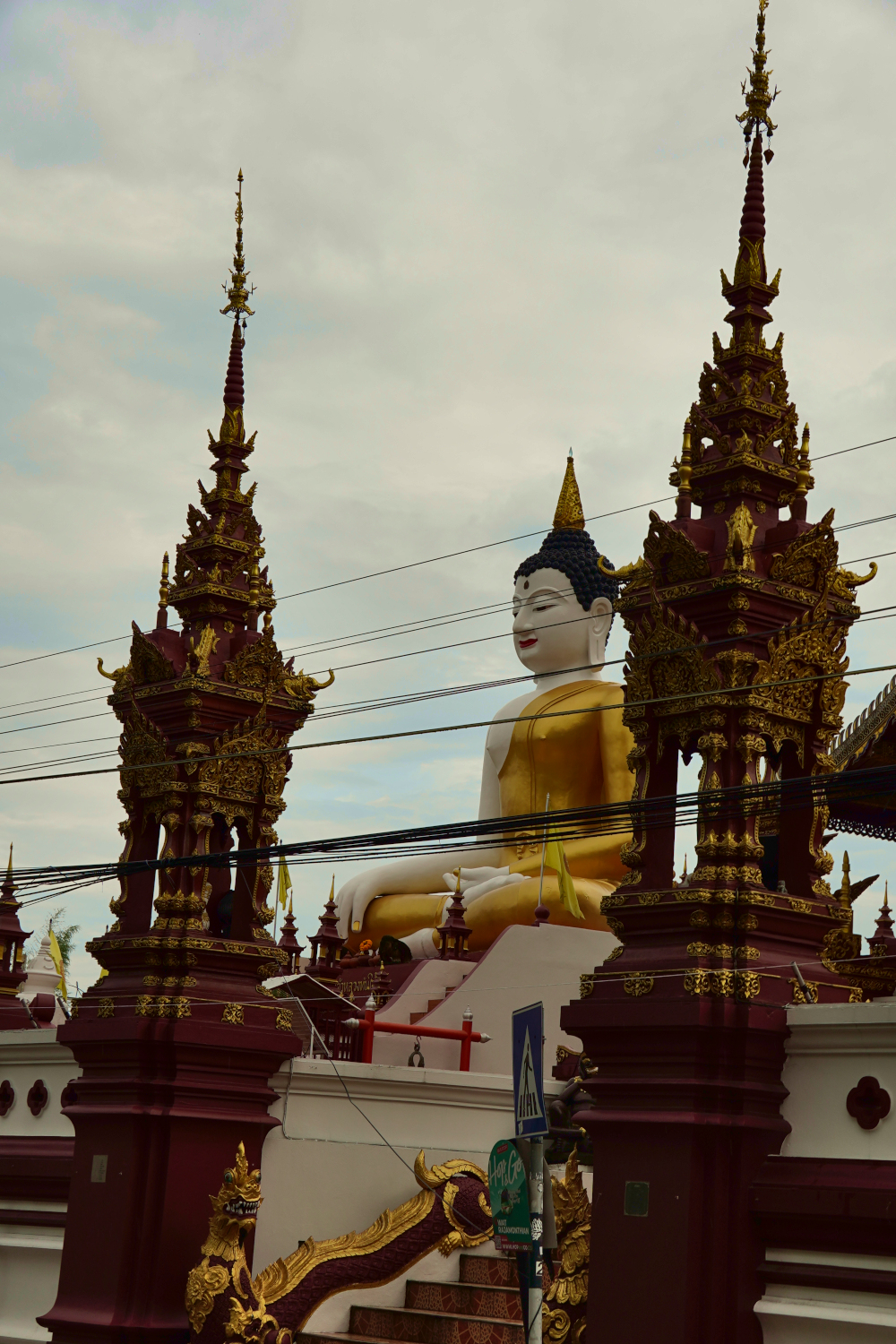
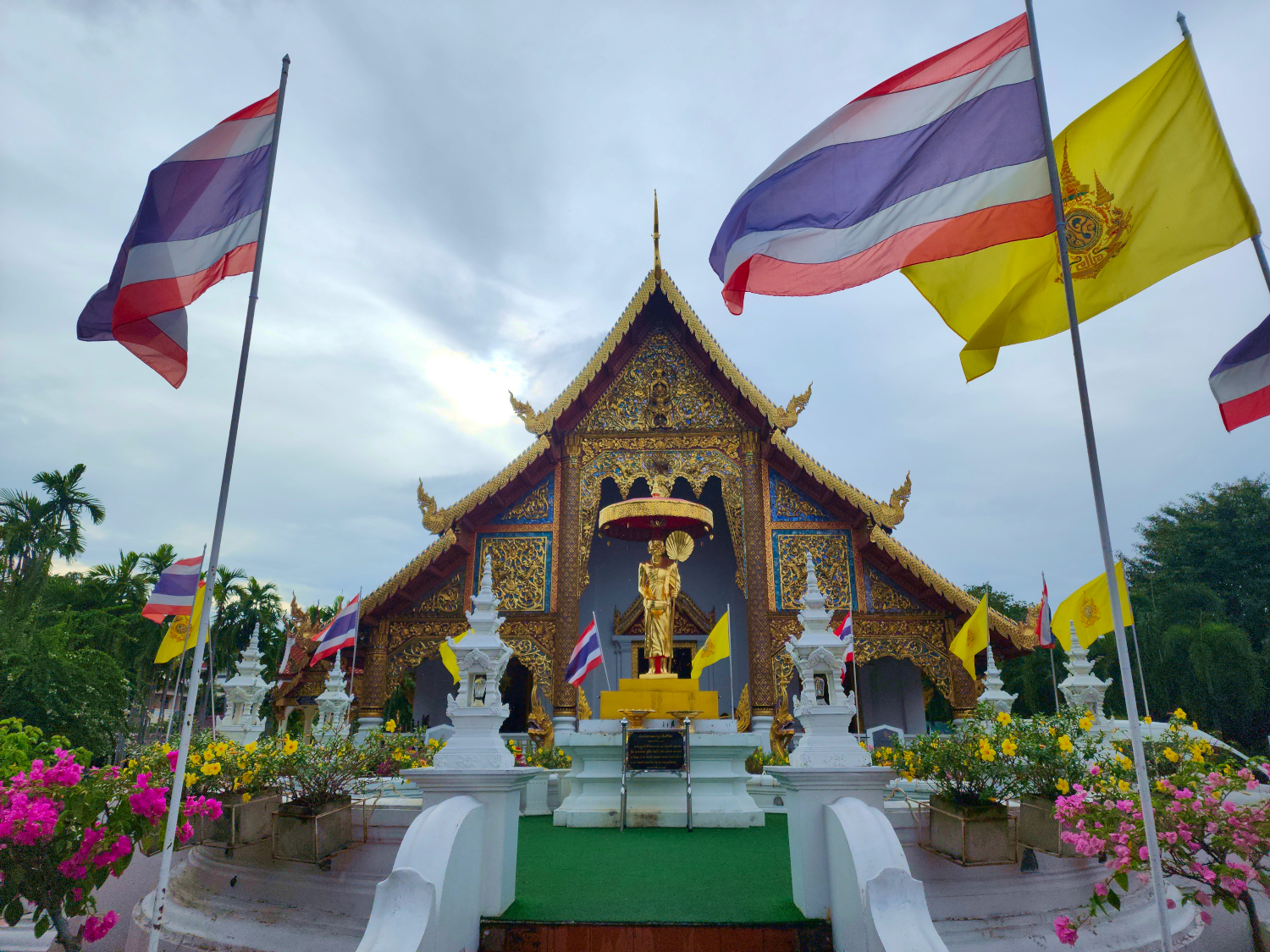
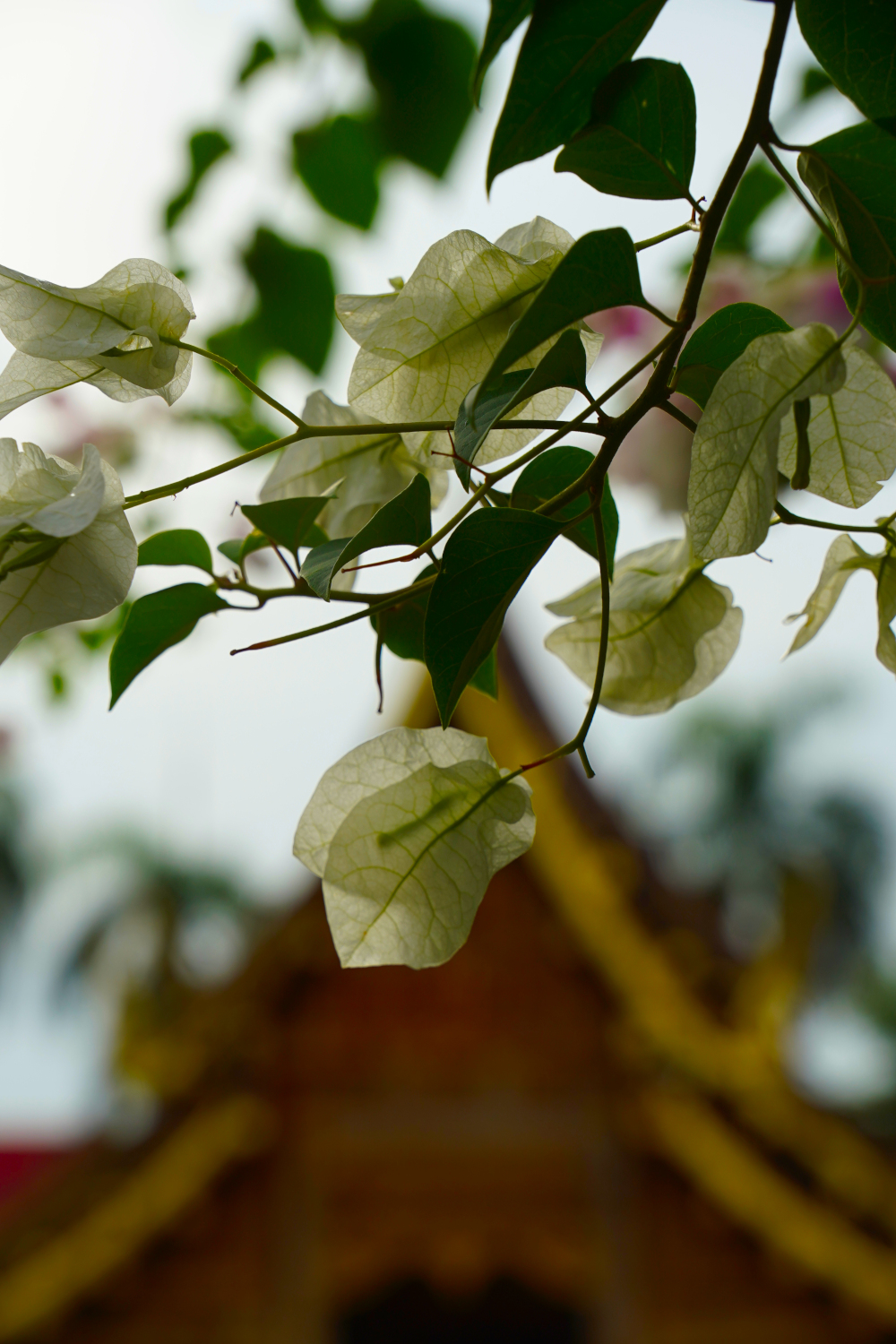
We decide to come back the next day if possible, when perhaps the complex isn’t so crowded and we can get better photos. And we do; but we don’t tarry too long in one location, because there are too many wats in this town to view in one trip, or almost in one lifetime.
9/21-22/2024

 world travel with a theatrical flair
Leave a comment