

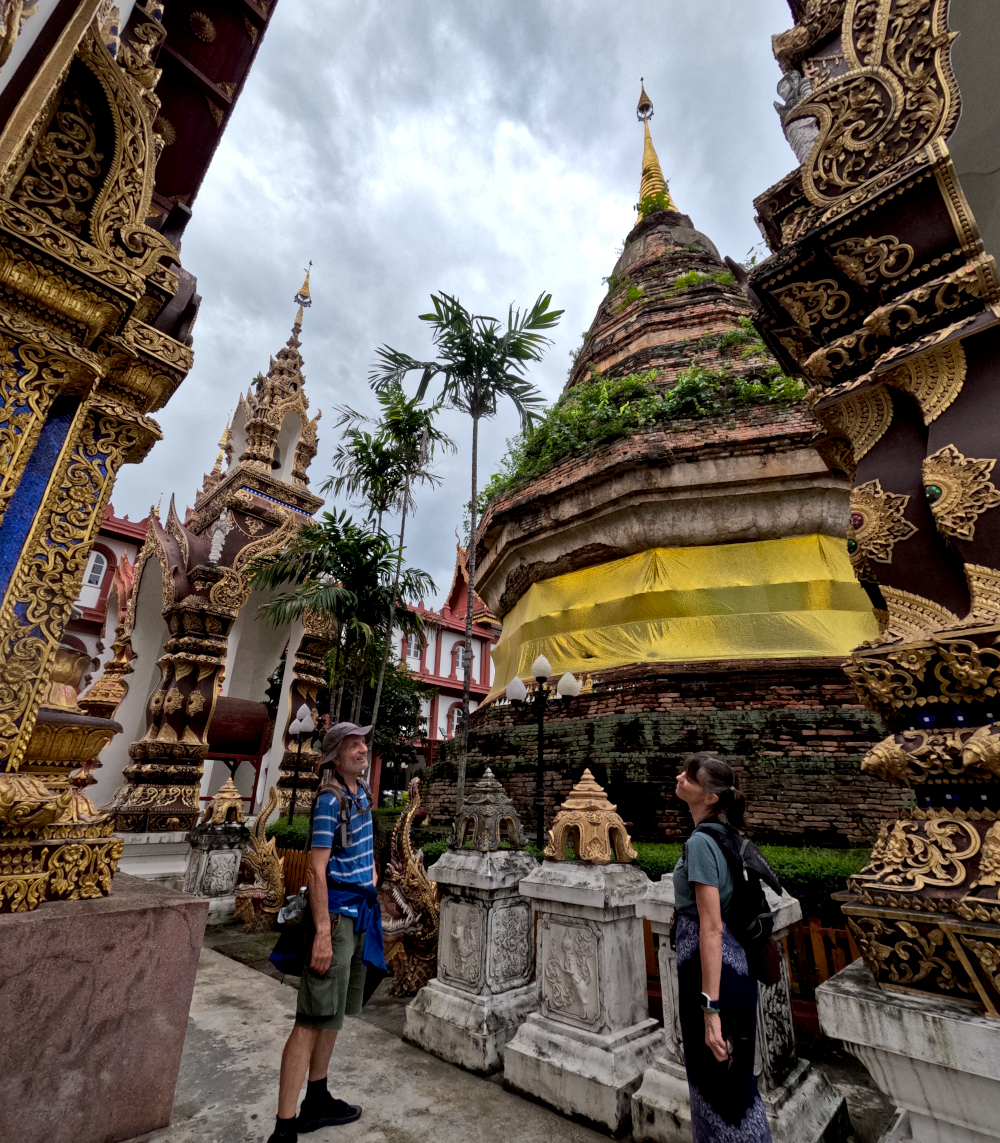
Only a couple of days left in Chiang Mai, and so many temples to see, that it’s hard to know wat’s wat. But we try to work in as many of them as we can.

Wat Tung Yu
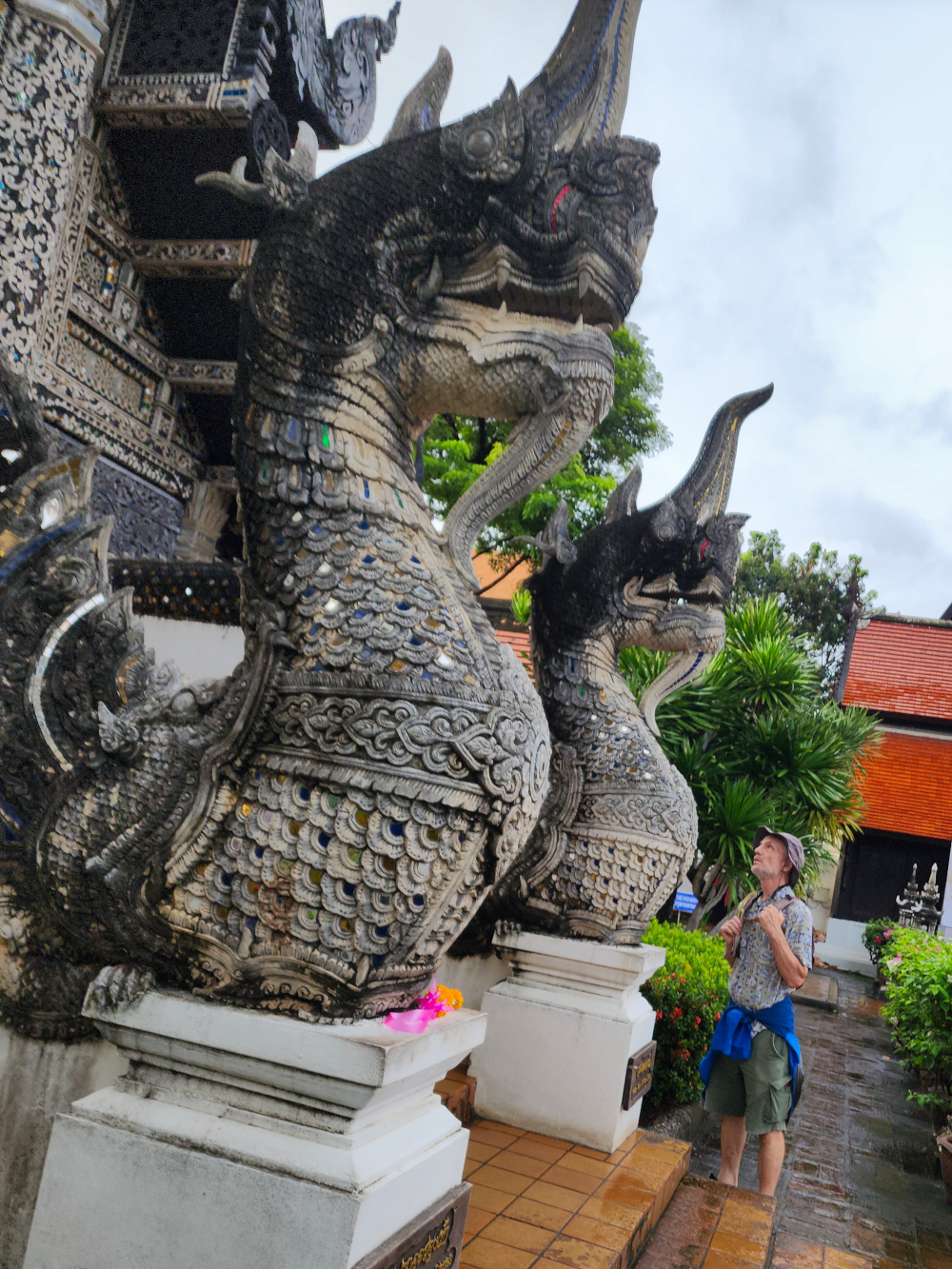
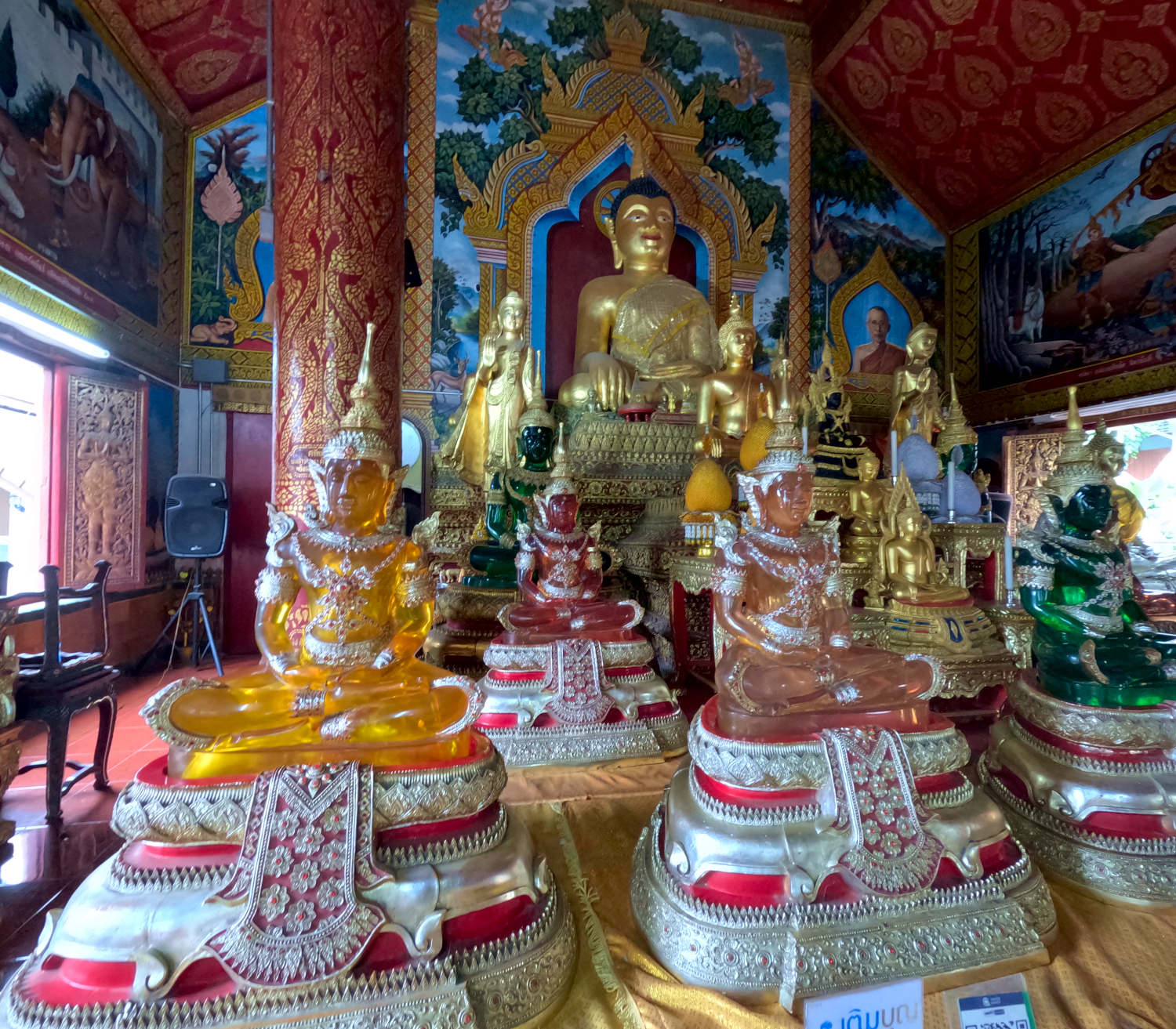
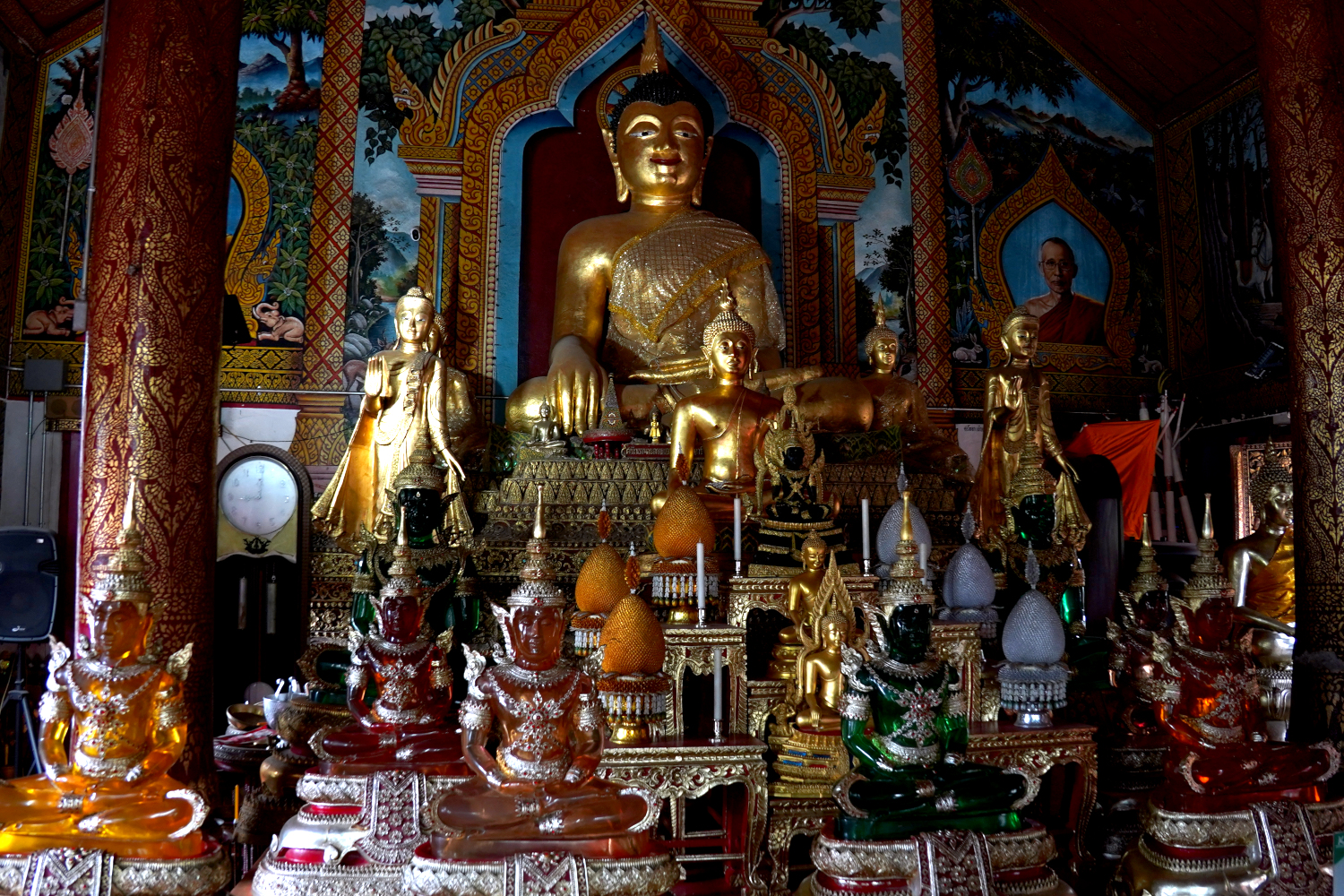
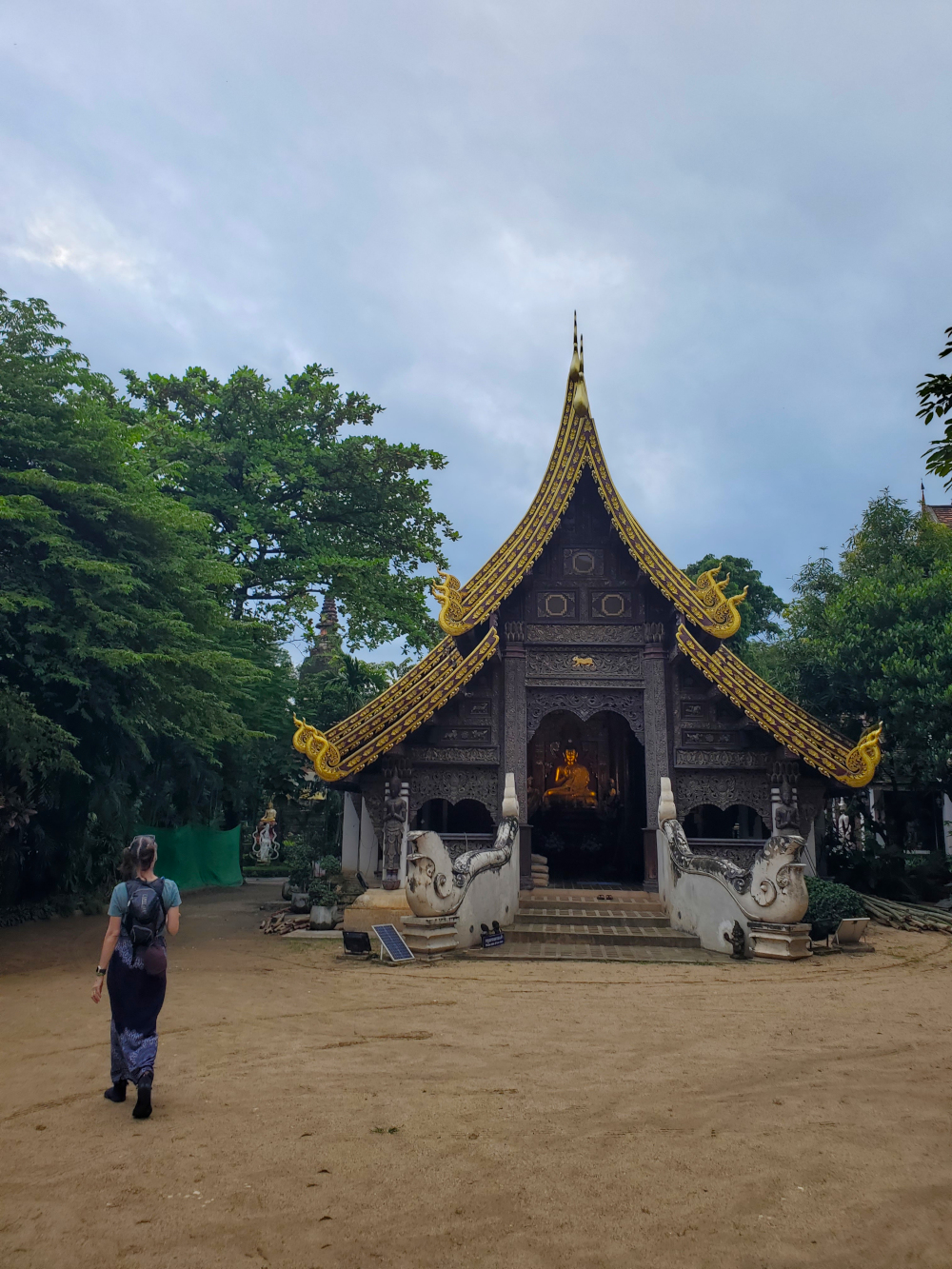
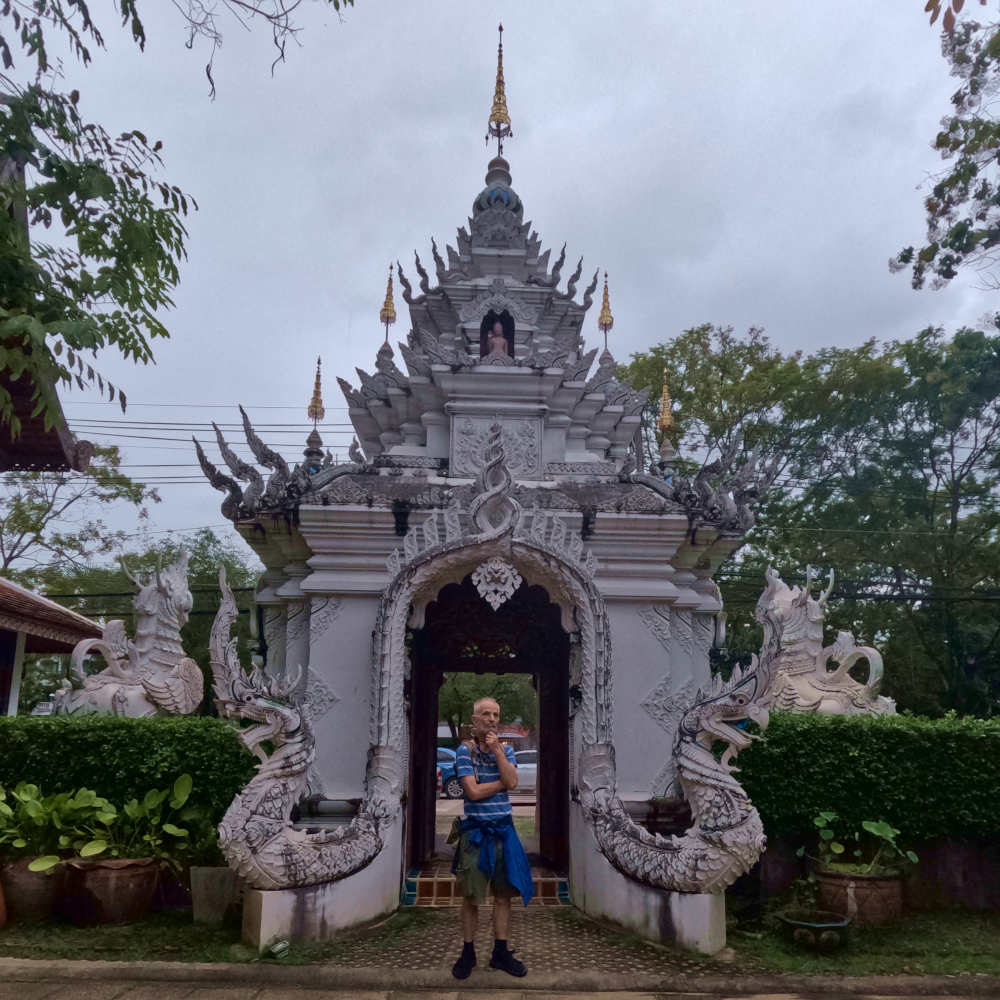
First up is Wat Tung Yu, which is small but full of intricately carved details. One of its most arresting features is the huge pair of naga serpents guarding the entrance, looking as if they’re poised to devour anyone who breaches temple etiquette. Nagas are mythical serpents who are part human, and guard the Buddha and his teachings. They are also connected with water (especially rain) and prosperity. Inside are quite a number of distinctively different carved and jeweled Buddhas, which may be why the nagas are on alert.

Wat Phra Sing
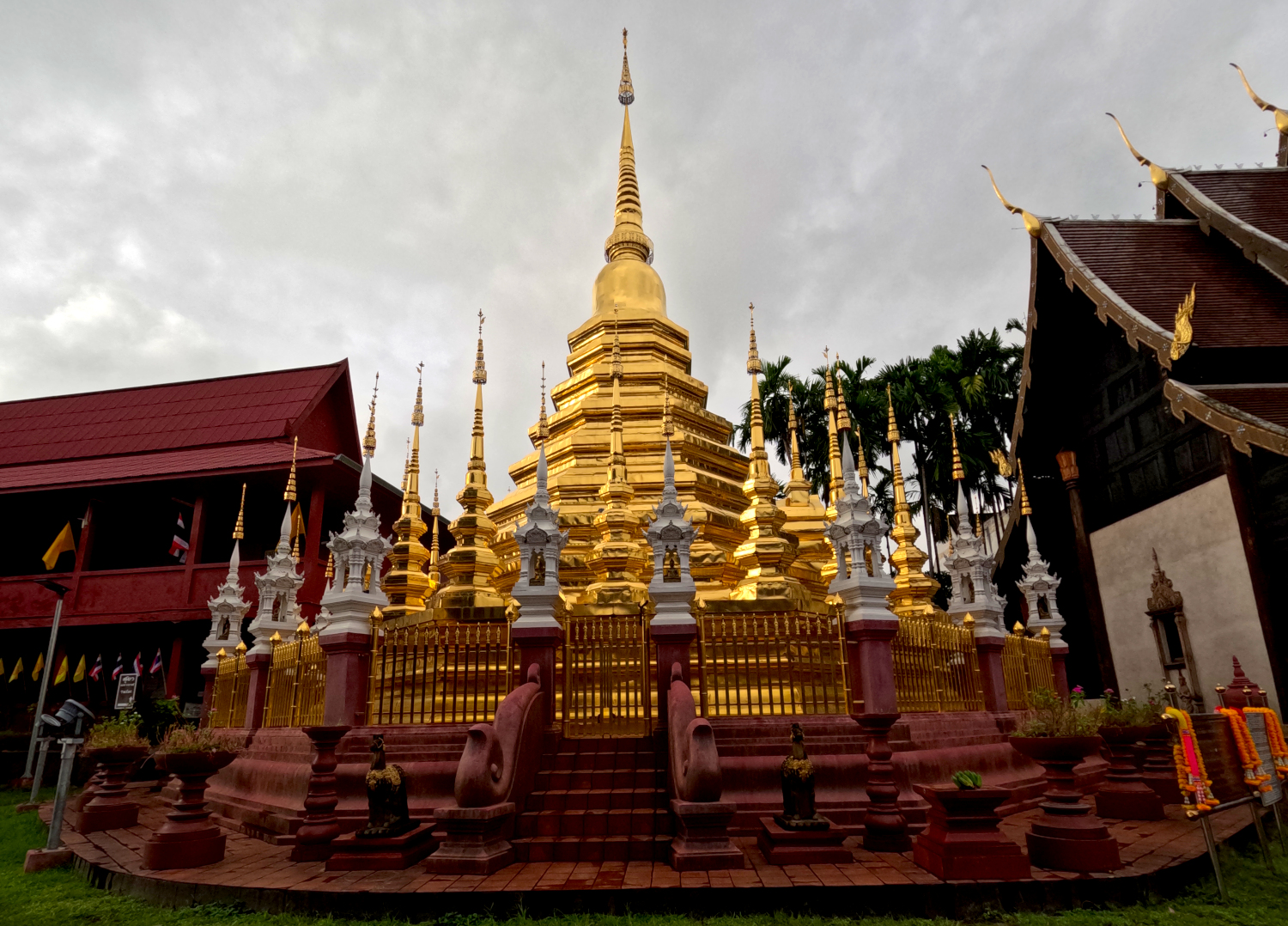
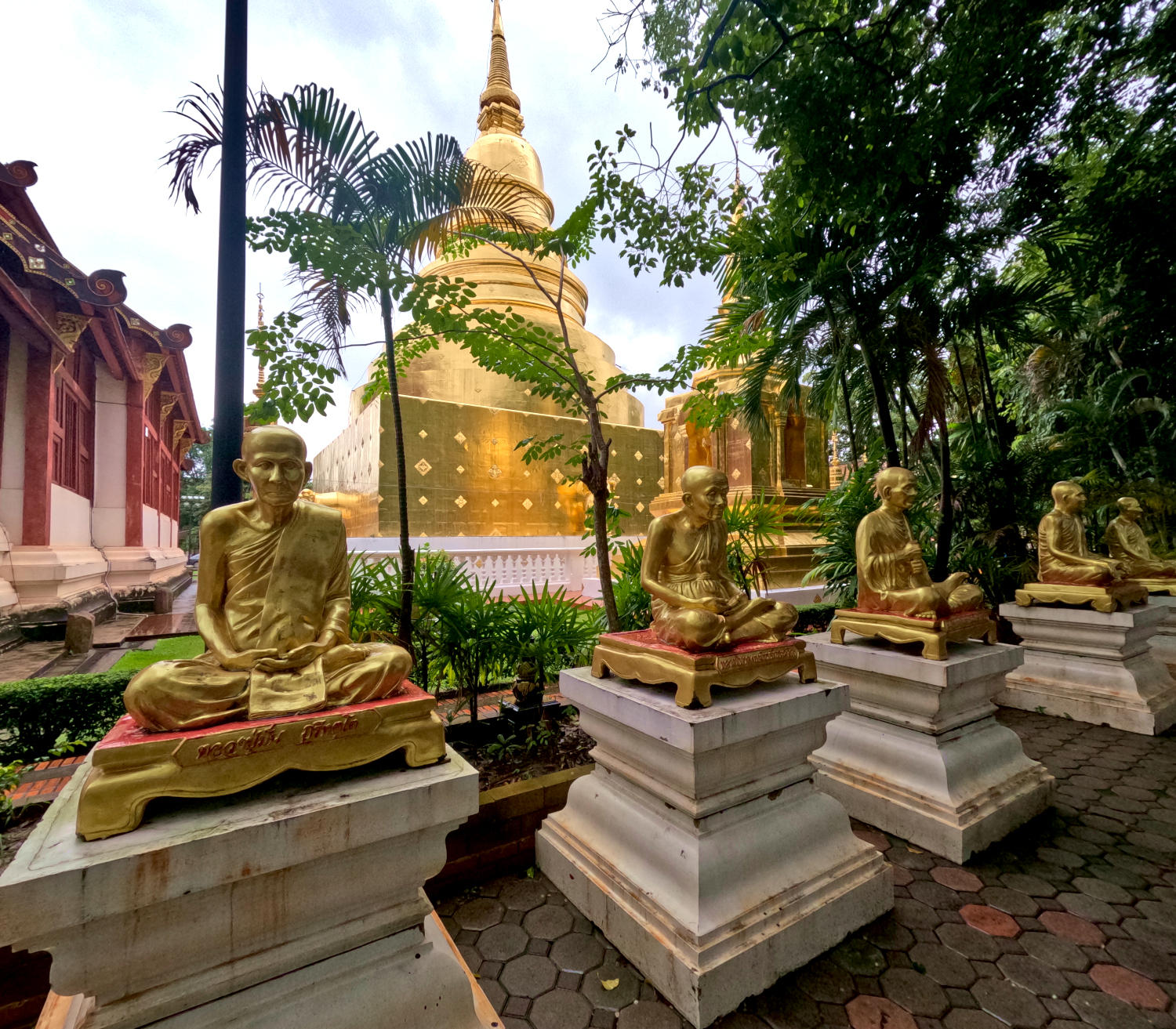
Next we return to Wat Phra Sing, which we visited the day before — but this time, as we hoped. it was much less crowded. This popular wat is noted for its shiny gold-painted chedi and other structures that appear to be made of solid gold or brass (but when you get up close you can see that the exterior is a kind of sheet metal, interconnected rather seamlessly).
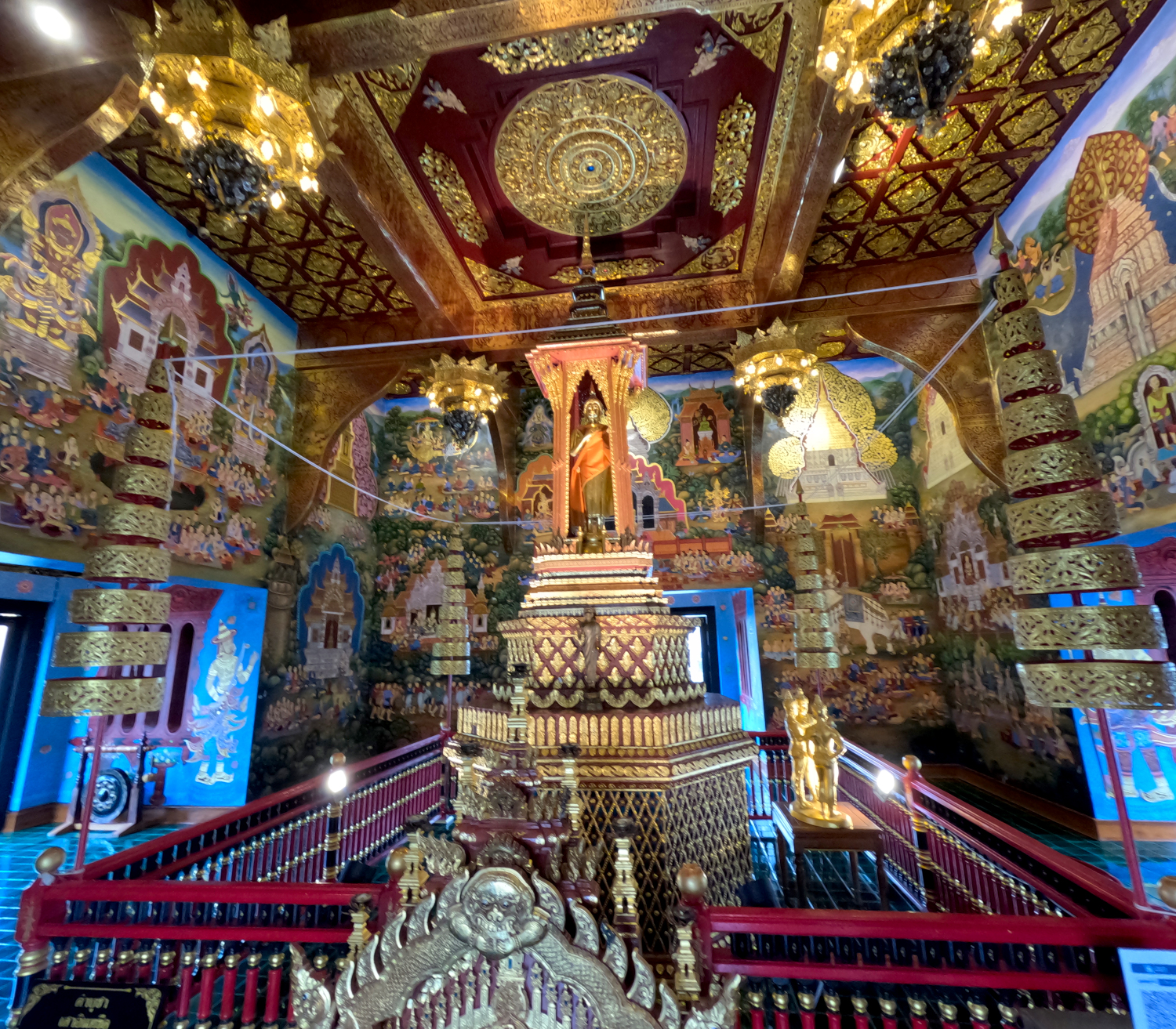

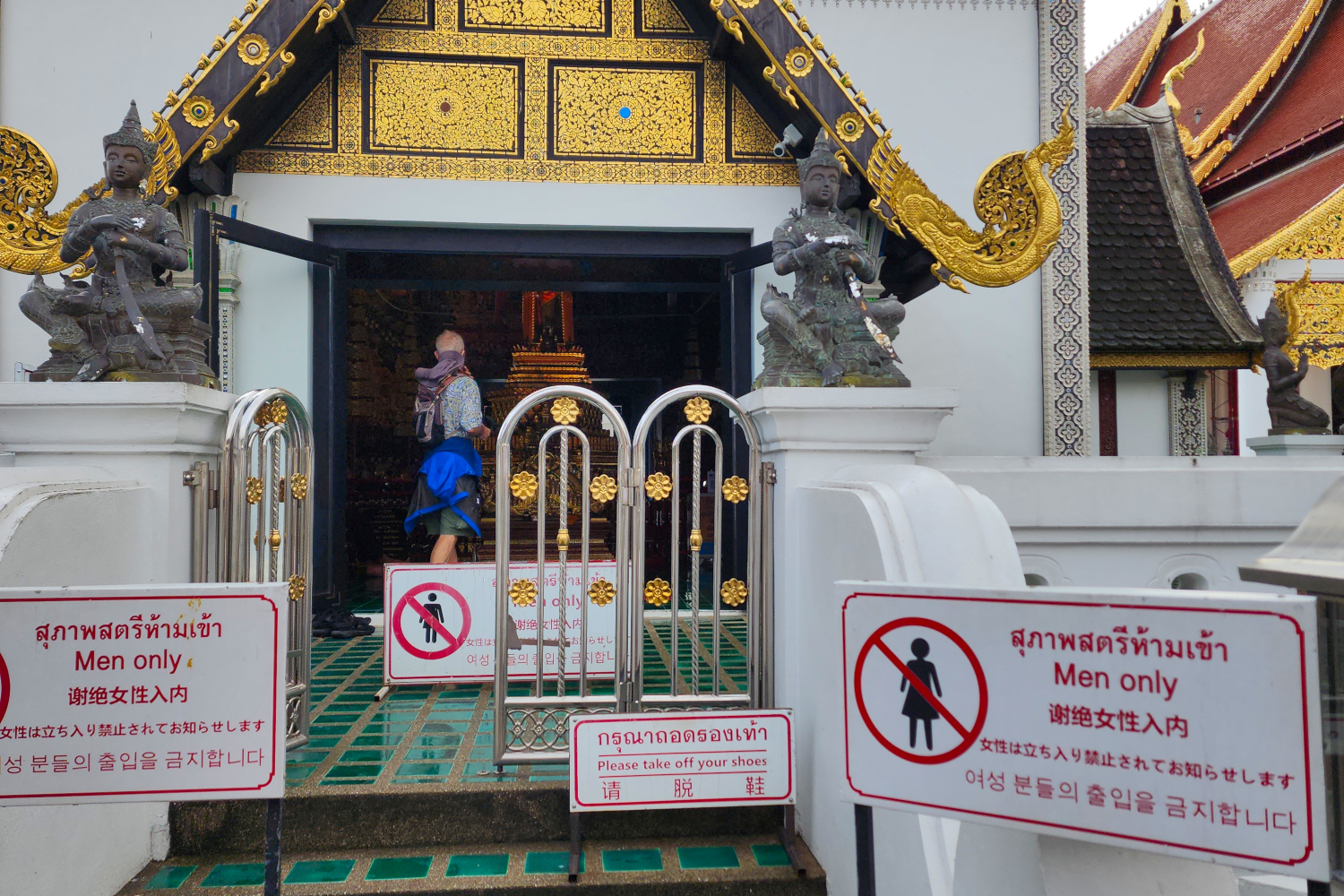
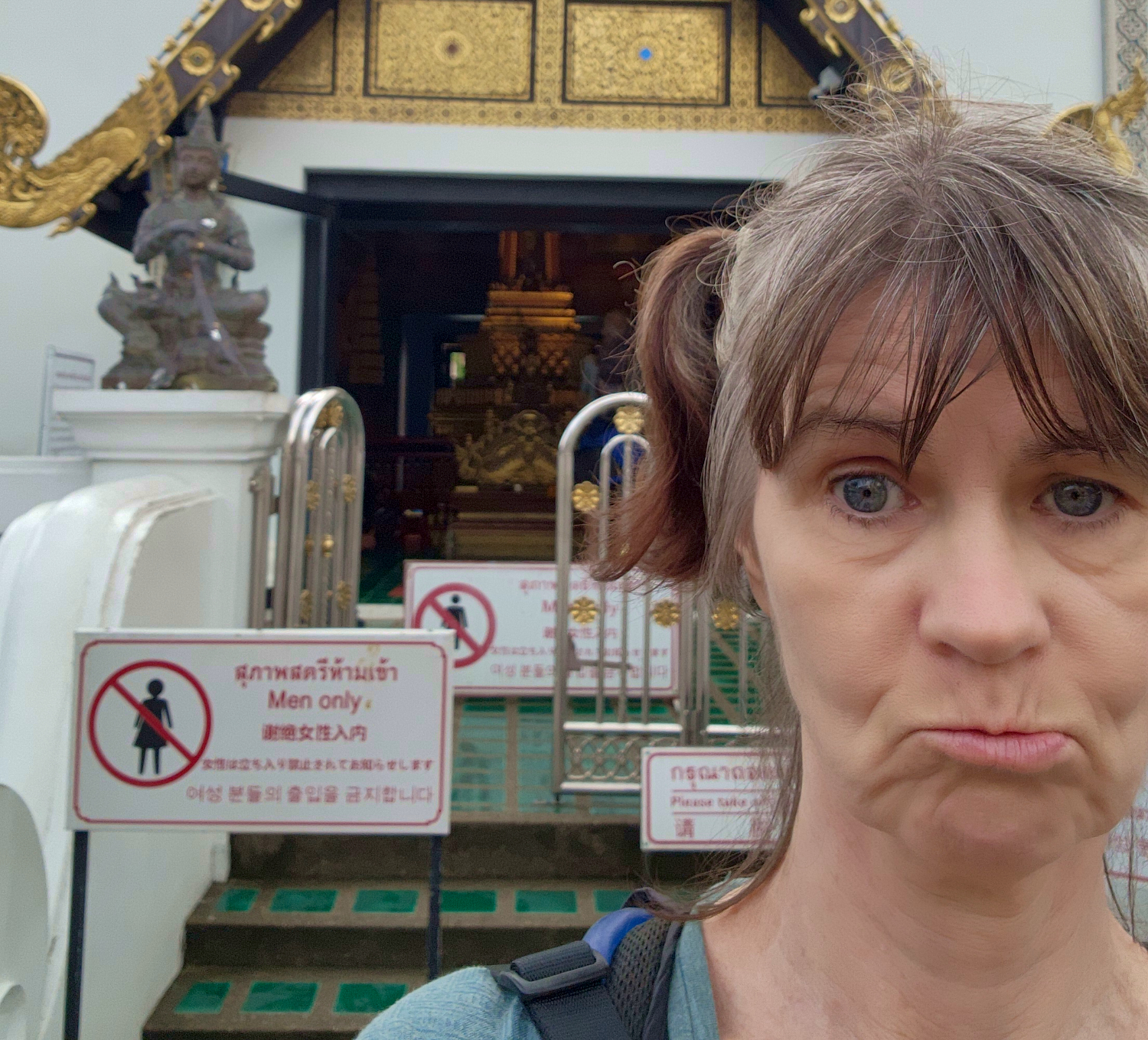
There are several different buildings in this complex, and one of them is a little sanctuary which, like most of the other buildings, has a sign out front telling visitors to remove their shoes before entering. But in this case, the signs also say that this rule applies only to men. Because only men are allowed to enter at all. Chiang Mai is a pretty modern city, but some ancient traditions are alive and well. Well, not to worry: the one of us who entered can assure the other one that she didn’t miss much.
Wat Chedi Luang
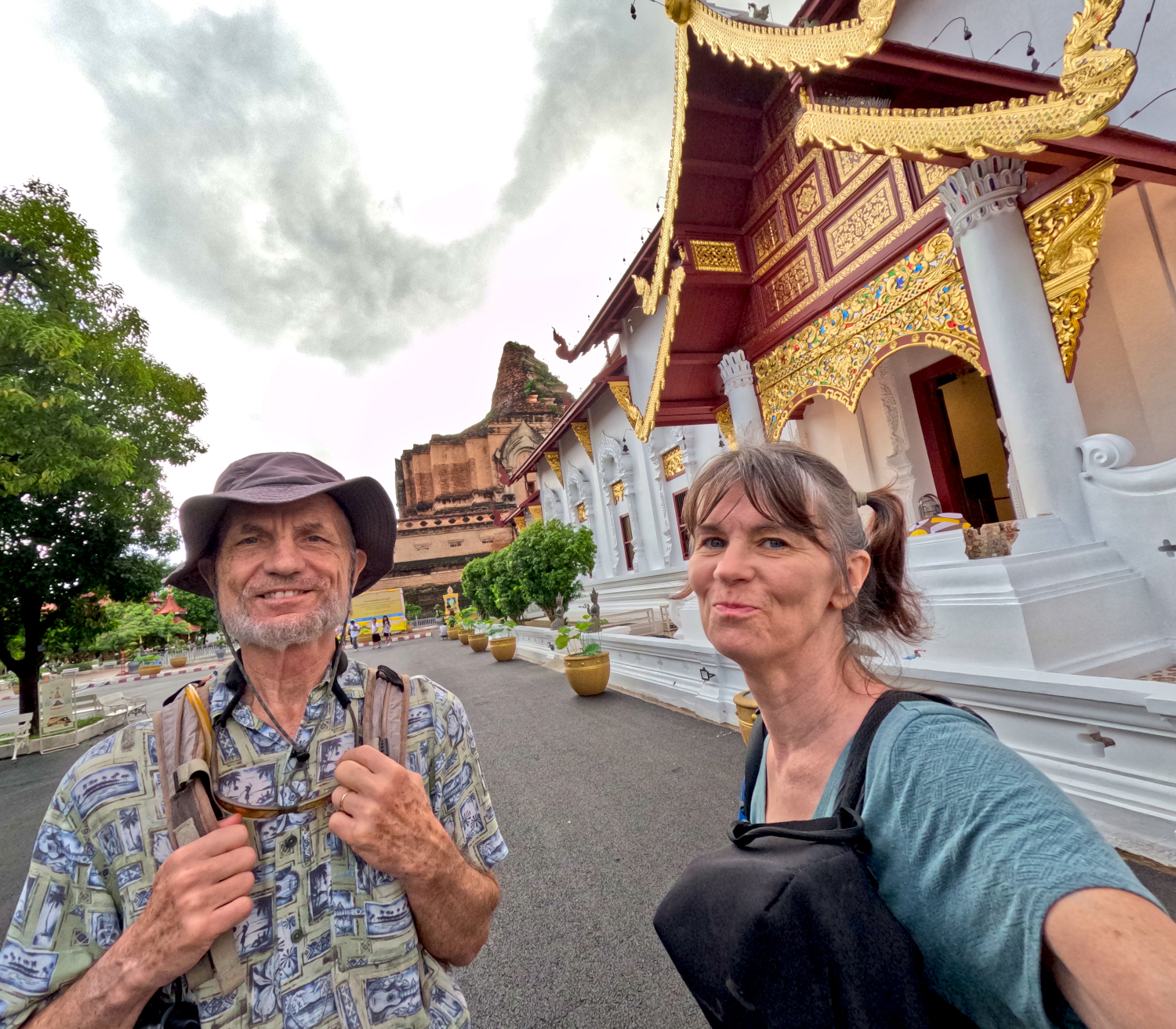
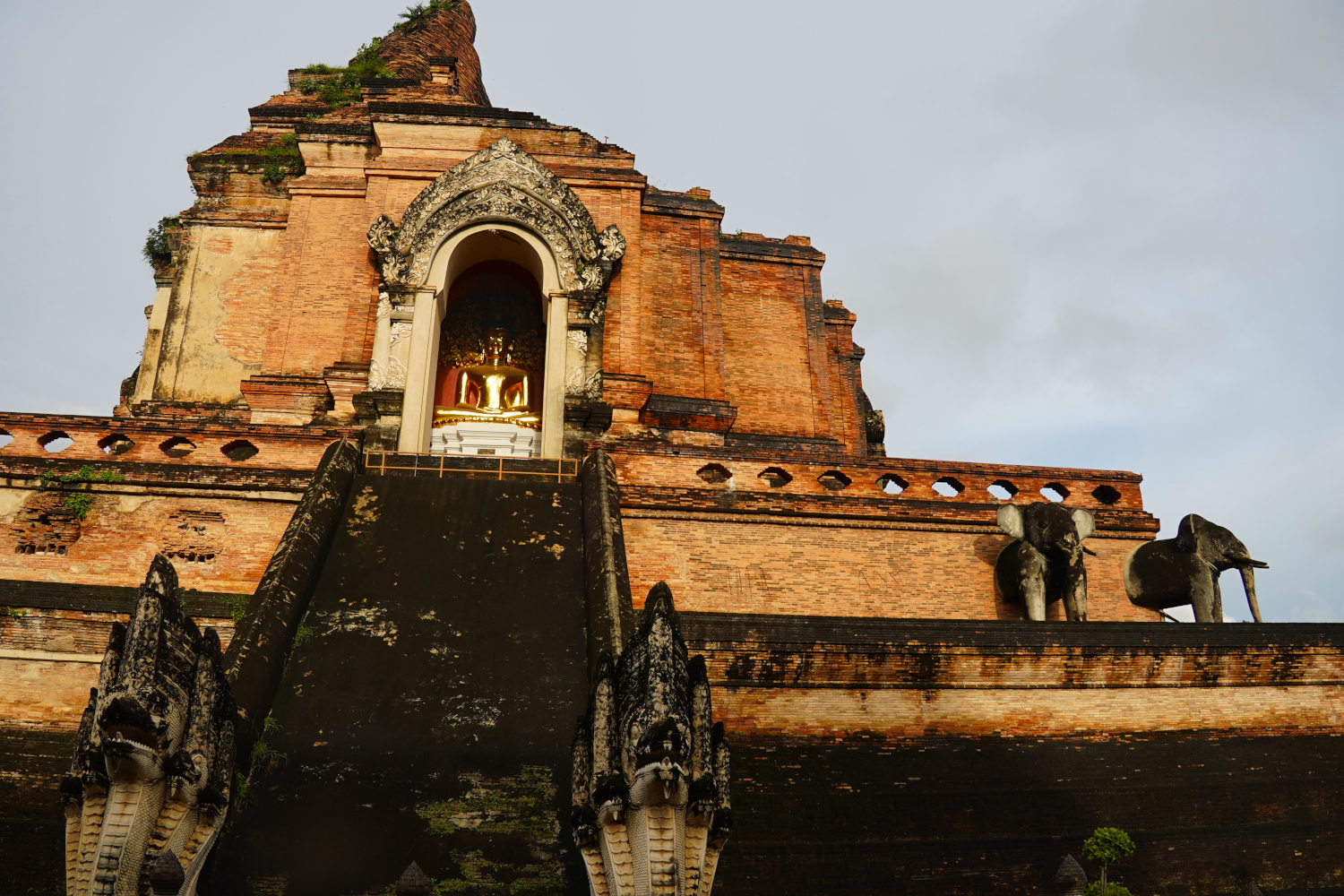
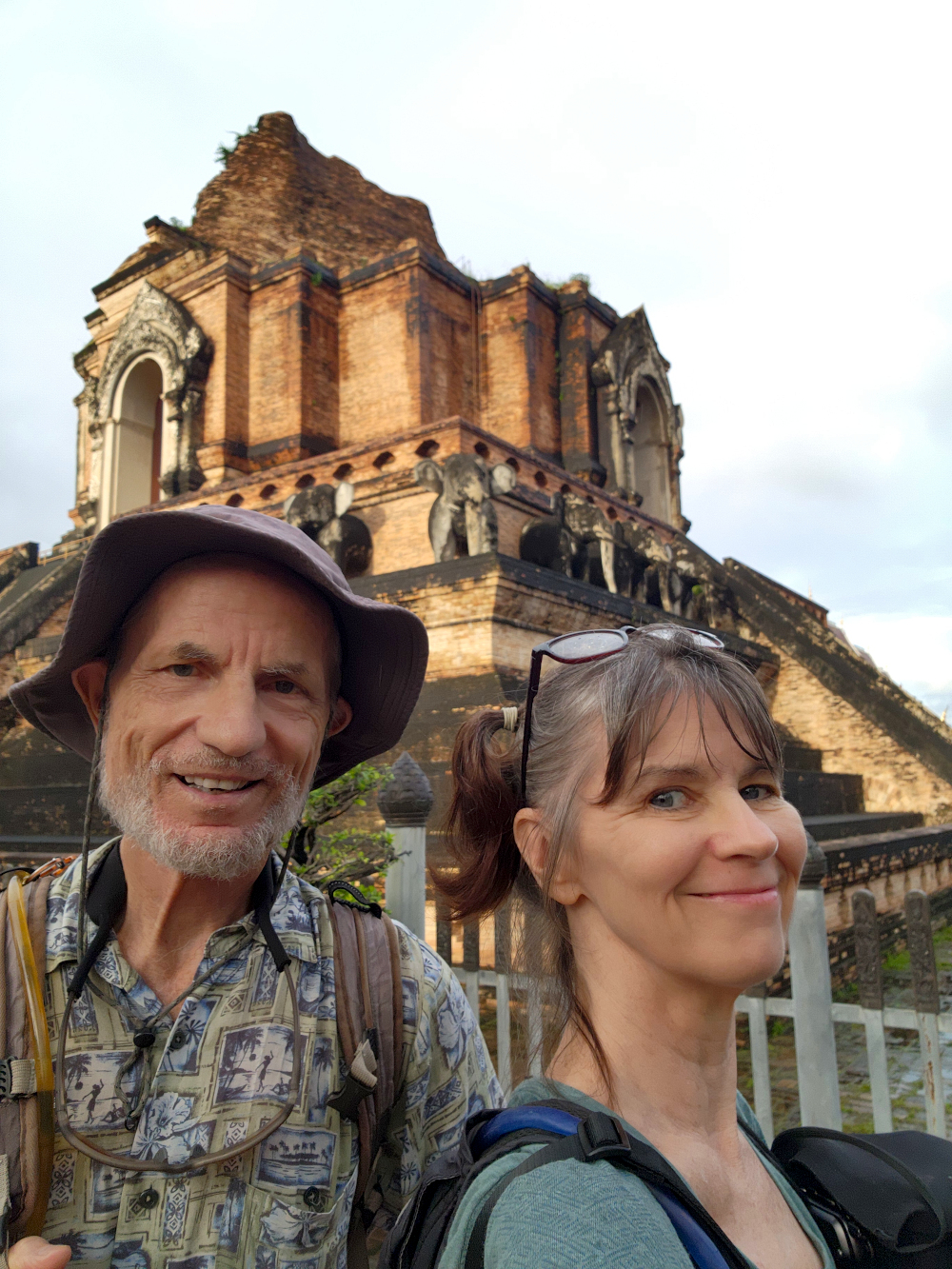
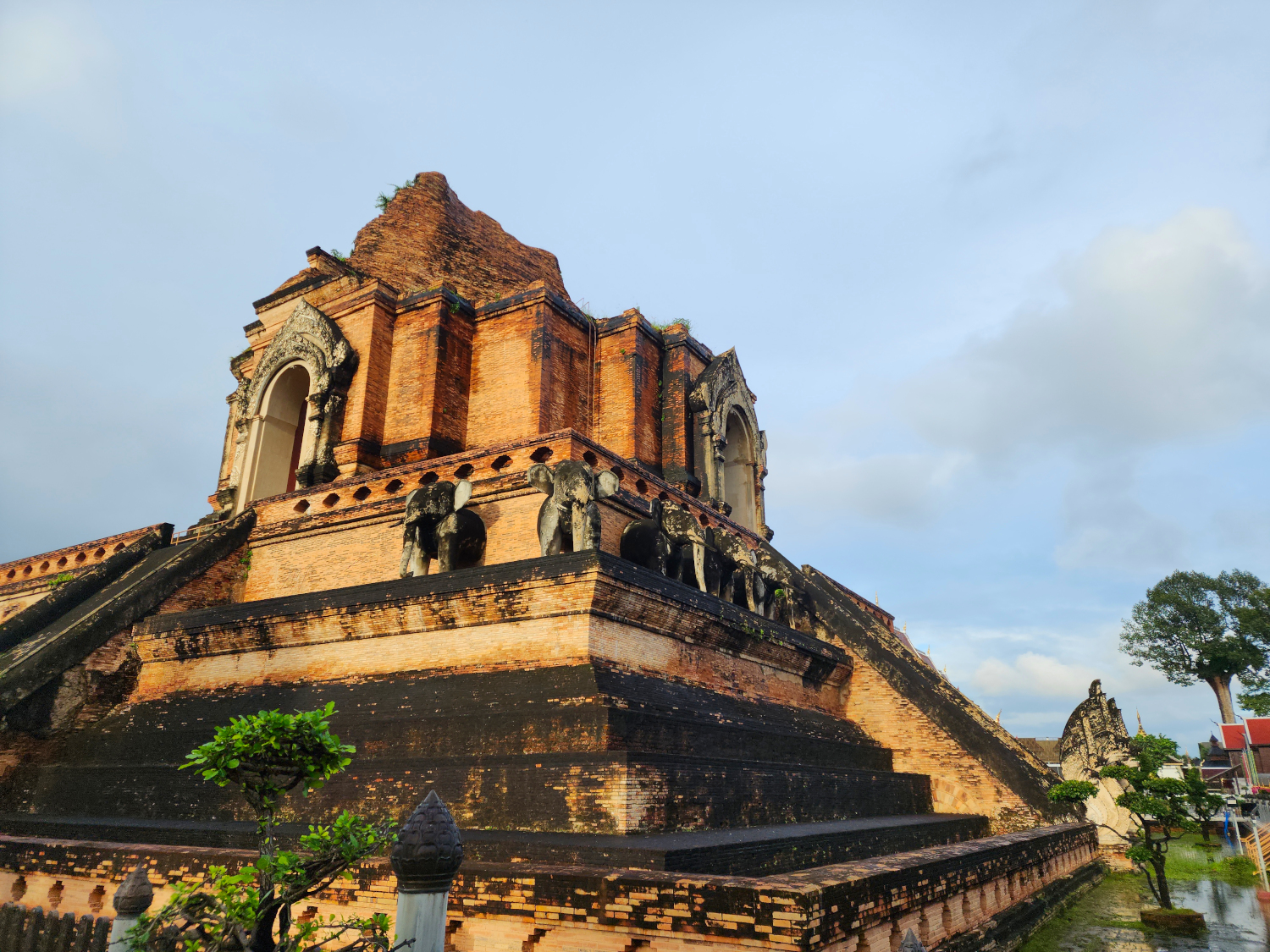
The piece de resistance of our whirlwind wat tour is Wat Chedi Luang , which is visible for some distance with towering, ruined stupa. This one of only only two wats we visit that charges an admission fee, the staggering sum of 50 baht (about $1.50). Because of its crumbling appearance, it gives the impression of being the oldest wat in town. But it isn’t. (See below.) One of its most arresting features is the array of life-size stone elephants circling the building on the second story terrace, as if trying to hold up the wall — or crash down the floor. Well, actually, they used to circle the building once upon a time, but quite a few are missing now. Just enough of the original herd remain to give you some inkling of what the effect was like in the temple’s heyday.


Wat Chiang Man
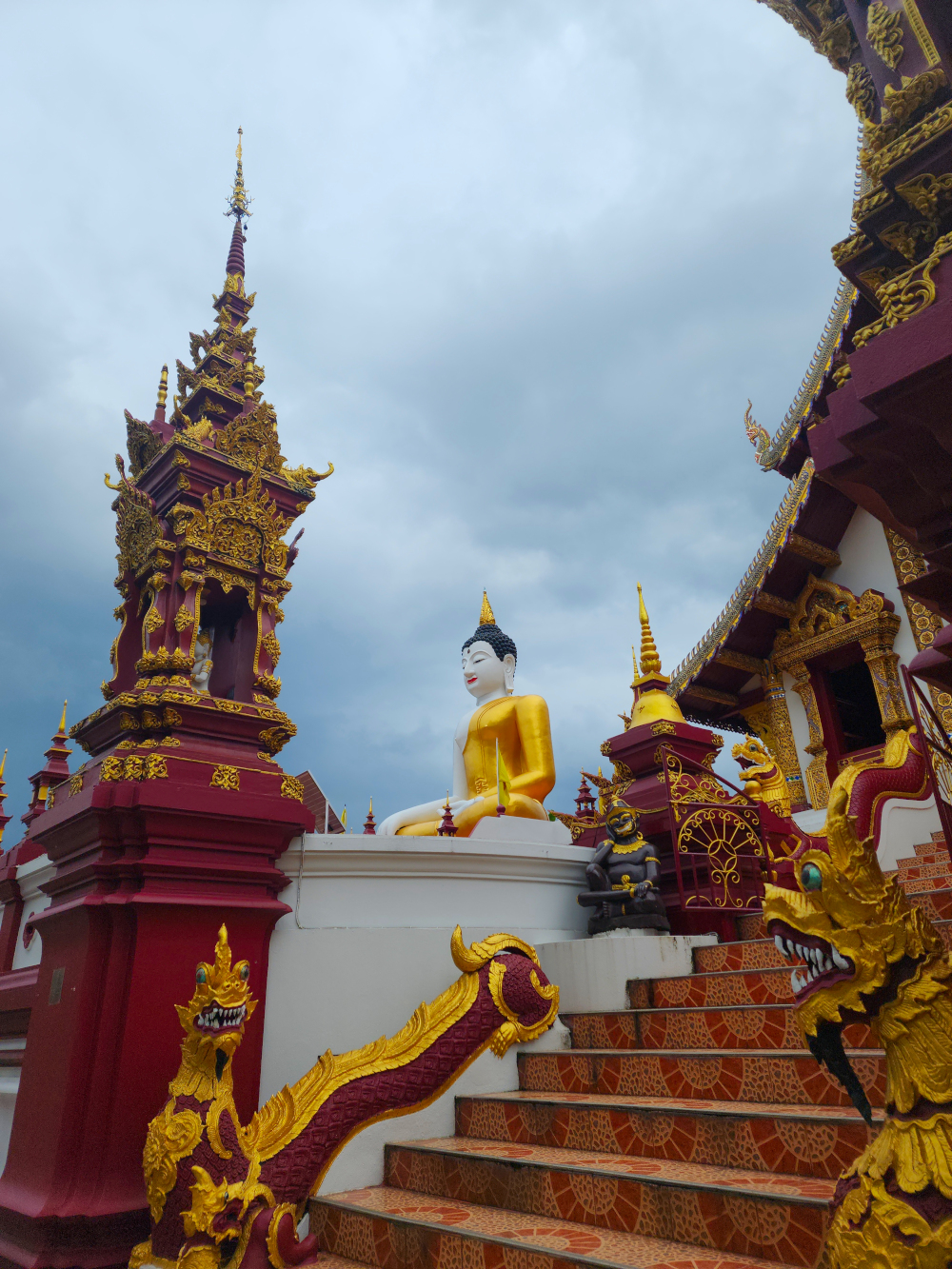
And on our last day in town, we hit Wat Chiang Man, which is the oldest wat in town, dating back to 1296. Ironically, it looks newer and fresher than some of the considerably more recent wats. It also boasts quite a few elephants — 15 of them to be exact. Which shouldn’t be a surprise — in Thailand, the elephant is an elegant element.

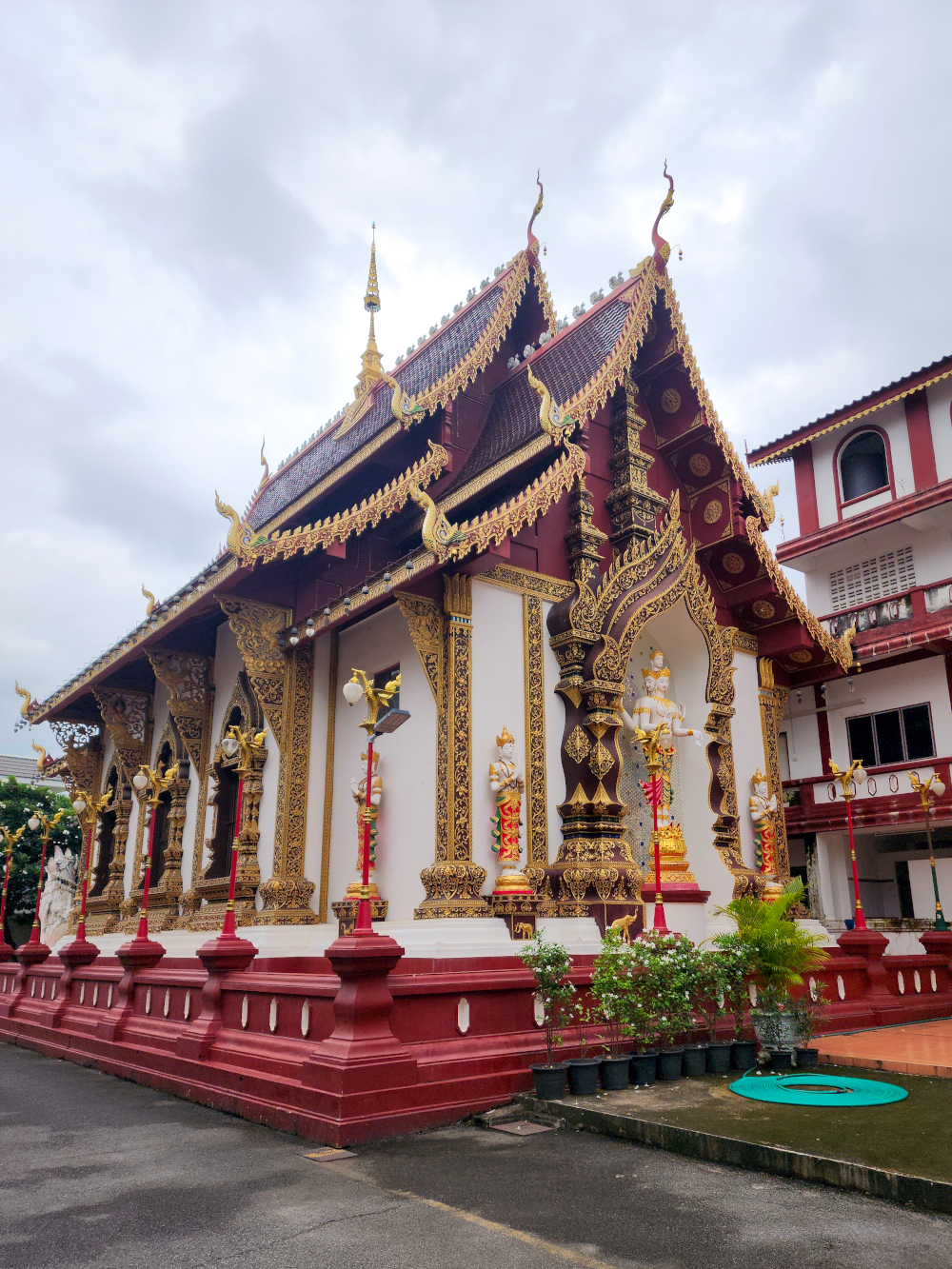
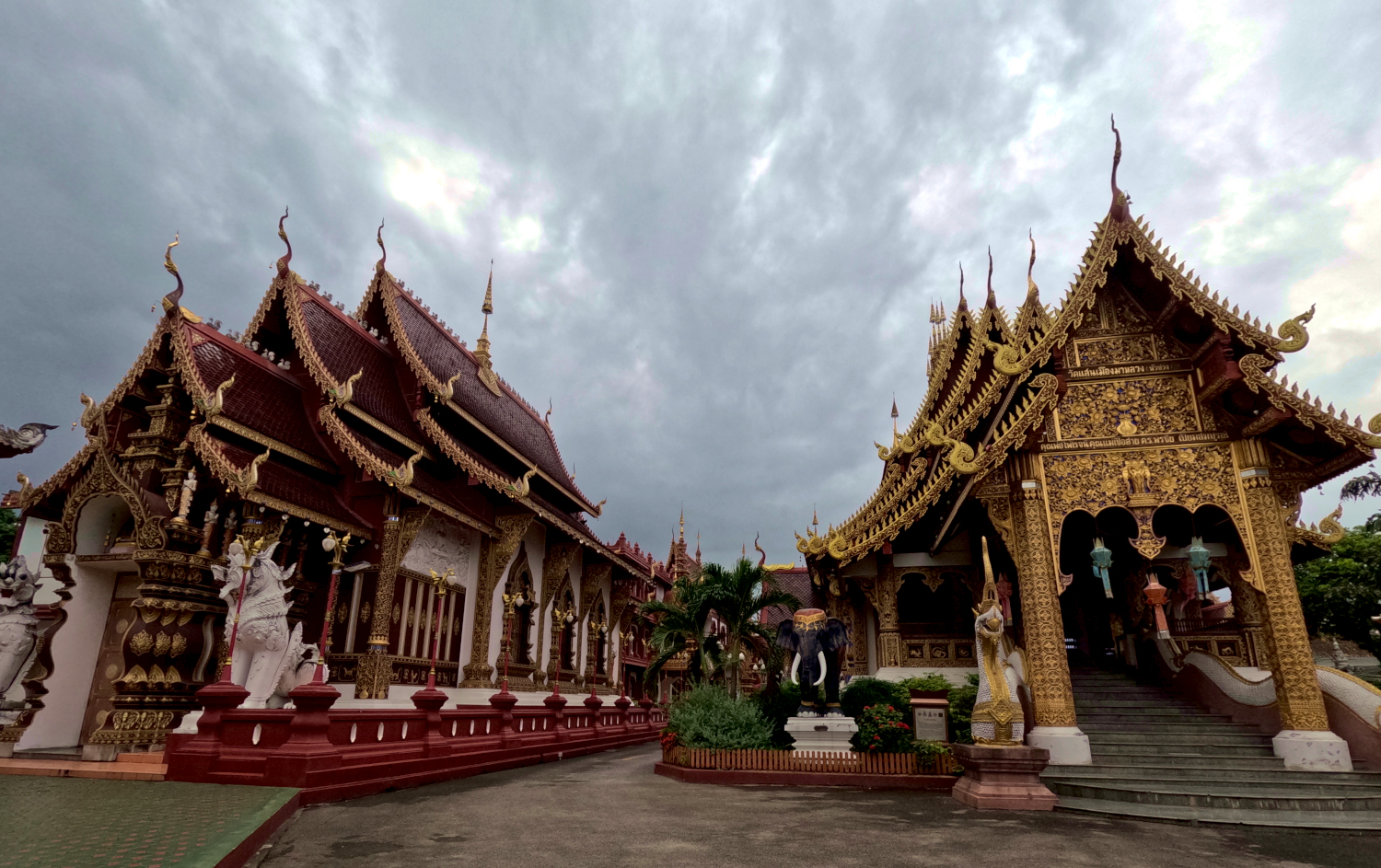

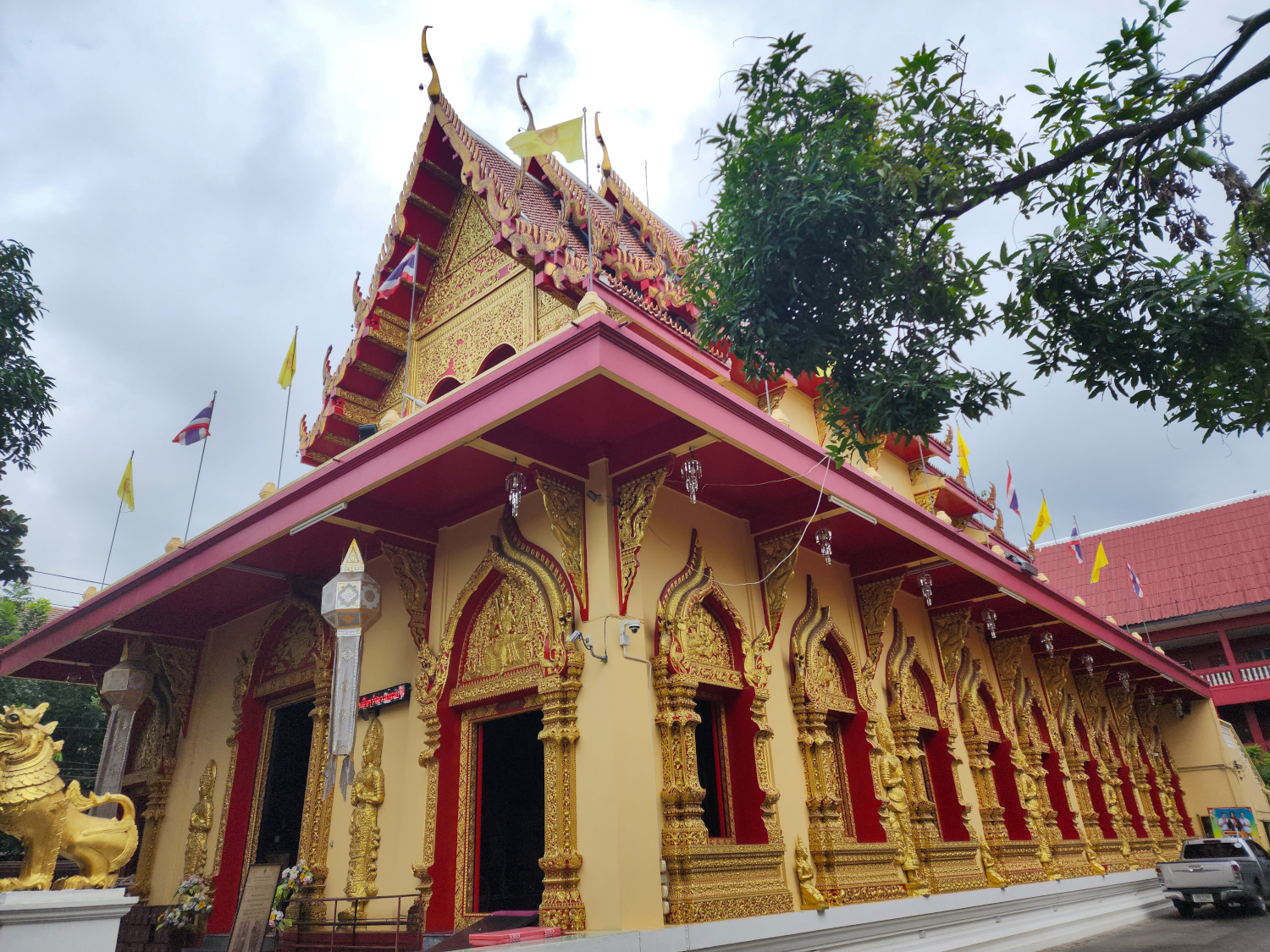
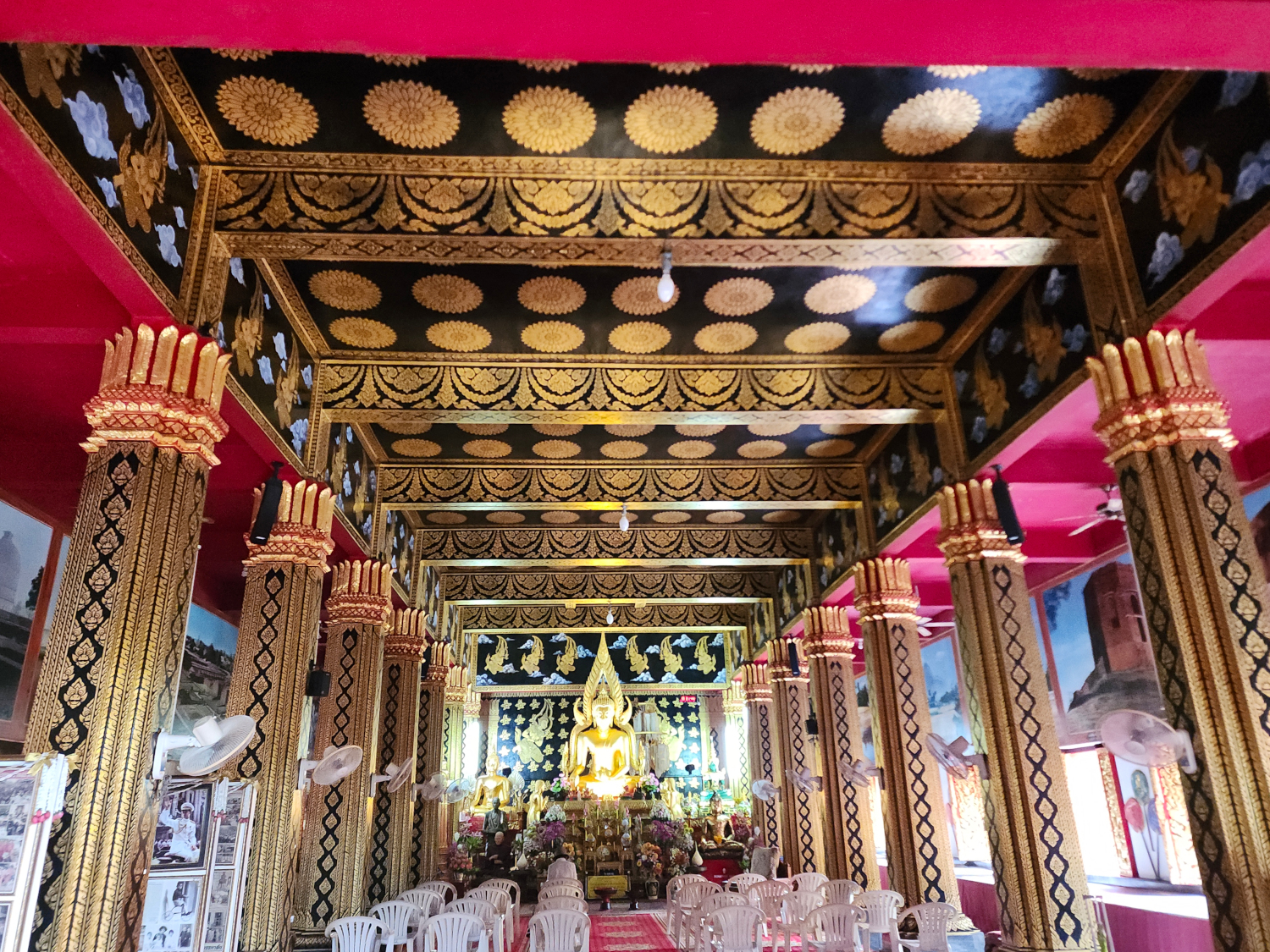

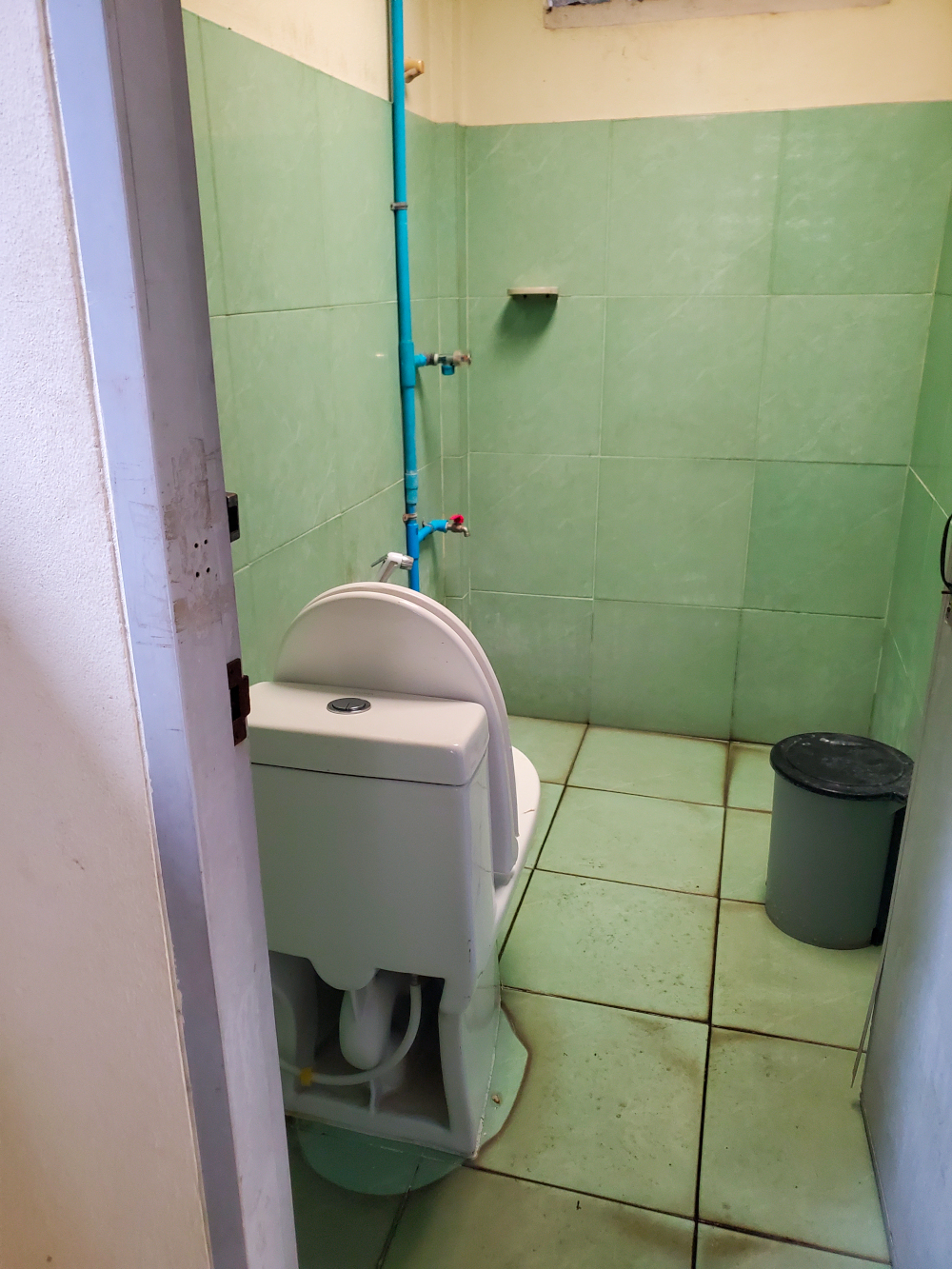
While perusing this wat, we naturally took advantage of its free WC facilities. And it was quite a surprise to see that the toilet inside is on the same side as the door, which we believe is the first time we’ve seen such a quirk. We knew that in Southeast Asian cultures adjectives are placed after nouns and given names after family names, but we didn’t expect the reversal of western customs to go quite this far.
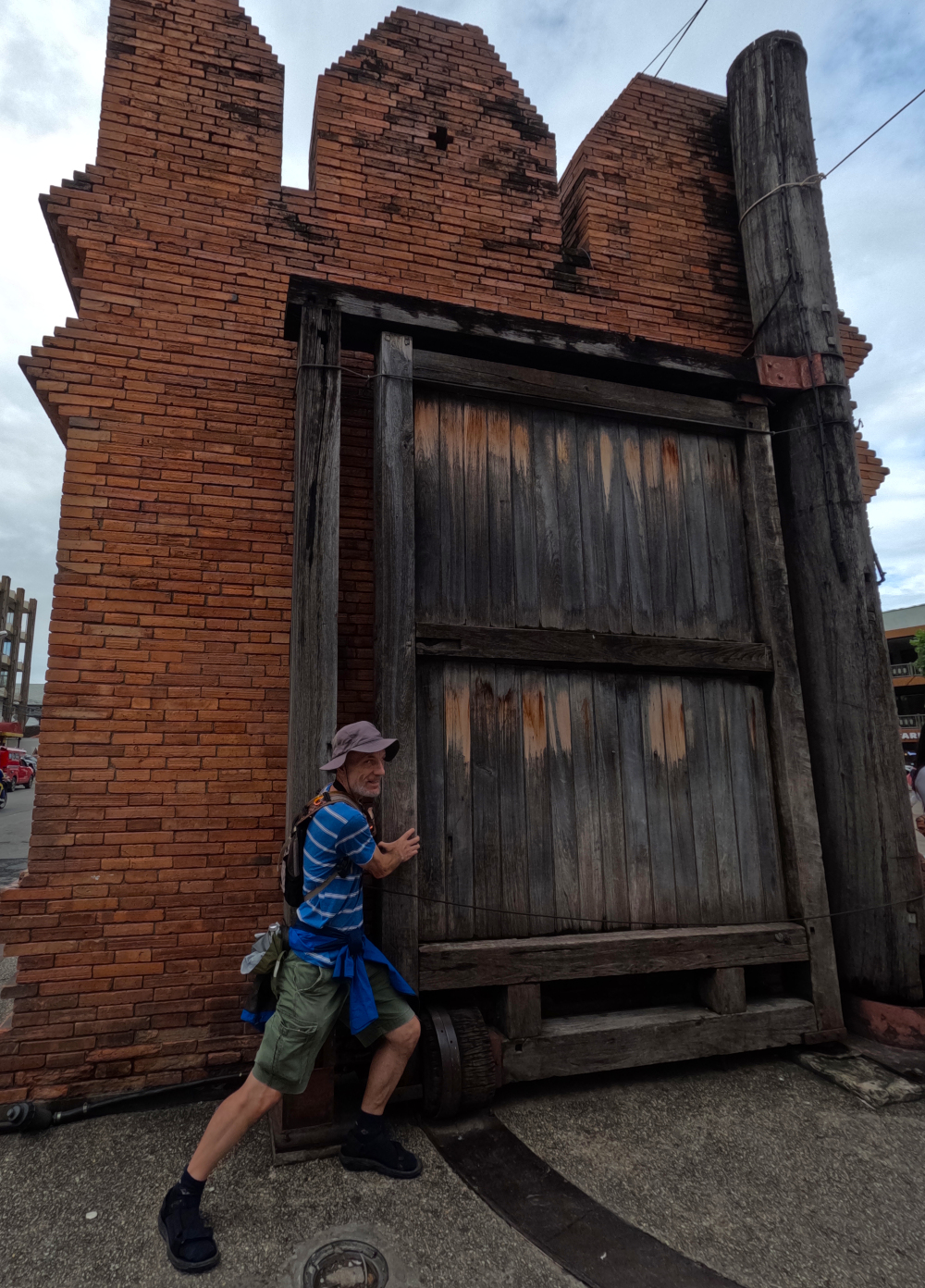
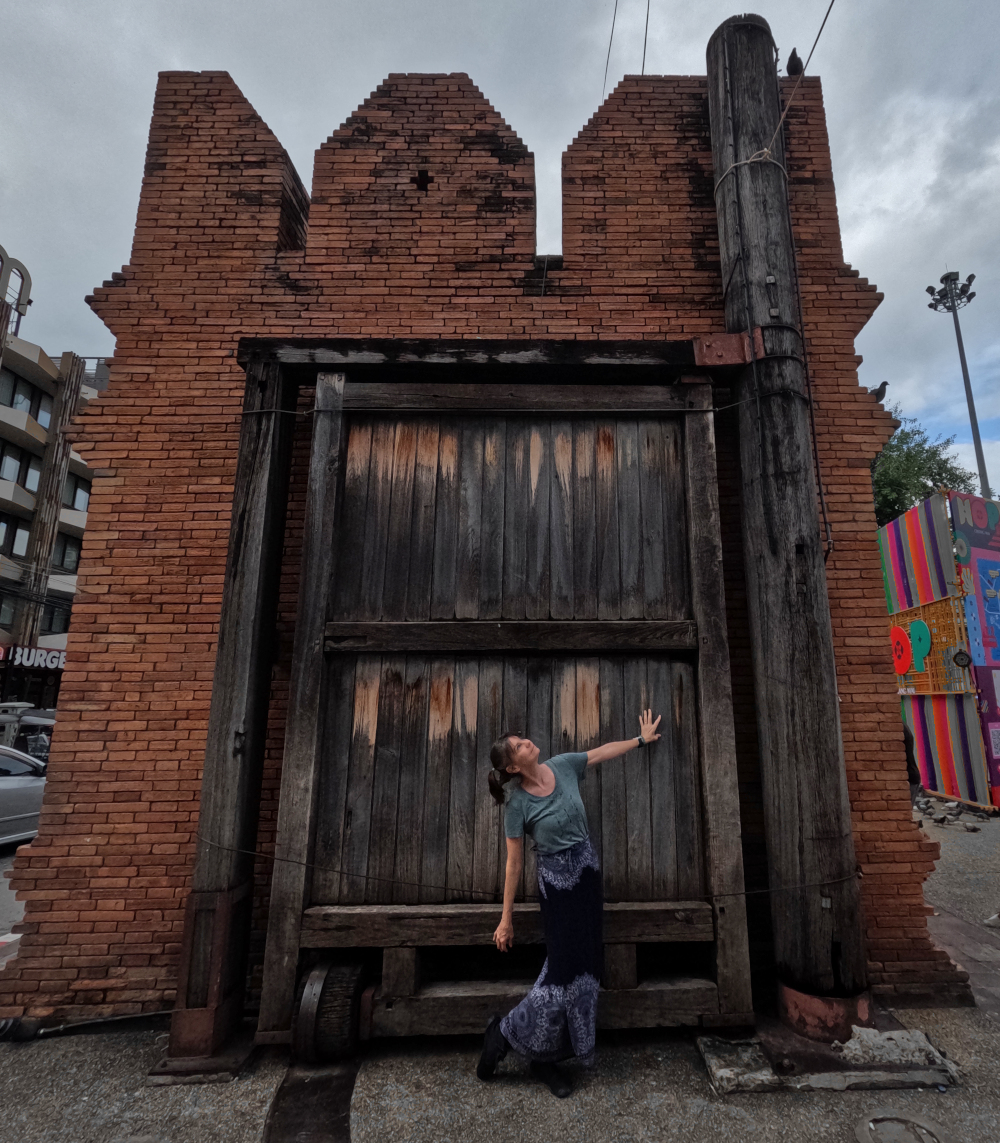
On our way between wats, we come upon Tha Phae Gate, which historically was the main entrance to the city for monks, traders, and diplomats. Today, it’s a magnet for silly tourists to ham it up.
Wat Lan Eng
Finally, we come to one more wat, Wat Lan Eng. It’s a small one, so we’re not exactly ending with a bang. It doesn’t get much press, but it’s worth visiting, so we did.
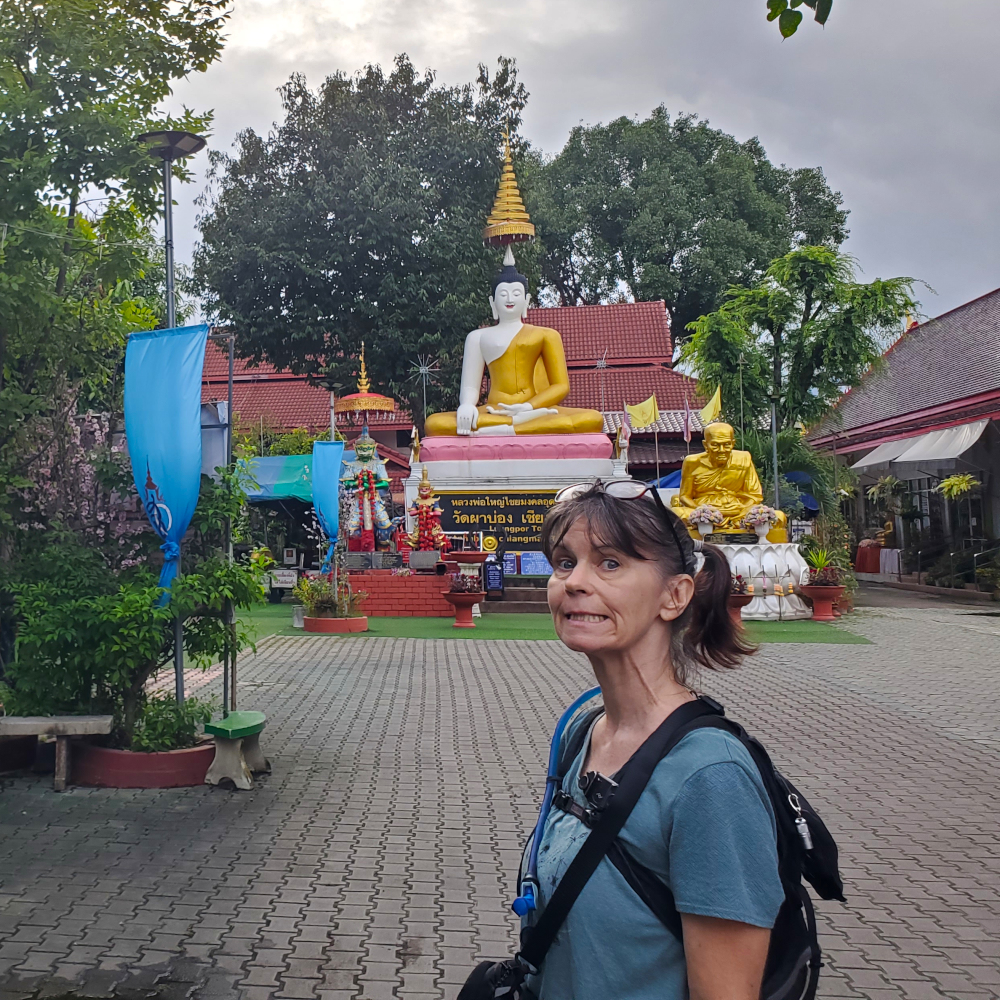
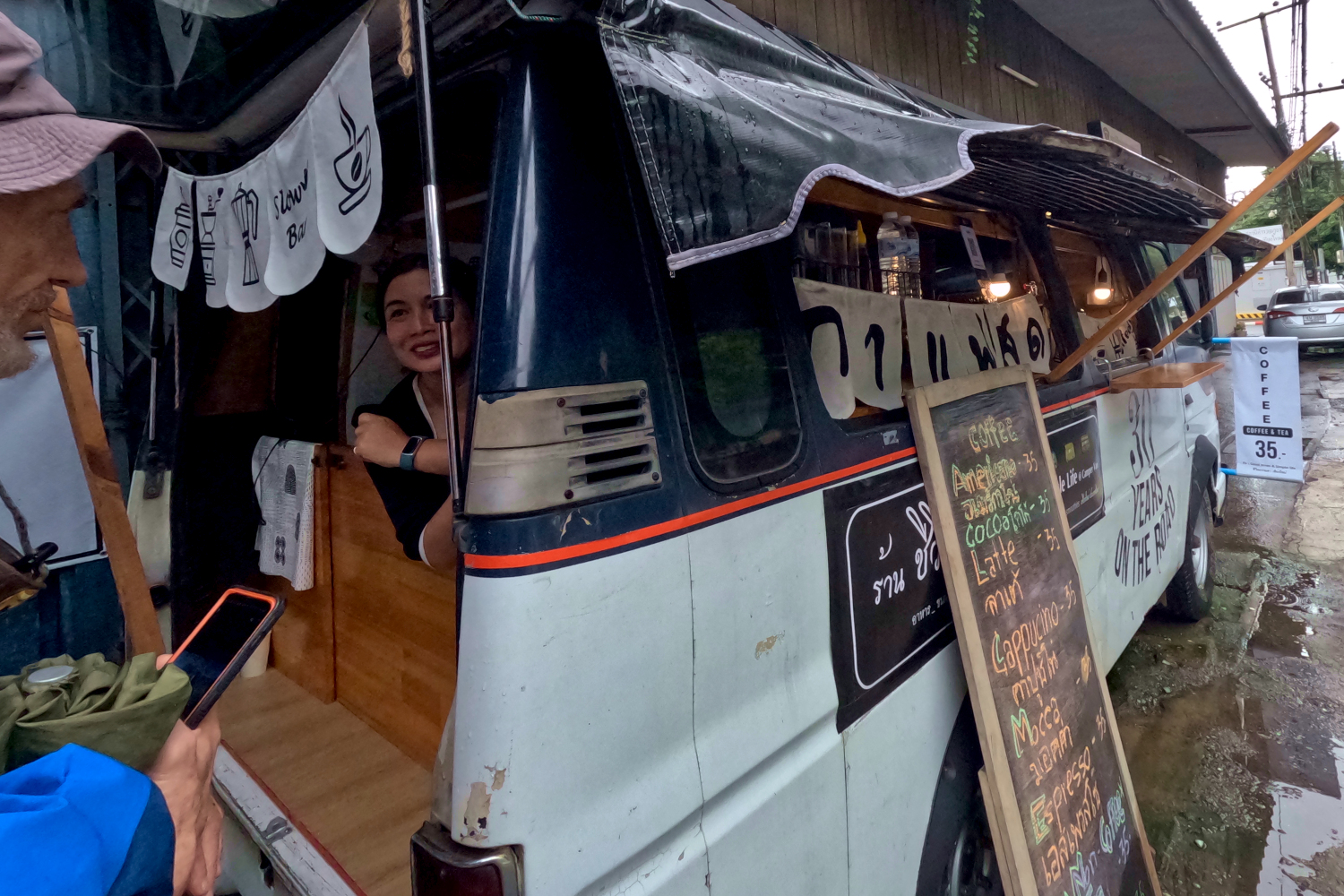
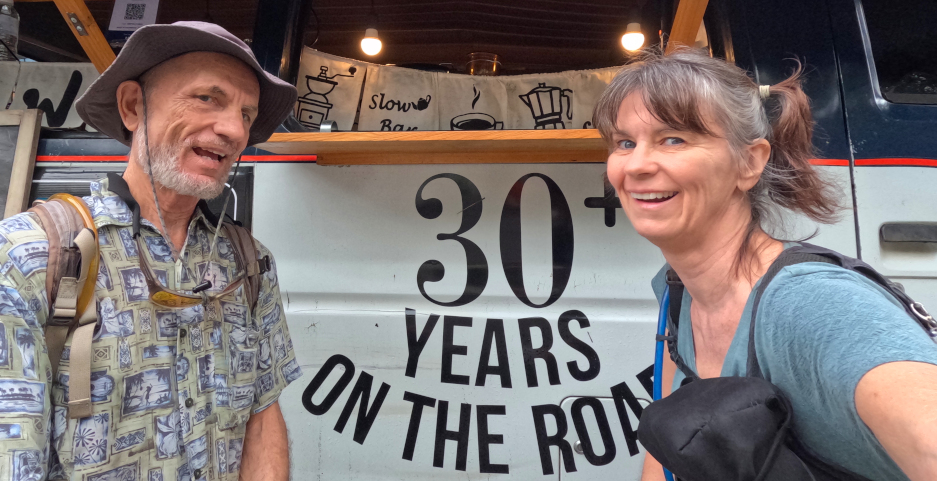
At one point after exiting a wat, we notice that across the street is a food vendor operating out of the side of a specially fitted vintage camper van. On the side of it are the words “30+ Years on the Road”. Naturally we have to go over and talk to the proprietors, because that slogan perfectly describes us. We spent 30 years touring the U.S. with our theatrical company, and now we are extending the tour indefinitely — and extending the roads to encompass the globe.
9/23-24/2024
Some Tips for Visiting Wats in Chiang Mai:
- Temple Etiquette is Key: Always remove your shoes before entering temple buildings (unless a sign specifically indicates otherwise, as noted in the blog post!). Dress modestly, covering your shoulders and knees. This applies to both men and women.
- “Wat” Means Temple: You’ll hear this word constantly. It simply translates to “temple” in Thai.
- Tuk-Tuks and Songthaews are Your Friends: These are common modes of transport. Negotiate the price with a tuk-tuk driver before you get in. Songthaews (red trucks) operate like shared taxis, often with set routes or negotiable fares for specific destinations.
- The “Wai” is Important: The “wai” is the traditional Thai greeting, performed by pressing your palms together in a prayer-like gesture at chest level, with a slight bow. The higher your hands and the deeper your bow, the more respect you are showing.
- The Elephant is a Symbol of Thailand: Elephants hold a significant place in Thai culture, symbolizing strength, wisdom, and good fortune. If you visit an elephant sanctuary, choose an ethical one that prioritizes the elephants’ welfare.
- Be Mindful of Sacred Objects: Never touch Buddha images or other sacred objects without permission. When sitting, avoid pointing your feet towards a Buddha image.
 world travel with a theatrical flair
Leave a comment