

After two months of being off from teaching, and taking some time to do some traveling and adventuring, we’re ready to go back to work. Our next position is at a school in Raiwala, a village three hours north of Delhi. It’s quite a switch going from the major metropolis of Delhi to the tiny village of Raiwala.
But first we have to get out of Delhi, which turns out to be not so easy. It’s difficult to get a tuk-tuk to the train station, because the street is blocked off with a barricade, evidently because of the construction of the new metro line. When we summon a tuk-tuk, the driver comes to the barricade and waits for us there, even though it’s about a block away from our requested pickup point.
Finally we figure out that’s where he is, and hustle down to meet him, dodging cows and their pies as we go. We load our things into his tuk-tuk, and as we are doing so, it starts rolling backward. and we have to hold it. We laugh, considering this all just part of the experience.

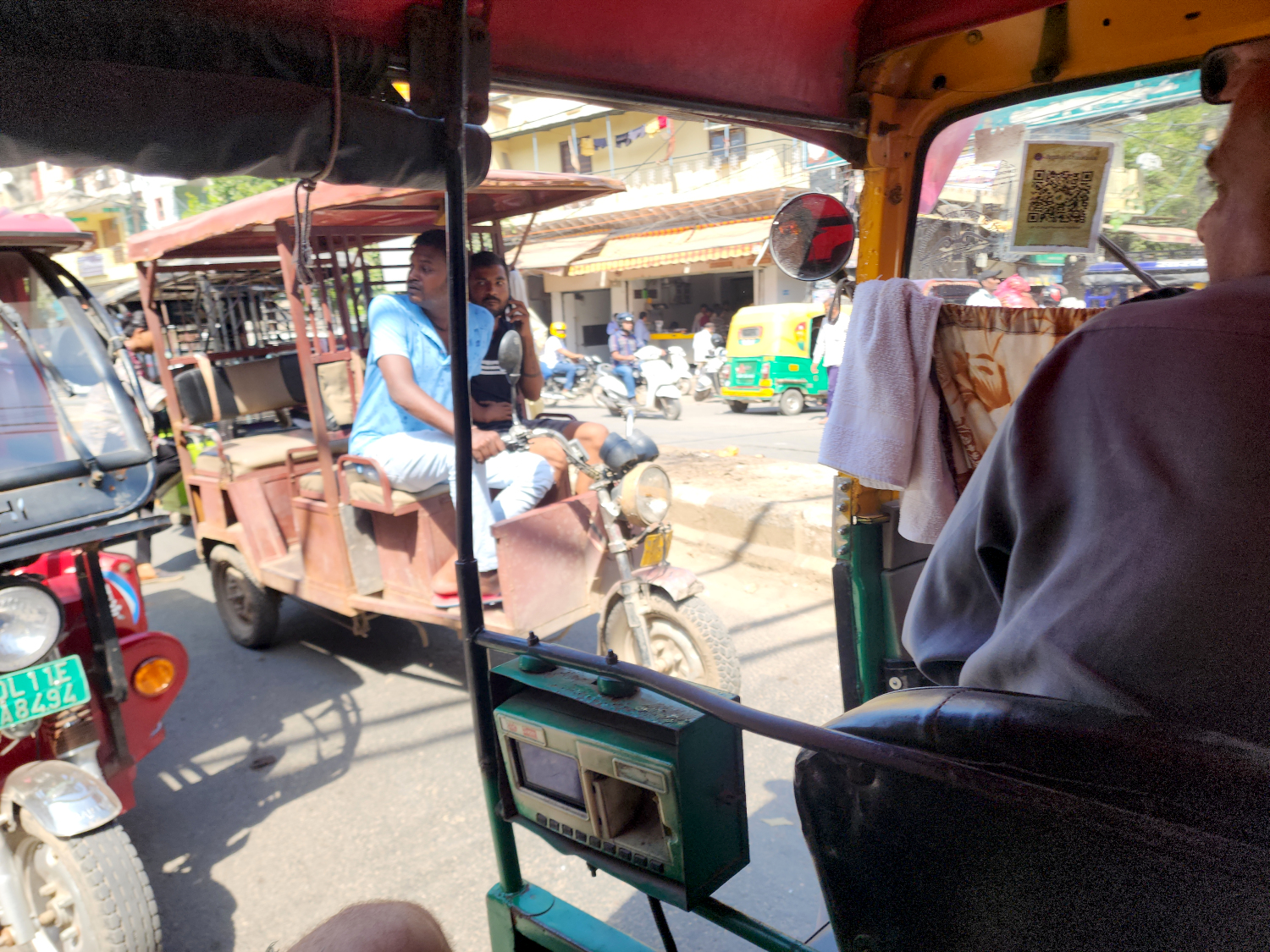
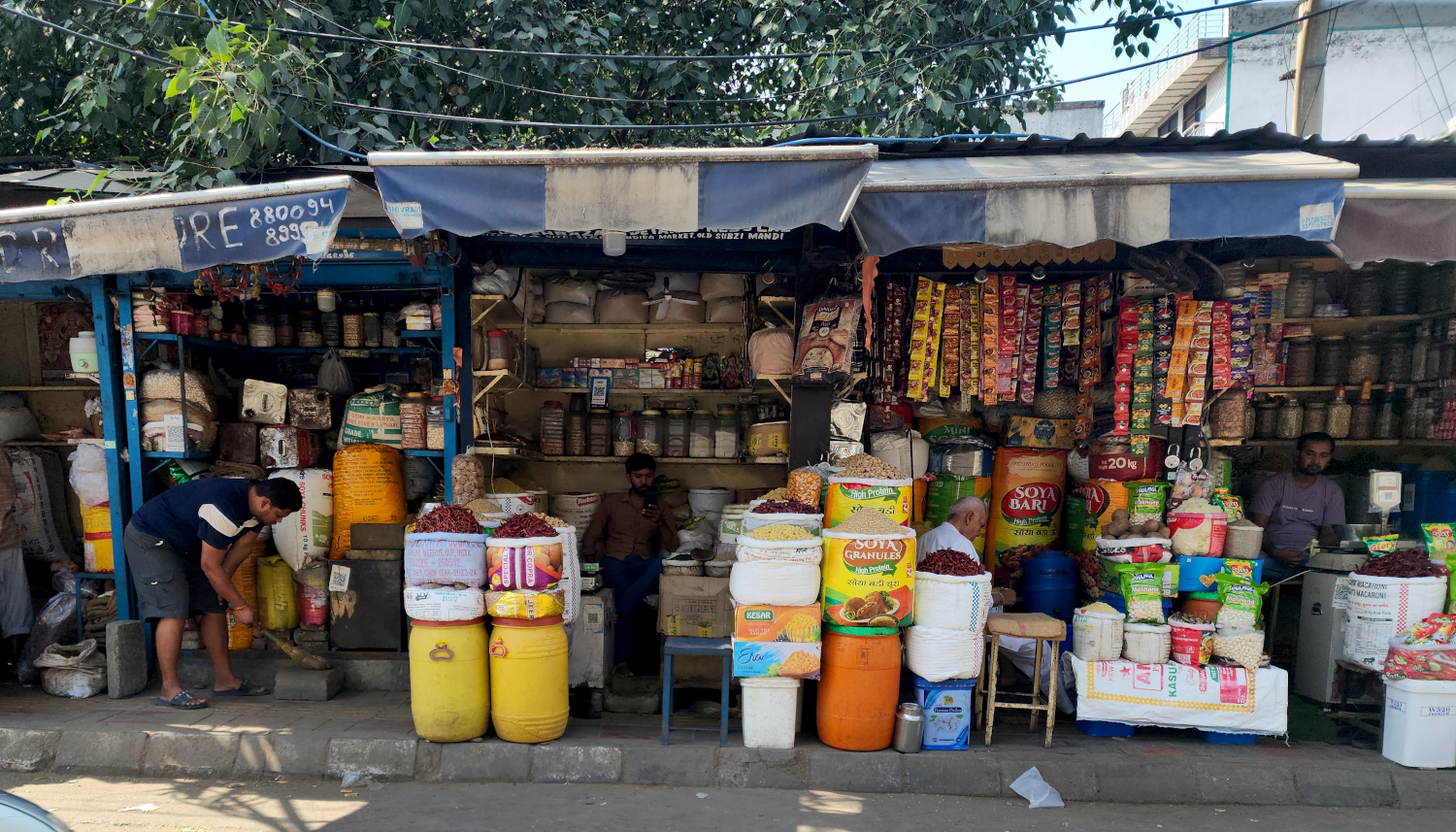
The traffic is agonizingly slow, and actually comes to a dead standstill for several minutes. Our driver exchanges angry words in Hindi with a motorcyclist, who apparently tells him calmly to calm down.
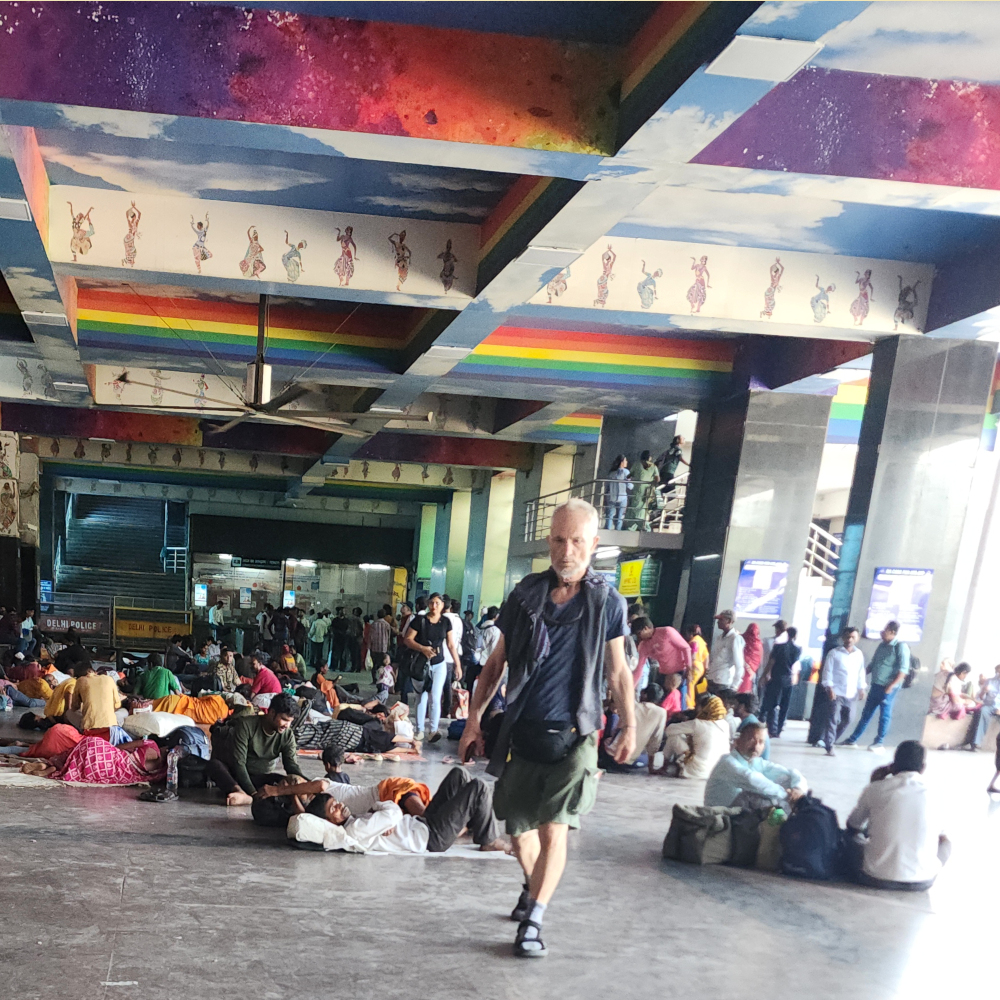
We still arrive at the station in plenty of time; in fact, it’s about three hours until our train is due. So we try to stake out a place to sit, which is a bit problematic. The few benches are mostly taken up, and as usual in India, people are sitting or sleeping all over the floor. There’s supposed to be a lounge with air conditioning, but we can’t locate it; apparently it’s upstairs, in a section now blocked off. But we do find an empty bench to wait on.
A man who is seemingly an employee of the station comes along and tells us we should check at the window to see if the train is on time, because the previous day it was 6 hours late. So Dennis heads up to the window, where several people are in line, but a man waiting there informs him that the train is at least 3 hours late, and urges him to use the time to visit a “tourist center” that is only “5 to 7 minutes” away by tuk-tuk. He starts telling all about the festivals in India, and is really really promoting the tourist center — he no doubt receives some kind of kickback.
Getting more and more suspicious, Dennis shakes off the gabby fellow and actually goes to the window to get the official word for himself. And at the window they tell him that the train is in fact on time. And so it is.
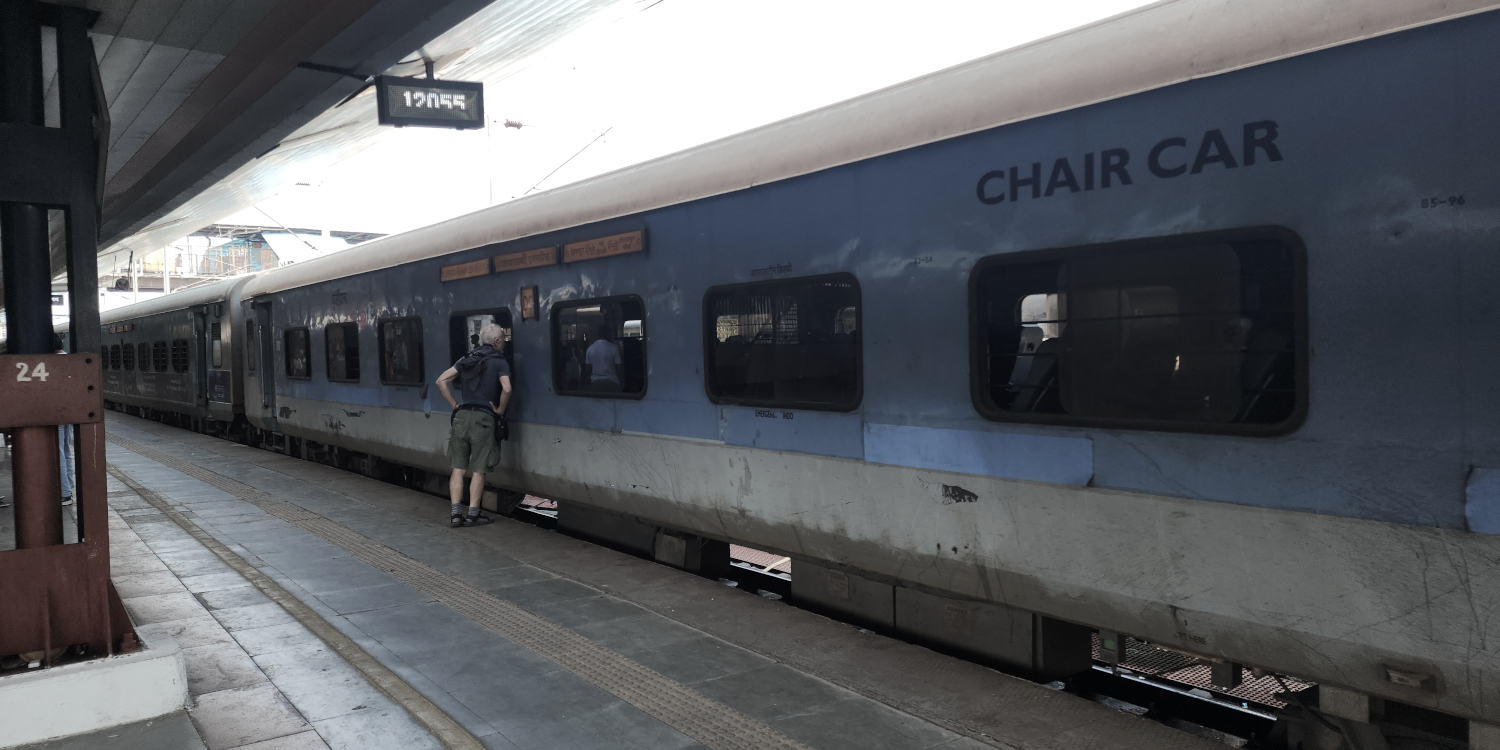
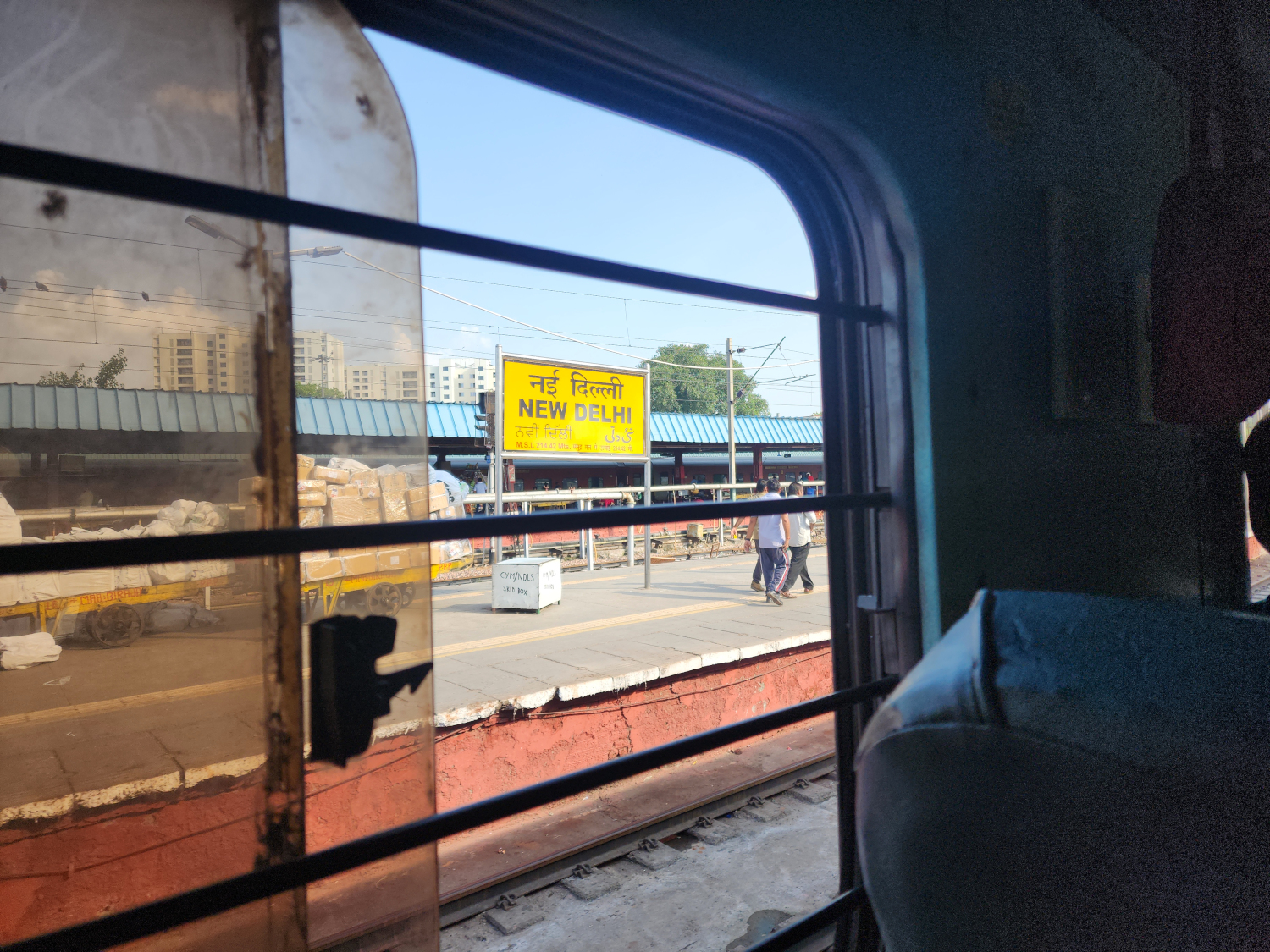
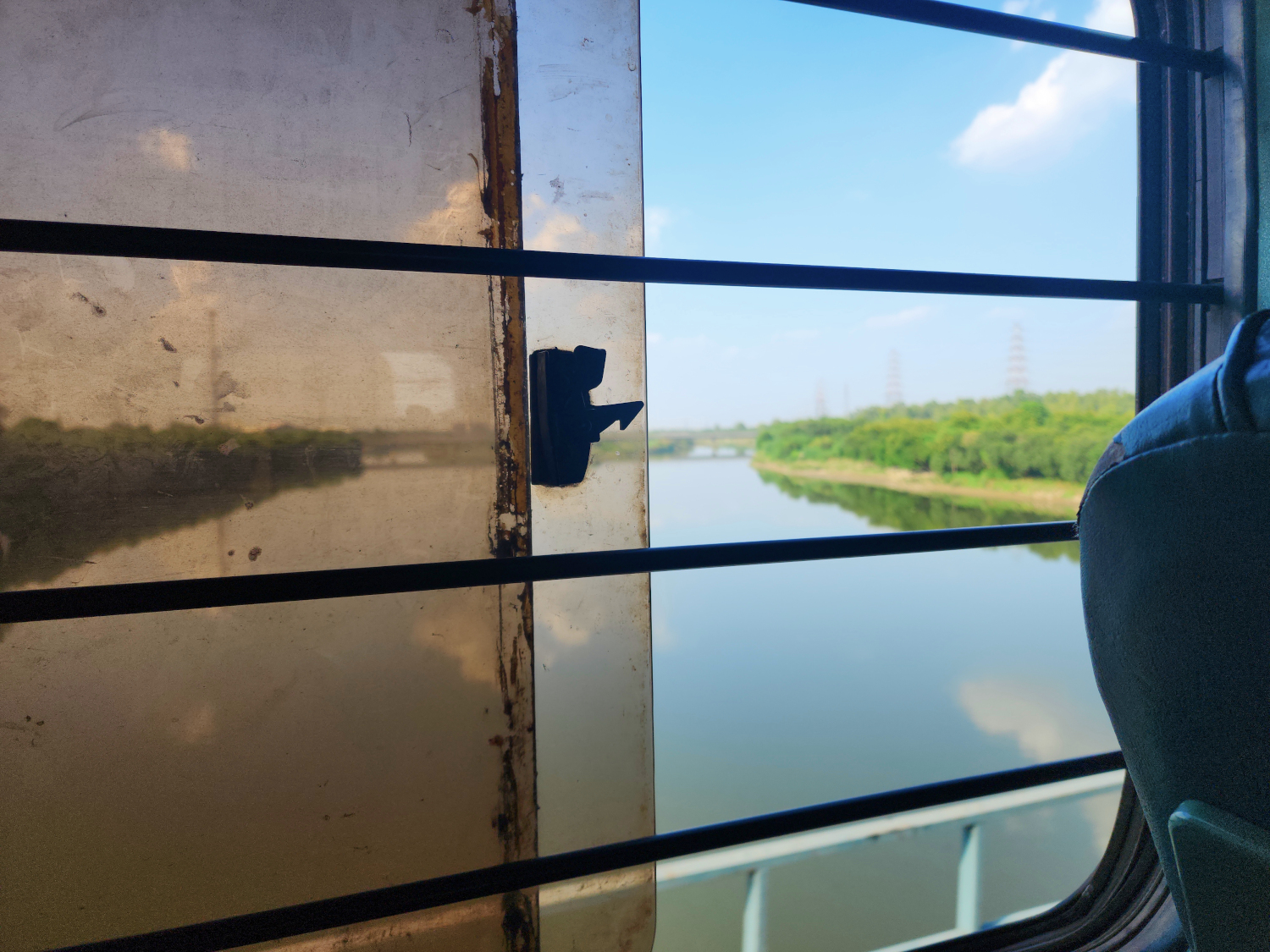

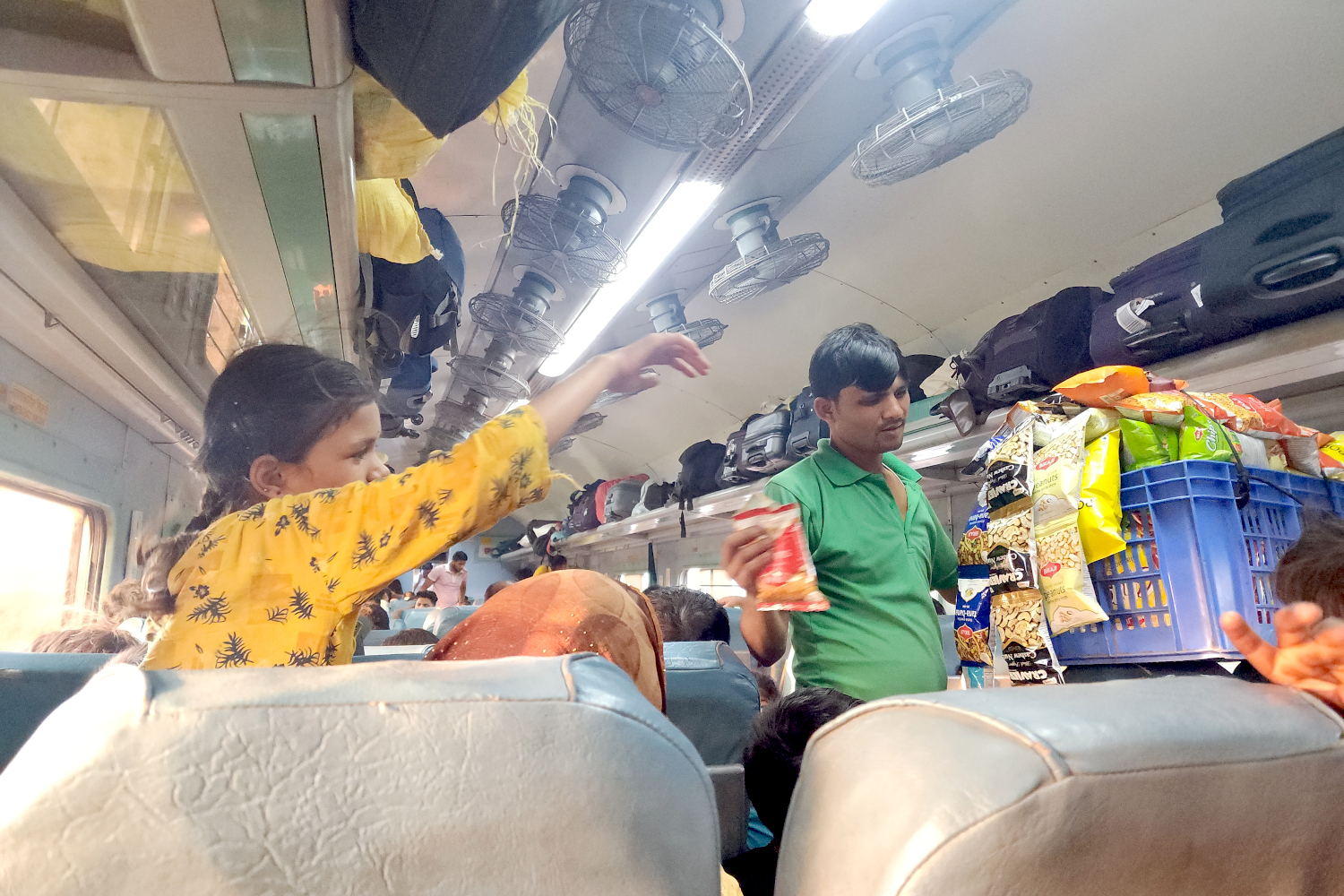
Our seats are comfortable enough, one of us on the aisle and one in the middle; and the passenger at the window, a woman headed home to Haridwar (the train’s destination) is quite pleasant. The seats in front of us, designed to accommodate three humans, are taken up by a family of six, with kids stacked on top of kids, and a couple of them even sprawled on the fold-down trays attached to the seats in front of them. As usual on Indian trains, we are booked to capacity. And before the trip is over, the toilets become quite disgusting.
Only a few minutes behind schedule. we arrive in Haridwar and emerge onto the busy street in front, where hordes of tuk-tuk drivers scramble to compete for our business. We turn them all down, believing we’ve already arranged for a driver on the local variation of Uber. But after crossing the street and poking around and waiting, and finally realizing that our driver is not coming, we try to book another one, to no avail. But by this time, the pack of drivers, all of whom had mobbed the exit to the train station because they knew a train was coming, have dissipated, and we have a hard time finding another one.
Our final destination is about 10 miles away, at the school in Raiwala where we’ll be teaching and living. Our driver does not know the way there, and has to stop and ask several people. At last we arrive at the school’s gate, where a couple of security people/ staff are on duty, at about 9:00 p.m.. The fare is 300 rupees (about $3.50), but we don’t have correct change, nor does the driver, nor do the school’s two attendants. So we end up giving him 500 (almost 6 dollars), which well may be the biggest tip, percentage wise, that he’s ever received.
One of the attendants escorts us across the road to our new quarters, on the second floor of a community clinic. We’ll be staying in one of the apartments which, we gather, were intended mostly for occupancy by doctors working at the clinic. We have a spacious two-bedroom apartment, with a large living room/ dining room area (plenty of room to exercise), a kitchen, an ironing board and iron. On the living room walls are a couple of interesting paintings. Dennis falls in love with one of them and decides to attempt replicating it in watercolor.
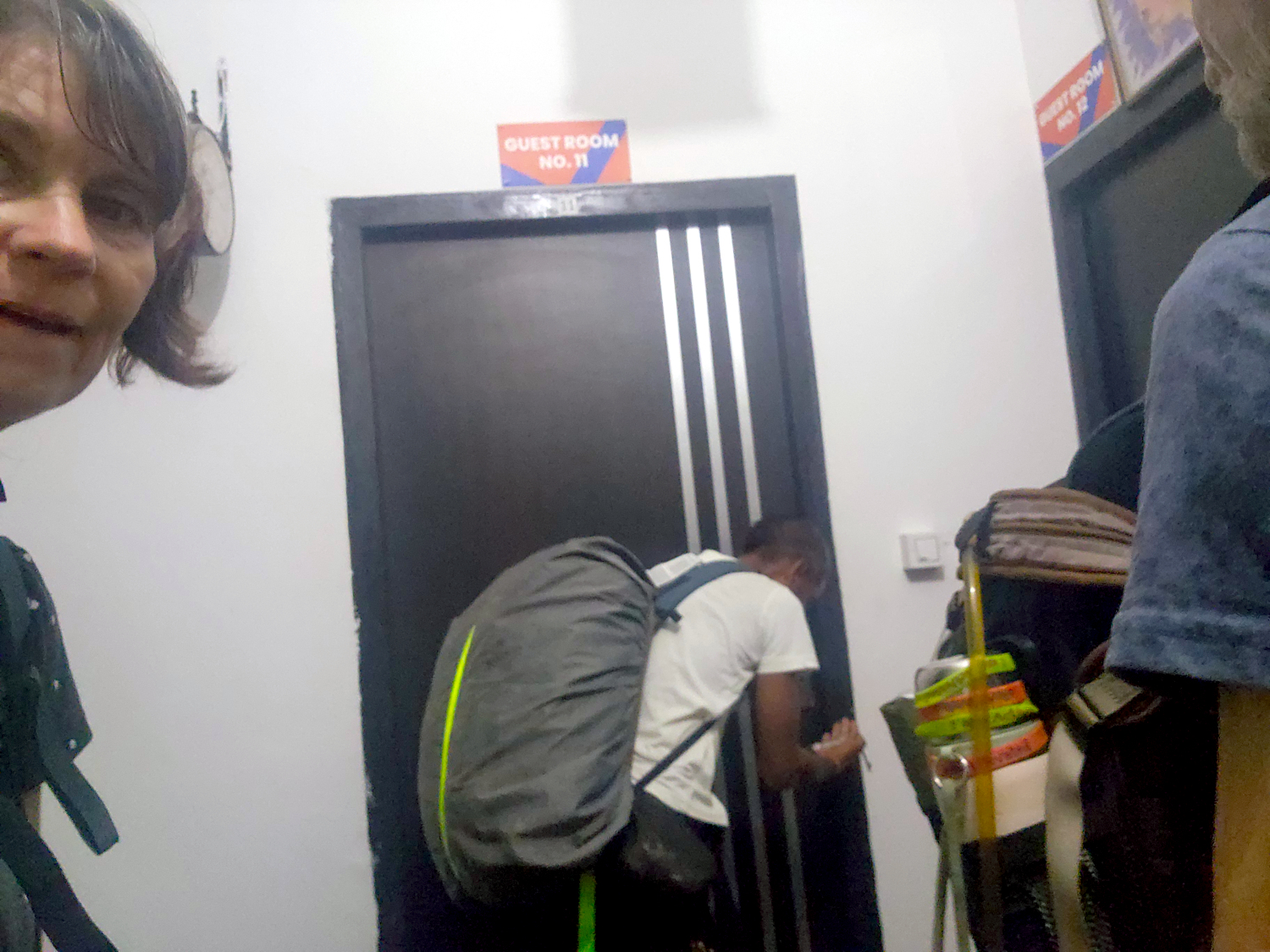
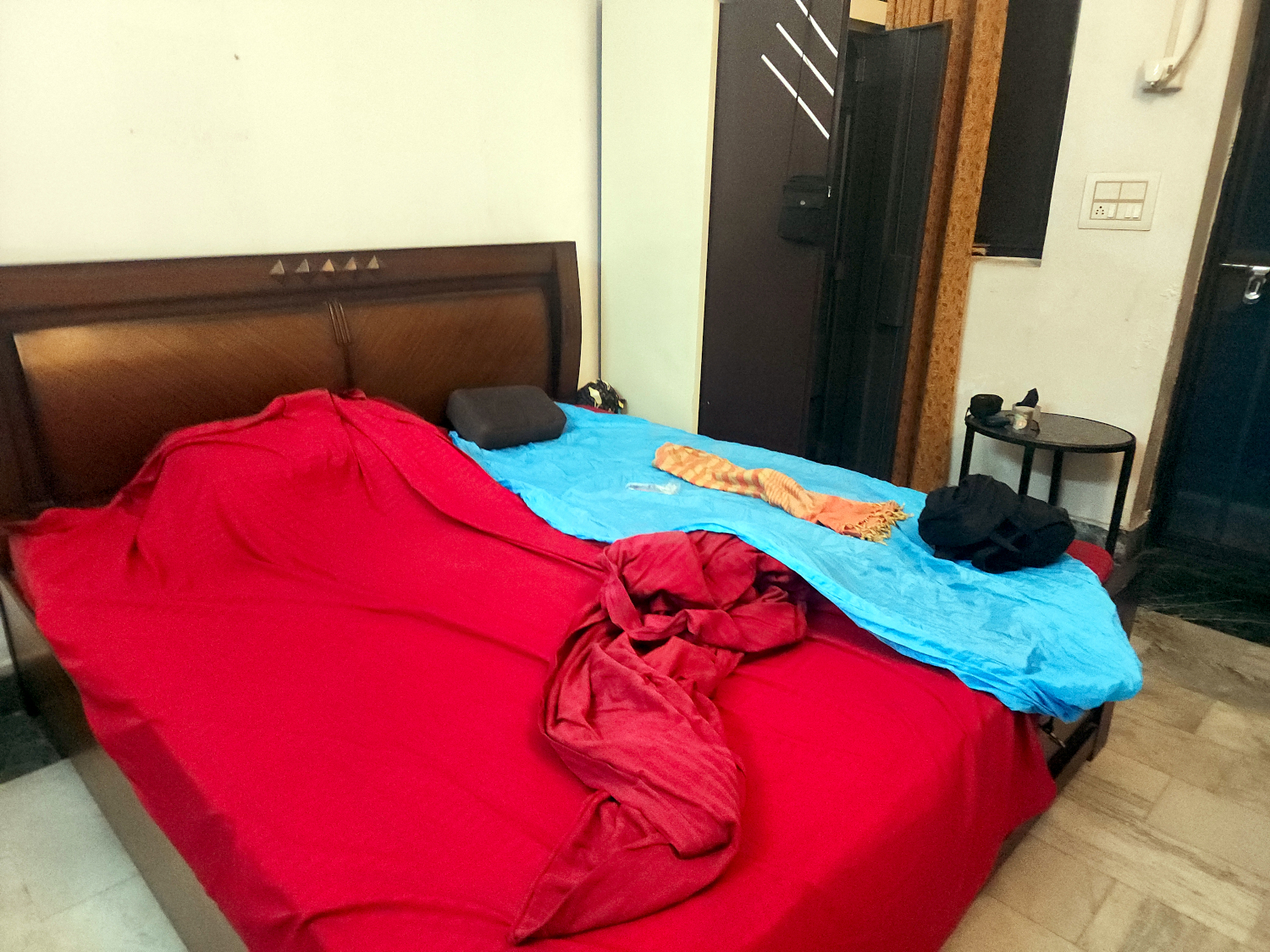
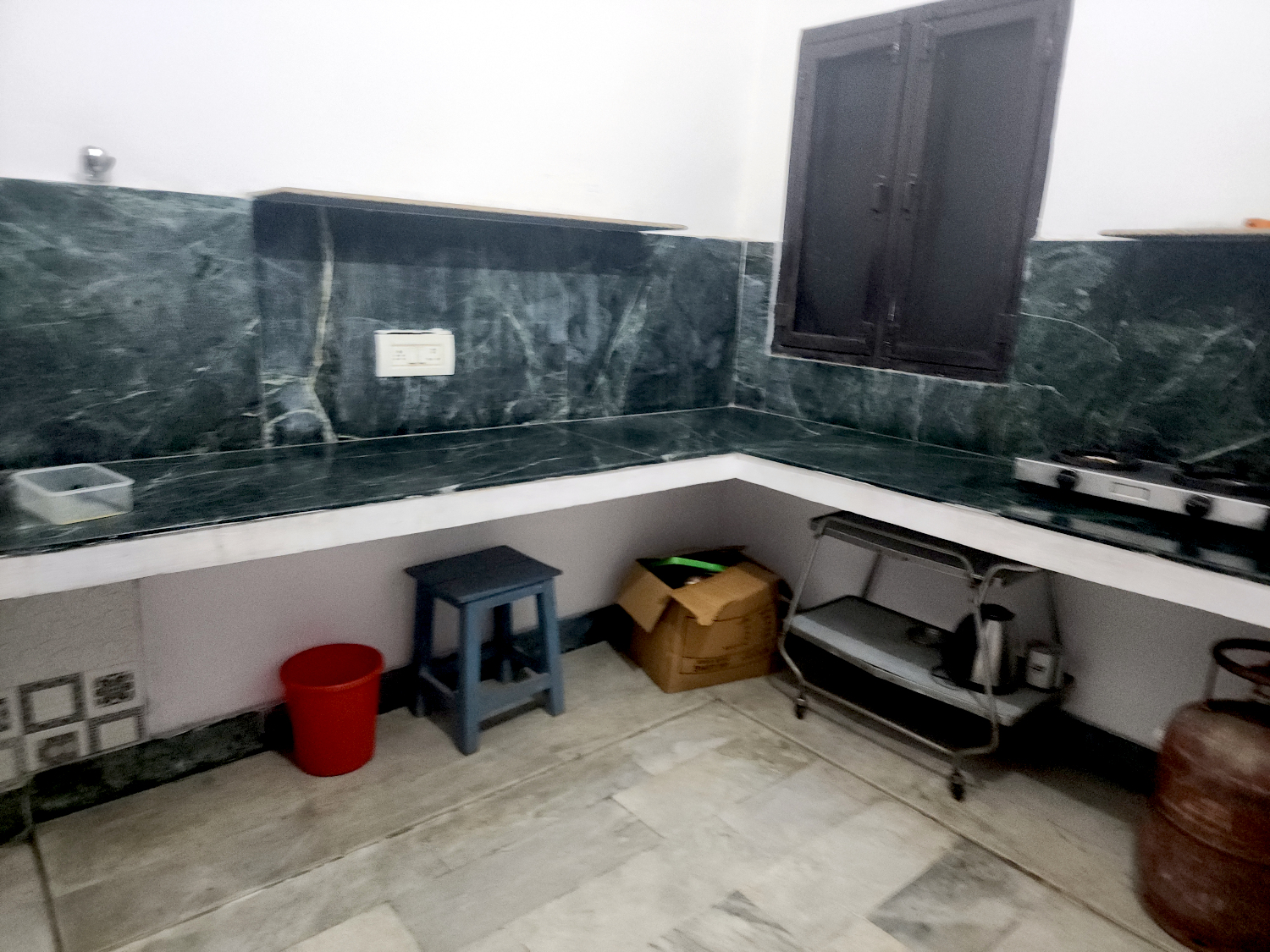

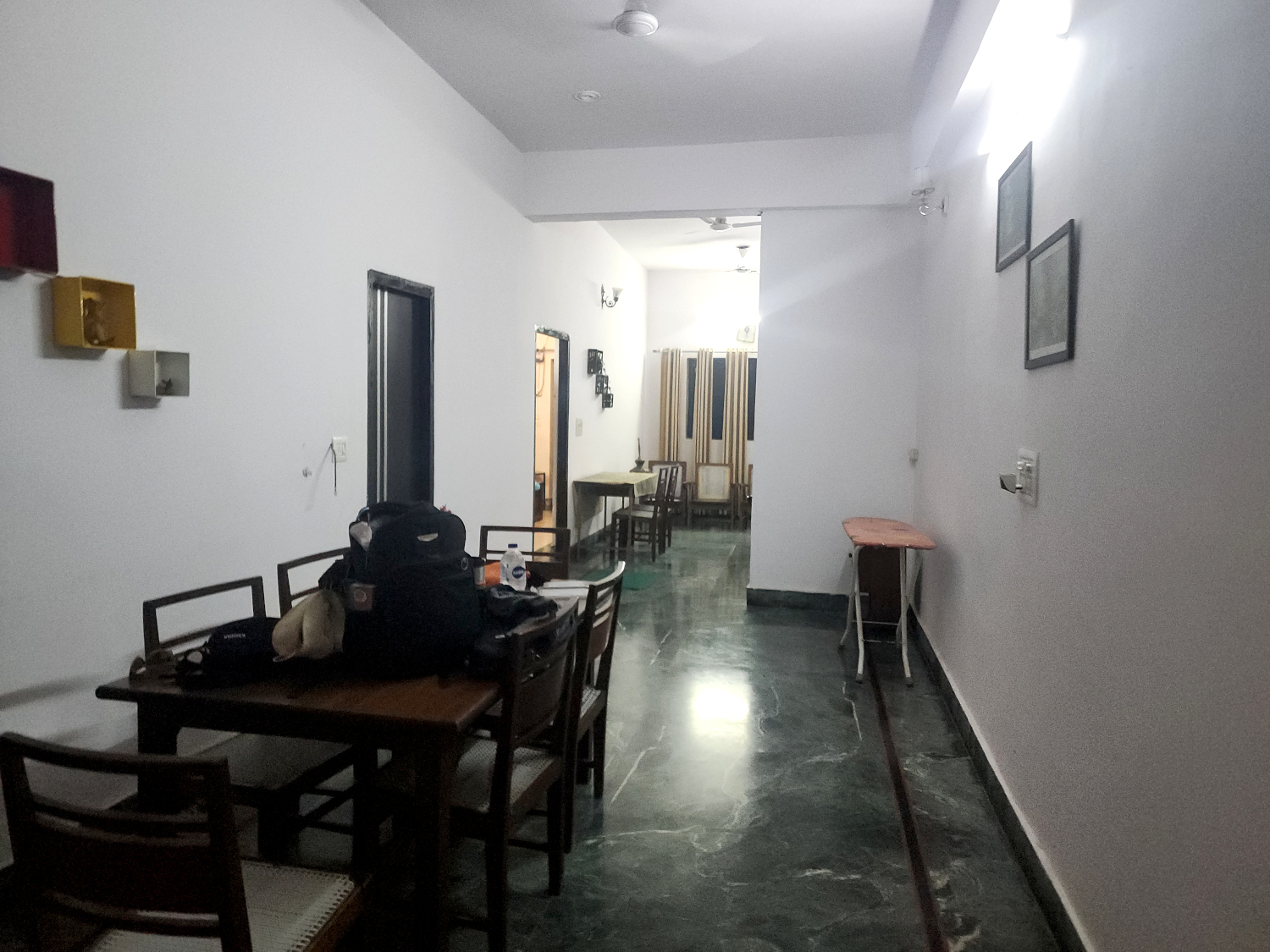

For some reason not yet clear to us, it appears we are expected to occupy the smaller of the two bedrooms. But left to our own devices, we decide that the larger one is much better suited to us. It has a wardrobe, a dresser, an air conditioner, and a ceiling fan that isn’t nearly as noisy as the one in the smaller room. (It also has a TV, which might be a selling point for many people, but is of zero interest to us.) Aside from the red bed sheets, everything is rather satisfactory.
The next morning (Sunday) we set out to round up some groceries and supplies. As the campus is somewhat rural, the nearest real stores are a couple of miles away in the village. And the nearest cities, Haridwar and Rishikesh, are about 10 miles in opposite directions.
But when we book a driver on the app, it quotes us a much higher price (500 rupees) to take us into the city than we’d been quoted the previous evening to bring us here. (This, we were to learn, is standard — local drivers want to charge you much more to take you into town, especially if you are a foreigner.) So we talk to the security man at the gate — no easy task, since his English is quite limited — and he then calls a driver he knows and arranges a ride for us for the much more reasonable fare of 400 rupees.
Then we talk to the school principal by phone, and she suggests that we wait until the next day when we meet with her, and then we con learn how to get into the city more conveniently. So we ask the guard to cancel the booking with his tuk-tuk driver friend. Unfortunately, the driver does not get the message, and still shows up, and is a bit miffed that he had to come out for nothing, and demands 50 rupees for his trouble. We can see his position, and want to keep good relations with him; and we feel that we can spare 50 rupees (about 60 cents) to keep him mollified. So we give it to him, and he leaves contented.
The arrangement we have with the school is they are to supply our meals if we want them — there is a cafeteria somewhere where we can eat along with other staff members (students bring their own lunch). So as lunchtime approaches, we ask the guard where to go and eat. He points and says in the white building. But when we go down to what looks like the white building, we don’t see any signs of grub. Turns out, as we learn from someone else, it’s actually a gray building. (Perhaps the guard didn’t know the word gray.)
But we have to return later, because lunch isn’t served until 1:30. This, we later learn, is the norm (and it seems to be typical in India, or at least many places in India): Lunch and dinner are very late by our standards, the latter not beginning until 7:30, when we geezers are beginning to turn our gaze fondly in the direction of the bed.
Anyway, we do return at 1:30 and have a meal of rice and something like vegetable stew. Not gourmet, but not bad.
In the afternoon, we walk into the village — a couple of miles — to seek out some kind of grocery store. And we find one which, though rather small, has quite a few items that form our staples, including nuts and oatmeal (which Kimberly has for breakfast every morning of her life).
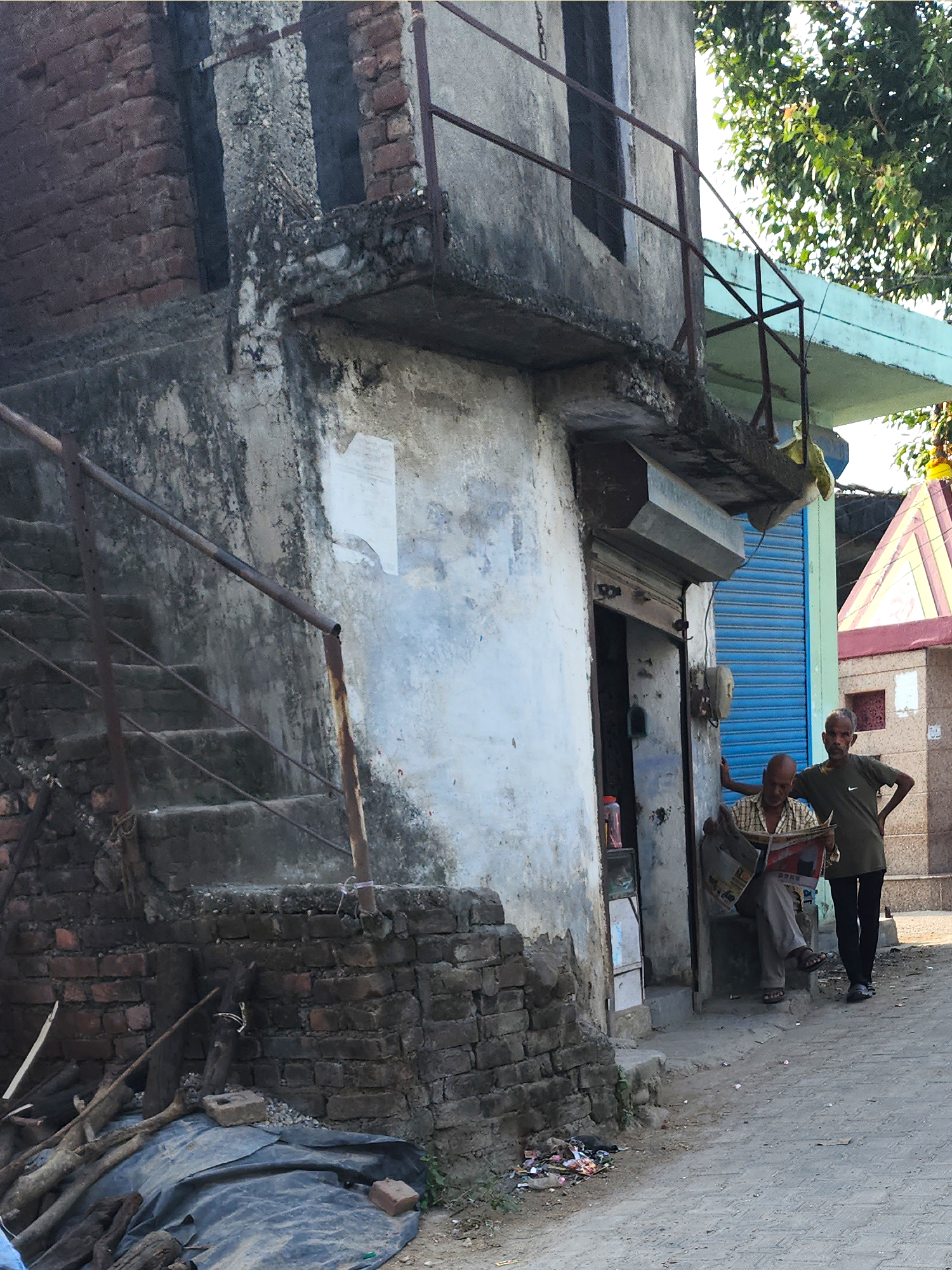
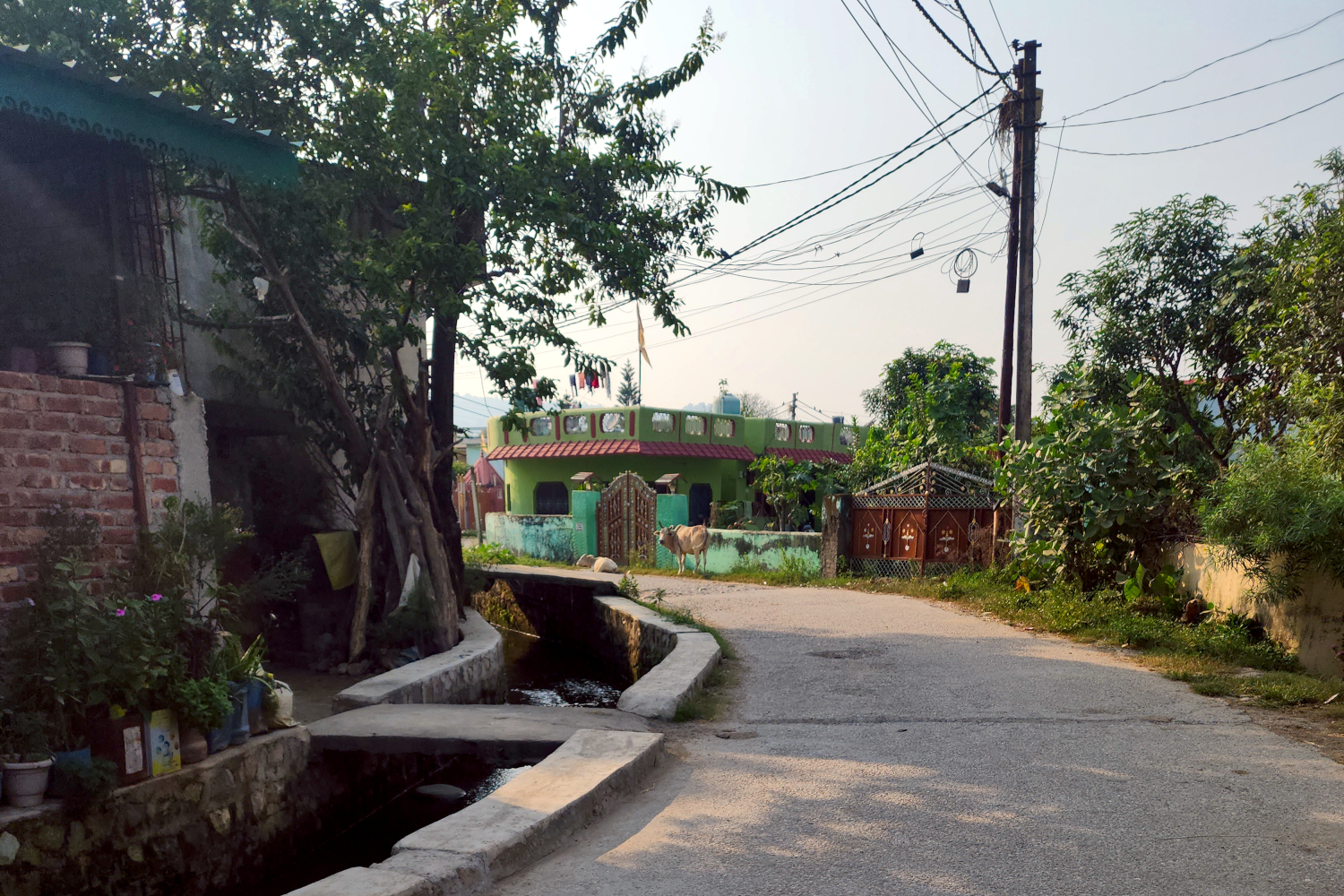
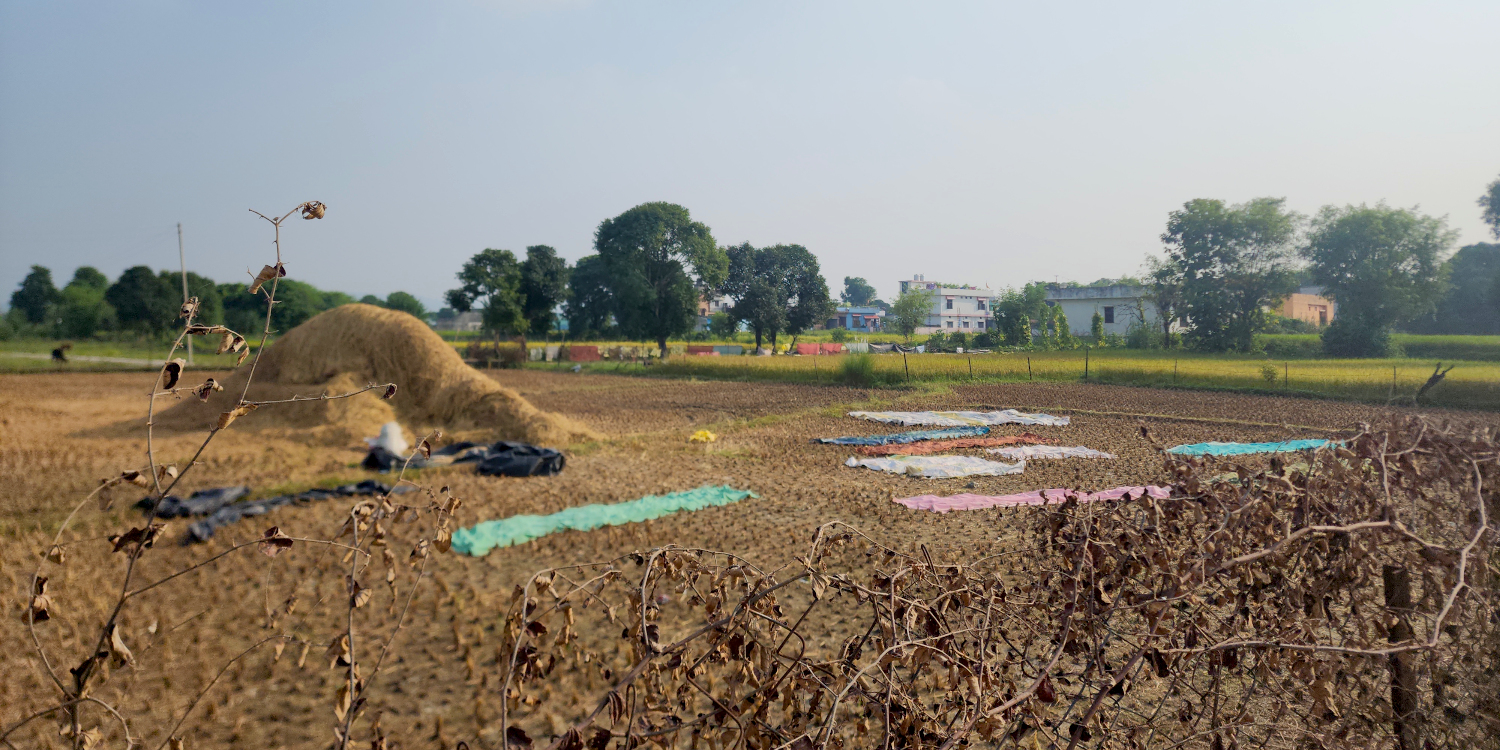

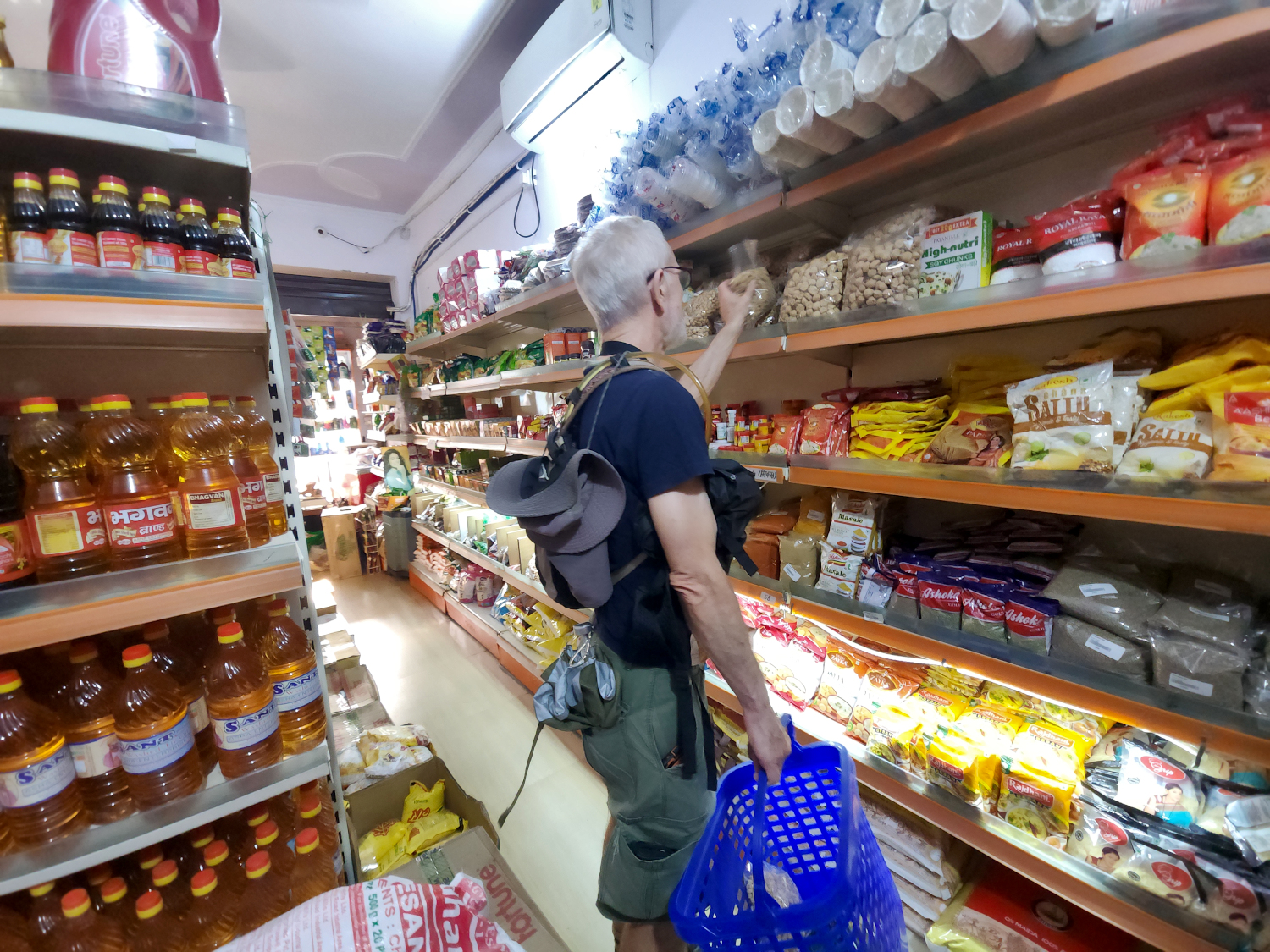
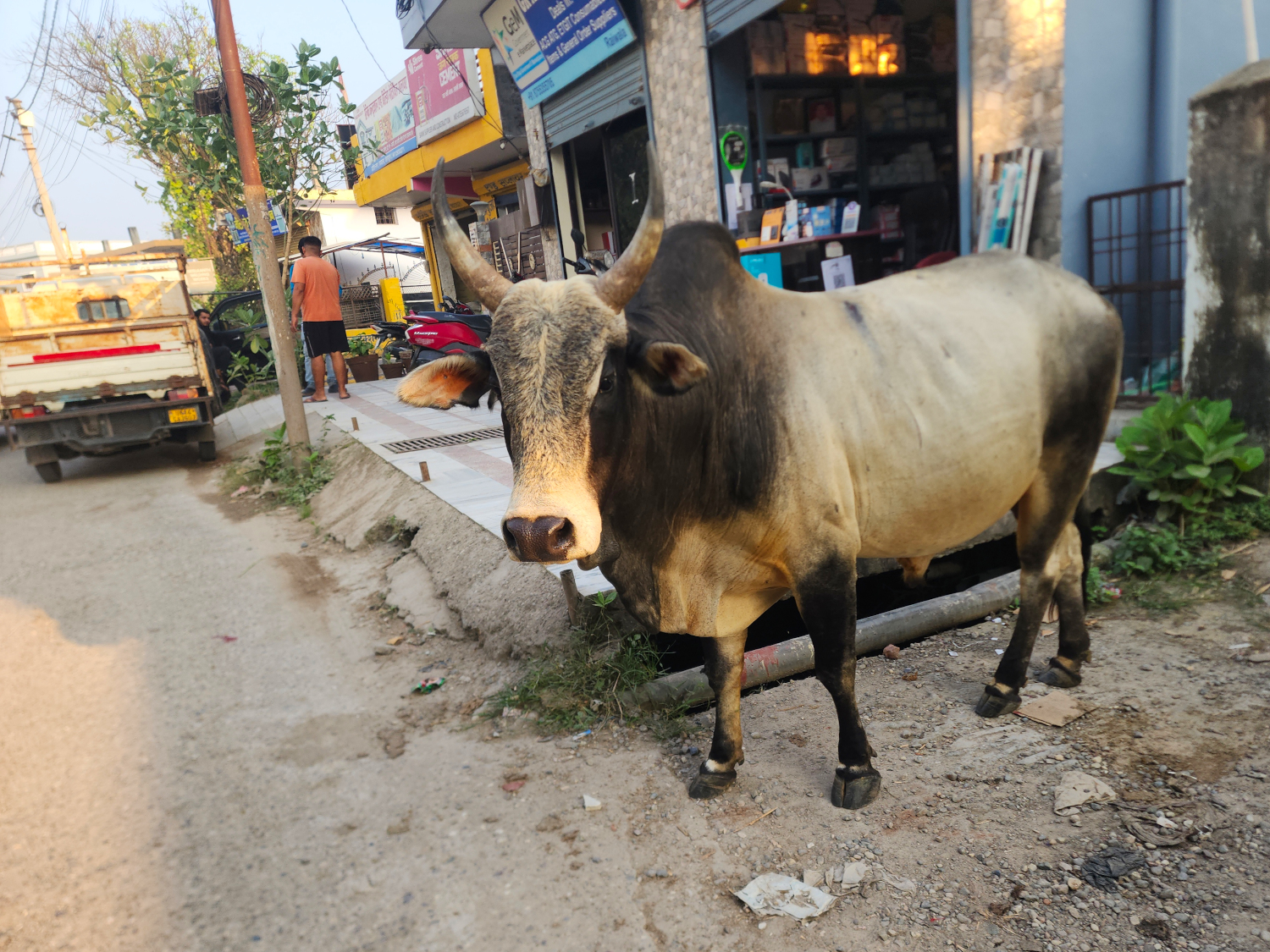
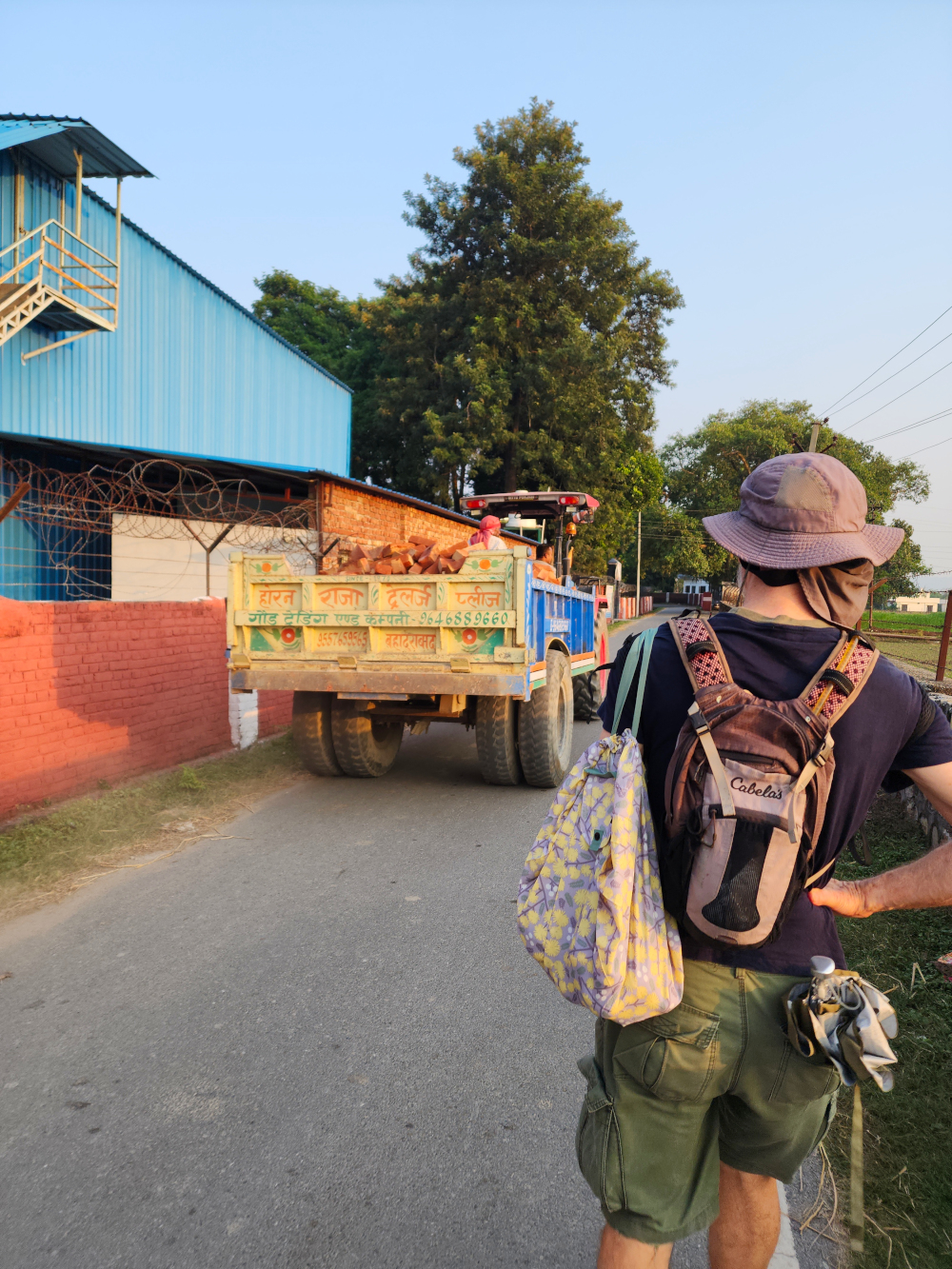

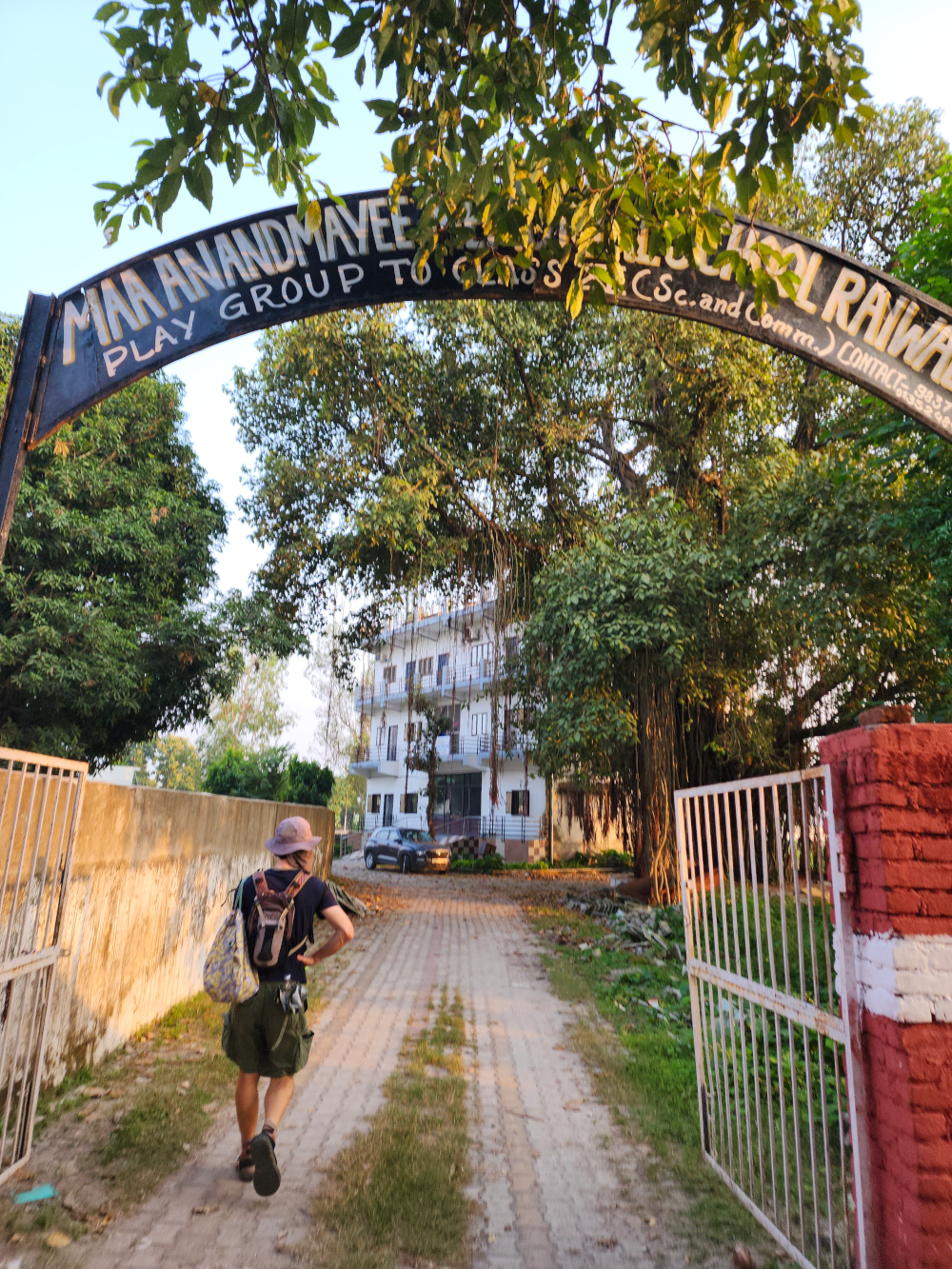
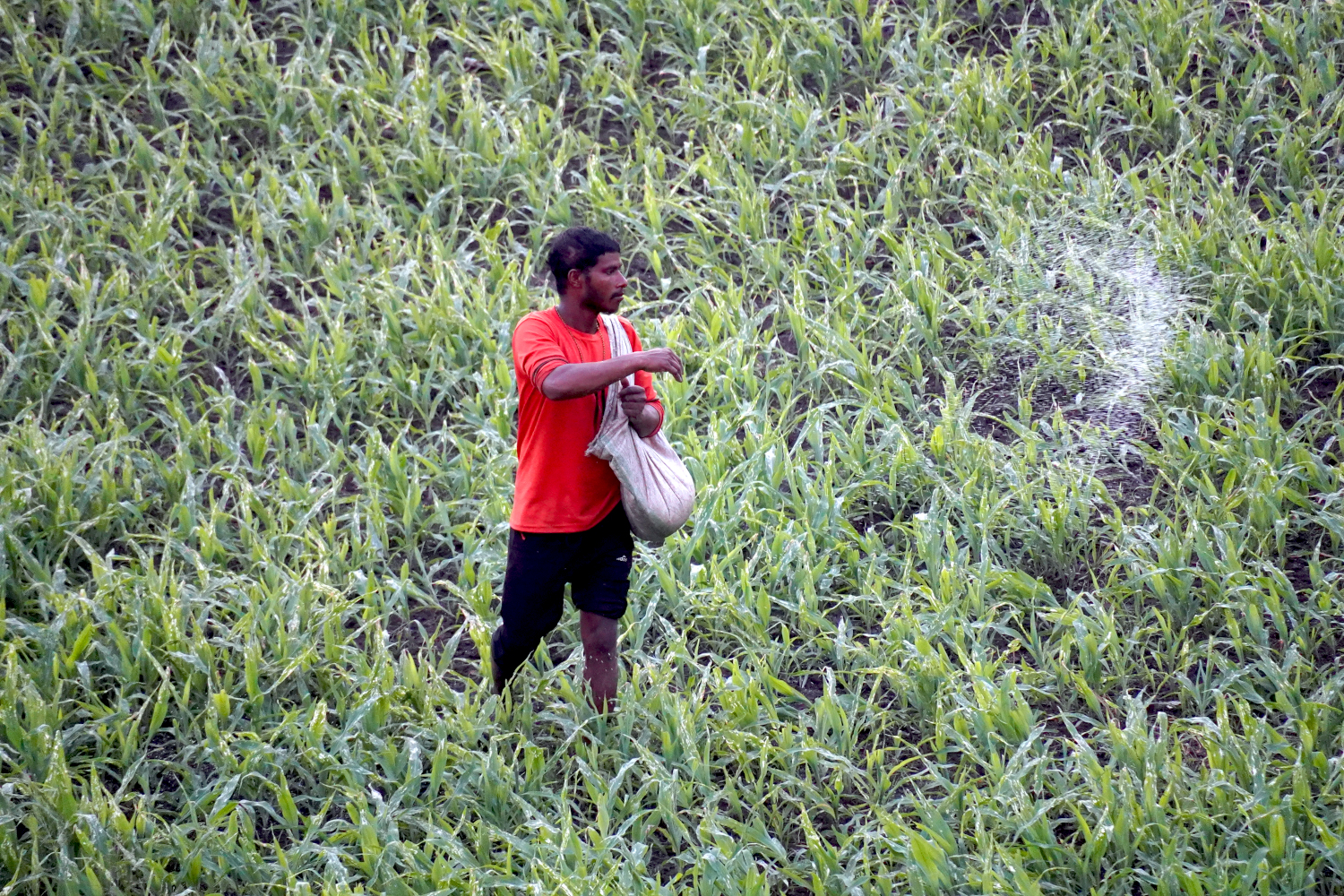
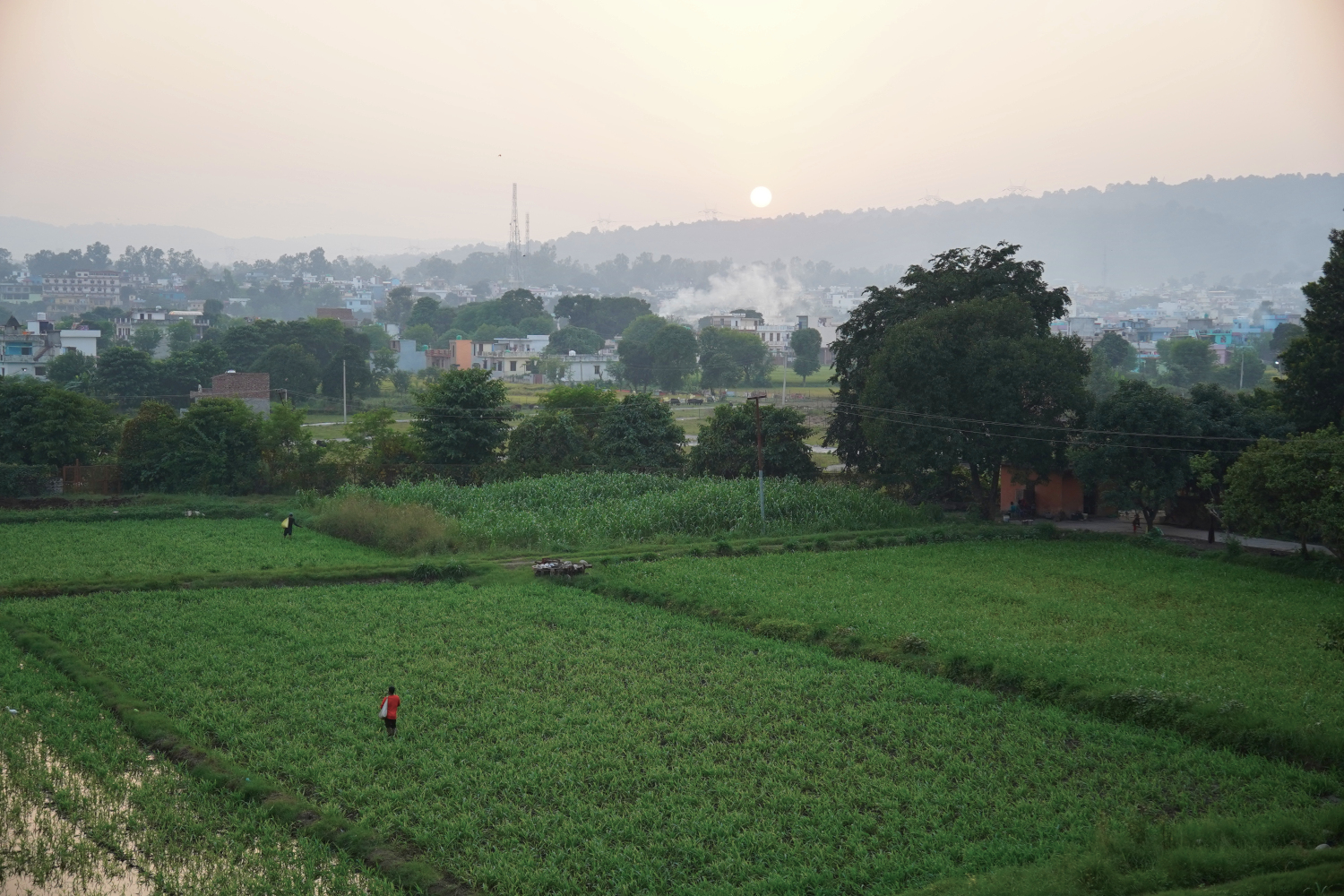
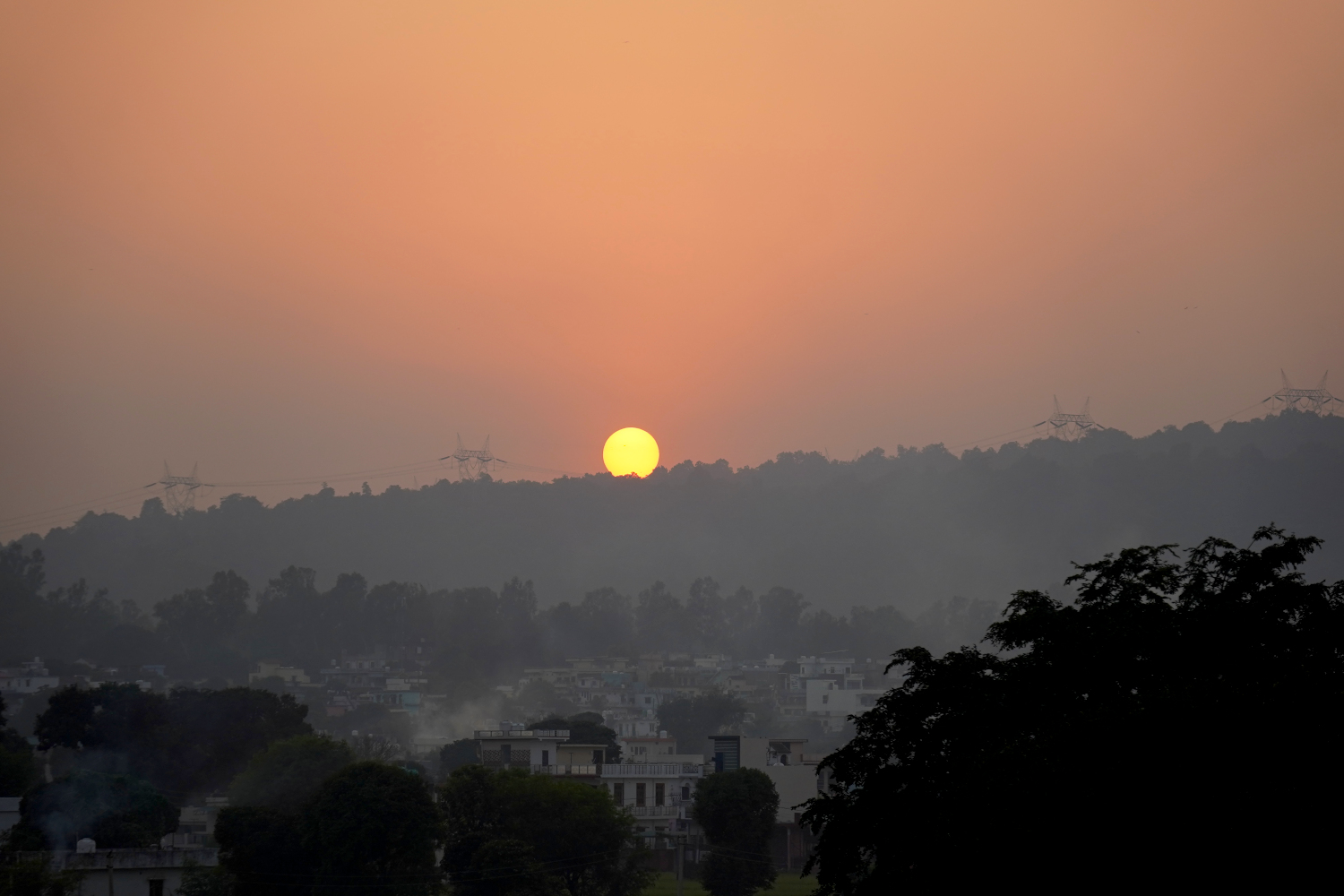
In the walk to and from this shop, we get some charming glimpses of village life, and the farming community around it. And we feel more or less prepared to tackle our new roles as teachers beginning the next day as we watch the sunset over the field from our back porch.

10/5-6/2024


 world travel with a theatrical flair
Leave a comment