

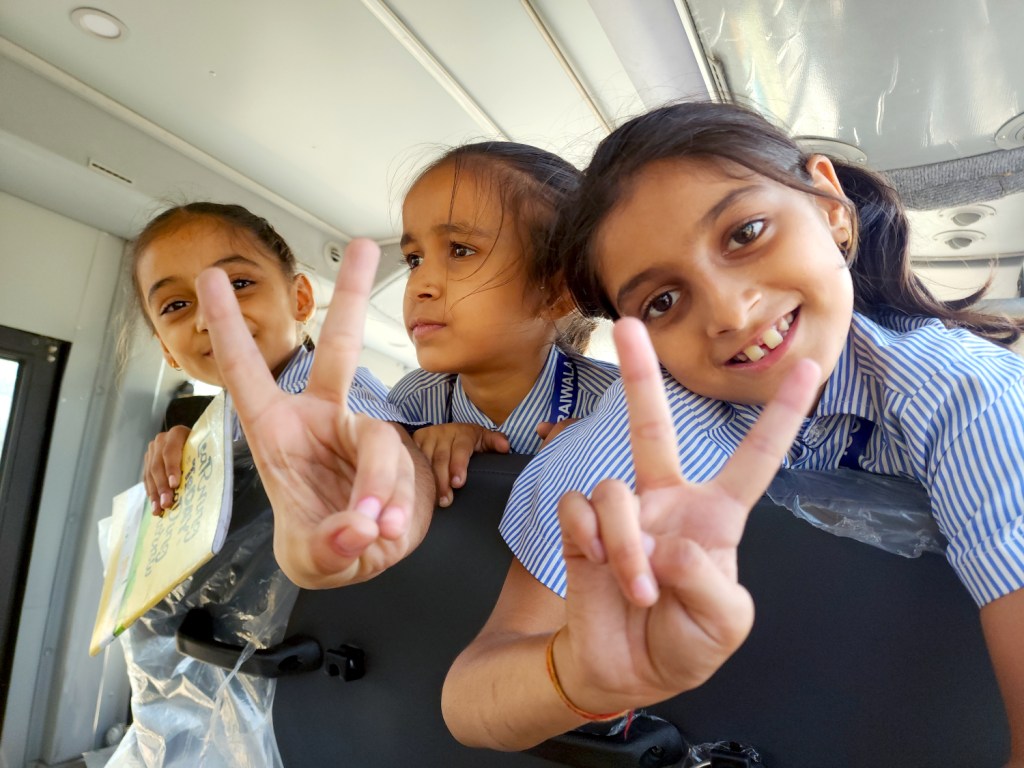
Our second week of volunteer teaching in Raiwala, India and we’re beginning to get a handle on what is expected of us as volunteer English teachers, though the schedule is still in a constant state of flux and uncertainty. But the confusion on campus is a big contrast to the serenity and charm of the surrounding community.
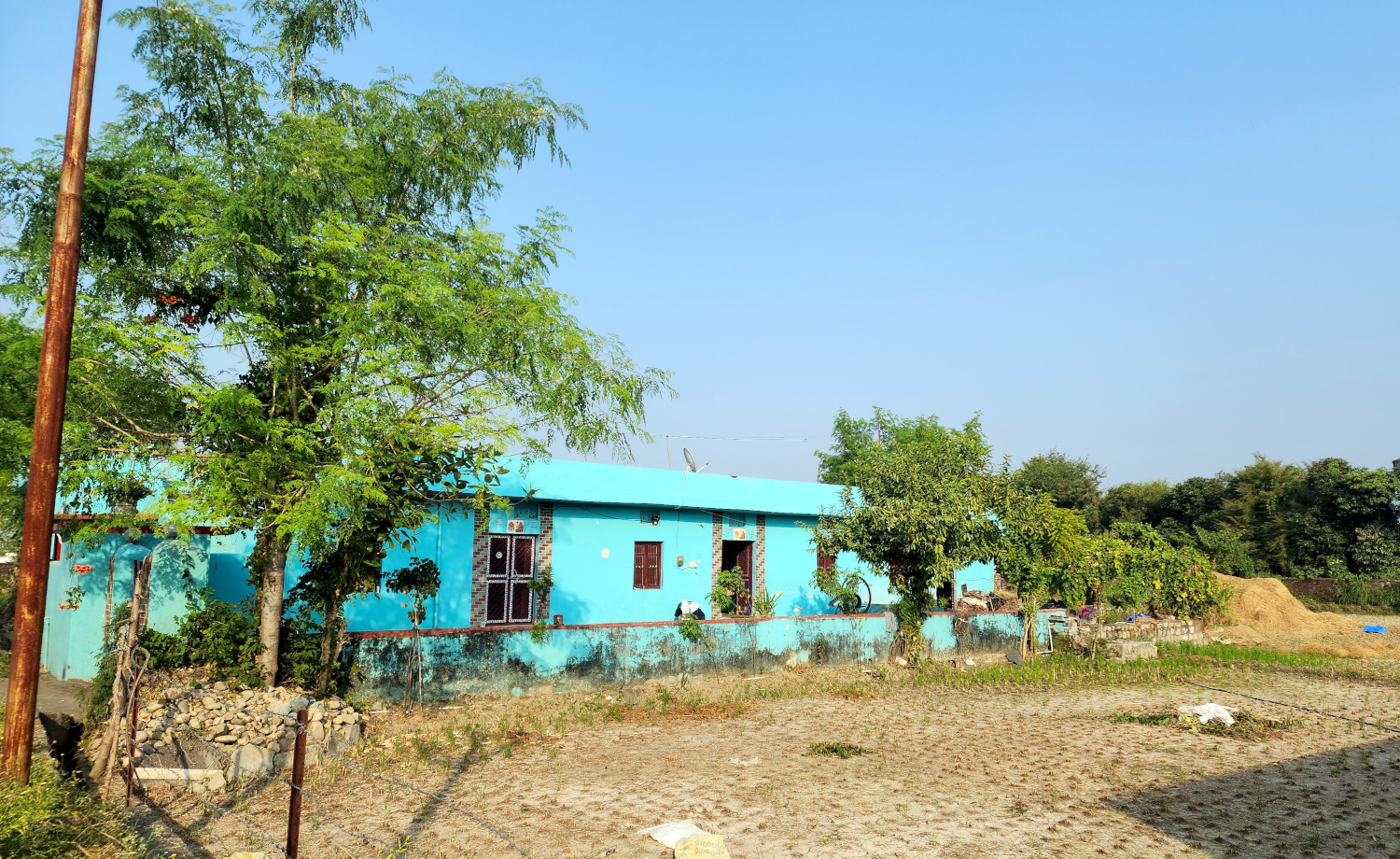
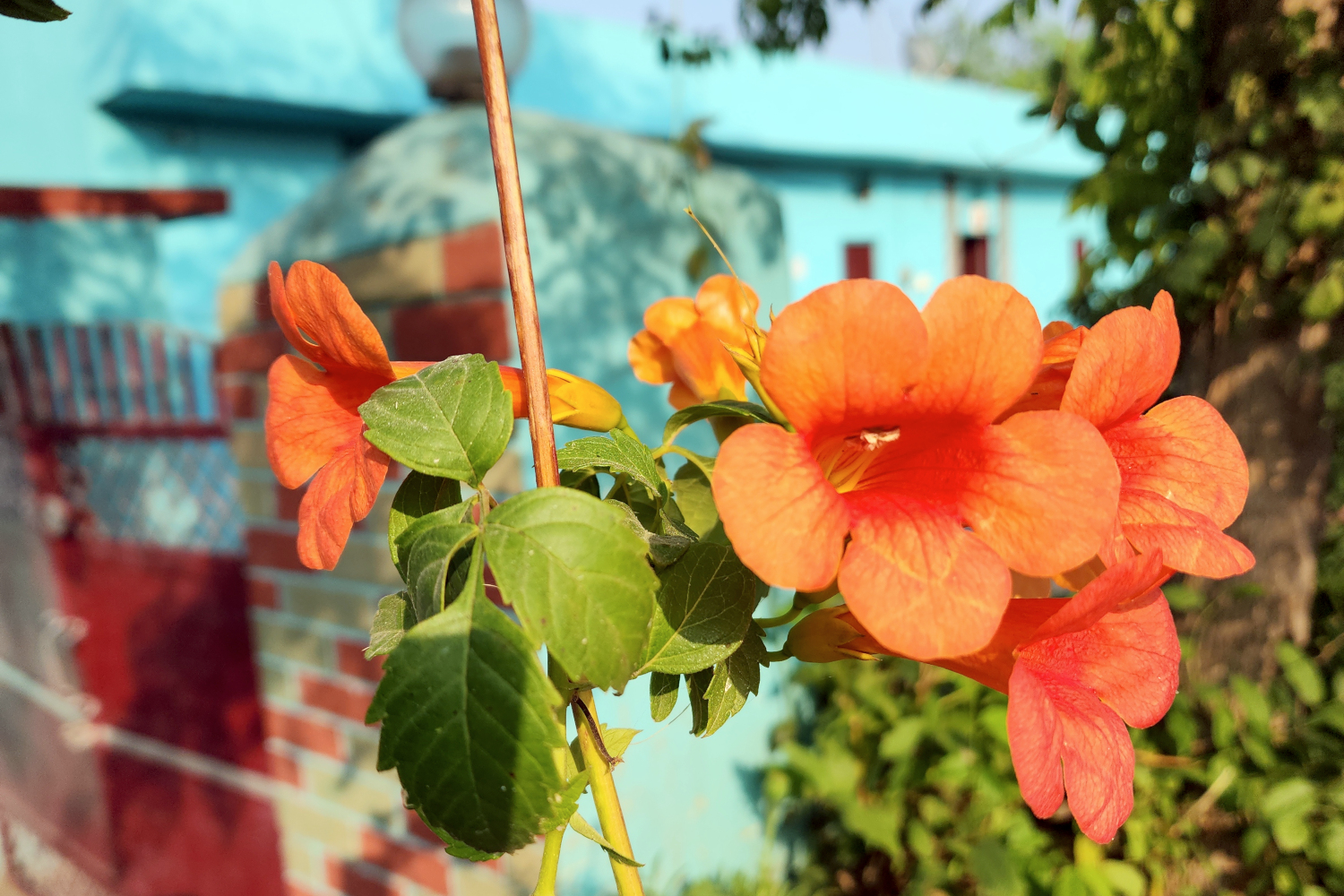
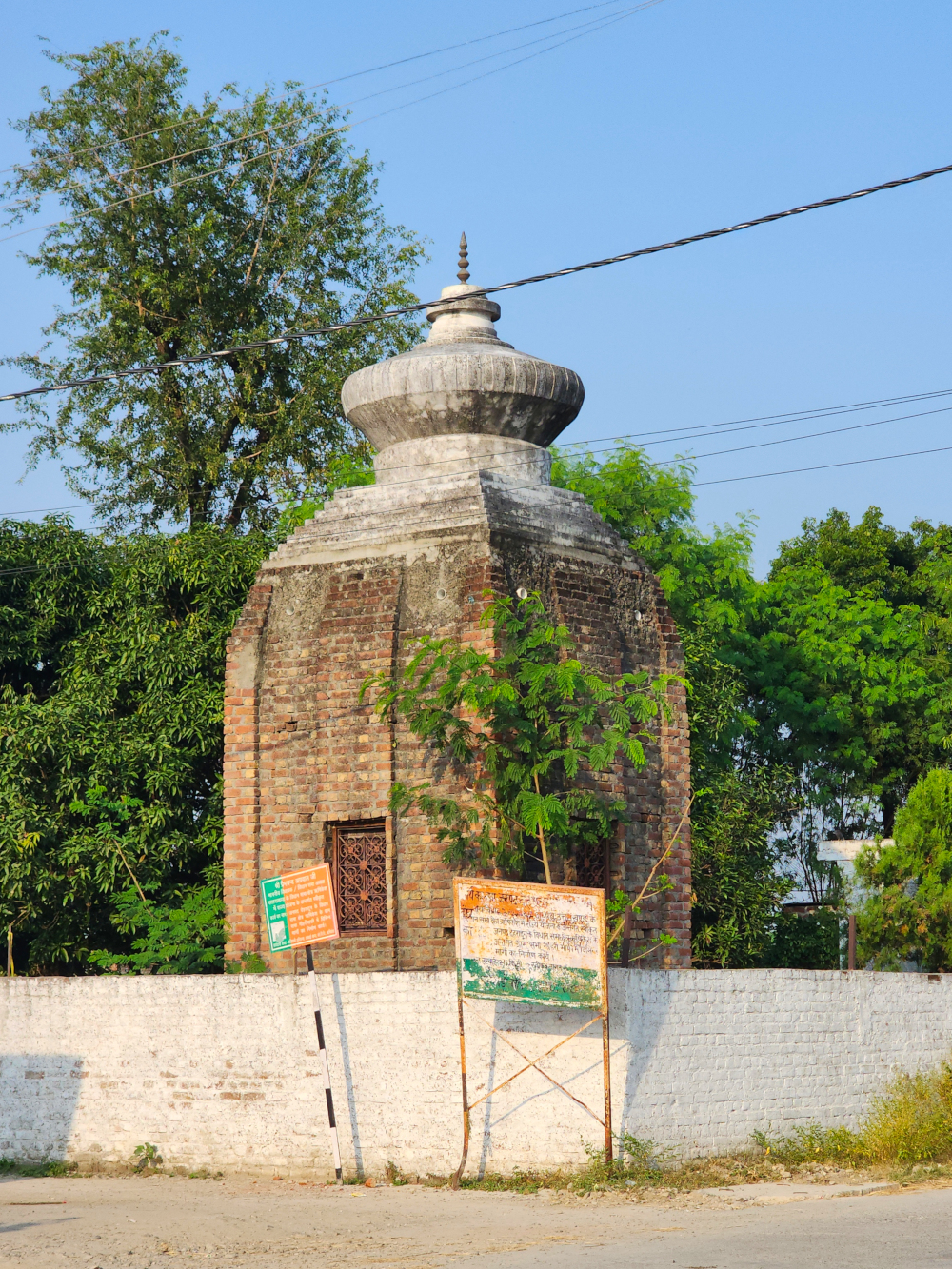

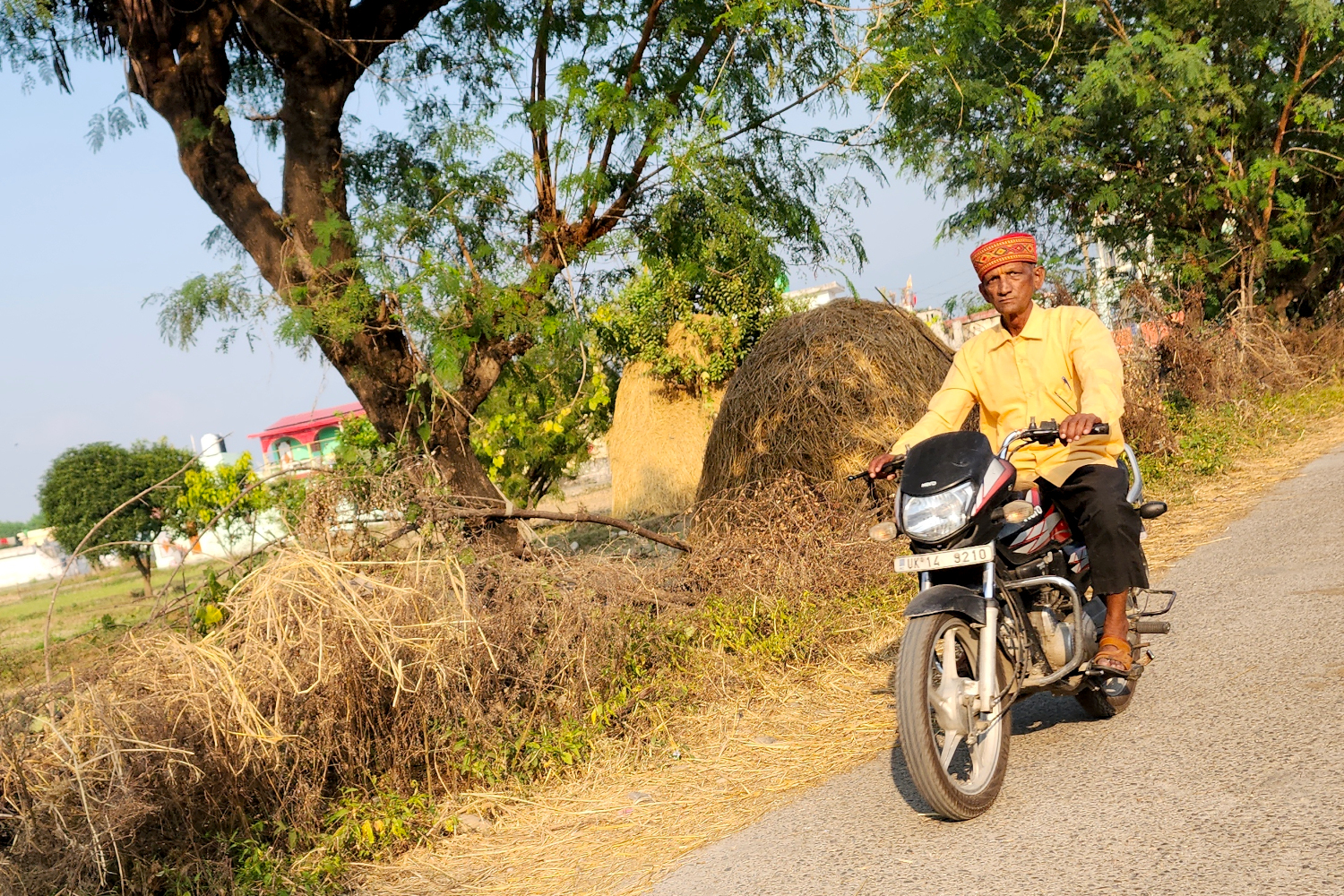
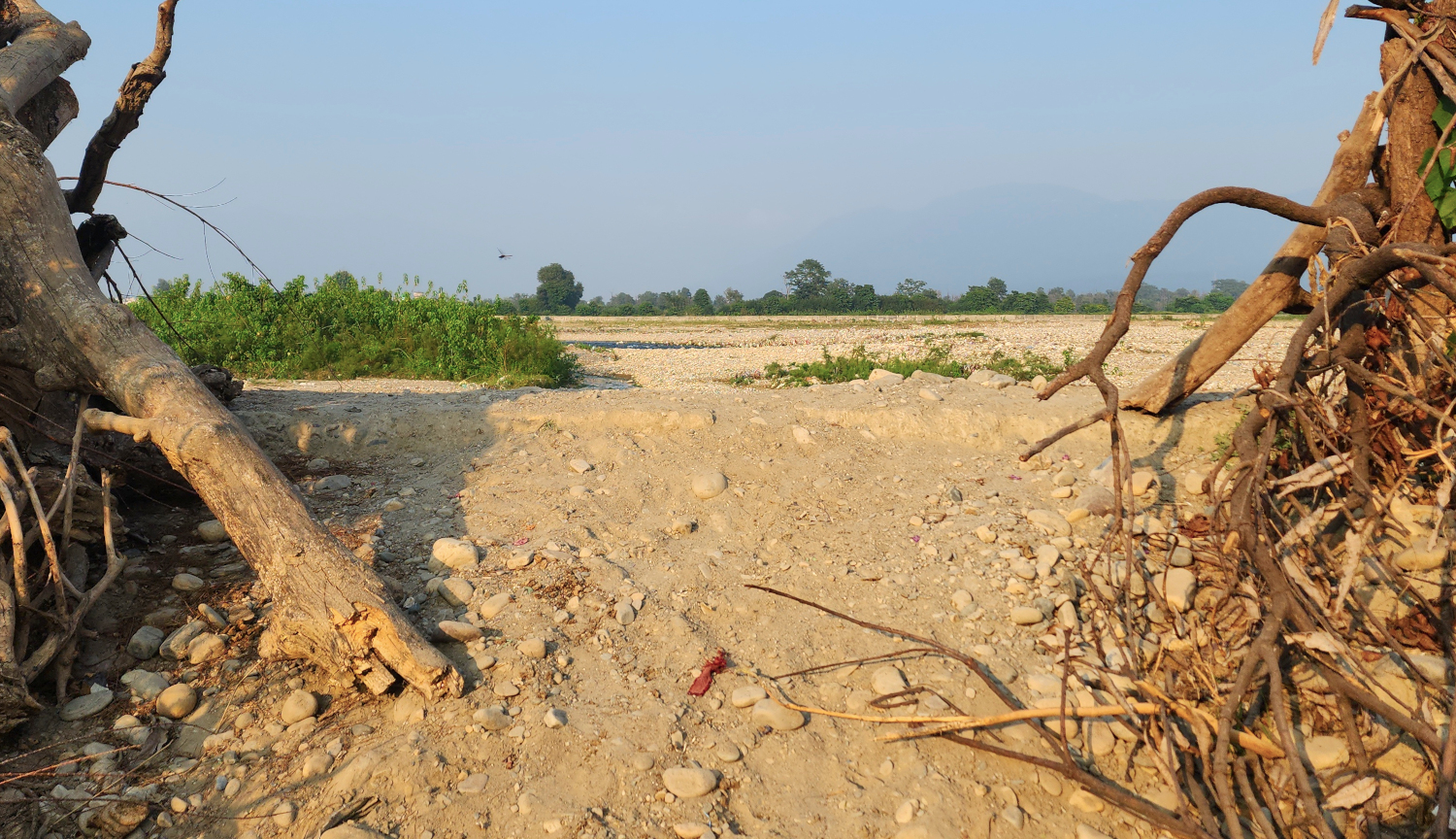
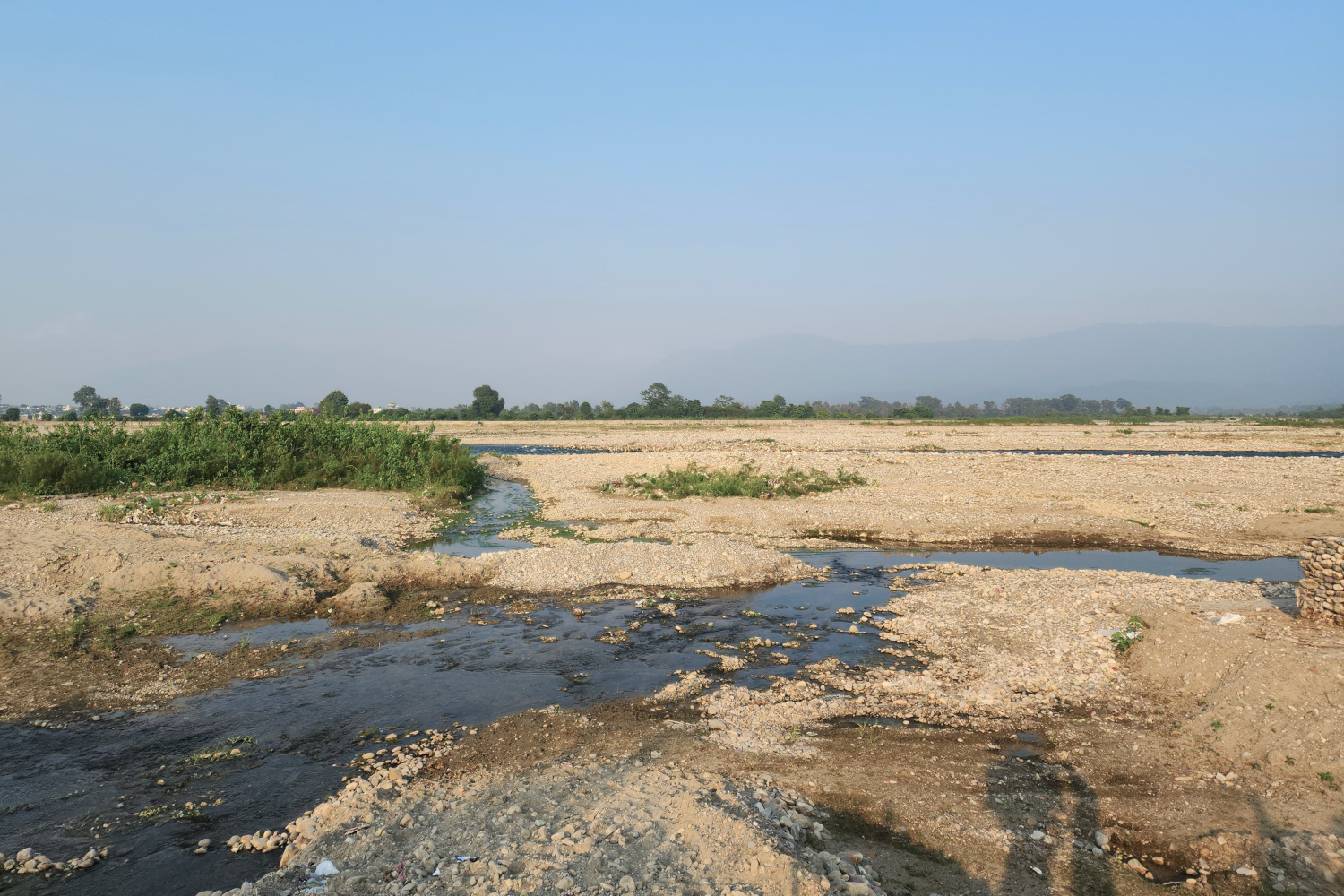
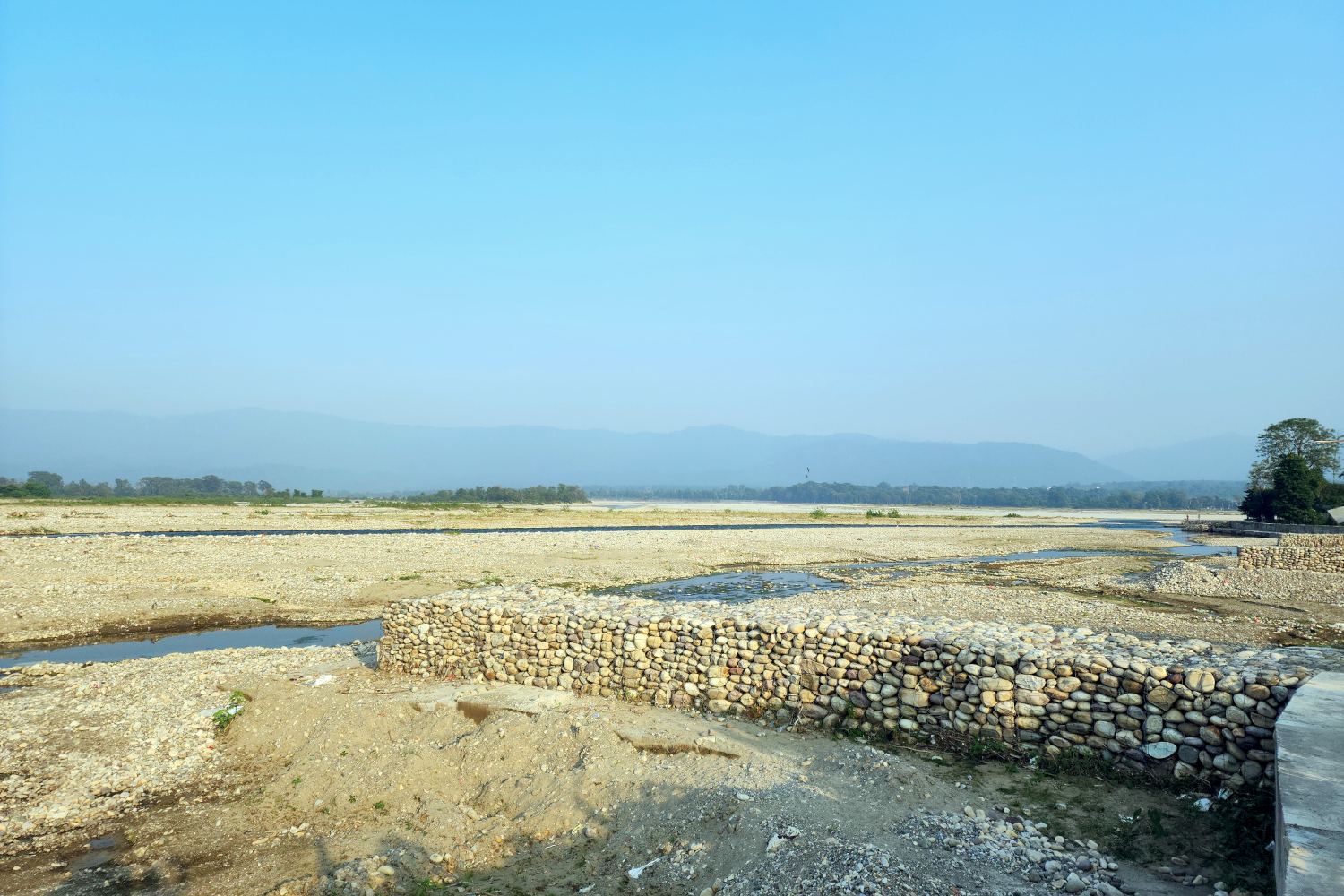
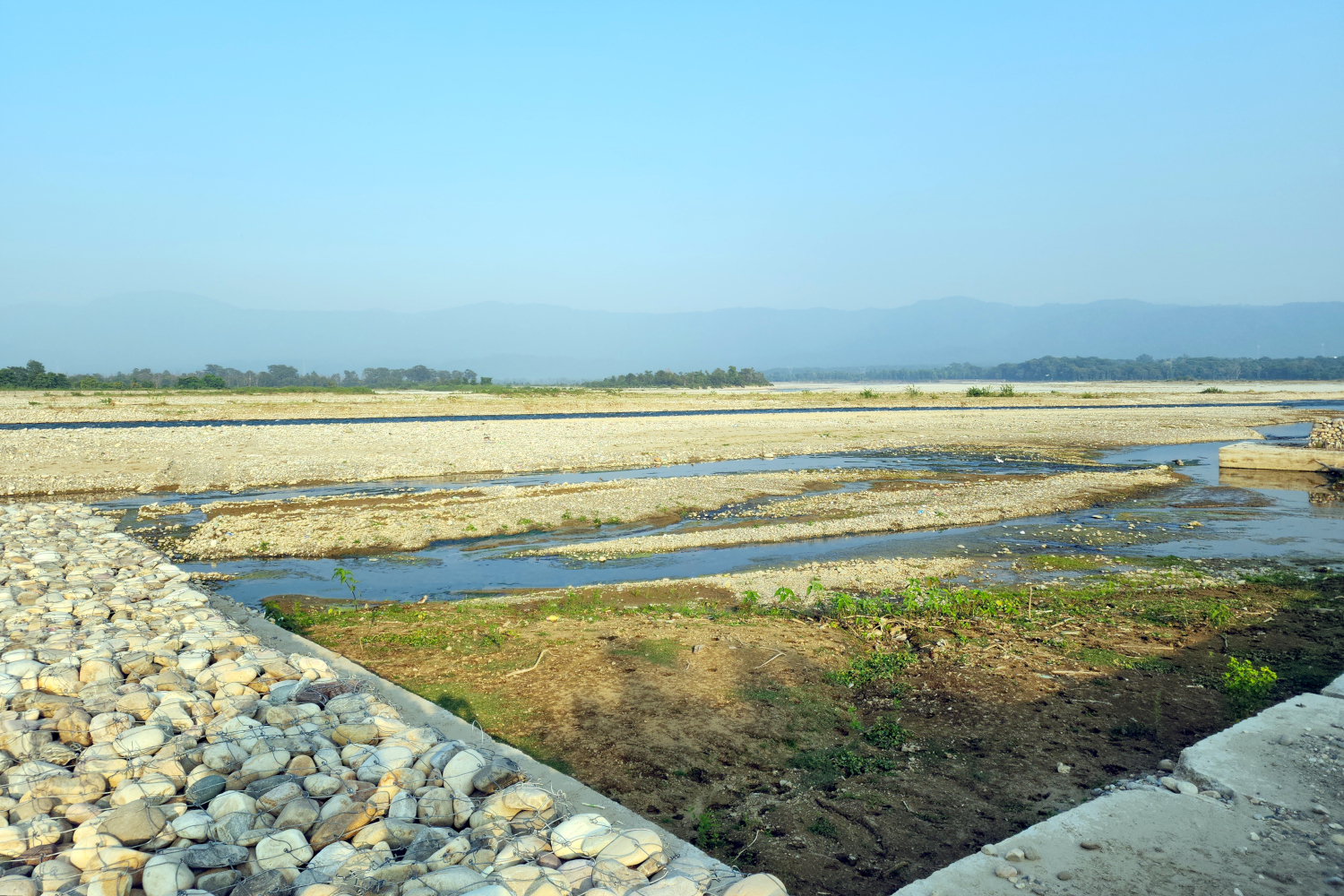
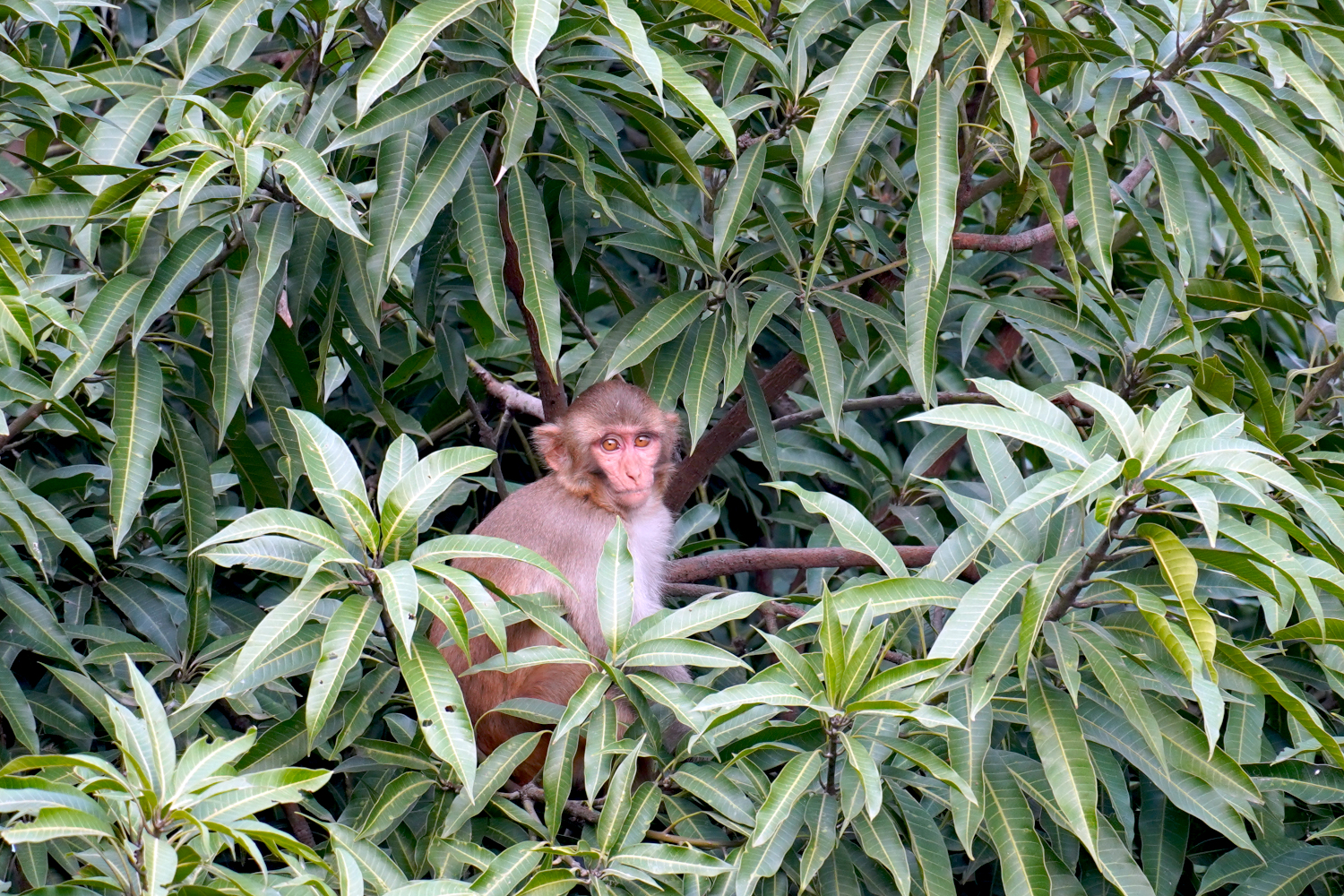
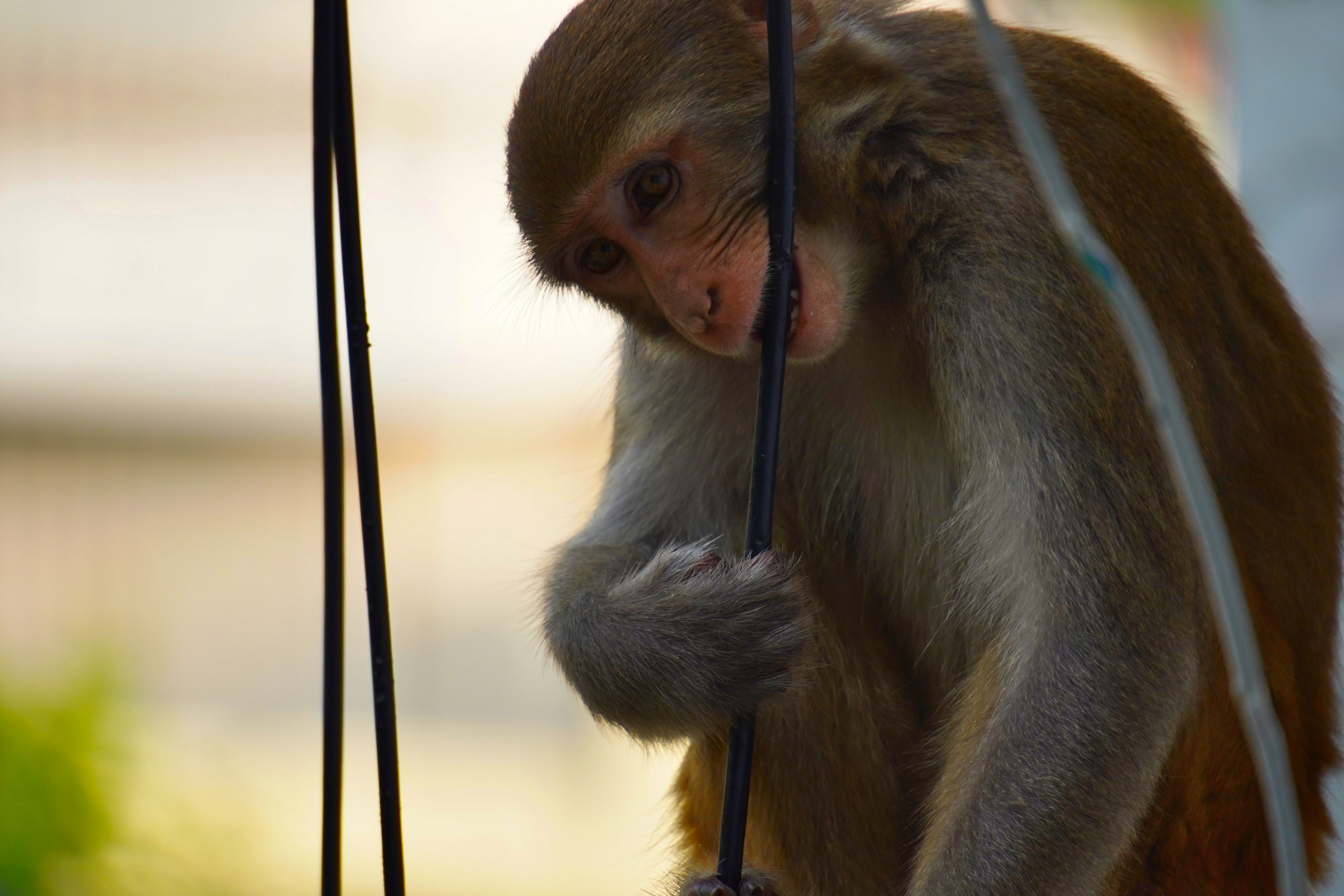
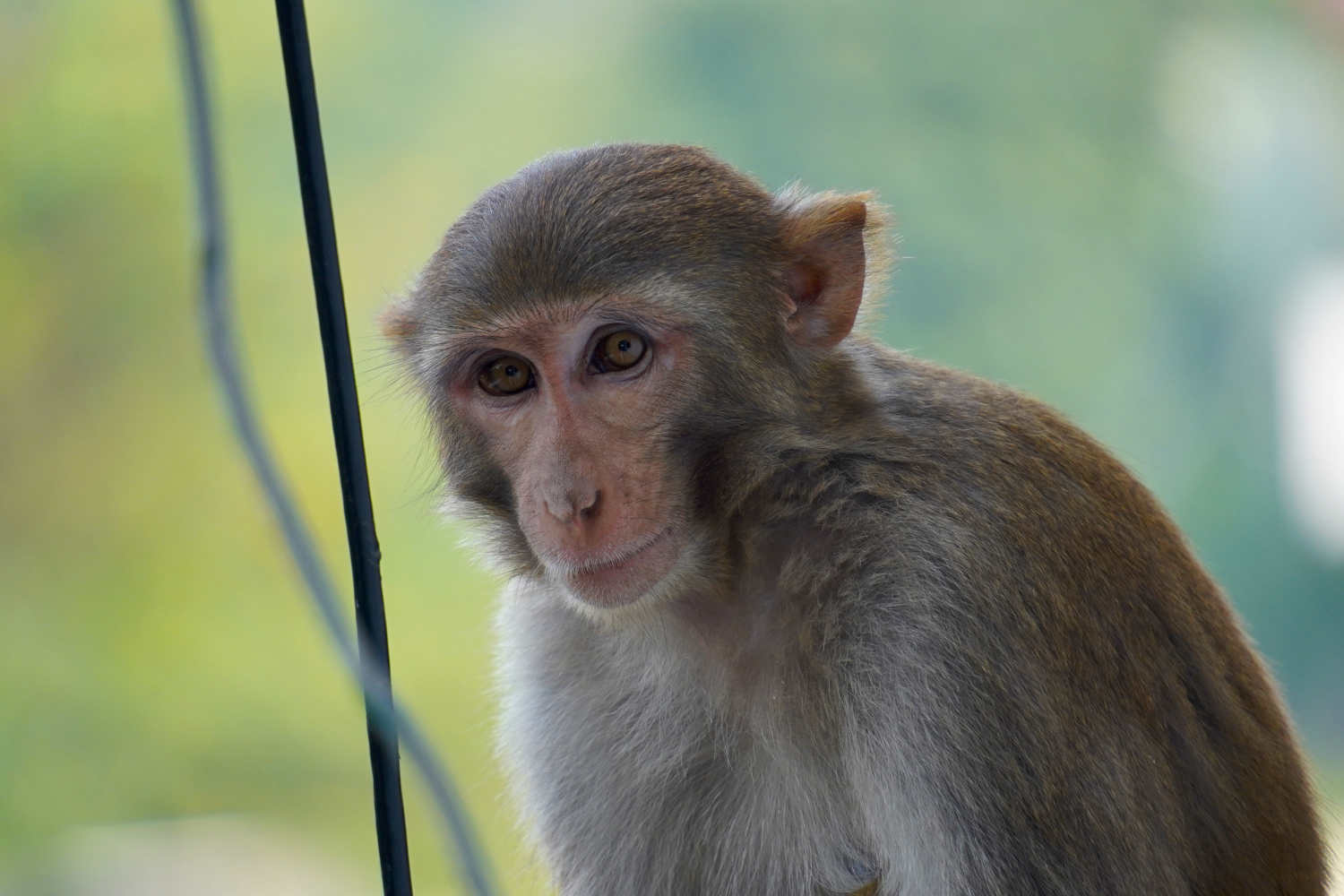
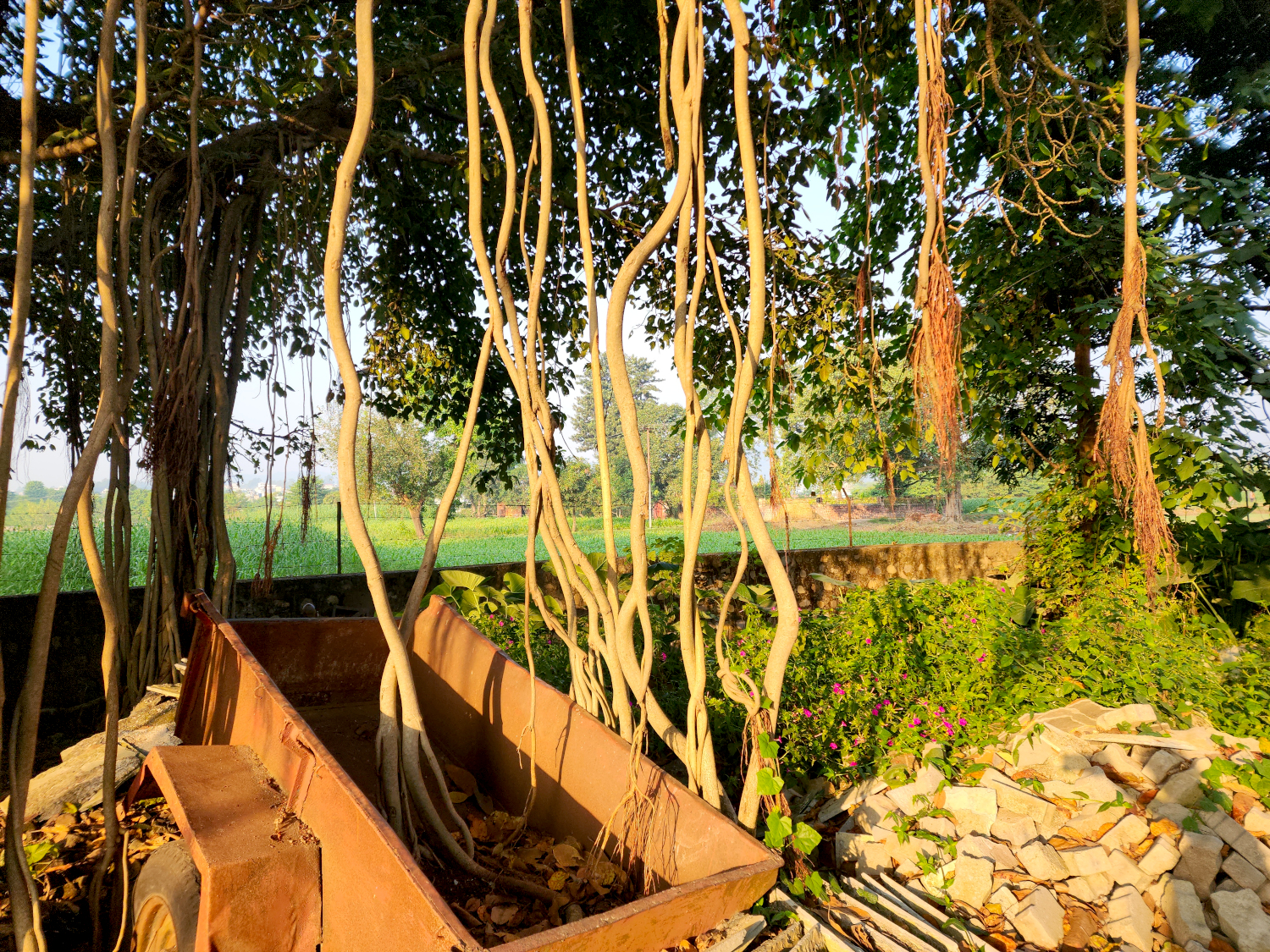
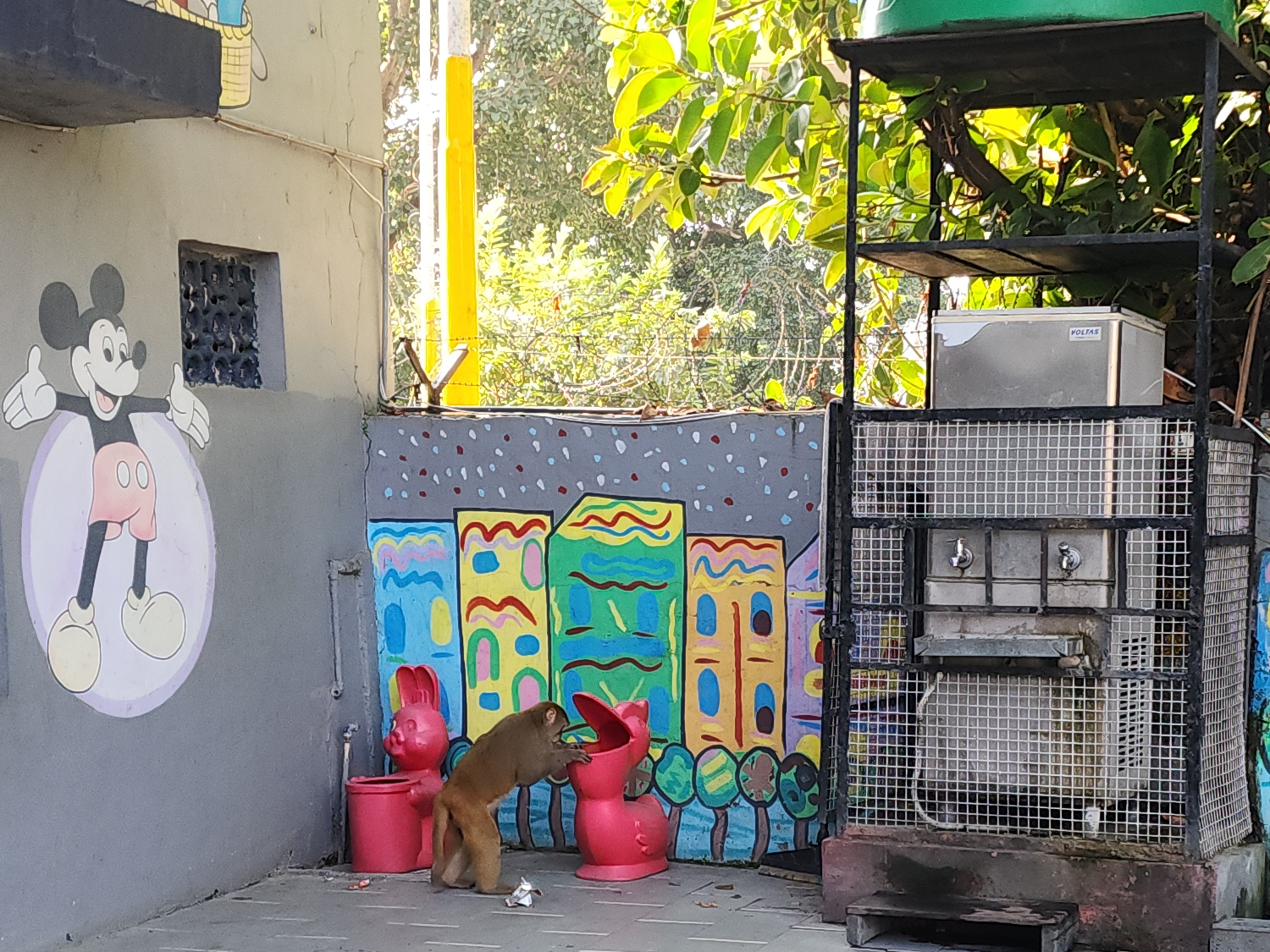
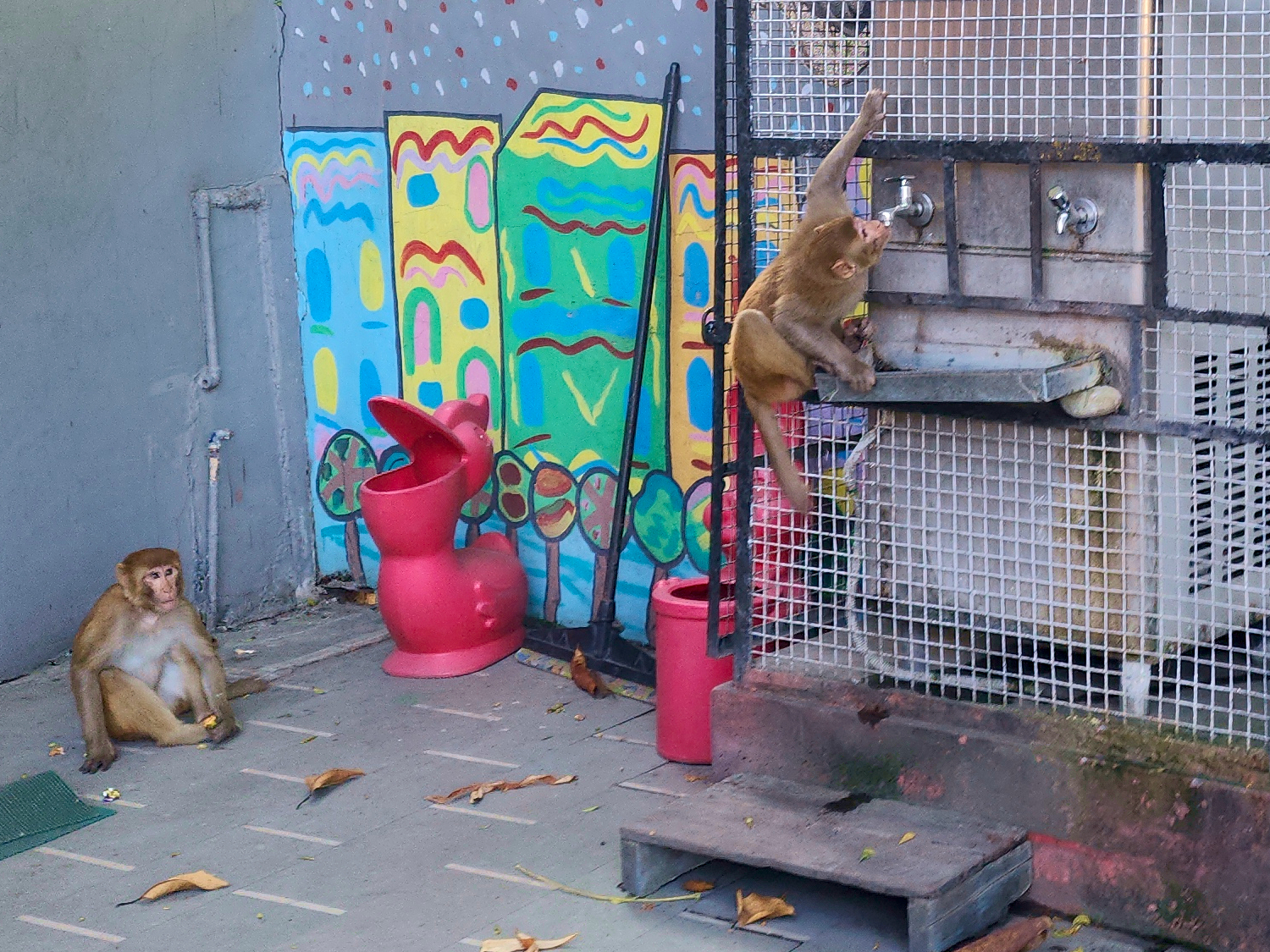
Being a couple of miles outside the heart of Raiwala, we are surrounded by farmland. Nearby are forests in which tigers and elephants supposedly have free range. We never see any, but of course we see plenty of monkeys. We are only a short distance from the legendary Ganga River (“the Ganges” to us westerners), which holds a central place in Hindu religion and tradition. But in our vicinity, the river is not very impressive looking, as the water level is low, and in many place the bed is even dry.
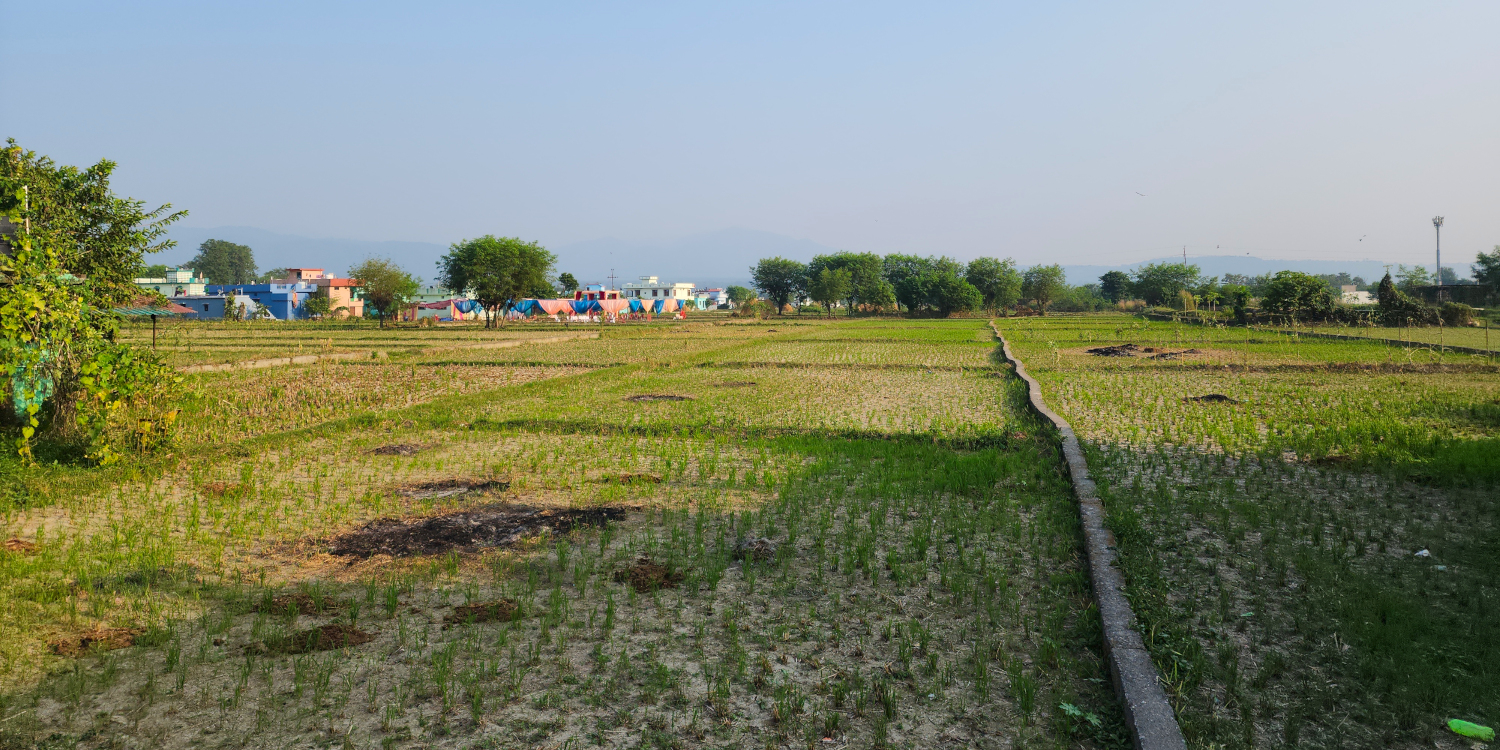
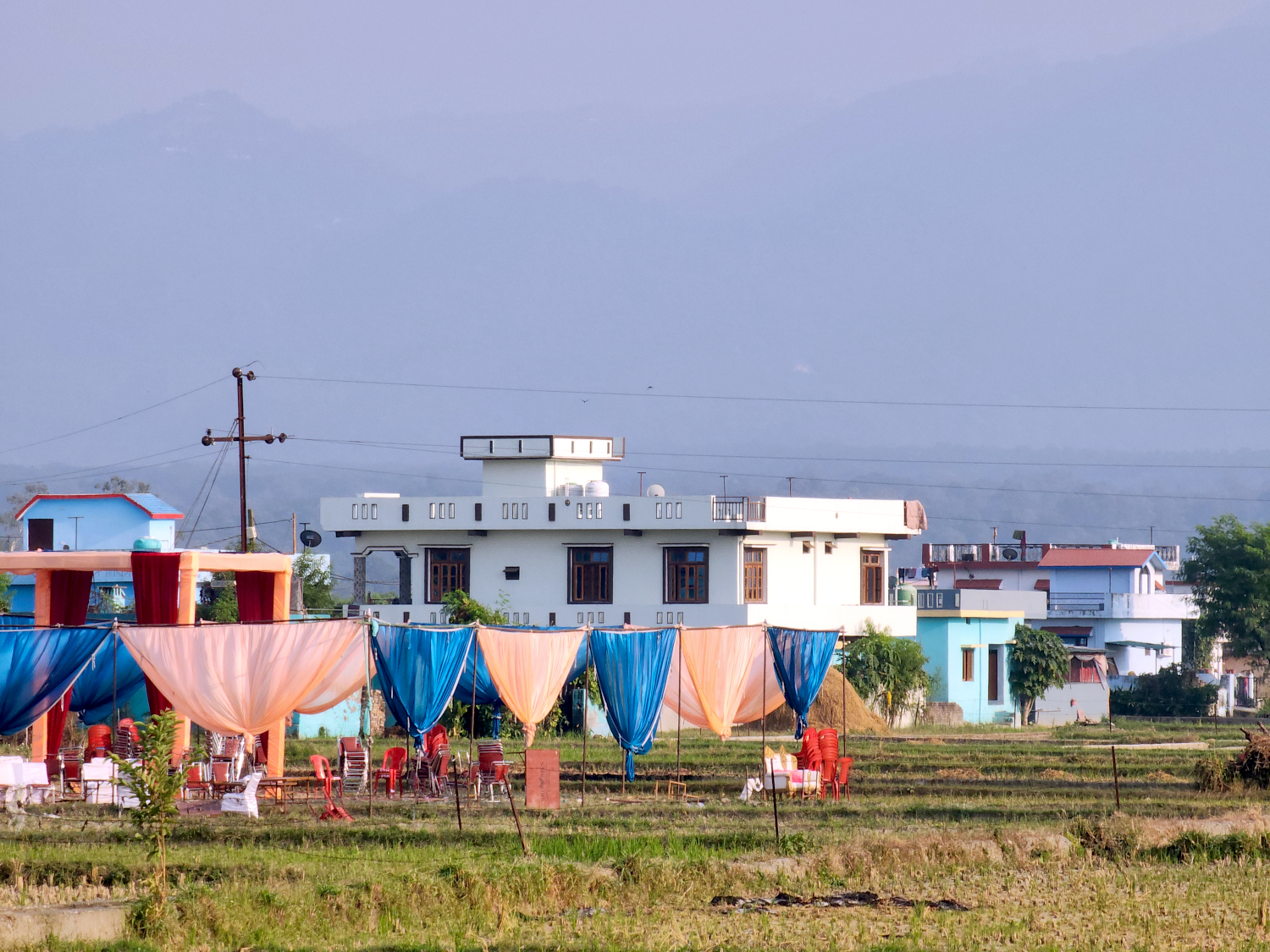


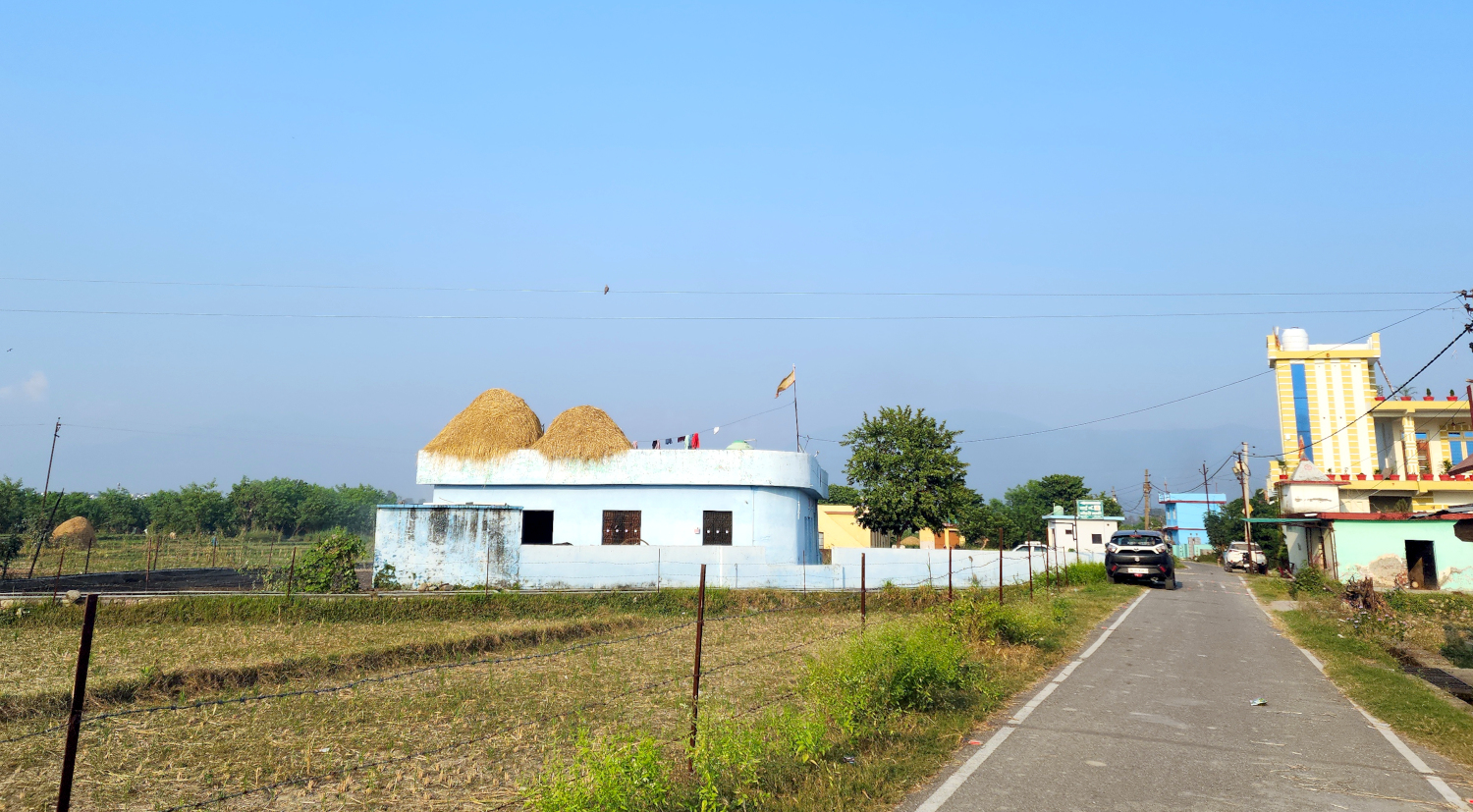
View of the Ganga River from Raiwala

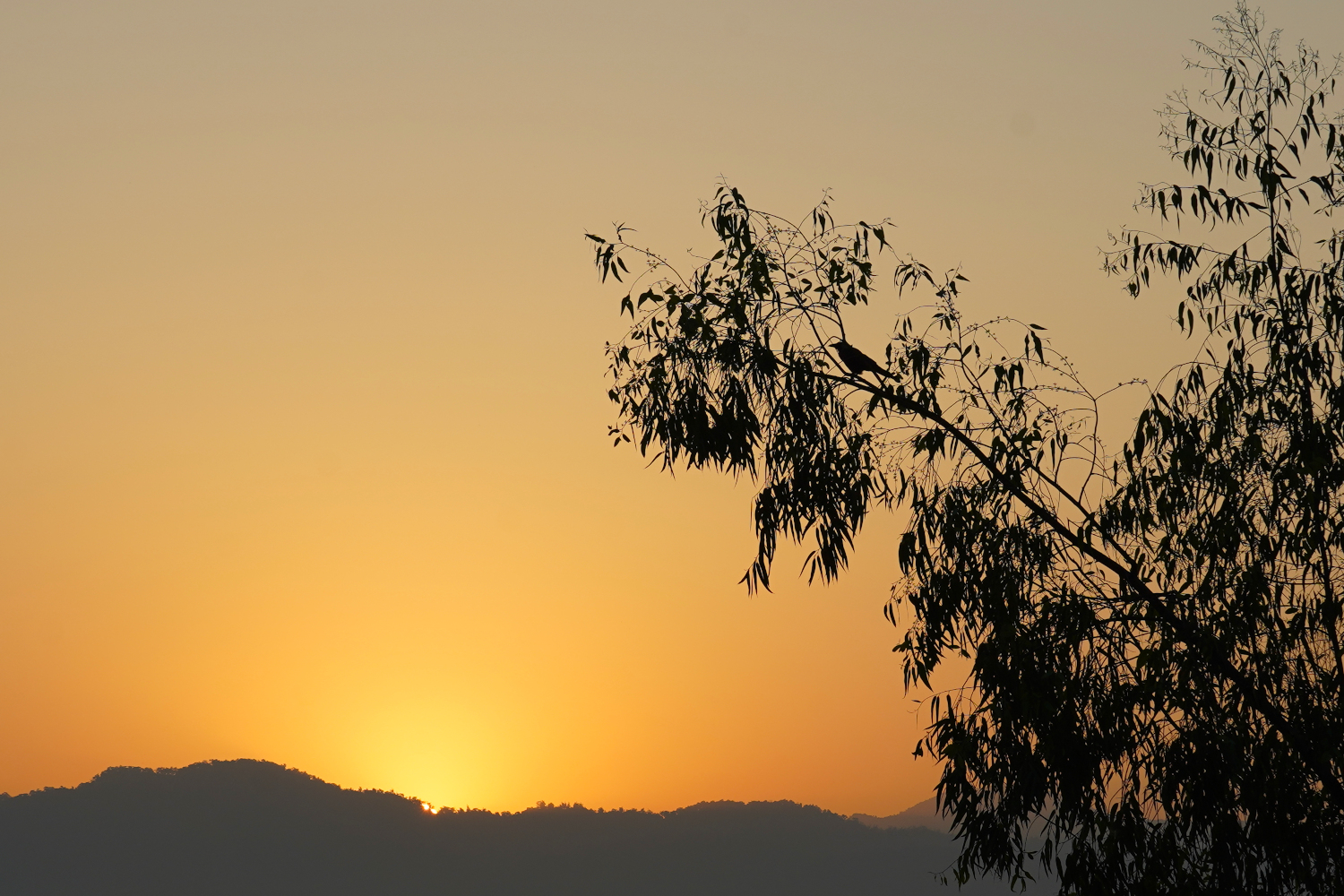
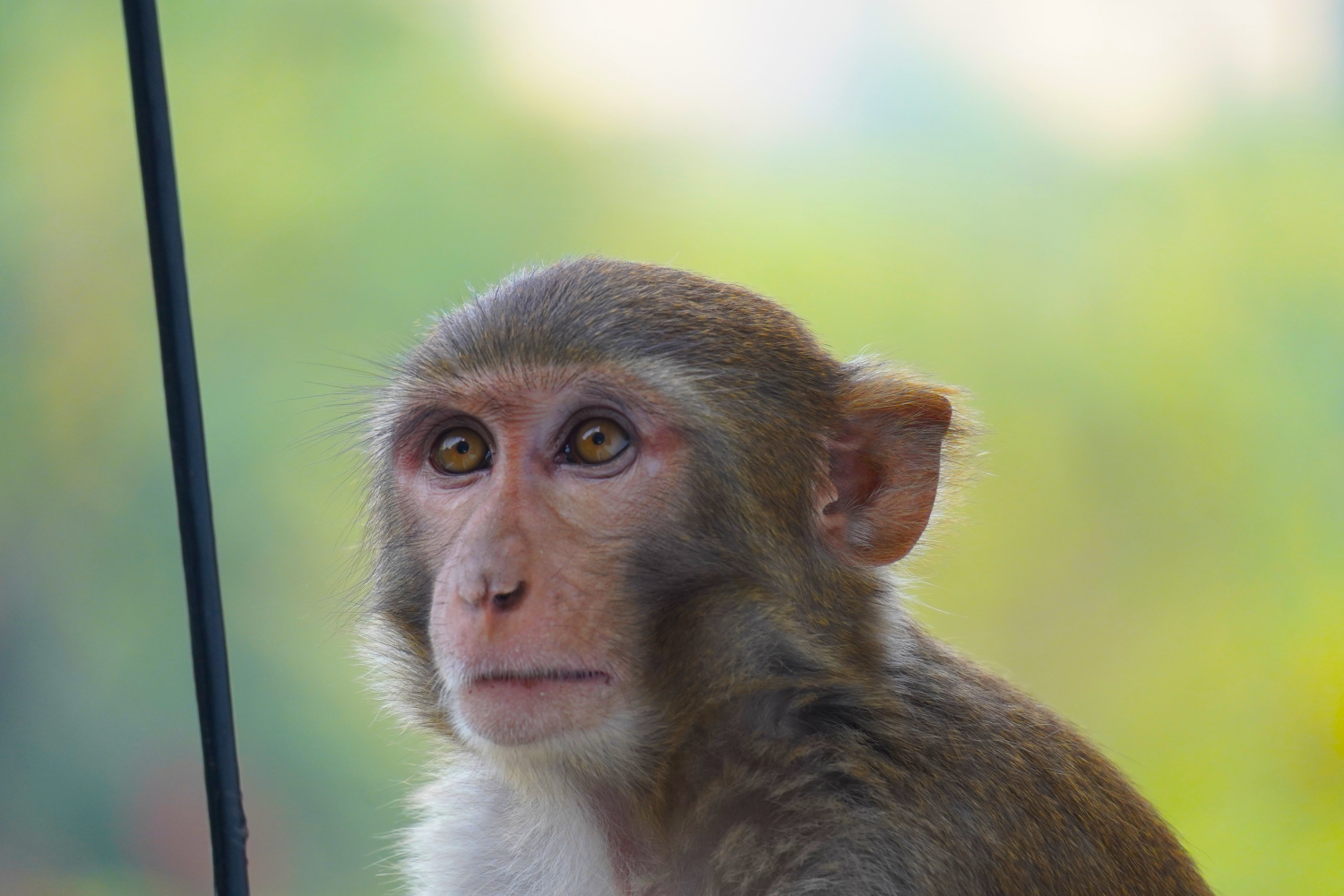
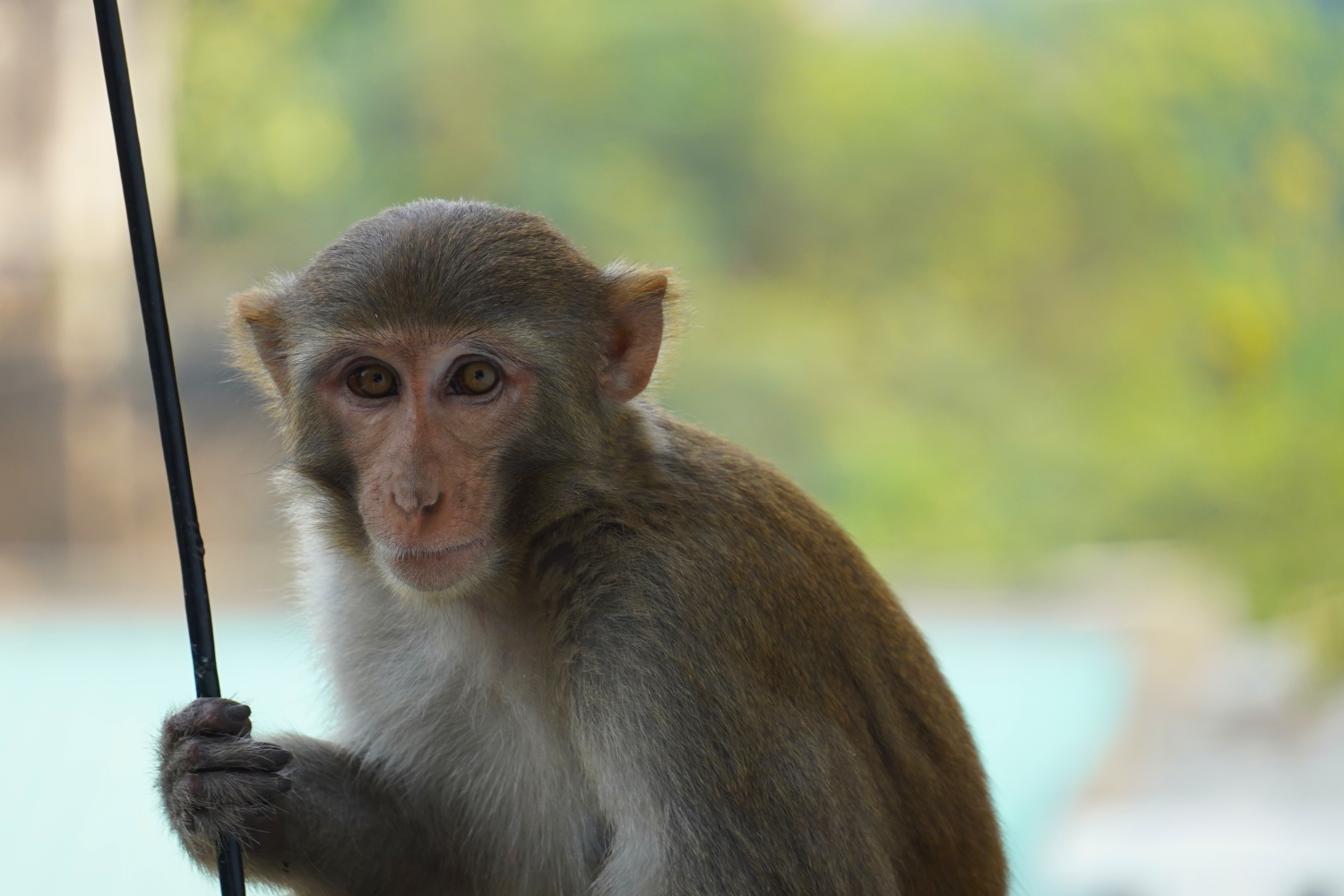
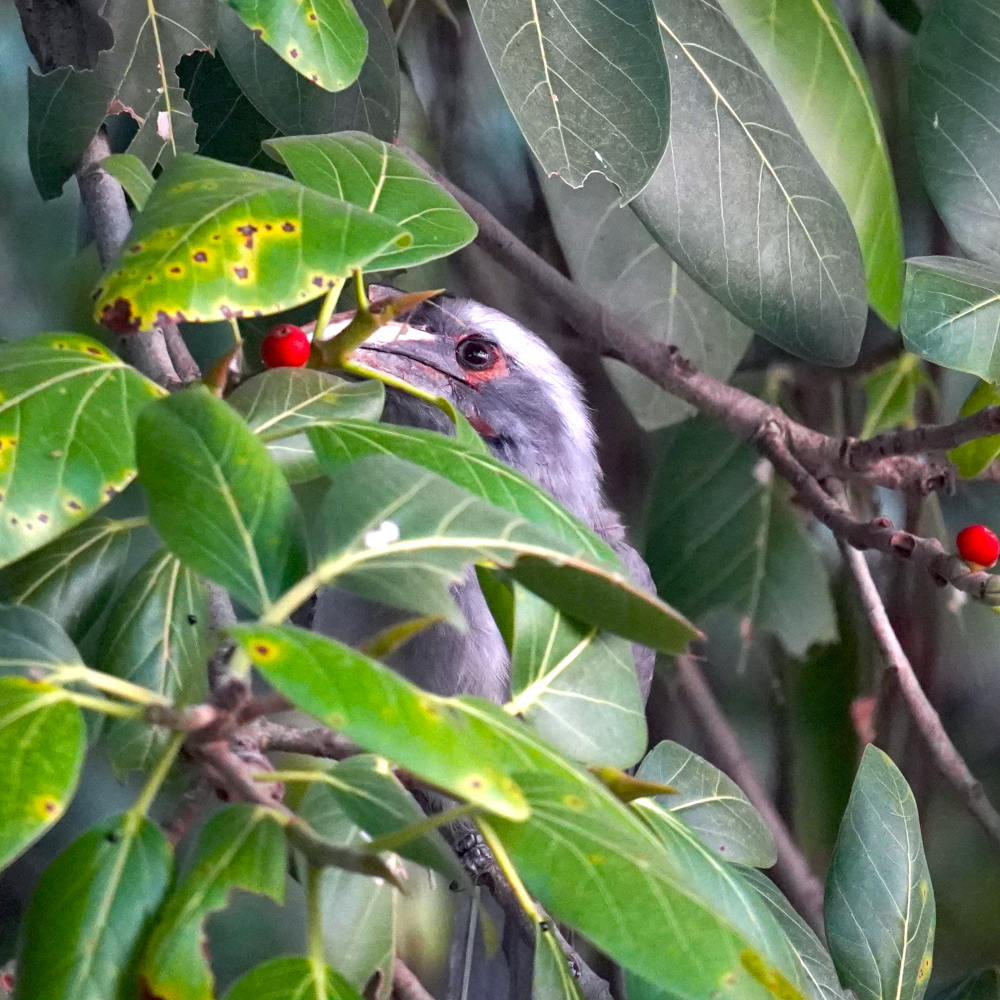
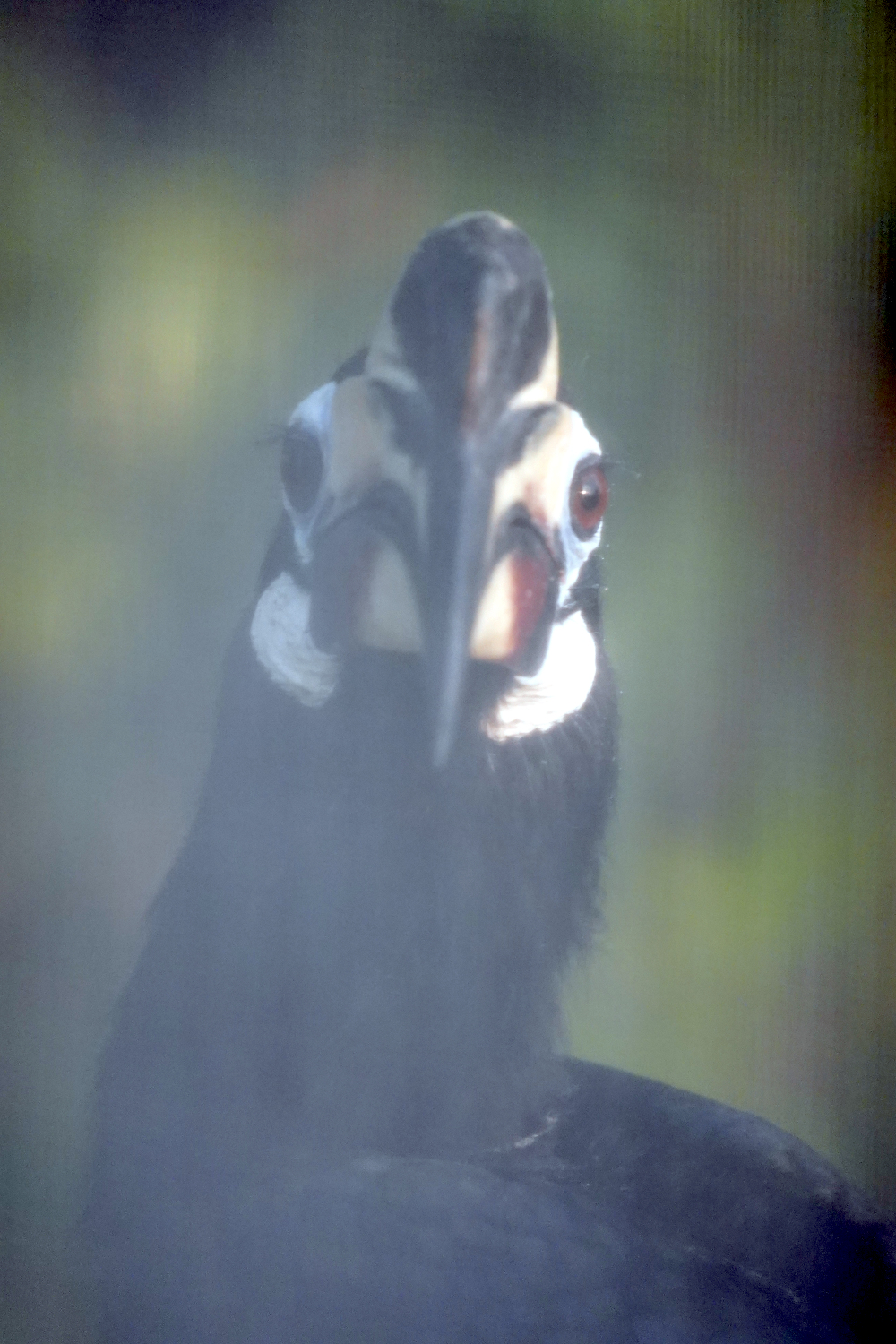
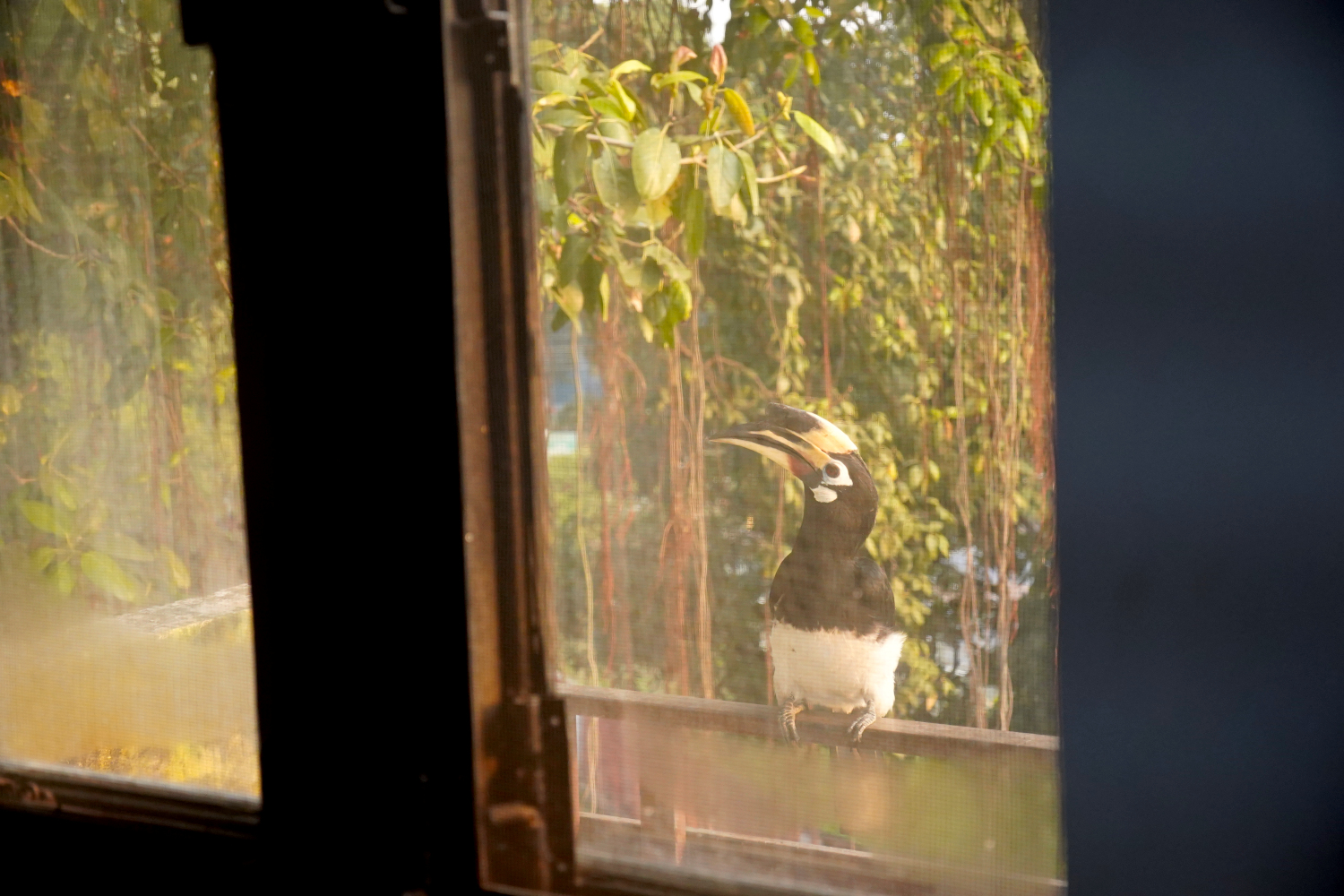
Many mornings we wake up to find that we have a visitor on our balcony, a beautiful hornbill who appears at about the same time, sits on the railing for 10 or 15 minutes, and then flies away. The monkey parade is much more predictable. Every morning right about 7:00, they traipse from left to right across our field of vision. In late afternoon, they head back the other way.
MONDAY 10/14
DENNIS: I was under the impression that I had Grade 11 this morning, but when I show up to class, the students (not the staff) tell me that they don’t meet with me on Mondays. So I go ask my supervisor, and she suggests that instead I take her remedial class with that grade later on. So I do, and about halfway through the class, someone comes in to shoot a promotional video, so the actual teaching comes to a standstill. A few 12th Graders come in to fill the empty seats.
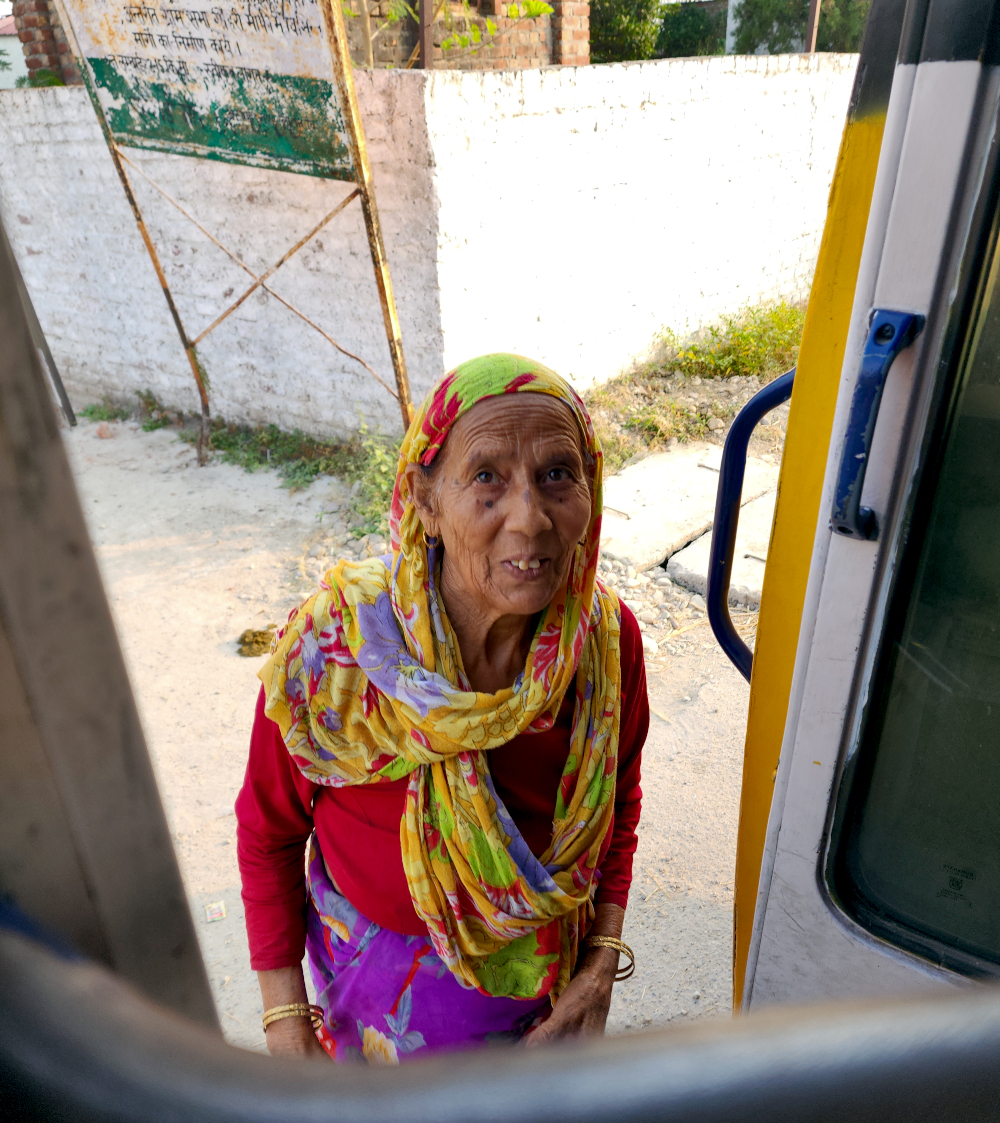
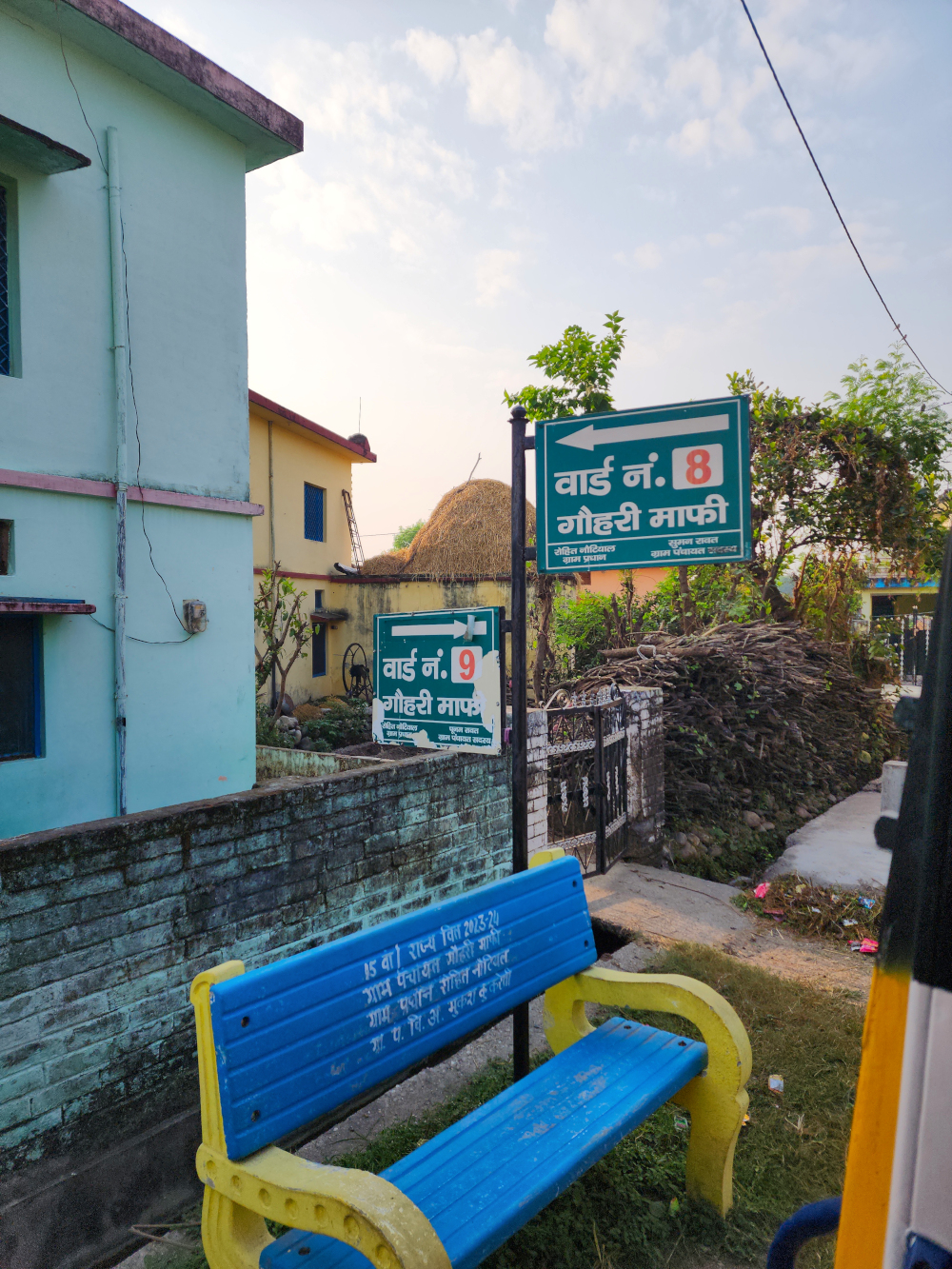
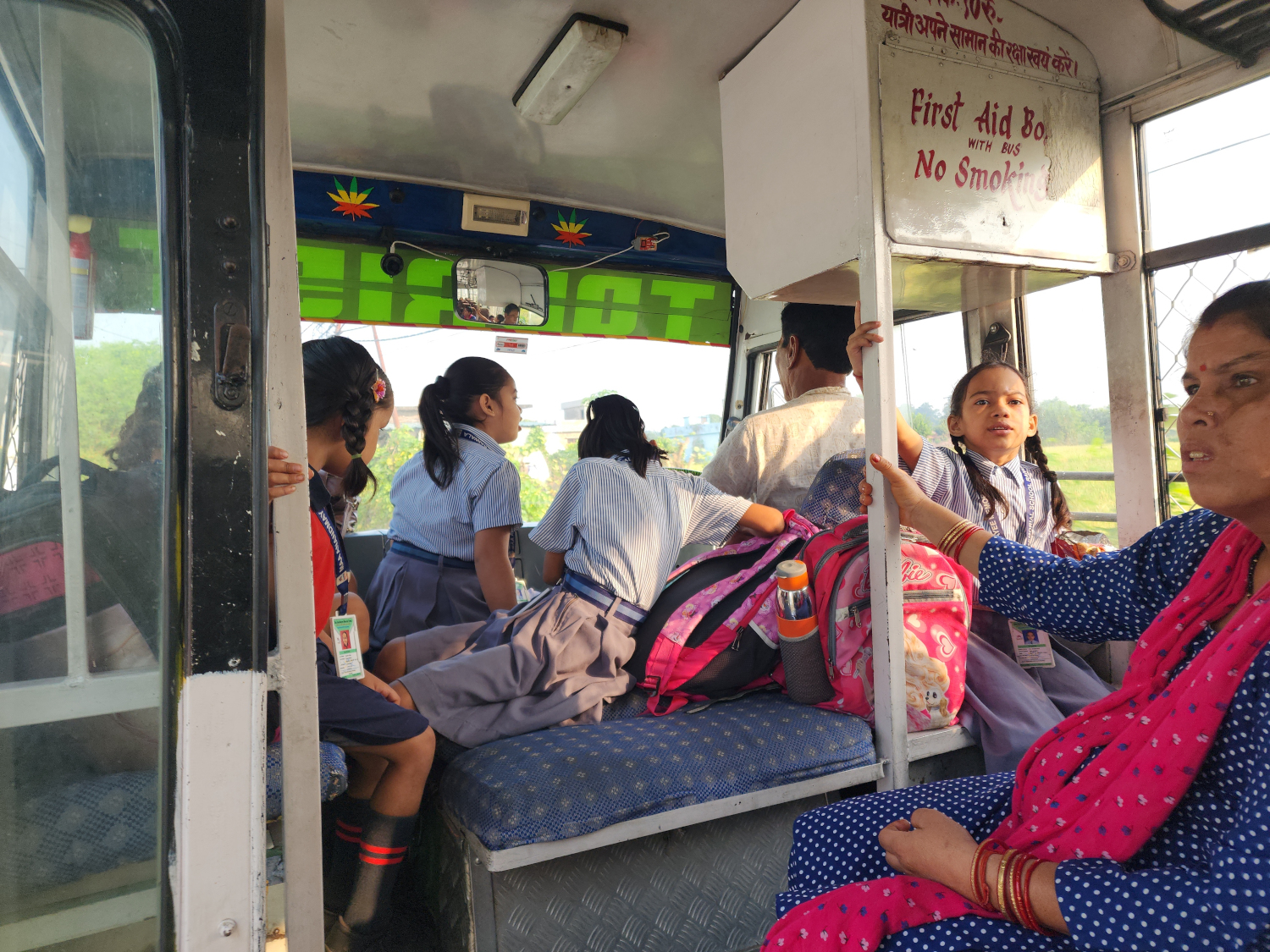
KIMBERLY: This morning I take the school bus to the other campus (this only happened one time, as I generally ride in a van). The little kids are escorted by their guardians to the bus door and then assisted by one of the revered assistants dressed in blue who serves many functions throughout the school day.
TUESDAY 10/15
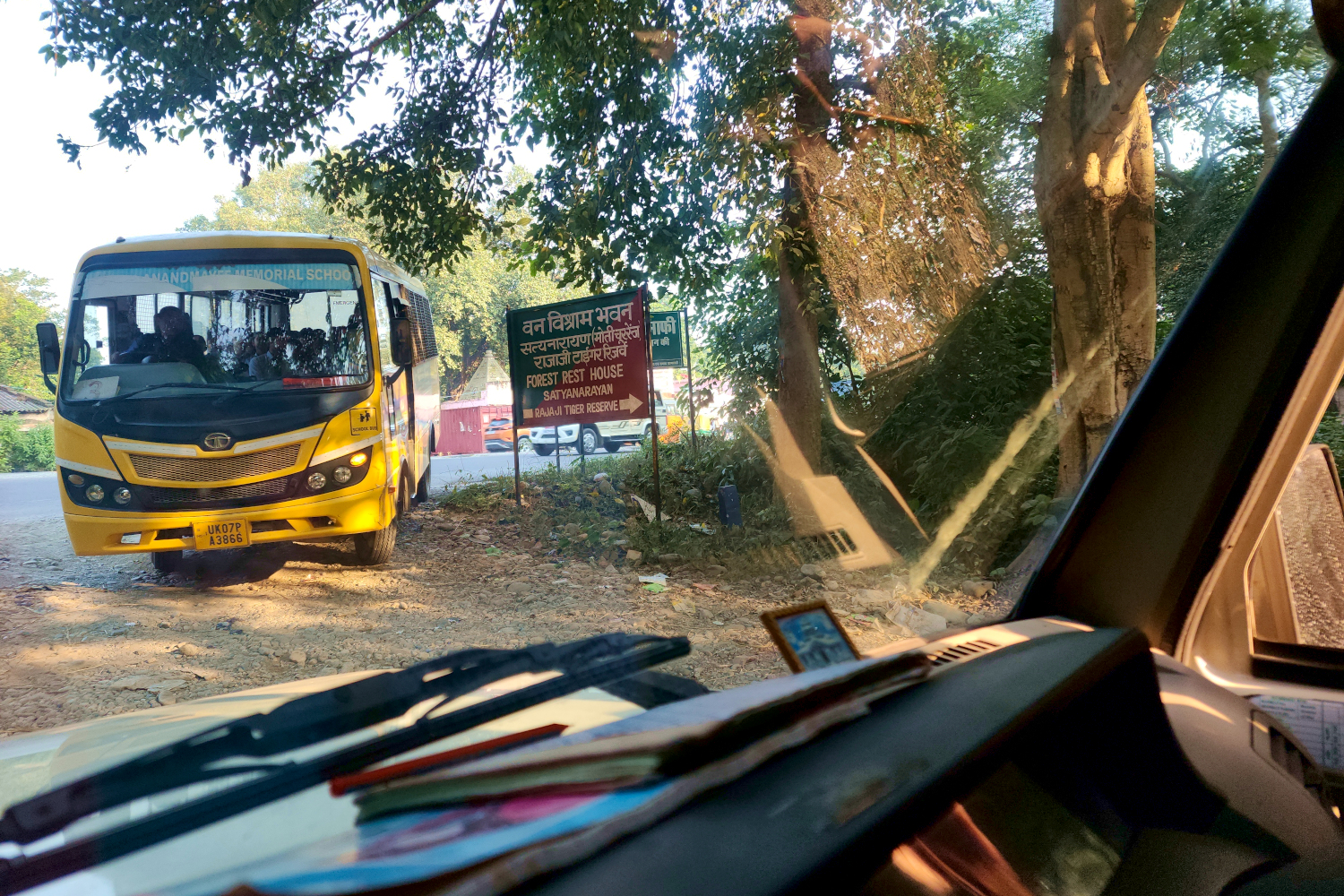
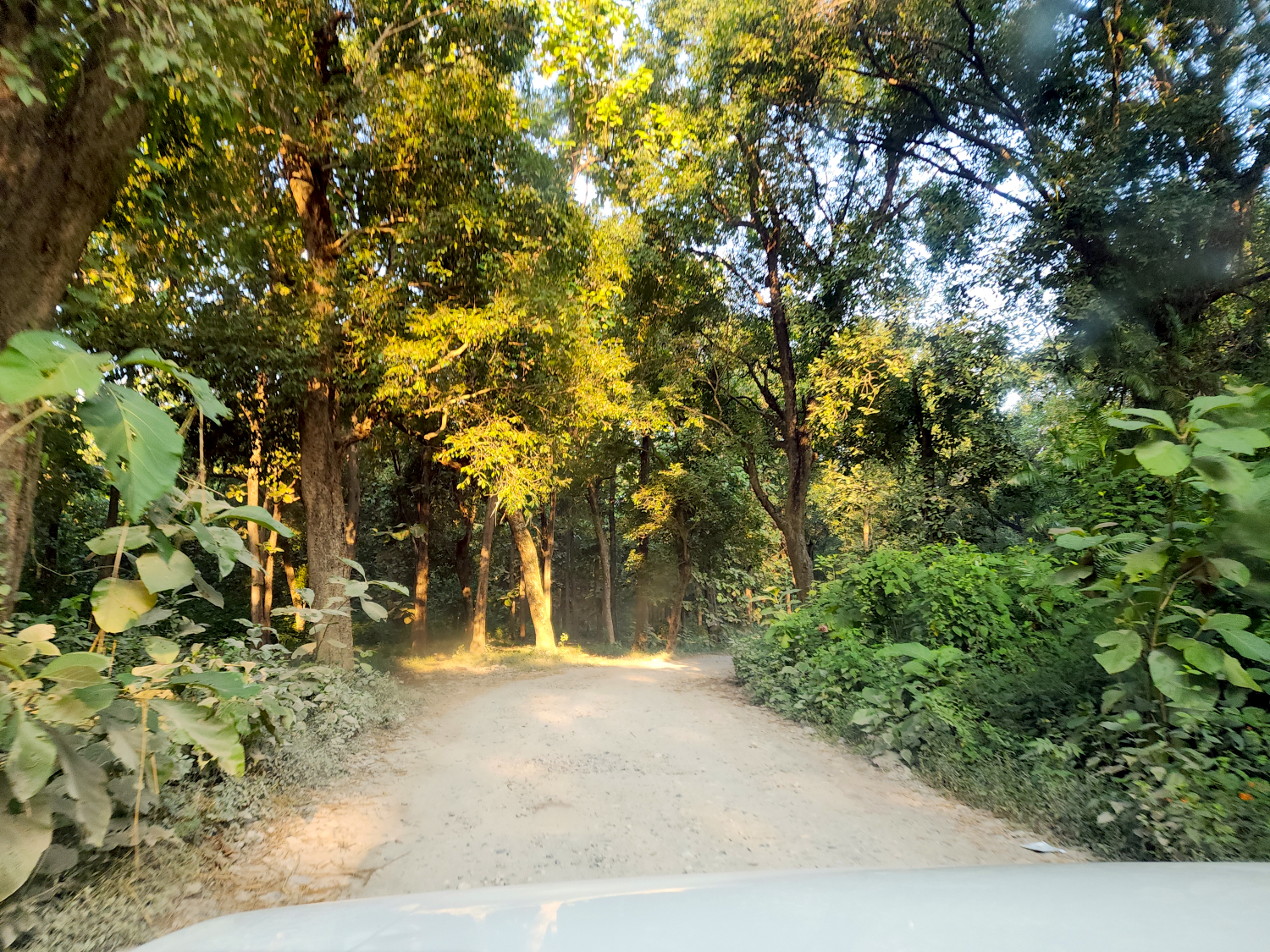
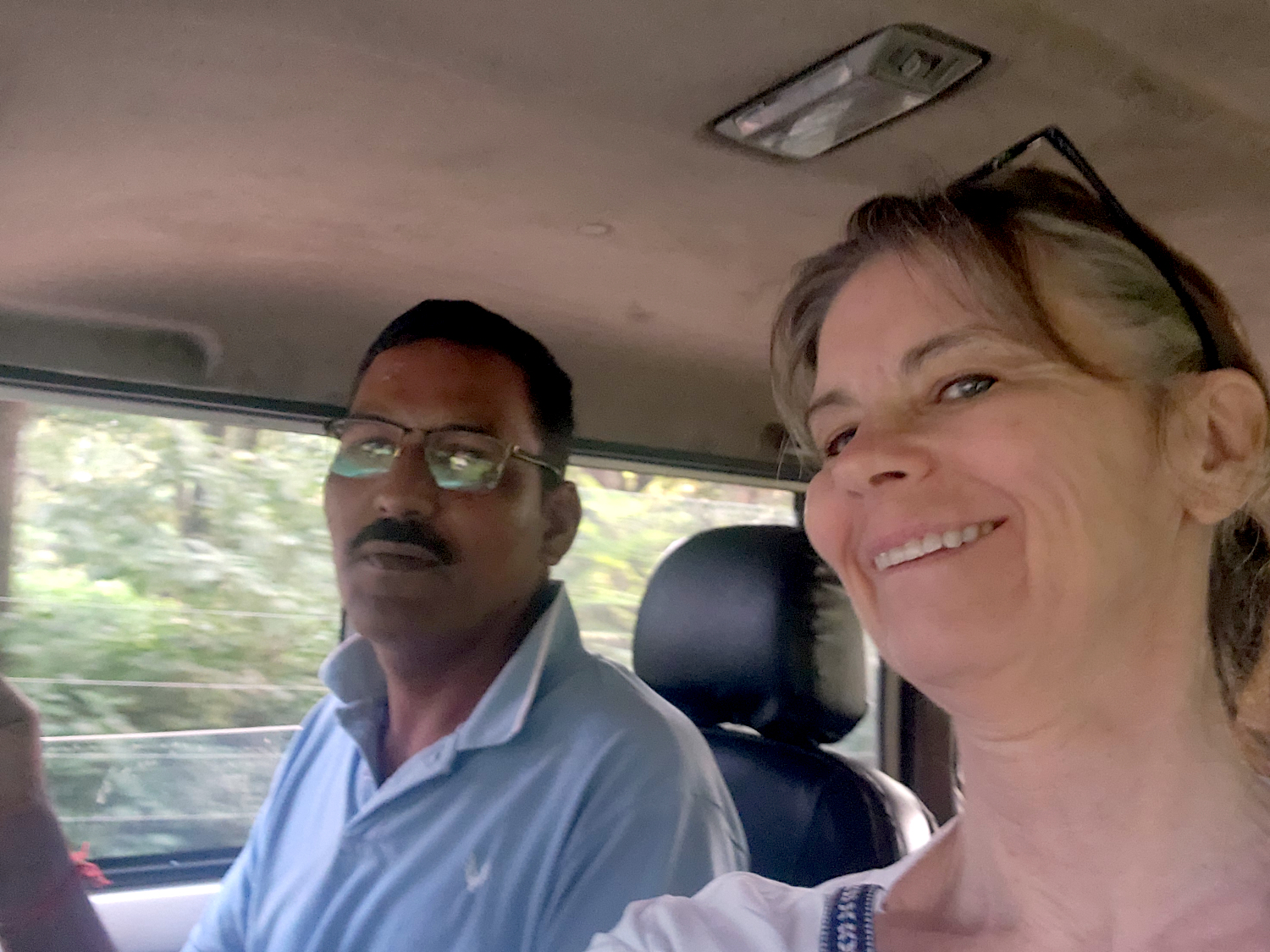
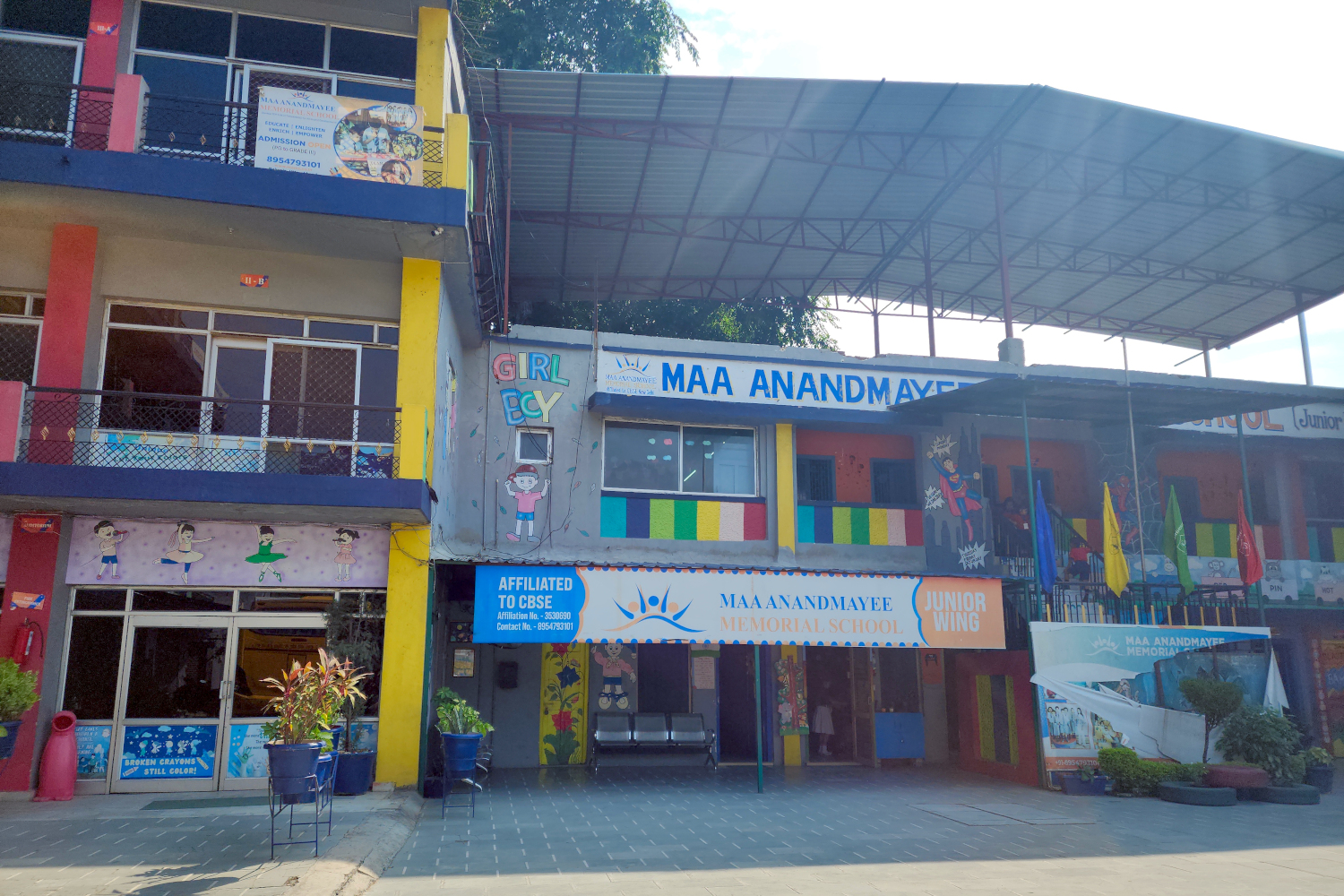
KIMBERLY: My typical morning ride to Junior Campus in on a dirt road through a stretch of the Rajaji National Park. The driver and I tried communicating a bit the first few days, then mostly resigned to silence as my Hindi learning abilities are severely stunted and his English is limited to a few words. I did learn that he is retired military. At the end of the dirt road we always meet the school bus coming in from Rishikesh on its way to the Senior campus. A couple of teachers and students get off and join us the rest of the way to the Junior campus.

WEDNESDAY 10/16
DENNIS: At 11:01 this morning, I receive a text message informing me that I am needed to cover an 11;00 o’clock class. Nothing like preparation and advance notice. After that class, I have my usual 40-minute class with Grade 11 — after which I am informed that I need to continue teaching them for another full hour. I still have only one of the four textbooks needed for the classes, and there are no copies of the others available anywhere. I have to find them, or the material from them, online and/ or borrow a book from a student and take photos of the pages. They really like to keep us on our toes here. In the afternoon I walk into the village to do some shopping at R&R Market. The young woman working there speaks almost no English, but on our last visit she and Kimberly managed to strike up a conversation of sorts. This time, she sees me and asks, “Wife?” At our apartment the power is off almost all day. It’s not unusual to have frequent outages in India, but they usually last only an hour or less. This one is exceptionally long. When the power is out, the drinking water dispenser downstairs doesn’t work. (After we were here for 3 or 4 days, we messaged two previous volunteers here — a couple in Poland — and they informed us that the dispenser was in the clinic lobby on the ground floor, behind the staircase leading up to our apartment.)


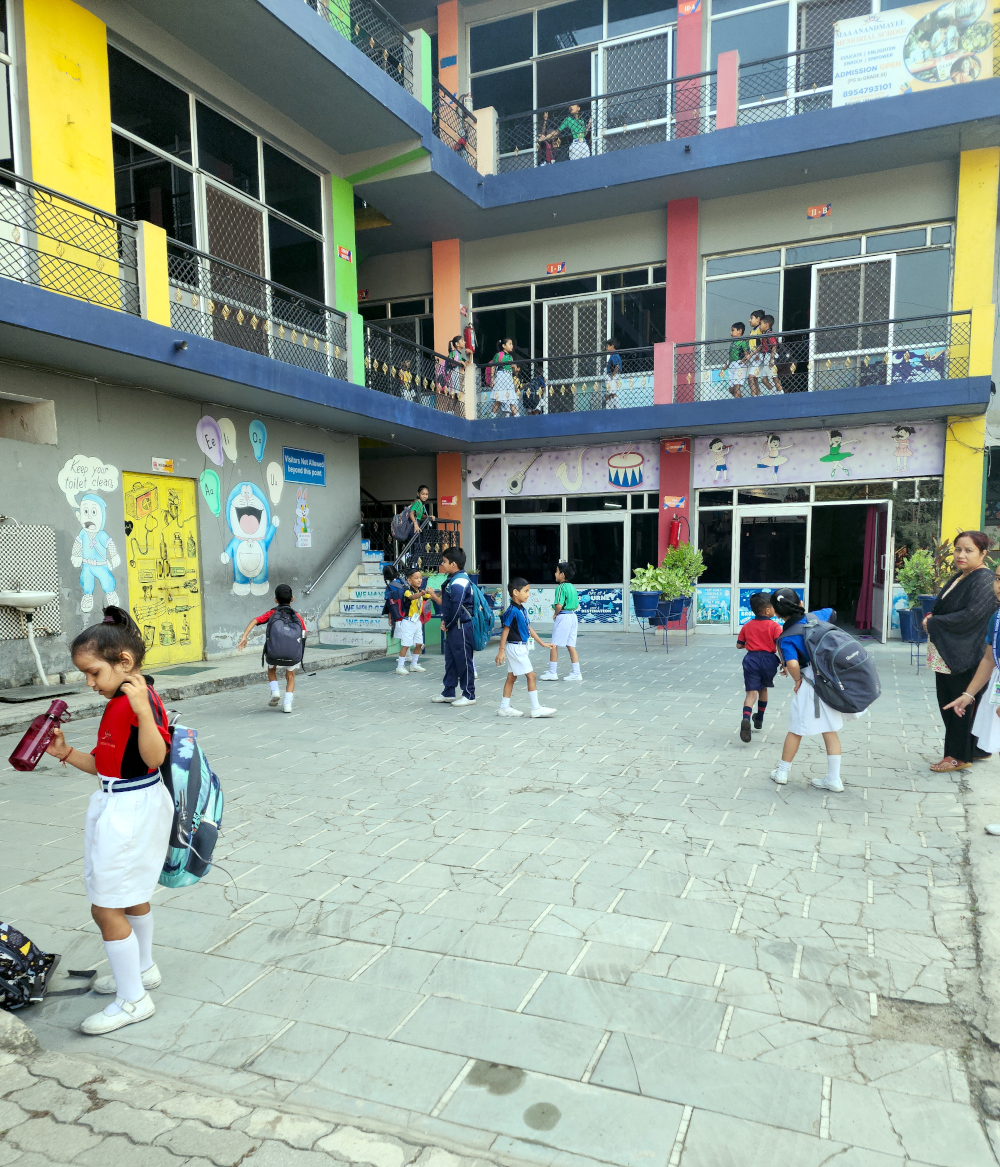
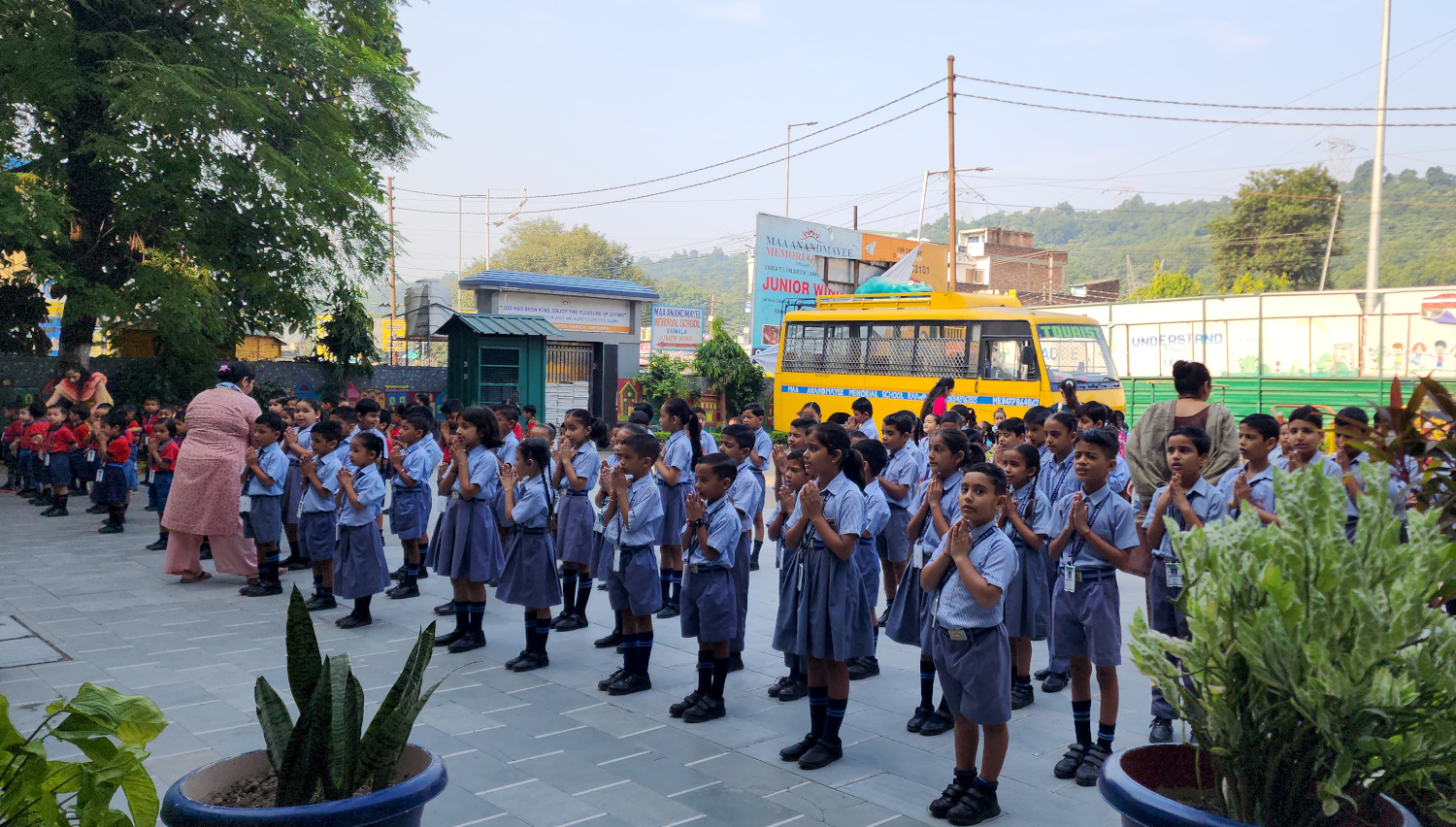
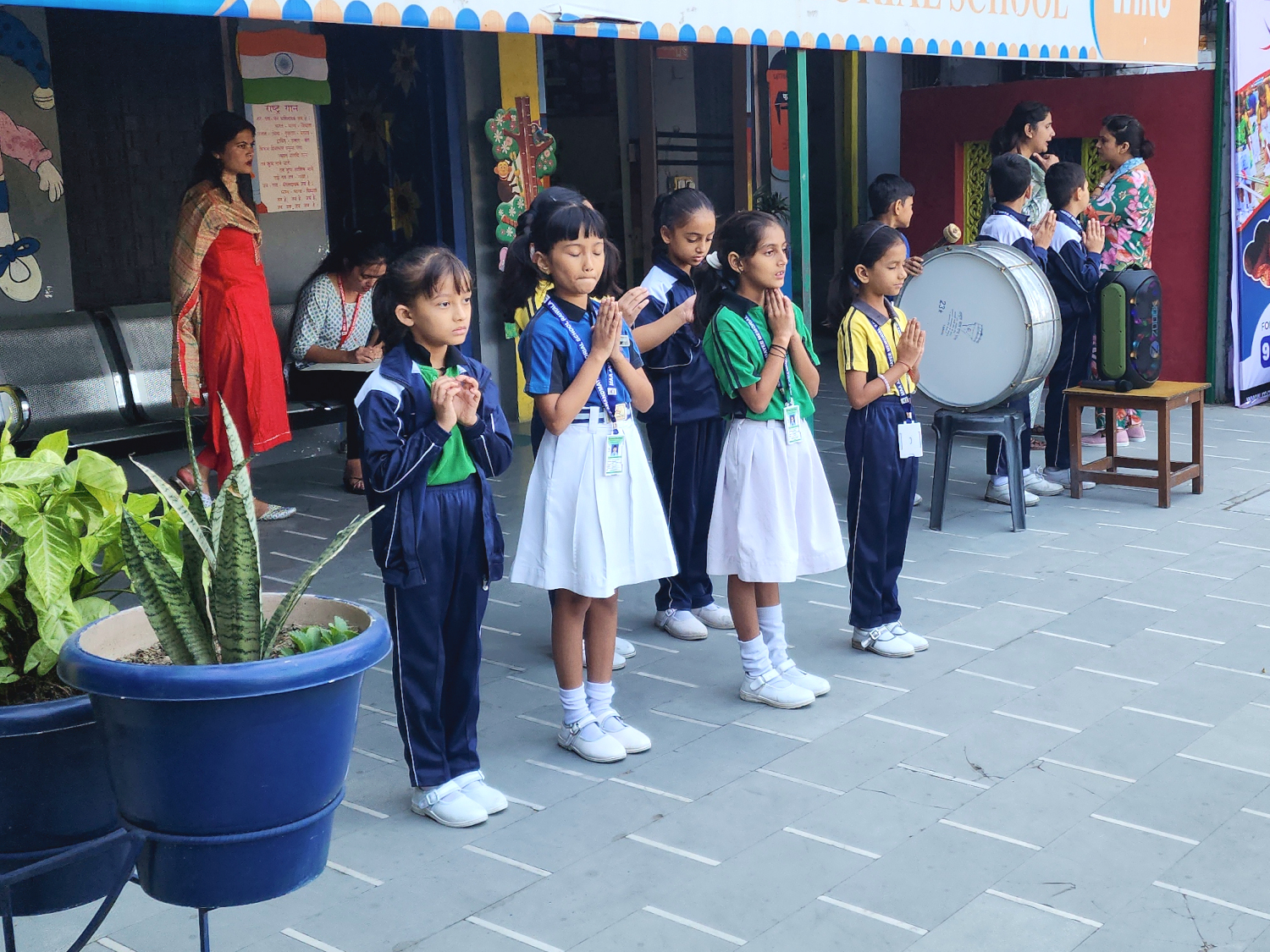
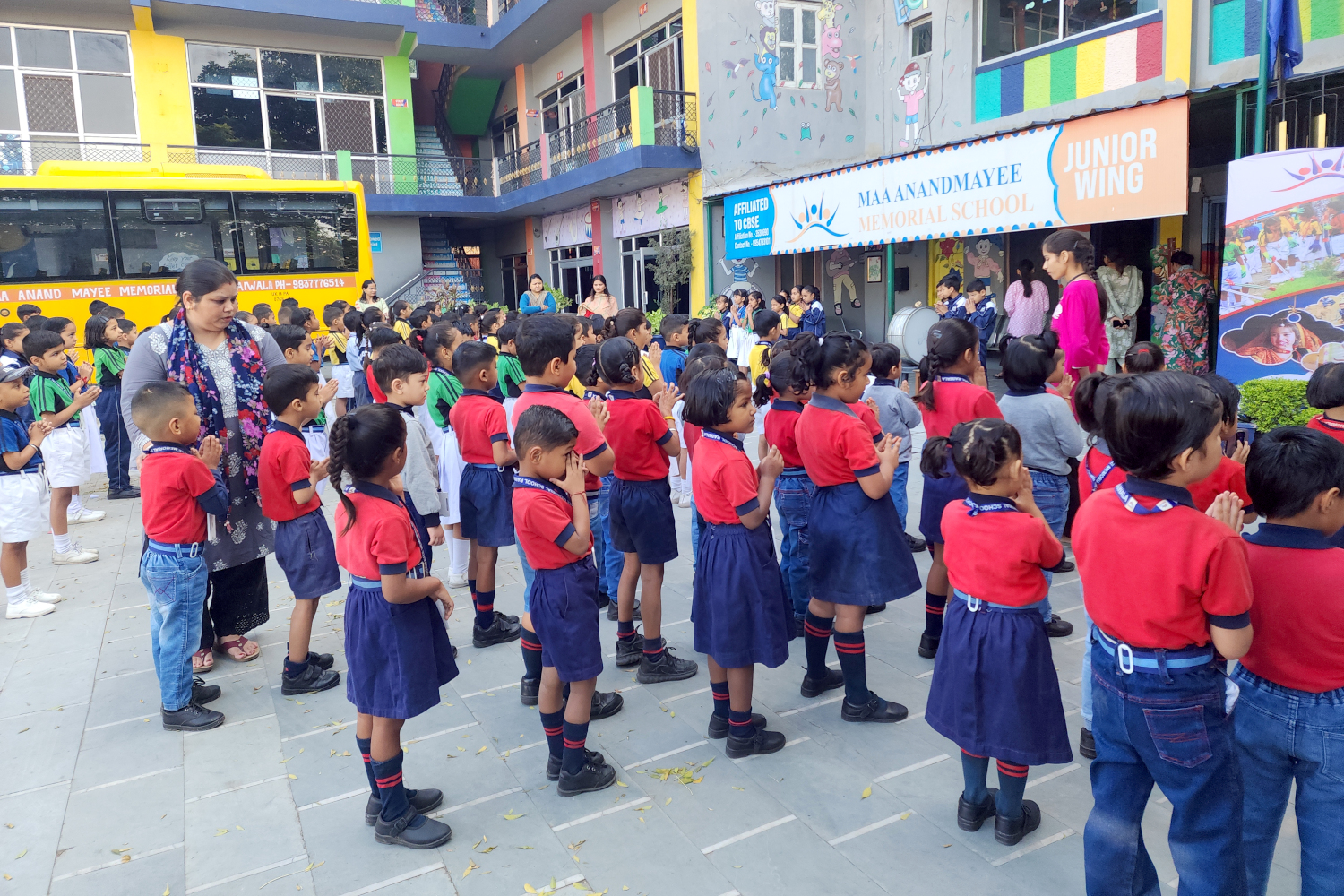
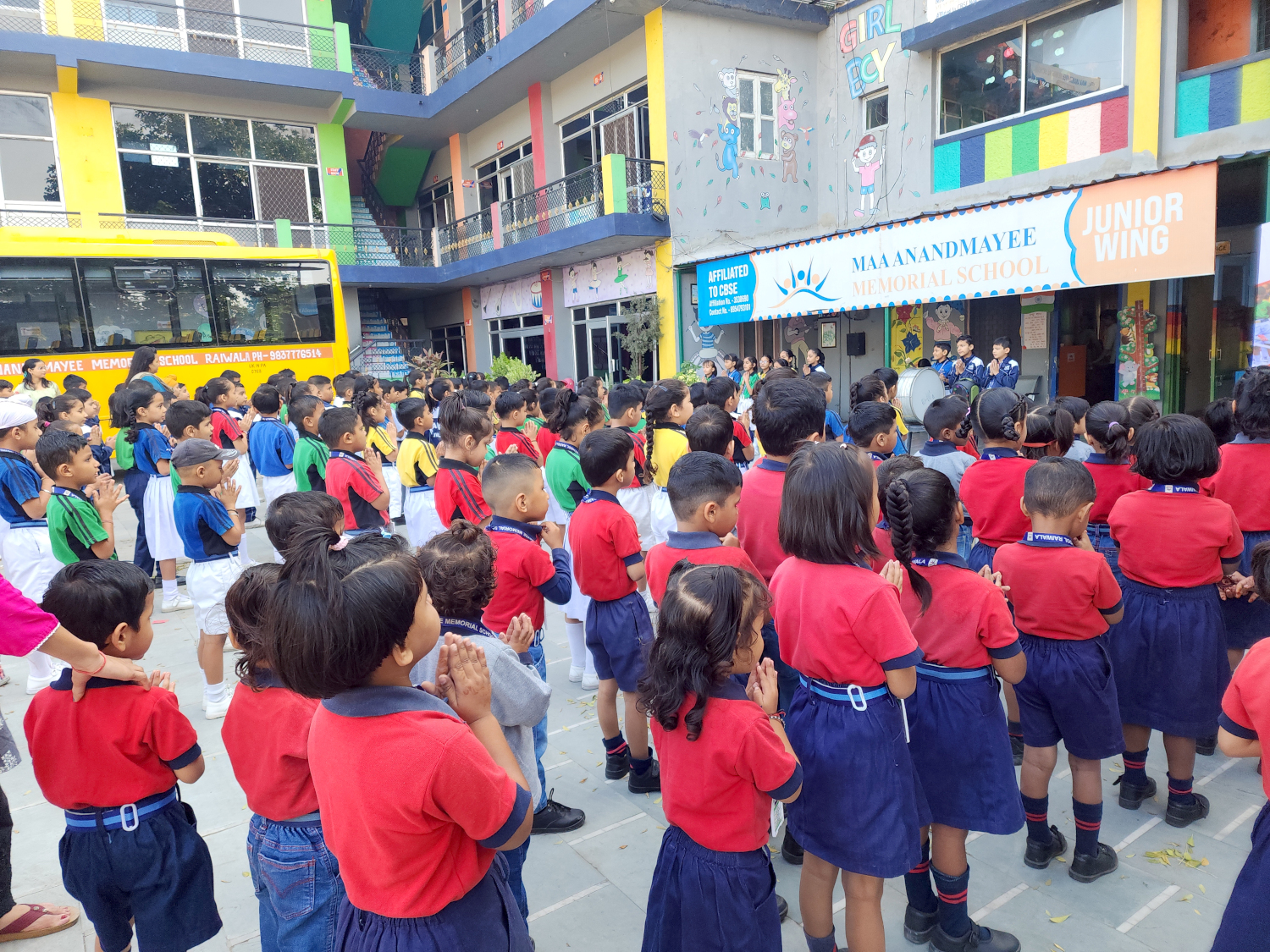
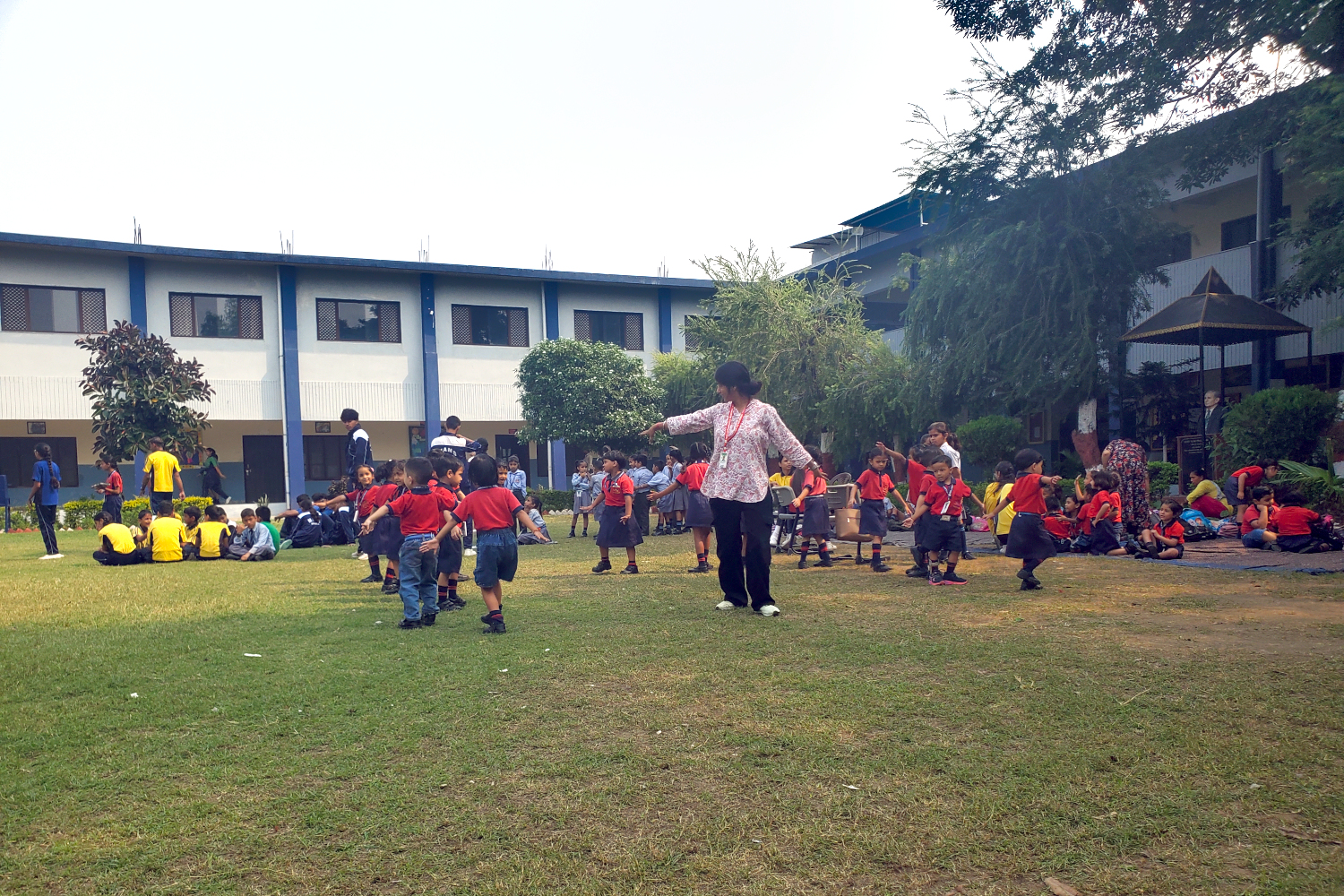
KIMBERLY: I’ve learned the routine at Junior Campus now. Every morning the kids have an assembly outside, which is impressive to watch. The older class leads the program (prompted by teachers on occasion), banging drums and doing everything in unison. This begins promptly on time, even if the school buses, that park in the same area are running late. Which is one of the reasons the kids are not allowed to stray one inch from their place in the line. The students who arrive late on the bus, walk in single file, as quickly as possible, drop their bags and join their peers in line singing the opening songs, reciting pledges to family and country and doing exercises.
If anyone is celebrating a birthday the children stand in front and receive recognition. Later, as classes began the birthday student, accompanied by a friend, visits all of the classrooms and gives the teachers (and any other adults) a piece of candy.






THURSDAY 10/17
DENNIS: Both the 11th Grade and the 12th Grade are nearing the end of their slender English Literature textbooks. So I ask my supervisor what will happen when we reach the end of them, and she replies, “We’ll discuss.” I hope so. Today, the air is exceptionally smoky. The locals burn their trash, as well as leaves, rather frequently, and on some days the air becomes worse than in a smoggy city. The school does it too — one burning spot is directly below our balcony, and the smoke can drift up into our apartment if we leave the windows open. On some days, I have to wear a mask when I go for a walk.
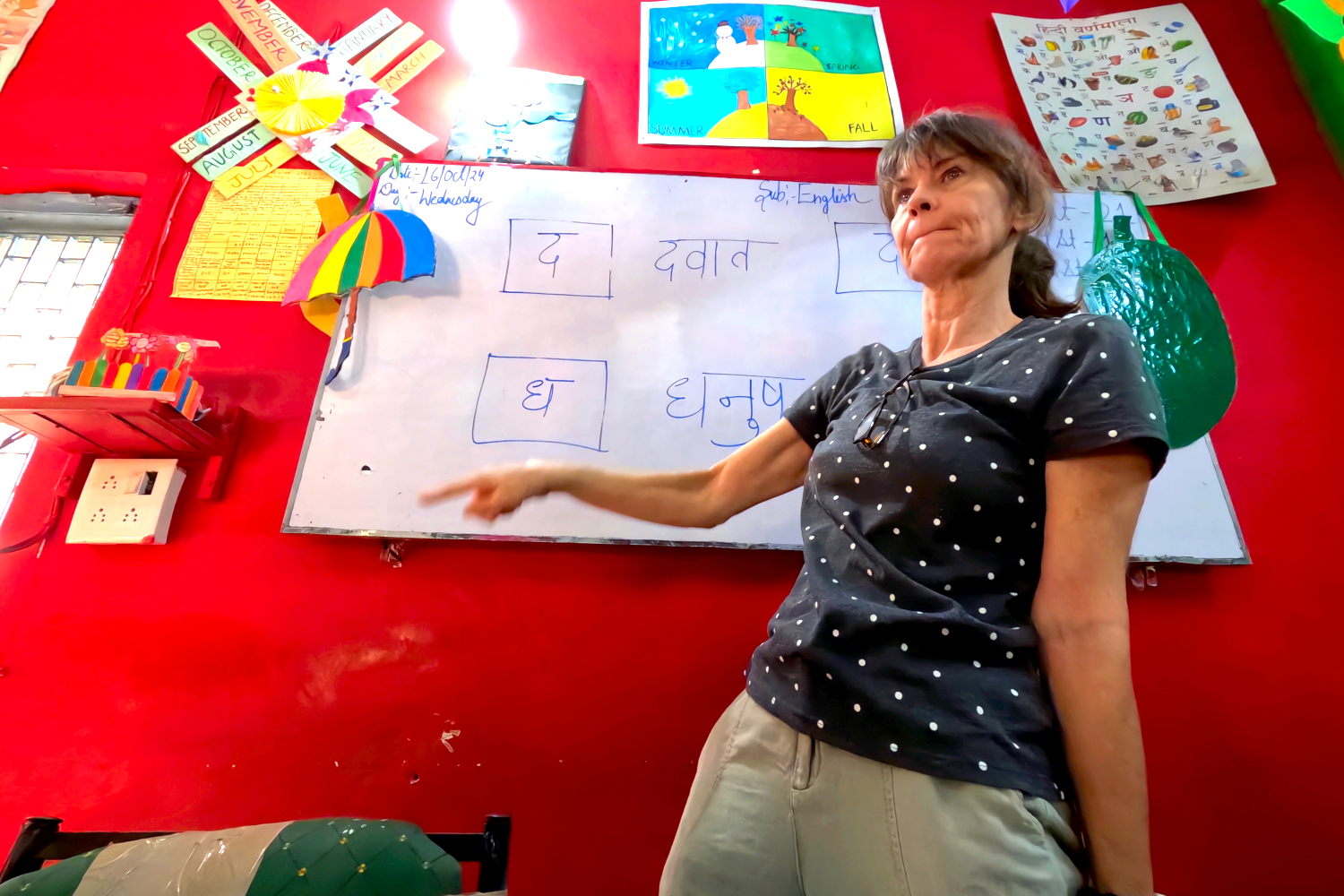
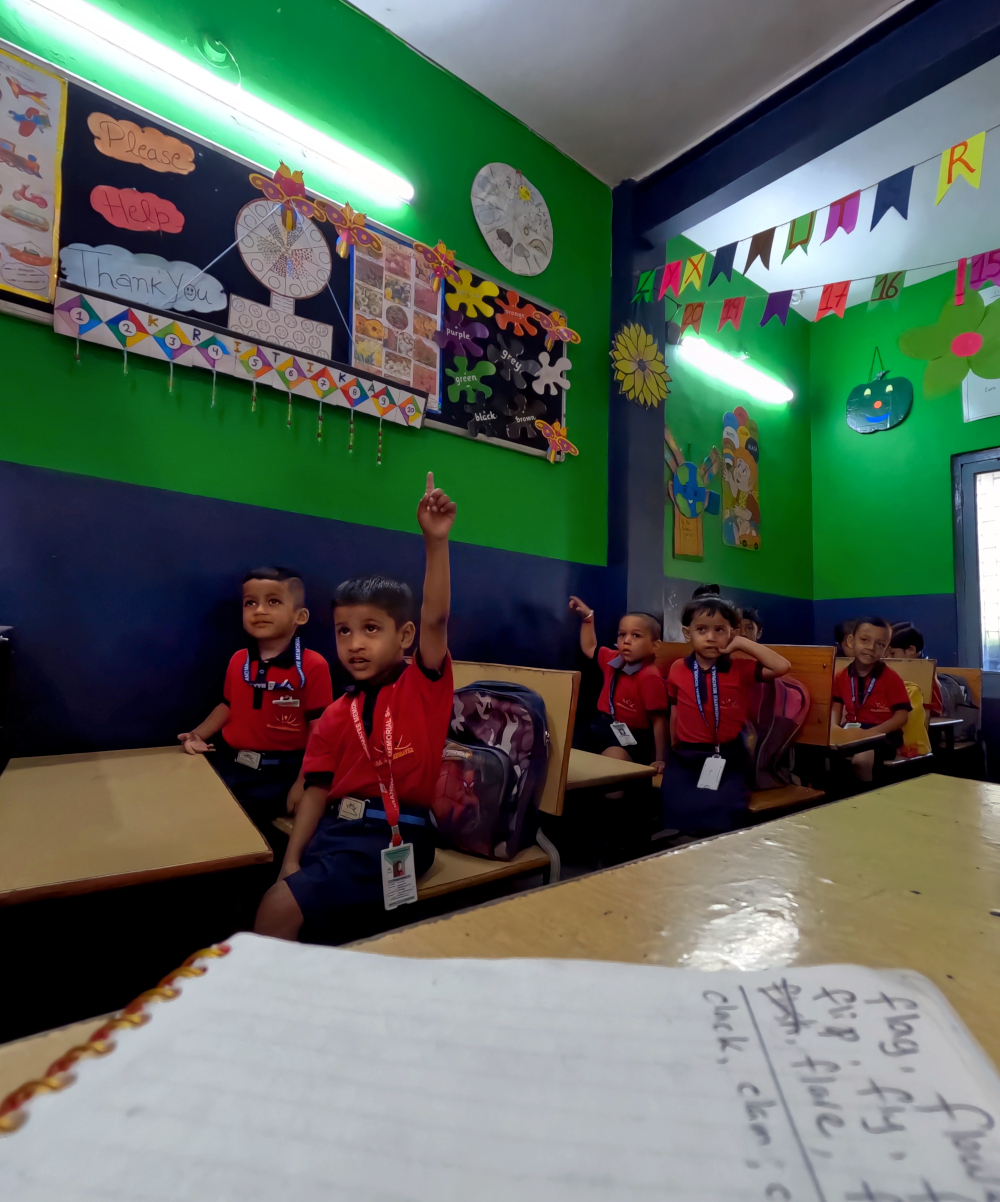
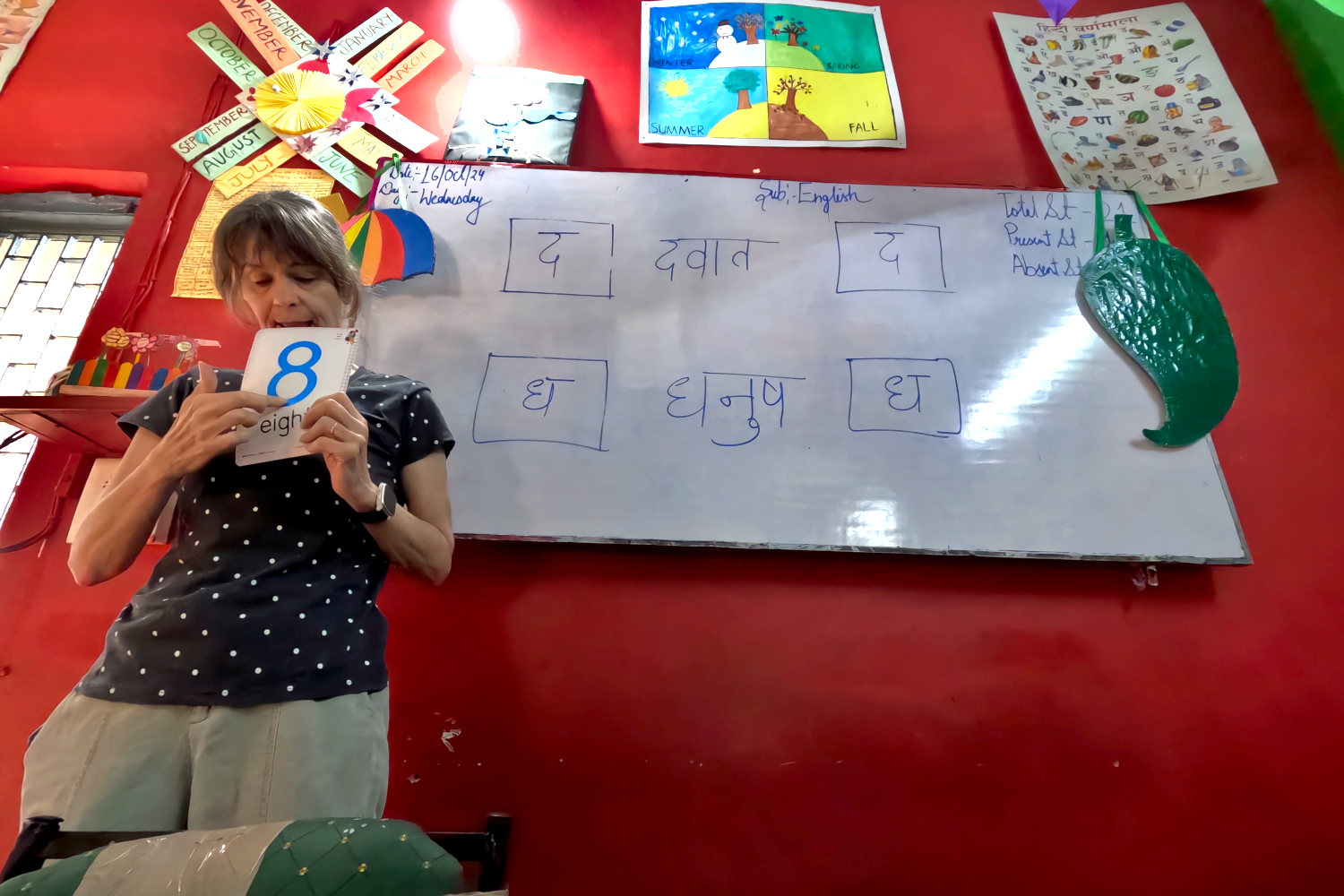
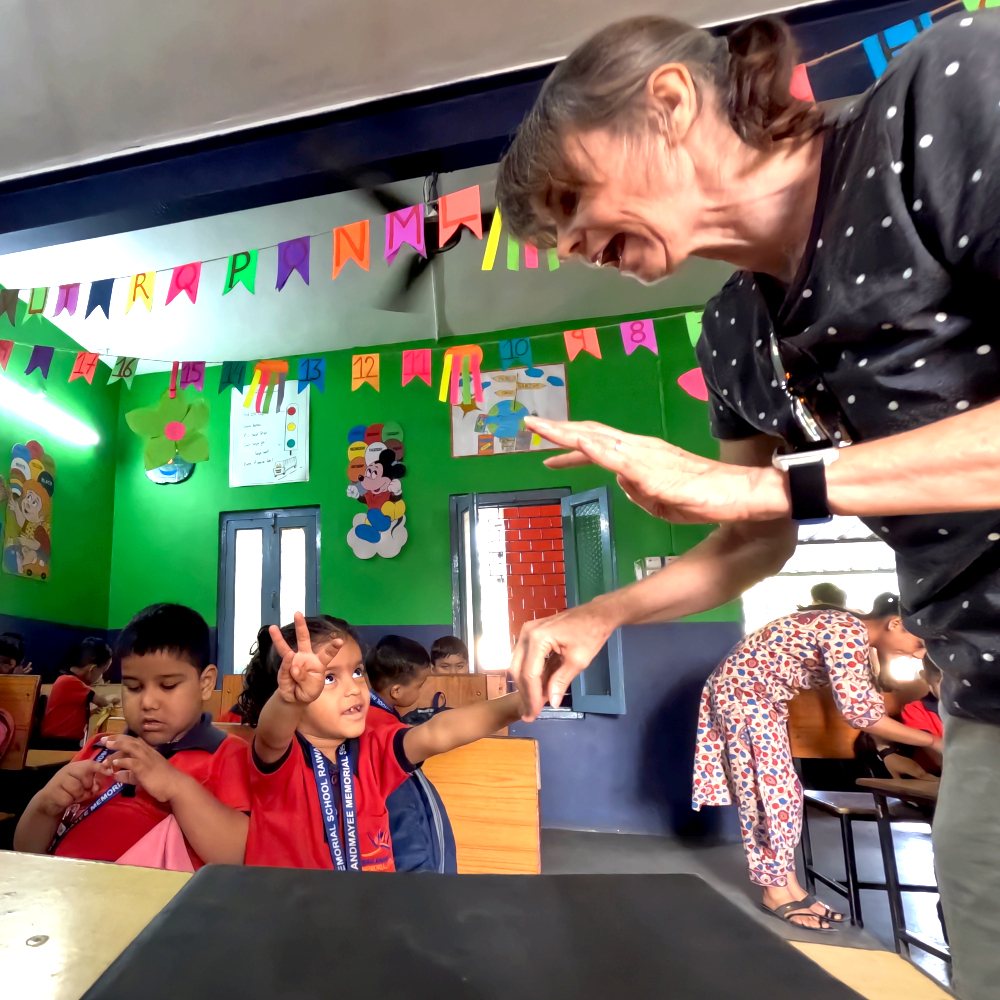
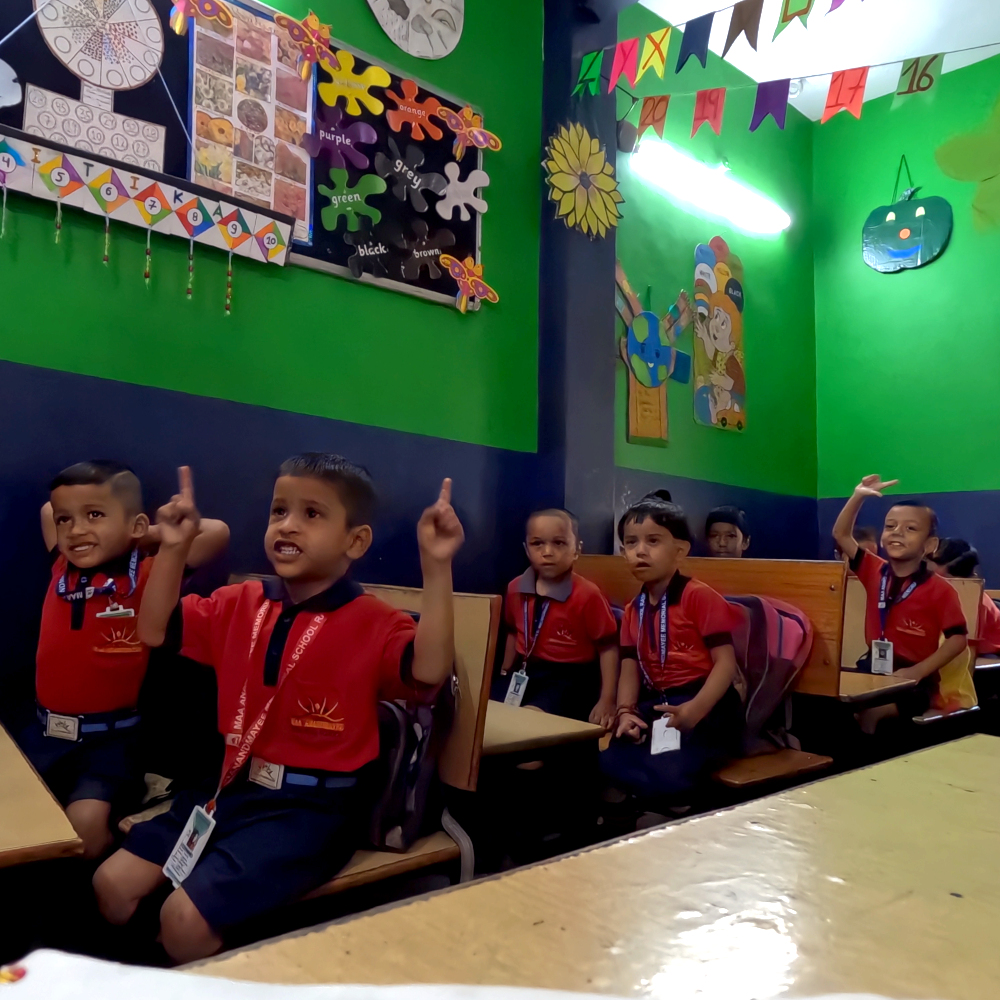
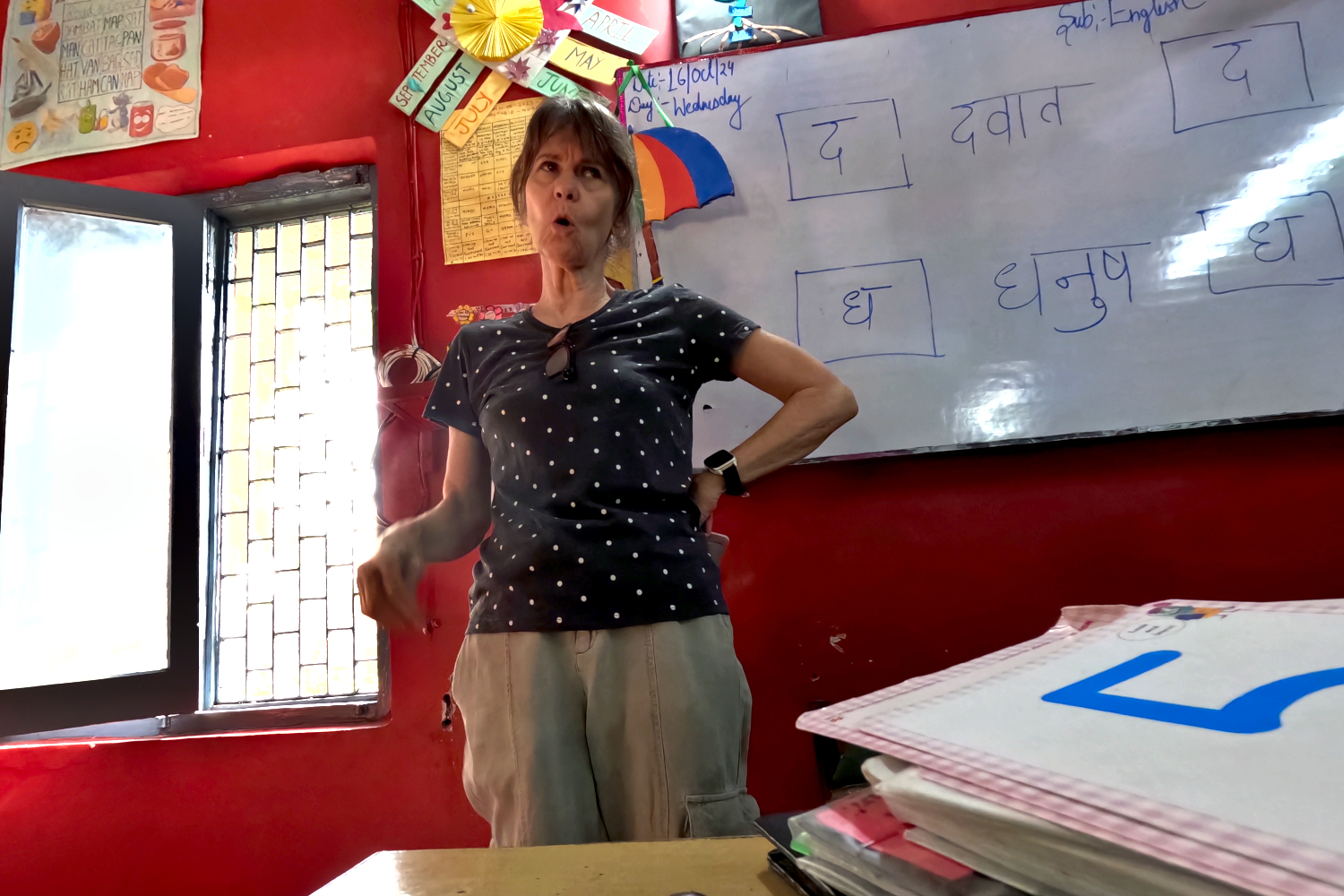
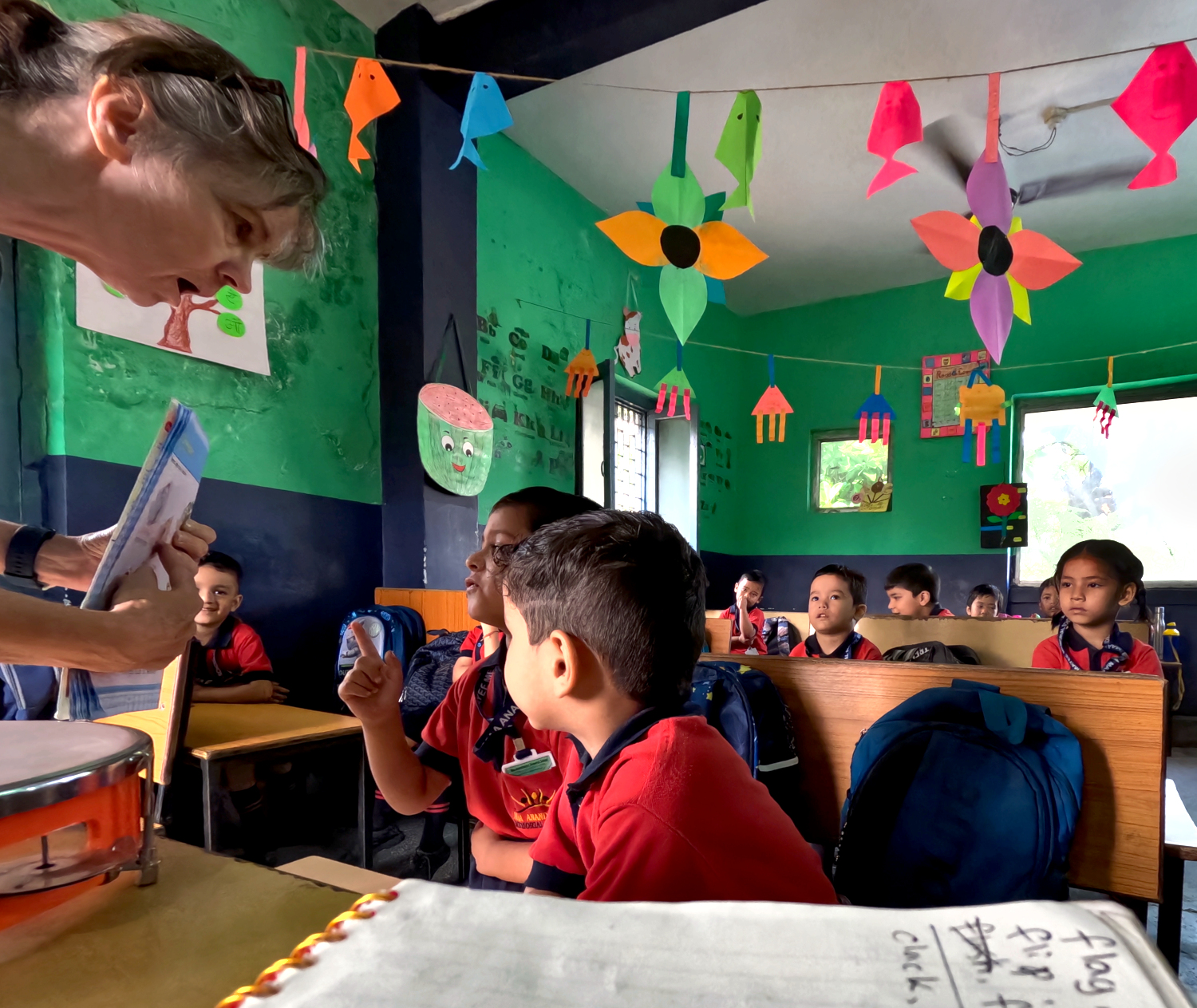
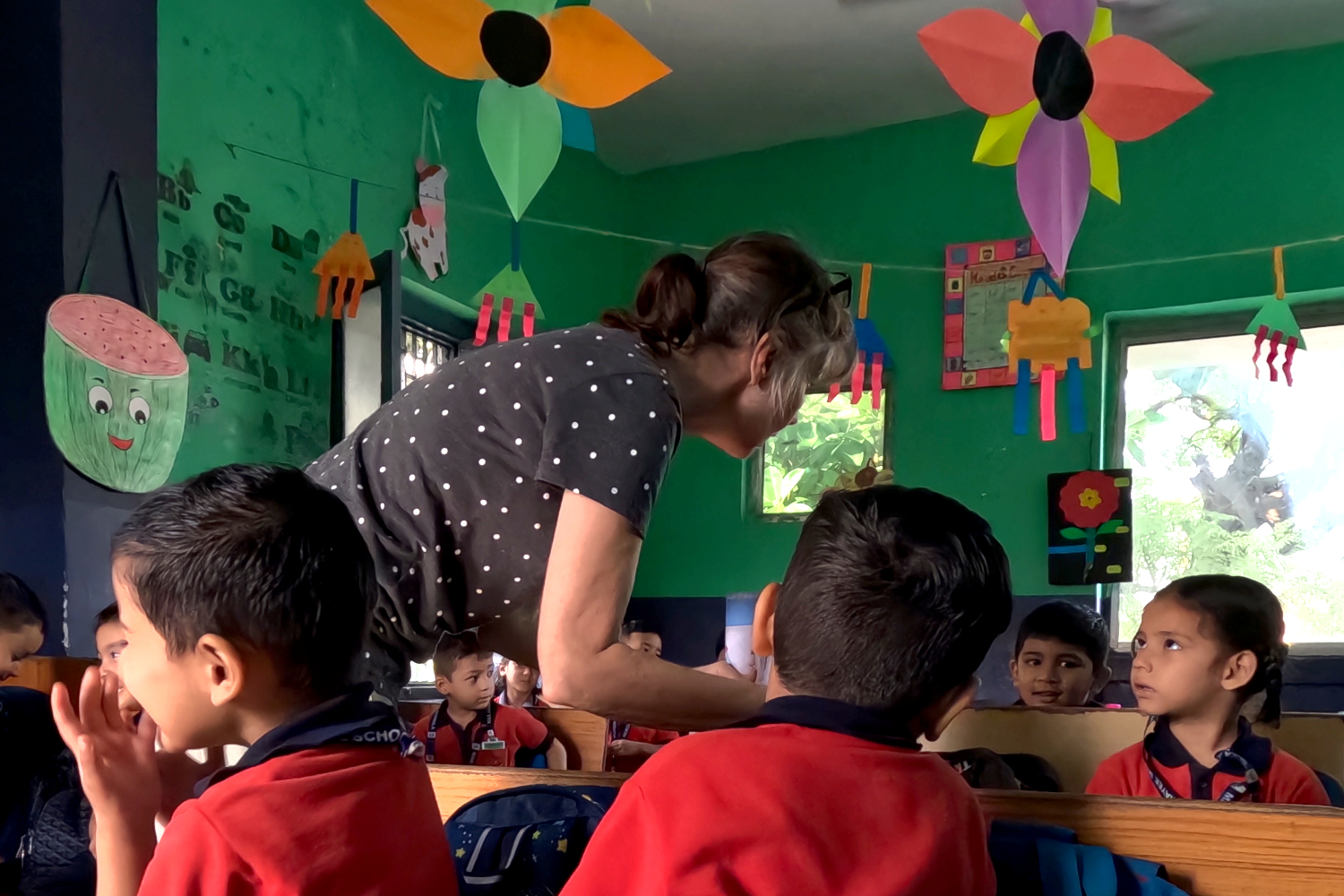
KIMBERLY: Typically, I walk into the classroom at the predetermined time and am shown the pages or assignment, for which I must create a lesson plan for on the spot, while the restless kids squirm. The photos here are from an impromptu math lesson, ‘cuz sure, why not? Part of my modus operandi is to walk around and check in with each table to make sure they were grasping the material.
FRIDAY 10/18
DENNIS: Was supposed to have one class today (Friday tends to be light for me) but it cancelled. And I don’t find out until I already have walked across the road to the campus. As I’m about to leave, along comes an older gentleman (older meaning older than most of the teachers, perhaps 60) who tells me to come into his office, because he wants to talk to me. He, it turns out, is the son of the school’s founder, and he holds some kind of supervisory position at the school, the title of which is not clear to me. I wonder if he intends to give me a stern reprimand for some unintended breach of protocol. But instead, he extends his warm welcome to the school, and asks if there’s anything I need. I mention, as tactfully as possible, that I’m still fuzzy about my schedule, because nobody has given me a concrete copy of it. He immediately goes into gear, calling in the principal (whose office is next door) and instructing her to sit down with me and iron out the specifics. Which she does; but I feel a little awkward, fearing that I’ve cause her some embarrassment.
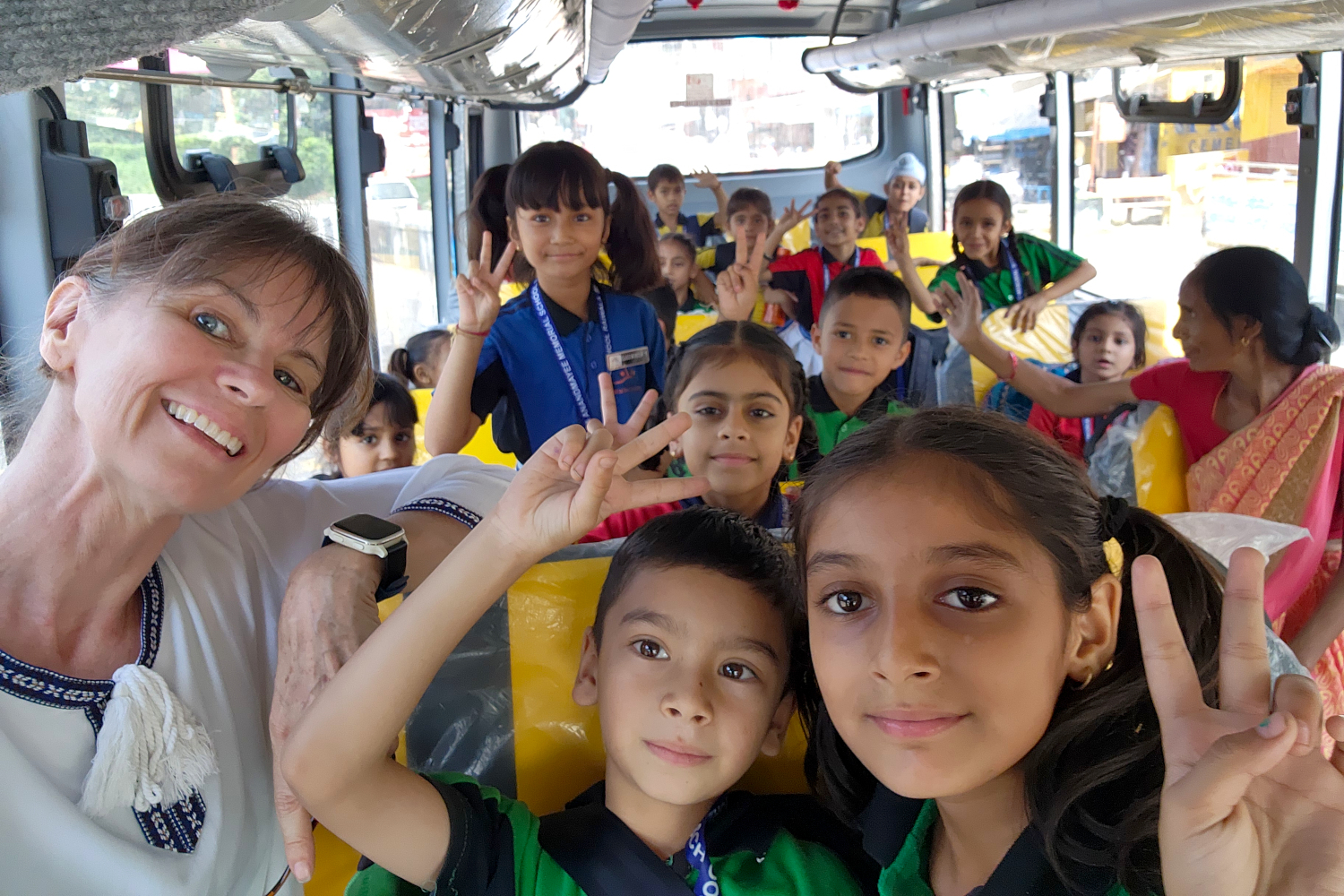
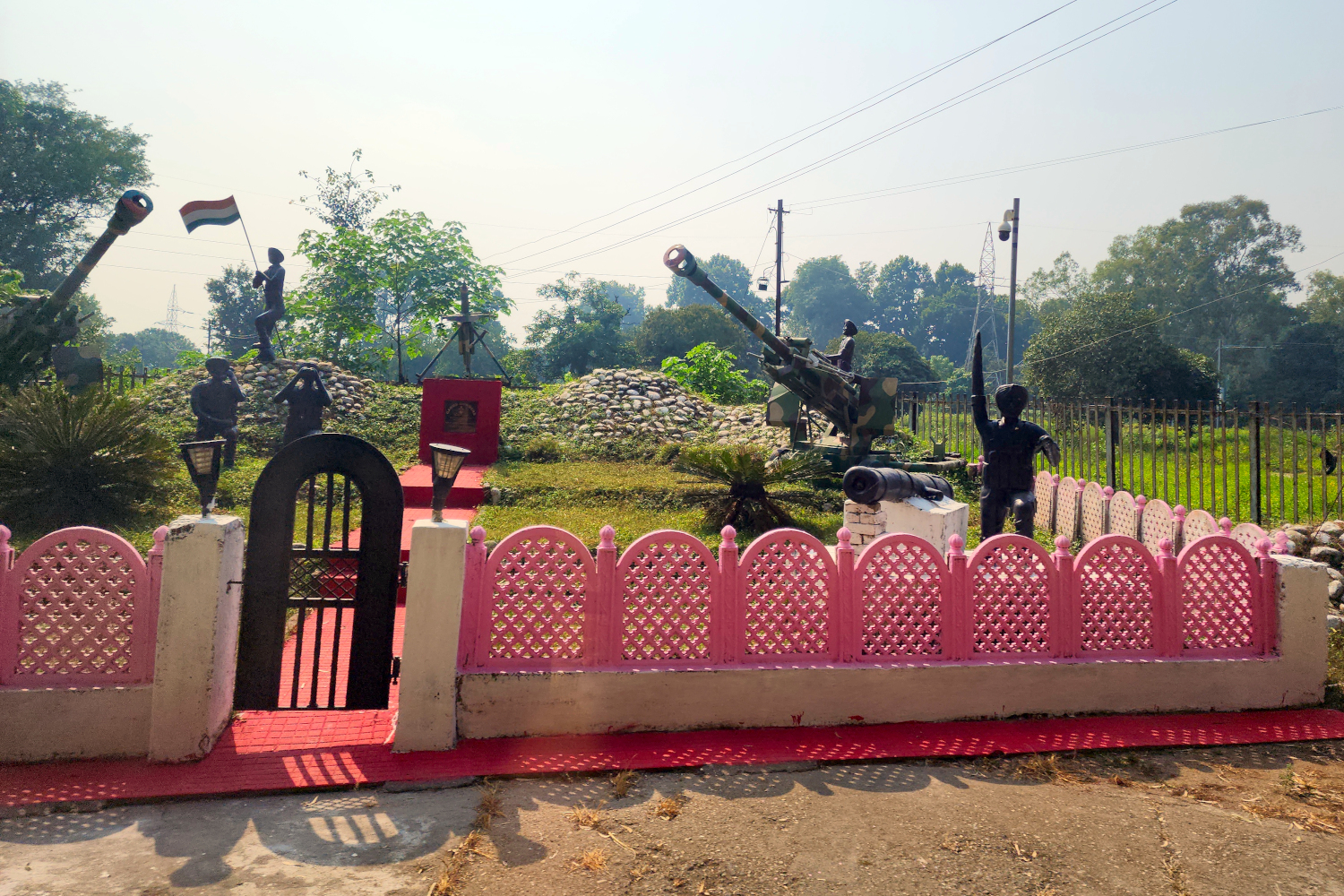
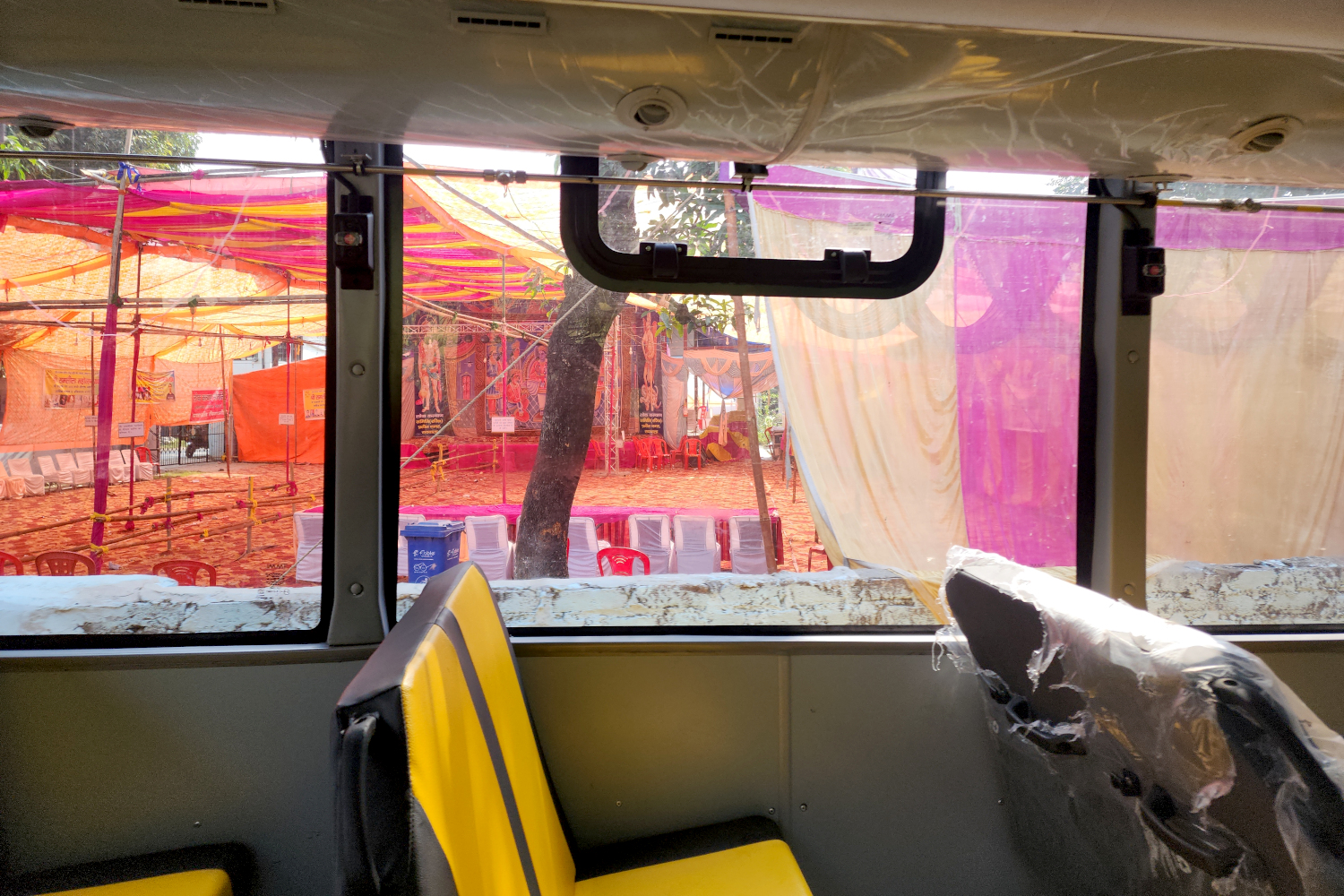
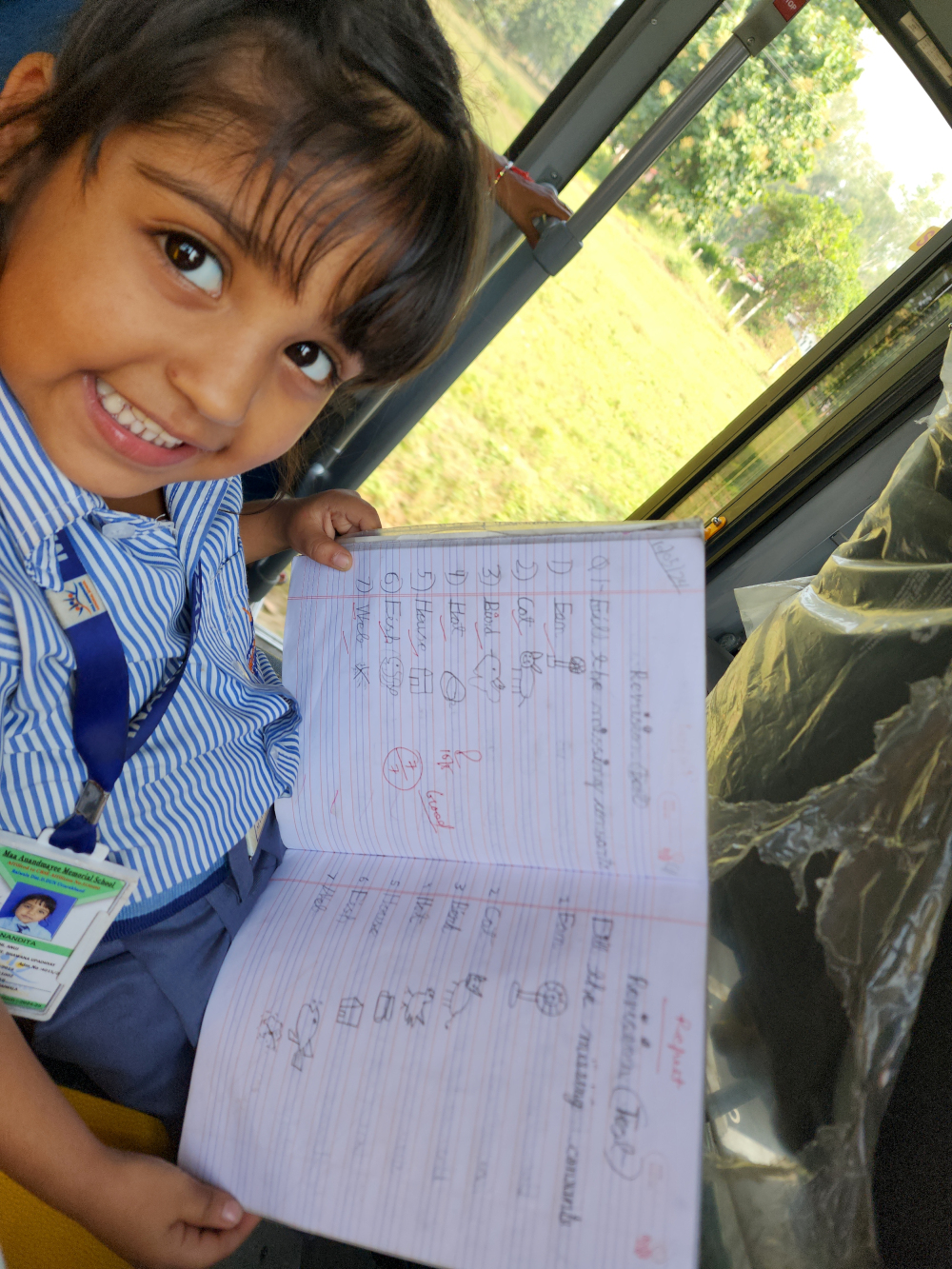
KIMBERLY: The daily bus ride home tends to be more lively that the ride to school in a van. We even drive onto the military base near the school to drop some students off. The kids show me their English homework and try to have a conversation in English or teach me some Hindi. Out the bus window today, we get a view of prep for some celebration. Yes, another one. And that night, we hear a celebration going strong, well toward midnight, even though it’s probably 3 or 4 miles away, thanks to the heavily amplified music and the way sound resounds across the terrain.

SATURDAY 10/19
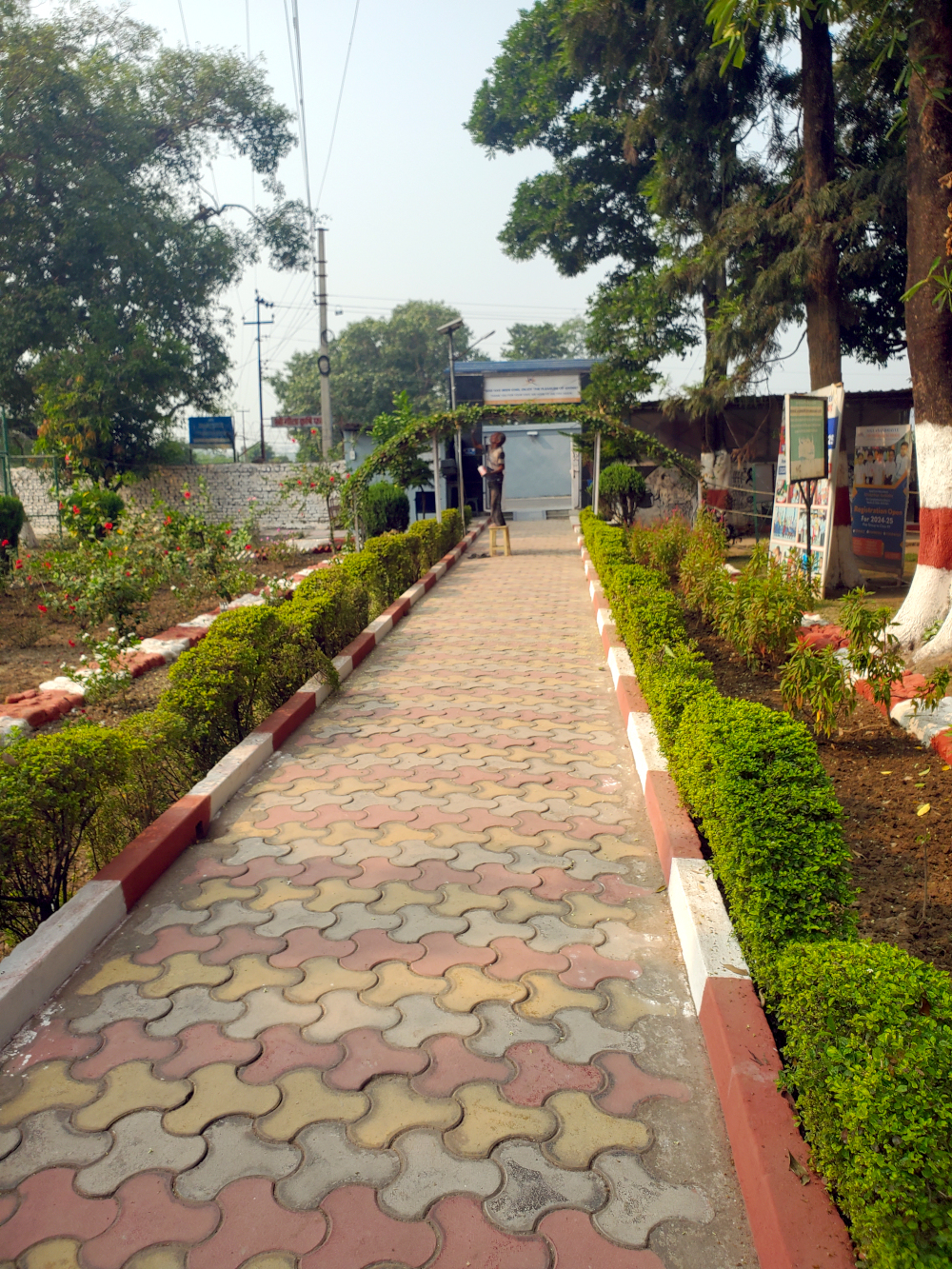
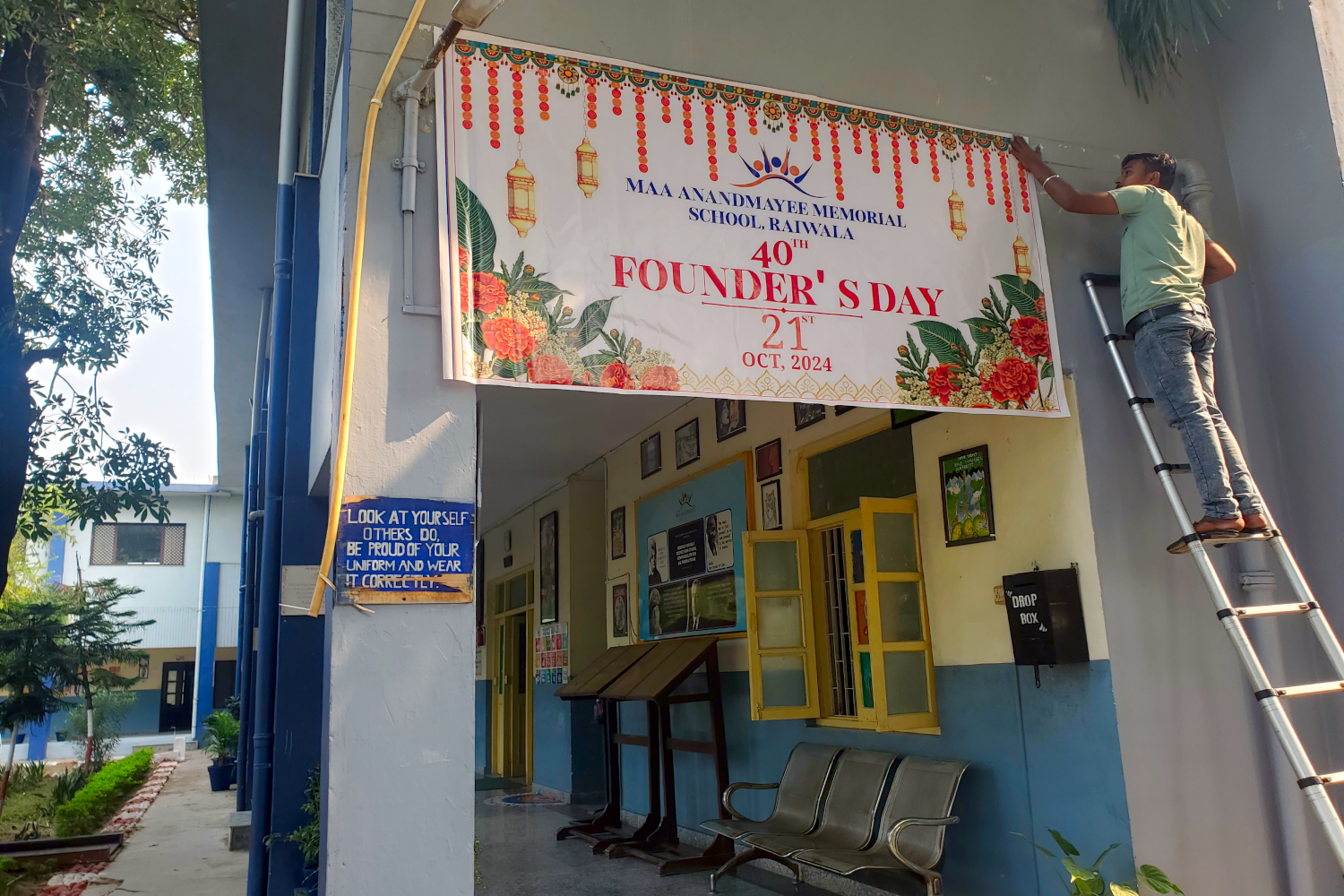
The Senior Campus is being busily readied for the big Founders Day festivities, coming up very soon.
This week we finally were able to cast our absentee ballots in the upcoming U.S. election., the first time we’ve done so online. A fairly reliable barometer of the health of a democracy is how easy it is for citizens to vote; and there is no reason in this era that everyone cannot have the option of voting online — there are adequate safeguards against fraud just as there are for in-person voting. Unfortunately, there are powerful interests in the U.S. that profit from making the act of voting difficult, and sowing distrust of the democratic process itself. But fortunately, our official state of residence has more enlightened laws; and we were able to vote with a minimum of Kafkaesque hoops to jump through. So for the moment, we are upbeat about our contribution to the future of America and the future of democracy.
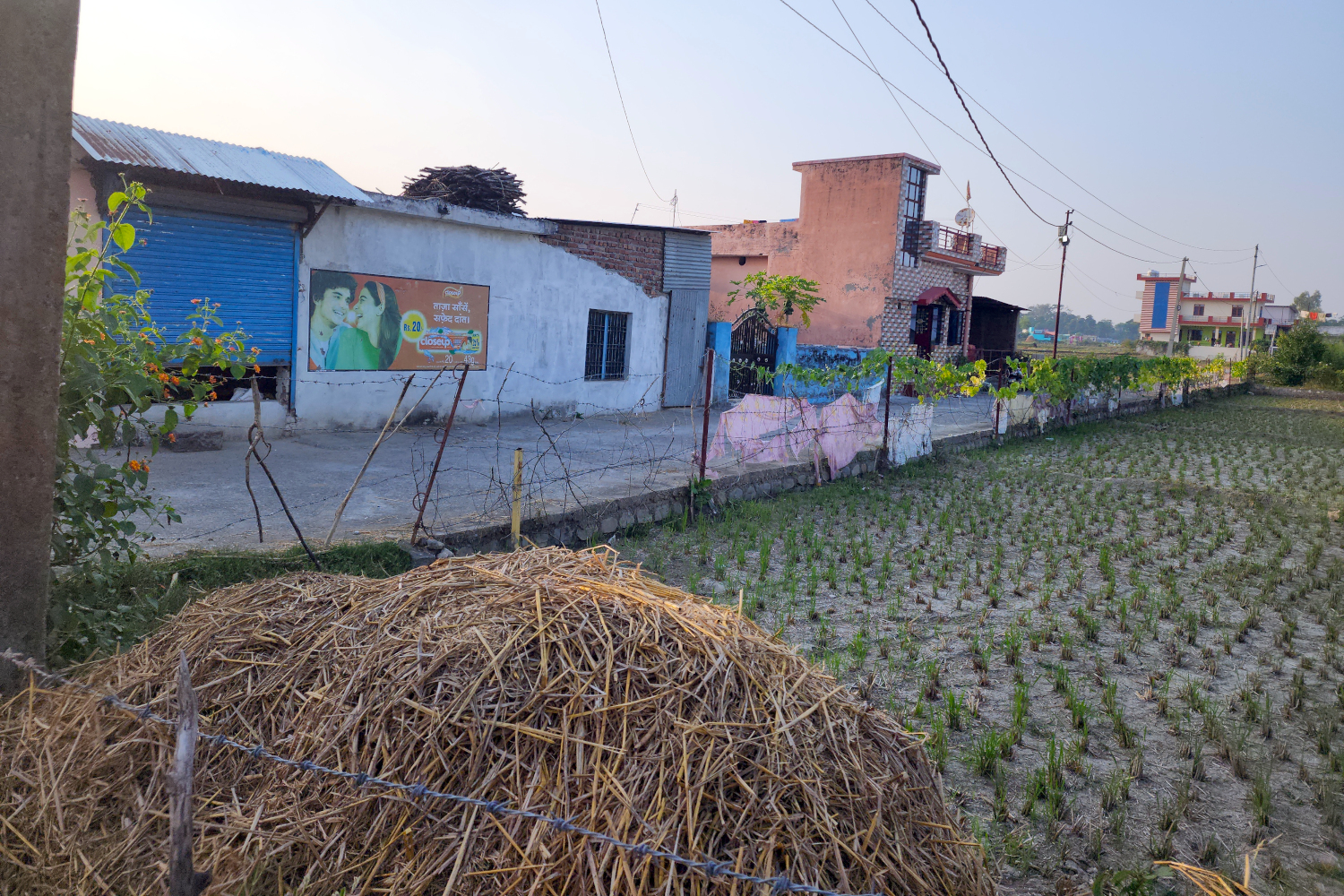
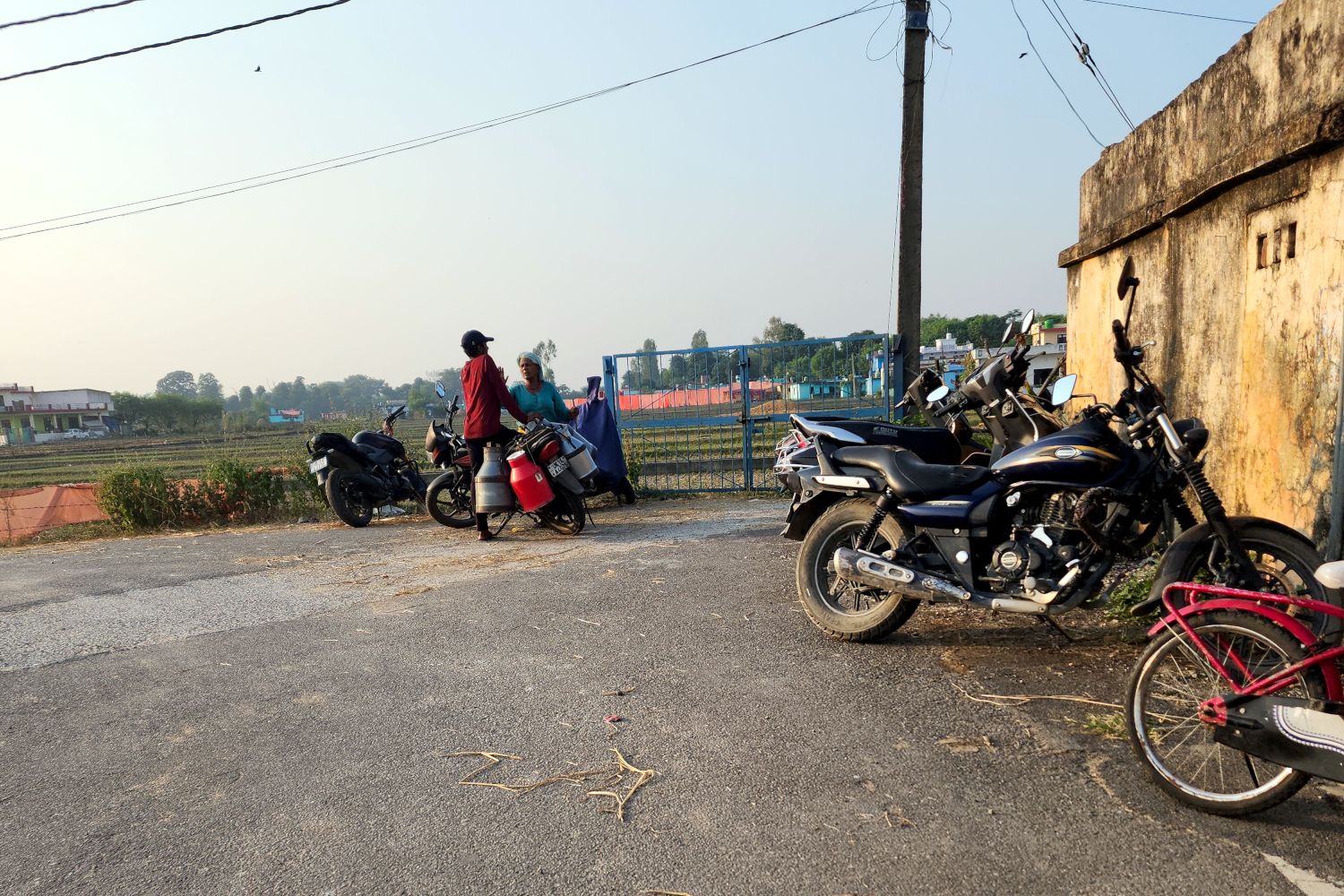

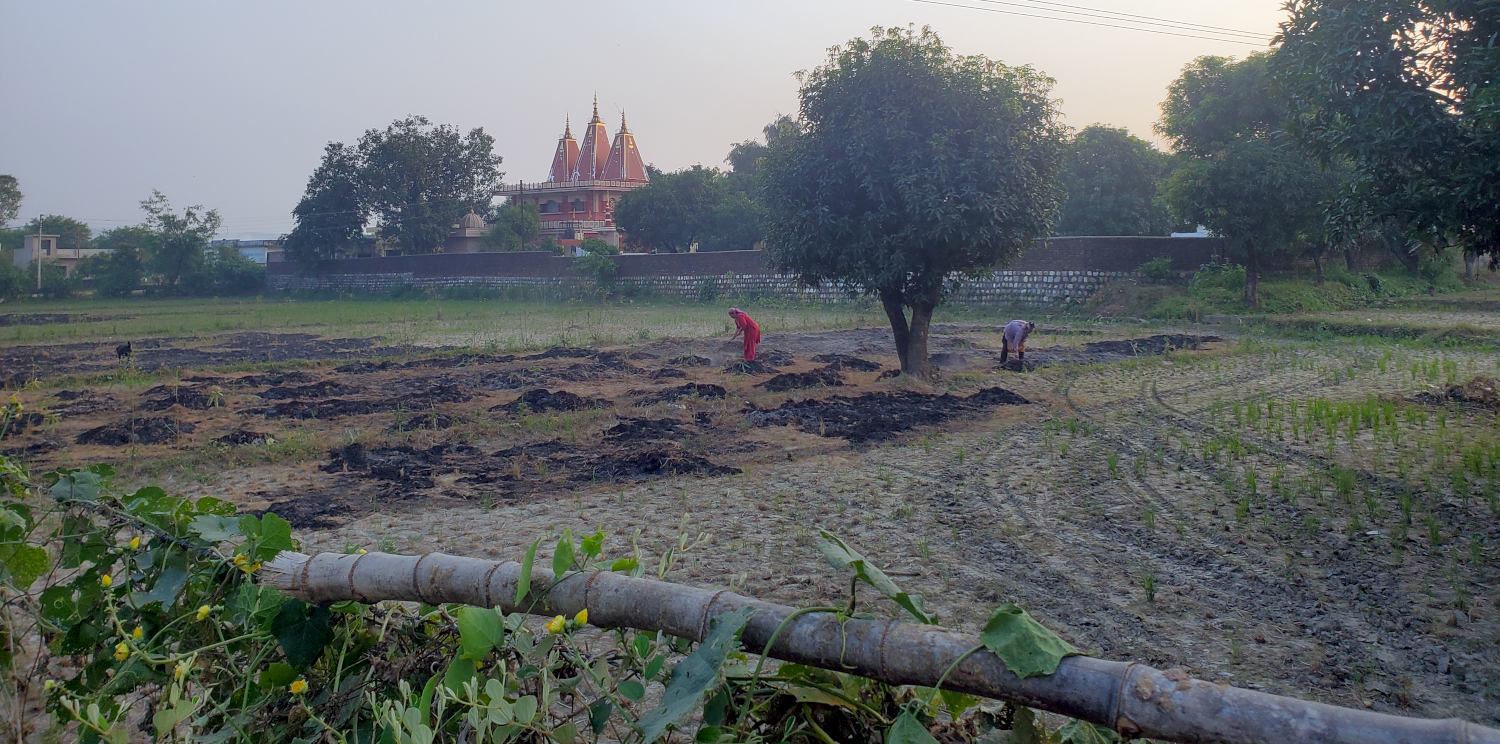
Anyway, we try not to think about the storms brewing on the other side of the world, but to focus instead on what we have here on this side: our students, the monkeys, the hornbills, and the colorful, sometimes puzzling, always fascinating life in this rural community.
10/13-19/2024
If you enjoy reading about our adventures and impact, consider supporting us on Patreon!

 world travel with a theatrical flair
Leave a comment