

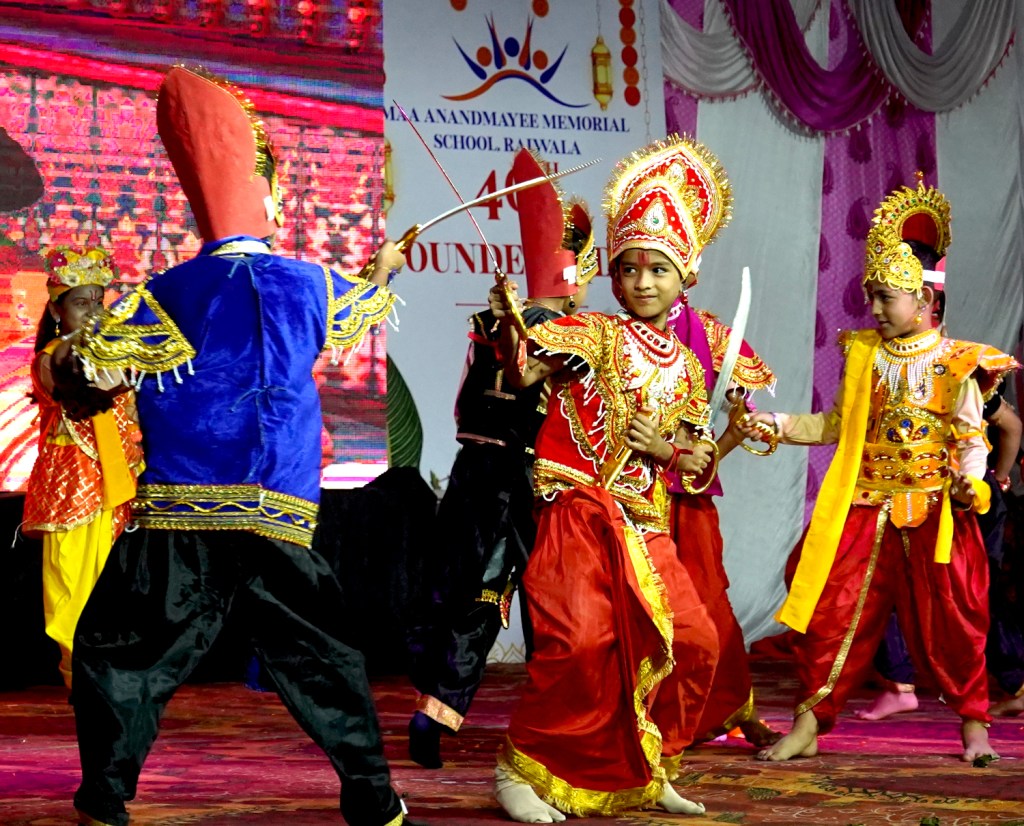
After much anticipation and planning and decorating and rehearsing and touting and ballyhooing, the Big Day arrives: Founders Day, the 40th anniversary celebration of Maa Amandmayee Memorial School (MAMS, it’s often called by those in the know), the school where we’ve been volunteering through WorkAway in the Indian village of Raiwala.. The kids not only get out of class for the whole day, but they get to have a big party at which they have an opportunity to showcase their talents for an appreciative audience of not only their peers, but the school staff and many other adults from the community.

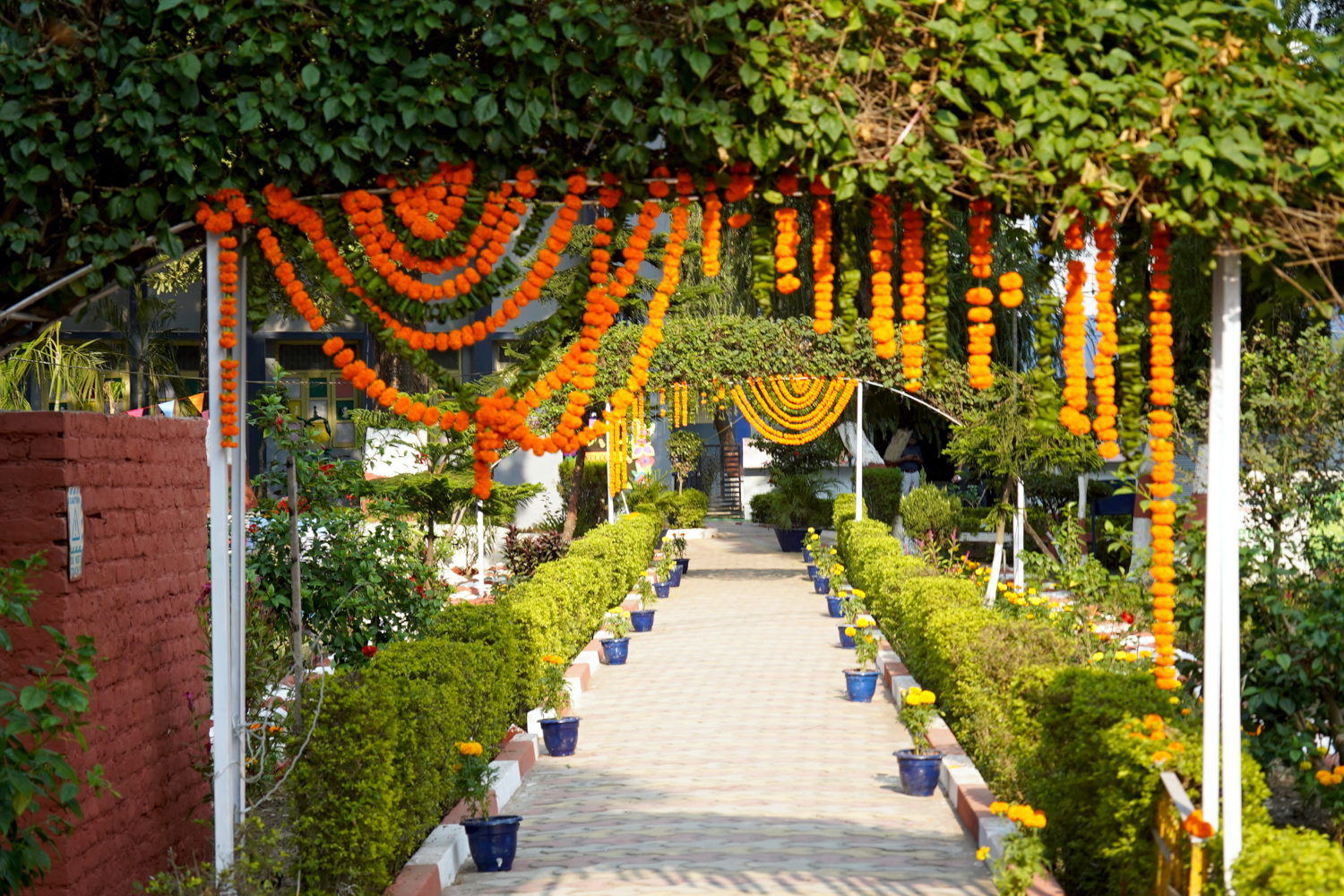


As preparations for the festivities begin on the day in question, we are uncertain about what time we should go to the campus — perhaps our help would be needed? Initially, we were under the impression that teachers should show up at 11:00 a.m.; but when we message the principal about it we get no response; and then when we just head on over to the campus, we don’t find much going on — the event itself, we know, is scheduled to begin sometime in the afternoon. So at 3:00 when we hear some activity from our apartment, we come back, and still have to wait about an hour before things get underway.
Meanwhile, we happen to run into the school director whose father founded the school beginning with about a dozen students, and he tells us a little bit about the school’s history. His father owned the land the school is on, and quite a bit of the property surrounding it. The farmland that exists in the surrounding community now is there because people basically squatted on his land. He was a civic-minded gent, and decided in 1982 to establish a school here in honor of Maa Amandmayee, who had just died.
Who was Maa Amandmayee? She was a renowned mystic and spiritual teacher, revered all over India and reputed to have been the incarnation of a Hindu god. People would come from miles around to hear her discourse. And one of the places they came to hear her was right here — she maintained quarters here for a time, and would deliver sermons out under the huge, splendid tree — which is perhaps 3 or 4 centuries old. (See sidebar for more about her.)
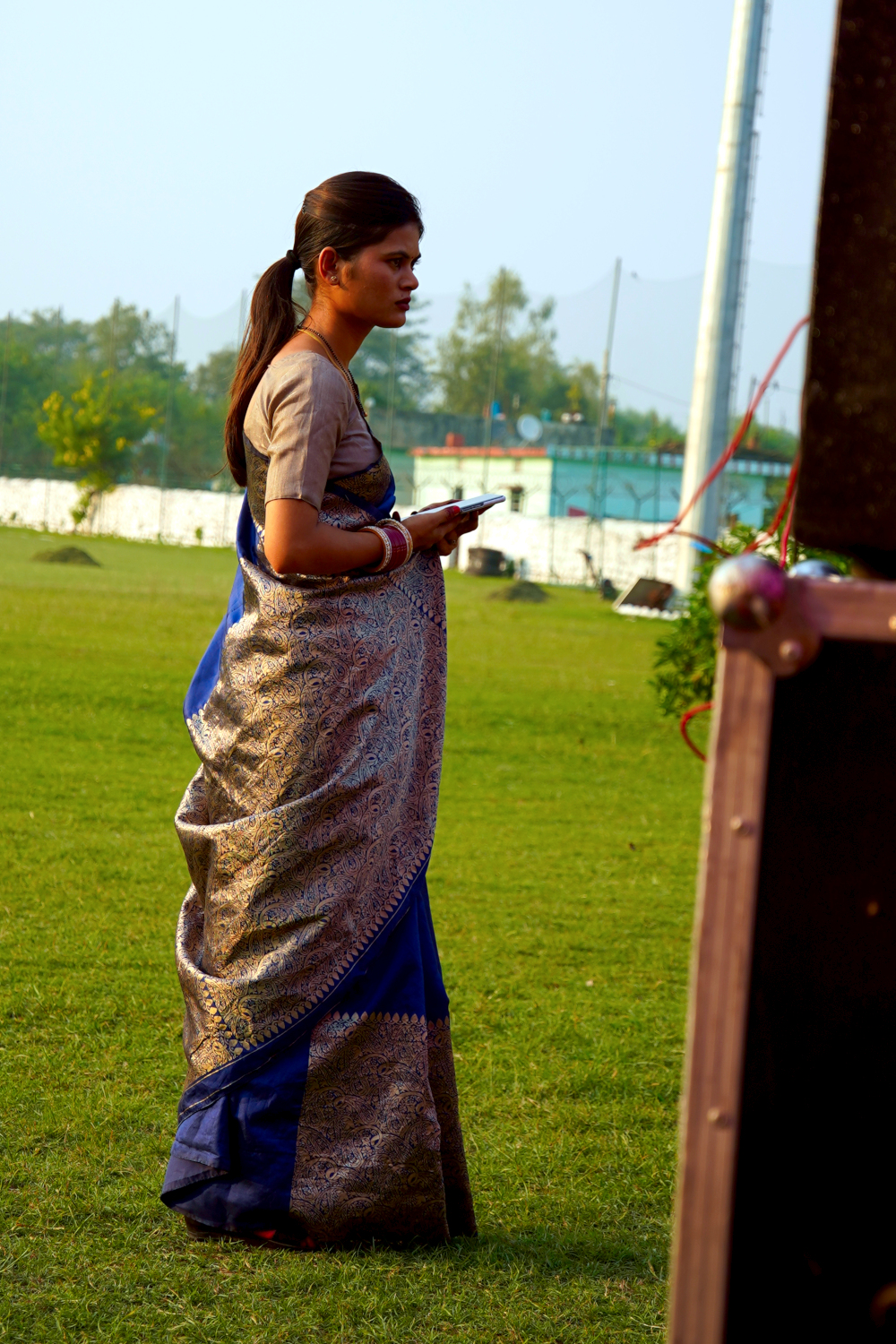

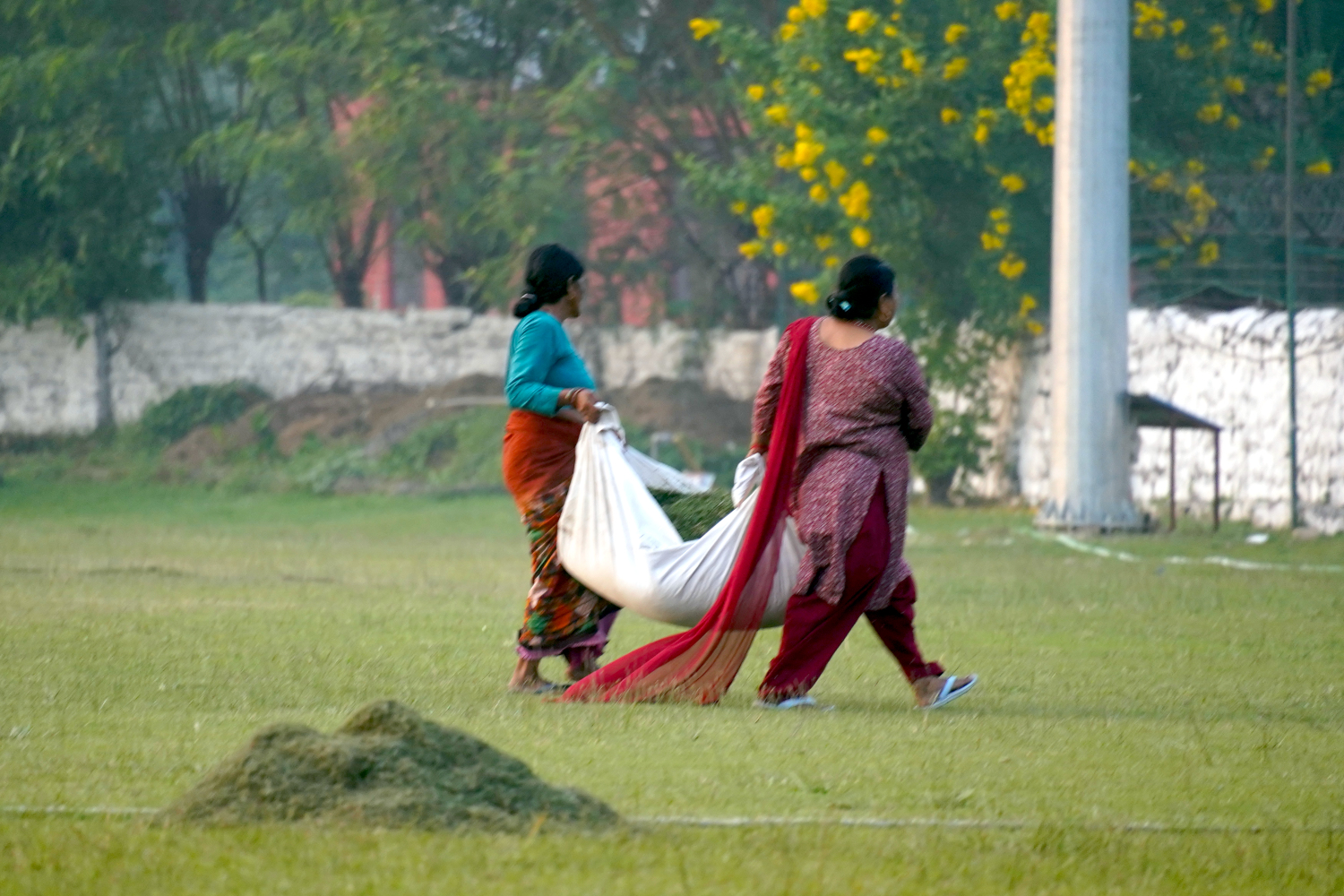

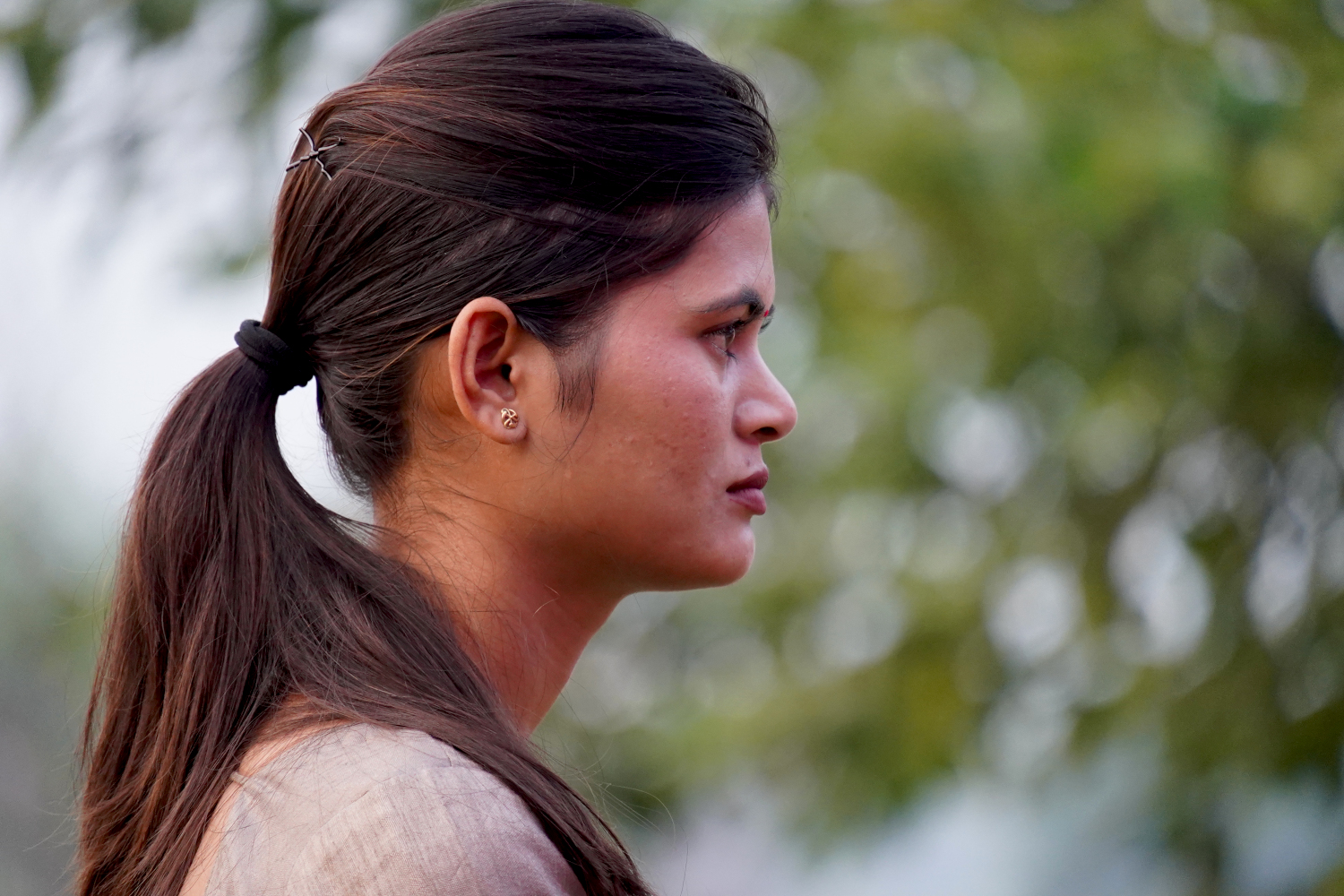

PICTURED: During the program some of the staff continued to do grounds work. Portrait of one of the teachers from Junior Wing dressed in formal attire (Kimberly was told that she would also be dressed in the same attire but maybe that was just a miscommunication.) She was amused because the teachers’ uniform here was similar in pattern to her uniform in Cambodia.
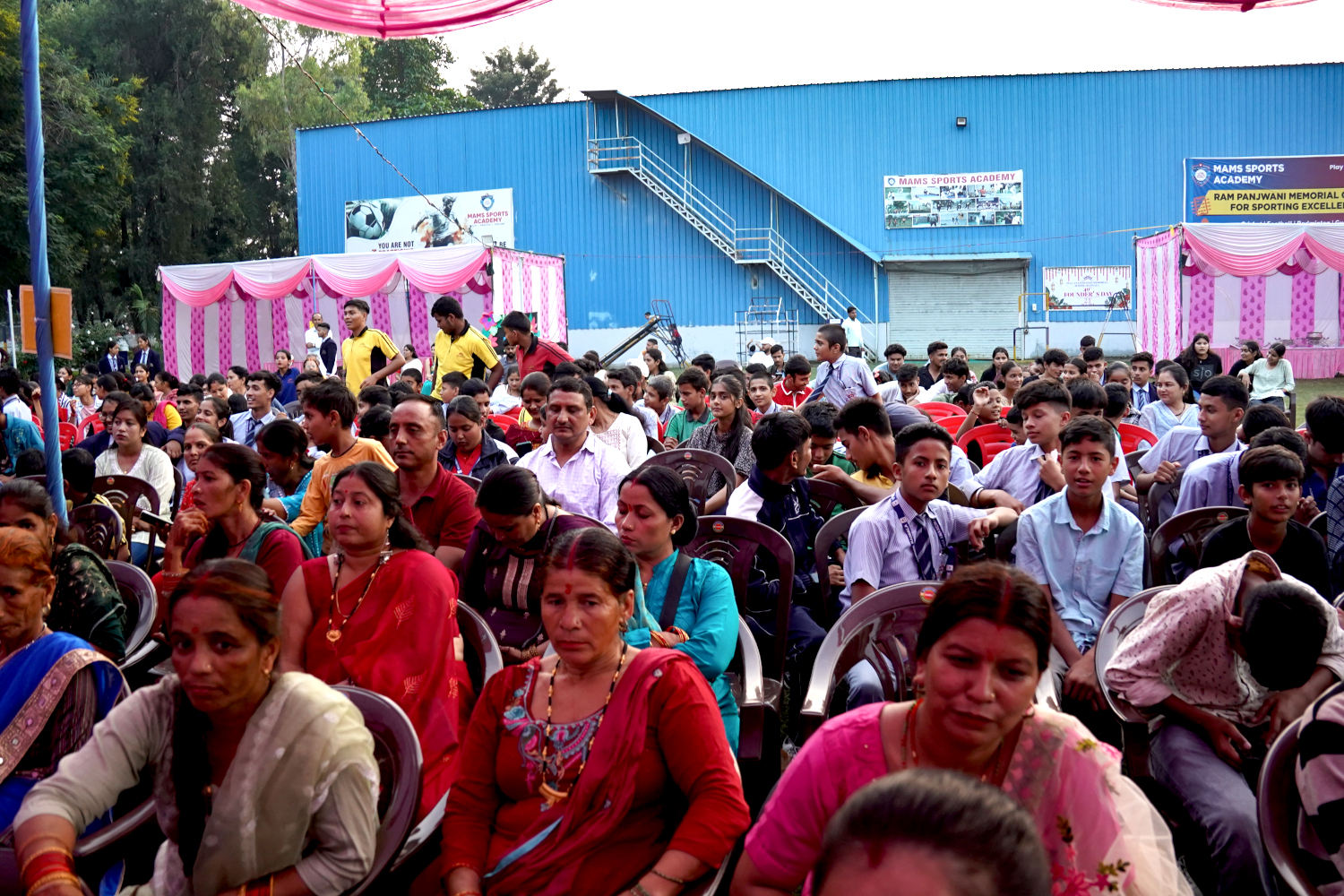
At last, the program gets started with attendees — kids and adults — in chairs on the lawn. It’s a bit sultry until the sun drops down to a certain point, and then it’s much more comfortable. Some of the high school students, sporting white sashes designating them as “captains” patrol the crowd with the intent of helping keep their peers, especially the younger ones, in line. There isn’t a great deal of demand for their services, as the students in the chairs are not particularly disorderly; but Dennis is glad to see his students, (including some of those who are most problematic in the classroom) assigned such a responsibility, and hopes it just might have a lasting positive impact on their own deportment in class. One can hope.
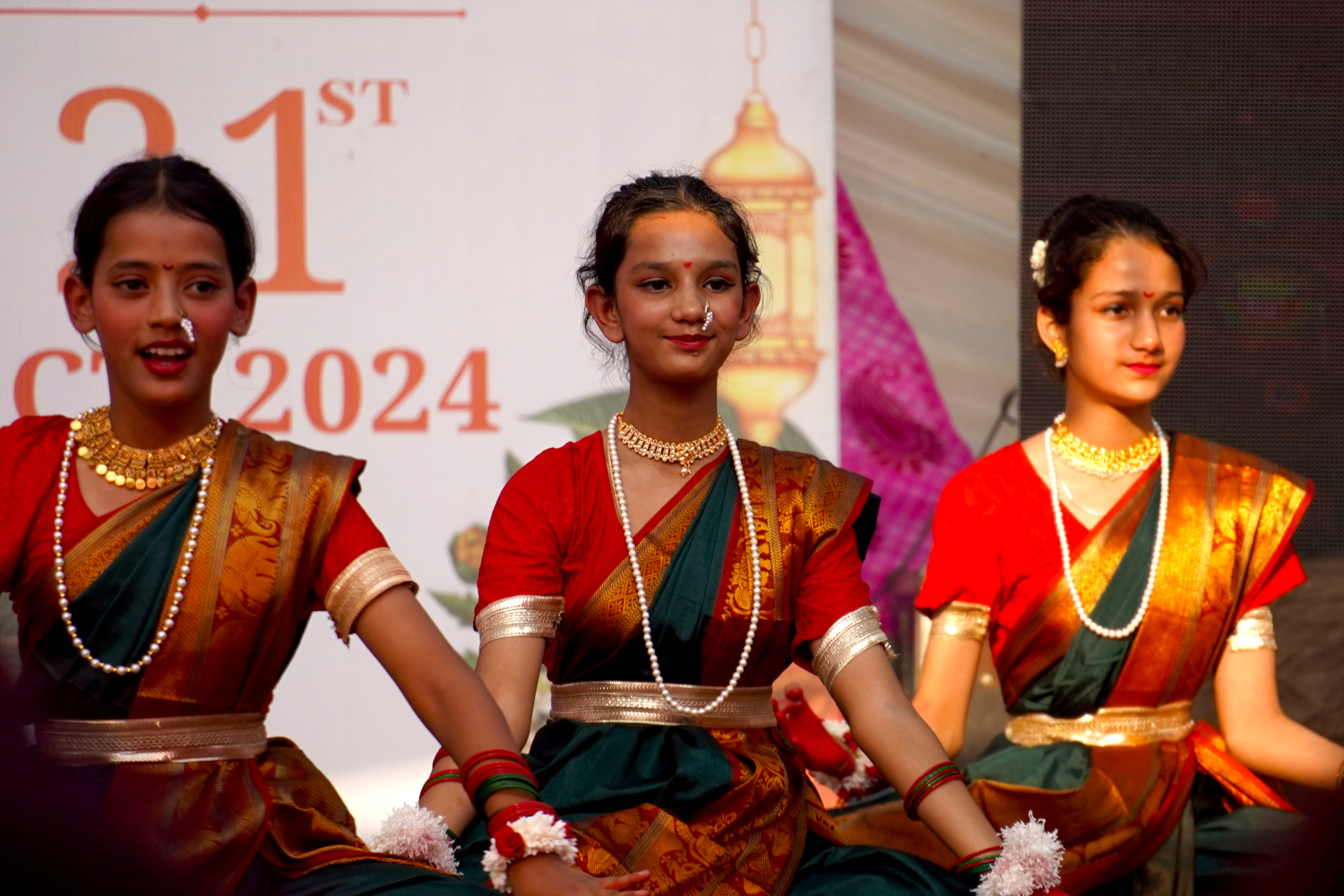
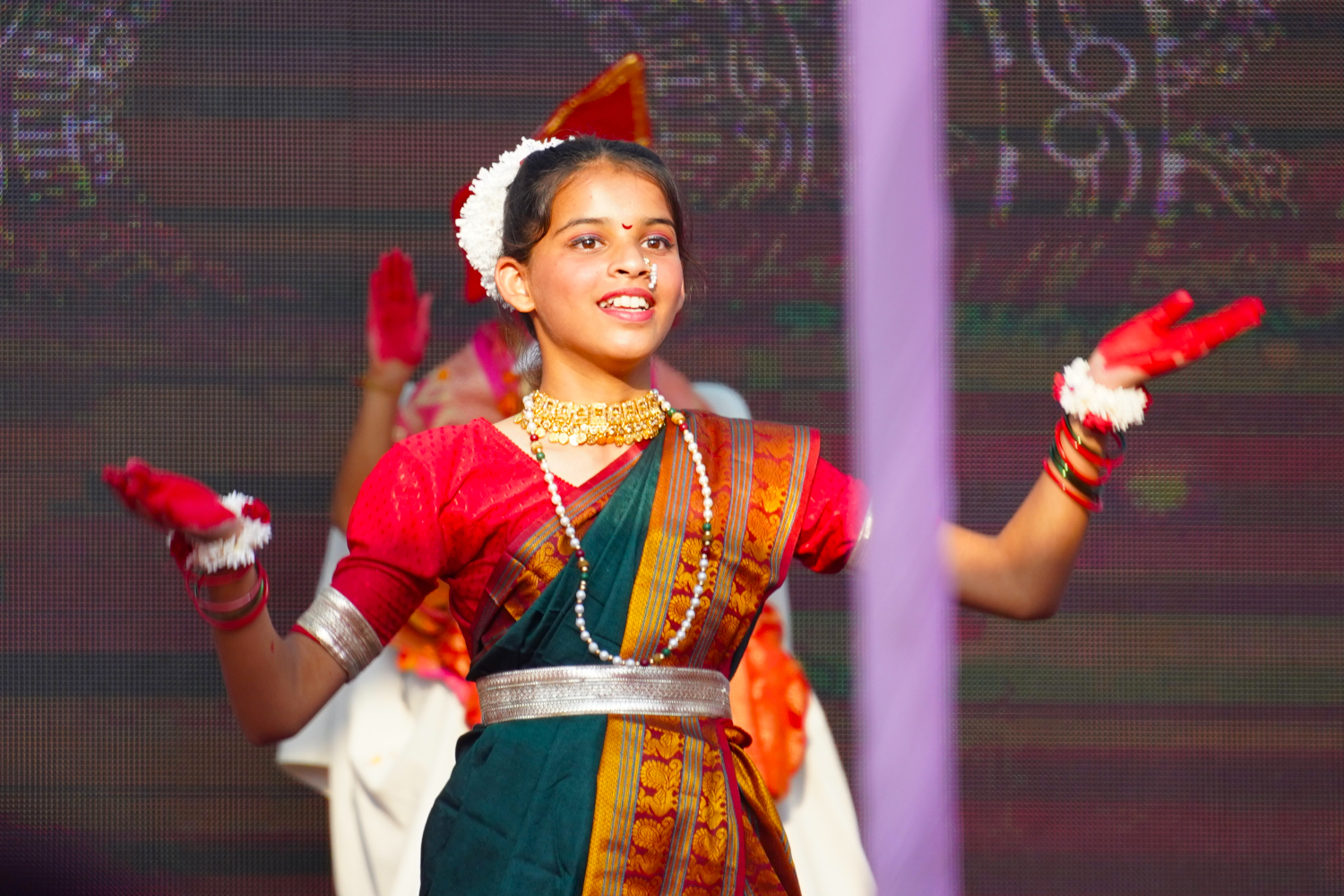
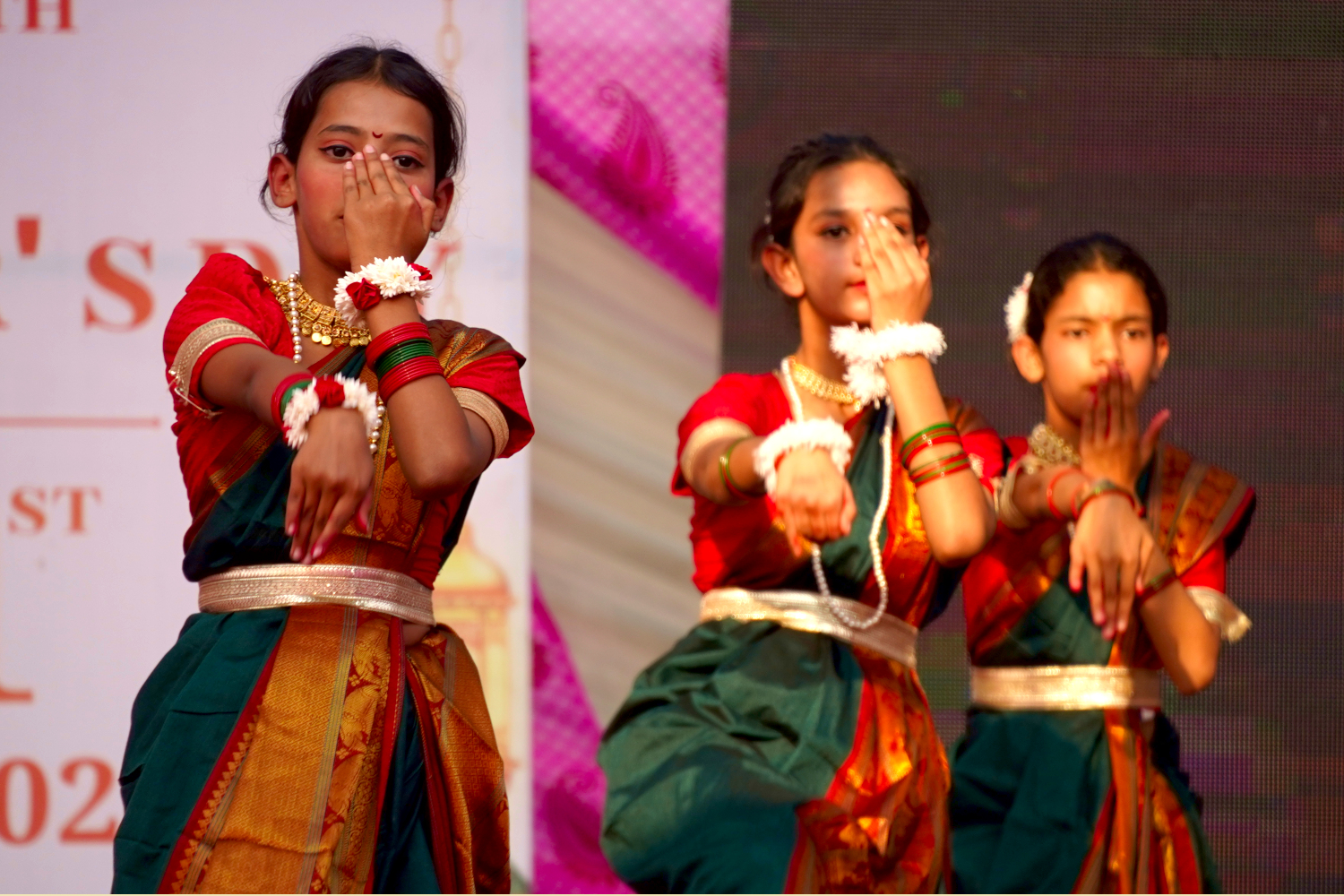
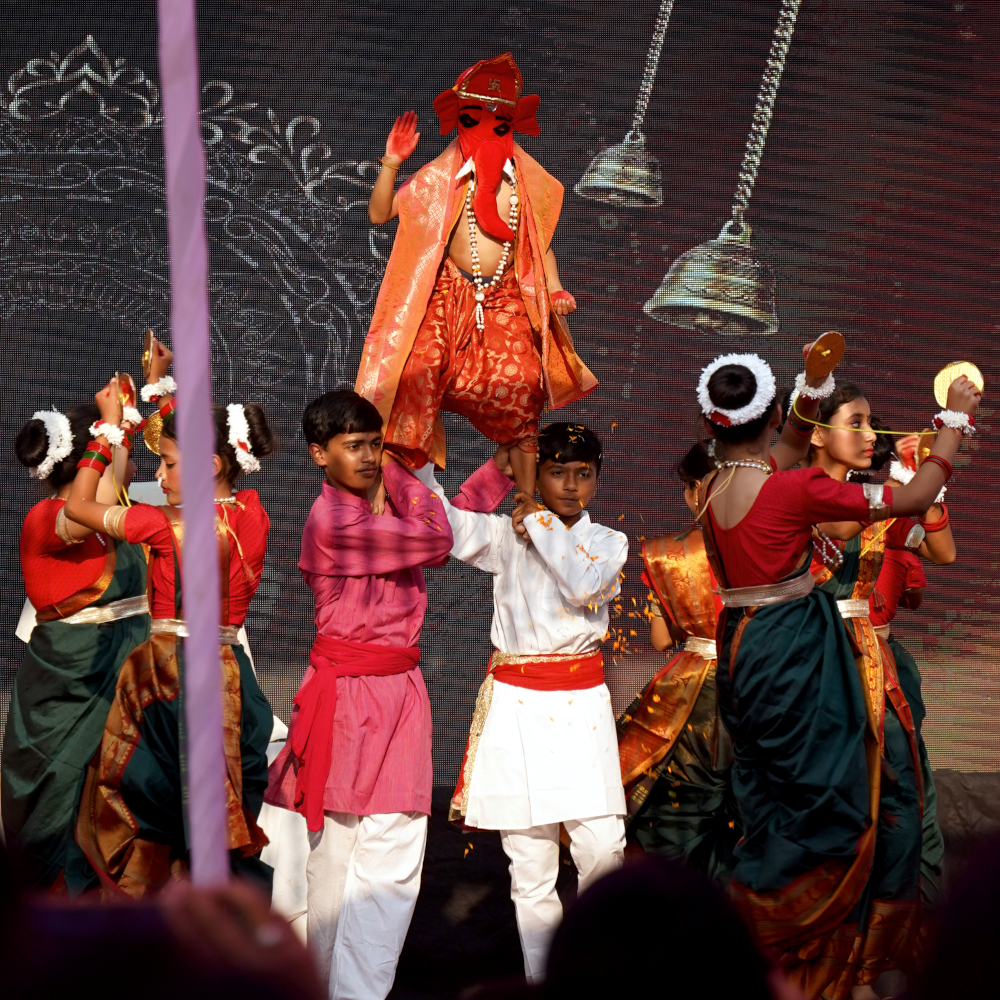
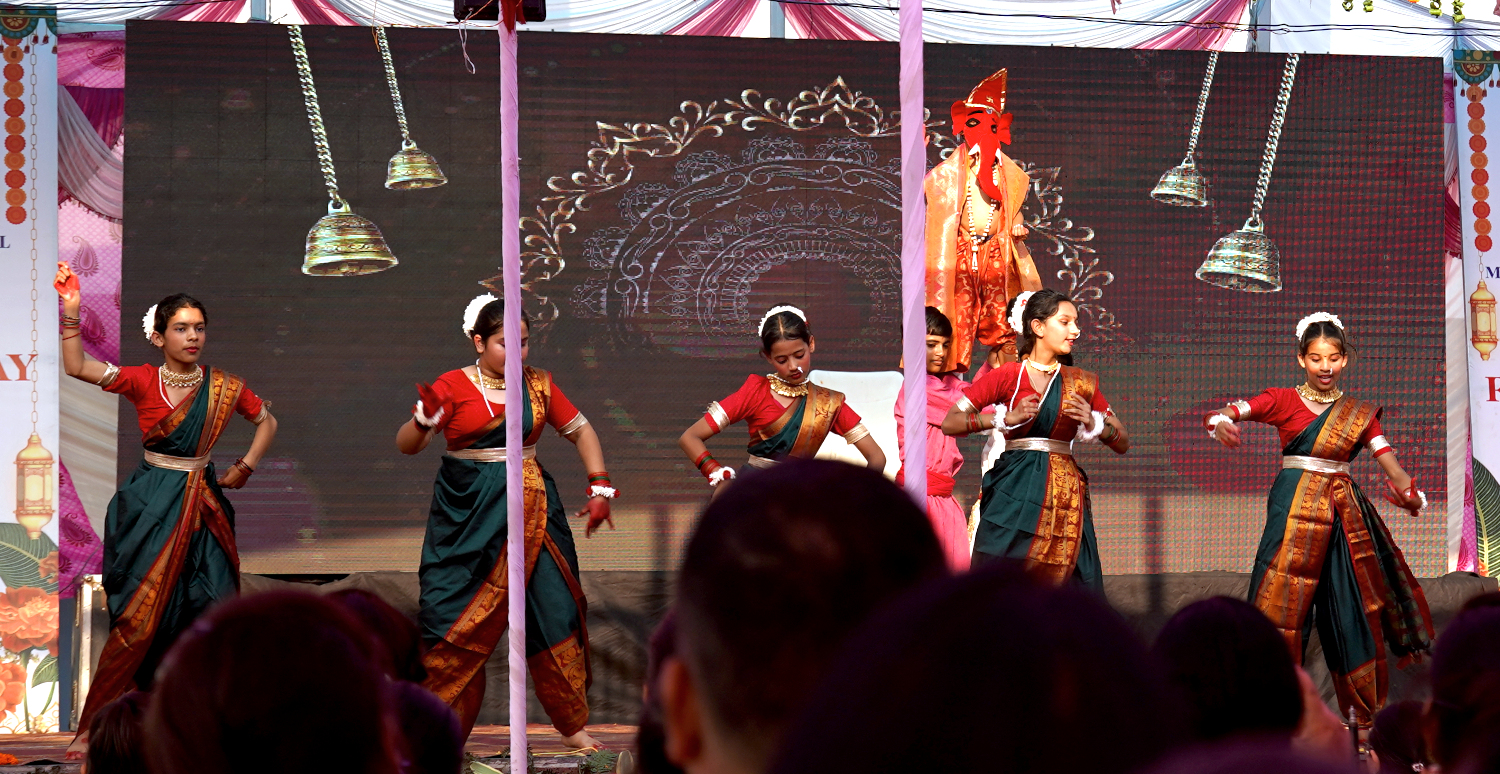
PICTURED: Dance Story of the Hindu god Ganesha by upper classes
The program includes some rather long-winded speeches in Hindi by several dignitaries. But the bill is also enlivened by a variety of charming and entertaining performances by the students of several different grade levels. The kids have a lot of fun and do an excellent job — even as they battle a few lengthy power outages. Later, dinner is served to all attendees.

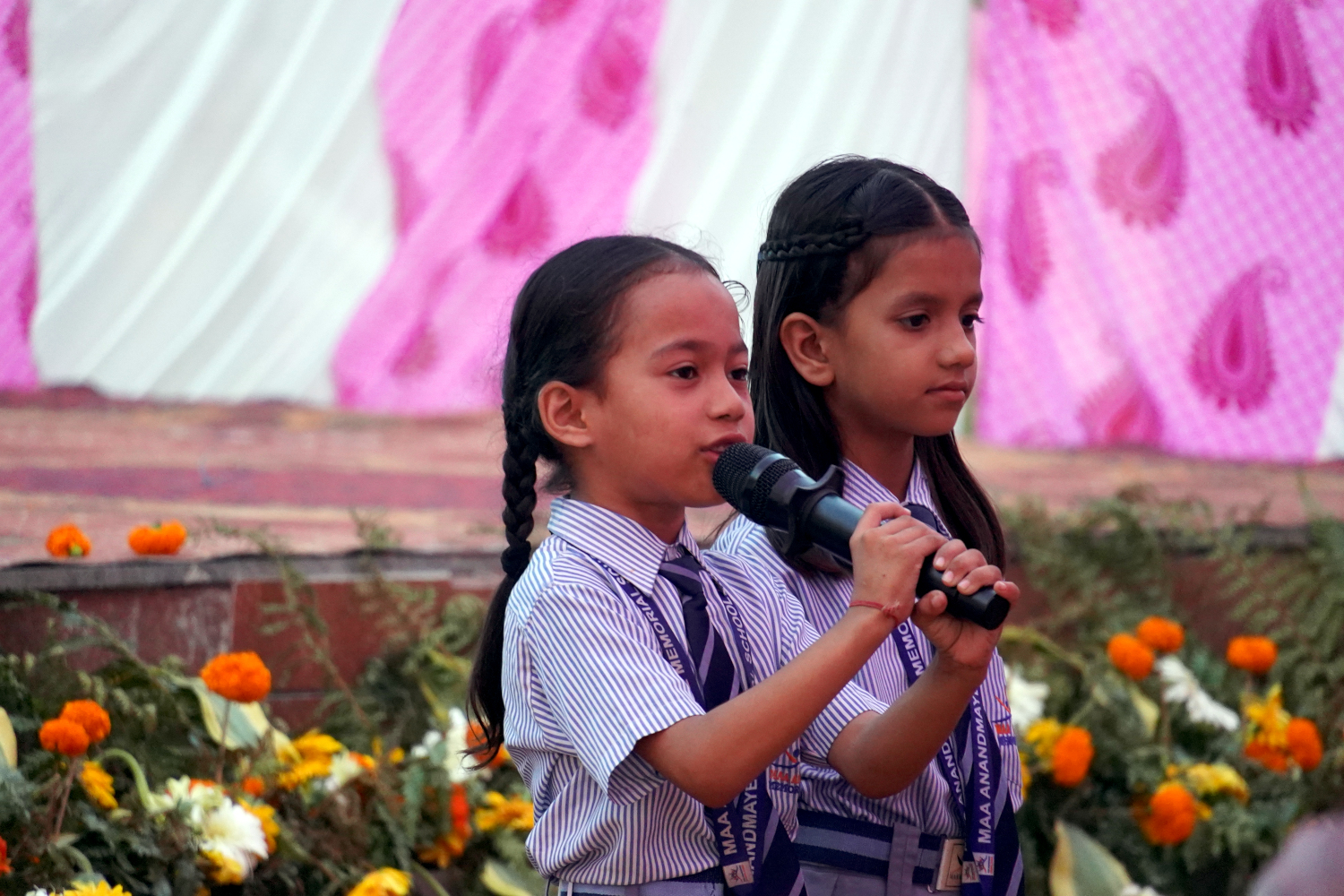
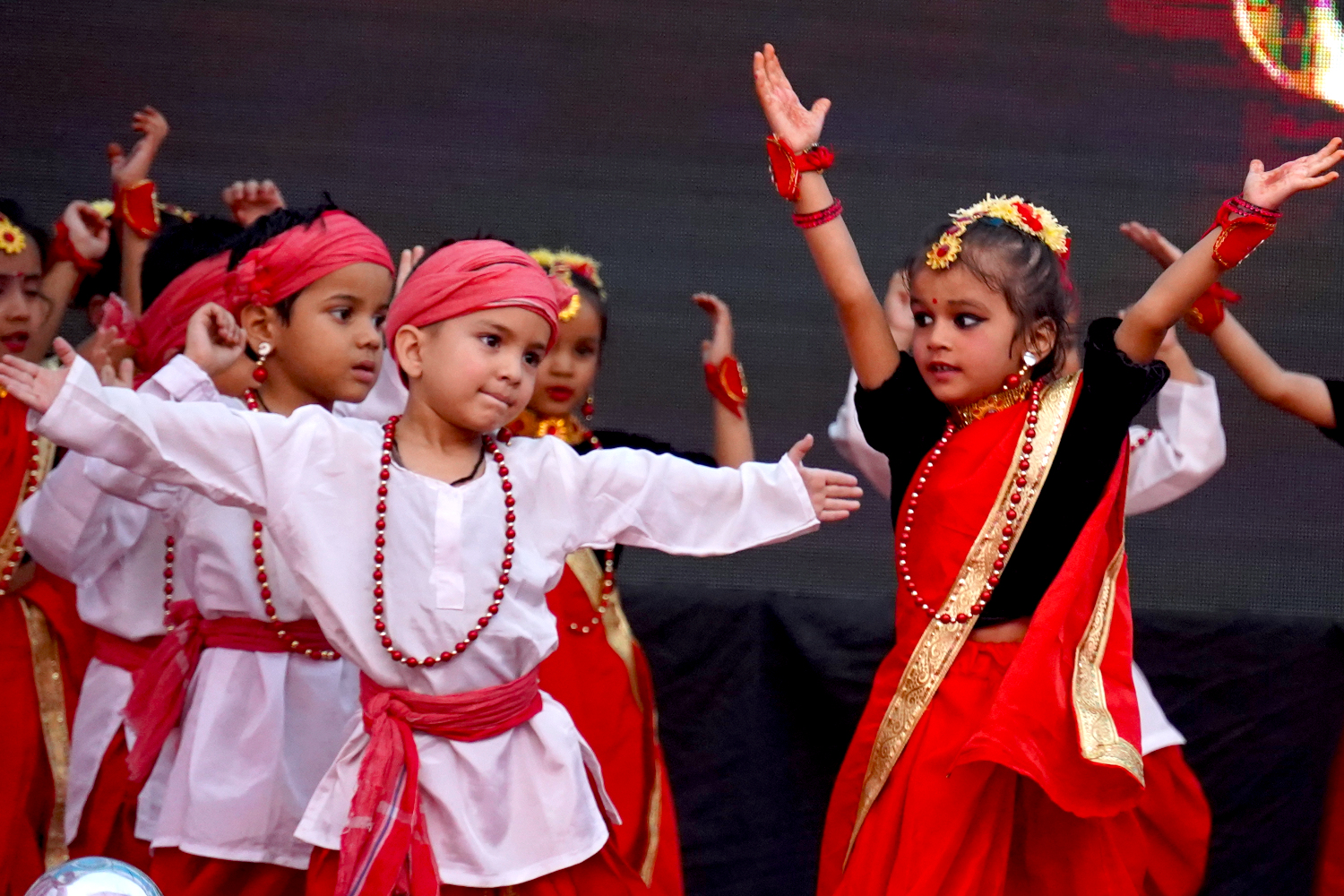

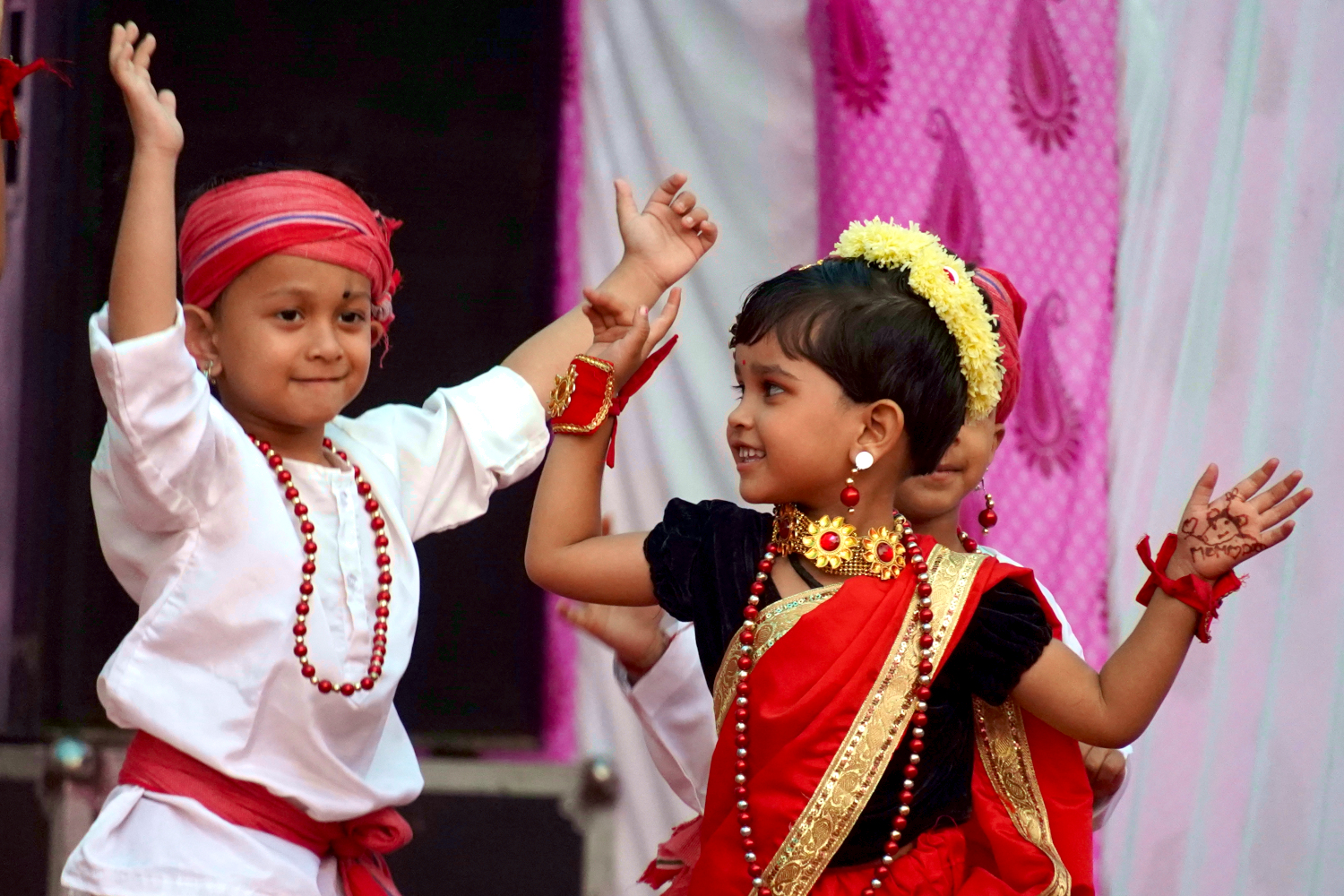
PICTURED: Upper Kindergarten traditional dance (Kimberly helped the emcees improve their English, but they were already great)
And now that this much-anticipated occasion is finally behind us, perhaps the students will be able to focus on their classes (which they often missed in order to practice some presentation or other). So now, we’ll get to see what it’s like to teach here under normal circumstances and the usual schedule.
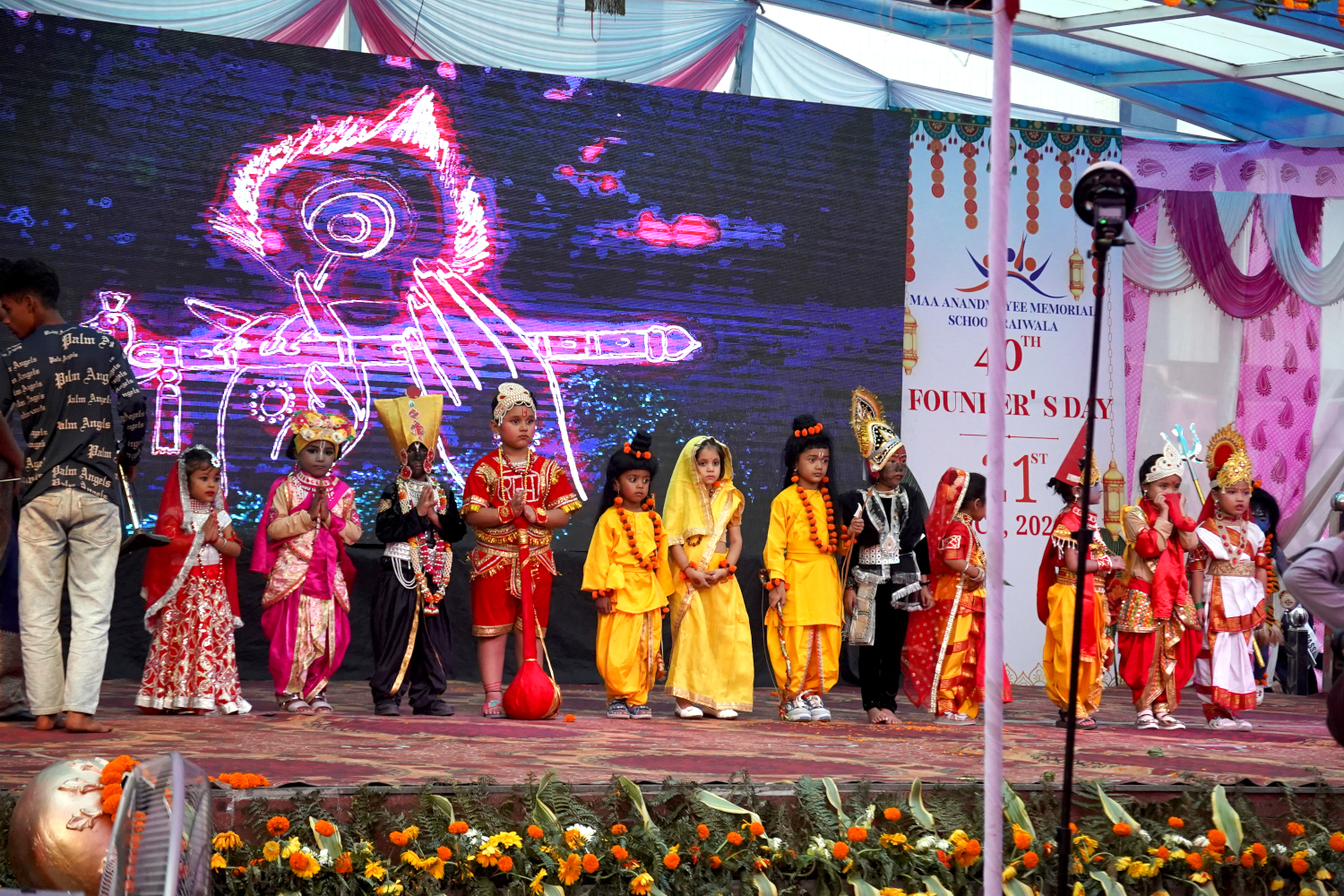

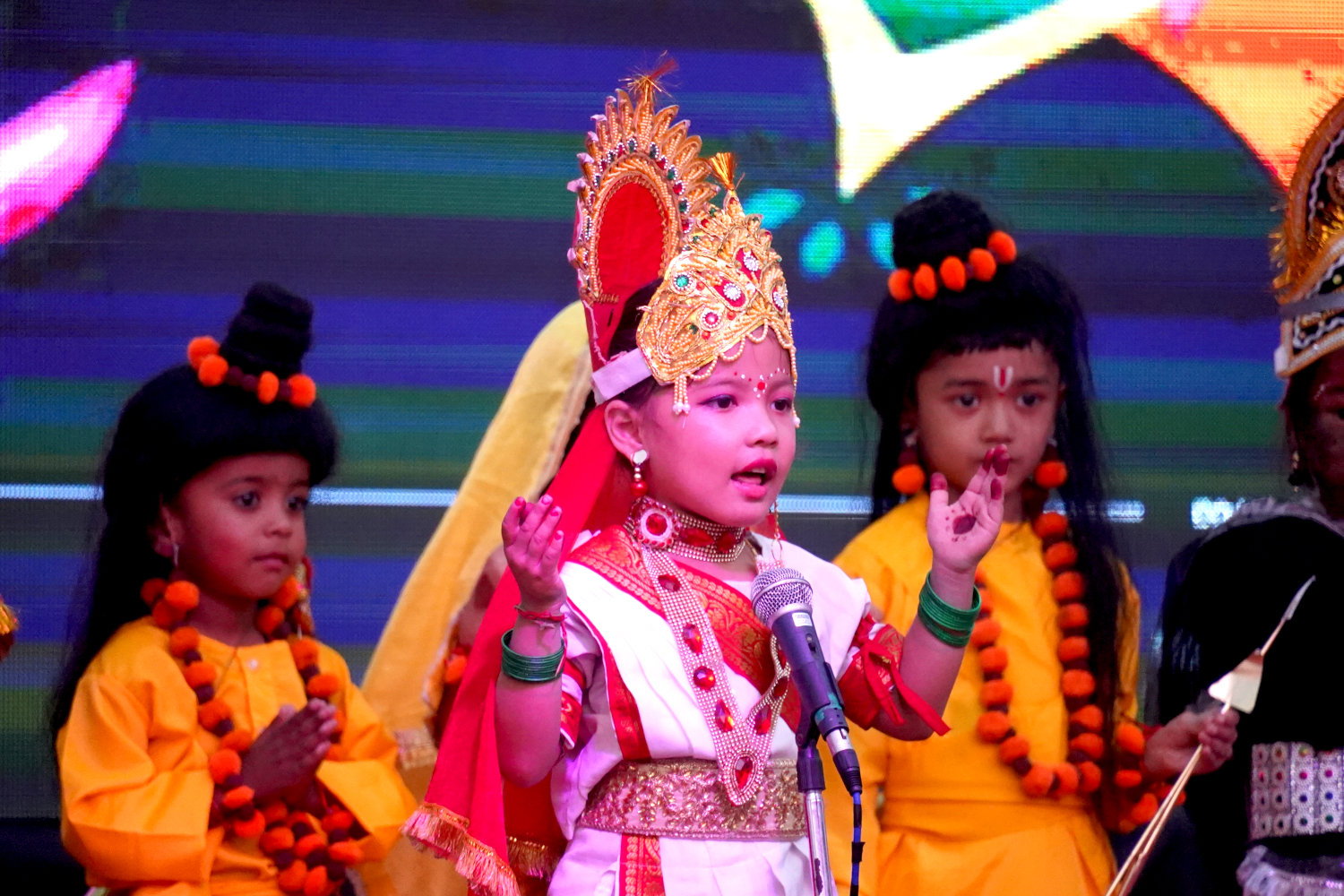


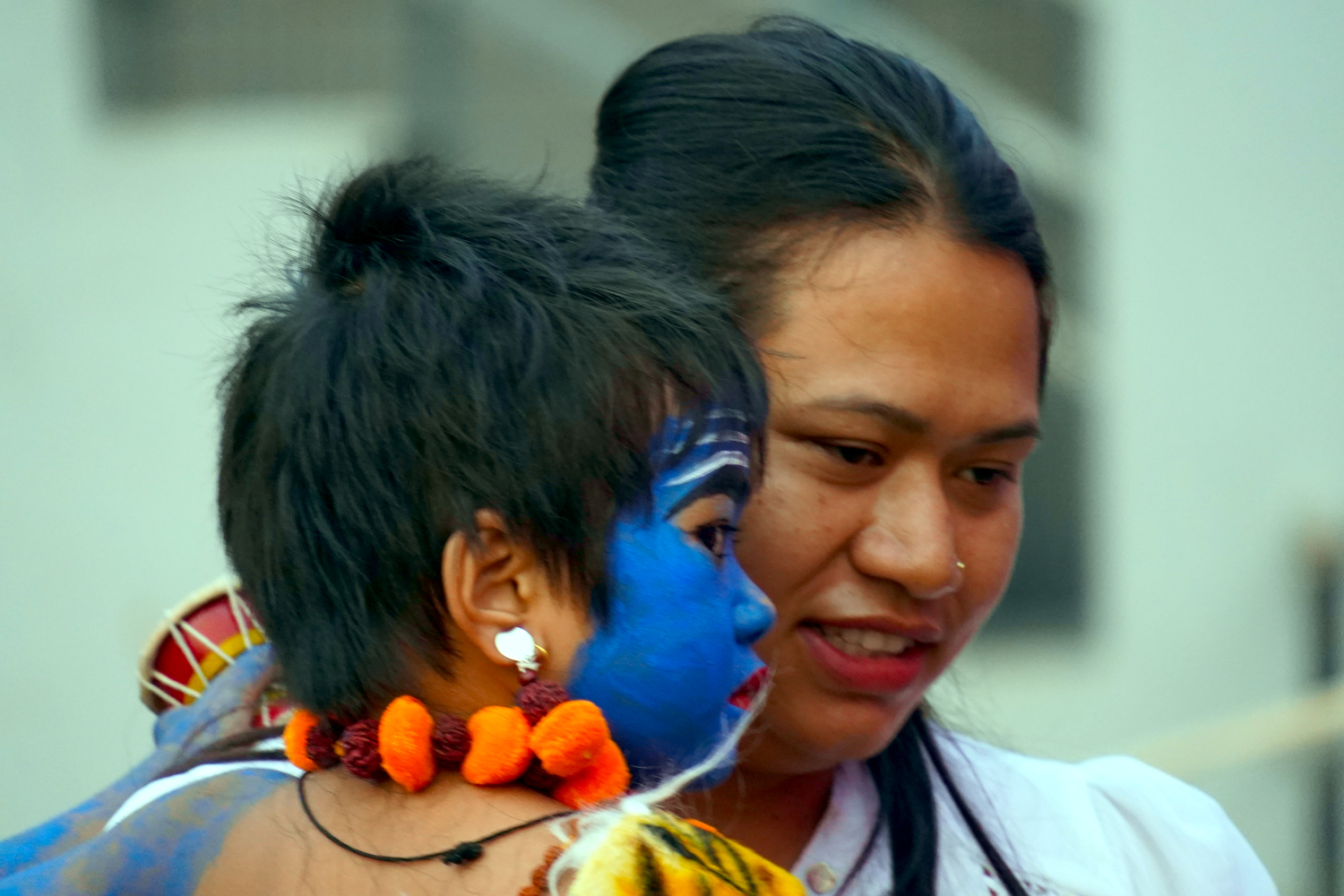

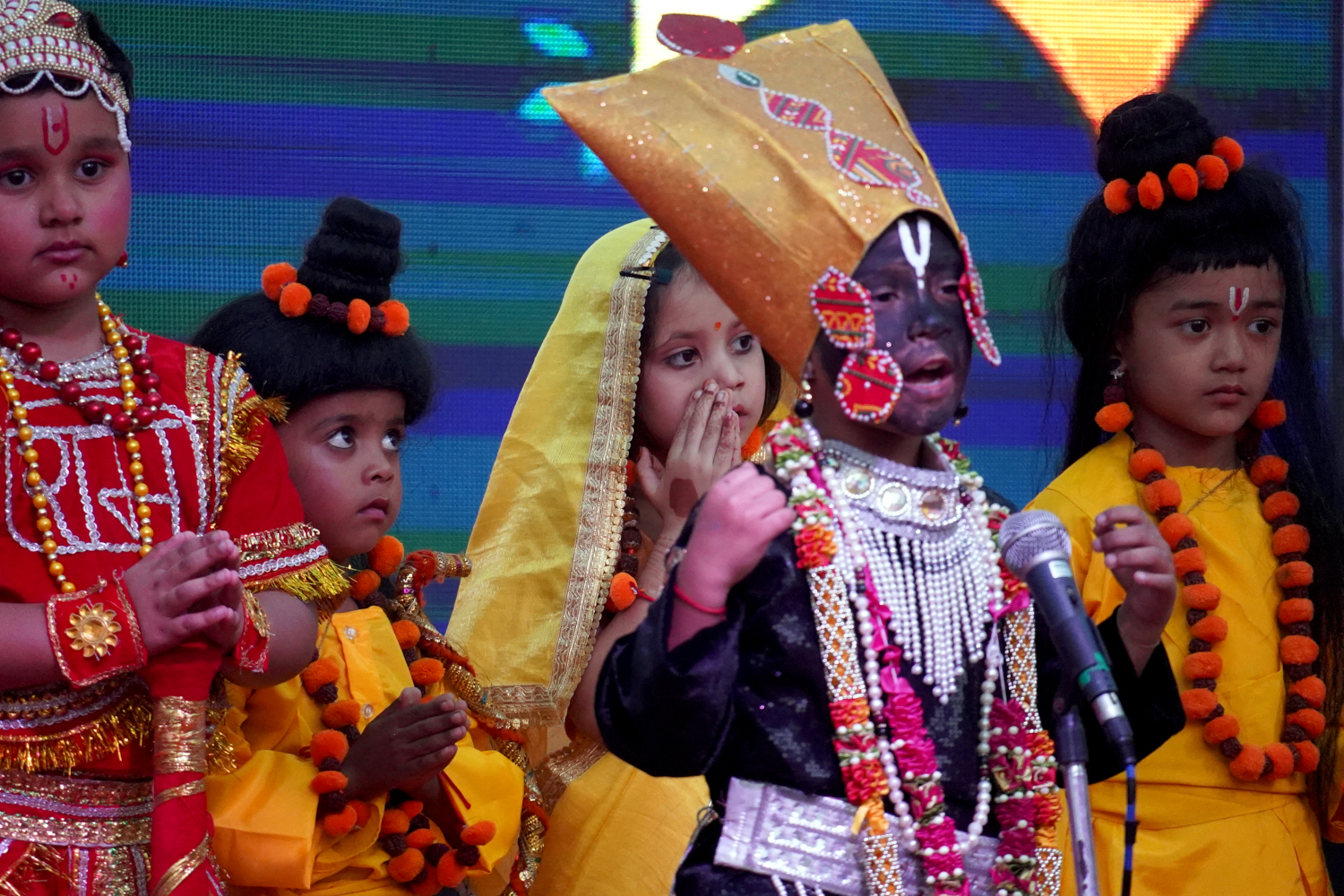
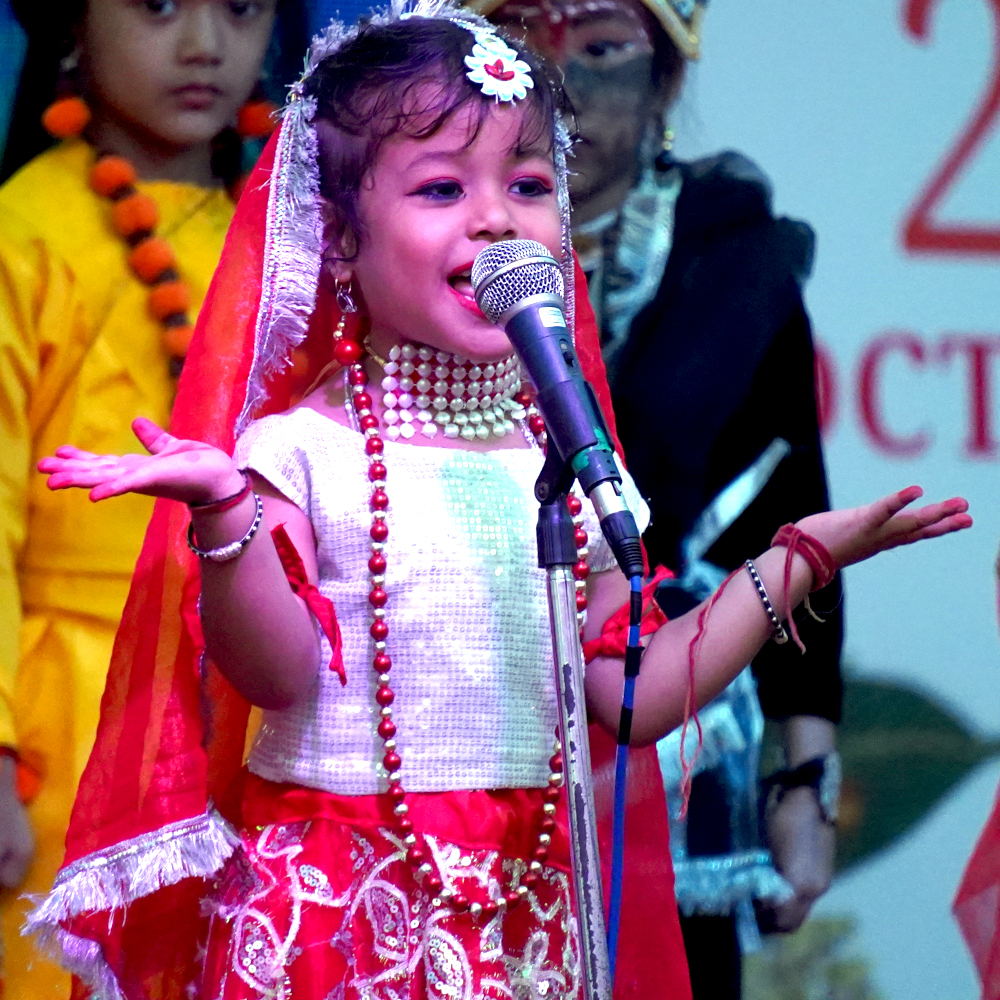
PICTURED: Kindergarten dressed as Hindu gods and goddesses giving speeches about their characters. The blue one was sick and her mother took her home as soon as she was done. Parents whipped out their cameras to capture the moment, as parents all over the world are prone to do.
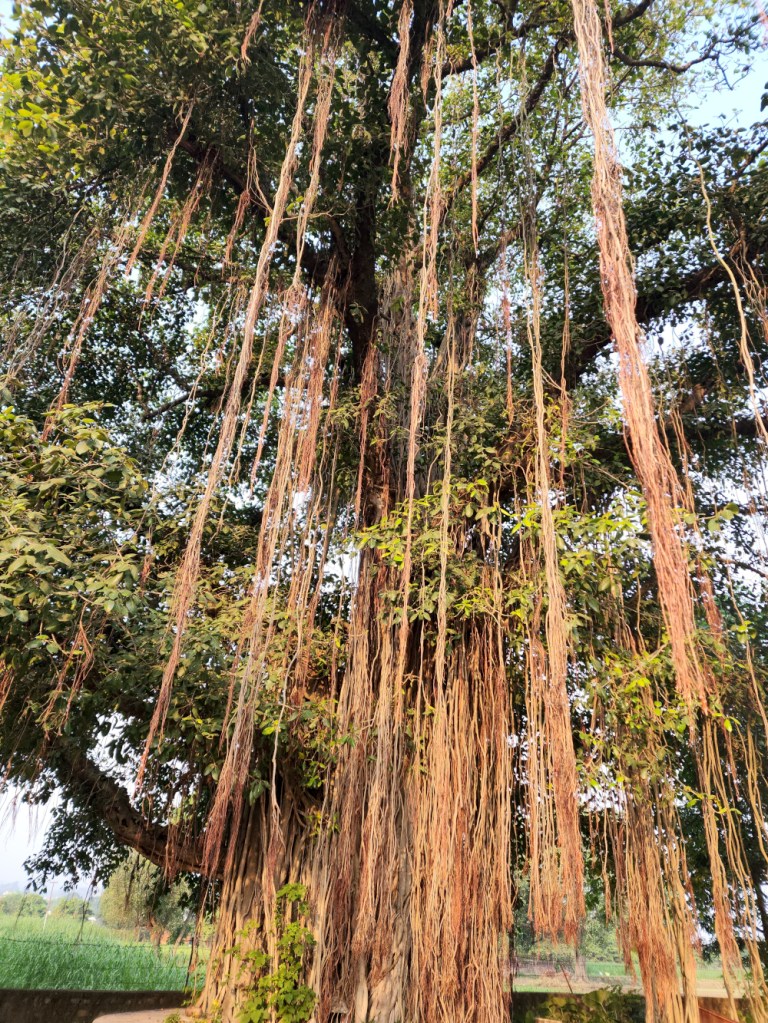
Tree Stories told by Ma Anadamayi (Indian saint)
Sri Anandamayi Ma (or Maa Anandmayee), frequently used the metaphor of a tree to explain the nature of the universe and the individual soul. Here’s a brief look at her teachings using the tree metaphor:
The Seed and the Soul:
Anandamayi Ma likened the seed to the individual soul, and the tree to the universe or God. The seed contains the potential for the entire tree, just as the soul contains the potential to realize its true nature, which is the Atman (the ultimate self).
The Unity of Life:
She emphasized the interconnectedness of all things, using the tree as an example. Just as the same life force nourishes every part of the tree, the same Atman or divine principle is present in all of creation.
The Importance of Seeking the One:
Anandamayi Ma encouraged people to seek and realize their true nature, which is the same as God’s nature. She used the tree as a visual aid to illustrate this point, encouraging them to look beyond the individual fruits (individual souls) to the one life force (the One) that connects them all.
The Mantra as a Seed:
In another instance, she compared a mantra (a sacred word or phrase) to the seed, and the potential for the complete realization of oneself to the tree. By focusing on the mantra and cultivating it, individuals can grow their spiritual understanding and connection to the divine.
Trees as Gurus:
Anandamayi Ma also taught that trees can be teachers, offering valuable lessons in selflessness and giving. She advised people to observe trees, learn from their generosity, and find their own connection to the divine within nature.
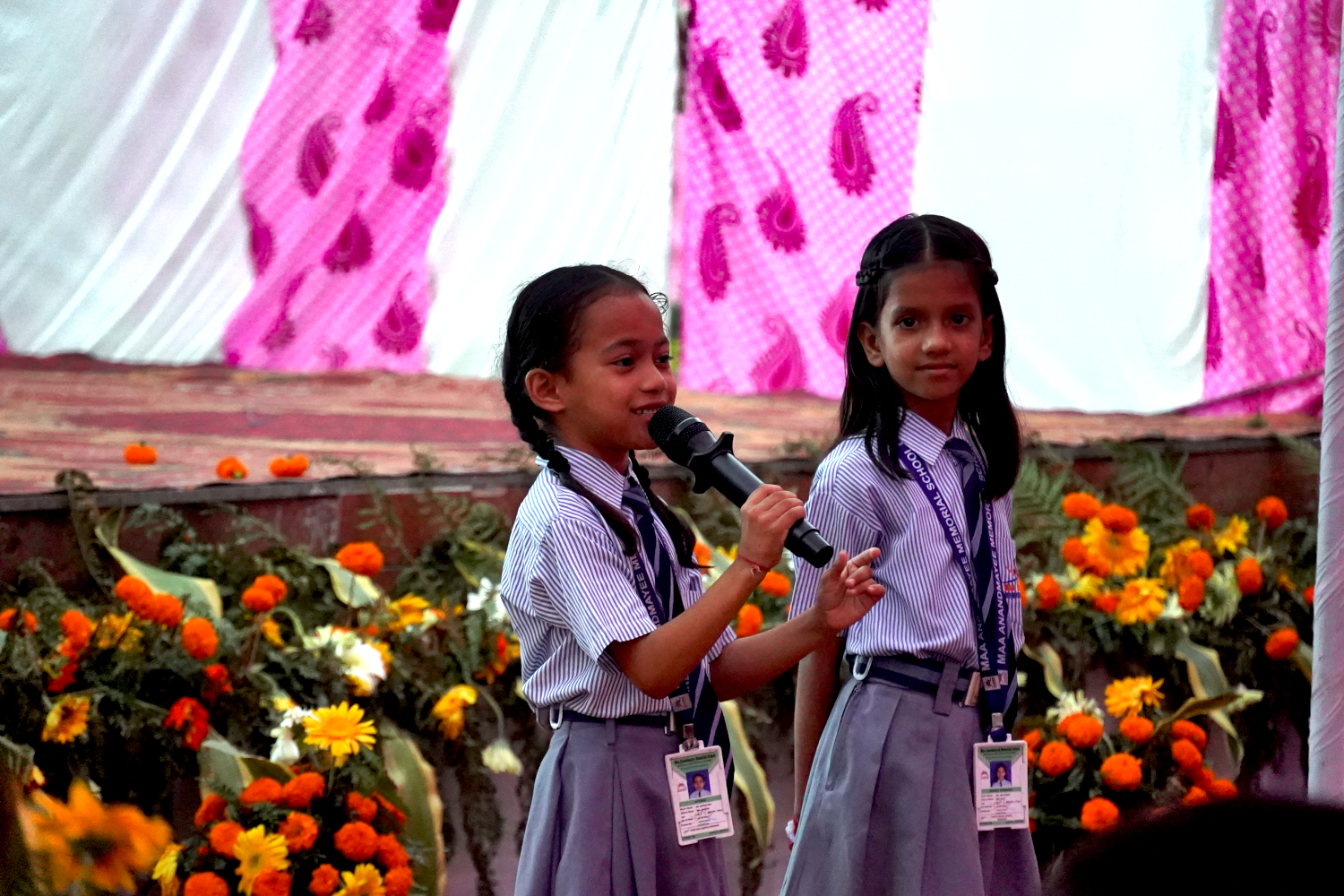
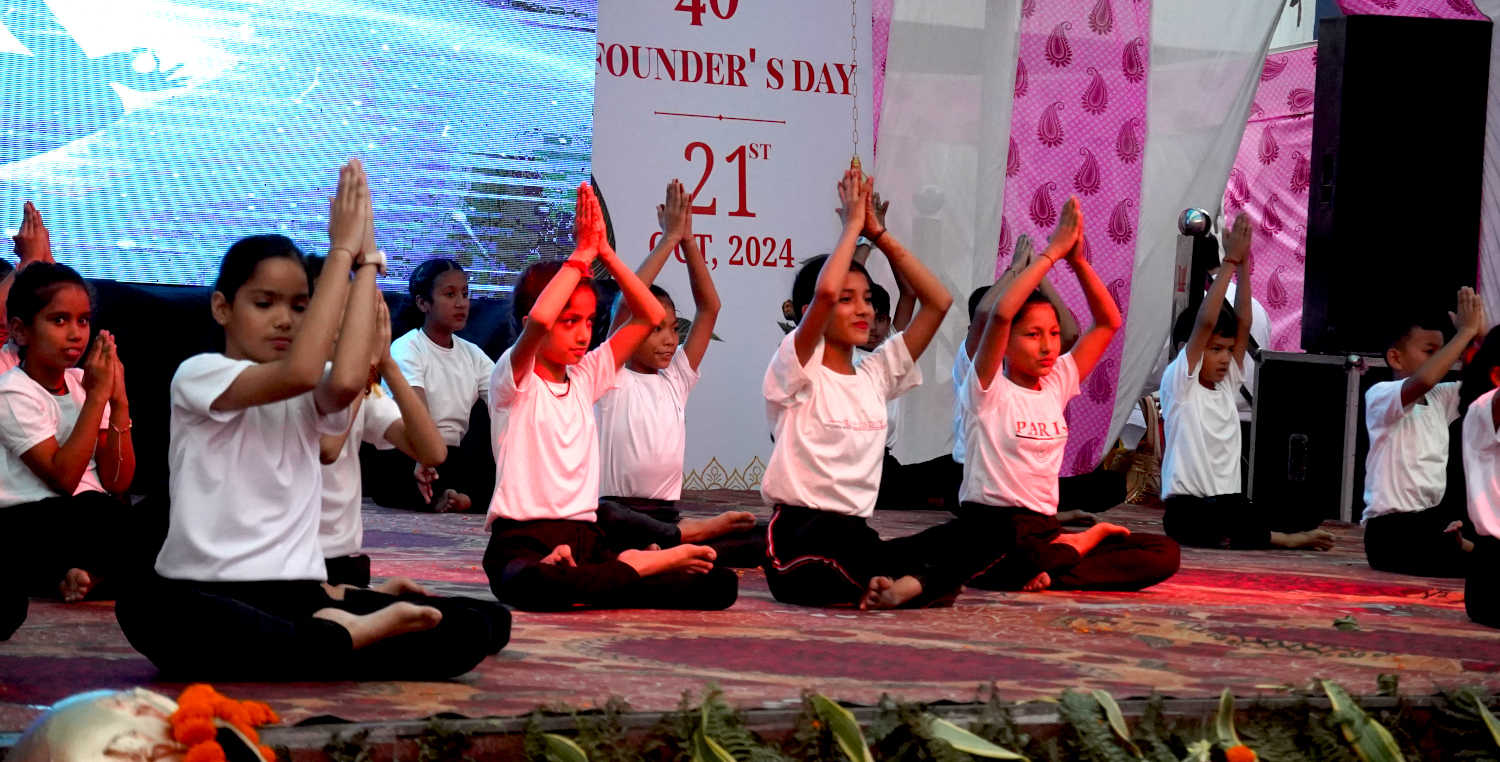
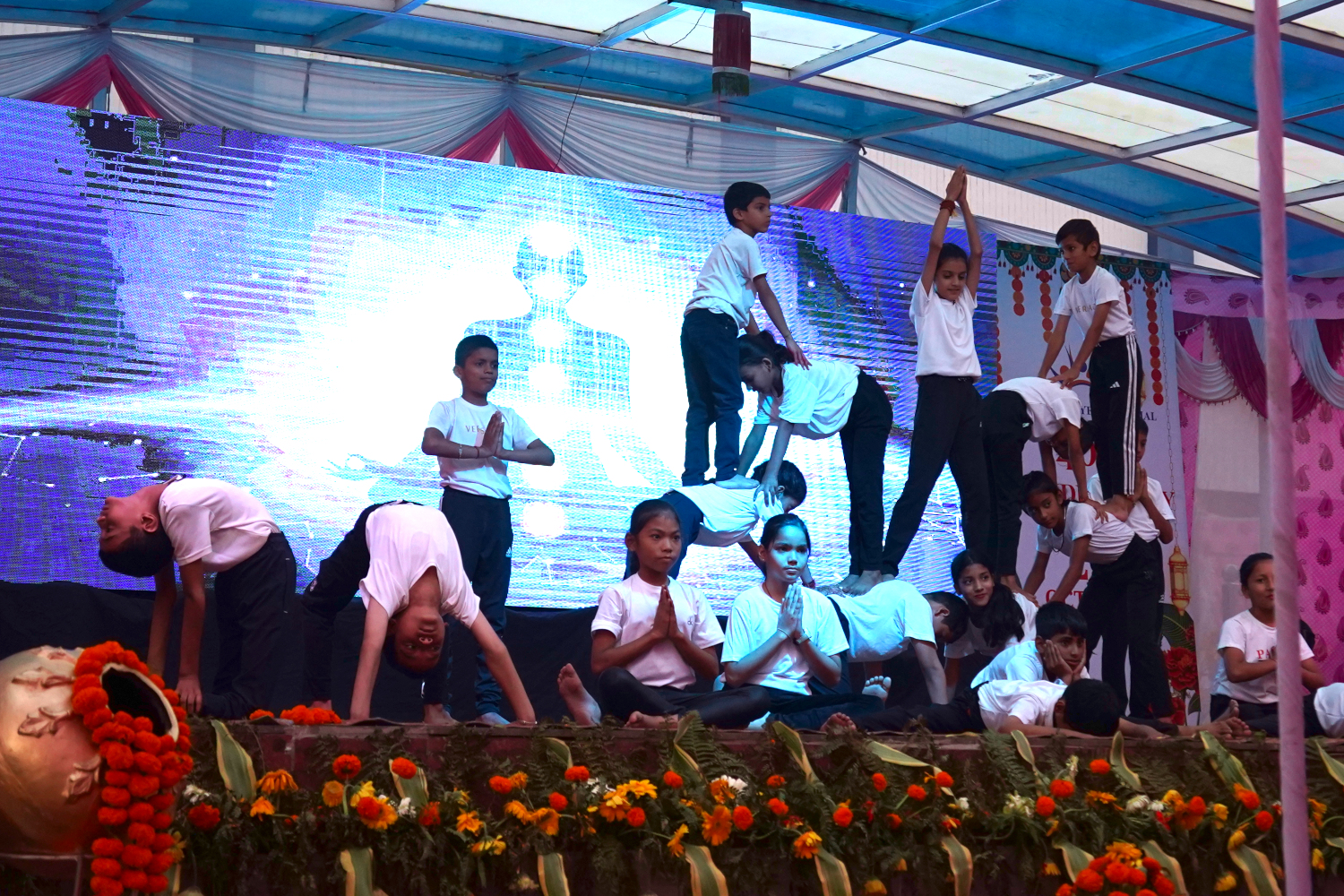
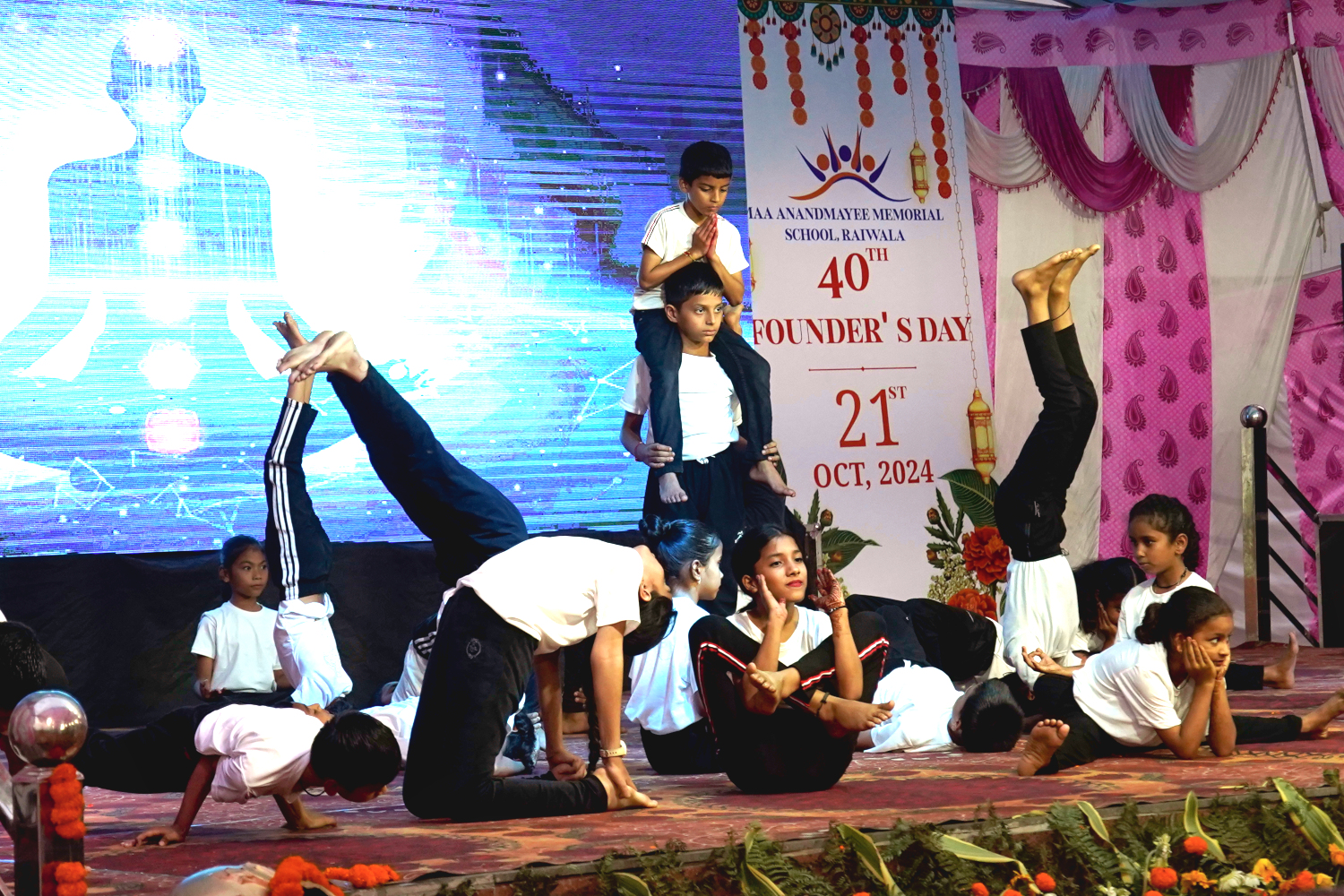
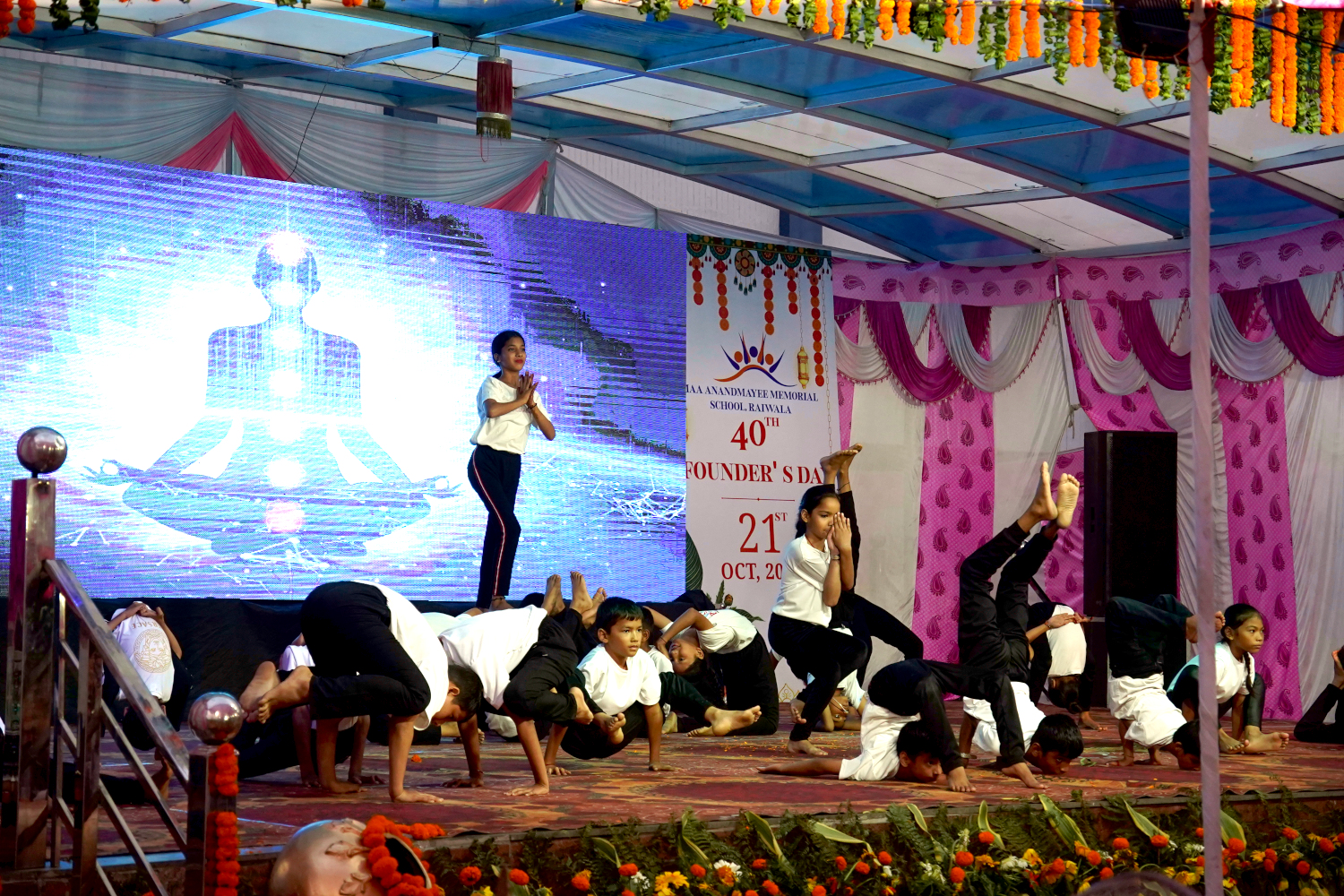


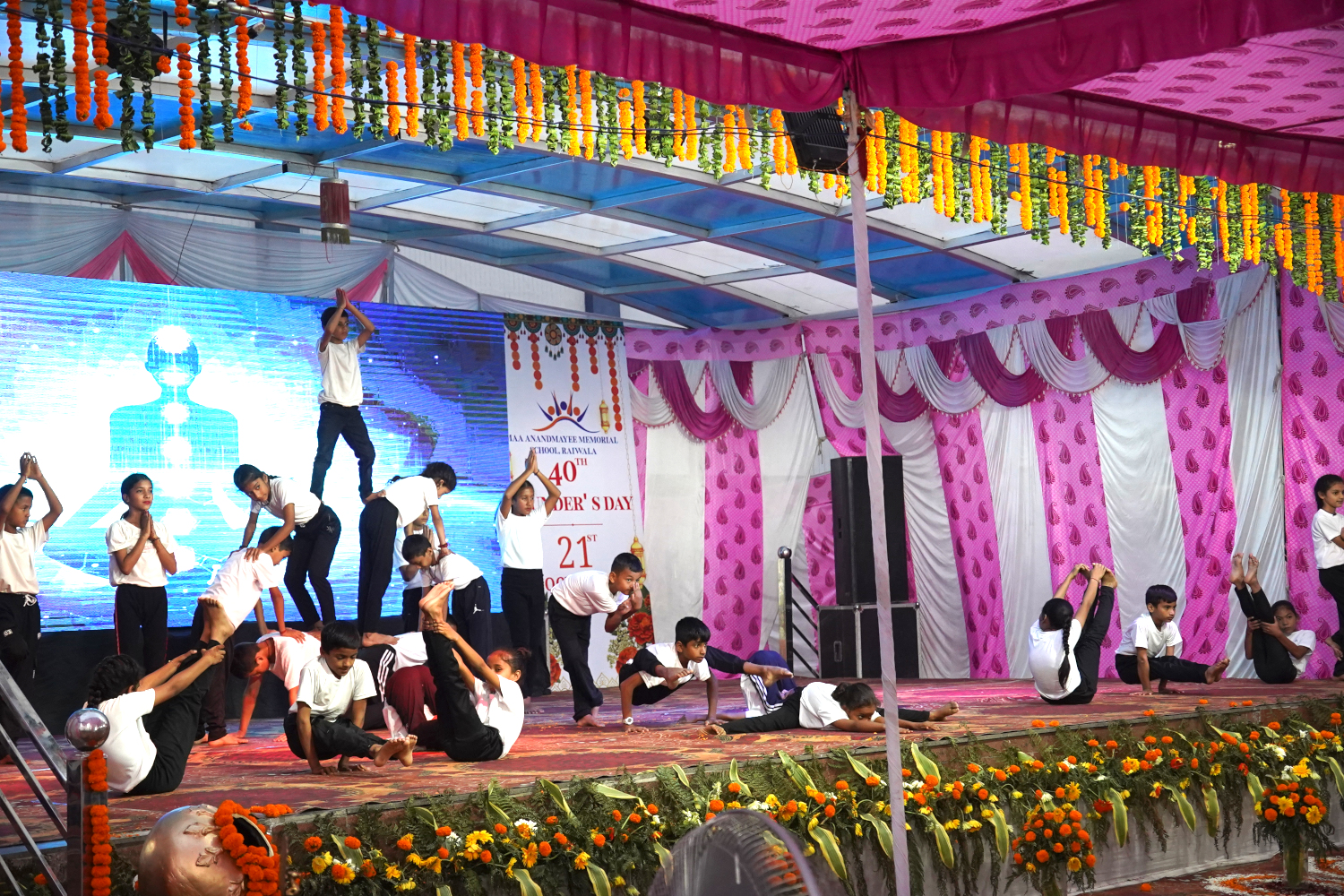
PICTURED: Yoga Demo (Upper Classes)

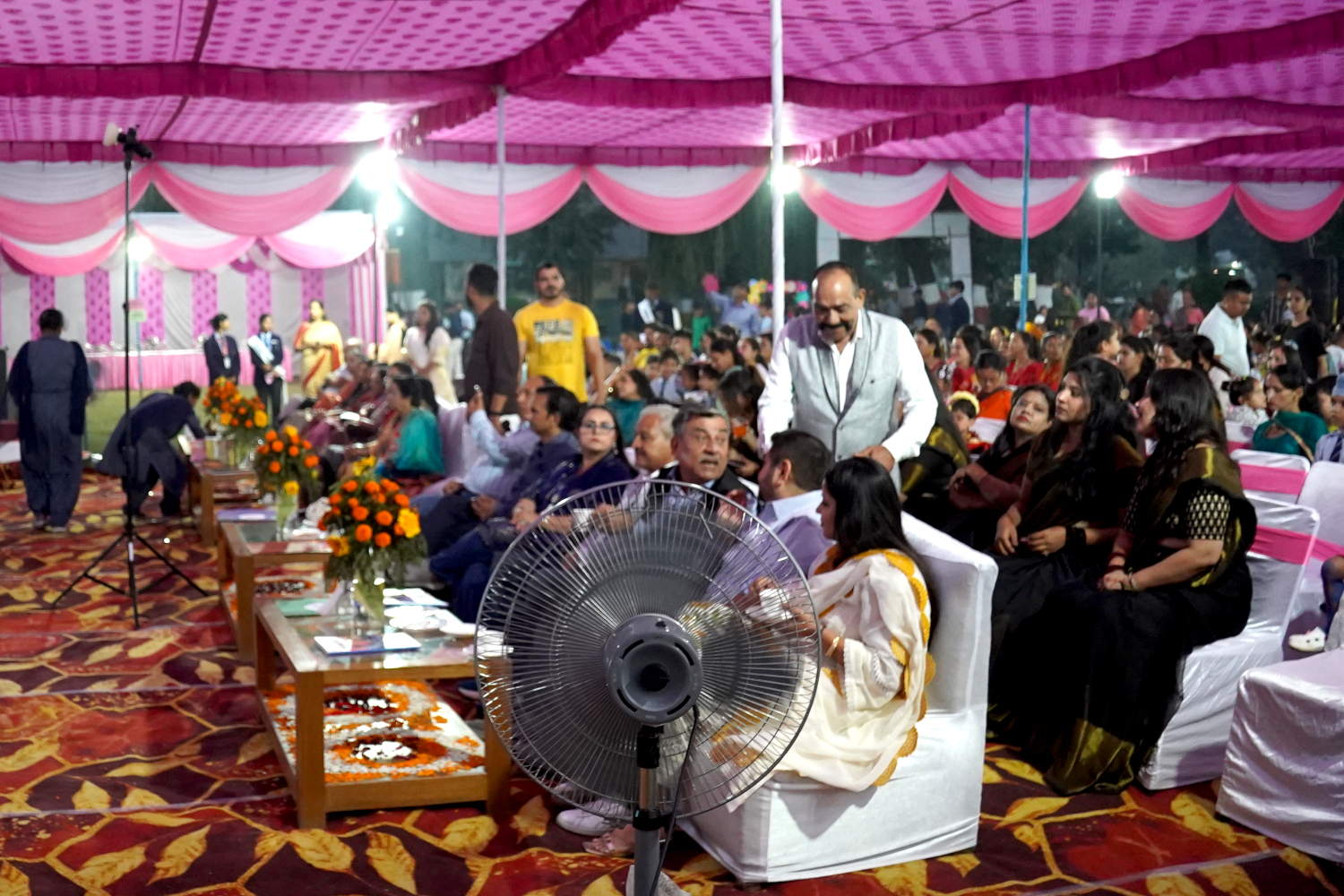
PICTURED: Reserved Seating and fans for the Dignitaries and School Officials (being served refreshments by the attendants)
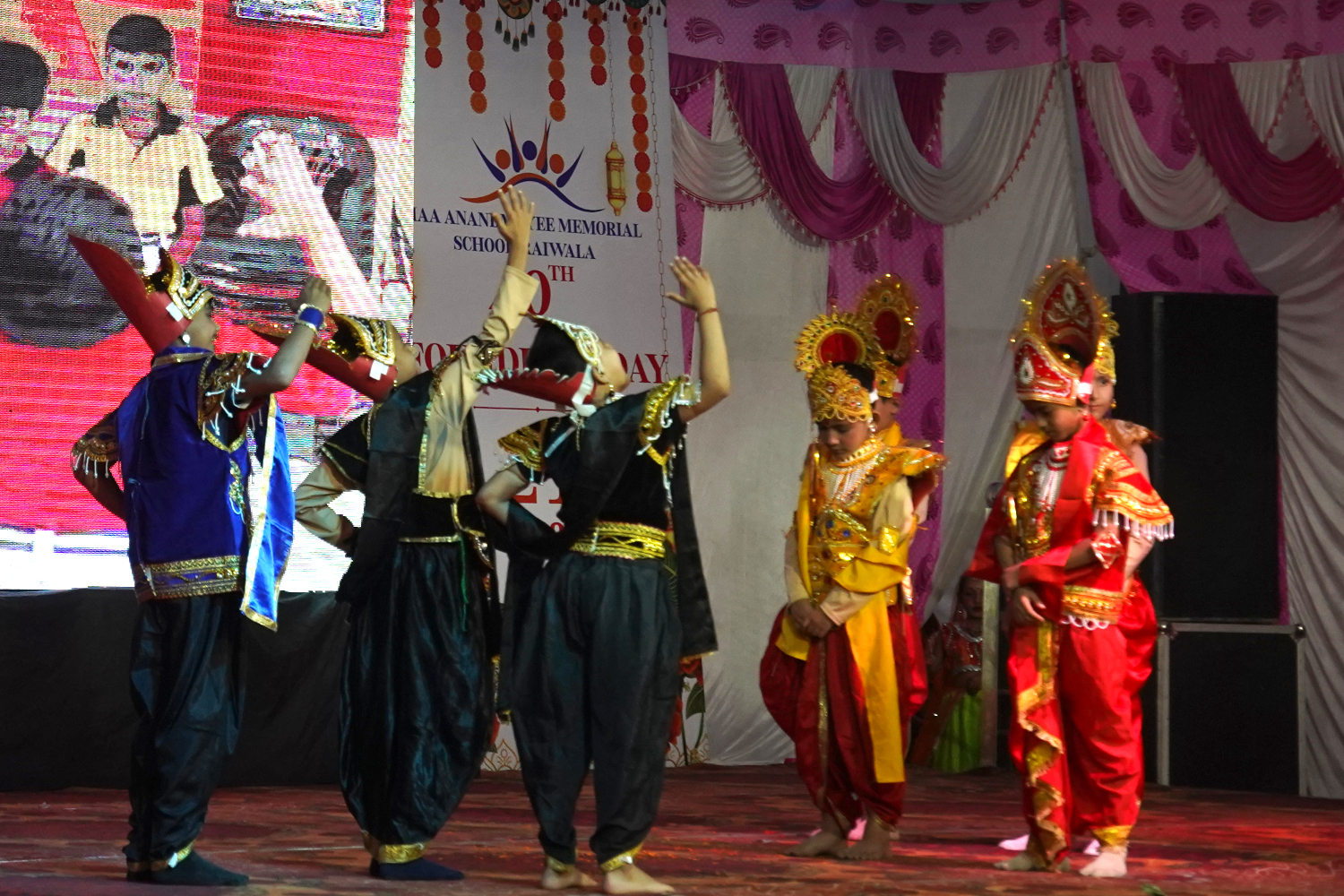
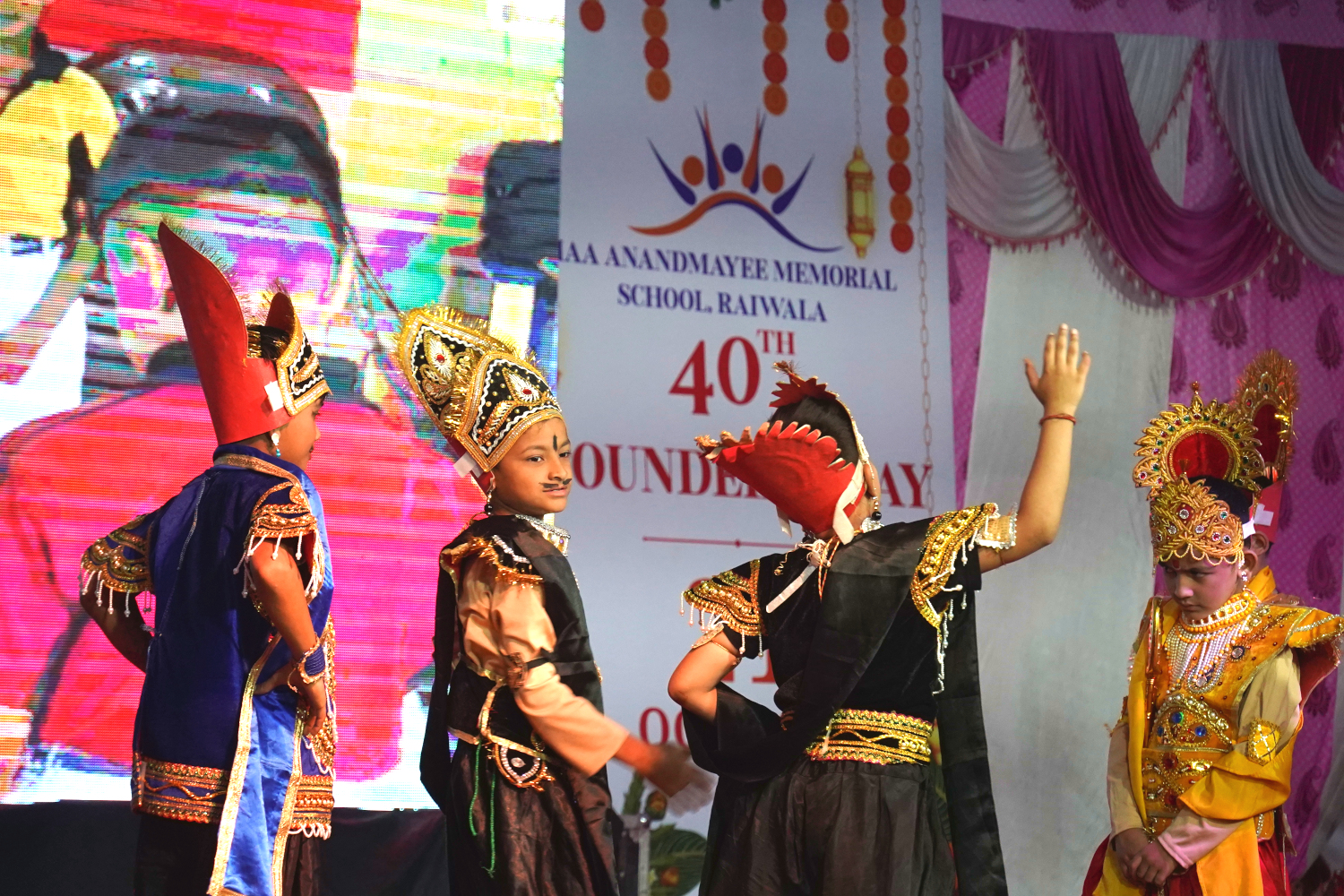


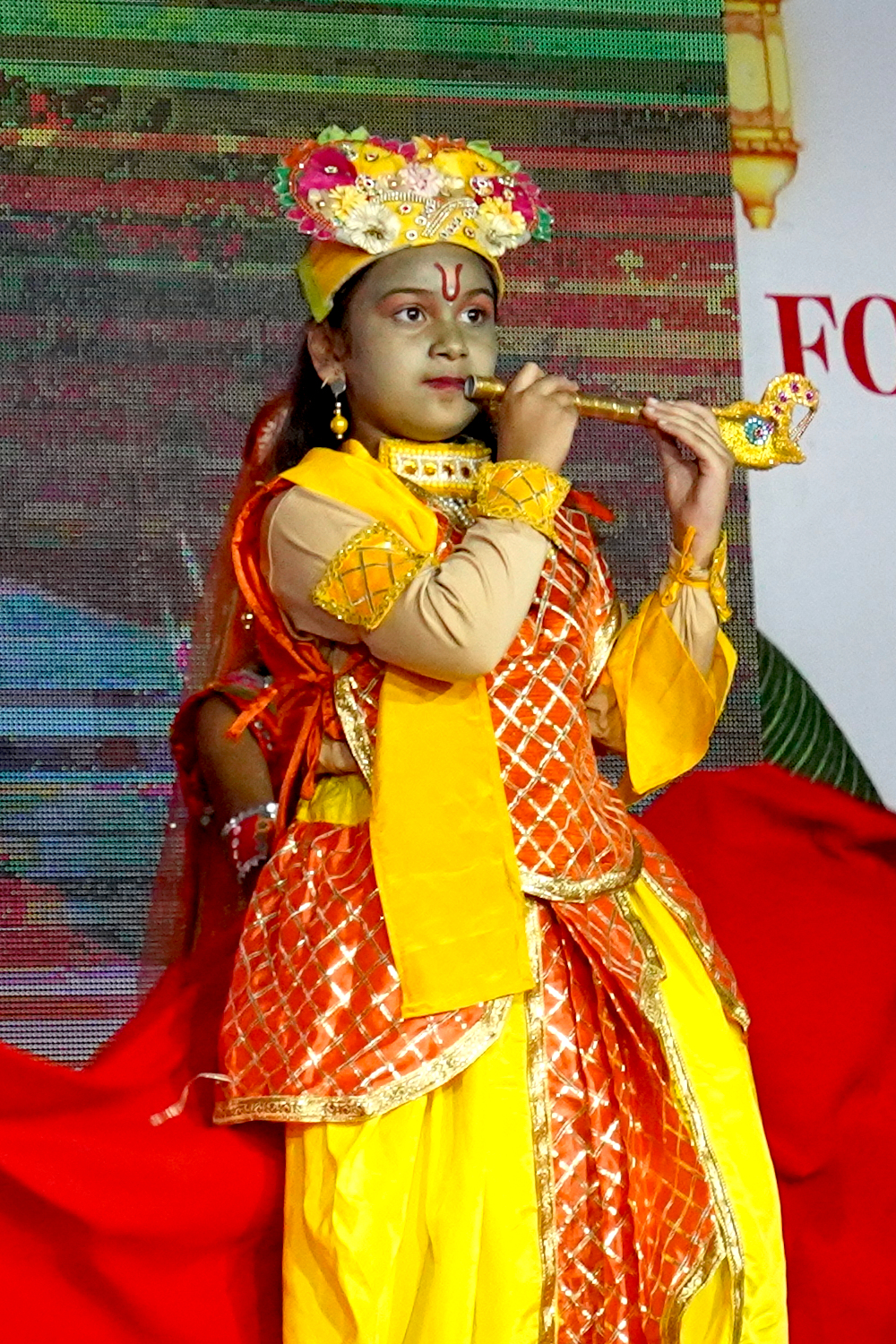
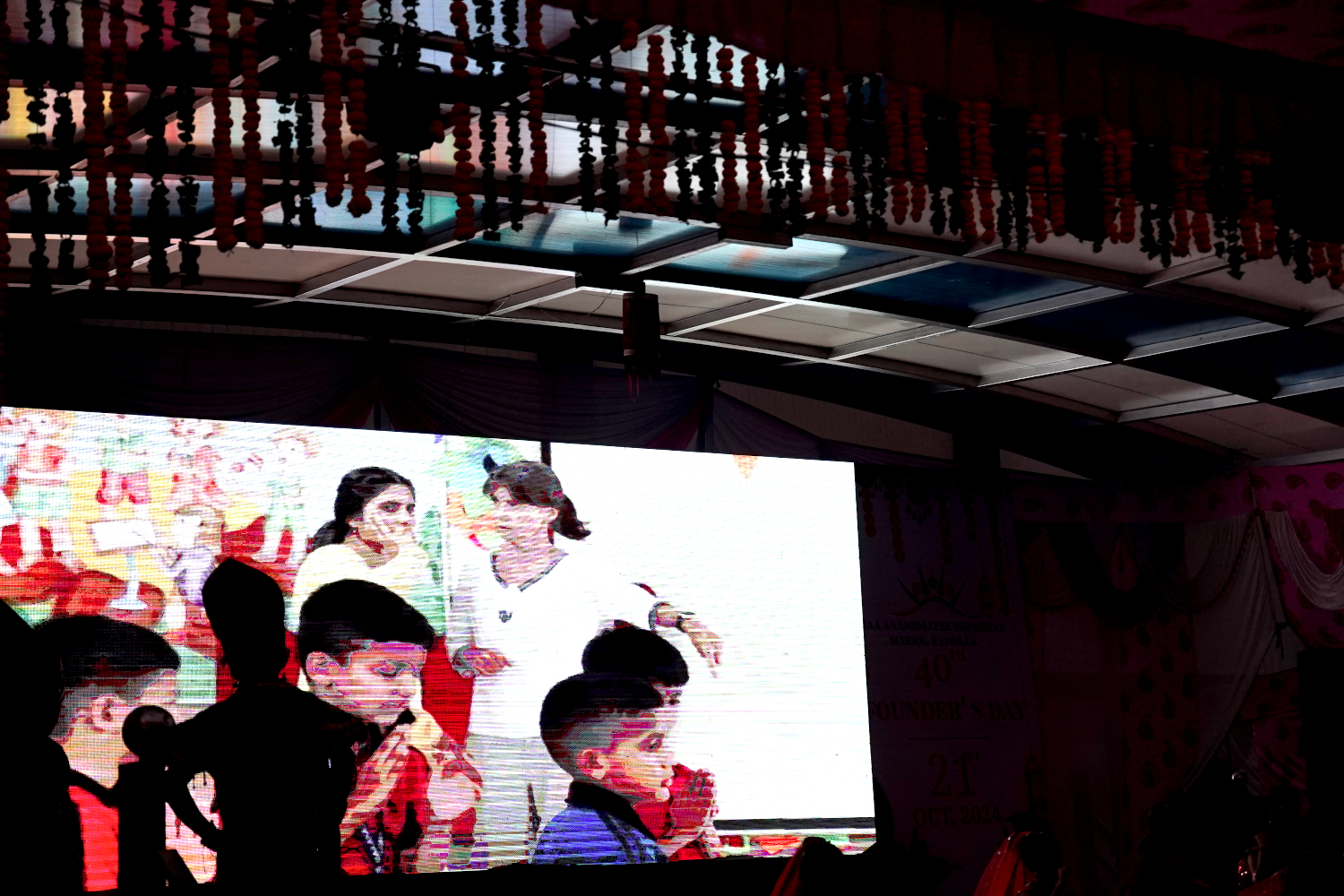

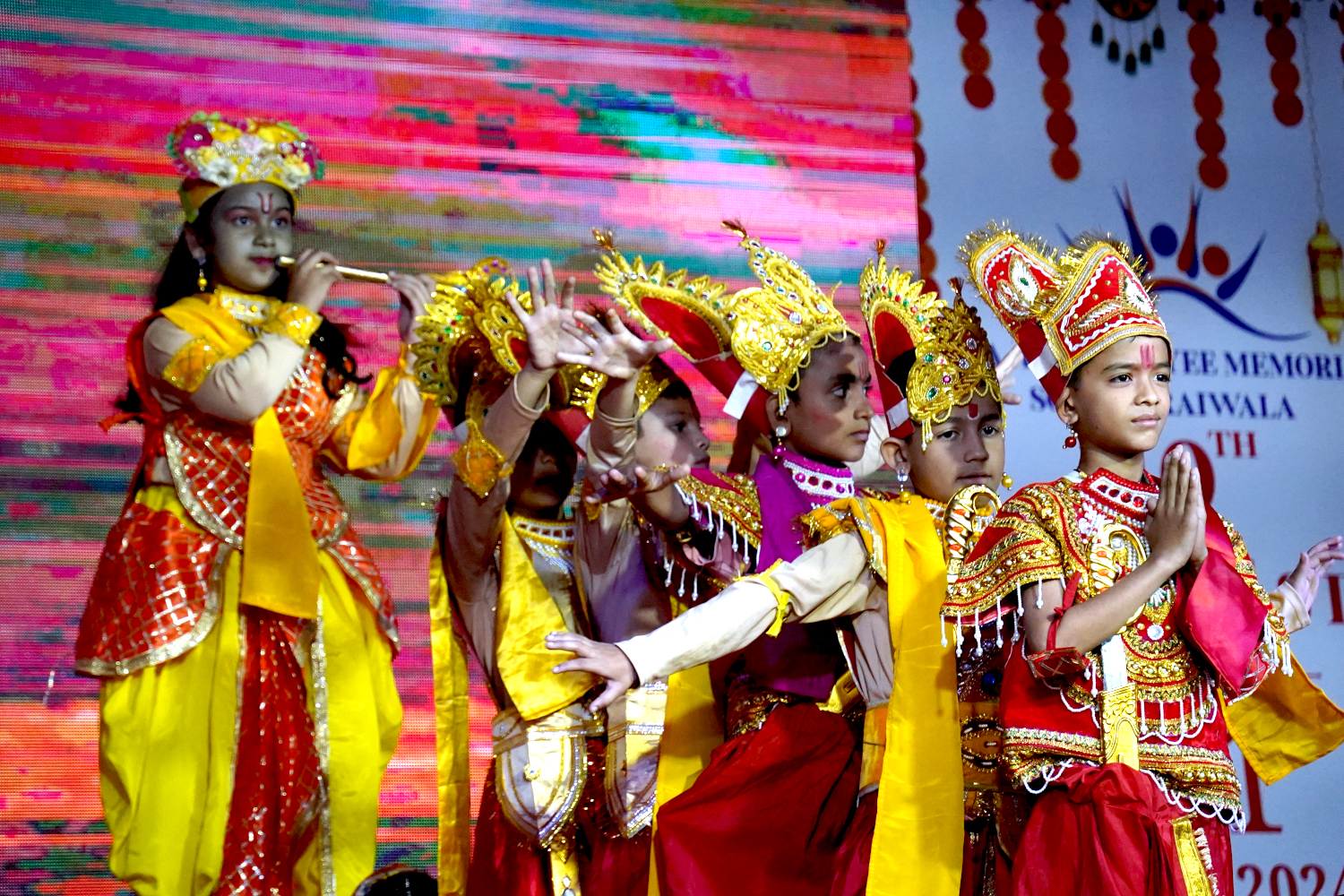
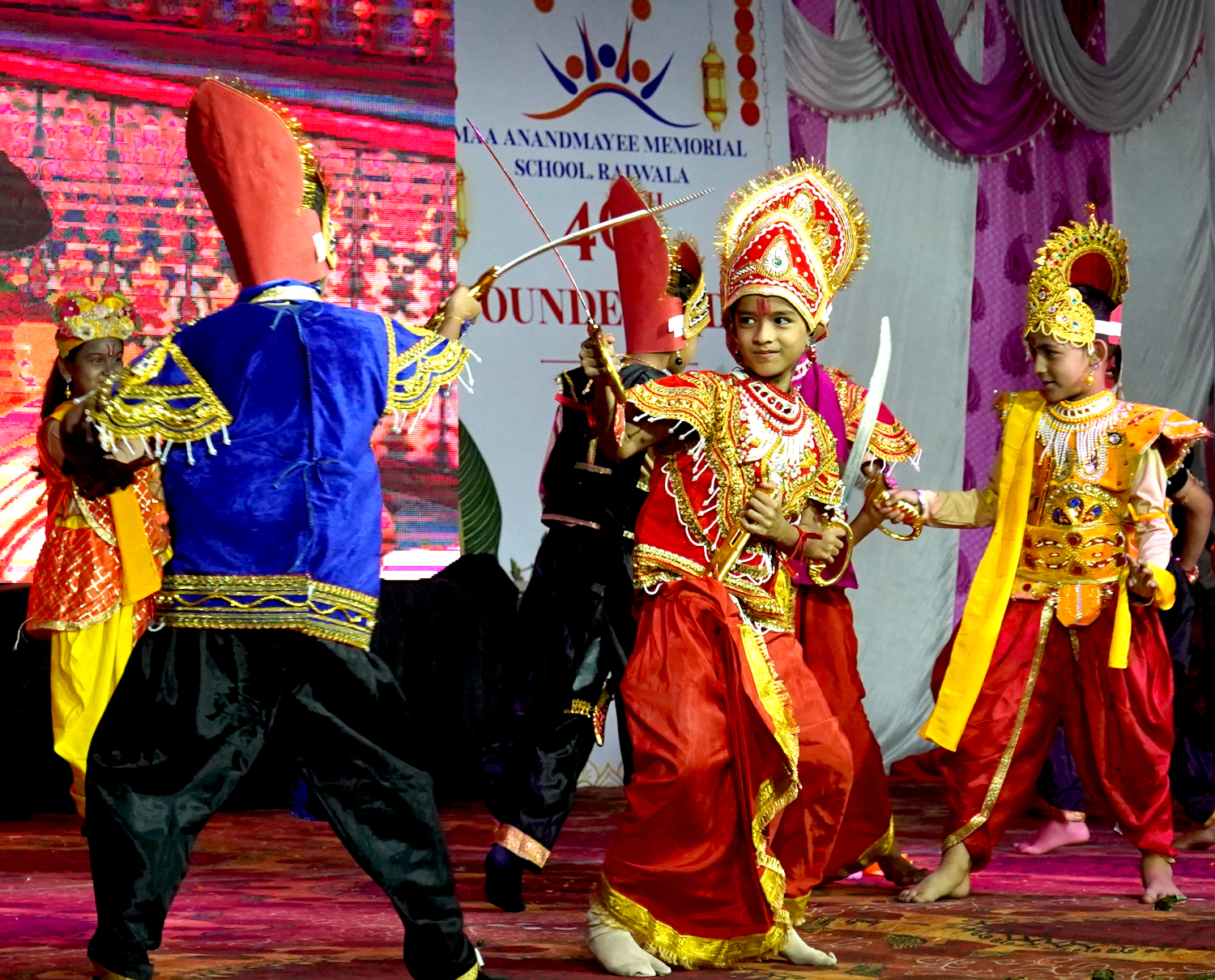

PICTURED: Third Graders in a dance performance of Draupadi (the wife of the five Pandava brothers in the epic Mahabharata). Some background images of Kimberly from a photo session done during a rehearsal at school, in which she helped choregraph. Lights went out during performance, video stalled and the students all kept going like professionals.


PICTURED: Upper class traditional dance.
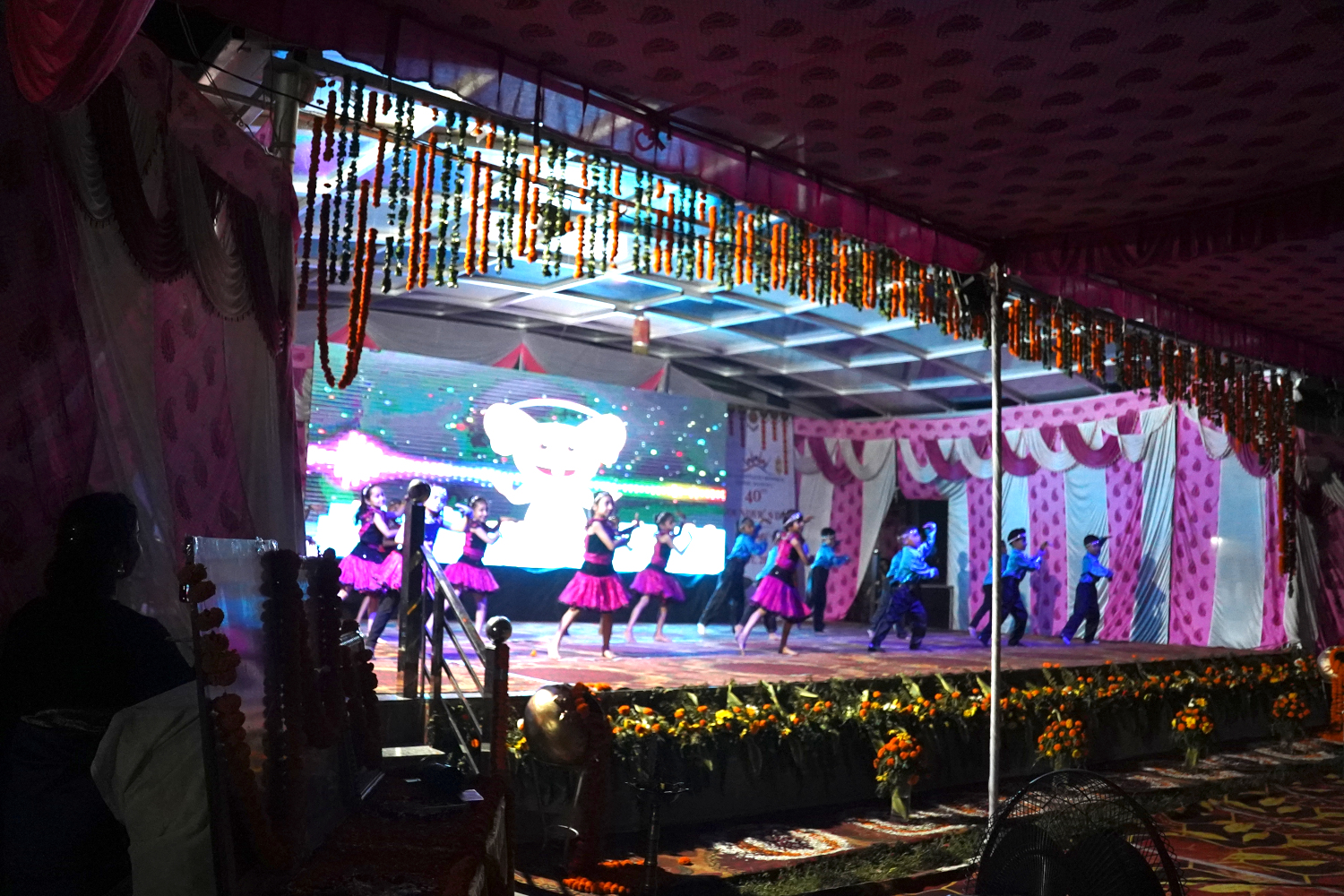
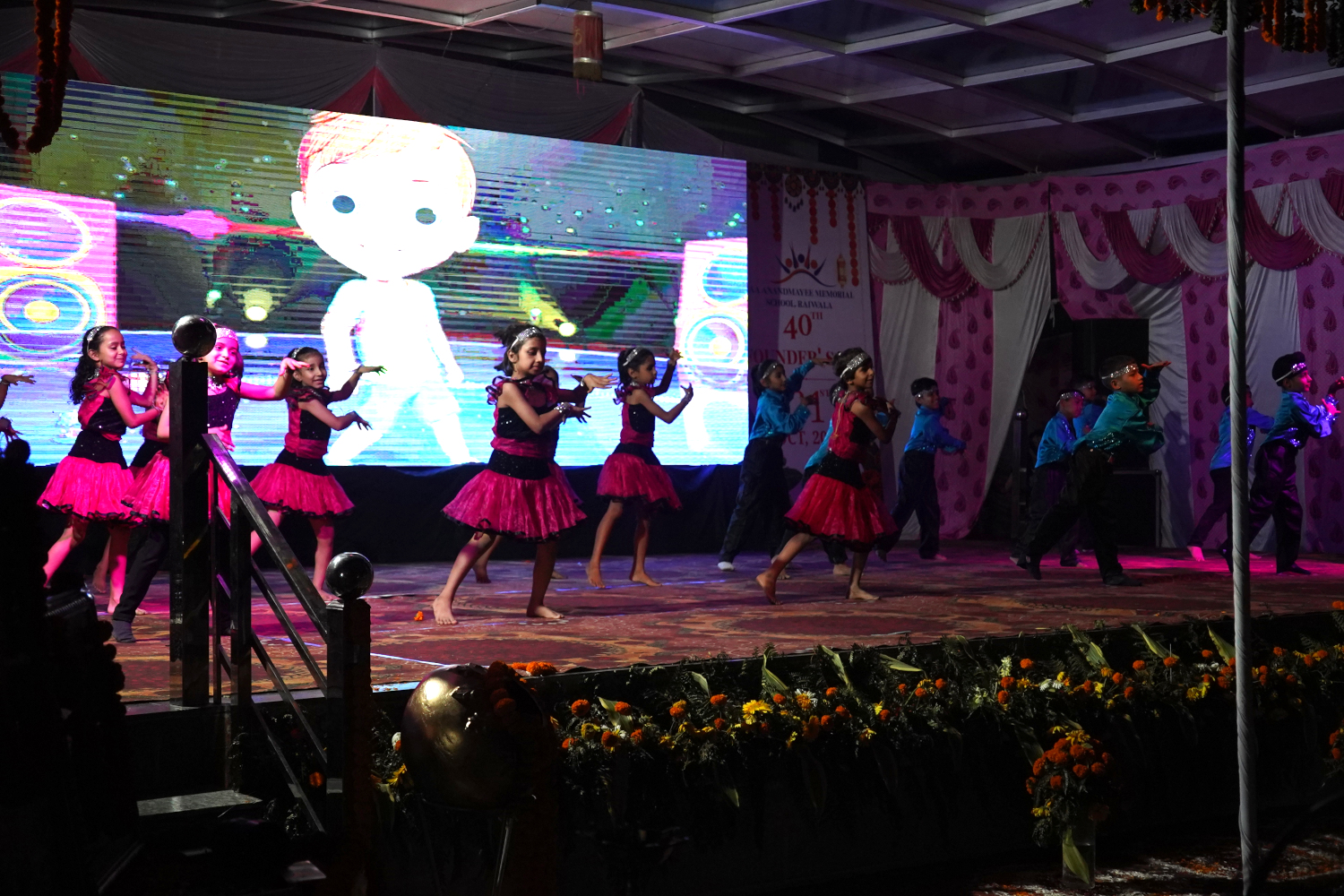

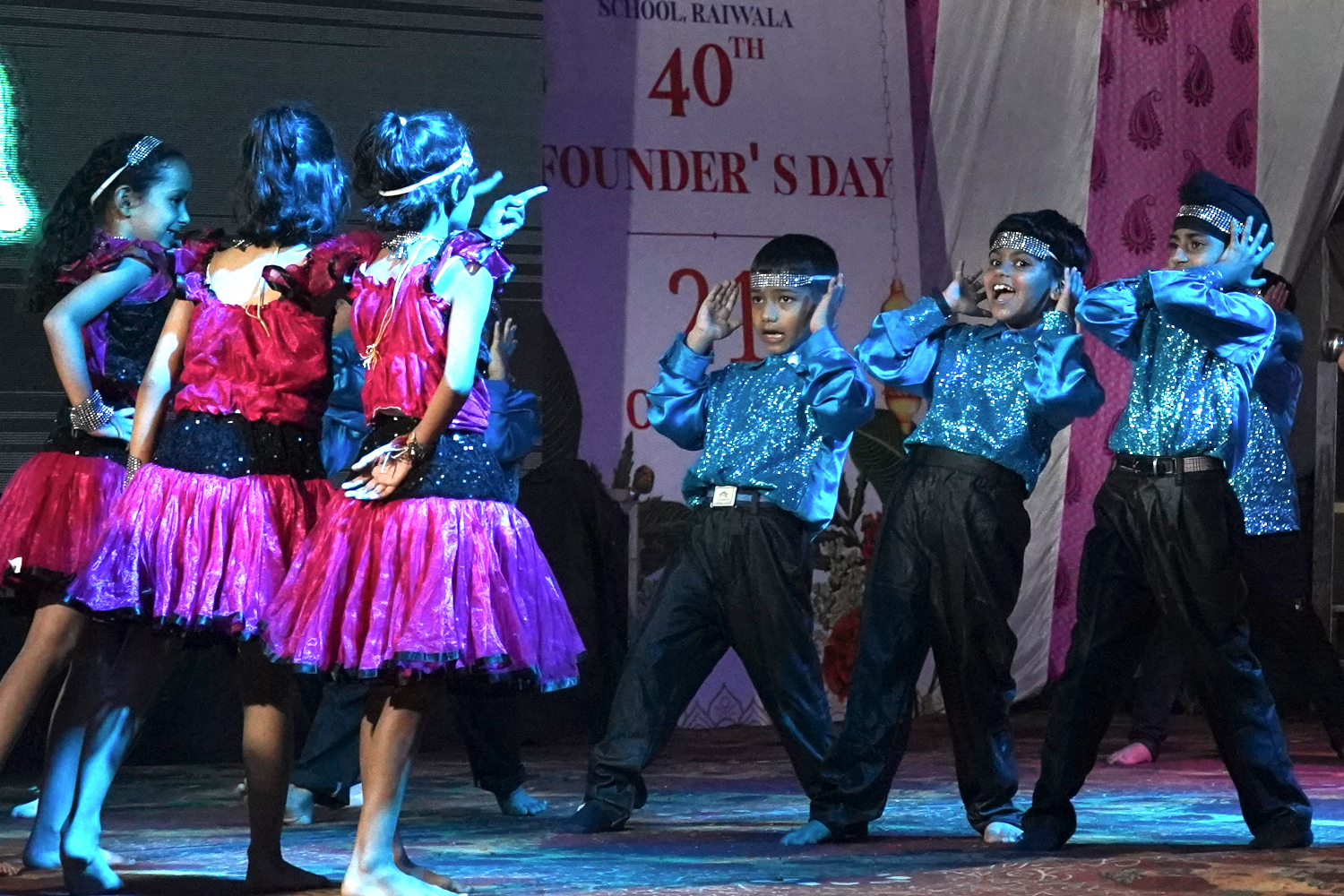

PICTURED: Second Graders “Boys are Best (Chura Liya Hai Tumne)” dance (More lighting issues due to overloading circuits with video, and lights.) – Kimberly also helped clean up choreography and taught them to count the beats. https://youtu.be/hVN0SOinMVk?si=023kHnA7Iqehxbu8
10/21/2024
If you enjoy reading about our adventures and impact, consider supporting us on Patreon!


 world travel with a theatrical flair
Leave a comment