

The week leading up to Diwali
The people of India love their festivals; and one of the most festive festivals is Diwali, the festival of lights, representing the triumph of light over darkness, and of good over evil. It’s a celebration lasting several days, and the people eagerly anticipate it by decorating with lights, almost in a Christmas-like fashion. It was our good fortune to be in India during this season, and to witness the excitement in a couple of communities, including the village of Raiwala, where we were living and volunteering.




We get a sense of he mounting anticipation when we spend a Saturday trekking into the nearby city of Rishikesh, where Kimberly soon will be undergoing her training as a yoga instructor. On this, our second trip to Rishikesh, we actually go into the “hip” part of town, (Topovan) which requires taking a separate tuk-tuk; the tuk-tuks that shuttle between cities (such as the one we took to get here) are not allowed to enter the touristy area where we want to go — there’s even a checkpoint where guards ensure that only tuk-tuks licensed for that route make it through to the promised land.
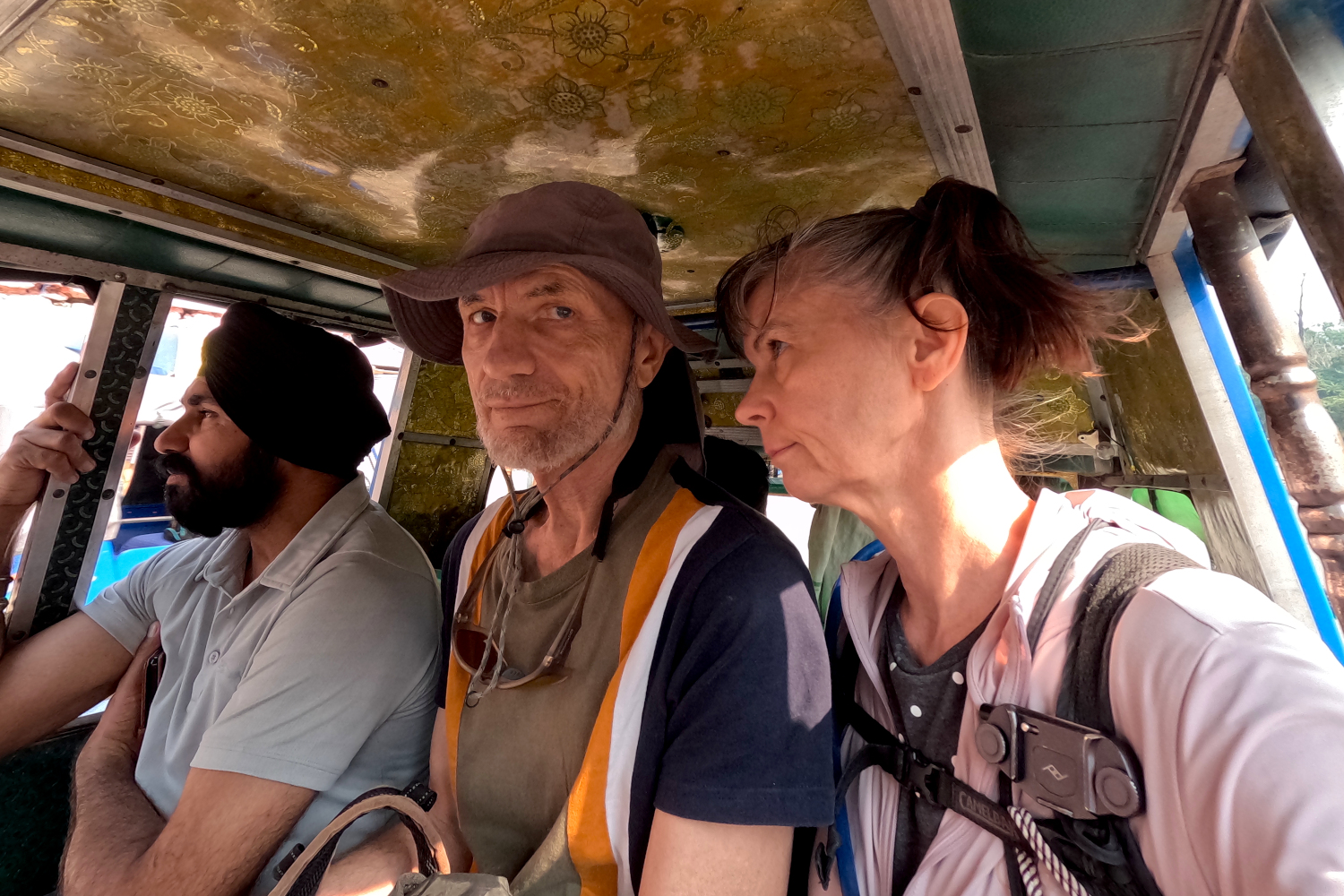
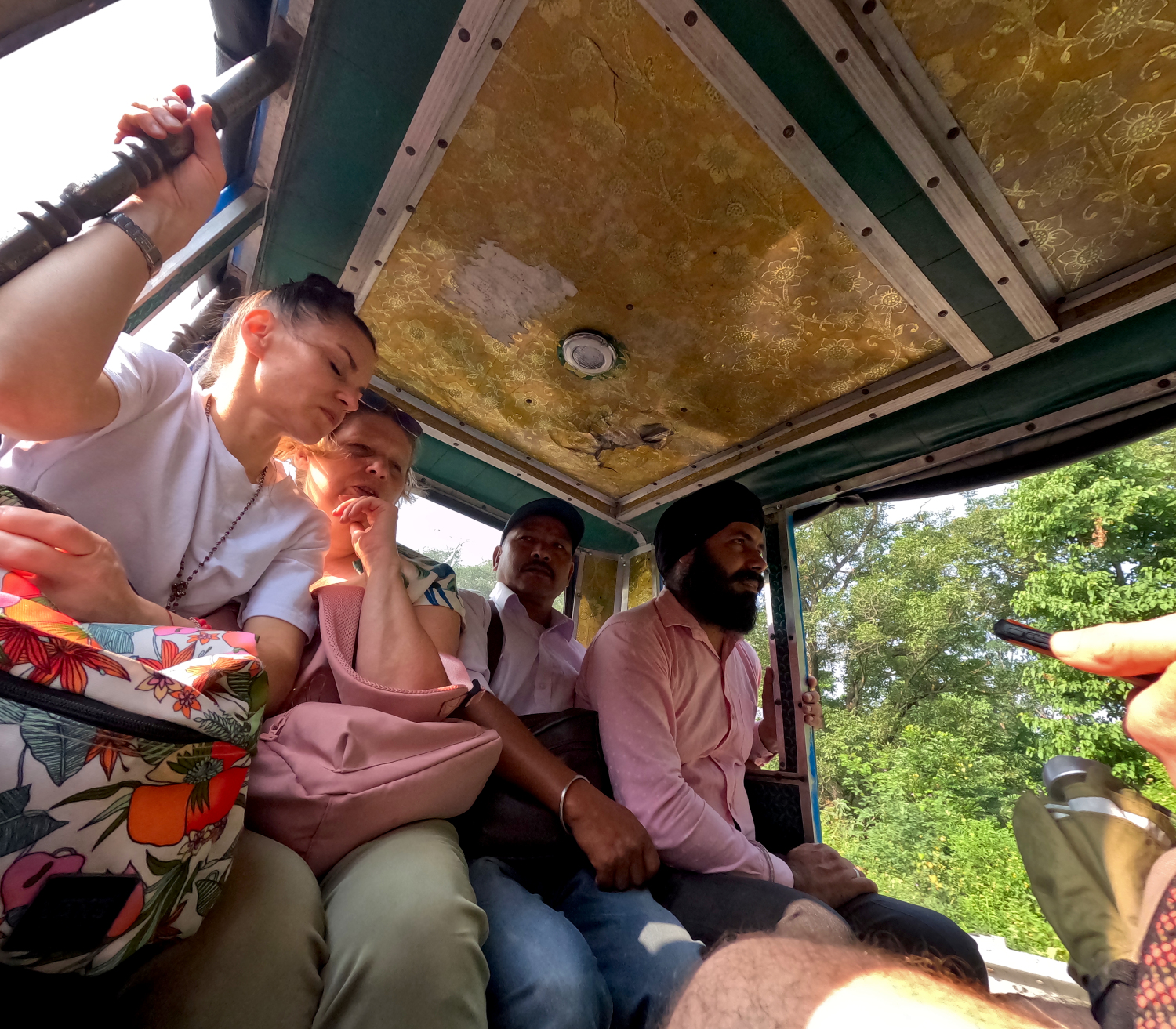
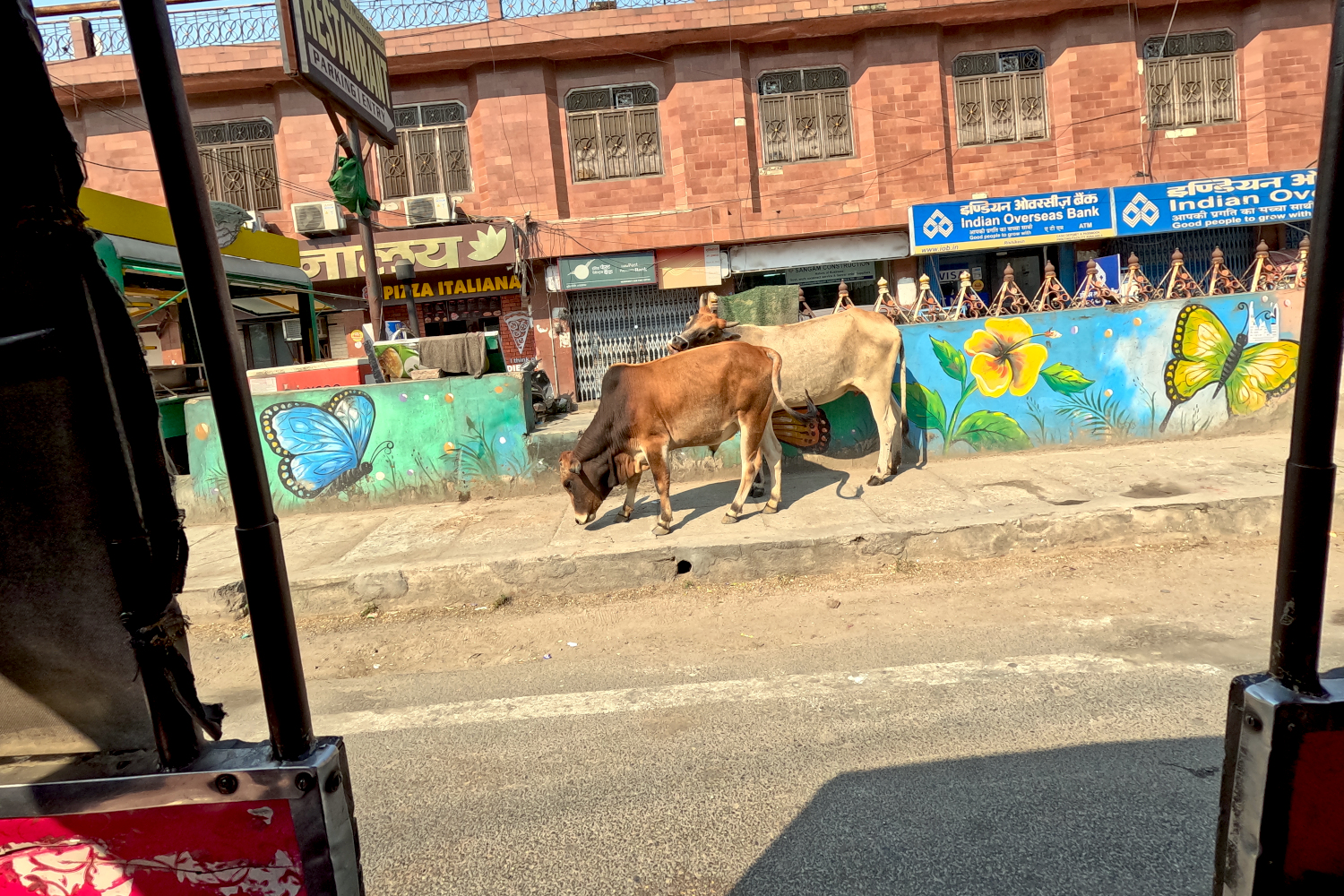
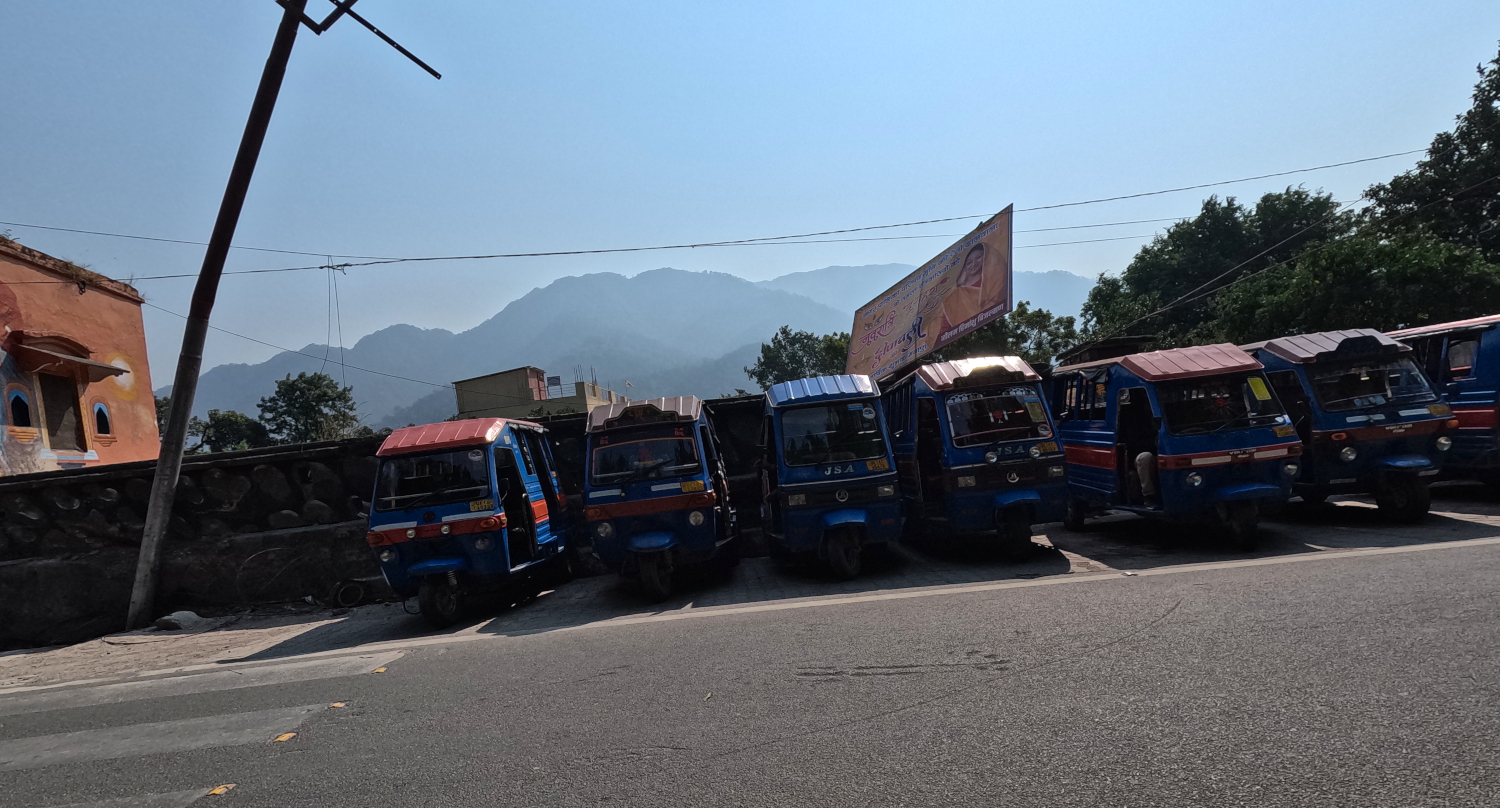
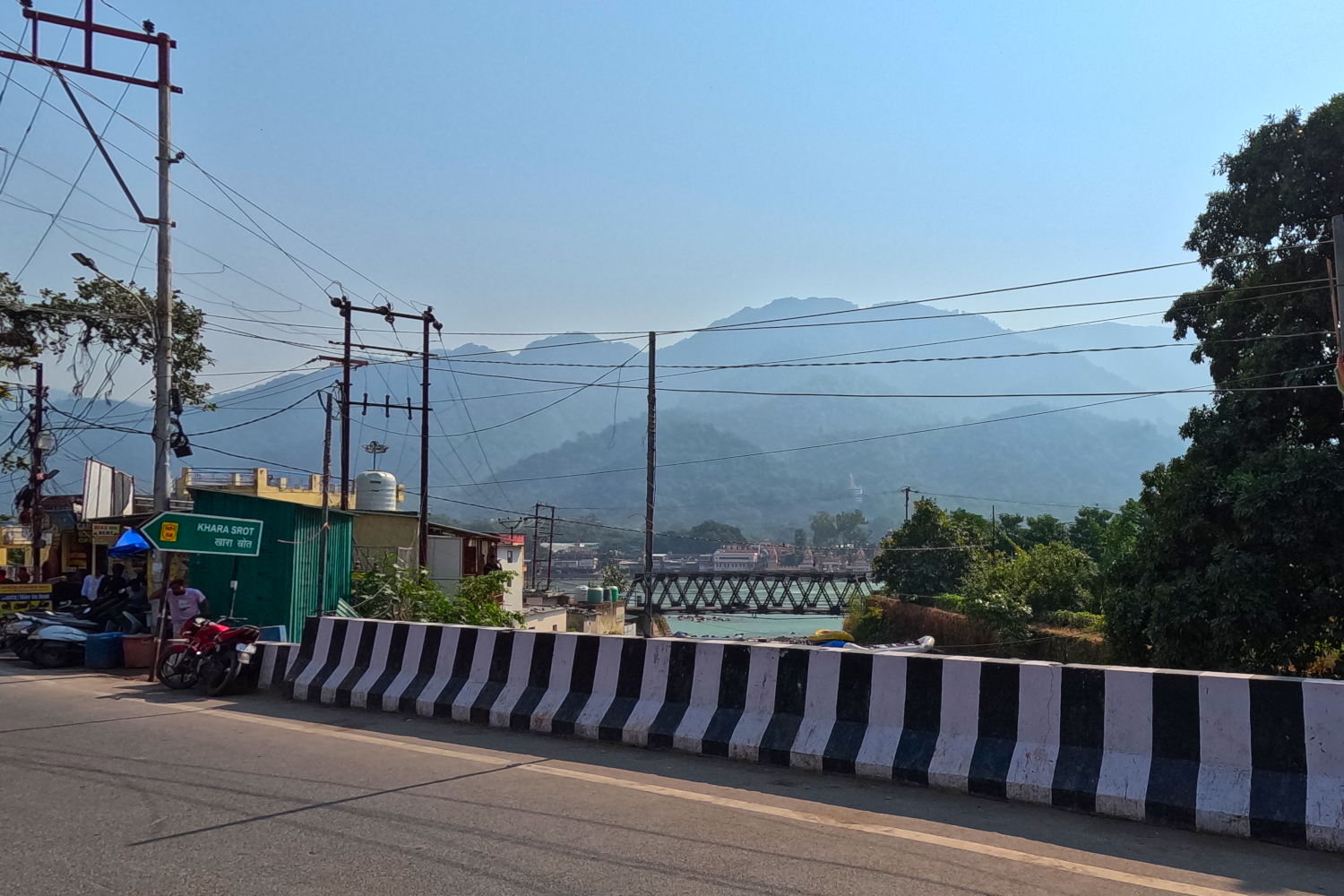
In this part of town, we find a number of businesses catering to spiritual-minded, health-minded and counterculture-minded westerners. These include organic food stores, which offer items that are difficult to find elsewhere, including decaf coffee (much to the delight of Dennis).
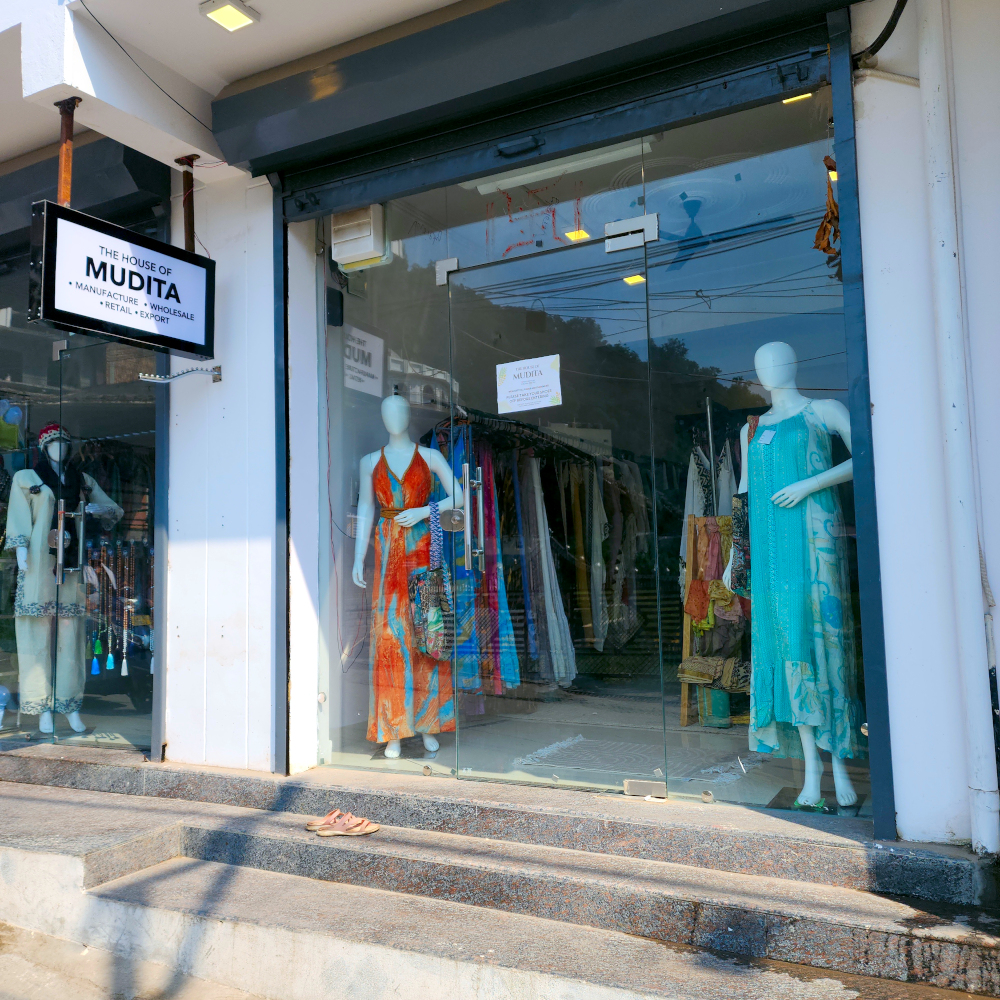

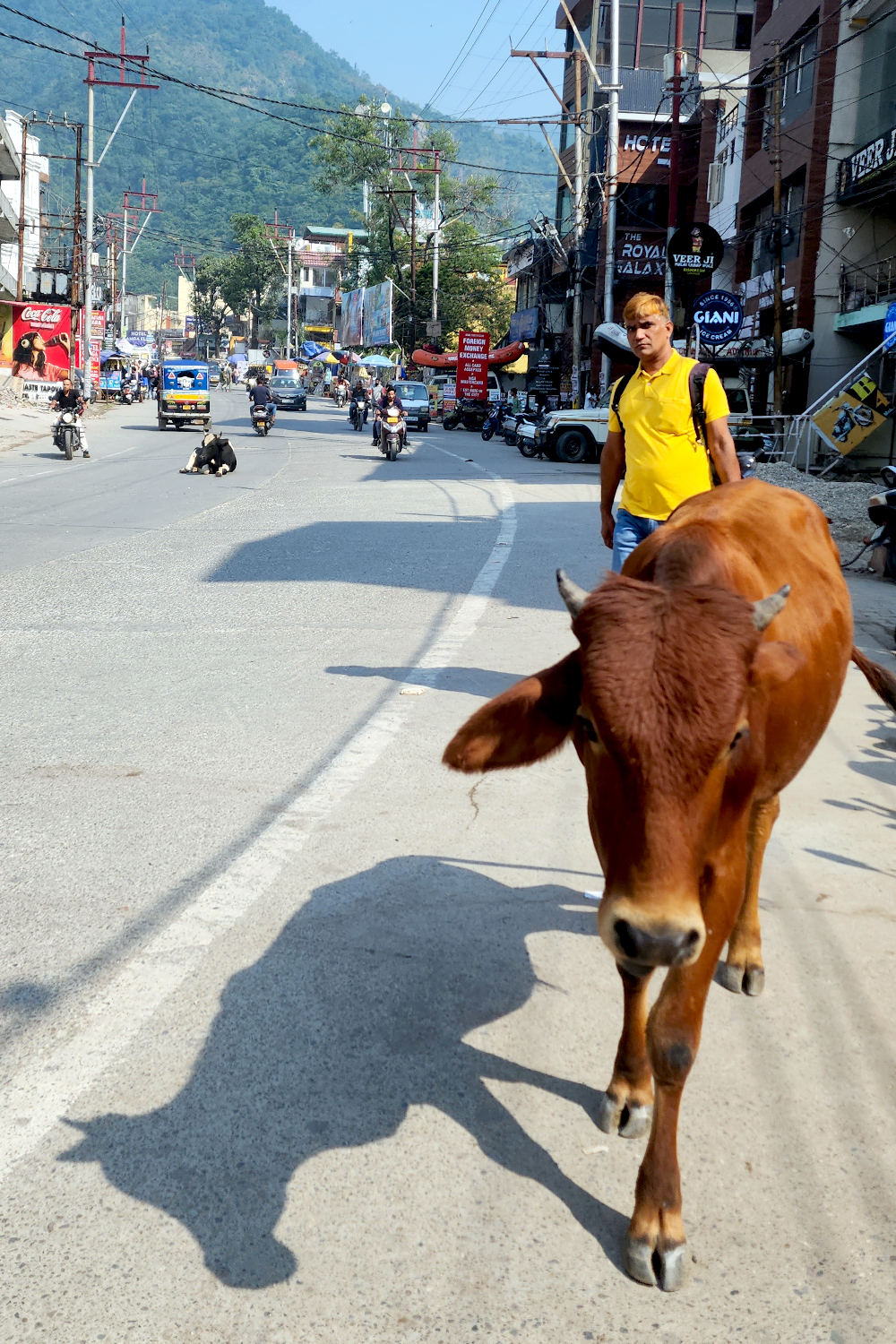
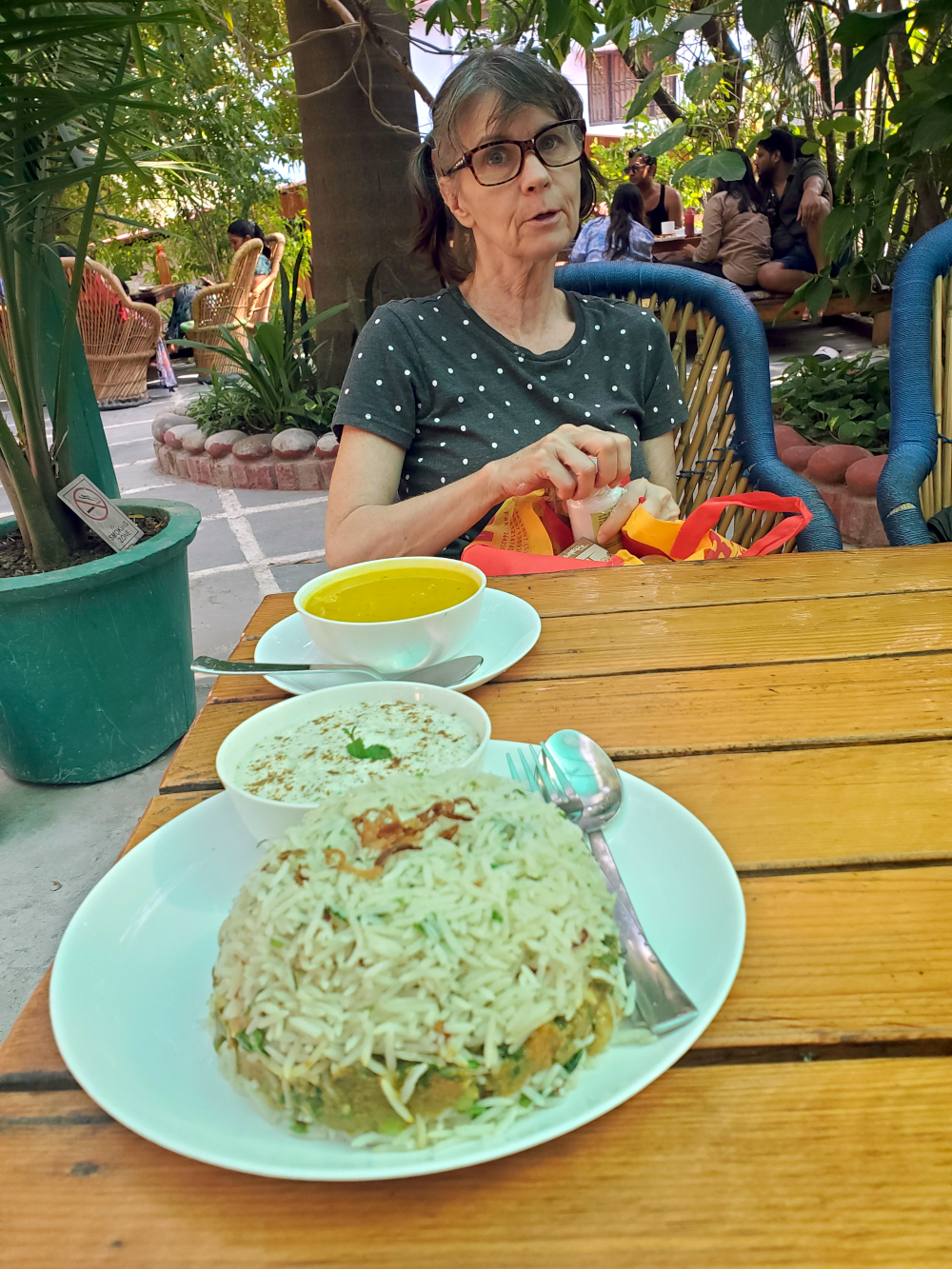
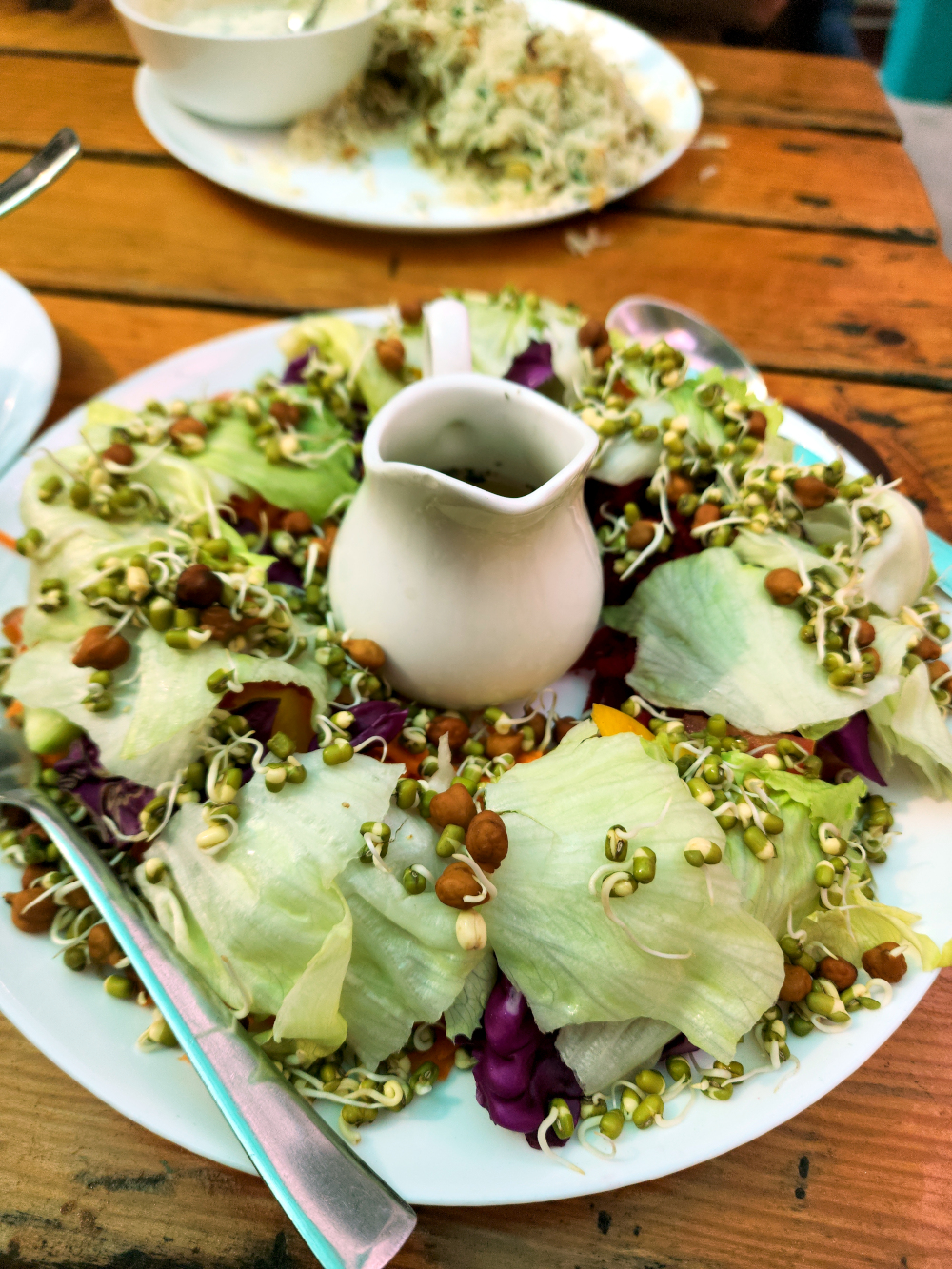
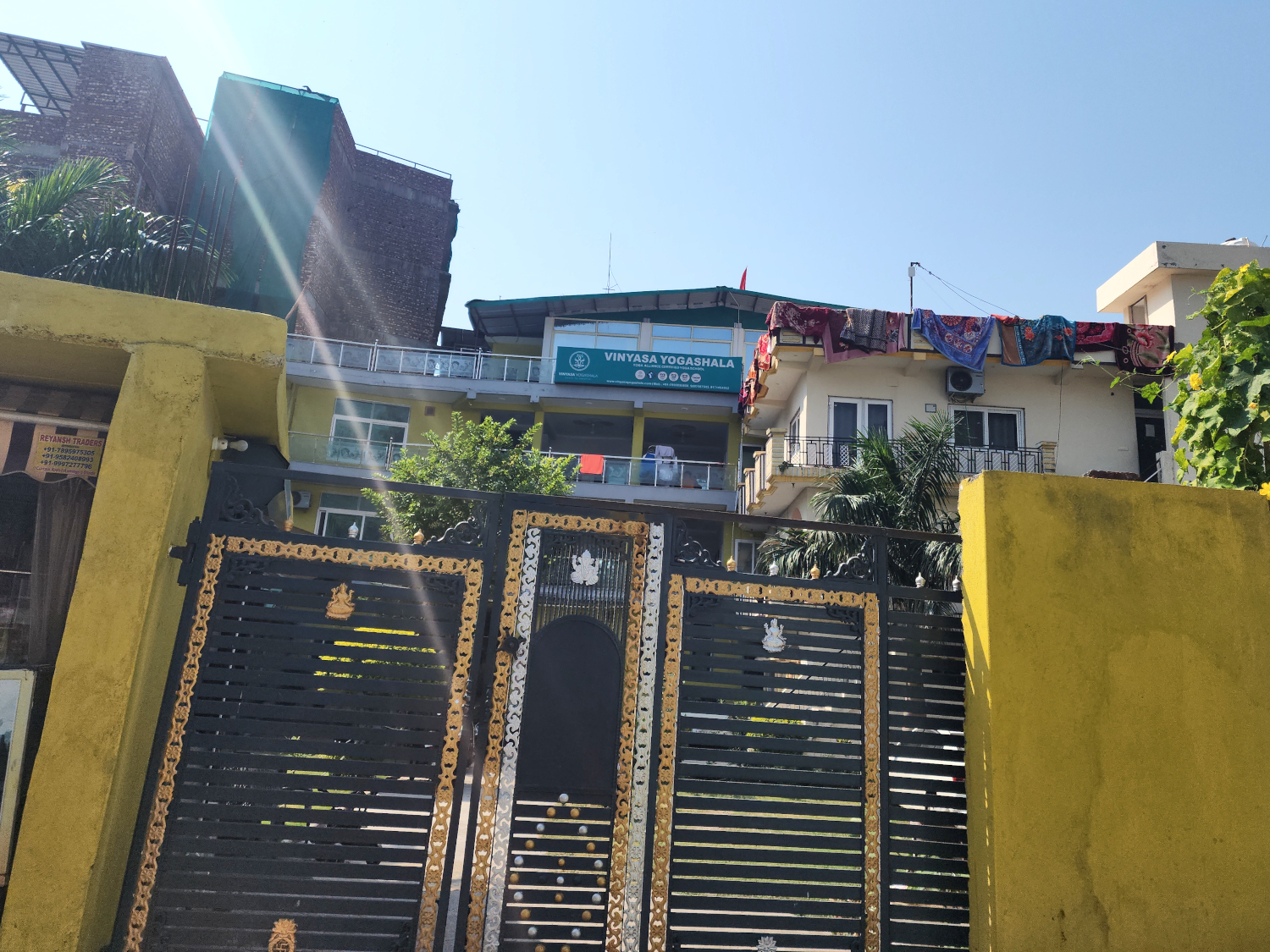
While we’re in the neighborhood, we scout out the location of the yoga school where Kimberly will be studying. It’s an interesting street, and among other things features a charming little outdoor (shaded) tea shop/ cafe/ restaurant where we have lunch. The cuisine is vegetarian, like everything else in town, and has some excellent food with large portions. It also, we learn, has a free restroom, which we can access any time we’re in the neighborhood, and that’s always a good thing to know about.
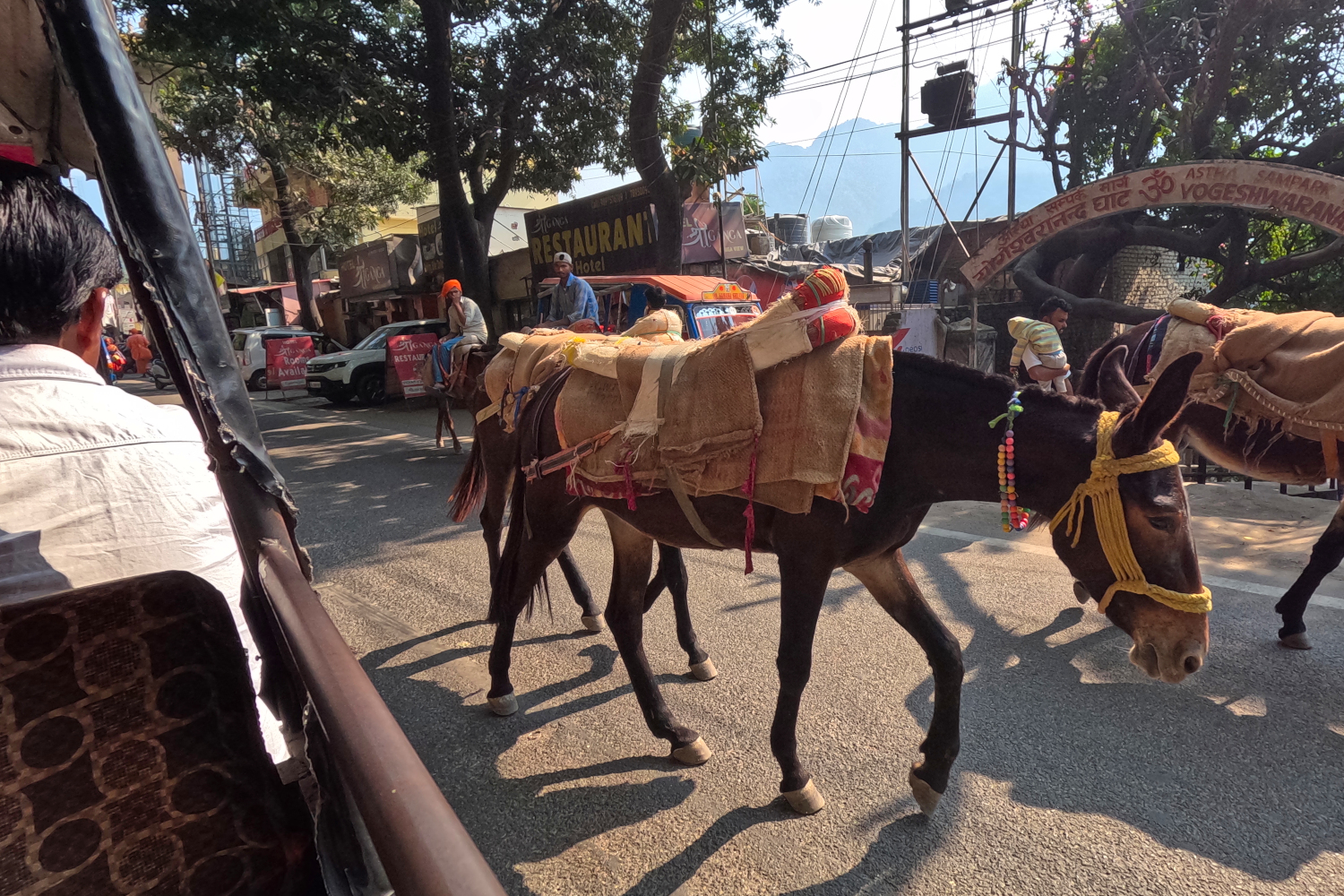
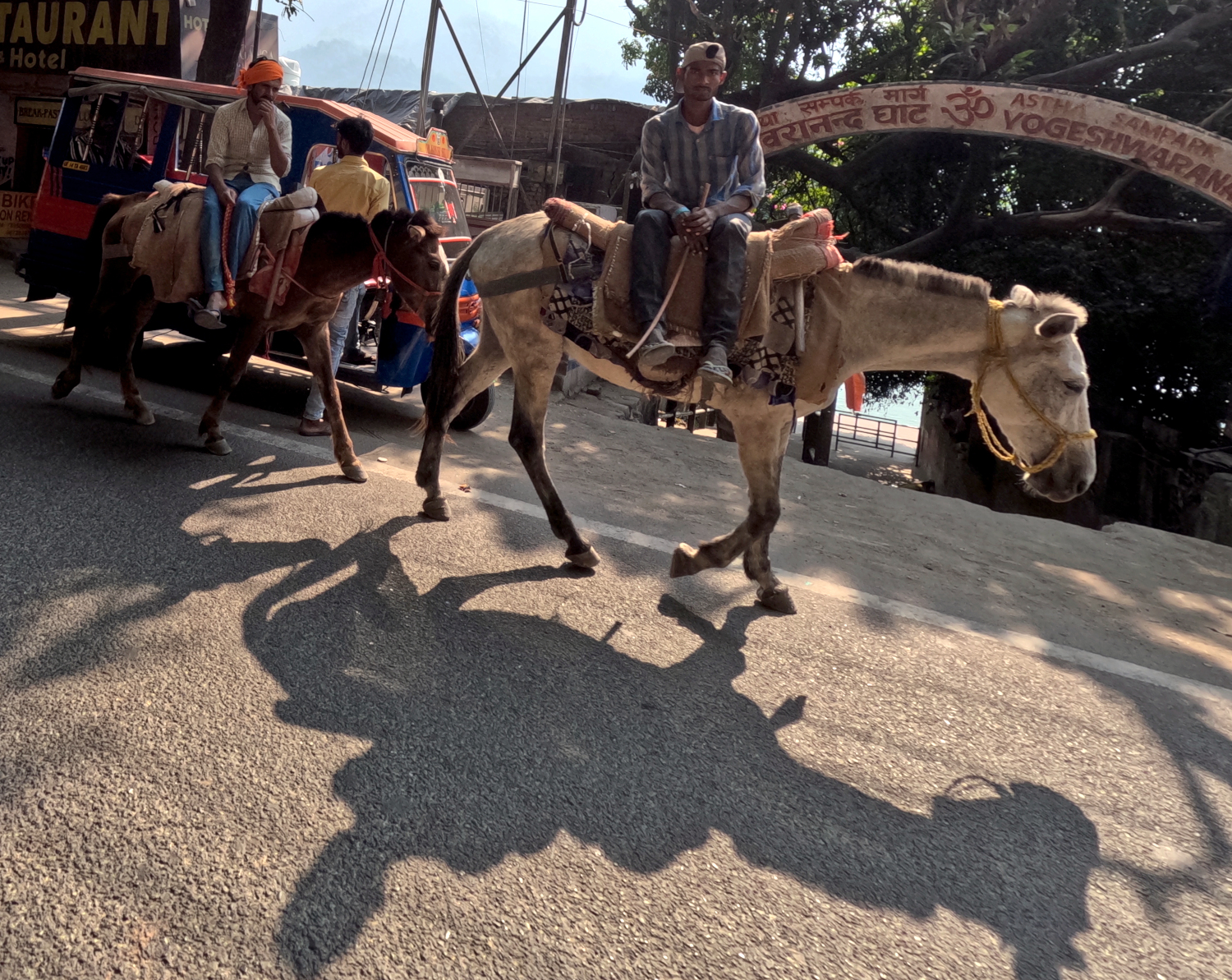
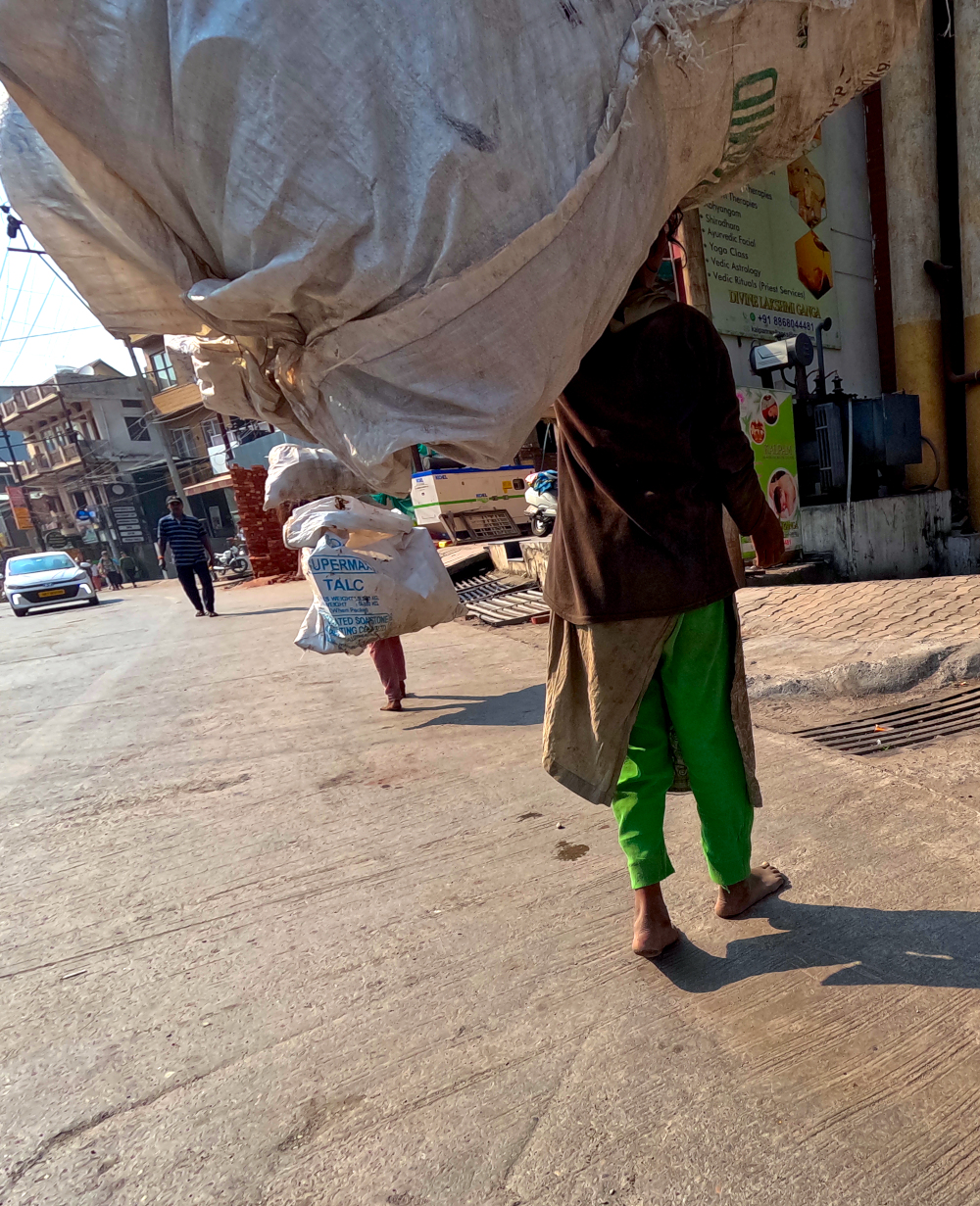

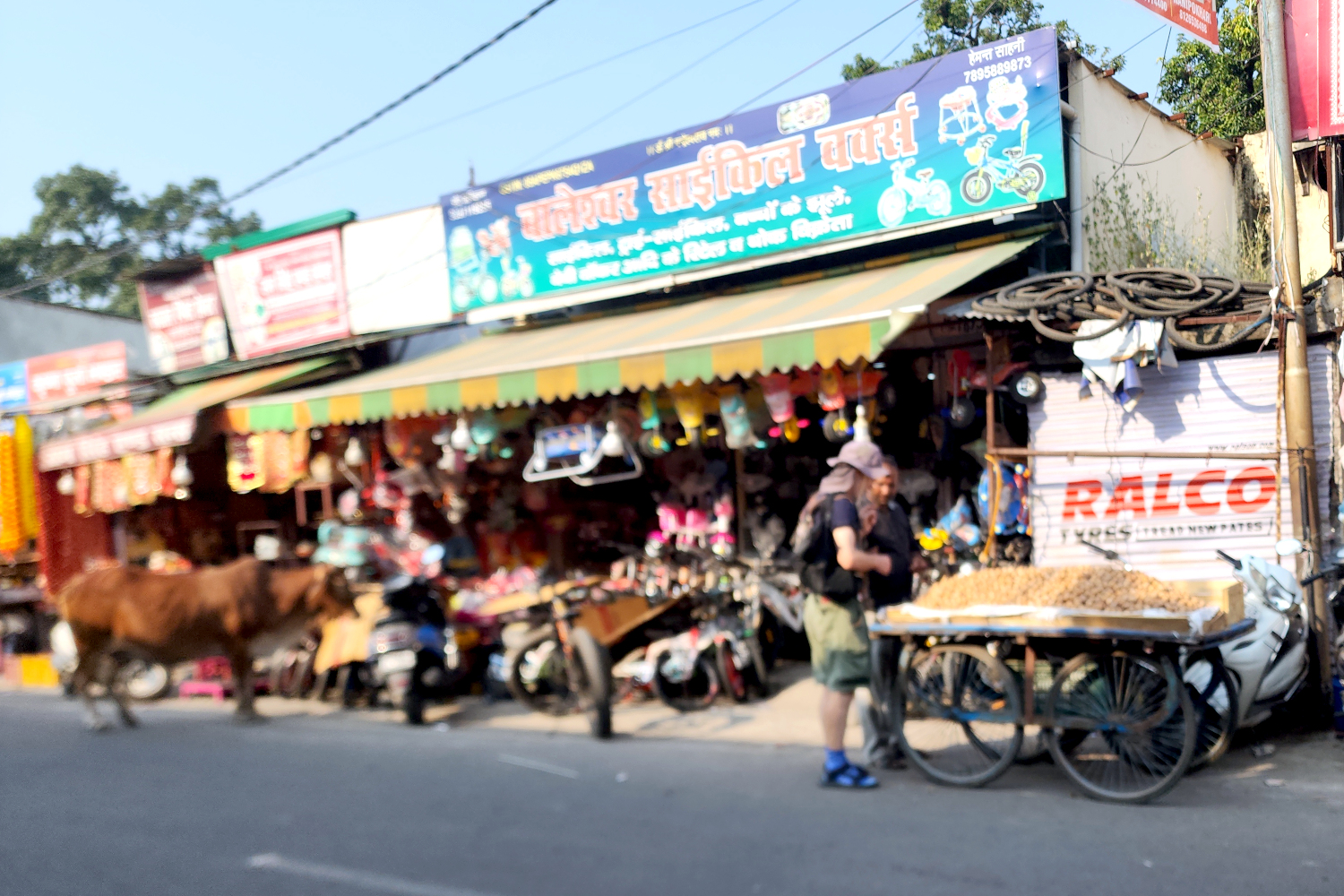
Arranging a trip back to Raiwala is just as much a hassle, if not more so, as the trip to Rishikesh. And every step of the way, as always, we have to haggle with tuk-tuk drivers who want to squeeze as many rupees out of us as they can. When we arrive back at Raiwala Junction, we ask several drivers about getting a ride to the school, which is about two miles. Each one quotes us a fare of 100 rupees, which we consider too high. Finally, we find one willing to do it for 20 each; but then he takes us in the wrong direction at one point, and about a mile out of the way. And by the time we realize that he doesn’t know his way around, and point it out to him on our phone, he starts demanding that he get 100 for correcting his own mistake and taking us the right way.
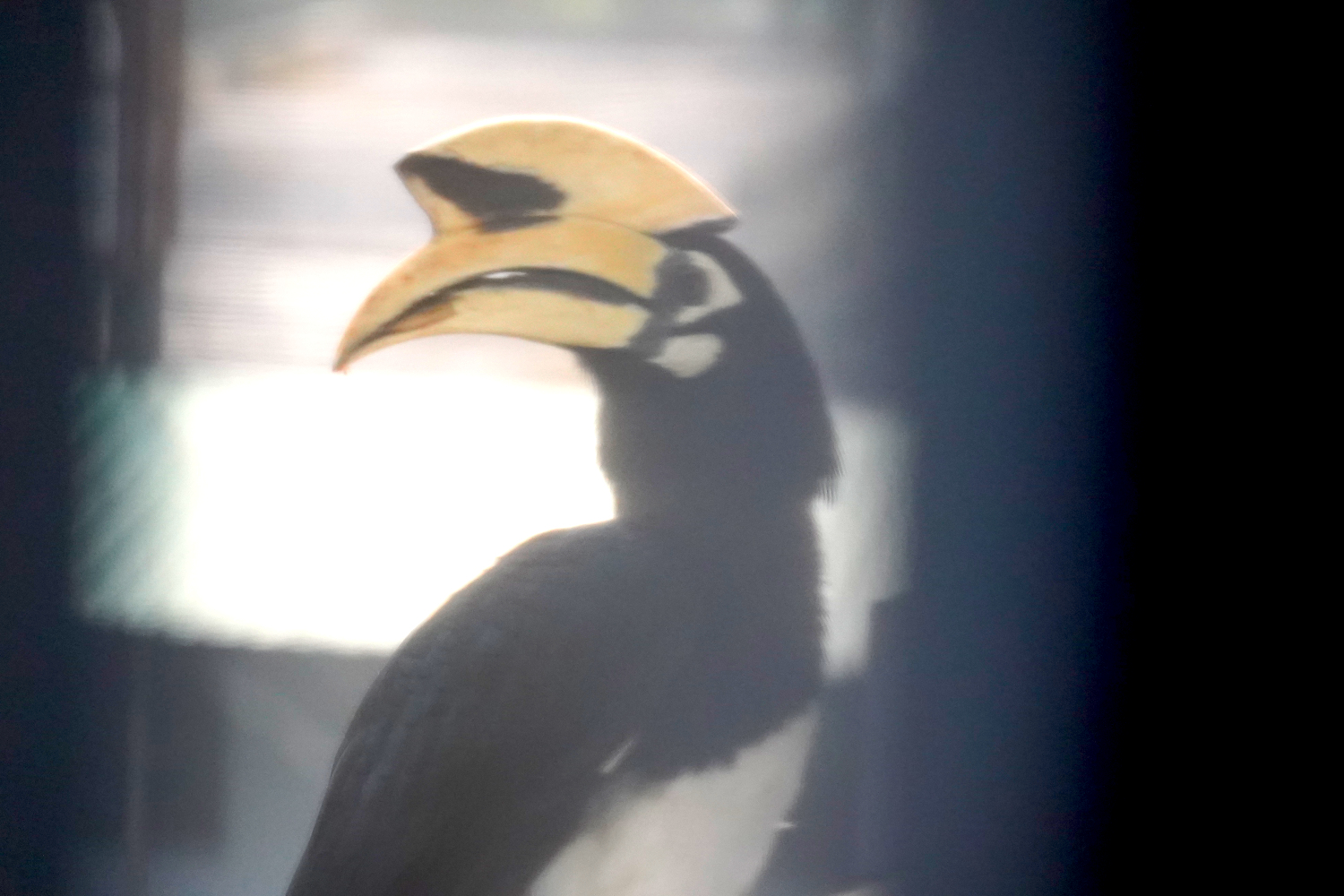
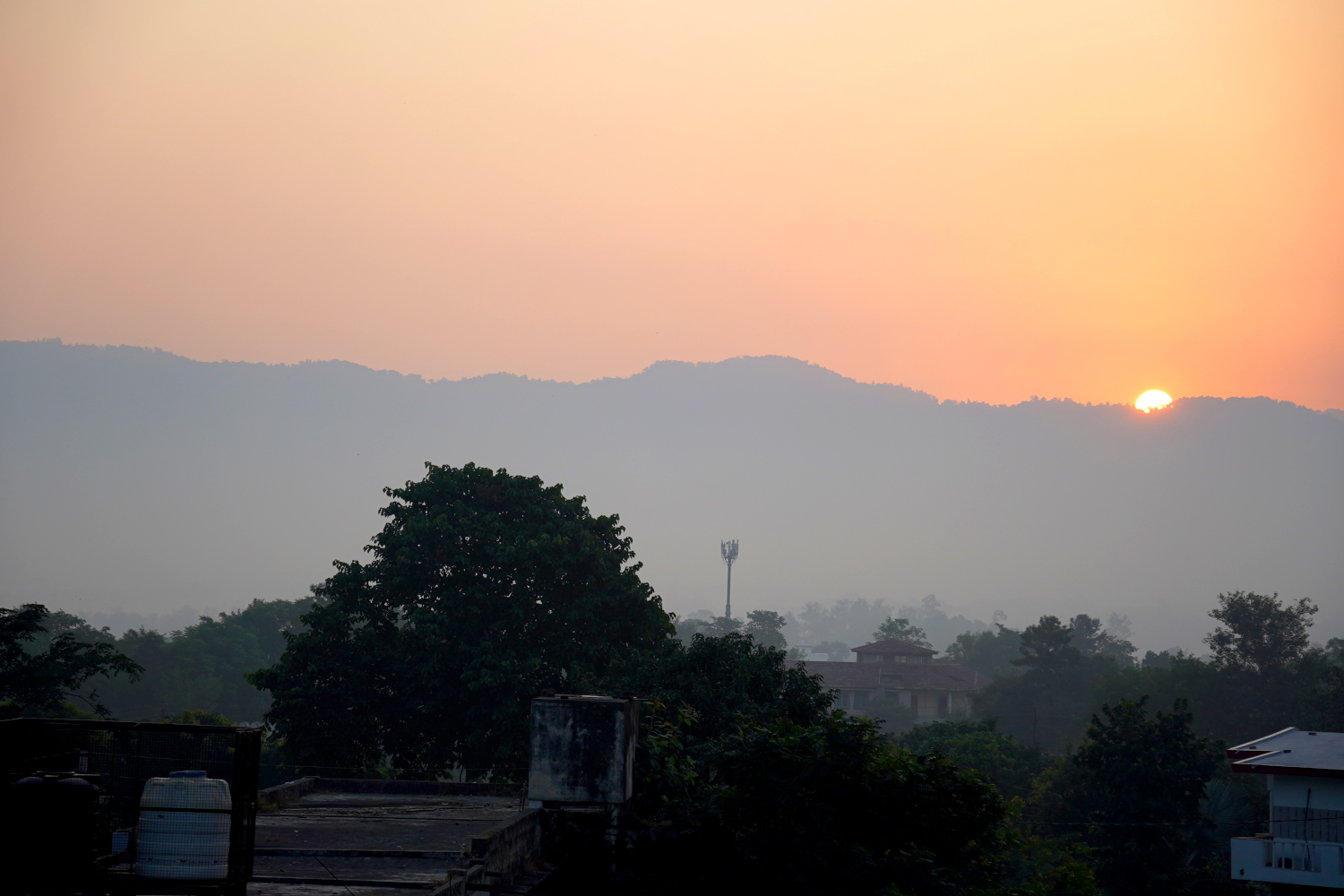
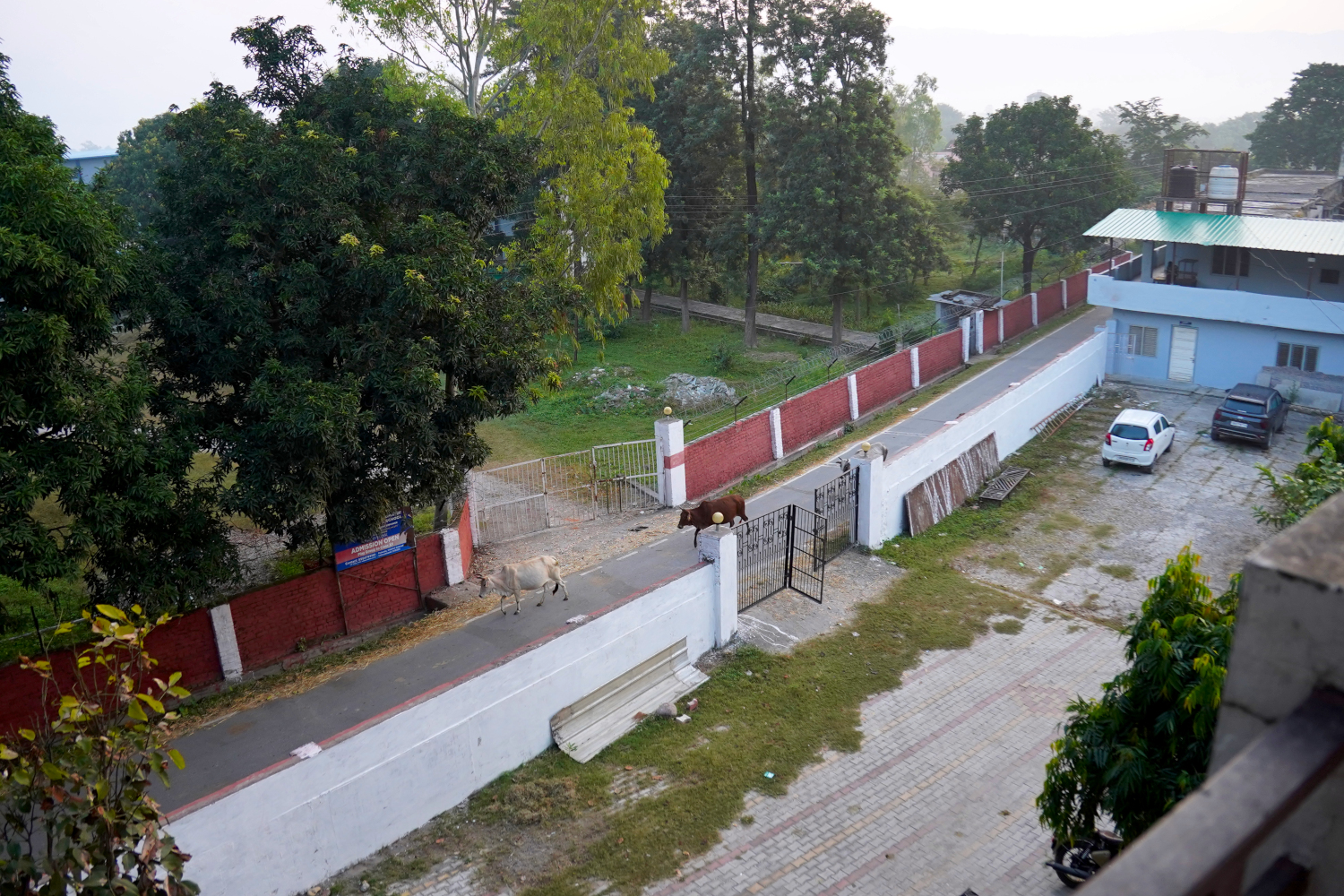
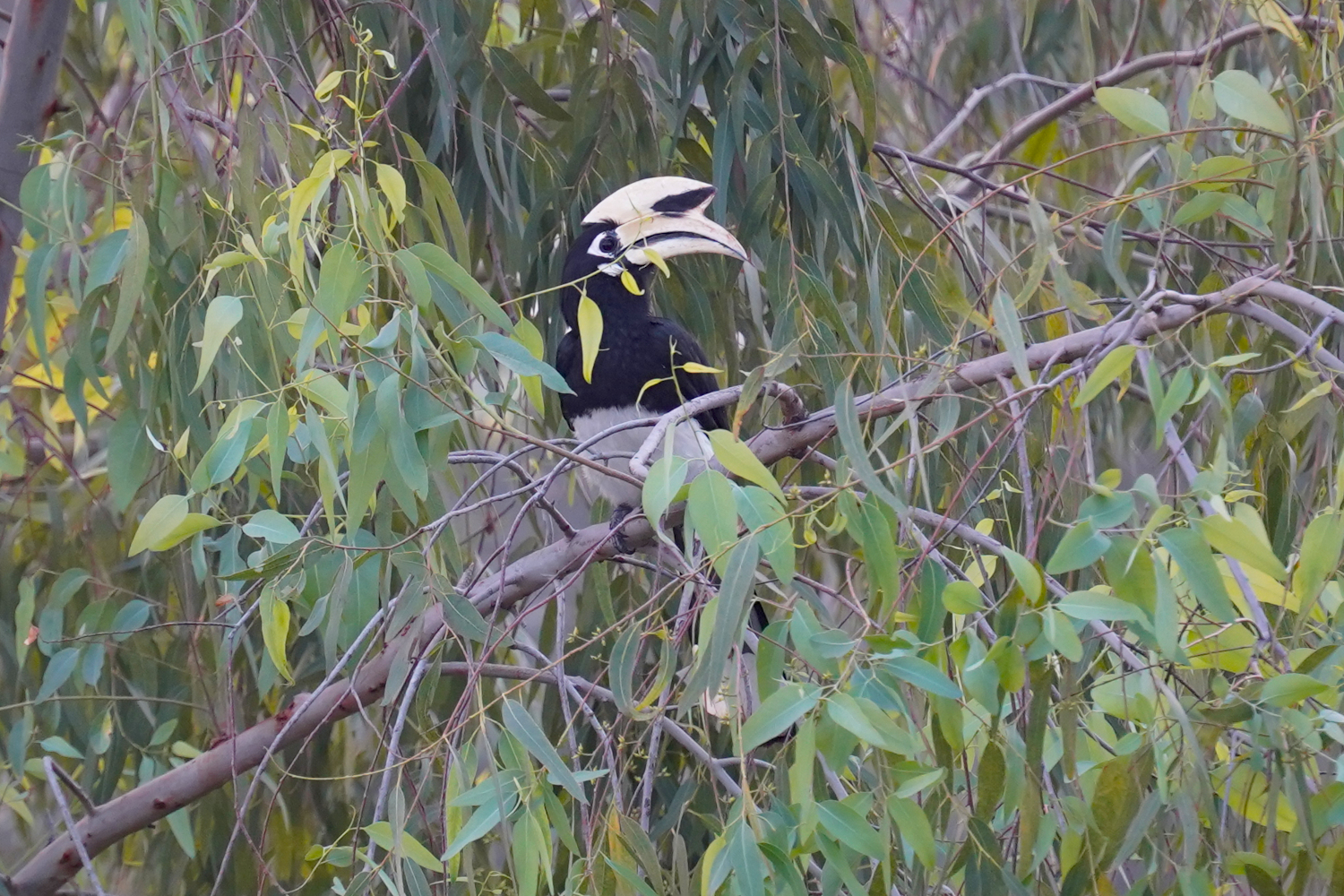
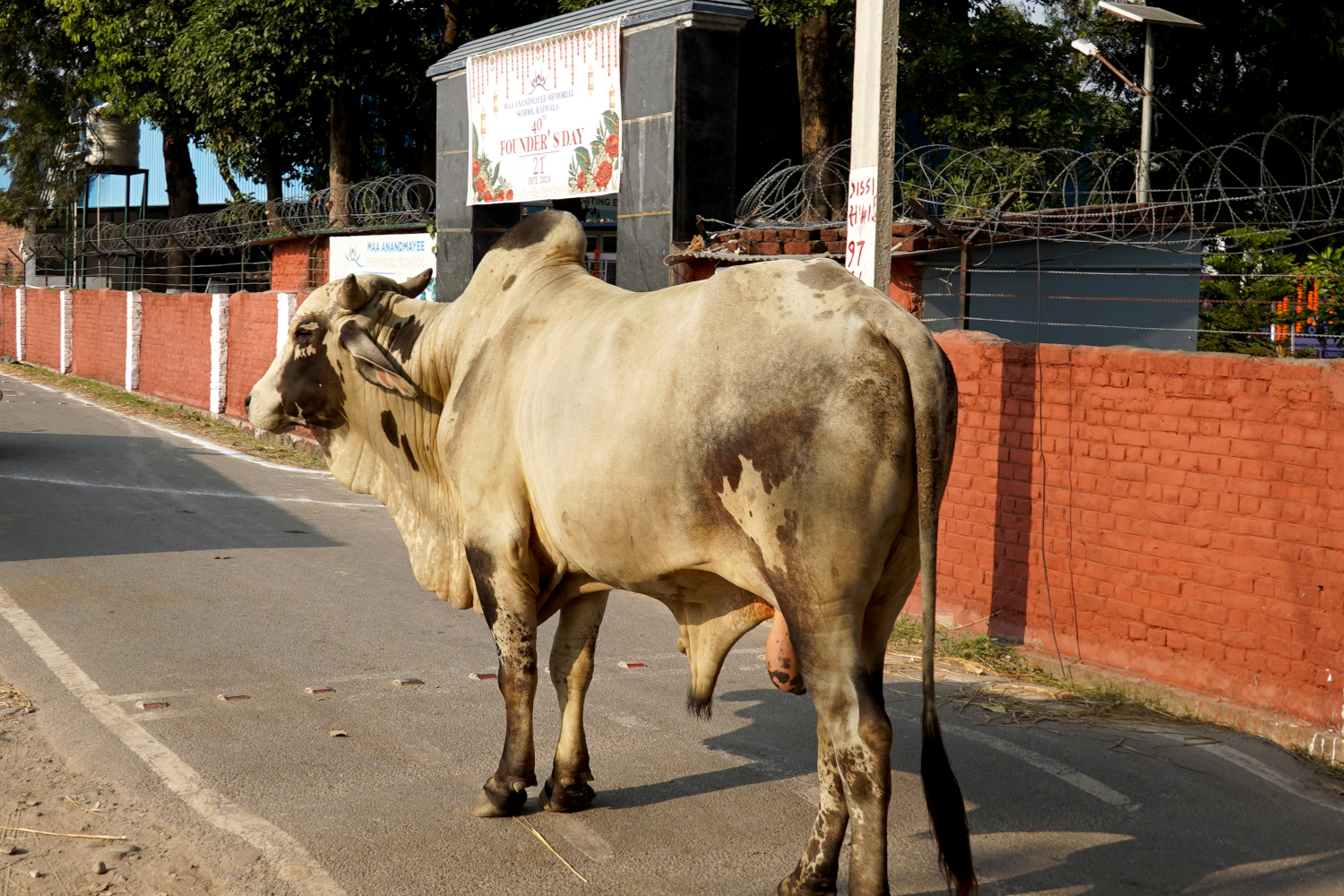
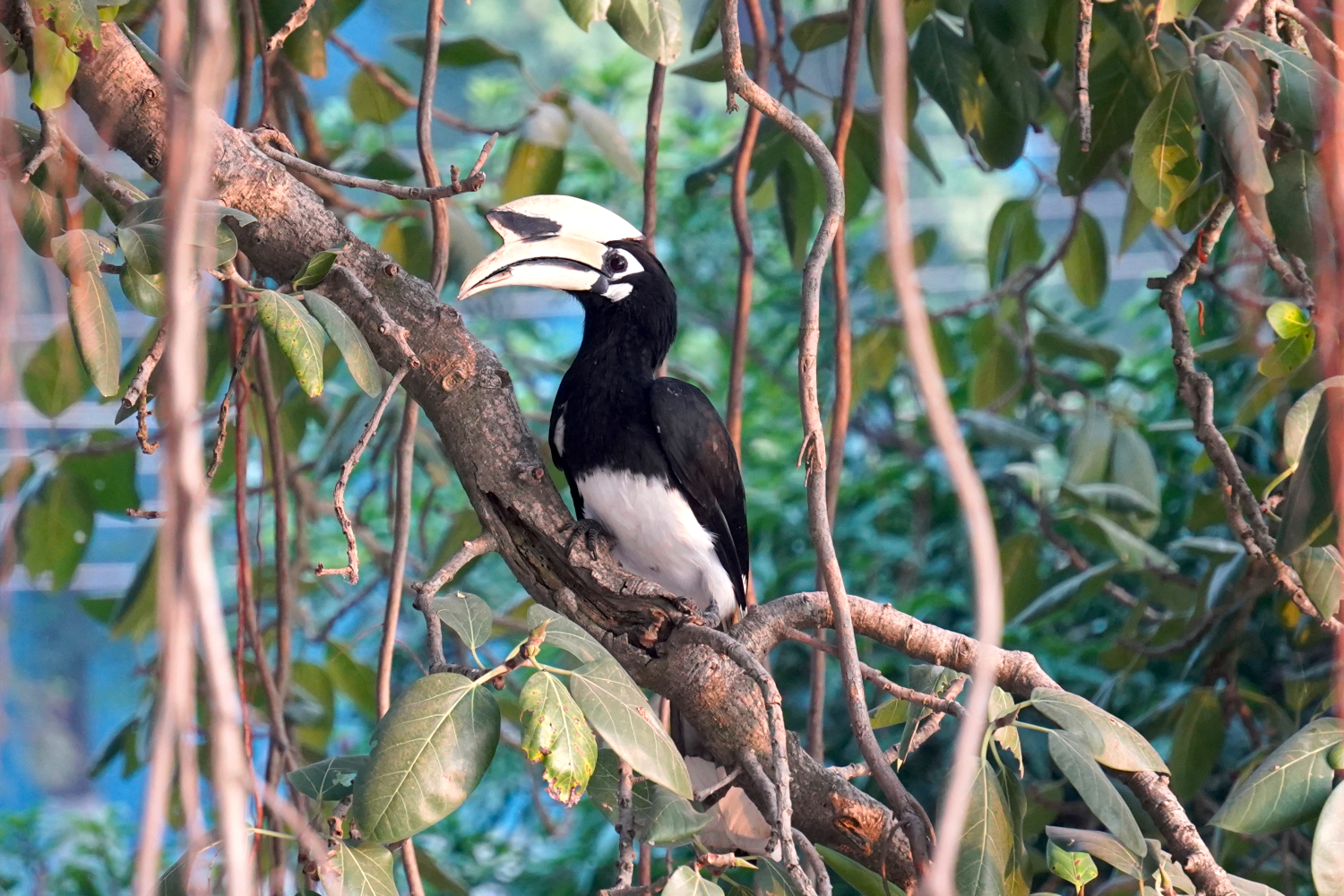
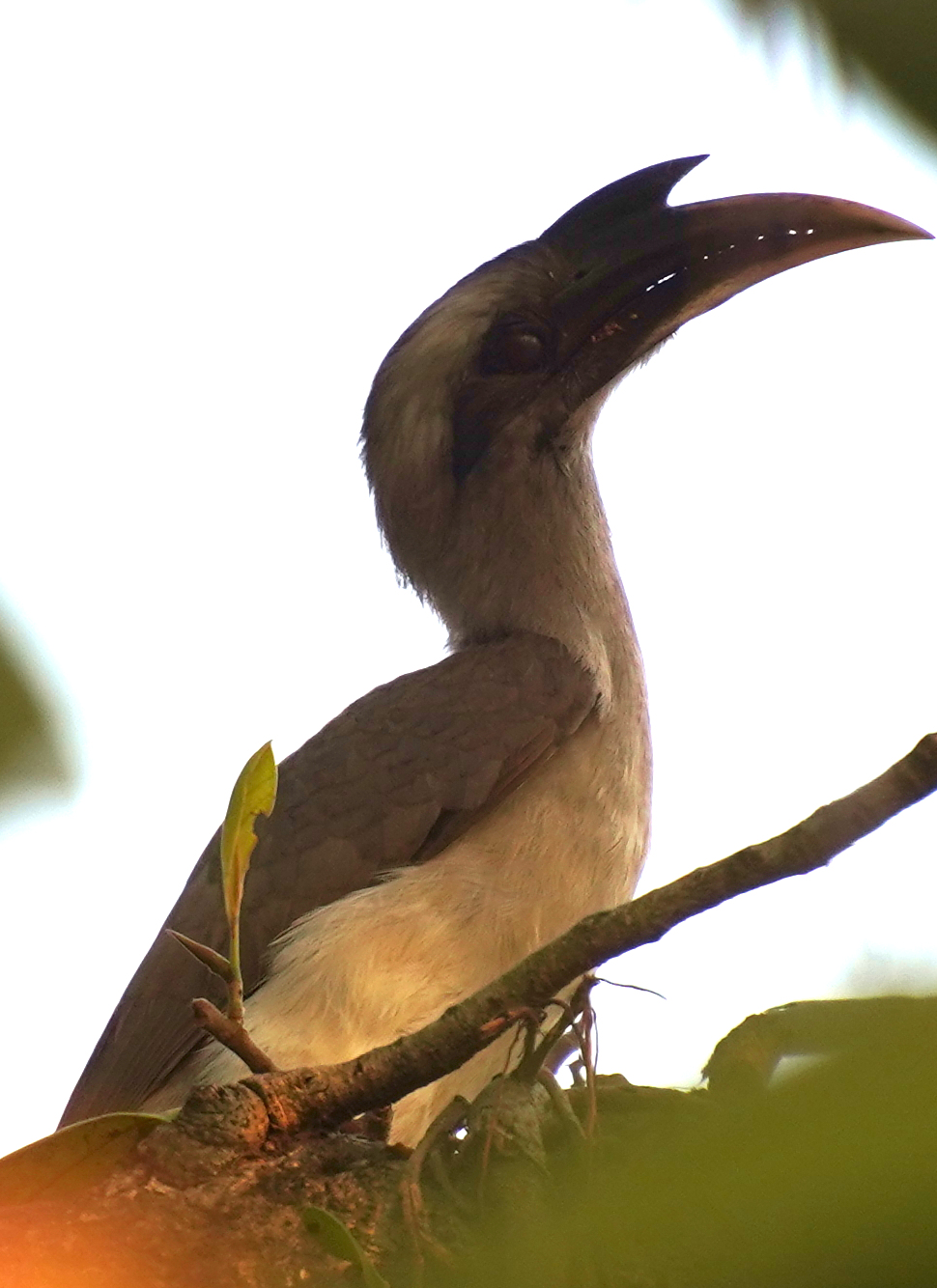
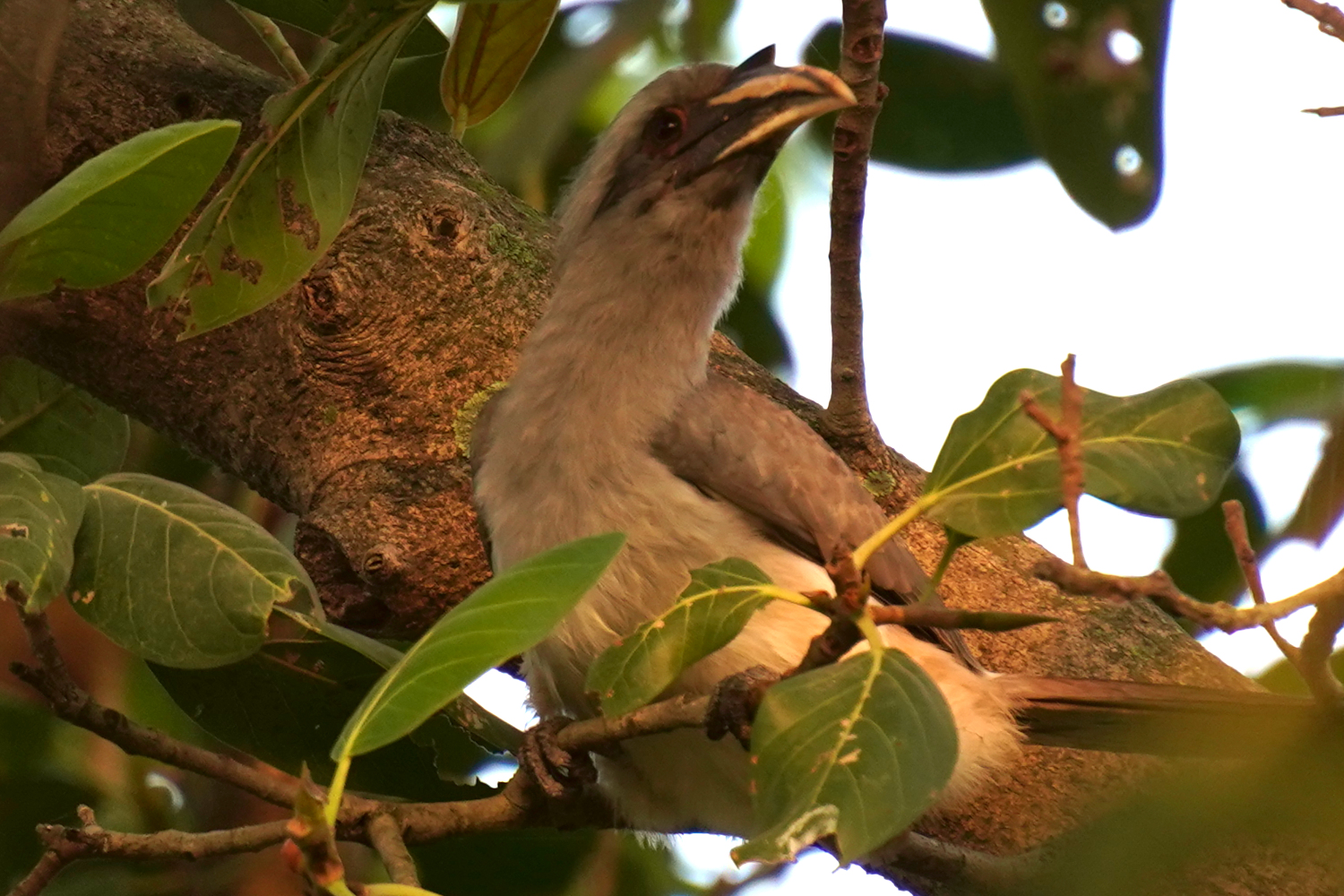
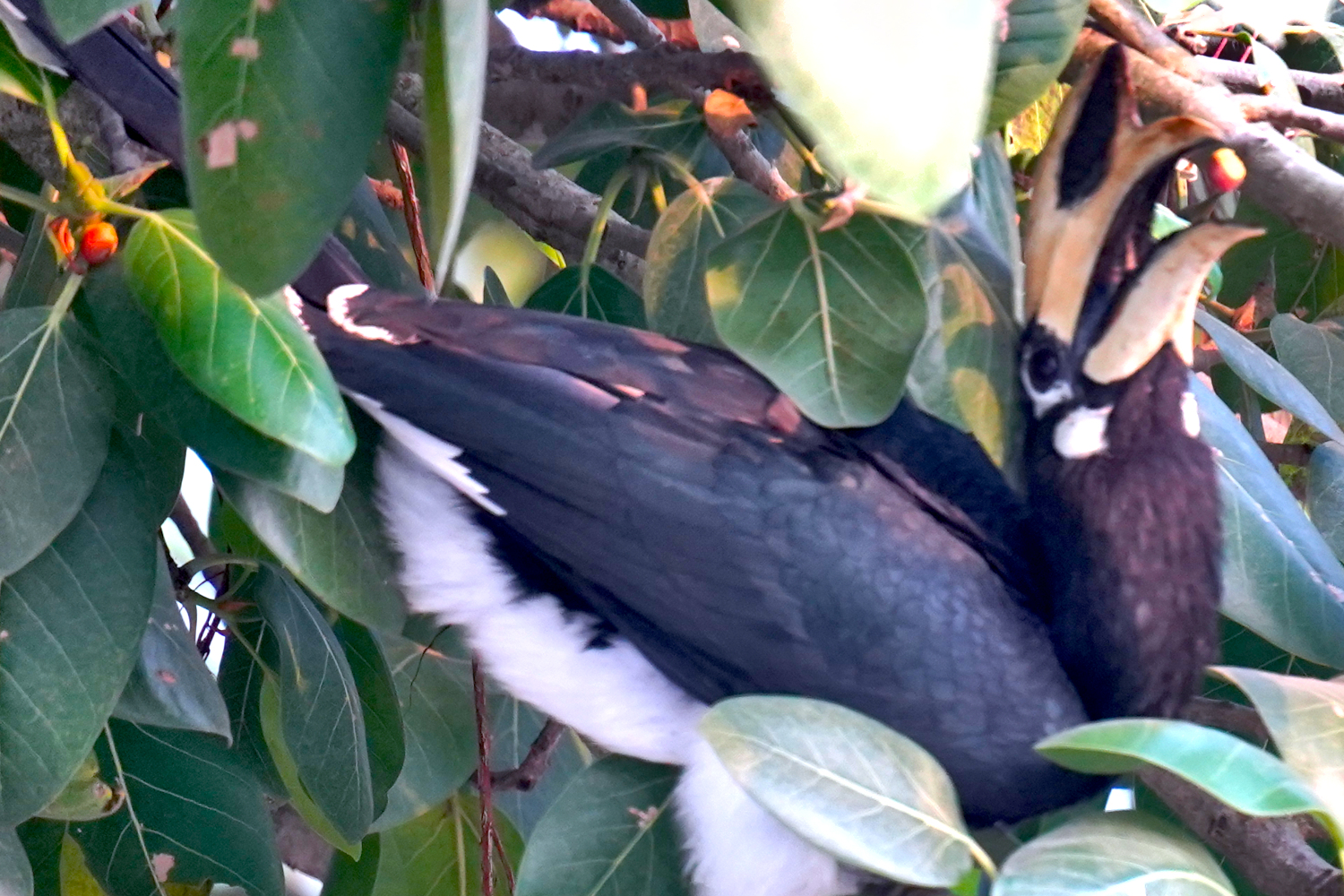
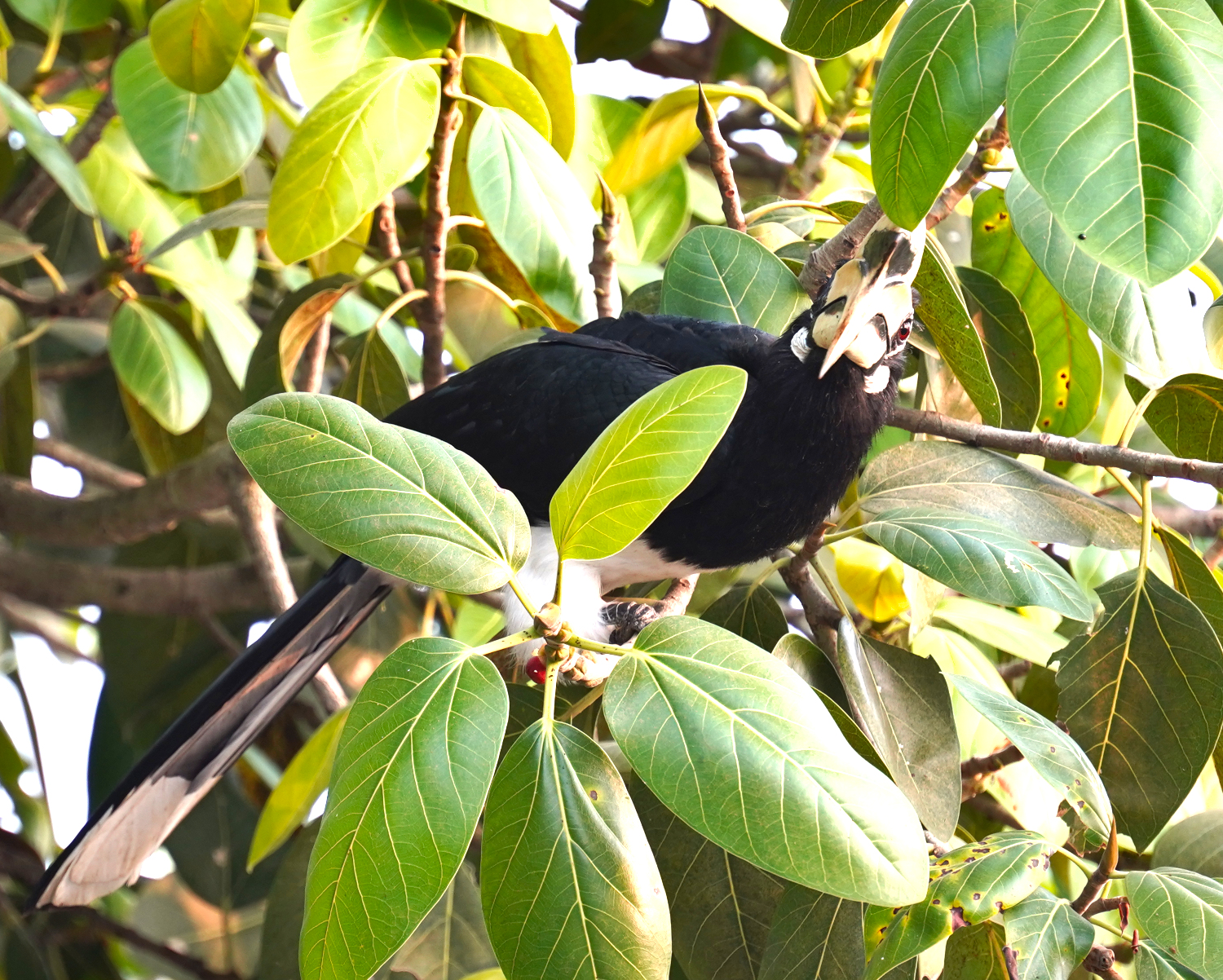
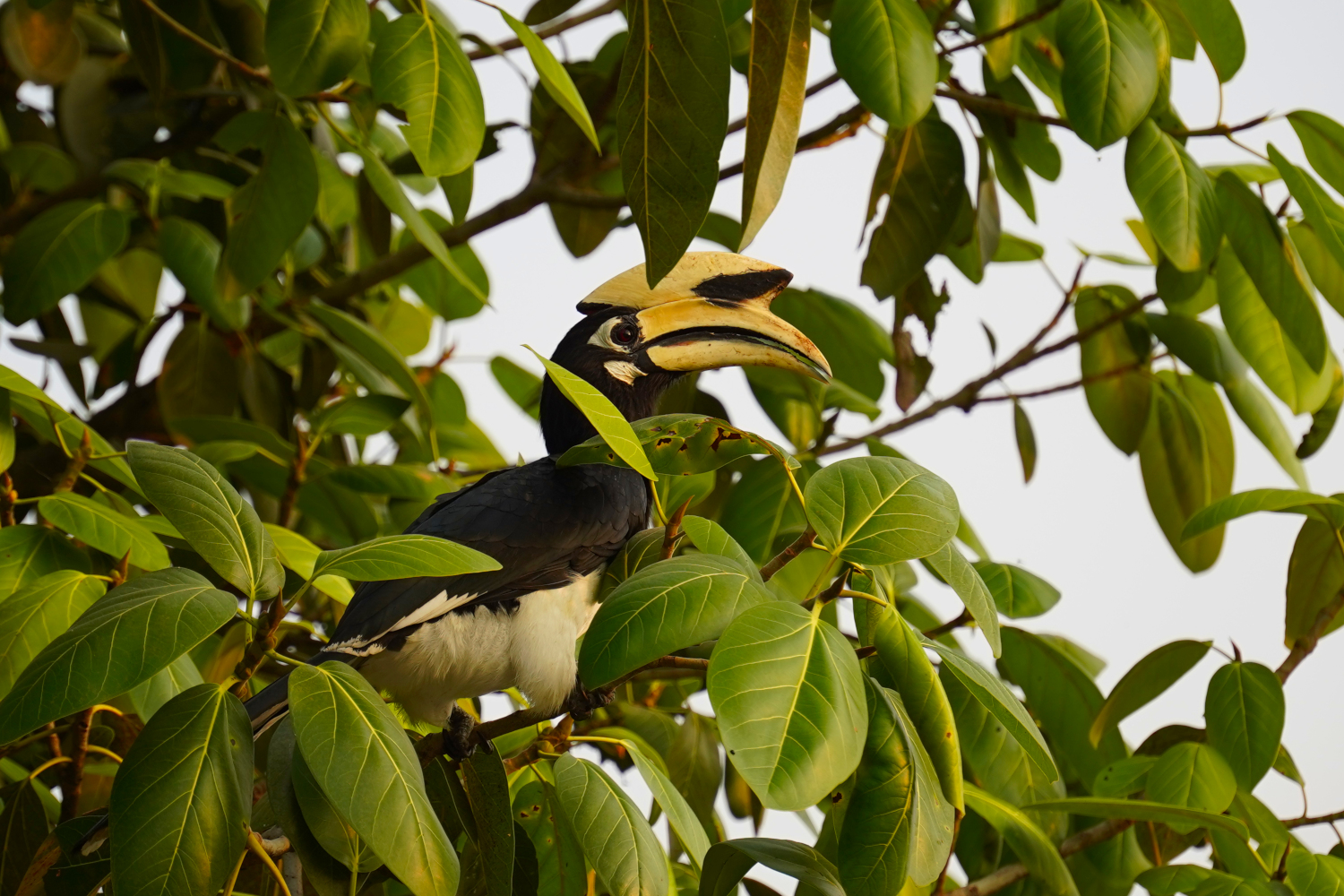
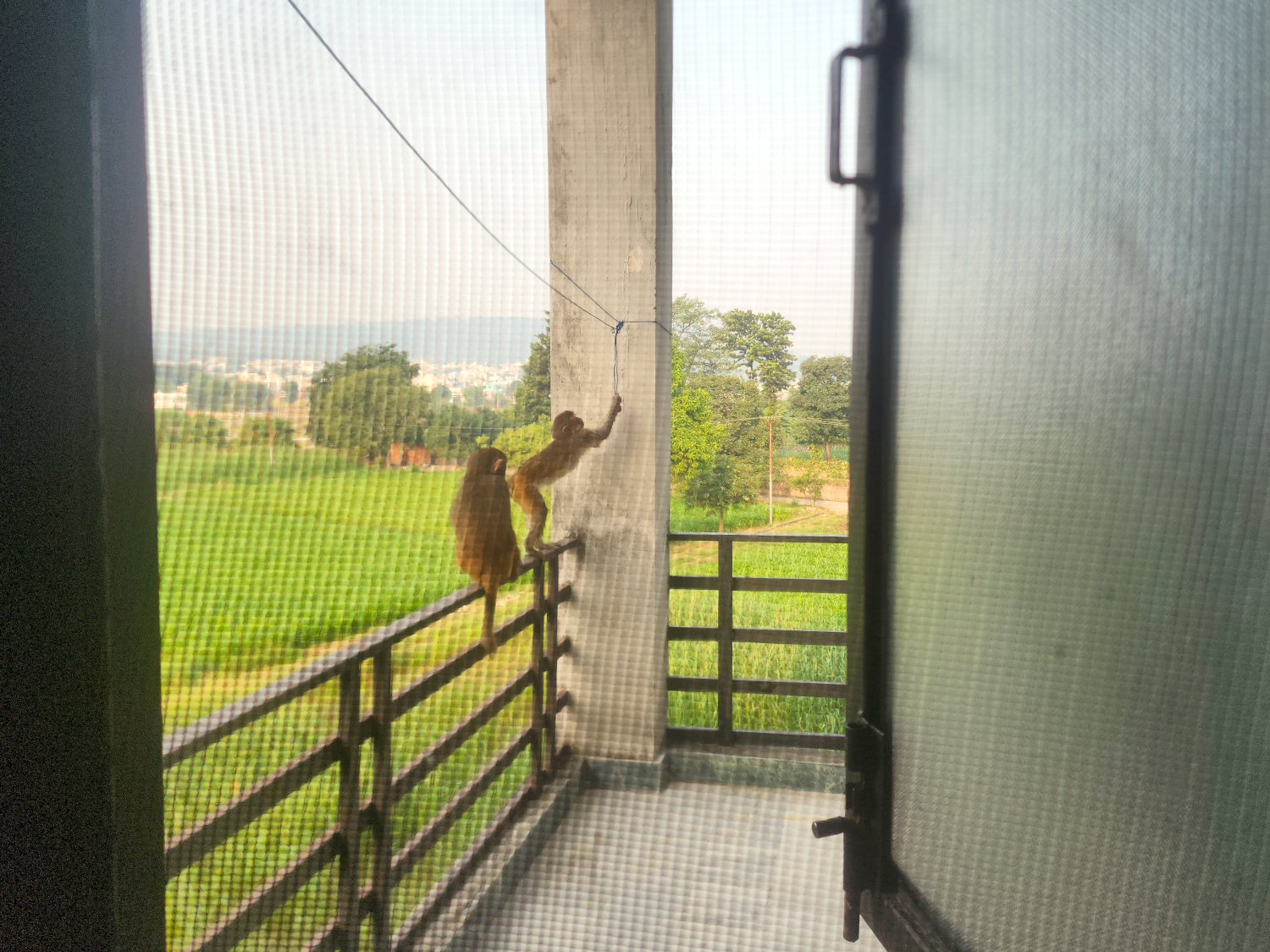
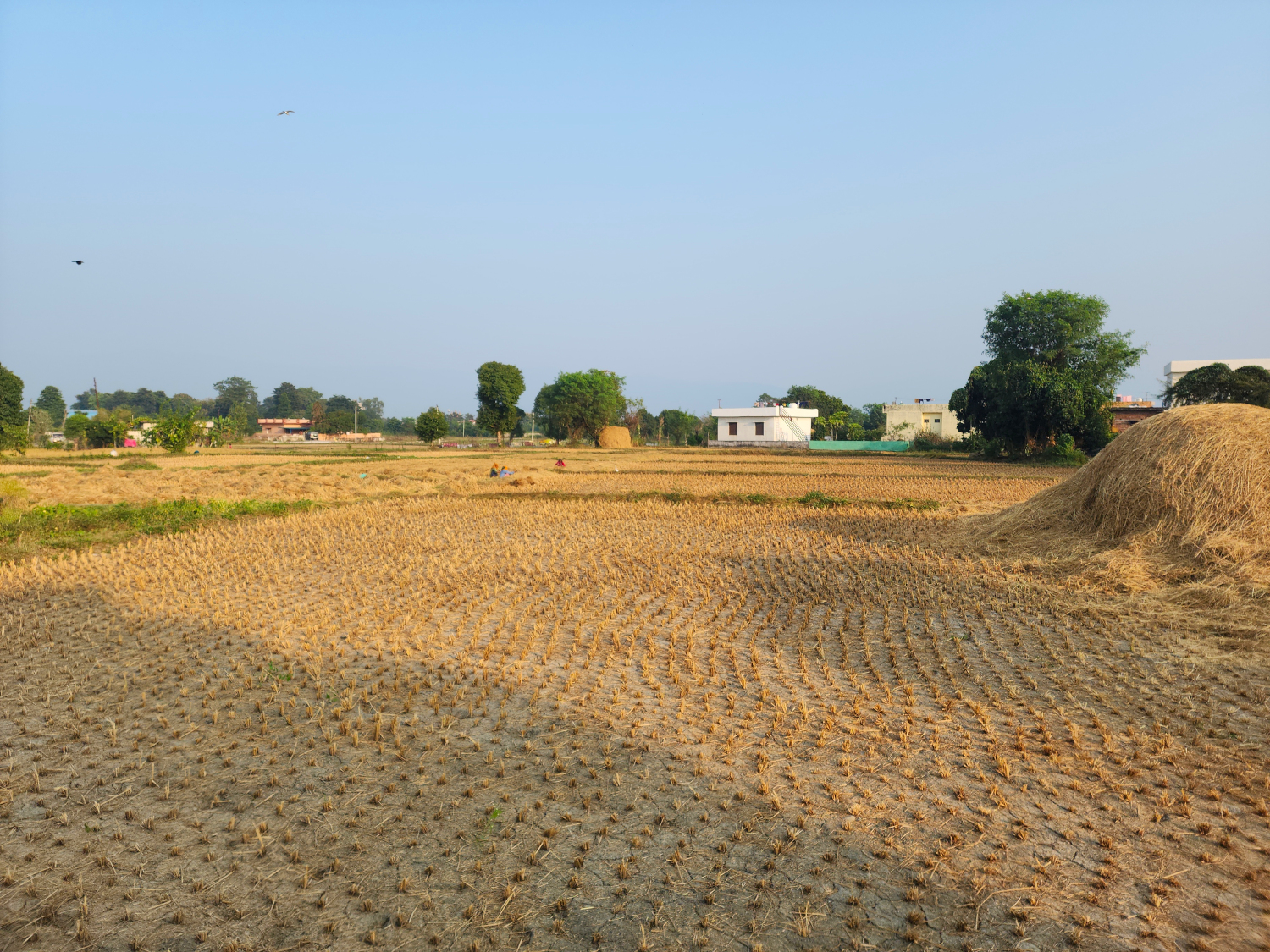
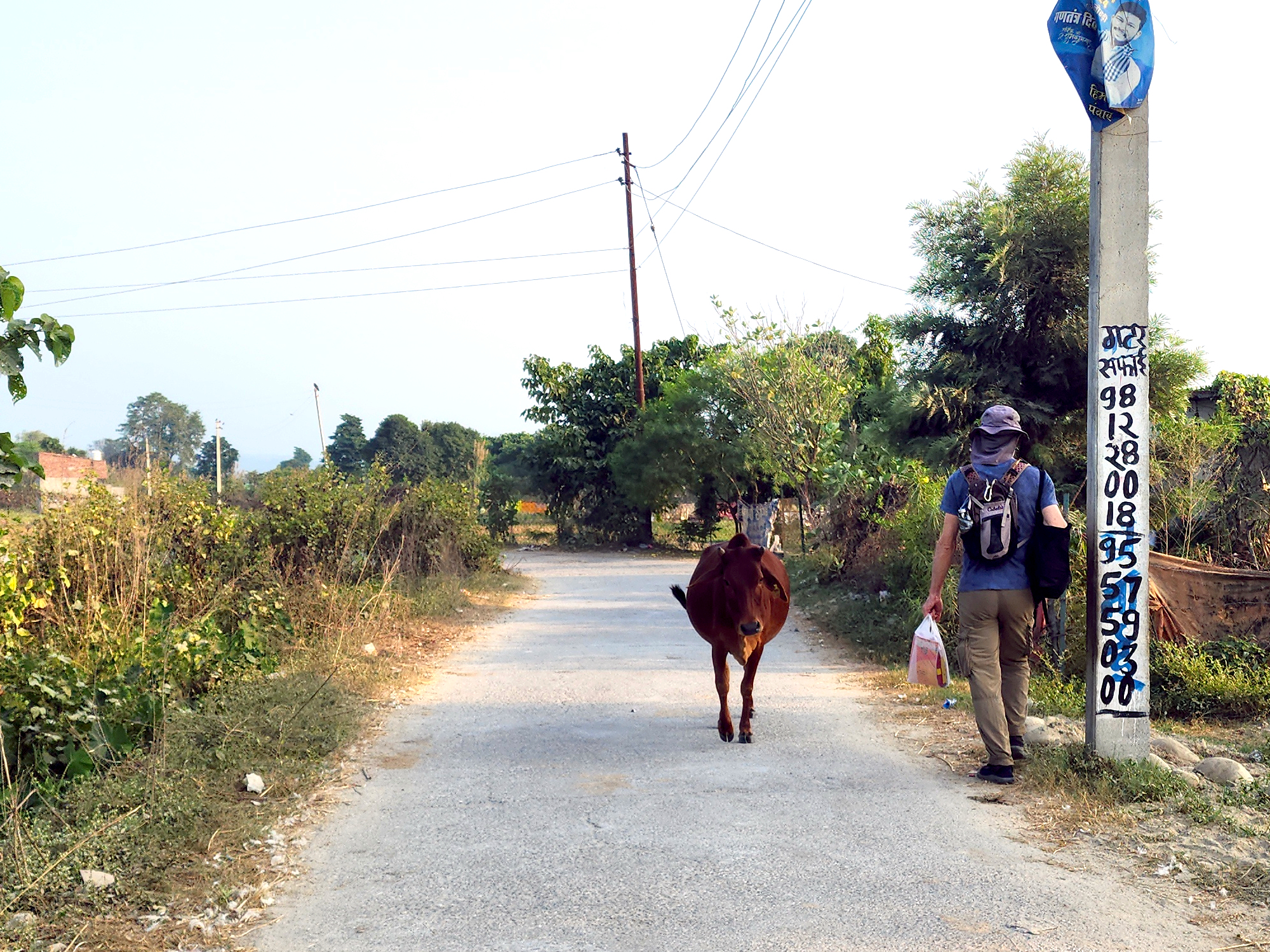
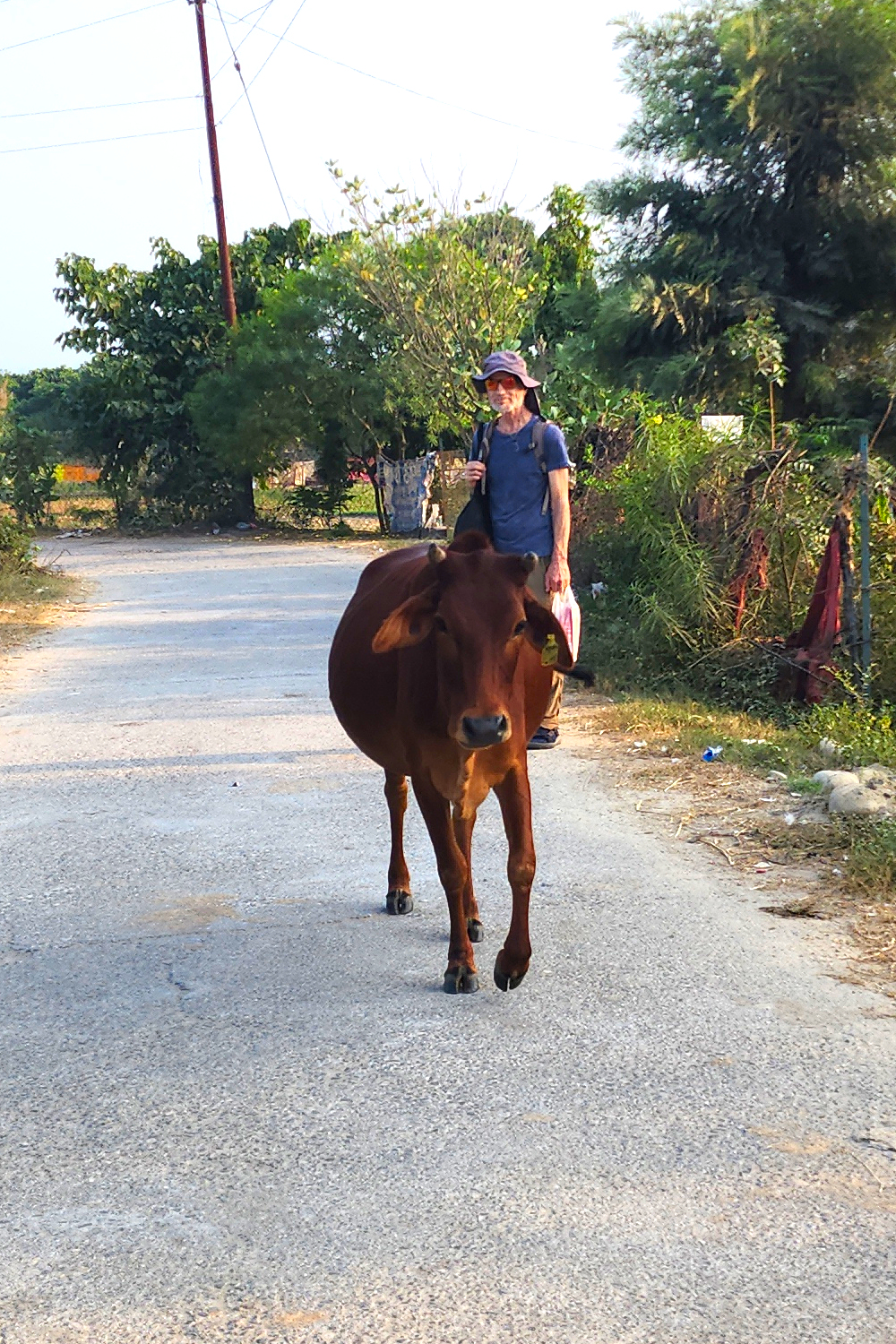
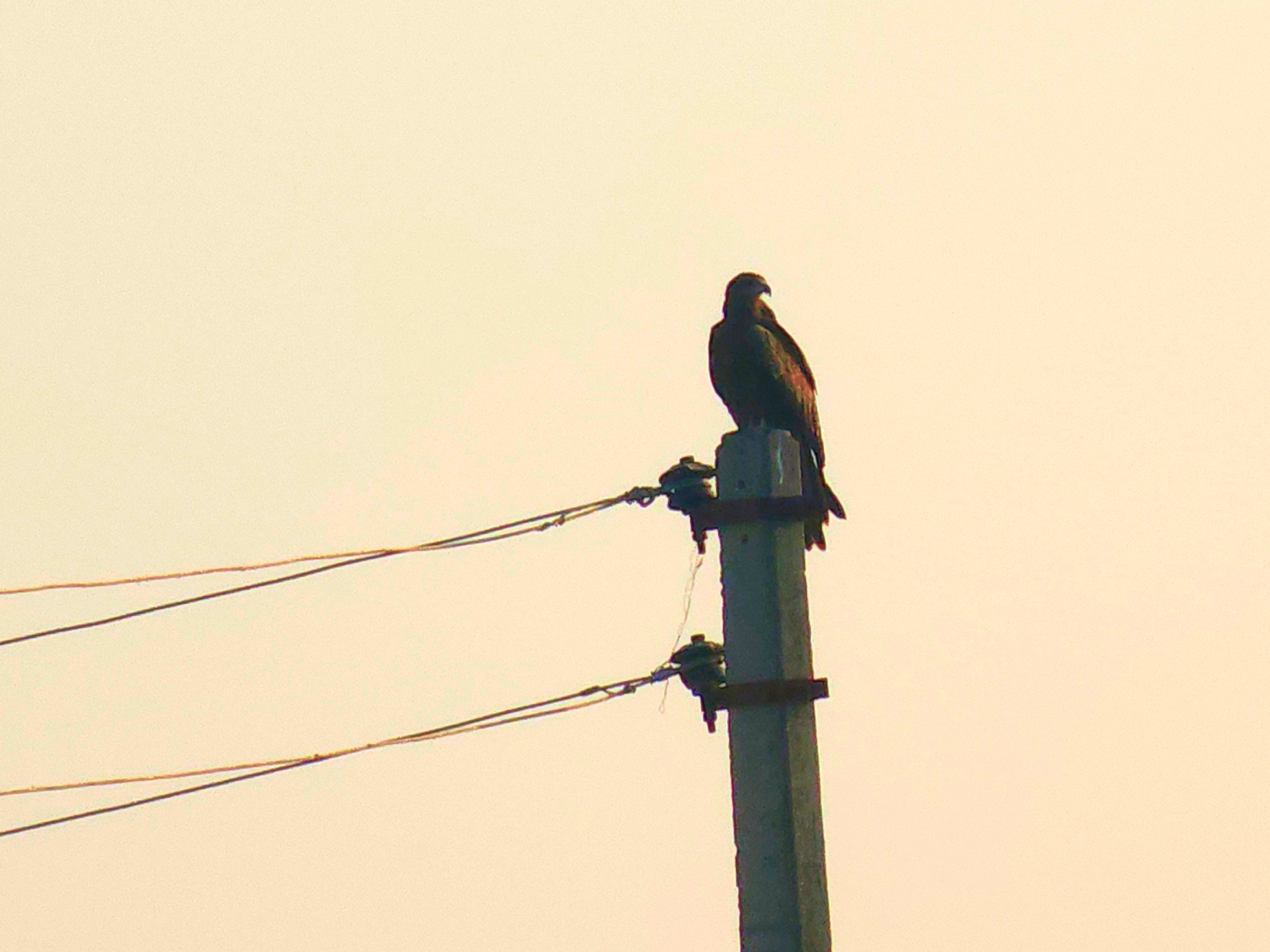
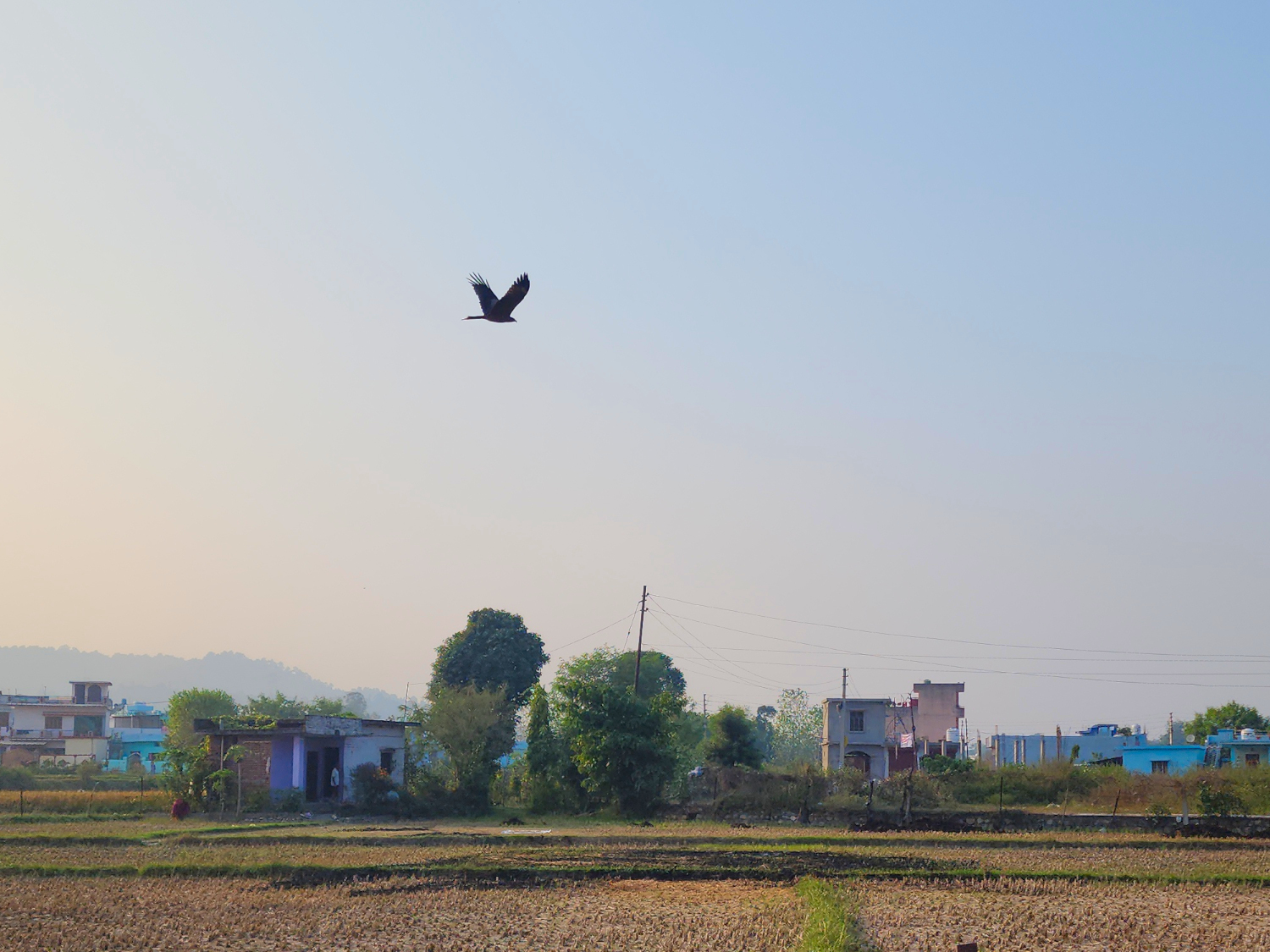
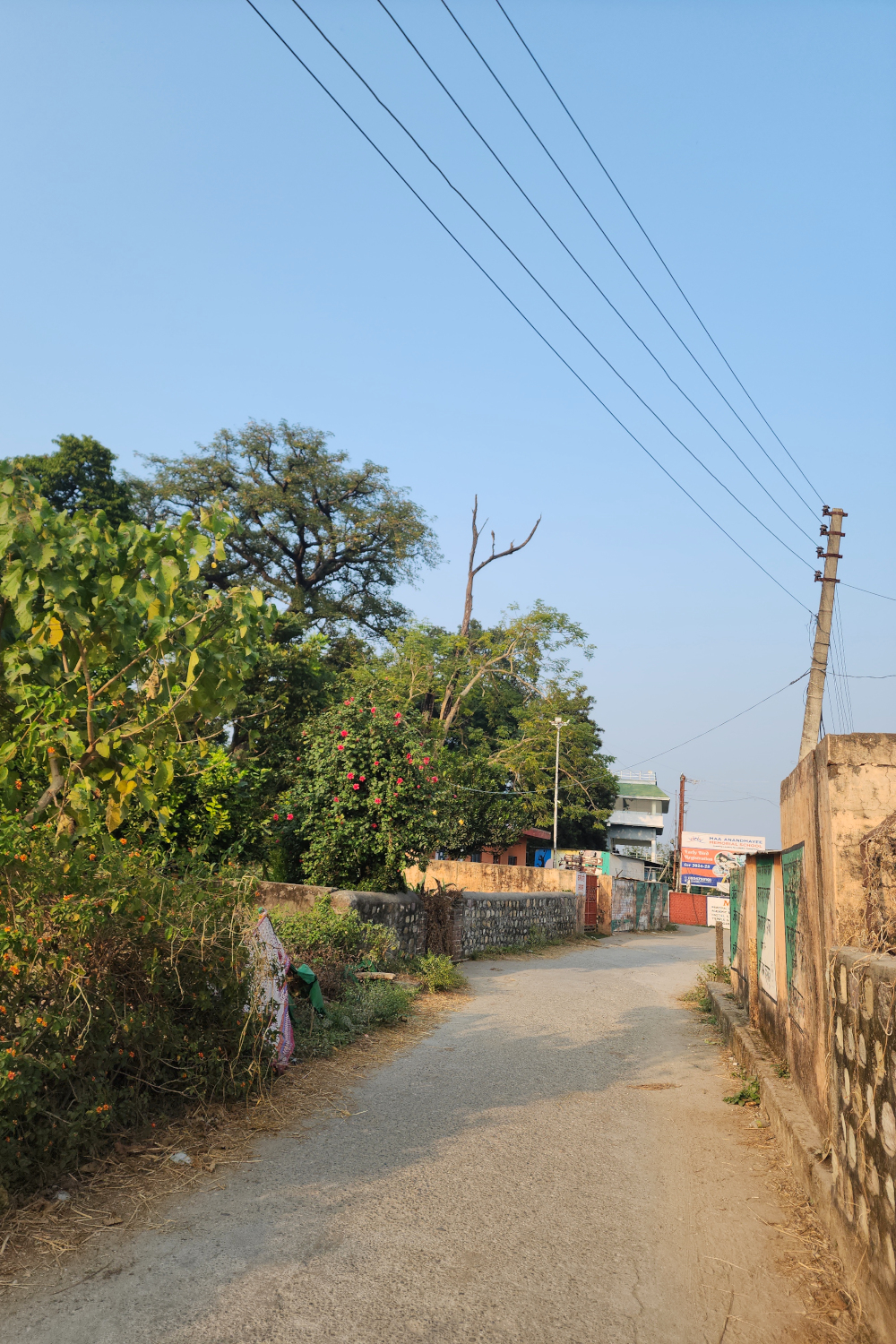
PICTURED: sunrise view from our balcony, return of our morning feathered visitor and a cow traffic jam on the road between us and school.
The next day. when we go to lunch in the school cafeteria, a worker there informs us that because of Diwali, the cafeteria will be closed for a few days during the coming week. We’re becoming acclimated to the cuisine and the schedule at the mess hall, where we generally eat lunch. We prefer to have our own western-style breakfast — usually oatmeal, which Indians seldom eat — and we prefer to cook our own dinner, largely because the mess hall doesn’t serve it until almost our bedtime. The fellow who spoke to us keeps a ledger with an account of who eats when, so they can prepare an accurate quantity of food. No one at lunch seems to want to engage us in conversation; but in fairness we, still being ignorant of Hindi, are not very good at striking up a conversation with anyone else. One table is reserved for dignitaries of some sort or other. Students don’t normally eat here, but there are often cricket players who are participating in the cricket academy on campus.
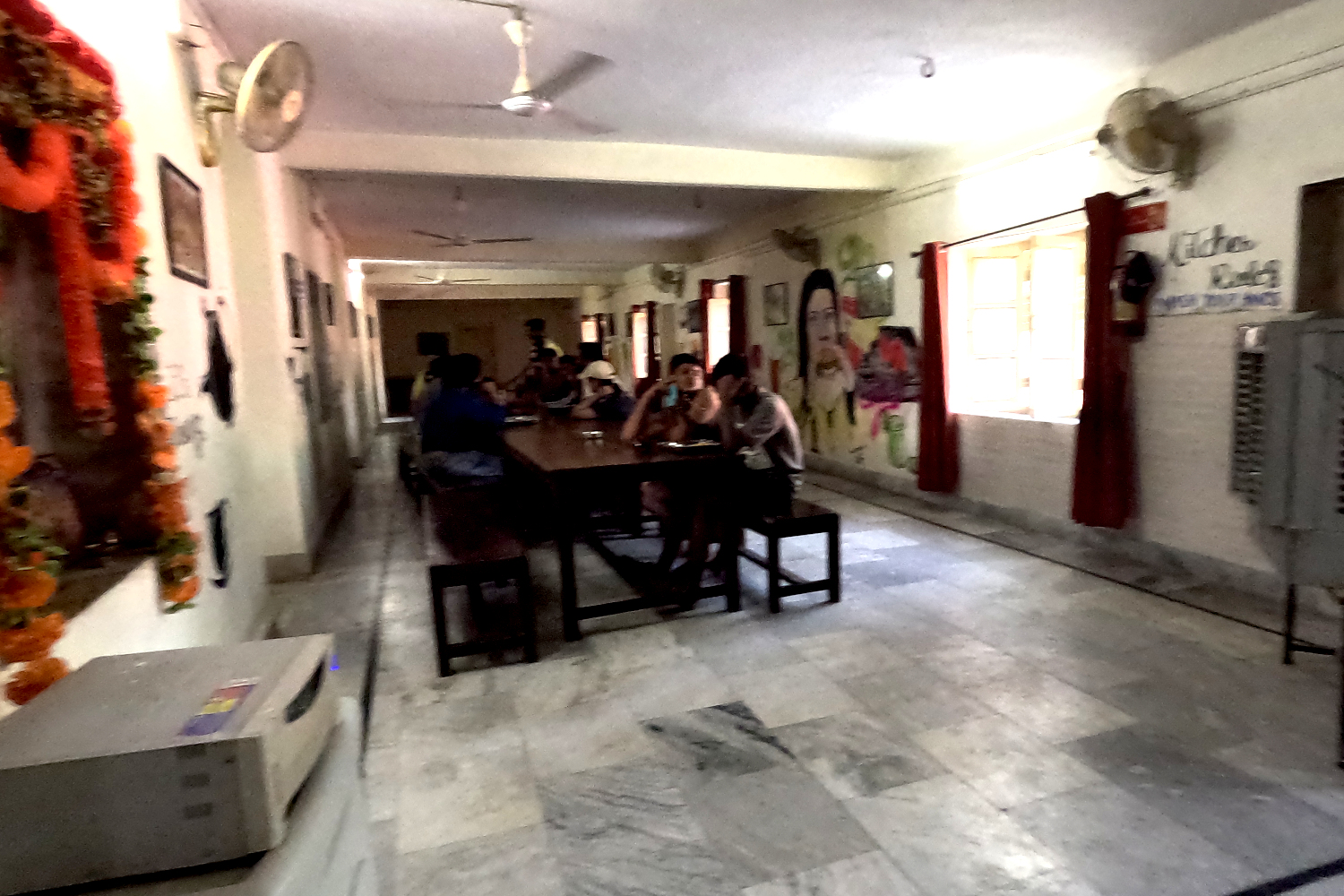


The meal always includes chapatis, and the server habitually dishes out two to each diner. We are not particularly keen on them, especially since there is always rice with the meal as well, and that’s starch aplenty. (We especially are not keen on the chapatis since they are served with bare hands). The server has learned to ask us, “Chapati?” Sometimes we will tell him either one or two, and then take them back to our apartment to heat up and have with another meal.
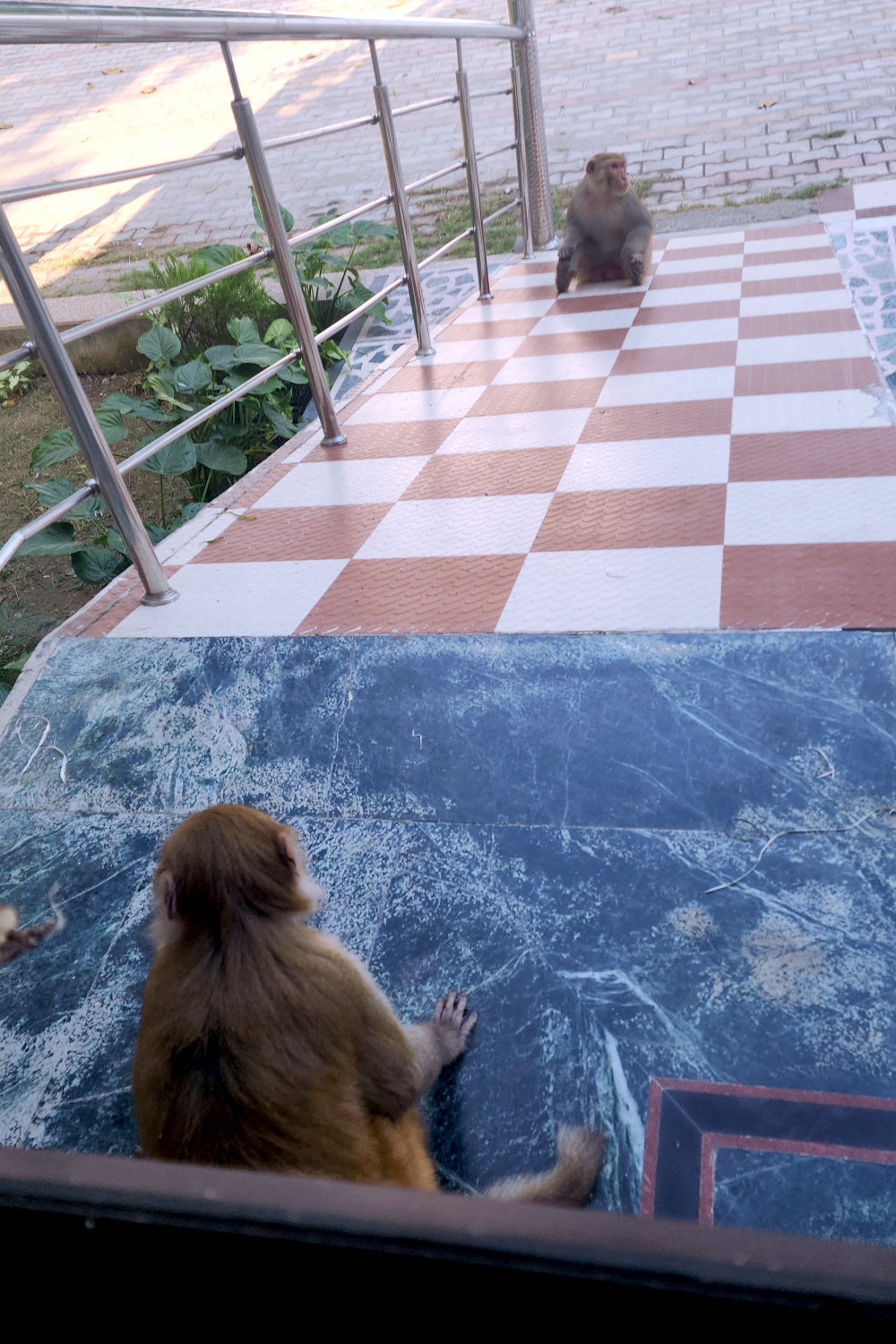
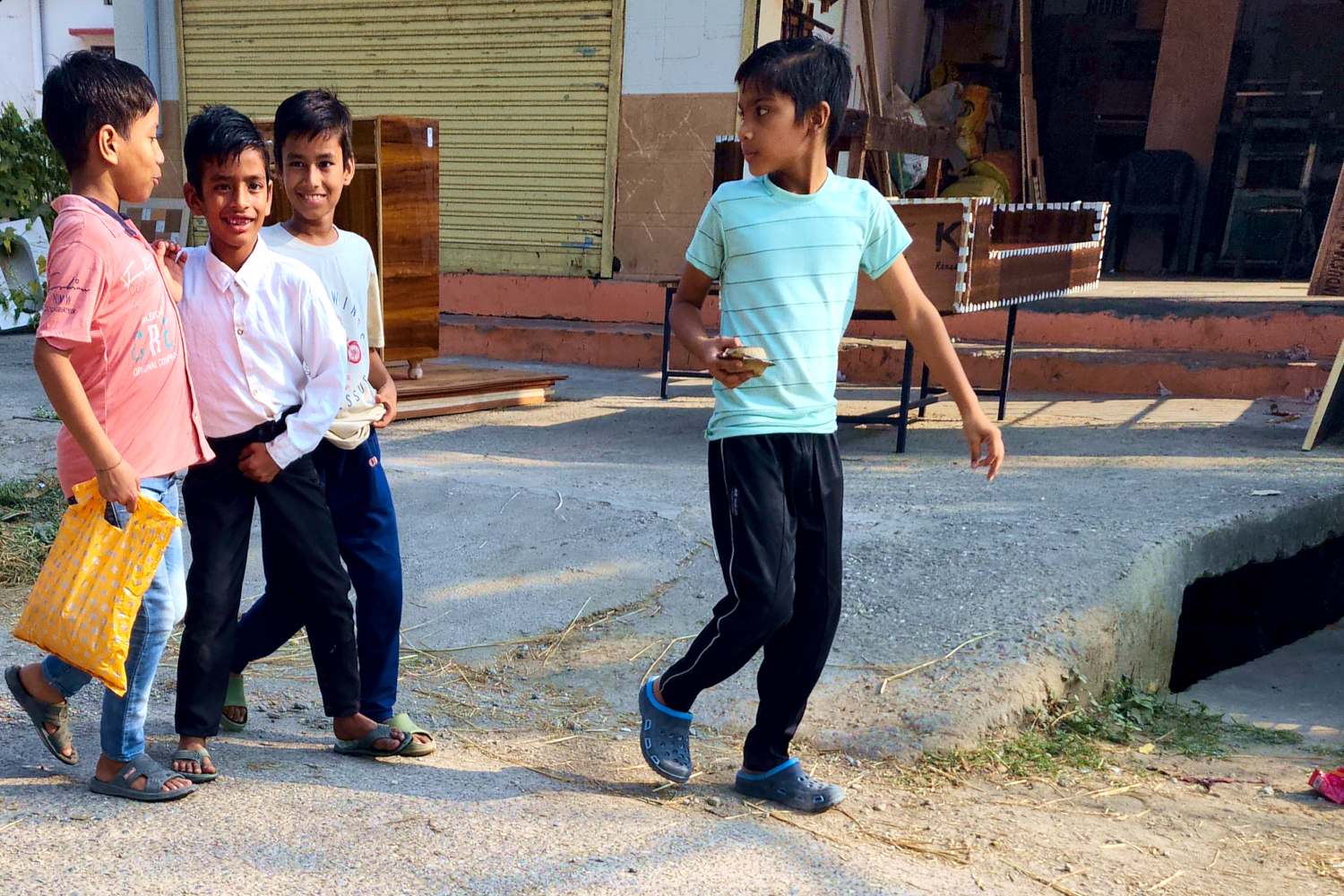
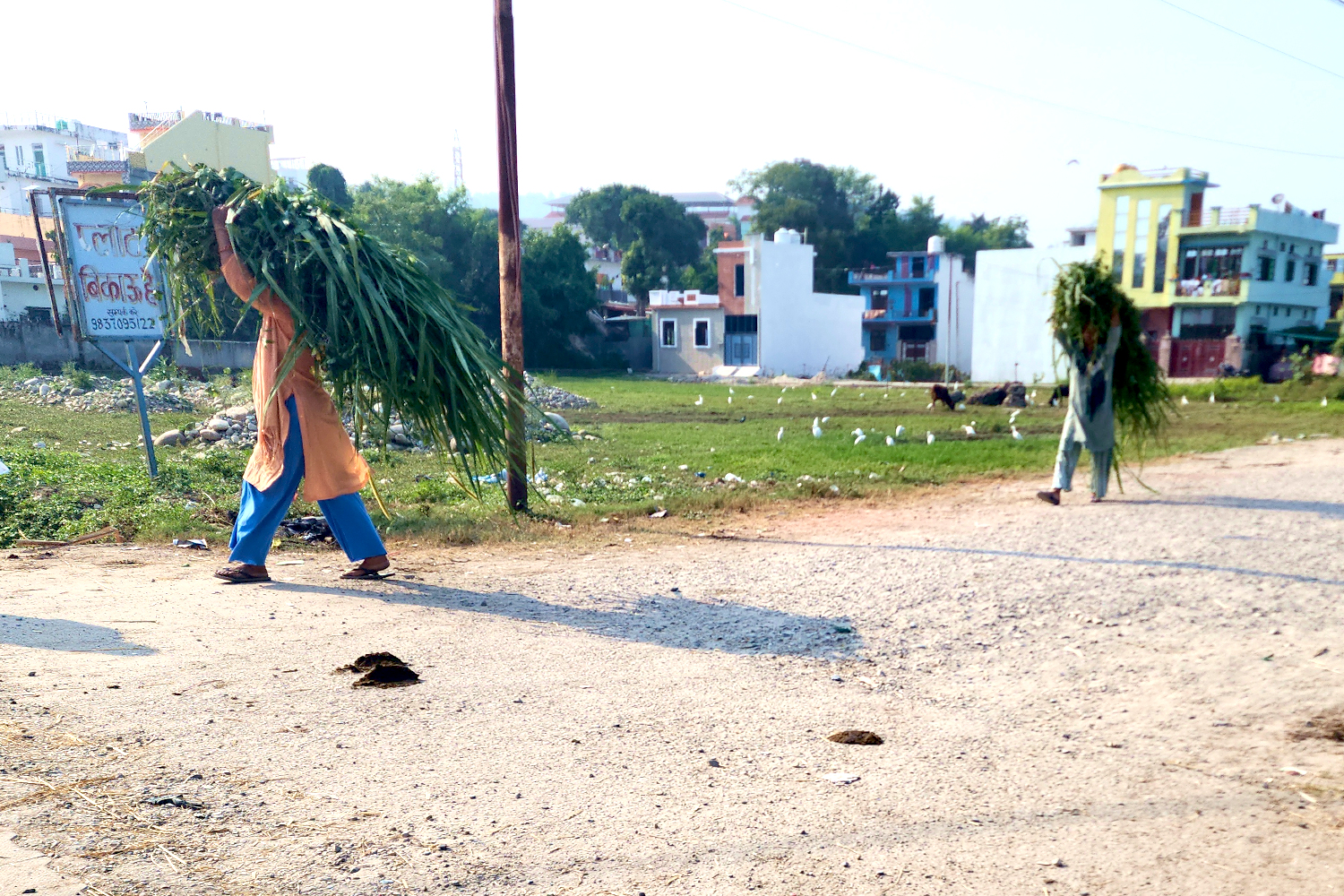
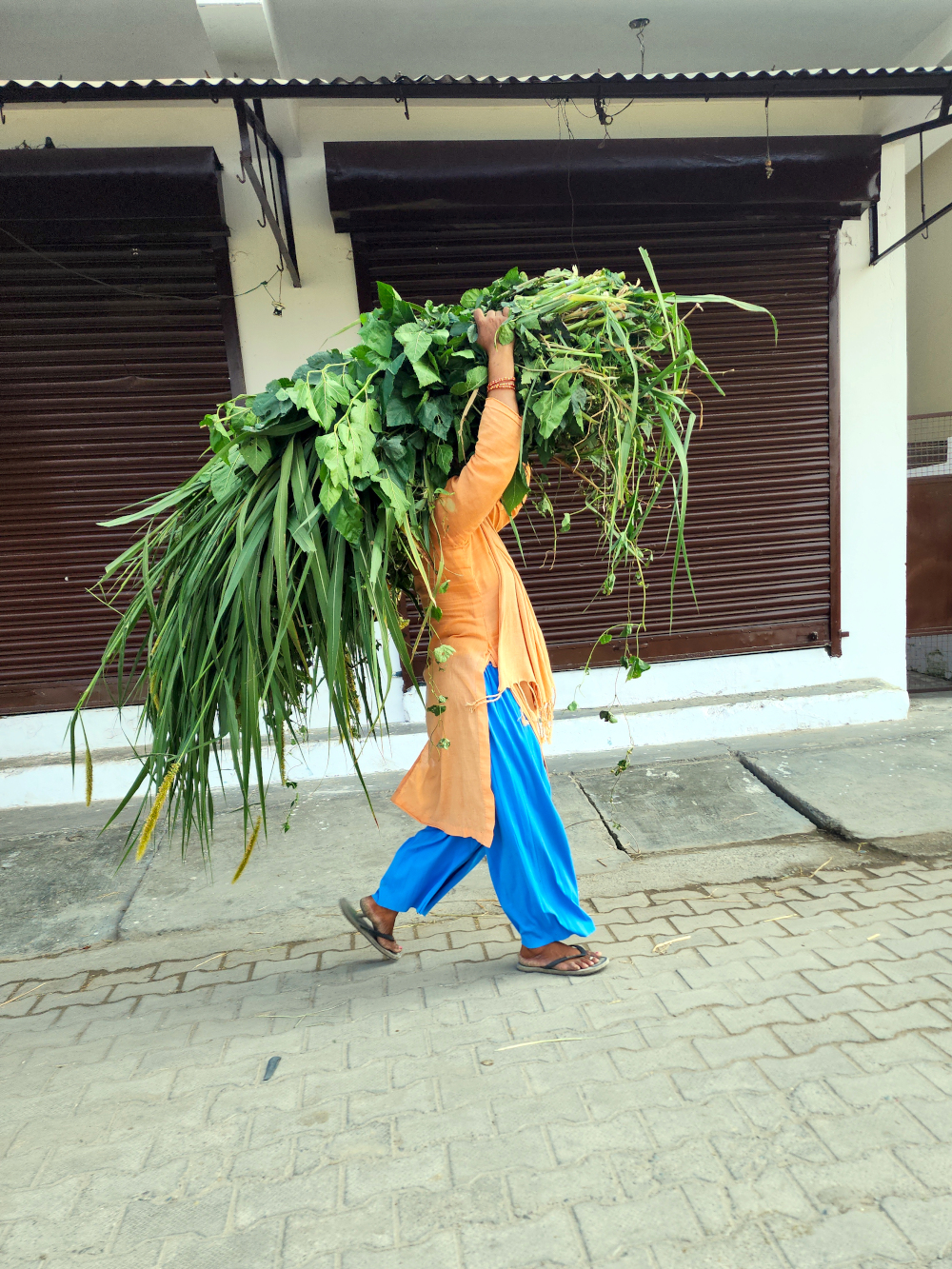
During the next few days, excitement over Diwali is building up in the village, becoming almost palpable. Even the cows we pass in the street almost seem to be dancing around in anticipation. A little park in the middle of the village has elaborate decorations, and holds a hullabaloo every night for several nights. We can hear the sounds from our apartment at least a mile away.


Meanwhile, life goes on and we have duties to perform, errands to run, and problems to solve — such as making certain our phone service doesn’t expire, as it’s vital for being alerted (mostly by text) with important messages concerning school business. We have service with Airtel, a popular provider in India. But we have been unable to acquire more days of service online. Fortunately, there is a phone shop in the village that provides Airtel service, so we walk there the day before our service is set to expire. They are able to extend us for an additional 84 days, but they only accept cash in payment, which leaves our stash of cash running thin.
There are a couple of ATMs within range, and we try them both. One is closed, and the other is out of cash. After we do some shopping for produce, our funds are depleted a little more. At a produce stand near the army base, where the vendors do not speak English, a soldier (not in uniform) is also shopping. He speaks English, and helps explain some of the foods we see but are unfamiliar with, and helps us complete our transactions. He also offers to share his tuk-tuk with us, to for a ride back in our direction.
If you enjoy reading about our adventures and impact, consider supporting us on Patreon!
On our way back home, we stop at our favorite local grocery store, R & R Market, to buy a few more things. (This store even stocks toilet paper, which most Indians don’t use — sold by the roll and somewhat costly relative to local prices.) They are quite willing to accept payment by card, but for whatever reason, can’t get our card to work, So we have to shell out even more cash, leaving our supply perilously low.


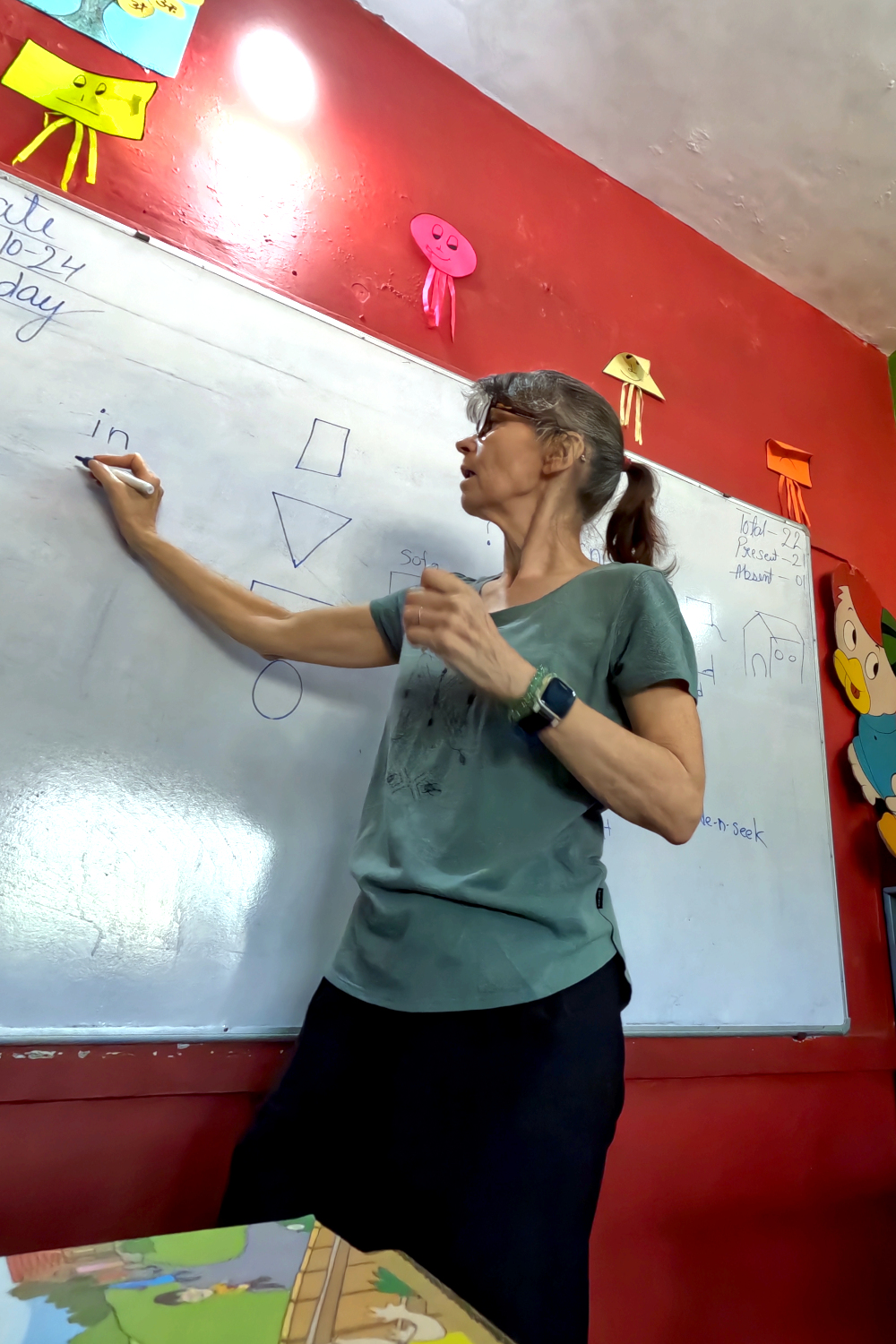
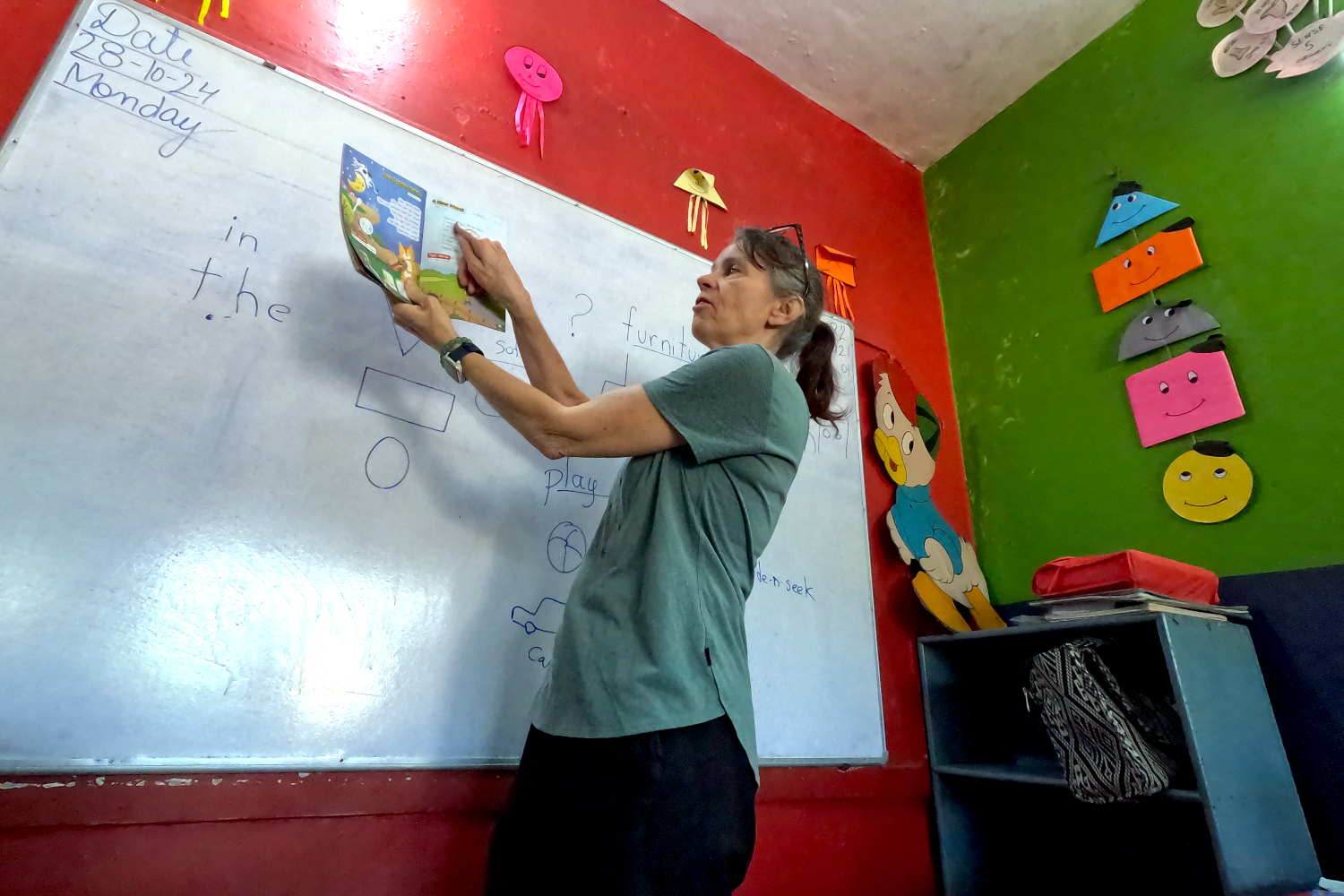
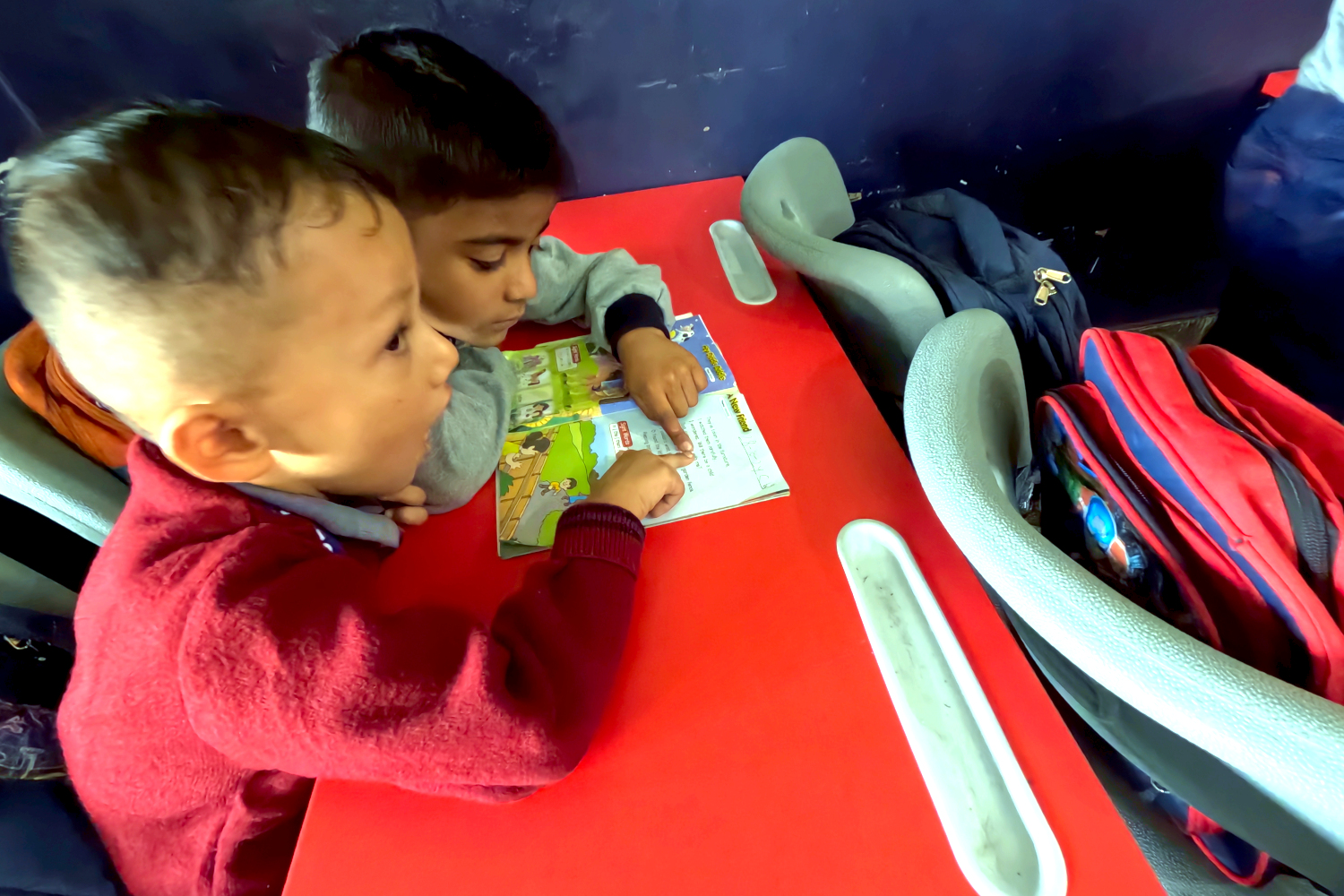
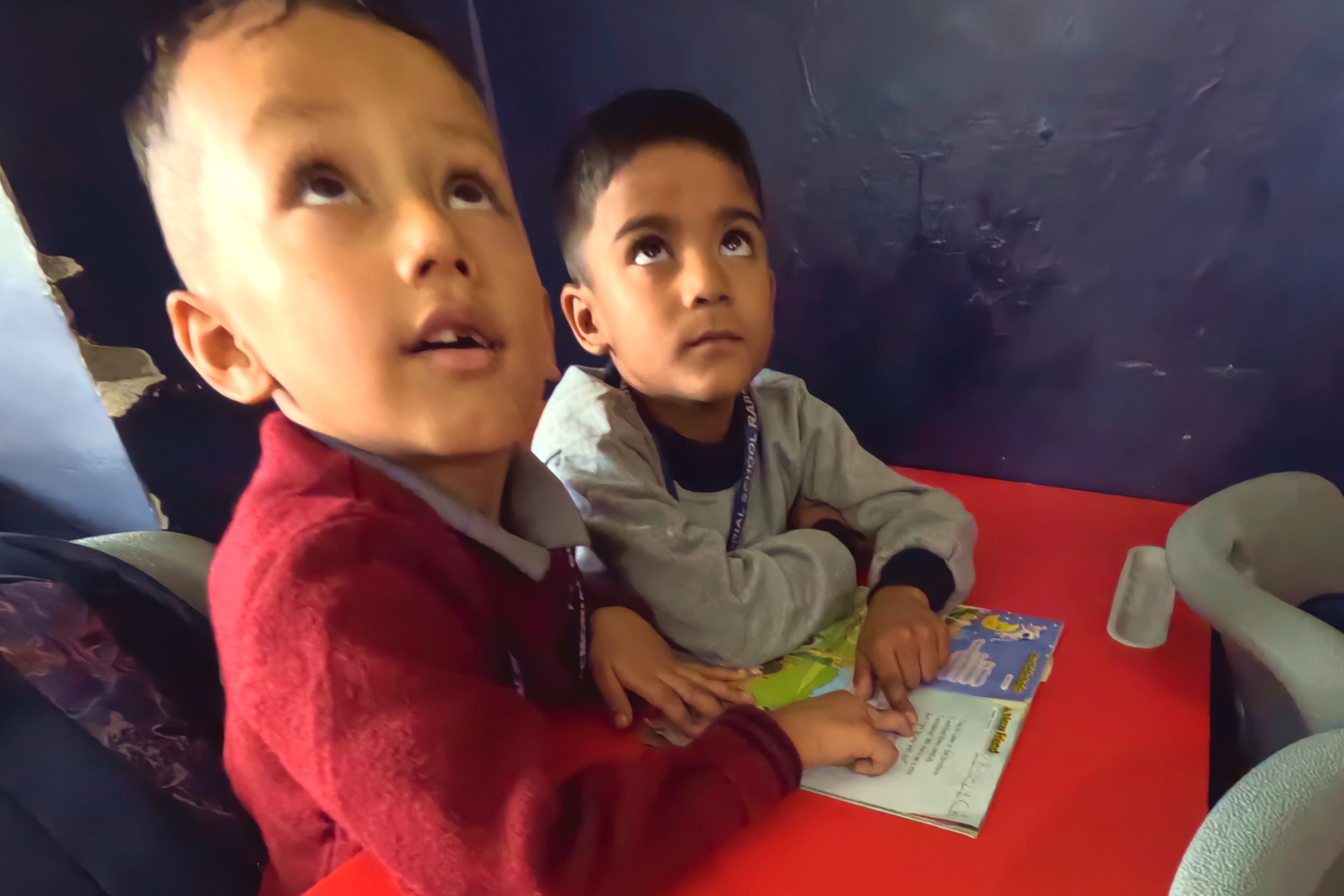
On Monday, the ATMs are functioning again, so we at last can obtain more. Monday is pretty much a full day of classes at Senior Campus, interspersed with last-minute readying for the school Diwali celebration the next day. For Kimberly at Junior Wing, it’s pretty much business as usual. She teaches class from their textbook, without being allowed to stray too much from the material. Just cover the lesson in the book, whether they understood or not. She’ll walk around the classroom to ensure they are following along in their books. Some students have to share books. They share their chairs with their backpacks, as there is no other place to put them.
Sometimes on her lunch break, she dashes across the road to another little supermarket, which has a limited inventory, but is not bad as far as local stores — it even has some things, such as tofu, that can’t be found anywhere else in Raiwala. And it sometimes saves us the trouble of walking the two miles from our apartment to R & R.

On Tuesday, there is no school, because the big Diwali celebration is being held at the main campus. At 8:00, there is a knock on the door, and it is a man with limited English come to inform Kimberly that her presence is required on campus. So she rushes over and finds that, in fact, there is nobody waiting for her, nor is there any indication of anything that she might be needed for. So after waiting a bit, she comes back, and then we return to campus as the proceedings start proceeding.
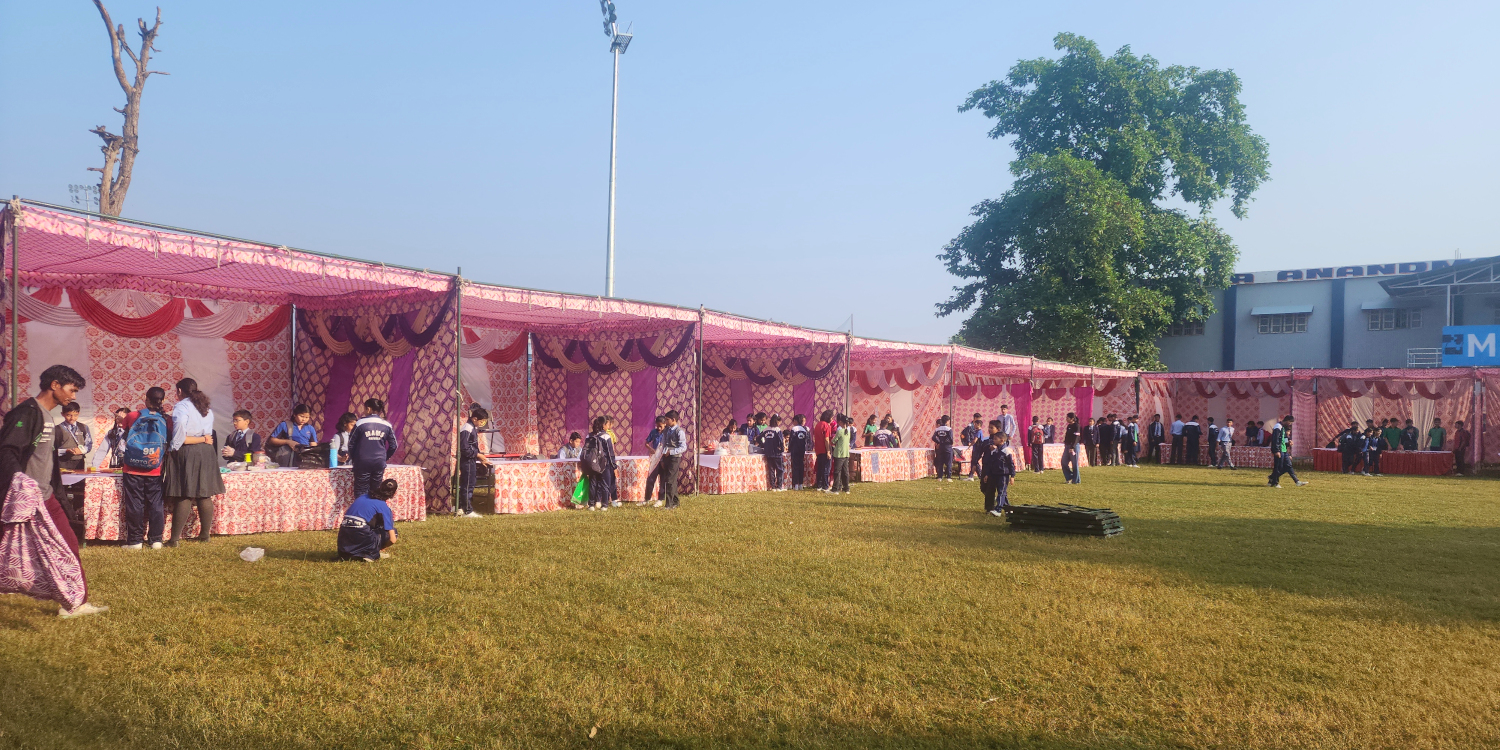
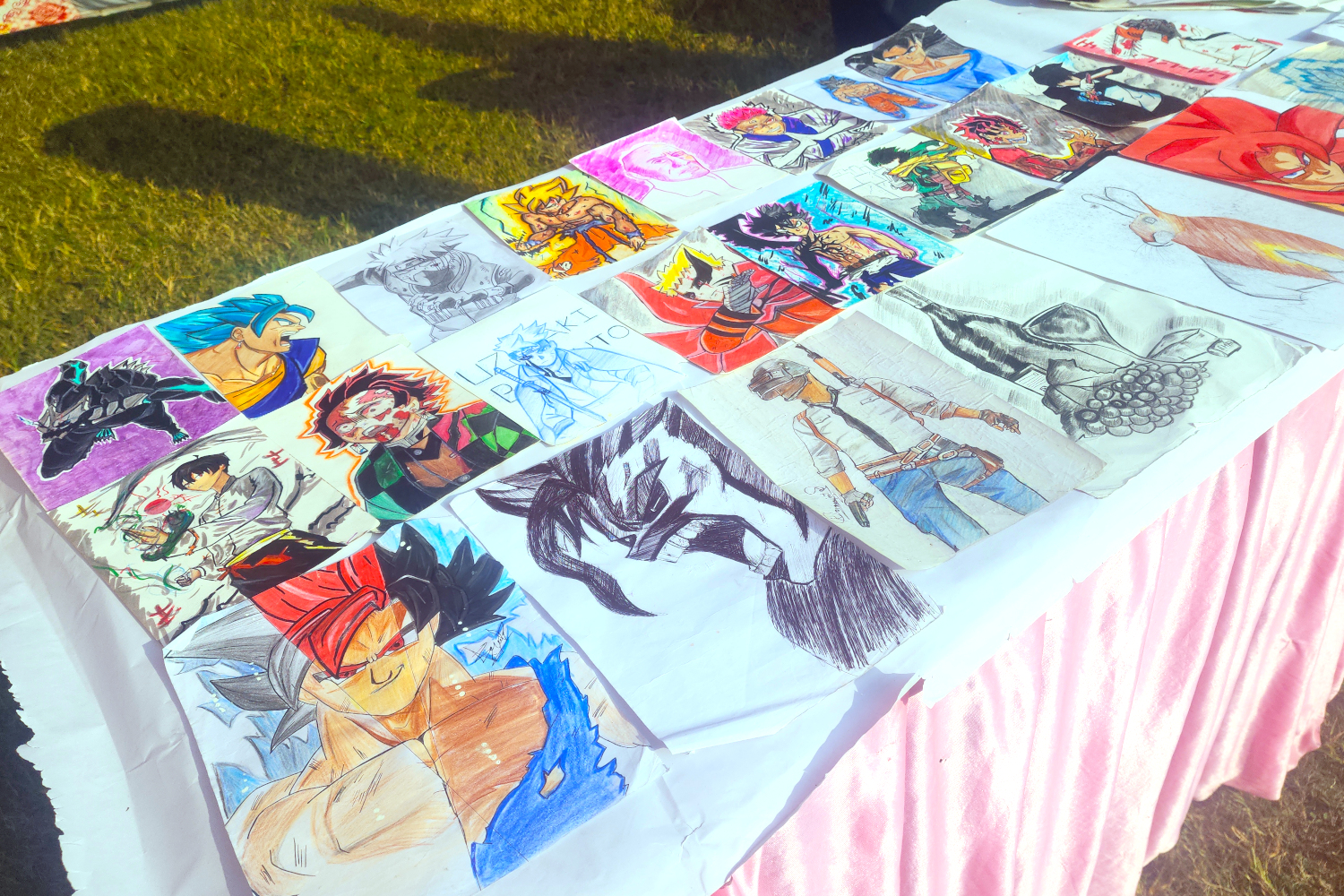
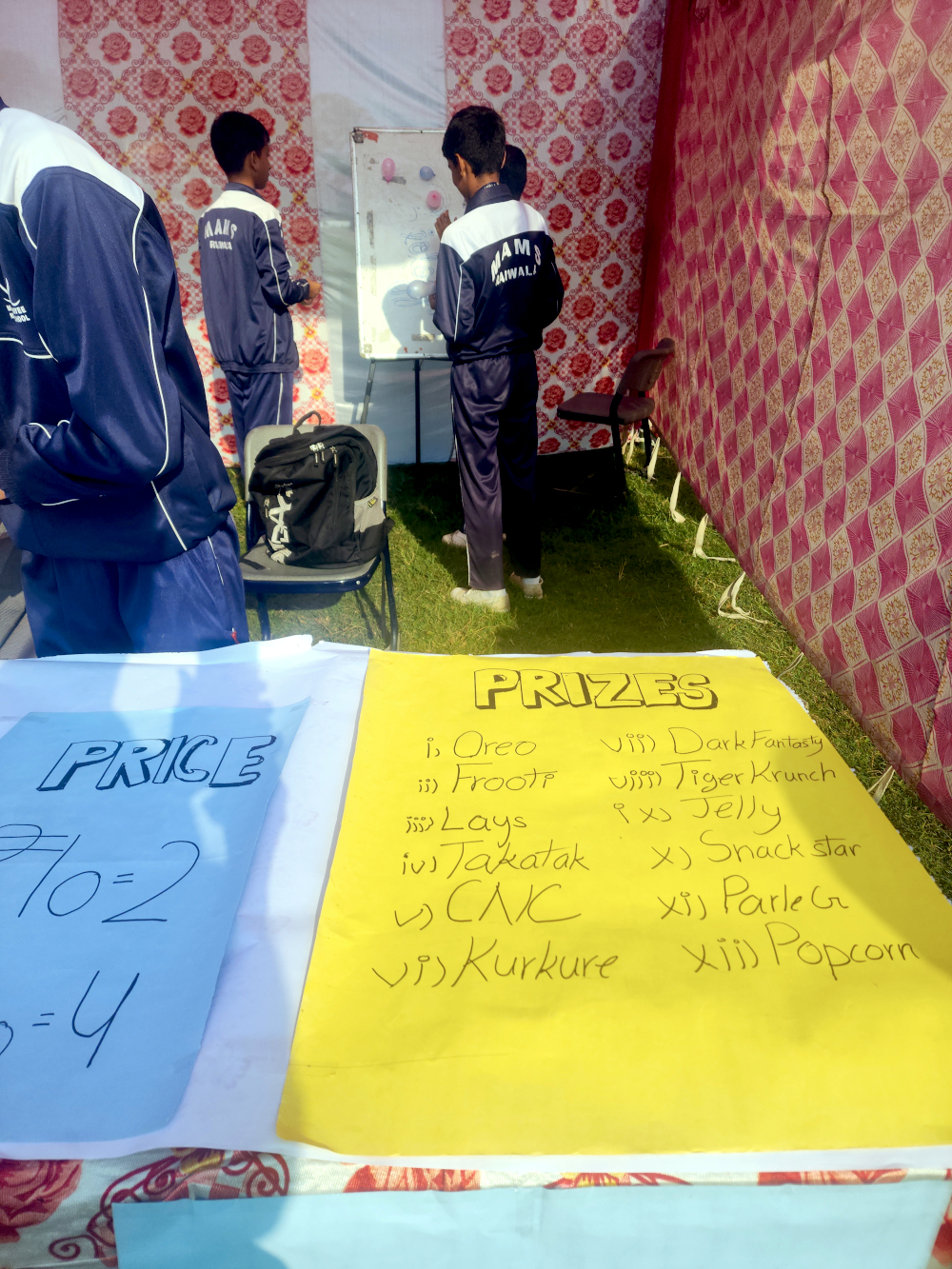

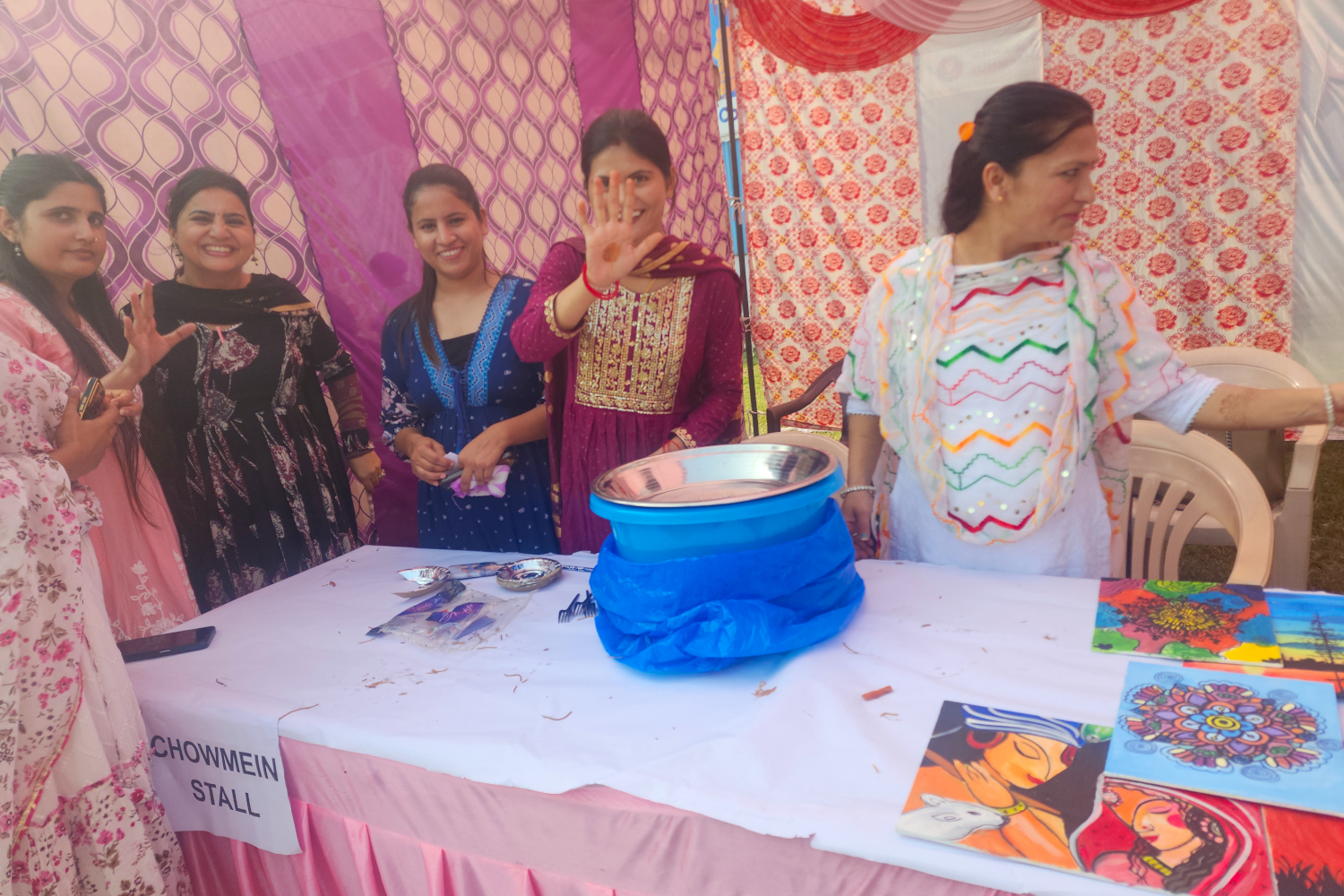
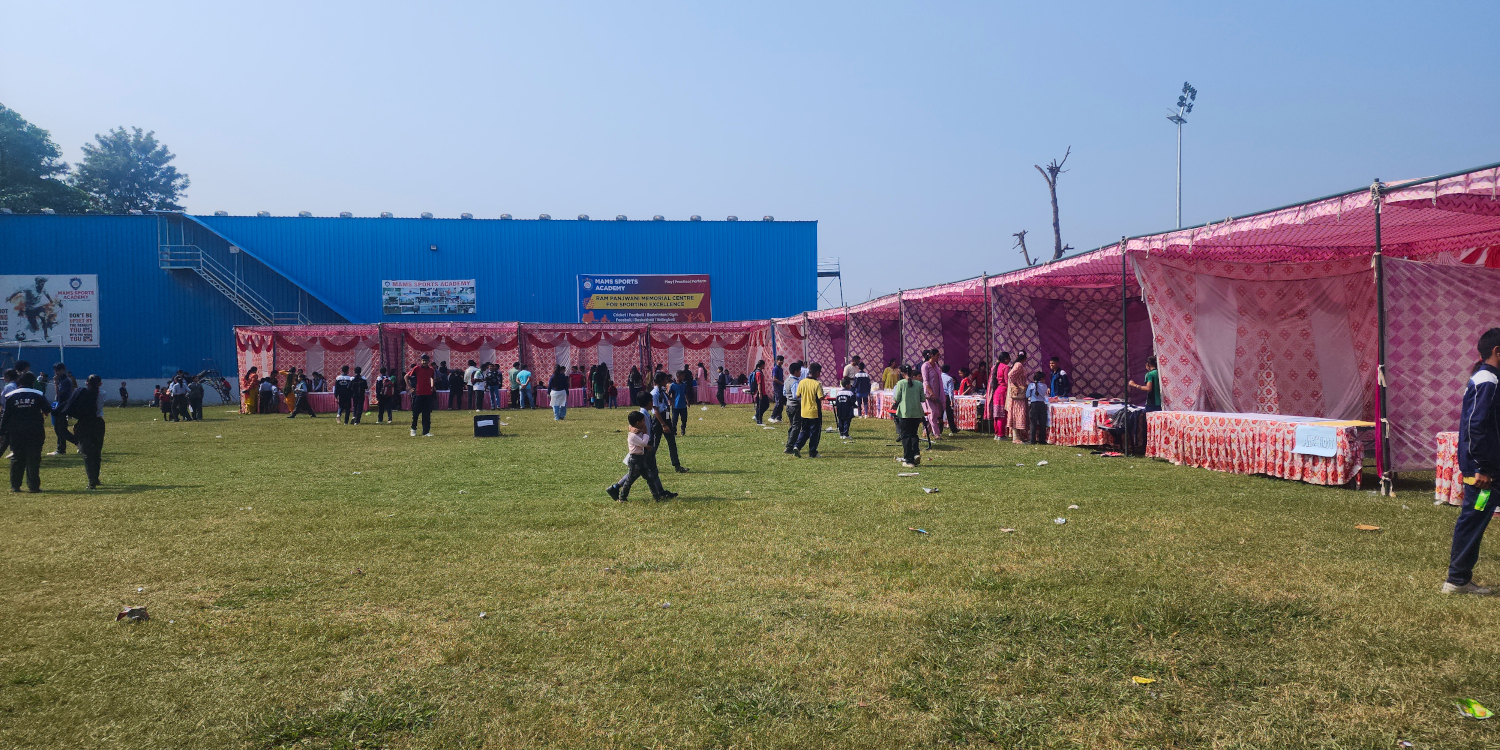
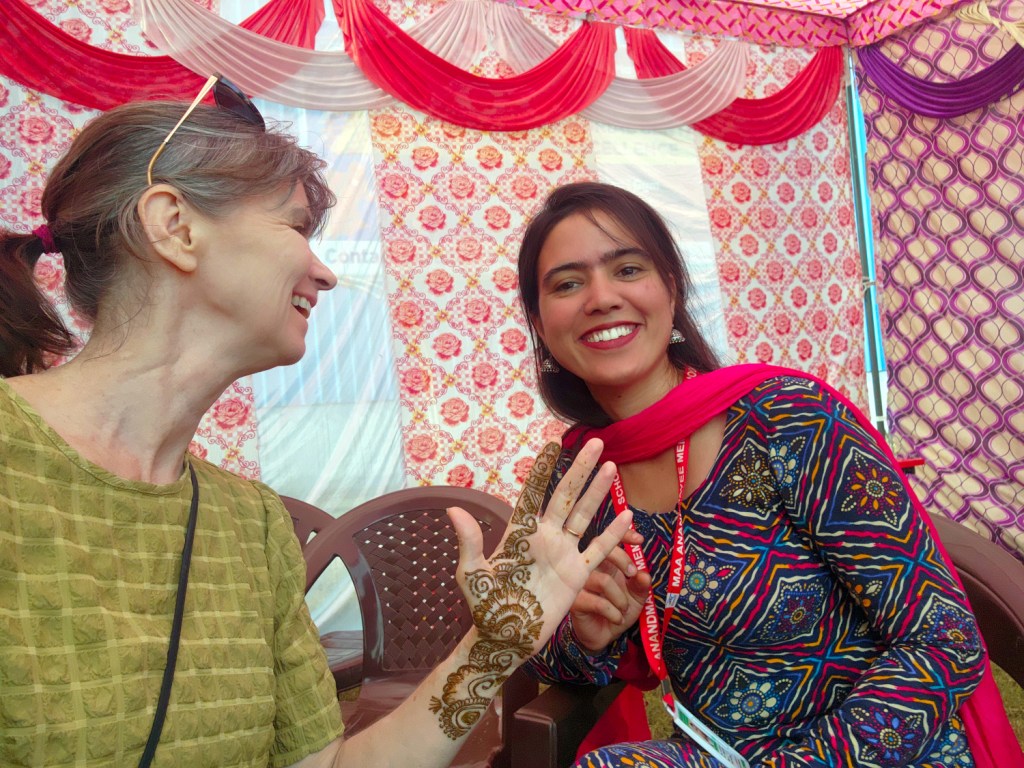
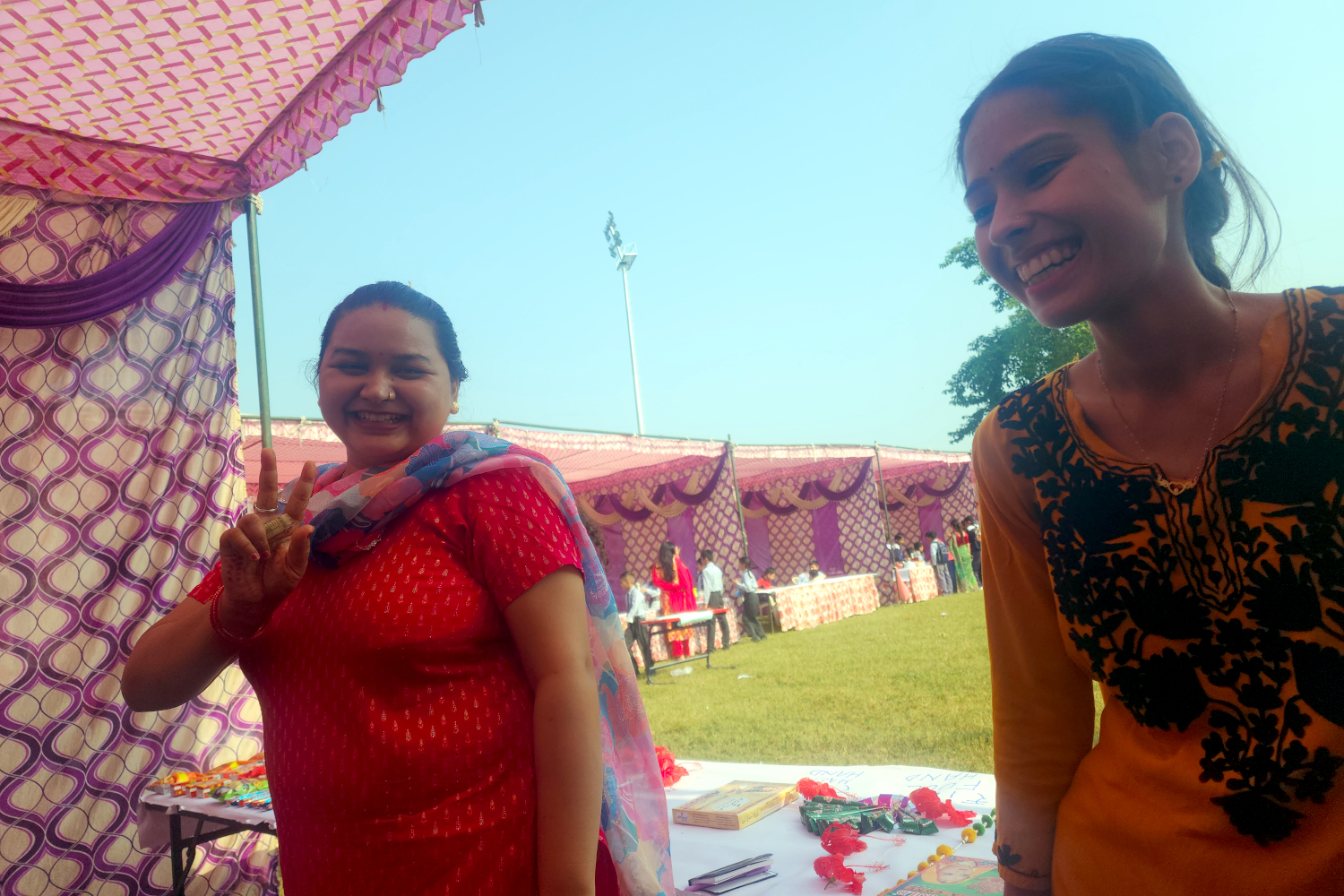
The grounds are festively festooned with colorful booths operated by students and teachers. Kimberly takes advantage of the opportunity to obtain a Mehndi design on her hand by one of the teachers who works with her at the Junior Campus. This is an Indian tradition of decorating hands with temporary tattoos on special occasions. They’re especially popular for weddings — sometimes the bride will have her groom’s initials concealed within the designs, which often include peacocks and lotus blossoms, among others.
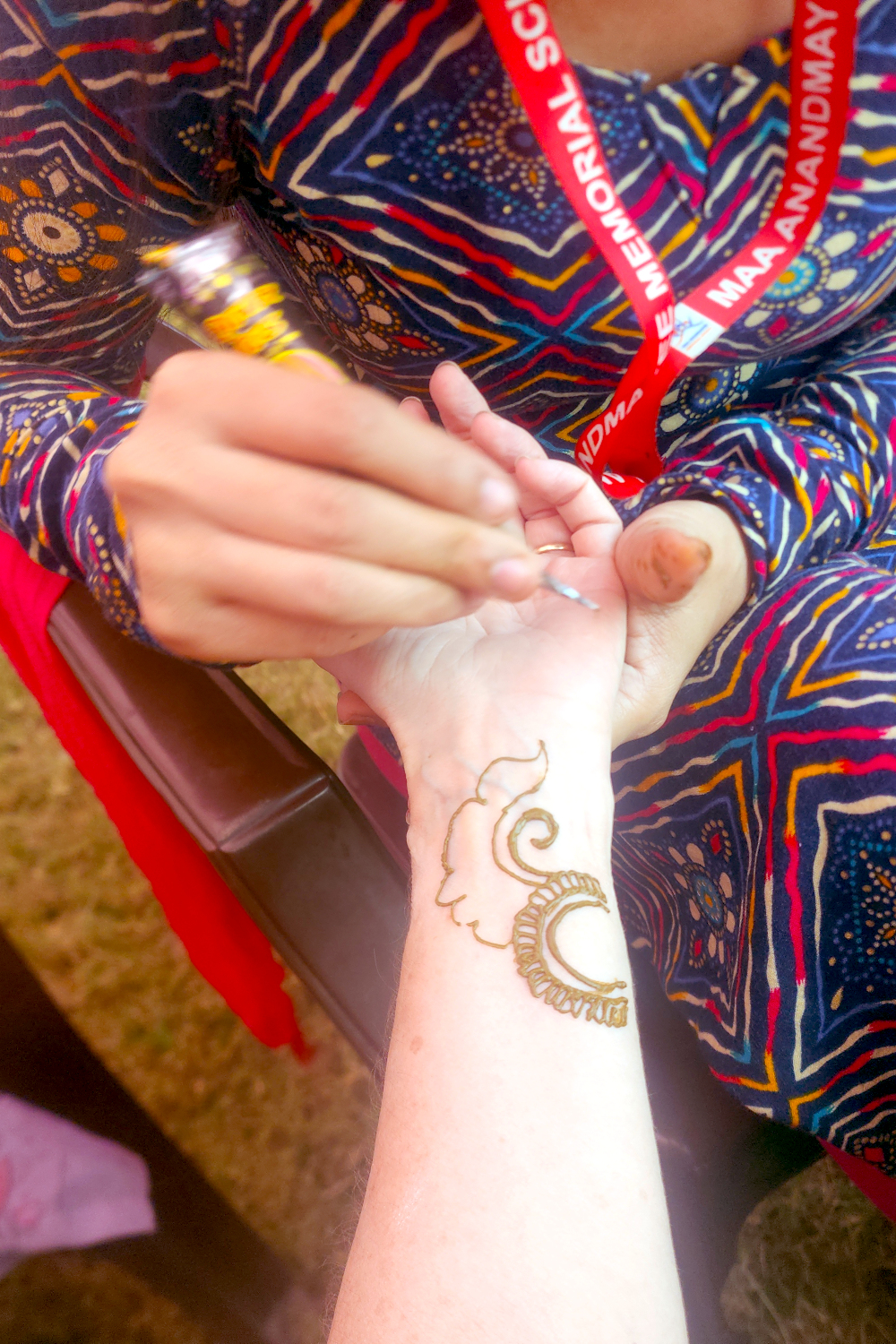
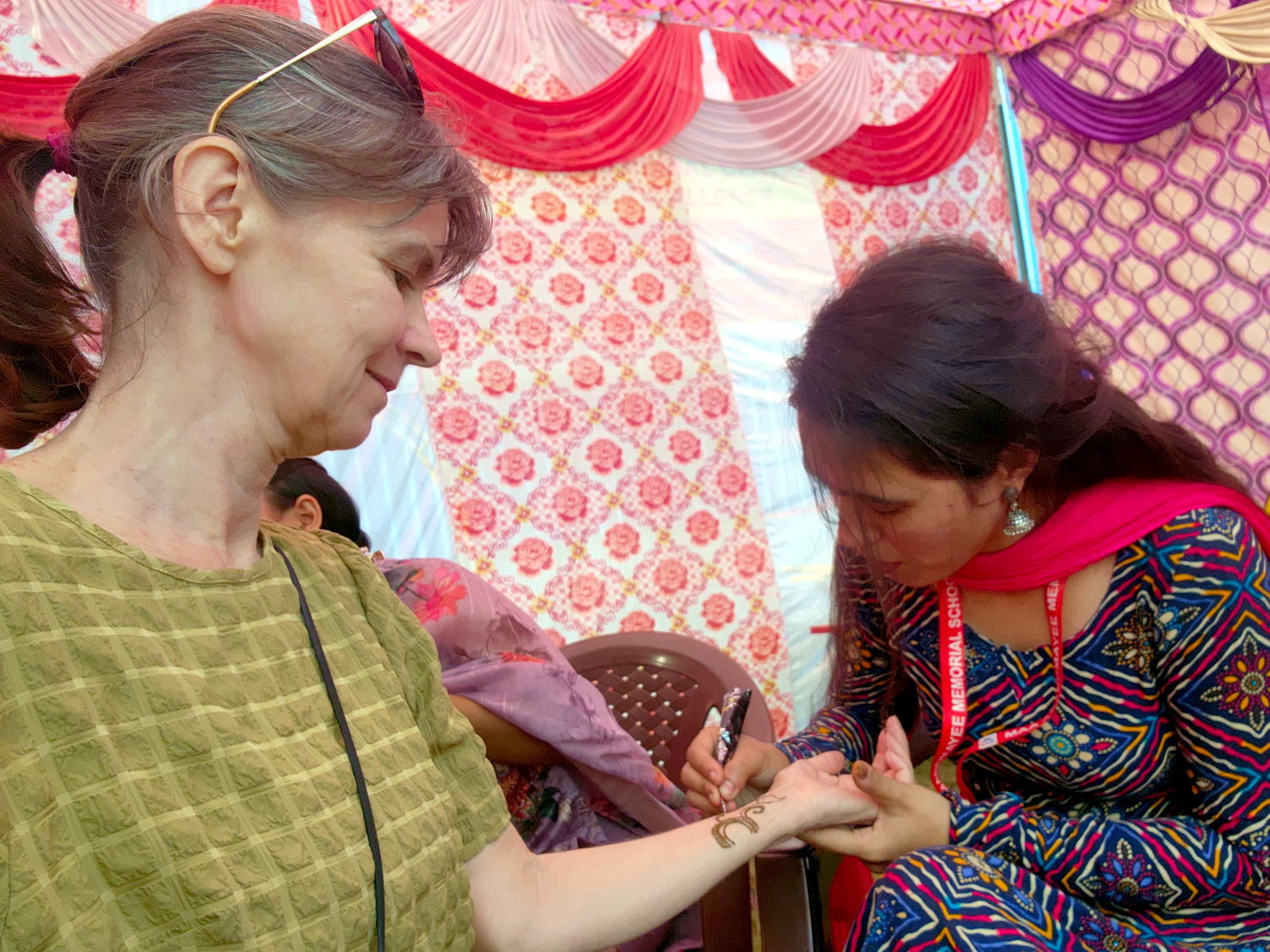

Kimberly’s 2nd experience getting henna done in India
Some of the older students are operating carnival type booths with games of skill(?) including shooting a basketball through a tire. These are students whom Dennis teaches, so of course they egg him on to participate. Which he does, with a couple of the games, hamming it up, much to the students’ delight, with an overly elaborate preparation before taking a shot. And he comes very very close to scoring. Really.
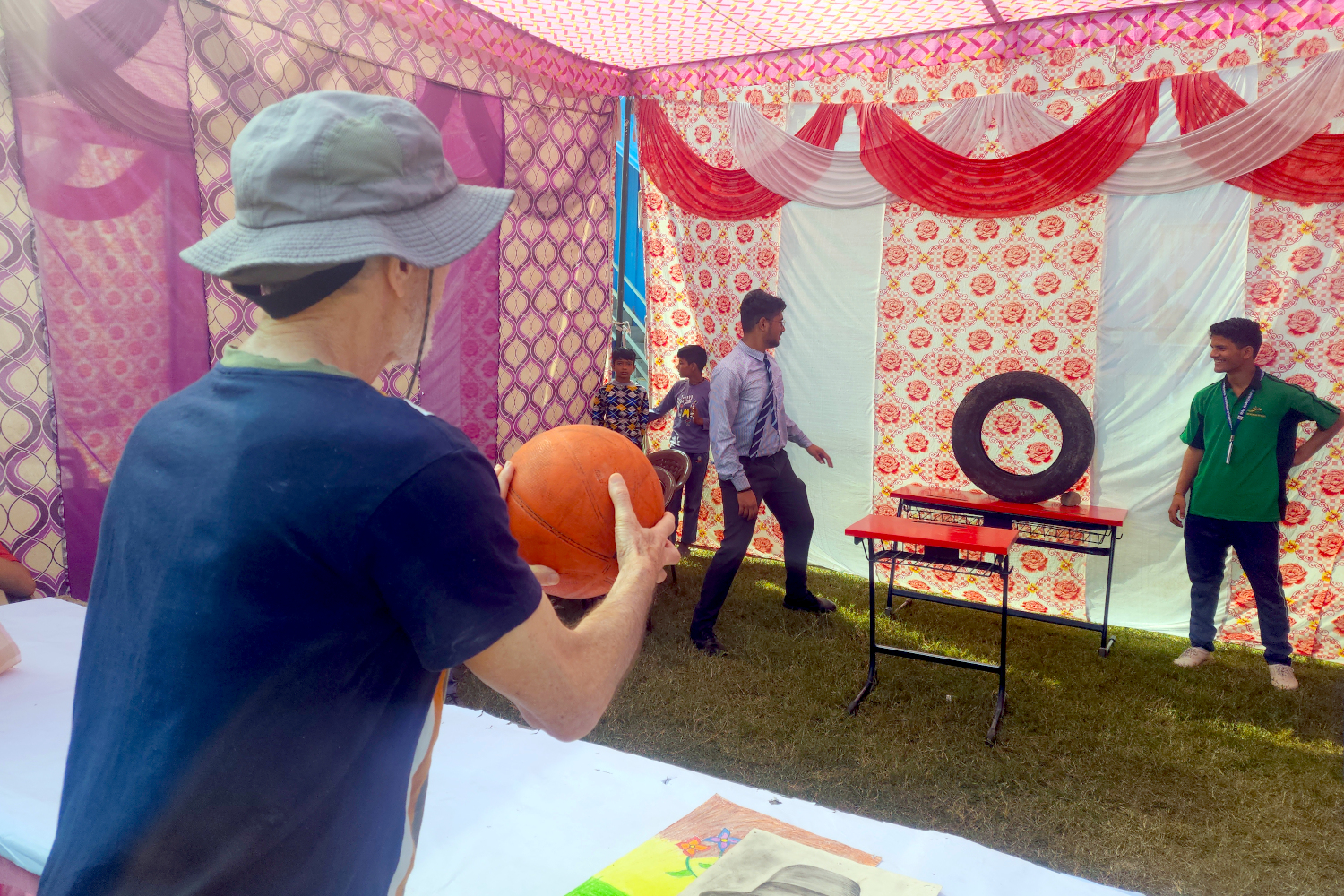

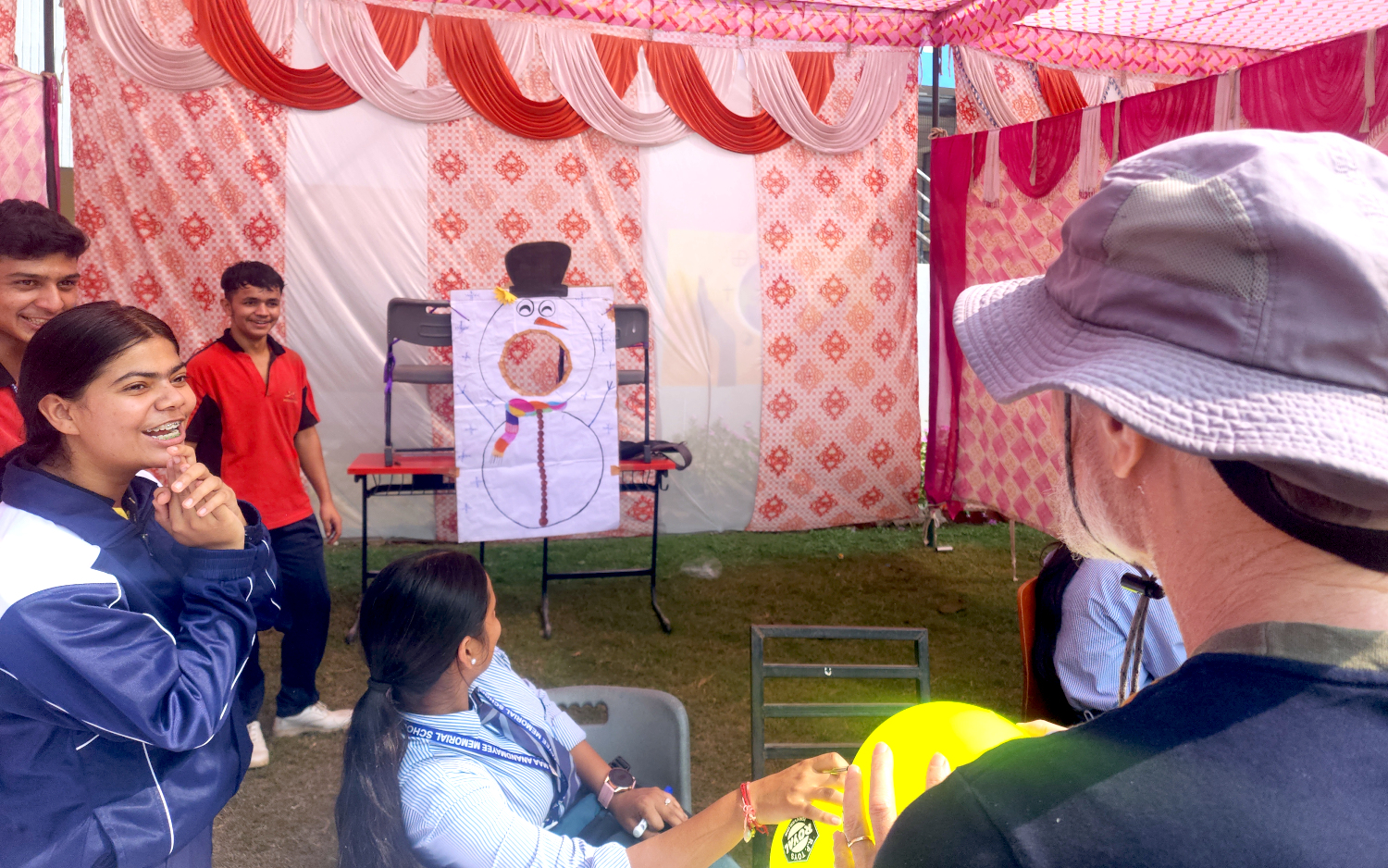
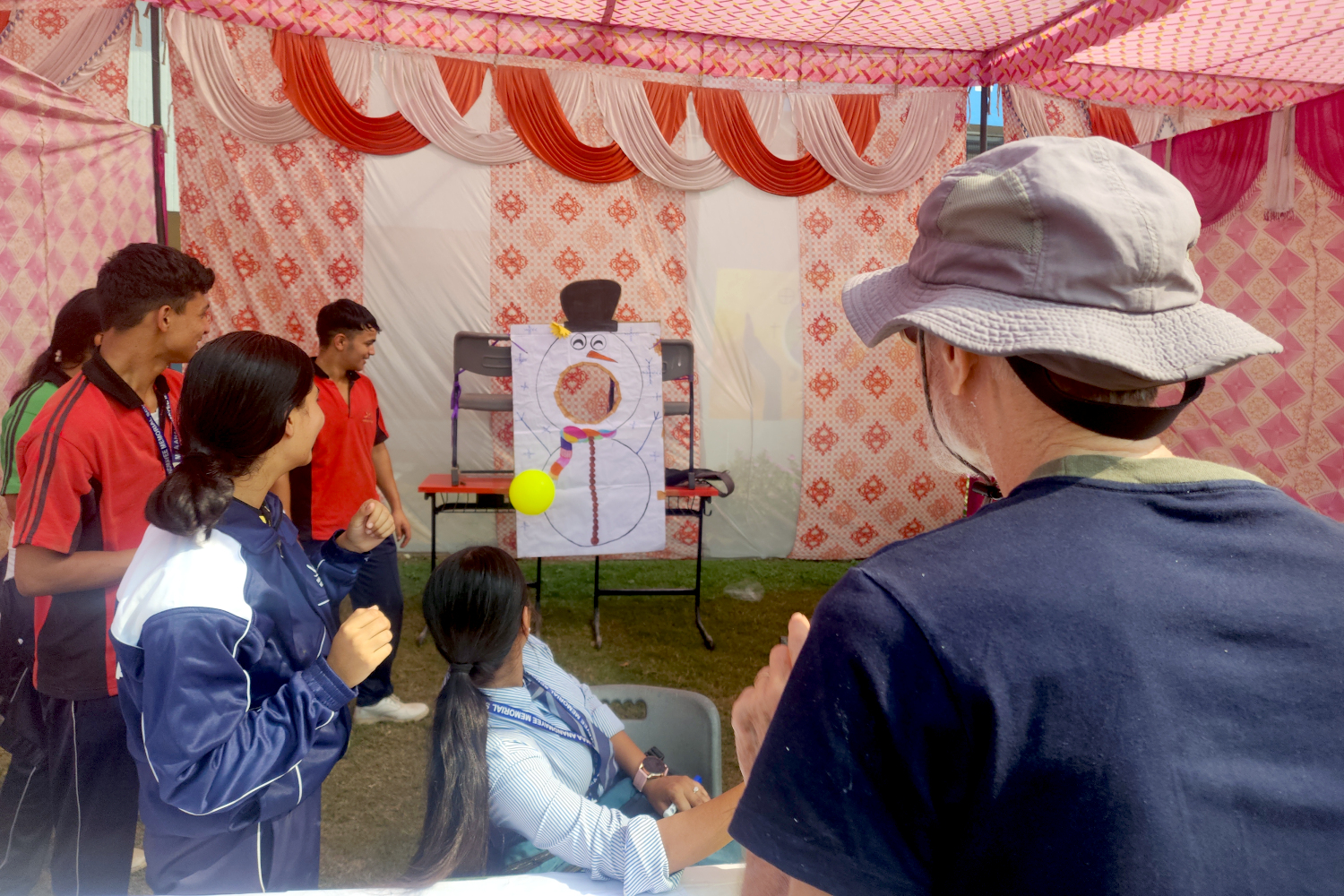
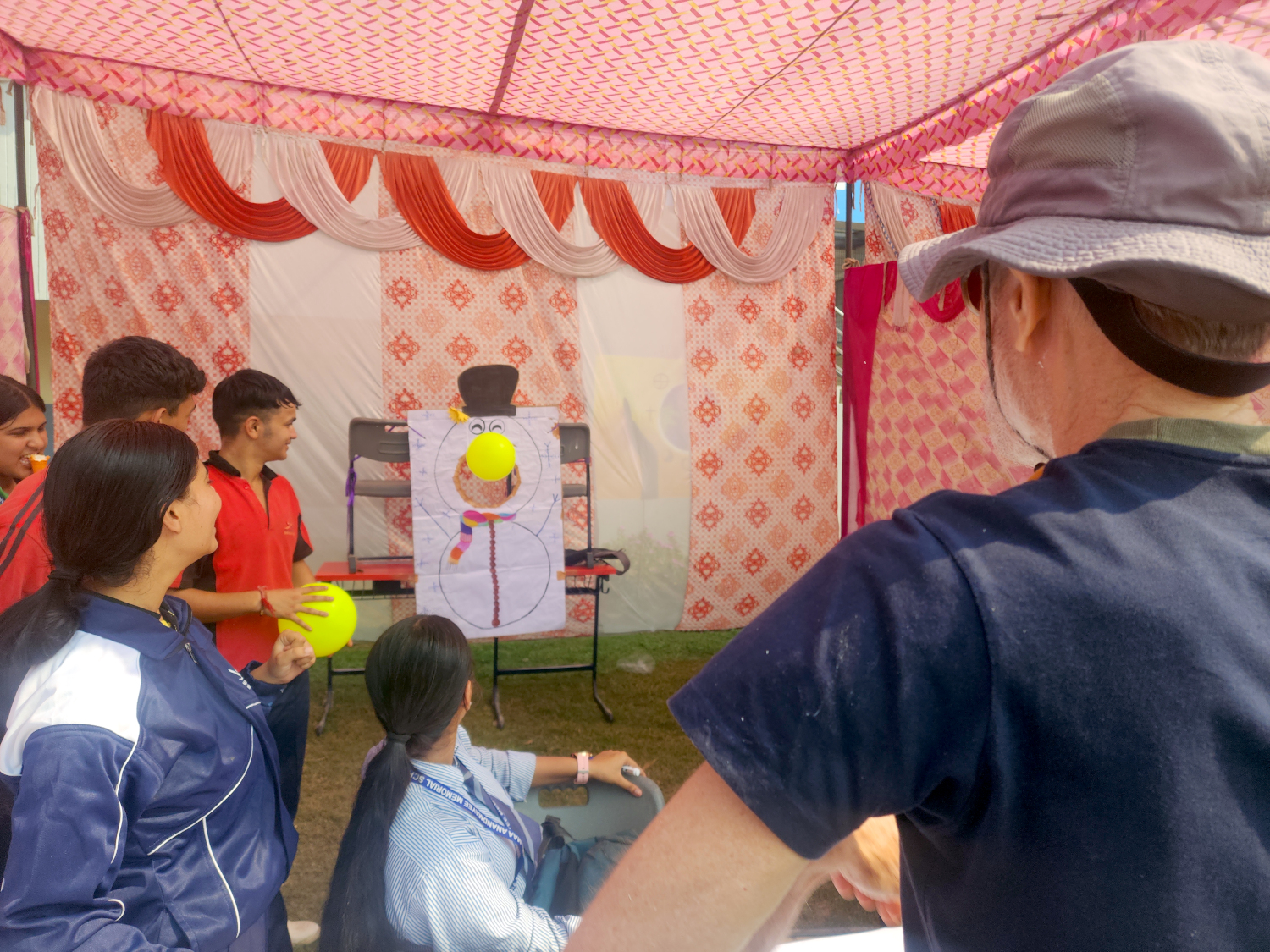
The students and staff have a lot of fun today. And the event gives us a small taste of Diwali, which we’ll soon experience on a larger scale when we go to Rishikesh again.

Evening Sunset View from our Backyard
10/20 -29/2024

 world travel with a theatrical flair
Leave a comment