

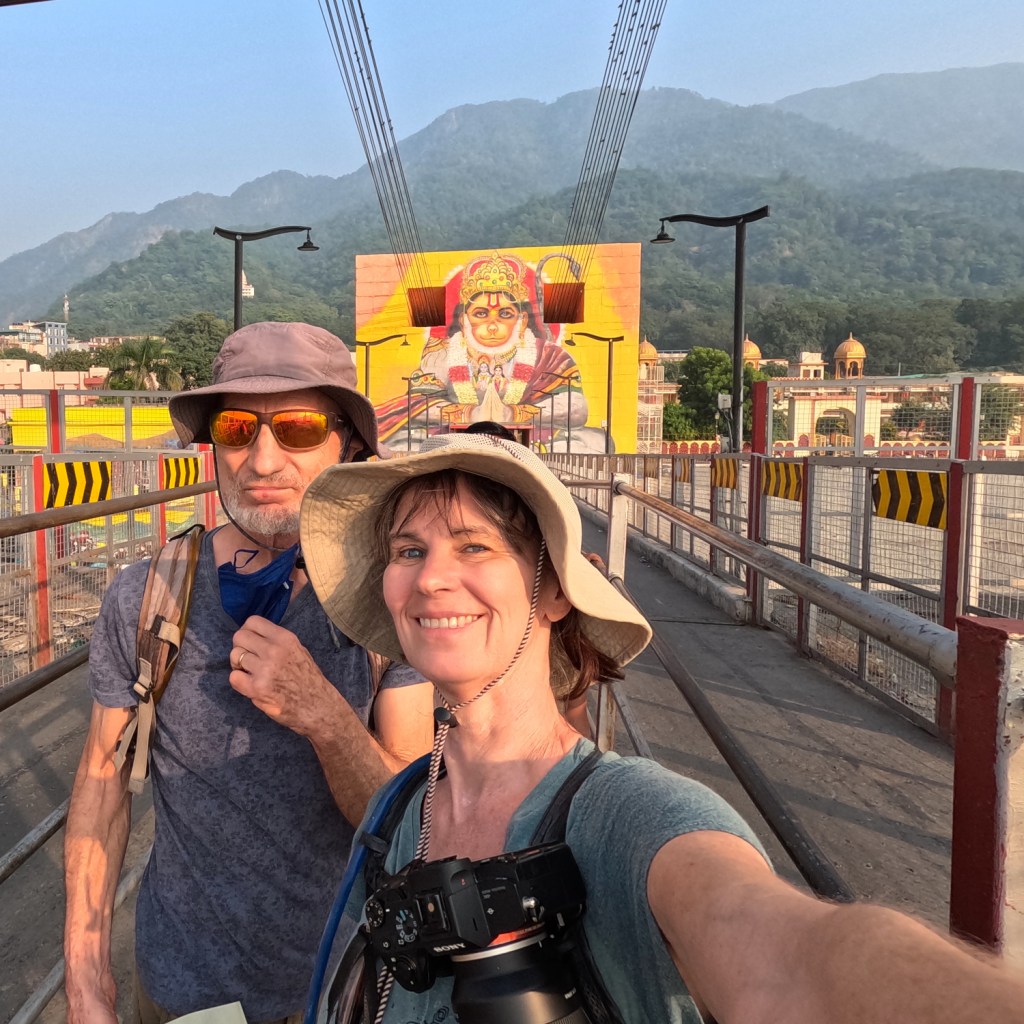
Because of Diwali, the school in Raiwala where we were volunteering was closed for most of the week. So we decided to take advantage of the opportunity to make a getaway to Rishikesh for a couple of nights, and see how the folks in an Indian city celebrated the occasion.
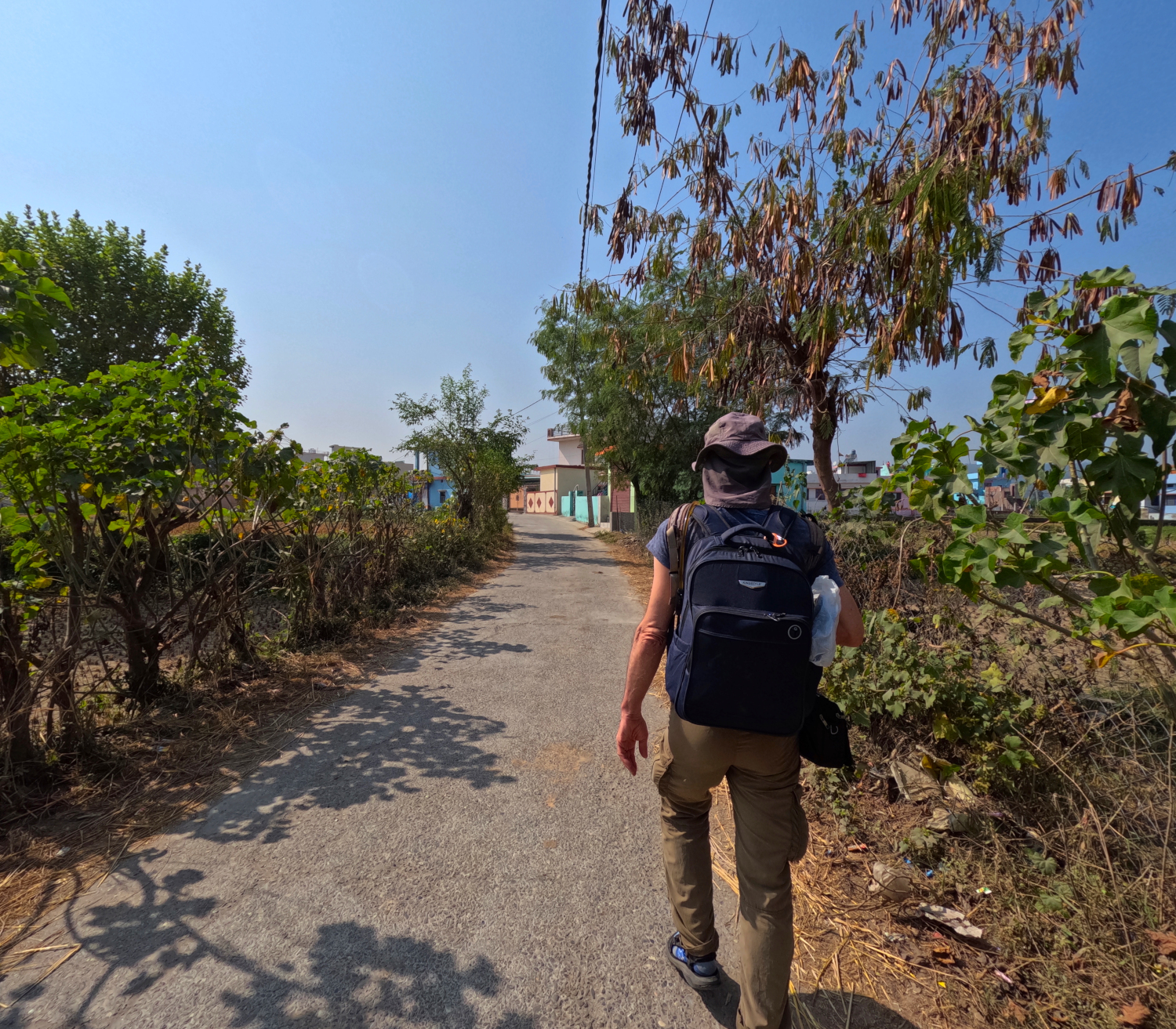
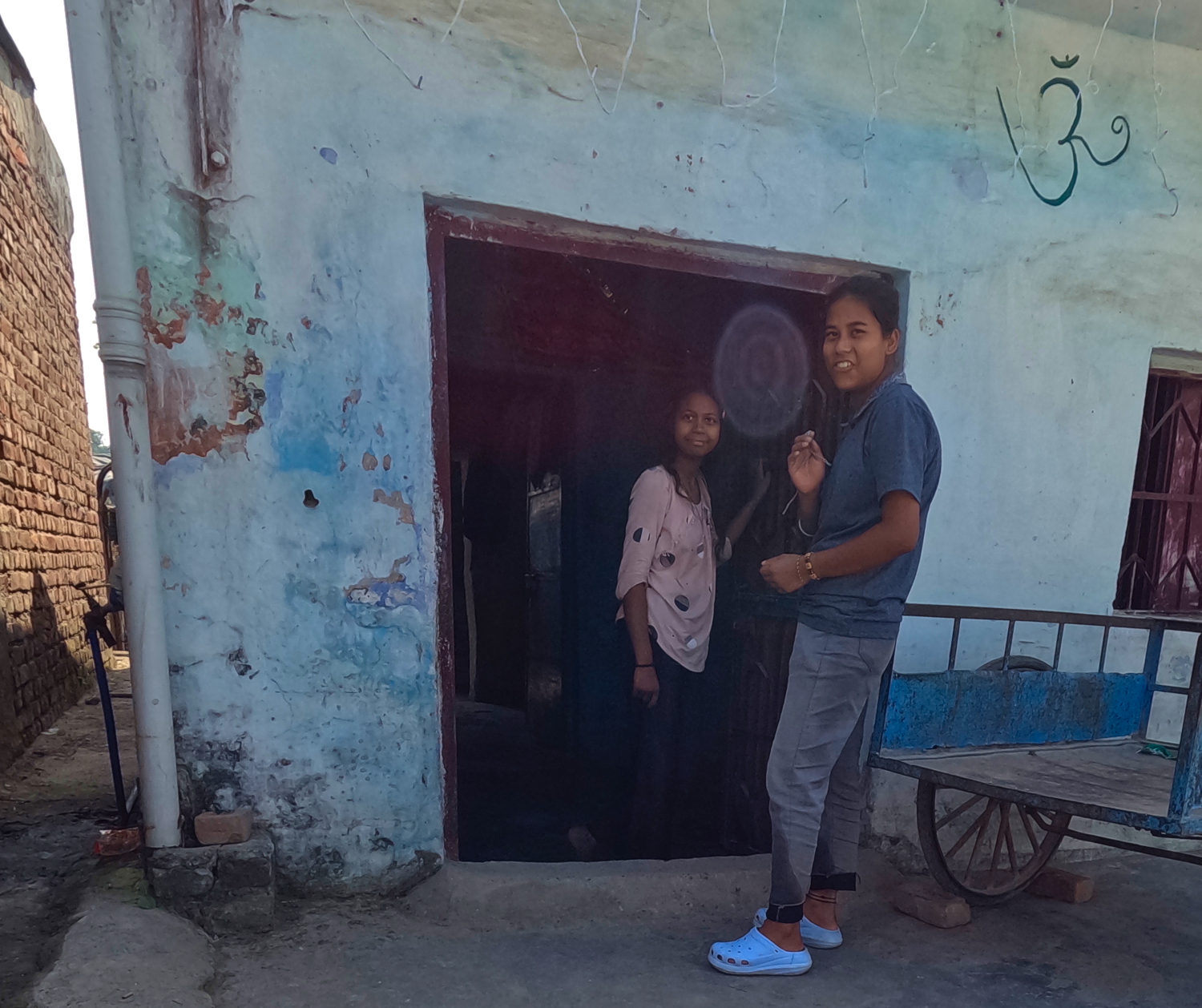


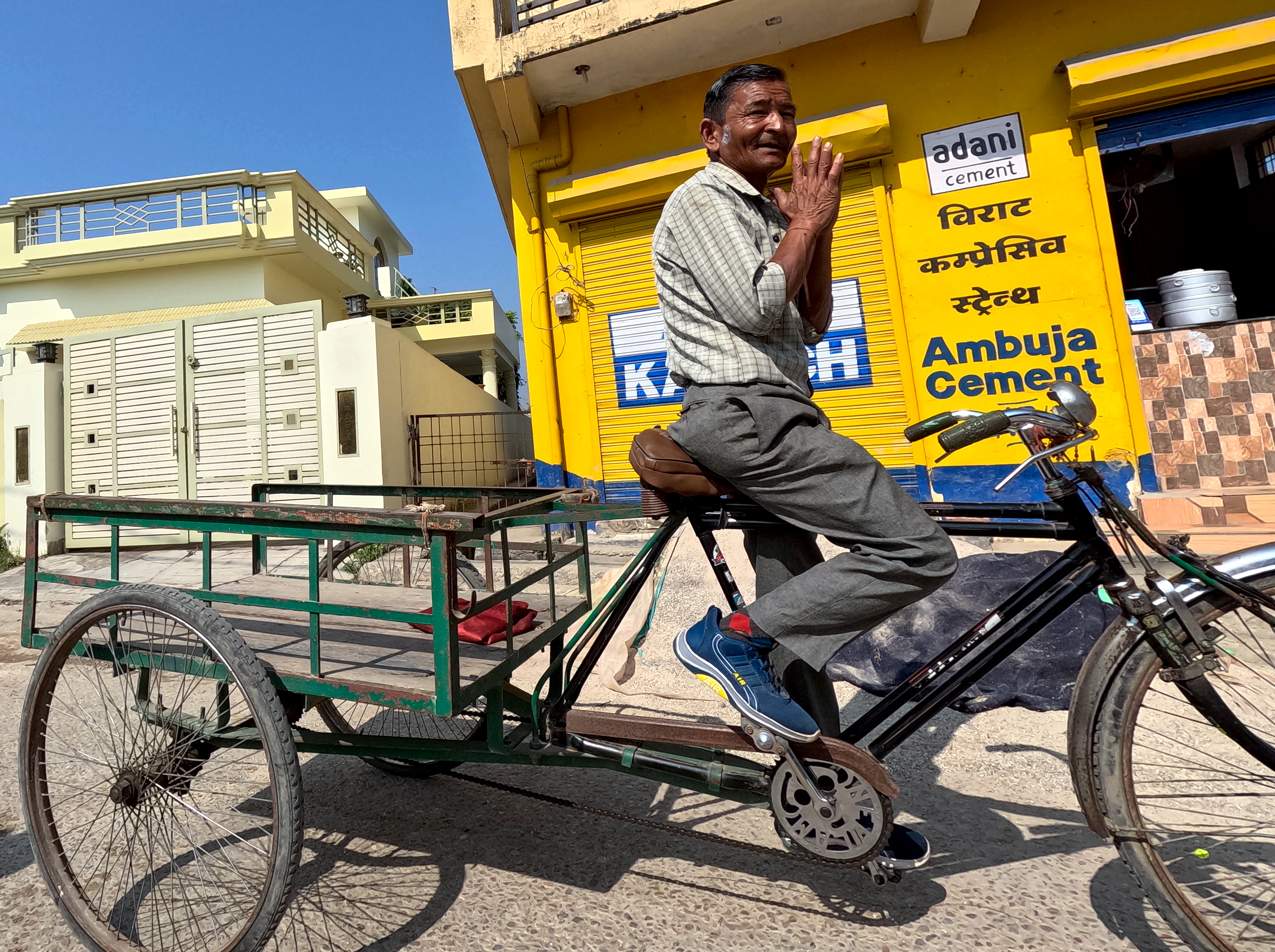
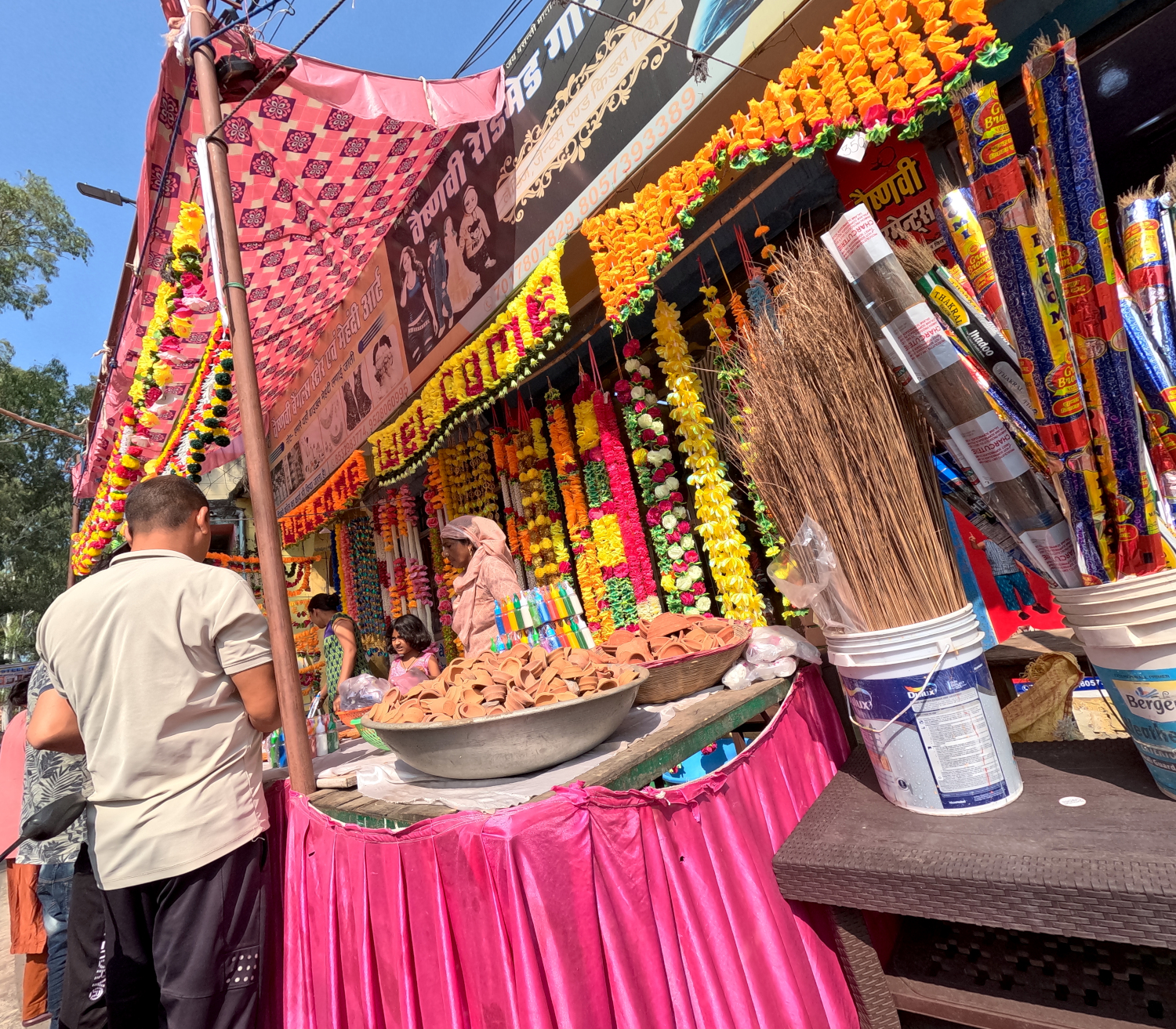
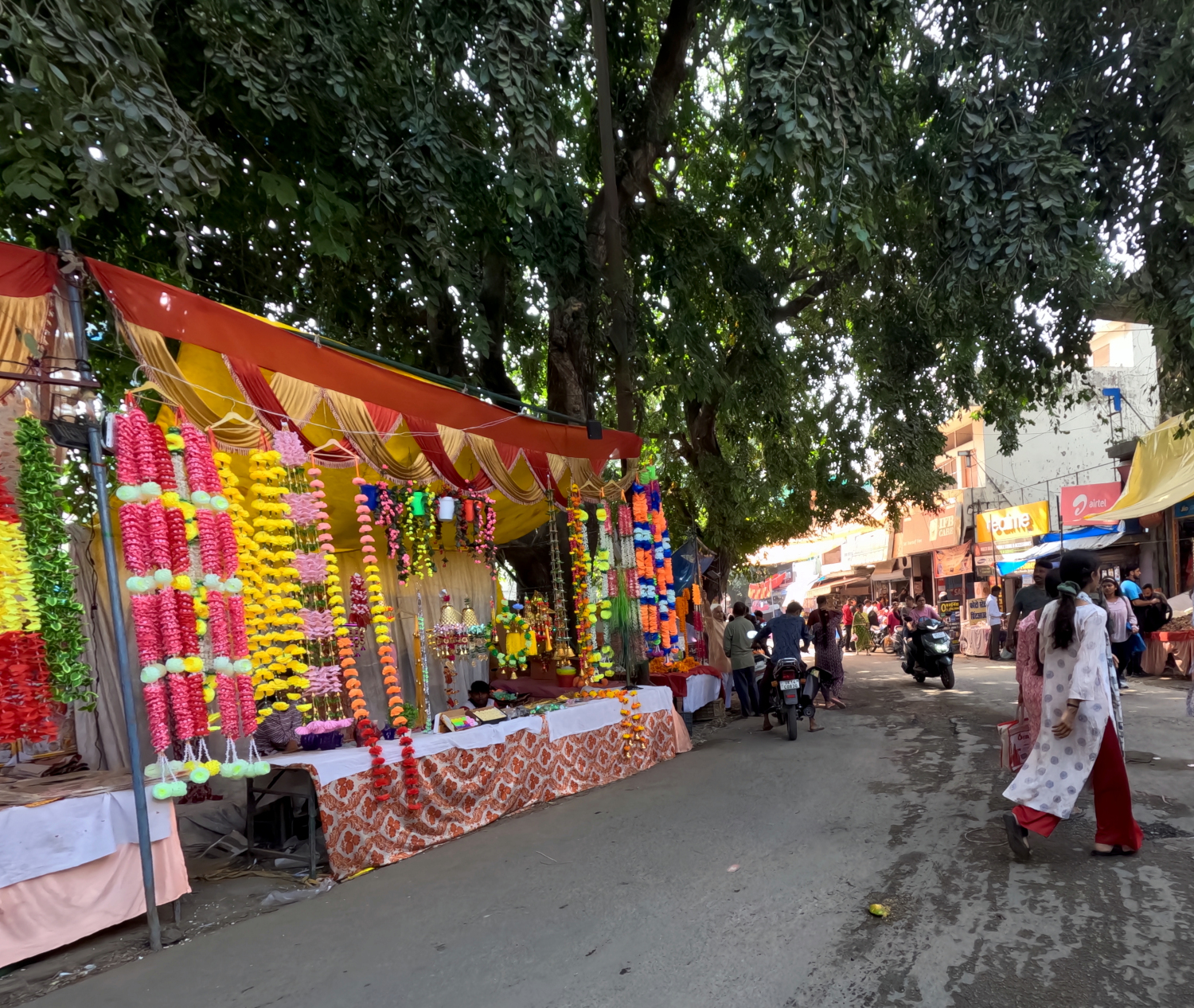
First we hike the two miles through Raiwala to Raiwala Junction, the major thoroughfare. Along the way, we pass booths displaying and selling colorful adornments for the holiday. At the junction we catch a tuk-tuk, jam packed as always with colorful and friendly locals. When we arrive in Rishikesh, we hand the driver 60 rupees to cover the standard fare of 30 each for a shared ride. But he informs us that we owe 20 more — from what we gather, there is a holiday surcharge of 10 rupees each.

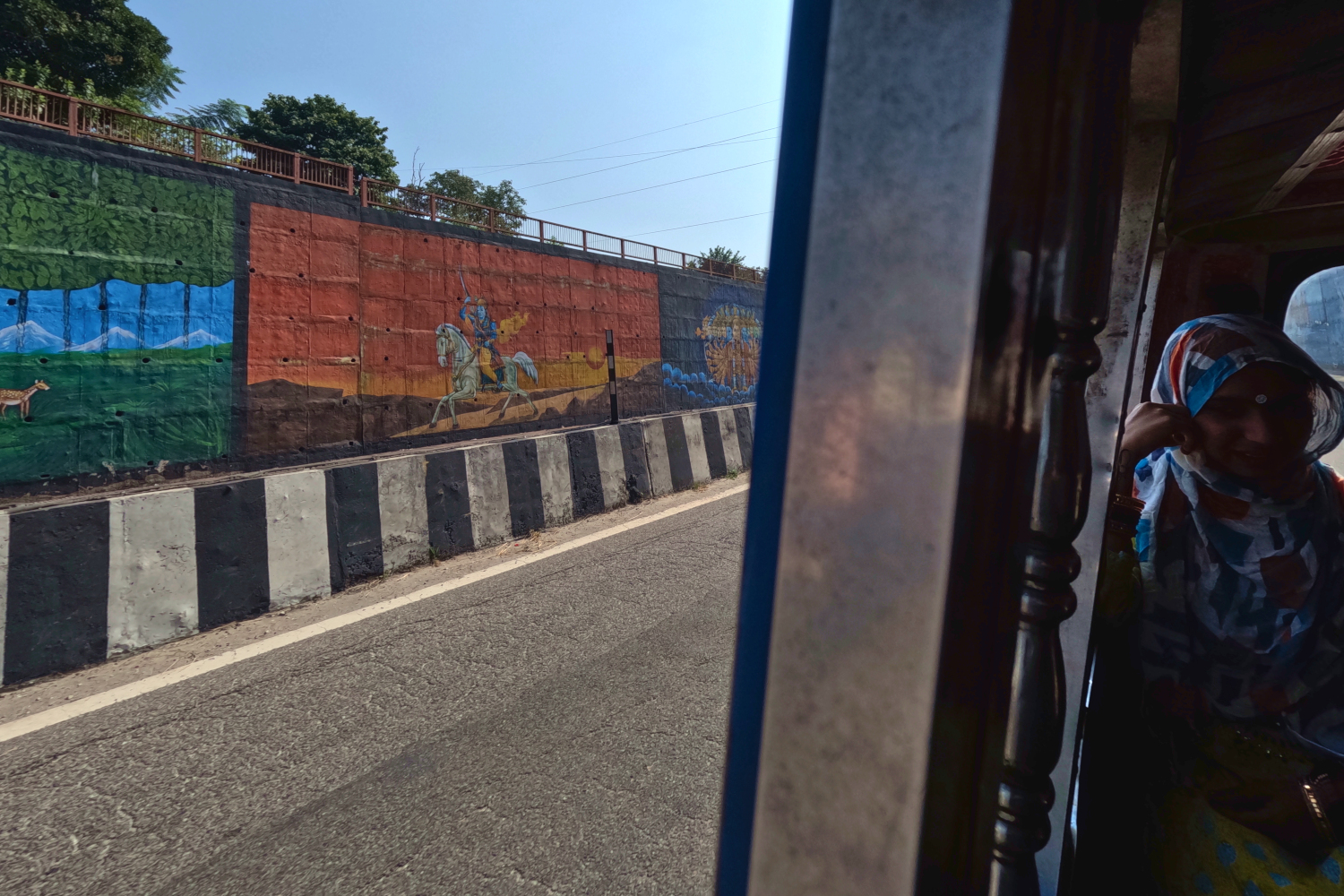
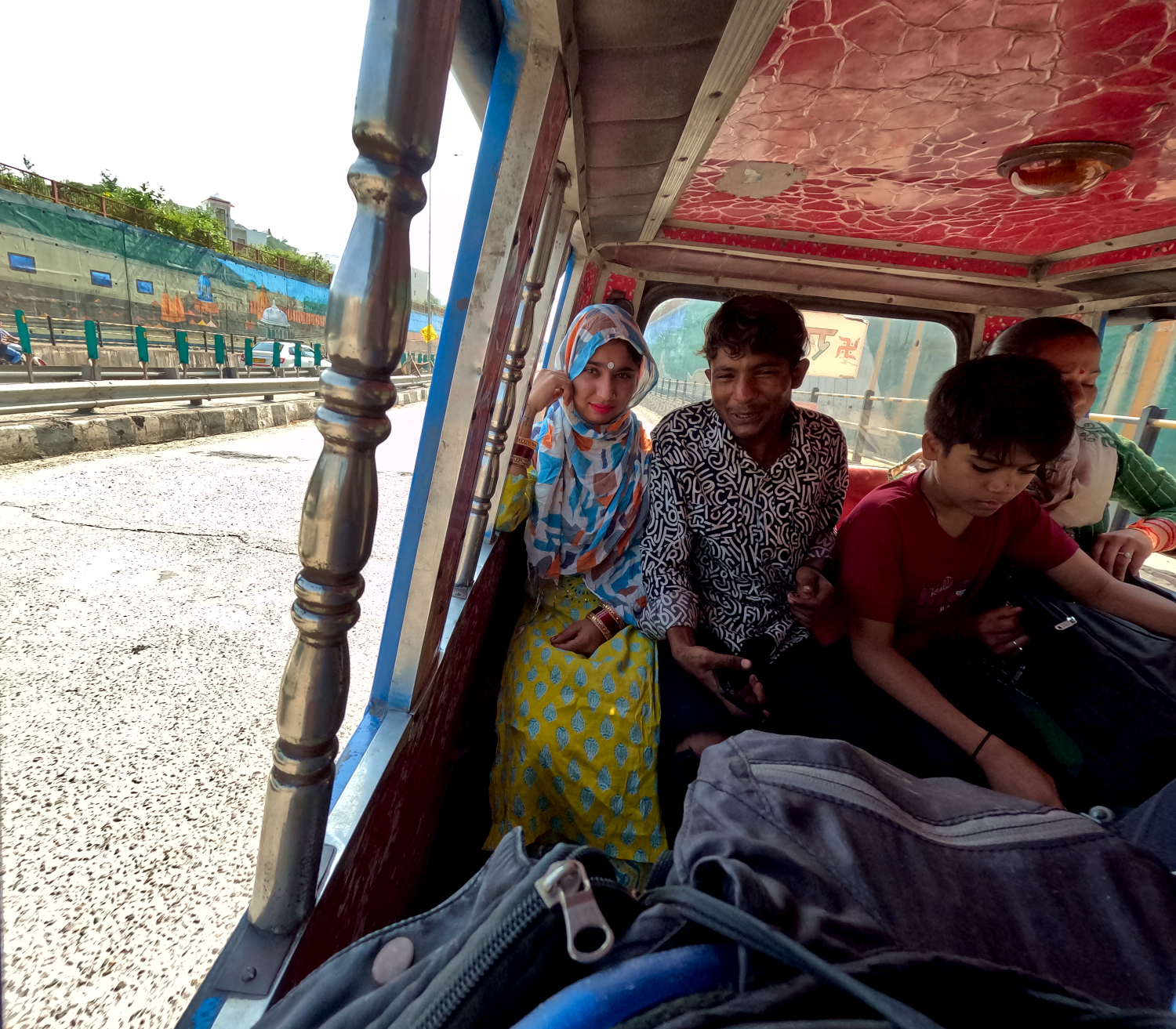
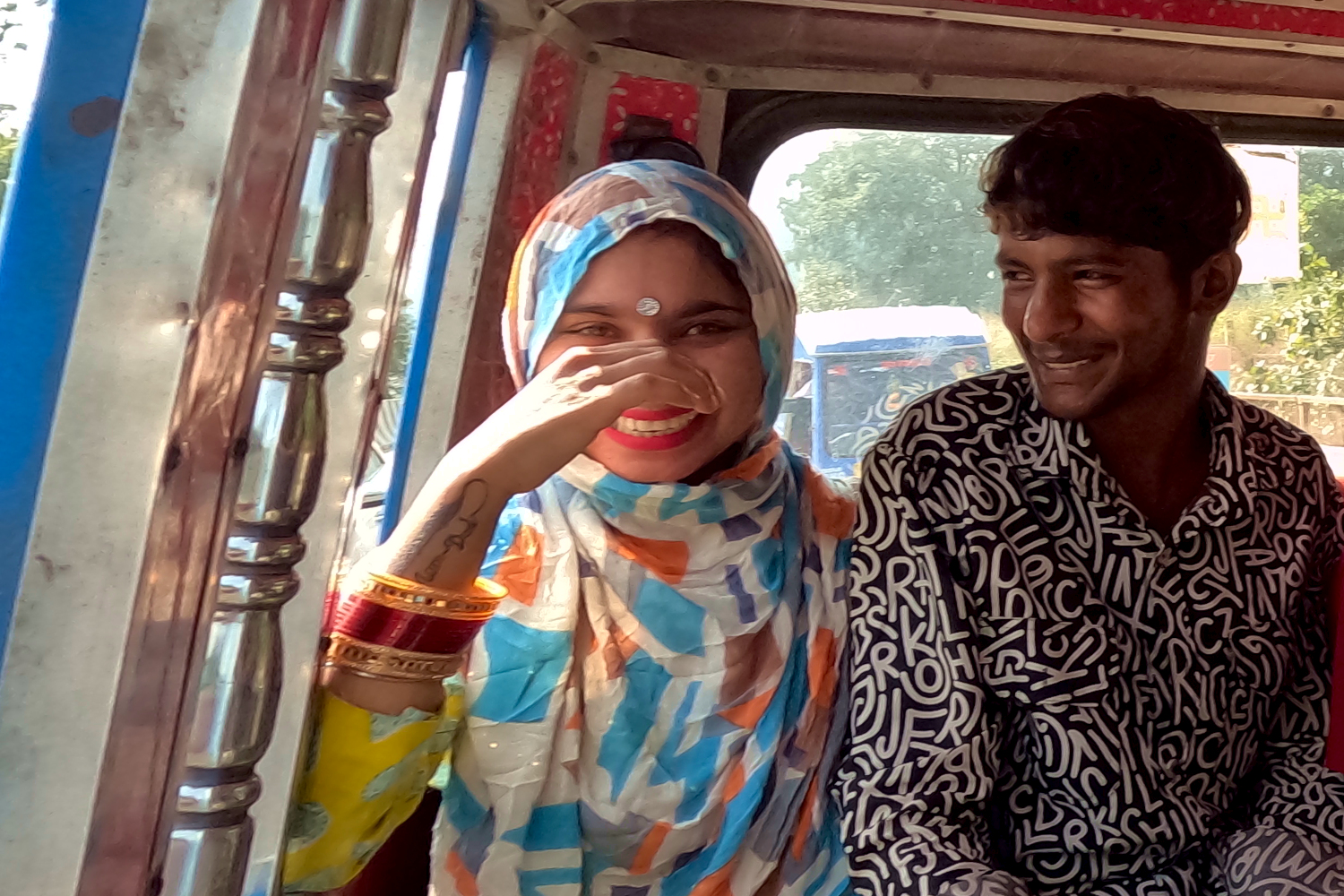
Making new friends on the shared public tuk-tuk to town
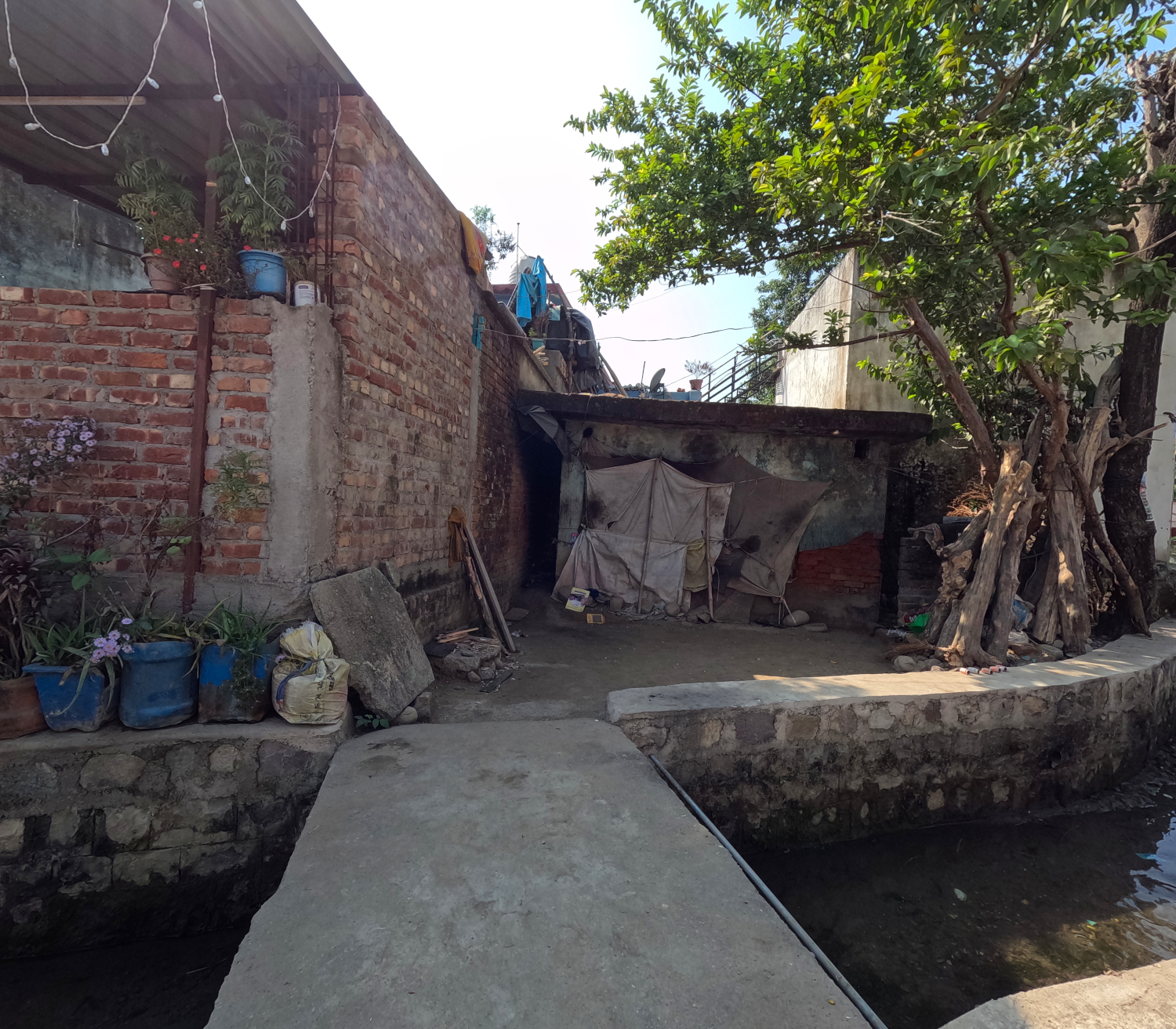
From the drop-off point it’s about a mile walk to our homestay, where we have to wait about 15 minutes, even though we’ve notified the hosts by text, before someone comes to check us in. And when she does come, she takes a very very long time to go through the process, making copies of our passports and having us fill out Form C. (That’s a form the Indian government uses to keep tabs on foreign visitors. Theoretically, we have to do it for every place we stay, and the hosts have the responsibility to submit it; but quite often they’re rather lax about it.)
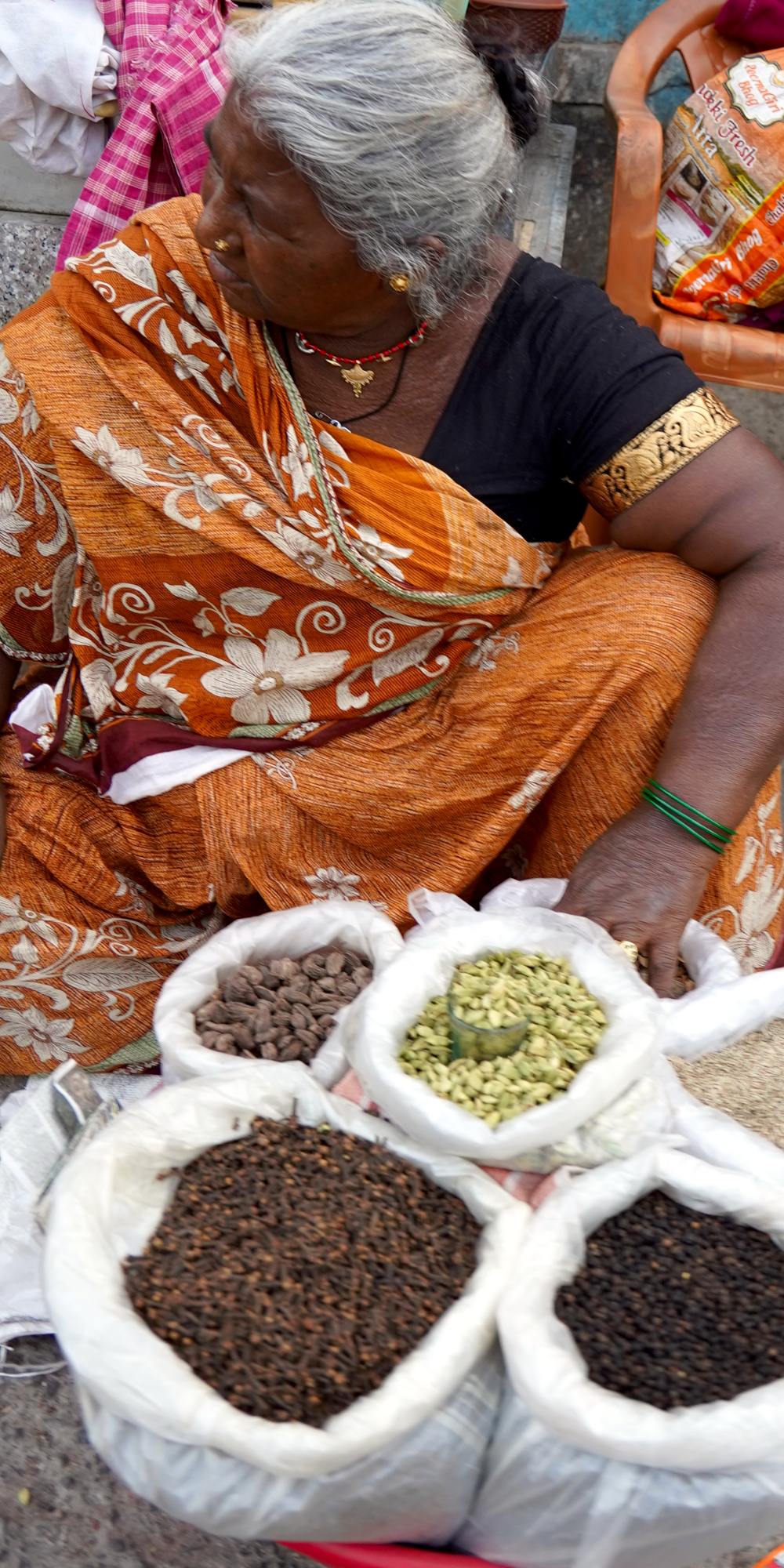
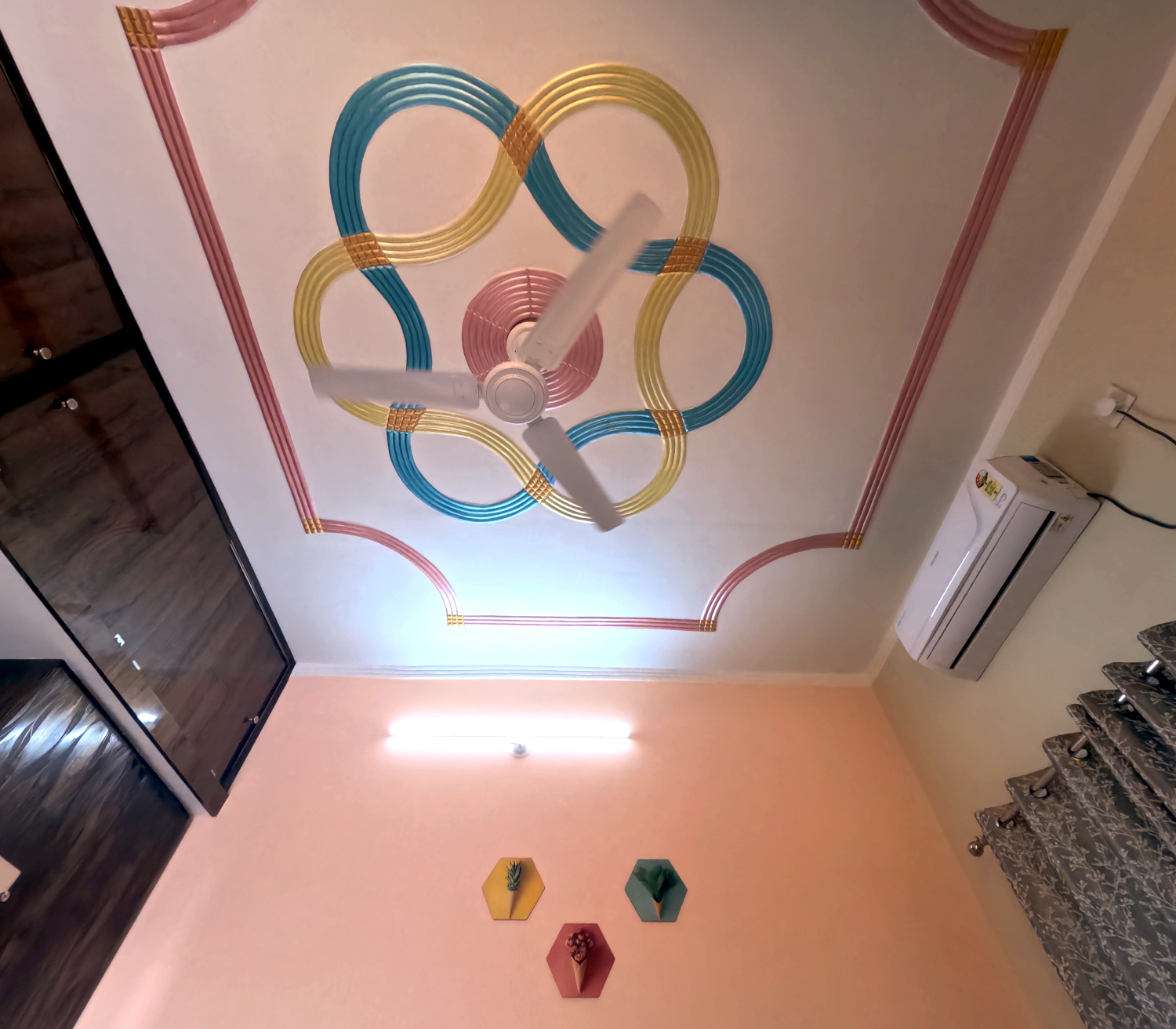
Then she takes us up to our room, which is nothing fancy but quite adequate. The kitchenette has only a sink and hotplate, with no refrigerator, so that will require some adjusted meal planning. Again, the lady takes a really long time showing us every little feature of the room.. And after she leaves and we start unpacking, she returns with additional blankets, and again takes a really long time, spraying some kind of air freshener in the bathroom, and even spraying it ON OUR BED.
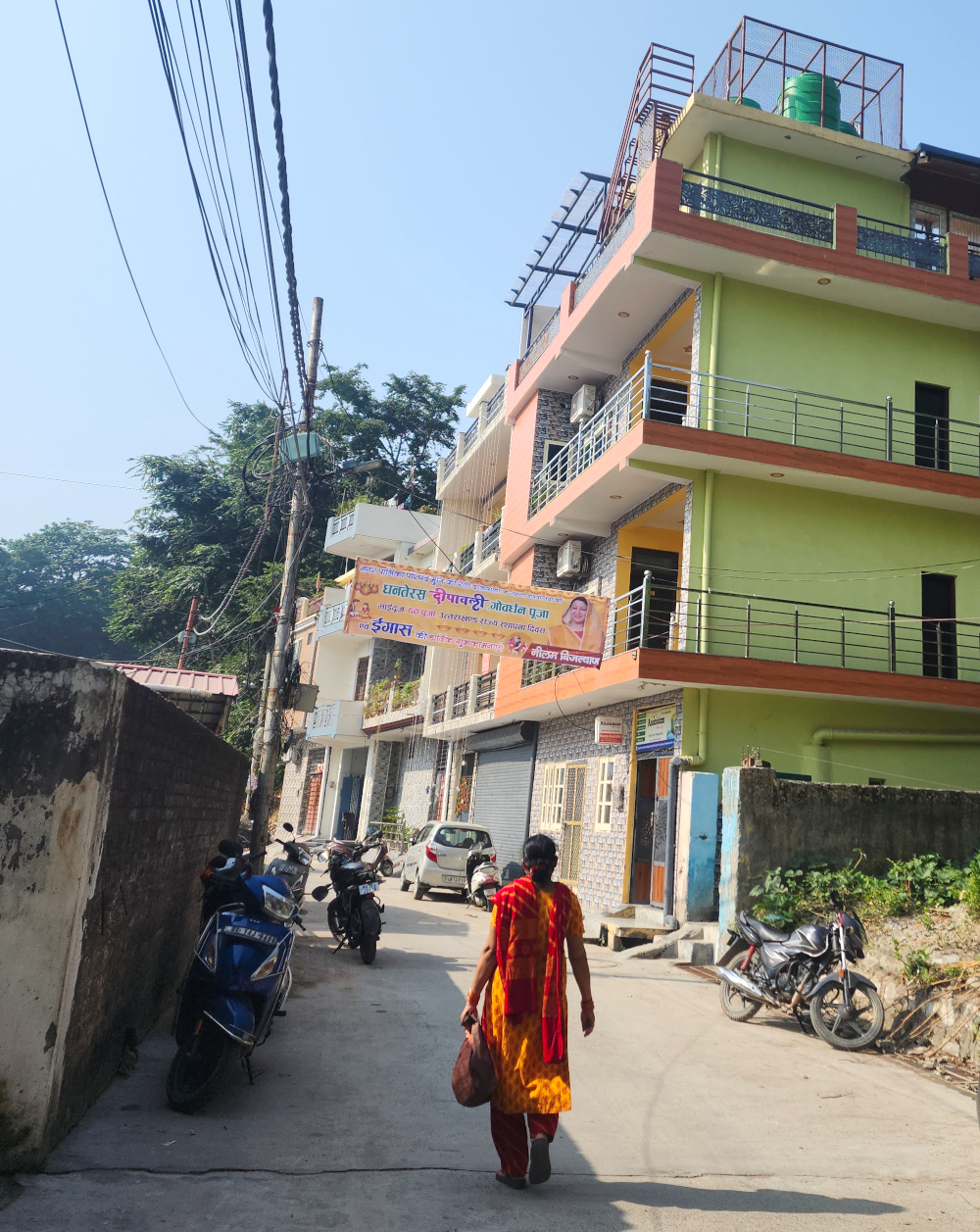
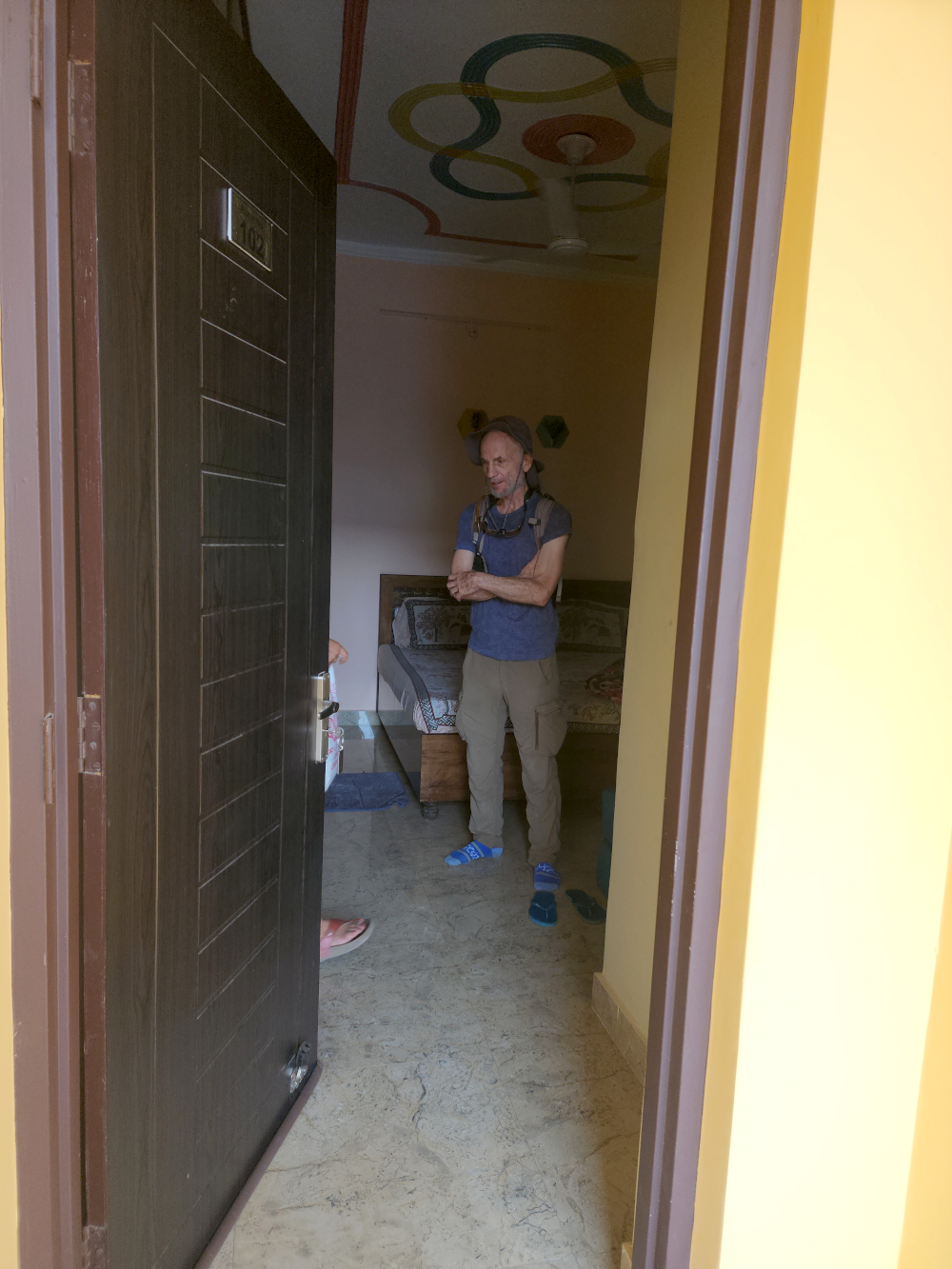
Checking into our room (green building) after waiting 15 minutes on the street
At last we’re settled in and ready to go for a stroll through town, leaving our freshly sprayed bed behind to air out. The first order of business is to score some lunch. Some of the restaurants are closed today, but one that we find handy is called “Five States”, because it offers the cuisine of five different Indian states. Sounds intriguing.
The menu includes a page of combo meals, all of which sound quite enticing. Finally we settle on the two we want to try, and give our order to the waiter. But then along comes the manager/ owner of the place to inform us that the entrees on that page are not available because of the holiday. So it’s back to square one. This time we settle on a couple of selections, supplemented by garlic naan. All of which turns out to be rather tasty, and plentiful enough for us to take some home with us.
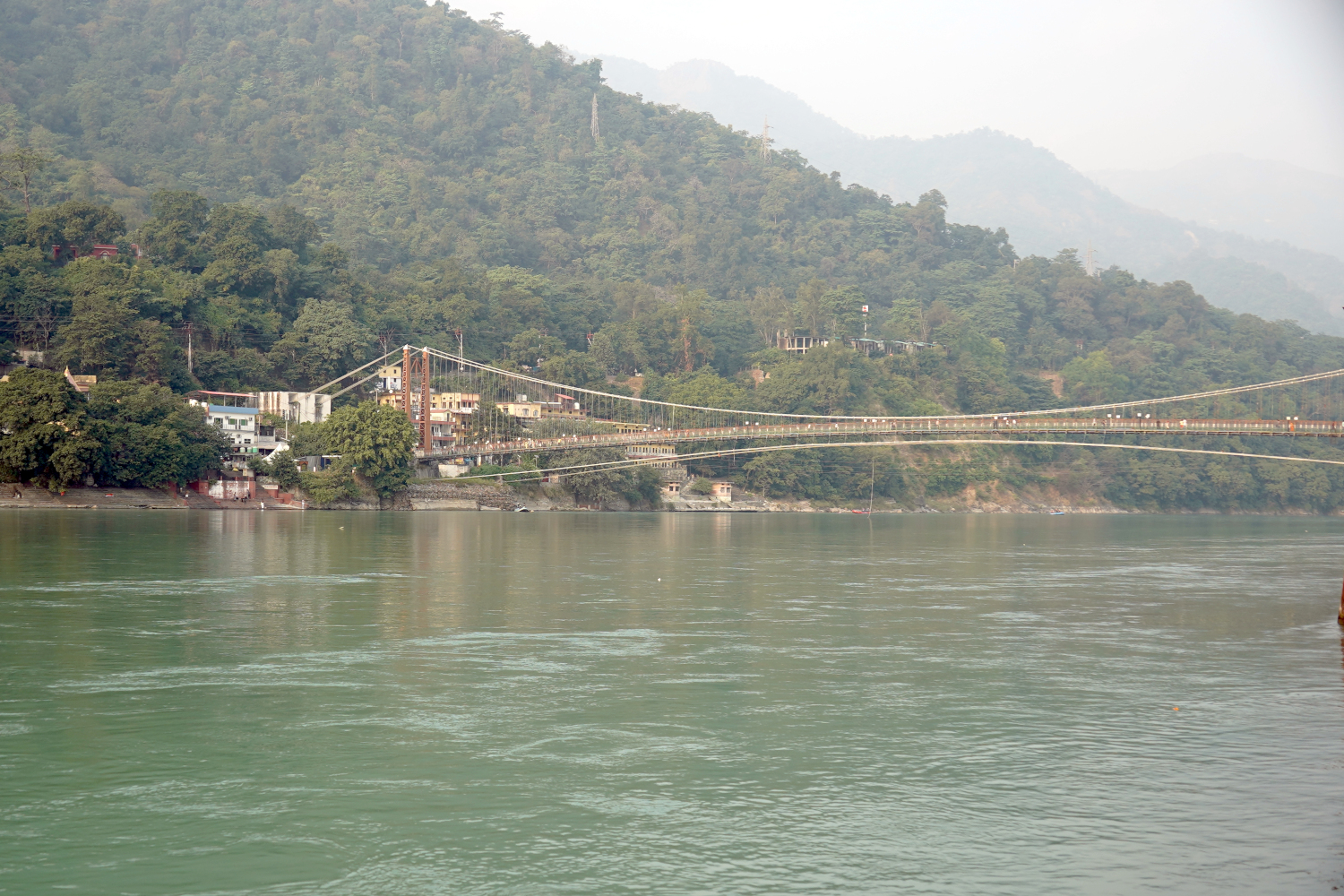
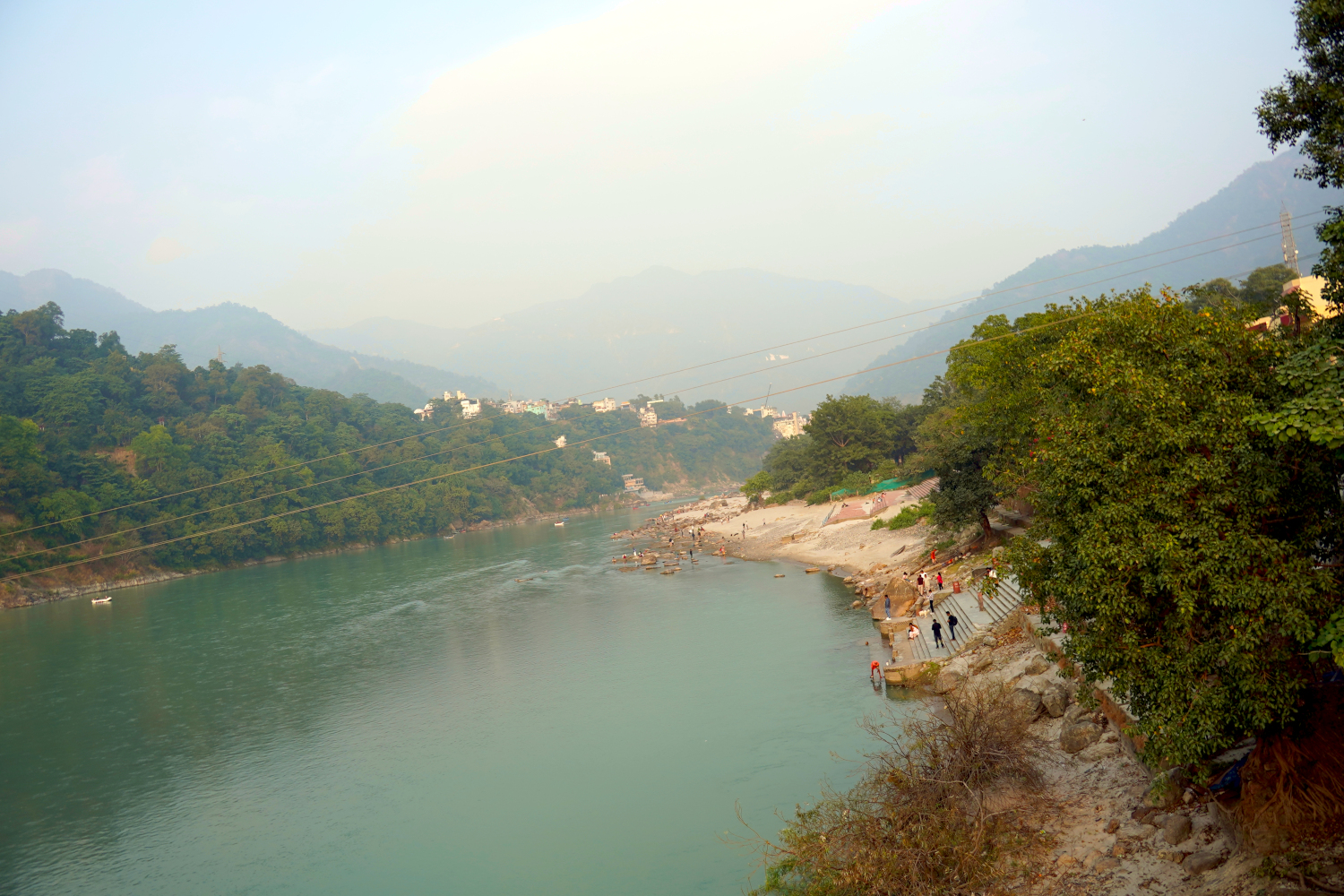
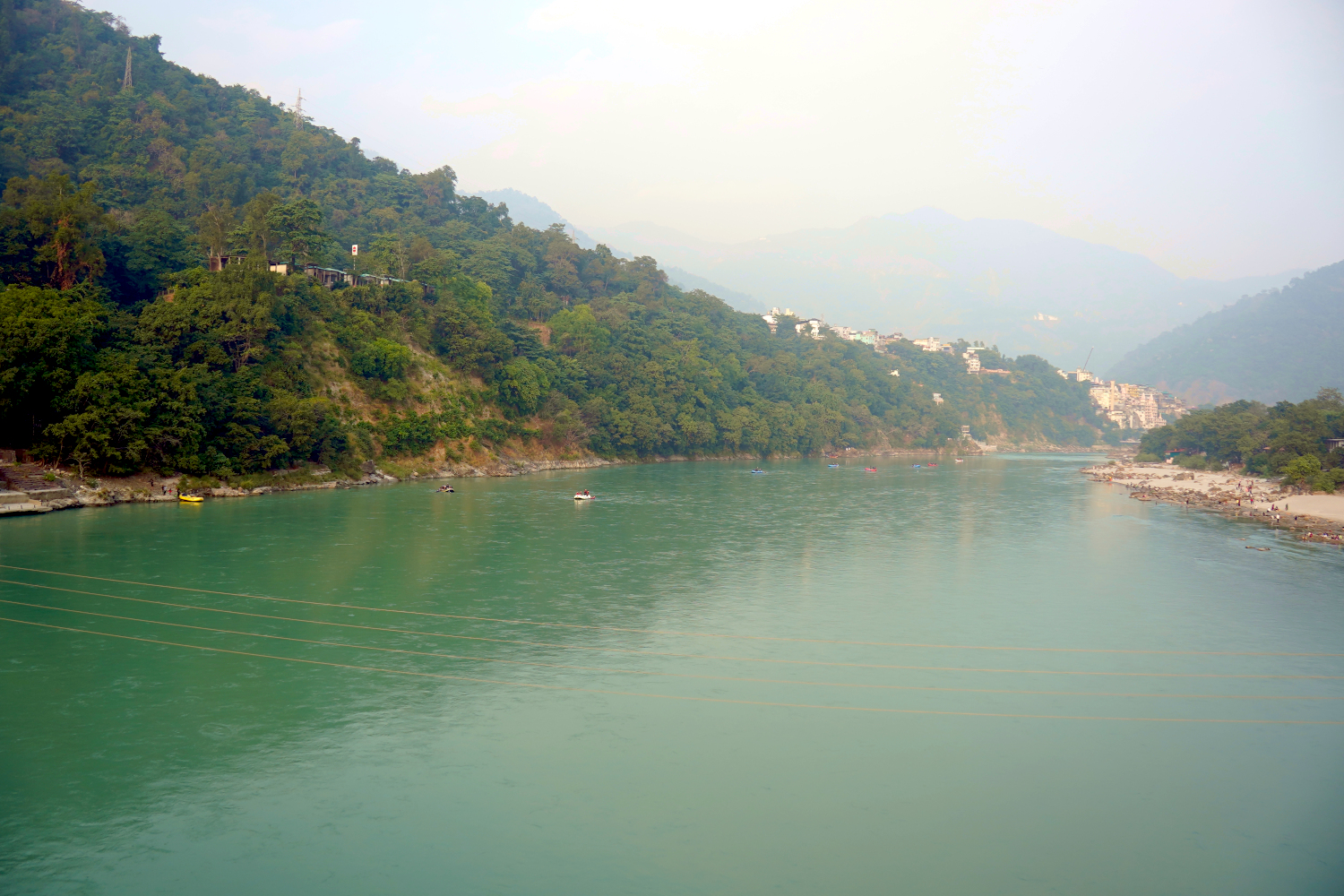
After lunch, we go next door to the ATM of the India Overseas Bank to withdraw some cash, and discover that this bank does not appear to charge a fee. Then we head down to the nearby Ganga (“Ganges”), our first time to get an up-close view of this legendary river though we’ve been trying since we first arrived in early October. It’s considered sacred by Hindus, who use it for ritual bathing, even though the water is polluted by industrial waste, sewage and human remains (though it appears that the government in recent times has cracked down on all of these practices). Viewed from above, the water has a tantalizingly turquoise tint.
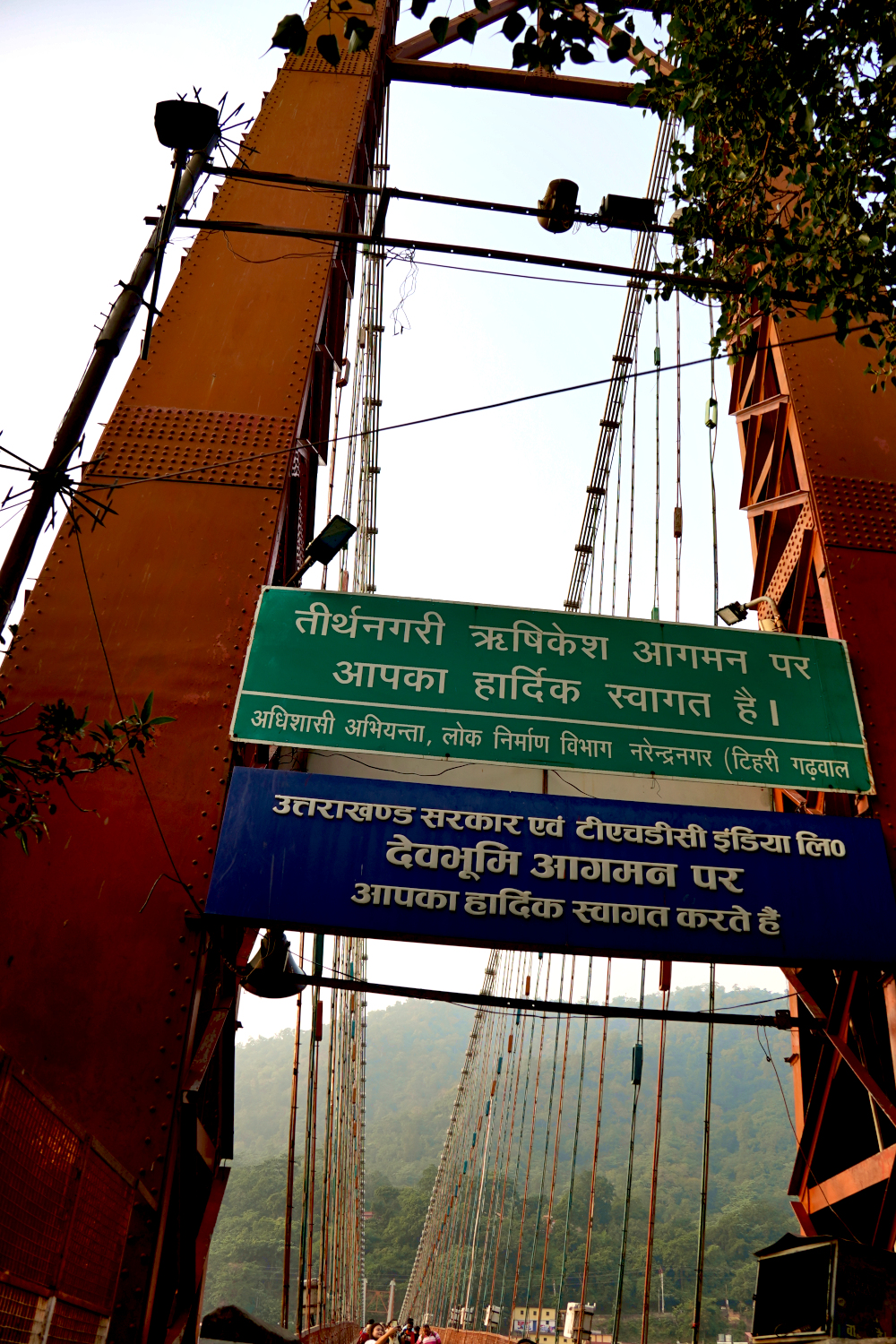
Janki Setu

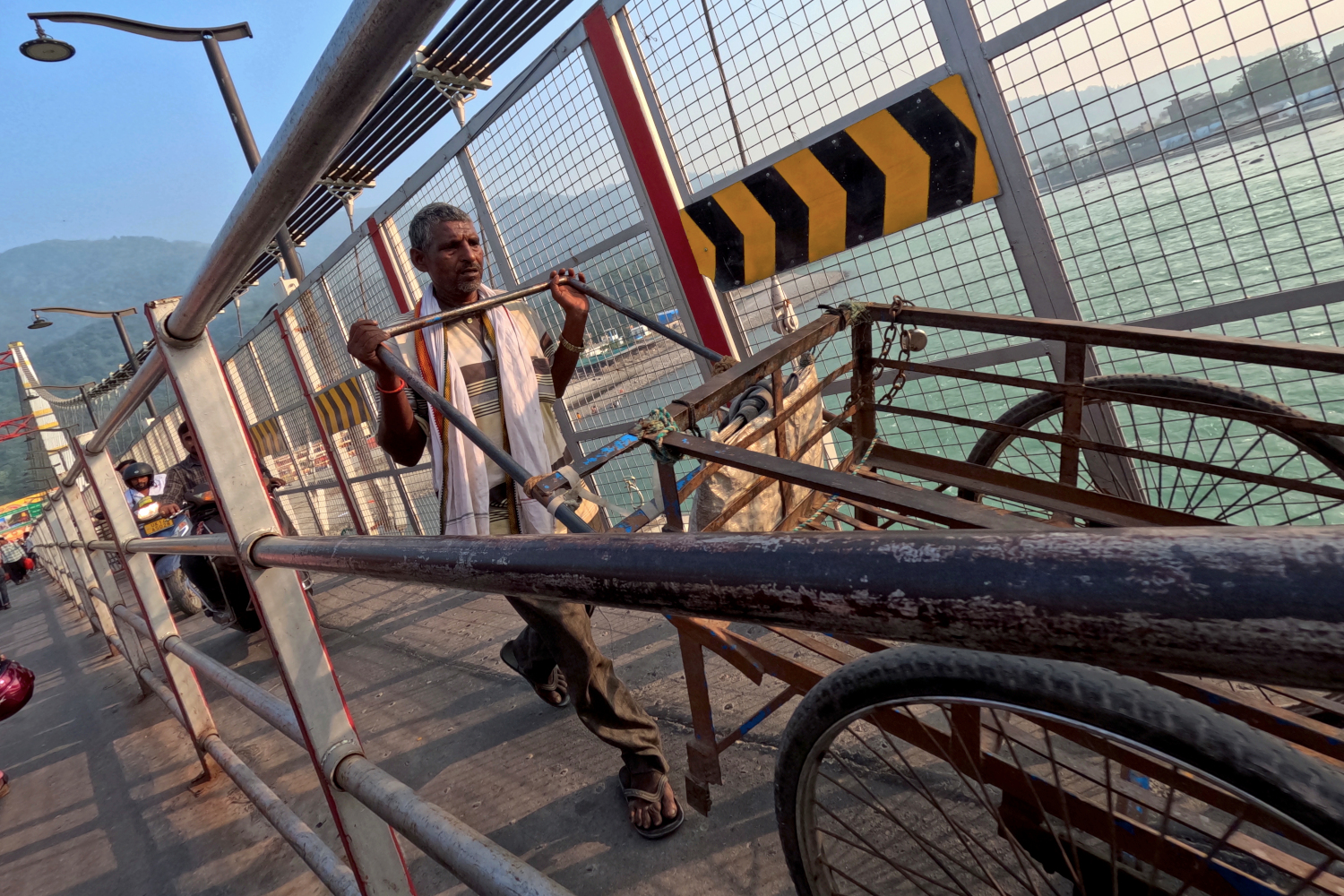

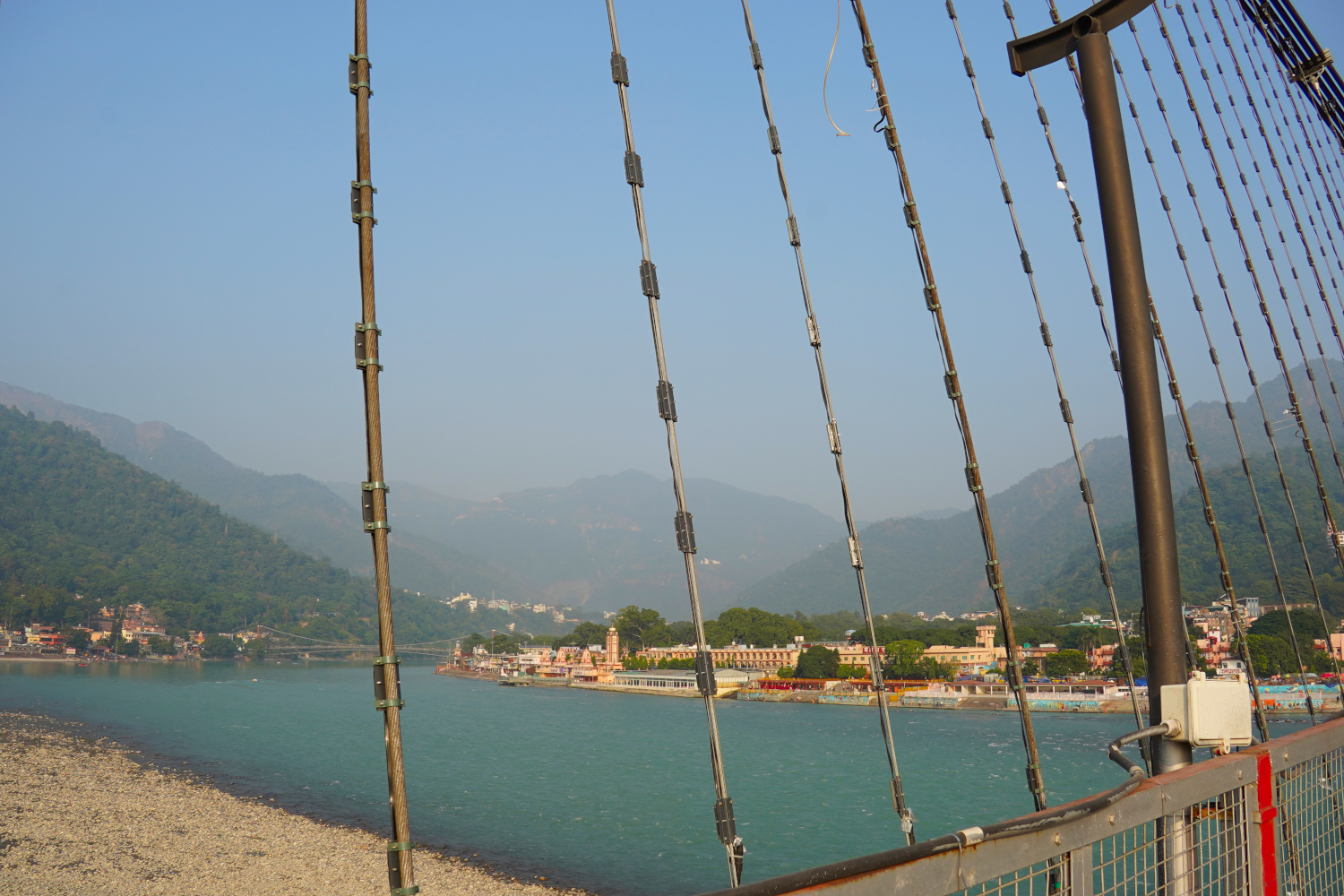
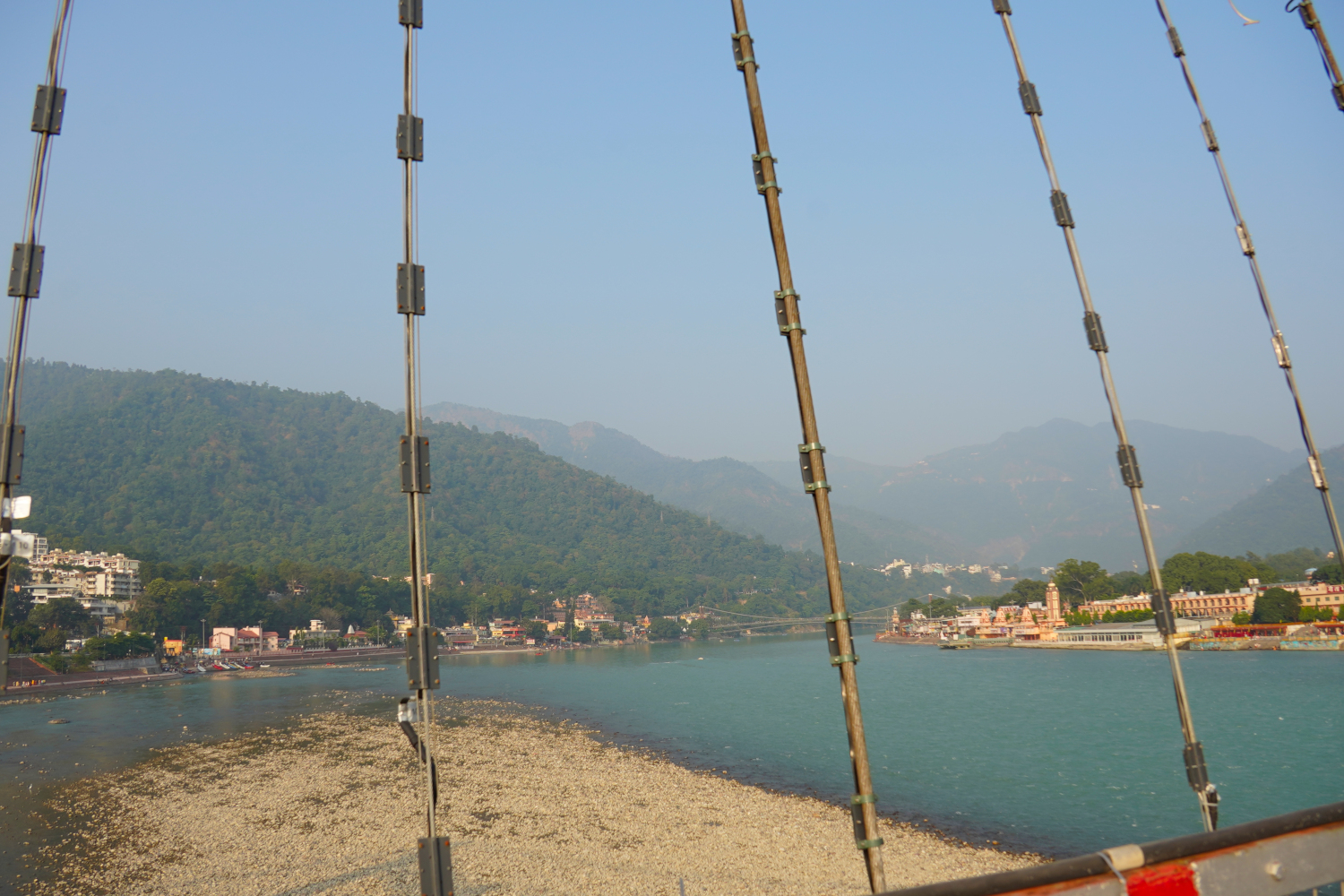
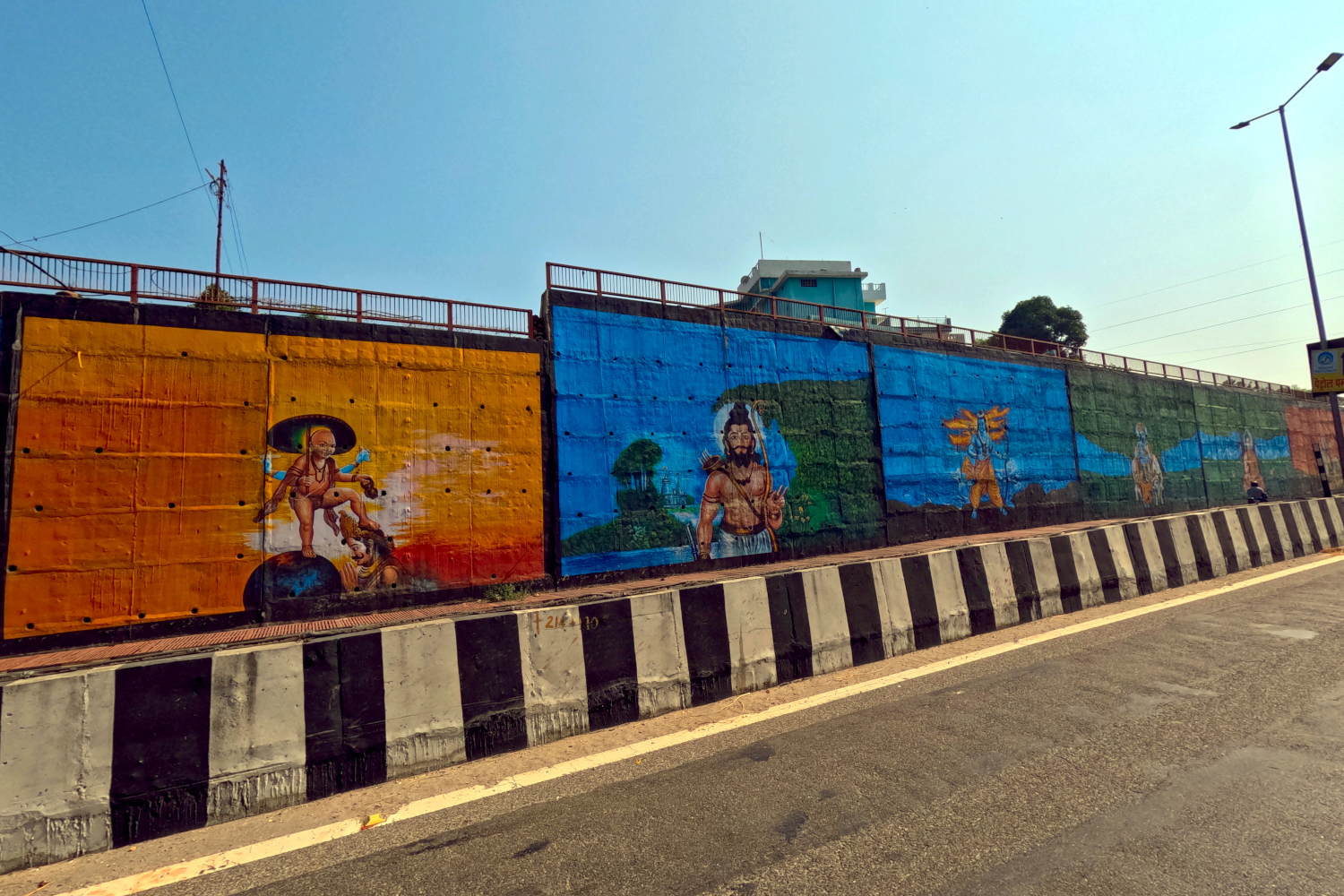
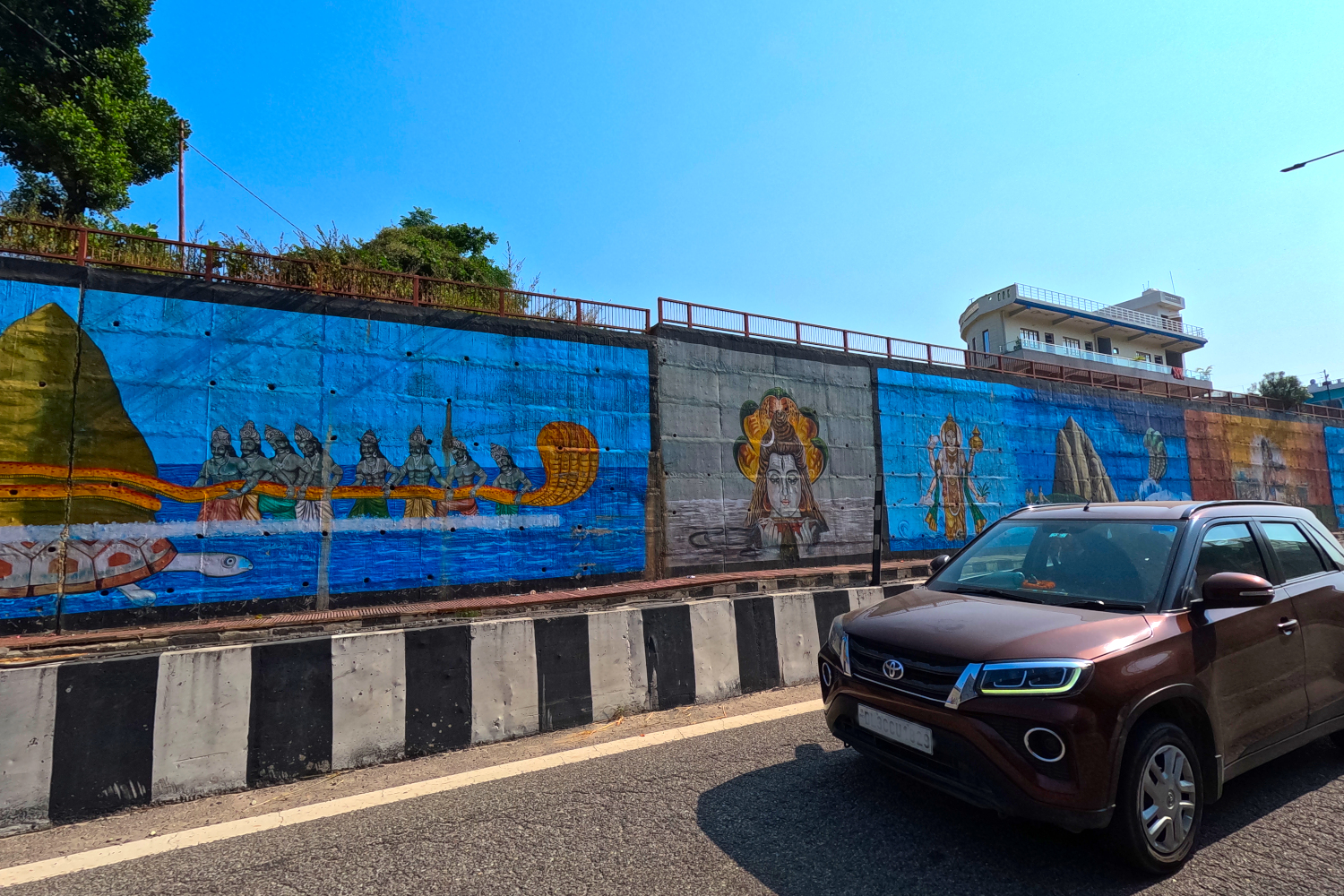
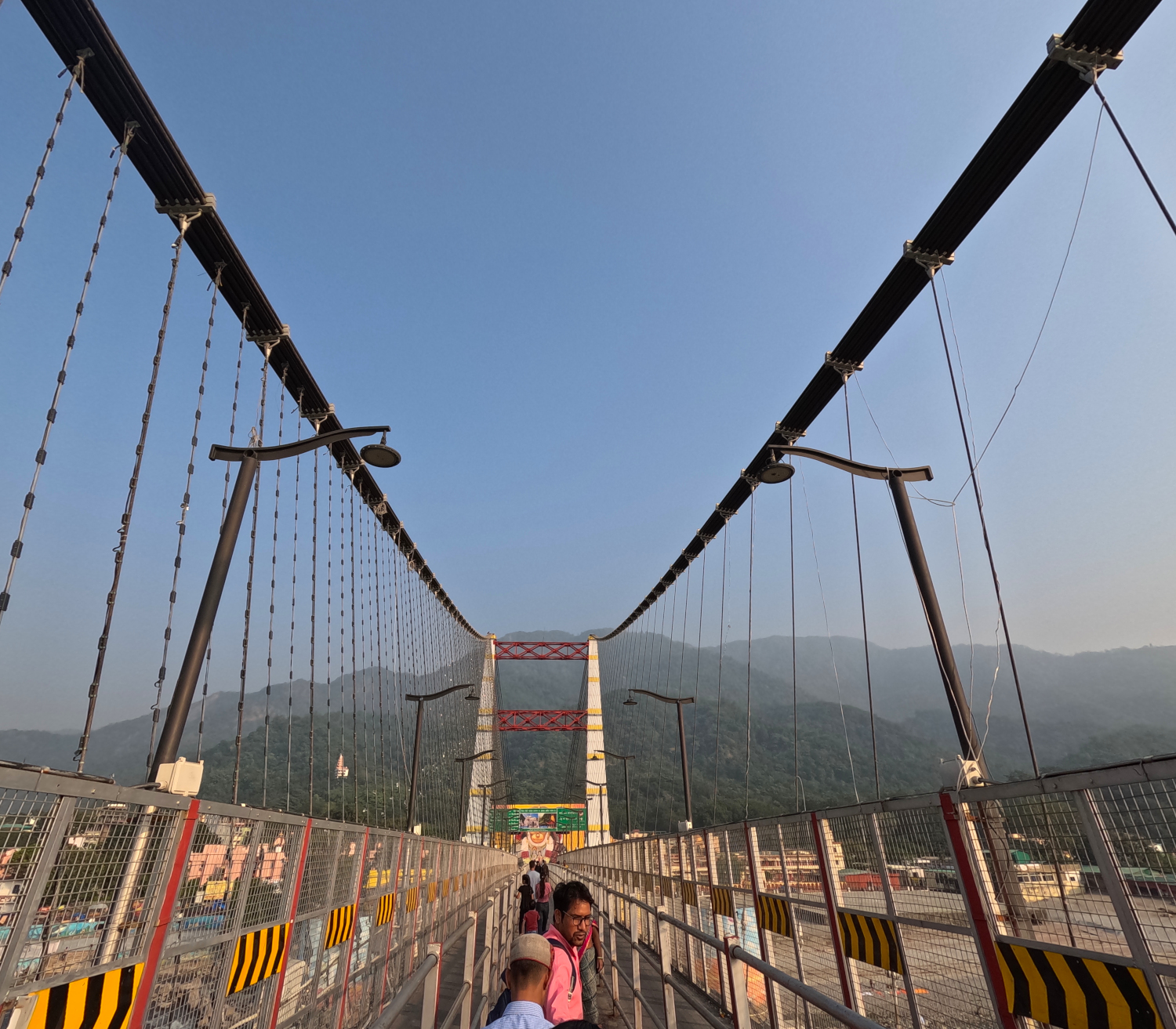
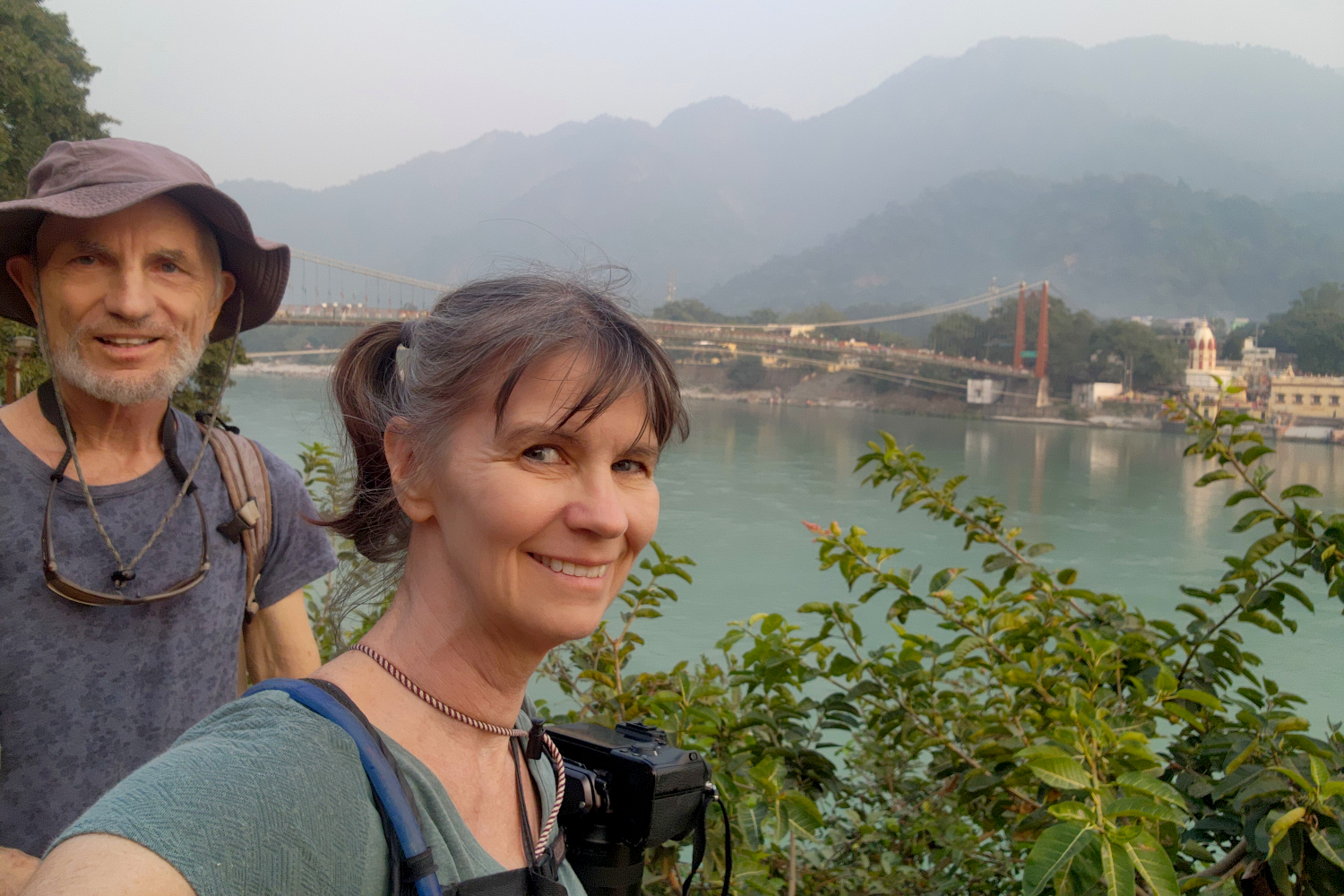
And we do indeed have a good vantage point, crossing the water on the fabulous Janki Bridge (Janki Setu), named after the Hindu goddess Janki, also known as Sita. (Why didn’t they use that name instead? Sita Setu would have been more alliterative.) The first three-lane bridge in Rishikesh, it spans about 900 feet and accommodates both pedestrians and wheels. It features elaborate carvings and paintings reflecting motifs from Hindu mythology.
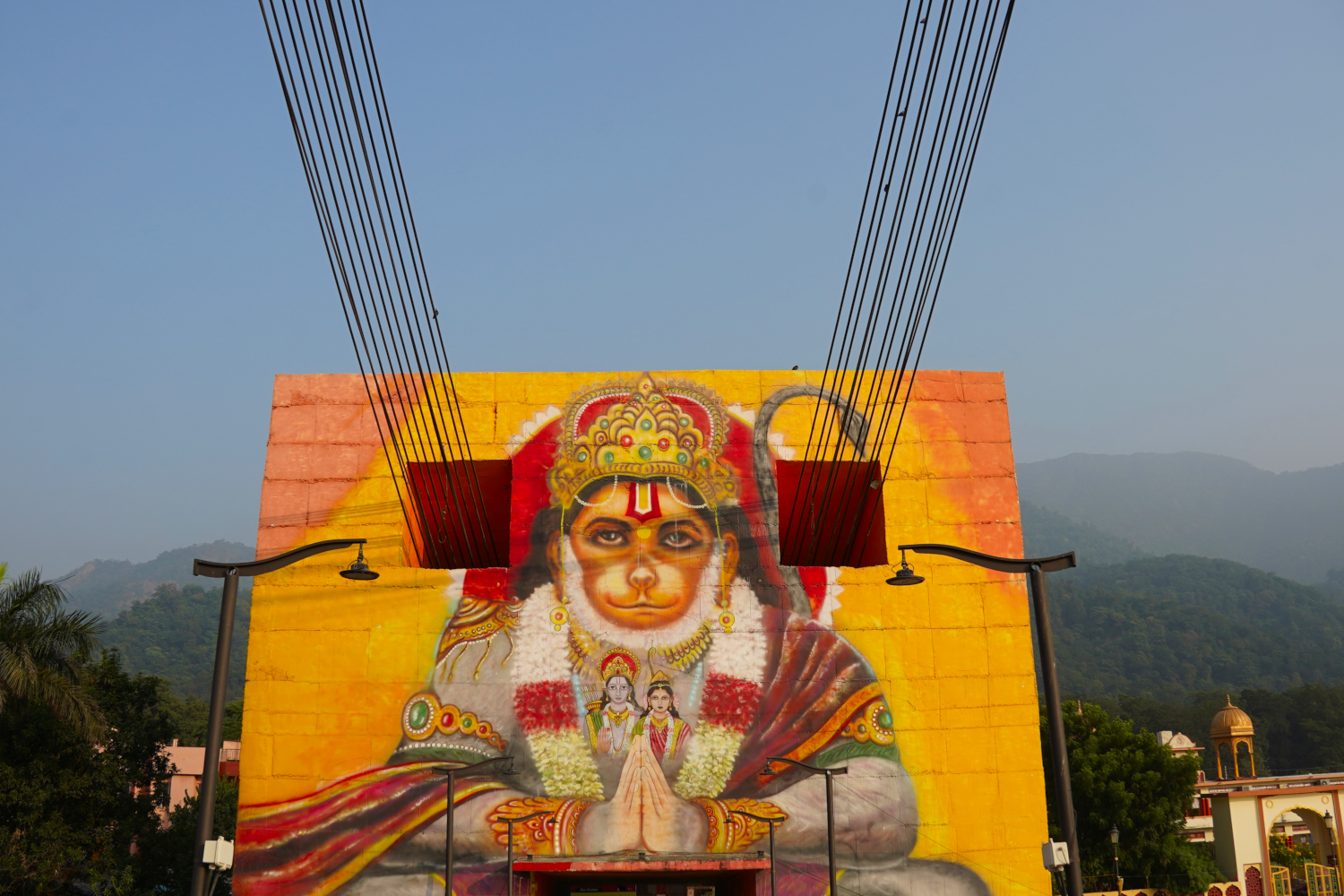
Swagashram
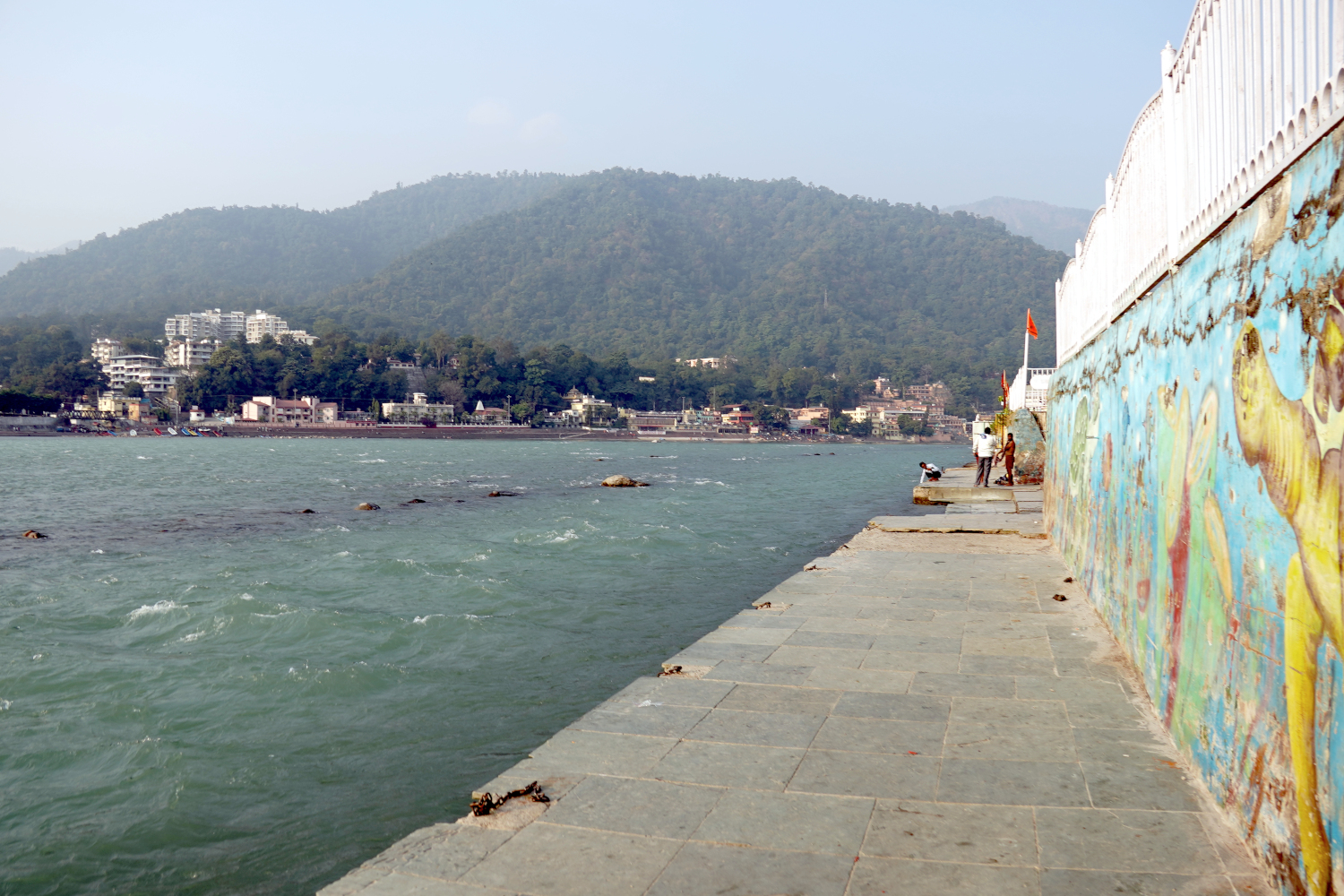
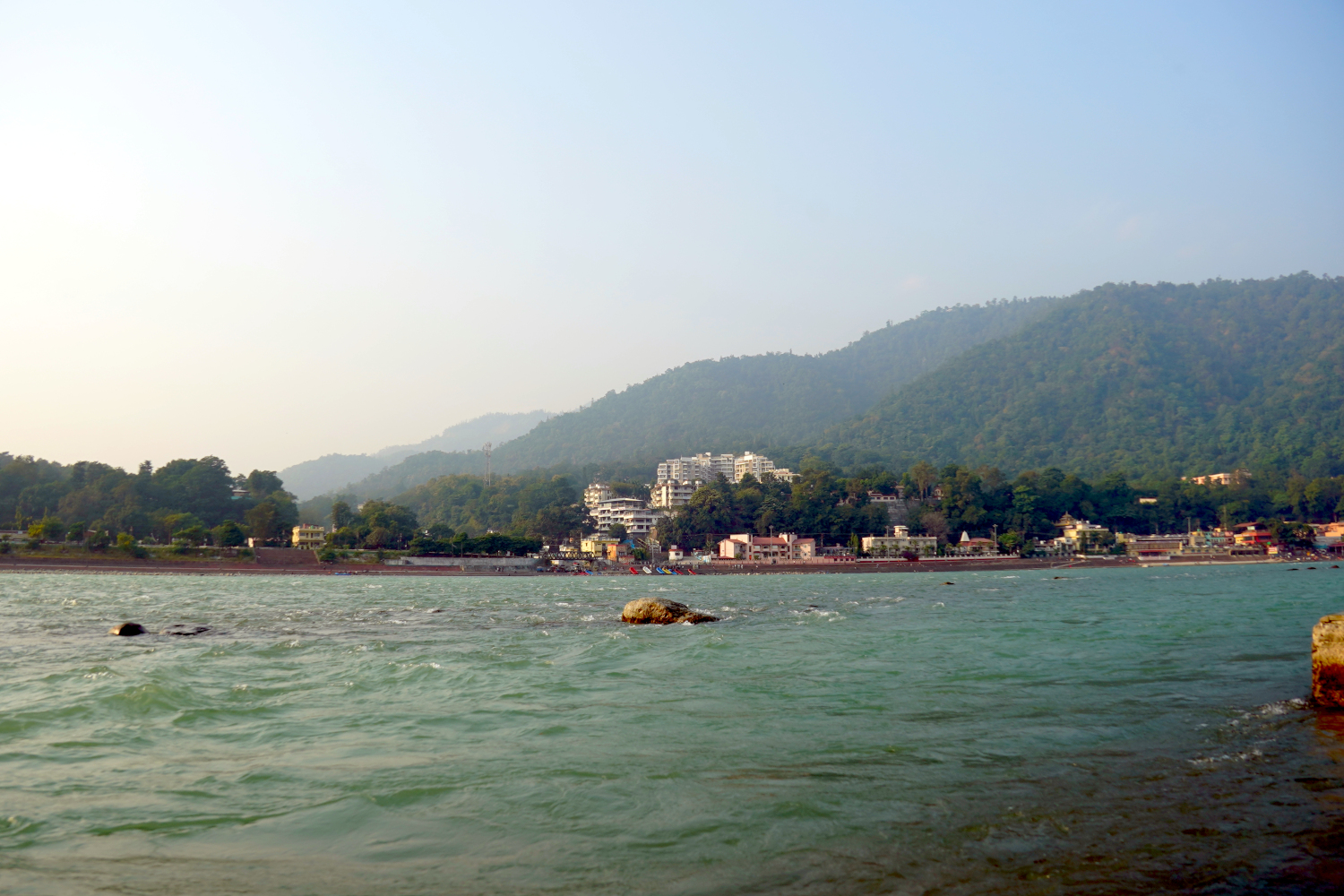
The east side of the river is known as the Swagashram area, and it’s It is home to a concentration of ashrams, temples, meditation centers, and yoga retreats. We walk down the narrow street (if that’s what you’d call it) along the waterfront lined with shops, cafes, restaurants and street vendors (we pass a sign advertising the “World Toilet College”).
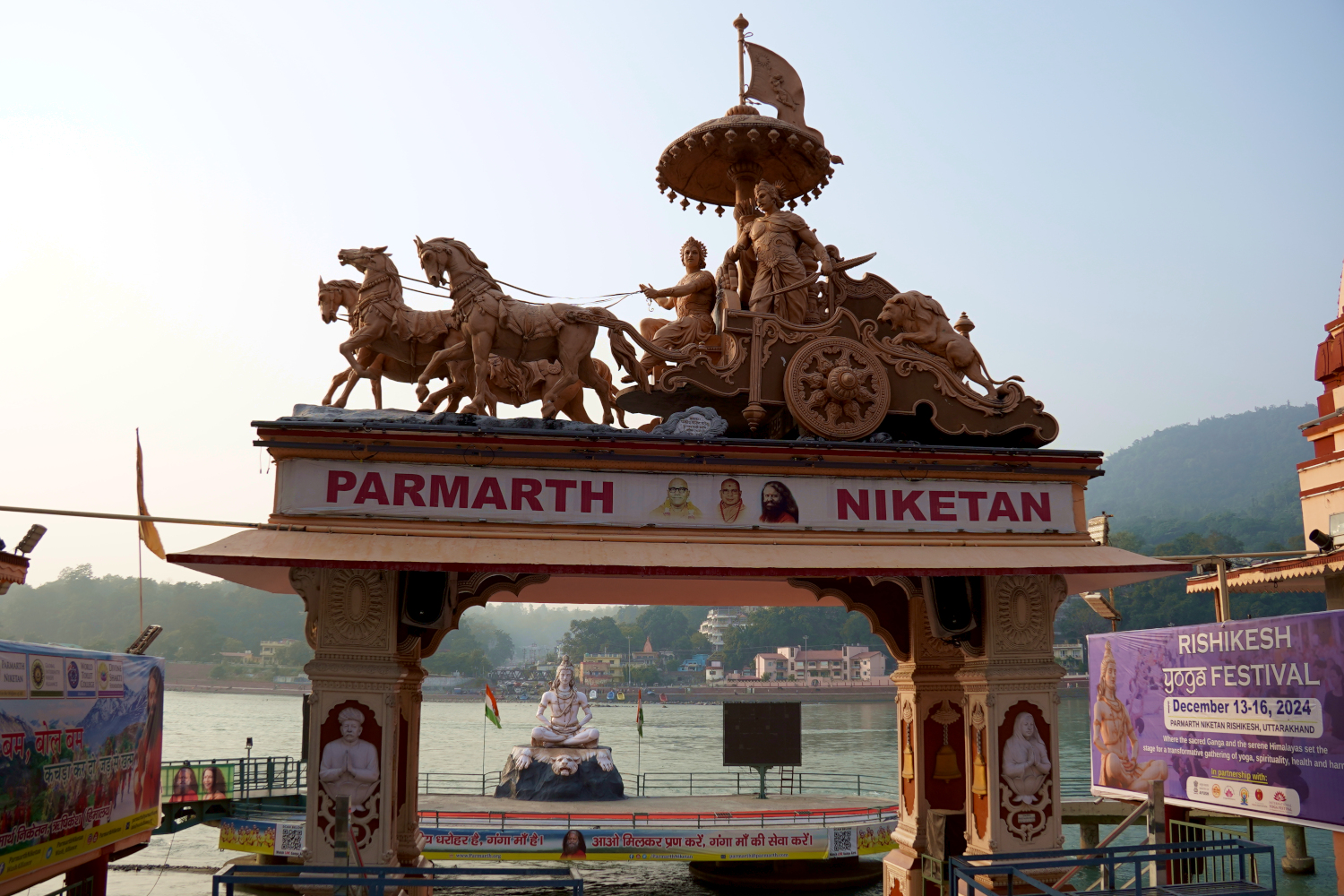

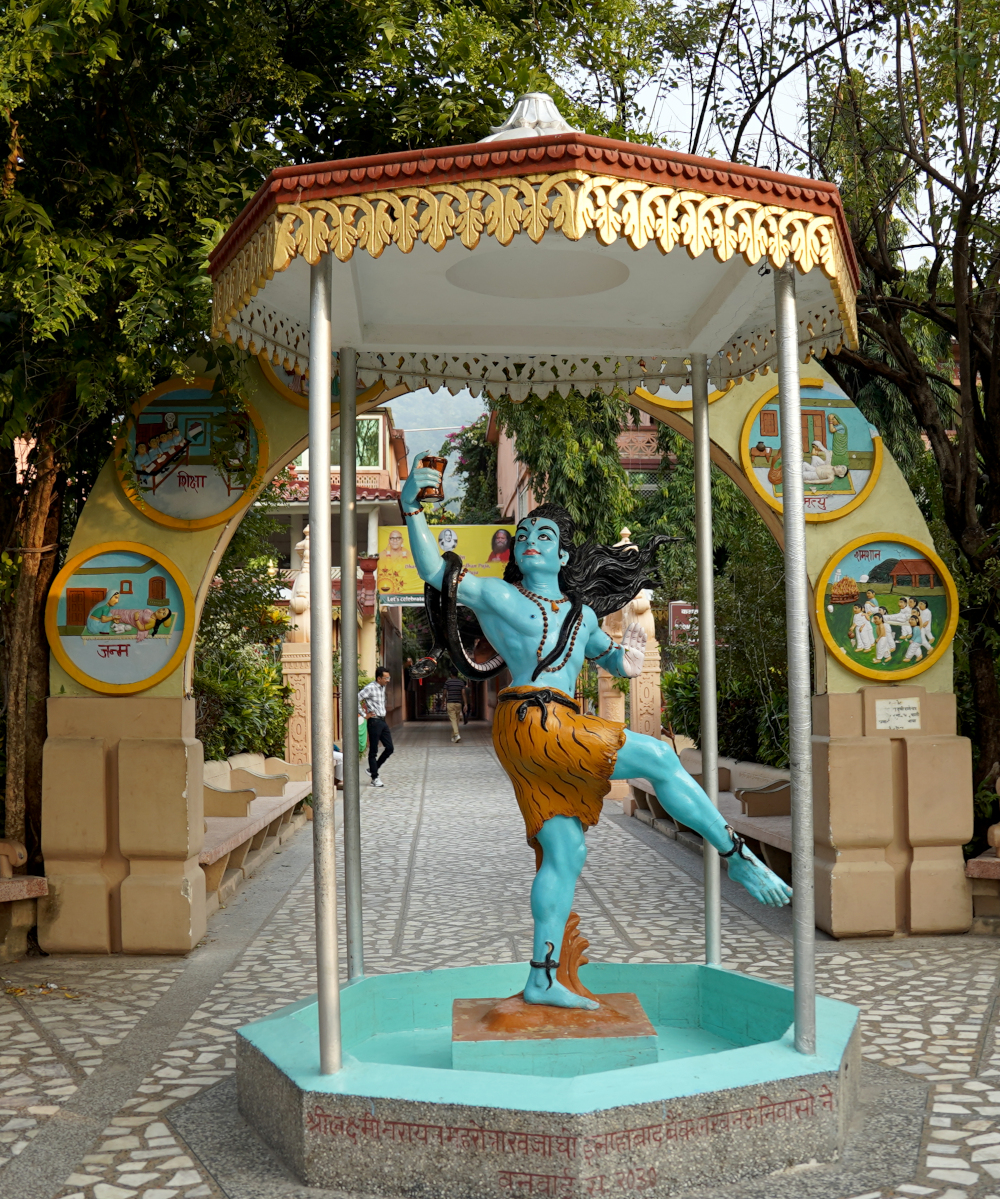
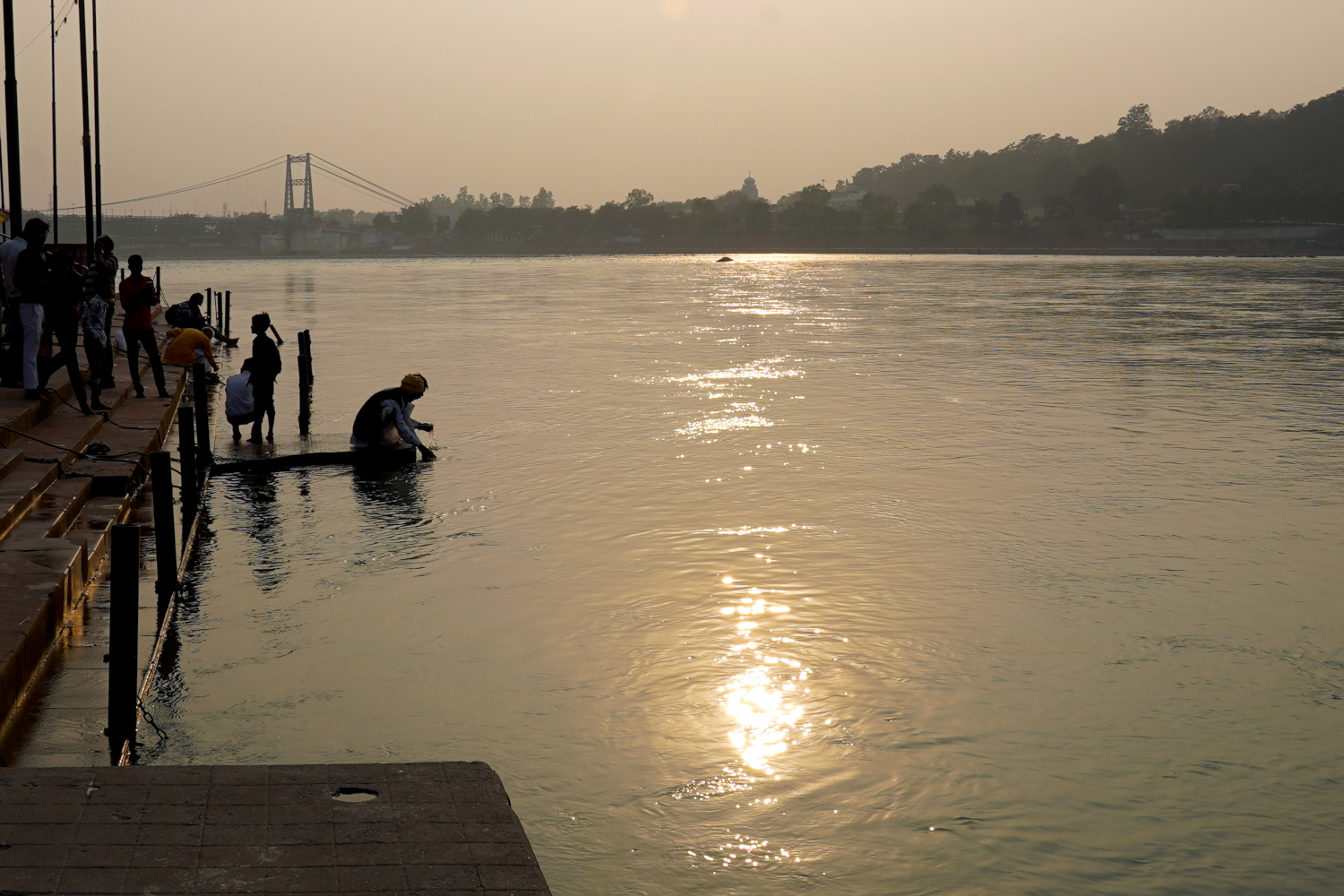
Going down to the water’s edge, we encounter kids and women trying to sell us flowers, apparently for religious purposes. and two boys want to pose with us for a photo – but they have no phone. We finally figure out that they expect us to pay them to pose for our own phone’s photos. No, thanks; we’re not a modeling agency.

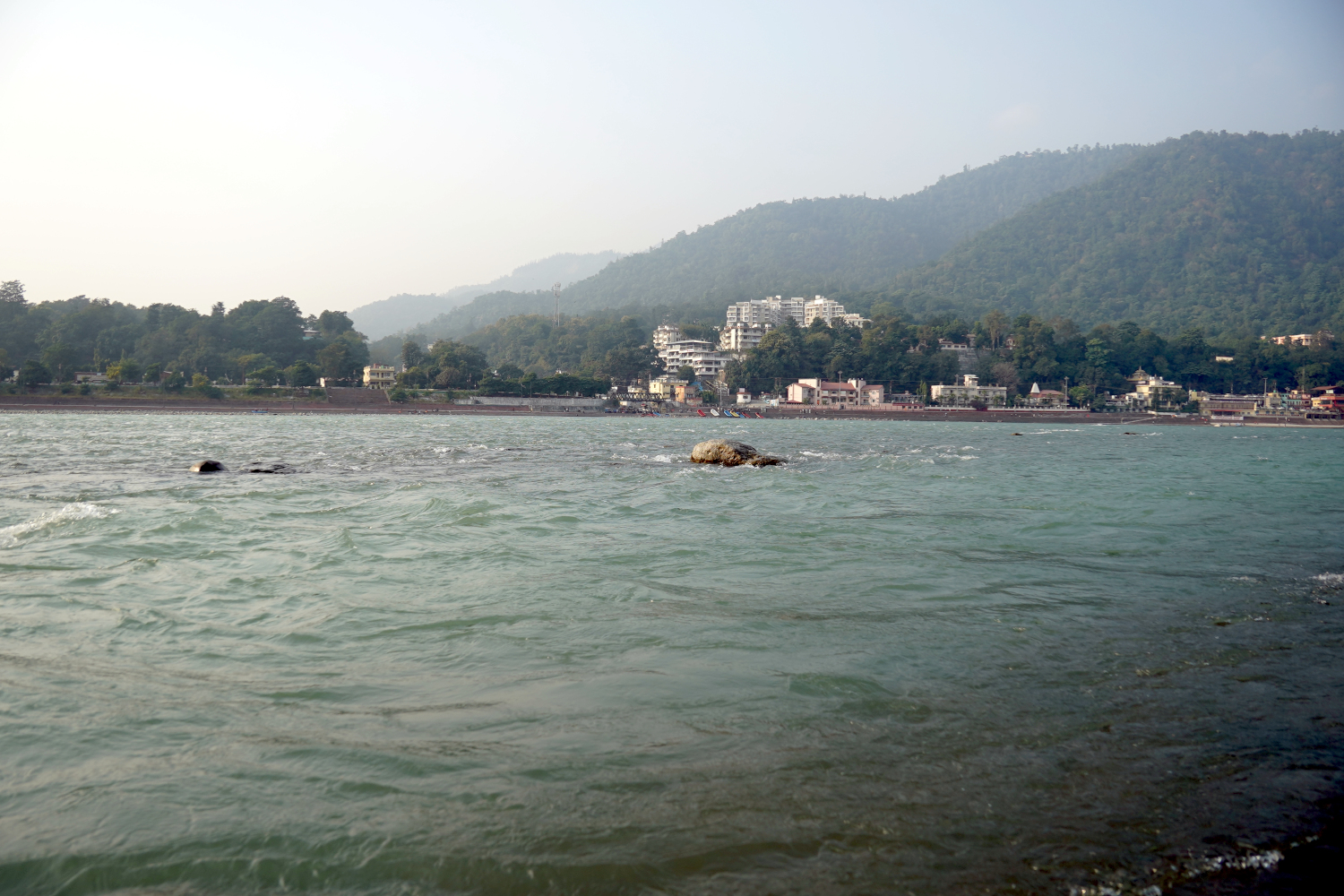
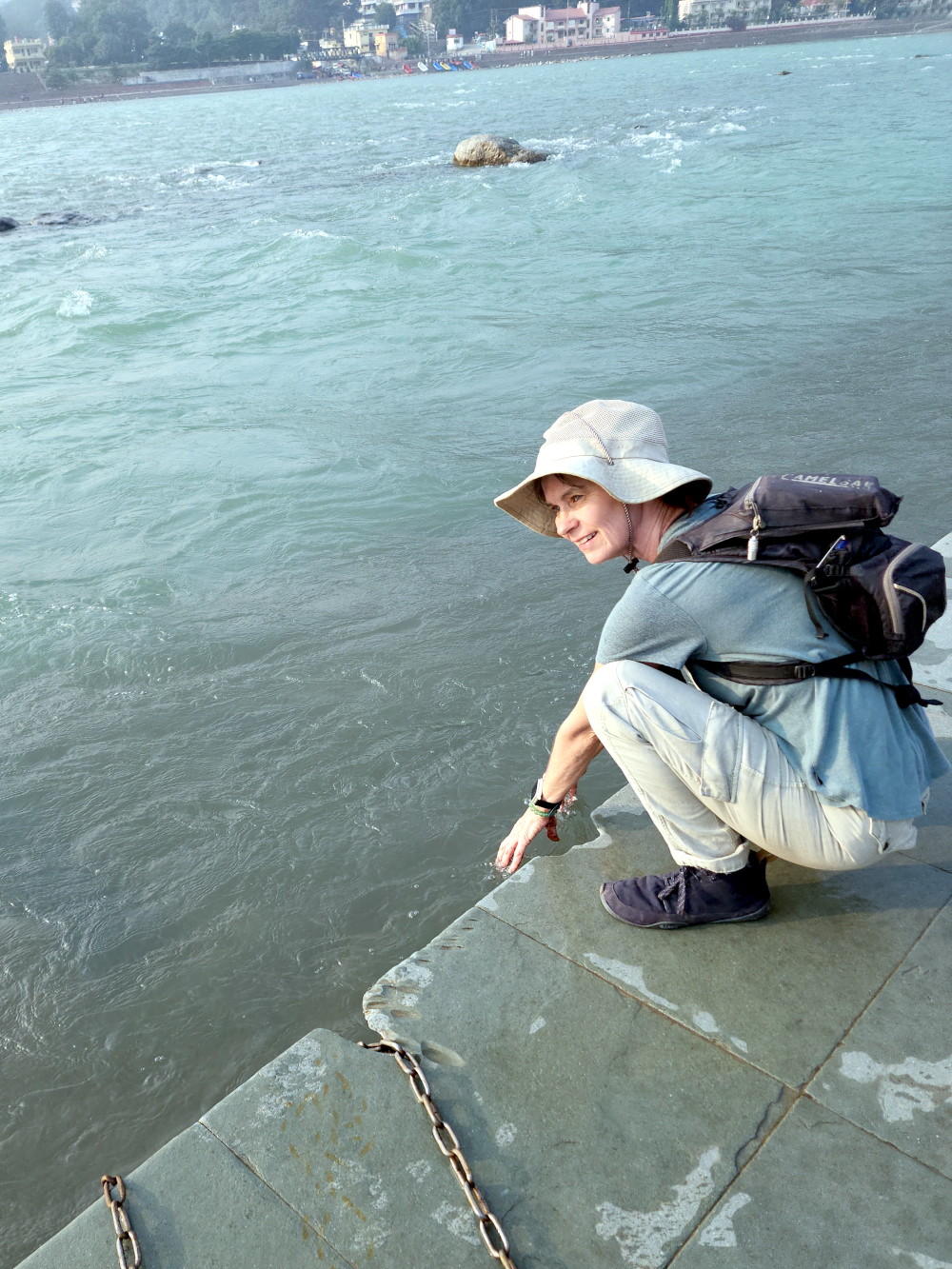

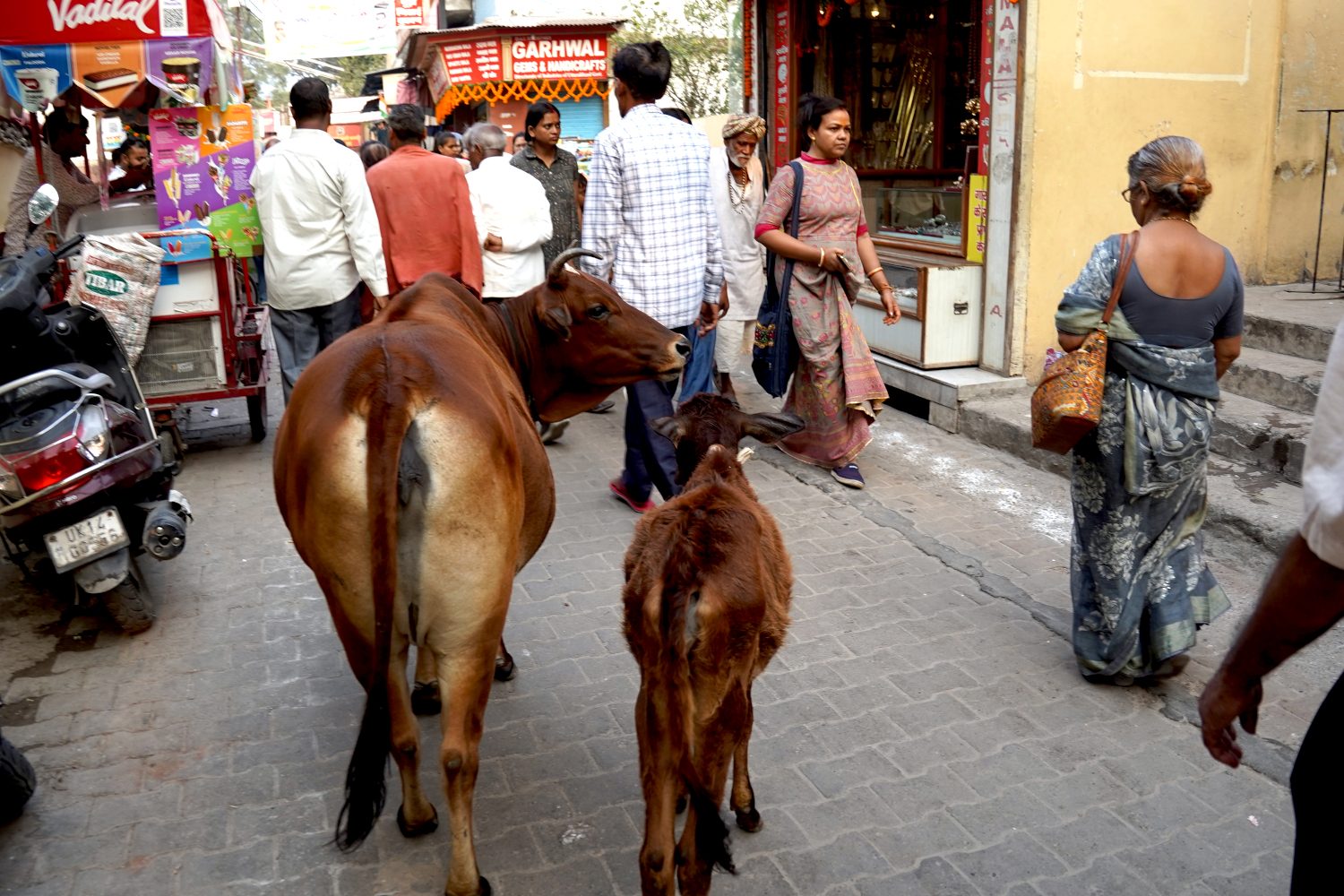


Ram Jhula
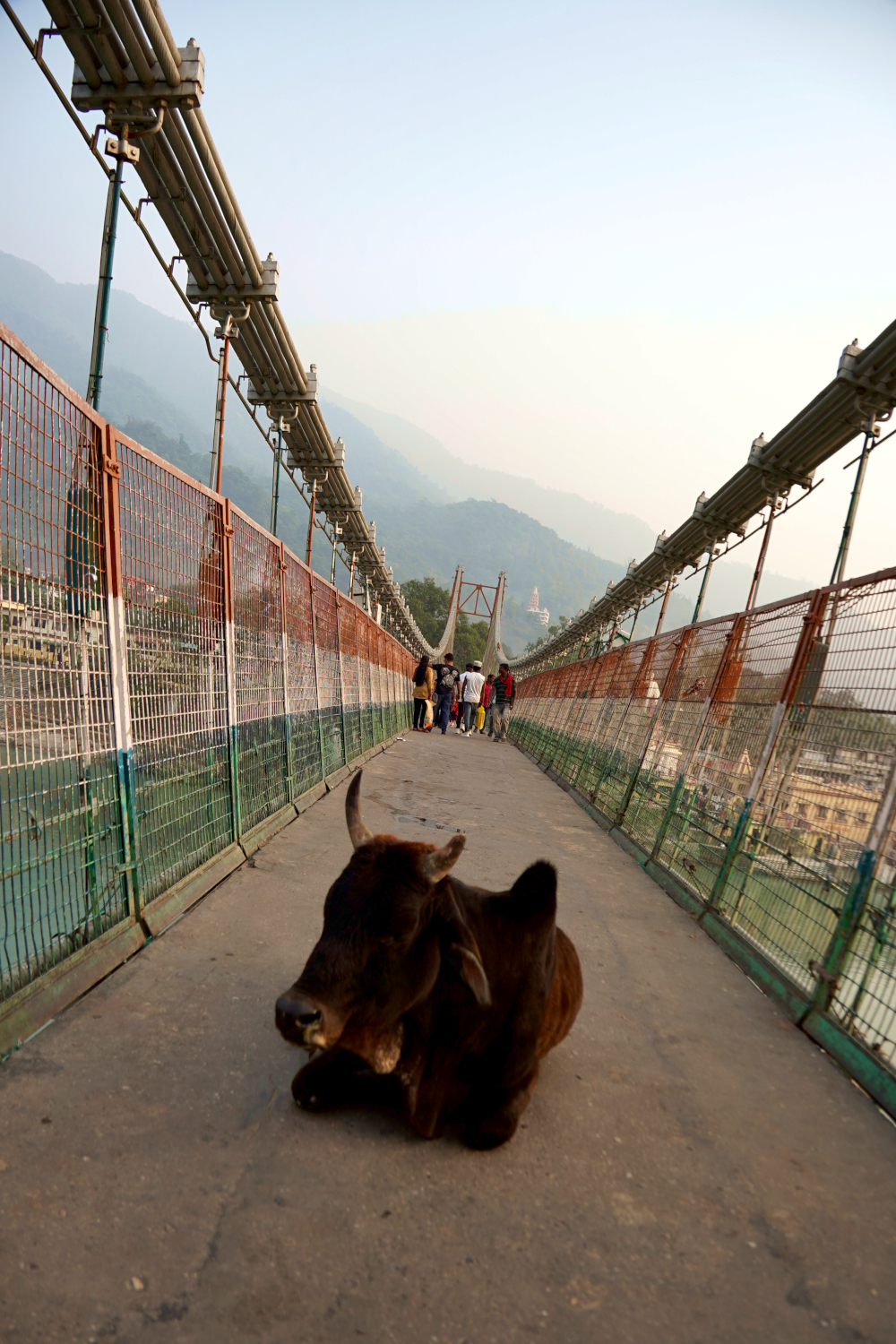
We end up at another suspension bridge, the Ram Jhula, which is about half as long and is limited to pedestrians — though that includes pedestrians with many different kinds of feet, even those with hooves and claws. You’ll encounter cows on the bridge (you’ll encounter them everywhere in India) and monkeys, though the latter are just as likely to be climbing on the cables as to be patiently going the human route.

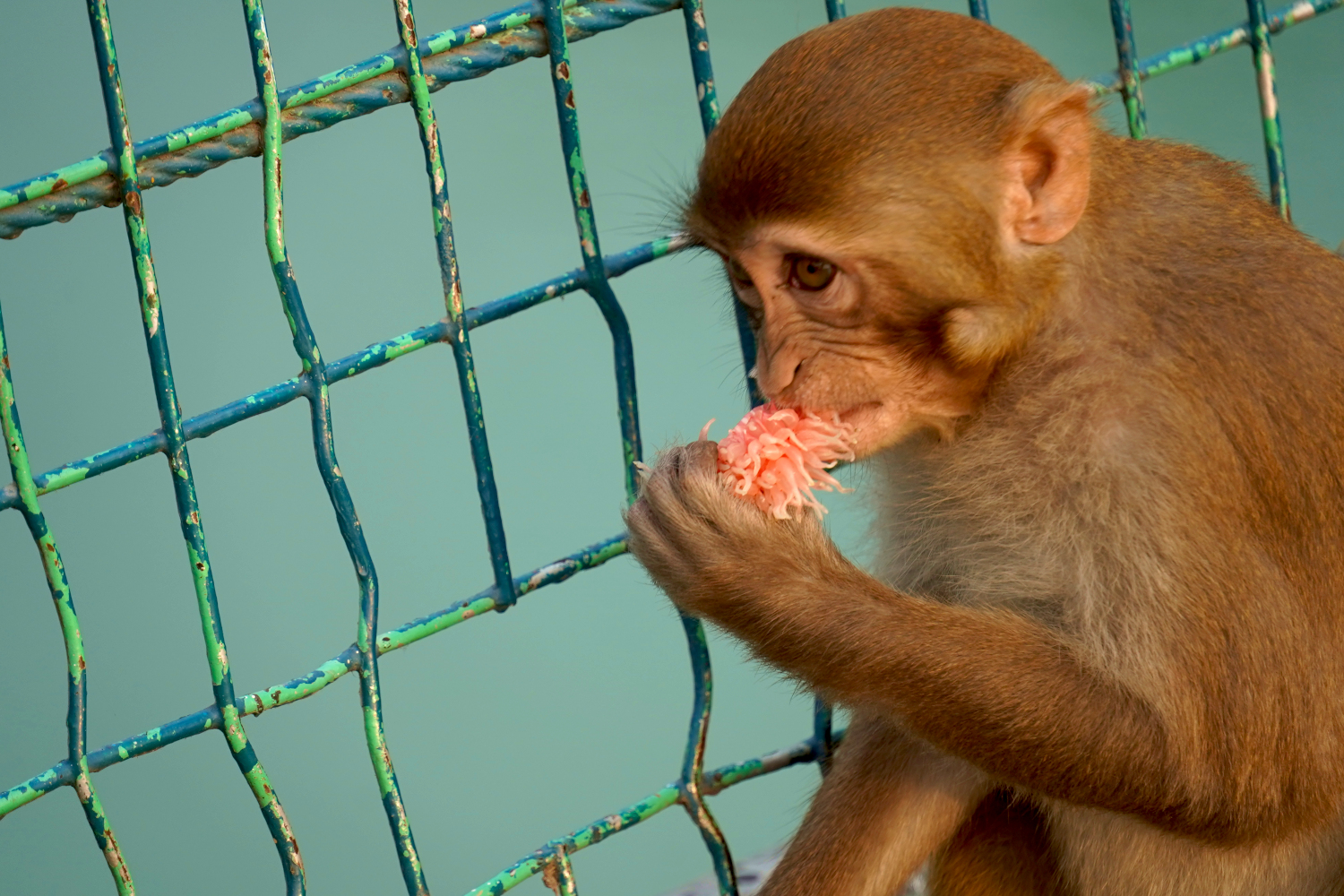
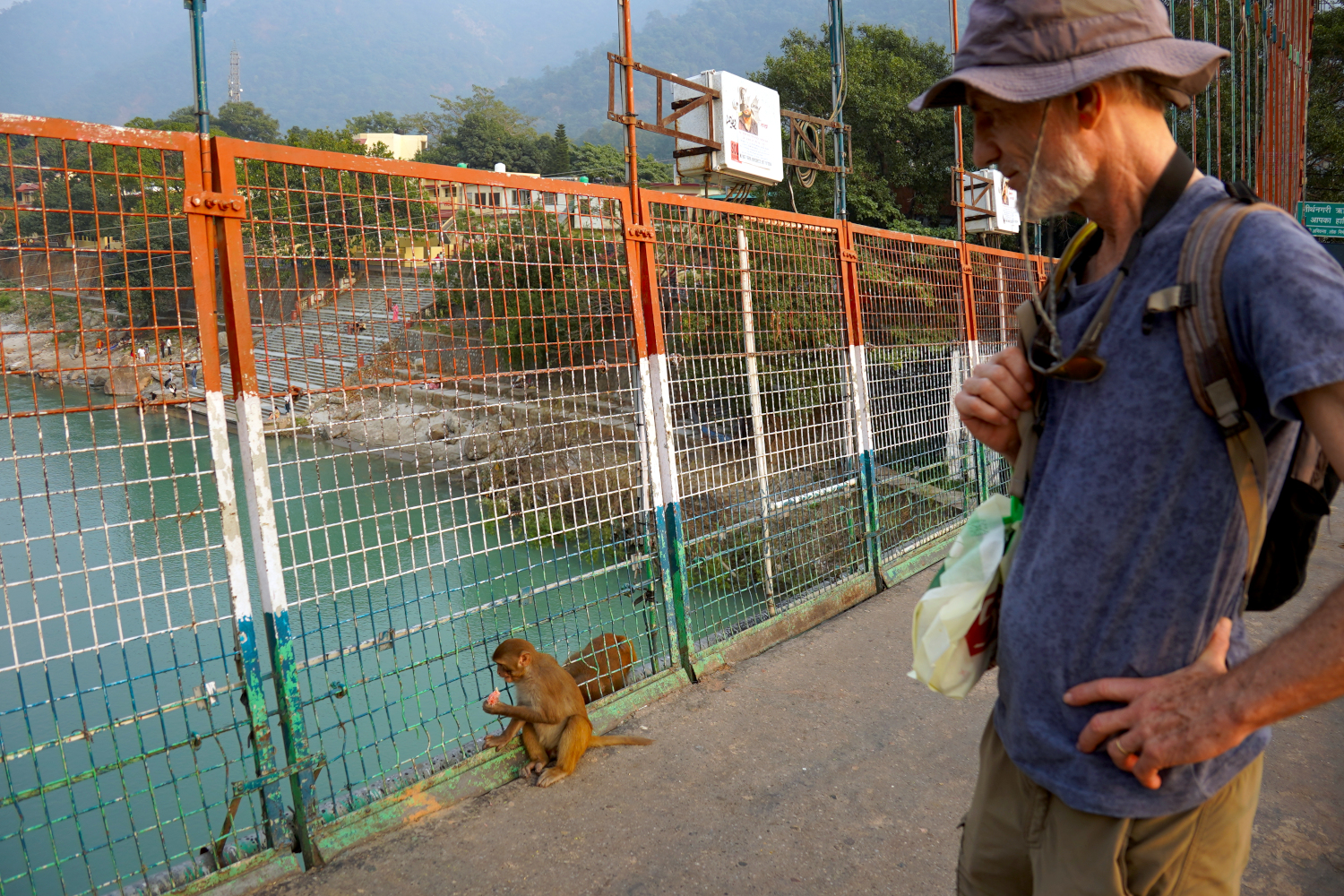
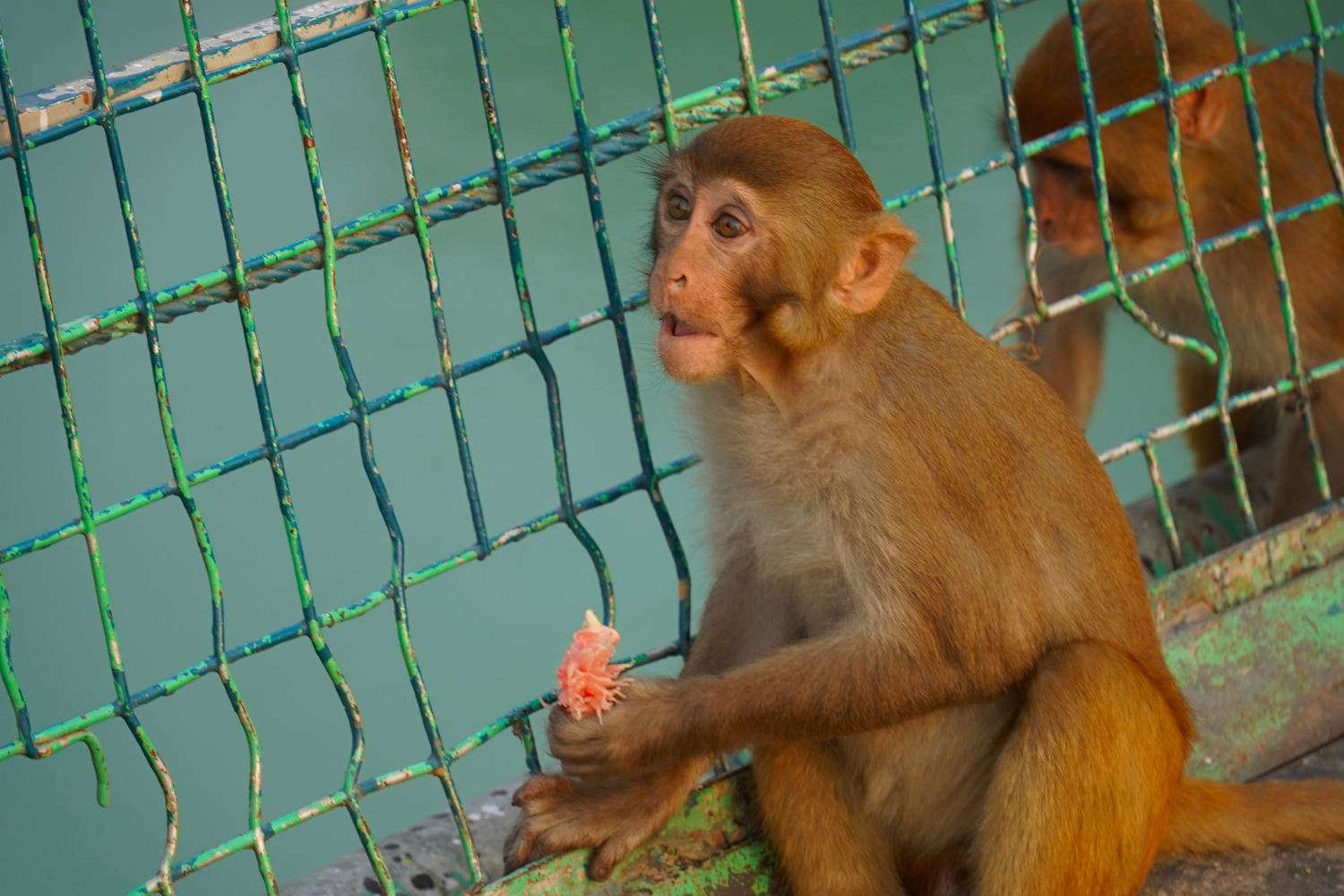
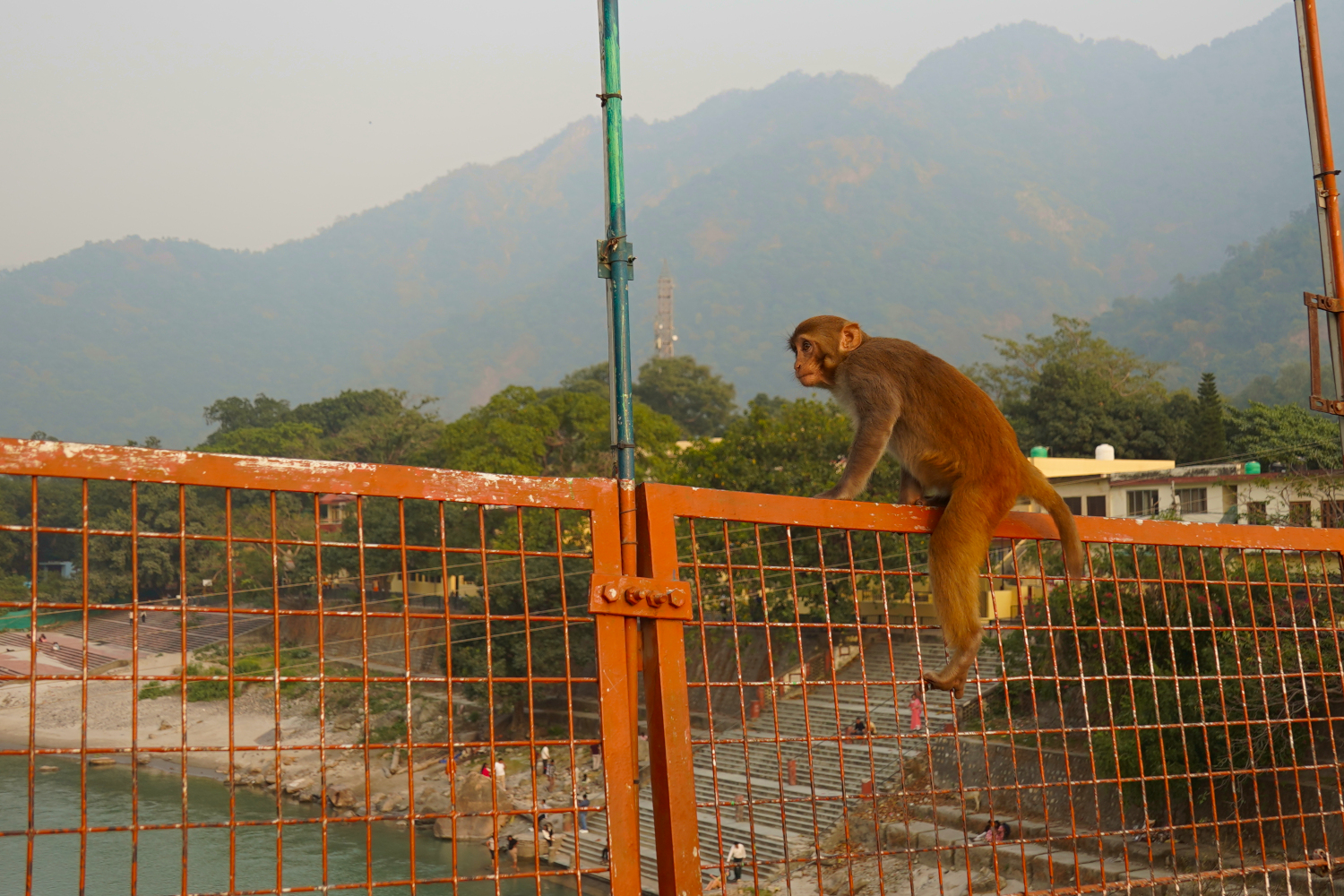
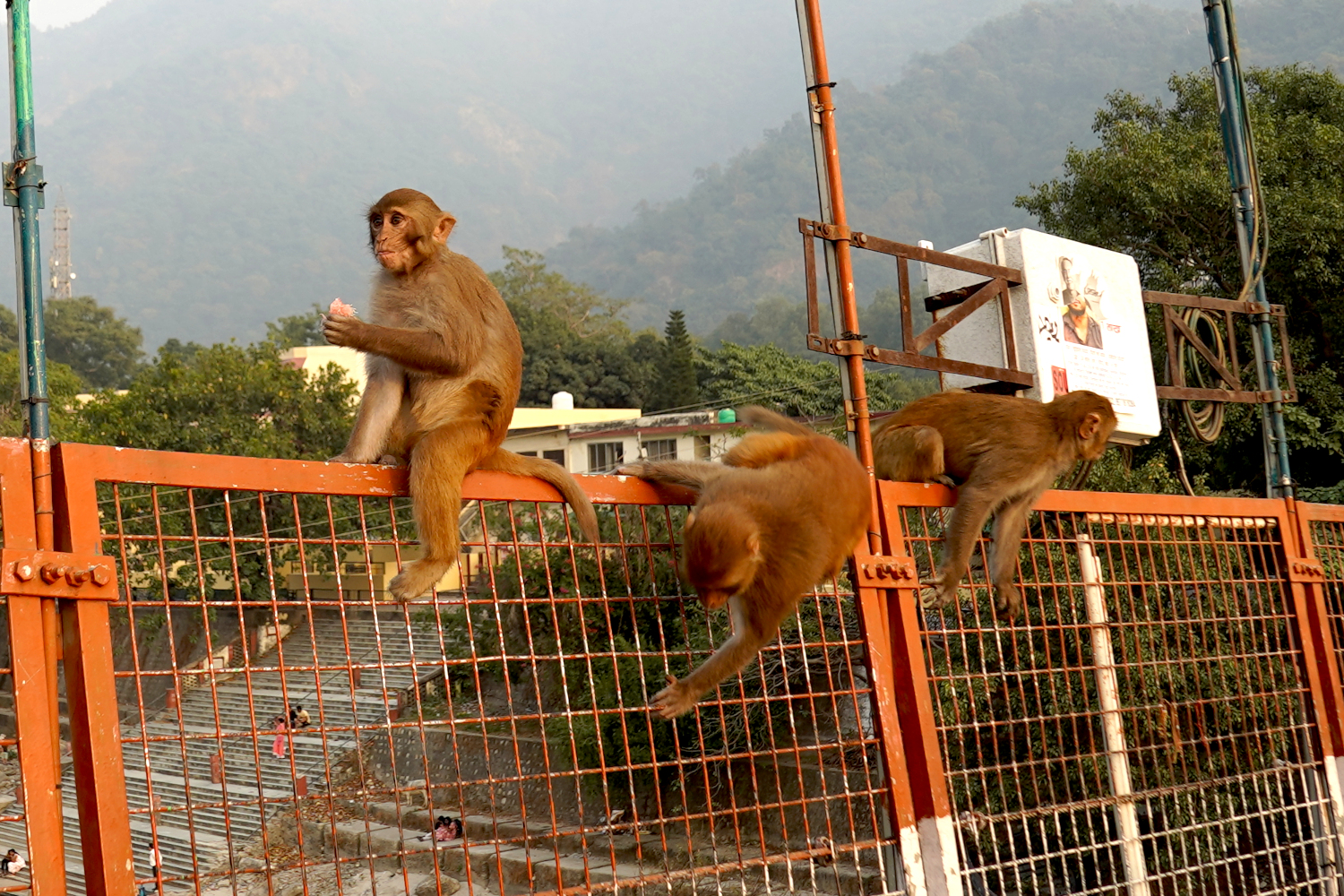
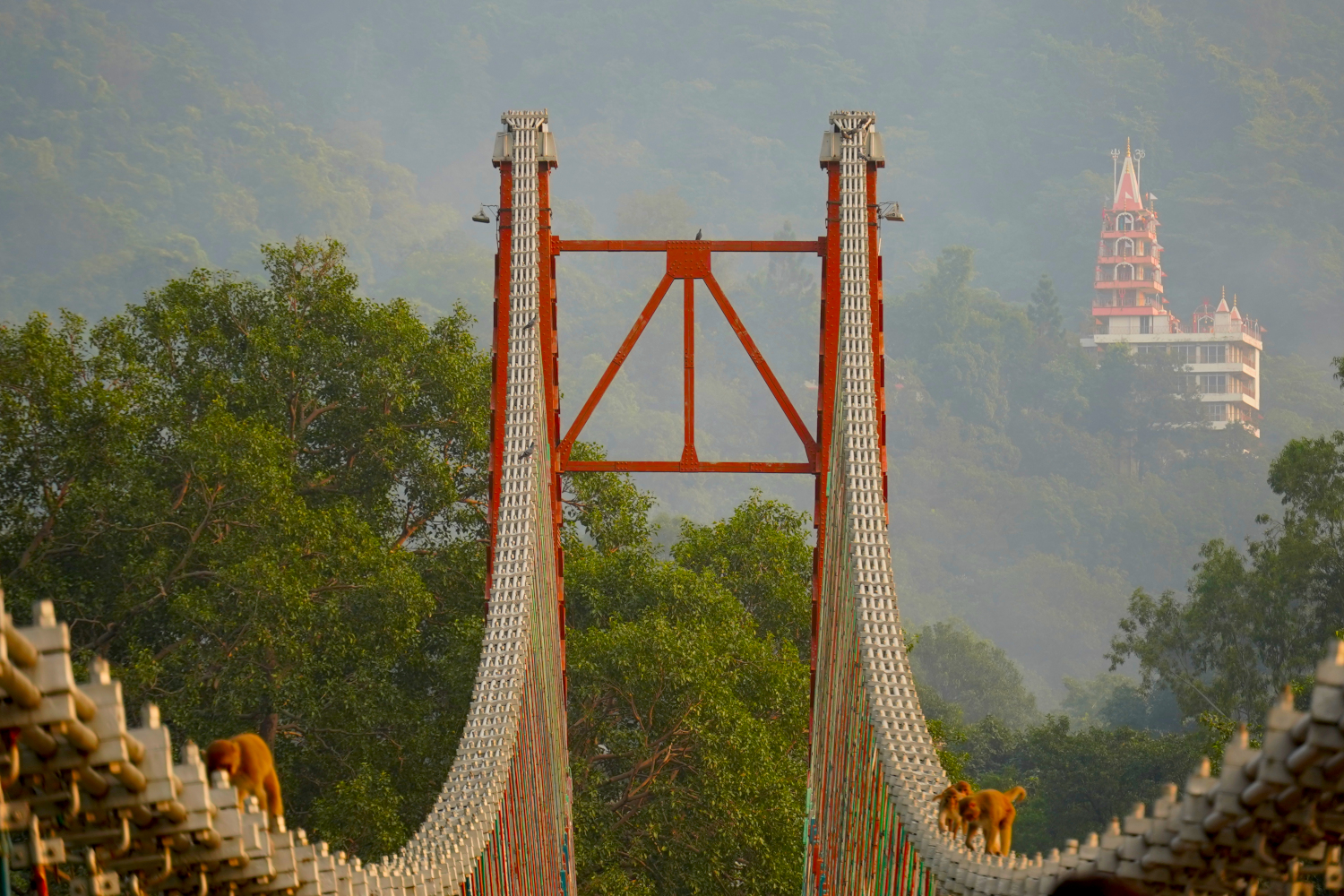
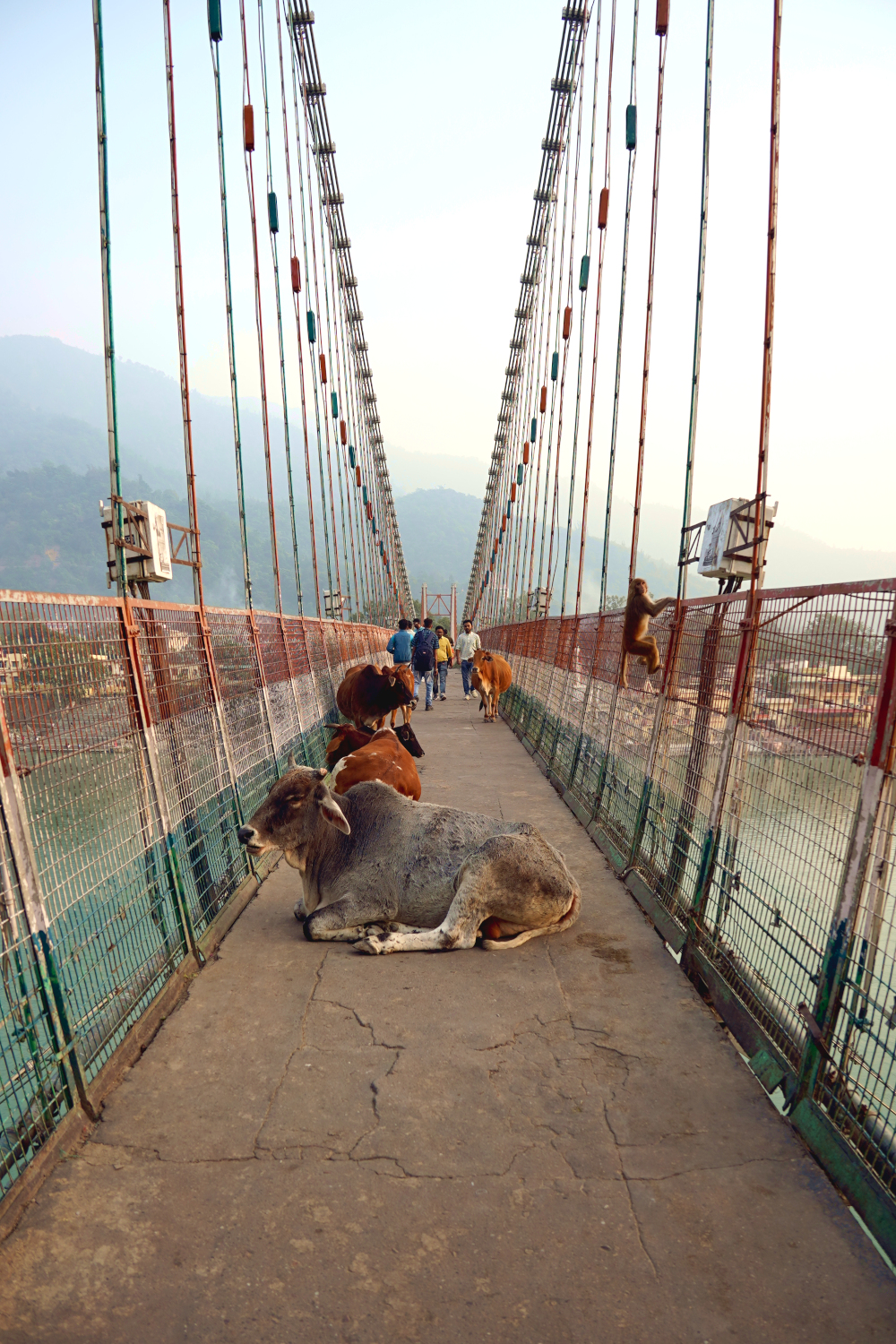
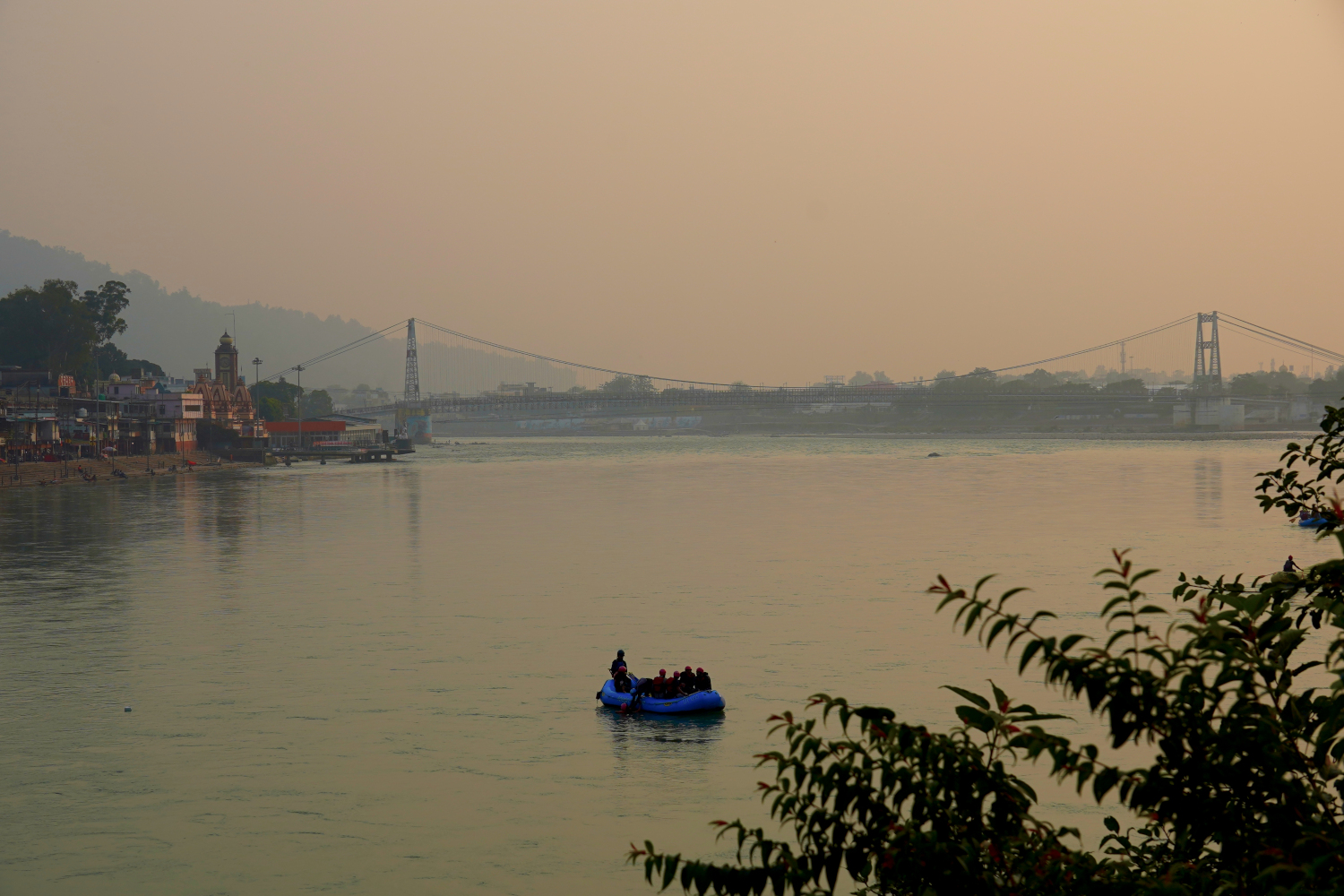
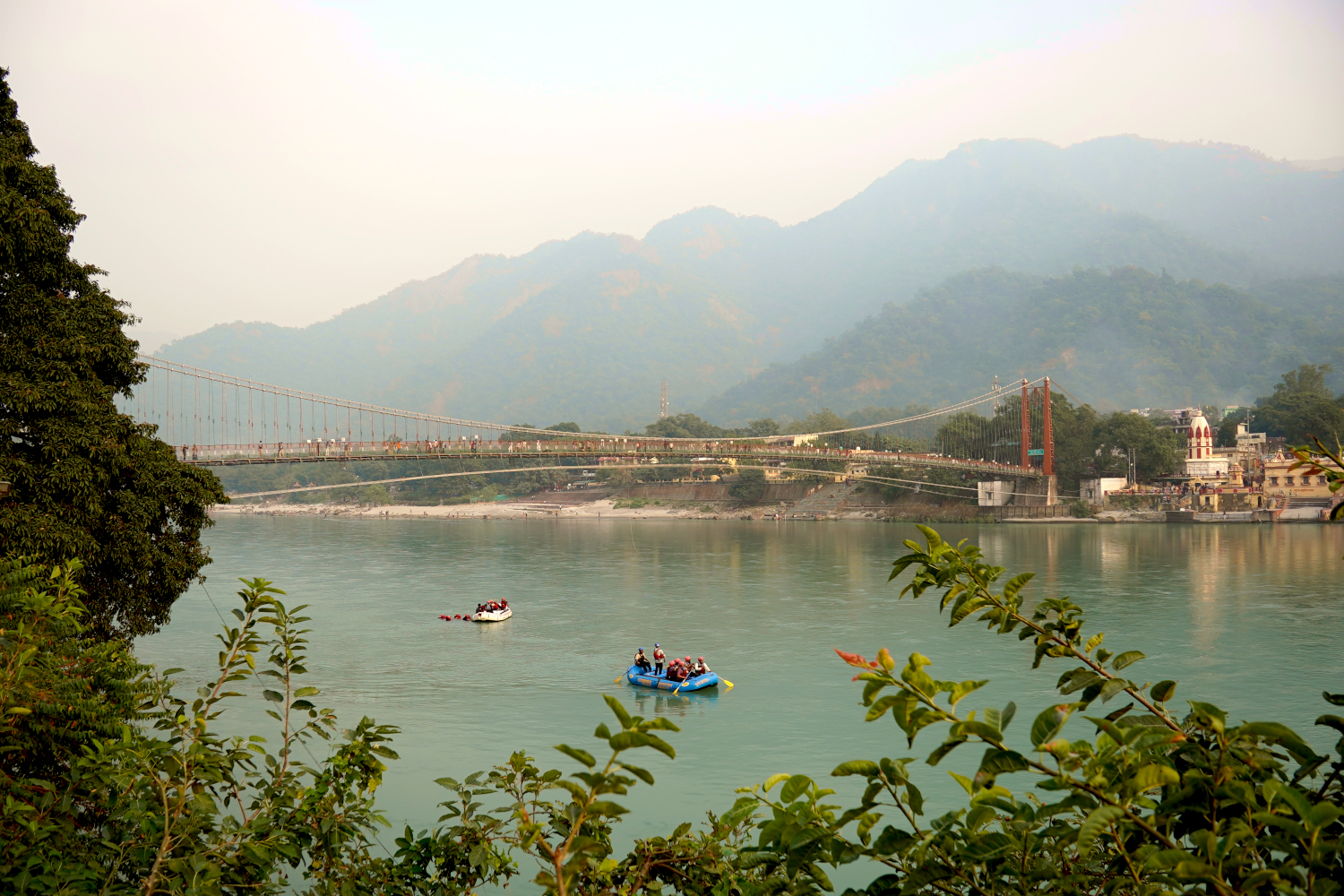
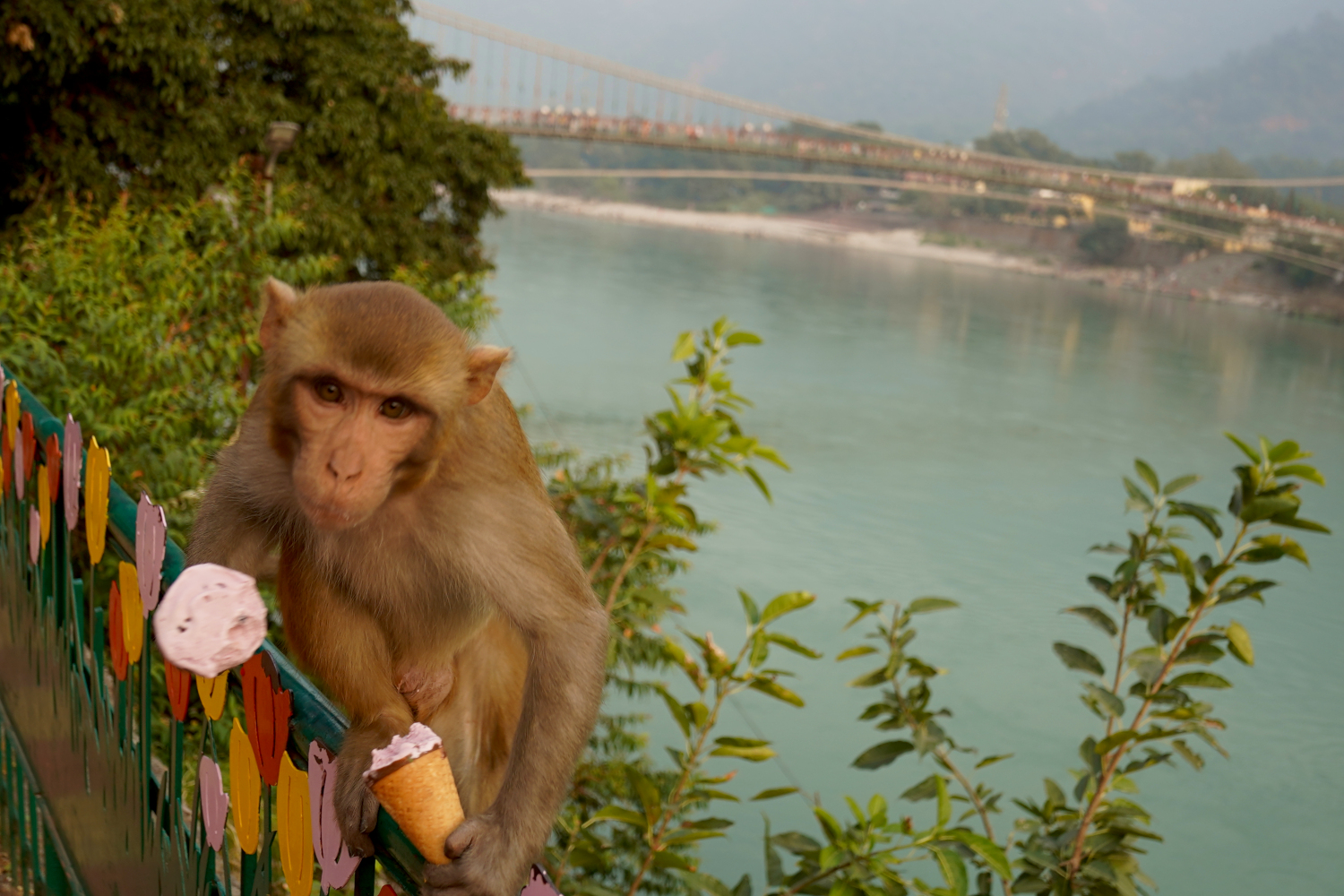
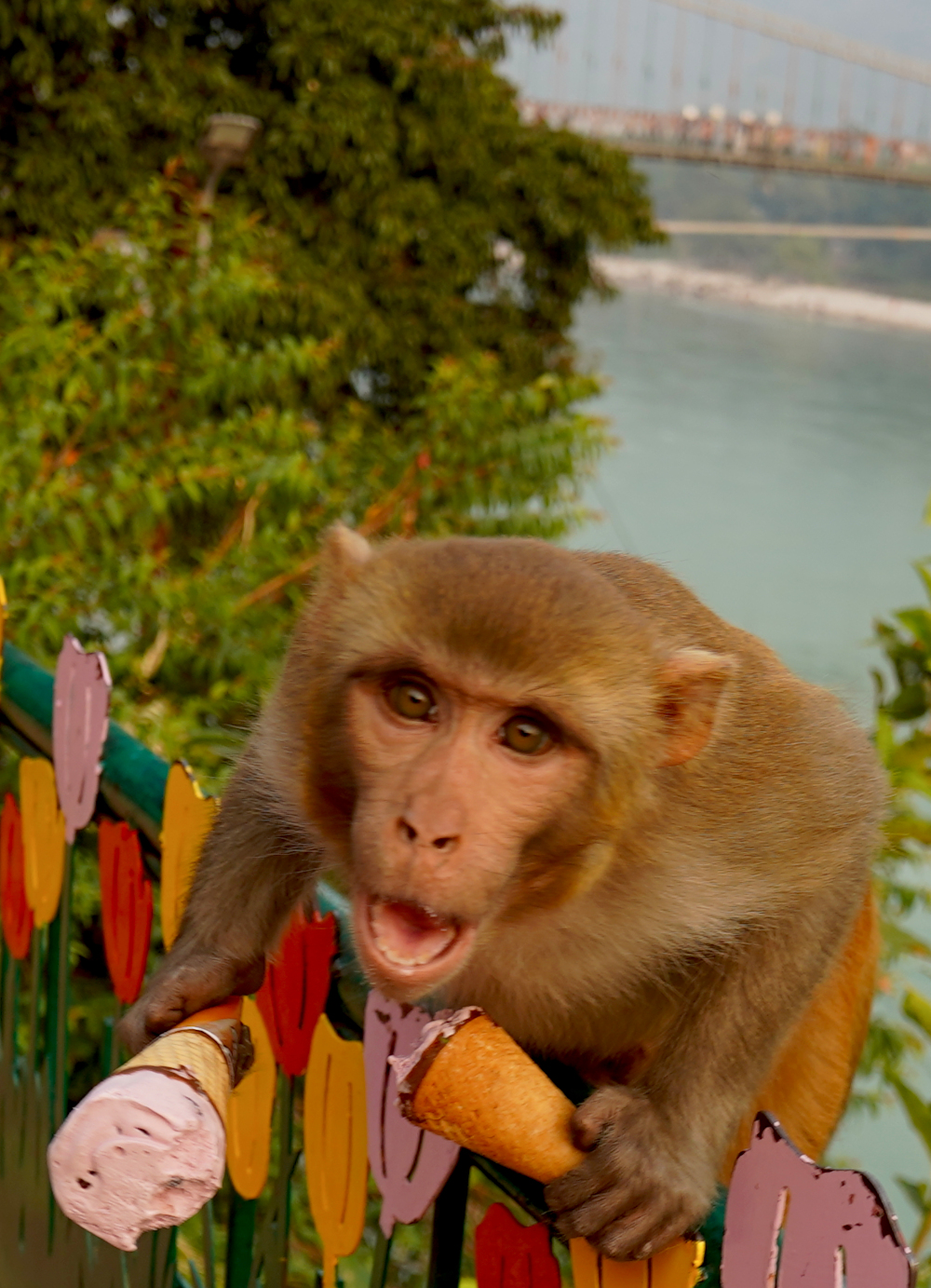
Back on the west side of the Ganga, we find a little park to rest up a bit, in which are a few monkeys cavorting. One of them has acquired not one but two ice cream cones, and is partaking of them alternately, as if trying to decide which flavor he prefers. We never find out what his verdict is, because he seems quite attached to both of them until the bitter (or sweet) end.
Ganga Aarti
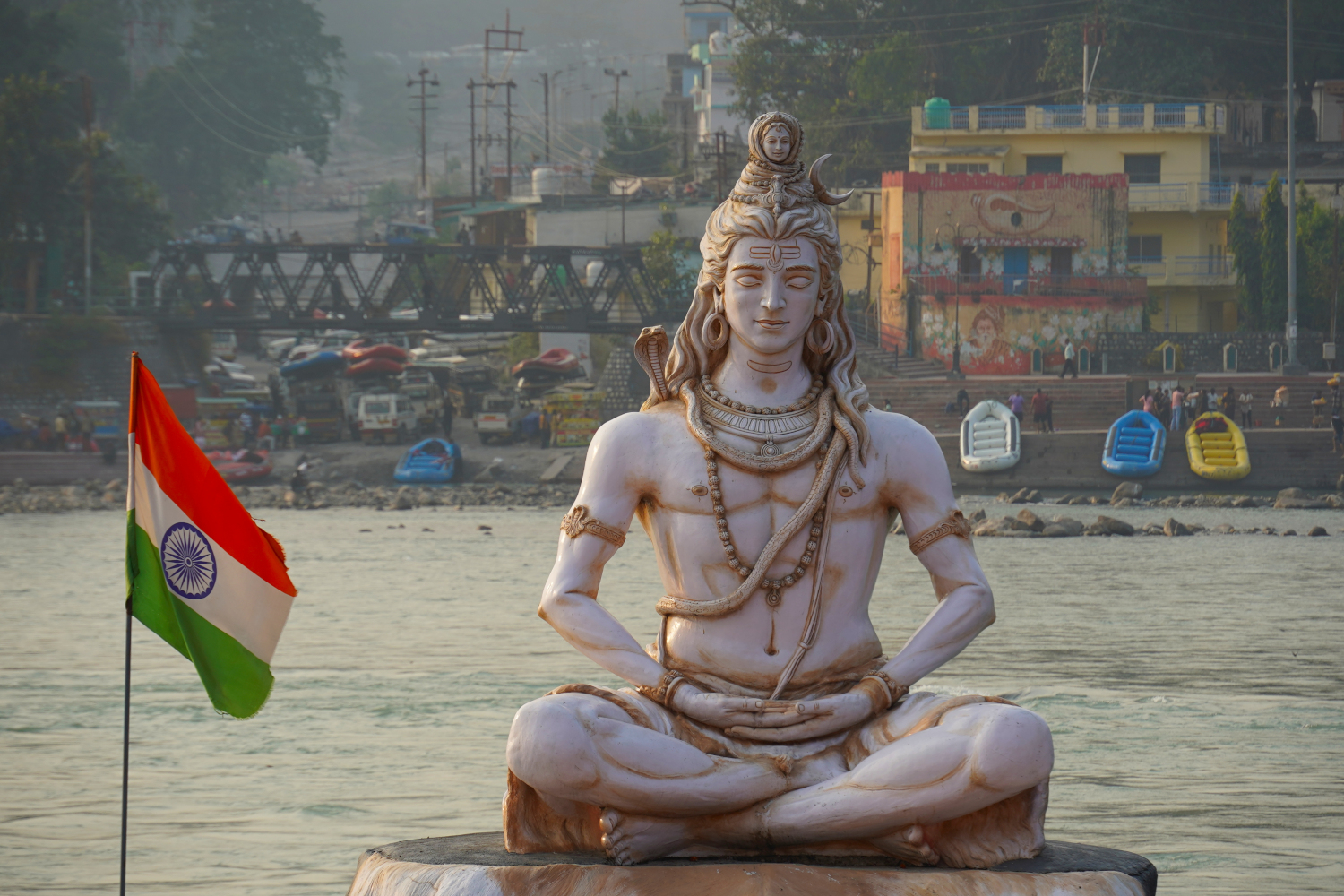
Late in the afternoon, after we’ve had some dinner, we head back to the other side of the river to witness the Ganga Aarti, a twilight ceremony honoring the sacred river. A crowd of hundreds (thousands?) have already gathered on the banks by the Parmarth Niketan Ashram, designated with a striking statue of Shiva.
The crowd is seated on the platform of the large ghat (a set of steps leading down into the water); and after we deposit our shoes in some cubbyholes for the purpose, we find our way to a place where we can sit. One gentleman nearby keeps urging us to move closer so we can get a better look, but even after we comprehend what he is saying, we’re not sure how much closer we can get. Evidently he is suggesting that we go to a little platform extending out over the water, which it appears to us is reserved for VIP’s, which we don’t want to pretend to be.
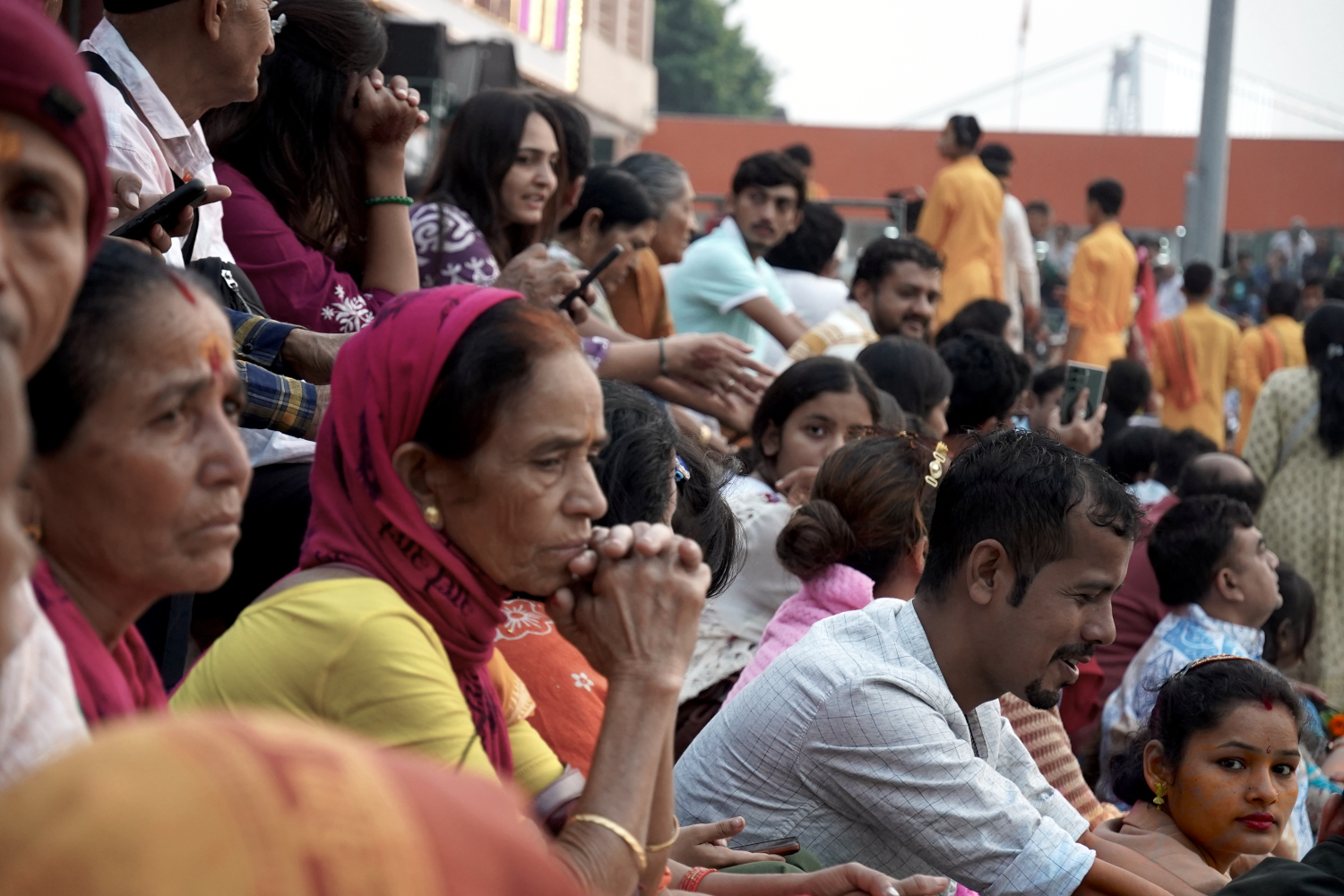
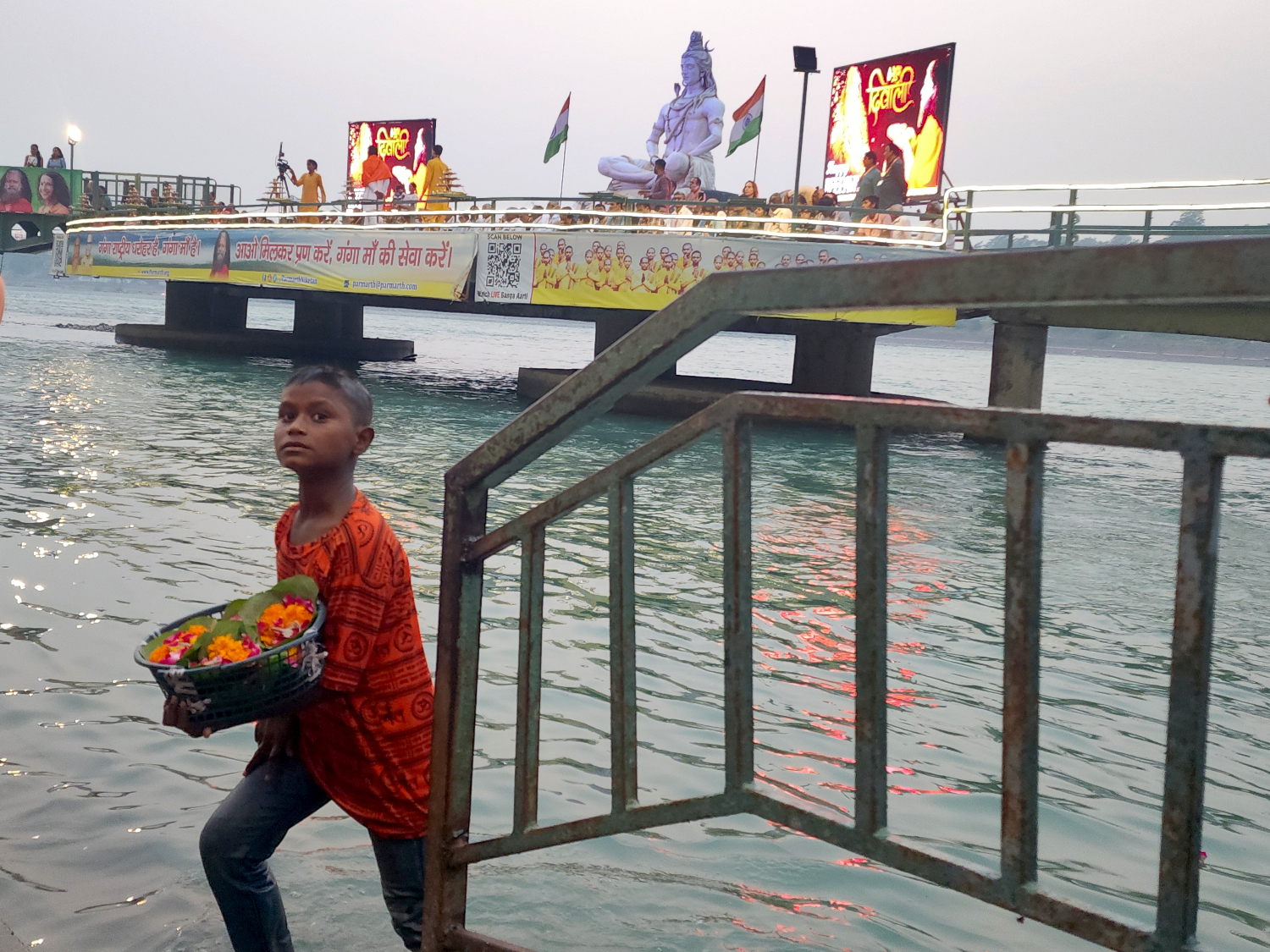
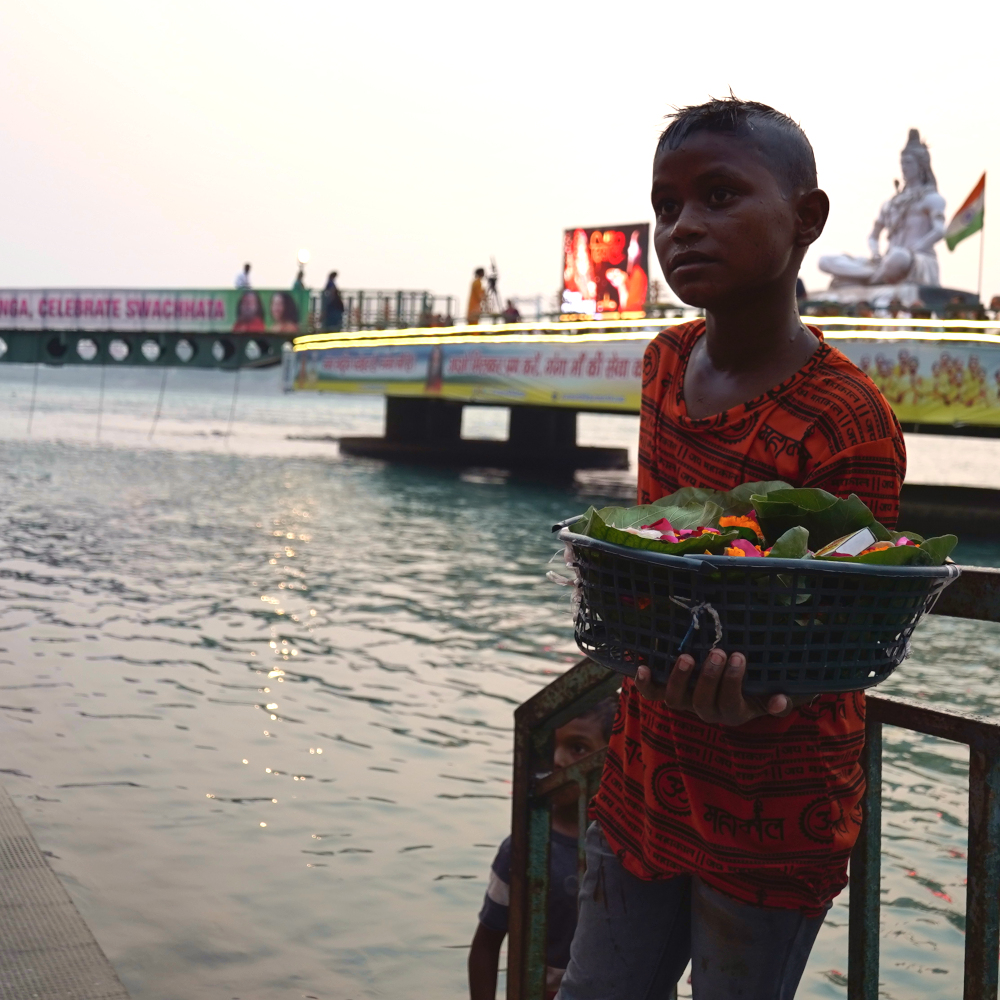
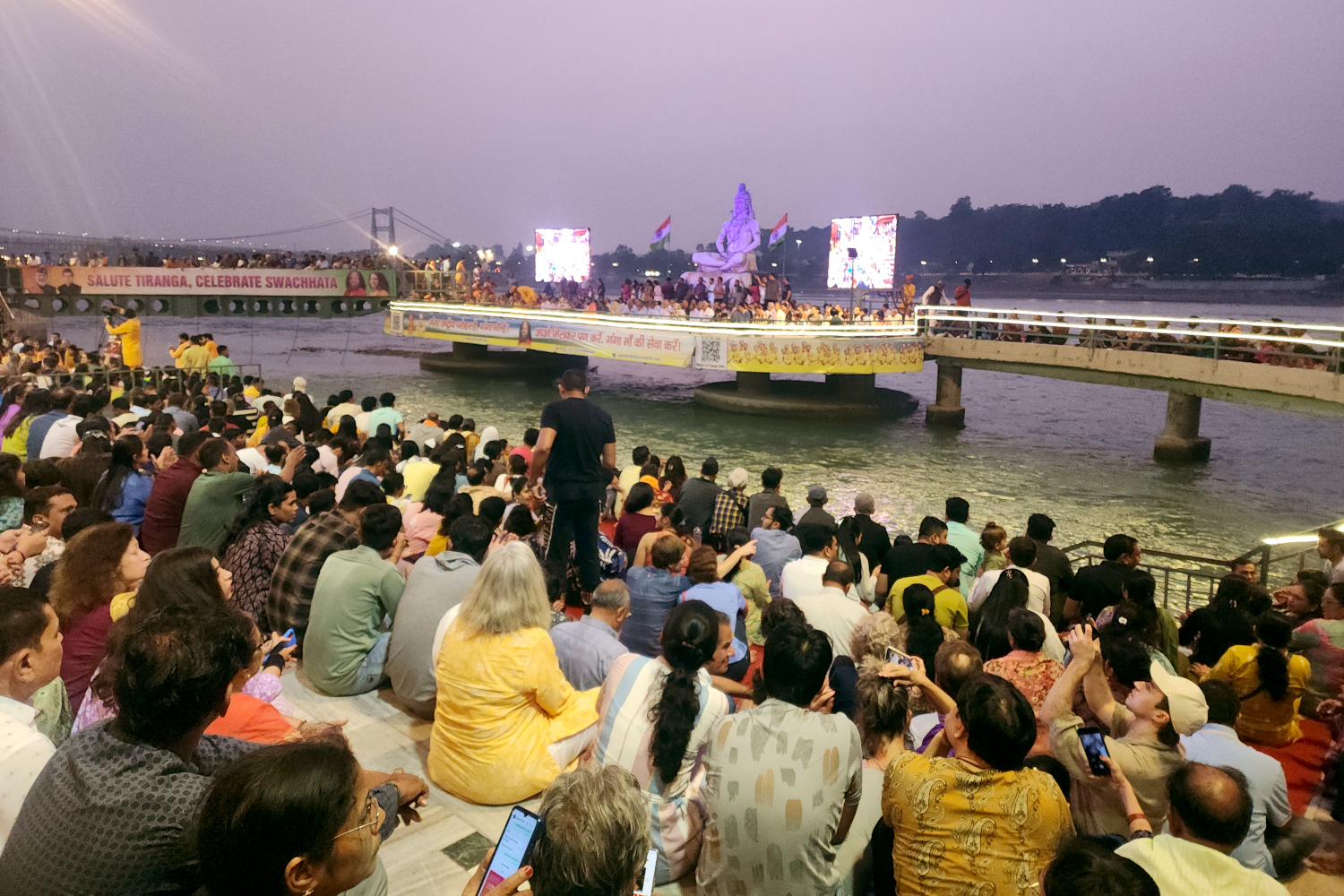
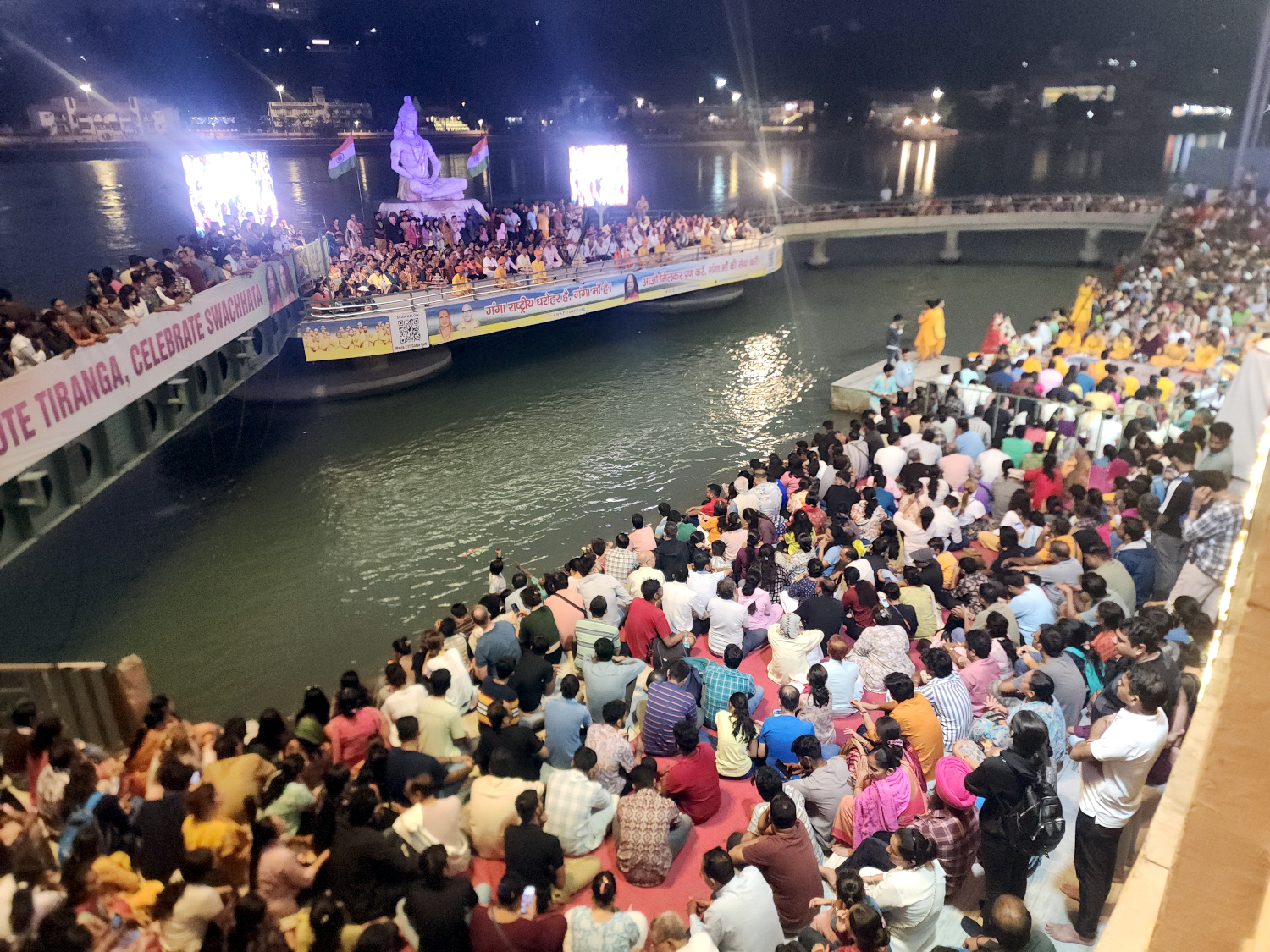

Ganga Aaarti, though it’s largely beyond our comprehension, is a mesmerizing ceremony where priests offer lit lamps to the river, accompanied by chants, bells, and devotional songs. The ritual symbolizes gratitude and reverence for the river. This much is clear enough, but of course we don’t follow the songs and prayers in Hindi, or the exact significance of some of the features. After an hour or so, we decide to leave before the claustrophobia-inducing crowd thickens any more.
Back at home, the family next door is having a celebration of its own, and the noises carry through the wall, resounding in the bathroom, so it sounds as if we’ve invited them over into our place. And when we say there were fireworks outside, believe us. They went on until well into the night, with some of them quite loud — there is an occasional boom like a cannon right under our window. Anyone suffering from PTSD would end up ranting and raving like a Fox anchor. Fortunately, things quiet down at about 11:00, and we are able to get a decent night’s sleep, capping off a quite memorable Diwali.
If you enjoy reading about our adventures and impact, consider supporting us on Patreon!
Events occurred on 10/31/2024


 world travel with a theatrical flair
Leave a comment