

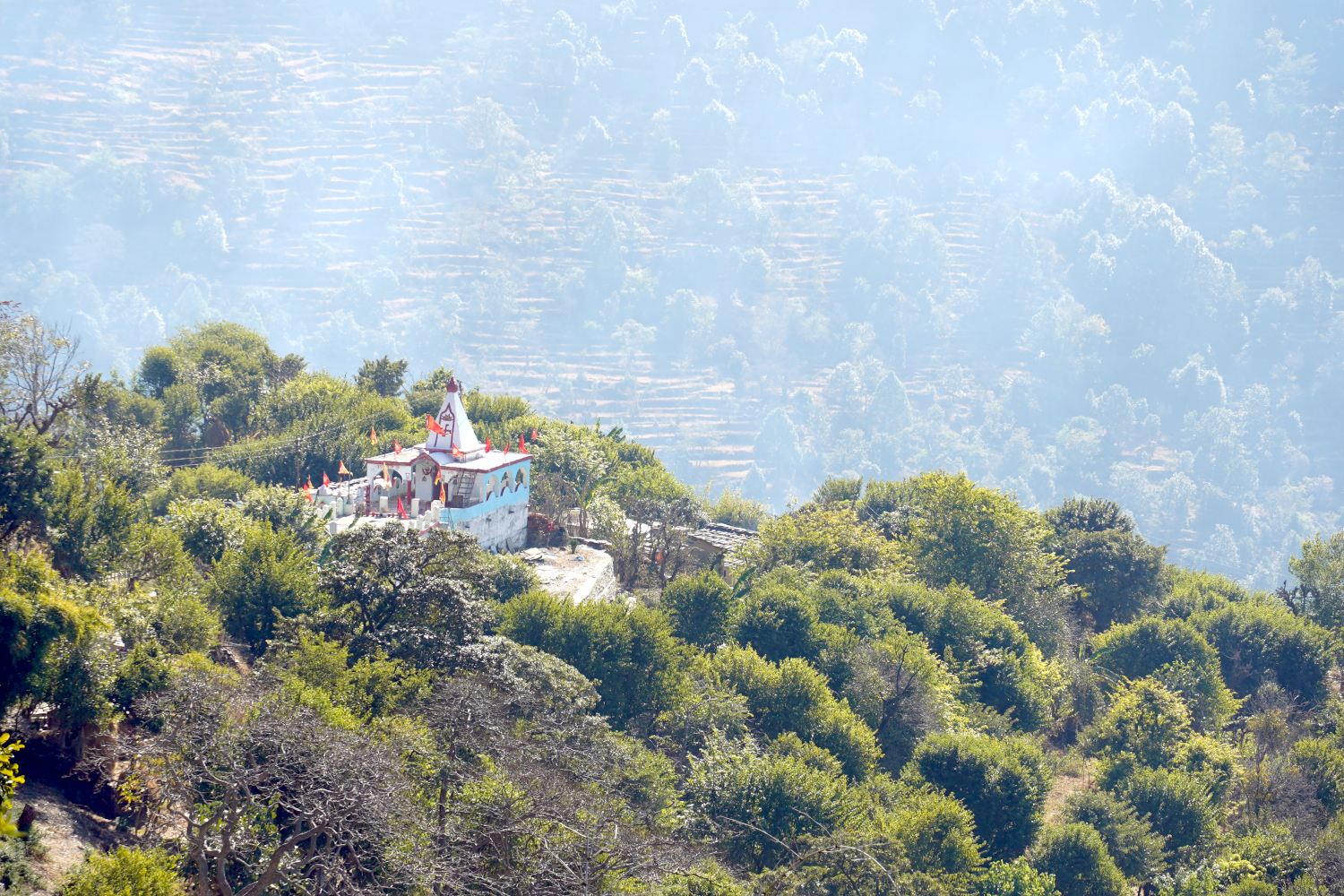
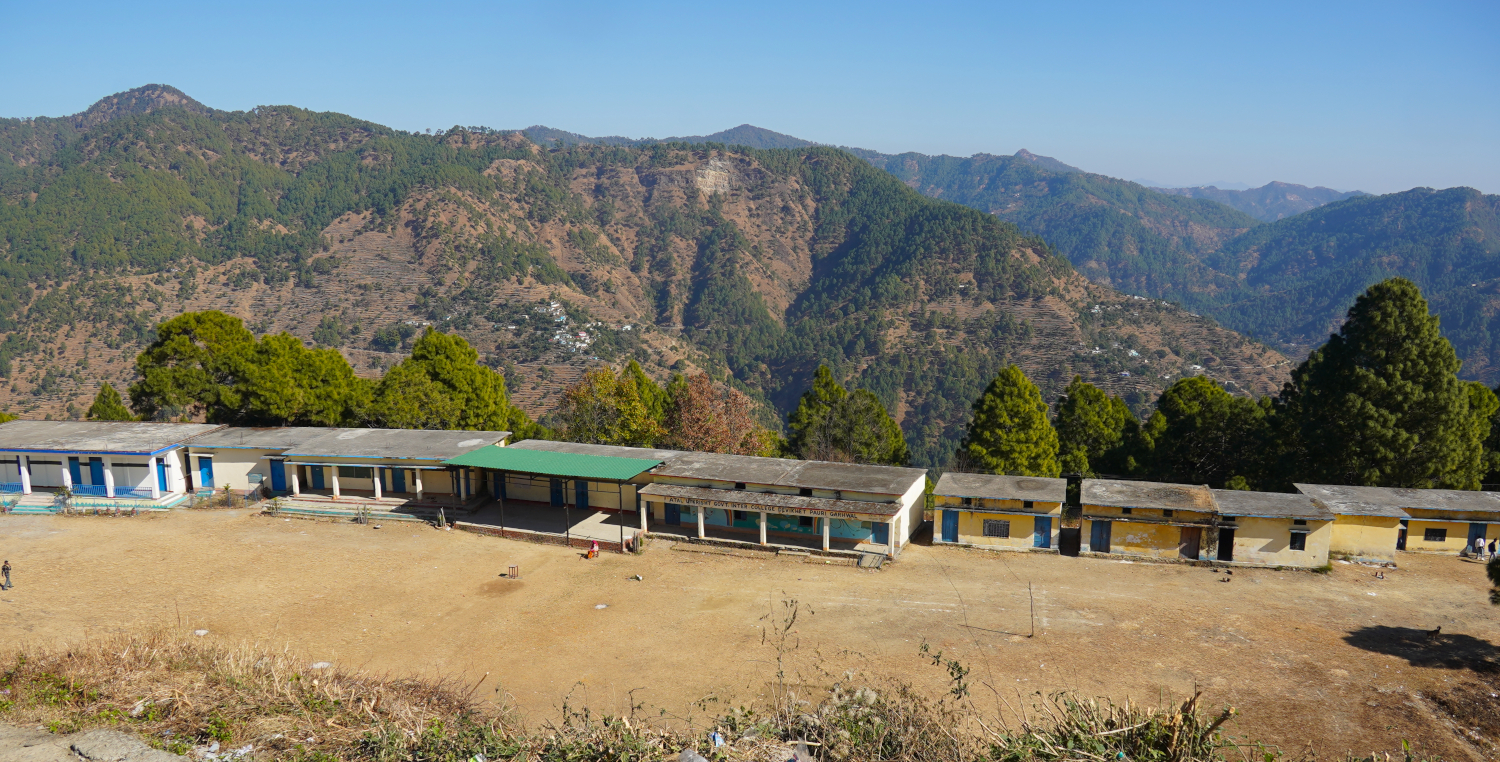
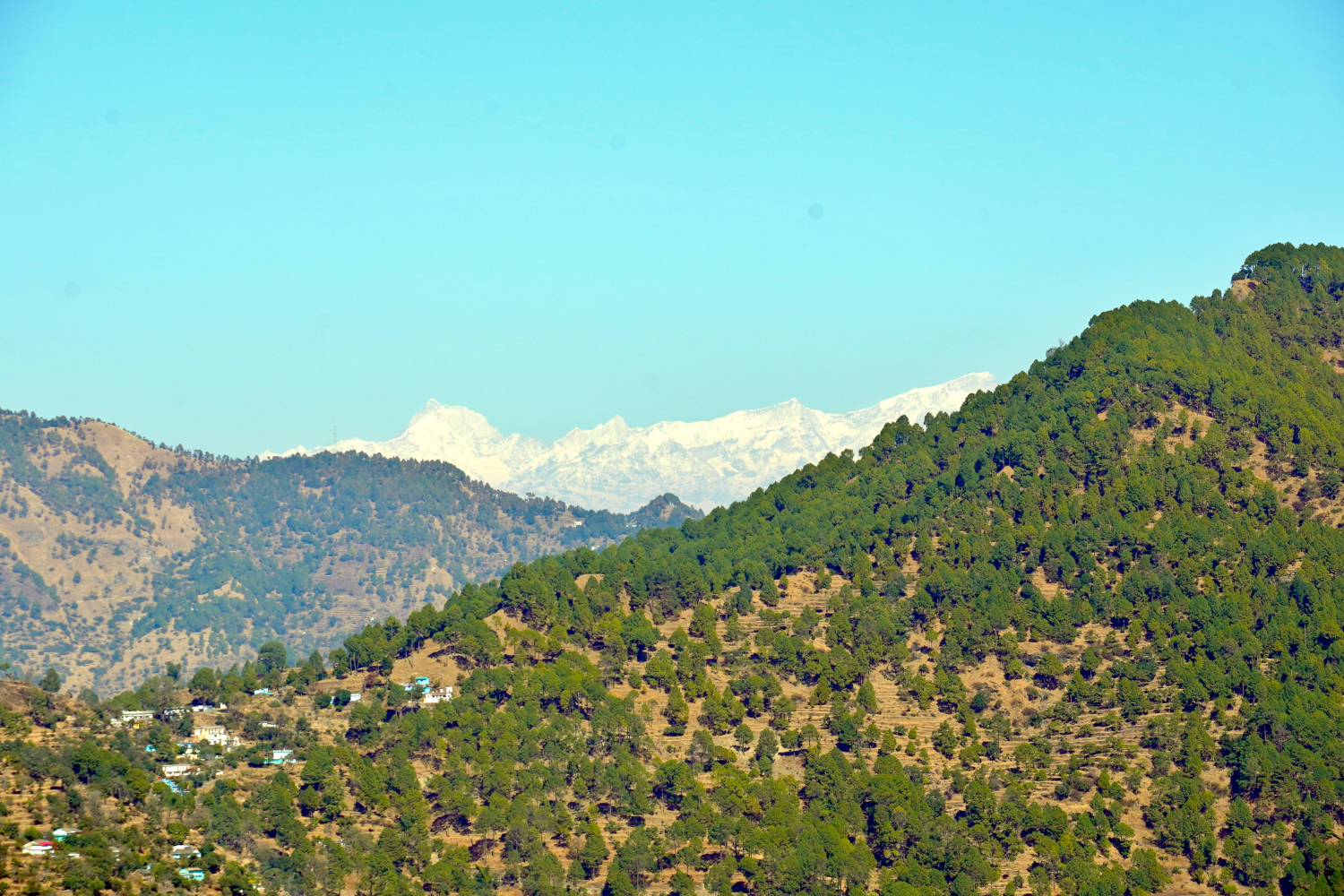
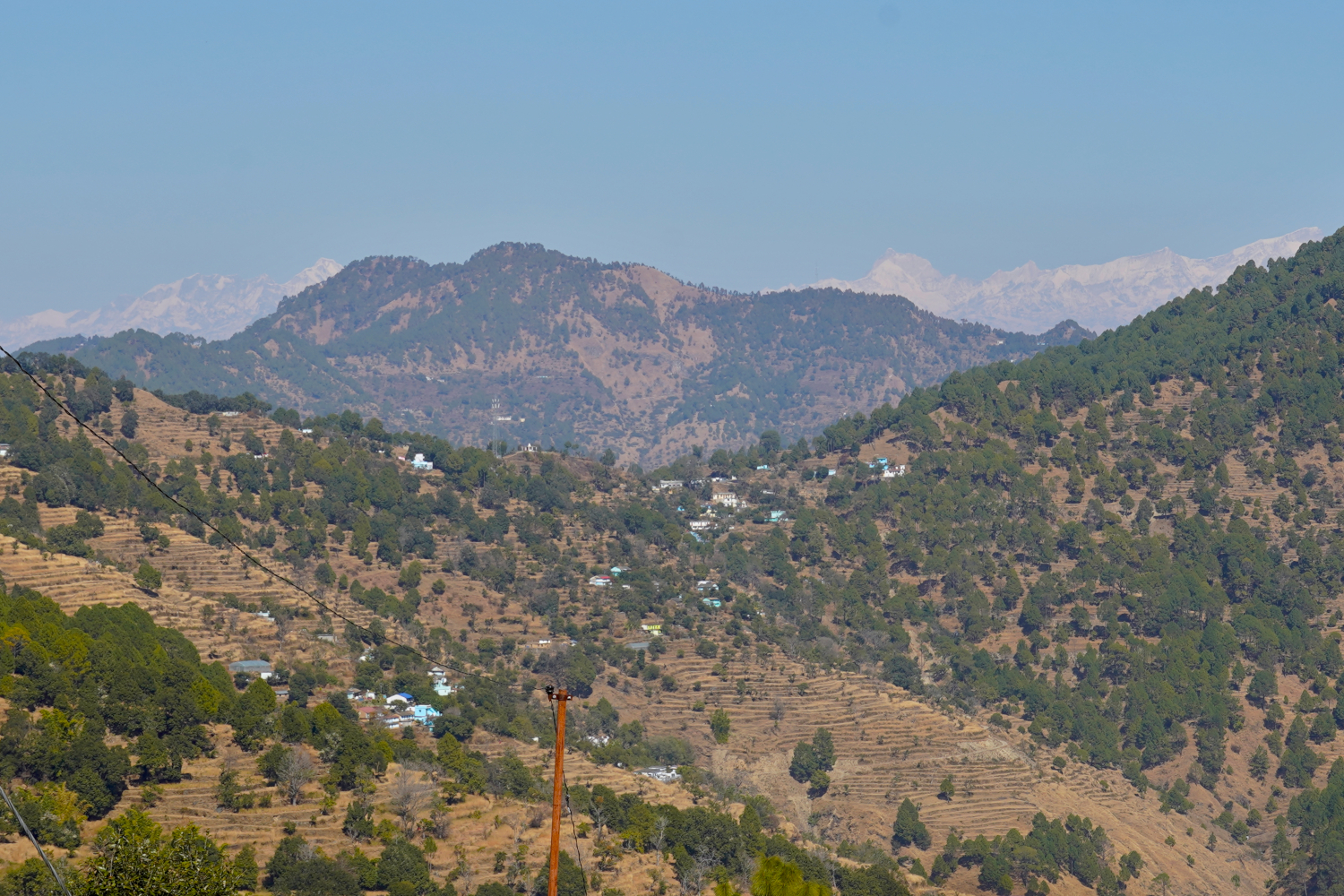
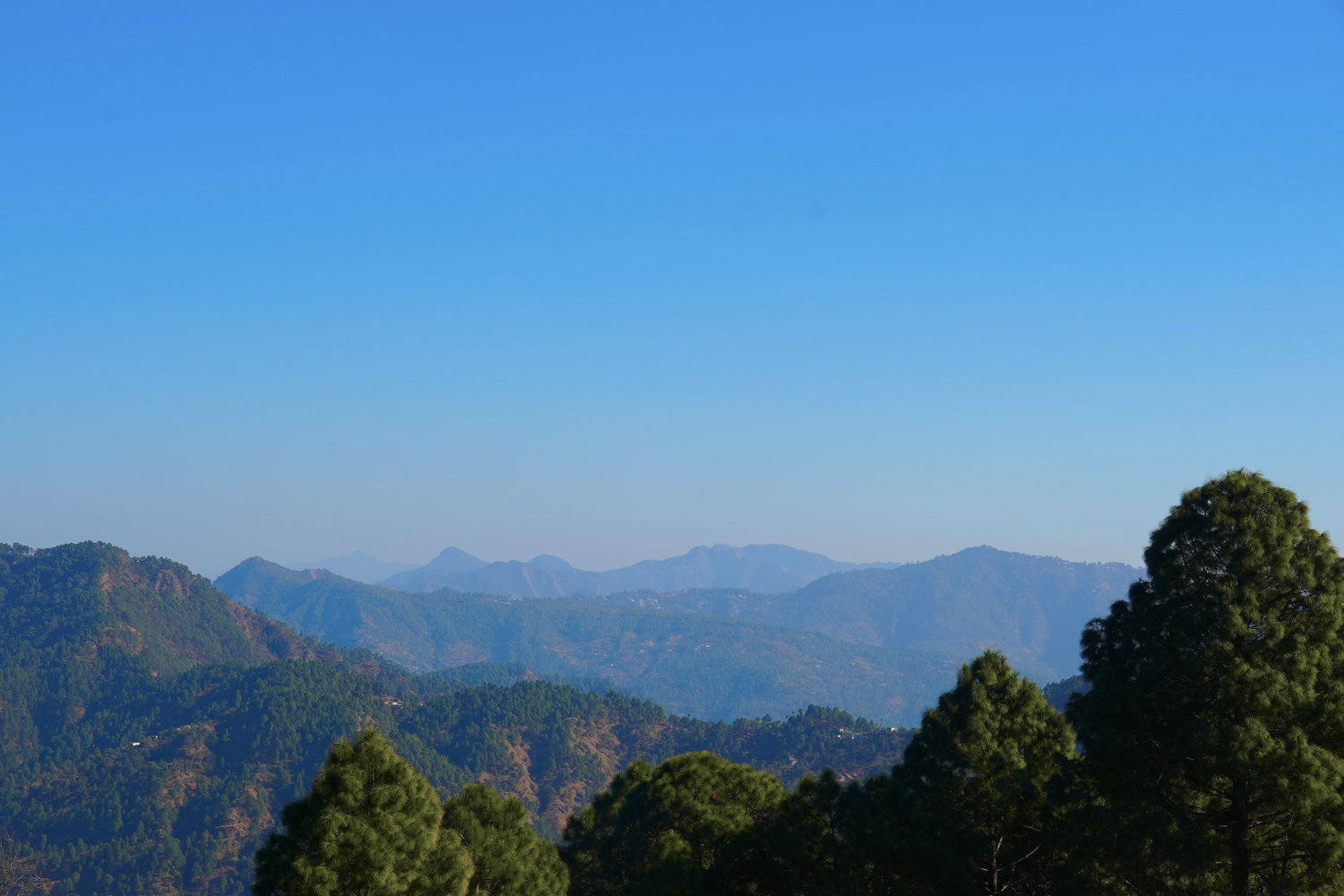
The mountain village of Devikhet, with a distant view of the snow-crusted Himalayas, is not exactly a booming metropolis. One online listing of communities in the Indian state of Uttarakhand refers to it as a “populated place”. The population of this place appears to be about a thousand, though you sometimes wonder where most of them are hiding. Its narrow winding streets are generally very sparse with traffic, vehicular or pedestrian. But on one particular day the village came to life in epic fashion, bursting at the seams with attendees streaming in from all the other communities in the surrounding hills, to attend a special festival — or mela, as they call it hereabouts. And we were fortunate enough to be on hand to witness it.
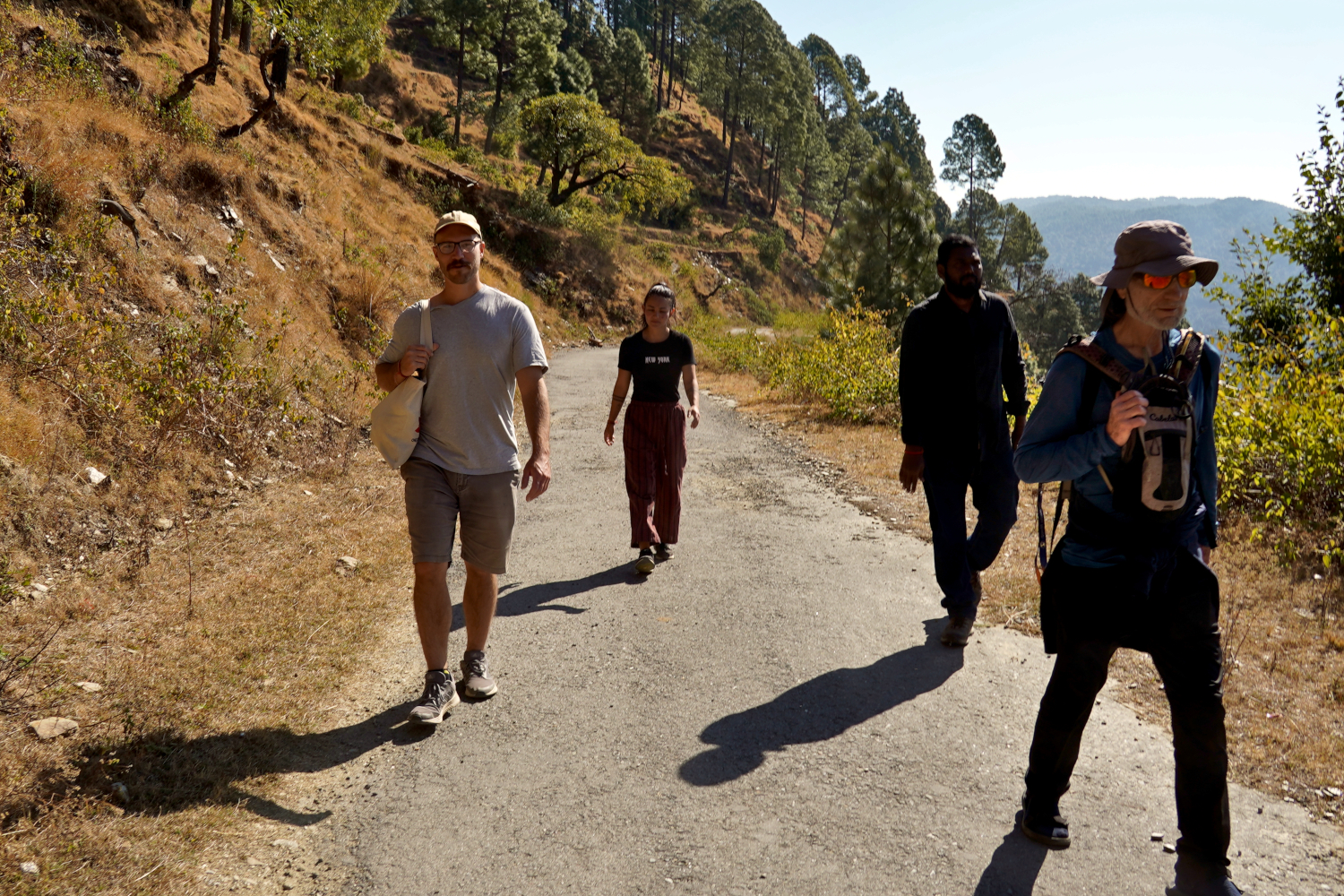
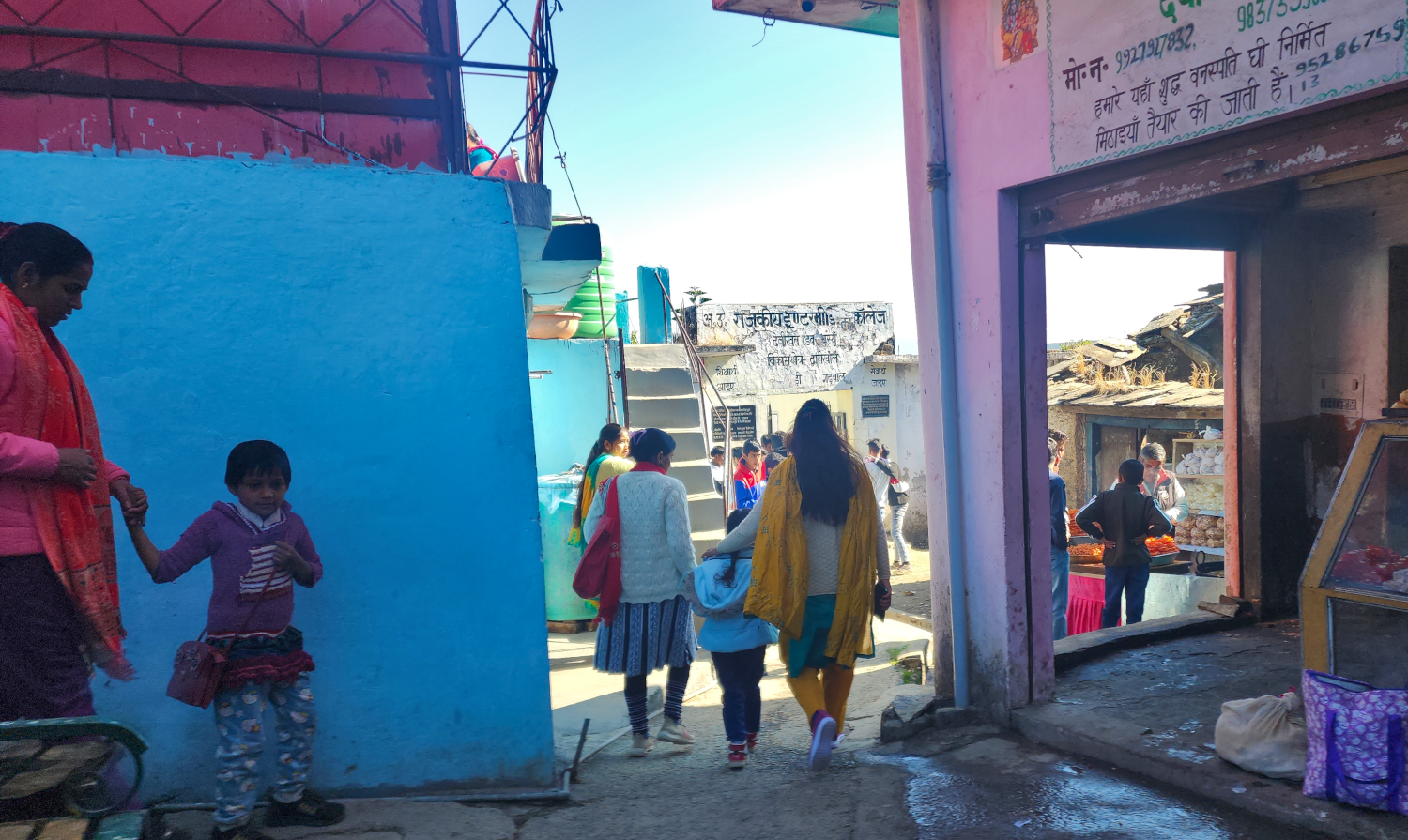
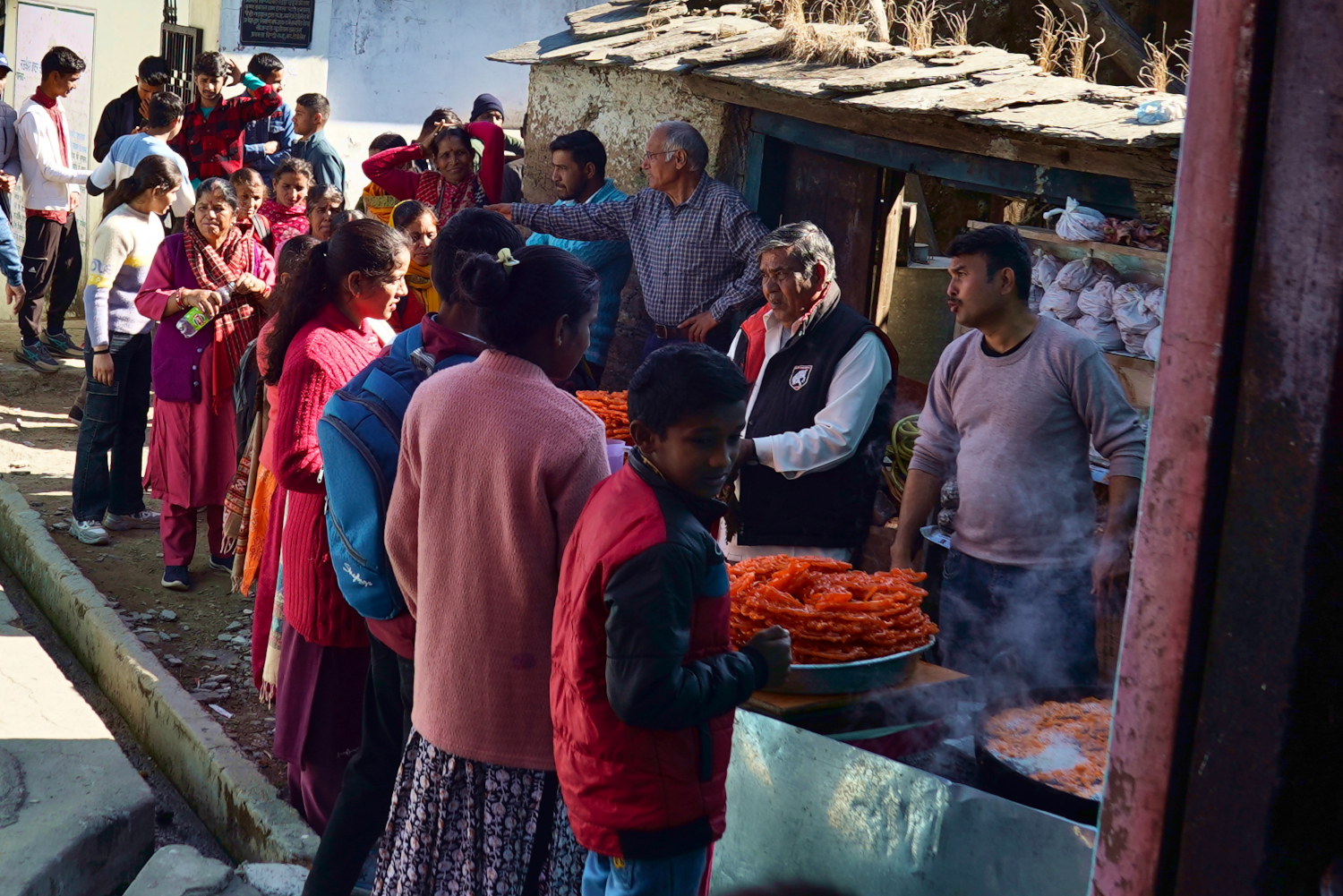
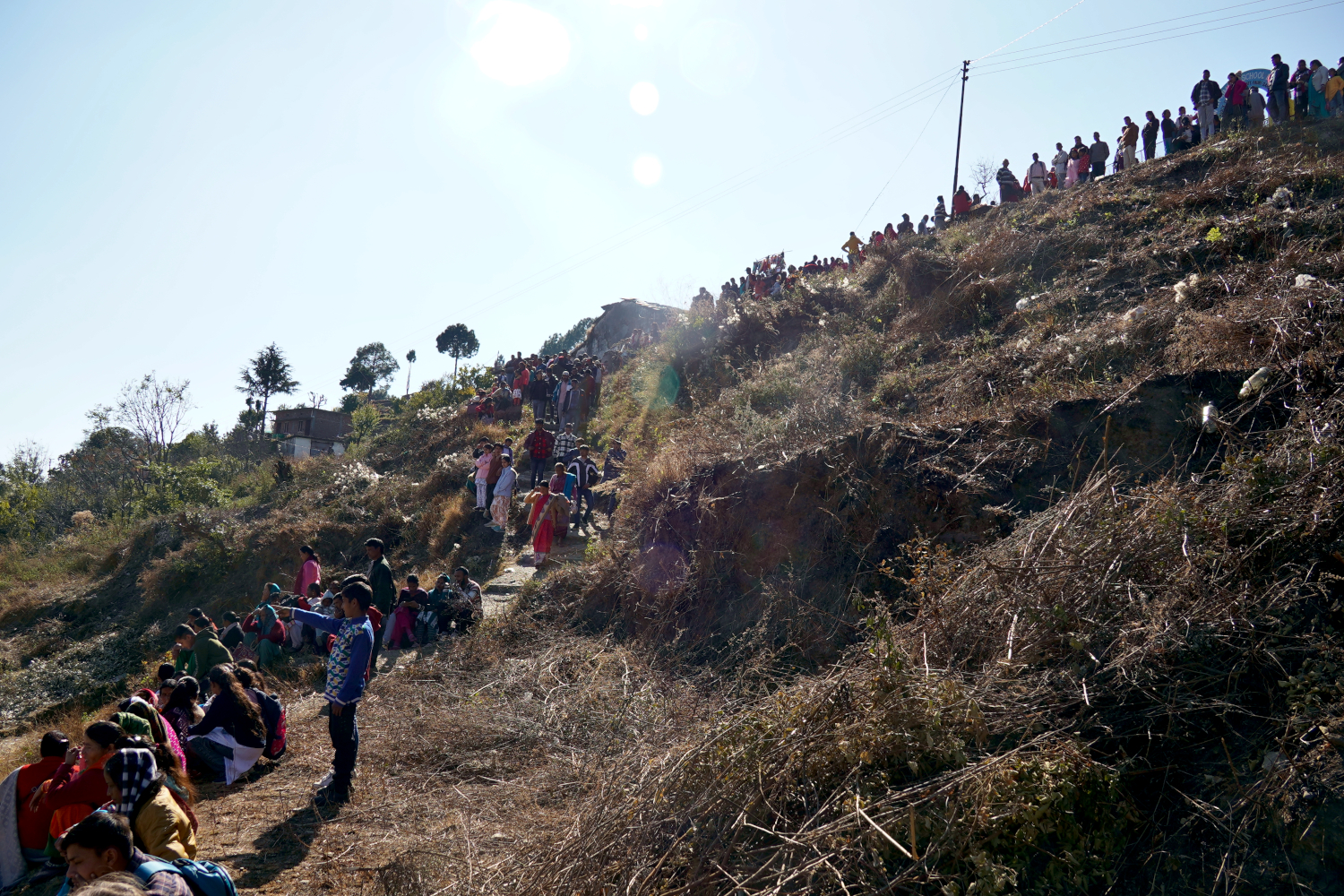
In the morning, we strike out on the long, steep hike up the hill (mountain?), taking only one little shortcut, toward Devikhet. We are accompanied by most of the volunteers who have come, like us, through Workaway, to assist in the village of Shri Timli, which is only a couple of miles down the hill, but which might as well be ten, given the angle of slope we have to negotiate. As soon as we get into town, we almost wonder if it is indeed the same town. Because suddenly it’s been transformed from a snoozing little village to a highly caffeinated jubilee, from a quasi-ghost town with few souls stirring, to a hot spot with folks cluster as thick as Wal-Mart shoppers on Black Friday. (And it keeps getting thicker as the day wears on.)


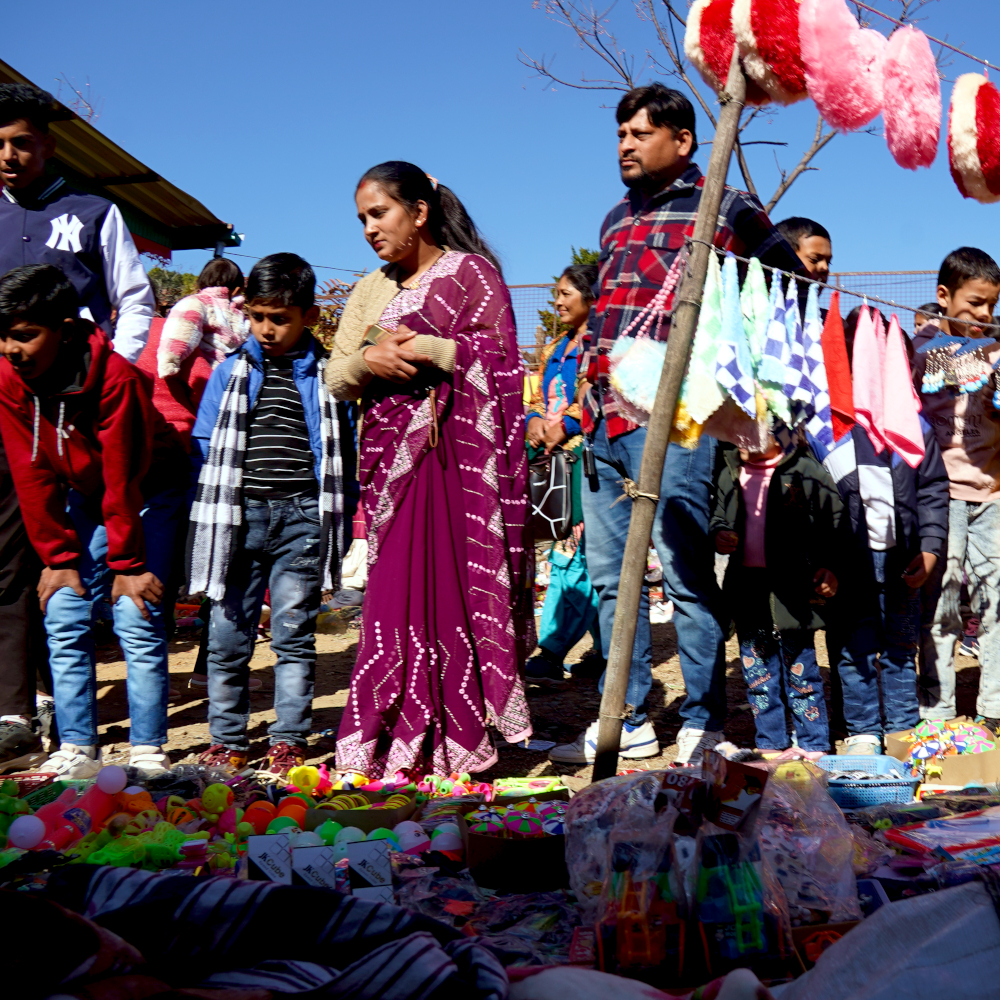
Whether they’re locals or slightly less locals, many people have set up vending stands all over the place. Some of them are selling toys and trinkets for children — including Transformer-like plastic action figures that clearly have no direct connection to the special event today. Just something to keep the kiddies happy.
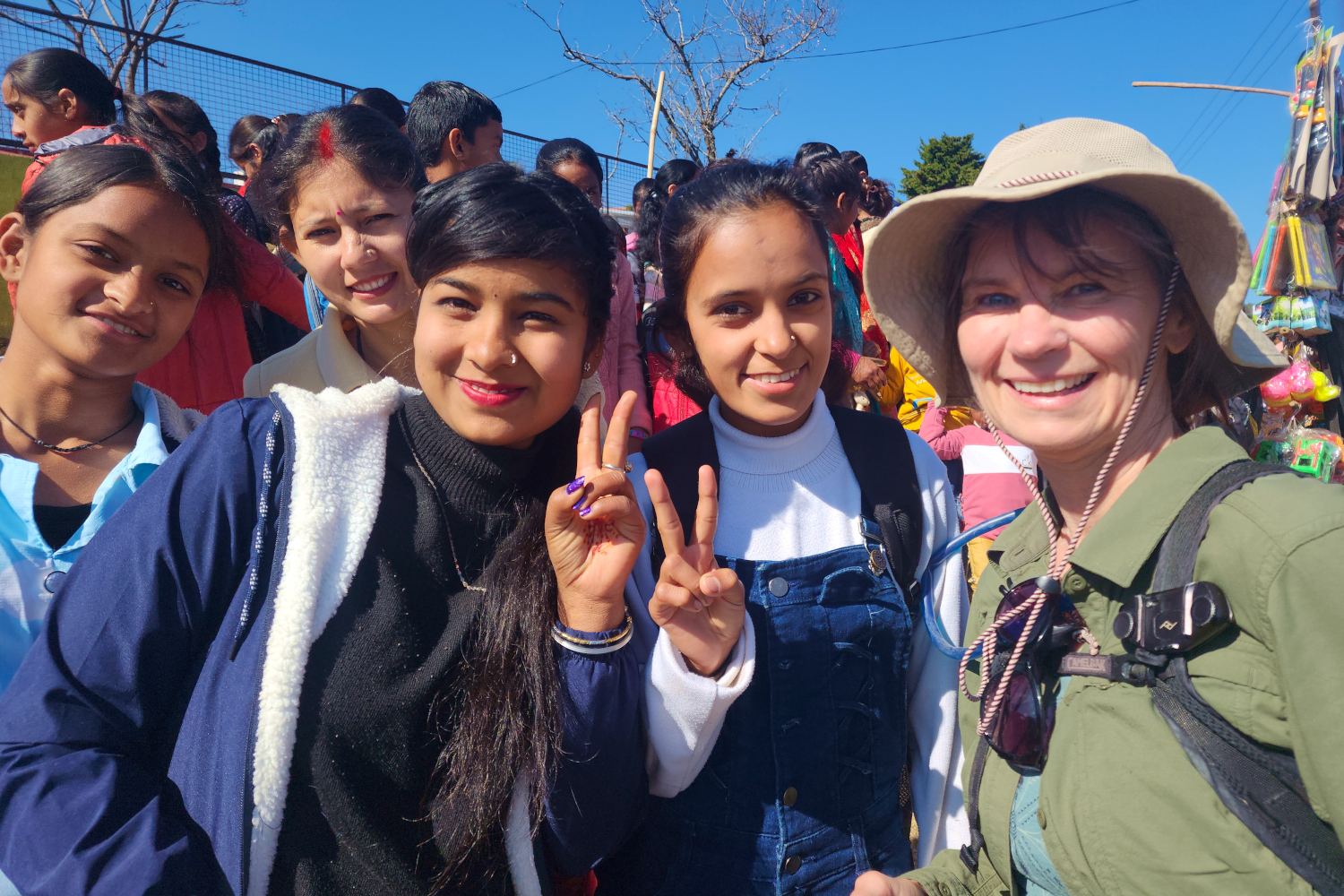
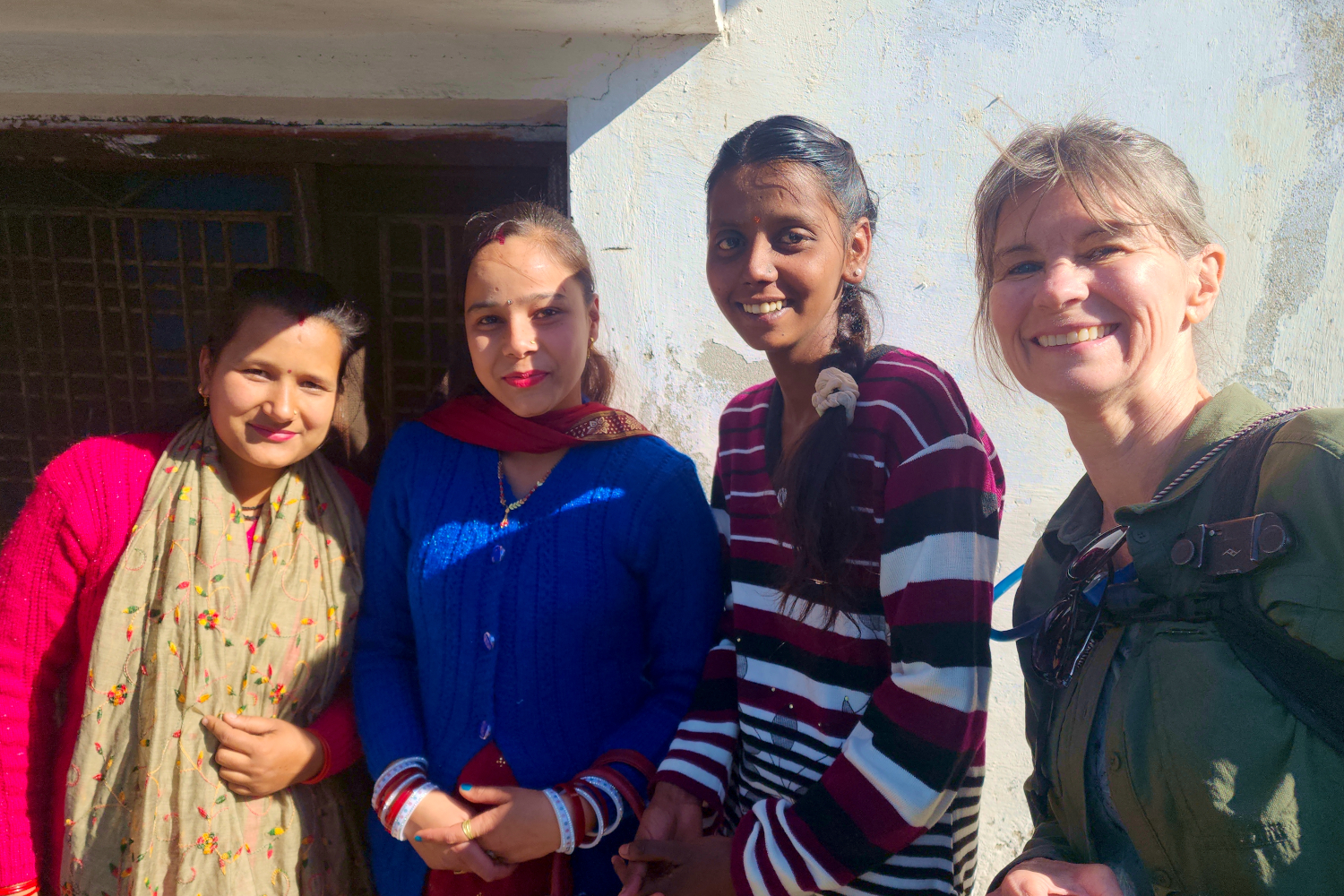
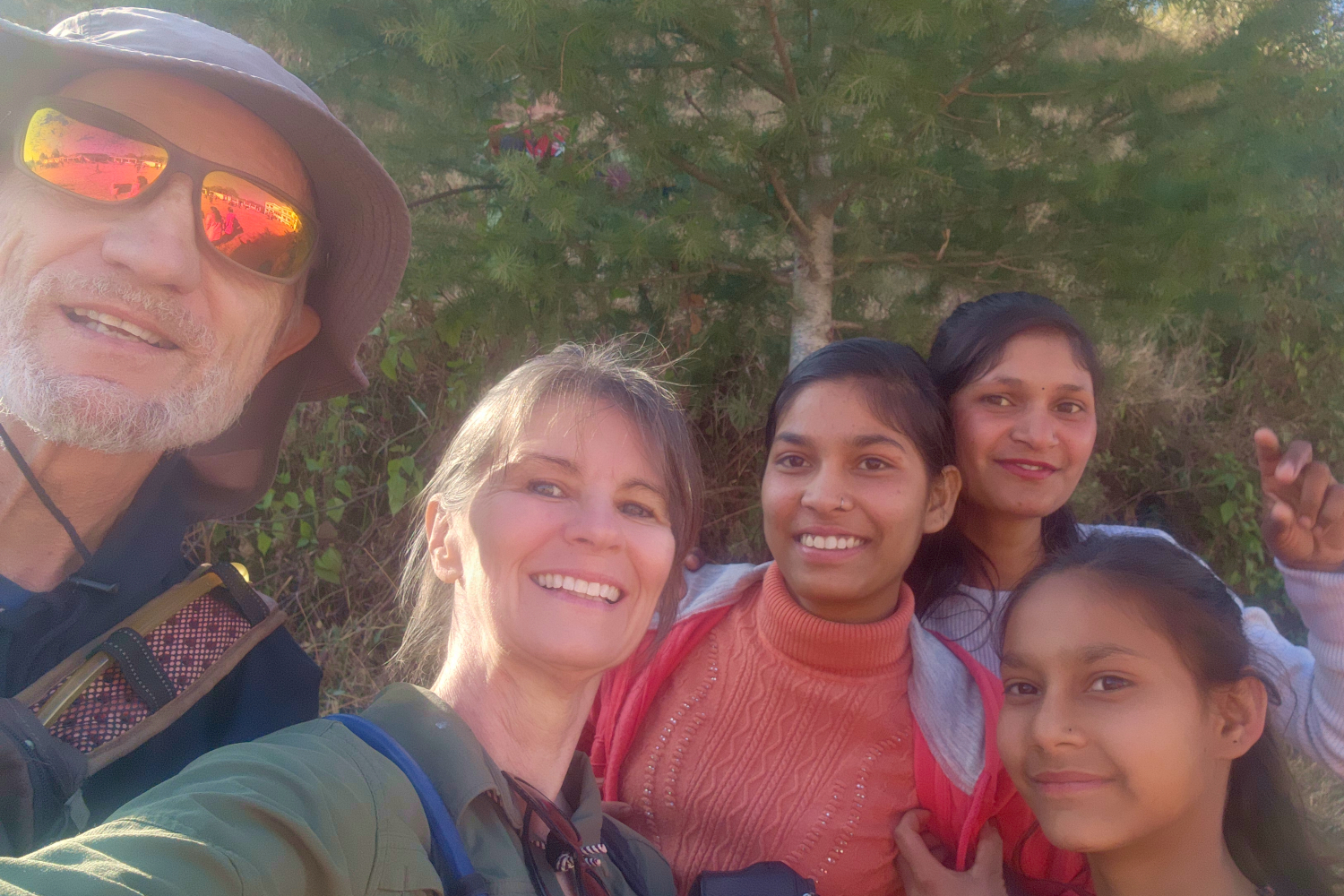
Right away, we run into several of the girls who had attended the Winter Camp. They’re thrilled to see us, especially Kimberly, and offer to buy her a (toy) ring from one of the vendors. She politely declines, not wanting them to spend their scarce funds on her. But they go and do it anyway, so then she feels flattered, slipping it on her pinkie as a gesture of appreciation for their gesture of appreciation.

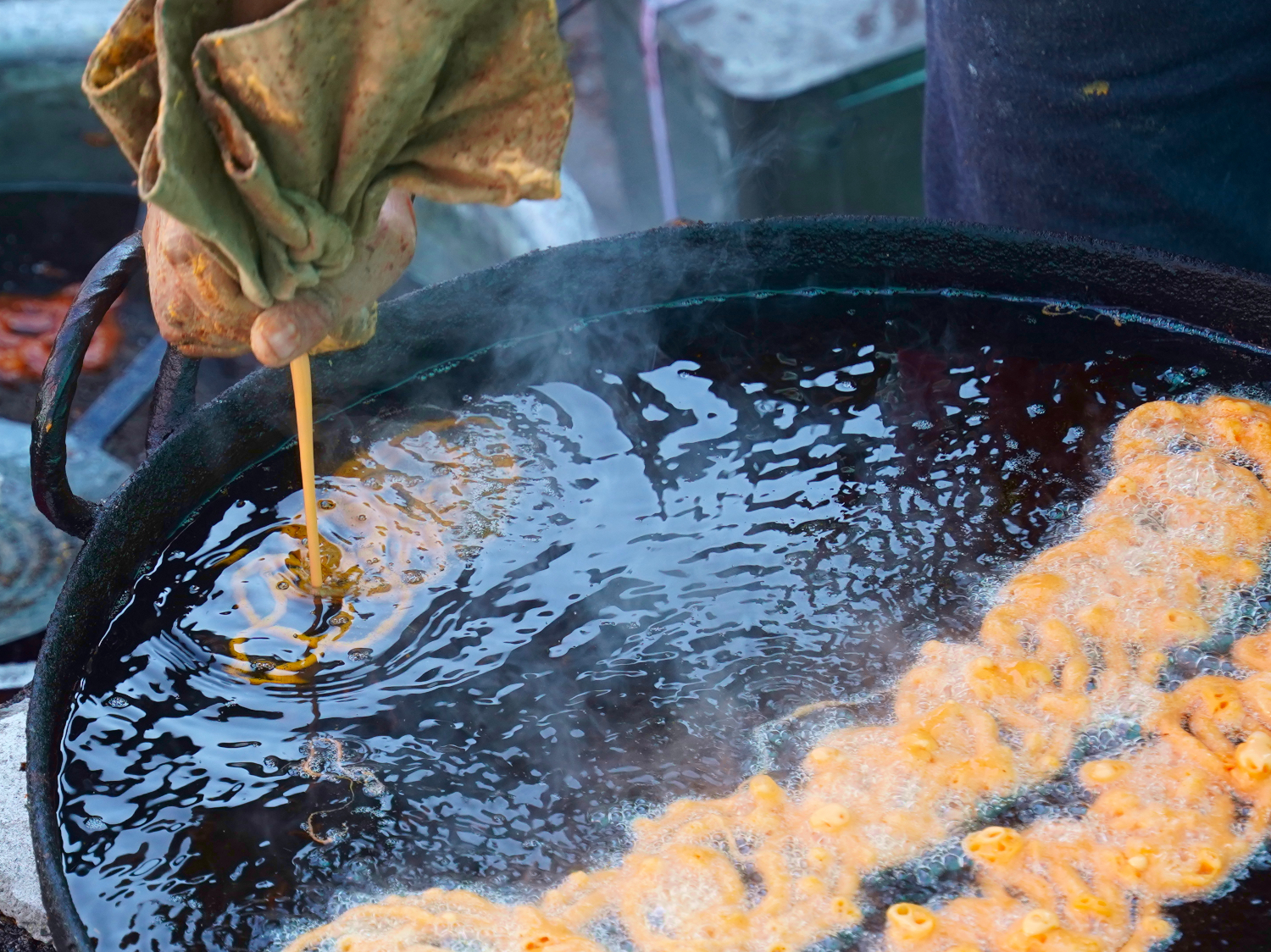
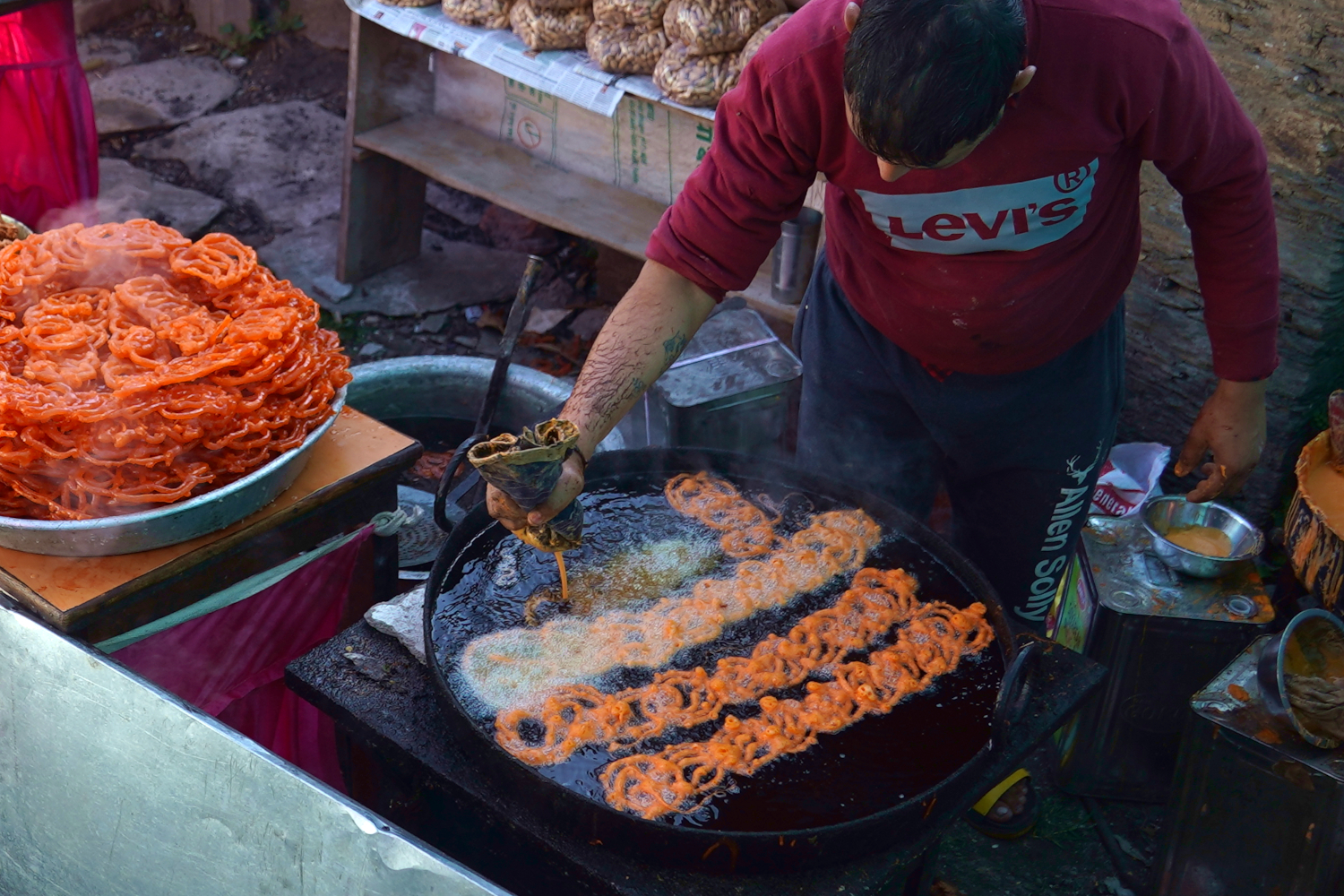
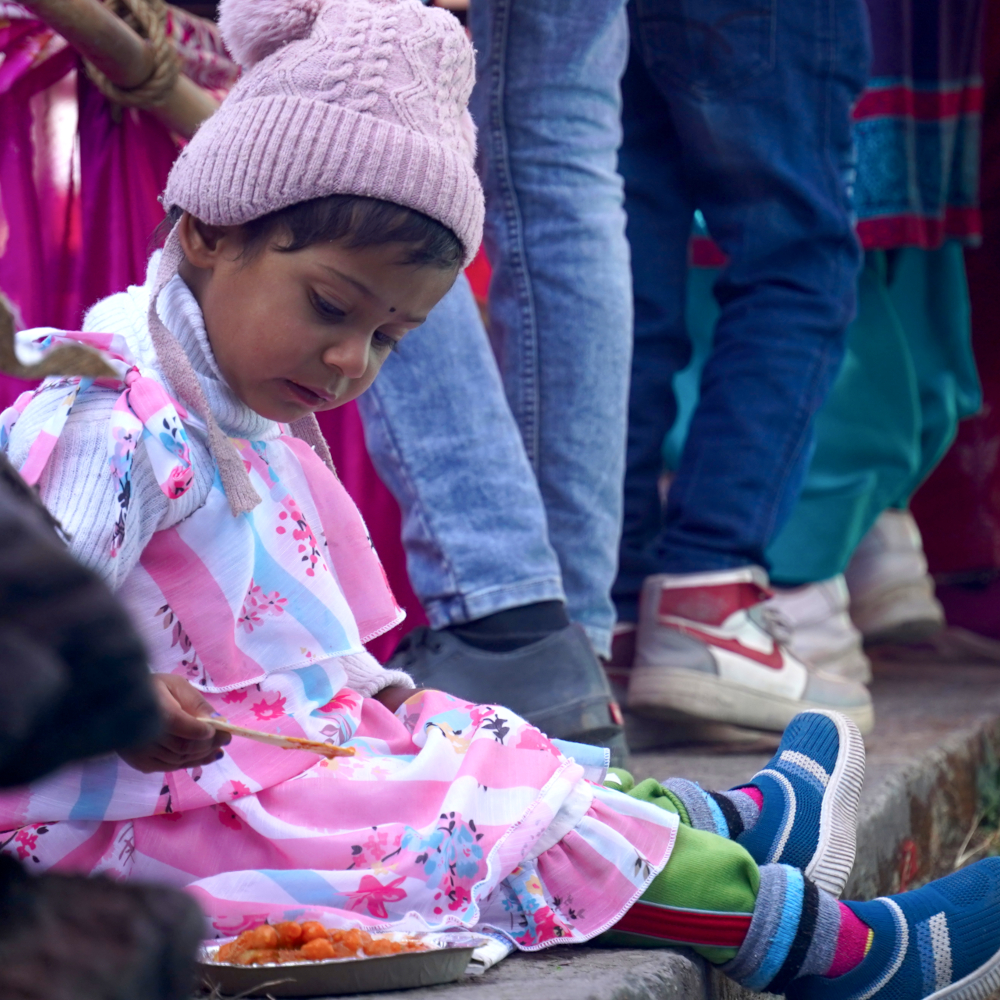
All of us decide to stop at a little shop that’s selling (fairly) fresh samosas. because it seems like the thing to do to have one as a snack before the festivities get started. The samosas are no longer hot, but still quite good, and at a cost of 10 rupees (about 12 cents) we certainly can’t complain.

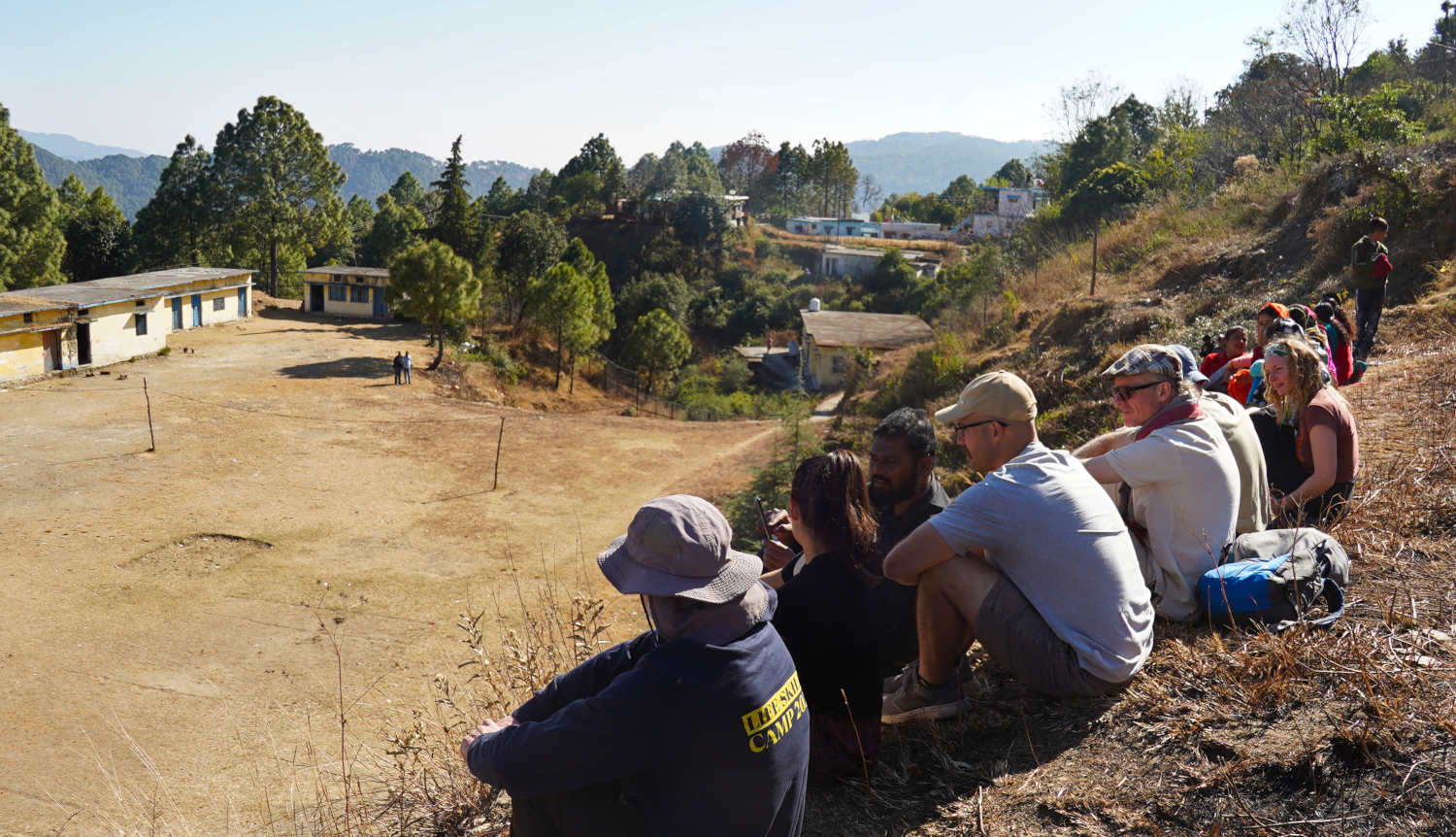
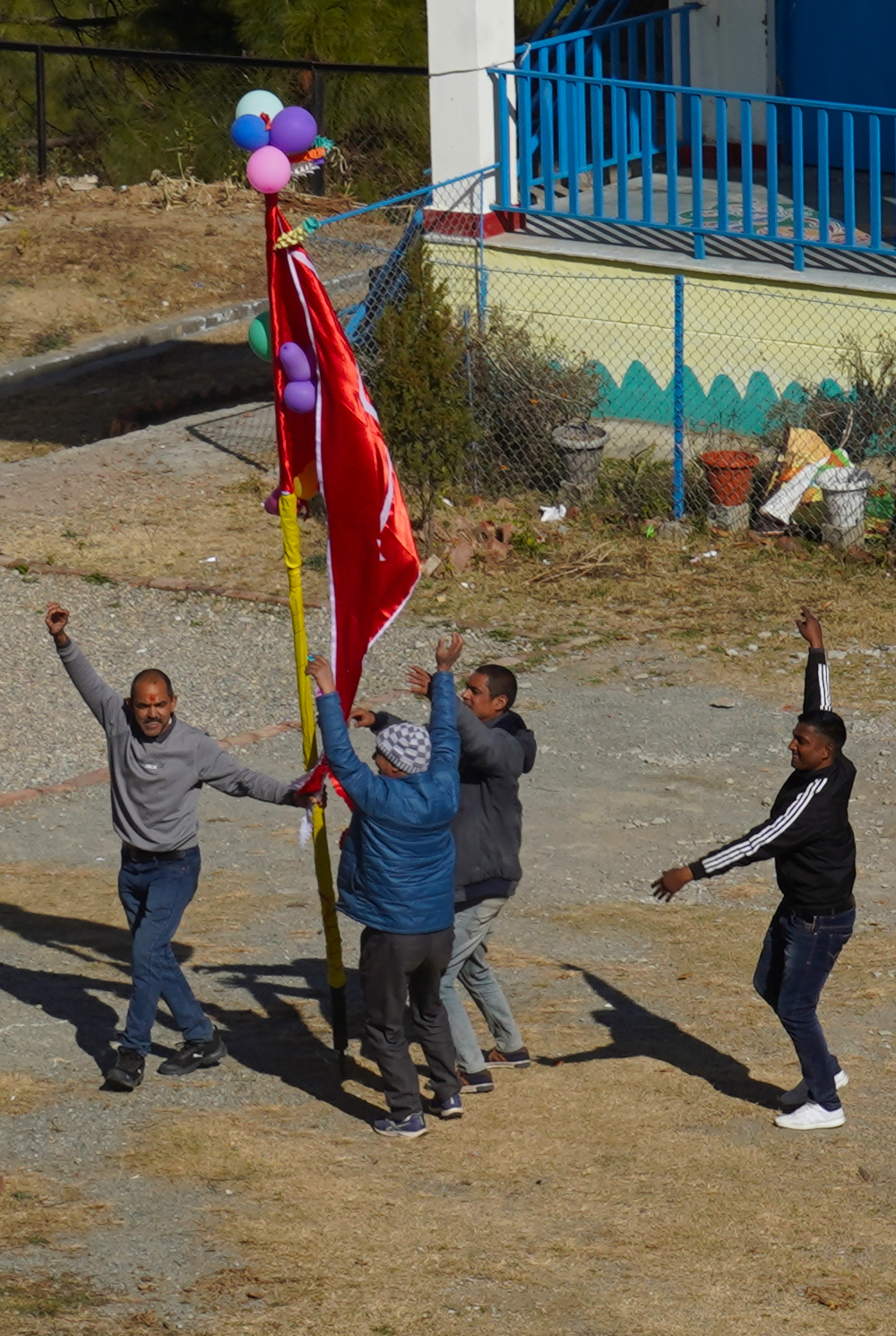
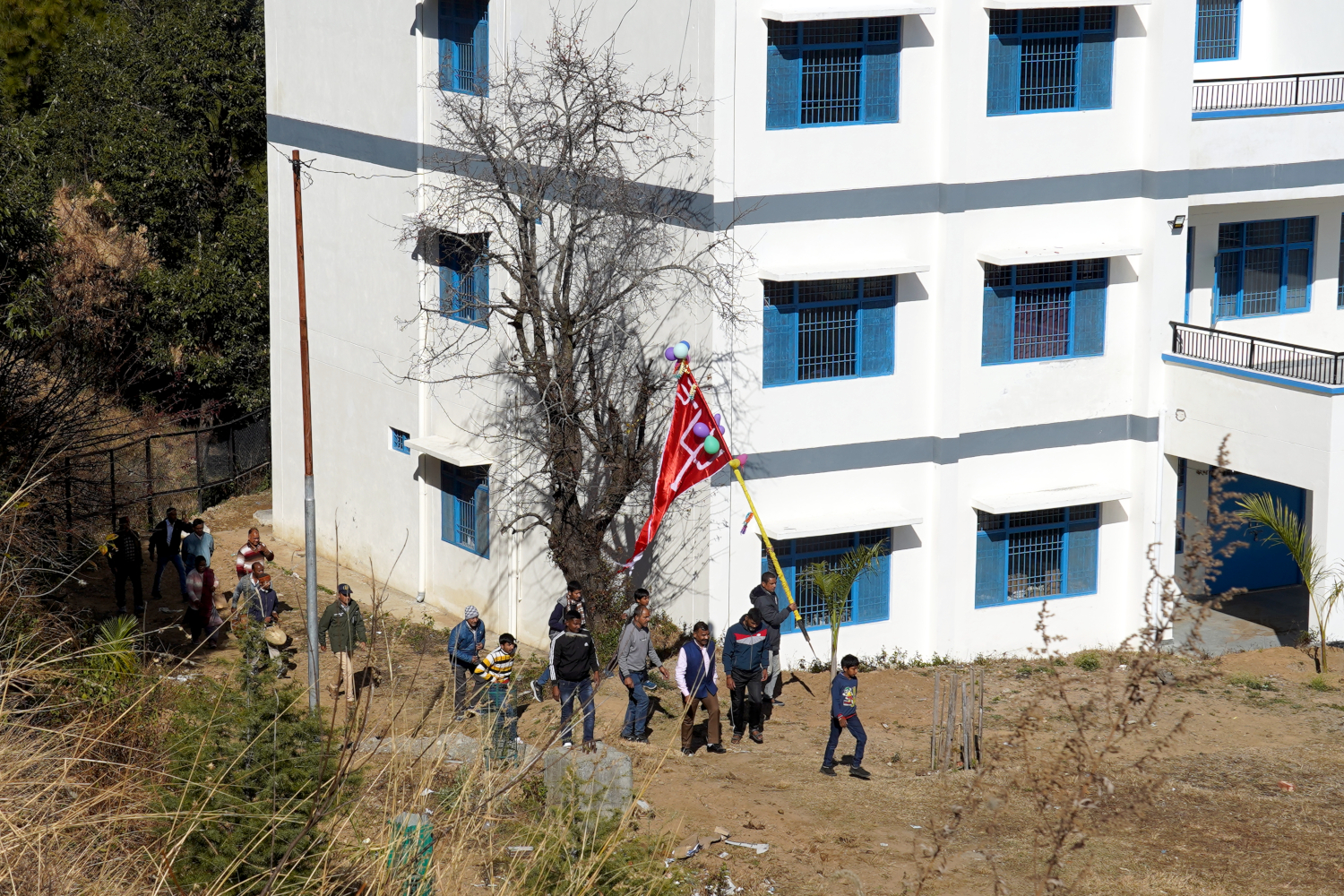
Maneuvering through the mob like a can opener, our contingent makes its way to the bluff overlooking the plaza by the “government center”, and we stake out our spectator turf on the grass. Across the plaza, many other spectators are ensconced on the roof of a building, but it doesn’t look terribly safe, especially if the audience up there grows a great deal. We wait and wait a long, long time for the competition that’s the centerpiece of the day’s events to get underway; but little to nothing is happening. One “tribe” (made up of men from several villages) comes along and plants its flag. After some time, another tribe joins the party, beating drums and waving its flag. When they enter the plaza, they plant their flag and then move it several times, each time with much hoopla. Guess they have to find just the right coordinates to guarantee success.

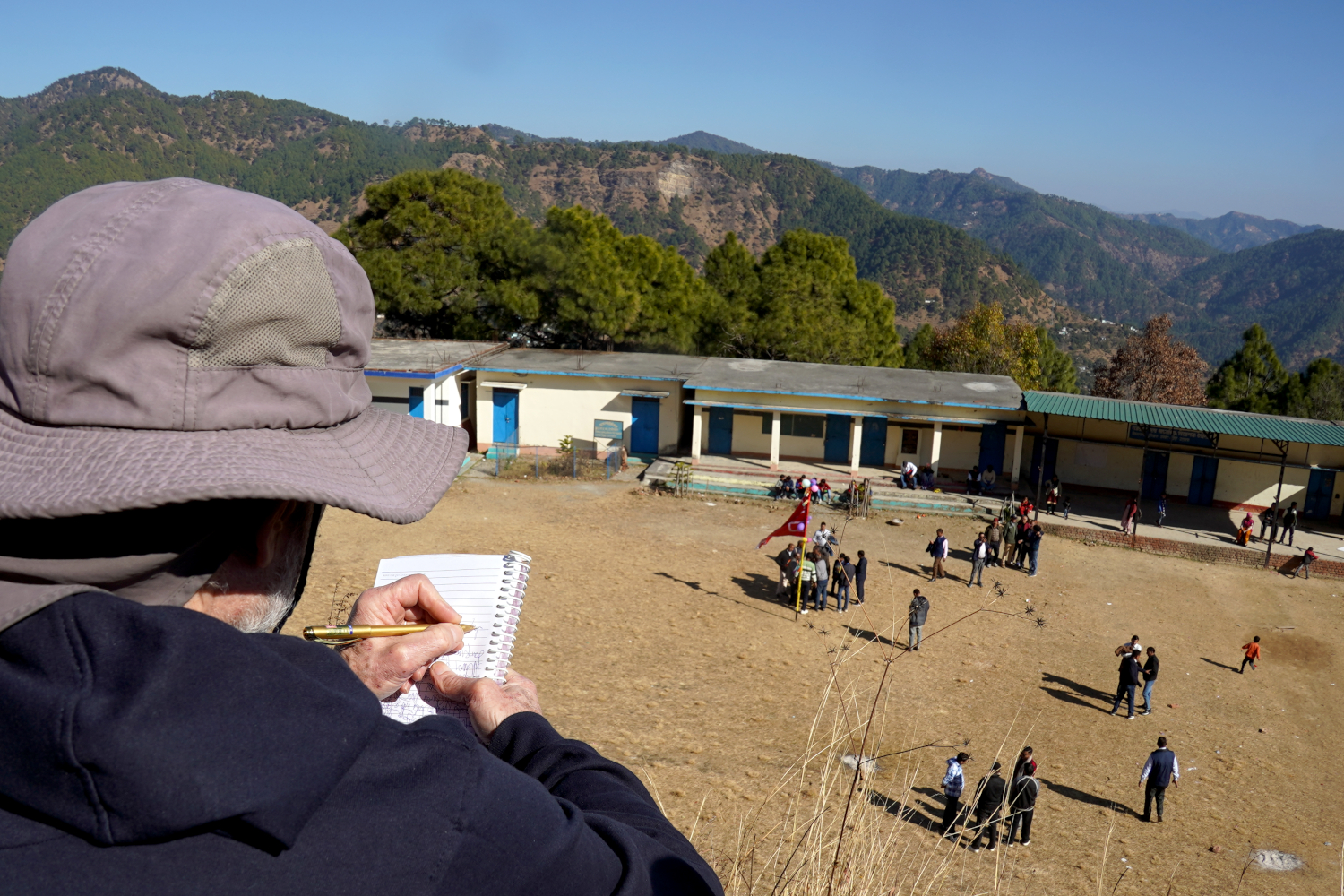

Growing tired of waiting for the game to begin, the two of us meander back to the shops we had passed. There we buy some peanuts in the shell. and some sweets (Indian sweets are amazing, and not too sweet) with the aid of an interpreter. Namely Madhu, one of the directors of the Winter Camp and our guide on the hike we had taken the day before — we just happen to run into him outside the shop.
After returning to the bluff and our comrades, and waiting another while, we again take a break and make our way up to the main road. It’s really the only road in town, or the only thing that looks like a street. The other “streets” are just footpaths. On the way up we pass a gentlemen who starts urging us to go back the other way, because that’s where the action is — as if he thinks we’re unaware that there’s a special event going on.
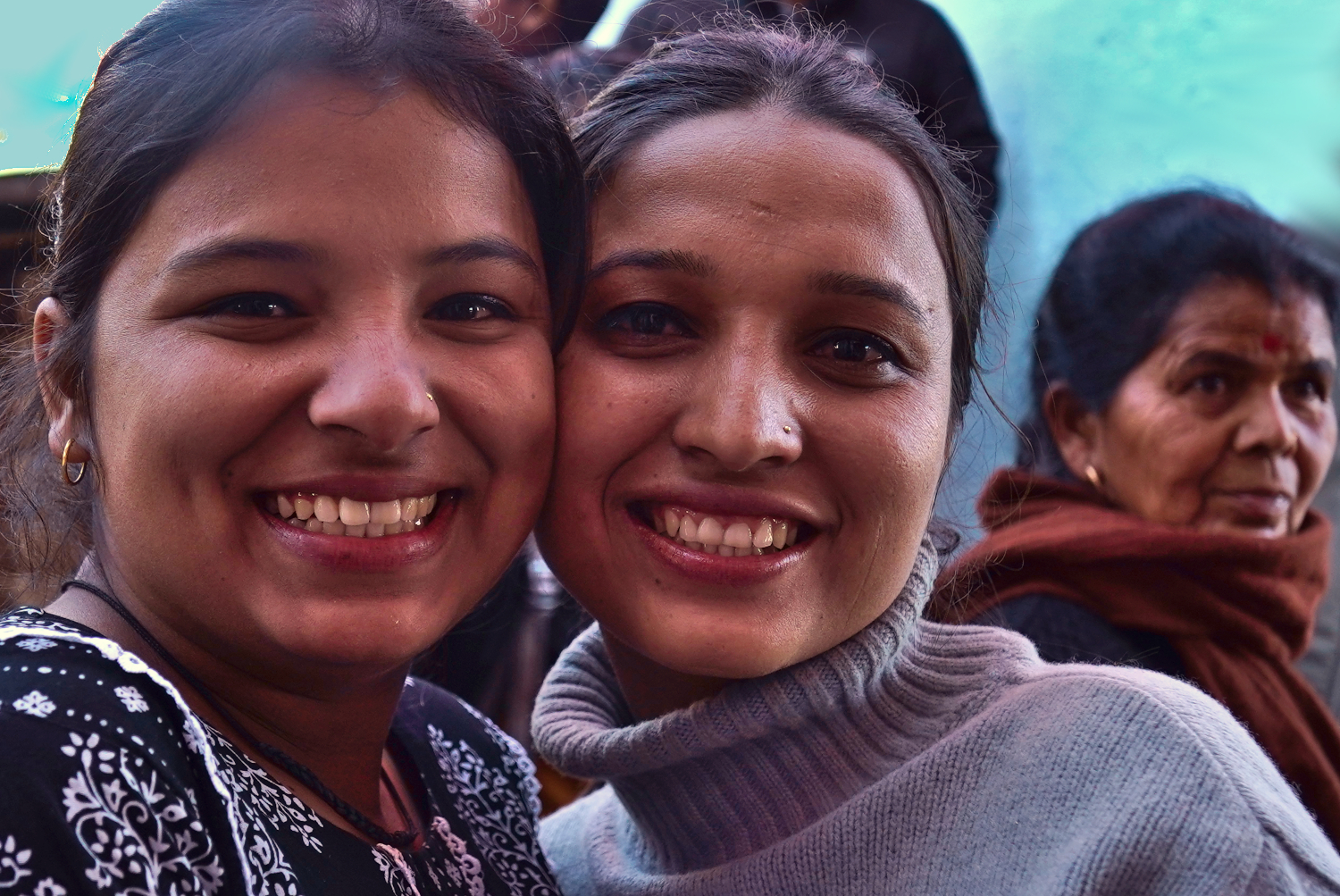
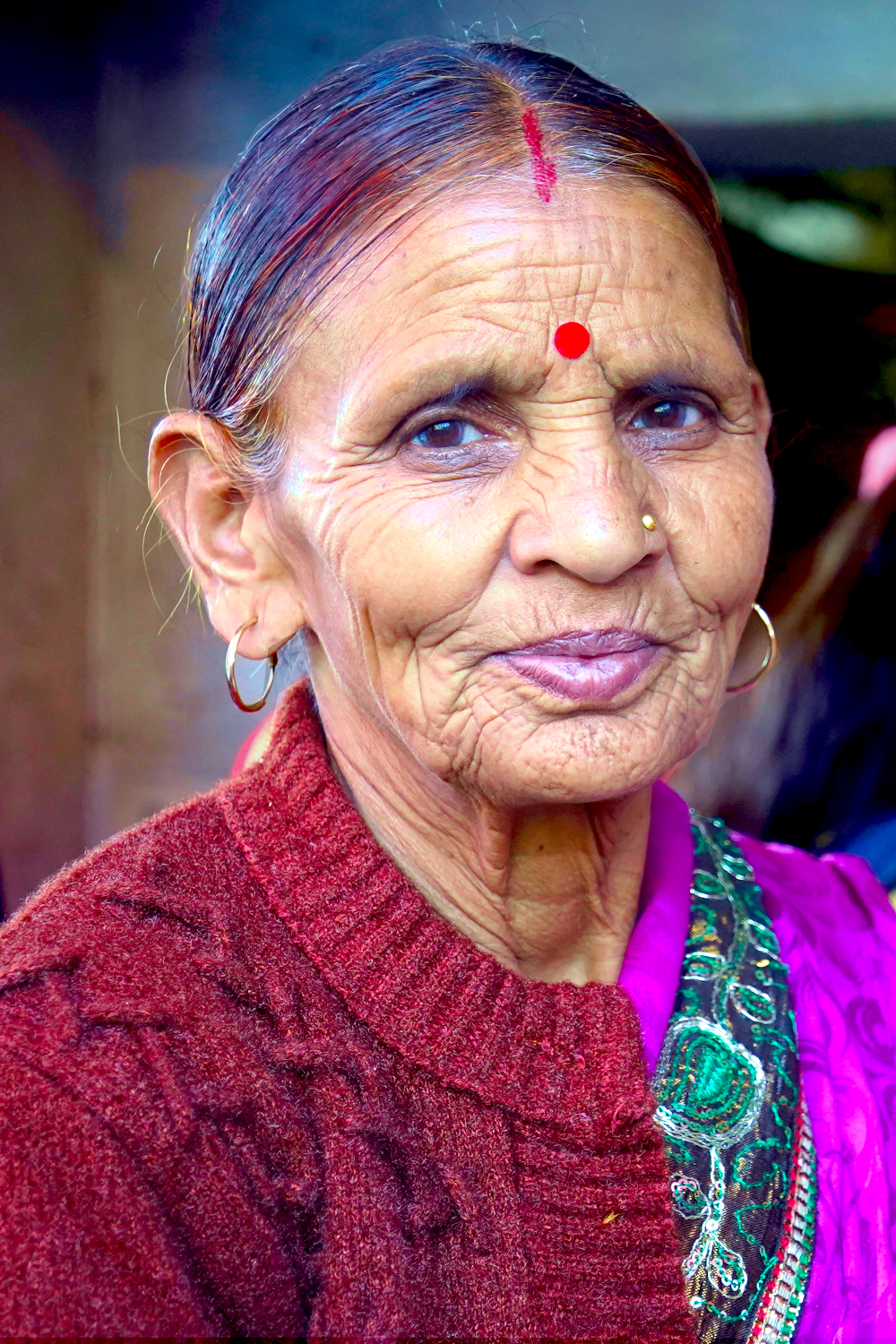
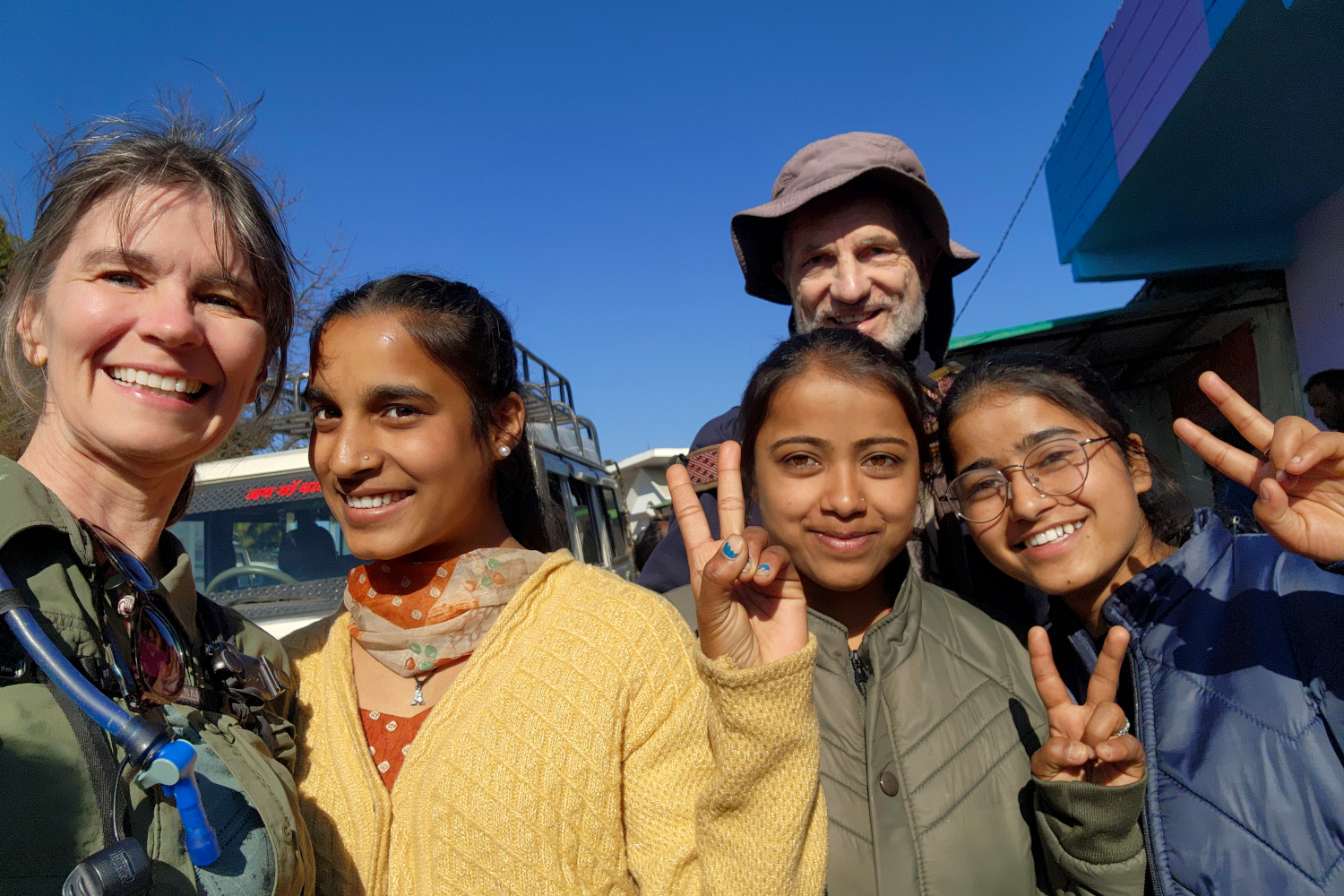
When we reach the road, Dennis goes into a shop to seek out a couple of things, and a woman he’s never seen before invites him to lunch. (She apparently is related to someone we’ve been working with.) Meanwhile, Kimberly waits outside, since the shop is crowded, and a throng gather around her. Some admire her camera, many wanting to pose for photos – either with her, for their own devices, or just to pose for her camera, even though they’d have no record of it themselves. At least they’d know their image would live on in some device somewhere in the world.
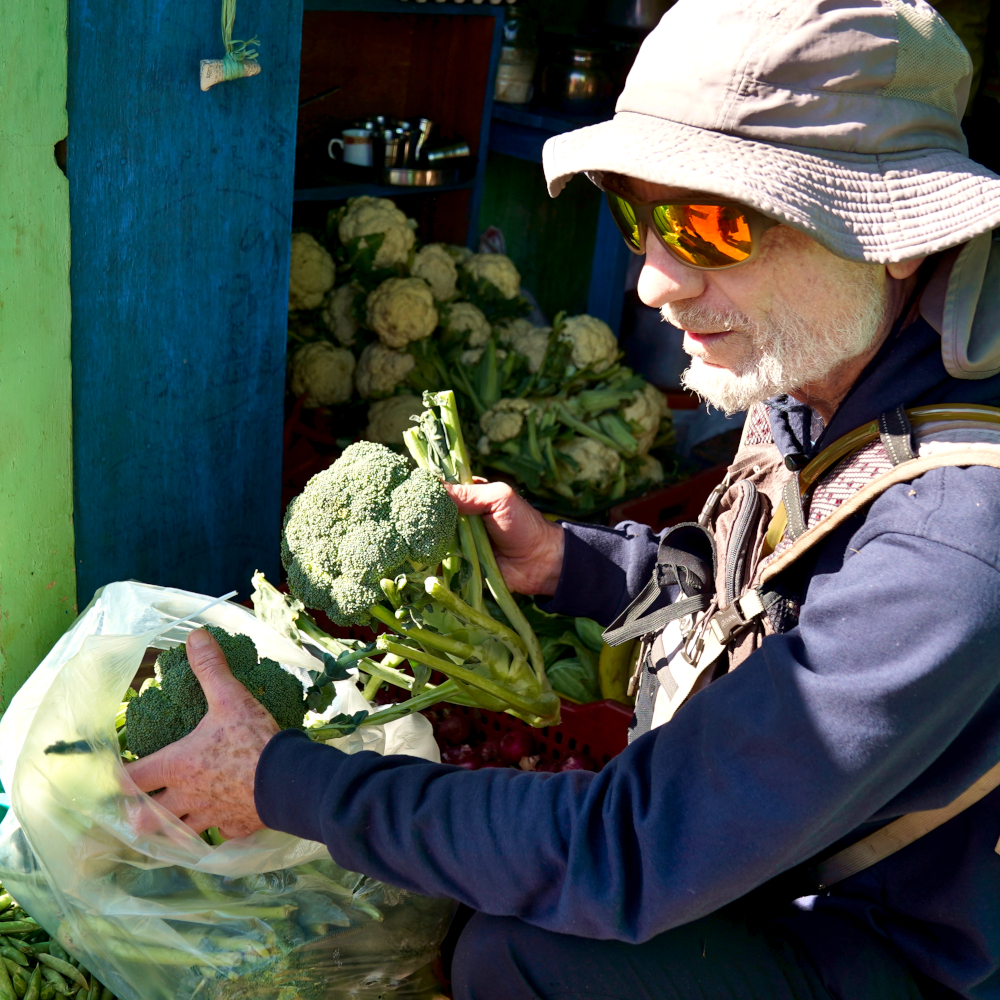
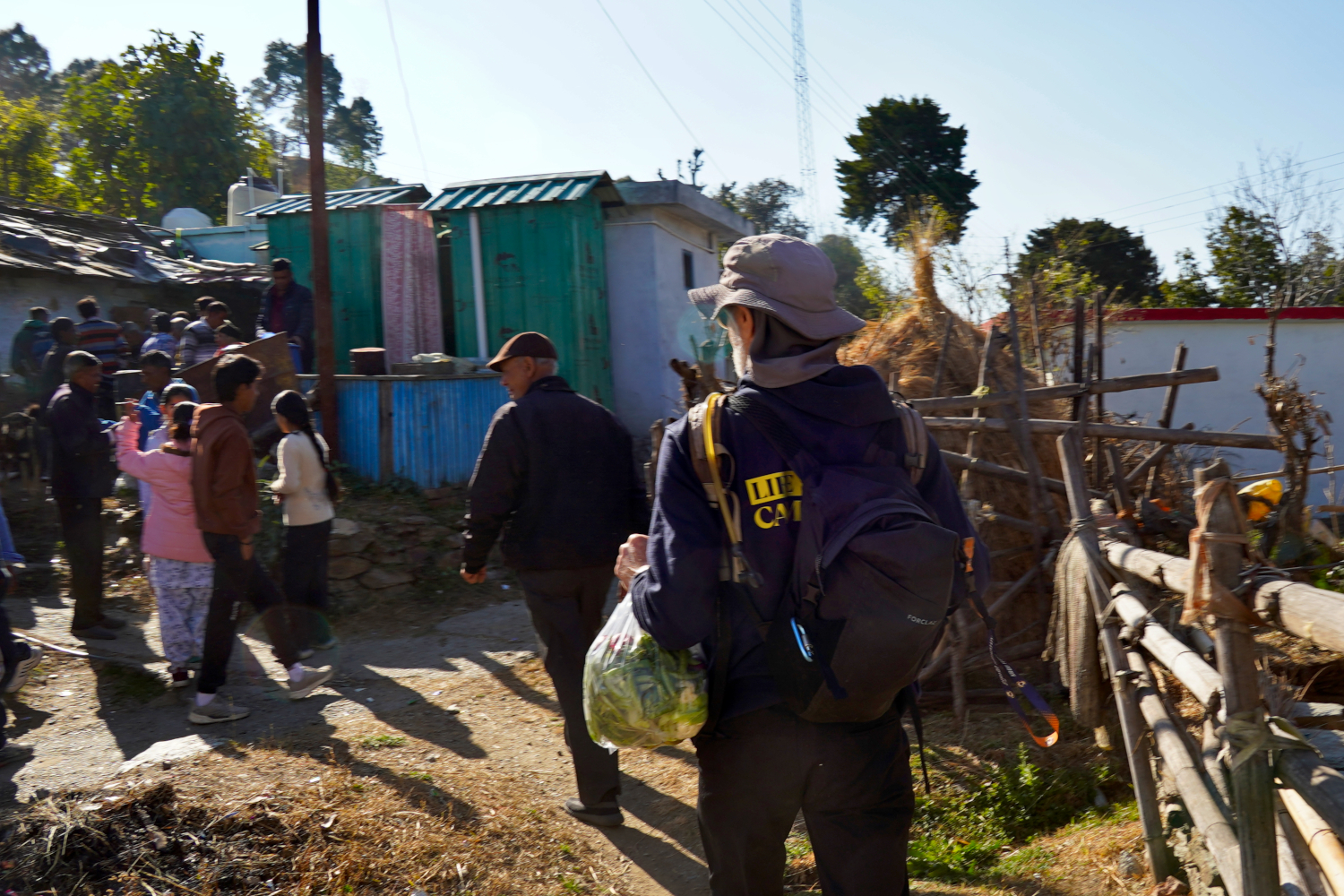
Almost directly across the street is a produce stand, pretty much the only one in town. So we mosey over there to see what they have in stock, and more people came to talk with us, greeting us warmly. The selection is the best we’ve seen yet; there is even, wonder of wonders, broccoli, which has been a scarce commodity around here. So we buy enough produce to fill the bags we carry, even knowing that we’ll have to haul it around for the rest of the day.
Well, it surely must be getting close to the time for the competition by now, so we’d best get back to the bluff, before it calls our bluff. Except for one little thing, which is getting to be a bigger and bigger thing. Namely, we have not taken a single potty break since we’ve been here, nor have we spotted any spot where we could. And you’d better believe we’ve had one eye out for it, as we always do — Dennis in particular always has his latrine radar finely tuned. Inquiring with several people, despite the language barrier, we get nowhere — evidently people around here are well versed in the art and science of just holding it in. And then we notice the fellow who had taken an interest in us when he saw us walking up the hill, and ask him is there is a “washroom” around; and after some consultation with his buddies, he instructs us to follow him.
So we tail him back down the hill to a small courtyard, where we find a toilet. As each of us is waiting our turn, a man who appears to be intoxicated keeps trying to tell us something, but we never can make sense of it. Then as we head back to the plaza, both men tag along with us, trying to direct us which way to go. They also urge us to leave our bag of produce back at the shop where the toilet was (the first man seems to run that shop) so we could come back and retrieve it later, and they are quite insistent about it, but we finally got them to understand that we are really insistent on keeping it with us. As inconvenient as it may be to tote around, we don’t won’t to have to fight our way through the same crowd more than once.
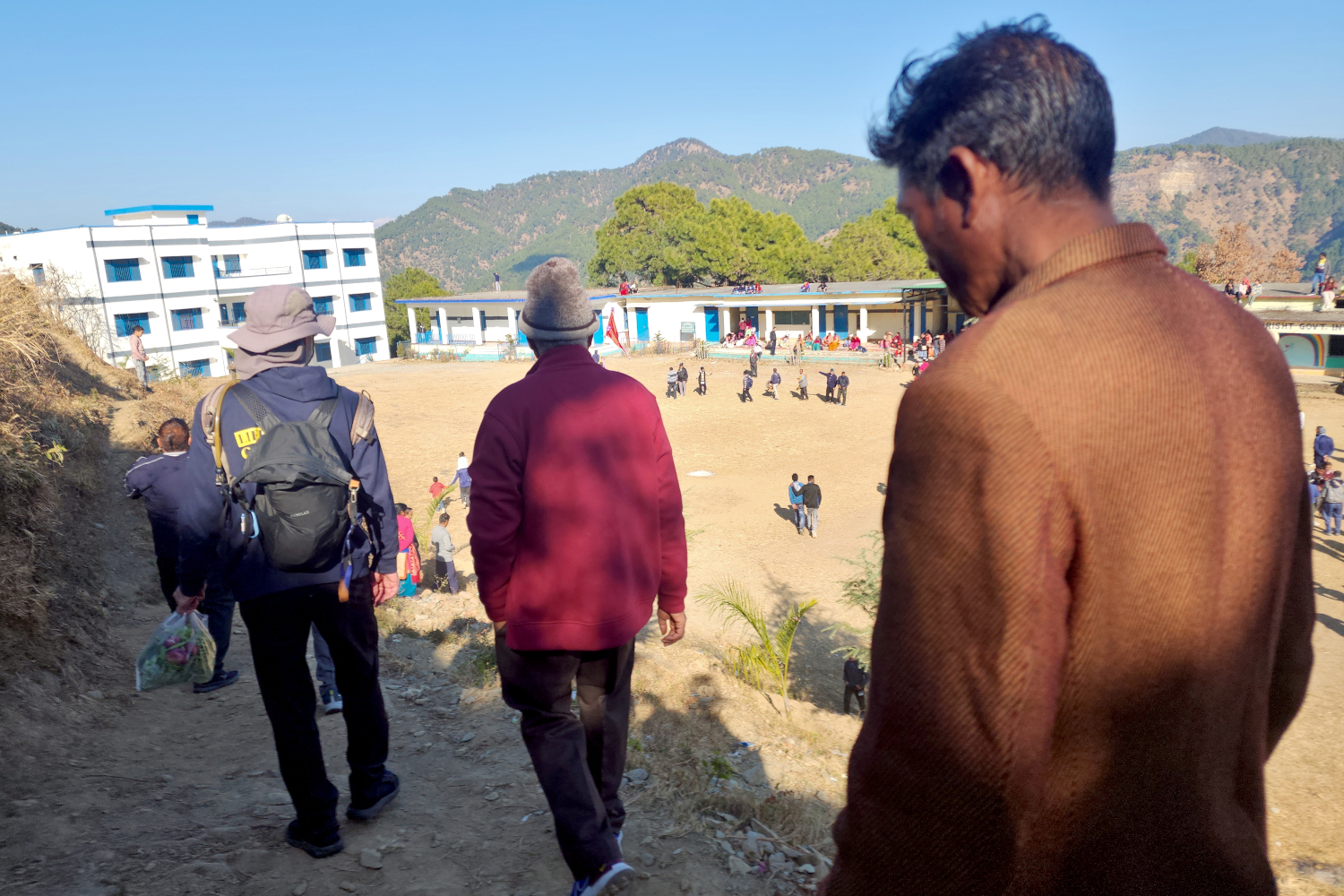
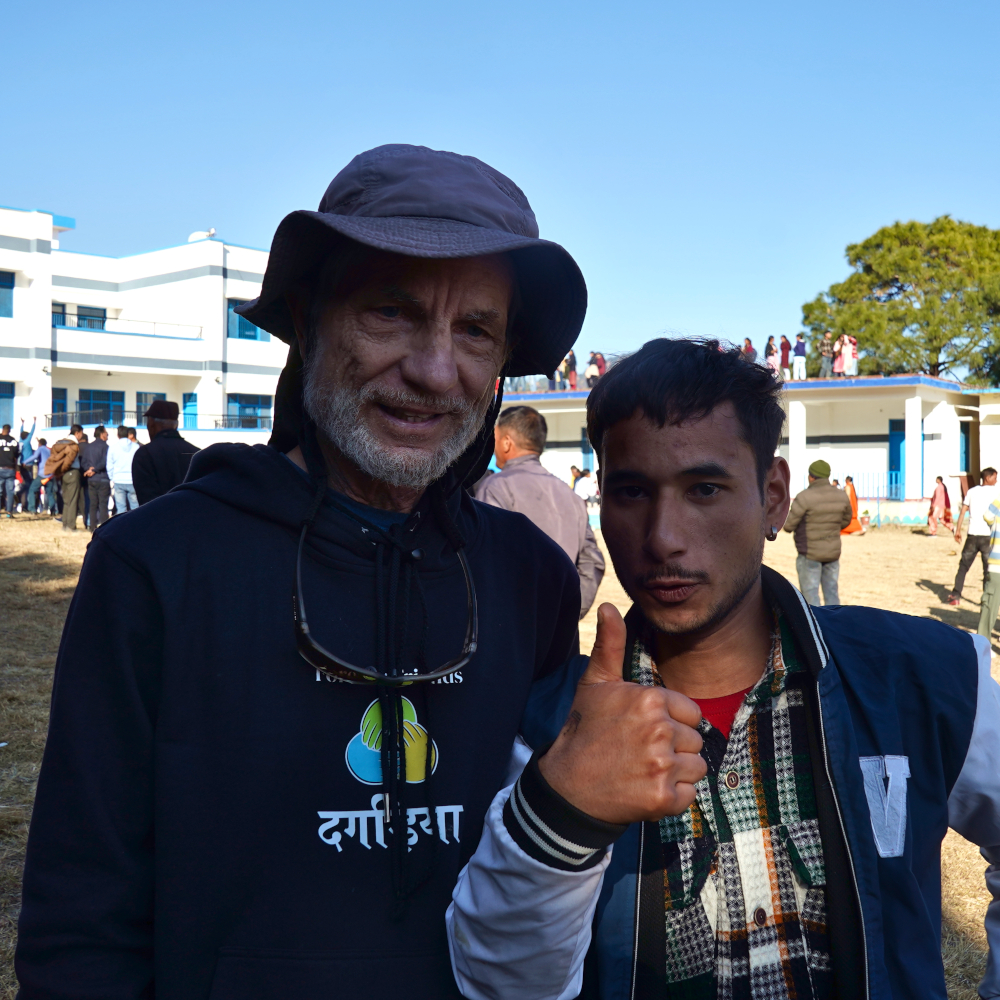
With these two dudes sticking to us like flypaper, offering to direct us where to go, we inch our way back to the bluff. When we get there, the other volunteers are no longer there; which complicates matters, because we’ve been trying to discreetly shake off our would-be guides by telling them that we have to go join our friends. So now we tell them that we have to seek out our friends, though truth be told, we know there’s really not much chance of running into them again until we get back home. Now our “guides” want us to follow them down into the plaza. We do go down, but only because we want to be at field level anyway, and maybe get some better shots of the action. At the bottom of the hill, we plop our butts on an area on the grass in a bit of shade, and they try to get us to accompany them across the field to the porch on the other side, where some other spectators are sitting — right under the rooftop which (so we fear) could collapse at any minute under weight of all the people sitting up there. Finally, they realize that we are resolute in our desire to remain in the shade, and they go away.
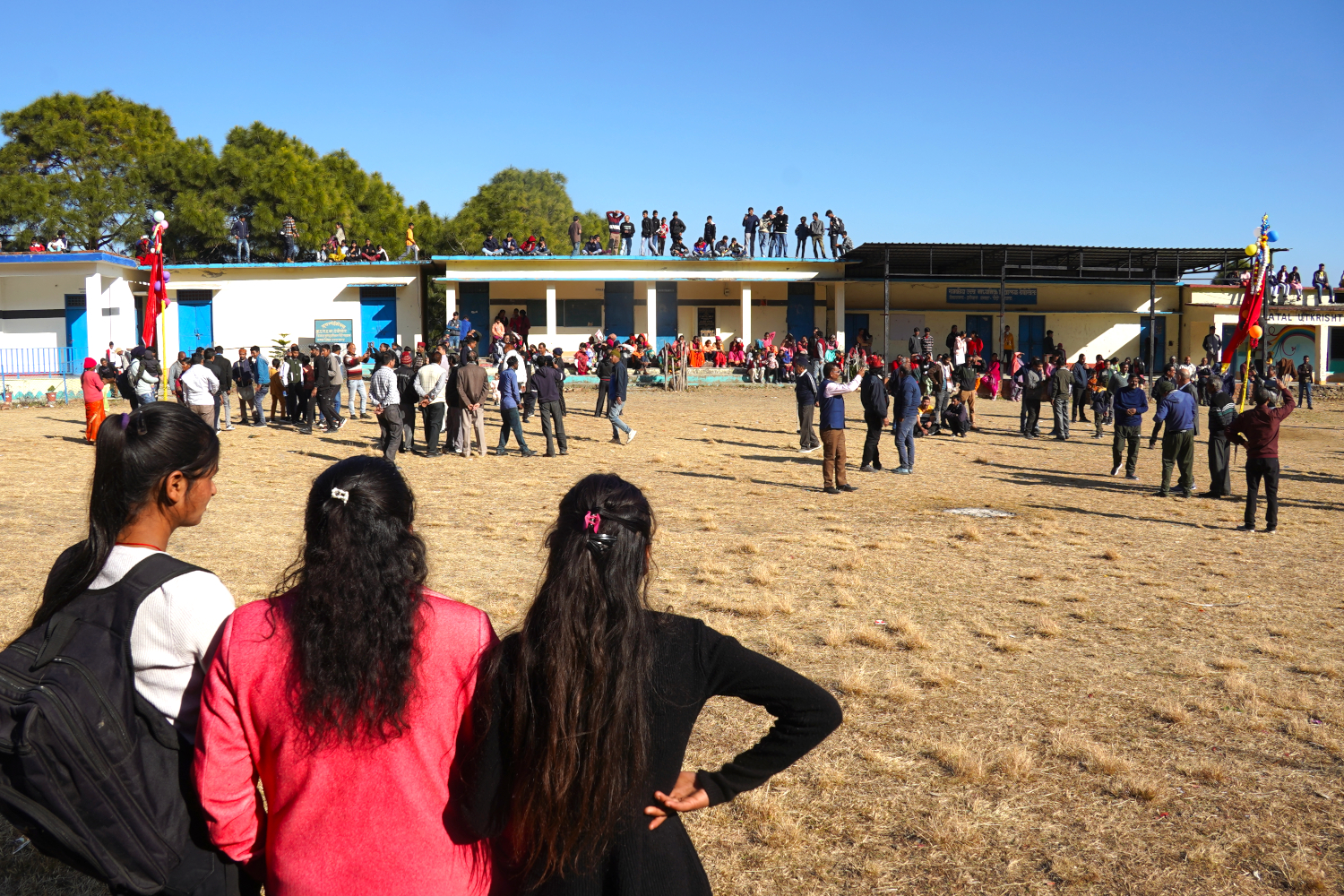
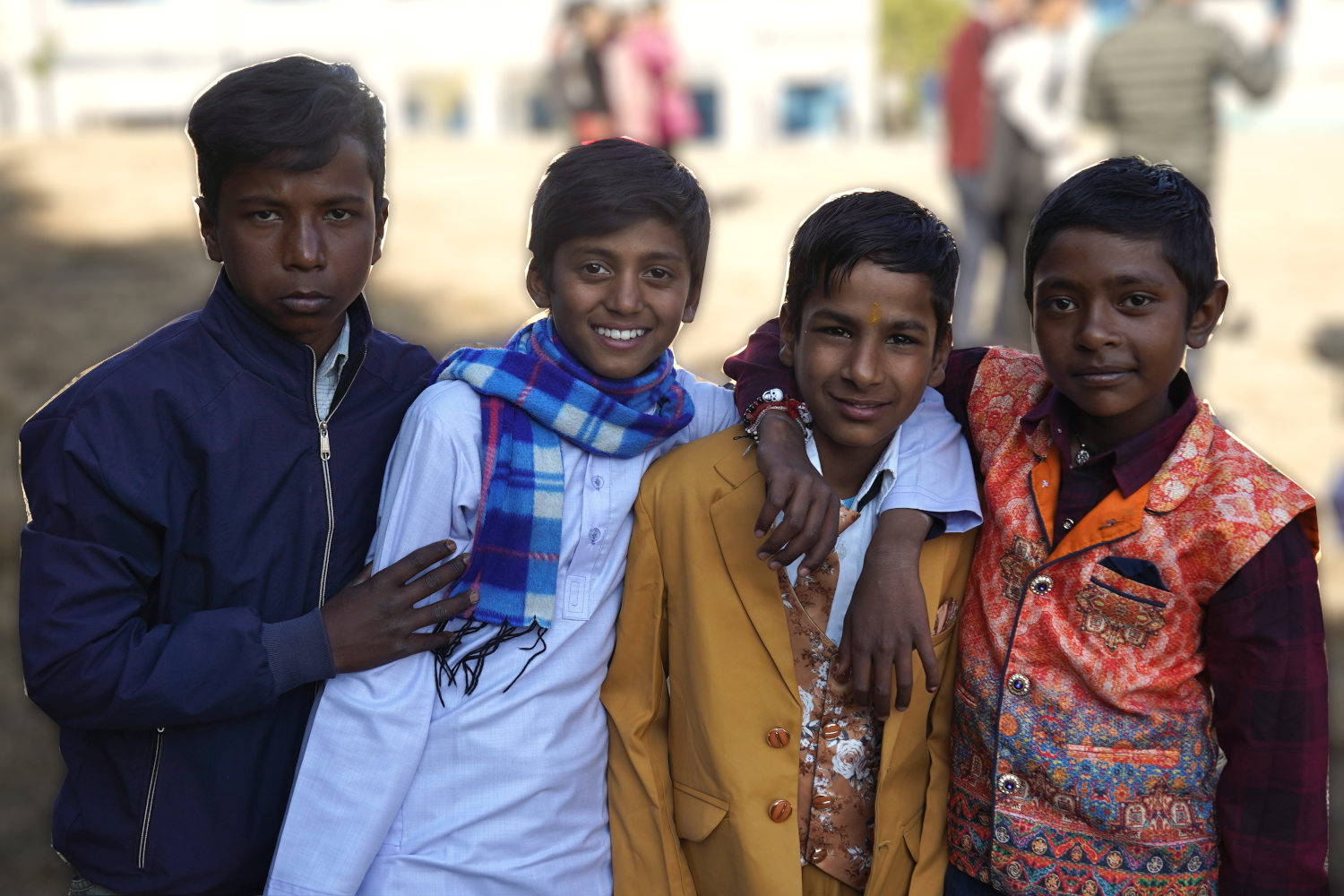
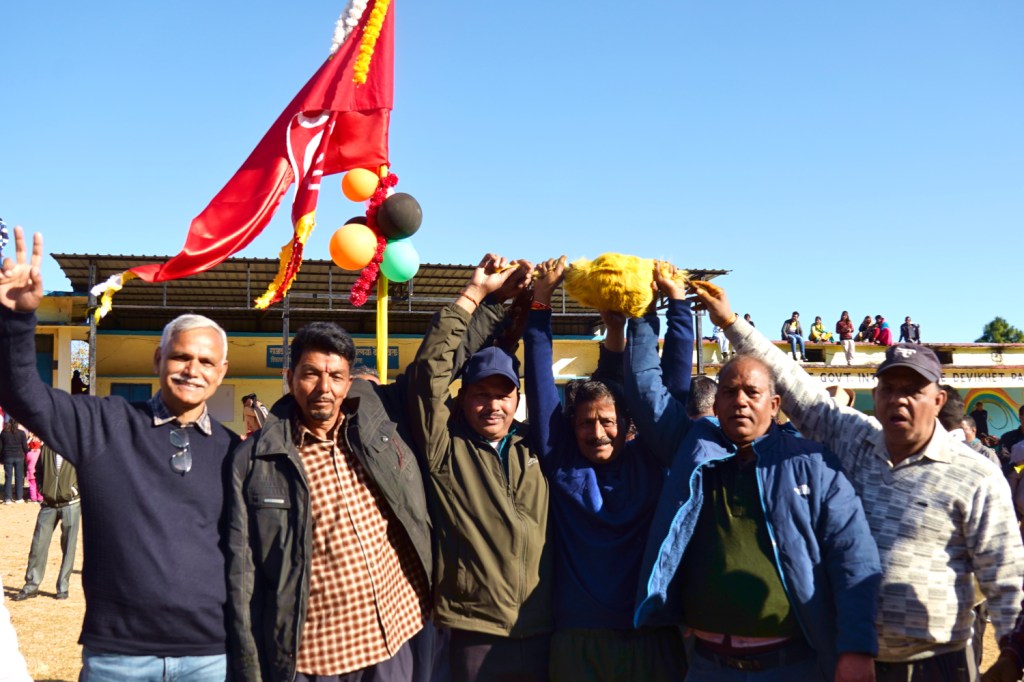
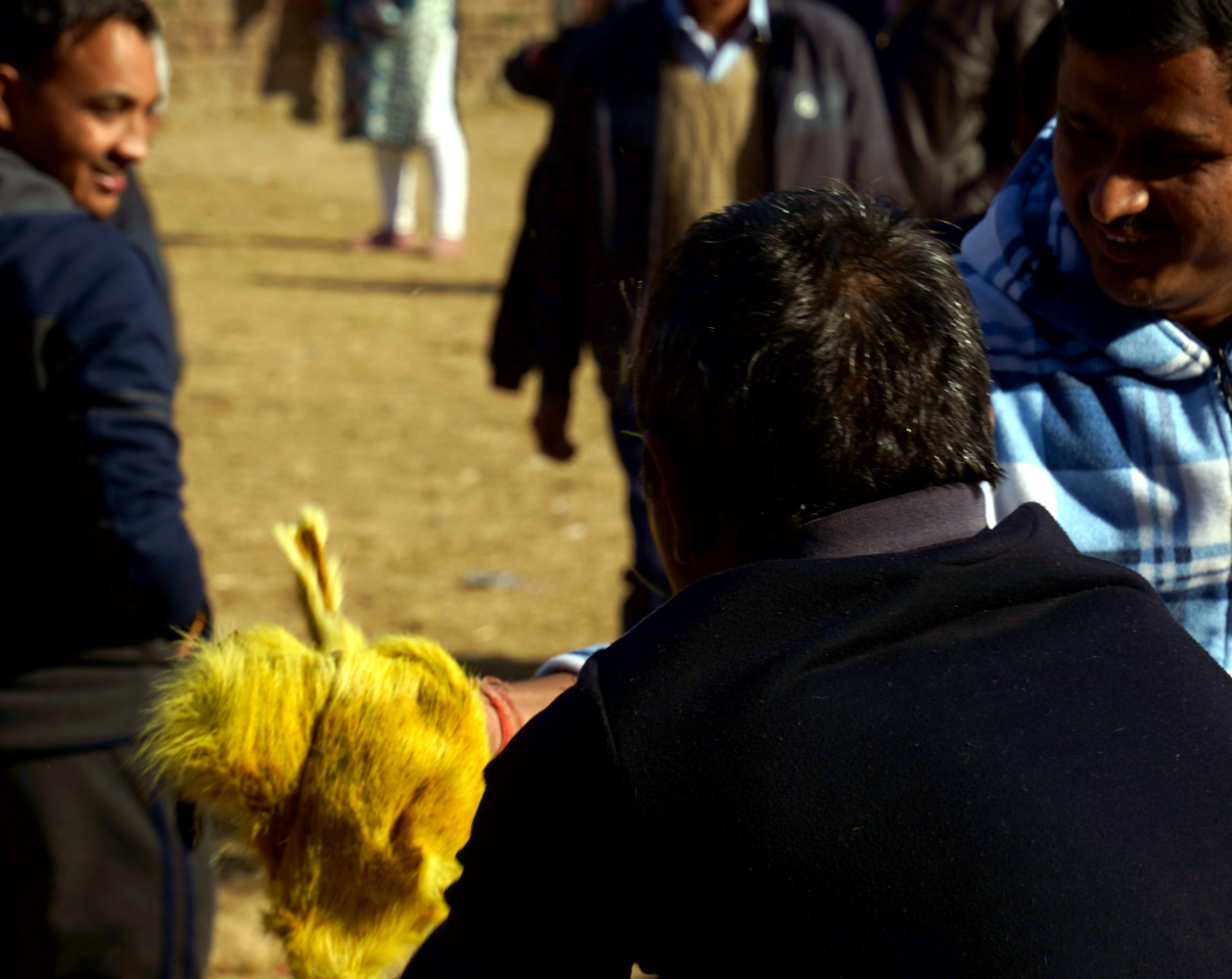
But it isn’t a complete and permanent reprieve from their attentions. Soon, someone brings out the “ball”, for want of a better term, the the game is to be played with. It isn’t globe-shaped like a ball, but looks more like a gargantuan piece of pinata candy wrapped in yellow paper — or almost like a rubber chicken. Several men in the center of the field, including Madhu, pose for photos with it, and our WC guide comes over and encourages us to get closer and get a better photo of it. Kimberly, the family photographer, does so, and the fellow seems satisfied that he has been able to persuade us to do something in tourist mode, after which he evaporates into the crowd again.
And then, at long long last, the battle begins. And “battle” is indeed an appropriate word. The contest appears to be roughly similar to football or rugby — with emphasis on the roughly. Each team is trying to wrest the “ball” away from the other, and haul it into its own territory. But there don’t appear to be any rules about exactly how that’s accomplished — at least there are no referees to say so. The players push and shove and tackle, and claw and roll on the ground in a big mass of writhing flesh, with the coveted yellow object somewhere in the center. At first, we think a fight has broken out, but then we realize that it’s all just part of the testosterone-fueled fun. It puts us in mind of the competitions we’ve heard about in prehistoric civilizations in which teams fought to the death. Surely it won’t be quite that extreme. Will it?
The competitors are so scrambled together, with body parts so intertwined like a haystack, that it’s really difficult to get a glimpse of the yellow prize, or see exactly what’s going on or which side is winning — if indeed victory is really going to be a thing at all.. Dennis creeps up toward the tangle of bodies, and manages to get some fair video footage, fearing all the while that his phone may get knocked out of his hand and lost in the ruckus.. Then at one point the players, for whatever reason, (we have no idea exactly how this game is supposed to be played) abruptly clamber to their feet, throw the “ball” over his head, and begin rushing after it — right in his direction. So he makes an executive decision that the time has come to beat a hasty retreat.
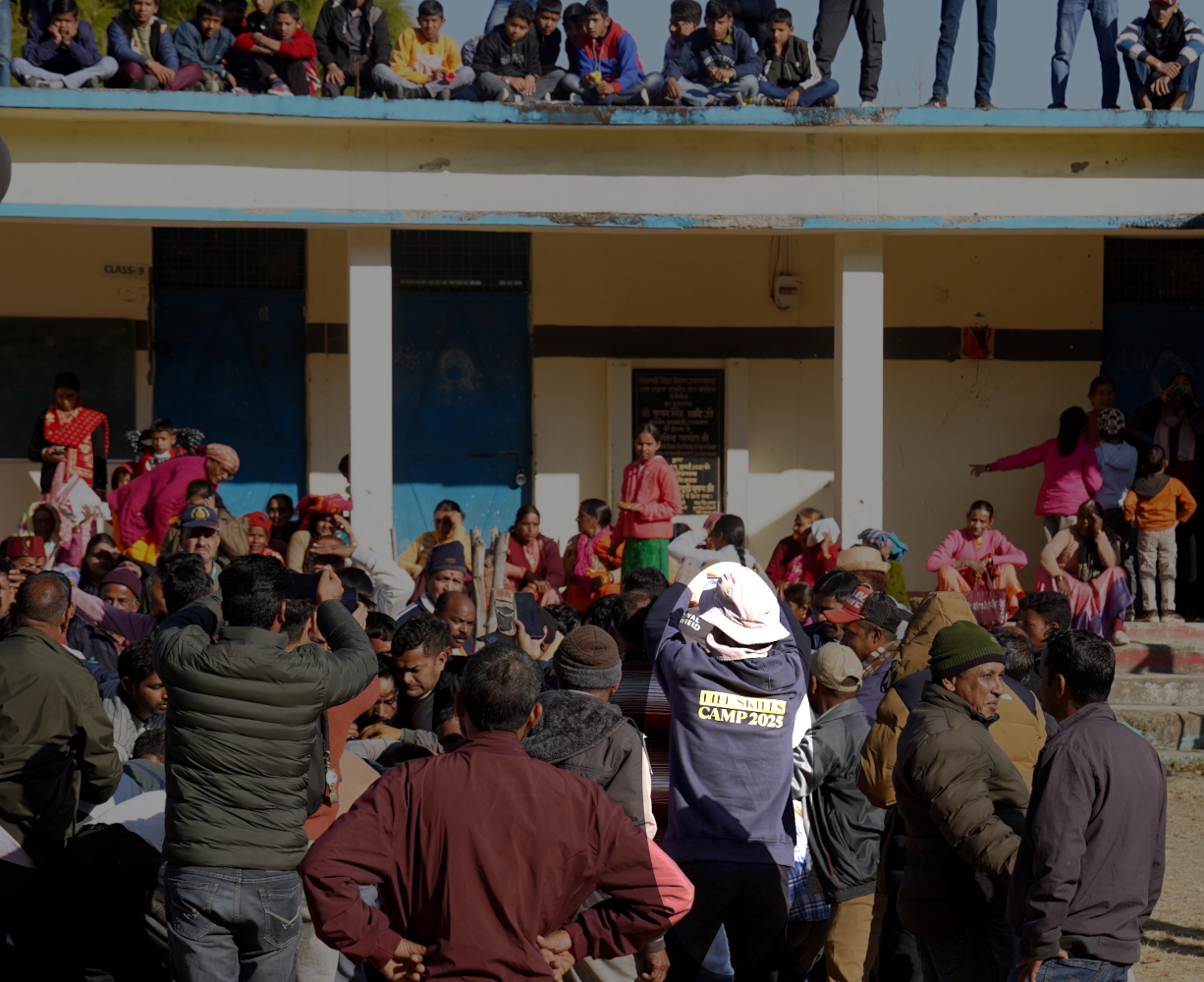

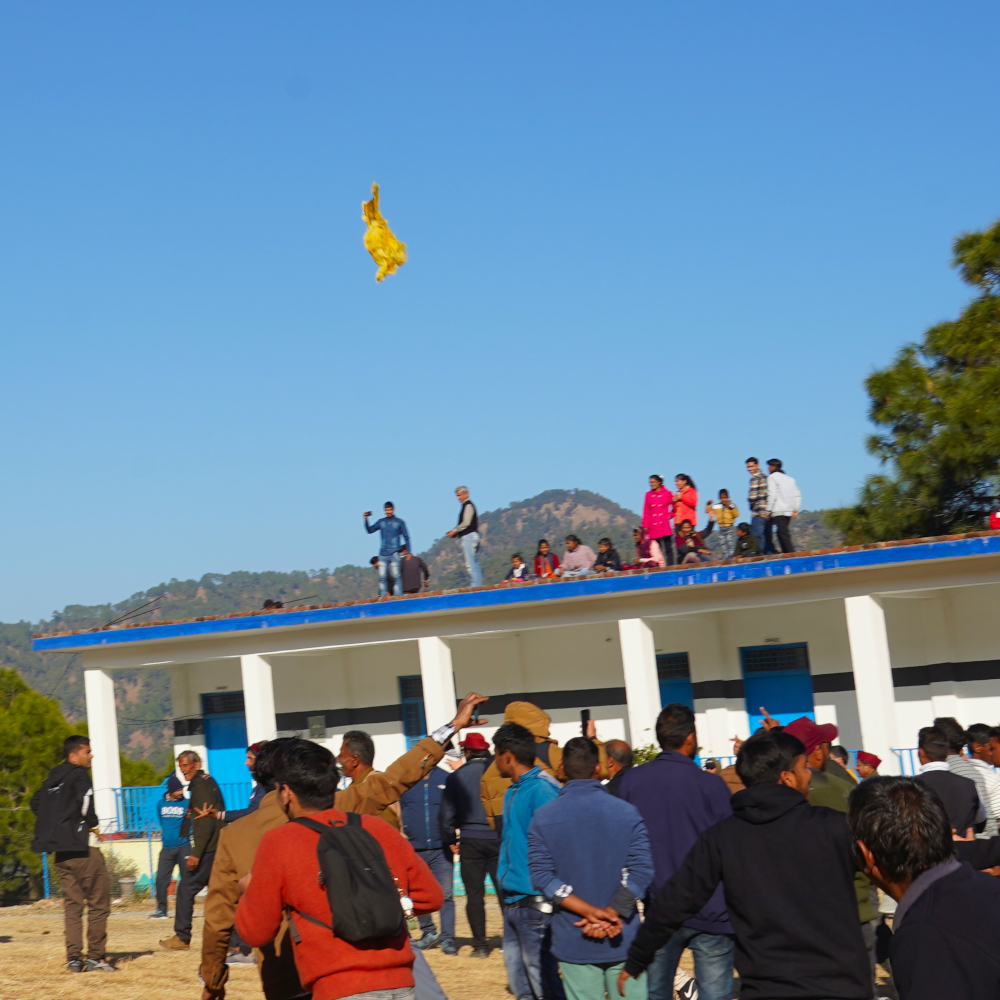
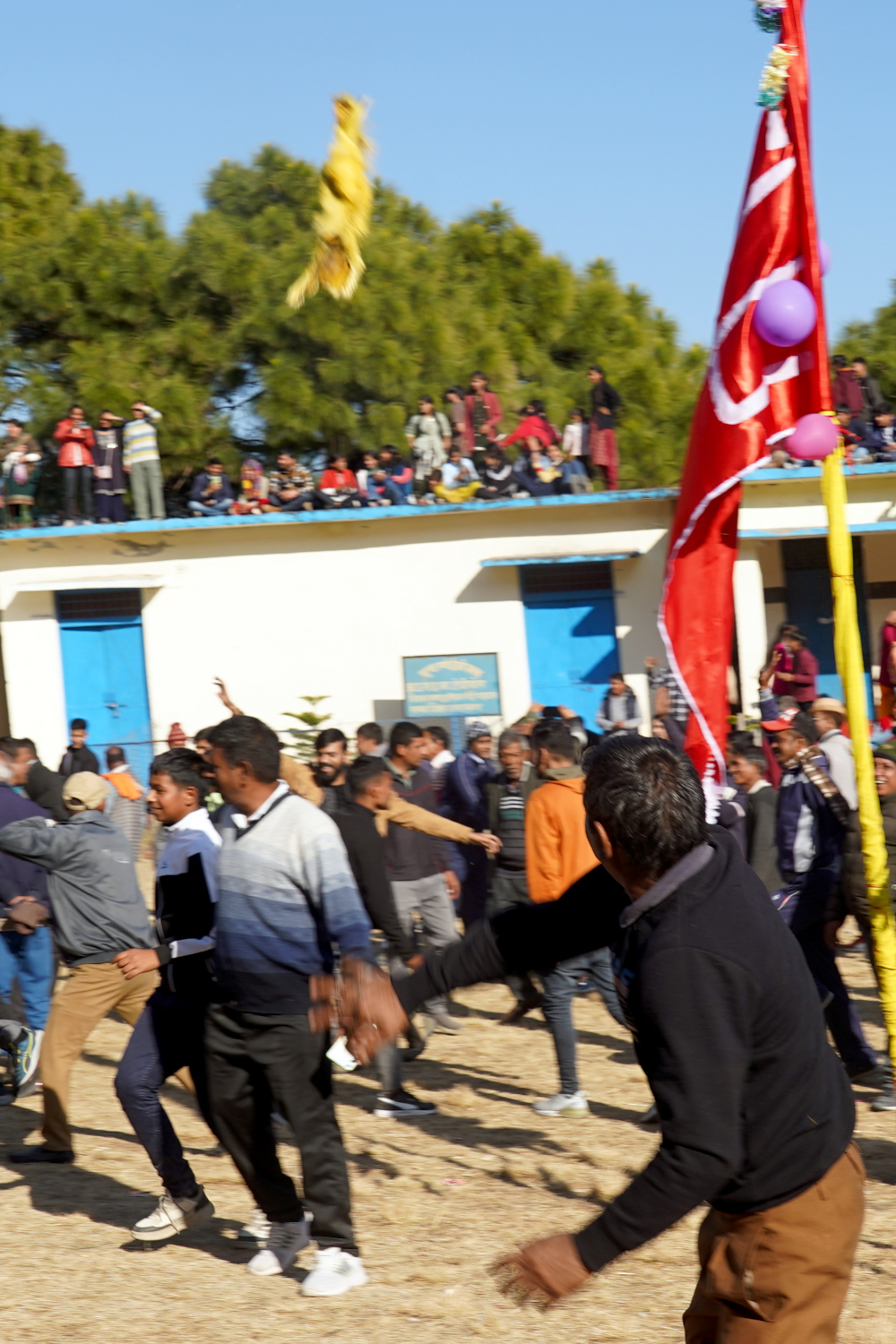
And before we can ever figure out what’s going on… well, it isn’t anymore. The game is over. And we gather that “our side” has lost. It was a very brief contest, considering the long buildup. But we consider it worth the trouble to have witnessed such a spectacle, whatever it was. It’s not exactly something we see every day. Nor even every decade.
And then it’s just a matter of worming our way back through the gauntlet of other festival attendees, many of whom want us to pause and take selfies with them — a very common encounter for foreigners in India. One young man is especially overbearing — if not downright obnoxious — and wants Dennis to pose with him in several different positions. Then he goes to fetch a friend to do the same thing, But Madhu once again comes to our aid, scolding the young man and his friend in Hindi, whereupon they get lost.
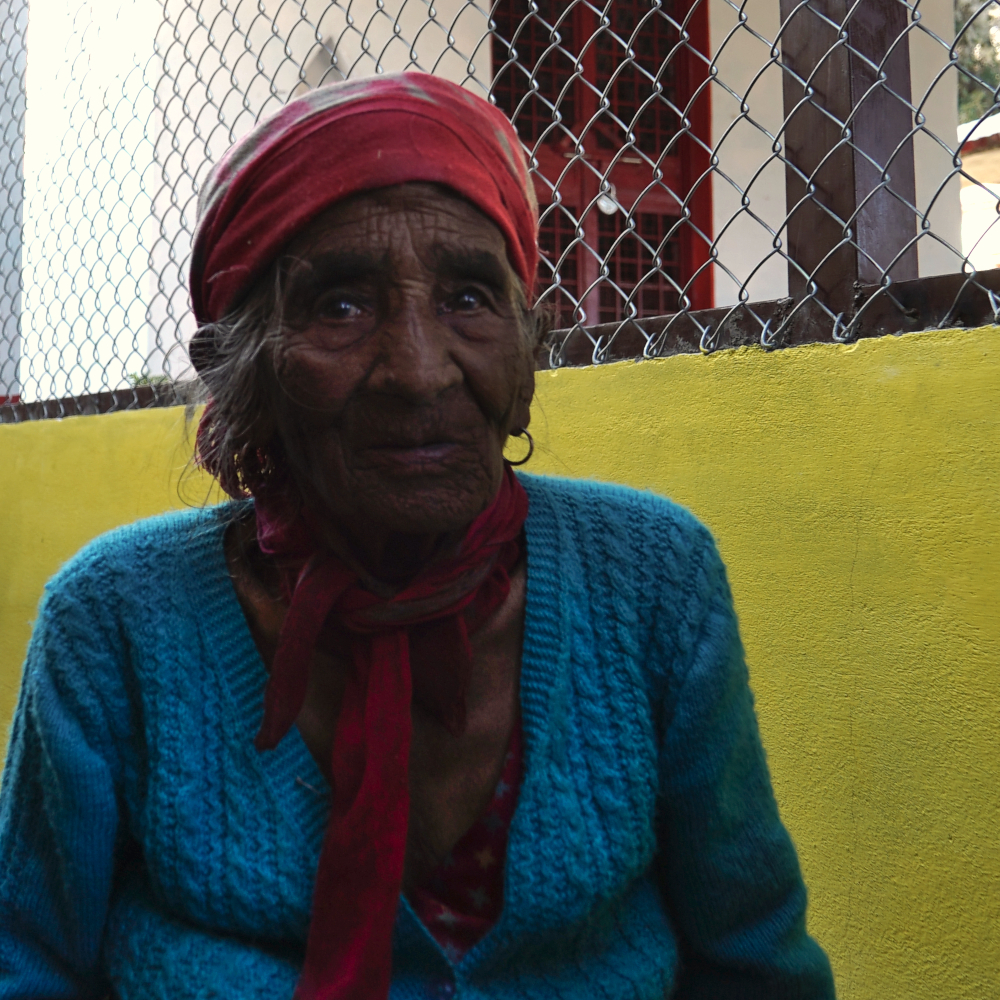
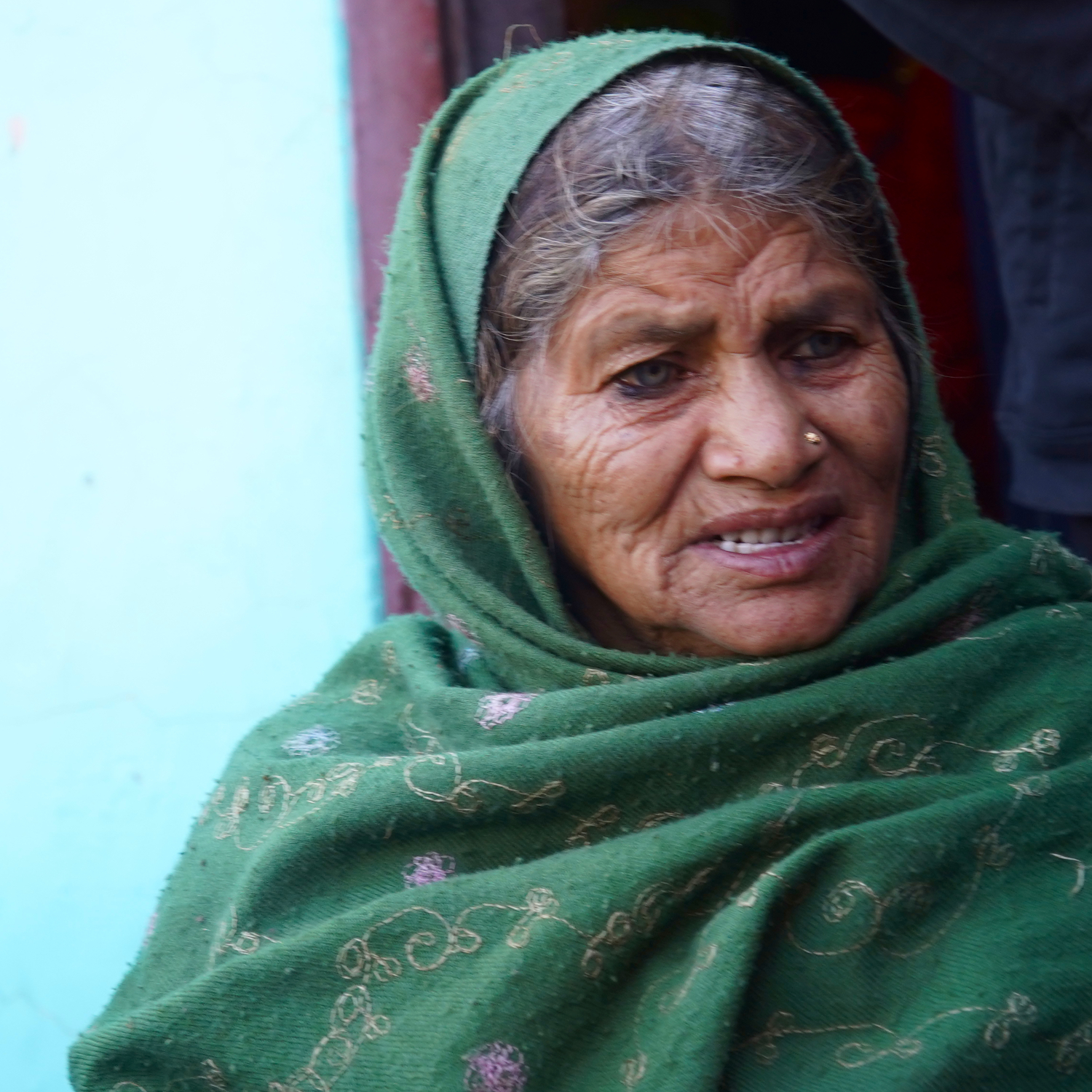
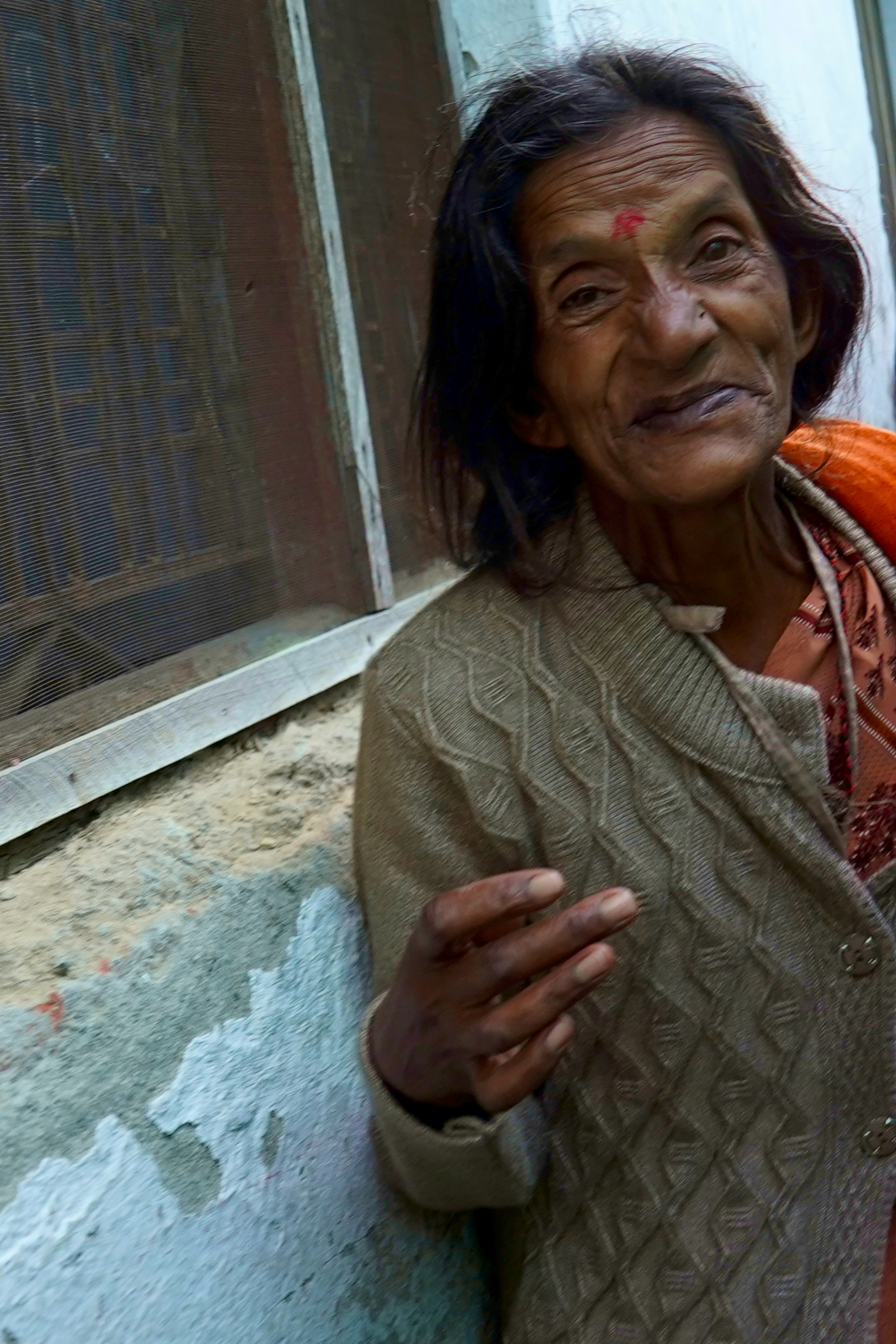
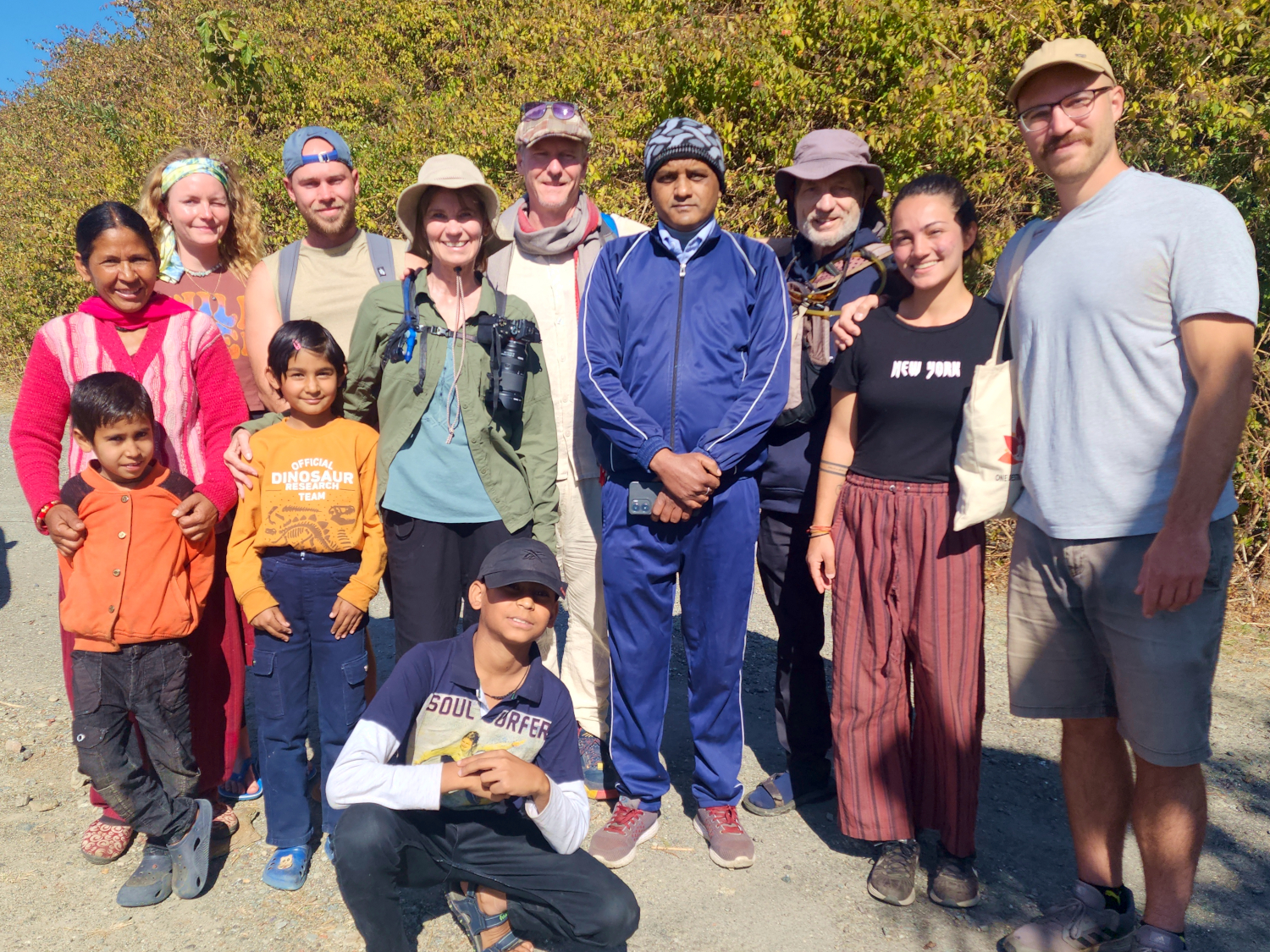
When we make it back to Shri Timlli, we catch up to our fellow American and European volunteers who also attended the festival, and we’re all puzzled but awestruck by what we have seen today. This kind of experience is the real payoff of global travel: not the polished and curated tours, but the raw, unscripted encounters that leave you marveling at the world’s infinite variety
Events occurred: 1/14/2025

 world travel with a theatrical flair
Leave a comment