

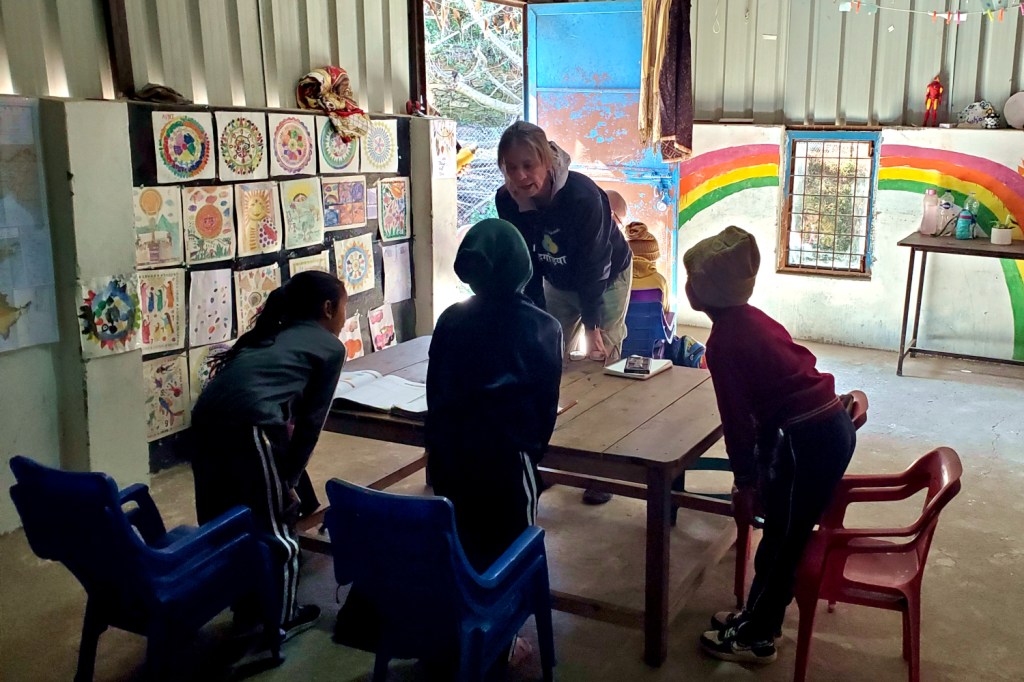
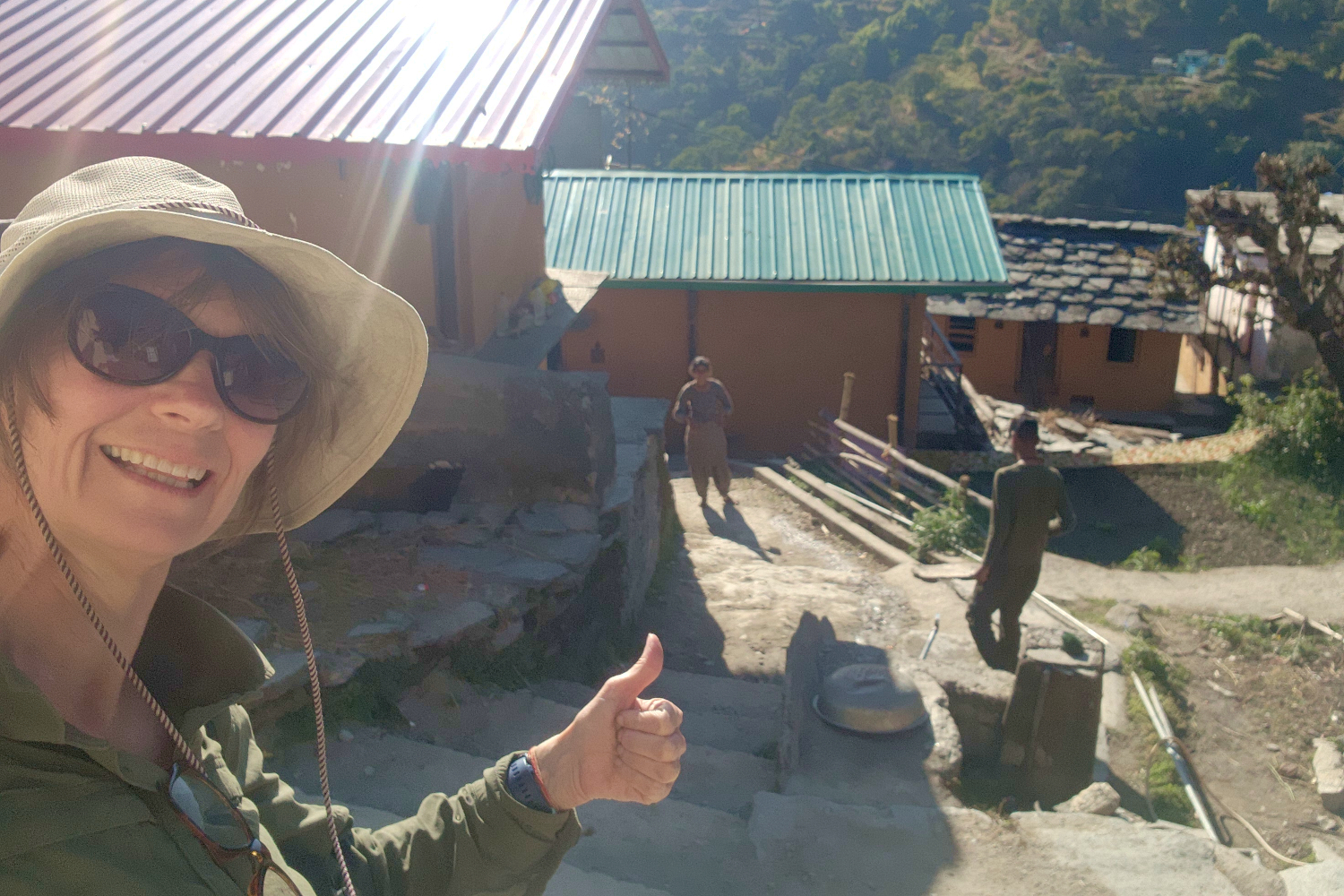
At the village of Shri Timli in the Himalayan foothills, many foreigners, like us, volunteer to work for the Shri Timli Trust through Workaway. There are often as many as 10 of them there at any one time, which was the case during most of our own stint. But they come and go with great frequency — some stay only a few days, while others stay for many weeks — or occasionally even many months.
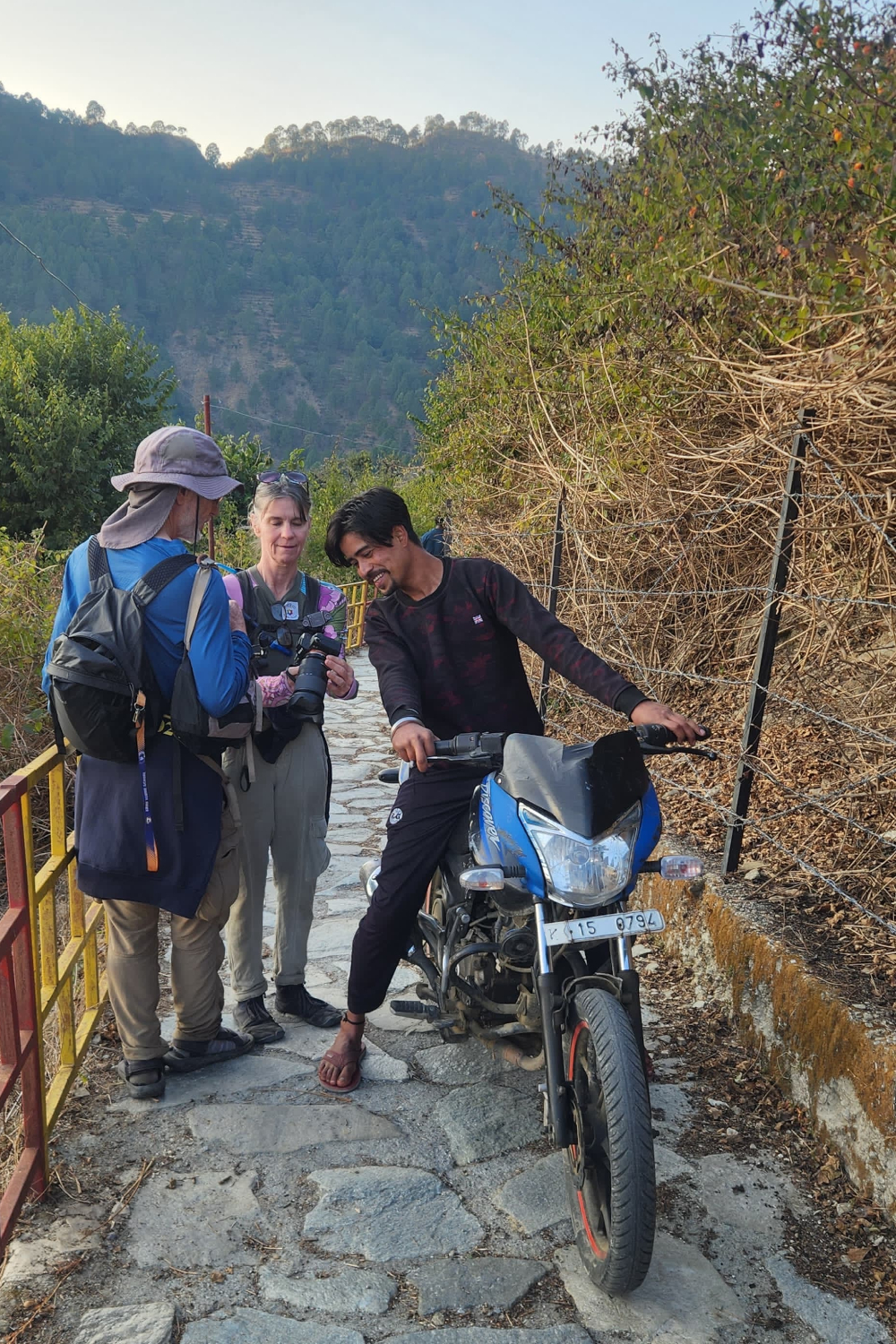
On a particular Wednesday, 5 of the 10 volunteers depart at once. Among them are fellow Americans Tina and Andrew, of whom we’ve been especially appreciative. They had welcomed us and got us oriented when we first arrived, and had offered to let us use their Wi-Fi hotspot when our SIM card expired and we were unable to obtain another one. And Tina, ever alert to problems other people might be experiencing, picked up on the fact that we were concerned about possibly running low on rupees in our remaining time (with no ATM anywhere in captivity) and offered to trade us some for U.S. dollars, of which we had plenty. We did, just to put our minds and ease.
So we say goodbye to 5 volunteers, but the vacant rooms don’t last long. In fact, a new volunteer, a German woman named Leonie, will arrive the following day to occupy the room next to ours, vacated by Tina and Andrew. And before the week is over, there will be a full complement of 10 again.
Meanwhile, the two of us hike down the hill to Dabral, one of the dozens of little villages scattered among the foothills, to meet up with Madhu, one of the directors, along with Neeraja, of the Winter Camp for girls that recently concluded, and with which we assisted. This was the first such Winter Camp, but it’s going to be an annual event. Madhu is involved with putting together a website for it, and we have agreed to help him — actually Kimberly has agreed, since she is the web-siter in the family, although Dennis also looks over the text of the content, which is in need of some correction in English (not the mother tongue language of the designers).
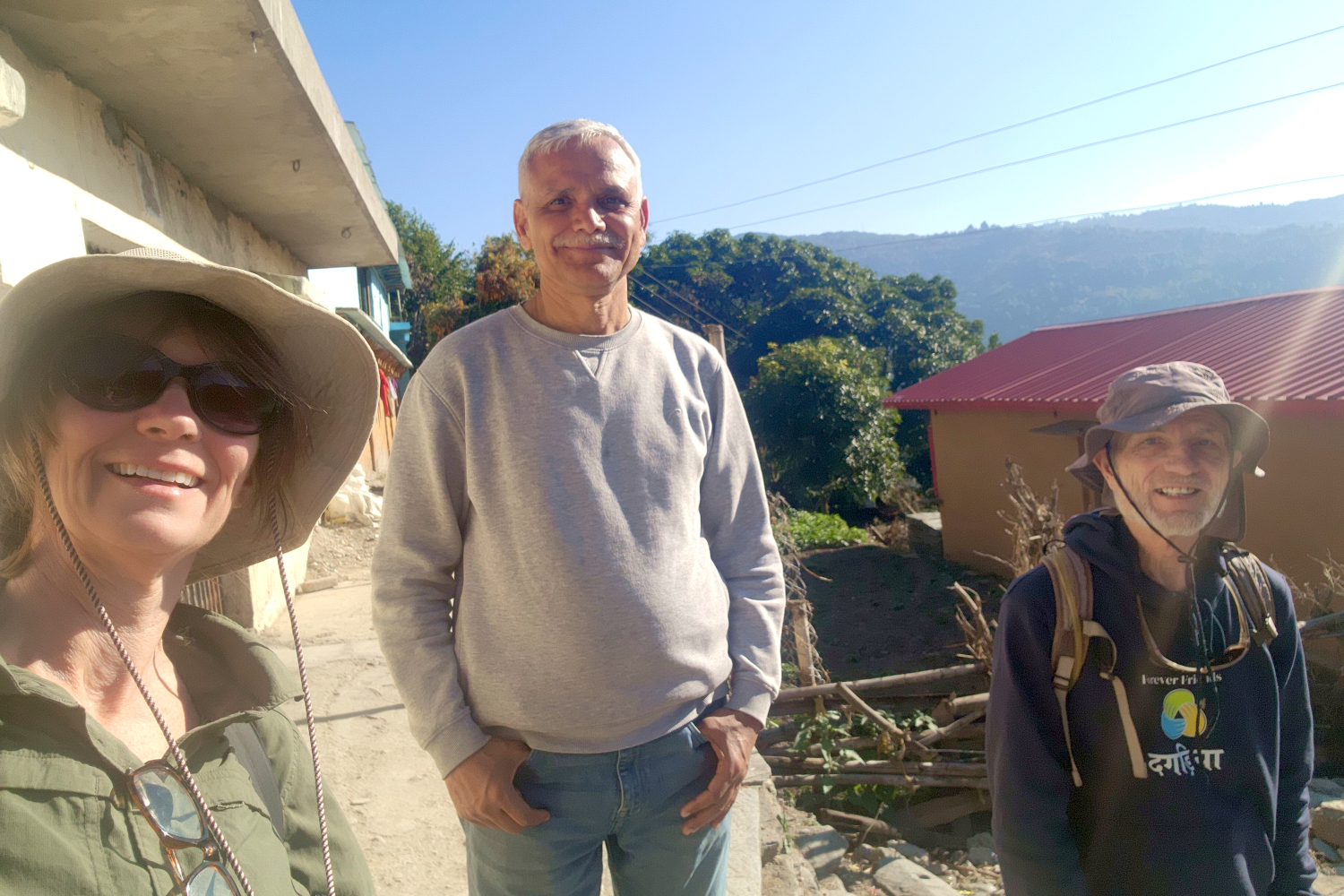

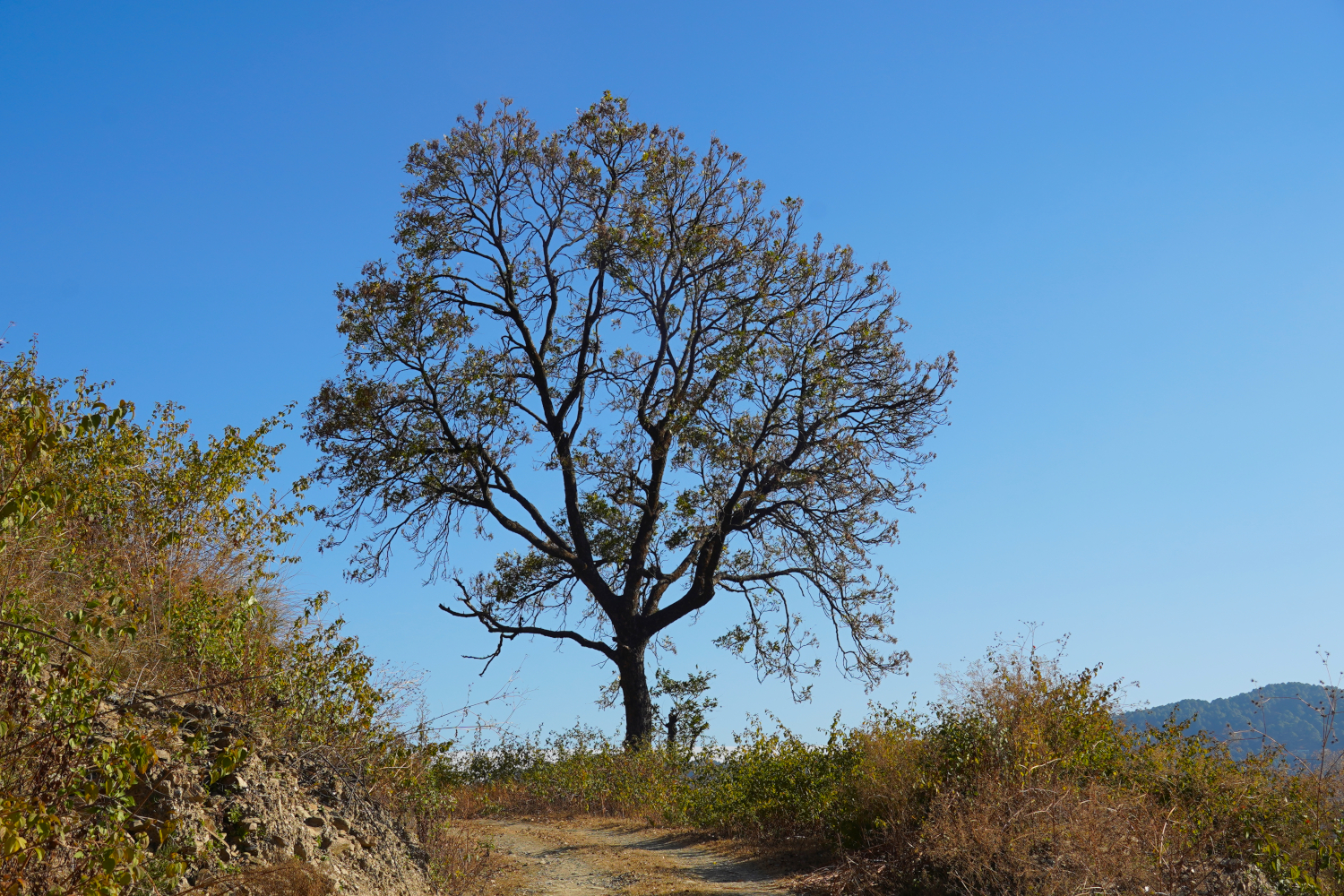
We are joined by another fellow whom we’d seen before, and he tells us that he had once been involved in theatre too. In fact, he shows us some photos from some of the productions he participated in , and they look quite impressive, with some very high production values.
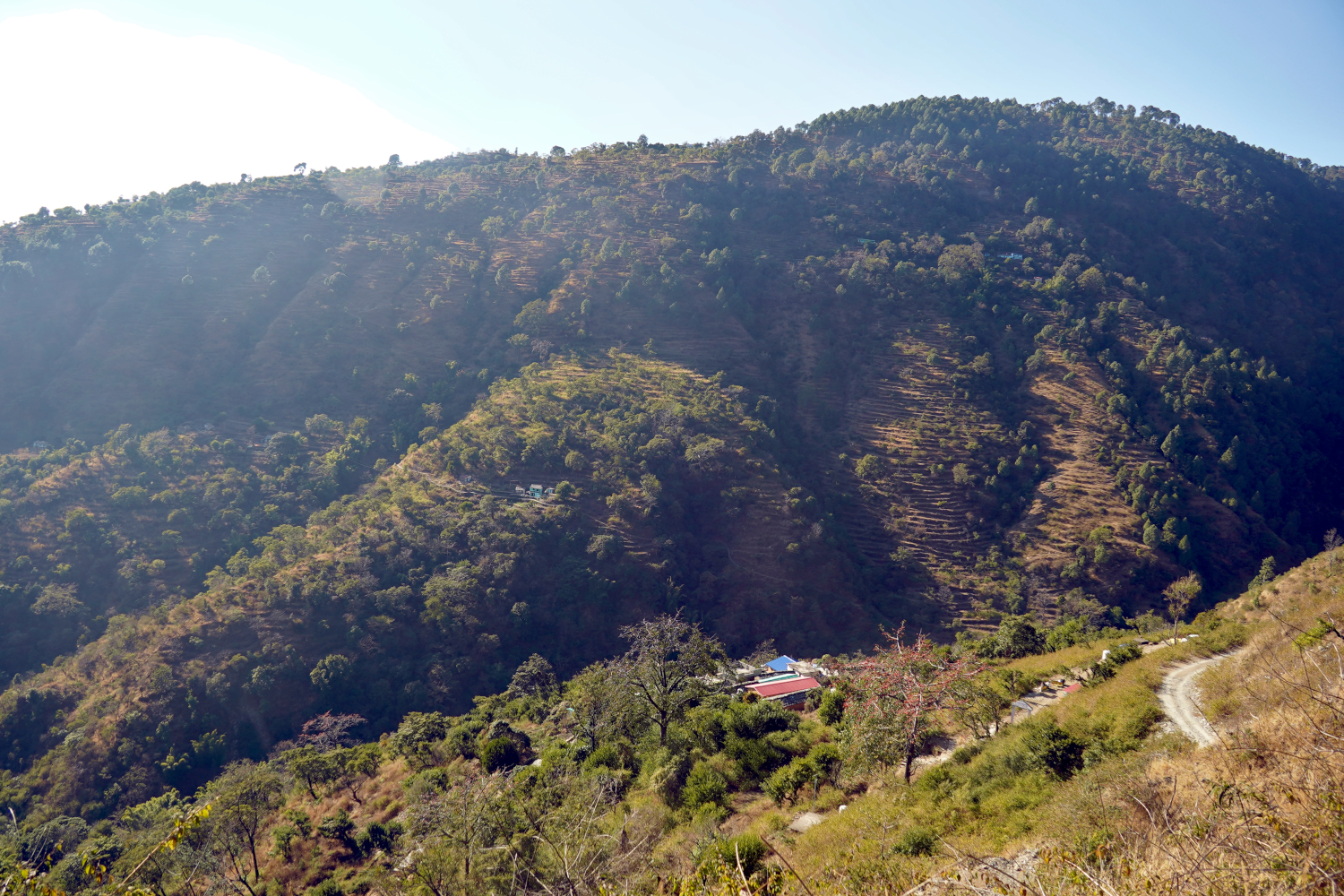
Before we leave, we are treated to a lunch of dal (lentils), rice, mustard greens and some kind of salty pickled vegetable. Oh, and we are able to get online briefly, for the first time in three days. And then we hike back along these fascinating hills with thousands of terraces dug untold centuries ago.
A couple of days later the school finally reopens — the school for which we’d mainly come to volunteer in the first place, but it has been on winter break. In the morning, we pile into a van that serves as the de facto school bus, along with about a dozen kids, two other volunteers, and another adult or two. And it’s up the steep winding road into the village of Devikhet, two miles away, where the school is located. Arriving at the bottom of the little hill on which the school is perched, the van drops us off, and then goes to pick up yet another overstuffed load of human cargo.

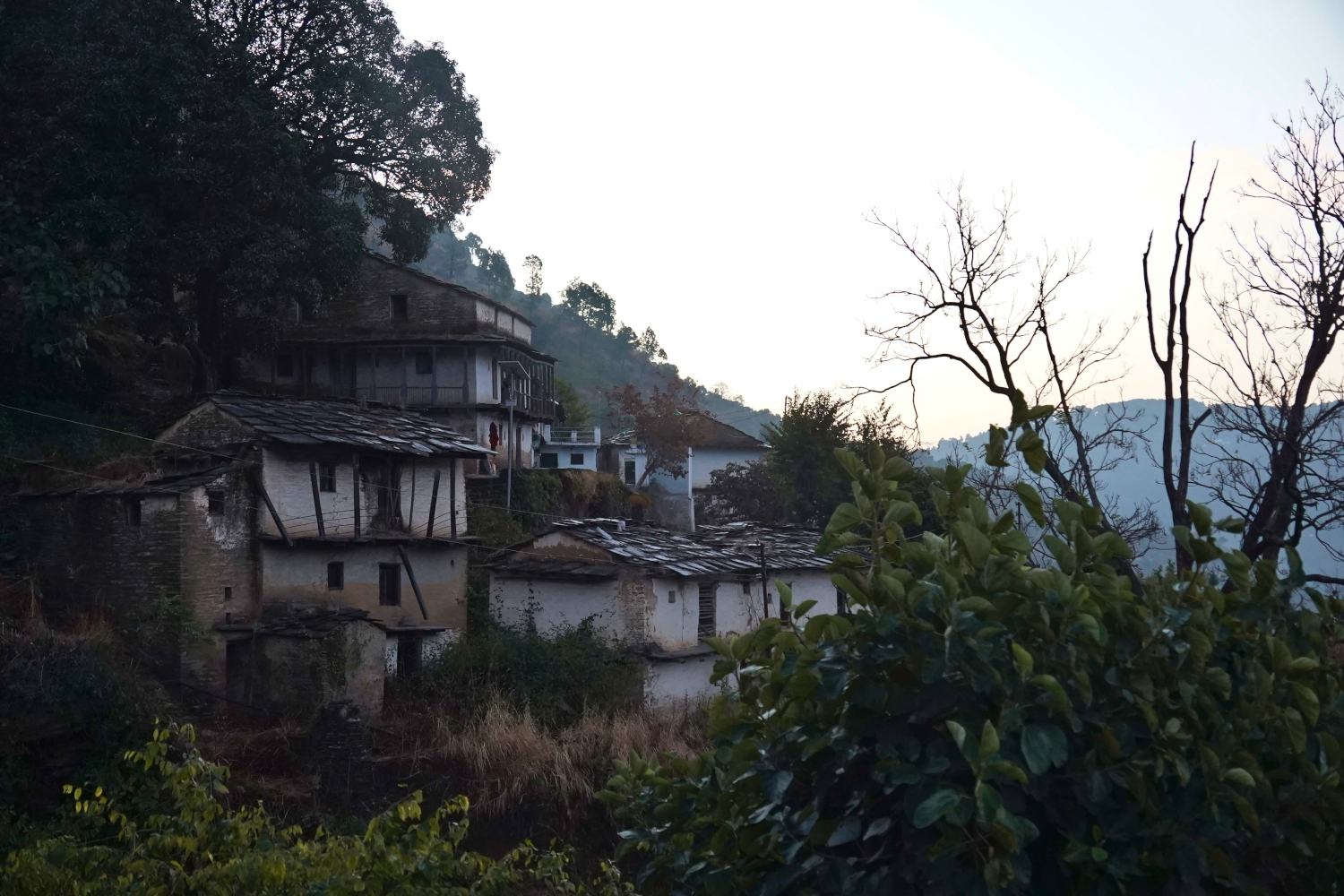

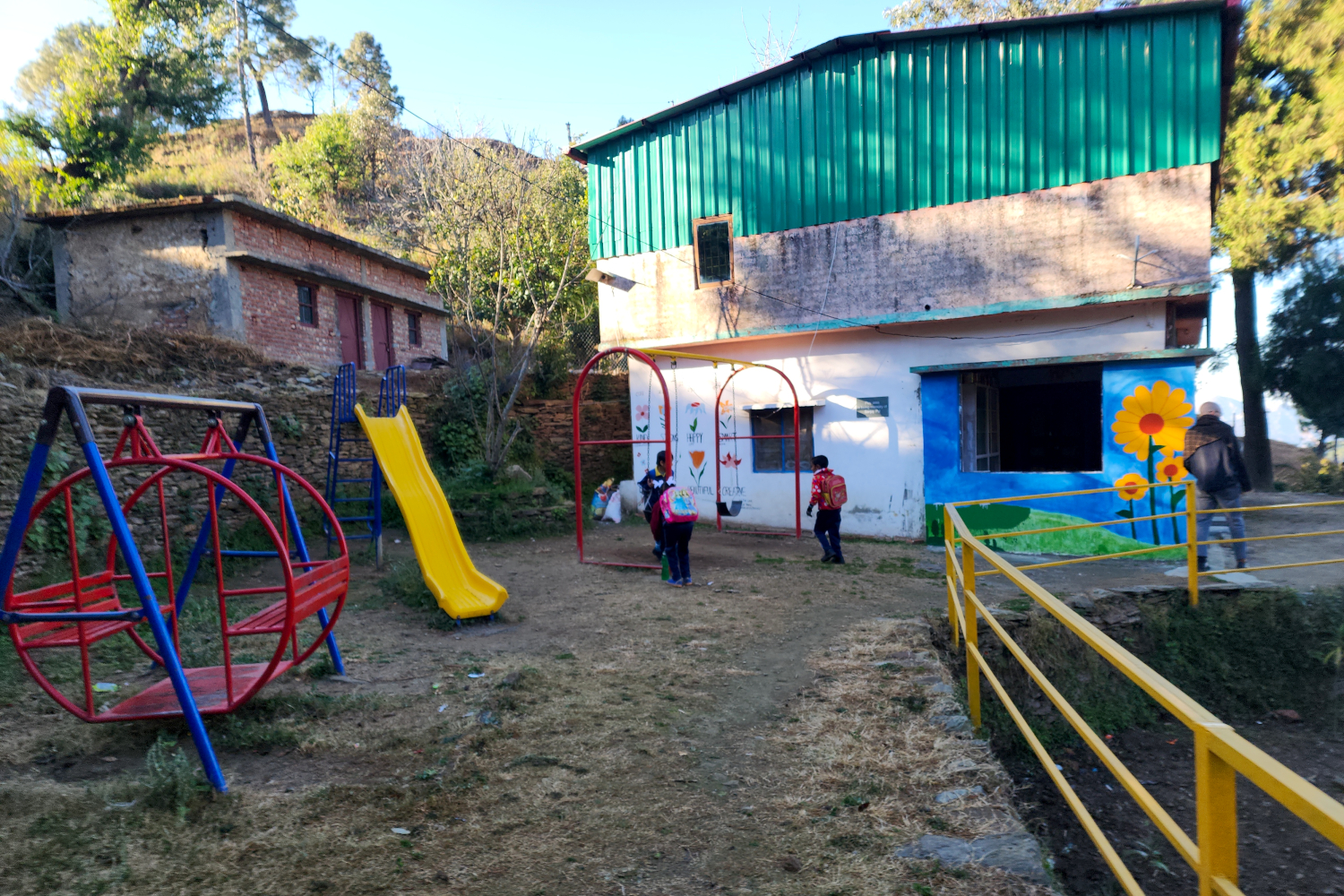
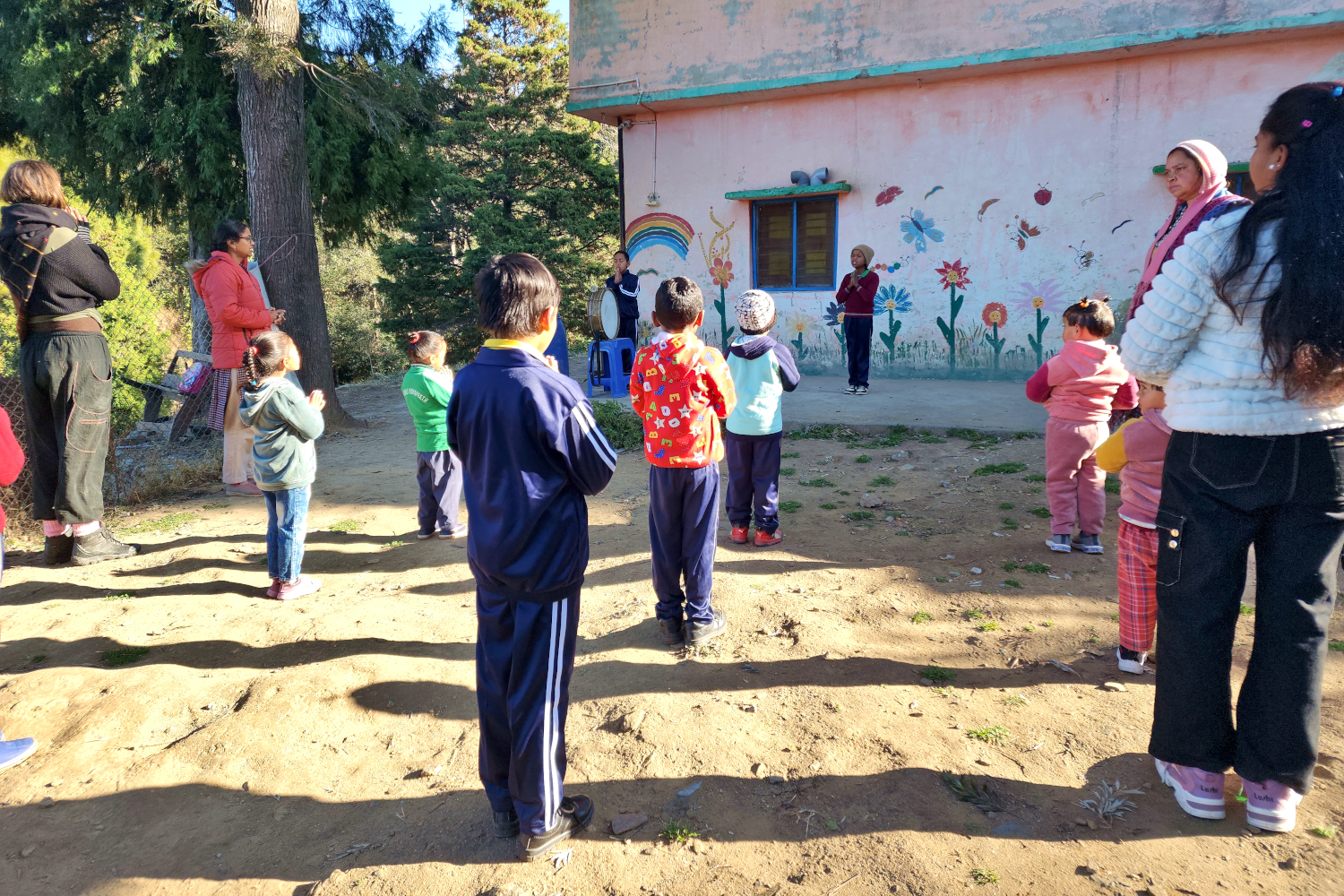
Up the hill we and the students trudge, and after finally managing to get the gate unlocked, we descend upon an old two-story schoolhouse, with the classrooms on the upper deck. Downstairs are a little library with high school level books, a simple computer lab, which stays locked, and what appears to have been a rudimentary kitchen at one time, though now in long disuse and desolation.
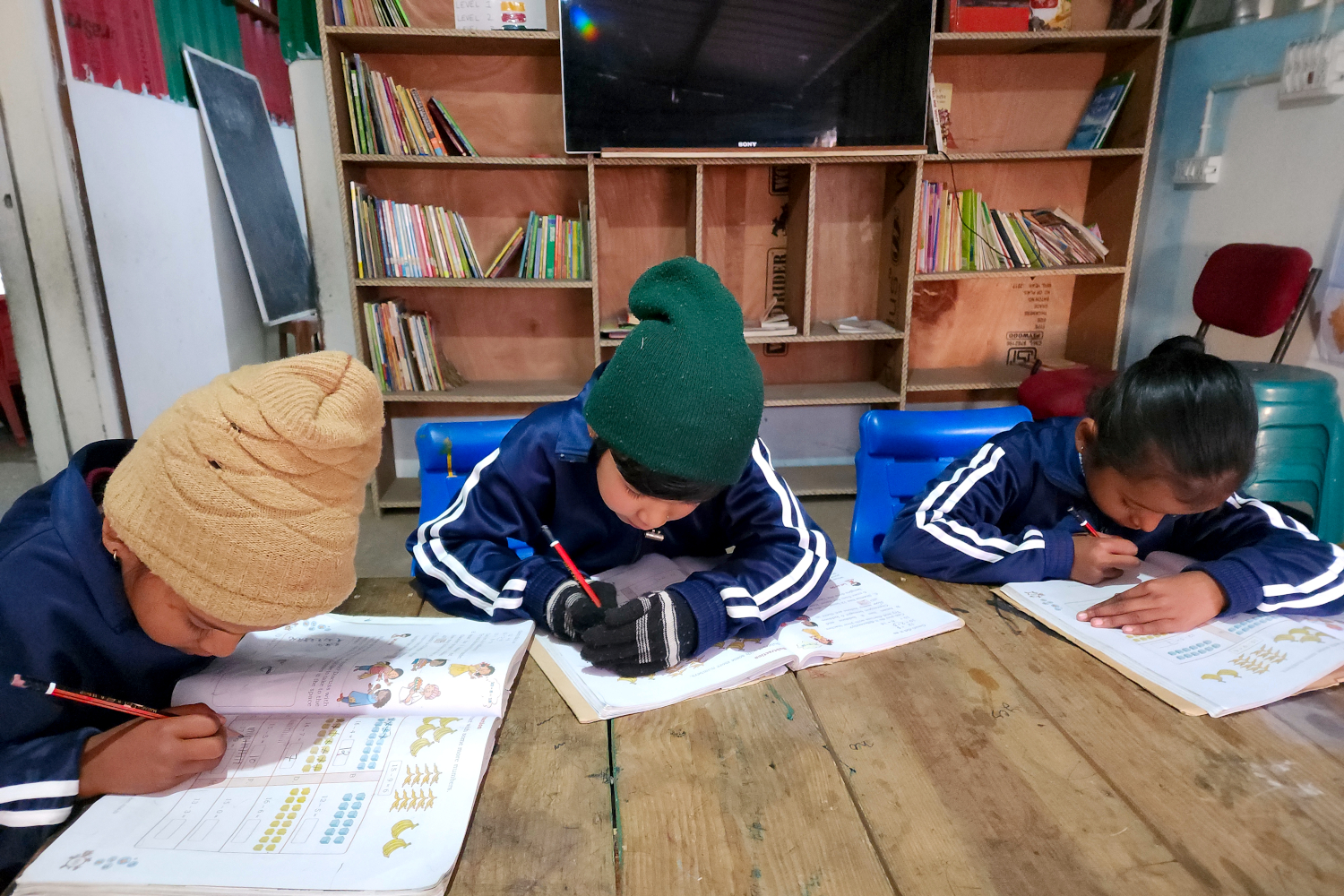
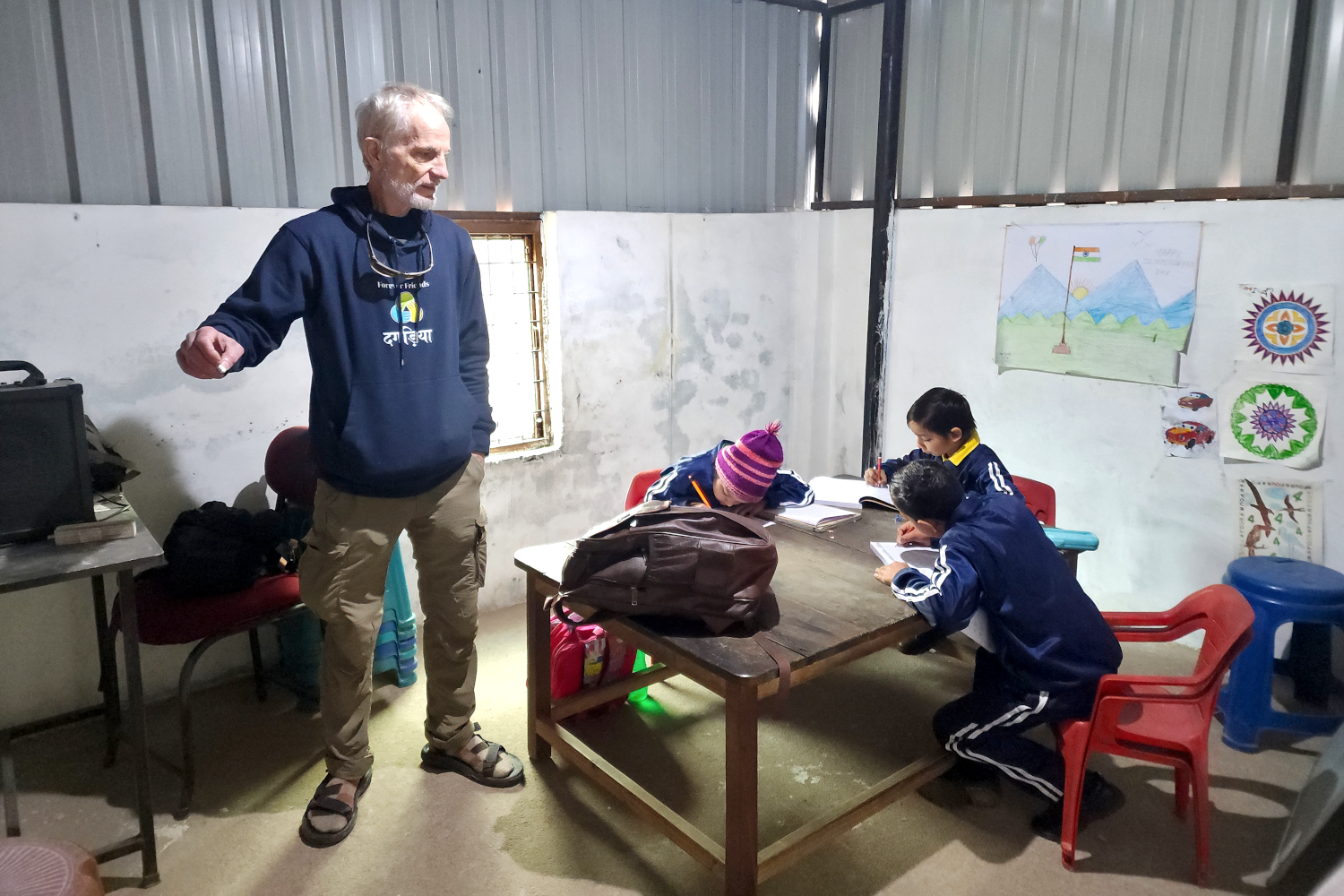
So we at last begin teaching classes and… it doesn’t exactly go swimmingly well. We have little guidance about what we are supposed to do, and the kids speak very little English. So we do a great deal of winging it, which is something we’ve become accustomed to doing (especially given our many years in theatre before we got into teaching). Kimberly actually fares pretty well, as she is working with the younger students, and has more leeway about what kind of material and activities she can engage them with. Dennis, on the other hand, has some older students and is expected to follow a somewhat stricter syllabus with them — and it does not consist of just English language skills.

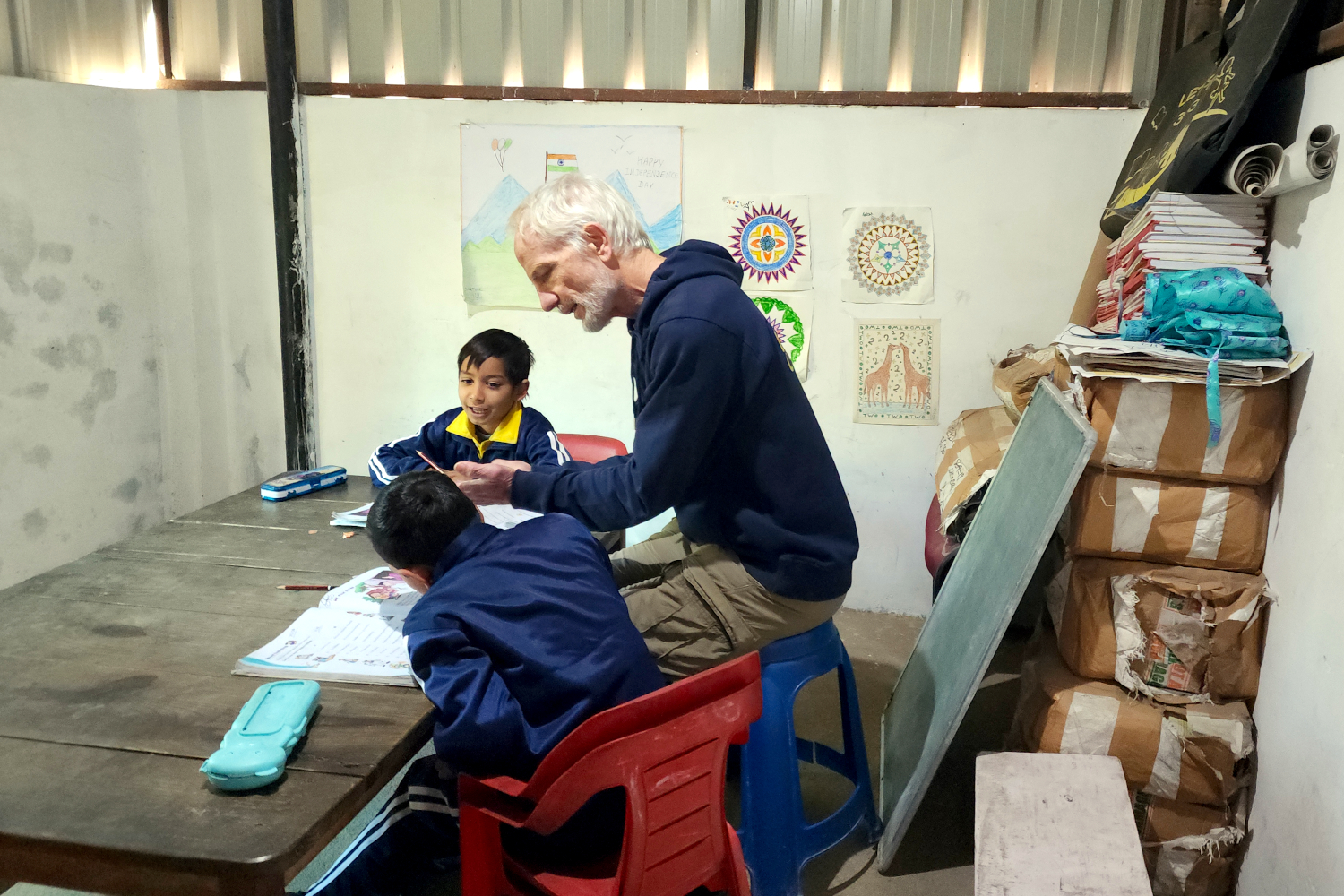
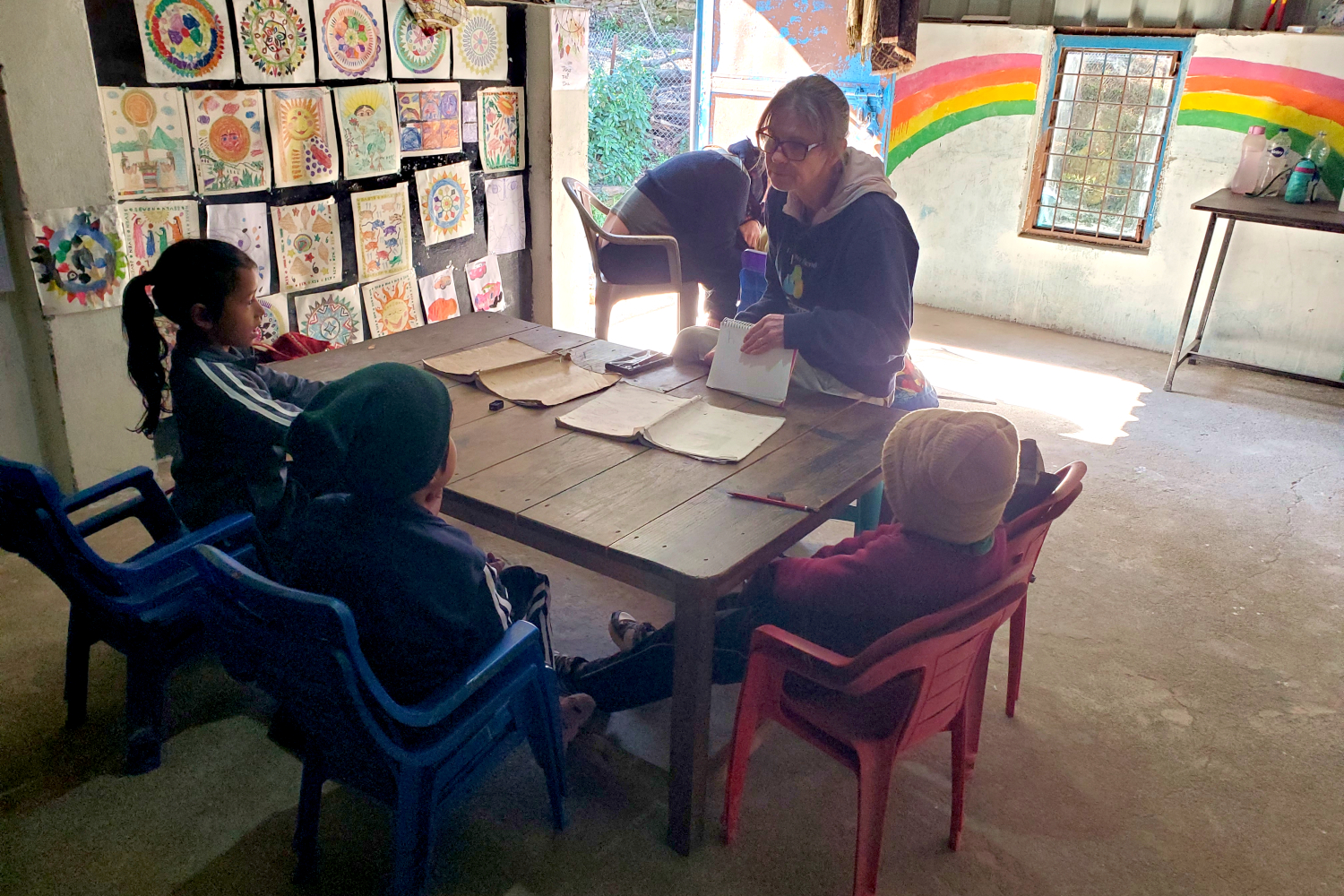
They begin with an hour of math, which basically just deals with the frequency of certain activities. Then there is an hour of English, which entails reading a story they do not comprehend, and which uses vocabulary beyond their level. After lunch, we are supposed to teach them physical science. Mostly they just draw pictures of galaxies and the solar system. That at least holds their interest, as kids always enjoy drawing.
The next day, things go much better. Now that we have had a chance to gauge their personalities, interests and threshold of learning, we can better tailor activities to them. And it helps that Leonie, another volunteer, is there to assist us.

In the afternoon, one of the teachers leads the students in line dancing on the grounds – they appear to be doing traditional steps, but the music is quite contemporary. This kind of glimpse into local life is the sort of thing that we are always on the lookout for in our travels and volunteering, and which always makes the hardships worth enduring.
But then that’s true of many things in these remote mountain villages. The village life we encounter in these remote foothills is always eye-opening and quite an education — even such experiences as riding to school in a crowded van.
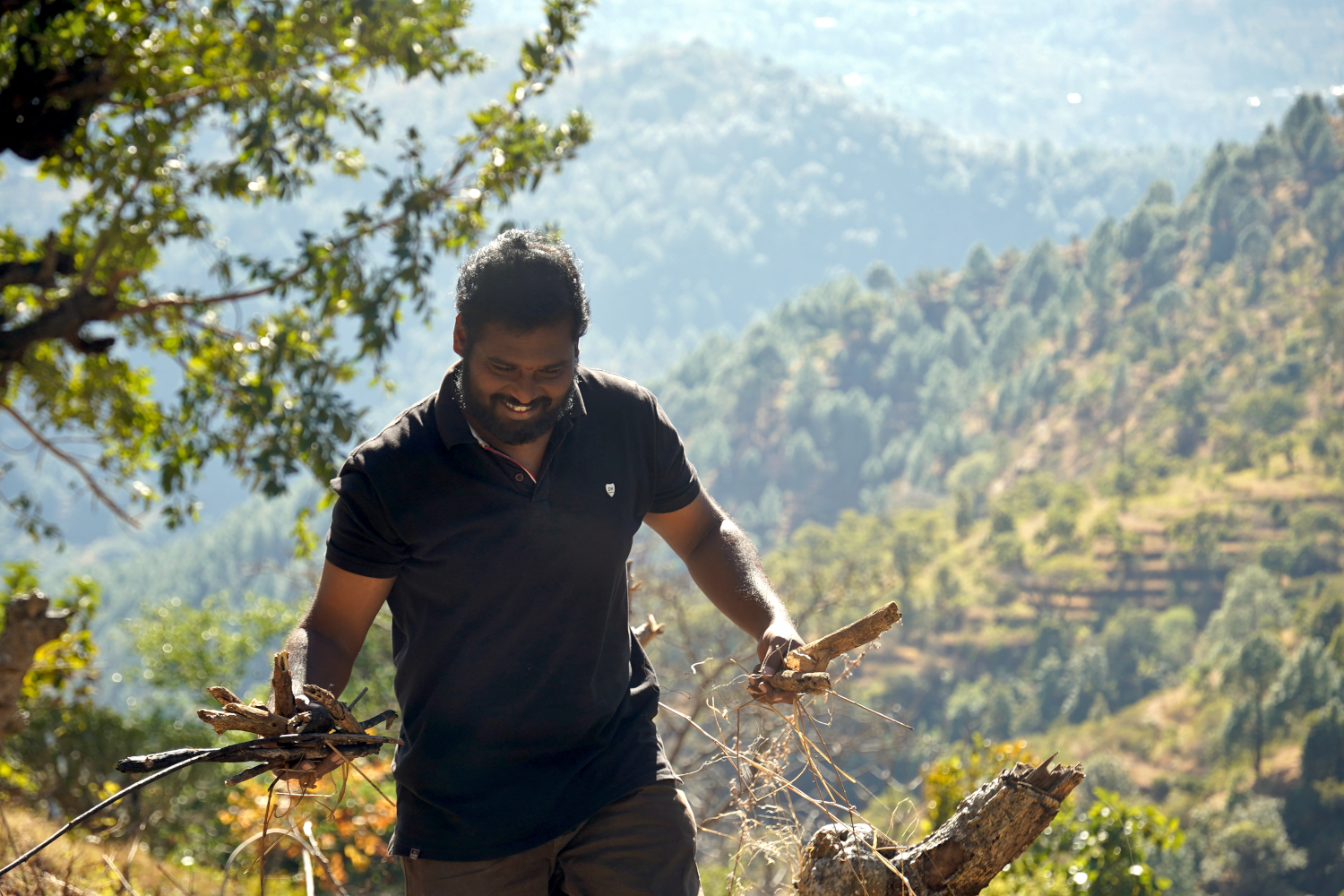


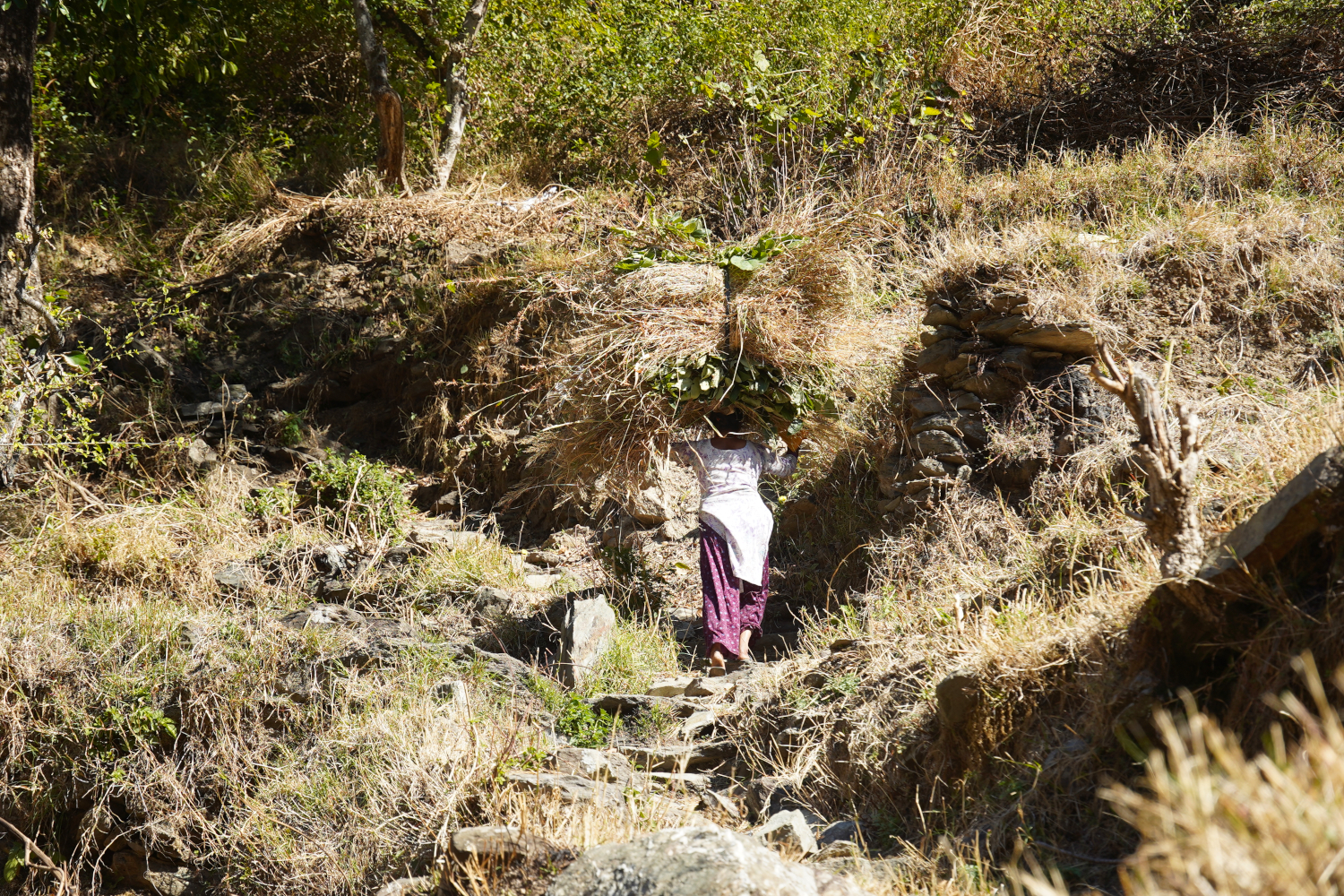
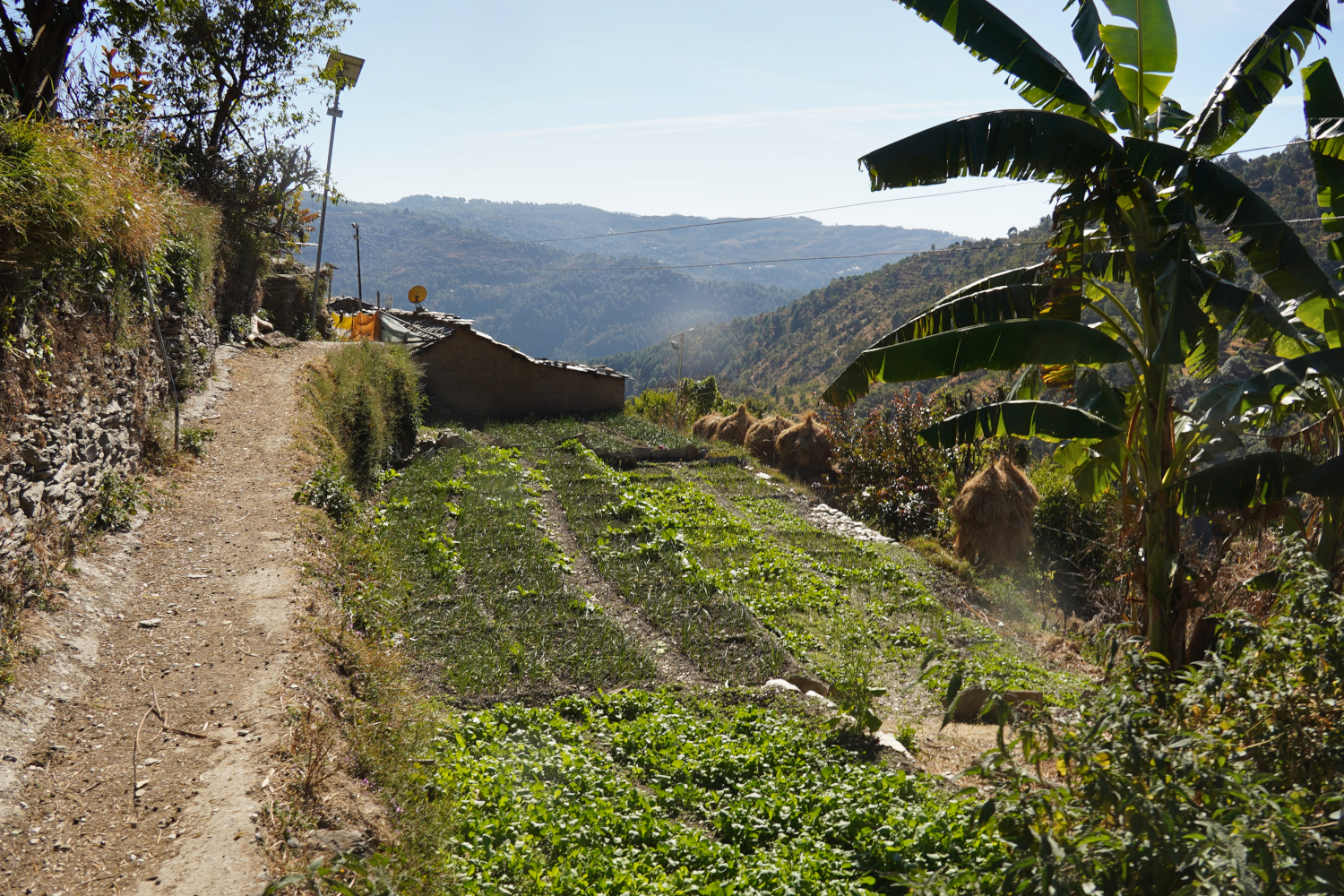
We travel to these places to teach, but quite often we feel like the students rather than the teachers.
Events Occurred: 1/15-19/2025

 world travel with a theatrical flair
Leave a comment