

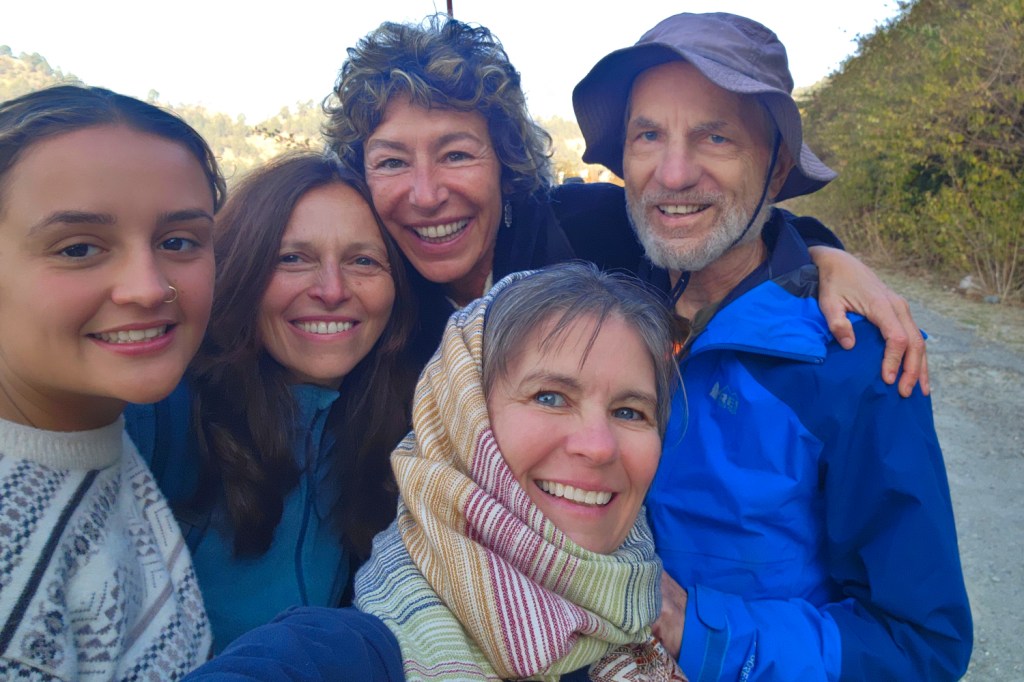
As we already found out, getting up to one of the remote villages in the Himalayan foothills from the cities way down in the valley, can be quite a challenge. And, as we’ve been aware ever since we arrived in the village of Shri Timl to volunteer through Workaway, getting back down would probably just as daunting. The one bright spot was that it would be downhill this time, so presumably it would not take as long. Presumably.
Either direction you travel, you have three options for the mode of transport, assuming you don’t have access to a car, a helicopter, or a very long zipline. The cheapest is the bus, a rattletrap of a lozenge on wheels with dingy, tattered upholstery that leaks when it rains, and gets very chilly as it ascends to higher altitudes and the wind punches its way inside through windows that won’t close, and gives you motion sickness if not whiplash as it careens around the curves, on roads as slim and knotted as shoelaces, with the most abandoned of abandon. And did we mention that bathroom breaks are catch as catch can — and usually can’t? That’s how we came from Shri Timli to Rishikesh, and it struck us as perhaps a once-in-a-lifetime experience for which maybe we should find an alternative on our return.
So that leaves us with two other options. The most convenient and comfortable no doubt is the “private taxi”. (A taxi, around here, is an SUV — which it pretty much needs to be.) But it’s also the most expensive, setting you back about 25 bucks. (It’s a distance of about 50 miles, but it takes a good 3 hours, even downhill.) So that leaves us with door number three: a “shared taxi” for about 4 dollars per person, which is only about double the bus fare. It has to be much better than the bus, right? Well…
At 7:00 in the morning we’re ready to start trudging up the hill. The shared taxi isn’t scheduled to leave until 10:00 or so (and that’s India time) but we have to catch another ride to get to where we can catch that ride. And as we realized the day we came here, it’s going to be an Olympic battle to schlep our bags up the steep, winding path to the road. We’ve planned to stop several times along the way and let our muscles and lungs recuperate.
But we’ve also dropped some hints, even heavier than our bags, that we could, um, use a little assistance. And good old Ajay, the (very) long-term volunteer, cheerfully volunteered to volunteer for us. In fact, he insists on hauling both of our big backpacks up the hill for us. Yes, both. At the same time. He does stop a couple of times for a quick breather, but still.


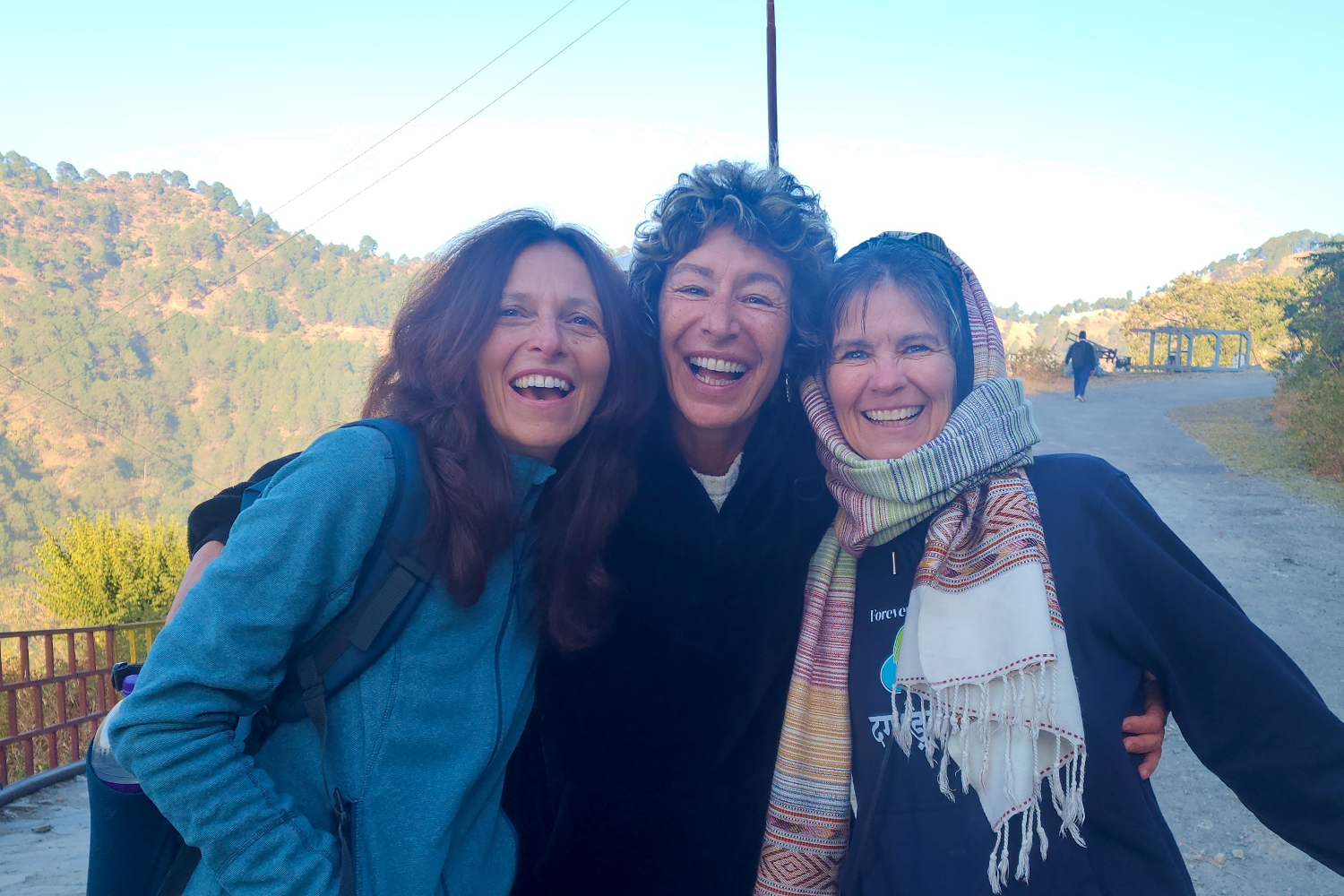
And when we get up to the road, he also waits and chats with us until our ride comes. Well, almost. It turns out to be a much longer time than any of us counted on, because for some reason the van that is to carry us to where we catch the shared taxi is about two hours late. Finally he has to take his leave, after we give him the cash to pass on to the host to cover our meals during our stay — we hadn’t had a chance to give it to the host in person. And then we wait some more.
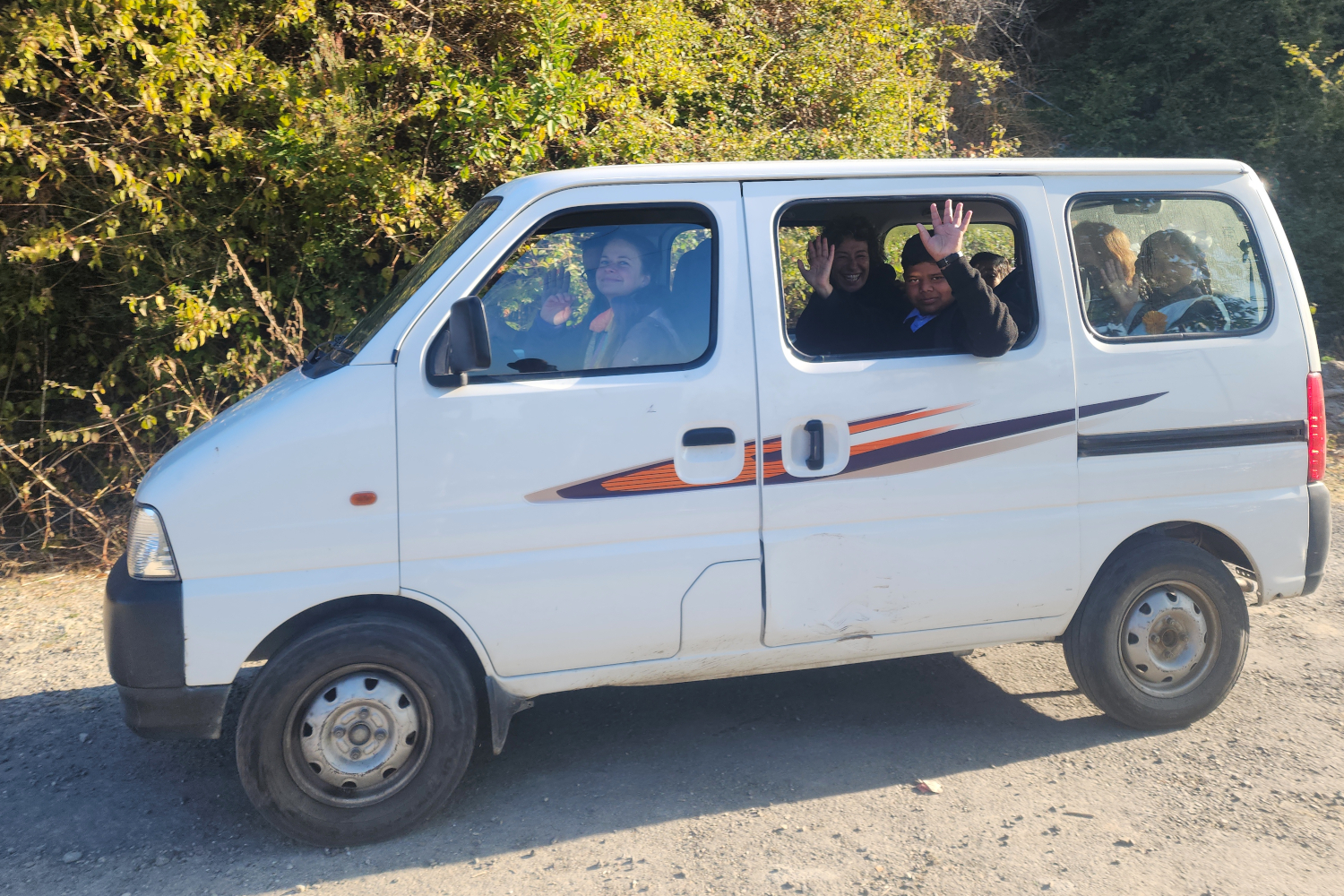
Meanwhile, the other volunteers traipse up the hill, on their way into the nearby village of Devikhet to teach at the school, where we’d been teaching as well. So at least we have the chance to say a proper goodbye to most of them. And then, our host, Ashish, whisks them away in his van, which as always he will use to deliver a couple of loads of students to school.
A local fellow shows up and starts waiting with us. We ask him, or try to, if he is waiting for a ride down the mountain too. He answers in the affirmative, or at least that’s our understanding. But then when a “taxi” finally shows up, and he gets into it, the driver informs us that he is going only to Devikhet, a mere two miles.
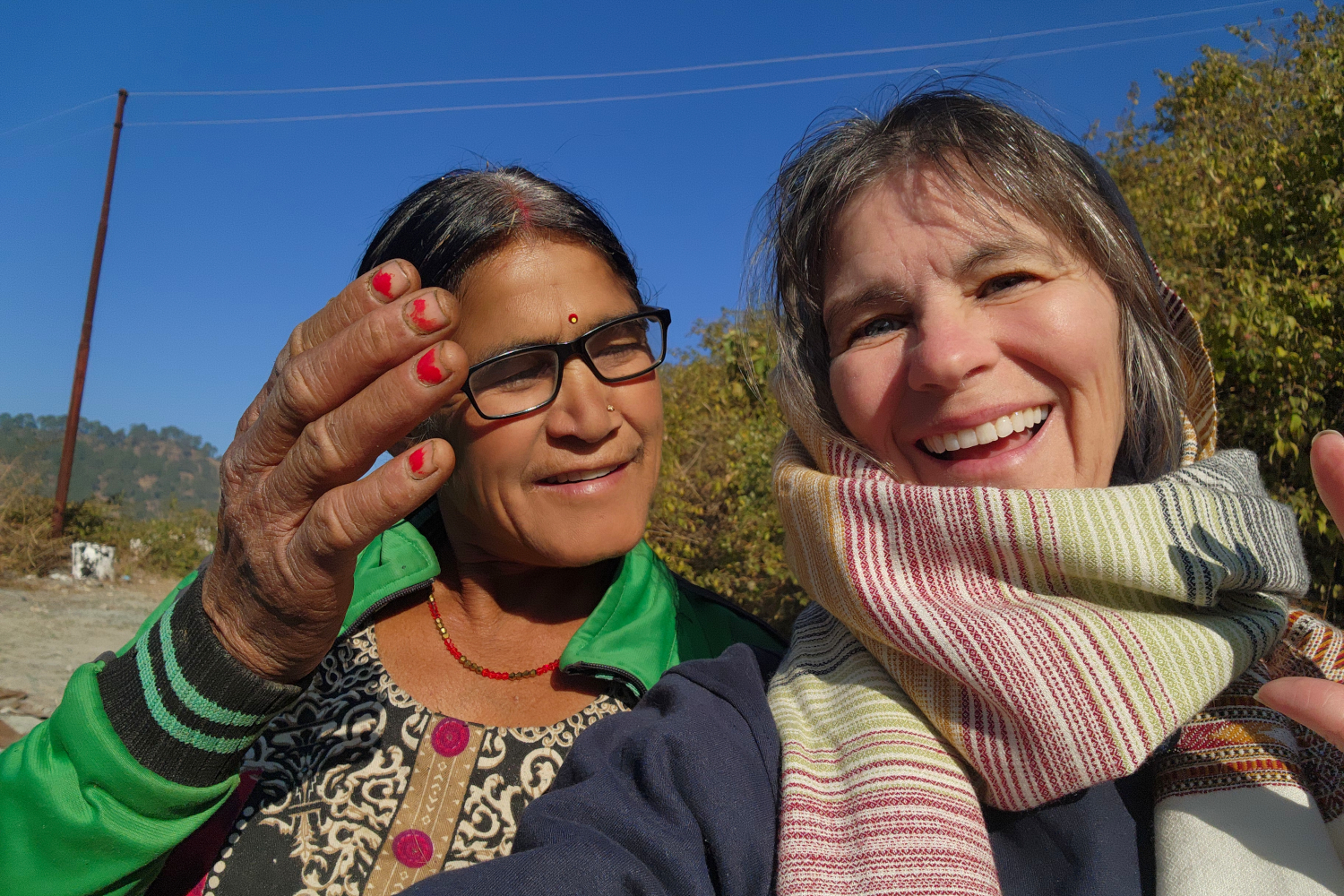
So we wait and we wait some more. During this interval, along comes the local woman whom we’ve been encountering on a walk almost every morning. She’s quite a character, and has really taken to Kimberly. She doesn’t speak a word of English, but she manages to engage us in conversation anyway.
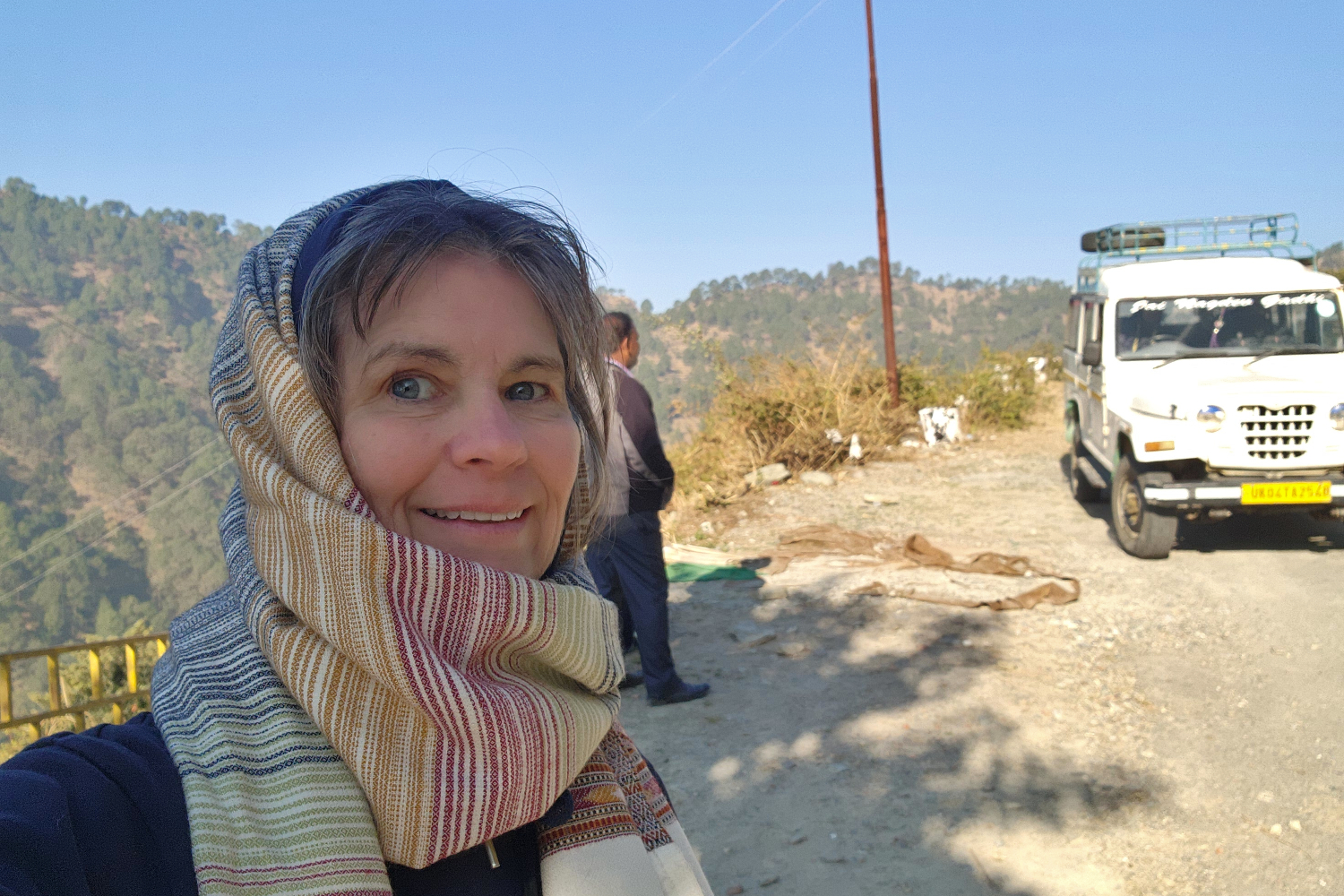
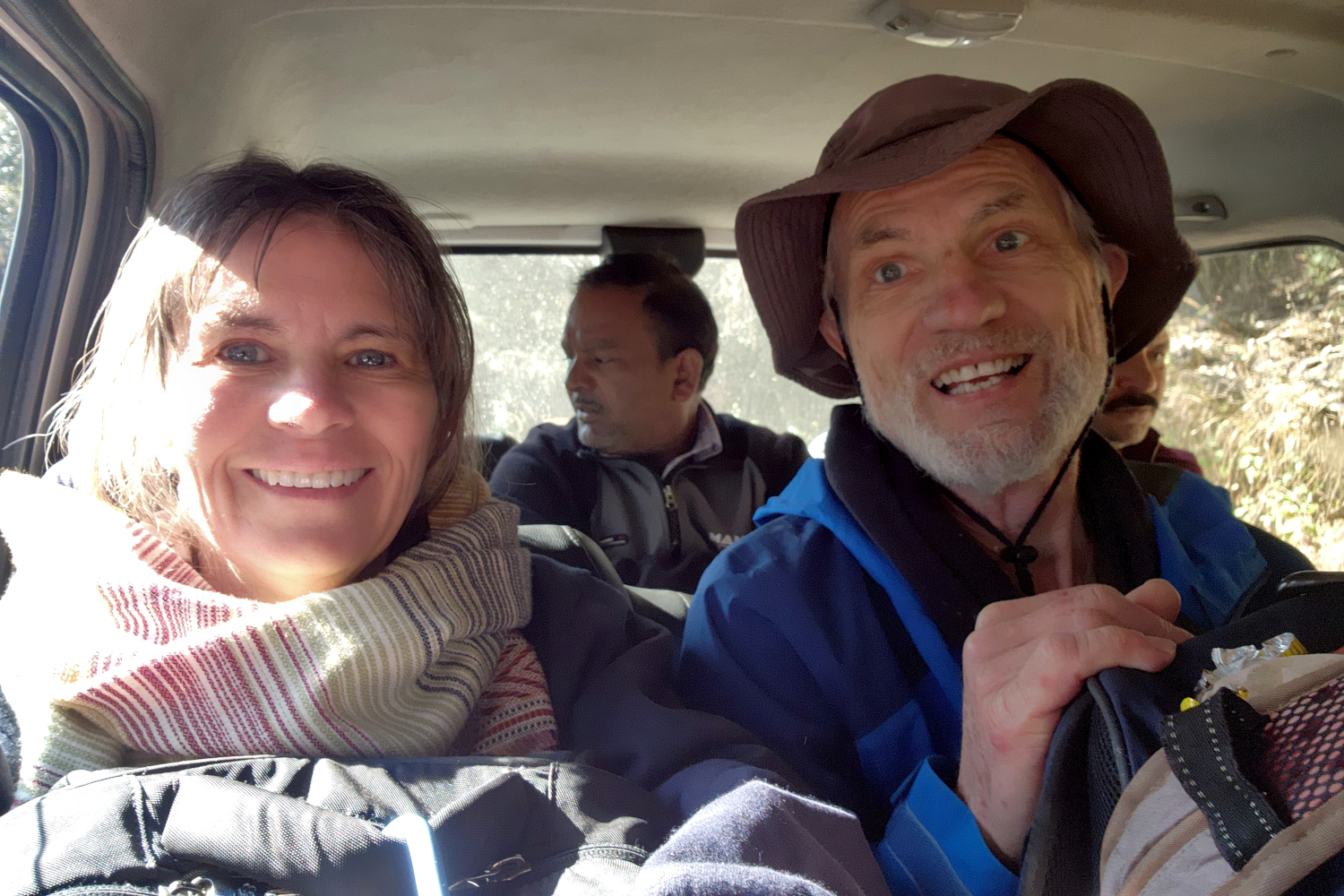
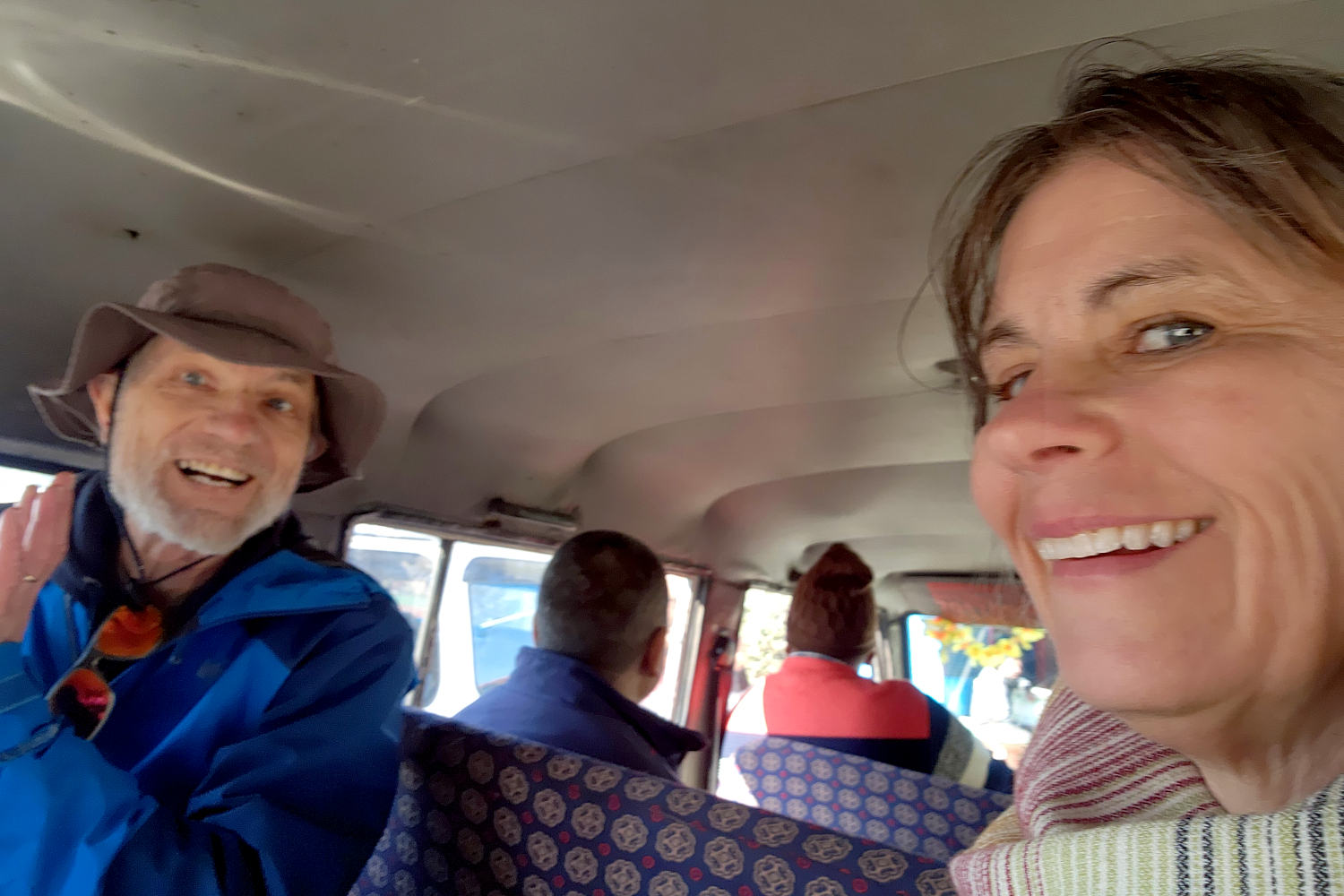
After quite a while, Ashish returns from his busy rounds, and he is surprised to see that we are still waiting. He gets on the phone to a couple of people, and then informs us that he’ll give us a lift into a nearby village, where we can catch a shared taxi at 10:30. So we pile into his van, and at first it’s just us and our bags. But along the way, we pass several pedestrians to whom he offers a ride, and before you know it the vehicle is as packed as a van in India. Somewhere down the road, we meet an SUV taxi, so we’re transferred into it, after saying our farewells to Ashish.
This vehicle winds its way through a couple of villages, and then we have to transfer to yet another one, which is apparently our designated shared taxi down to the valley. In the process of shuffling around, Dennis leaves behind a notebook in the previous taxi, a notebook containing some notes for a poem he’d been working on. Whoever tries to read that is going to do a lot of head scratching, even if they can decipher his indecipherable scrawl.
Onward and downward we go, and at first the taxi is not too shared, but before long, the dozen or so seats are filled almost to capacity — with about fifteen passengers, plus a great deal of gear. In India, that’s “almost capacity” for a 12-seat van. At one point, someone inserts a bundle of long metal rods, like rebar, onto the floor and under our feet. It doesn’t take us long to see that this ride is going to be even more uncomfortable than the bus. On the latter, we at least had our own seat. Here, we’re sharing seats with anyone and everyone. Any thought of using the time to read or write or engage in any activity whatsoever soon evaporates. There’s no elbow room, no shoulder room, no knee room, hardly any breathing room.
At least it isn’t as frigid as the ride up was, although there is a chilly wind whipping through an open window. We close it, and a fellow sitting next to it promptly opens it again. Then he explains through gestures, that he is feeling nausea and doesn’t want to have to take the time to open the window if he should feel the urge to purge. Given the choice, we’d rather be blanketed with cold air than with a stranger’s upchuck.
About halfway through the voyage, the driver pulls over in a little village to take a tea break. And it turns out to be a very long break — Indians really take their tea seriously. So we look in the little shop next to the tea stall for any suitable snacks, but came up empty. Speaking of being empty, Dennis considers this a good opportunity to seek out a “washroom” as they’re called in India, so he inquires with the driver and is told that there is one just down the road. So he walks for what would be the equivalent of a block or so, and doesn’t see it. He has to ask another guy he meets coming from that way, and the man says that yes, the prize is still just ahead. And sure enough it is, though it would be very easy to miss — just a little outhouse beside the road. Kimberly decides to forego the facilities this time, even knowing that she may regret it later.
And sure enough, we ride for a long time before anyone in charge thinks about a potty break. And even then, it’s only a matter of pulling off beside the road so the male passengers can head for the trees. As usual, there’s a presumption that only men ever need the bathroom. But Kimberly, rather than take a tree pee, has to wait until we stop for fuel, to use the bathroom at the gas station. And that doesn’t happen until we’re almost to our destination.
Our destination, by the way, turns out to be even farther than originally planned. We’d intended to just take the shared taxi back to Rishikesh, and then from there get a bus to Dehradun, where we have a flight scheduled to Delhi. But when we’re almost there, we learn that the vehicle is in fact going on to Dehradun; so we decide it will simplify matters if we just stay aboard and pay another couple of dollars rather than deal with the hassle of changing to a bus.
When we arrive in Dehradun, the driver drops us, as drivers often do, on a busy street, nowhere near any kind of station or any place to sit down. And since we don’t have wi-fi because our SIM card expired (as we mentioned in a previous post), we can’t look up directions to our Airbnb. We start asking guys on the street, but nobody has heard of it. Finally, we manage to pull up a screen shot of a conversation we’d had with the host, and it has his phone number on it. So we show it to one of the men trying to help us, and he calls the host and gets directions for us. Fortunately for us, Indians seem more likely to answer an unknown caller than Americans are.
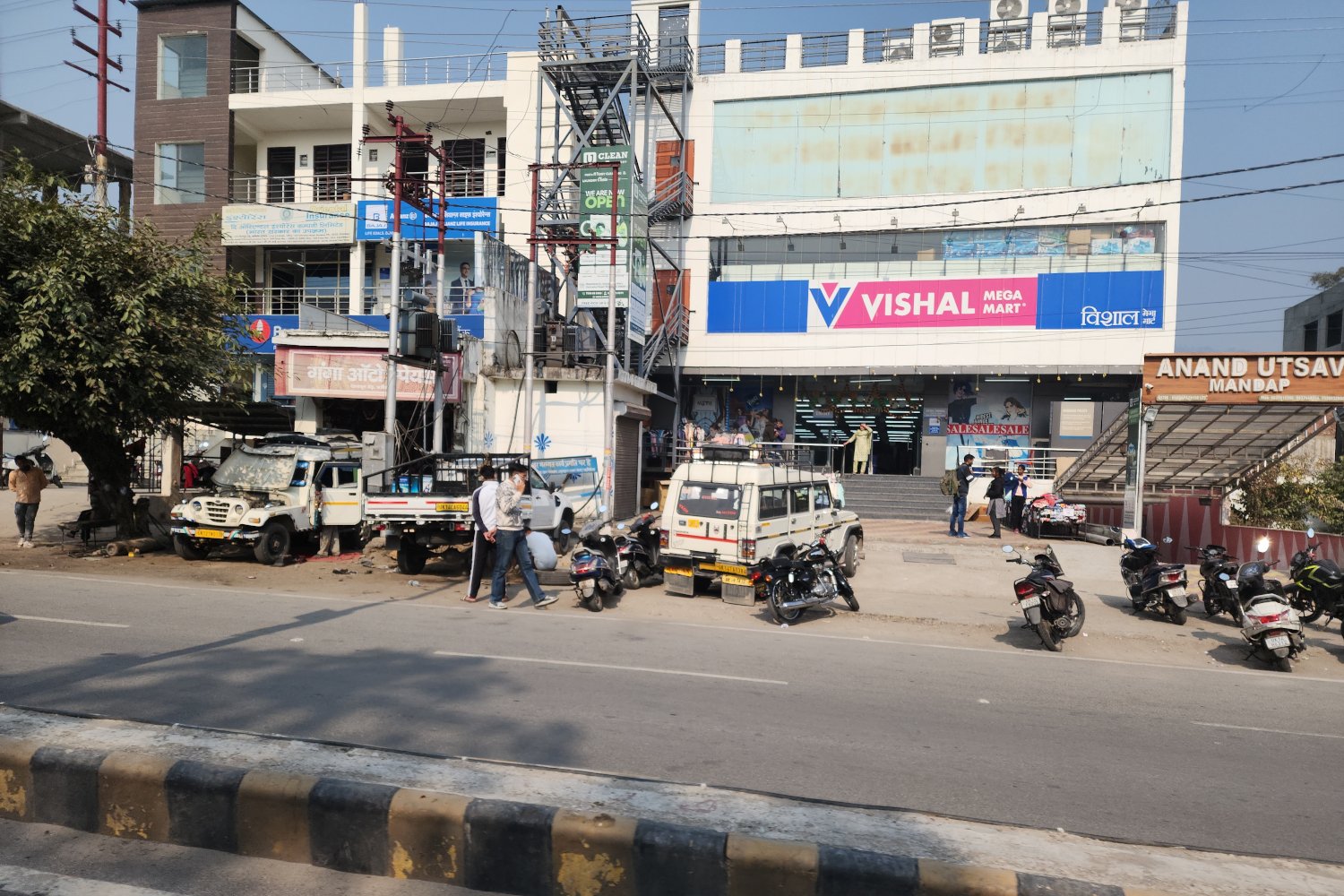

After we’re checked in we go out and explore the neighborhood, and discover that it is quite an interesting neighborhood indeed. It’s largely Tibetan, the first time we’ve ever been in a Tibetan community. And we manage to find a little supermarket that has — much to Kimberly’s ecstatic delight — oatmeal. And we decide to eat dinner out, at a little restaurant that has some superb Tibetan dishes at a very modest price.


It’s been an amazing month volunteering in the remote mountains, but now we’re ready for a change of pace. And this quaint Tibetan neighborhood in the middle of this state capital with a population of 800,000 looks to fill the bill quite nicely.
Events occurred 1/27/2025

 world travel with a theatrical flair
Leave a comment