

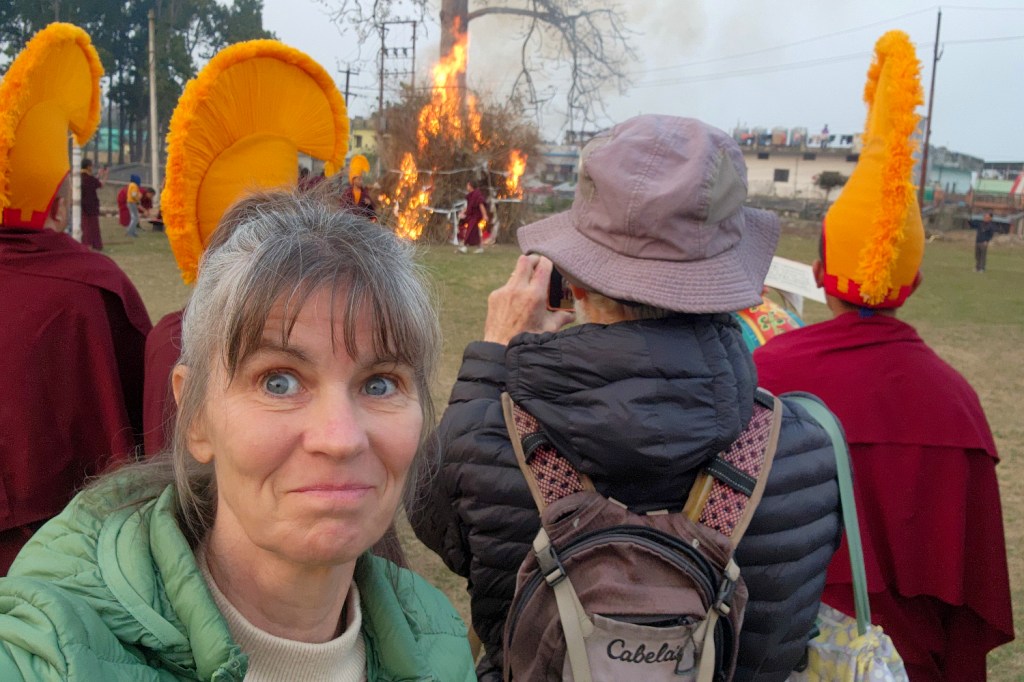
We’ve learned that travel is full of surprises, but one unexpected thing that we definitely did not expect was that we would discover our first taste of Tibet in India. And we certainly didn’t expect that we would find it in such a festive and ceremonial fashion, and have the opportunity to observe a celebration of Tibetan Buddhism. But that’s what happened when we spent a couple of days in a thoroughly Tibetan neighborhood in Dehradun, the capital of the Indian state of Uttarakhand, between gigs volunteering through Workaway.
The day begins on an entirely different note, however, with a shopping expedition to the local Decathlon store. Decathlon, based in France, is the largest sporting goods franchise in the world, with over 1800 outlets in 79 countries. But we never really were aware of it until we traveled in Southeast Asia — there are branches in Phnom Penh. And there’s also a branch here in Dehradun, which we’ve been looking forward to dropping into for the past few months. Why would we need a Decathlon when we’re not particularly sports minded folks? Well, the stores sell items that are handy when you’re traveling — including backpacks and other bags, hiking shoes, lightweight compact clothing, and bike gear.
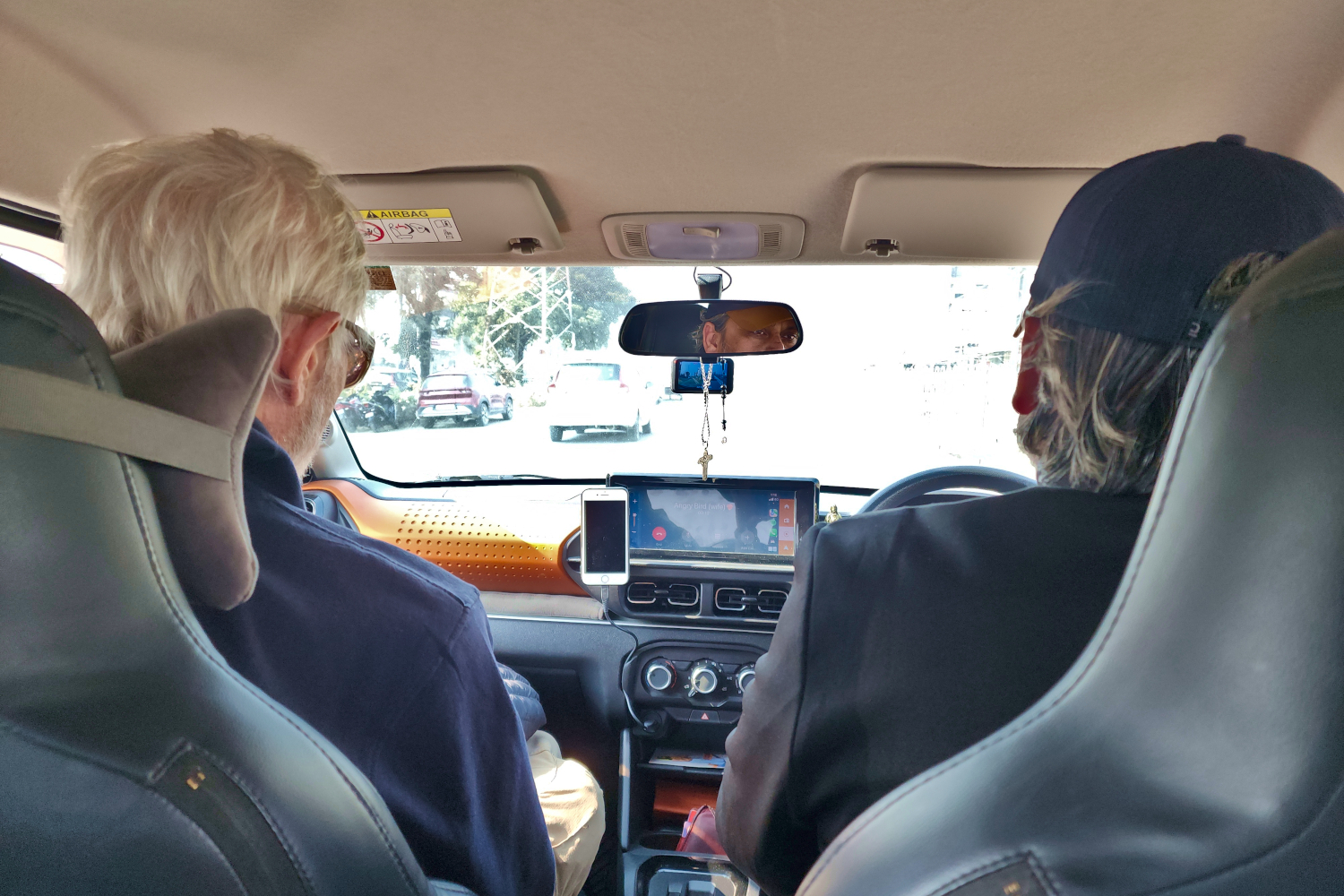
When we discuss our desired outing with our host, and our need to arrange transportation, he offers to give us a lift at a lower cost than tuk-tuk taxis; he can offer lower rates, he says, because his car is electric. So we agree, and off we go. The car has another passenger, a priest getting a ride to his church, which the host attends — he is, he’s proudly informed us as soon as possible, a Christian, which puts him in a distinct minority in India. And he’s been quite willing to go on about his feelings of persecution.
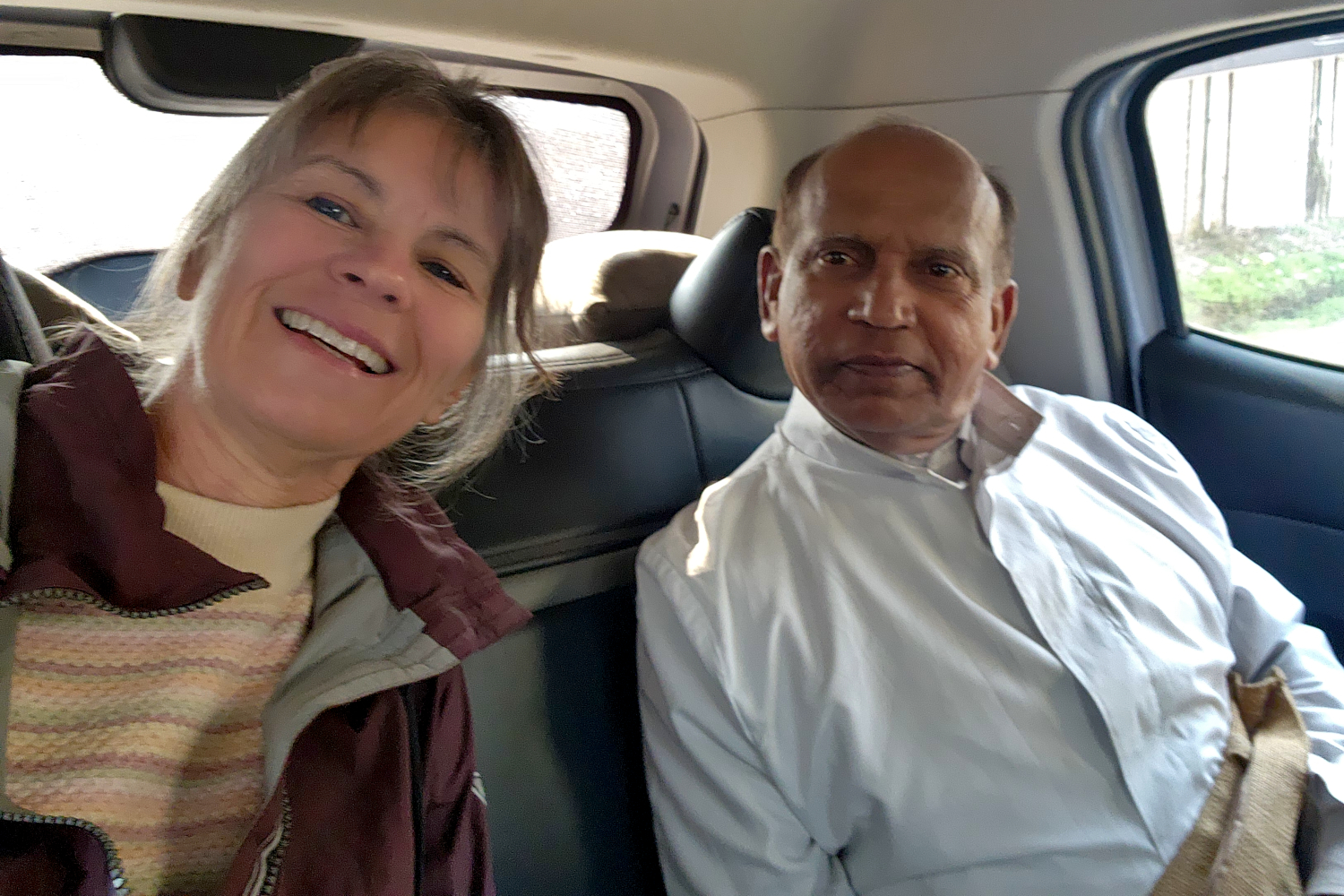

The priest is 82, and seems to be rather fit and healthy; this, we gather, is a bit uncommon in India, where, we’re told, people often don’t age particularly well. He does indicate, however, that he’s having some problems with his memory; or at least at the moment he’s misplaced his phone and can’t for the life of him remember where he might have left it.
Right away, he launches into a (very) audible prayer; and then he issues us a stern admonition not to get involved in any of the many “false religions” (i.e. any but his own) lurking in the city. And we grow increasingly uncomfortable, what with the intense missionary vibe coming from both of these gents. We’ve always said that if you feel your ideology (religious, political, whatever) is truly worth sharing, then the way to show it is by showing it — by being the kind of example that others will feel inspired to emulate. And heavy-handed proselytizing is definitely not a good example of a good example. This overbearing behavior is especially unfortunate, because aside from that, these two chaps are quite likeable.
Anyway, shortly after the priest is deposited at his church, our host’s phone rings. It’s the Father, happily reporting that he has found his phone. At the church. Guess maybe the prayers worked.
Our host drops us at Decathlon, and agrees to return in an hour to pick us up. But after an hour, there’s no sign of him. Nor after an hour and fifteen minutes. Nor after an hour and a half. In the meantime, Dennis stands watch while Kimberly goes to a nearby shop to buy reading glasses, and she patrols the parking lot while he goes across the street to a supermarket. Still no sign of our chauffeur. We can’t call him, because we no longer have an Indian SIM card (as we mentioned in a previous post). We’re beginning to think maybe we should just catch a tuk-tuk back. Then we try going back into the store and explaining the situation to one of the staff, and having him try calling our host. He does, though it takes him several attempts to get through. Finally he’s able to report that “he’s on his way”. One hour late. When he does arrive, he apologizes, and explains that he’d been giving some kind of presentation. A muti-tasker, evidently.
So that was the first half of our day. It’s the second half when the real magic happens. Once back at home, we ponder going back to the same Tibetan restaurant (Gangchen) that we ate at previously. But it happens to be closed the last Tuesday of each month, which is today. So Instead, we go on a mission to round up some produce to contribute toward dinner. Before long, we start to notice some enticing sounds coming from the Buddhist temple compound in our neighborhood. So we head toward it, and what we discover is quite a vision to behold.
The first thing we see looks like something that might have been beamed down from a Star Trek episode. Tibetan Buddhist monks are standing in a semicircle, clad in red robes and yellow comma-shaped headdresses, chanting something in Tibetan (we gather), in a deep, guttural tone that sounds rather hypnotic. Some of them are holding circular drums that they tap on occasionally, and some are holding ceremonial horns reminiscent of the shofar, from which they have blown a time or two — this is one of the sounds that attracted us here in the first place. Along with dozens, or perhaps hundreds, of other spectators, we sit on the grass in the courtyard and watch, mesmerized.
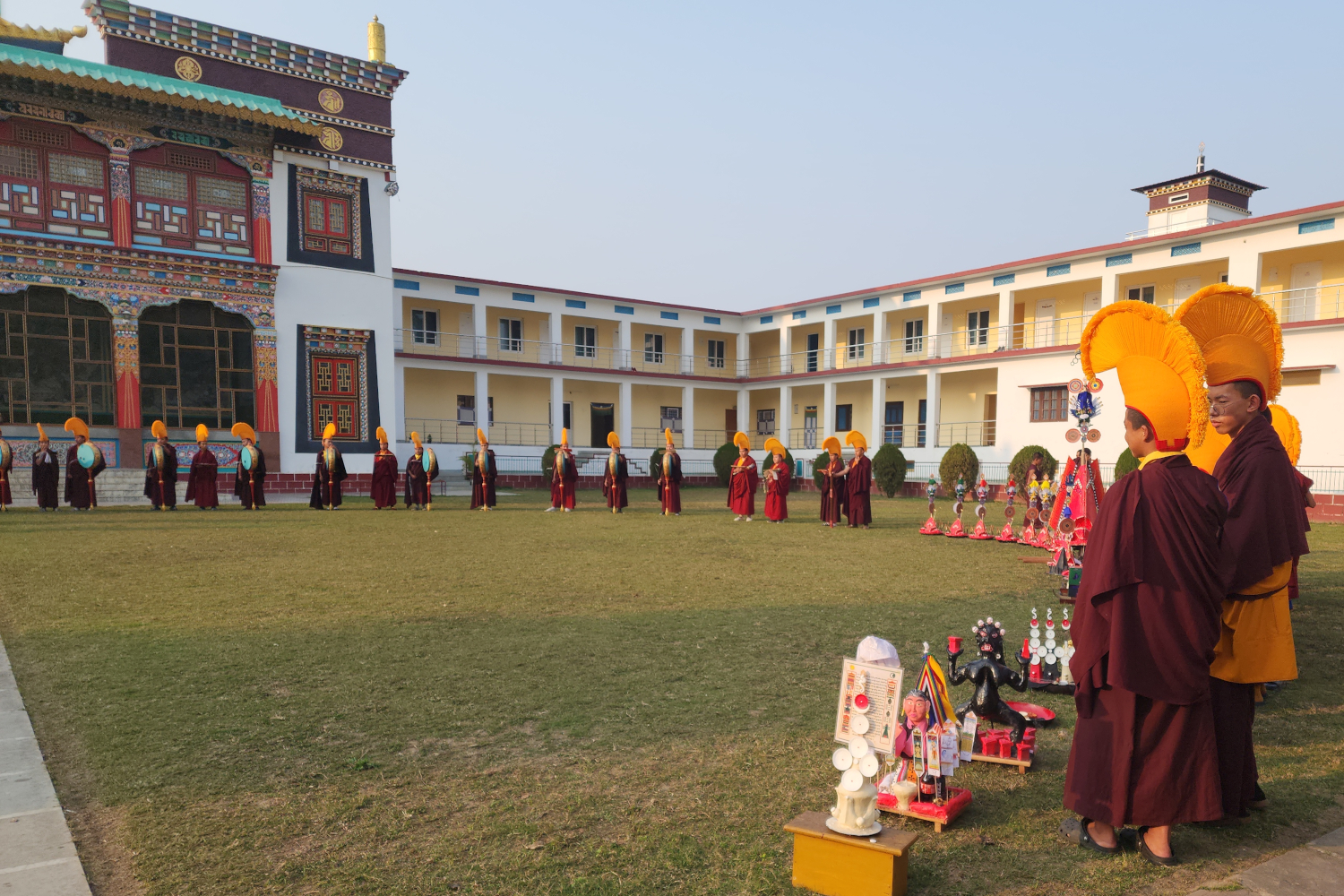
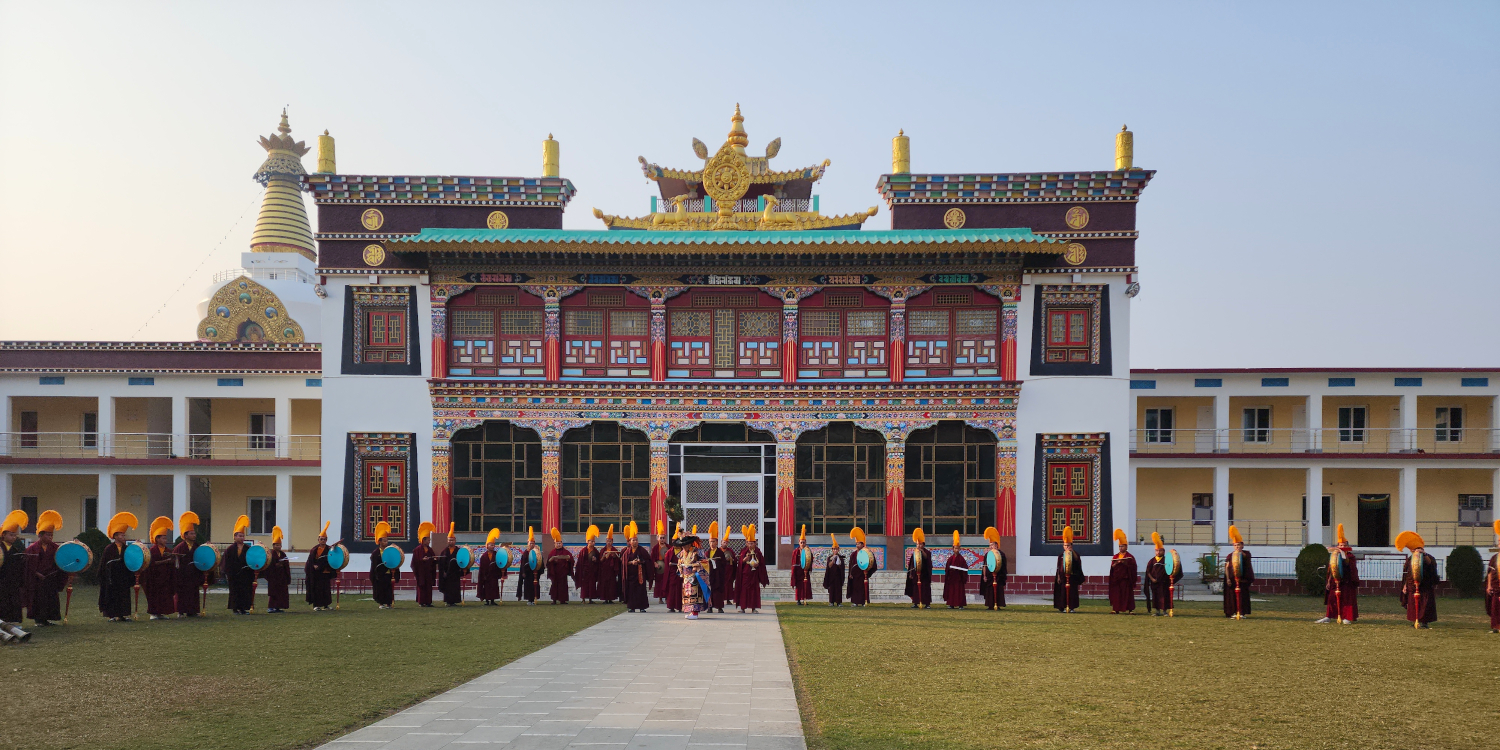

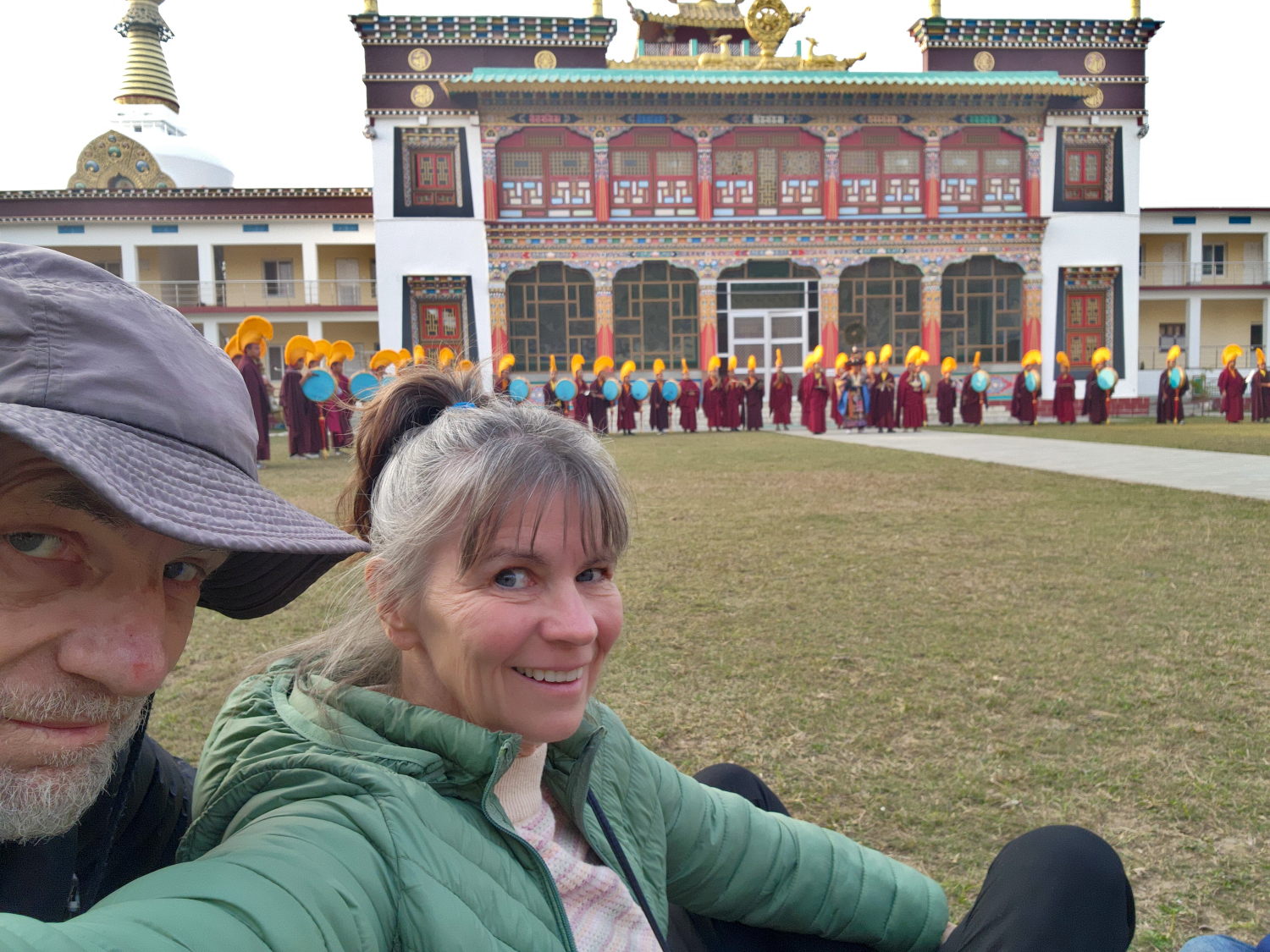

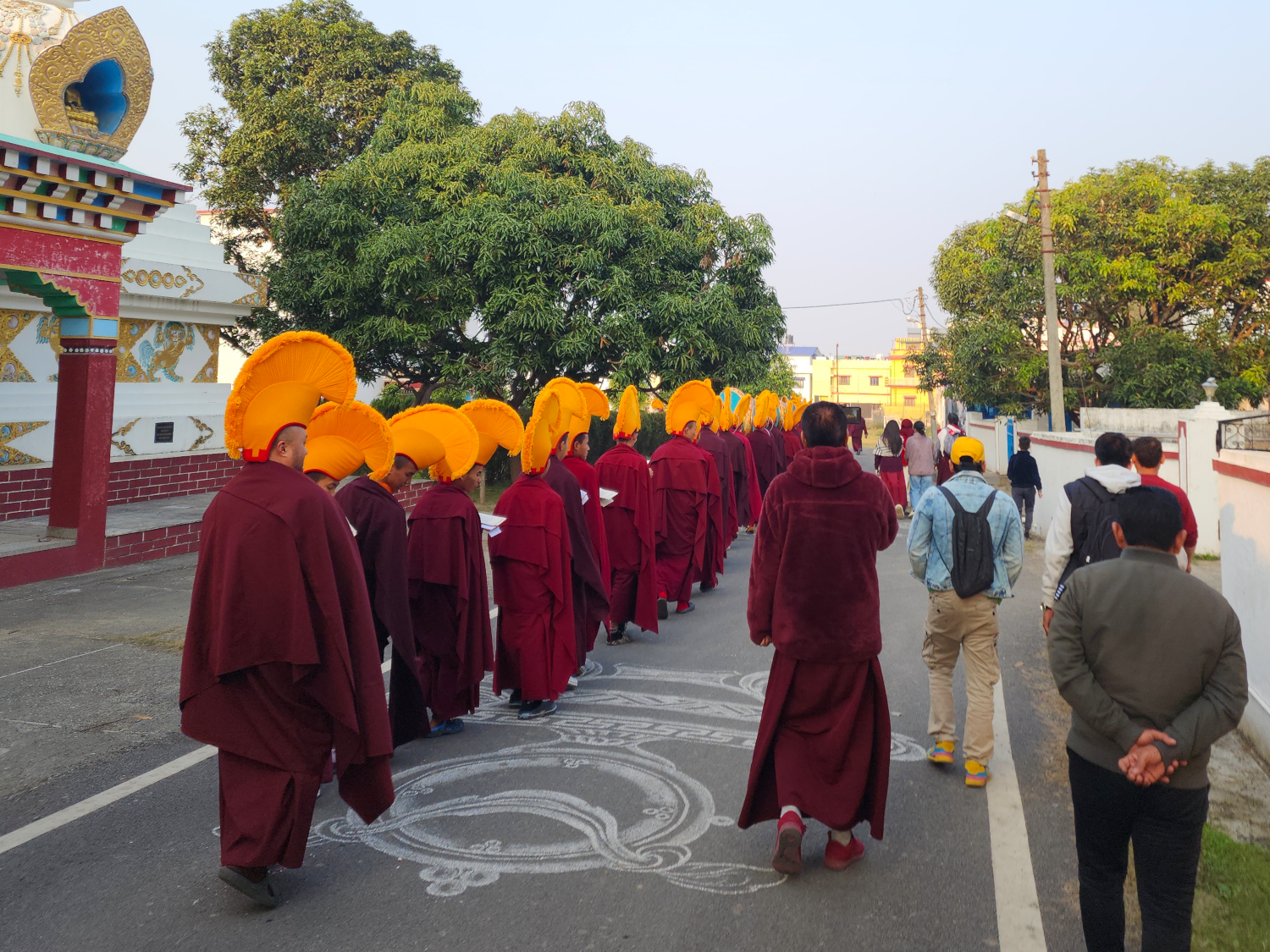
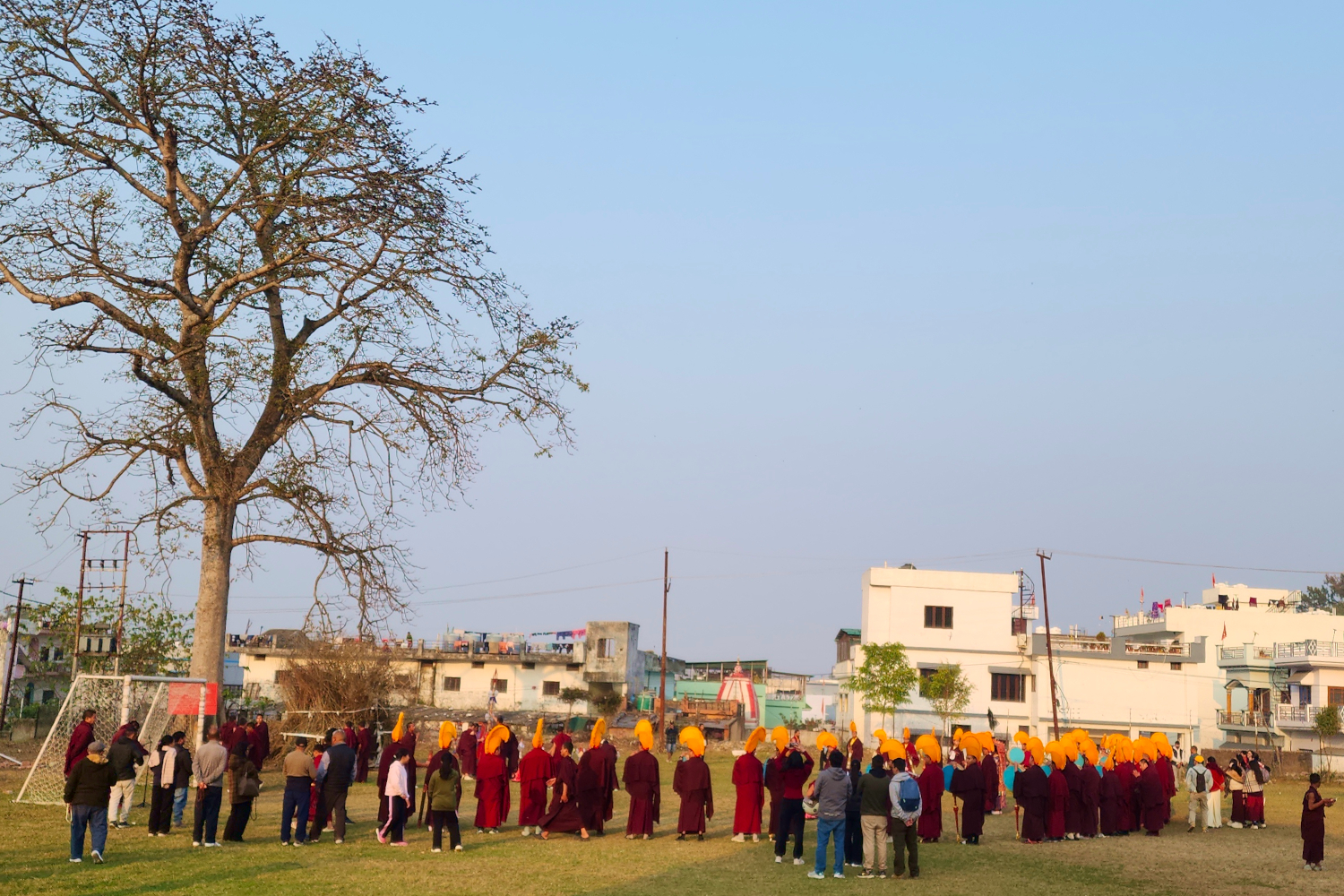
What we’ve apparently stumbled onto is a celebration of Losar, the Tibetan new year. And after the courtyard session has gone on for a while, the participants adjourn and file to a nearby grassy meadow that appears to be used as a soccer field at times. And here the monks stand in a large circle for the sequel. Which turns out to to be even more wonderfully weird than part one.
The chanting, drumming and horning (including some human-sized instruments that look like alpenhorns) resumed, but there is a little floor show to go with it. The central figure is not dressed like the others, but sports a black hat and colorfully decorated robe (or whatever you’d call it). He carries, at various times, a flag in each hand and several other small ceremonial items. And now and then he breaks out into a little subdued dance (or whatever you’d call it), a stiff-legged maneuver that entails pivoting on one leg while swinging the other one around, much like the points of a drafting compass.
At times he picks up one of the little objects placed on a tray, such as cones made of wax and holds them while doing his little ritual, and then tossing them in front of him. Whereupon they are scooped up by attendants and tossed into what resembles a teepee, but is clearly made of combustible brush just itching for a bonfire. He does something similar with other objects, such as banners and scrolls, some with skulls on them.
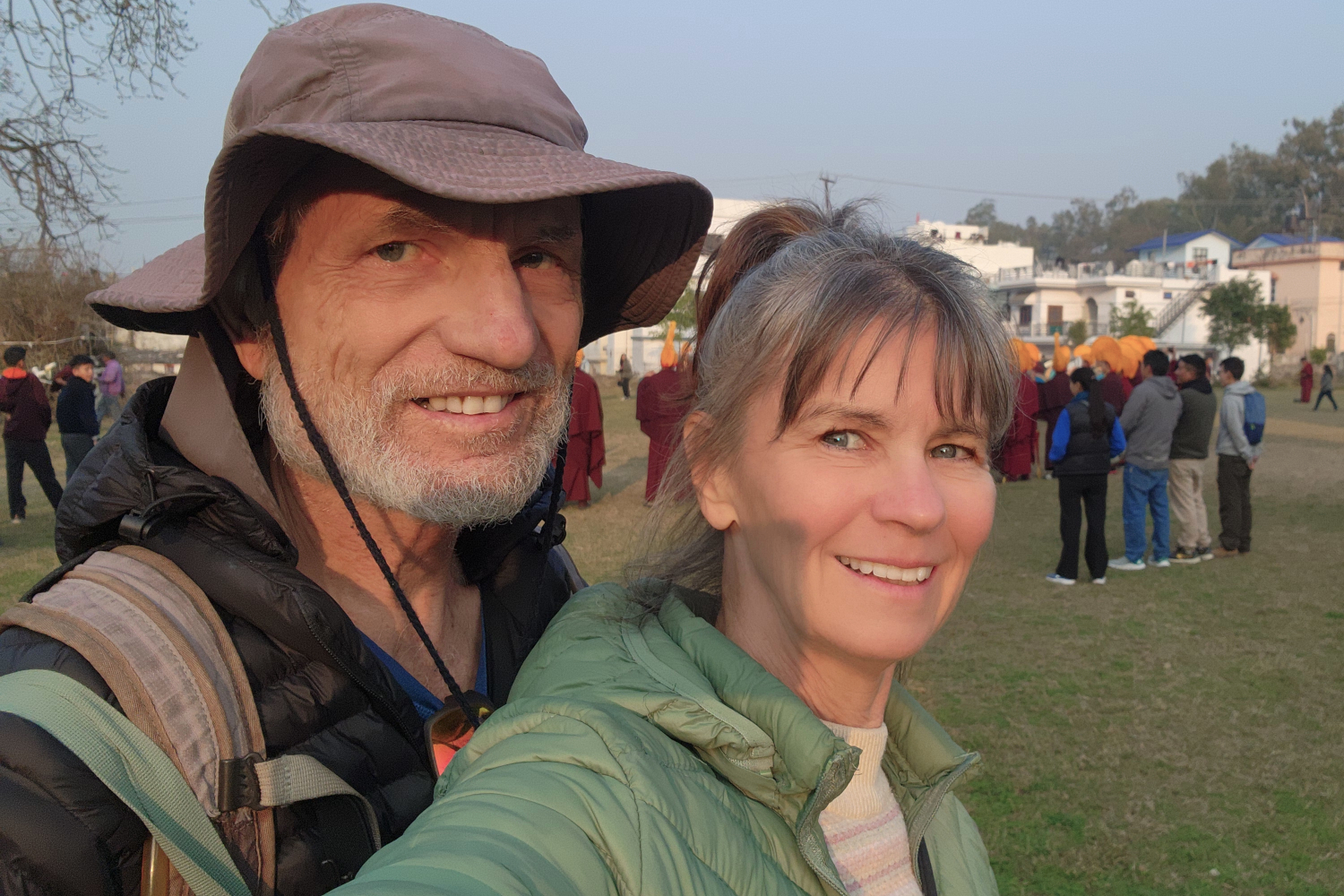
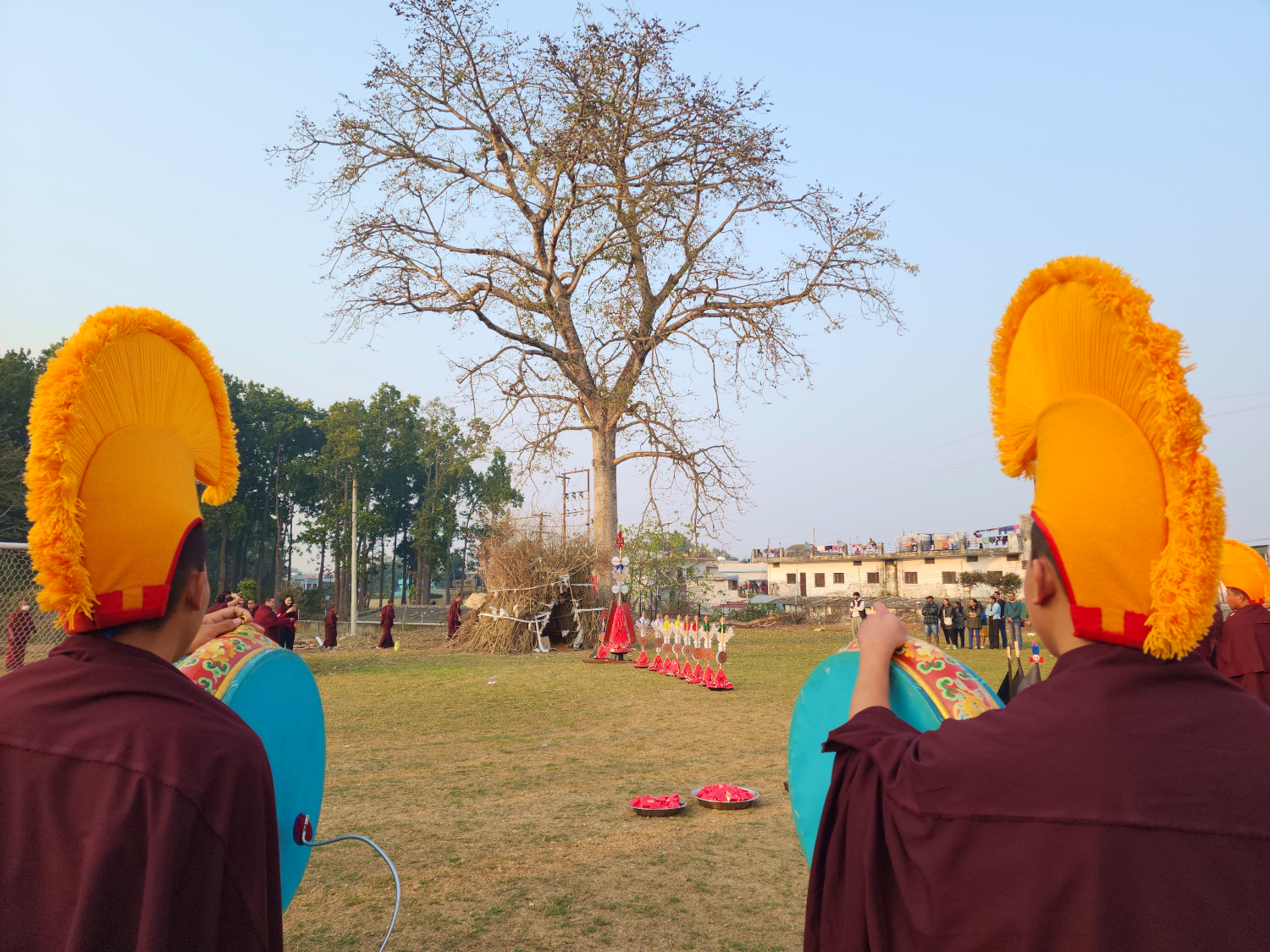

Then he picks up a bow and shoots several arrows in the general direction of the teepee, but even if it were a broad-sided barn, it doesn’t appear that he could get anywhere near it. In fact, one of them fails to launch at all, and falls impotently at his feet. Good think it wasn’t a grenade. But not to worry, the attendants hide the evidence of his poor marksmanship by picking up these arrows and adding them to the fire-in-waiting as well.
Finally, as the sun is just about to topple over the edge of the world, the bonfire is combusted. And a splendid bonfire it is too. In fact, we’re a little concerned that it’s a bit too close to the regal old tree that it seems to be, from our vantage point, almost directly underneath. But there is no unwanted conflagration, so maybe they did their calculations well. After this, there is a small fireworks display on the other end of the field.
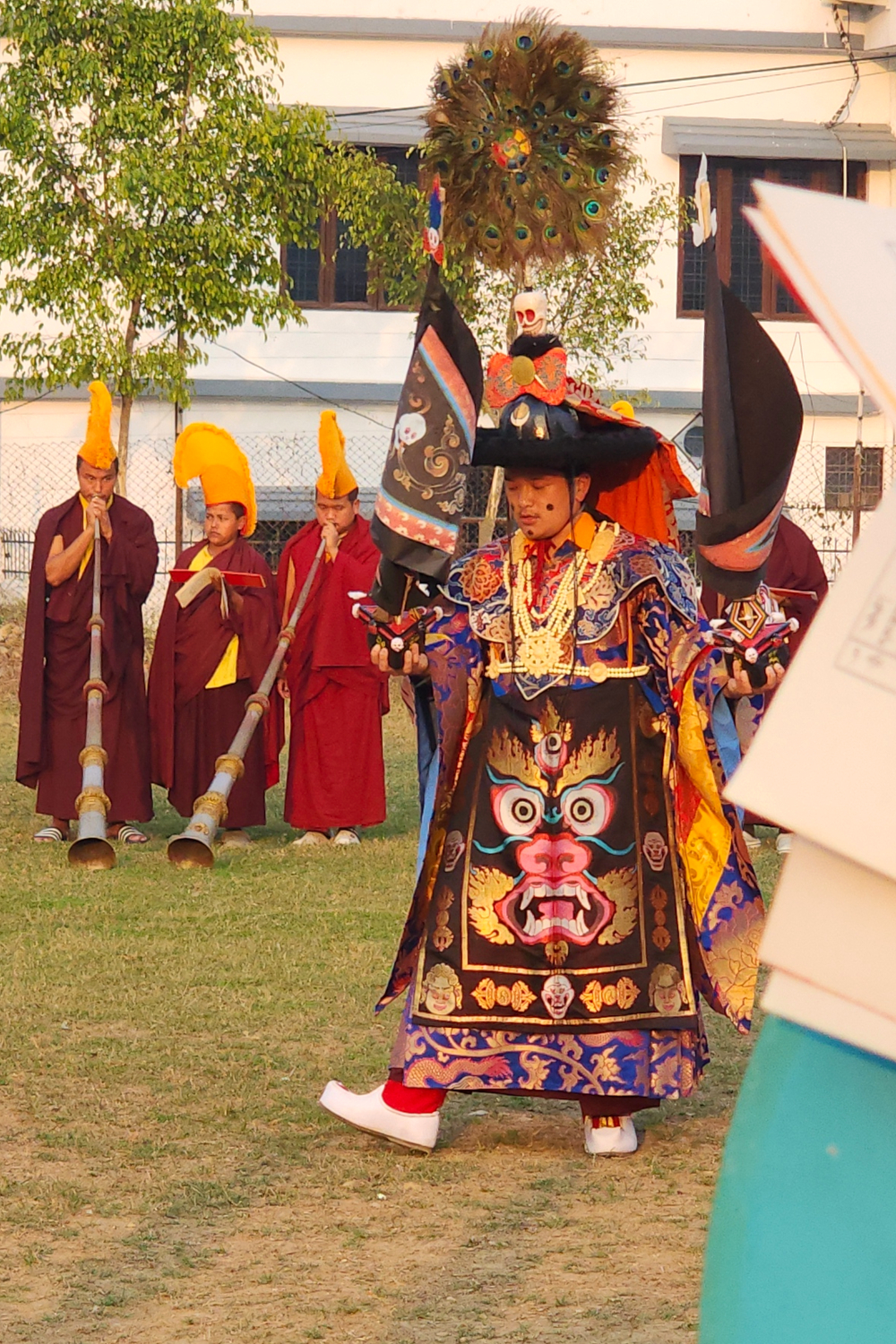
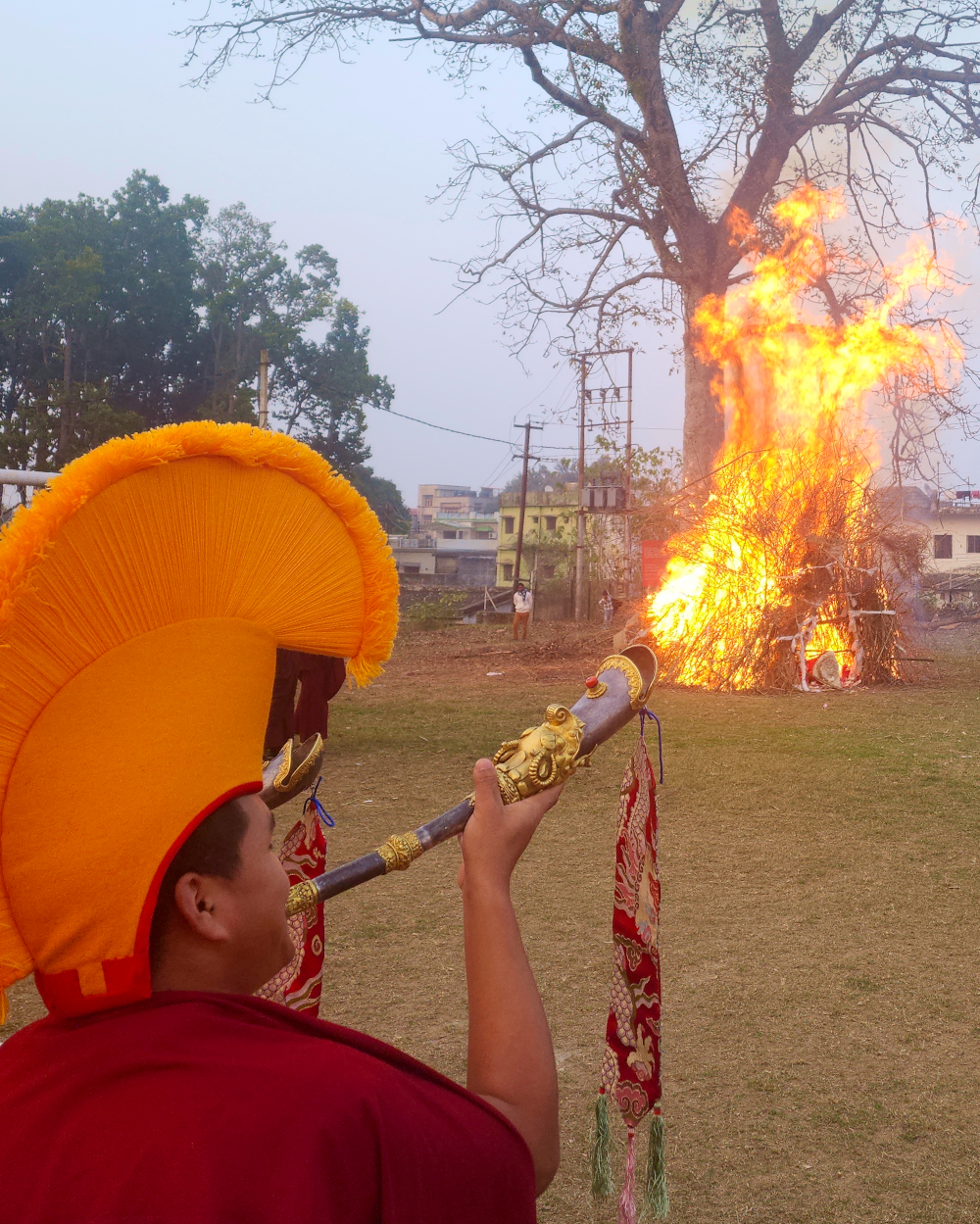
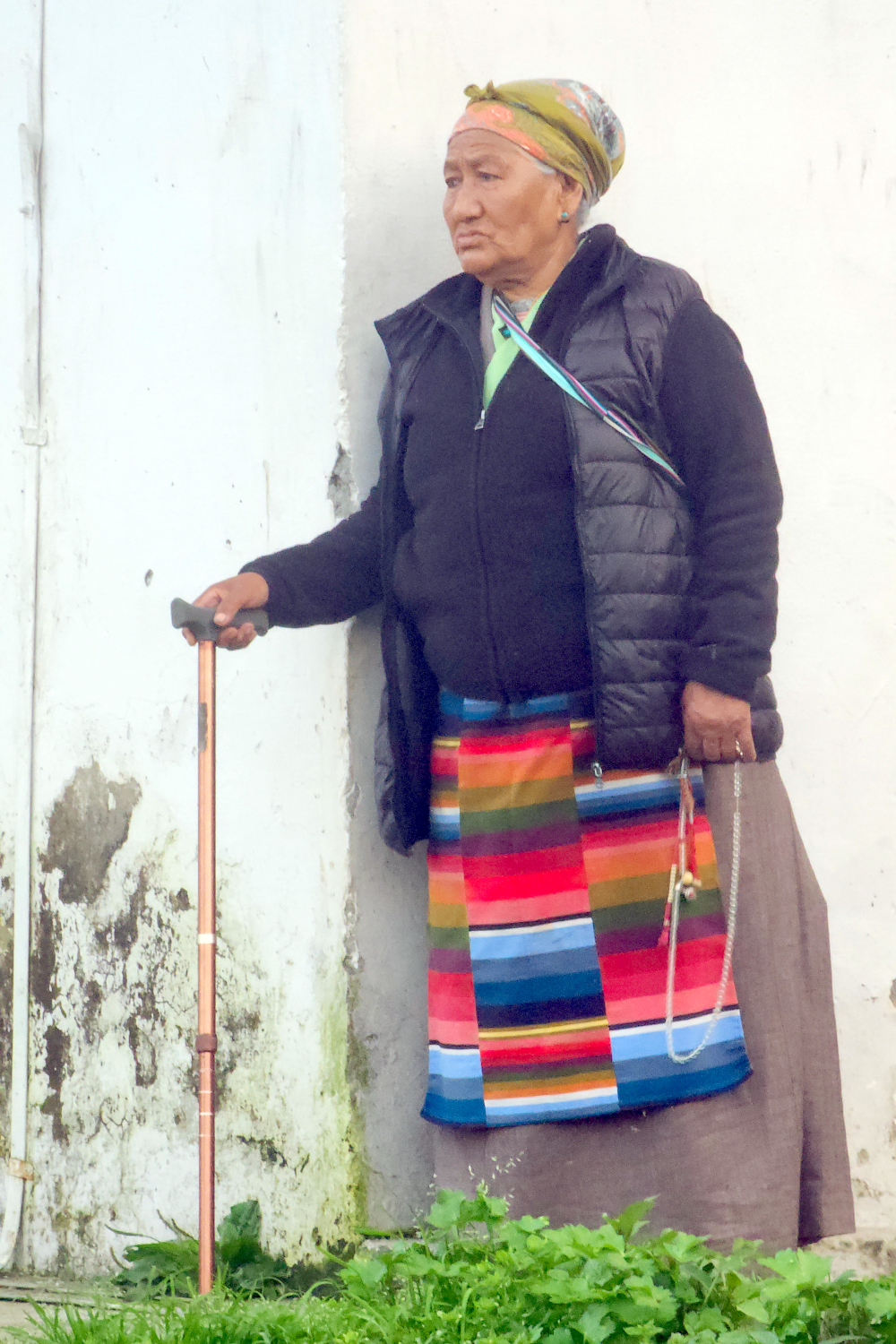
This was quite a serendipitous find. A taste of Tibet in the middle of India, and exposure to a cultural cornerstone the likes of which we’d never witnessed before. And we found it right in our own backyard — or at least our side yard, as the temple/ monastery is to the side of our homestay, about a block away. But then we have a very big yard these days.
Events occurred 1/28/2025

 world travel with a theatrical flair
Leave a comment