

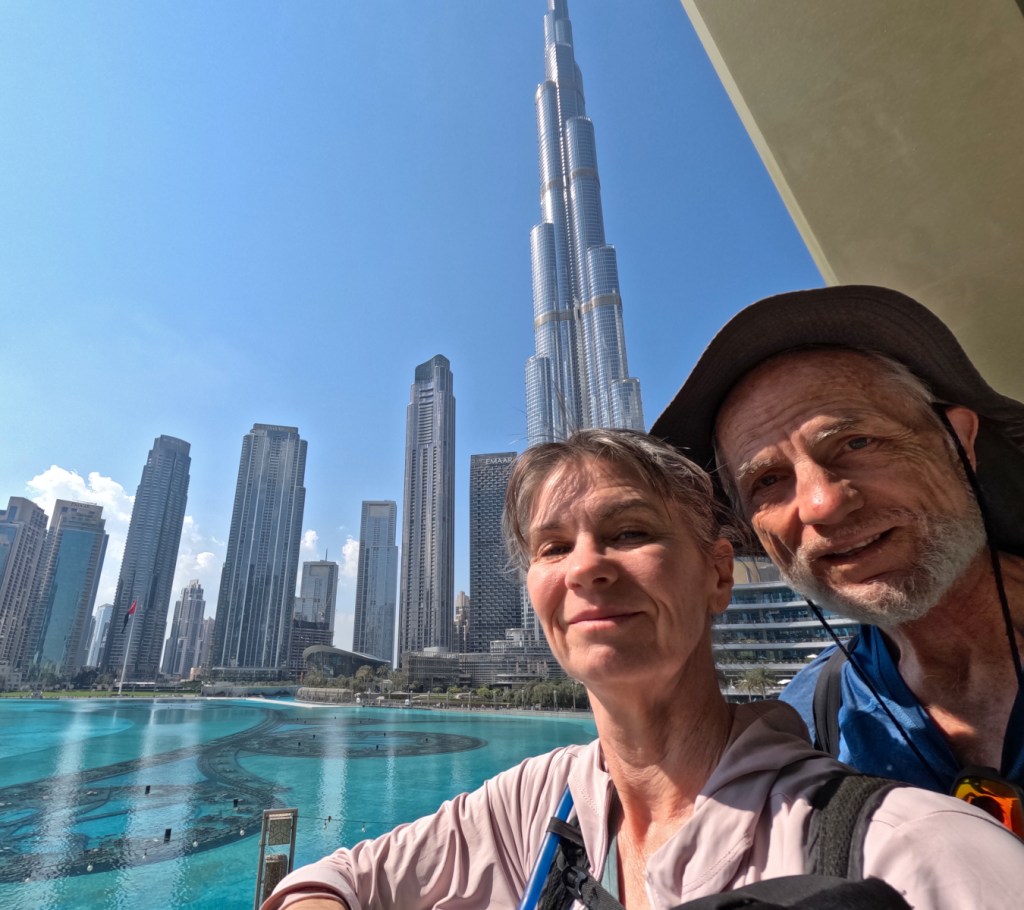
Travelers are enticed to visit Dubai for several reasons. World class dining and shopping. Immaculate beaches. Desert adventures. Cultural immersion. These experiences, while alluring, are not really unique to Dubai. But there’s one idiosyncratic feature that really sets the city apart from all others. For us, Dubai is all about its architecture.
Of course, every municipality has its own unique buildings and structures. But in Dubai, the architecture is not just architecture. It’s architecture masquerading as sculpture, construction posing as exploration, an urban skyline that thinks it’s a handwritten manifesto to the absurd. It’s a gauntlet slap in the face to tradition, convention, conformity, expectation, and even physics. And unlike most of the other attractions and activities in this tourist trap on steroids. it can be appreciated and savored absolutely free of charge.
It is with the intent to soak in some of these wonders of the urban landscape that we set out on a metro ride, with the ultimate destination of the granddaddy of them all: the Burj Khalifa, the most vertically prolific building on the planet.

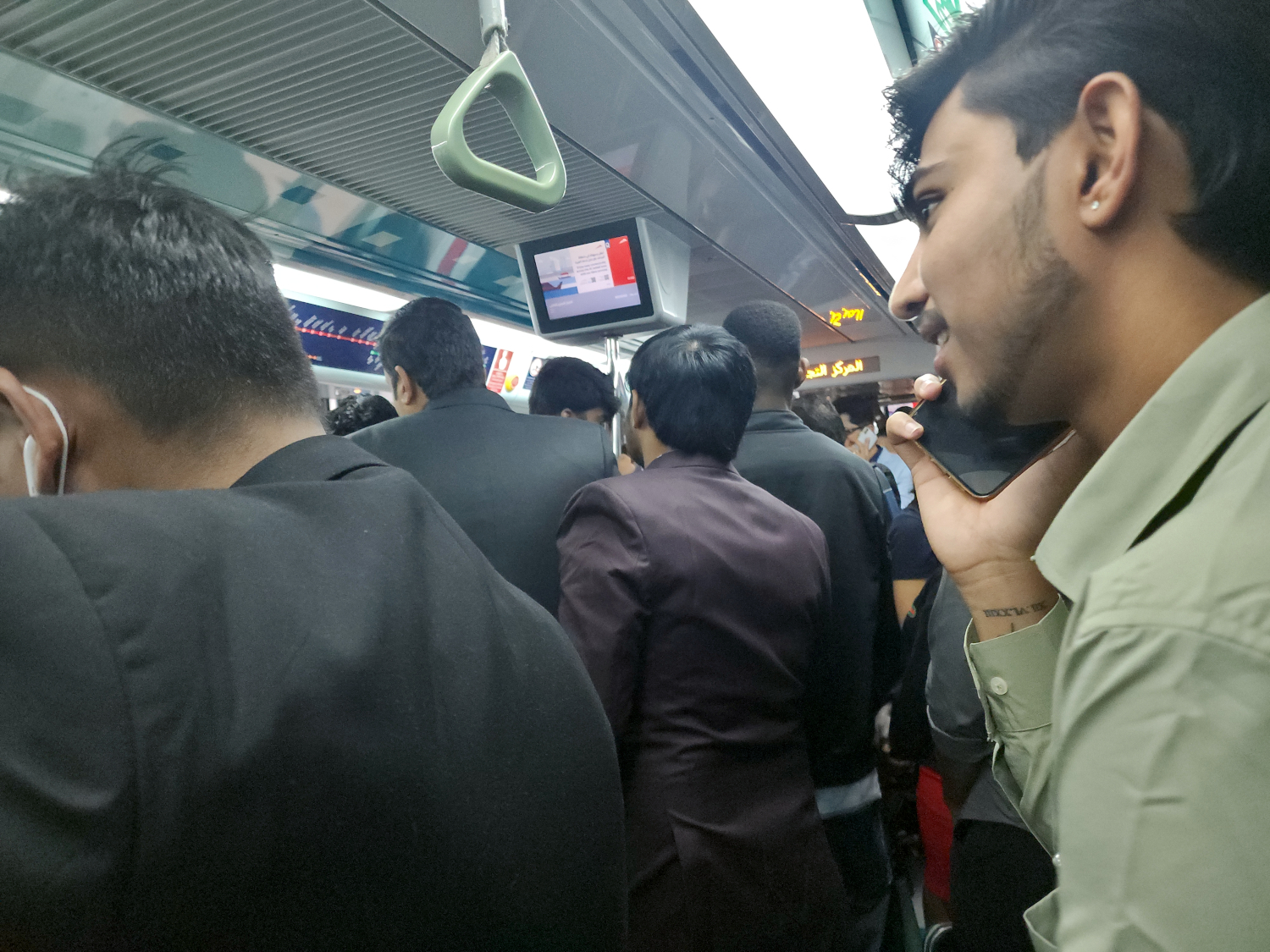
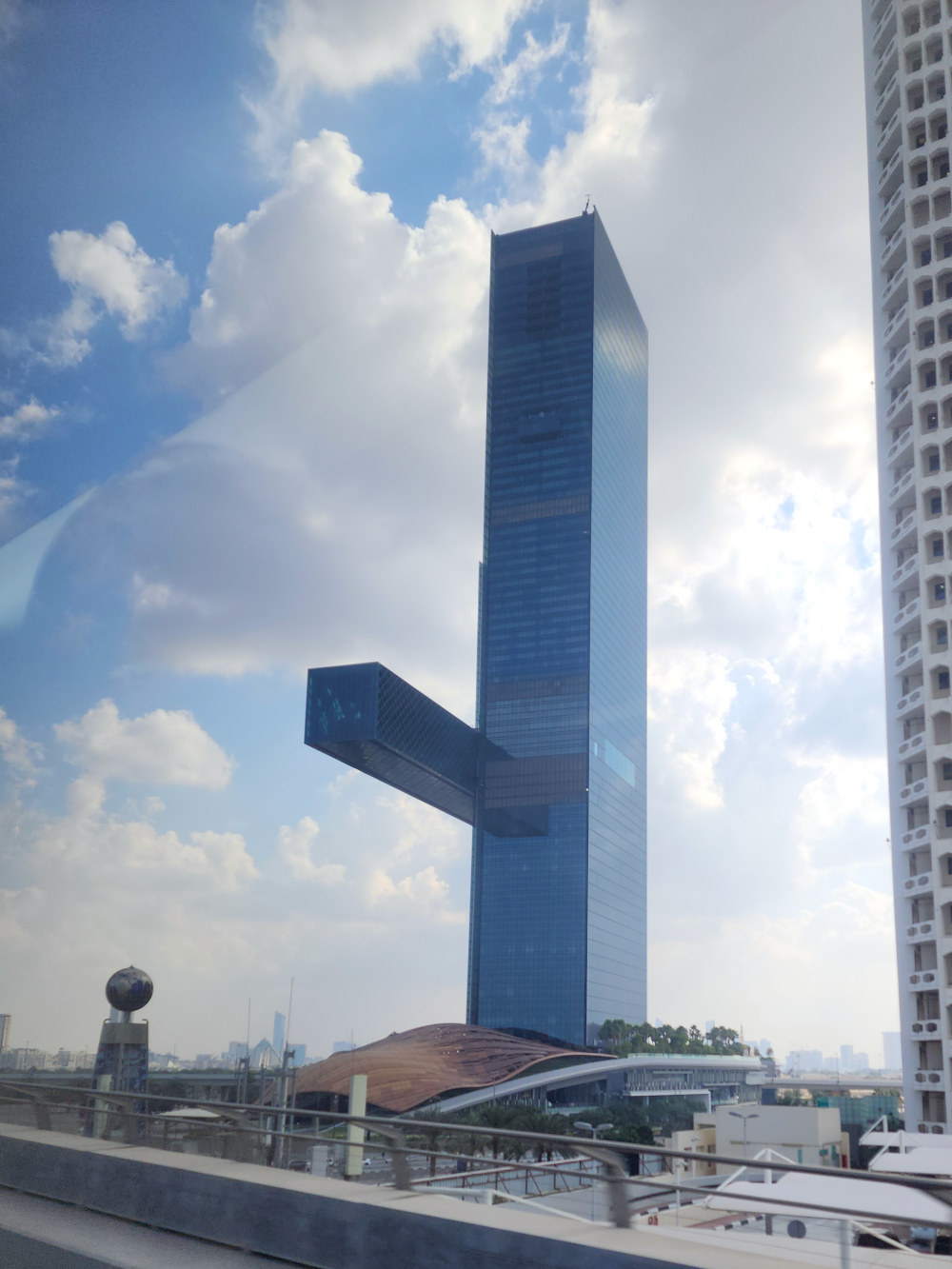
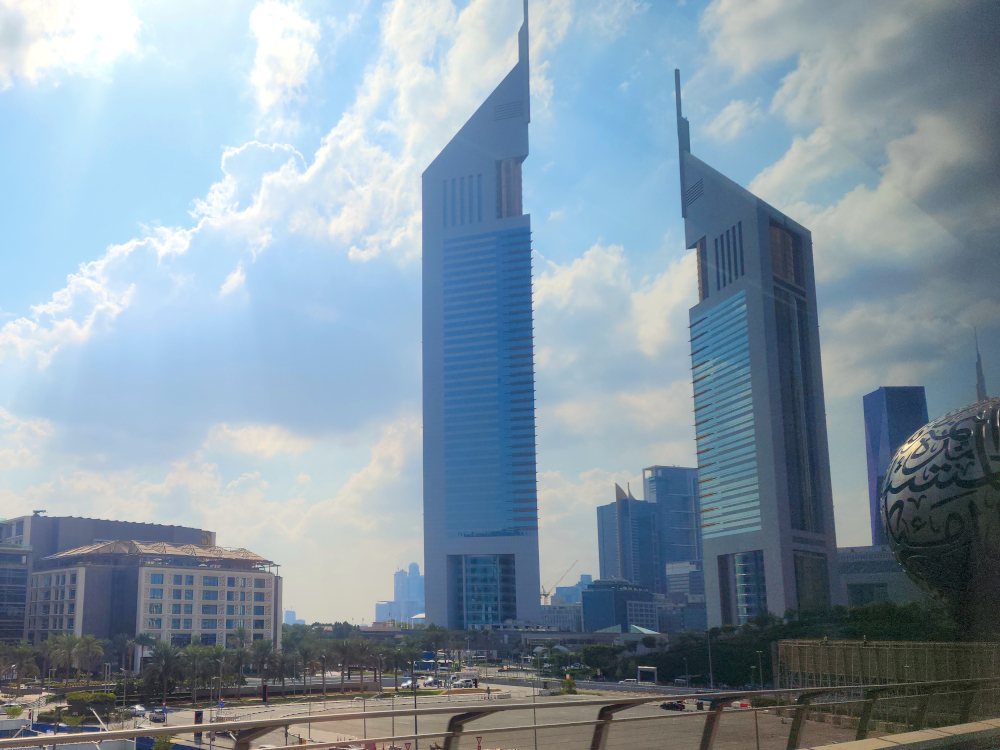
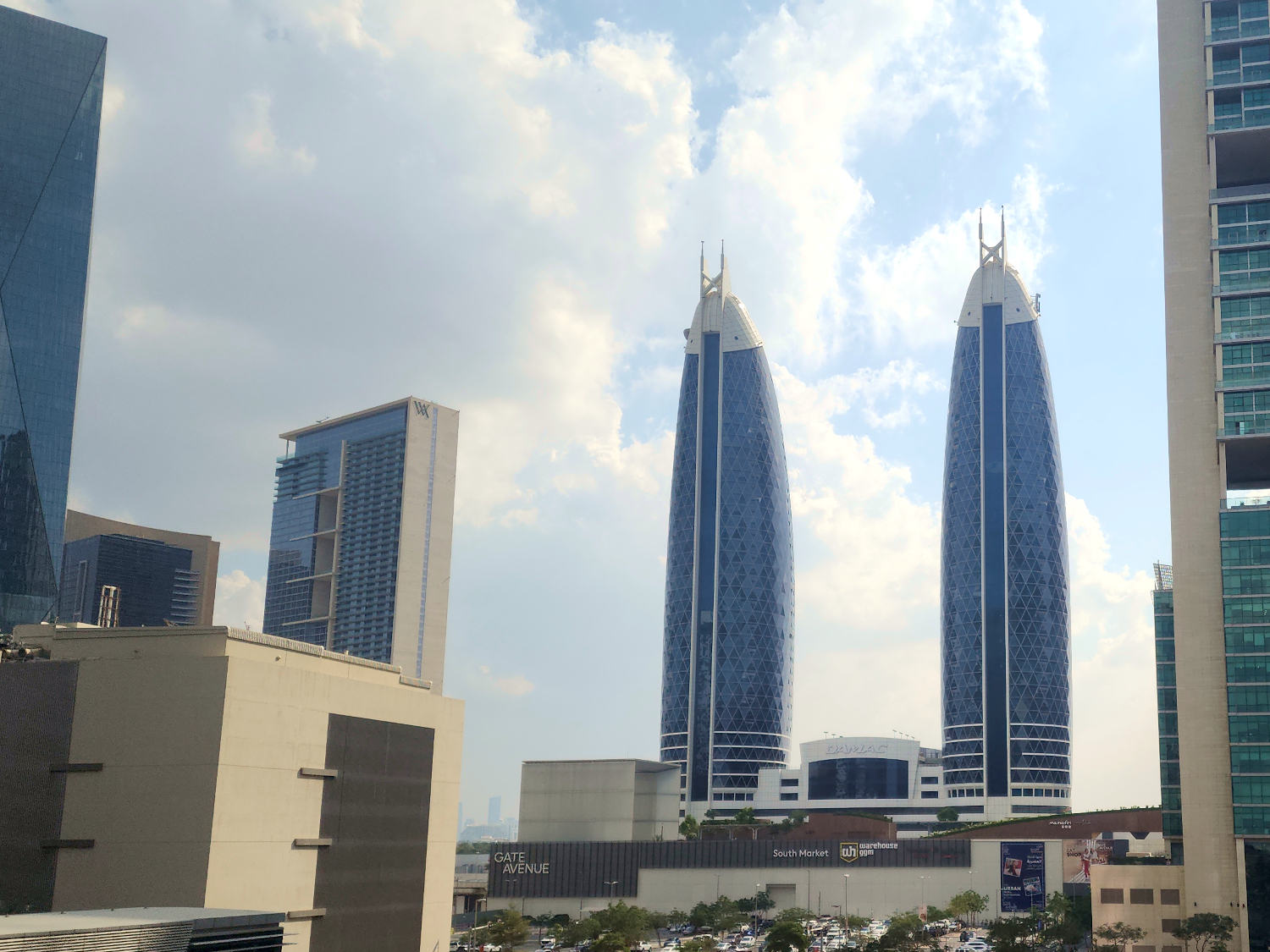
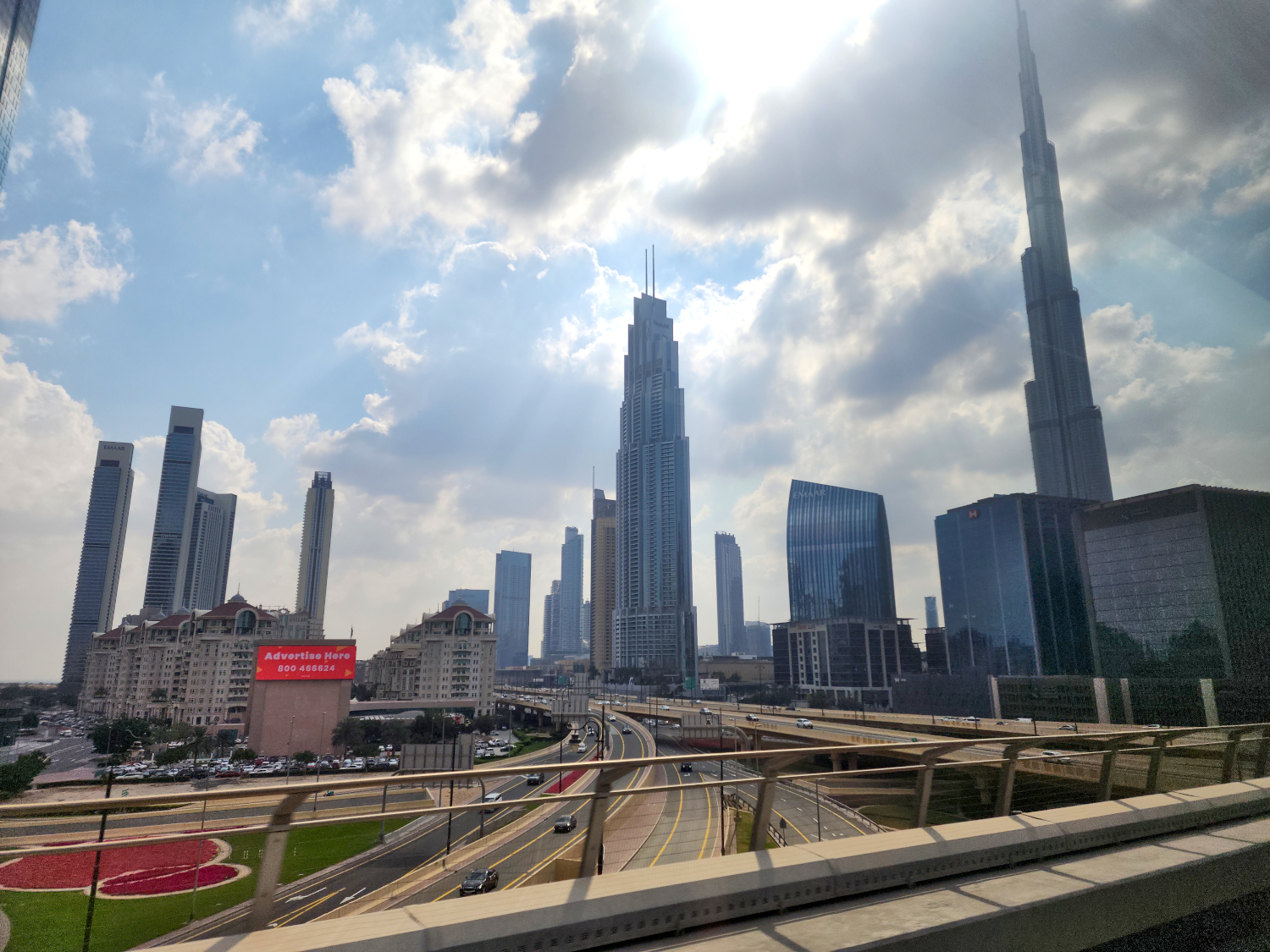
Along the way, we pass several of the other noteworthy buildings in town, which someone considerately placed along the route of our metro track. So we’re able to get some photos out the window, though it requires a bit of jockeying among the clusters of passenger heads on this rather claustrophobic train.
Up first is the world’s largest “picture frame”, according to the folks at Guinness, though the only pictures it contains are real life. It stands nearly 500 feet high, and is positioned as a symbolic portal between old and new Dubai. So depending on which side of it you stand on when you snap your camera, you can have it frame two very different worlds.
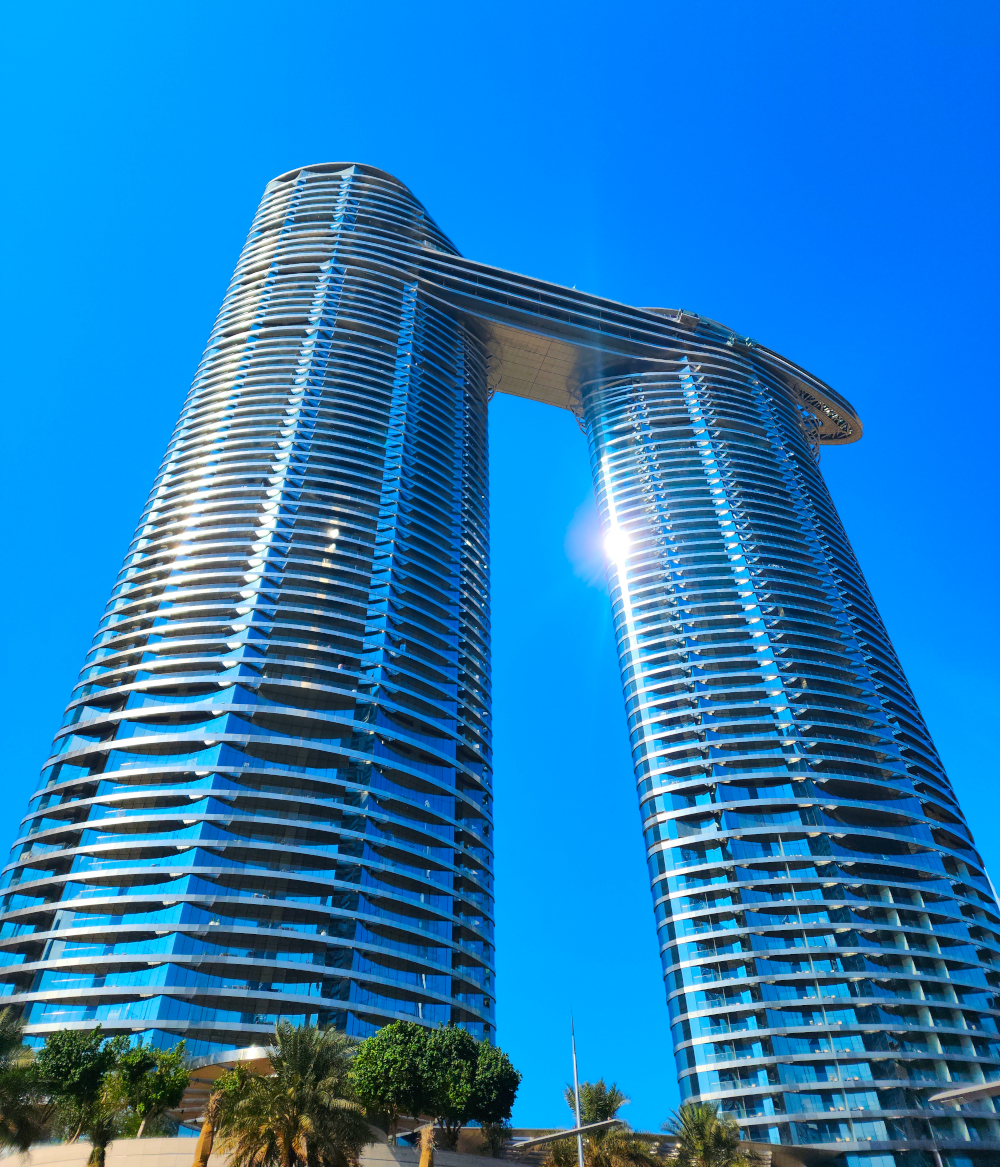
Up next on your left, ladies and gentlemen, is a curiosity officially known as One Za-abeel, though most folks just refer to it as “The H”, because… well, that’s what it looks like. The vertical sections are two towers housing chic residences, a hotel, offices, and restaurants; these towers are joined by a horizontal segment that extends 216 feet past the edge of one tower, in a perilous-looking defiance of gravity that makes you queasy at the prospect of actually standing inside that section. According to Guinness, it’s the world’s longest cantilever, which is the architectural term for a stretch of a building that has nothing underneath it but air. It looks as if, should one pigeon too many alight on it, the whole thing would just topple over.
Up next we see the Emirates Towers, which are also twin towers containing businesses. They have a triangular shape with big notches in their sides. In any other city, they’d grab your attention pronto; but in Dubai they’re a lesser stepsister in the city’s extensive architectural family. They especially are outdazzled by another gem right there in their shadow.
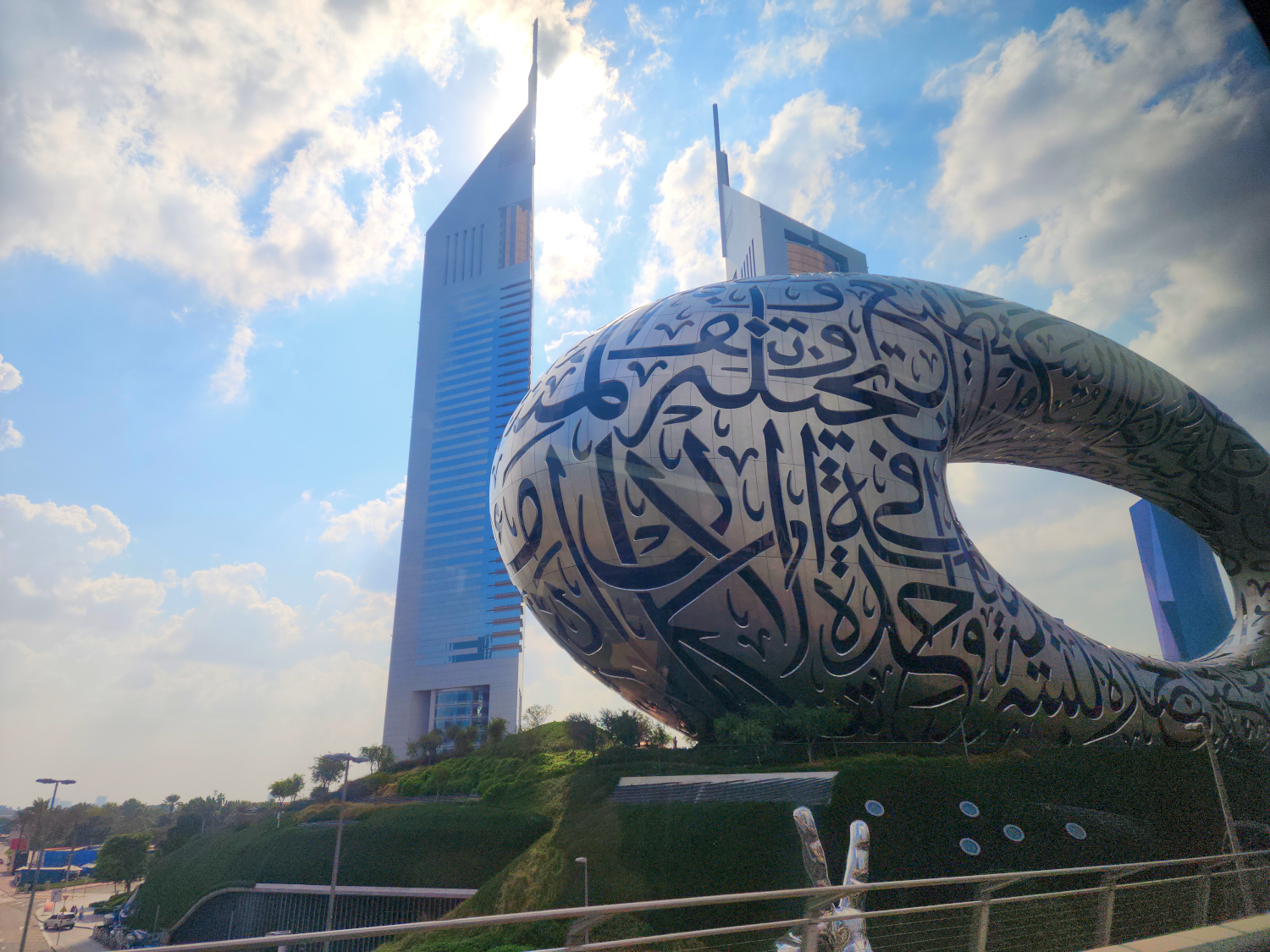

One might call it The Donut, because… well, that’s what it looks like. It’s actually the Museum Of The Future, which is a rather oxymoronic name, since the future hasn’t yet done anything to be put into a museum. It’s a really arresting metallic torus that appears to have large Arabic letters inscribed on it. They are indeed Arabic letters, but they’re not inscribed; they’re actually windows shaped like Arabic letters. And they spell out a poem about the future, written by the current ruler of Dubai, who is also vice president and prime minister of United Arab Emirates. (Don’t you wish the rulers of your own country wrote poems? Or maybe you’d just settle for having leaders who were literate.) It’s easy to imagine space cowboys zipping through the hole in the donut with their ray guns drawn, in pursuit of space villains.
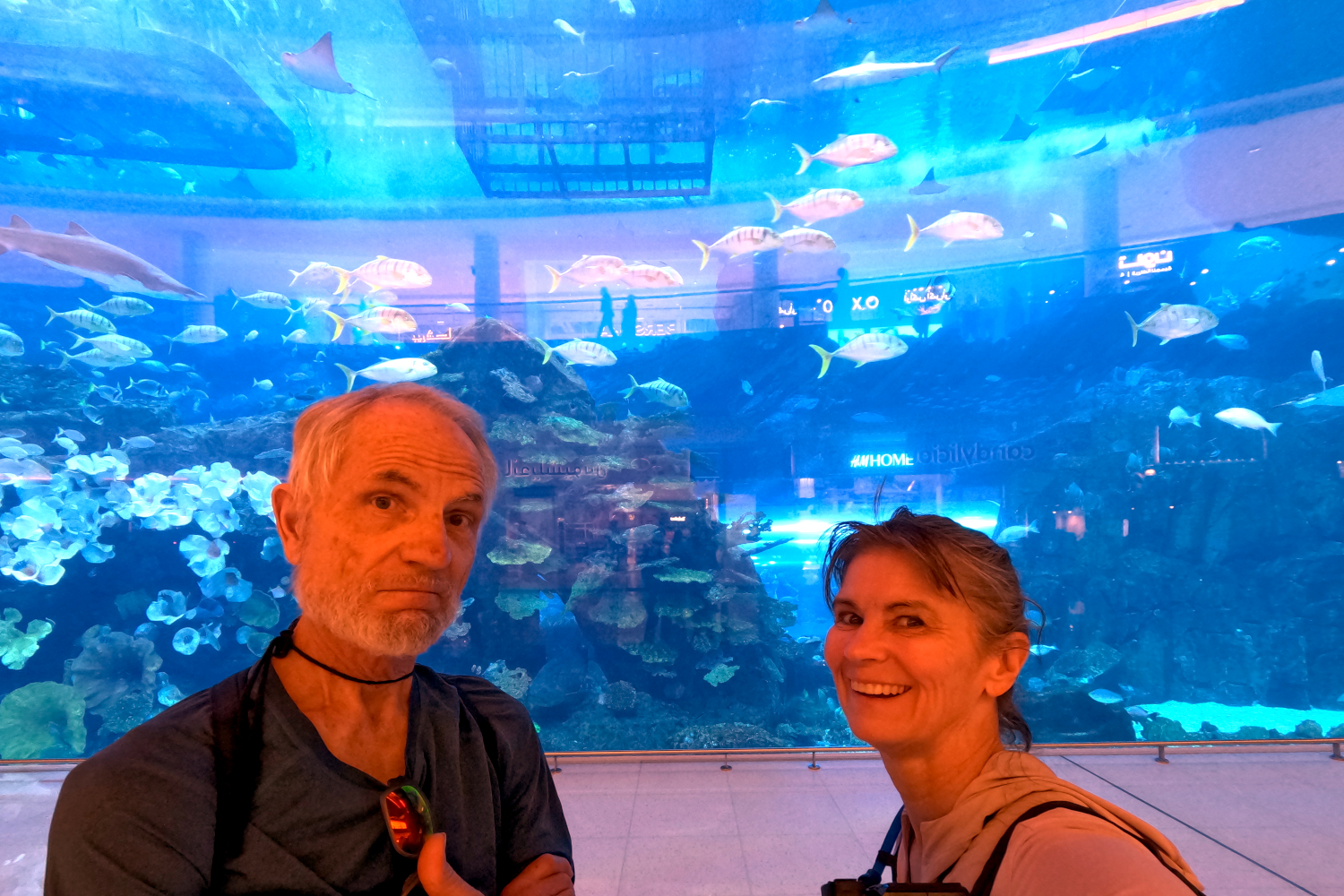
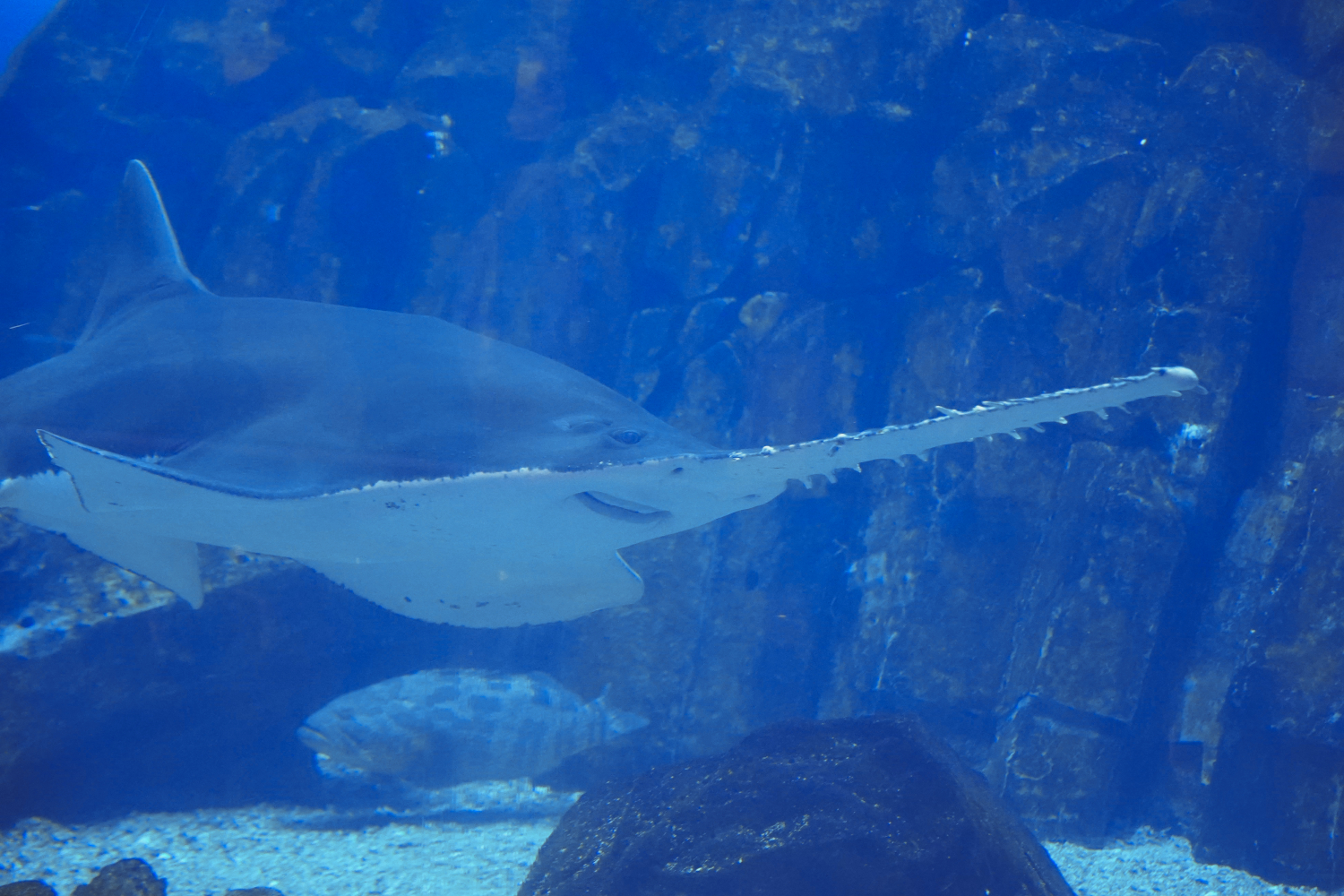
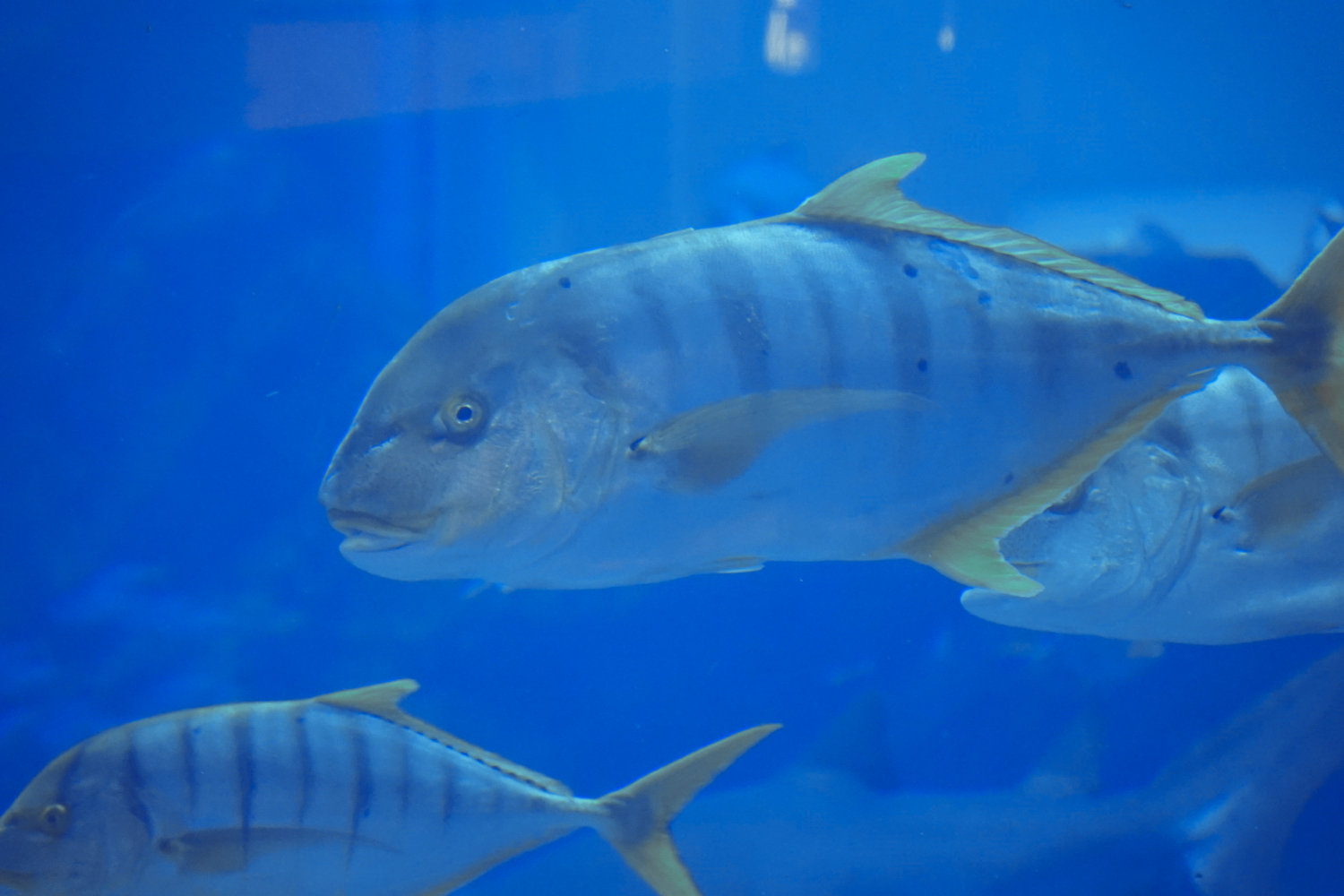
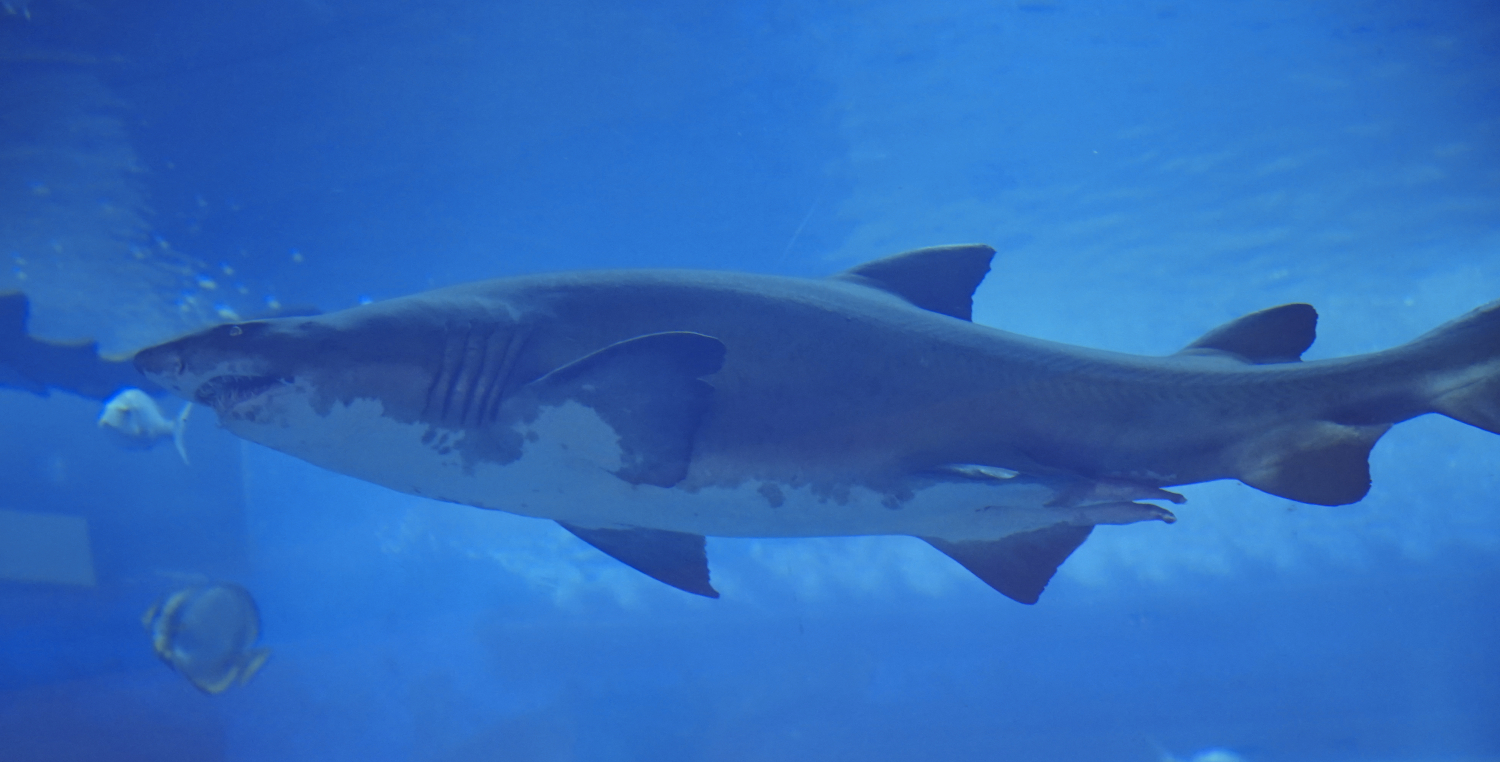
And then we come to the grand prize, the Burj Khalifa herself. We get off at the stop for the nearby Dubai Mall and amble through it, There’s an aquarium inside, but we don’t want to either spend the time or the money on it. We do get a good taste of it, however, because some of the display tanks are visible from the lobby outside the main exhibit area that requires admission. So we get a chance to see swordfish, sharks, and a few other marine critters cavorting.
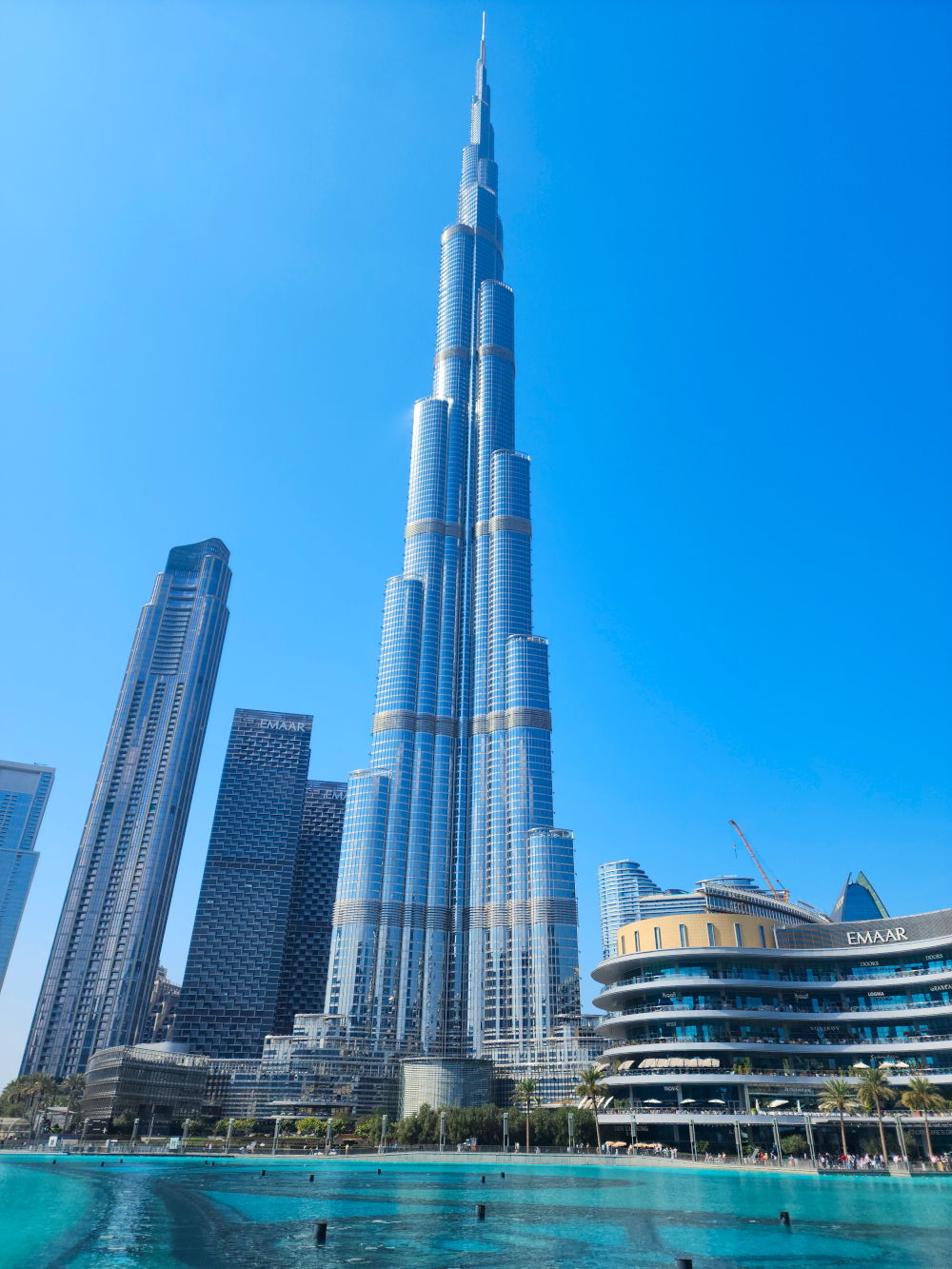
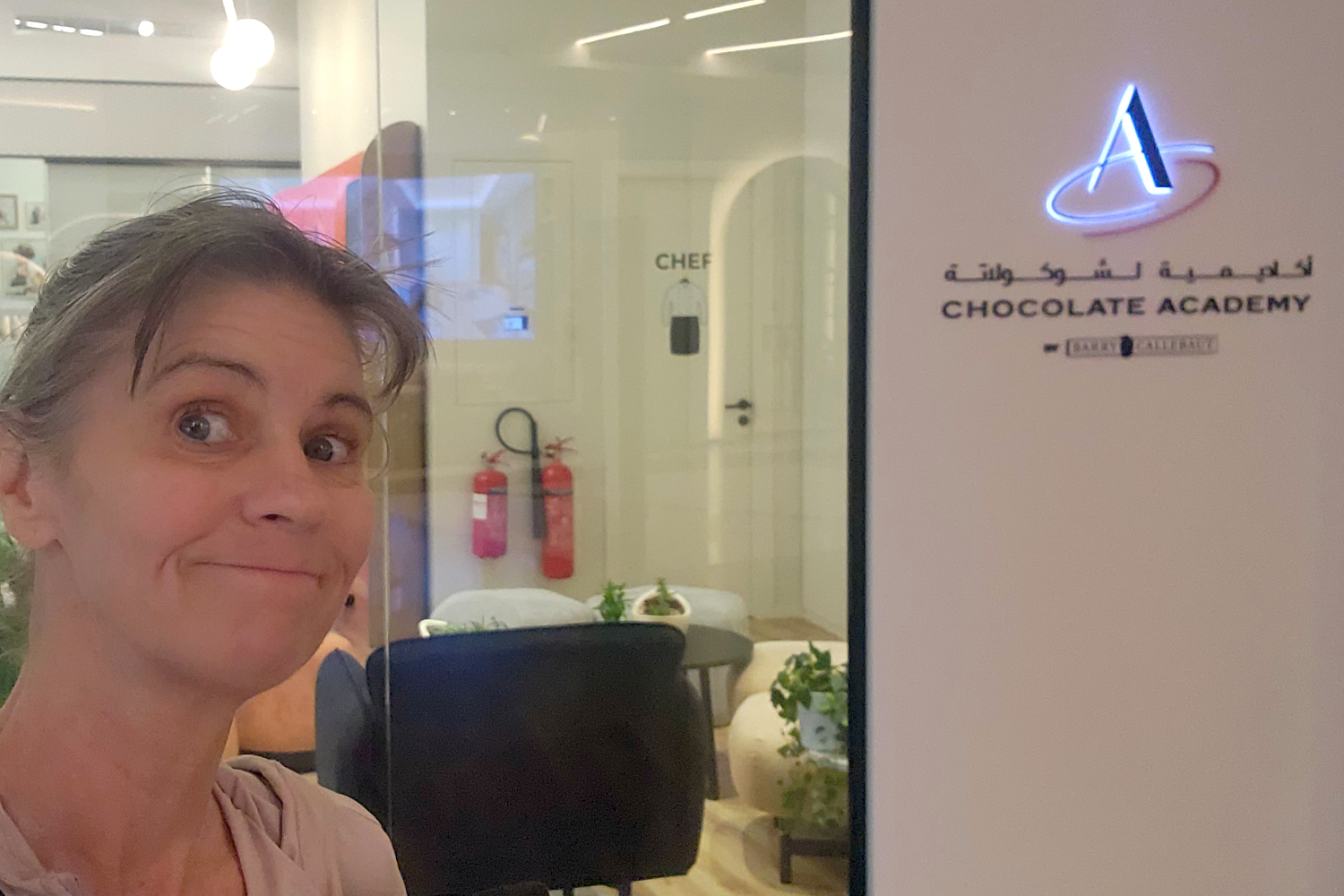
There’s something called the Chocolate Academy, with a rather posh front office of what appears to be some sort of dessert making school. Wonder if they need any volunteer guinea pigs? There’s also a Peet’s Coffee shop, and since Dennis was always fond of Peets back in the States, he can’t resist springing for a cup of his precious decaf. It turns out to be… not quite up to Peets standards. And at 22 dirhams (nearly 6 dollars) a whack, that’s insult to injury. But at least now we have that experience under our belts — and need never rePEET it.

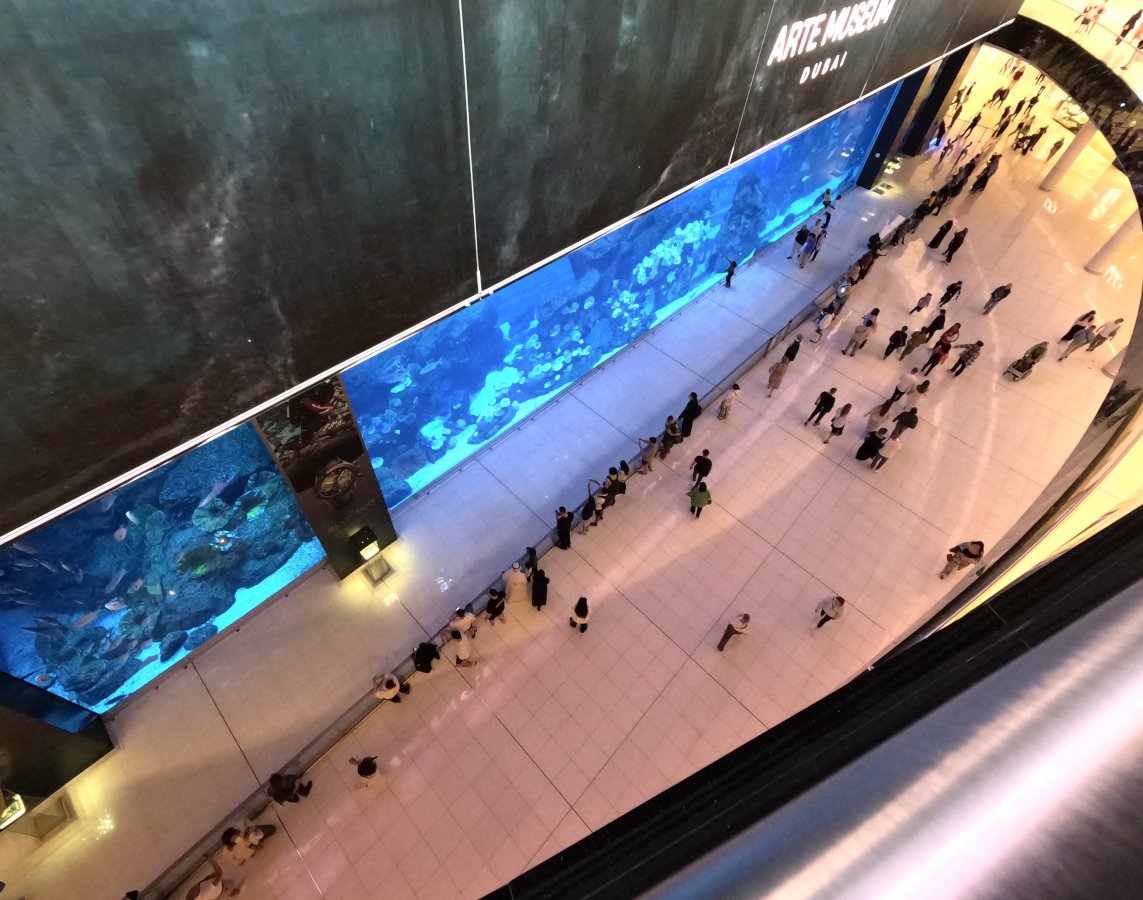
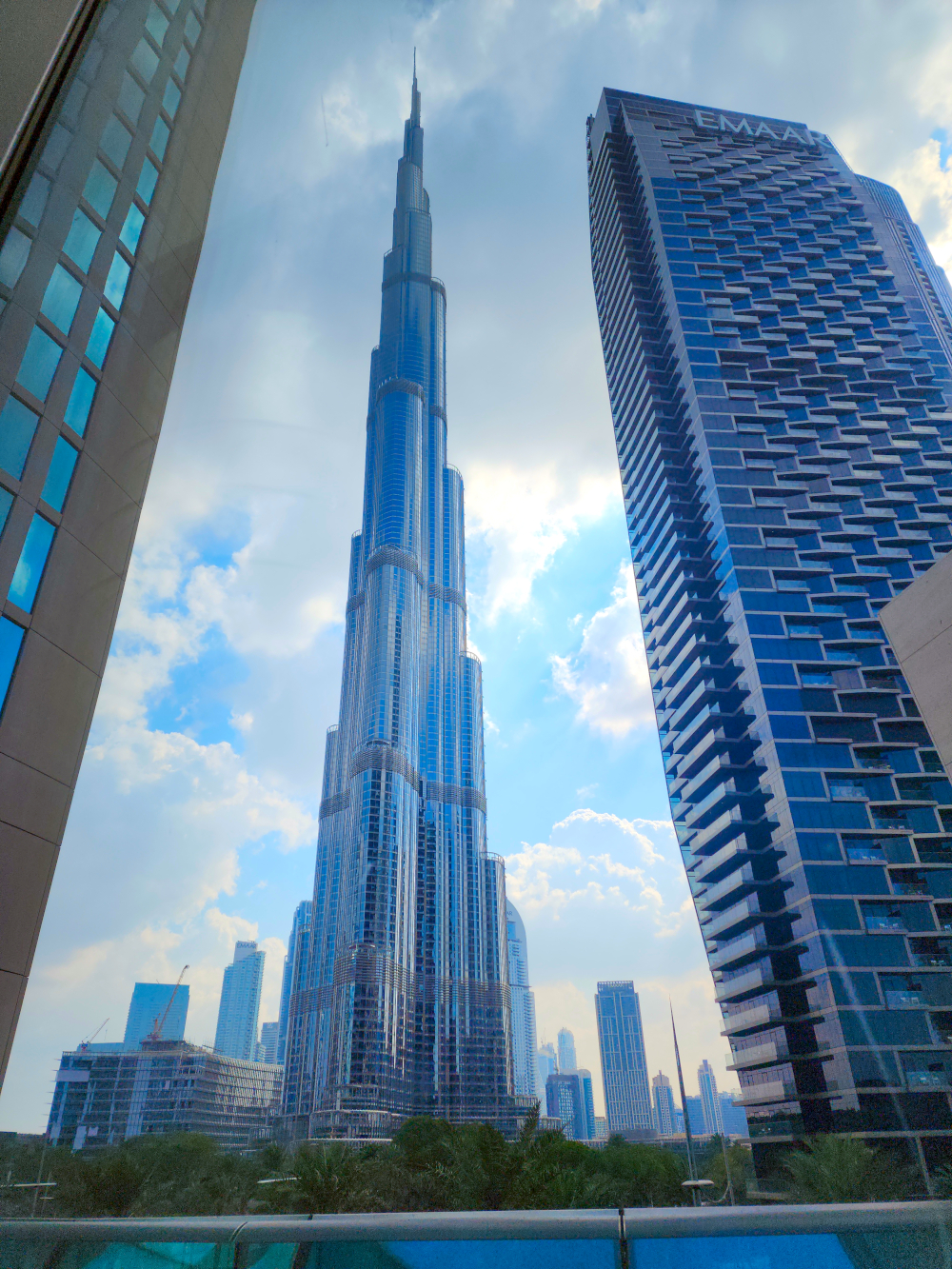
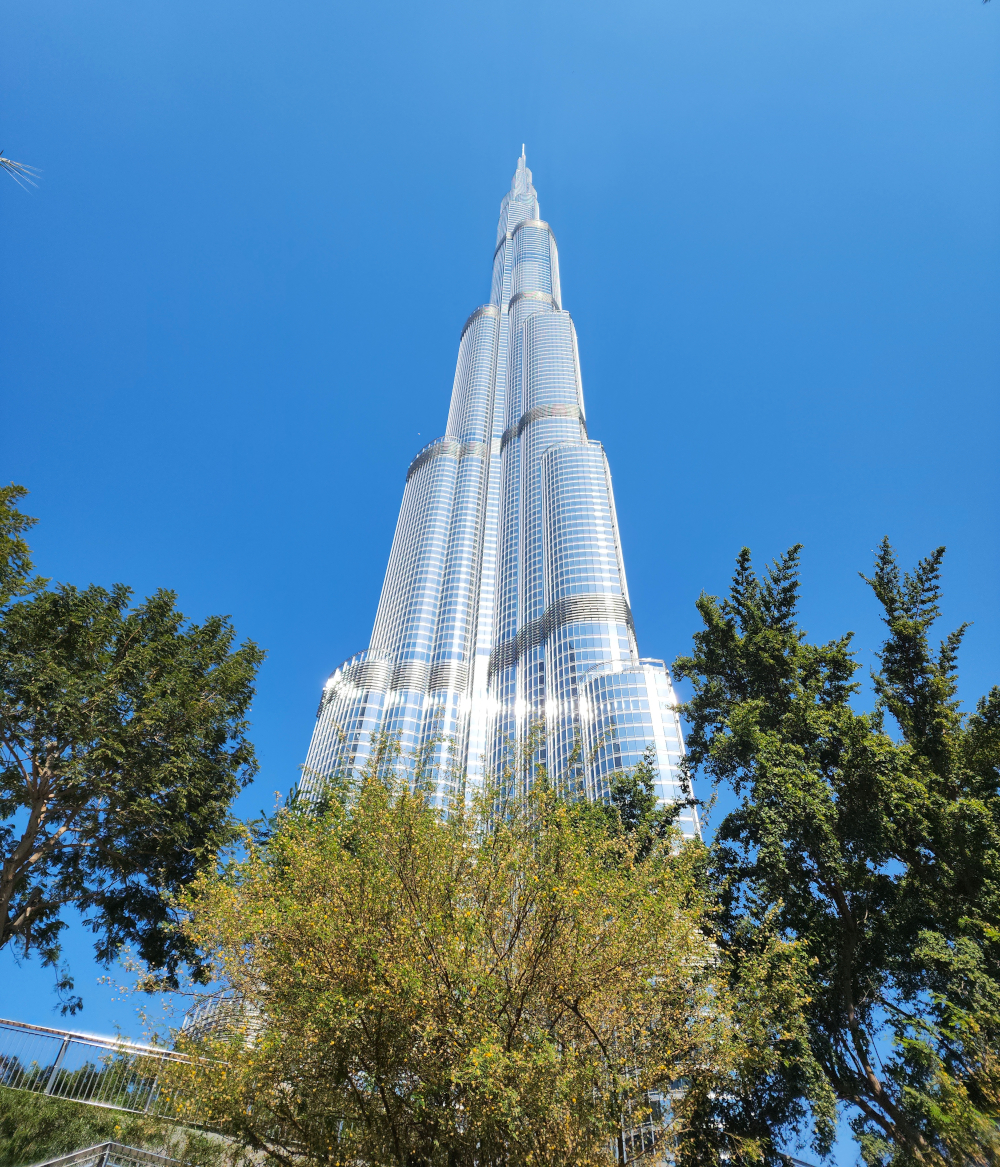
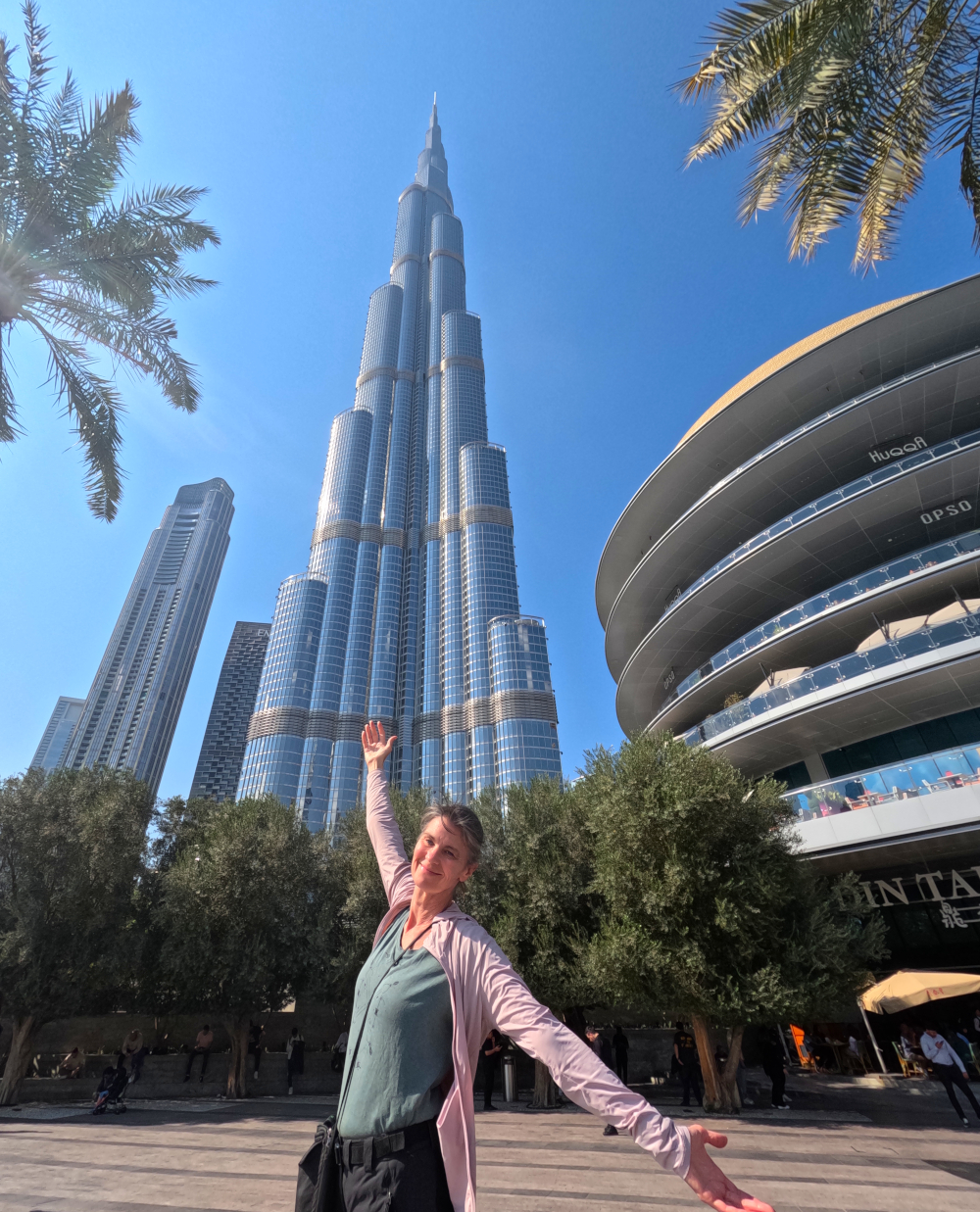
Then we go outside to a plaza with a little lagoon, on the other side of which is another ritzy shopping complex with, perhaps, overpriced mediocre coffee. But to the right is the piece de resistance. She towers so high that you almost lose your balance trying to see the tiptop.
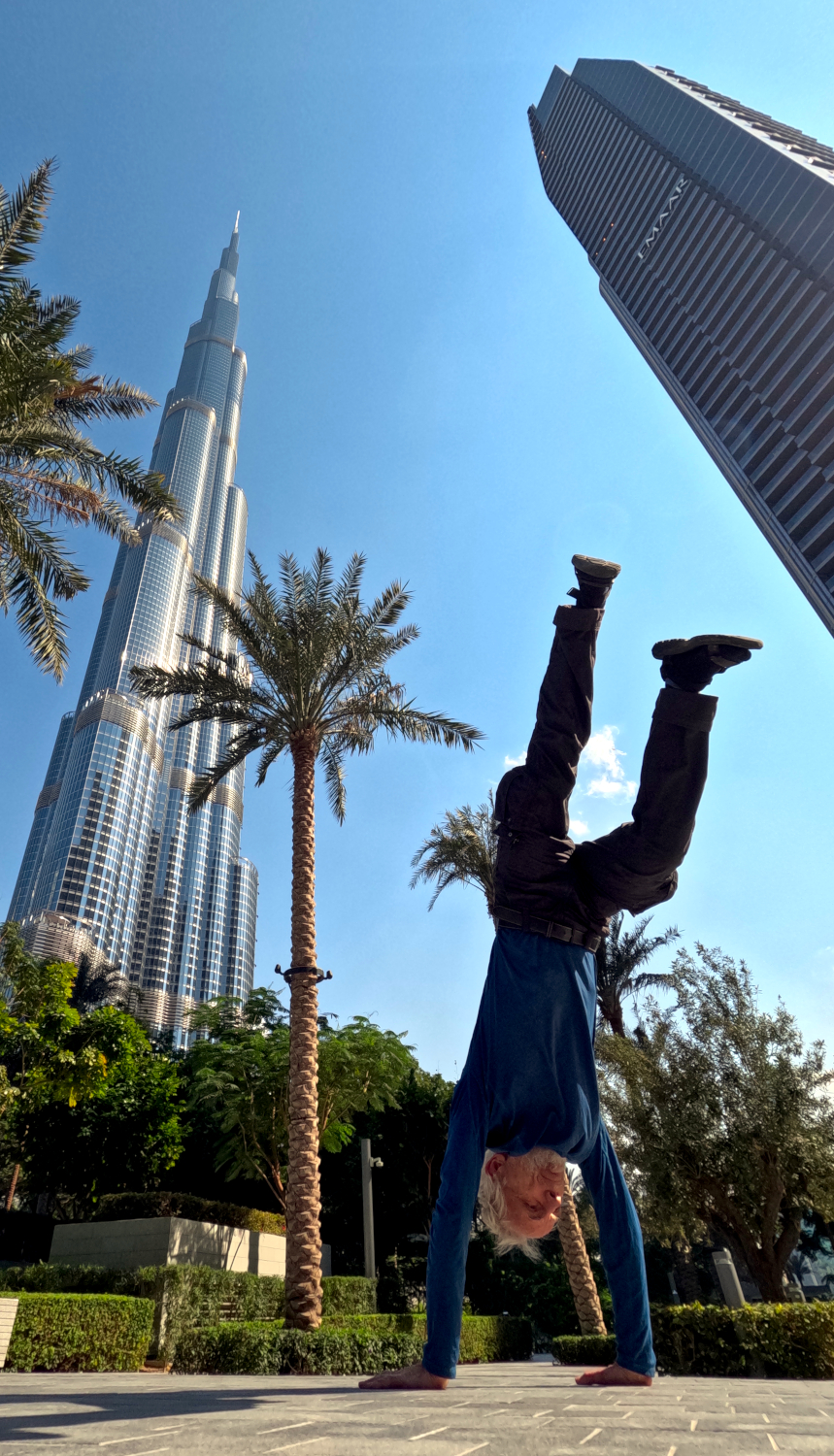
Stretching to a height of 2722 feet (more than two Empire States), the Burj Khalifa is the tallest structure ever built on this planet, unless they did something we don’t know about in Atlantis. Its design is height personified; it’s composed of a cluster of towers of varying heights that appear to have competed against each other until one of them shot up ahead of the pack and rang the bell in the heavens. Its construction incorporated steel salvaged from the government headquarters of the former communist regime in East Berlin. Since the Burj Khalifa officially opened in 2010, several people have BASE jumped from it (with and without authorization), one or two individuals have just jumped, and one hardy soul scaled the outside of it.

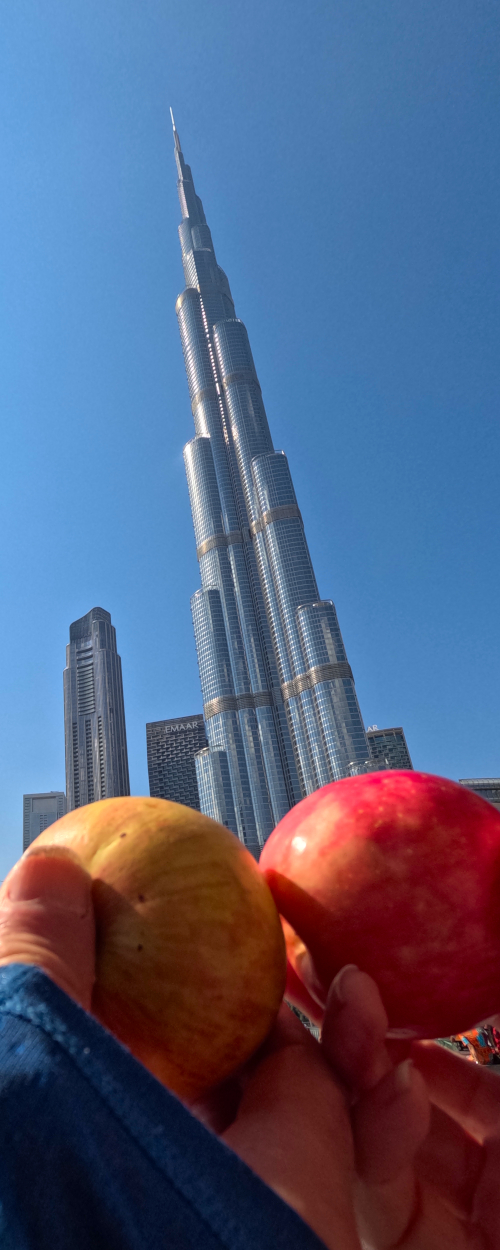
This looks like as good a place as any to have lunch, so we find an unoccupied bench, sit down, and whip out our fruit and other munchies. With that task completed, we’re about to leave when the floor show begins. The lagoon erupts into one of its periodic displays of dancing fountains, accompanied by the sound of snappy Arabic music. It’s quite dazzling, and we only wish it had been nighttime, so we could have taken in the light show that goes along with it.
After about five minutes, it ends abruptly and rather anticlimatically, but we feel that we’ve gotten our money’s worth. In fact, although we won’t find out until later, we’ve just witnessed the world’s largest dancing fountain show.
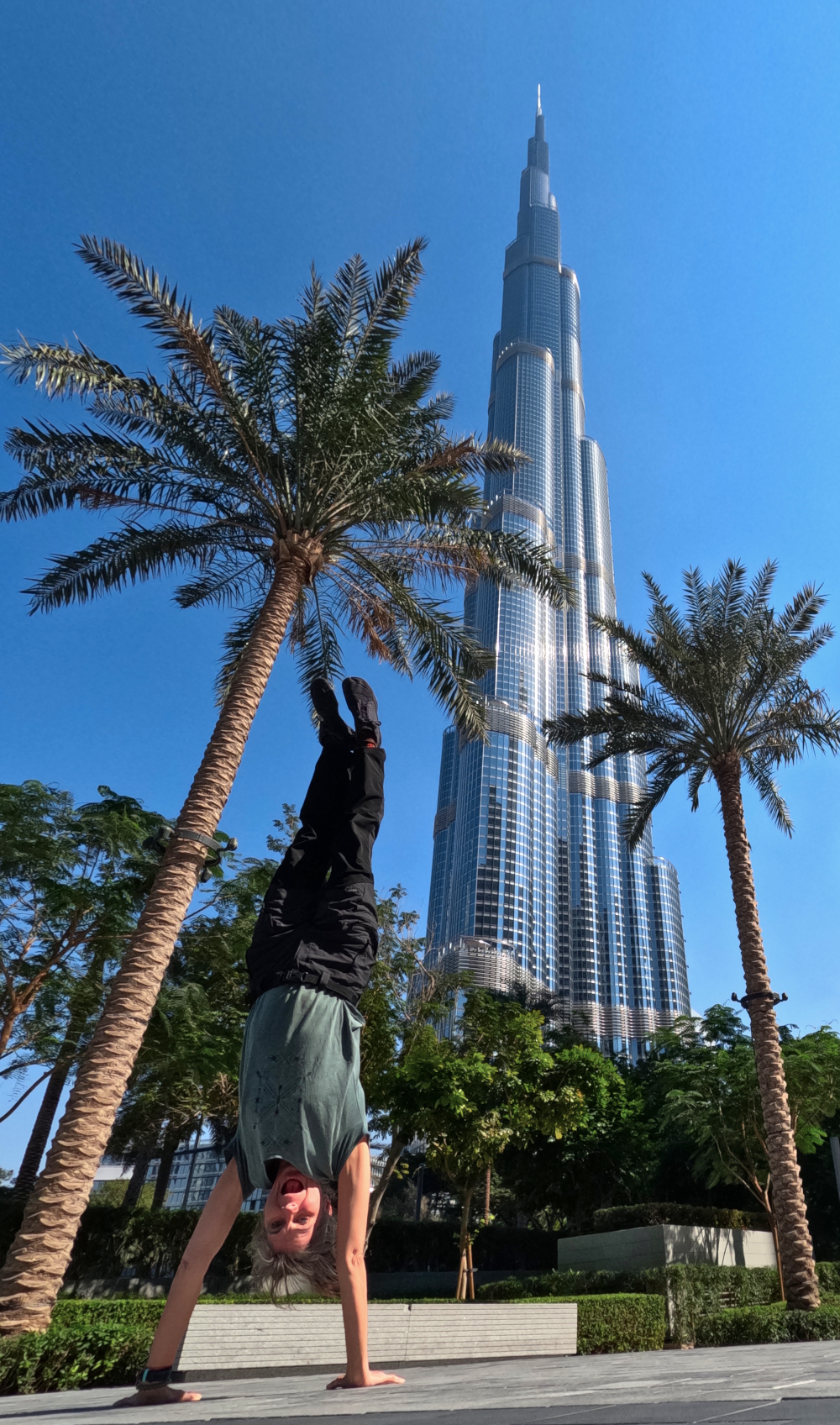
Walking around the perimeter of this architectural colossus, we decide we have to show it that, by golly, we’re capable of reaching for the sky as well. And to get our maximum height, we indulge in our signature public handstands. Take that, Burj.
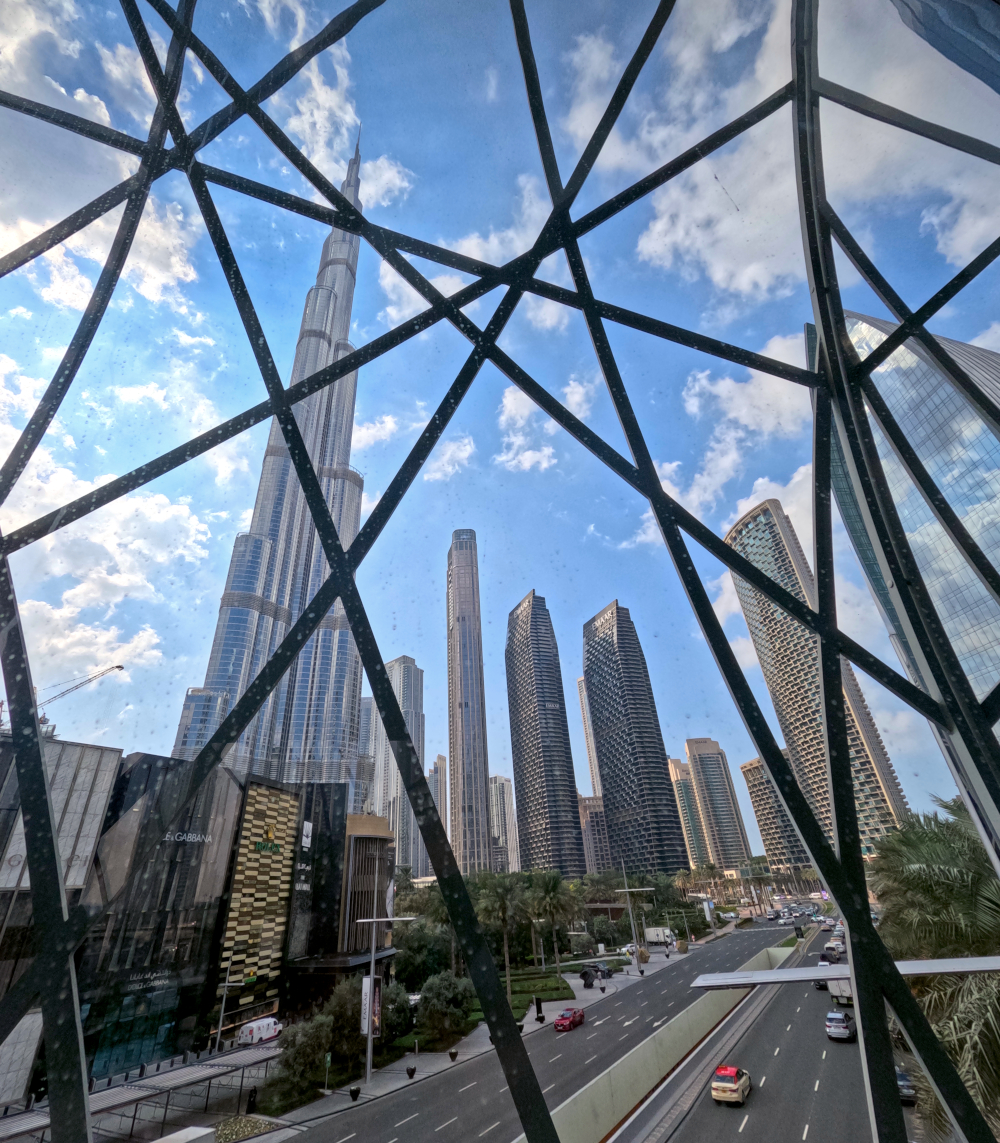

Then we get to reverse the tape, riding back home on the metro and viewing the other buildings again. There are still more marvels of engineering to behold in this town, and we’ll get to most of them yet. But we already know that none of them will top the Burj Khalifa. Literally.
Events occurred: 2/3/2025
 world travel with a theatrical flair
Leave a comment