

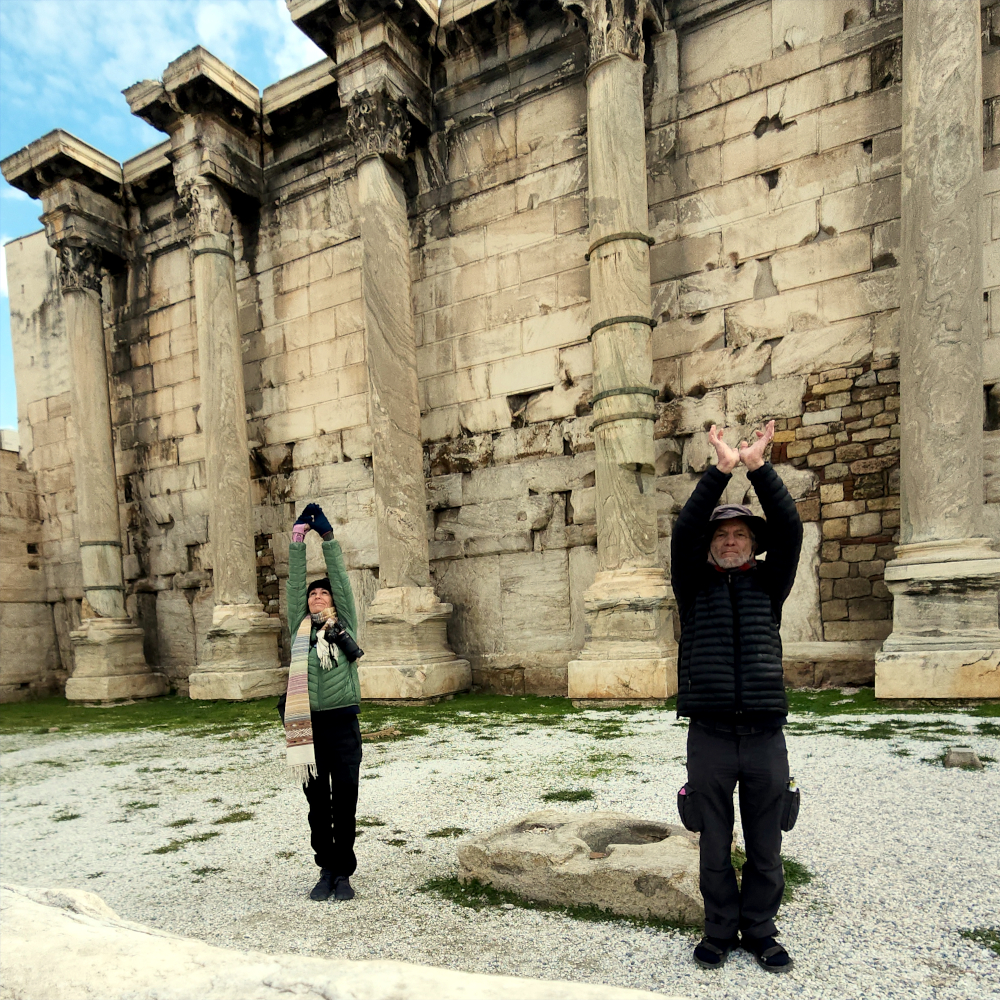
Athens! A thrilling stop on our long, roundabout itinerary between volunteers jobs. And a major Bucket List destination for decades. Yesterday we explored the legacy of “top-down” thinking in ancient Greece, the one-of-a-kind Acropolis — site of the temple of the city’s patron goddess Athena, and the birthplace of theatre. Today, we’re off to the heart of “bottom-up” thinking, the Ancient Agora — the home of the city’s government, and thus the cradle of democracy; and, more than coincidentally, the favored hangout of the ancient world’s greatest philosophers. The Agora is, perhaps more than any other place on earth, the seed pod from which modern civilization germinated. And it was on our itinerary today.
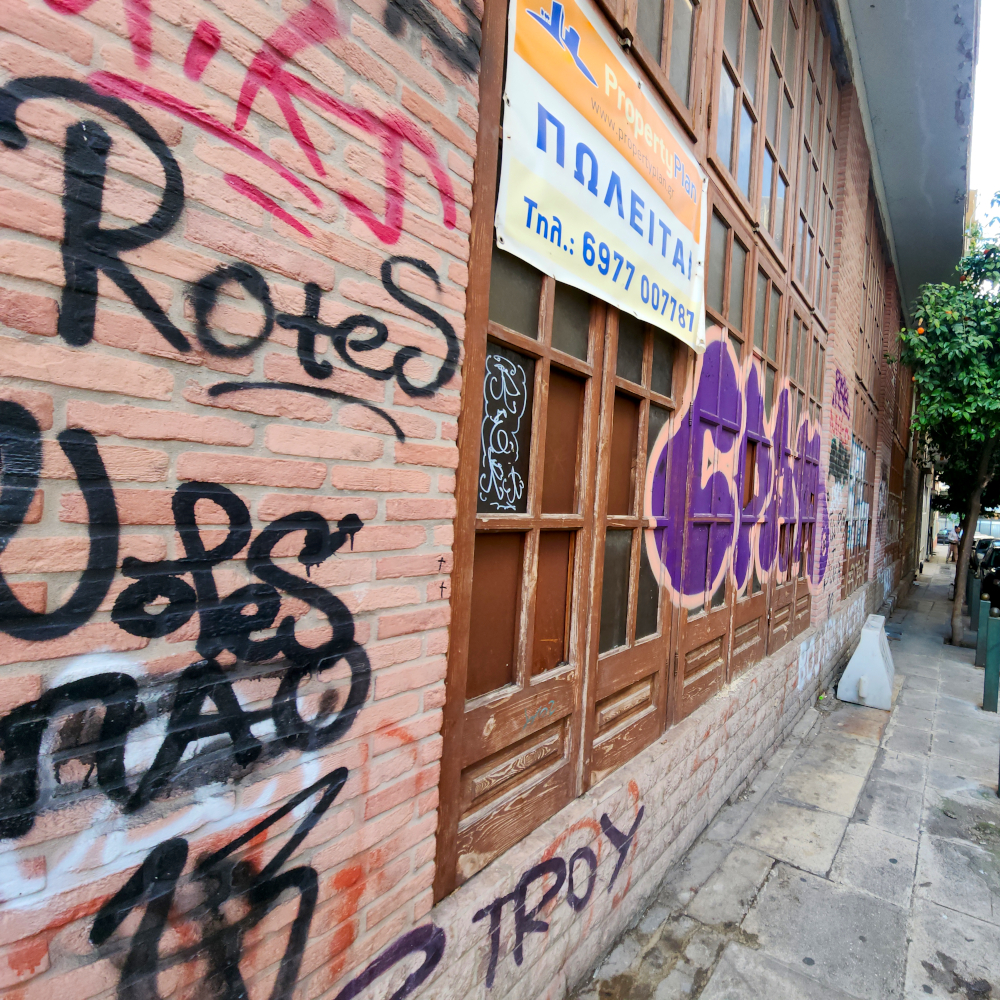
On our way out to the metro, we walk along graffiti lined streets; and, love it or hate it, graffiti is certainly emblematic of democracy. In totalitarian societies, graffiti is prohibited and expunged. The Berlin Wall, for example, was scrubbed clean on one side and covered with graffiti and artwork on the other. And while sometimes these mural sketches and scrawlings may be more eyesore than artistic, it’s certainly worth putting up with them, considering the alternative.
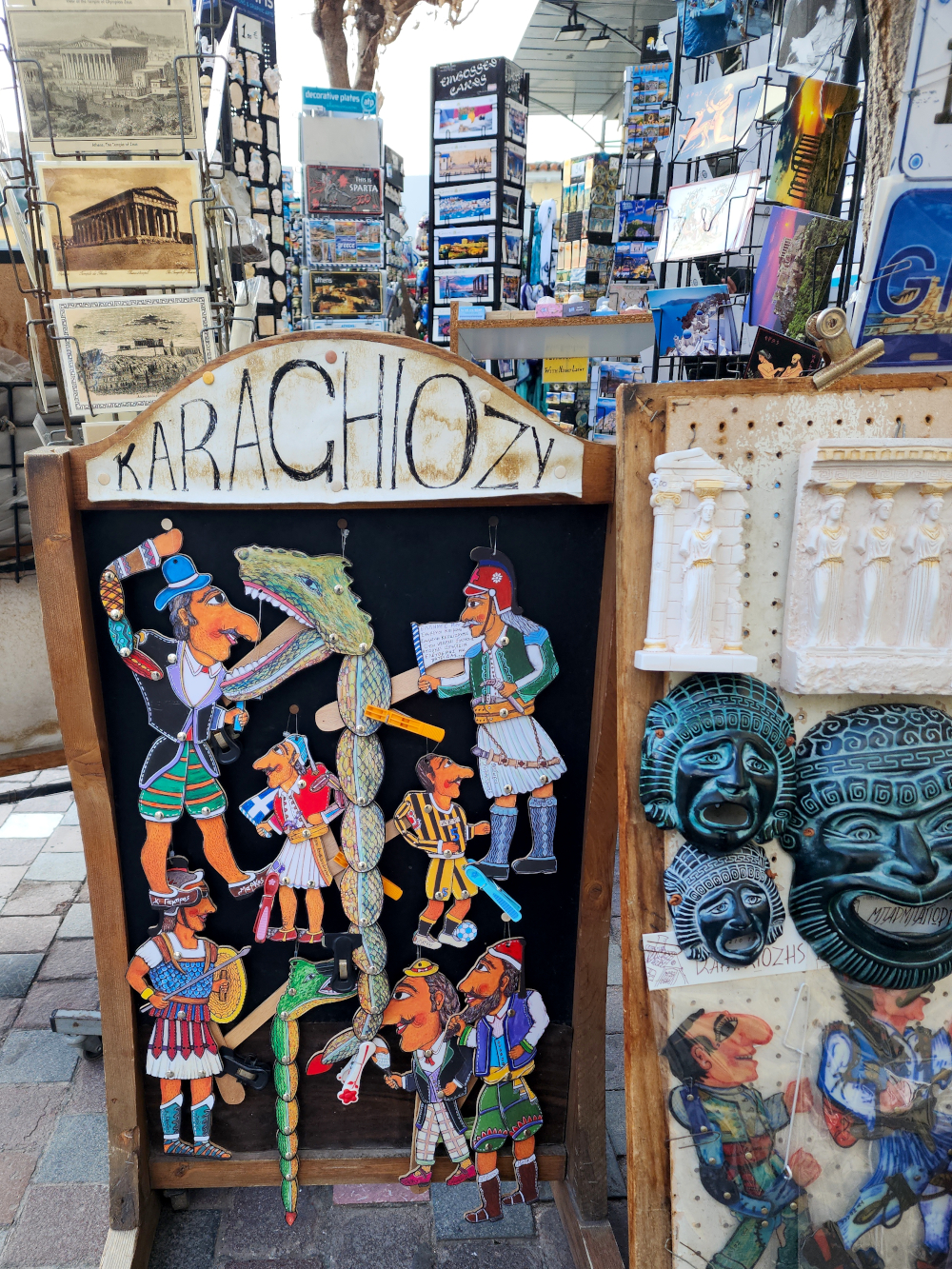
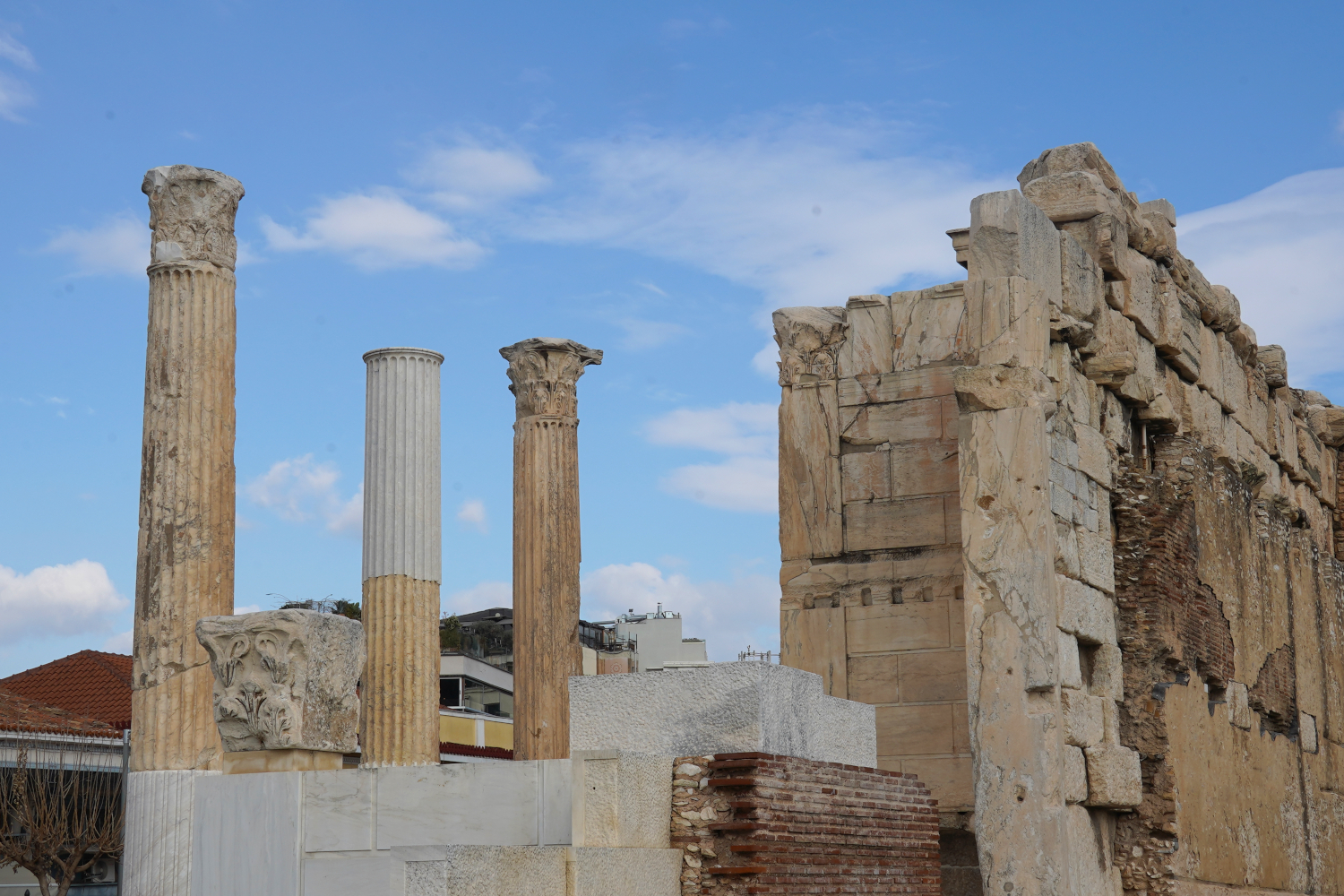
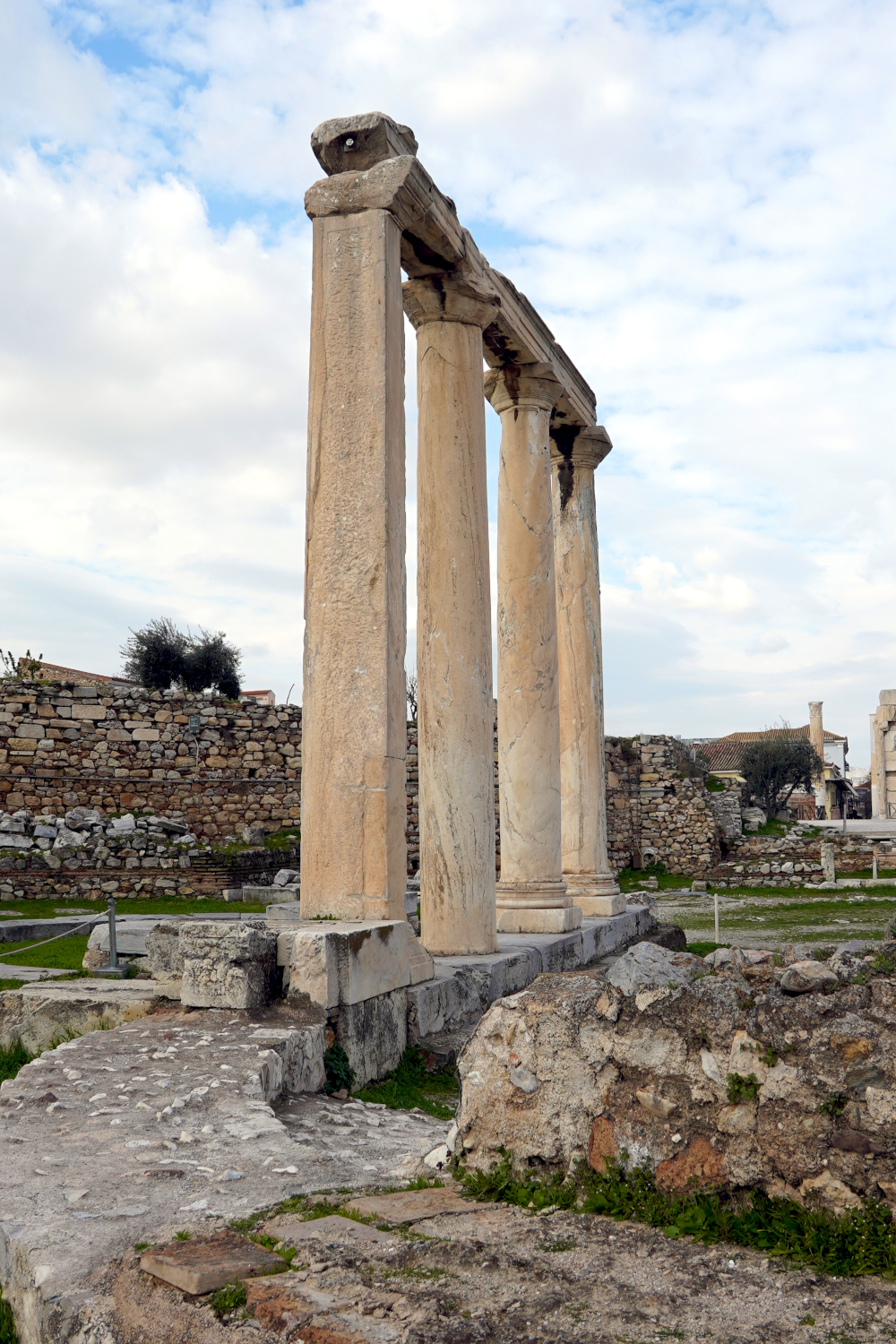
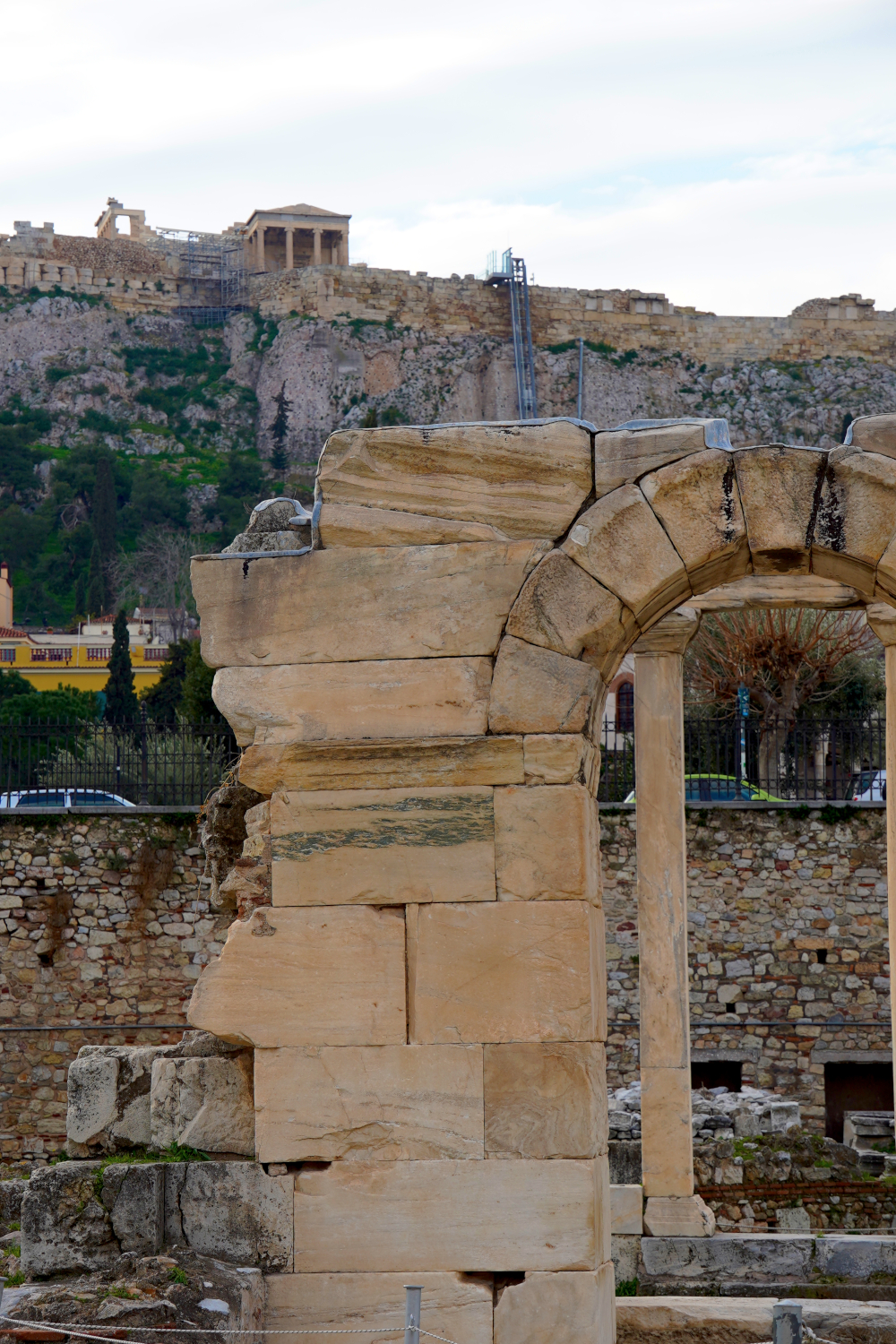
En route to the Agora, we come to Hadrian’s Library, so we detour into it first, considering that it’s included on the pass to 7 attractions that we purchased yesterday. There isn’t much to it, so it doesn’t delay us for long.
Hadrian’s Library
Hadrian (76 — 138 CE), who was emperor of Rome from 117 CE until his death, loved Athens and spent a good amount of time here. So he built this library in 132 (and when we say an emperor “built” something, of course, we mean that he signed a couple of documents and pointed his finger a couple of times to get it built). Today, not much survives except a few columns, and the remnants of some walls of the rooms where books (i.e., scrolls) were stashed and read.



Then it’s on to the Agora for us. After passing through the entrance, we make a beeline to the museum on the left, figuring correctly that it’s where the WC will be located. And having taken care of business, we figure we might as well go ahead and tour the museum first, getting an overview of the complex, and getting a jump on the tour groups we see headed that way.
The museum is housed in the Stoa Of Attalos, which was constructed in the Second Century BCE. A stoa is basically a long covered walkway, though in this case it has two stories instead of the typical one, and it has enclosed rooms as well as the “porch”. The philosopher Zeno of Citium held his discourses at another stoa here at the Agora. That particular stoa has been lost to ruin except for a foundation, but the label given to Zeno’s school of philosophy is alive and well: stoicism, named after the place where it developed.
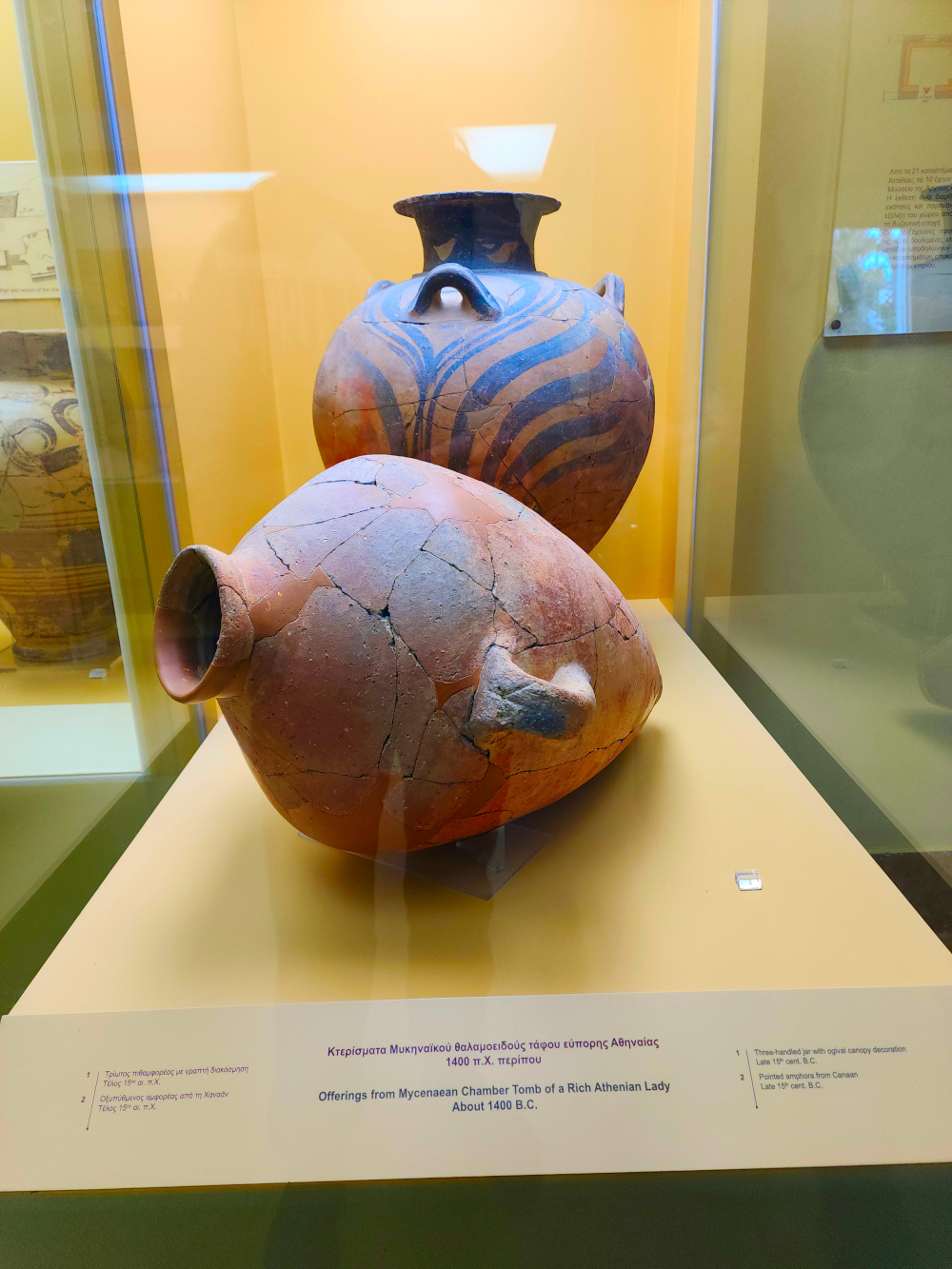
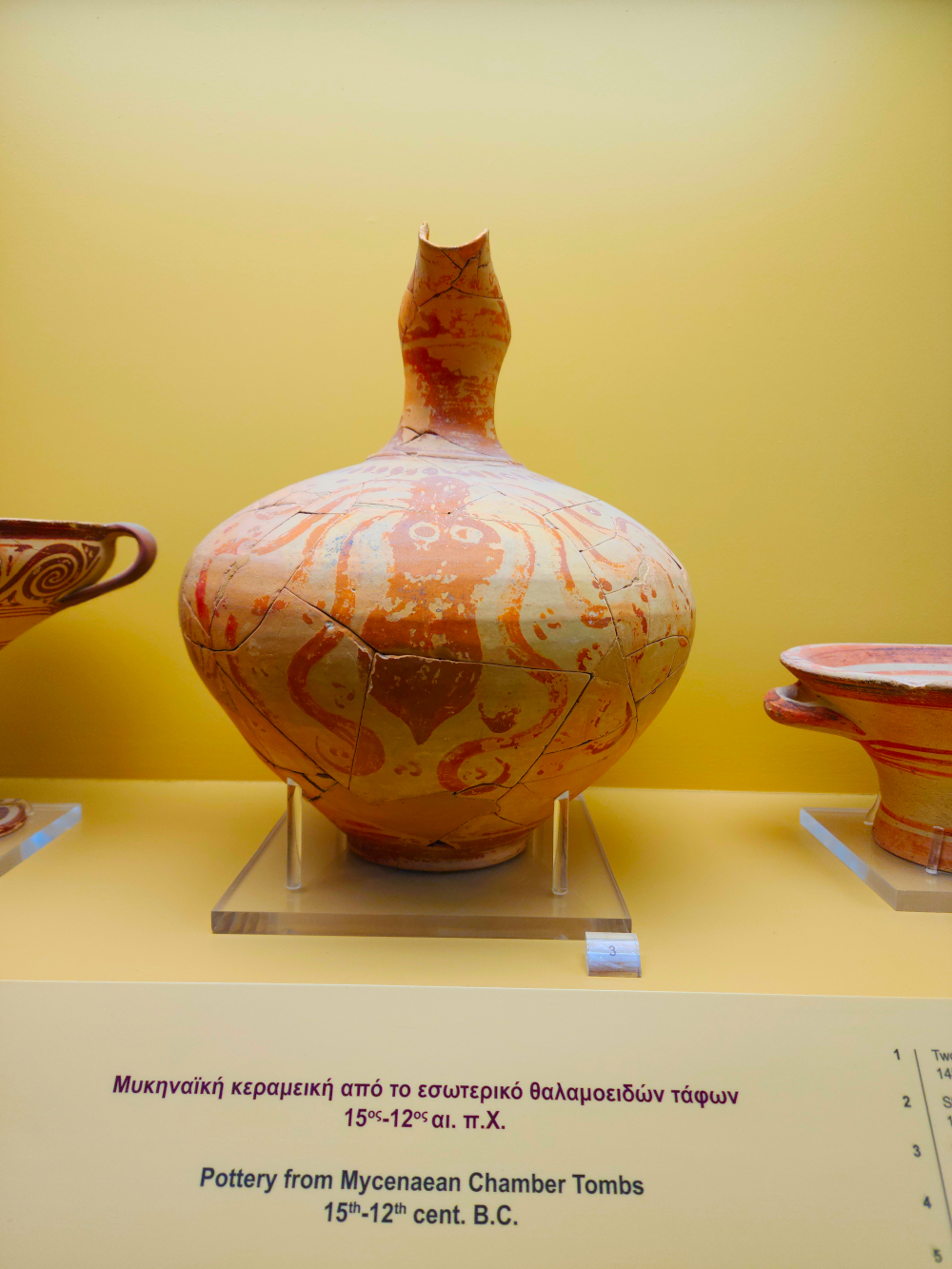
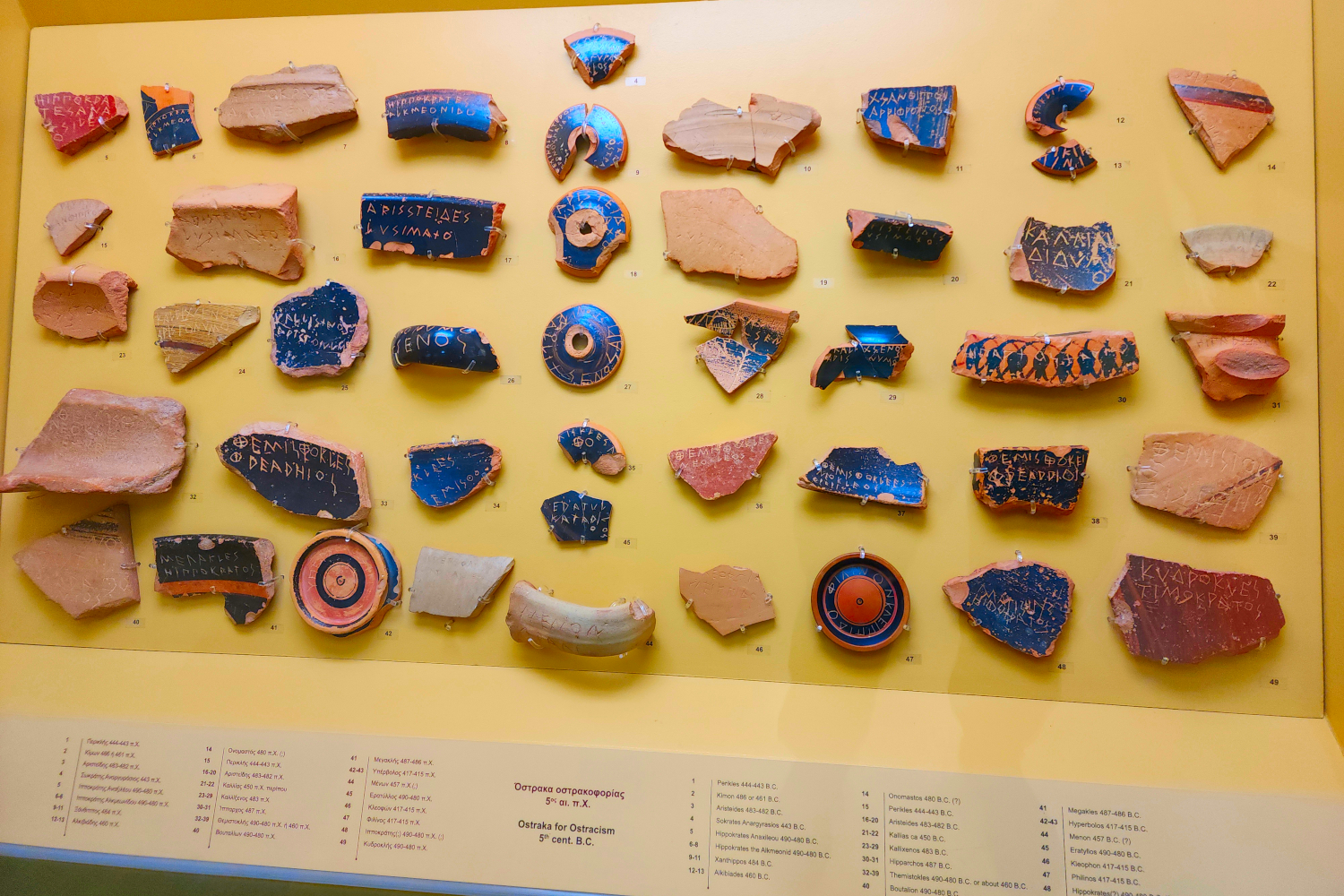
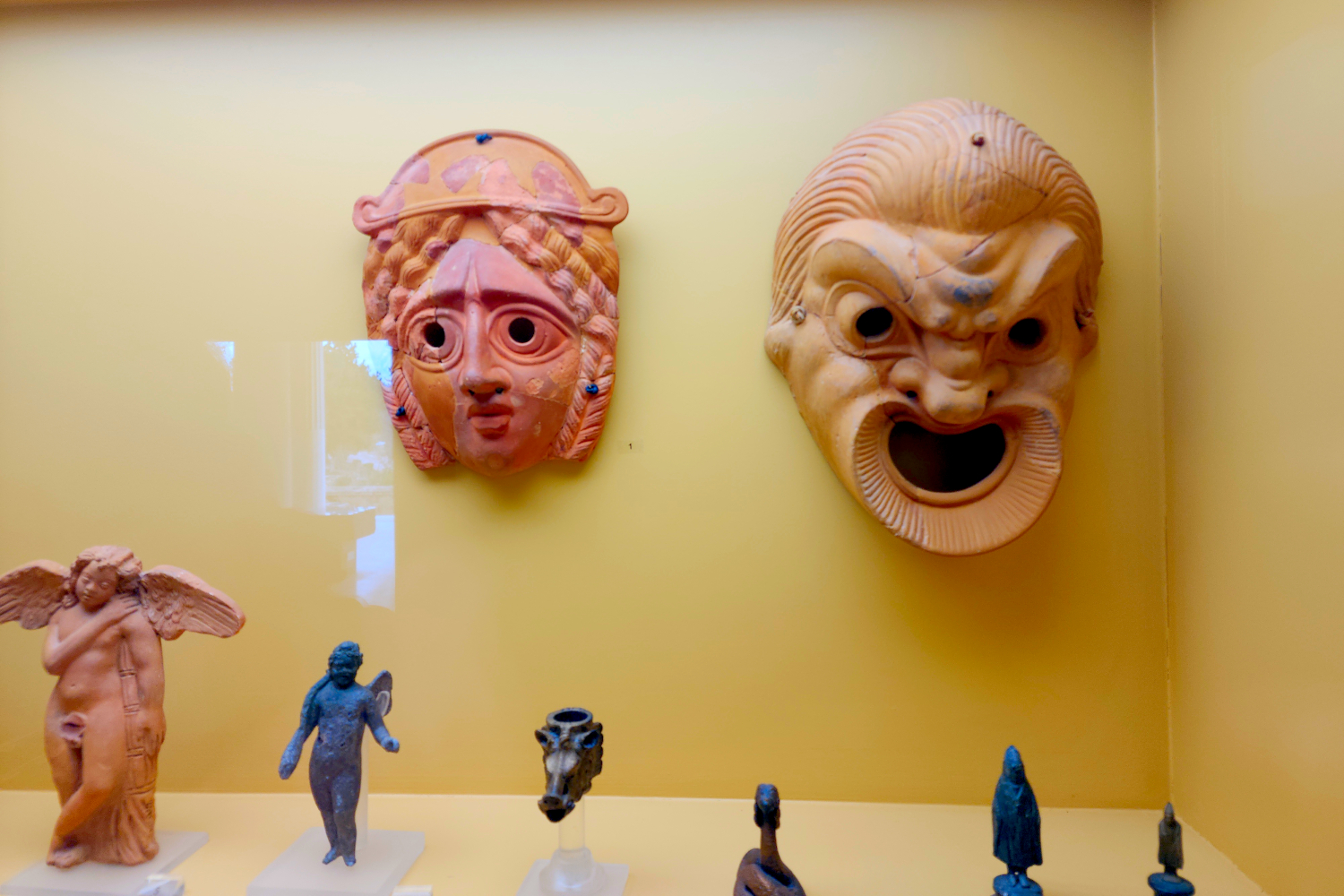
As in many museums, the exhibits here are arranged chronologically, with some of the items dating back five millennia. And some of these older objects feature some surprisingly ornate design. Particularly impressive is the grave of a girl, with some of her bones still present, ritually accompanied by jewelry and vases to hold oil and spices. Some of the exhibits indicate that women, or at least rich women, held positions of power and influence in ancient Greek society.
Then it’s out onto the grounds, and what historic and storied grounds they are. The Agora, or public square, was established as a gathering place in the Sixth Century BCE. It was where women sold produce, vases and jewelry — not unlike public markets today — and men gathered to discuss philosophy, politics and other whatevers. It was also where government offices were situated, official business was conducted, and political speeches and elections were held.
The Temple of Hephaestus

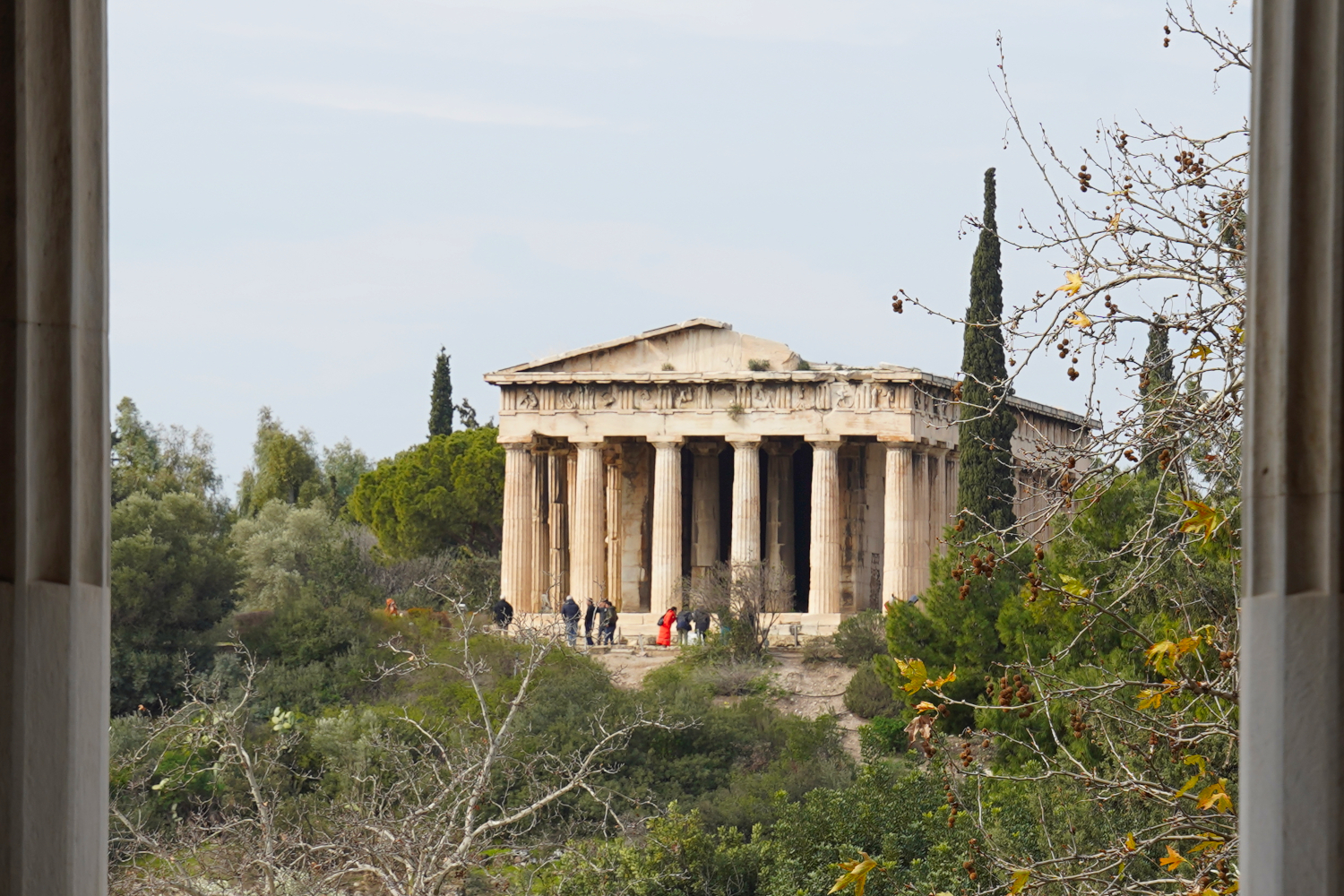
The structures encountered today include The Altar Of The Twelve Gods; a mint; The Berma (a speakers’ platform); The Temple Of Hephaestus (Vulcan); Monument Of Eponymous Heroes (which was also used as a bulletin board); The Temple Of Ares; and the Odeon Of Agrippa (which includes the row of statues in the photo below).
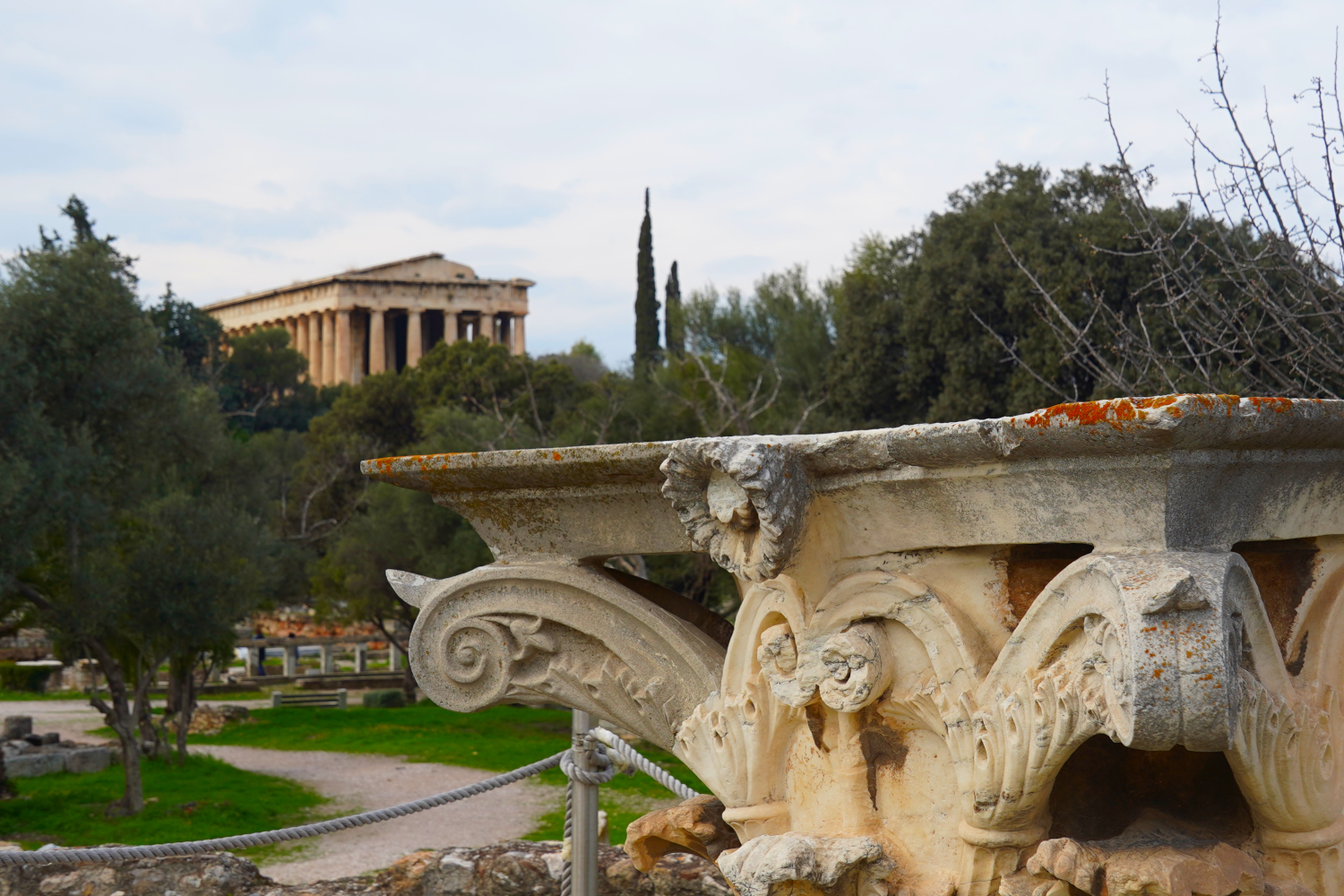

It’s sobering to think about whose footsteps you’re walking in here. Just about any ancient Greek figure you’ve ever heard of has trodden this soil. It was thus the birthplace of the three pillars of modern civilization: philosophy, democracy and science. (Yes, art is vital too; but it’s not peculiar to civilization — it stretches back all the way to cave dwelling days.)
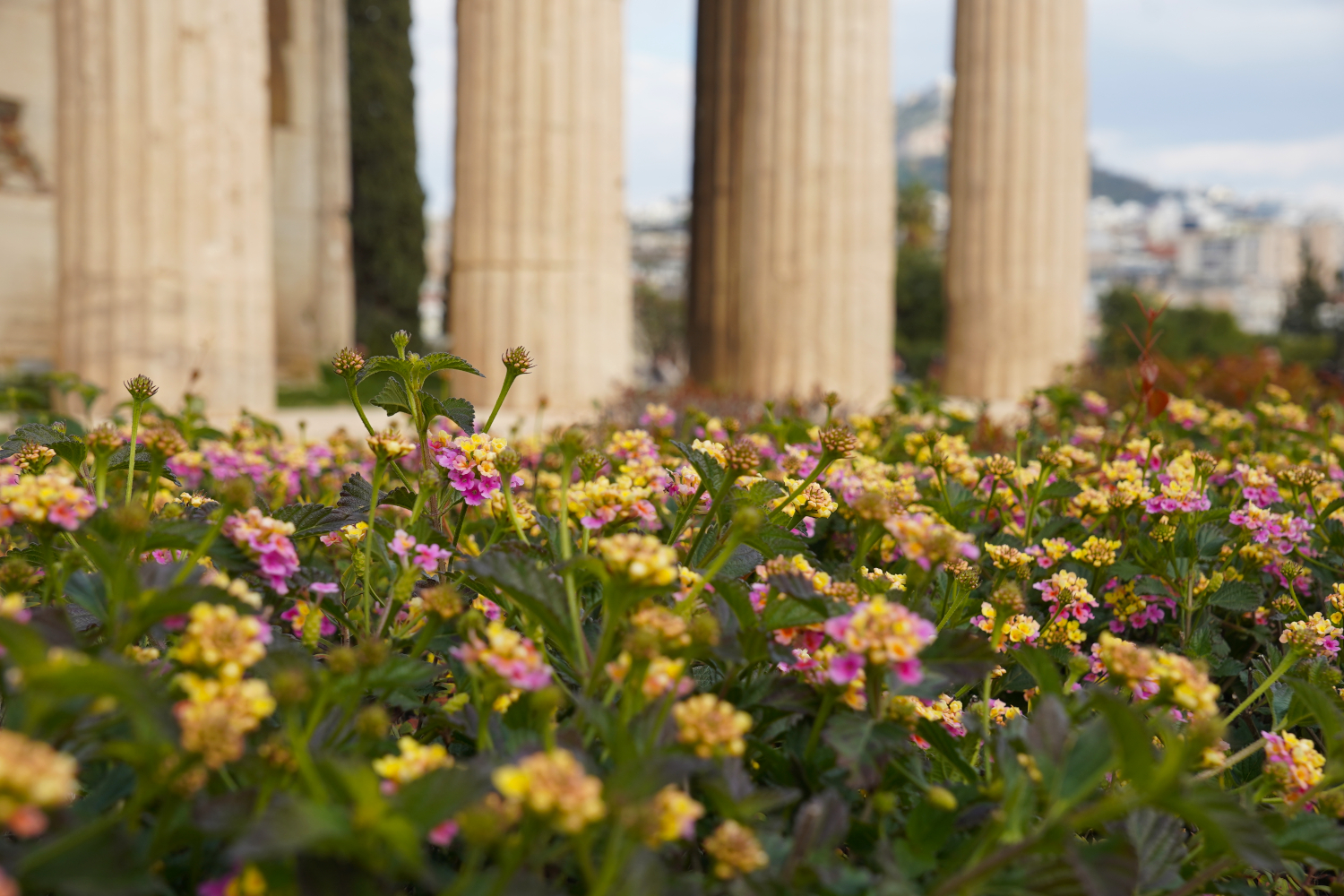
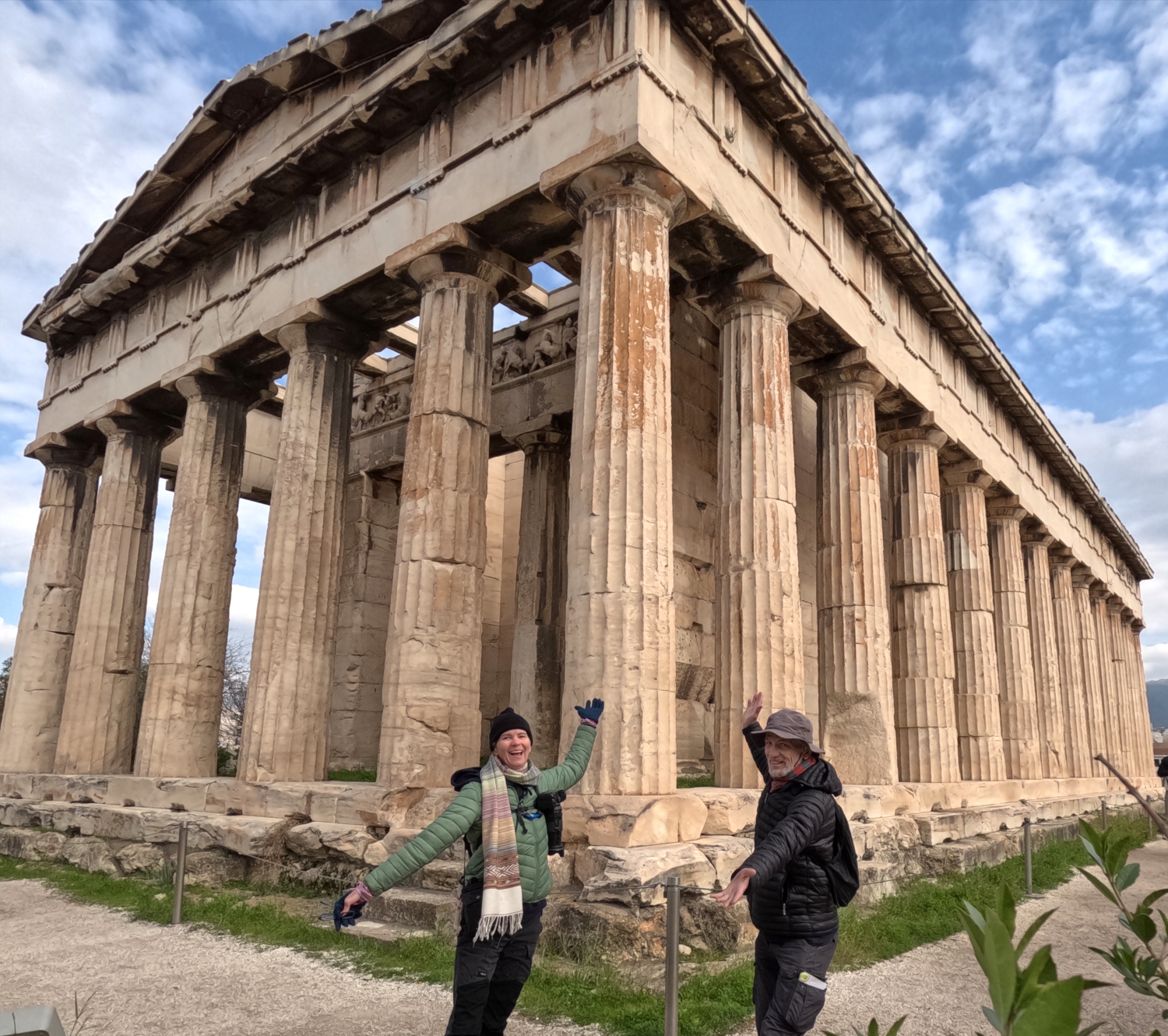

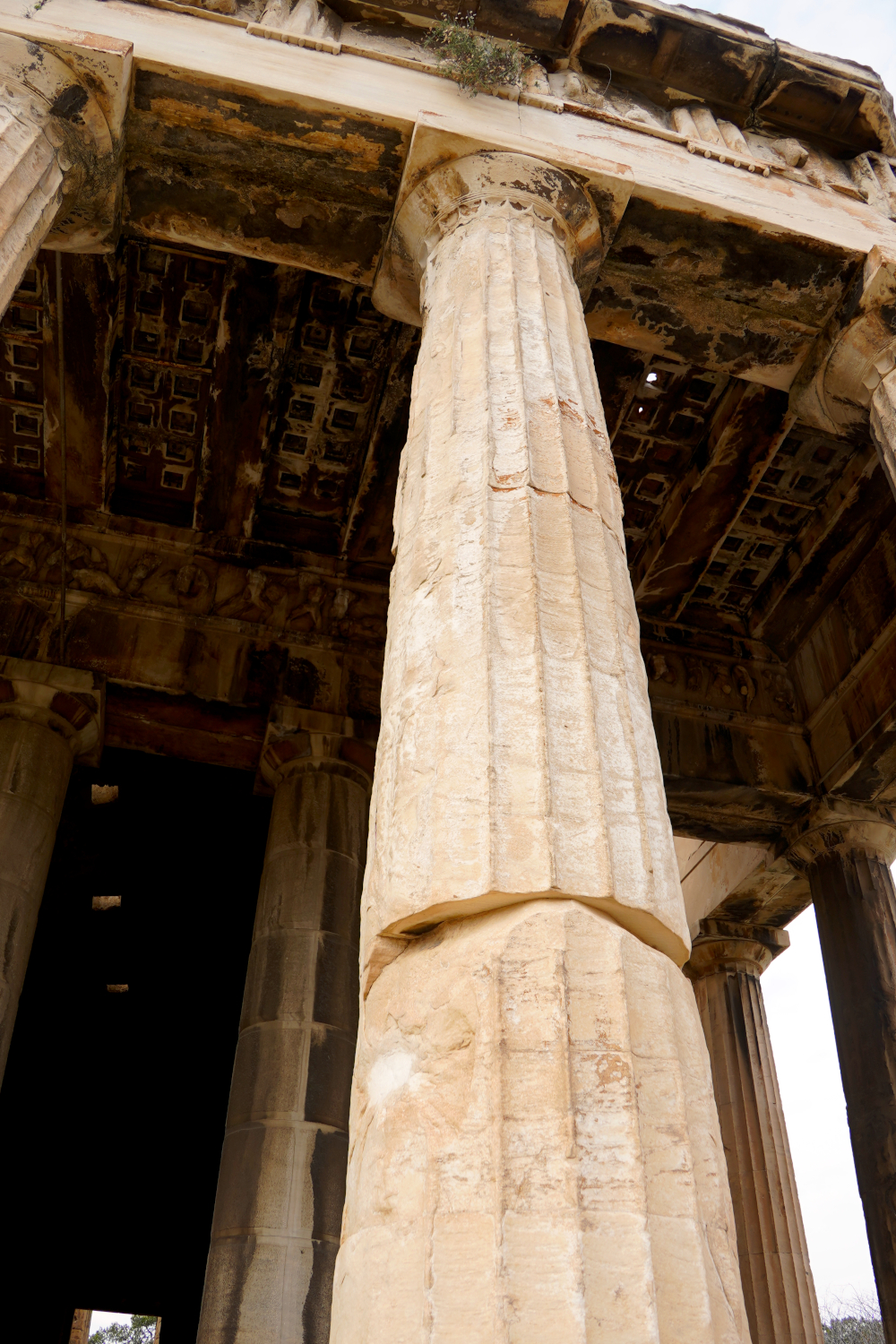
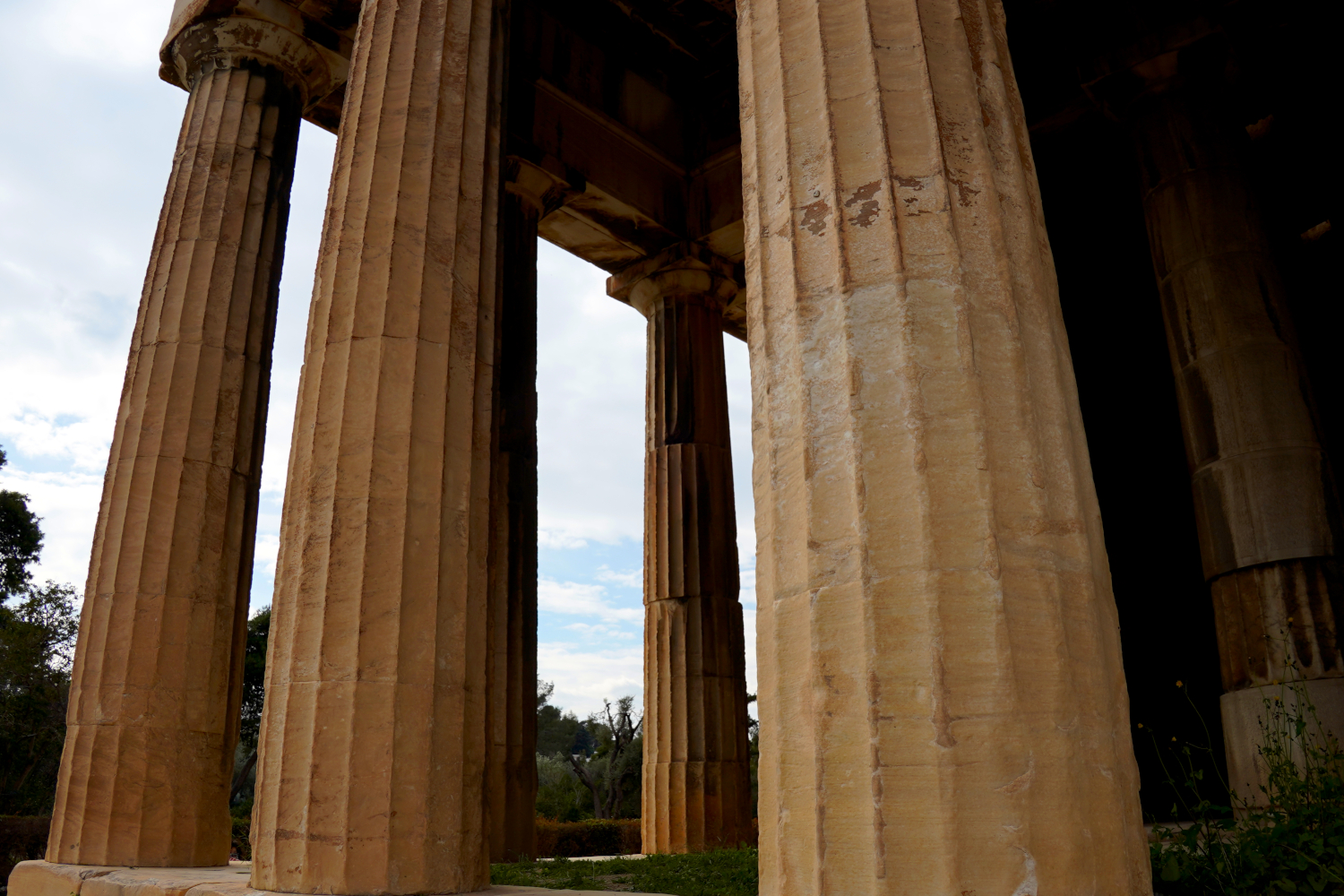
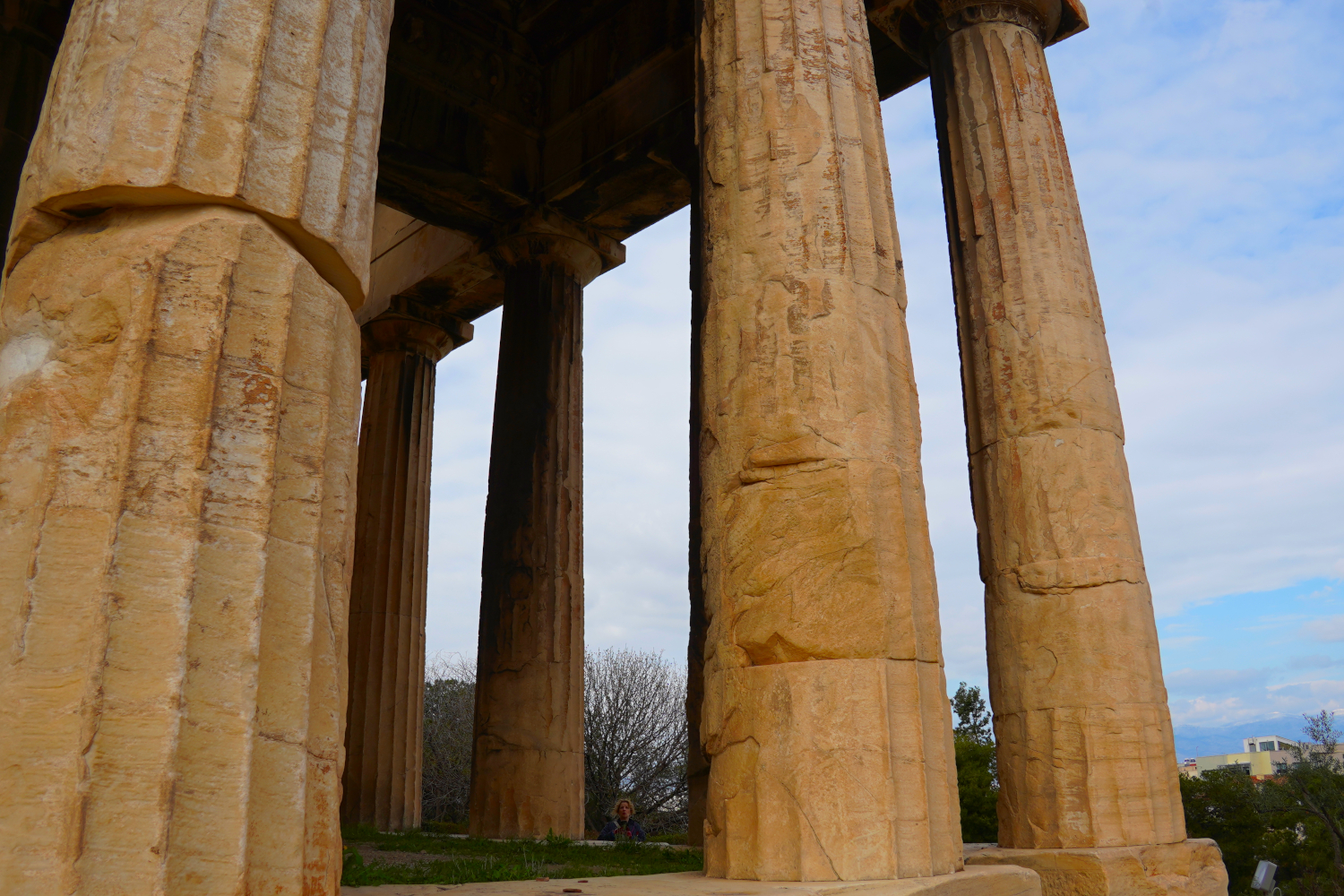
It’s been said that the whole of western philosophy is but a series of footnotes to Plato. But even if you’ve never cracked a philosophy book in your life, you’ve benefited from the foundation laid by the intellectual titans who called Athens home. Without Socrates, there would have been no Plato. Without Plato, there would have been no Aristotle. Without Aristotle, there would have been no scientific method. Without the scientific method, there would have been no science as we know it. And without science — well, you wouldn’t be reading these words on that weird contraption in front of you. It’s quite possible that the progress of civilization would have been delayed by several centuries.

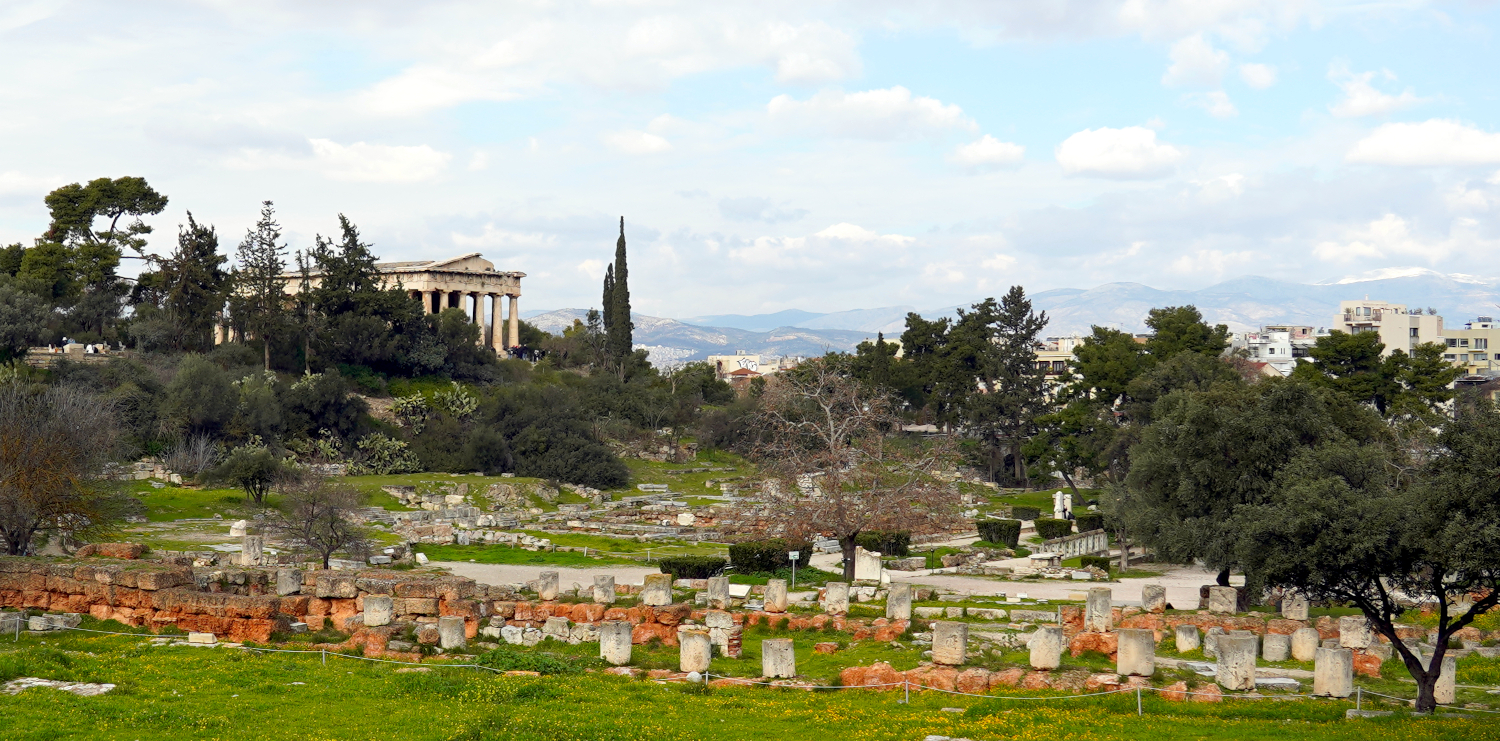
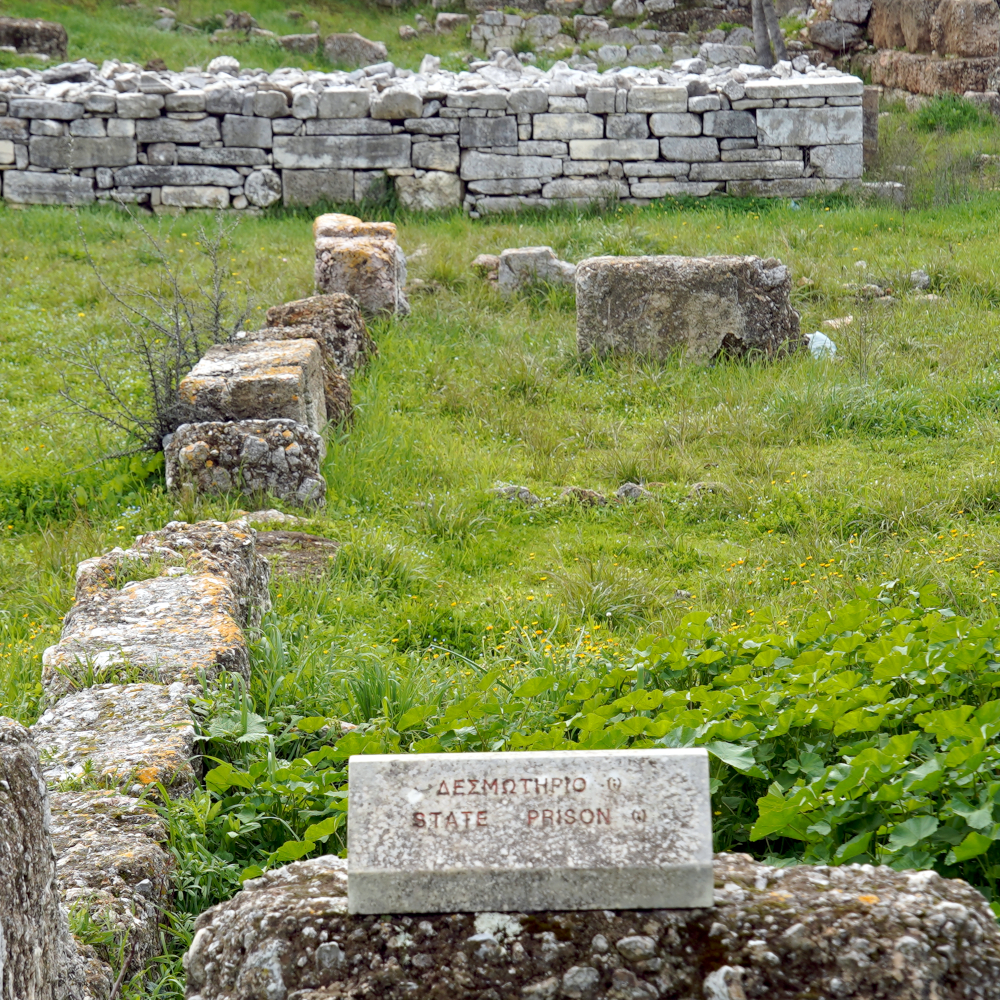
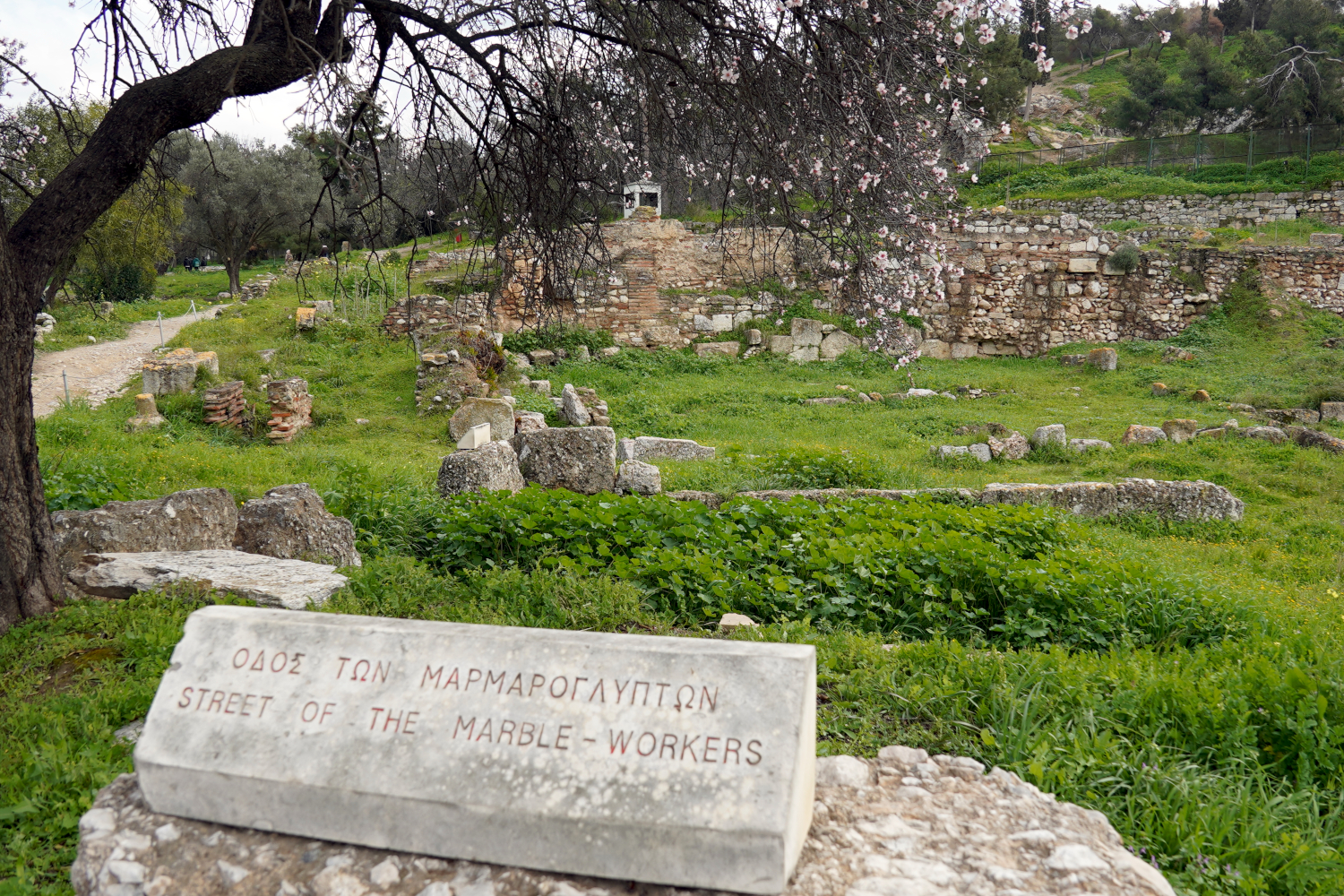
Of course, the stream of progress never did run without getting dammed — or damned. Of the many lessons Socrates learned, one was that people who propose a radical shift in thinking are often perceived as stepping on the toes of authority. And people who step on the toes of authority often get knocked off their feet, as it were. Not only did Socrates teach here, but it’s quite possible that he was jailed and executed here — there are still the remains of a prison on the premises, and bottles have been found near it that apparently held poison. (For what it’s worth, we might add that hemlock was a rather more humane form of execution than others often practiced in those days. So there’s that.) As further evidence, a small statue of Socrates himself has been uncovered in the vicinity.
Before calling it a day, we find an inconspicuous bench to sit on while we have our lunch of veggie burgers brought from home. We’re uncertain what the policy is about eating on these sacred grounds, but as there are plenty of trash receptacles, we figure maybe it’s not entirely taboo. And indeed, a groundskeeper makes his rounds without giving us a second look.
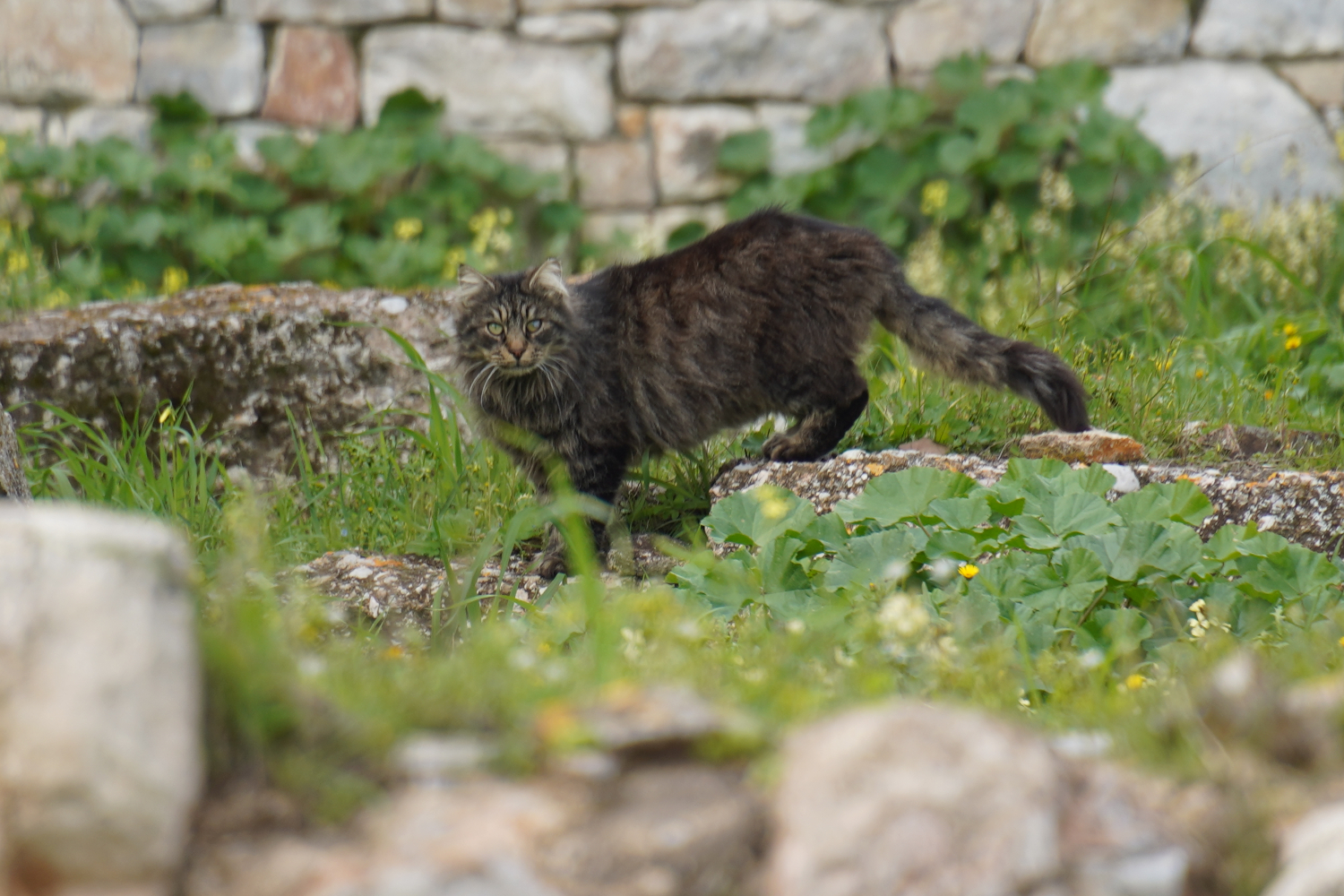
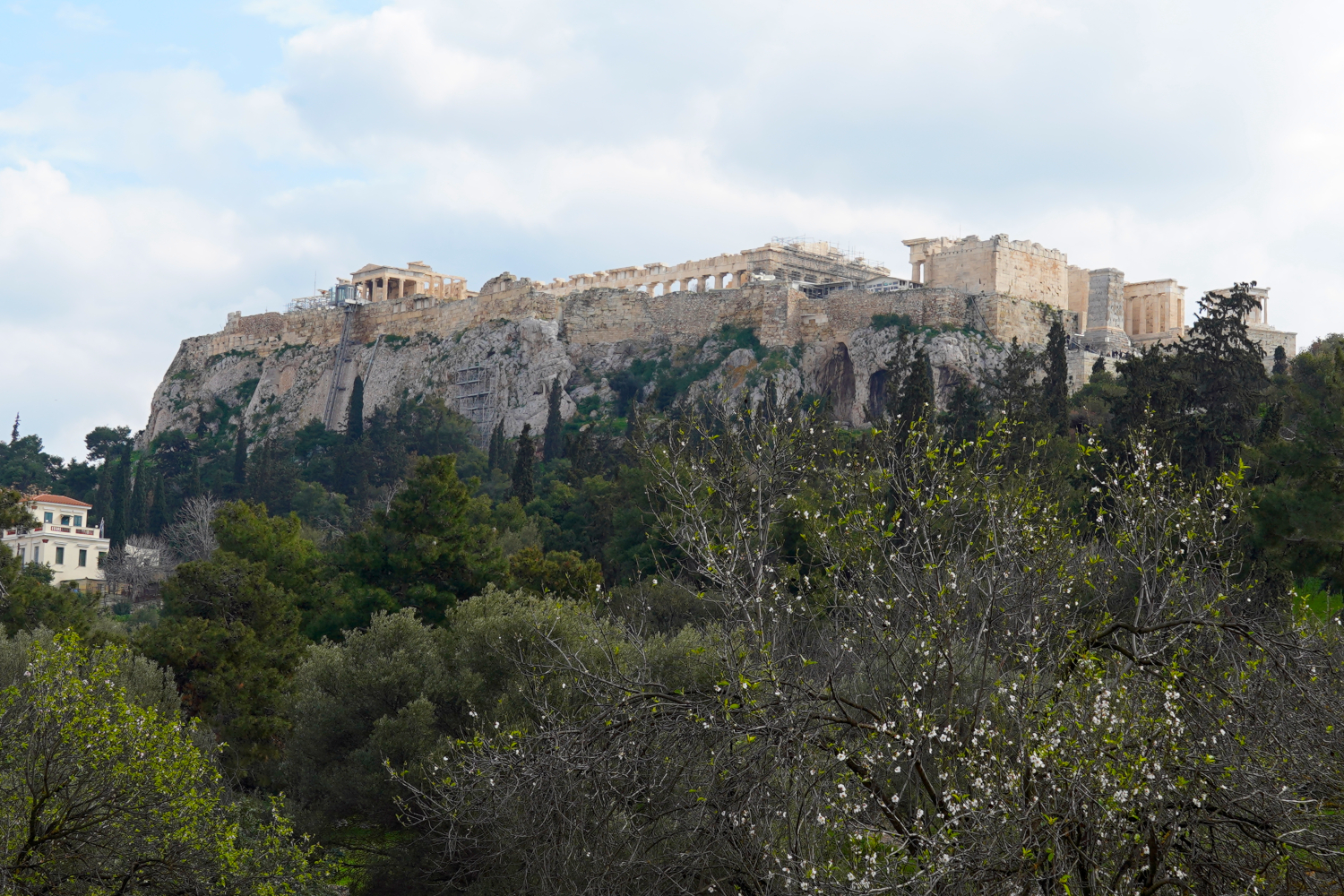
So today we have lunch in the presence of some of the greatest minds ever known. You’ve heard the hypothetical question about whom you would want to dine with if you could pick a certain number of dinner guests from any period in history? Well, our guest list for today is truly one for the ages. And we look around us utterly thunderstruck by the unique position these few acres hold in the evolution of humanity. Not a bad way to spend a day in February.
Events occurred: 2/12/2025

 world travel with a theatrical flair
Leave a comment