

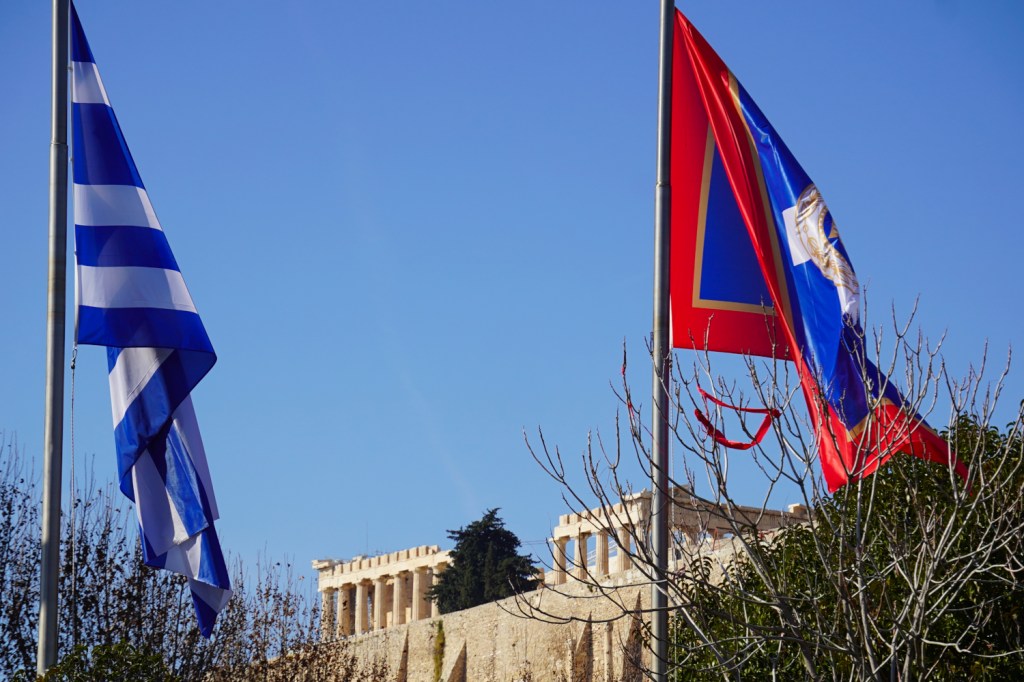
Having gotten up close with the major attractions of Athens during our layover between volunteer gigs, we spend our last couple of days working in some of the smaller (but still quite significant) historical treasures. But it isn’t just the past that provides the allure of Athens. The present also can hold its own, especially with its rich human tapestry of colorful characters that we seem to encounter at every turn.
One such character is a fellow who appears to be either drunk or otherwise compromised; he approaches us ebulliently calling out, “Baba! Mama!” and acting as if he were going to hug us — as if he really has mistaken us for his parents. But then he thinks better of it and passes on by us without bodily contact, which is a relief.


Next up on our colorful character encounters is a whole group of them, a squad of soldiers dressed in a traditional uniform that includes red cap with tassel, white leggings, and a blue tunic that looks like a kilt without the plaid. They’re marching in what might be characterized as a goose step, with broadly swinging legs and arms, and are accompanied by another soldier in modern fatigues, perhaps to make sure they take themselves seriously in that quaint getup.
The first stop on our day’s itinerary is the Lyceum, which in ancient times was a favored hangout of some of the city’s most colorful characters — who also just happened to be some of the greatest thinkers the world has ever seen.
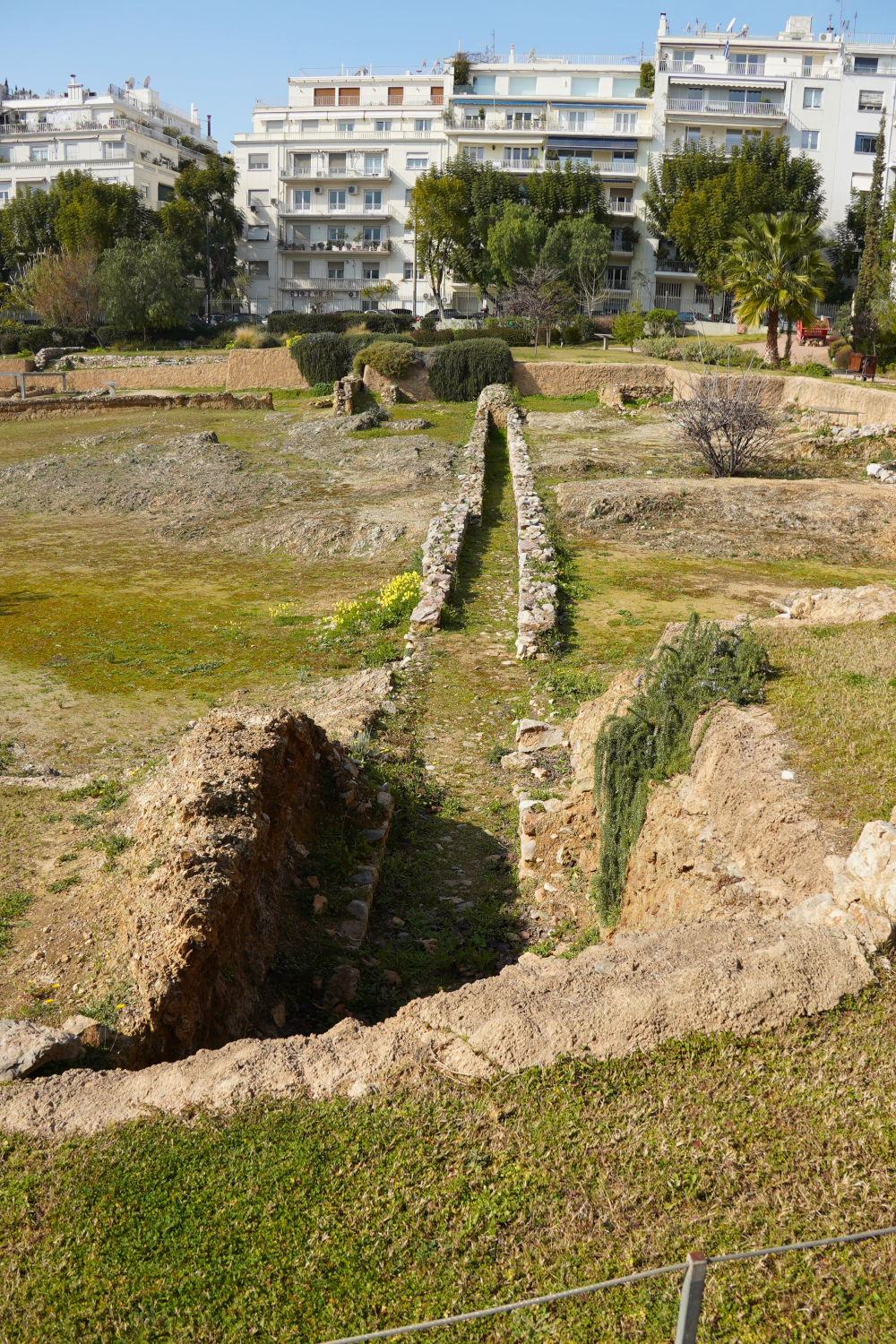
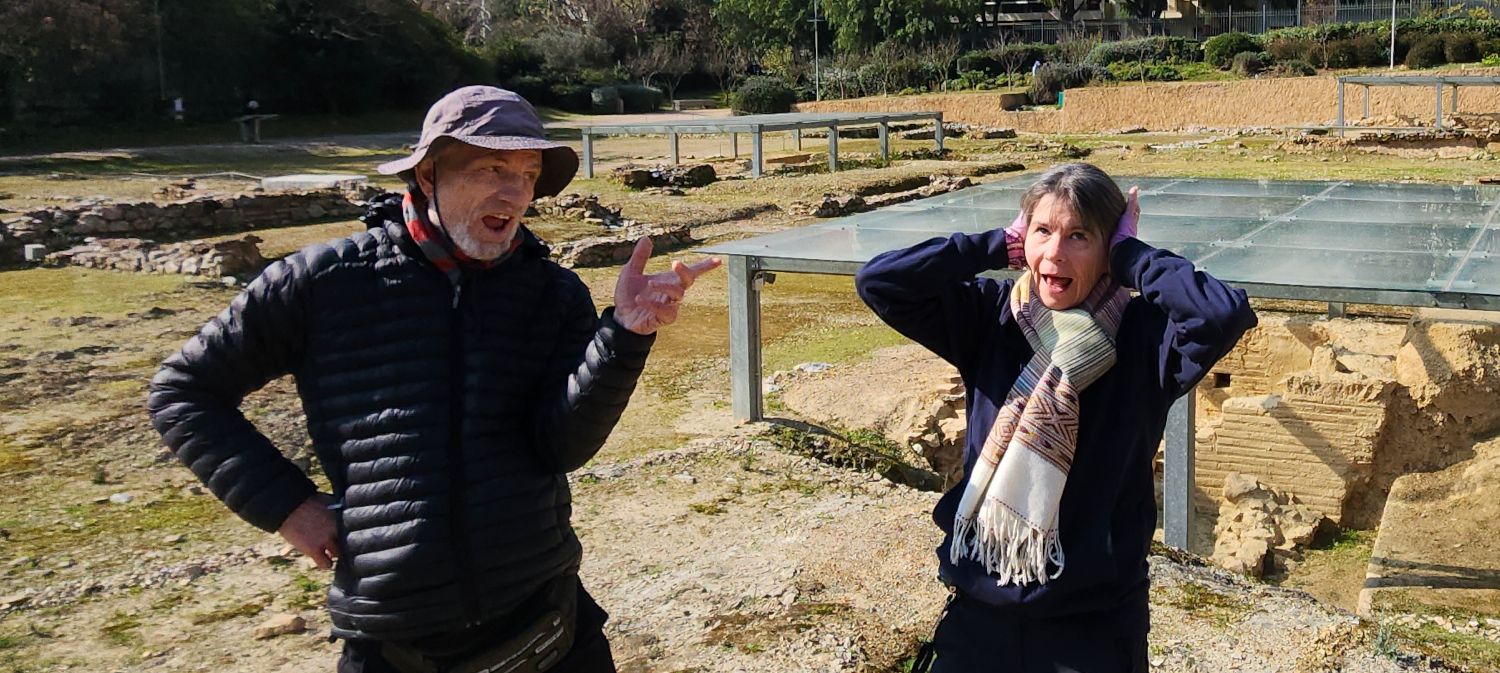


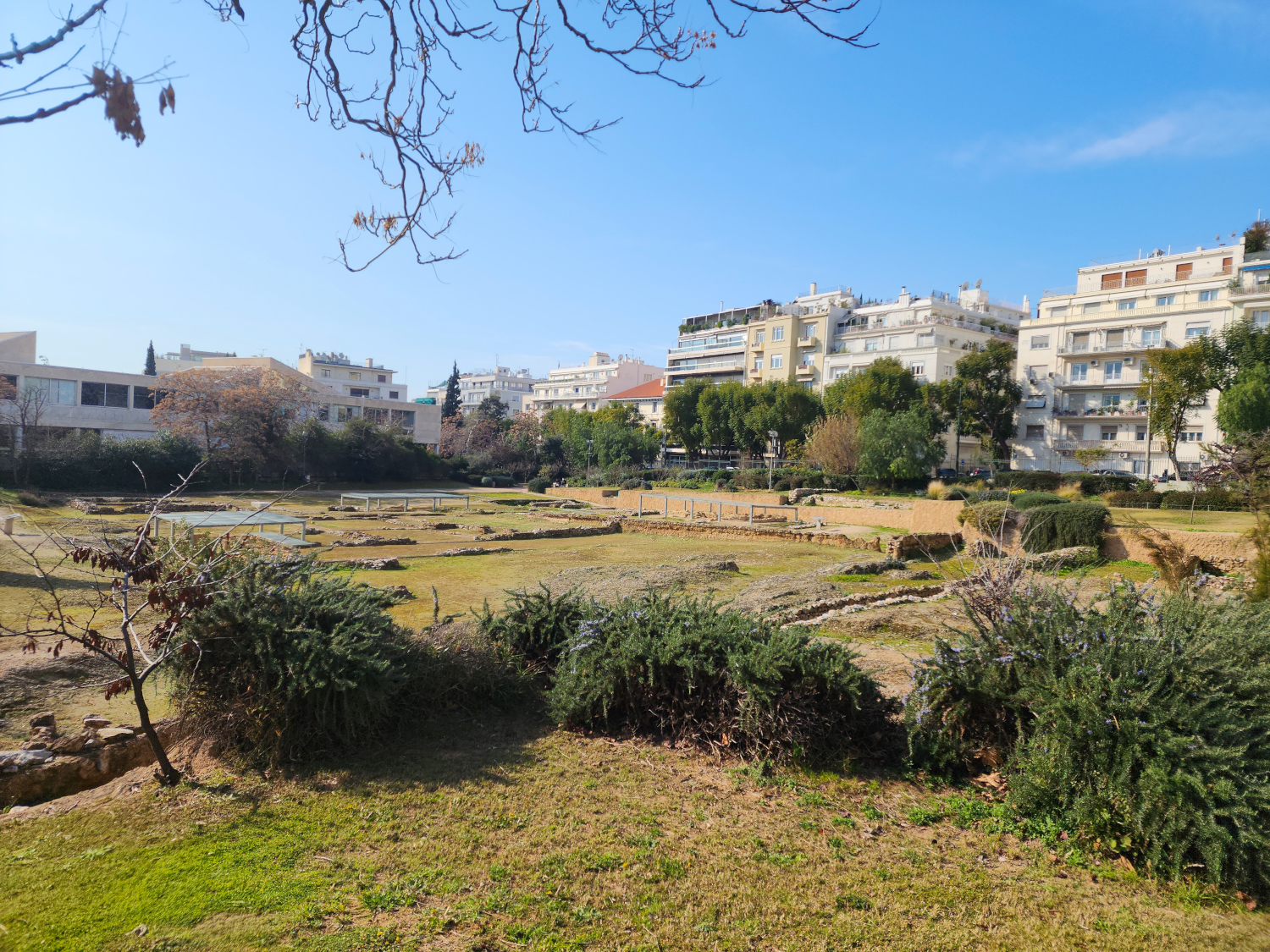
Like most other grand edifices back in those days, the Lyceum was constructed as a temple — specifically to Apollo Lyceus (Apollo the Wolf God). But pretty much from the beginning, the local gaggle of philosophers used the setting to give lectures and hold discussions. They included the most towering figure of them all, Socrates; his star pupil Plato; and Plato’s star pupil Aristotle. The latter even founded a formal school here, which he called the Lyceum. But the group became known as the Peripatetic (“walking around”) School, since Aristotle, being the enormously talented chap he was, could and did walk and talk at the same time.
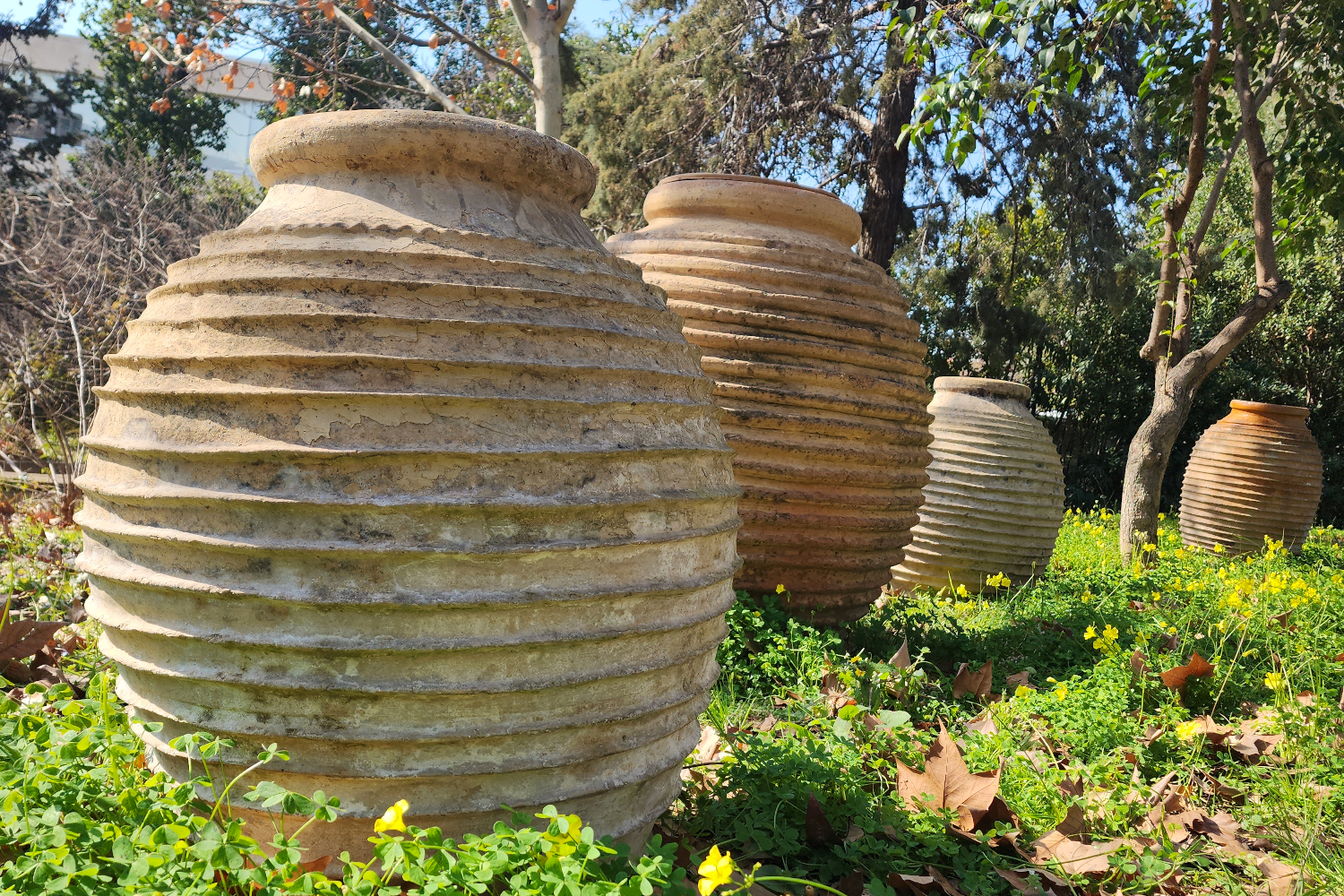
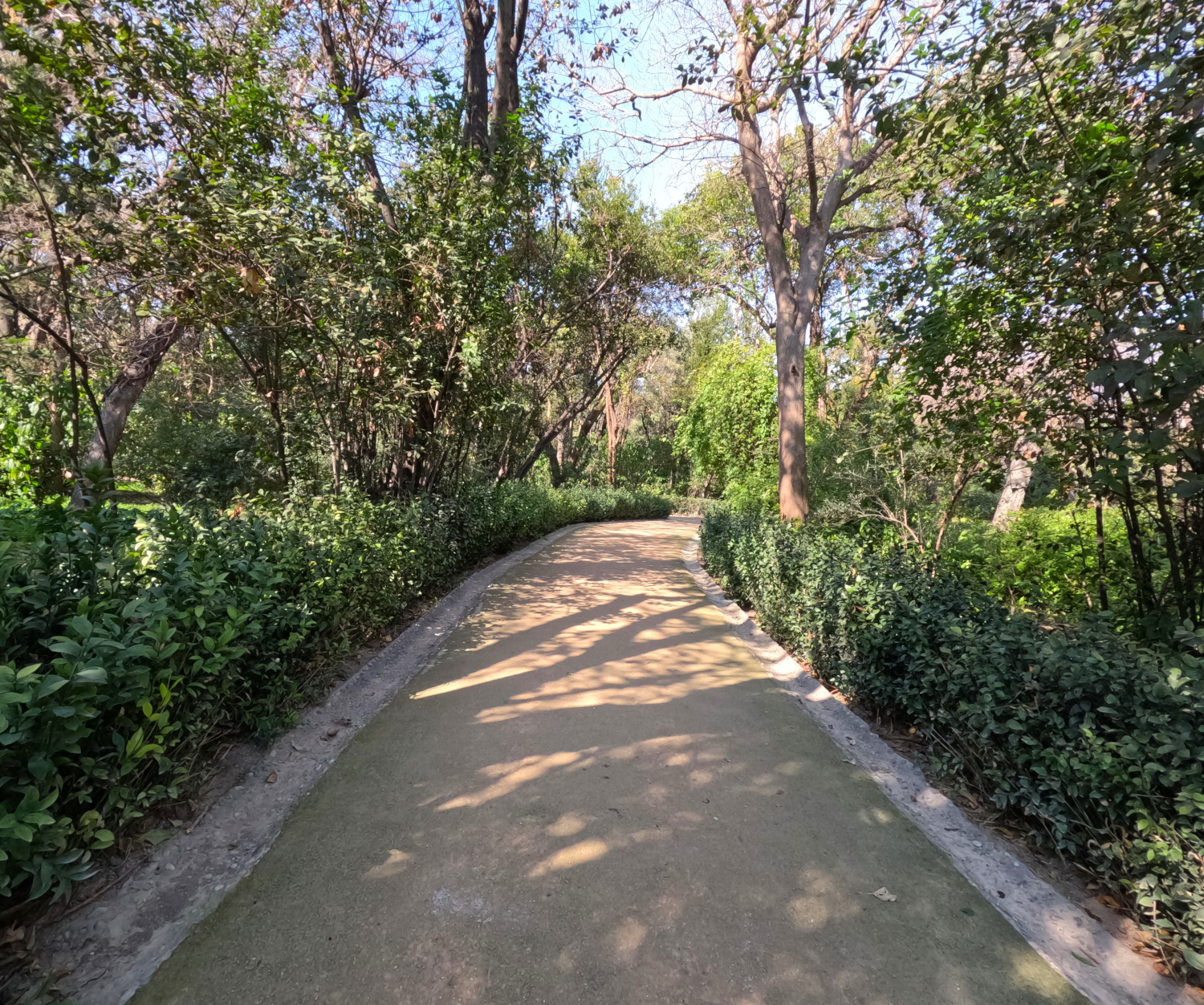
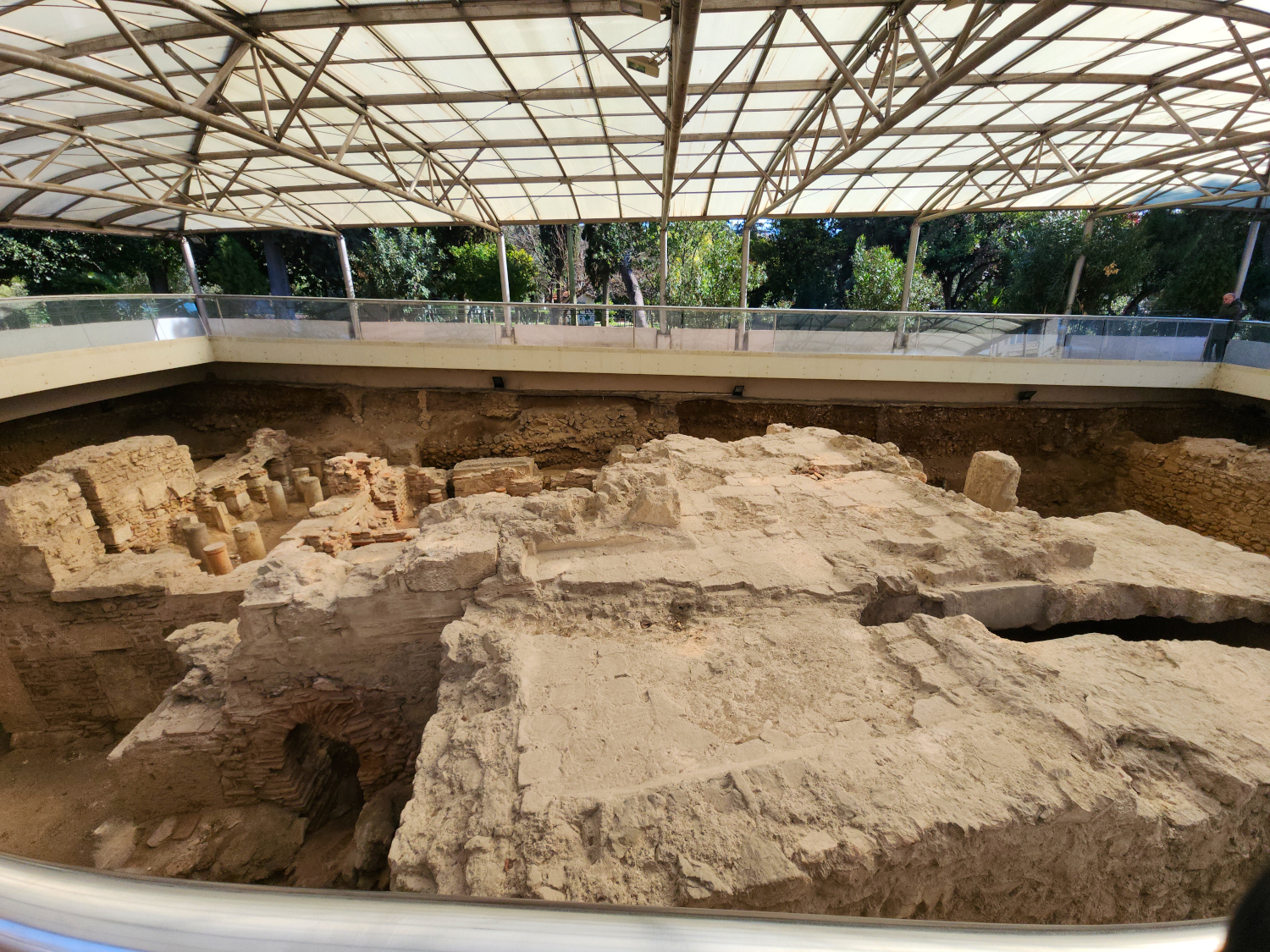
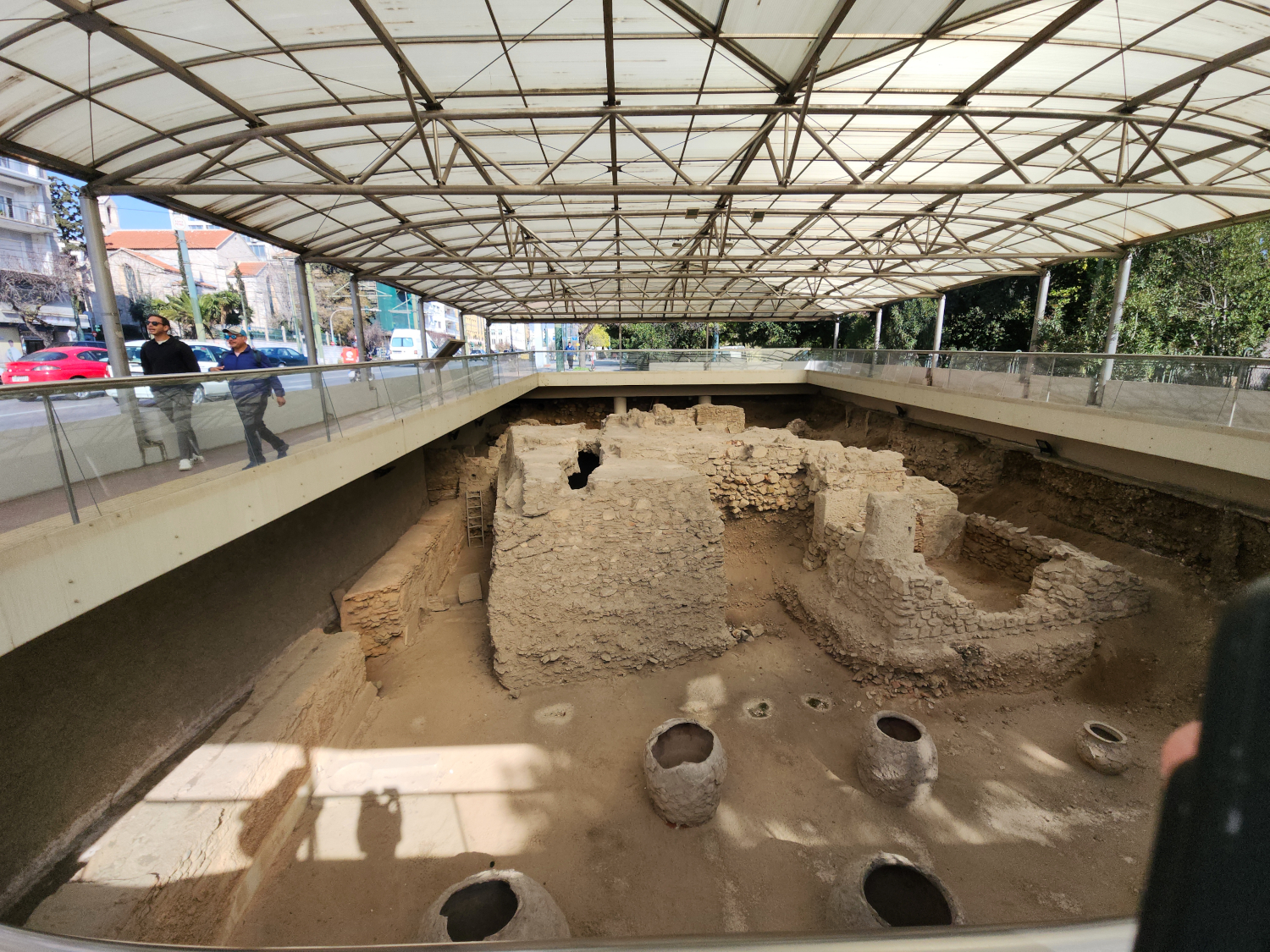
Nothing remains of the temple but a few fragments. And amazingly, they weren’t uncovered until 1996. And even then only by accident, in the course of excavating for a construction project. (It must be difficult for anyone to plan on building something new in Athens, since they always run the high risk of having archaeologists take command of the property.) Nowadays, the site is a park. And when you amble through it, you can almost feel your toes absorbing from the soil the stray bits of colossal wisdom shed by the greatest minds in the planet’s history.
Another colorful character we encounter is a young woman carrying roses, who insists on giving us one, even though we don’t really want one, and certainly don’t want to shell out the payment for it that we assume is the next step in the transaction. But no, no, she insists that we take it gratis, and so we reluctantly do. And then, not surprisingly, it turns out to be not so gratis; she wants some spare change, apparently for food, as she communicates by pointing to her tummy. But we seldom give money to beggars abroad, because we don’t want to be targeted as affluent and generous Americans. So we turn her down, and then she snatches back the flower in a huff and moves on to her next mark.
Next up is the Arch Of Hadrian. Hey, we’ve already toured Emperor Hadrian’s library, so we might as well see his arch too. But unlike the library, which was built under orders of the emperor himself, the arch was apparently just erected, in 131 or 132 CE, by someone else to honor him.
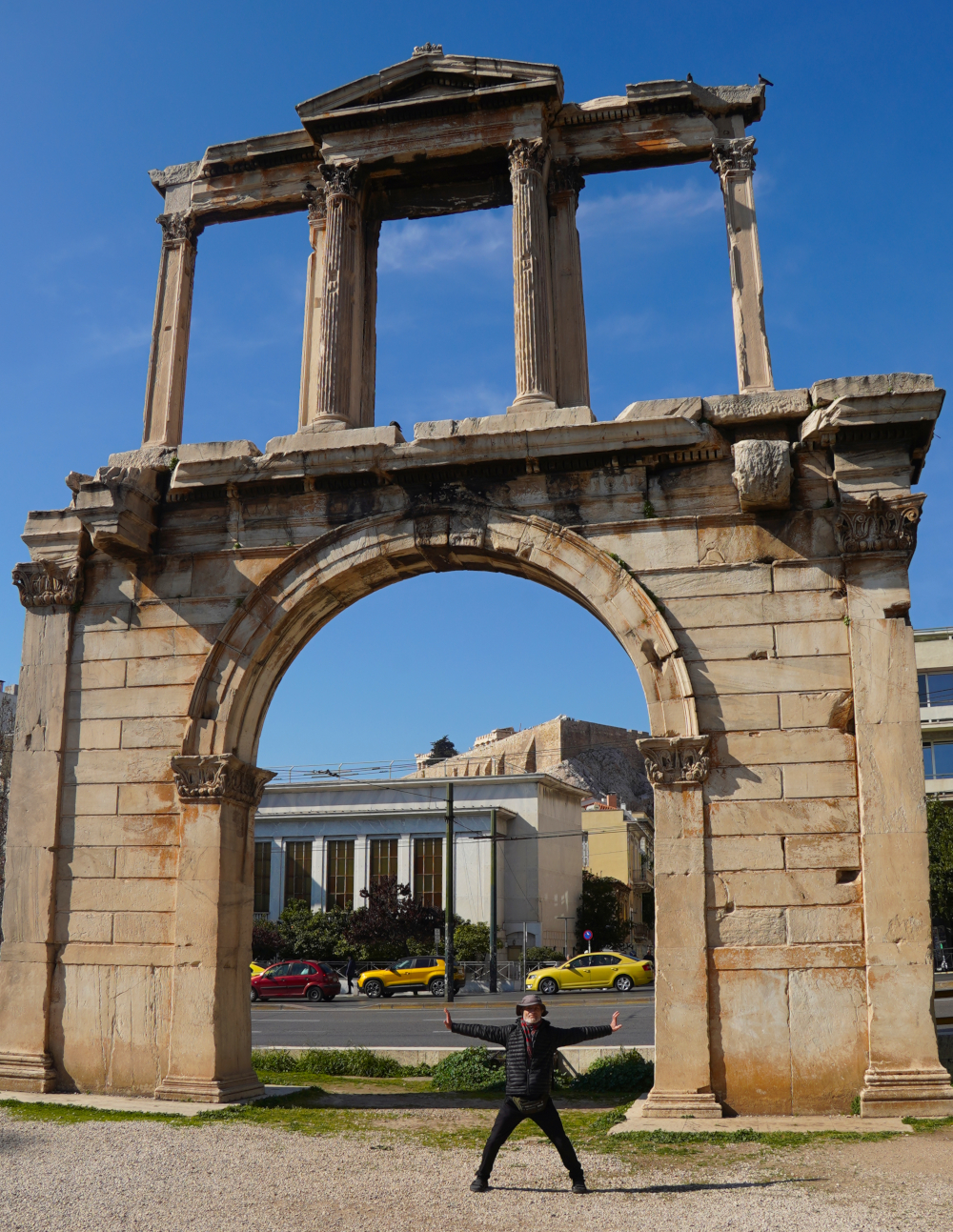

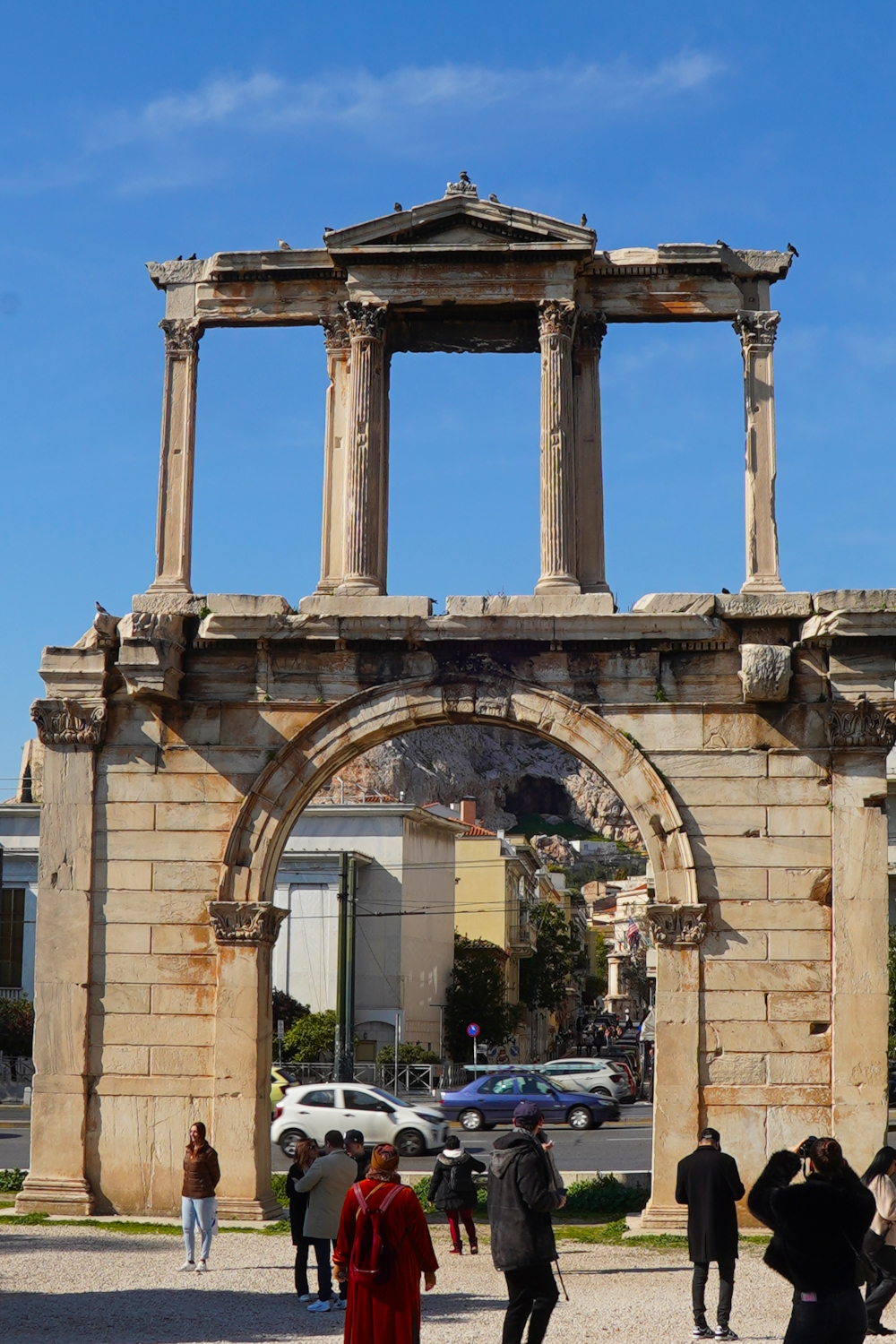
One side of it bears an inscription that translates as “This is Athens, city of Theseus” (a reference to the mythological hero believed to have founded Athens), while the other side reads “This is the city of Hadrian, and not of Theseus”. So there. Either the mason had a split personality, or there was a major turf war going on. This arch was long believed to have been the figurative if not literal gateway between the old Athens and the new, but subsequent research put the kibosh on that idea.
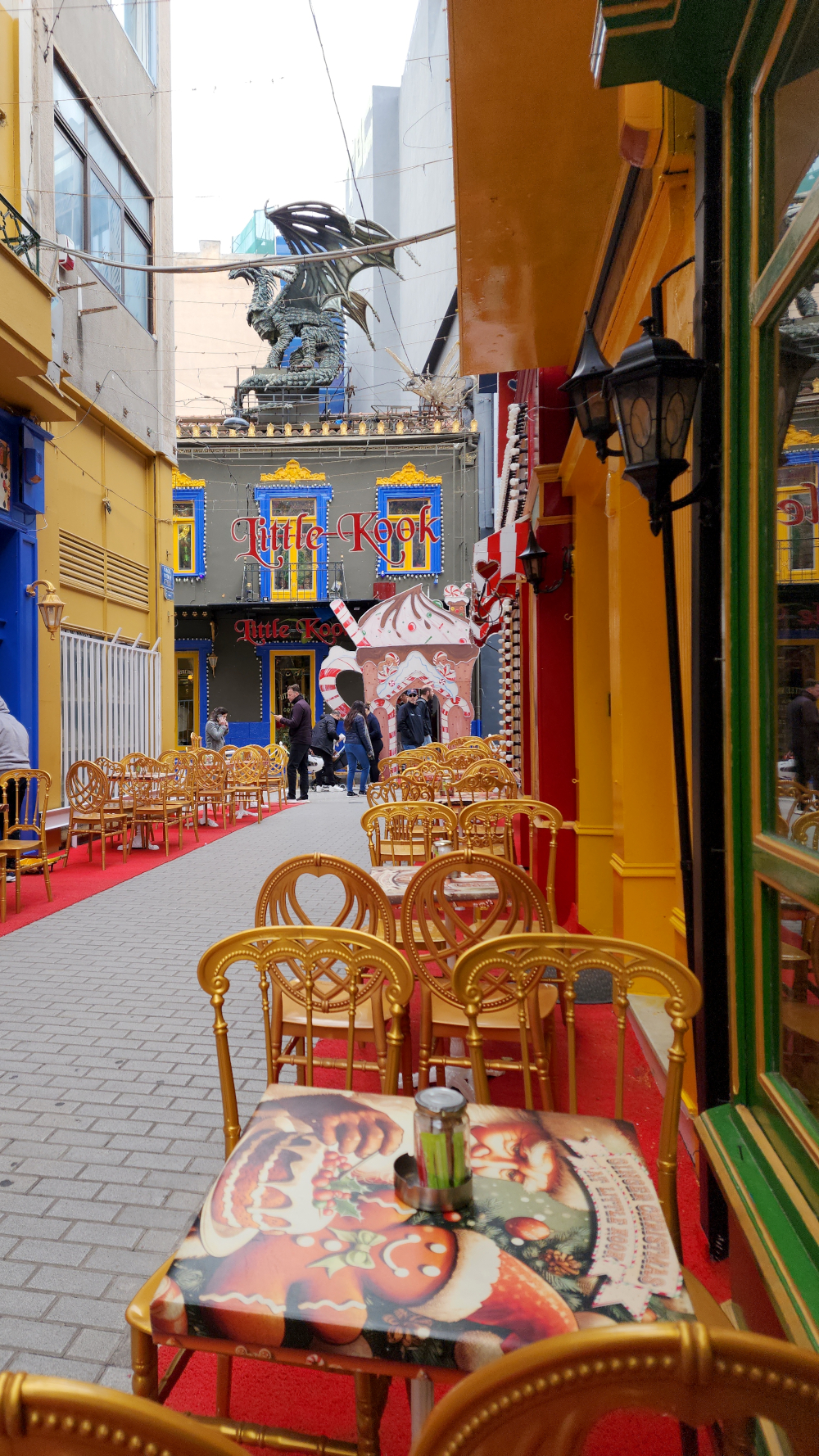
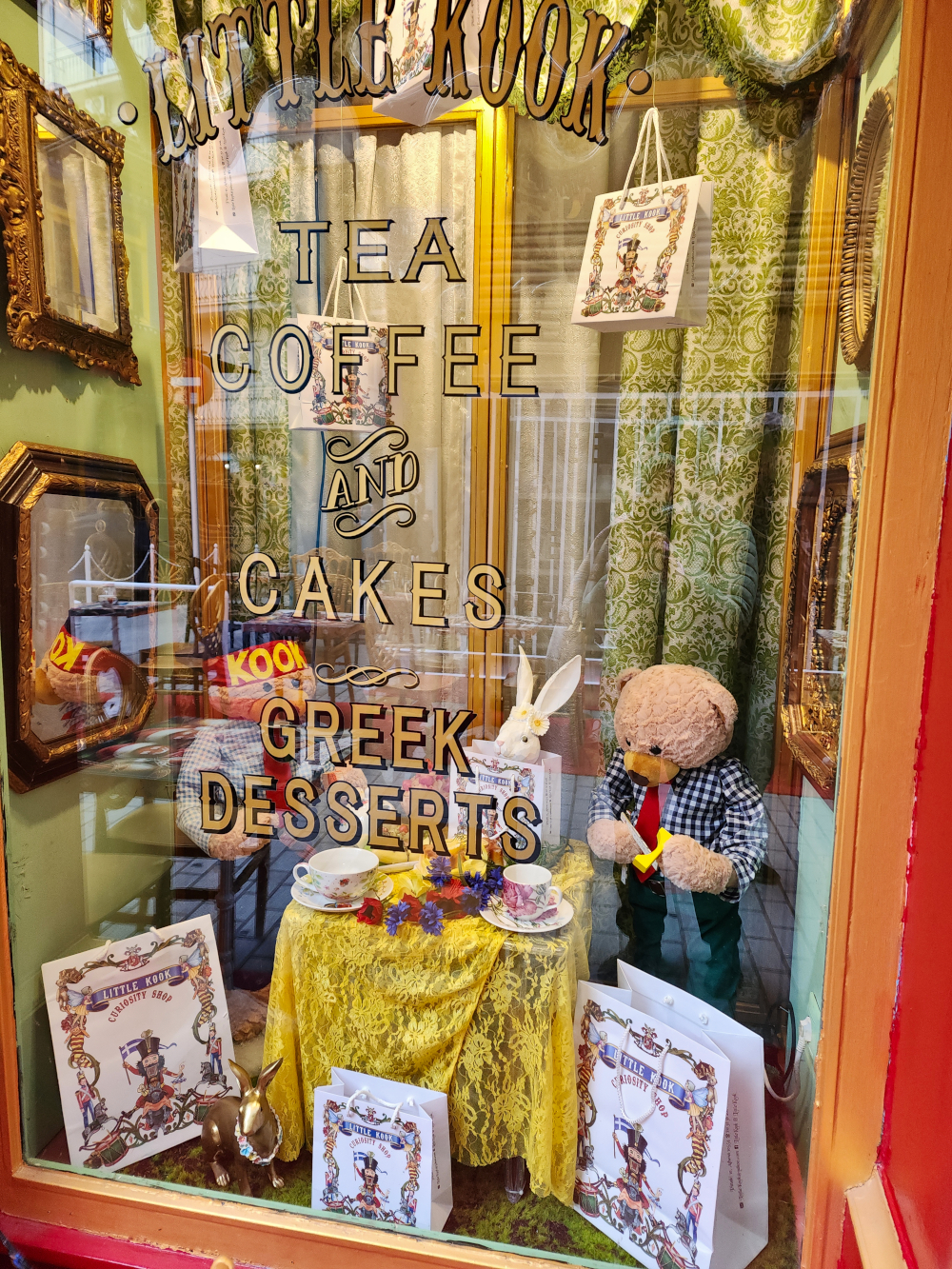
In the course of getting from point Alpha to point Beta, we pass through an area called Little Kook, which is a storybook neighborhood (and by “neighborhood”, we mean a block or so) featuring quaint tea rooms that look as if they’d been snatched from the pages of Winnie-the-Pooh. We contemplate returning for tea the following day, since it will just happen to be Valentine’s Day. But upon investigating we find that the cuisine is so abominable, not at all up to the decor in our estimation, that we nix the notion.
Our last stop of the day is Olympian Zeus Temple, dating back to the 6th Century BCE. It was the largest temple in all of ancient Greece, boasting 104 columns. Over the years, however, much of the marble has been plundered. Today, only 16 of the columns remain, with only 15 still standing — the other toppled during a violent storm in 1852, and still lies down on the job in segments, offering a fascinating glimpse of how such columns are constructed.
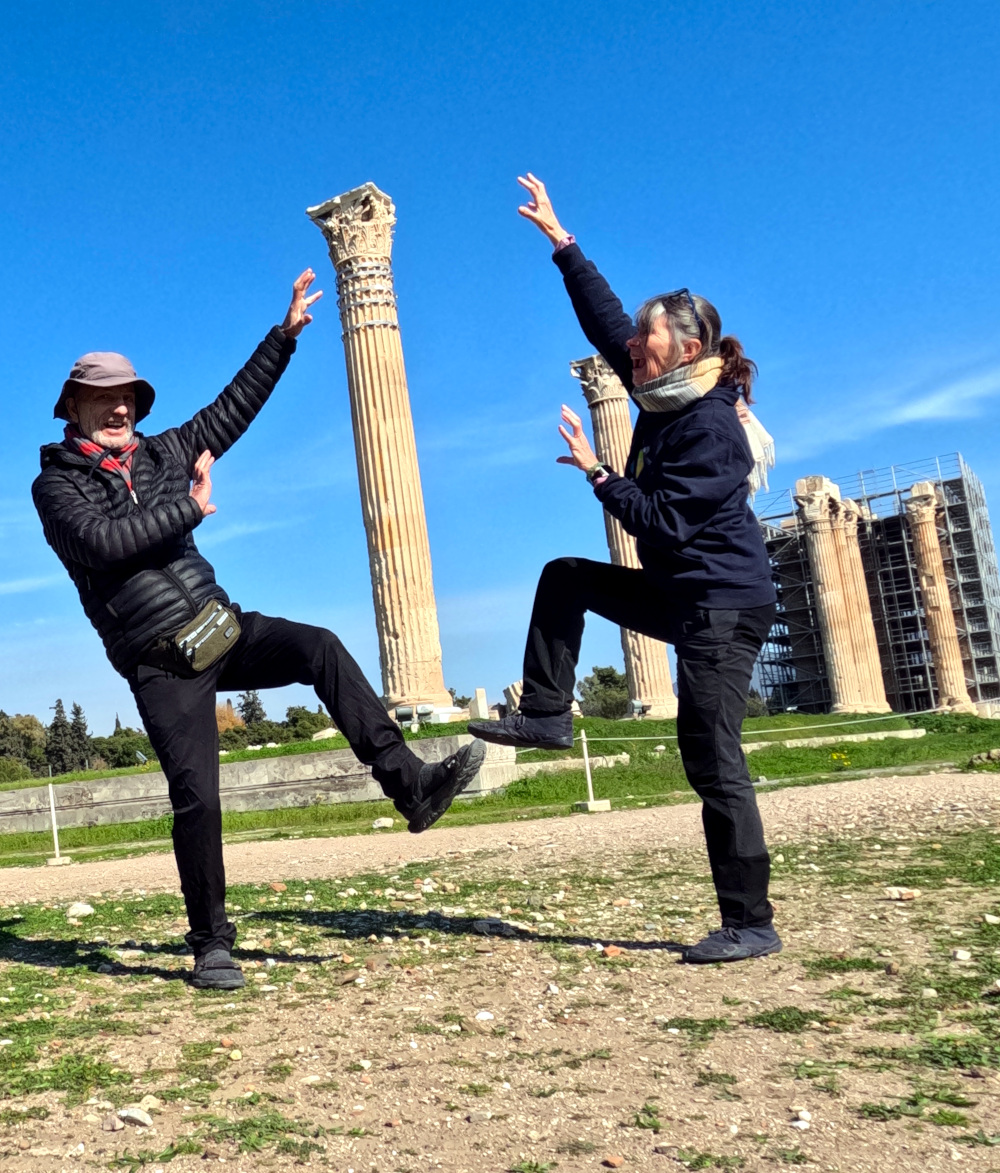
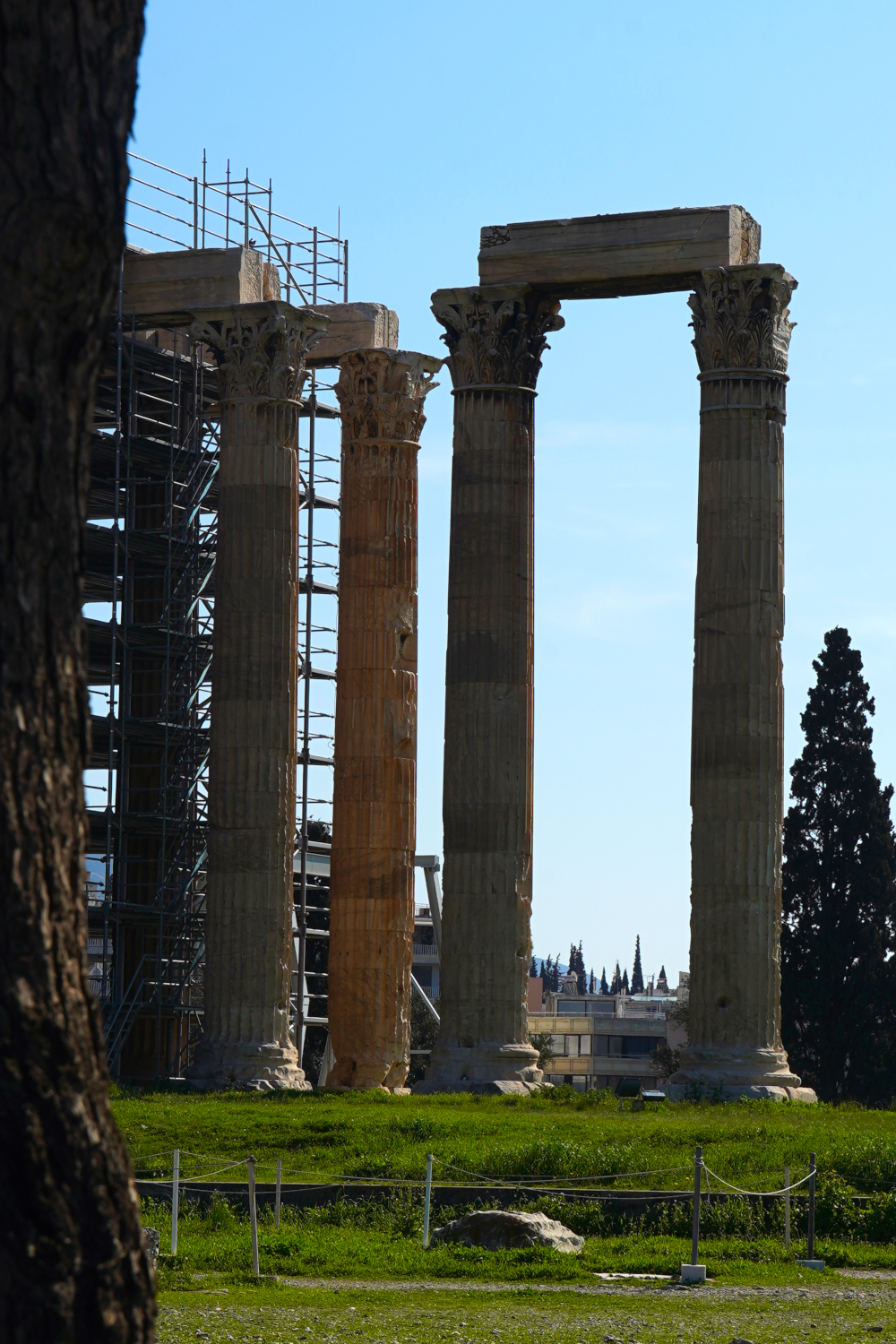

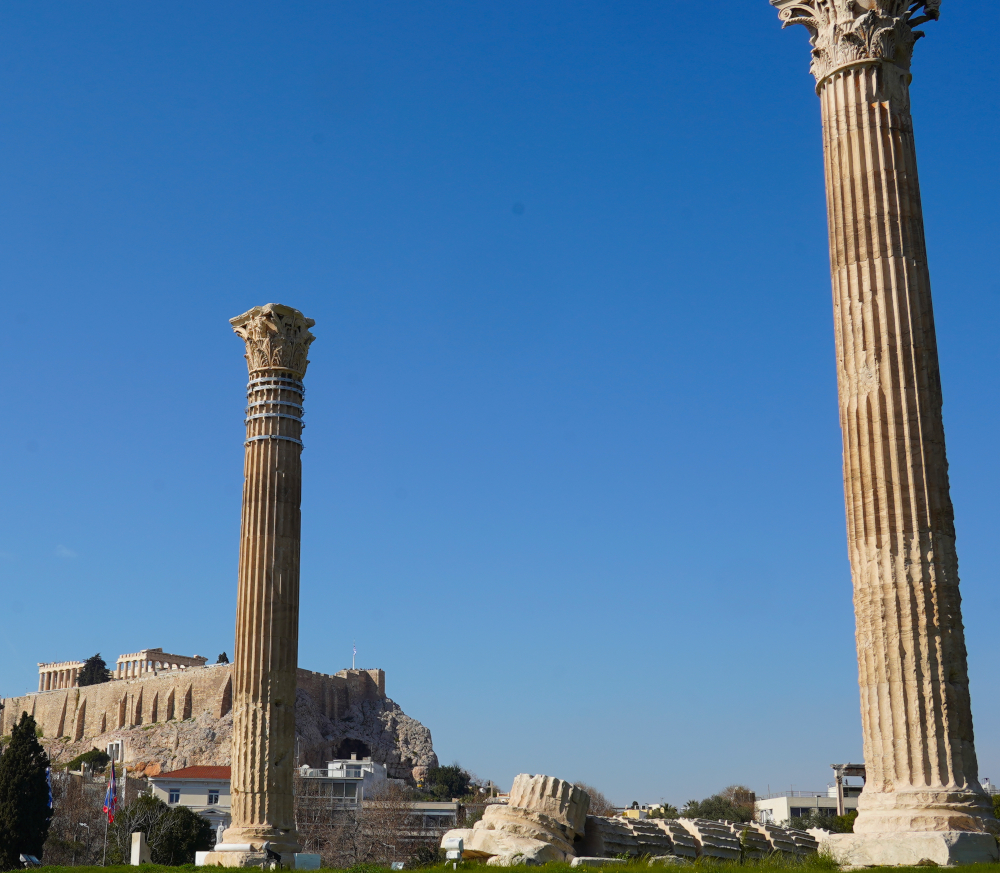
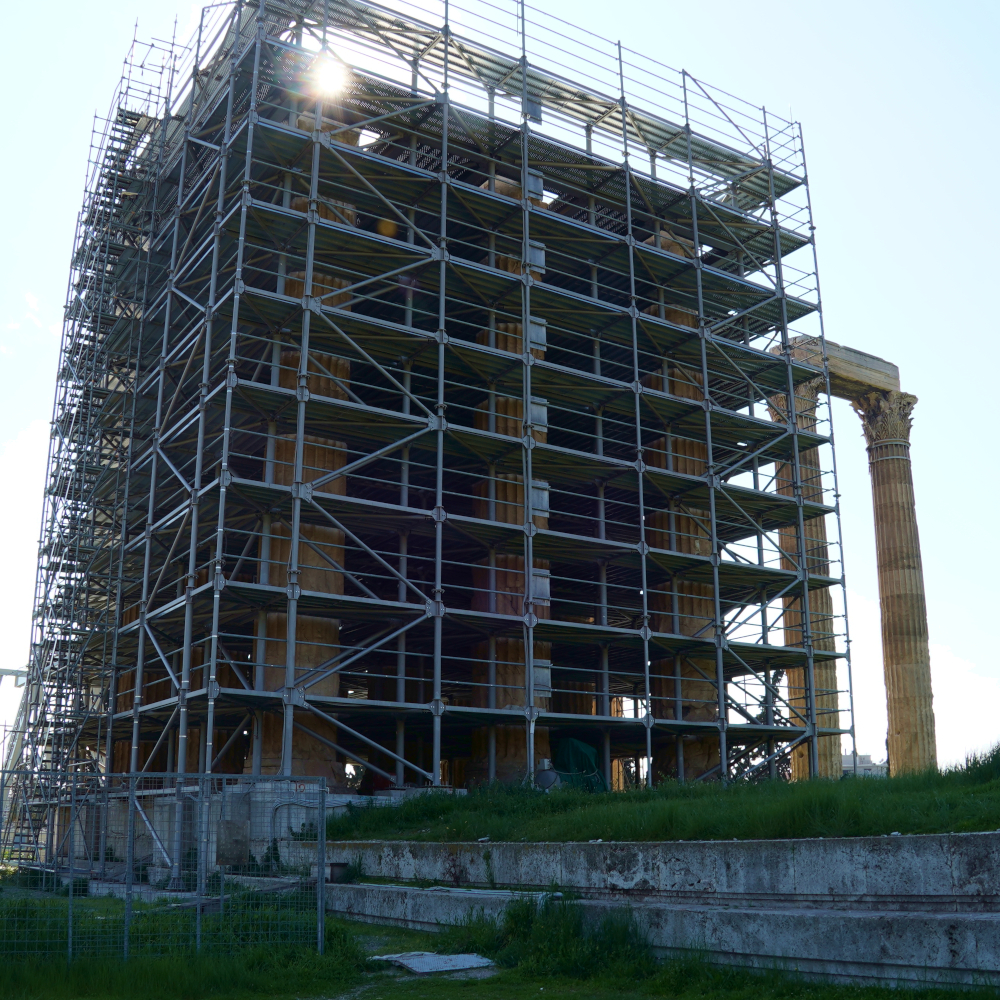
These are Corinthian columns, by the way, and after spending these few days examining Greek ruins, we finally have it drilled into our noggins how to distinguish Corinthian. Ionian, and Doric. (Doric is the simplest, Ionian has the scroll-shaped capitals, and Corinthian is the most elaborate.)
The temple is surrounded by a heavy coat of scaffolding, but based on recent photos, we assume this is just temporary during reinforcement measures.
And that about wraps up our sightseeing tour of the city this time around. There is just one more colorful character that we’ll encounter.
Having solved his footwear problem, Dennis decides that he no longer needs the shoes he’s been carting around but not wearing because they’re too uncomfortable. Since space in our bags is at a premium, he wants to leave them behind. And he remembers the homeless man we’ve seen sleeping in a sleeping bag on sidewalk a couple of blocks away in freezing weather.
He appears to be African-American (he speaks perfect English with an American accent) and does not appear to be under the influence of any intoxicants, or to have obvious mental problems. Dennis asks him if he’d like a pair of shoes, and he replies, “What size?” When he is told nine, he answers “too small”. When Dennis asks him if maybe he could take them anyway and pass them on to someone else, he replies, “Okay, sure. Thank you.” So, with any luck, they really did go to someone who could use them.
And on that note, we begin preparing to take our leave of Athens. But we’ll definitely be back. There’s still so much to explore, both of the rich past and the colorful present.
Events occurred 2/13/2025
 world travel with a theatrical flair
Leave a comment