


With a couple of more days to spend in Vienna, we just get out and amble around, more or less aimlessly. Well, we do have a couple of destinations in mind, but they don’t pan out, so we just pretty much play it by ear, the way folks used to do in the days before Google Maps, Waze, GPS, and maybe even before maps.
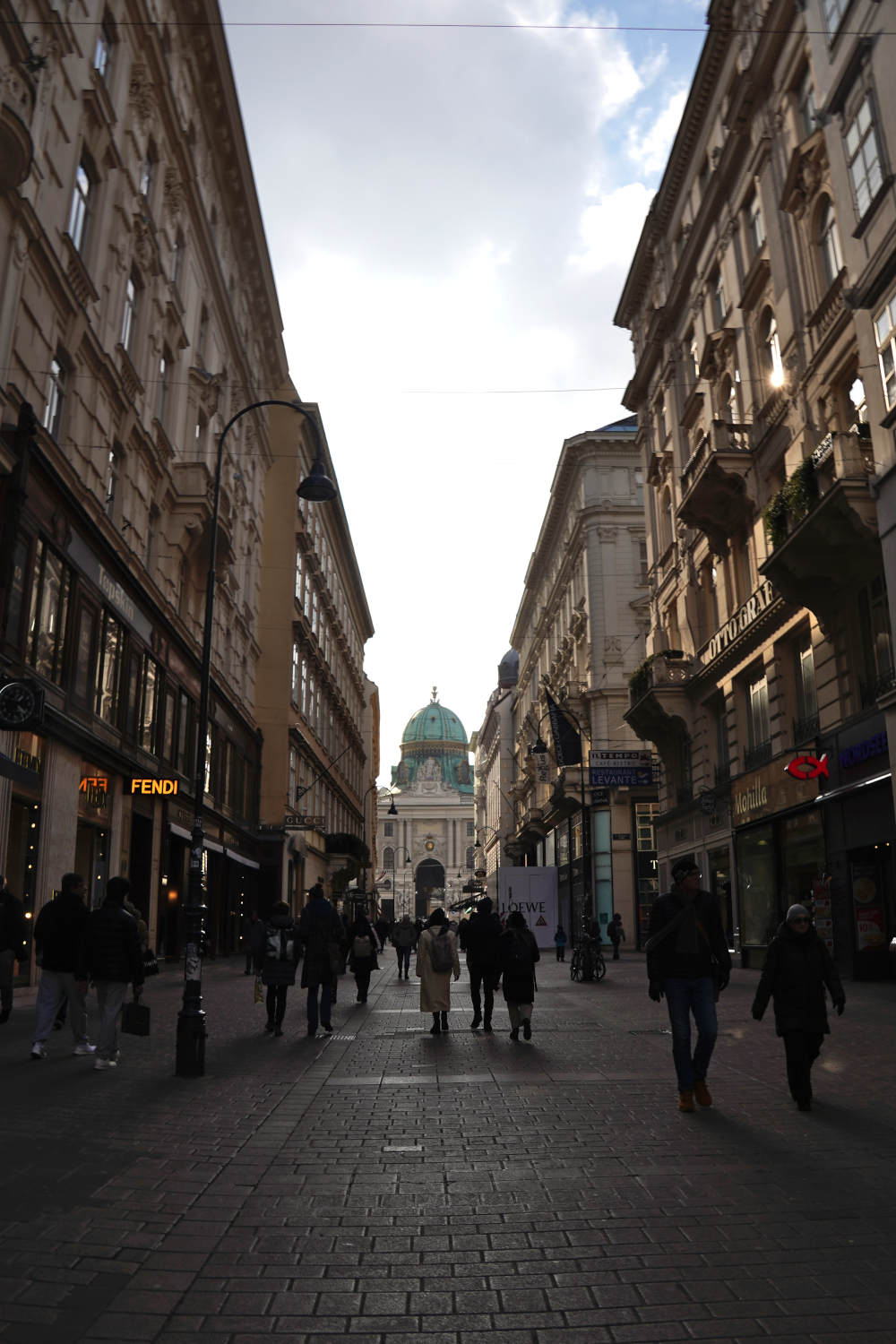
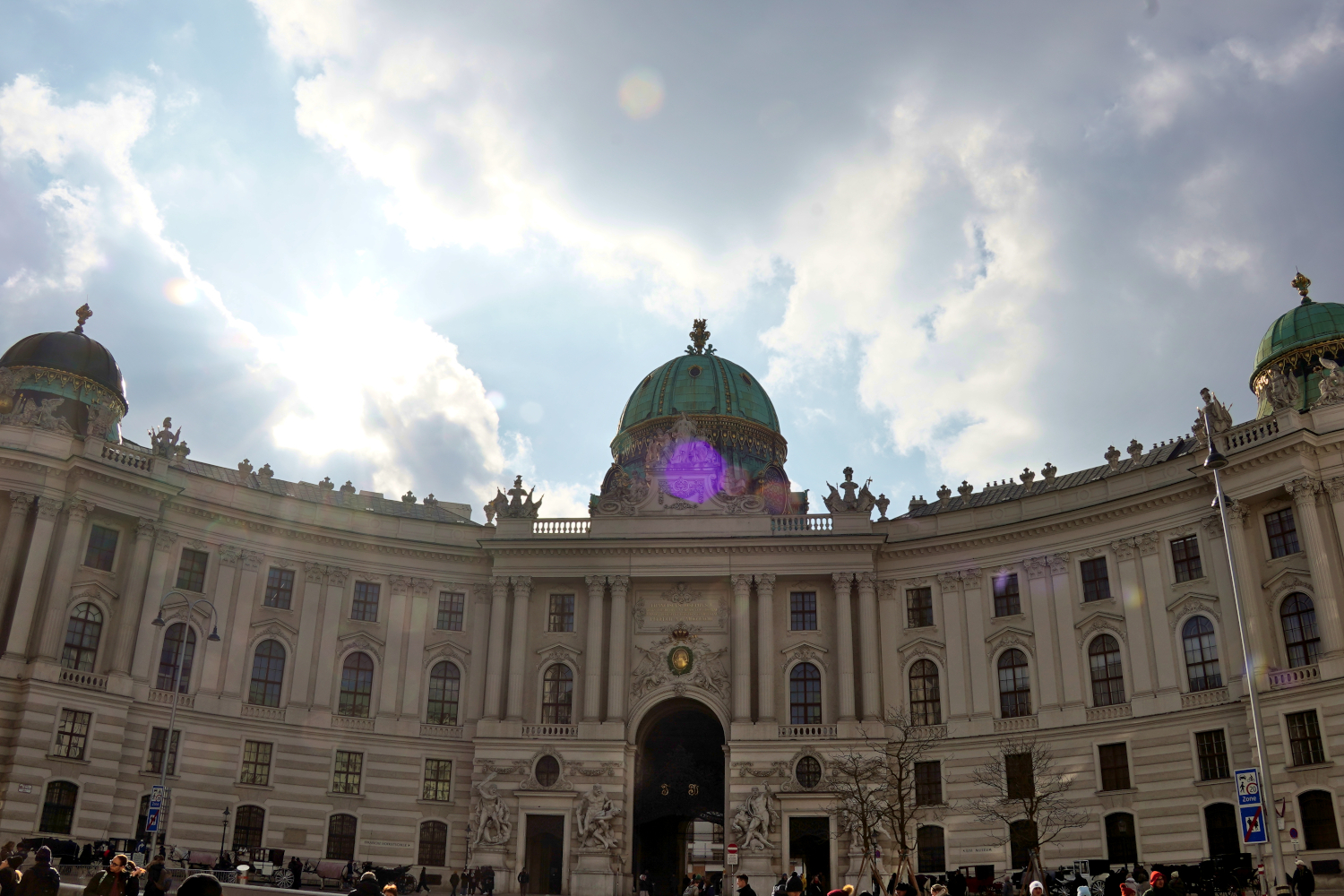
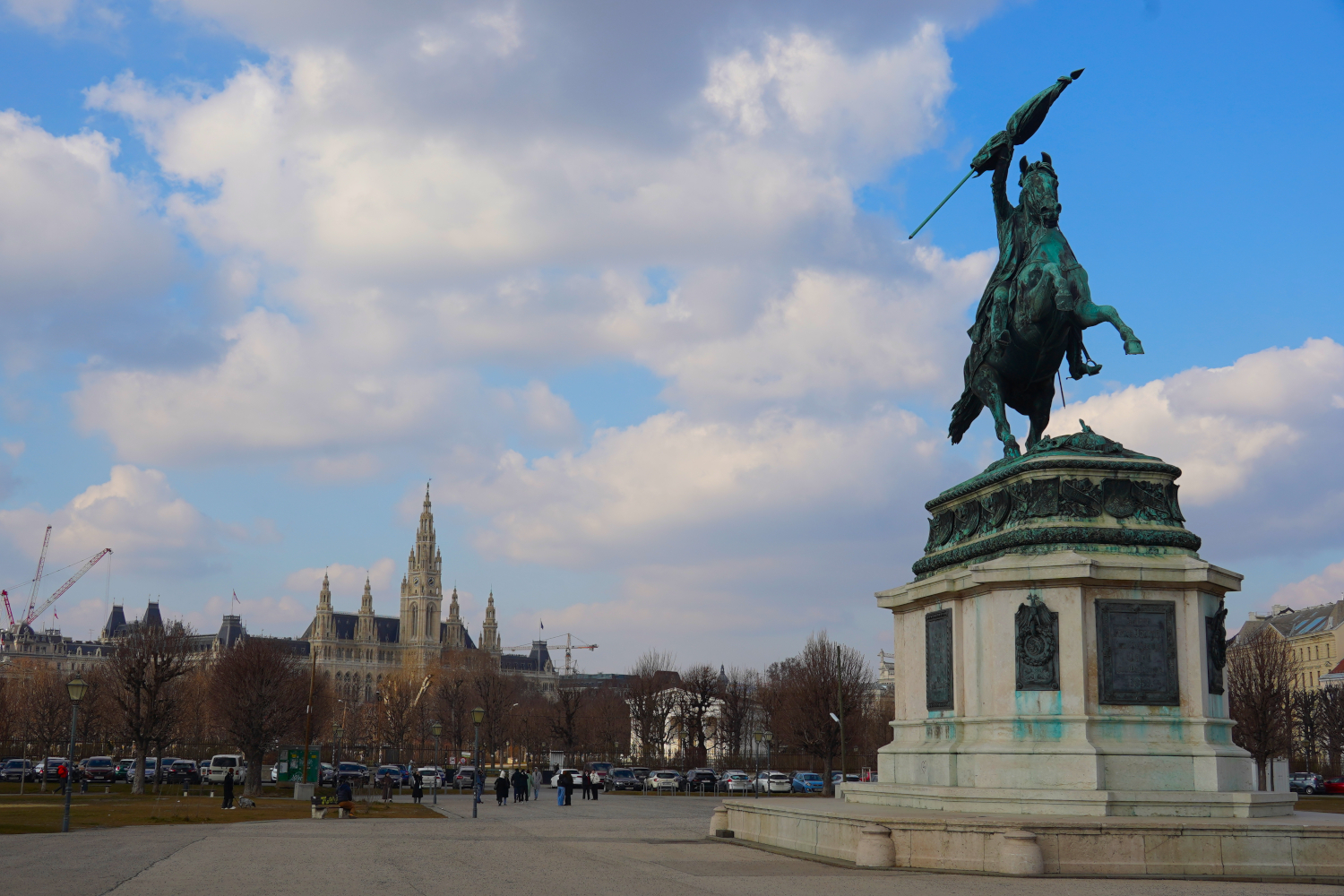
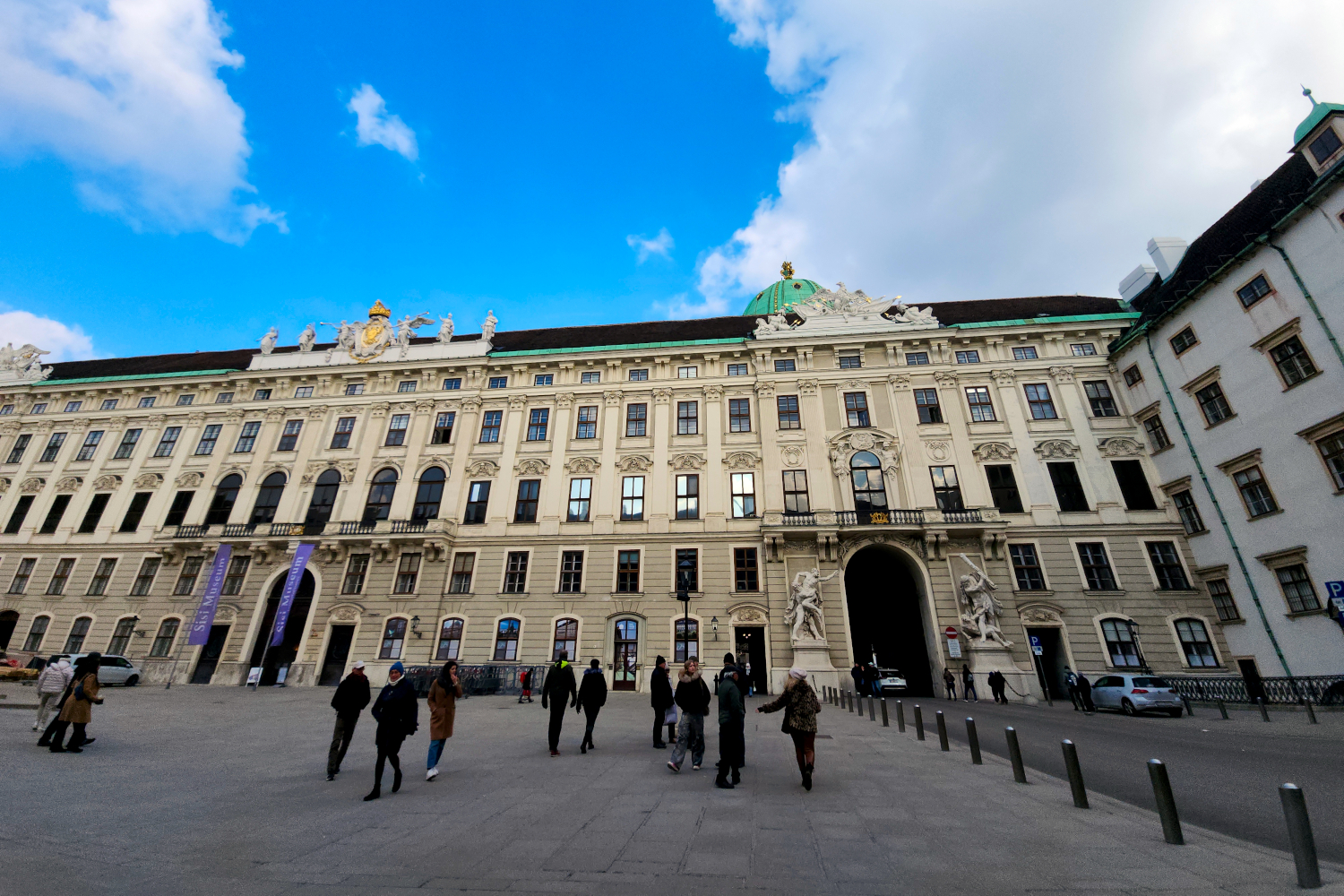
For one thing, we go to have a look at the Habsburg Palace. And we do have a look — at least at the exterior of it. But then when we start pondering the prospect of forking over hard-earned cash to go inside and see how rich people lived, we decide to pass, and instead just content ourselves with admiring the classic architecture of the Palace and the surrounded official buildings, from the outside without looking in..
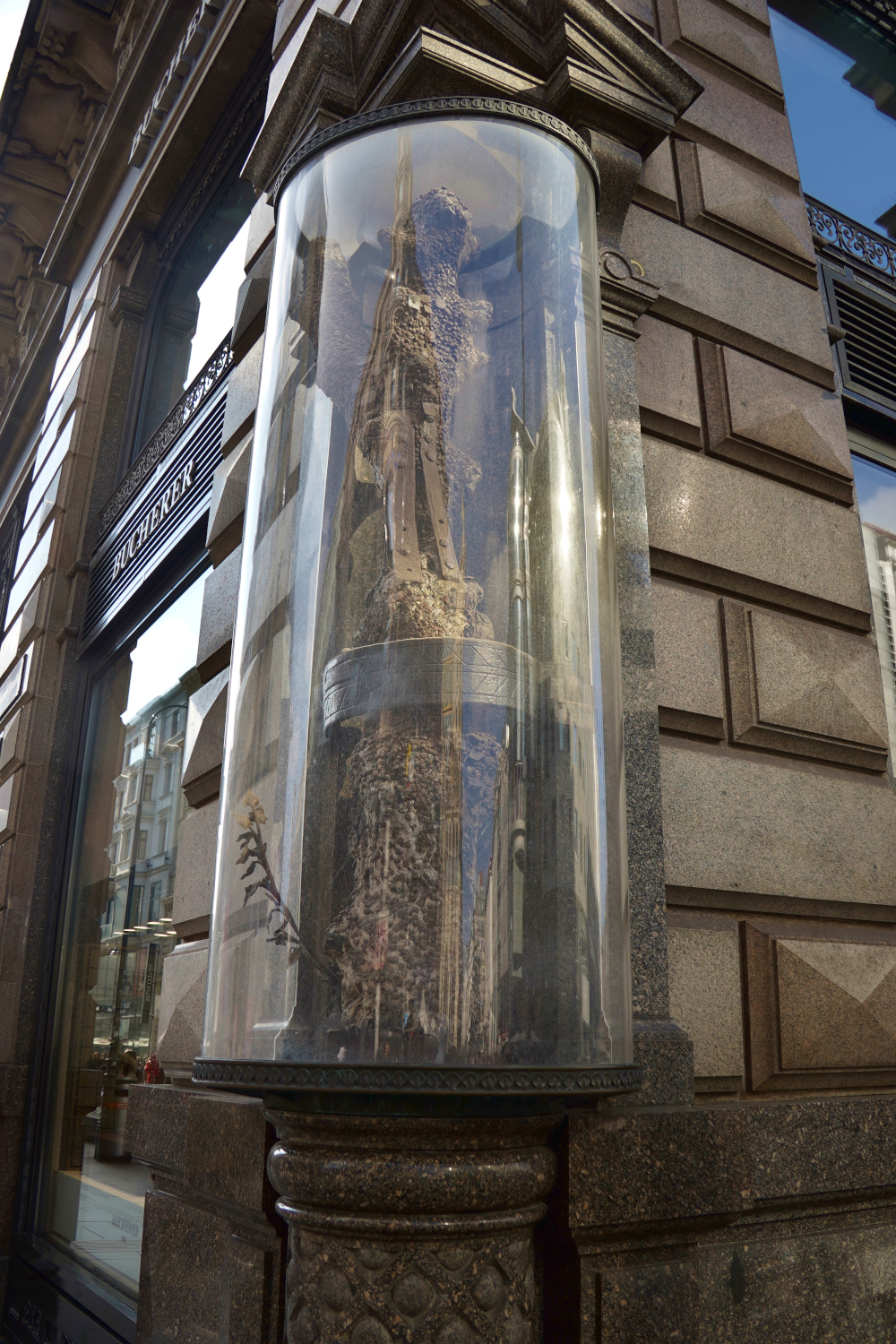
Then we return to Stephansplatz. the hub and heart of Vienna. Naturally we have to seek out the Stock Im Eisen (staff in iron), one of the coolest points of interest in the whole city, and one that’s easily overlooked in all the bustle. Protected by a glass case, the Stock Im Eisen is the trunk of a spruce true that was felled in the year 1440. What makes it particularly interesting is that hundreds of nails were driven into it — both before and after it was toppled — for good luck. Since nails were scarce and rather valuable in those days (it was common for them to be reused) this was no small sacrifice on the altar of superstition.
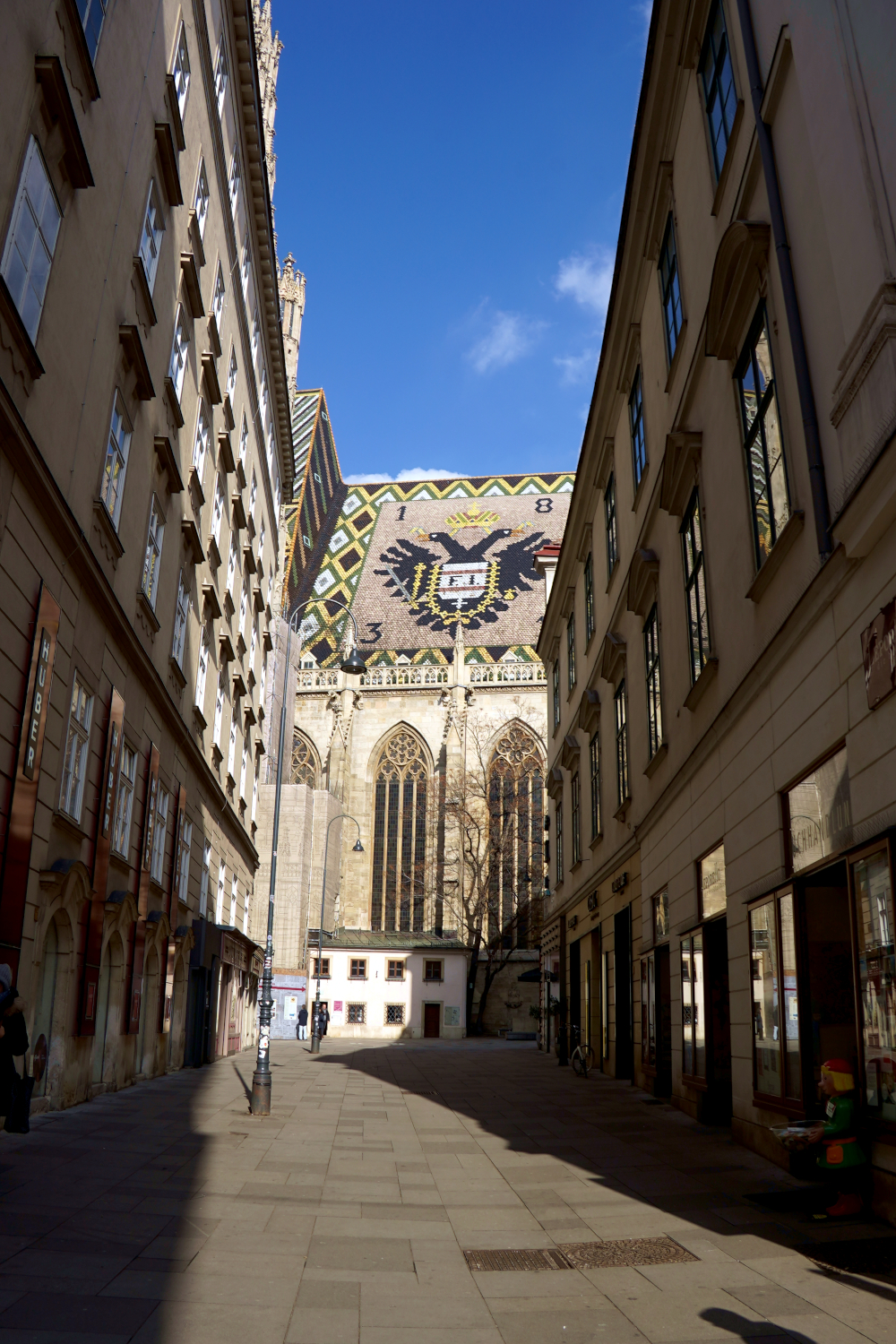
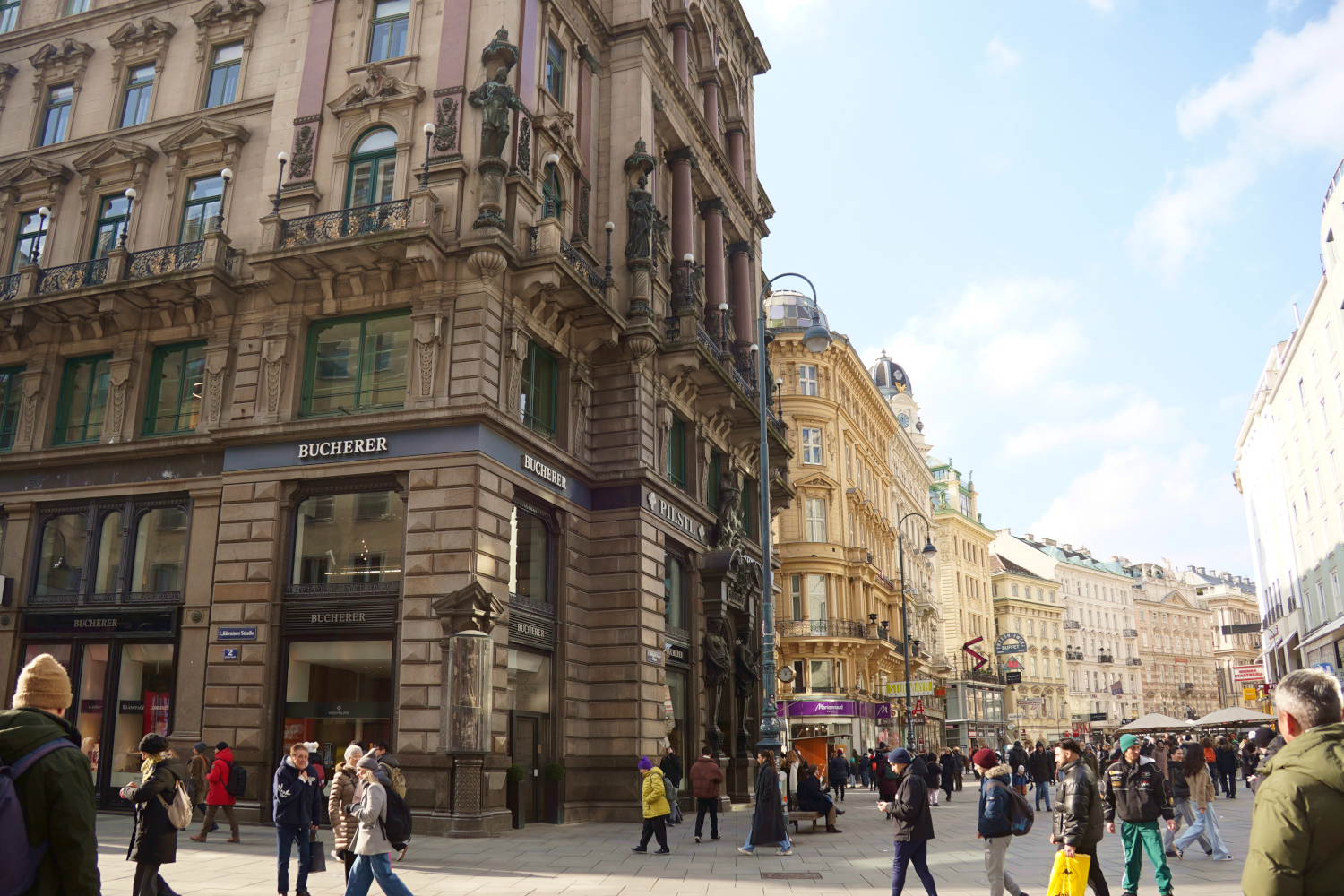
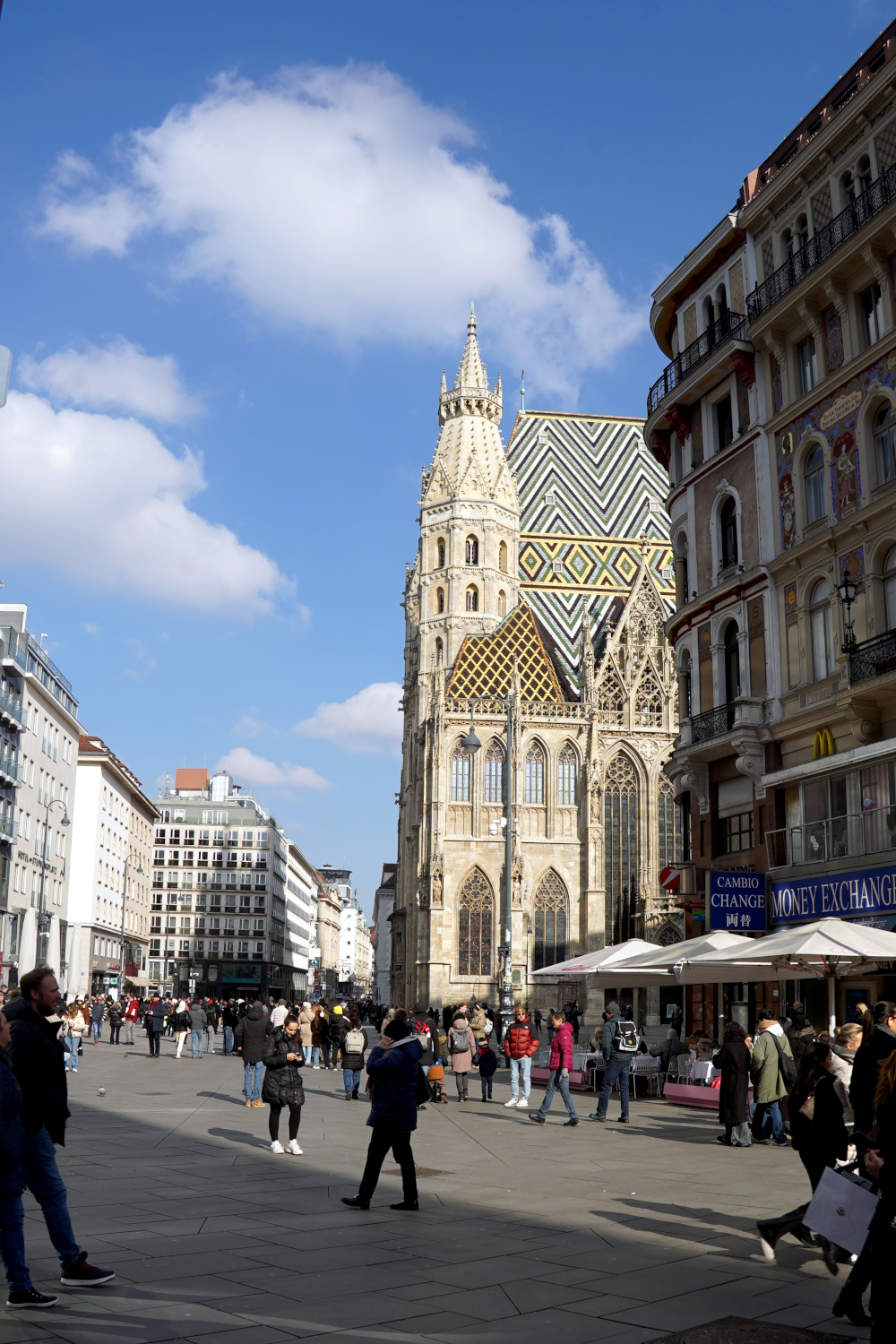
Speaking of altars, we also take the opportunity to get a more detailed look at St. Stephen’s Cathedral, which (the day now being Monday instead of Sunday) is considerably less hectic than it was when we dropped by the day before. (Why is Stephen spelled with two e’s, but in Stephansplatz it has an “e” and an “a”?)
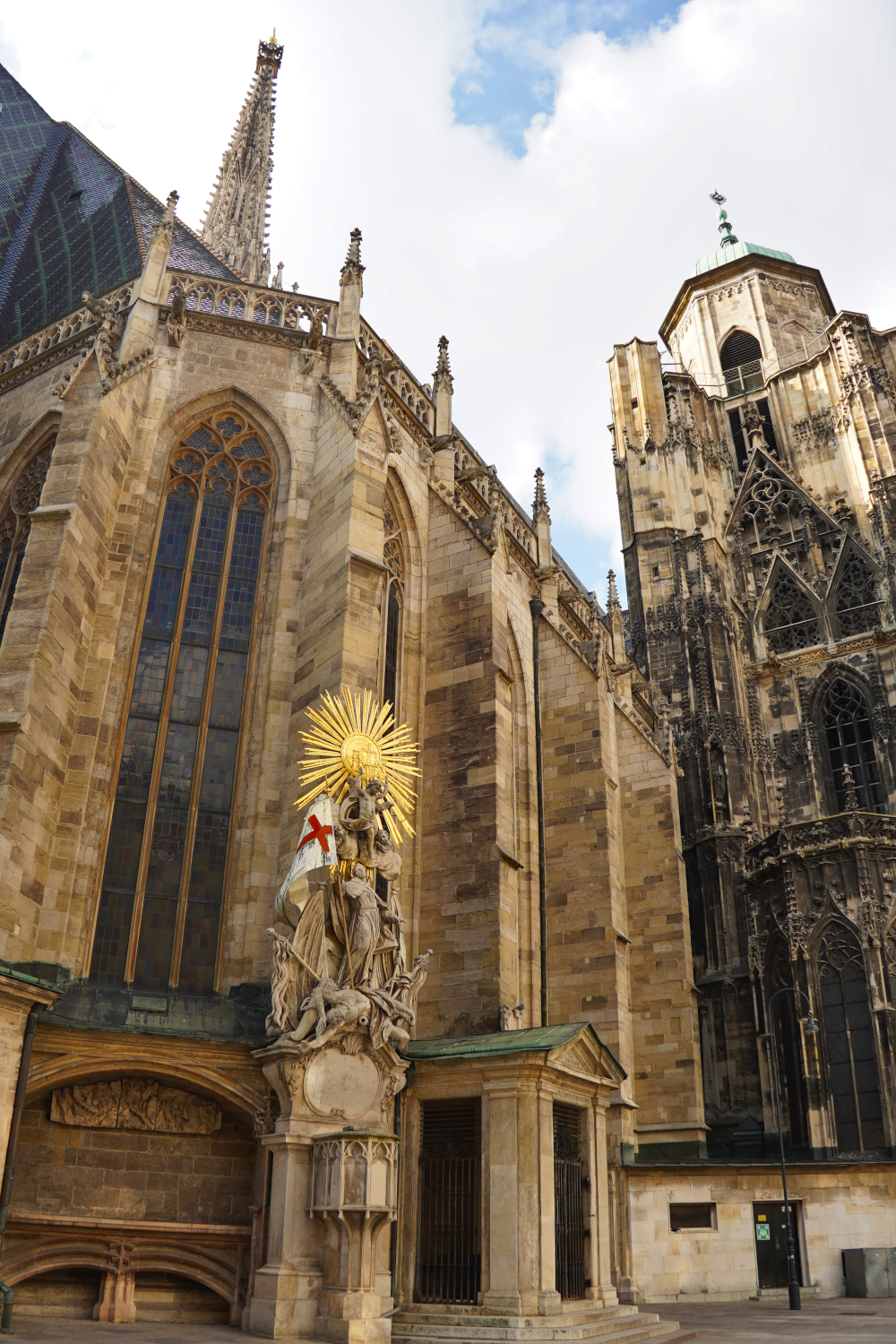
As we mentioned before, this gorgeous hunk of a church was erected over a period of about four and a half centuries, ending in 1578. But the Gothic and Romanesque architectural idiom that gives the building its distinctive character was mostly incorporated in the mid-Fourteenth Century, about 200 years after the slow-motion construction process was launched. It has a storied history, hosting many high-profile ceremonies involving many high-profile individuals. The Viennese composer Wolfgang Mozart had his wedding here — and later his funeral too.
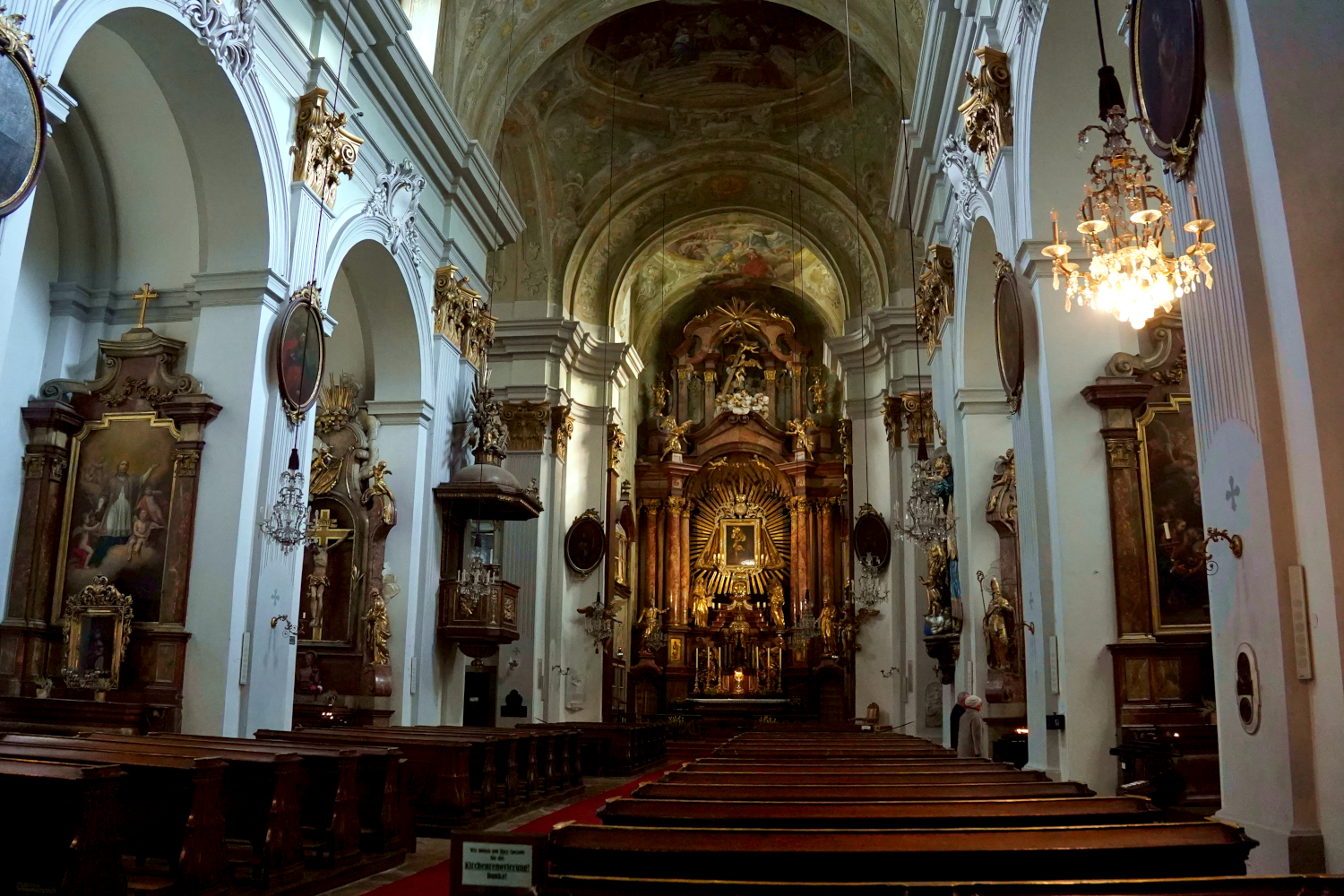
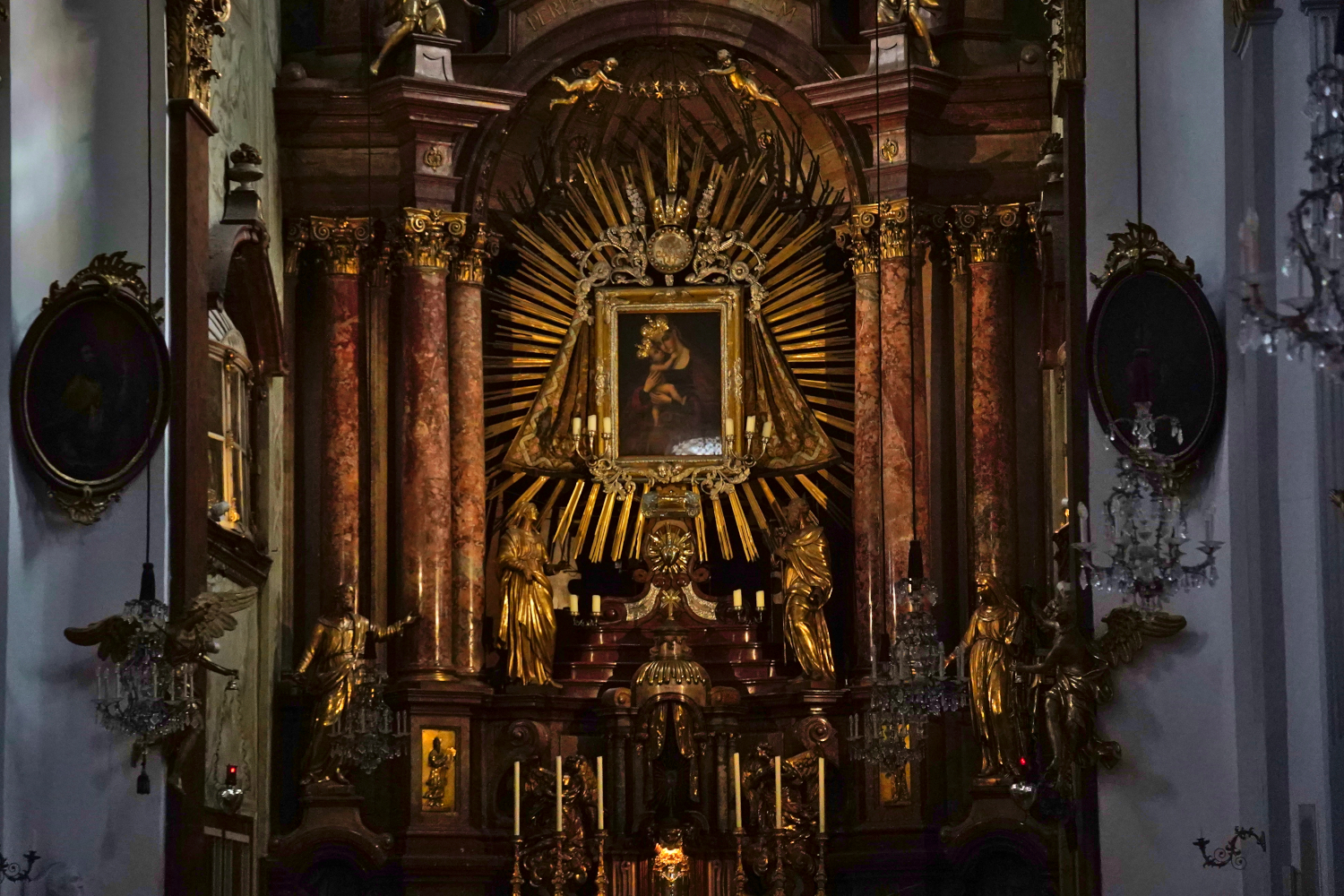
Make no mistake, the exterior of the cathedral is mesmerizing — it’s worth stepping back to take in the roof, which is inlaid with 230,000 colorful tiles, and is raked at such a steep angle it’s never covered with snow. But the interior is perhaps even more arresting. There are really more detailed details here than you can hope to take in during a single visit. There are 66 altars in the main section alone, with many others lurking in the offshoots.

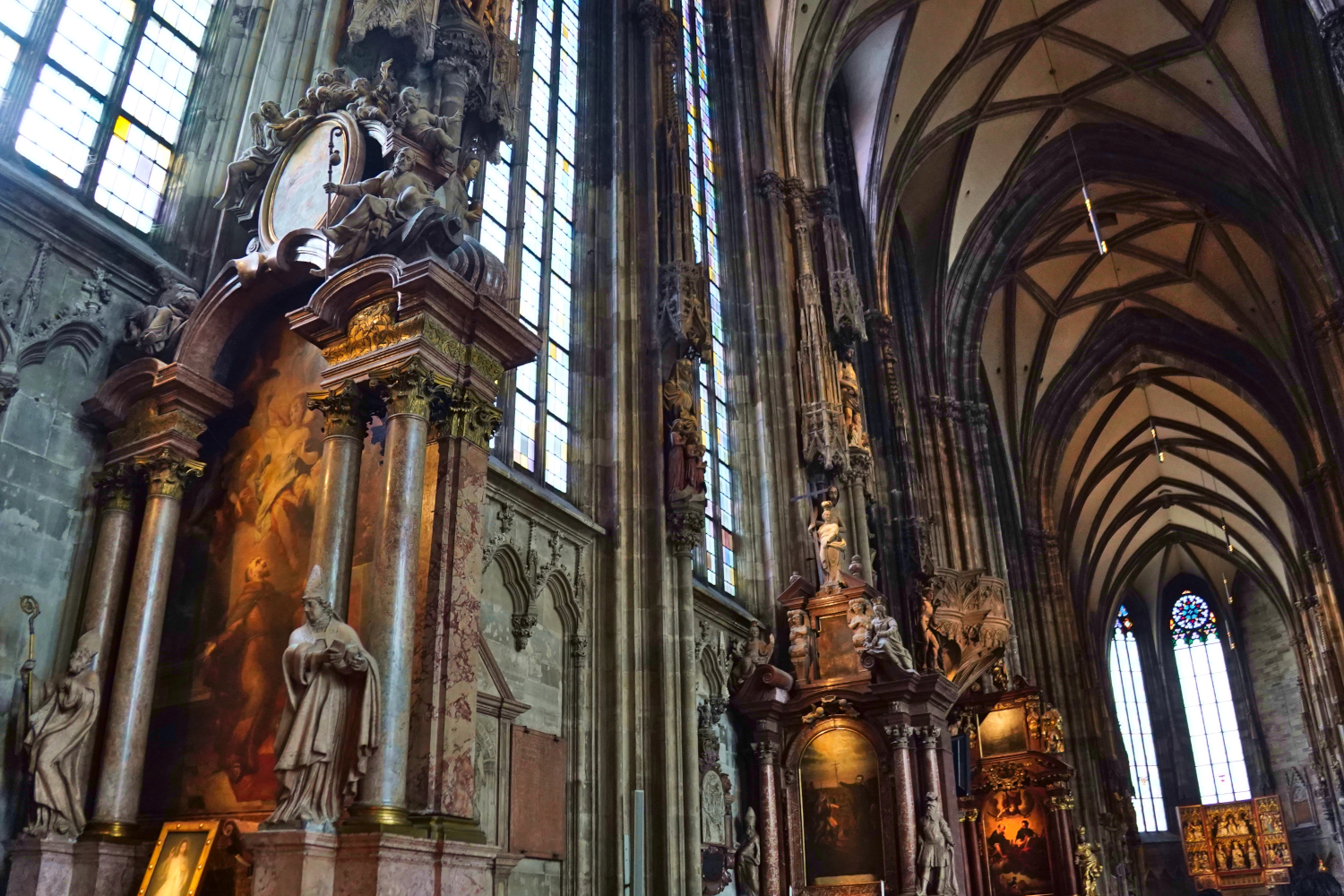
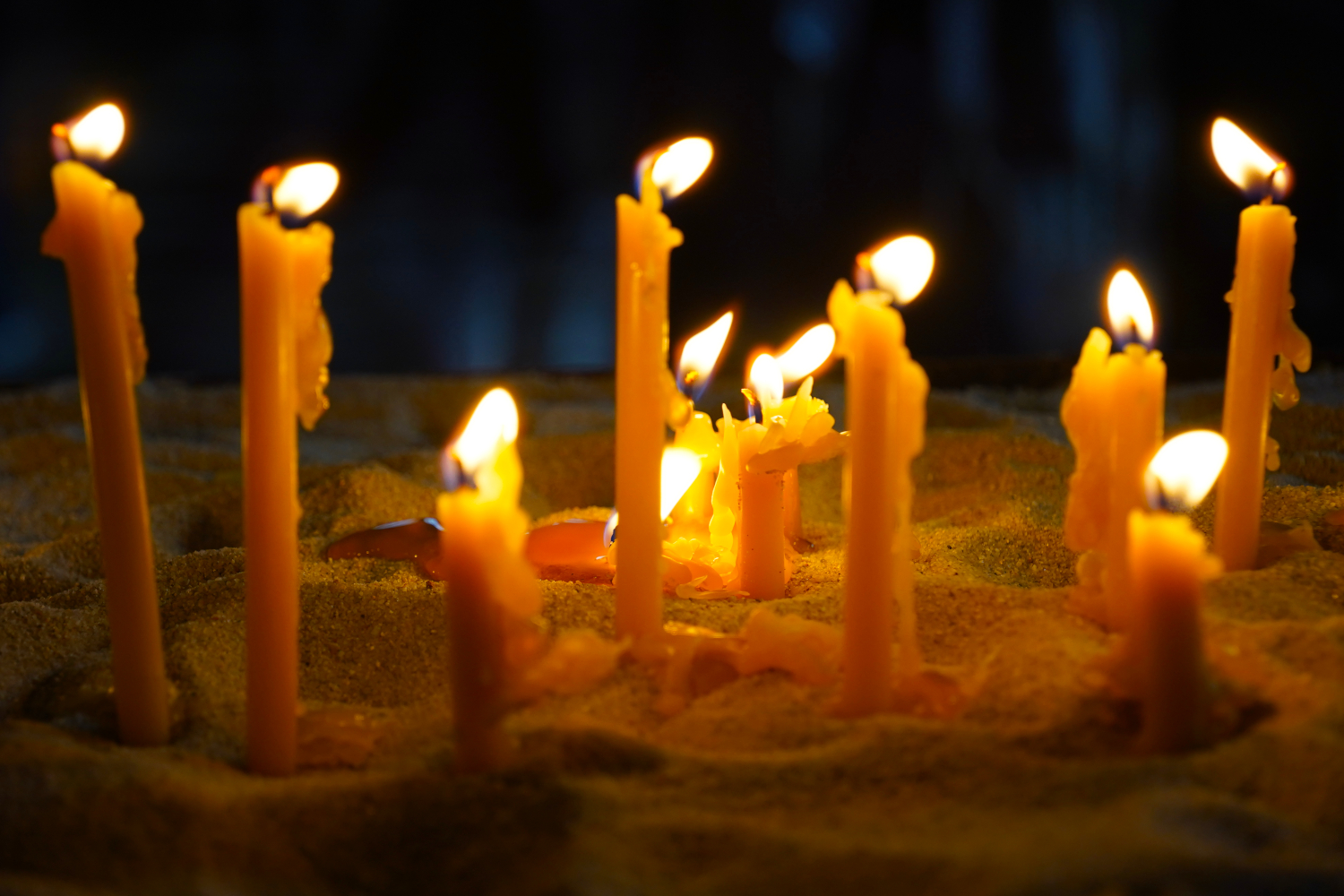

One of the most deservedly famous lures is the pulpit, a baroquely ornate stone fixture that is carved, among other things, with famous figures from church history. But for our money, the item that really stands out the most is a piece of self-portrait sculpture by Anton Pilgram, the master builder and stone mason who did a great deal of work on the cathedral. He appears to be poking his head and shoulders out of a window, just above the inscription M.A.P. 1513. The letters stand for Magister (Master) Anton Pilgram. He seems to be admiring his handiwork with an expression that says, “Well, not too shabby. But it could use just a little tweaking here and there.” The whole thing is kind of offbeat and goofy something found in a somber cathedral, which is just what makes it so noteworthy.
The next day we undertake an expedition to find an attraction that Kimberly has learned about, but is keeping a surprise until we get there. It’s some sort of virtual reality playground that looked enticing online. But when we arrive, it doesn’t appear so inviting after all, based on the photos and videos we see on display in the lobby. So we forego it, and just continue meandering.
As a consolation prize, almost directly across the street is an honest-to-goodness Woolworth outlet, the first one we’ve seen in many a moon. In fact, F.W. Woolworth Company went out of business in the U.S. in 1997. But it still operates in approximately three countries, including right here in Austria. So we have the unexpected experience of browsing in a retail dinosaur that is a fabled part of Americana. It isn’t as old as many of the other buildings we’ve been to in Vienna, but it’s an antique in its own right.



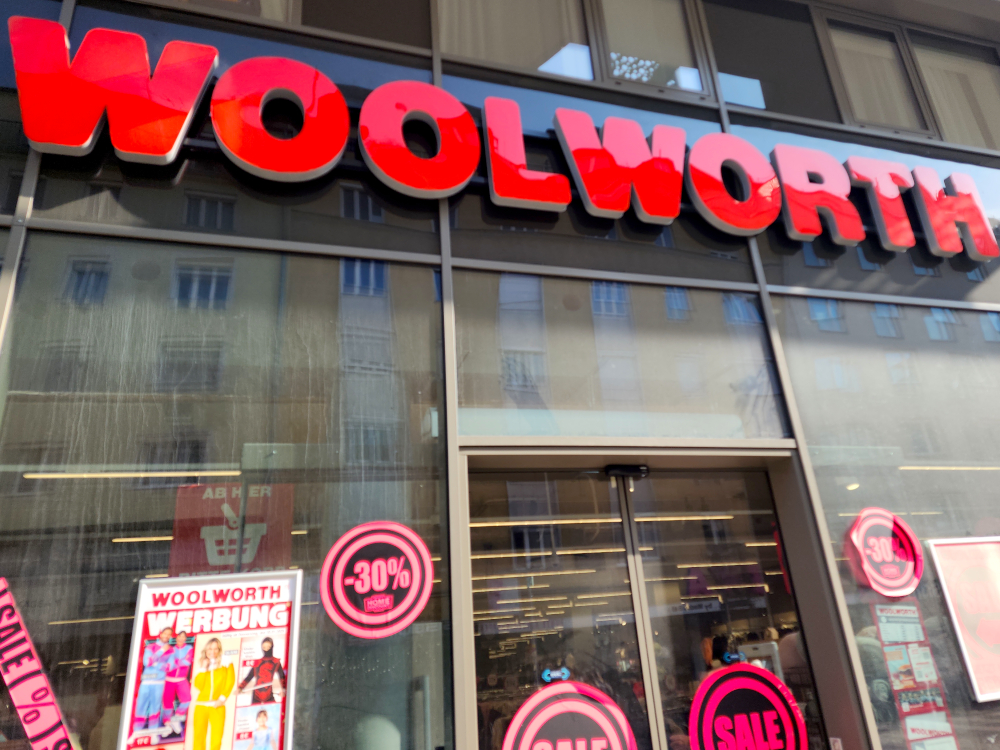
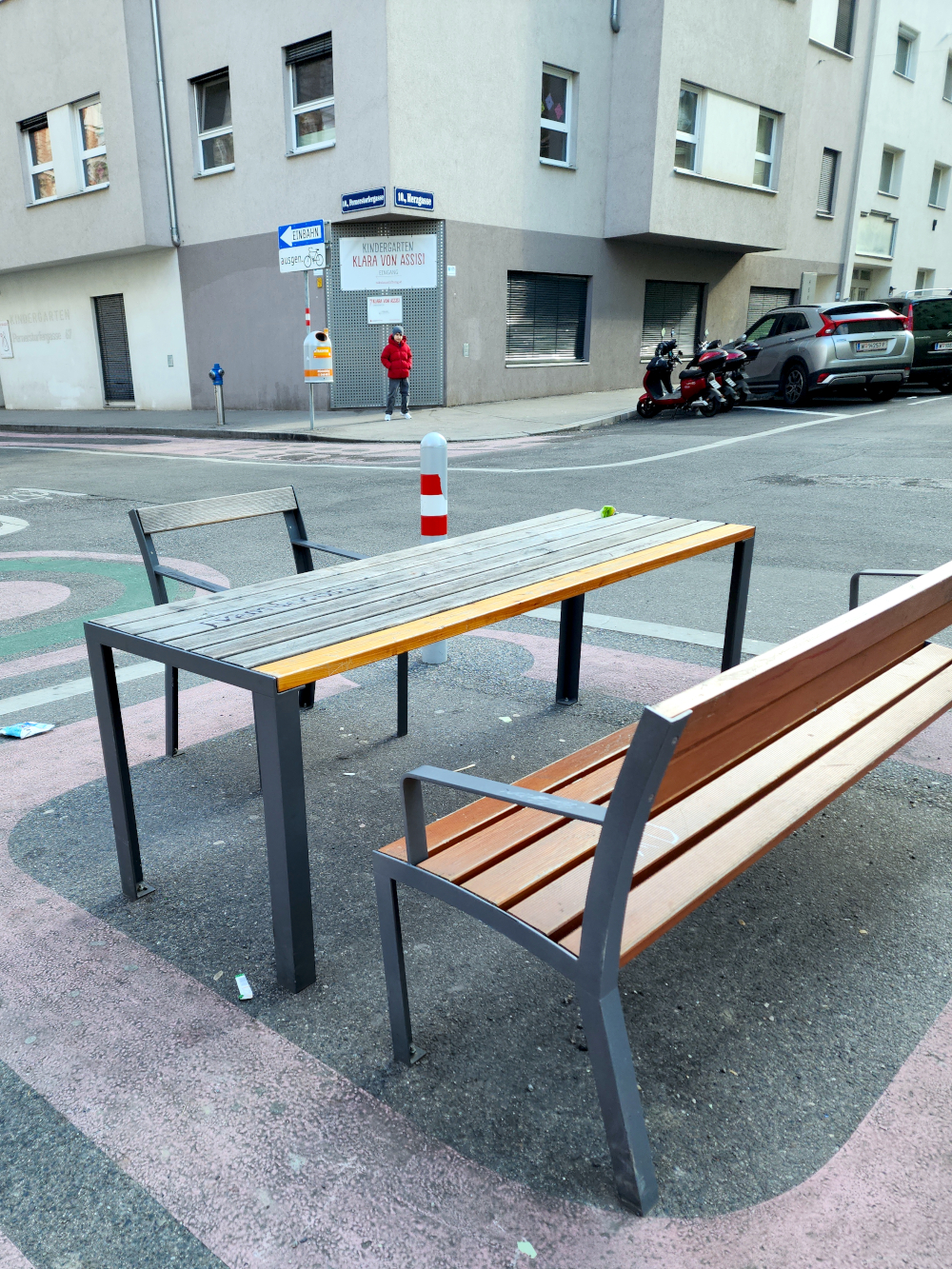
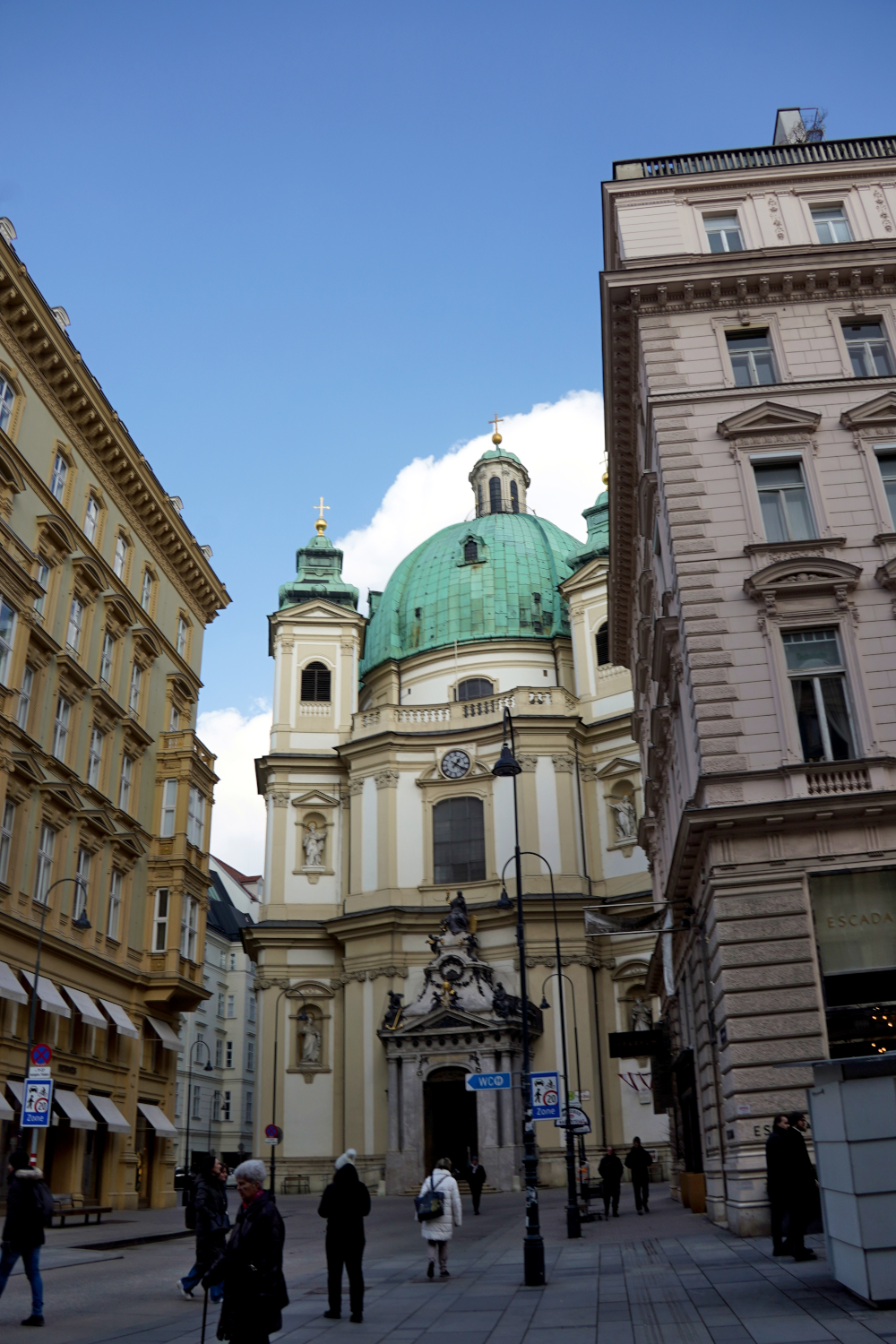
That’s pretty much the crowning glory of our final day in Vienna, except for some additional churches and other feats of architecture that we pass as we casually make our way back home.
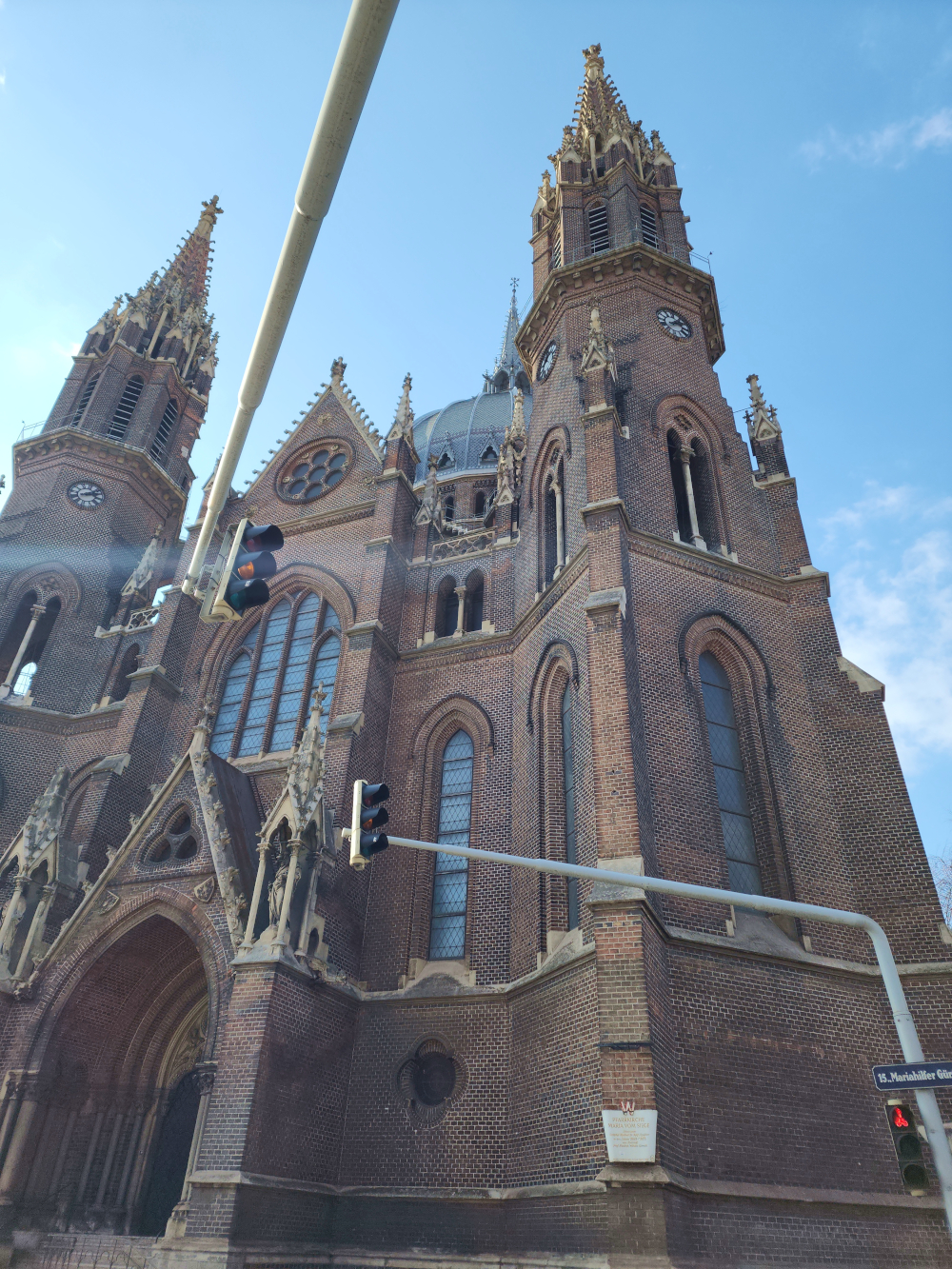

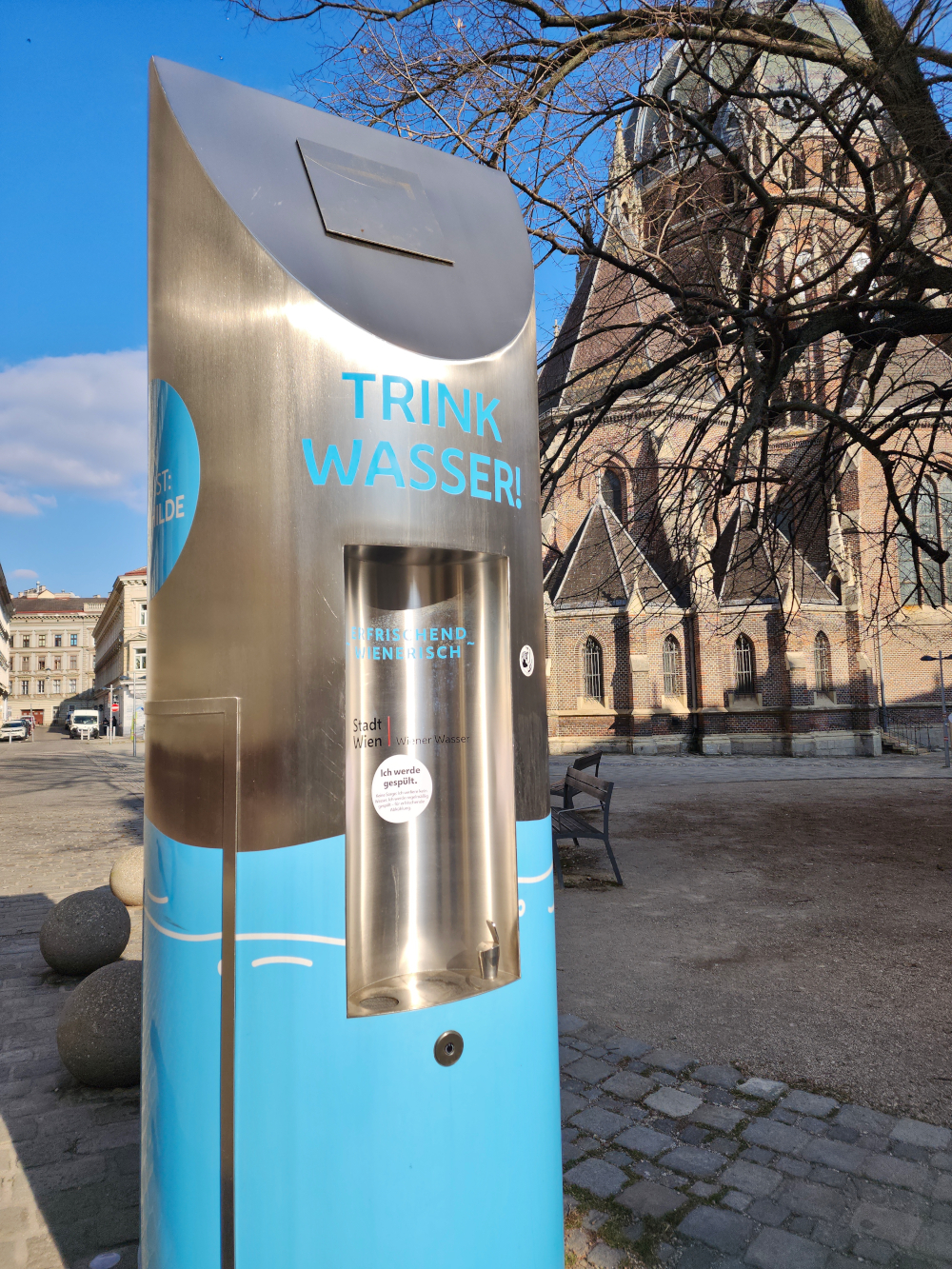
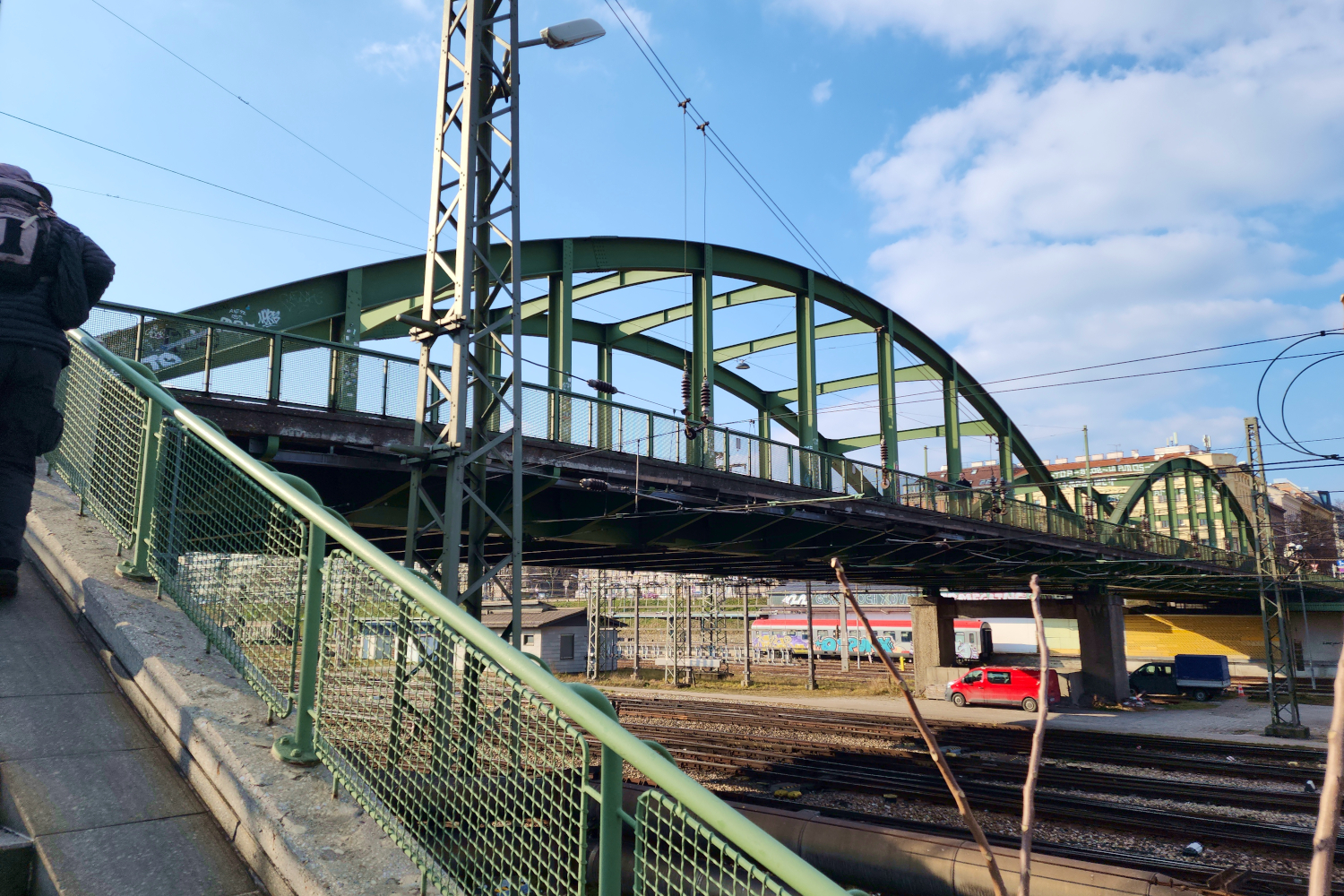
This visit has turned out to be less about ticking off tourist boxes and more about letting the city unfold around us—one cobblestone, cathedral, and curious relic at a time. We have found, as we do in so many places, that the real magic lies not in the destination itself, but in the detours and the playful spirit of wandering. Vienna, it seems, rewards those who are willing to look up, look around, and occasionally look silly while doing so. And hey, that’s certainly us.
Events occurred: 2/17-18/2025

 world travel with a theatrical flair
Leave a comment