

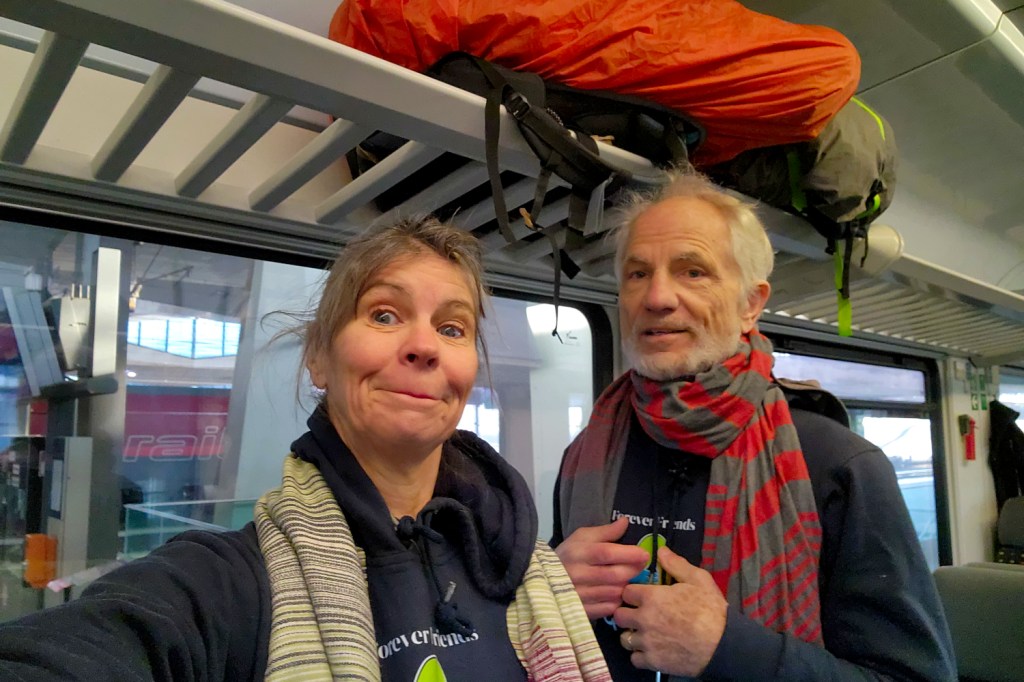
Trains have always been our favorite way to travel. And that’s true in pretty much any country we happen to be in — though we do have some reservations about the railway system in India, where reservations don’t necessarily mean anything. We especially have fond memories of our extensive train excursions on Eurail when we first invaded Europe in 2016. Of all the cities we visited then, we agreed that our favorite was Krakow, Poland. So it was with lip-smacking anticipation that the day came for our return to Krakow — by train, no less. And traveling there from Vienna was… well, not a bad route to take at all.
We’re up at 5:00 to finish packing and be off by 6:00. For once, the Metro is not crowded, and we have plenty of room in the seats for our bodies as well as our bags. When we arrive at the Wien Hauptbanhof (Vienna central train station), we are uncertain where to go, as we’re quite early and no info has been posted yet. So we pop into a ticket office and ask a fellow there what platform the train to Krakow departs from. He replies that it’s usually 9, but we should check the monitor 20 minutes ahead of time.
So in the lengthy meanwhile, we make our way to a waiting area (of which there are many) that is close to Platform 9. Most of the seats are full, and two of them are occupied by a pair of fellows drinking beer and having a raucous good time. Also nearby, a bag lady is muttering to herself (or someone she can’t see) and changing bandages on her leg sores.
Soon a couple of security guards happen along, and we expect that they will evict the three of them. Instead, they just reprimand a couple of guys sleeping. And don’t say a word either to the damsel of the parcels or the robust revelers.
So we opt for a change of neighborhood, moving to another waiting area that is also rather crowded, but at least does not appear to be a hangout. Sitting down in adjoining seats, we place one of our small backpacks on a little table next to us that is designed for people to use to put food on. And that’s what we do, at first, but then the bag is just sitting there. So along comes another fellow, who sits down in the seat next to us, and asks us (in German, but Dennis understands) to move the bag so he can use the little table to eat. We do, and he pulls out his victuals. Among them is a bottle of wine, from which he takes a healthy swig. Maybe it’s an Austrian thing.
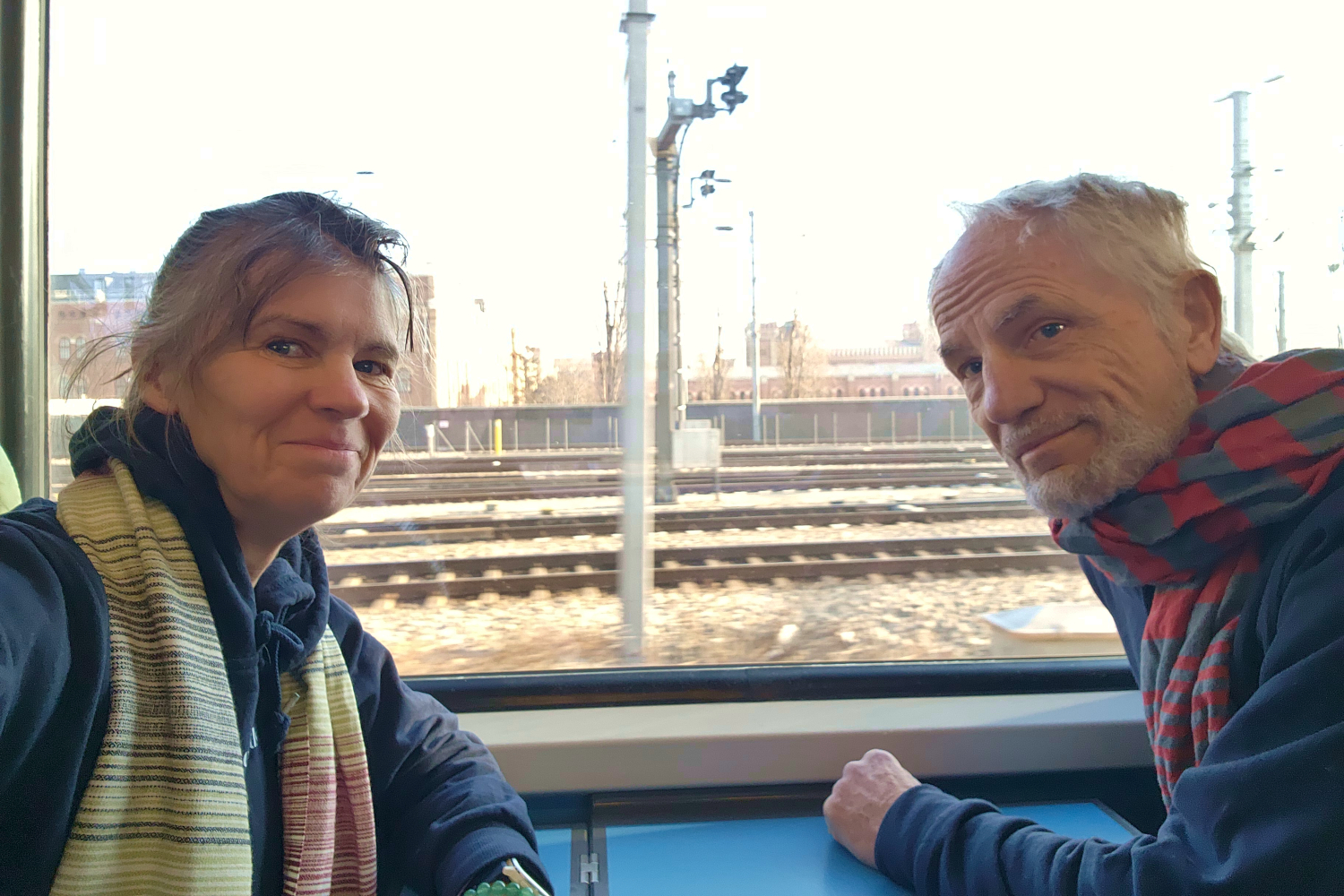

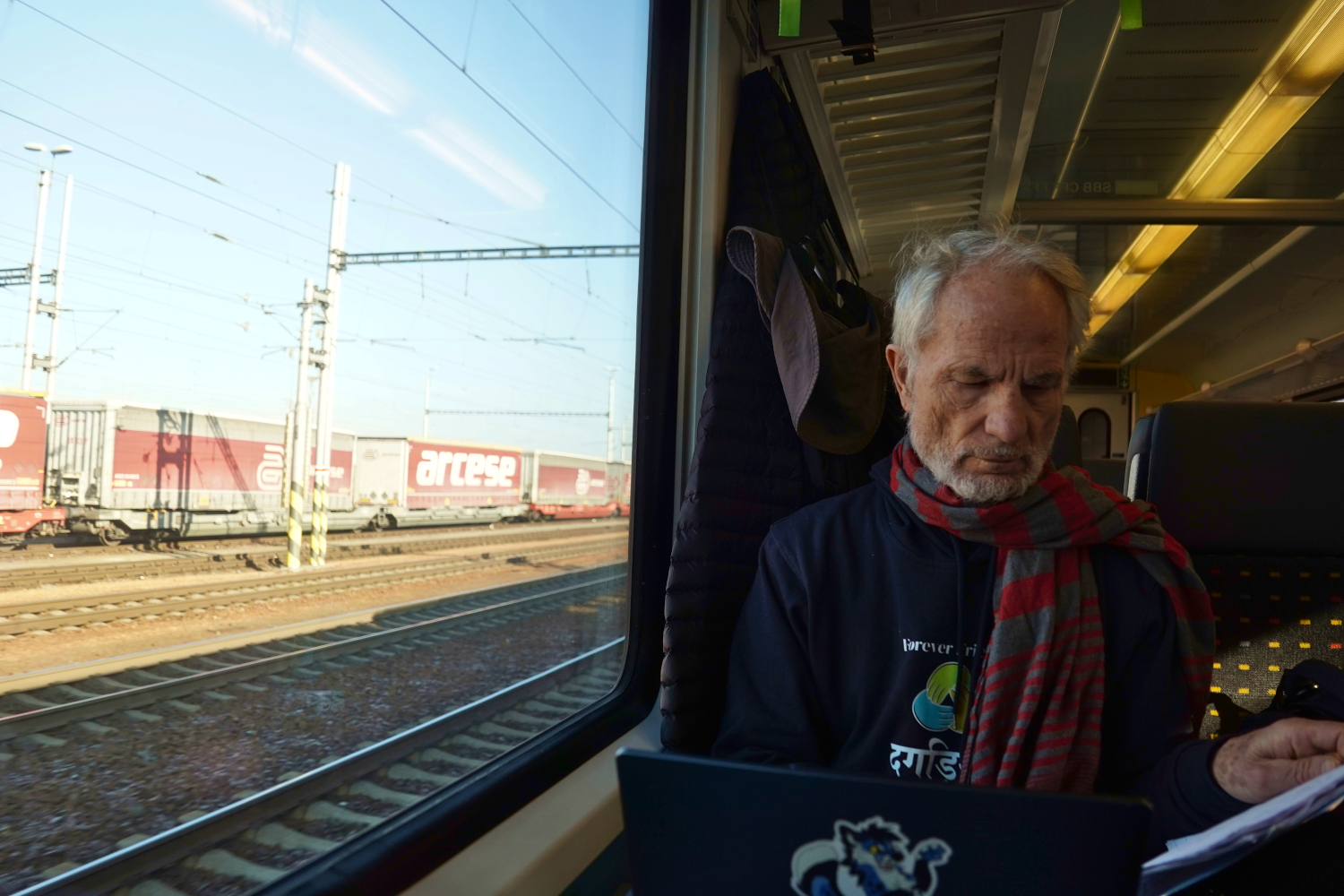
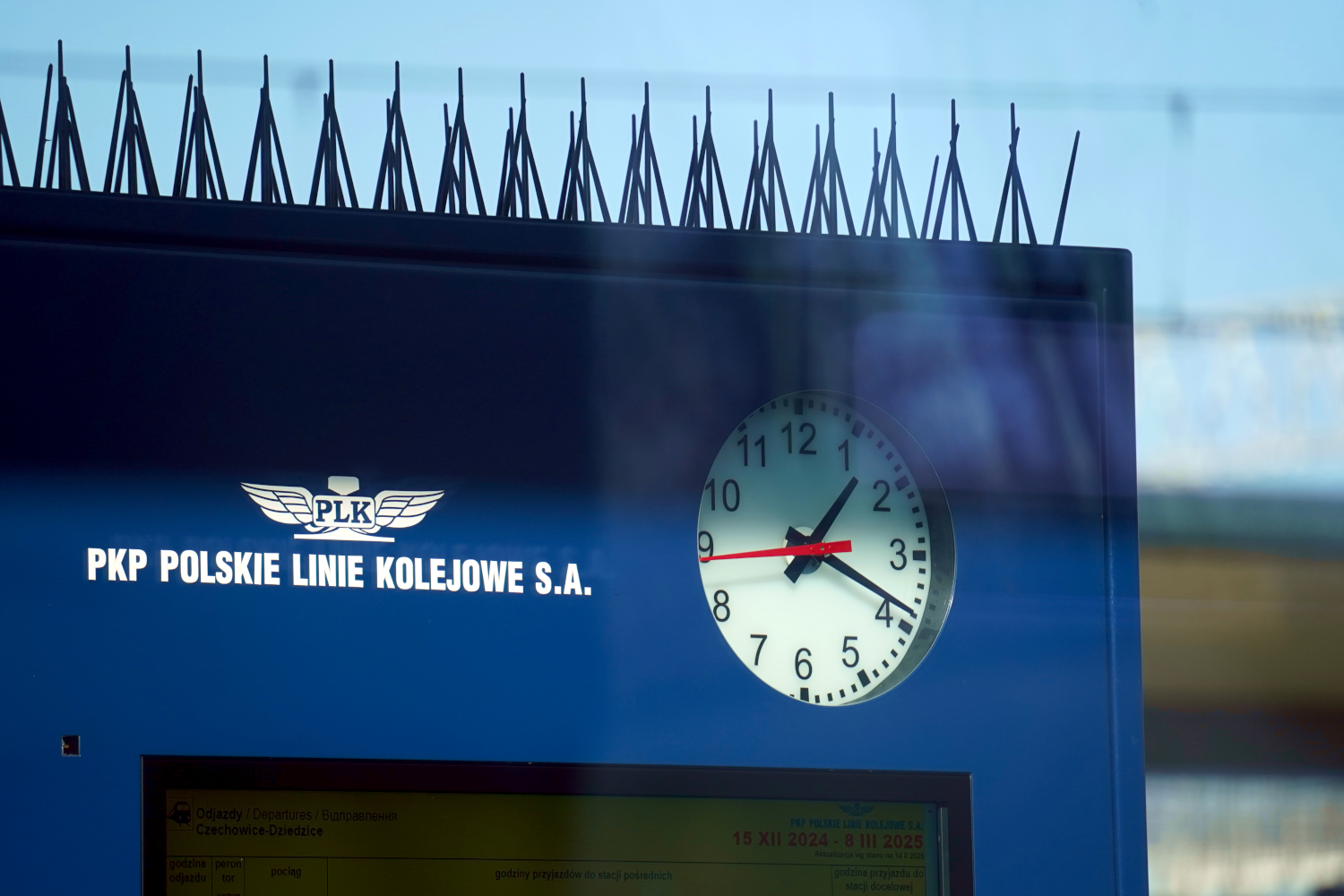
The train is 15 minutes late, which ain’t too bad, and our car is comfortable and almost empty. The conductor comes around for our tickets, which we have printed out as the website stipulates we are required to do. But it turns out she would have been able to read the QR code on our devices as well.


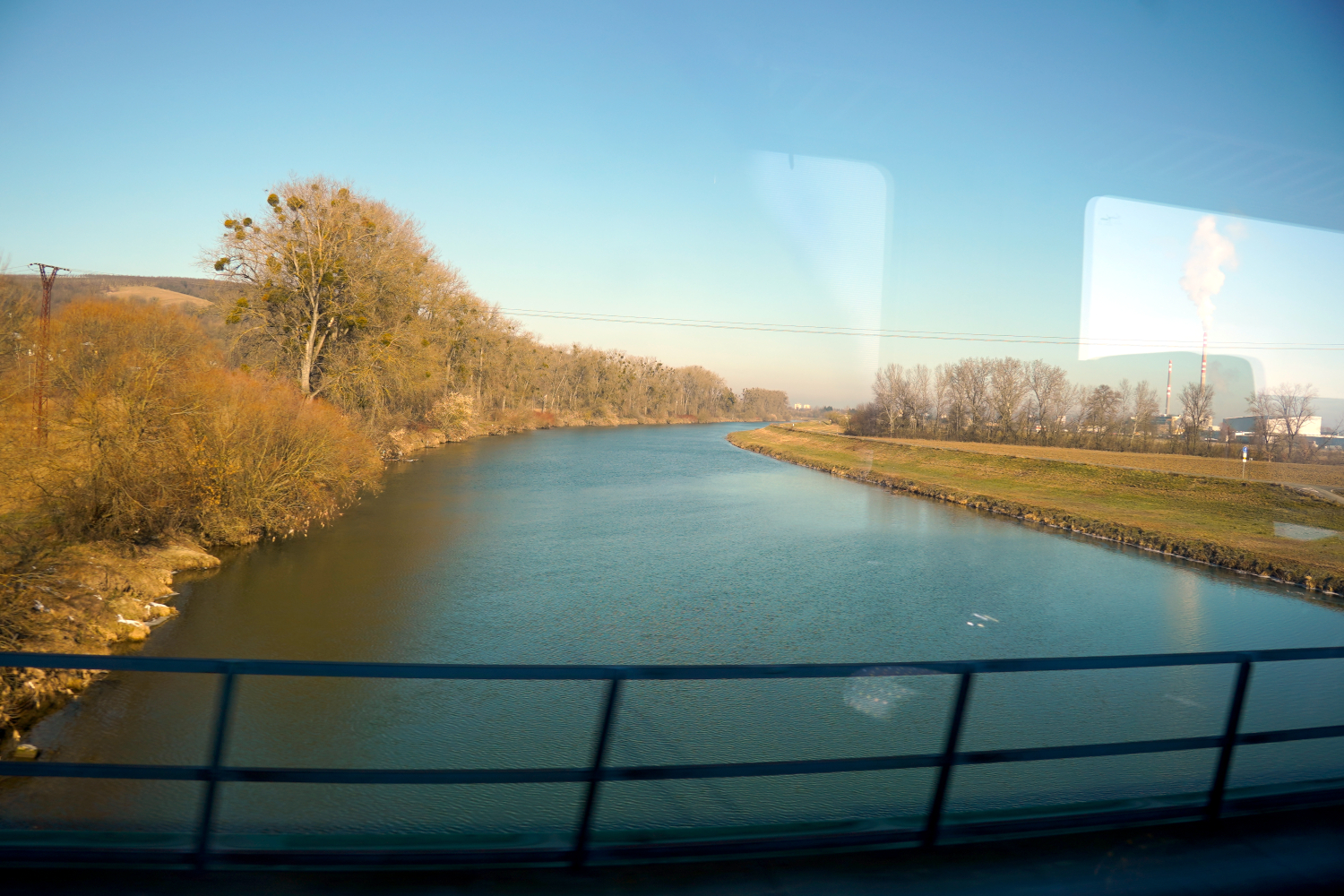
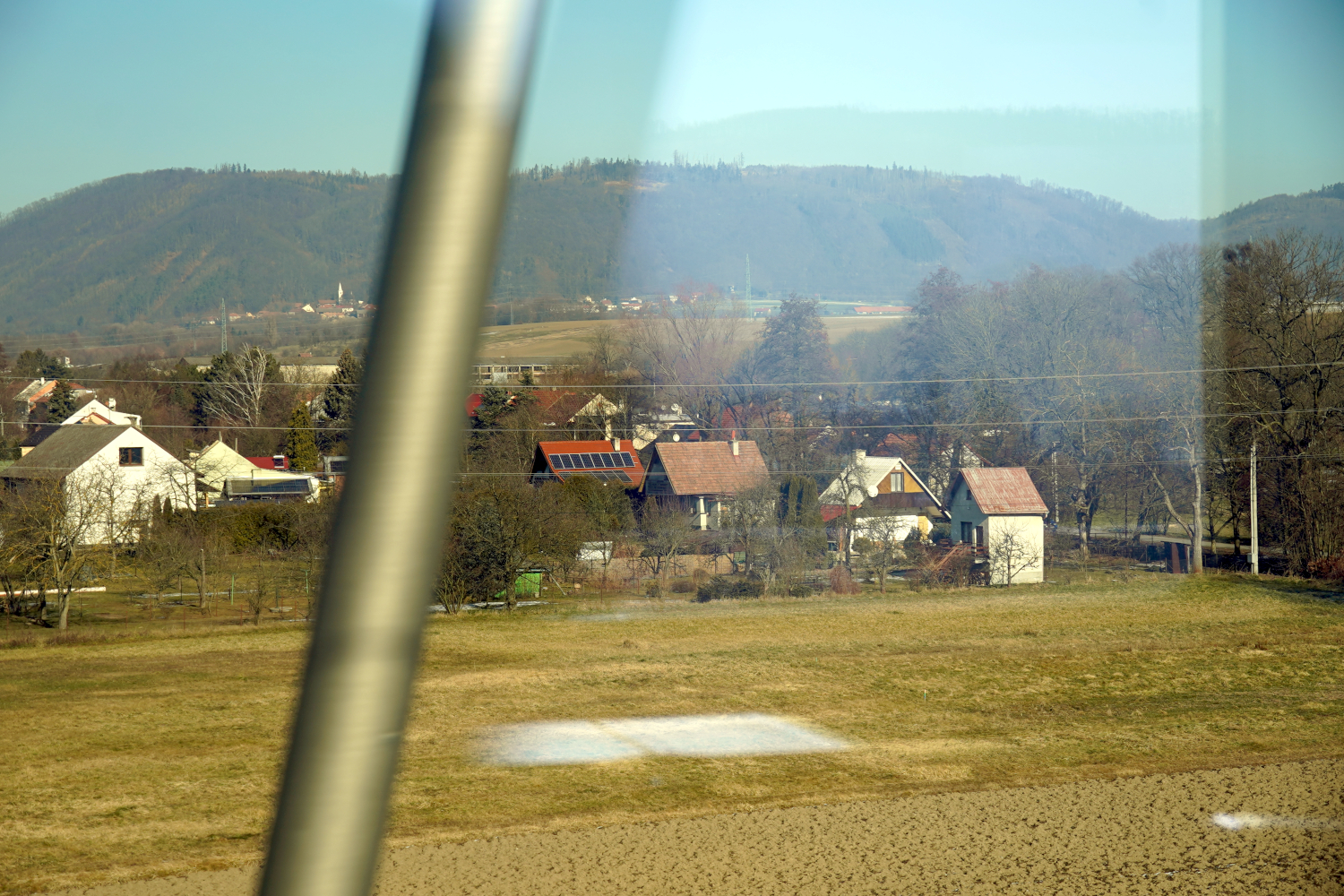
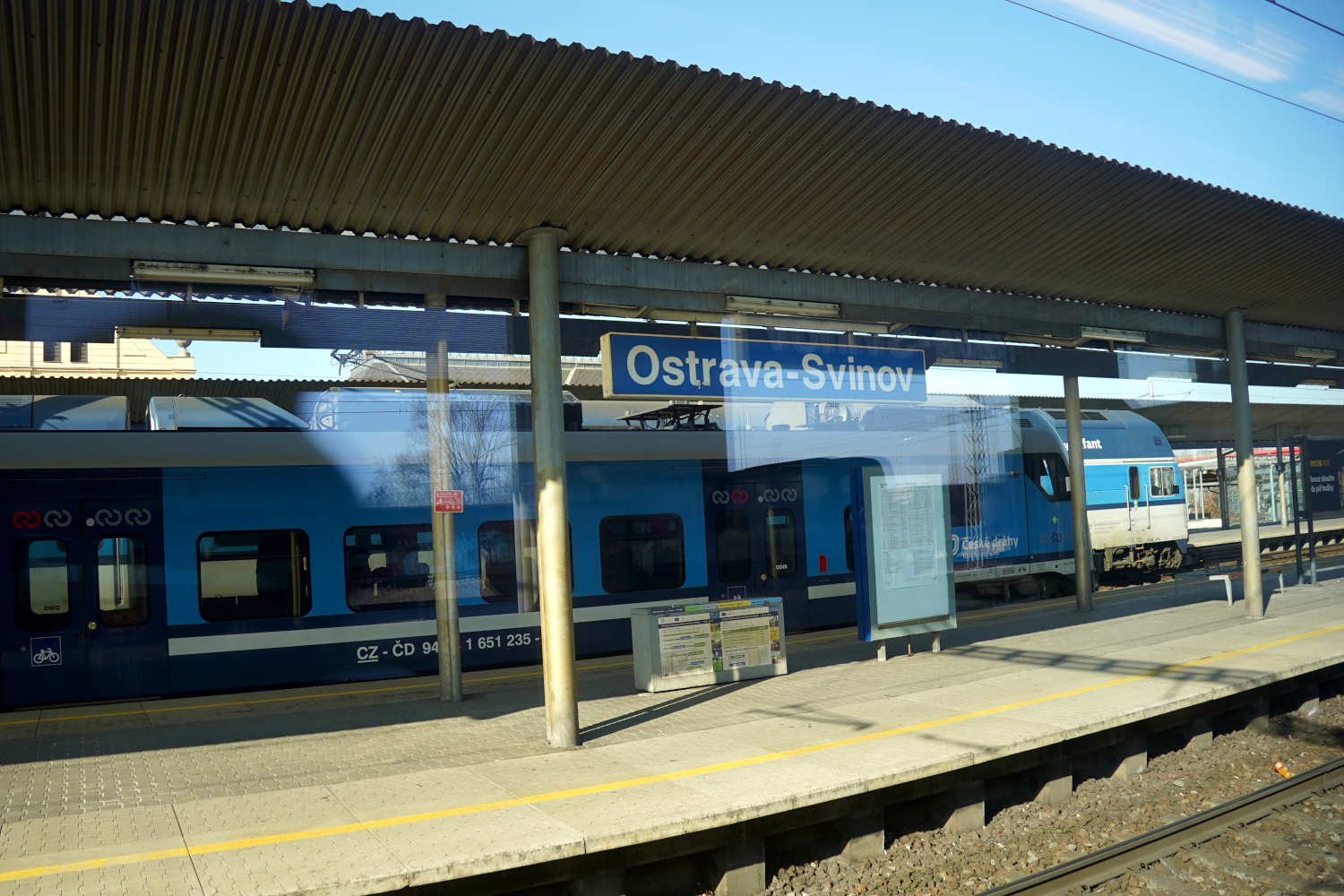
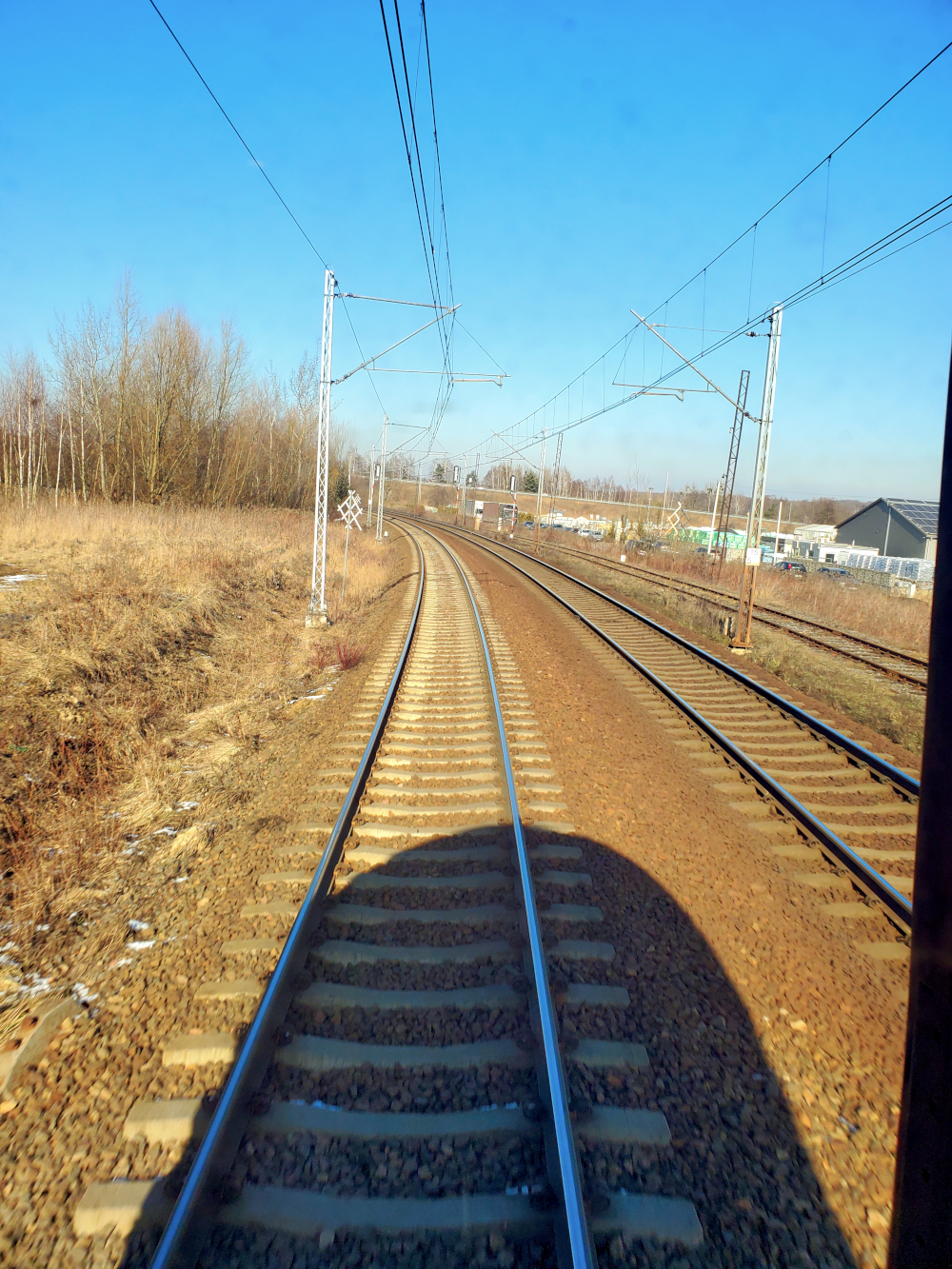
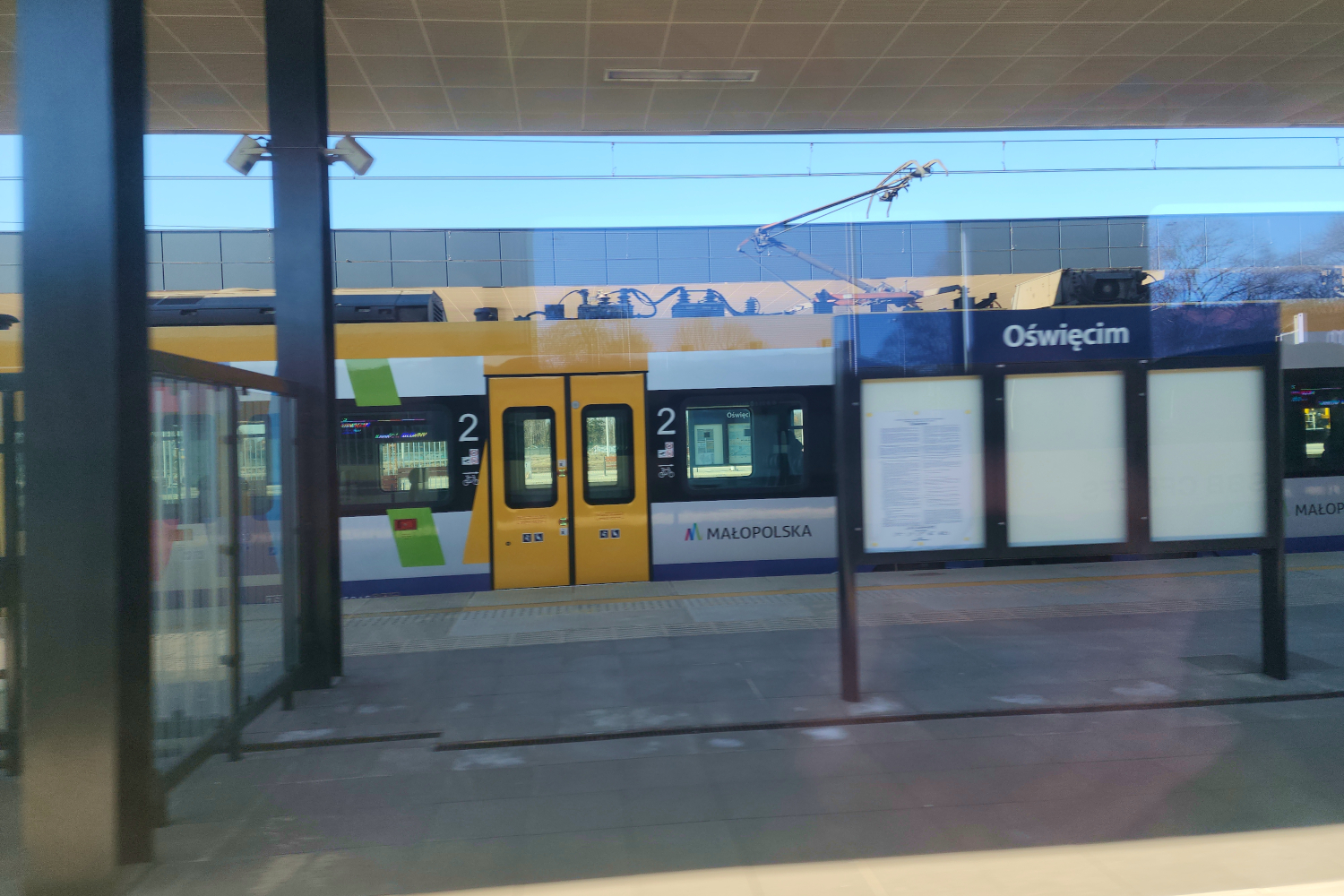
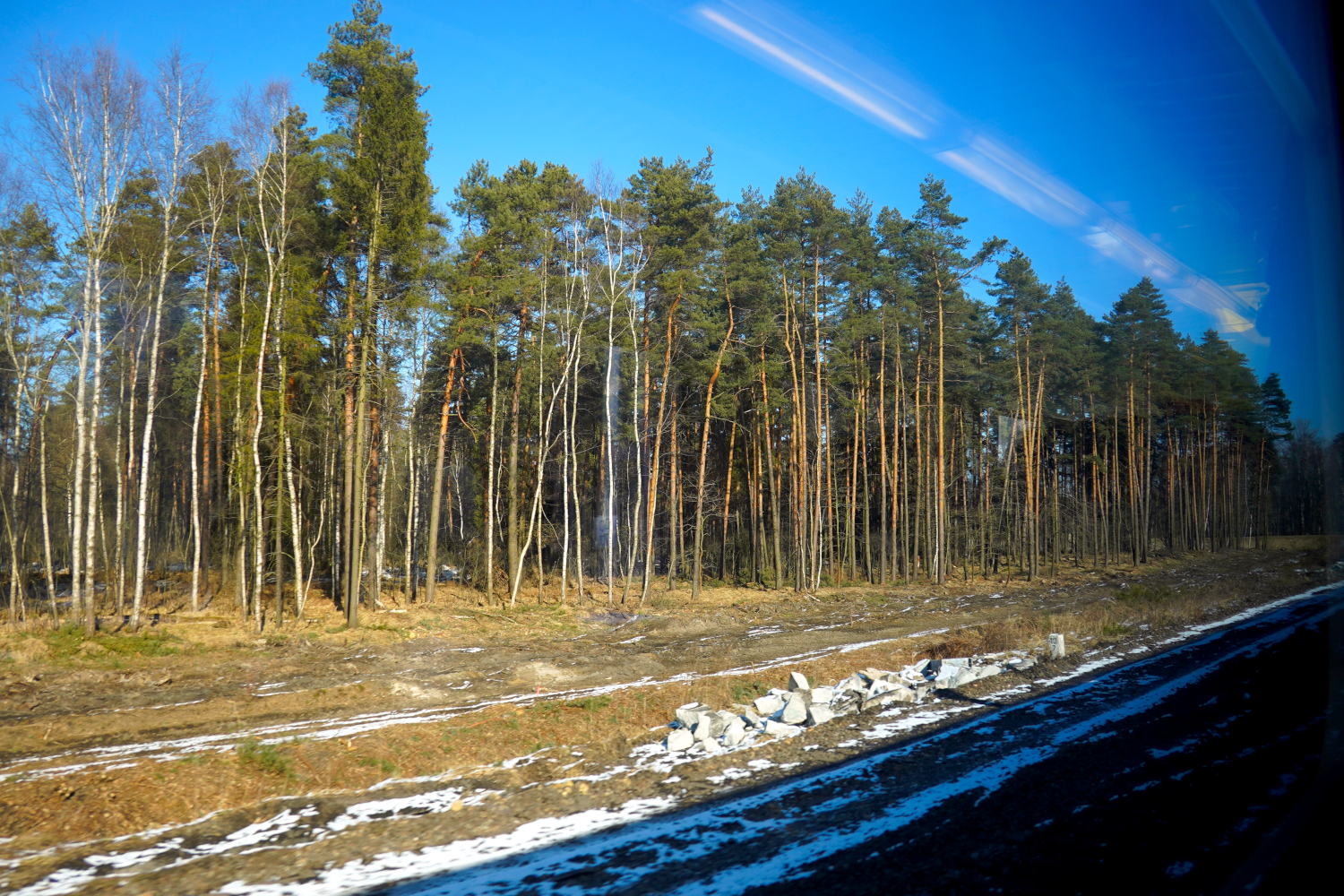
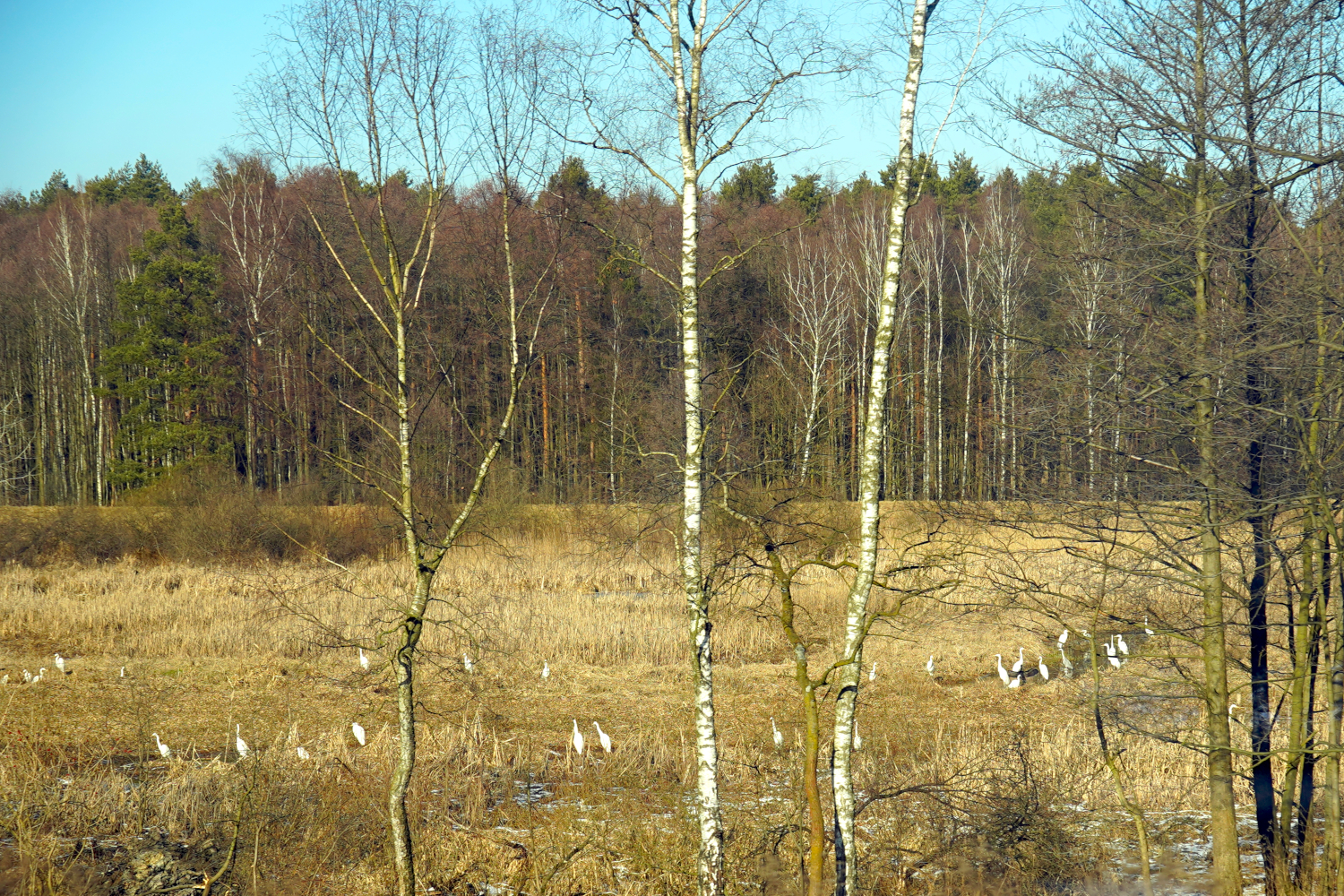
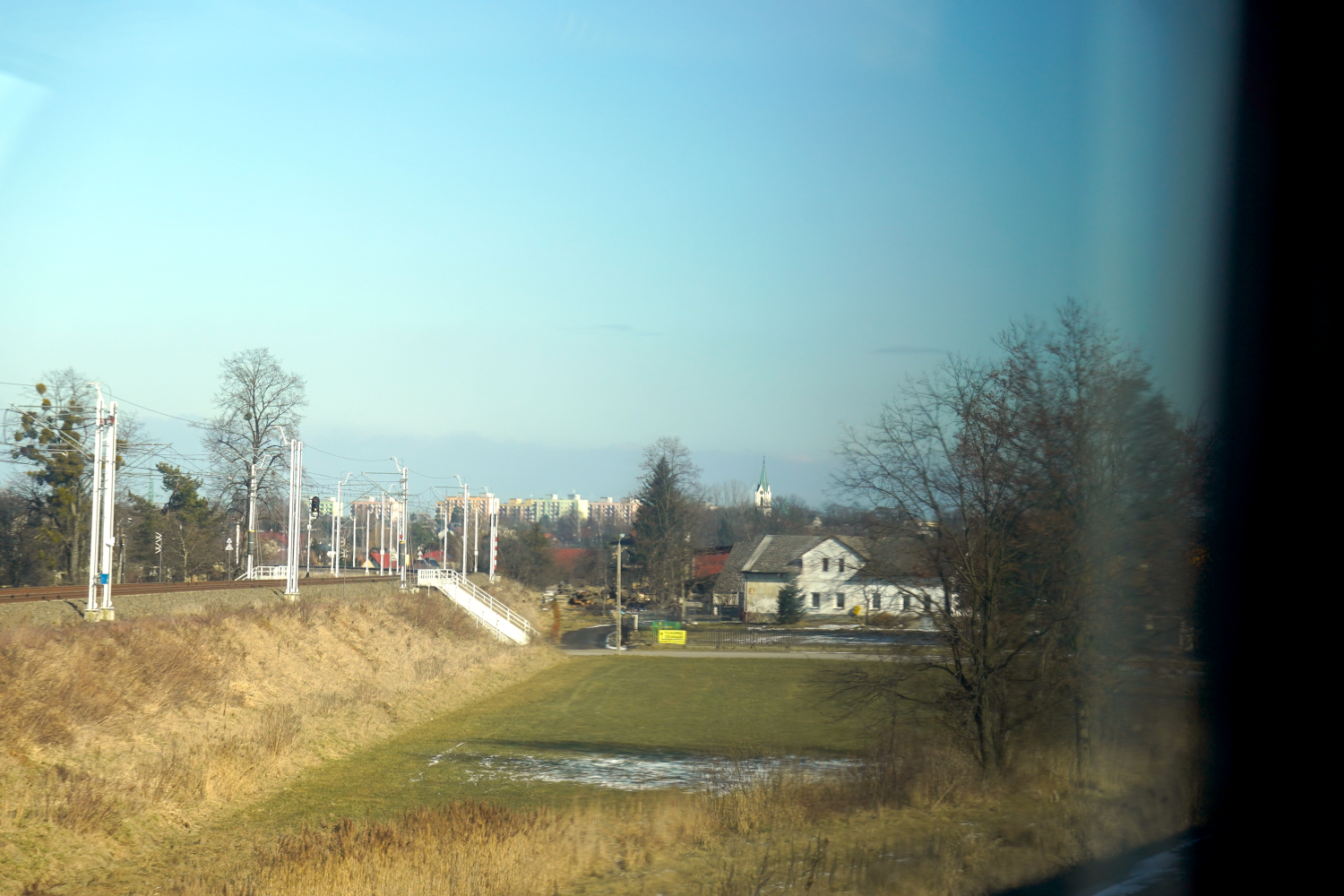
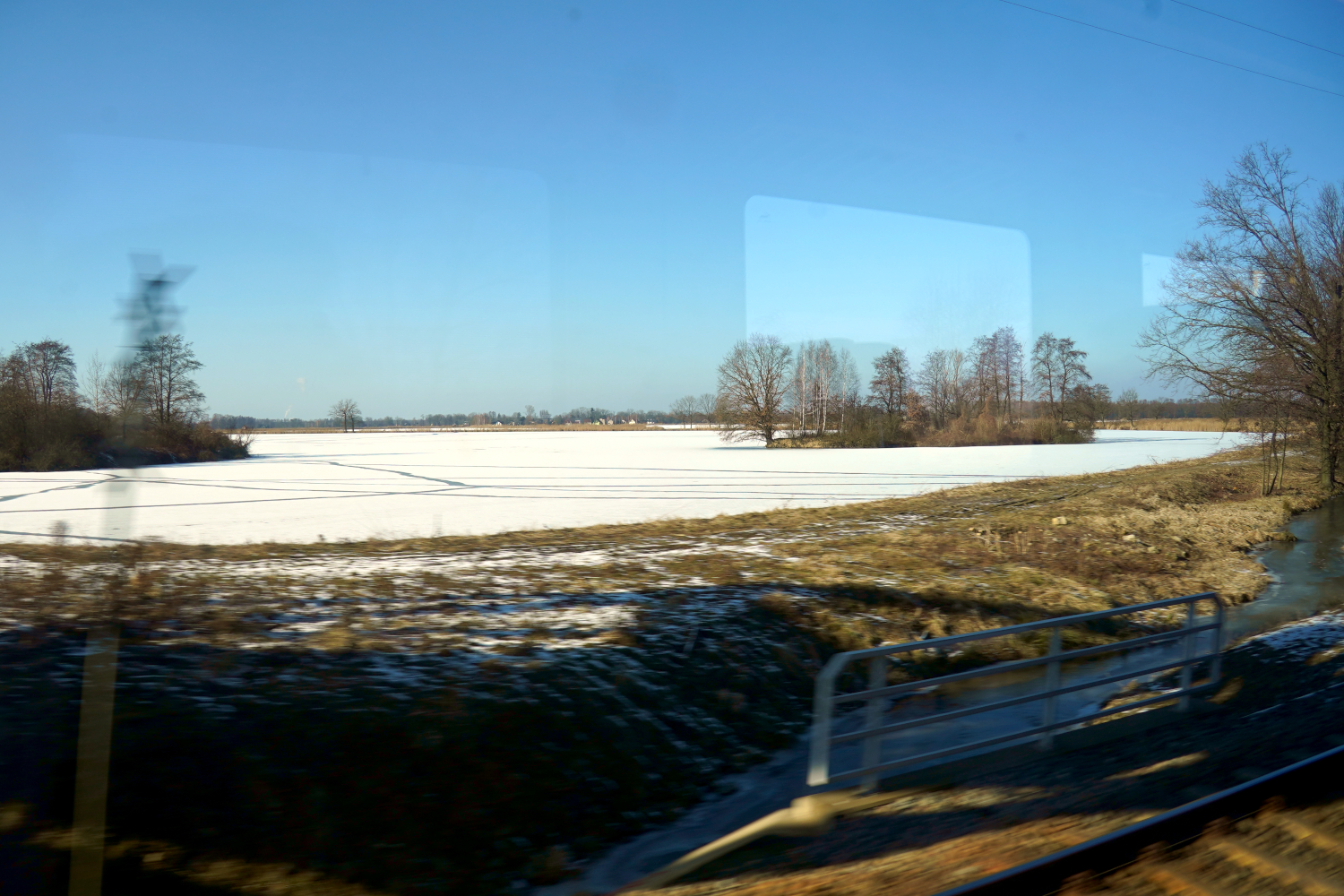
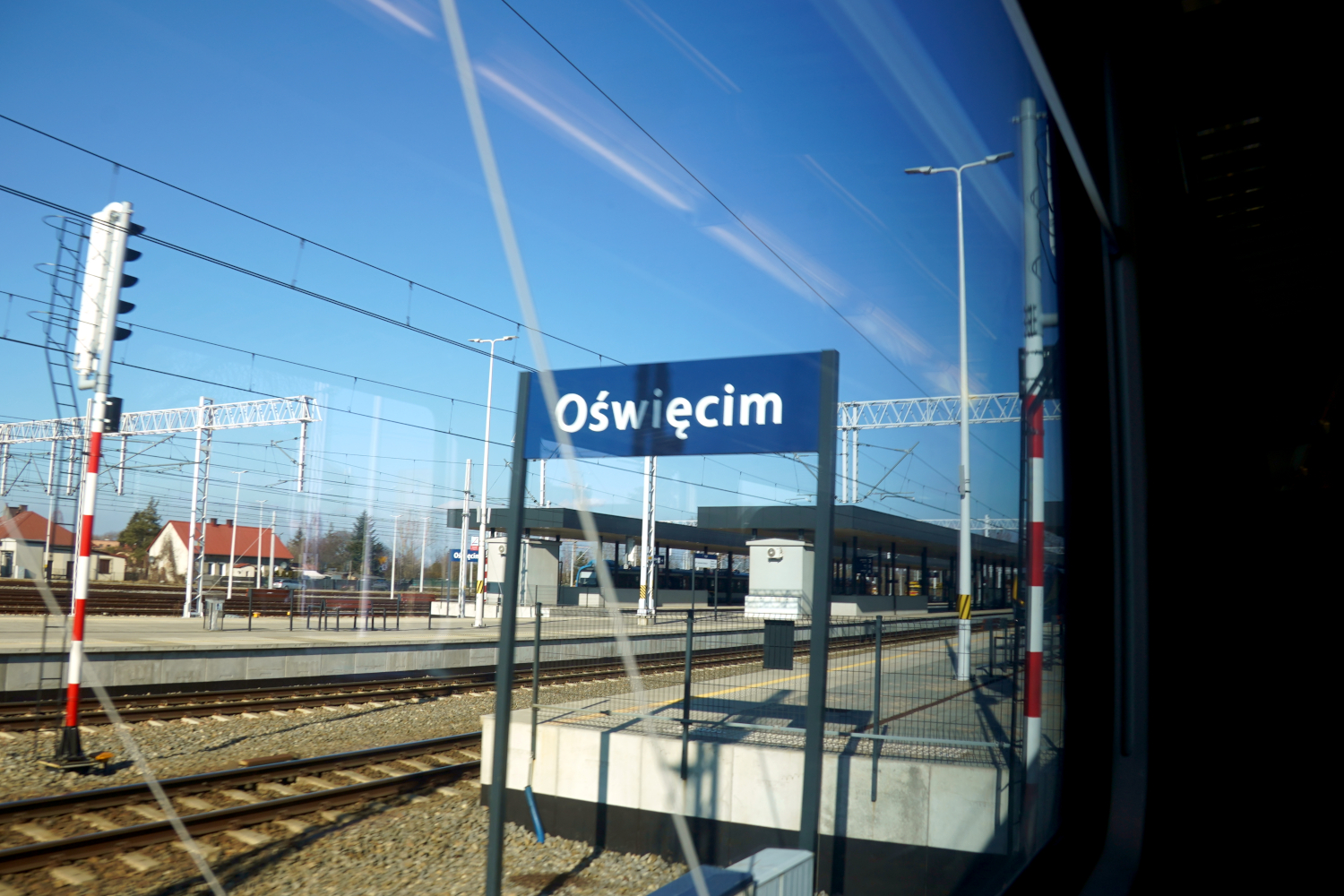
And then it’s a very pleasant ride of a few hours through the countryside of Austria, Czechia and Poland, past fields, streams, forests, villages and farmhouses. It’s easy to tell when we’re in Czechia (Czech Republic) because of the colorful little rustic cottages with colored roofs that look like summer homes for the seven dwarfs. One of the towns we pass through in Poland is Oświęcim, better known by its Germanized name Auschwitz, the site of the infamous concentration camps — one of which we visited on our previous trip to Poland.
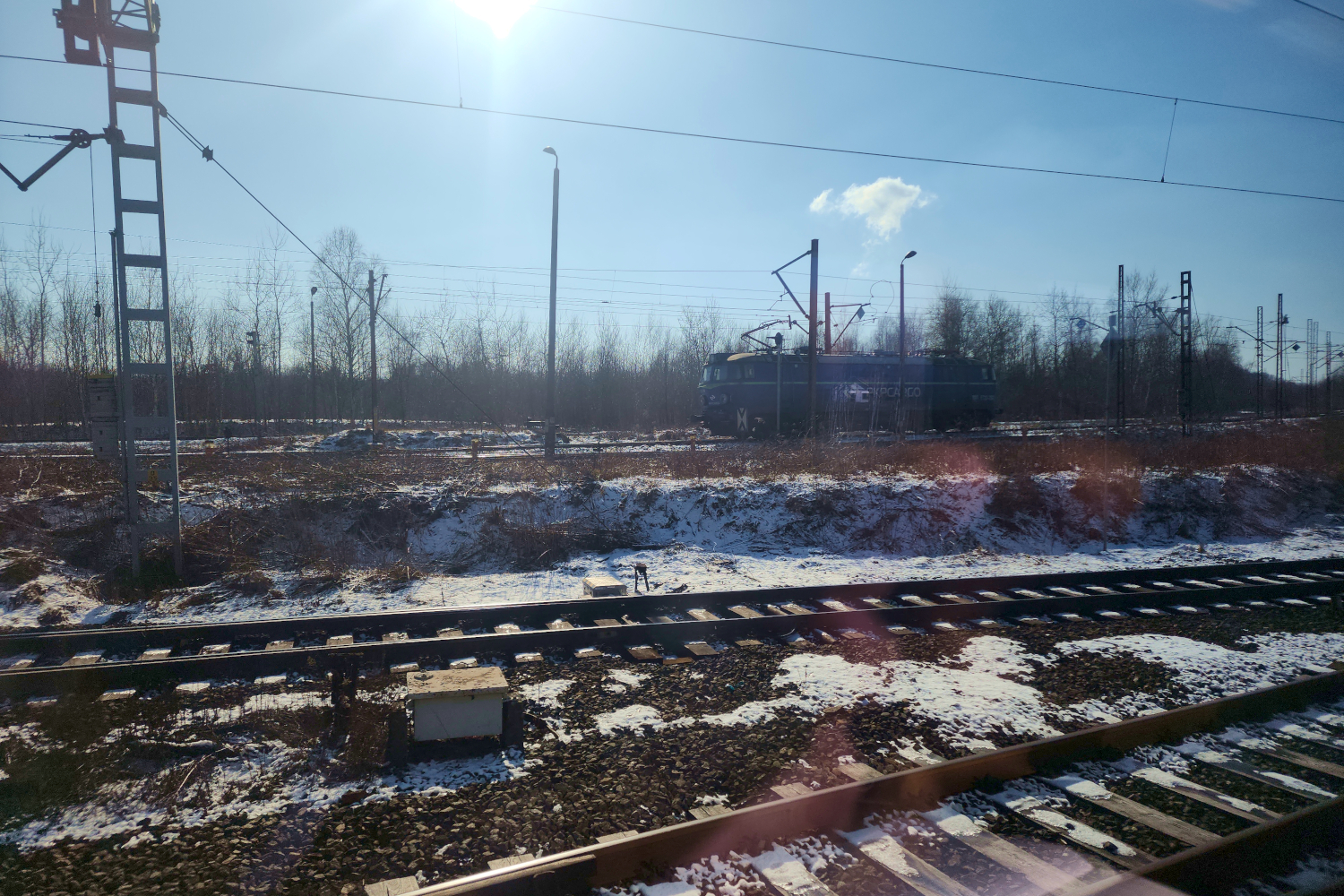

It’s mid-afternoon when we arrive at the main station in Krakow, and we have only a short distance to tote our bags to our Airbnb. It’s in an ideal location, not only close to the station, but right next to Stare Miesto (Old Town), the enchanting medieval heart of the city.

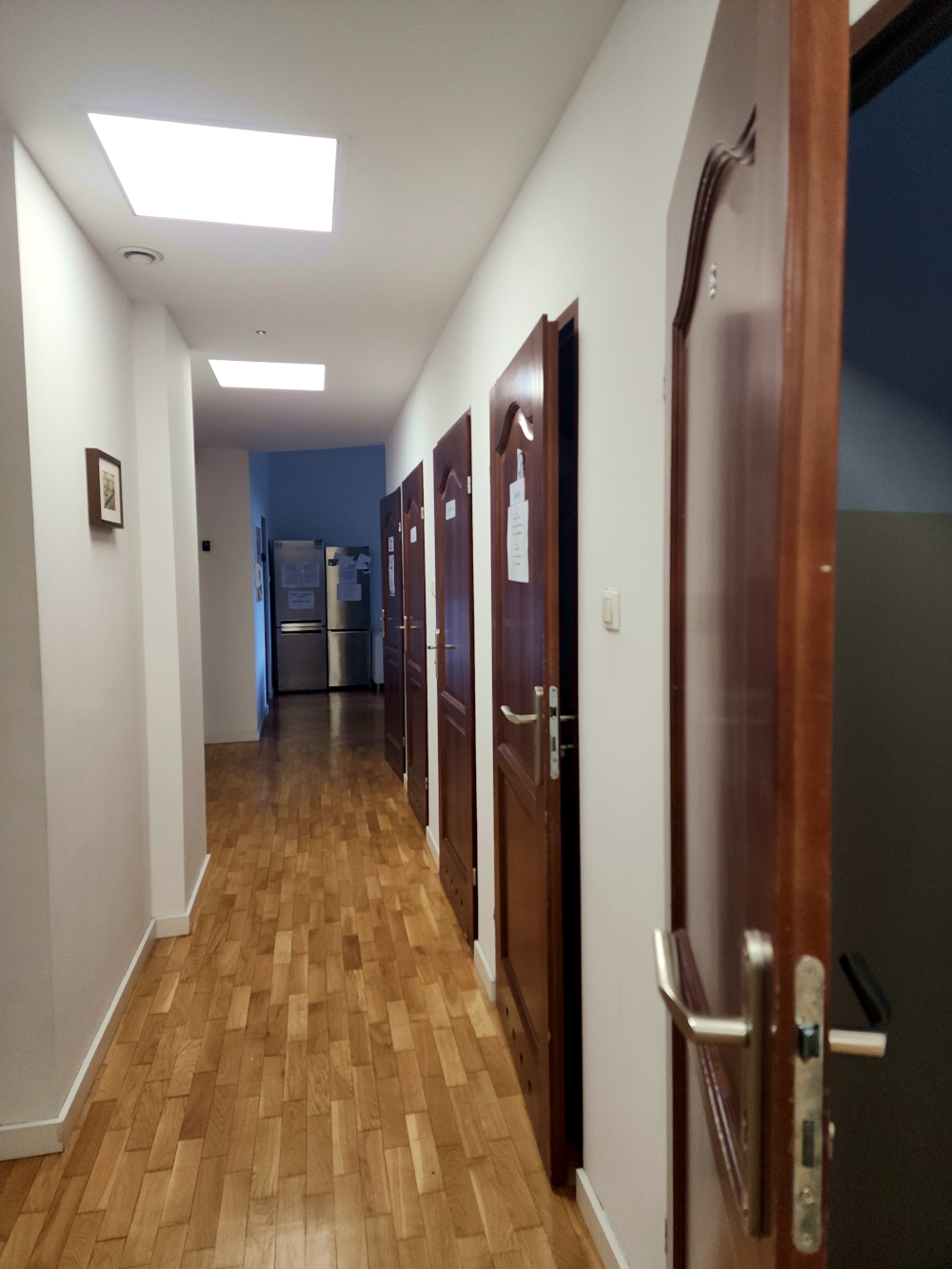
Going up to the third floor on the elevator, we enter the code and and then enter our new digs, a charming flat with 6 guest rooms, several bathrooms and showers, a washing machine and a shared, fully equipped kitchen. The perfect place to spend a few days. It’s quiet (at the moment at least, as only a couple of other guests are around), and warm — entirely too warm when we arrive, so we have to turn down the thermostat in our room.
It’s only about a block away to Stary Kleparz, which is the oldest continuously operating marketplace in the city and one of the oldest in Europe, dating back to the 12th Century. An excellent, economical, convenient place to shop for produce; for other grocery items, there’s a huge supermarket in the mall at the train station. But before we can patronize these places, we have to acquire currency from an ATM, since Poland is one of a handful of European Union nations that do not use the euro. [As it happens, this will include 3 of the 5 countries in Europe in which we will have spent some time on this trip: Poland, Czech Republic and Denmark.] The Polish monetary unit is the złoty, which is equal to about 24 U.S. cents.


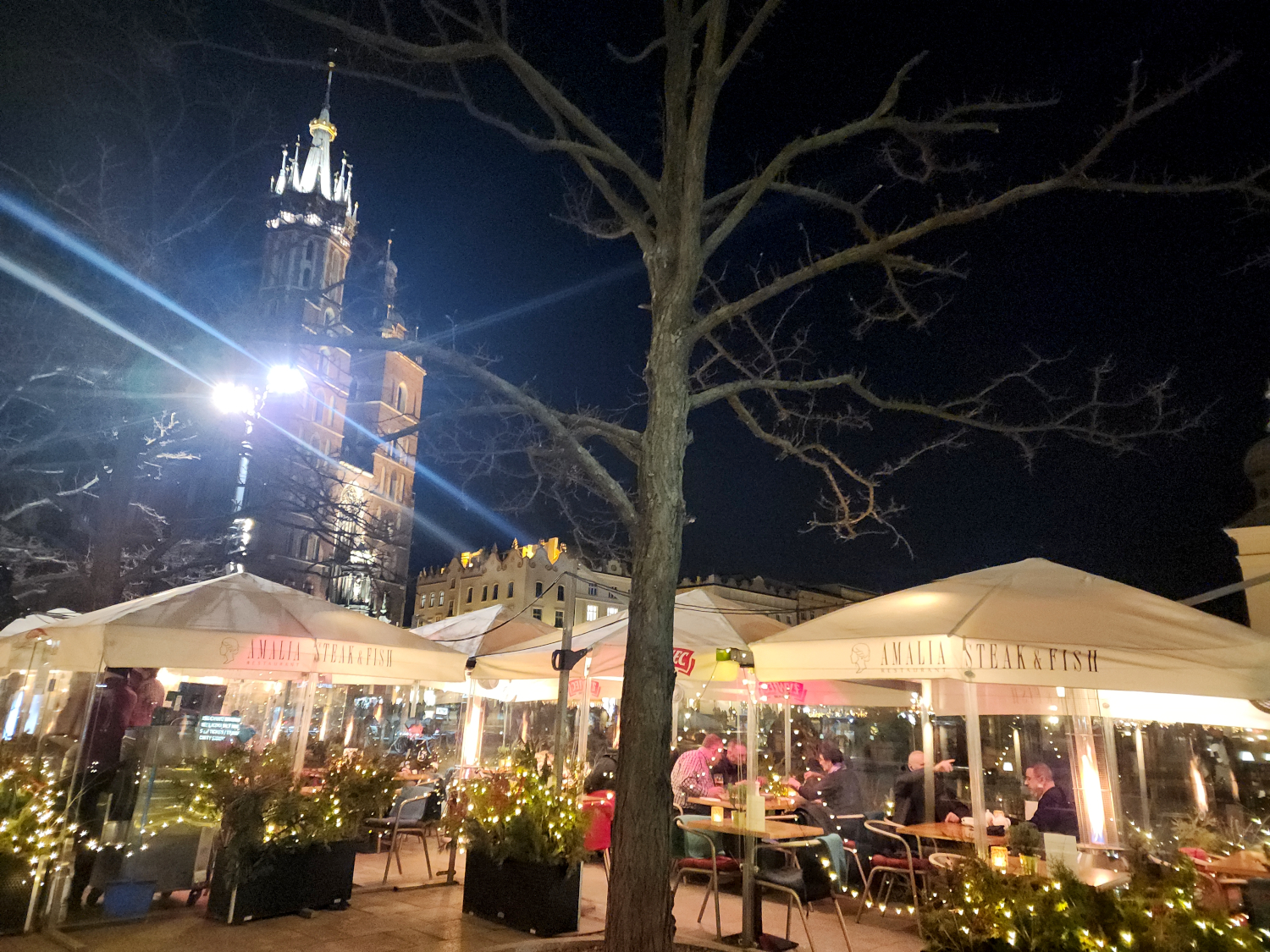
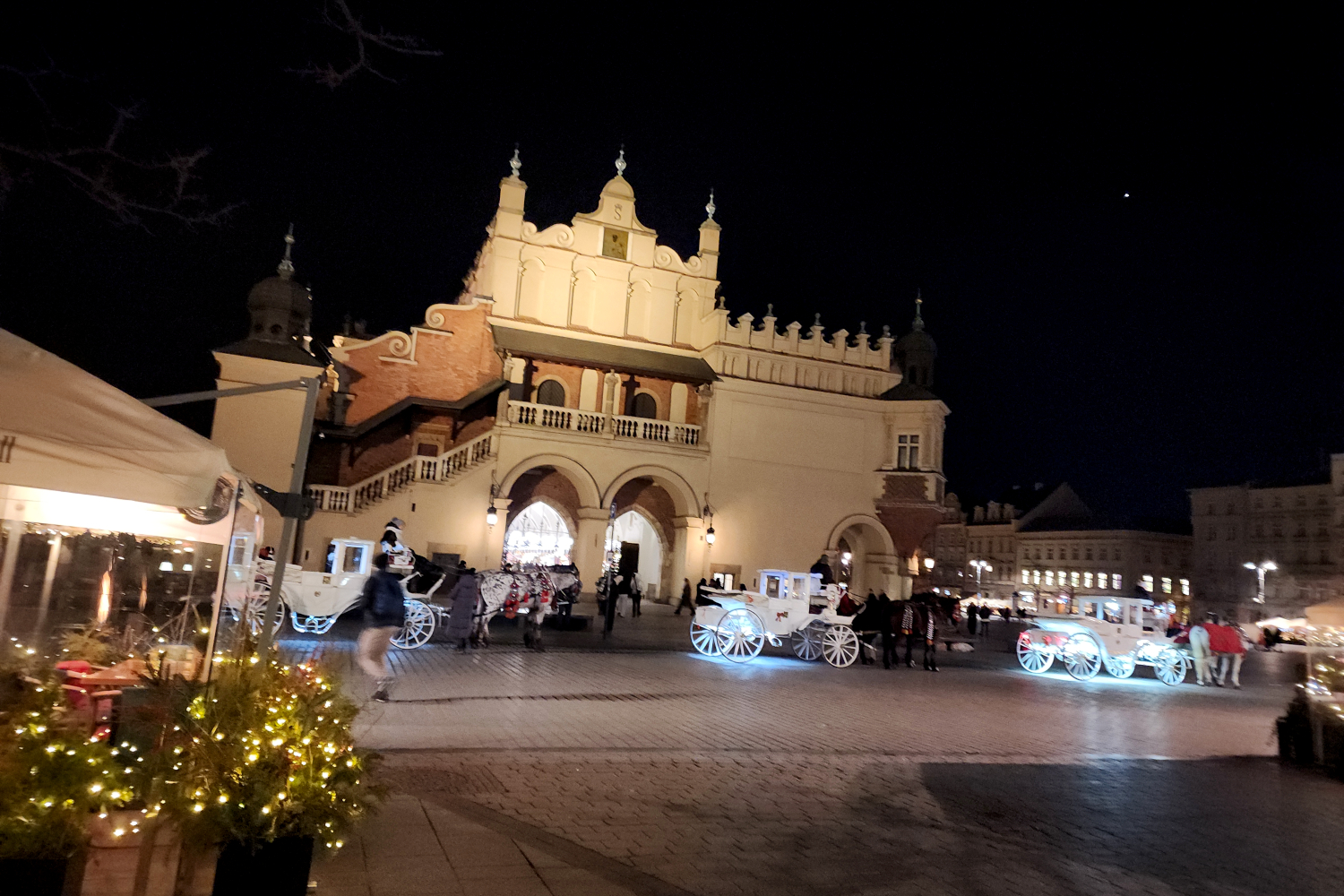
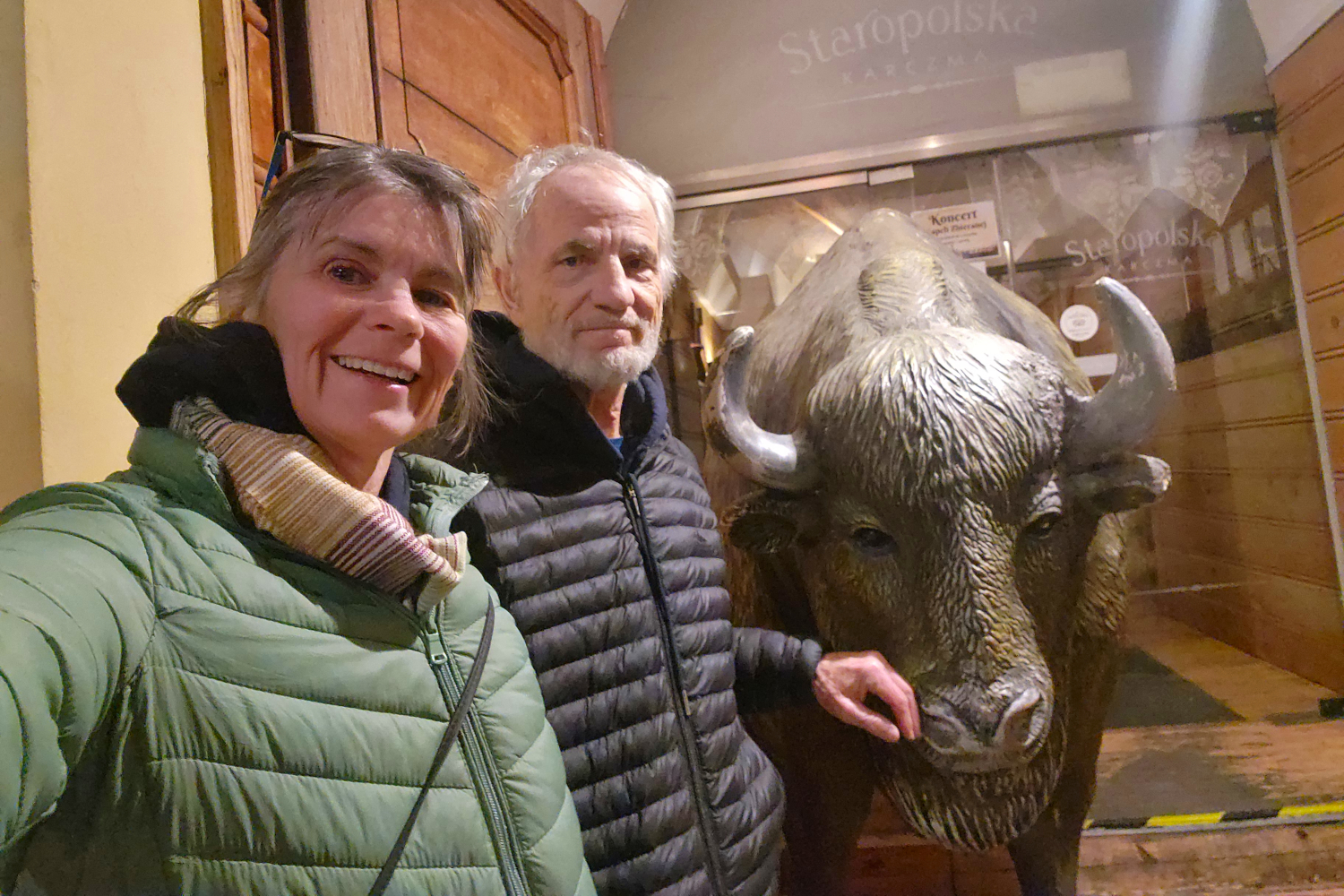
Even after we have the cash in hand, and the groceries in our larder, we decide that we want to have dinner out. Because we’ve been itching to return to a serendipitous dining discovery we made on our first visit here, a little restaurant called Staropolska (“Old Poland”). At first sight we’d been skeptical because it has a statue of a bull outside, and if that was a portent of what was served inside, it didn’t bode well for us non-bovine consumers. But we gave it a shot anyway, and were delighted with the outcome: the best potato pierogi (covered with caramelized onions) and latkes (crisp and smothered in a scrumptious portabella gravy) we’d ever salivated over, at an extremely reasonable price.
So we hoof it back to the restaurant, which is only a few blocks away. It’s in the central square of Old Town, which is still festively festooned for the holiday season.
We order the same entrees again, and — as is often the case with efforts to replay a first-time experience — it’s a bit of a letdown. The dishes are not prepared quite the same way, and the portions are smaller. Furthermore, the price is about twice as high. (Previously, however, we ate during lunchtime.) And when we ask the waitress, who speaks excellent English, for a glass of water, she brings us two glasses and water in a refilled stopper-bottle. When we get the check, we discover that almost 4 dollars has been added for the privilege of wetting our whistle.
The waitress informs us that the bill has a tip added to it automatically, which we can remove it if we want to. But we leave it intact, because her service has been fine, and she can’t help it if the dinner didn’t measure up to our (perhaps not entirely reasonable) expectations. And we hasten to add that even though we don’t think the meal was on a par with the standard set 9 years ago, it was still pretty dang good.
So we’re actually pretty satisfied, all in all, as we stroll back through Old Town to our warm room, where we’ll clock in a good night’s slumber and be bright-eyed and bushy-tailed to get out the next morning and rediscover this amazing city.
Events occurred: 2/19/2025

 world travel with a theatrical flair
Leave a comment