

In Krakow, as elsewhere in Europe, and indeed worldwide, you can learn a great deal about history by visiting the churches or other houses of worship. They have always tended to be repositories of the most inventive and lavish art and architecture; and since they are generally spared, at least mostly, when invaders invade, despoilers despoil, and devastators devastate, they tend to be the most enduring of structures. So naturally we work in a day, during our week in Krakow between volunteer gigs, to tour some of the churches in this antique city.
Actually, that didn’t start out as our grand vision for the events of the day. Originally, we’d planned to take in the Rynek Underground. Tuesday is its free day — we’ve mentioned before that many major Krakow attractions offer free admission on different days of the week. So we make our way to the entrance, at the medieval plaza, which is bustling with modern life. But when we arrive at the entrance in Cloth Hall, we discover that we’re already too late for today’s complimentary ticket for the underground. Lesson learned, and we’ll return another day.
So at this point we decide to pivot on a dime (or rather a groszy), change horses in mid-Vistula, and go on a walking tour instead. As it happens, we already have several walks already mapped out for us. Somebody left behind a tourist map at the hostel/ apartment where we’re staying — yes, an honest to goodness paper map, in this age of the map app. So we choose to follow the one that will lead us along a path of the city’s citadels of Christendom.
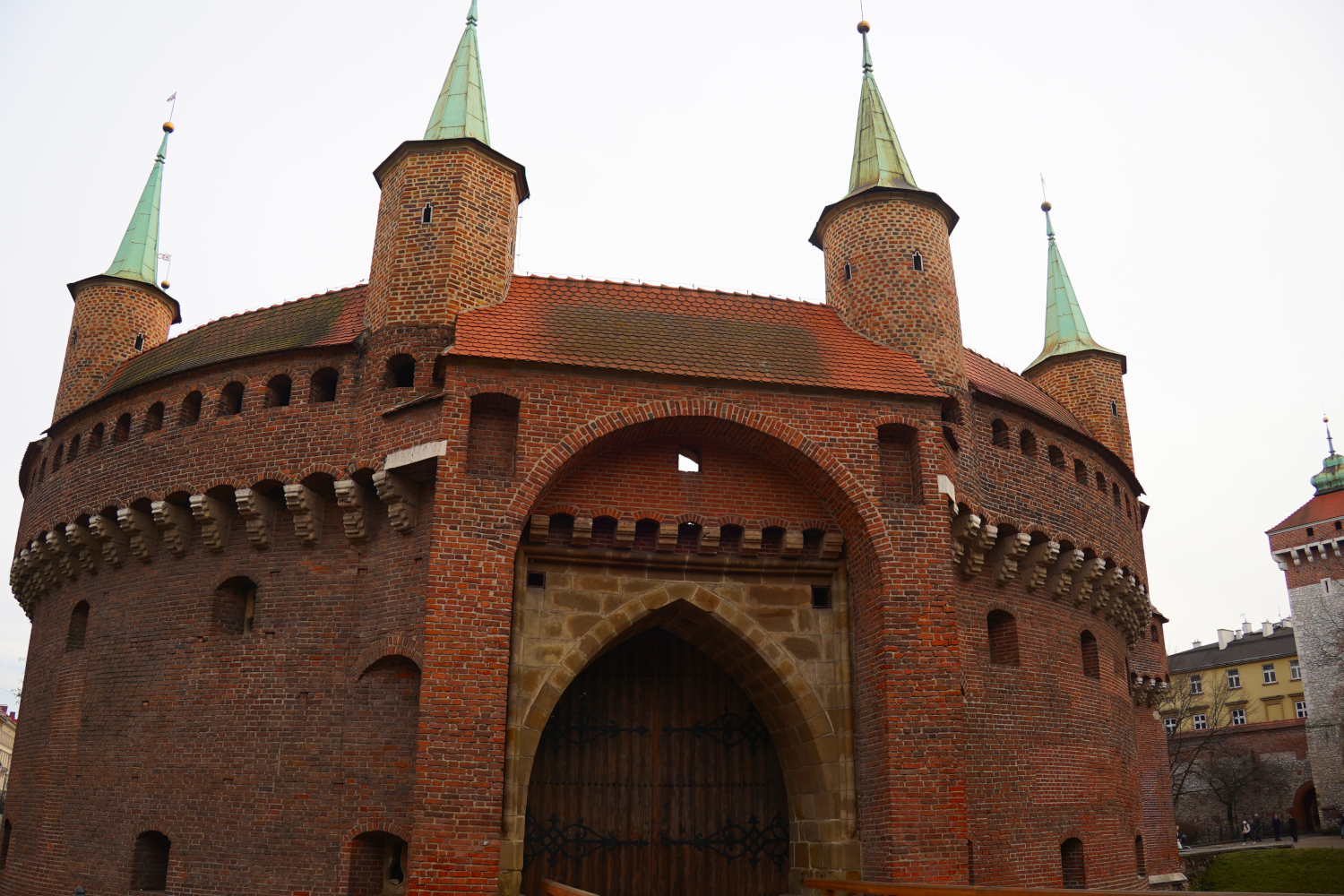


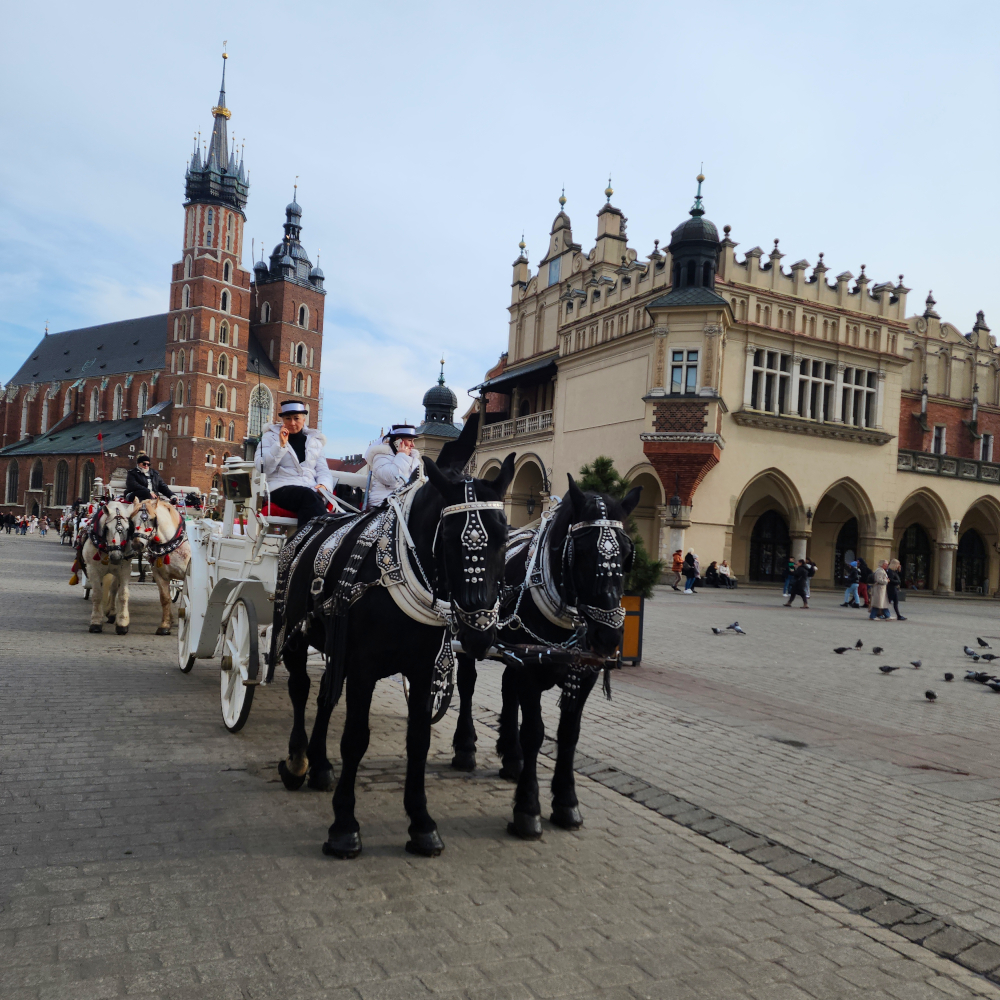
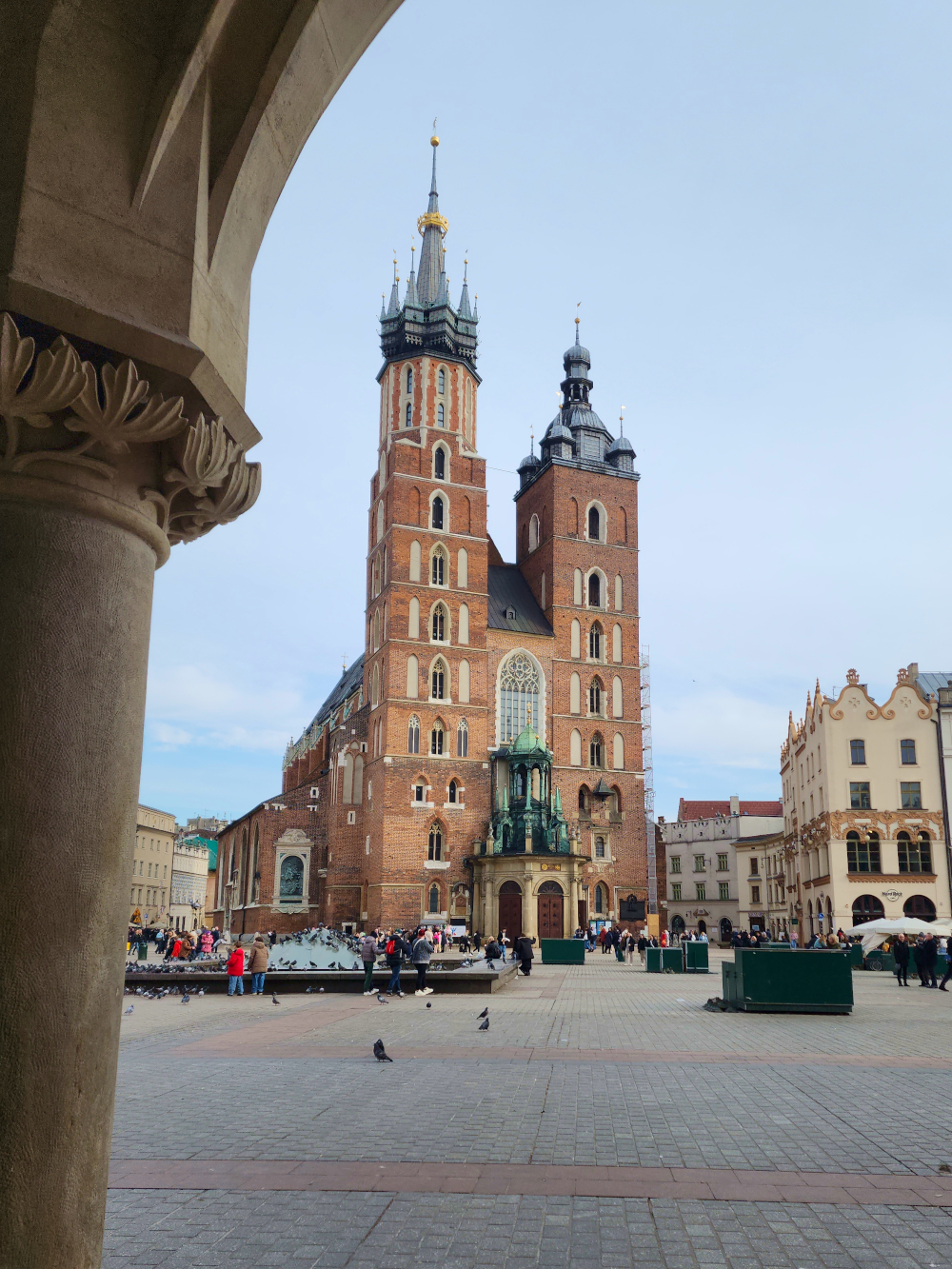
Along the way we pass, as we always do on this route, the more literal fortress known as The Barbican, which was the fortified gateway to medieval Krakow. It still looks very handsome for its age. A little farther is the central square, boasting what is arguably the most iconic building in Krakow, St. Mary’s Basilica (which we’ve already toured). Just a short distance across the plaza is arguably the second-most iconic building, Cloth Hall (an open-ended marketplace). As we approach we see, as is often the case, a striking cavalcade of classic and classy horse-drawn carriages bridging the gap between the two, as they angle to pick up tourist passengers.
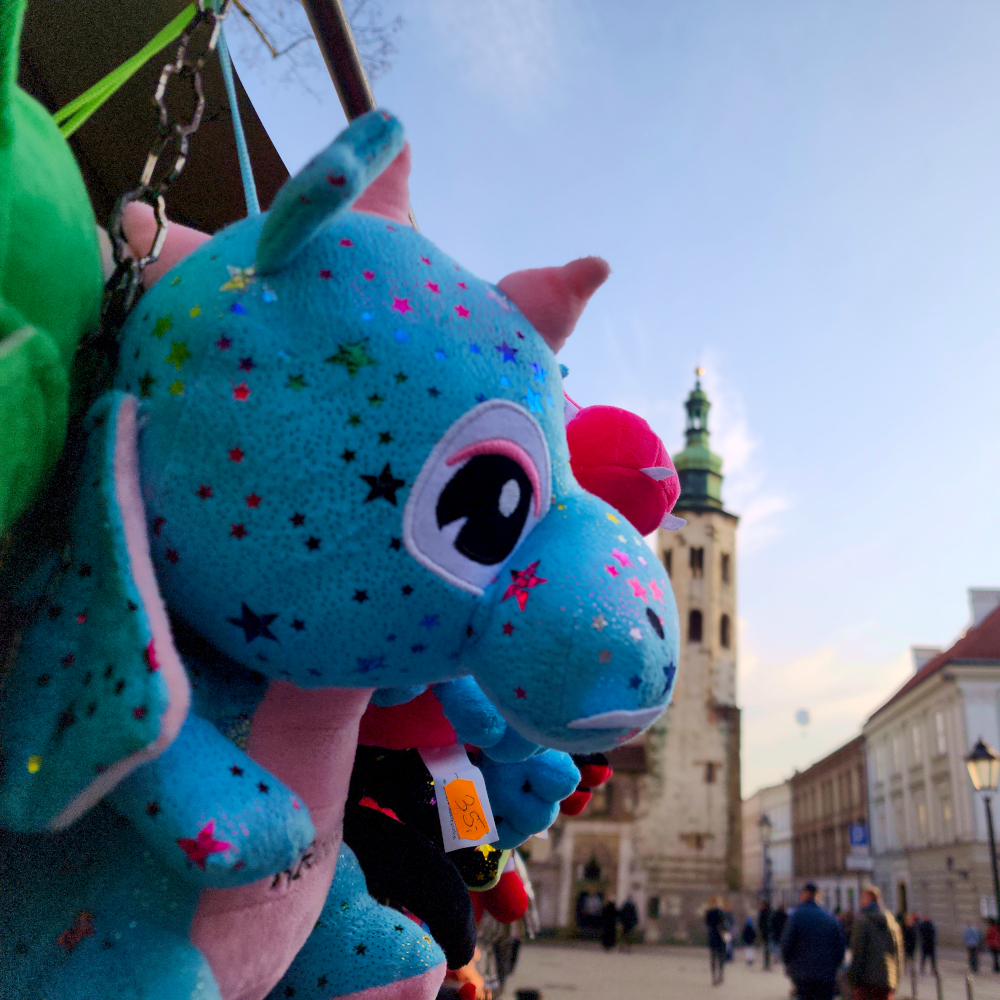
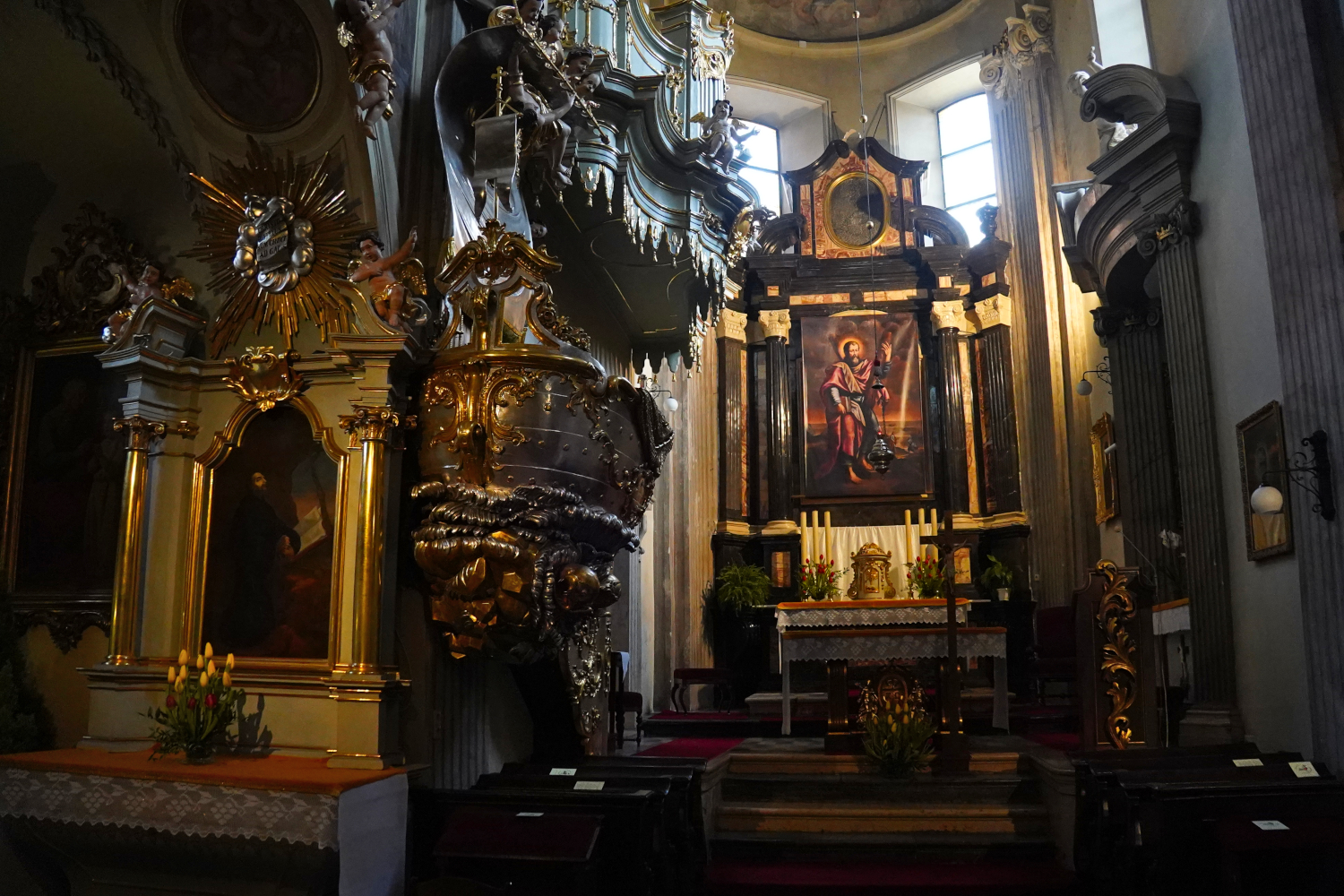
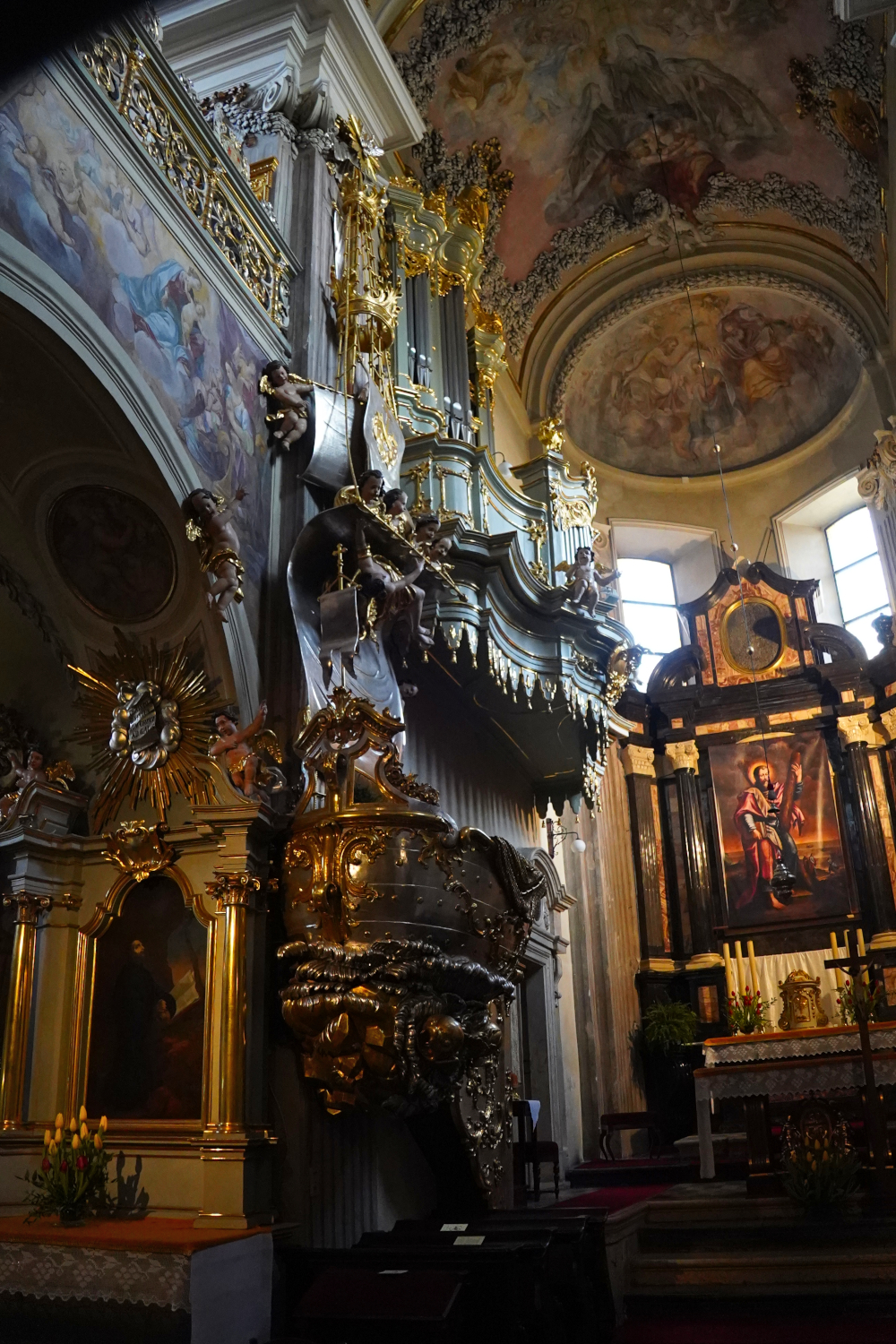
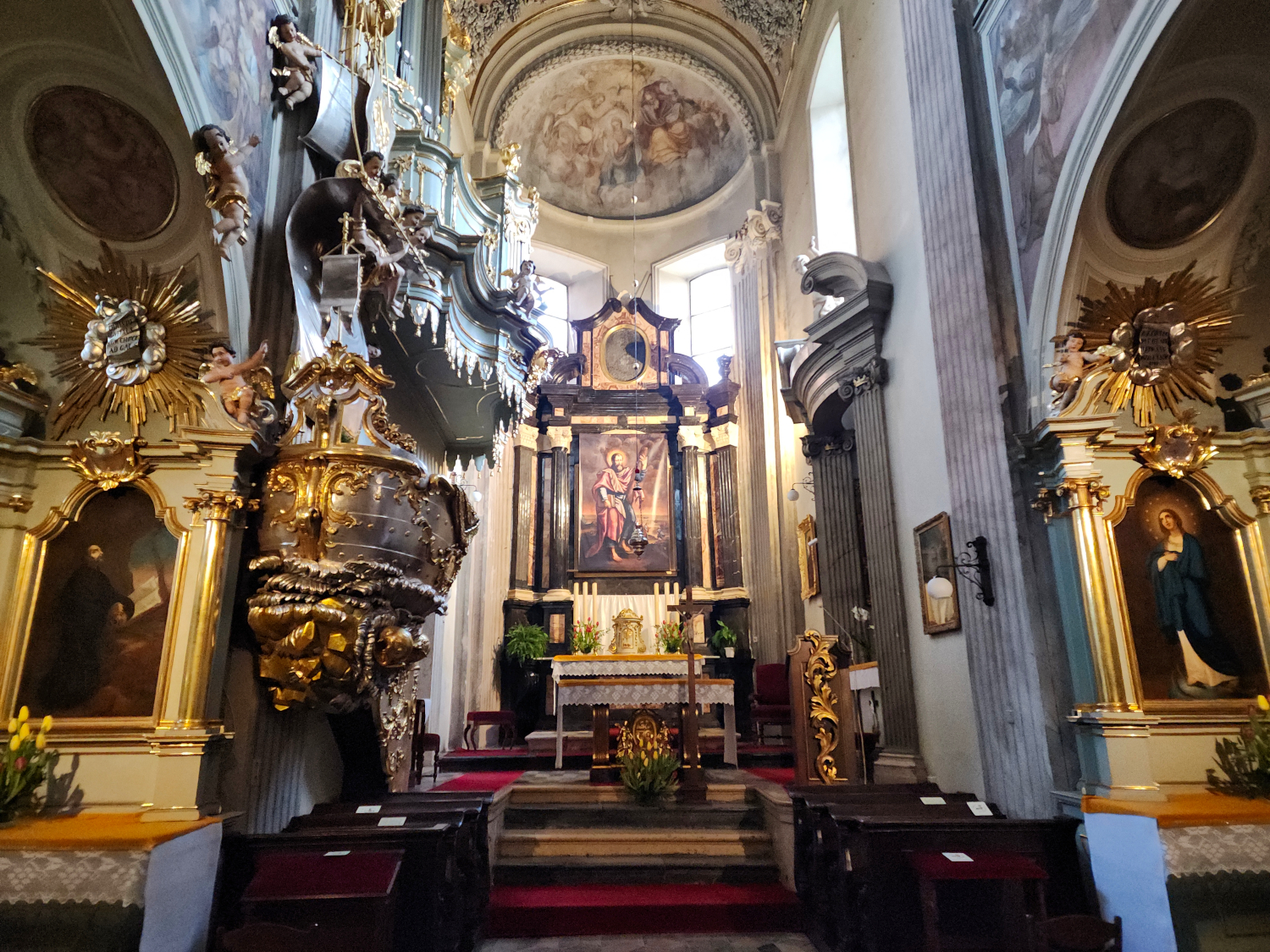
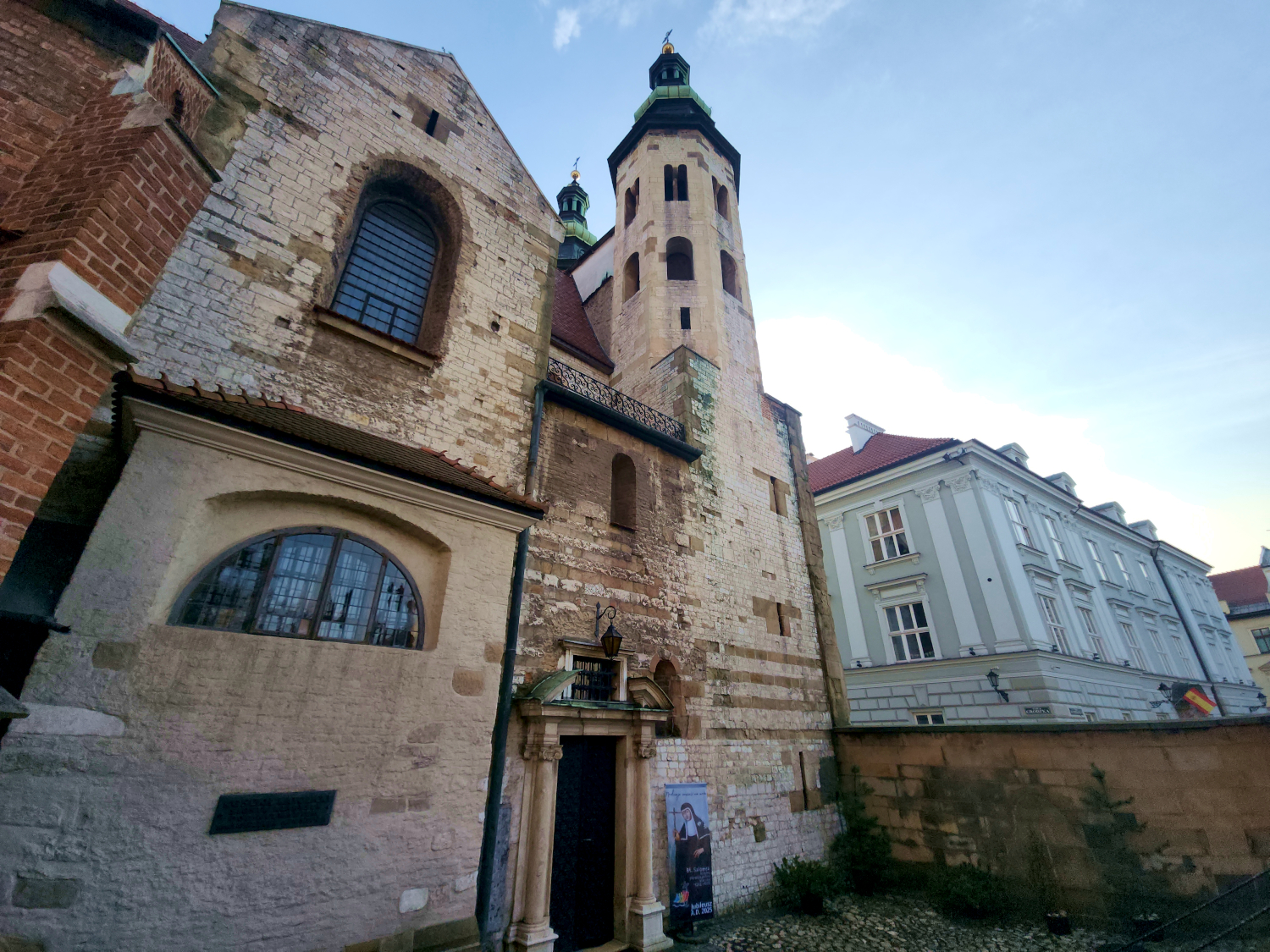
First on our bucket list of the day is St. Andrew’s, which is the oldest church in town, having been completed in the year 1098 — though the domes on the two towers were not added until 1639. It’s one of the few surviving examples of the “fortress church”, designed to withstand an armed siege. And that skill set was put to good use in 1241 when the Tatars invaded and wrought havoc elsewhere. (This was when an archer killed the legendary Trumpeter Of Krakow in mid-clarion as he perched on a tower at St. Mary’s; he’s now immortalized by an hourly trumpet call on that tower, truncated on the same note.)
During this invasion, many of the townsfolk survived by taking refuge within the church’s walls — though, considering what a relatively small building it is, it’s unclear exactly how there was enough real estate inside for all of them. Not surprisingly, this is yet another of Krakow’s entries on the honor roll of UNESCO World Heritage sites.

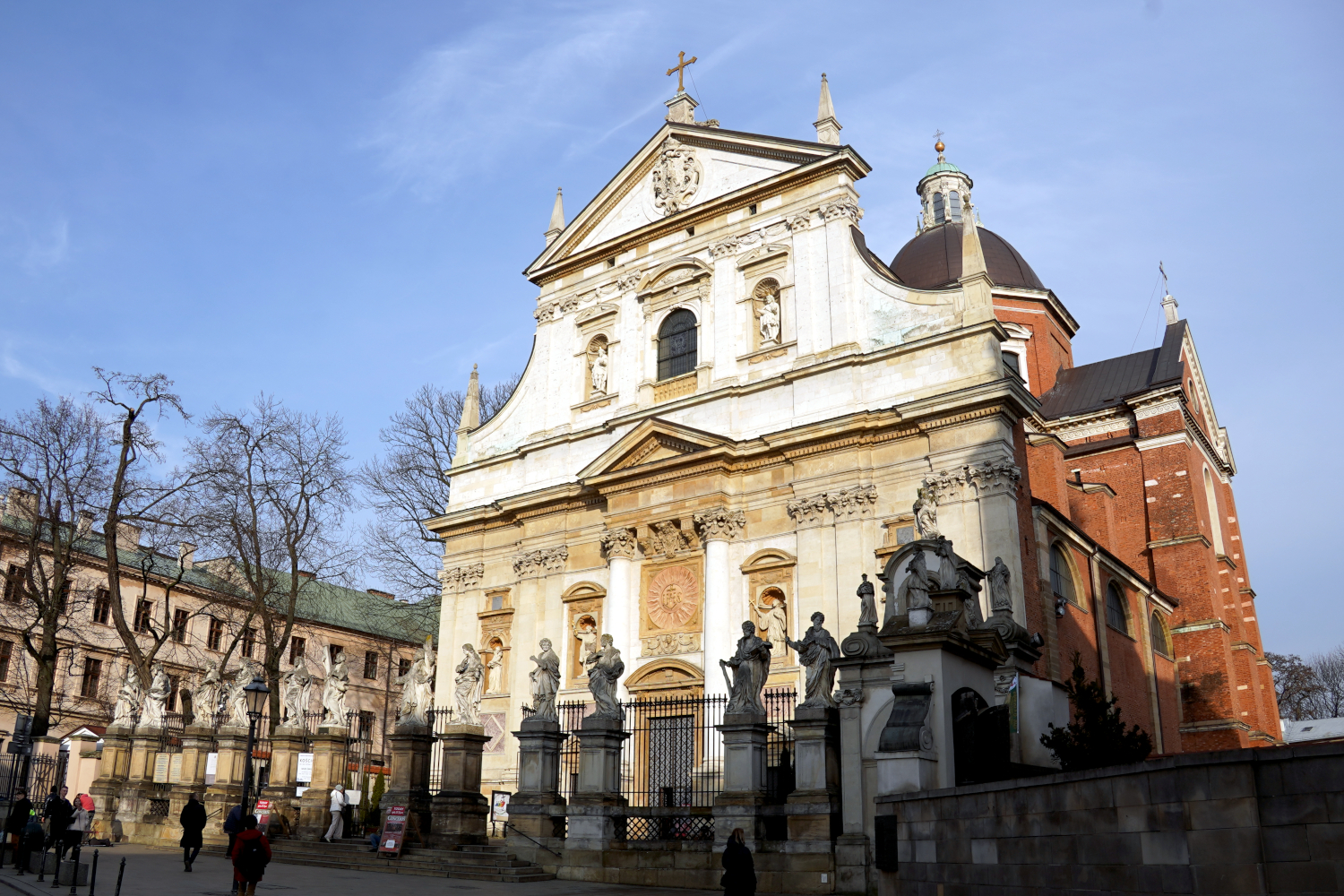


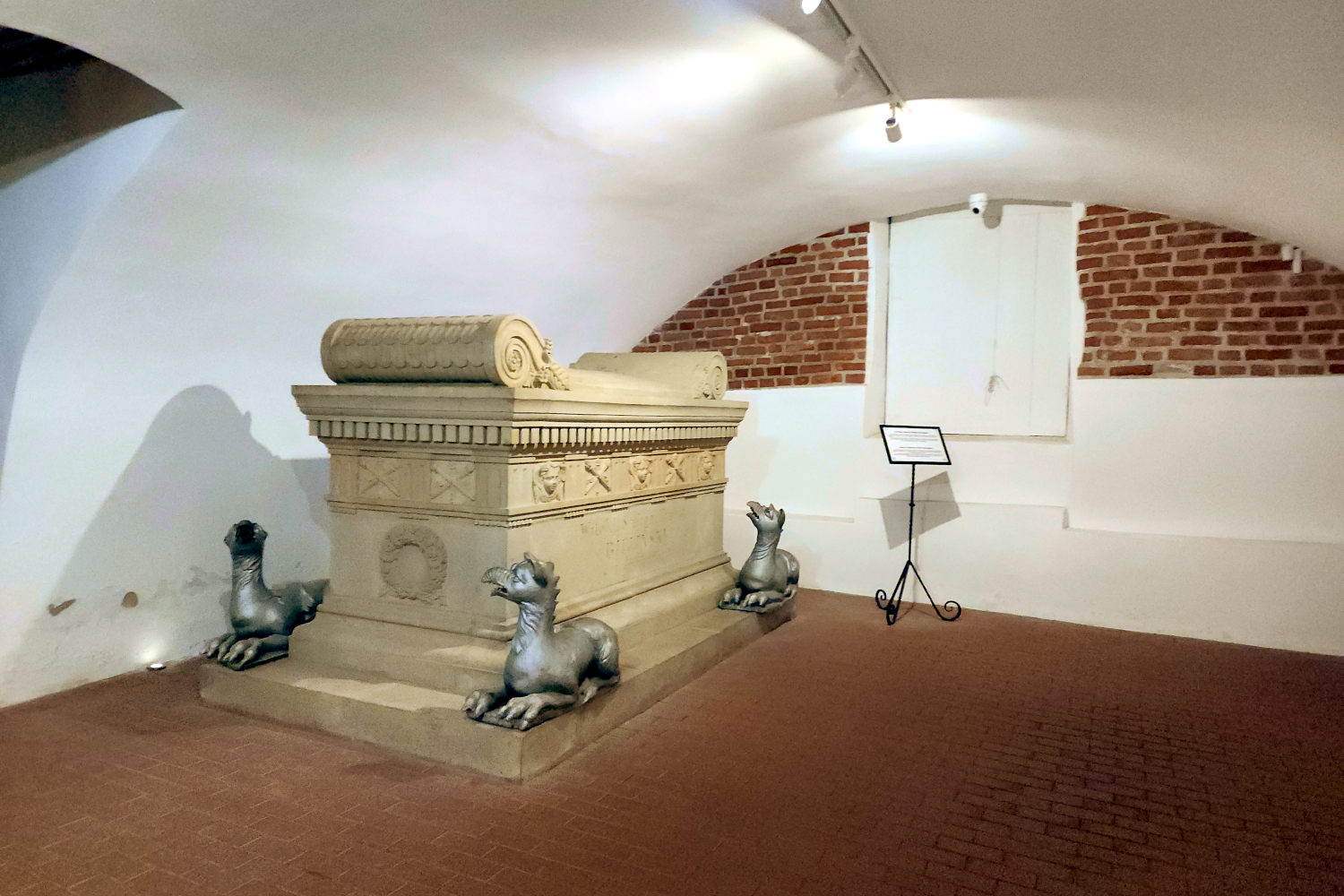
Next door is Saints Peter and Paul Church, which is a new kid on the block, having been completed only in 1619. But it still lays claim to that UNESCO thing. It houses, oddly enough, Poland’s largest Foucault Pendulum, which is demonstrated once a week (not alas, at the time when we’re aboard).
One of this church’s most interesting features is its basement crypt containing the remains of several noteworthy Poles — perhaps the best known of whom is composer/ conductor Krzysztof Penderecki, who died only 5 years ago.
Also on display is the text, in Polish and English, of the poignant poem “Try To Praise the Mutilated World”, written by Polish poet Adam Zagajewski, and published in The New Yorker immediately after 9-11. It includes the lines: “You’ve seen the refugees going nowhere/ you’ve heard the executioners sing joyfully./….. and leaves eddied over the earth’s scars.”


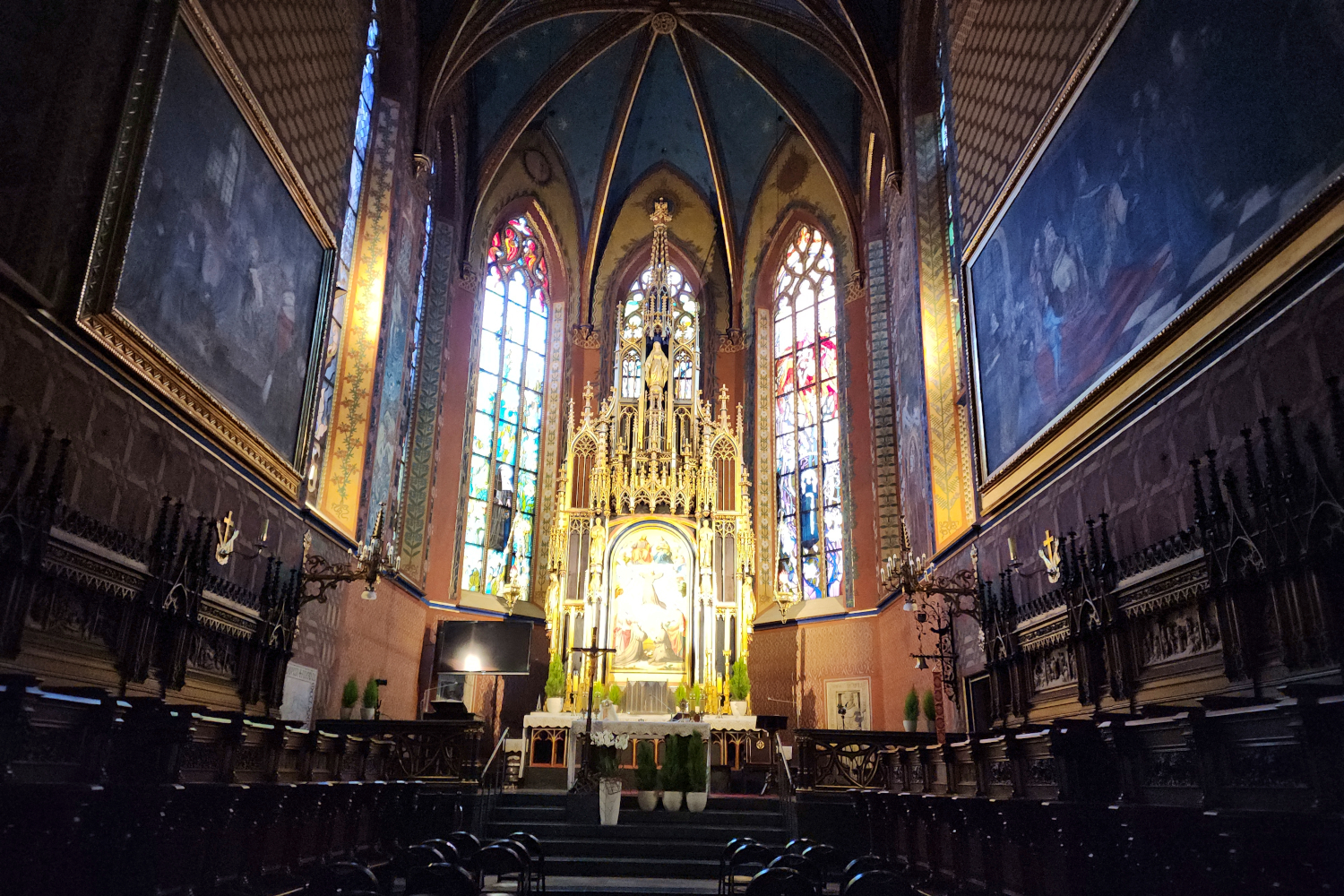
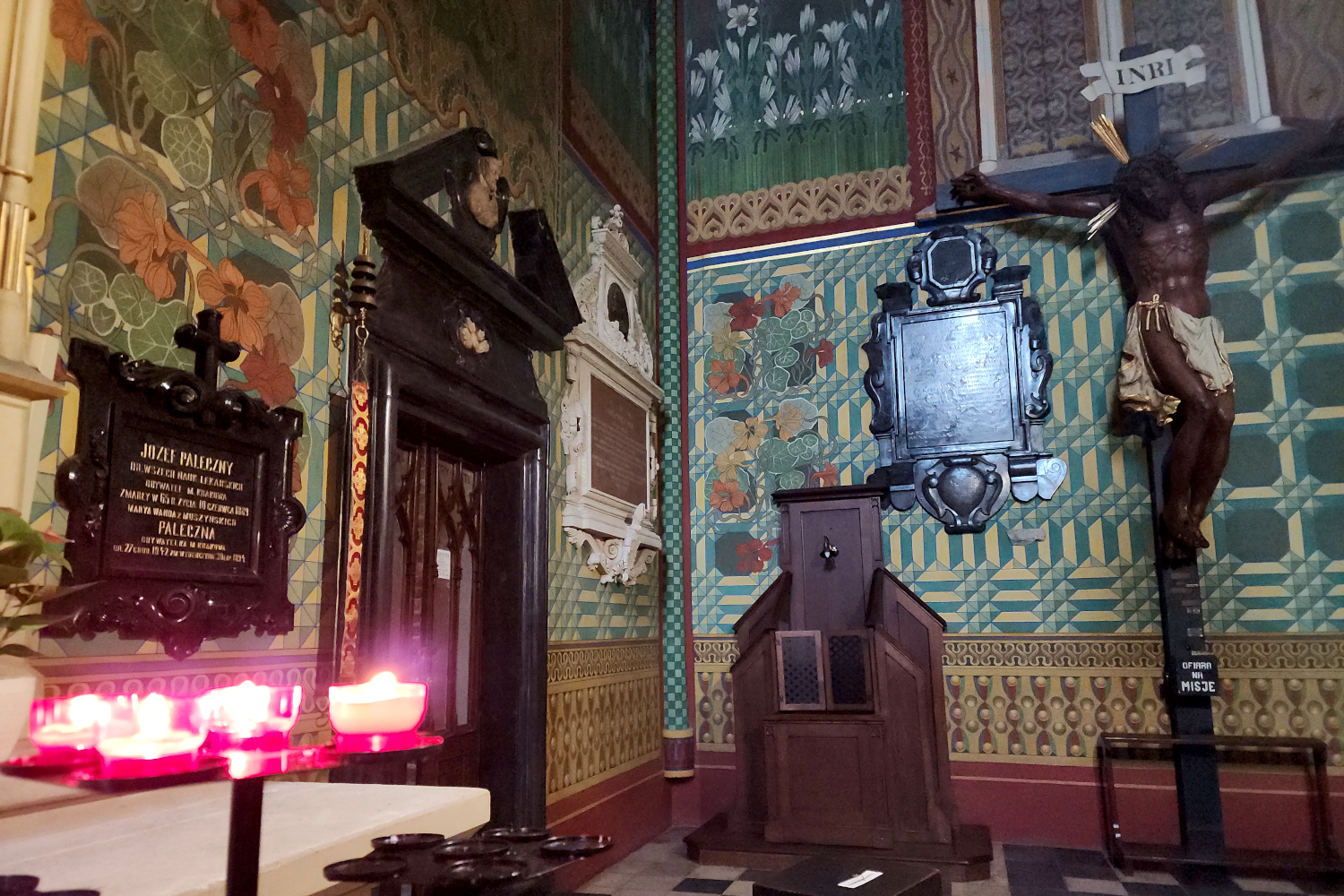
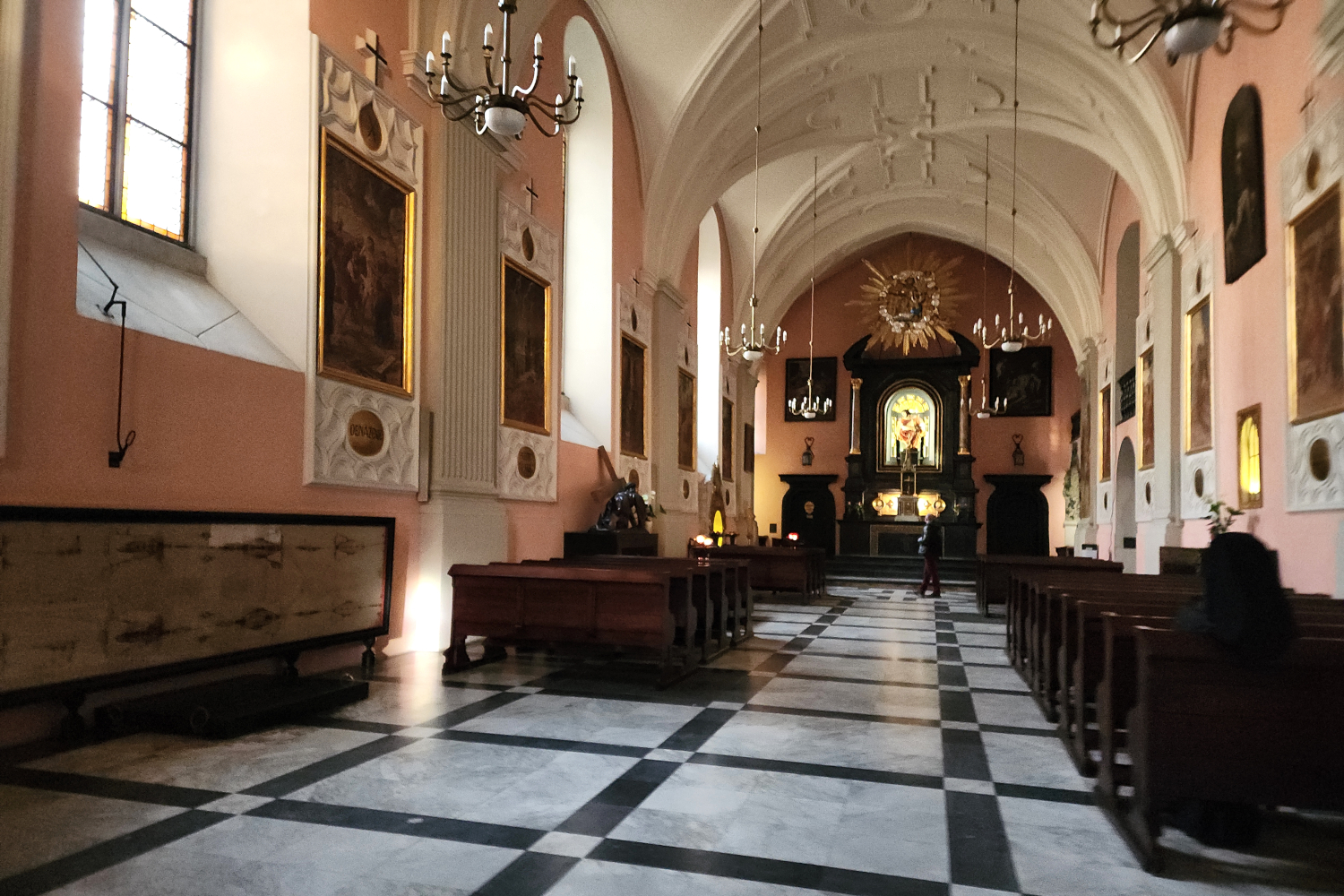


And finally there is Basilica Of St Francis Of Assisi, which was originally constructed in the 13th Century, and has been restored over the centuries, and is — would you believe — another UNESCO World Heritage site. This church is especially worth a look for its dazzling stained glass windows, most of which are rather modern. One of them has been billed (by someone or other) as “maybe the most beautiful window in the world”.
But alas, we are not able to make that determination, because it’s off-limits due to building restoration. Or is it? Maybe they just partitioned it off because it’s come to be regarded as “controversial” because it depicts God — which is considered a no-no in some circles. In any event, It would have been nice to see for ourselves whether it measures up to its hype, rather than having to rely on photos of it, which surely don’t do it justice.
Oh, and St. Francis also hosts an exact replica of the Shroud Of Turin. Which, it turned out, was a rather inexact replica of an ancient burial shroud. But evidently some folks find it worth checking out nonetheless. Hey, it piqued our curiosity too..
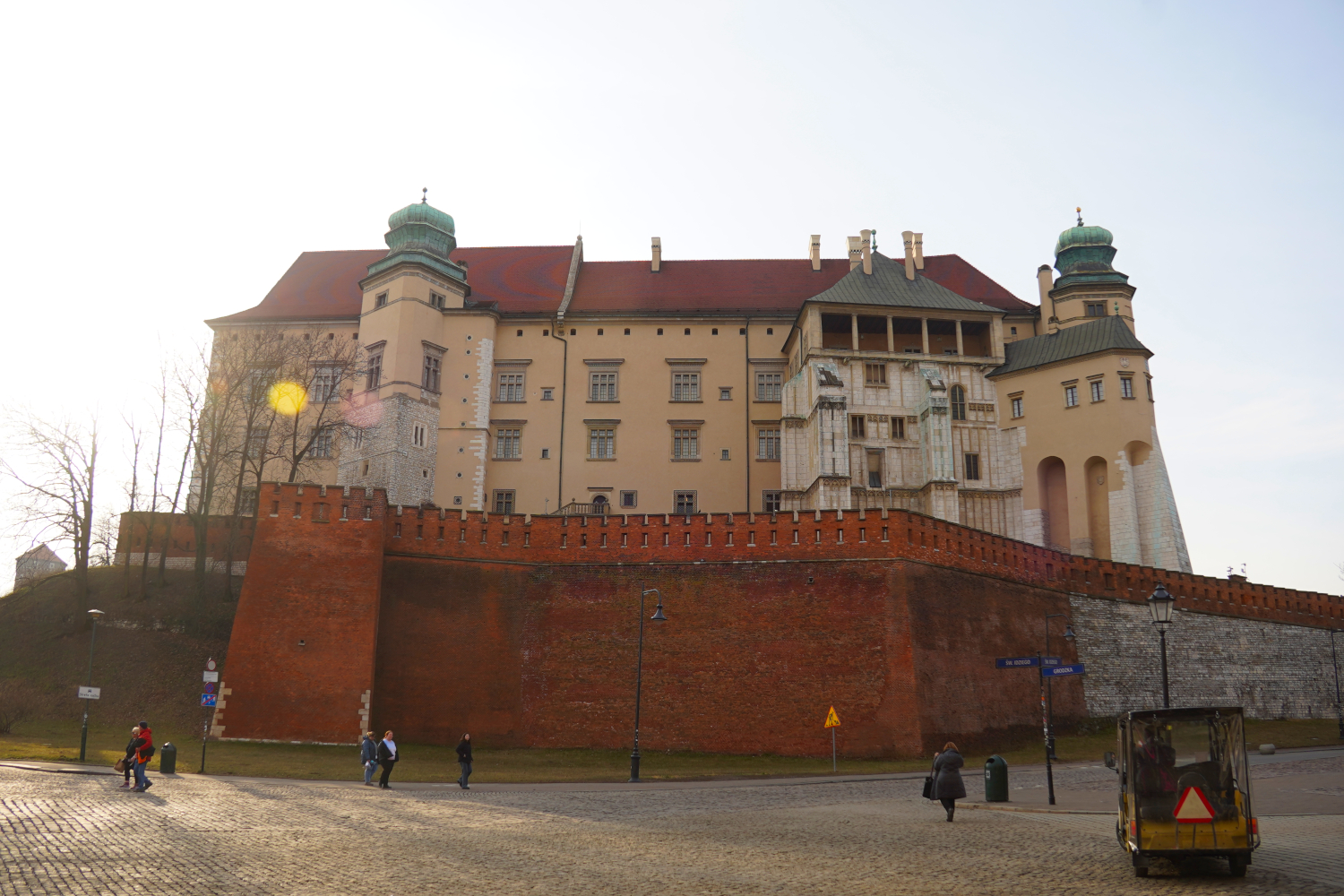
While it’s not a church, we also swung by to have a gander at the Bishops’ Palace, which was originally constructed during the 13th Century, and rebuilt a time or two after fires, achieving its current edition in the 17th Century. (Sorry, but UNESCO snubbed this one.) It’s best known today as the former residence of Bishop Karol Wojtyla, later awarded the handle of Pope John Paul II. (He was also ordained here.)
According to legend, the courtyard is haunted by the ghost of a lady in white seeking absolution for her sins. But we can’t go look for her ourselves and offer her any solace, because the interior of the palace is off limits to the public. We can, however, stand outside and see a portrait of Wojtyla/ Pope John Paul in the spot in the window from which he used to address audiences below, presumably right where we’re standing.
Well, it’s been quite a day of churchgoing, more than we’ve clocked in quite a few years. But these weren’t just churches — they were living museums, testimonies to Krakow’s long storied history. Now it’s back to studying the map we’ve inherited, and deciding what other intriguing walking tours we can work in to discover this city’s magical past.
Events occurred 2/25/2025

 world travel with a theatrical flair
Leave a comment