


Our phenomenal second visit to Krakow, Poland came to an end all too soon. And so did our lengthy hiatus from the activity that sent us traveling around the world in the first place. Up next, we’d be returning to volunteer teaching. And we’d be doing it in a country we’d never been in before, except for passing through on a train: Czechia, aka The Czech Republic.
Leaving behind the inviting little Airbnb next to Old Town, we schlep our bags to the bus station (or rather bus terminal — there’s not much of a station to it), To get there, we have to worm our way through the crowded mall, where the train station is also located, Fortunately, we scoped it out in advance. The bus leaves about 10 minutes early, but we’re there well in advance of that, so no problem.
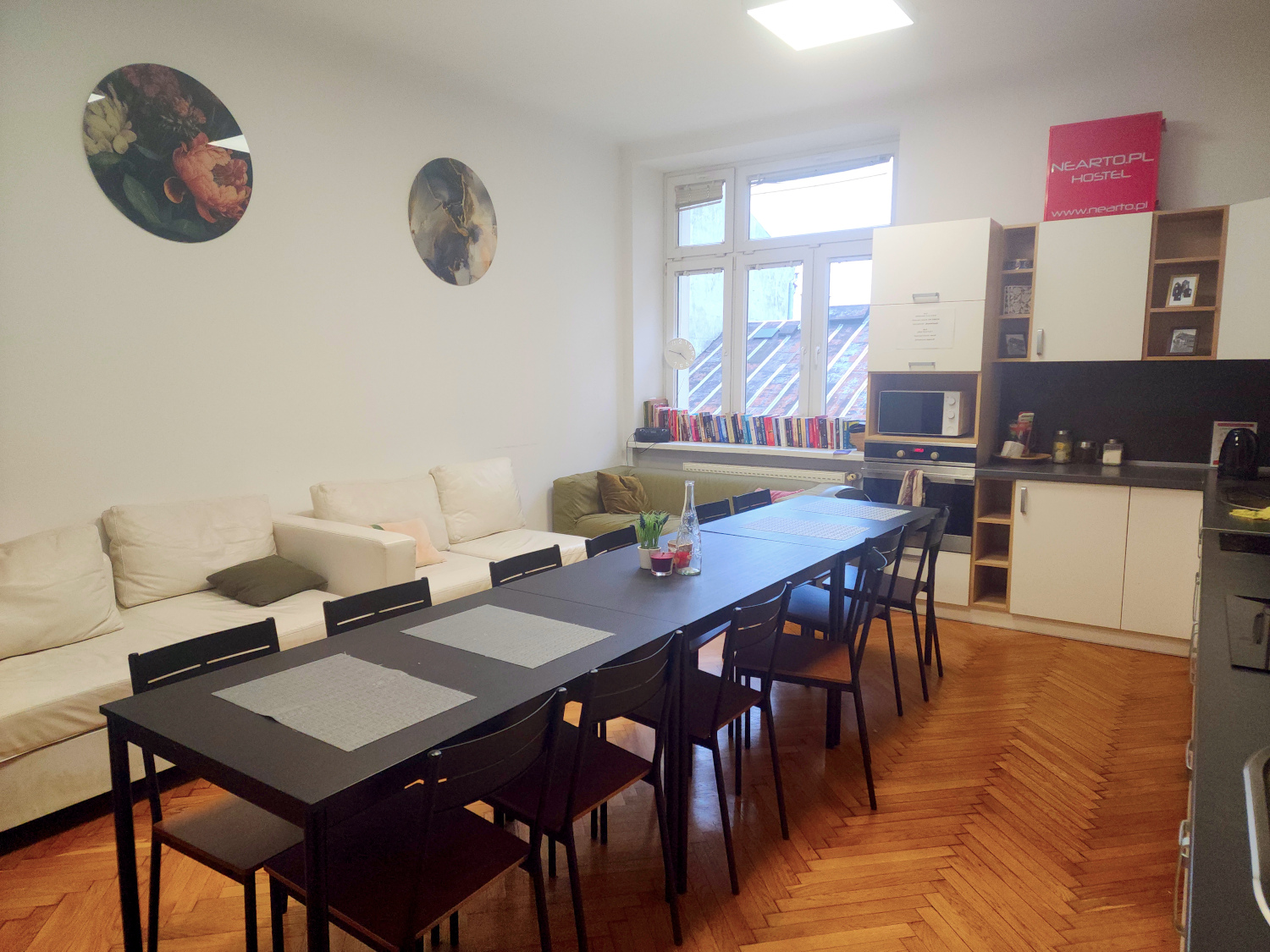
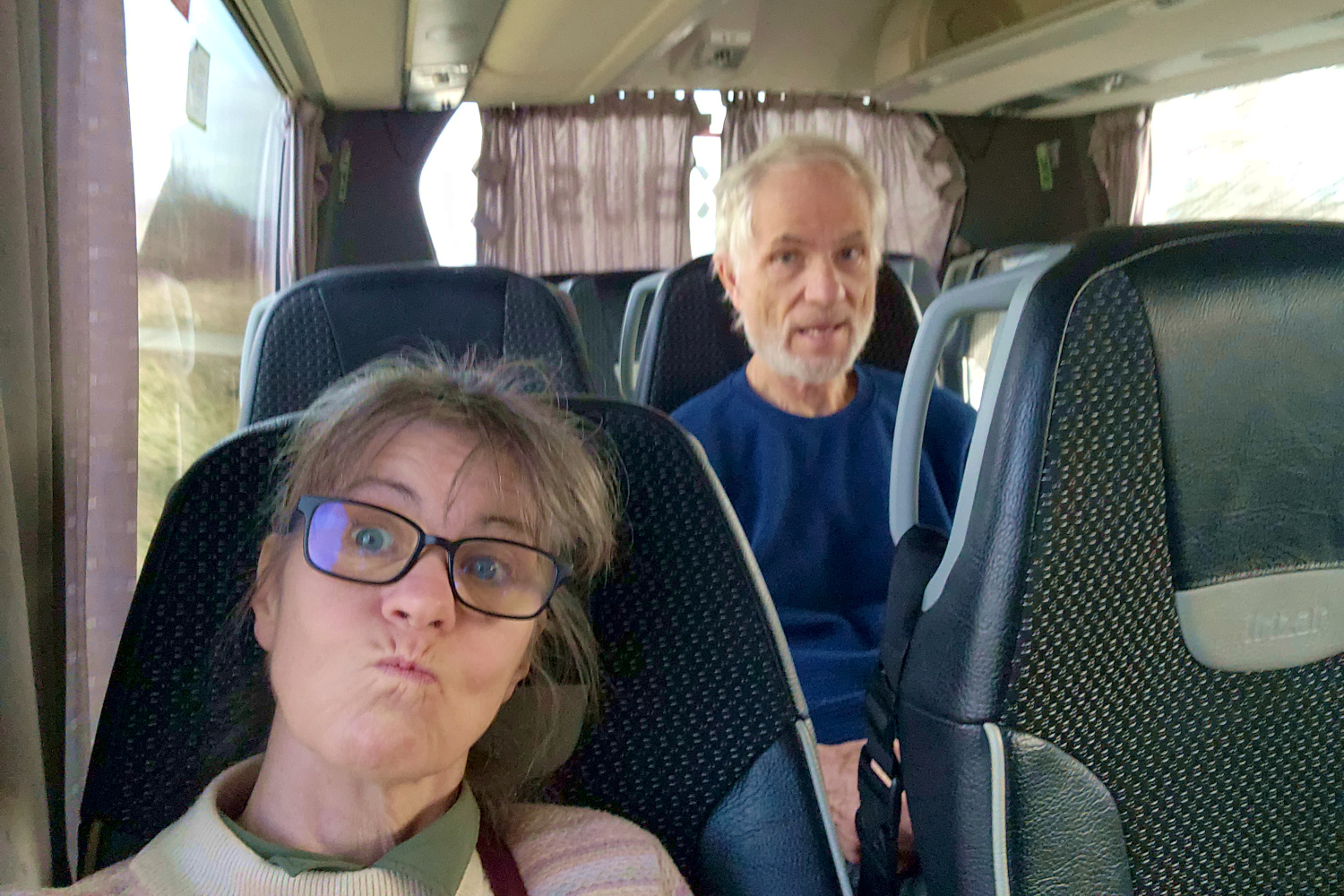
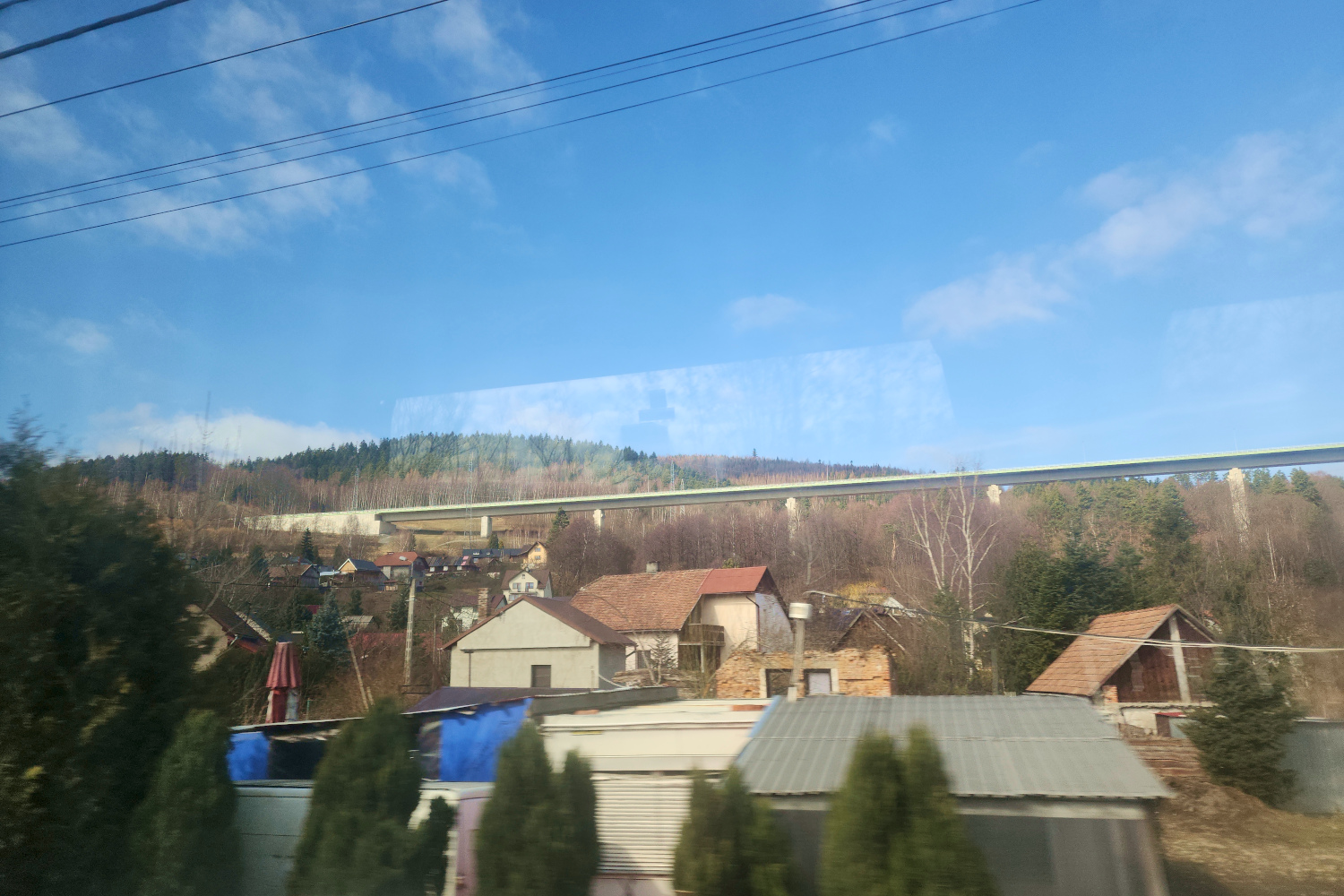
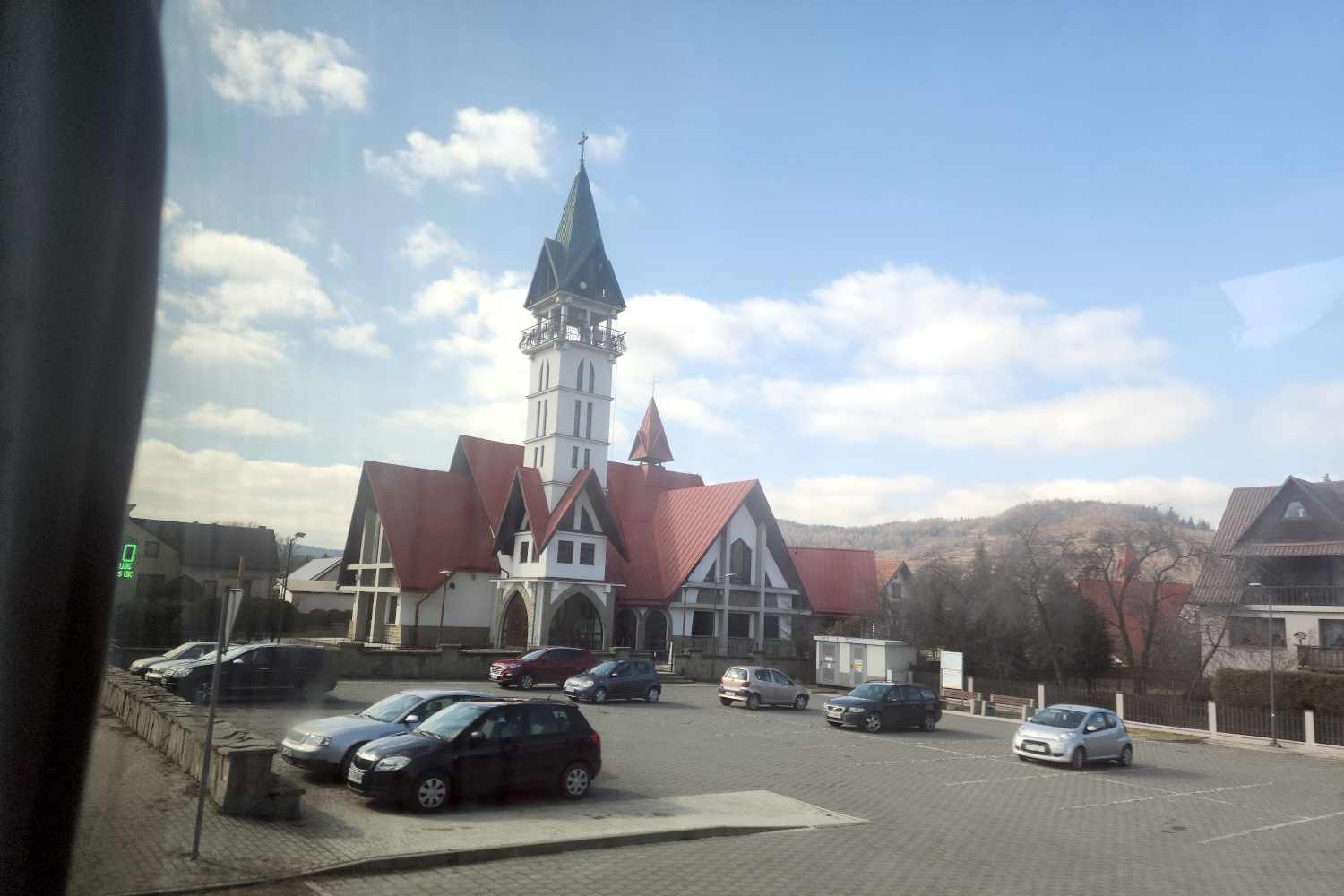
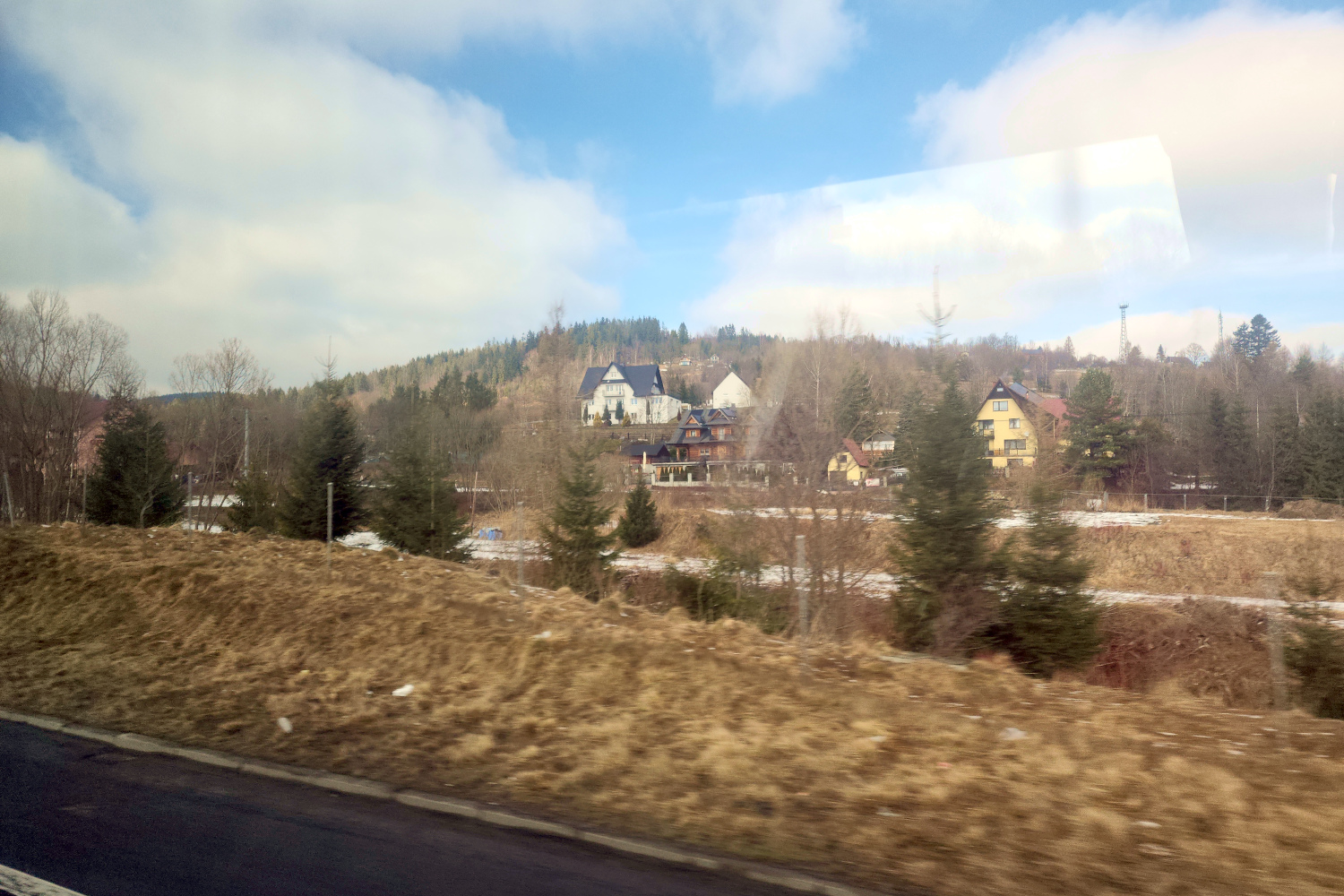
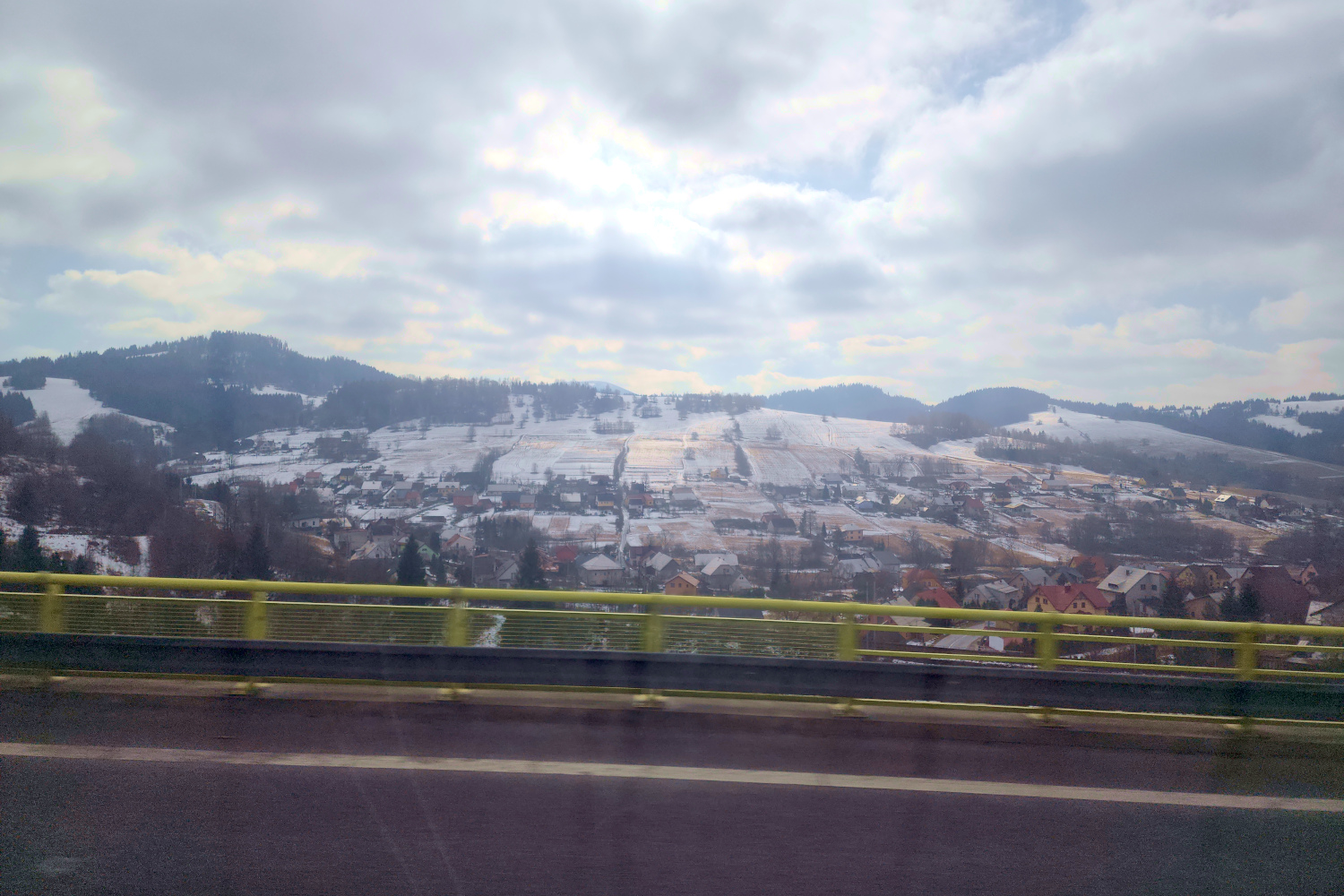
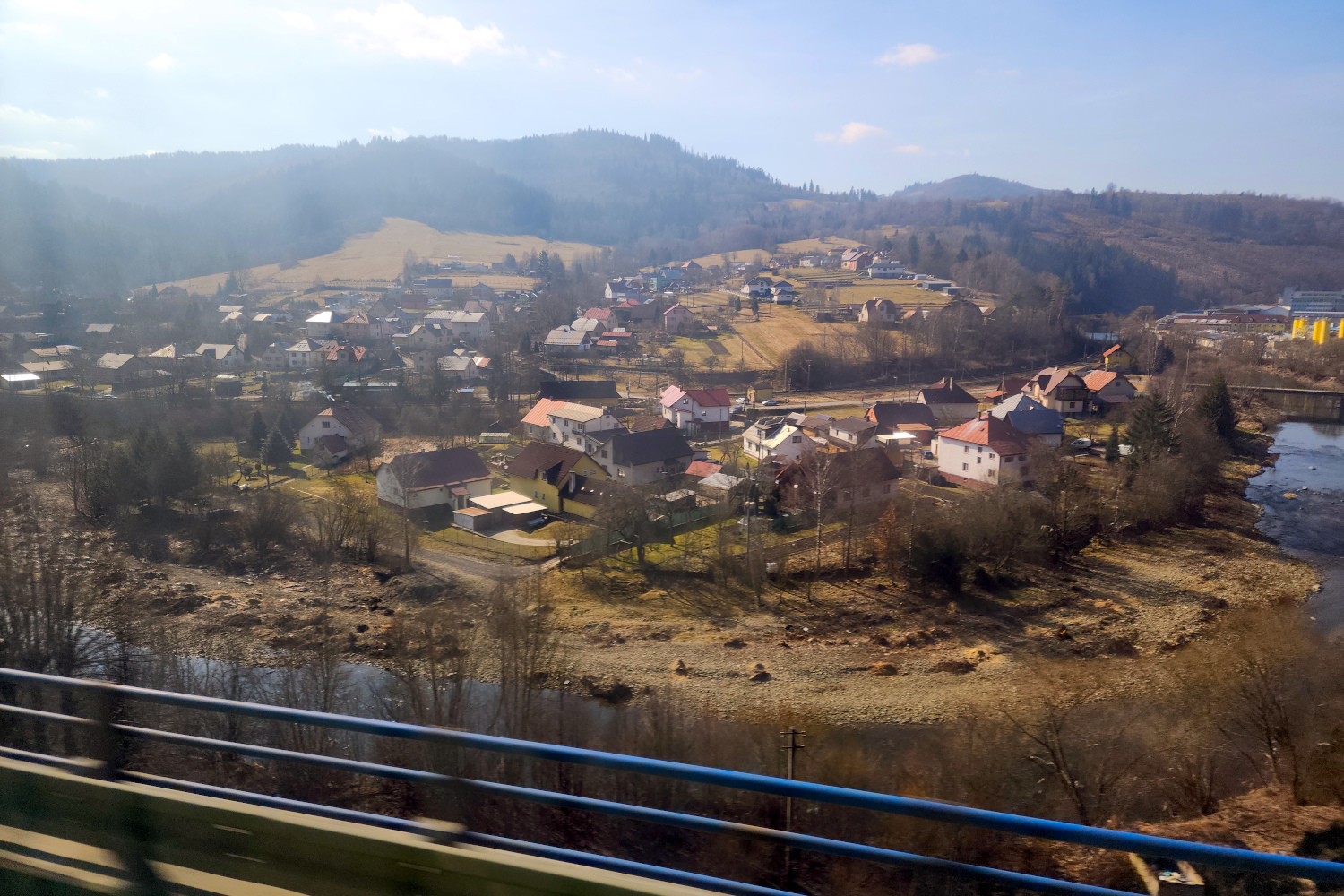
As a rule, buses are our last resort. And our first choice is to travel by train. Trains are comfortable (usually) and they offer great views (usually) as well as room to walk around, and — very important — toilets, which many buses, including the one today, do not have. So we really looked into making this trip by train. But after a great deal of schedule comparing and Internet searching and discussion with customer service representatives and flowcharting and head scratching, we ultimately concluded that the bus was the better option this time. It was a shorter journey at more convenient times, and the trains required nearly as many connections — in the middle of the night in some cases.
For this itinerary, we’d leave Krakow in the morning, arrive after about 3 hours in Zilina, Slovakia, wait about 90 minutes, catch a train to Púchov (also in Slovakia), then transfer to another train to Horni Lidec, Czechia, which is about 10 miles from our destination of Valašské Klobouky. From there we could either take another bus or train, or even an economical taxi — or, as turned out to be the case, have someone pick us up. All told, the trek would take about 7 hours, getting us there by about 5:00 p.m. Surprisingly much more convenient than the train schedule.
The bus makes no pit stops during its 3-hour jaunt, leaving those of us with full bladders happy to arrive. The bus depot in Zilina, however, turns out to be even less of a station/ terminal than the one in Krakow — just a few bays where buses load and unload, with nary a WC insight. Fortunately, the train station is only about a block away, and once there we can indeed visit the necessaries. Not for free, of course — it’s about one euro for both of us, rather steep compared to Krakow. But you do what you gotta do. And fortunately we still have euros left over.
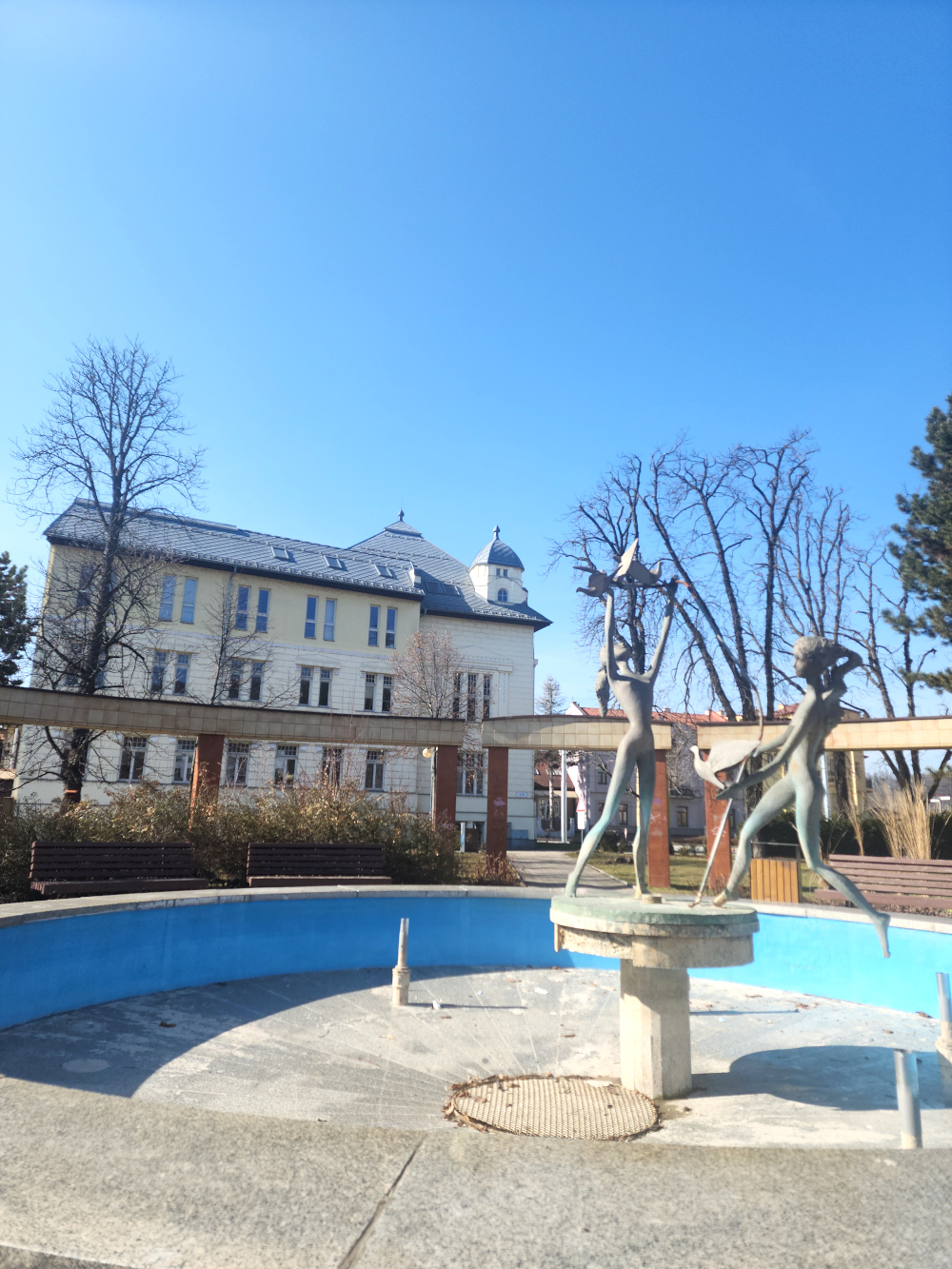
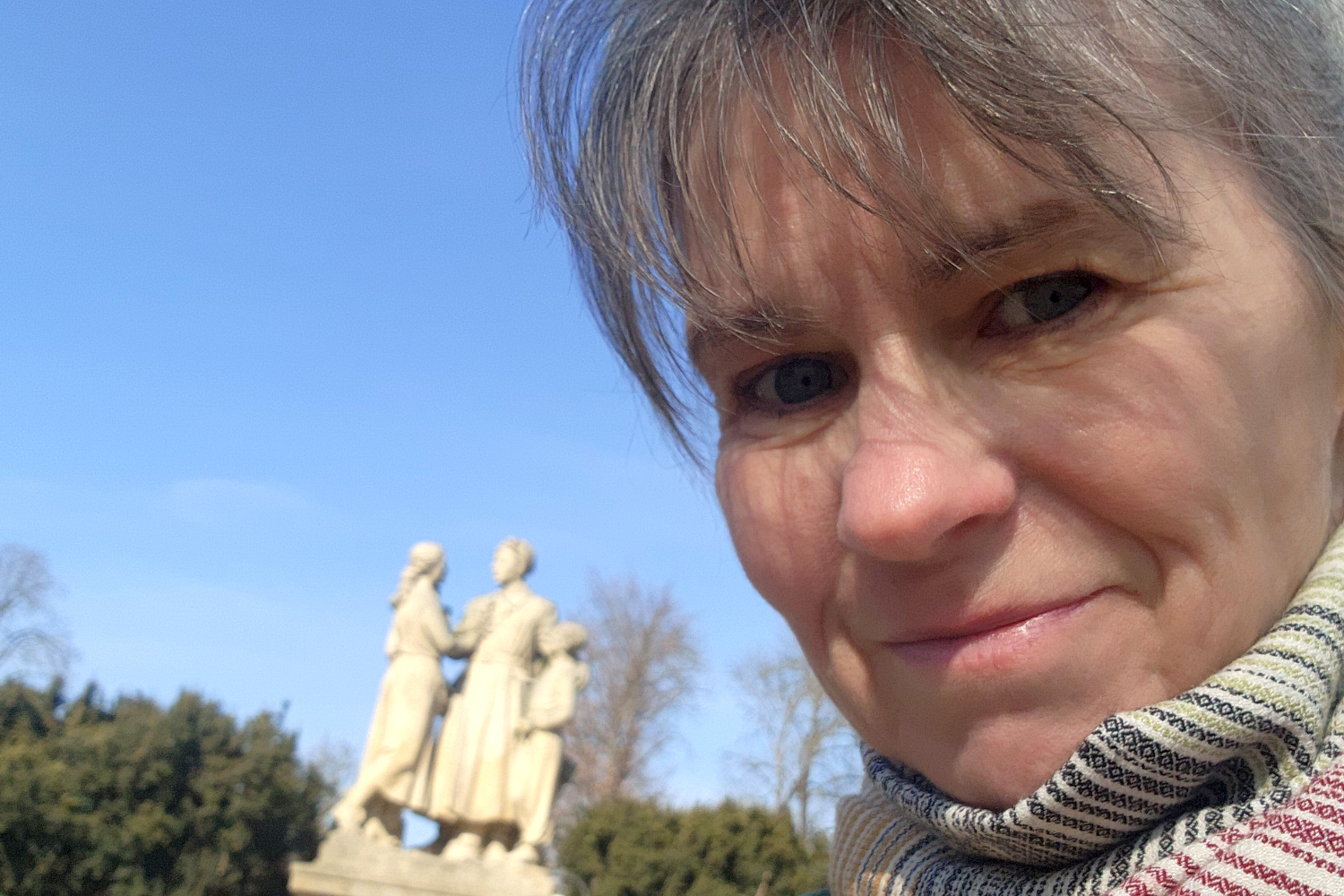
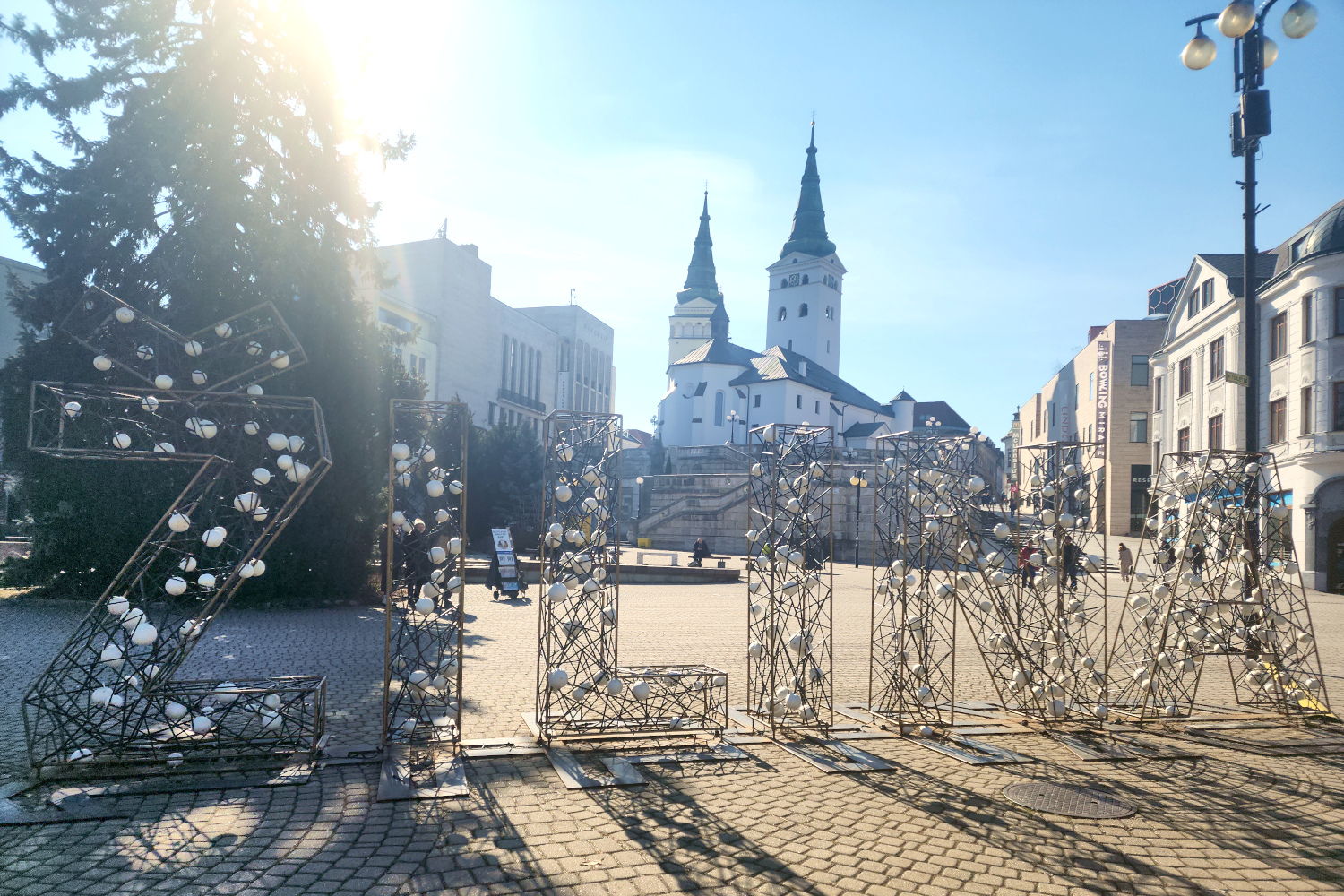
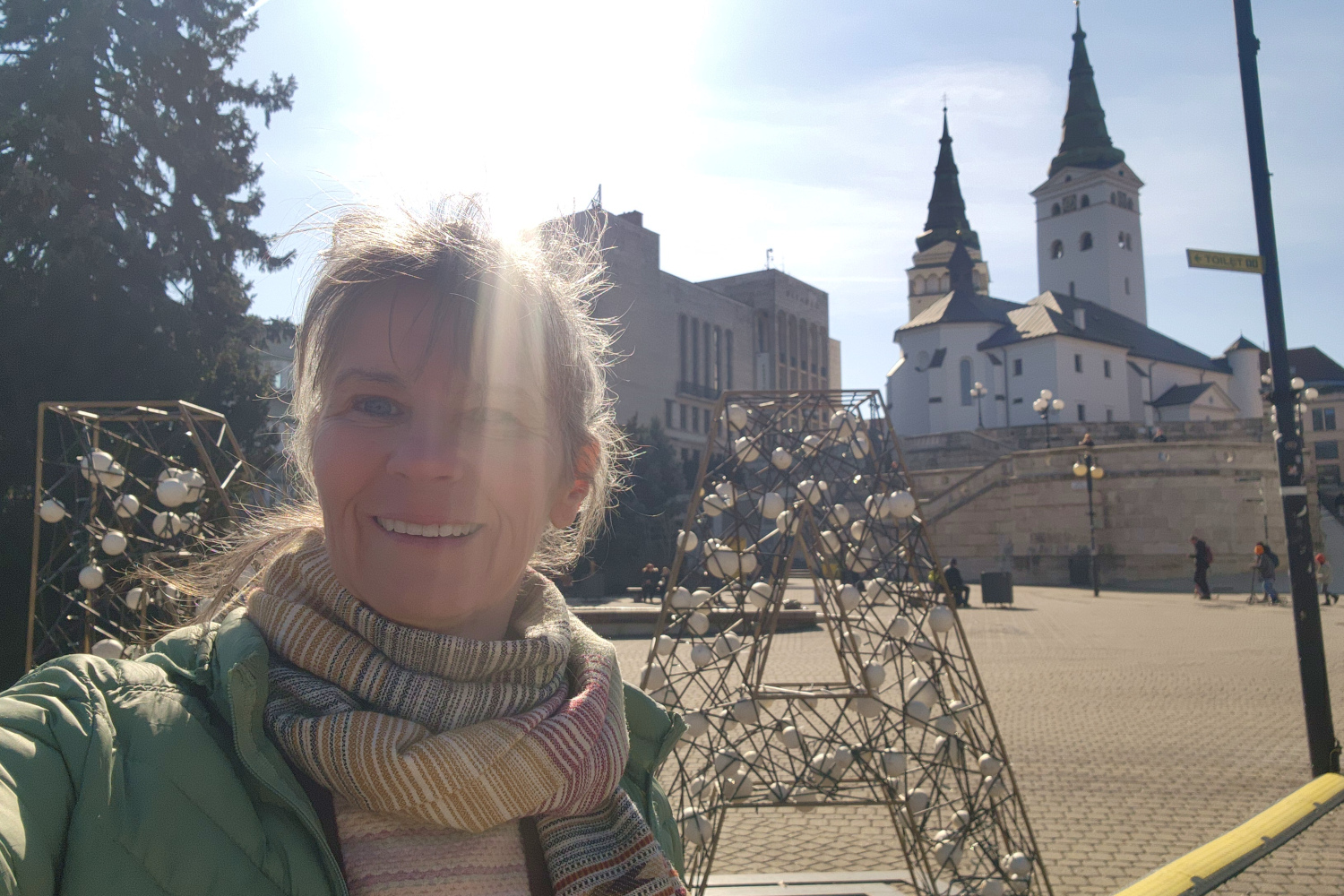
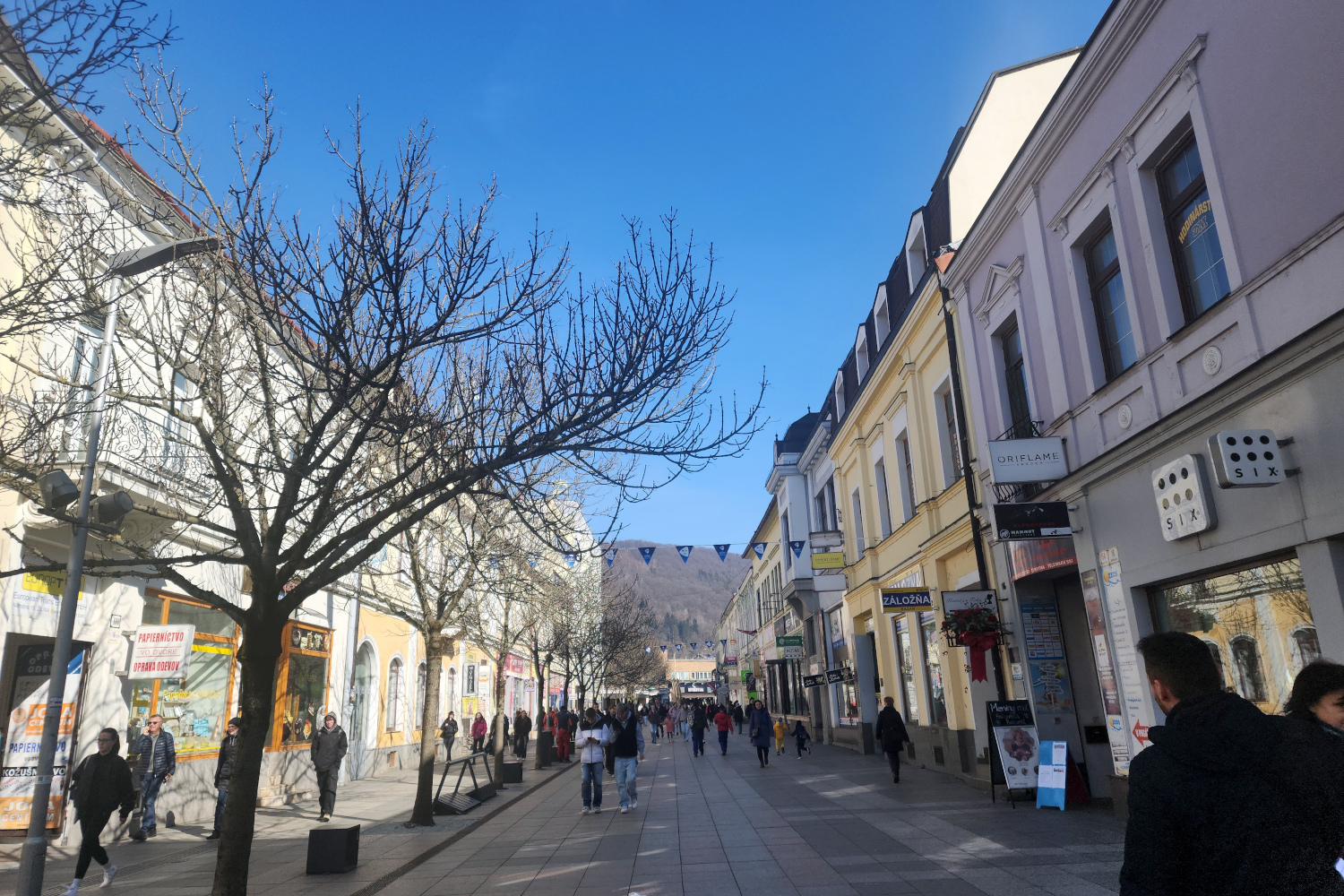
After purchasing our tickets to Horni Lidec, we still have about an hour to wait — we’d been concerned about the tight squeeze of these connections, but everything runs on time today, and it works out well. We take turns strolling through the town square across the street, a colorful little stretch of shops and historic buildings; and since we actually have feet on the ground outside of a station or airport, we count Slovakia among the tally of nations we have been in. That comes to 22 for Dennis and 24 for Kimberly. (Soon, we’ll each be adding 3 more.)
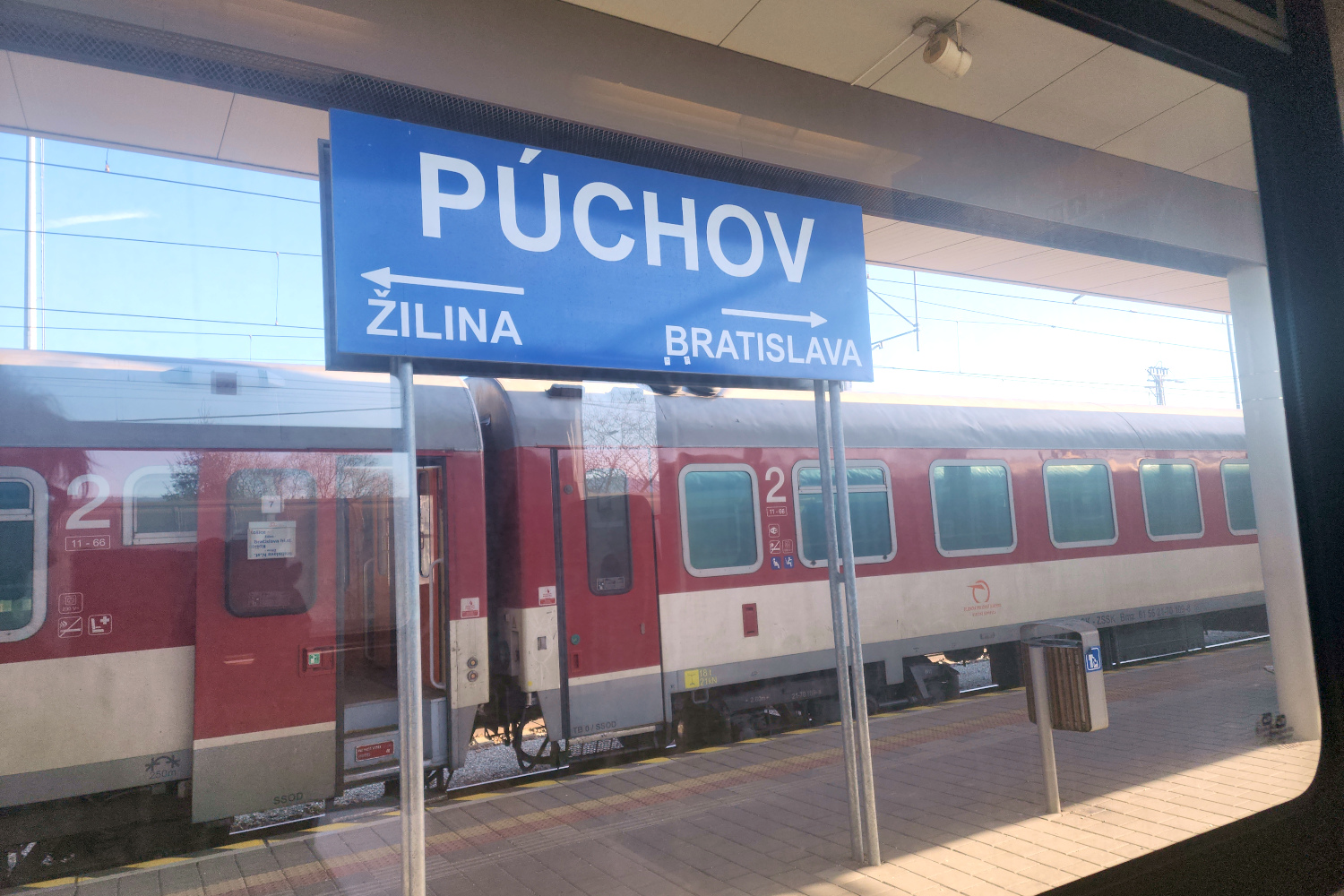
When we board the train, we find seats on a nearly empty car, and start to make ourselves comfortable. But then along comes the conductor lady and informs us that this car is reserved seating, and since we don’t have reserved seats, we’ll have to move to a general seating area, car 6 — even though this car is pretty much deserted, and this leg of the trip is only about half an hour. So we make our way to car 6, and by the time we get there, we’ve almost arrived. And car 6, it turns out, has seating compartments for 4 passengers, as opposed to the wide-open mass seating arrangement in the reserved car. It seems to us that it should be the other way around, and someone must have switched the labels or something. But what do we know.
When we pull into the station at Puchov, we see that our next train is waiting for us on the other side of the same platform, and finally we can exhale. This was the connection we were most apprehensive about, as the window was only 6 minutes. But it appears that the personnel make every effort to make the connection happen, and wait for the train from Zilina before taking off to Horni Lidec. The attendants were standing on the platform by the doors, ready to welcome us aboard. It could hardly have been better unless they’d met us with satin pillows and cups of tea. Again, we do not have reserved seats. But this time, nobody tells us to move.
Upon arrival at the Horni Lidec station, we are greeted by Marketa, the director of the little school where we will be volunteering. She has a girl with her who we initially presume to be her daughter; but she’s a student, a fifth grader. They both give us a hug, and we start feeling quite welcome already.
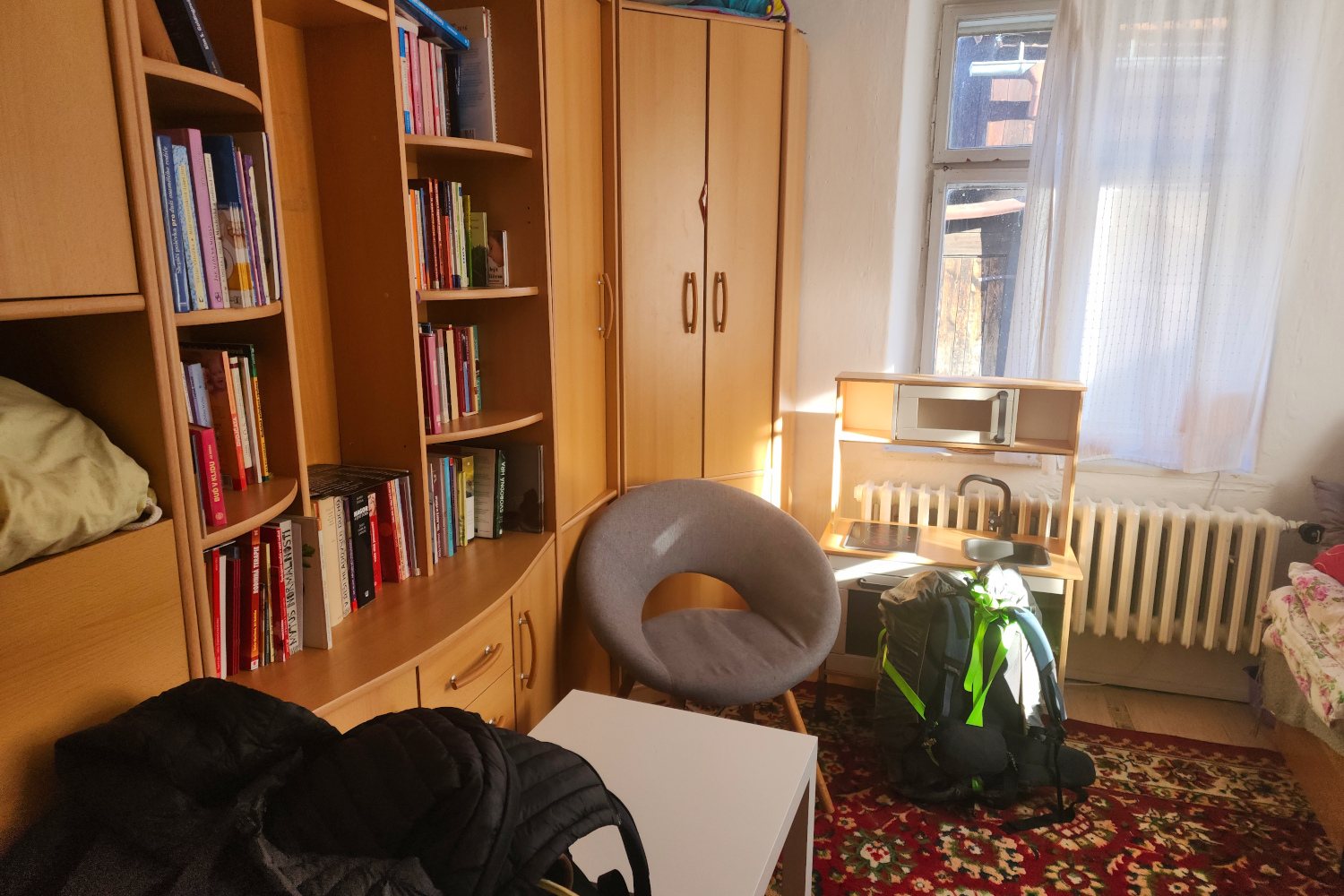
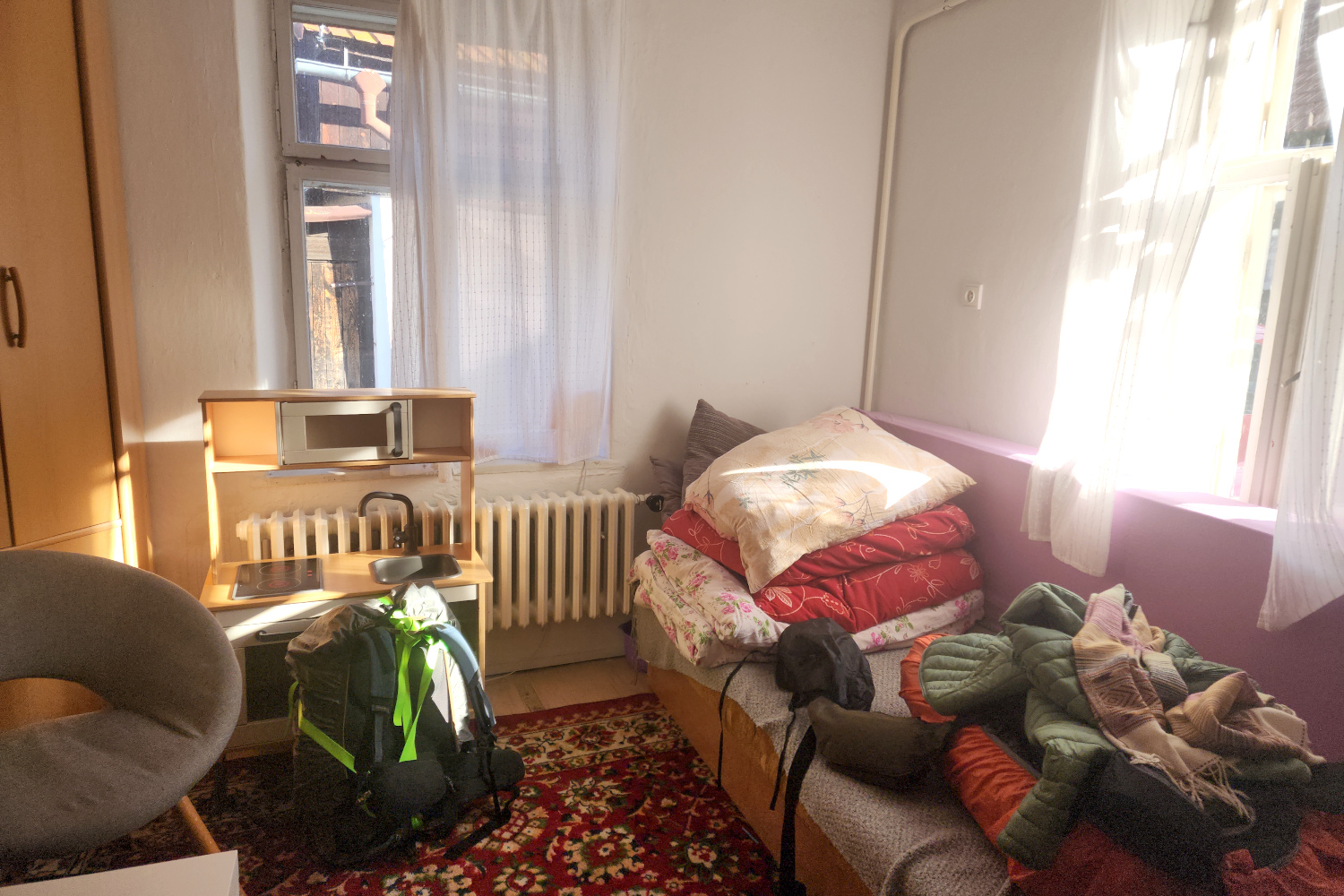
It’s a short drive to the little school in Valašské Klobouky, a small building that was originally a home. There are no living quarters now, but we’ll be staying in a room that is normally used as a meeting room — and a play room for the little ones. There is a couch that makes a comfortable bed for one of us (Kimberly), while that other one of us will be sleeping on a mattress on the floor. On school days, we will have to put away bedding by 8:00 a.m. so the room can be used as needed. Not an ideal situation, but at least we have privacy at night.
There are radiators providing heat via a wood-burning furnace, which dies out by late afternoon as the students head home, if logs are not fed into it once an hour or so. (And starting a new fire in it turns out to be a complicated process that we have not yet been initiated into.) But we have a little electric heater to take up the slack in our room.
We are told that there is vegetable stew in the kitchen left over from lunch, and we can partake of it for dinner if we like. Fortunately, it’s vegetarian this time — the cook has to be apprised of our diet, and set aside special portions for us (and a couple of students), as folks here tend to be heavy consumers of flesh. The arrangement is that we can have lunch along with the students, and either eat leftovers for dinner (assuming there are any) or prepare our own. There are three supermarkets within walking distance.
We have not had an opportunity to obtain the coin of the realm so far — Czechia does not use the euro, but still holds onto its traditional koruna (crown). But Marketa generously gives us 500 koruna (about 21 dollars, a sum that goes considerably farther here than in the U.S.) to do some food shopping.
She recommends a supermarket called A To Z, but we find it not that impressive. We are much happier with Lidl, a much larger supermarket with excellent prices that is also closer to us.
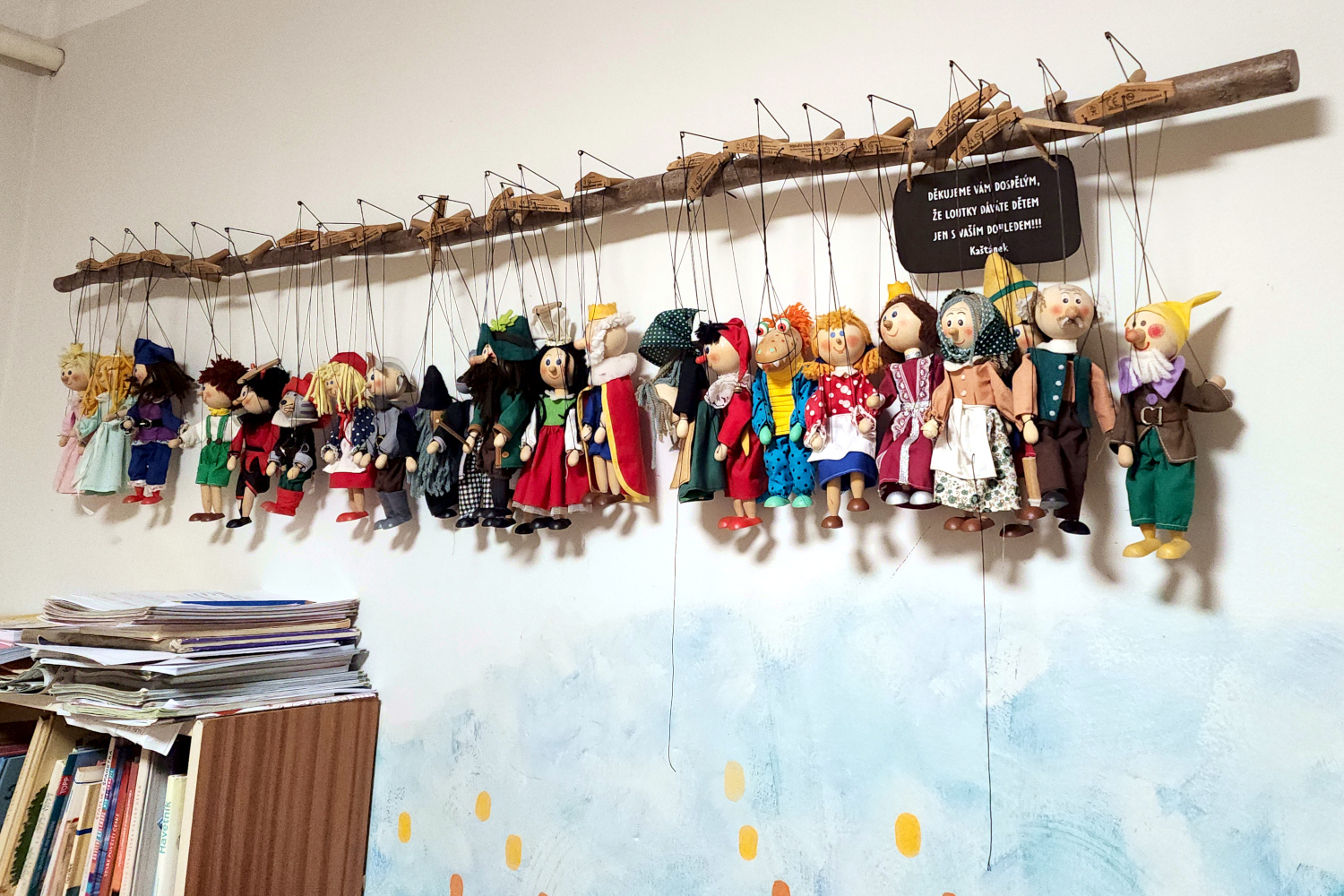
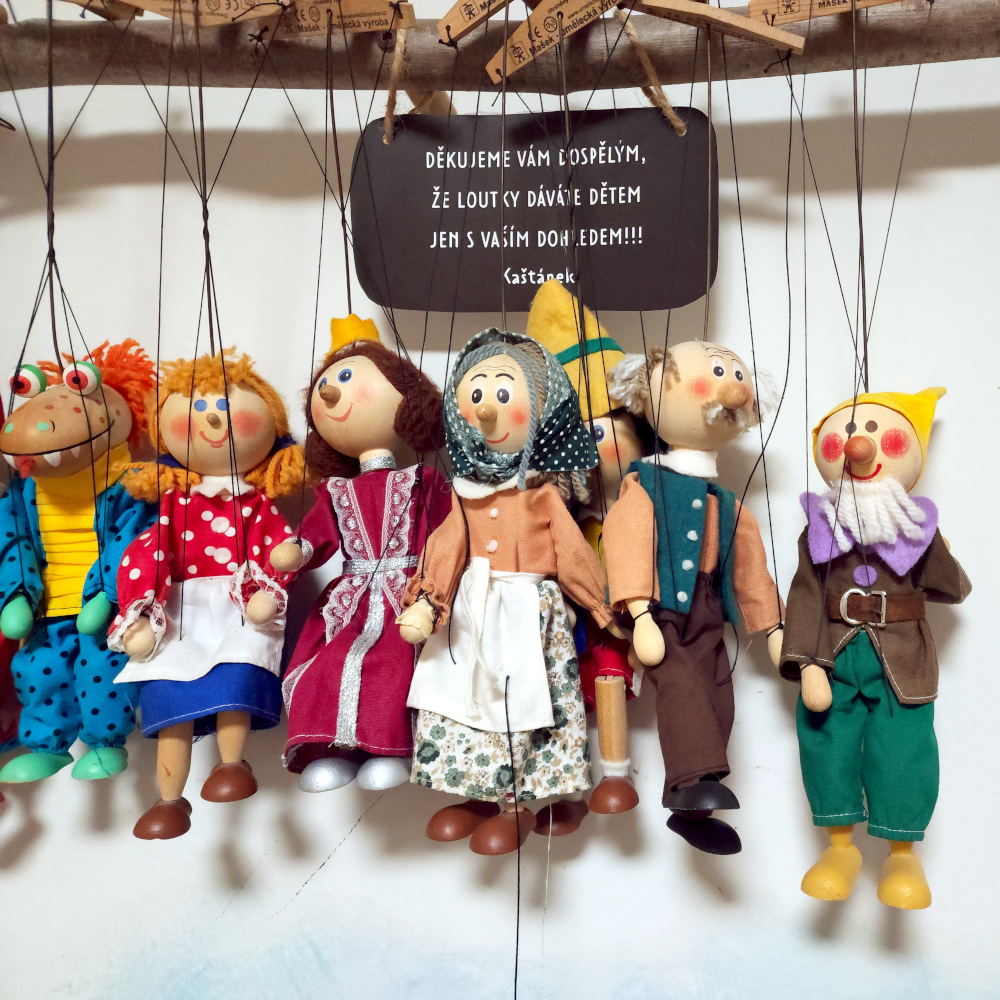
So with our bellies and our pantry full, we settled in to our warm beds for the night, knowing that we would have a very short commute to work in the morning — just out of the bed and down the hall, where an army of puppets were keeping watch over the classrooms. Our first visit to the Czech Republic was off to an auspicious start.
Events occurred: 3/3/2025

 world travel with a theatrical flair
Leave a comment