


One day after being welcomed to Czechia and the town of Valašské Klobouky in a most festive fashion, we get busy doing what has been our purpose on this global adventure all along: volunteering — in this case as teachers at an innovative little school, where we’ll be volunteering for a month, give or take a couple of days.
First, we both sit in on English classes, though there is little we can do at this point besides observe. Then we split up, with Kimberly going into another English class, and Dennis going into a math class — where he’s really impressed by the teacher’s hands-on approach, involving tangible real-world objects such as dice, and a measured pathway in the hall to help the students visualize the operations of arithmetic.
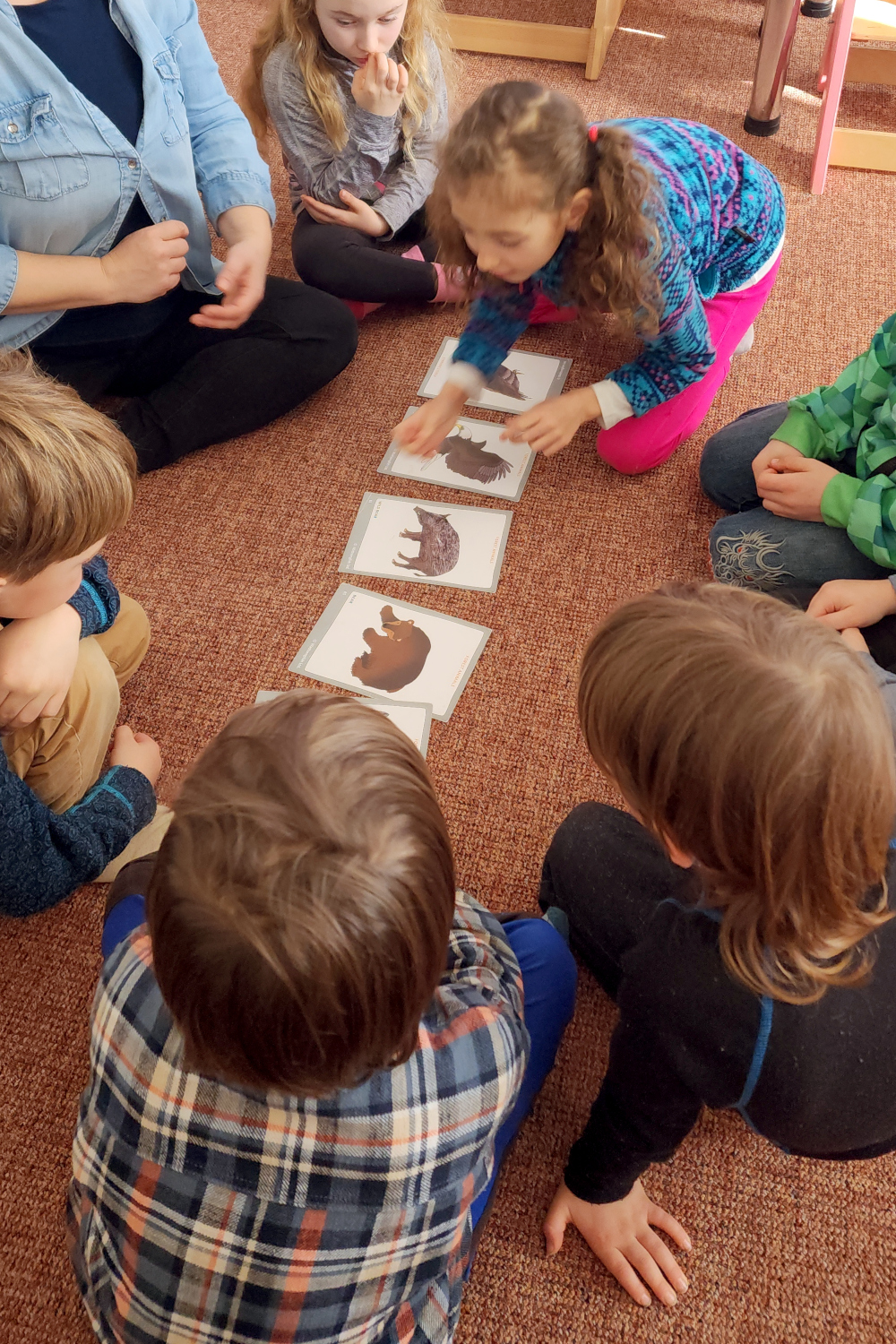
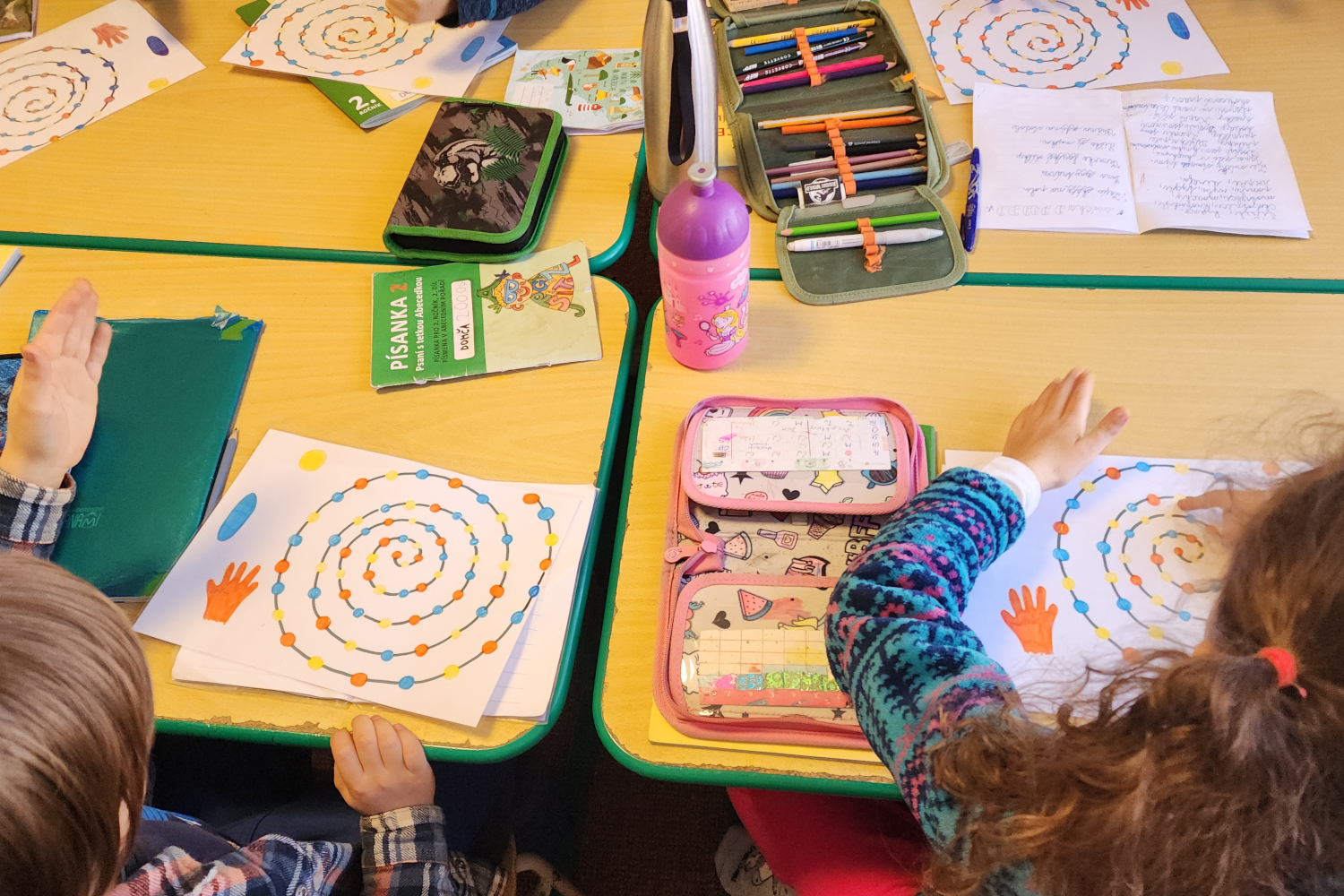
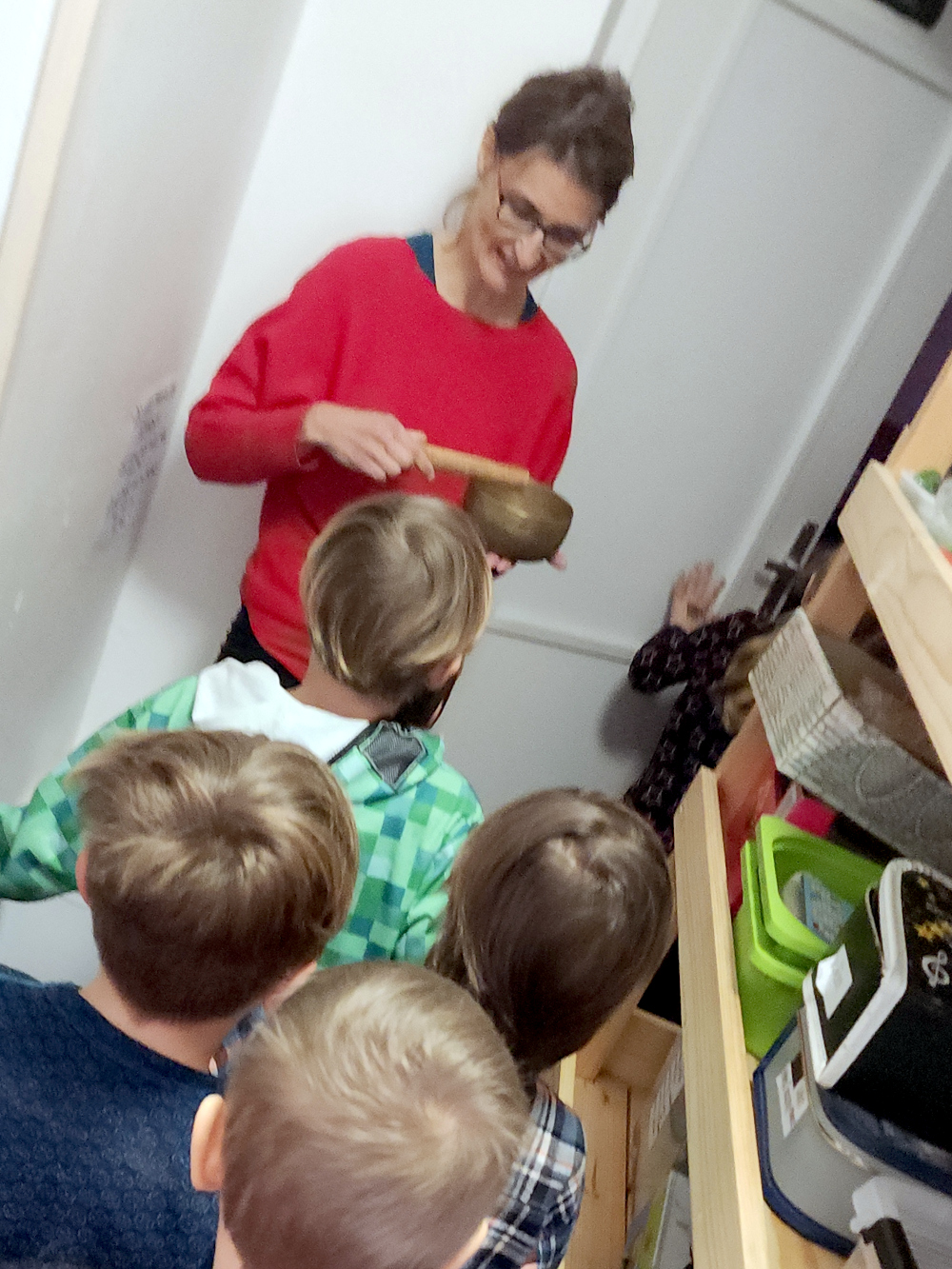
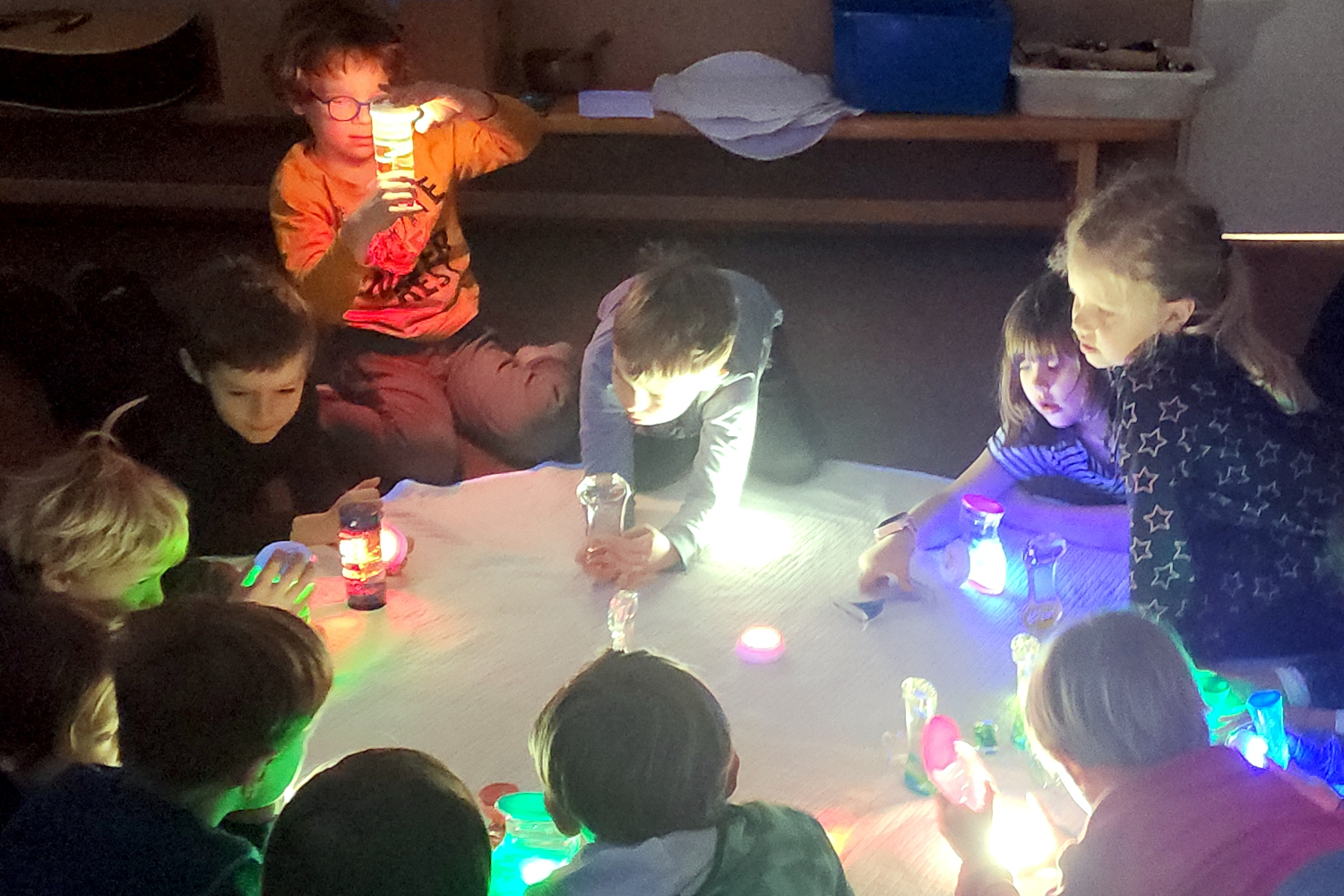
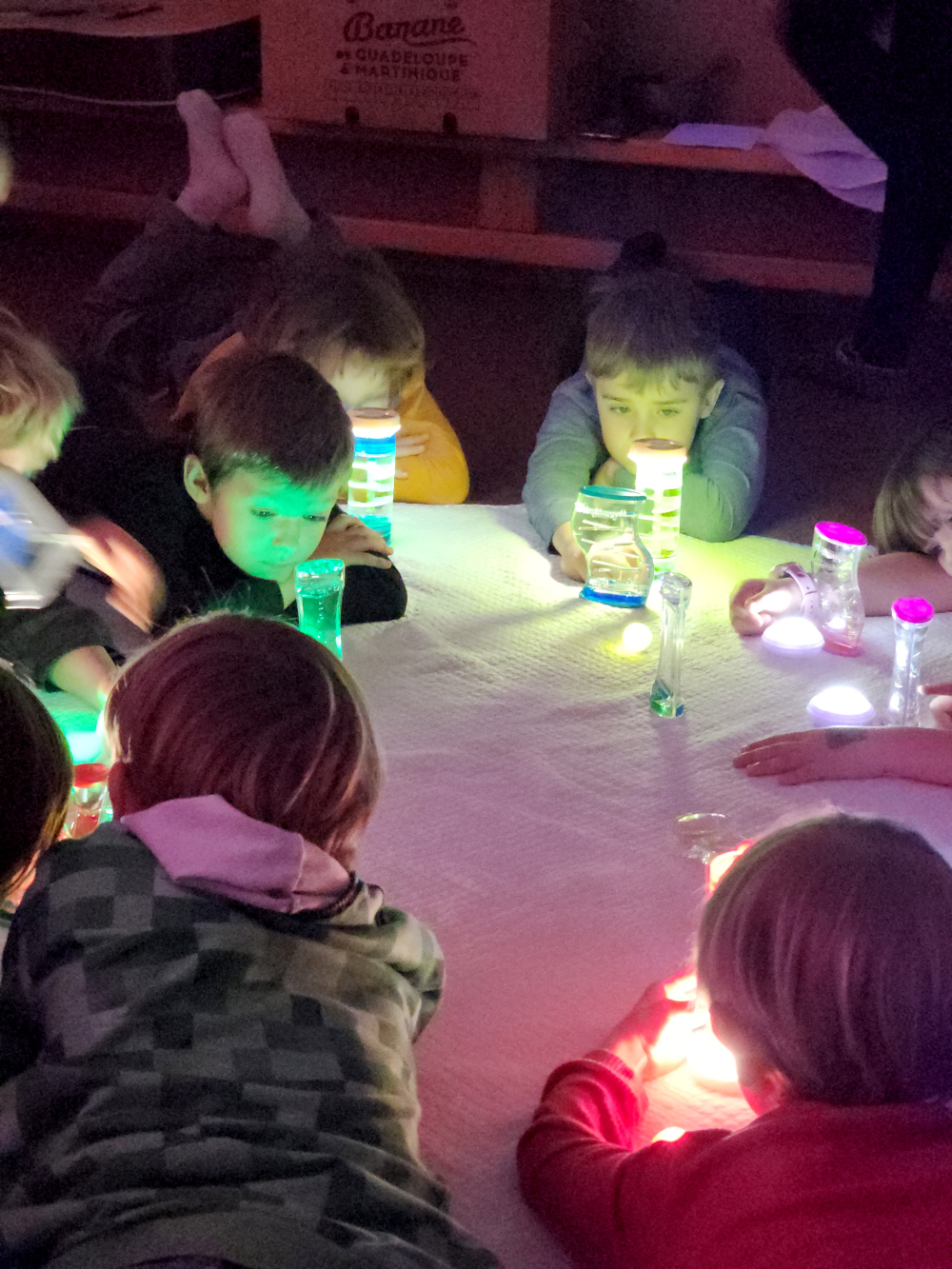
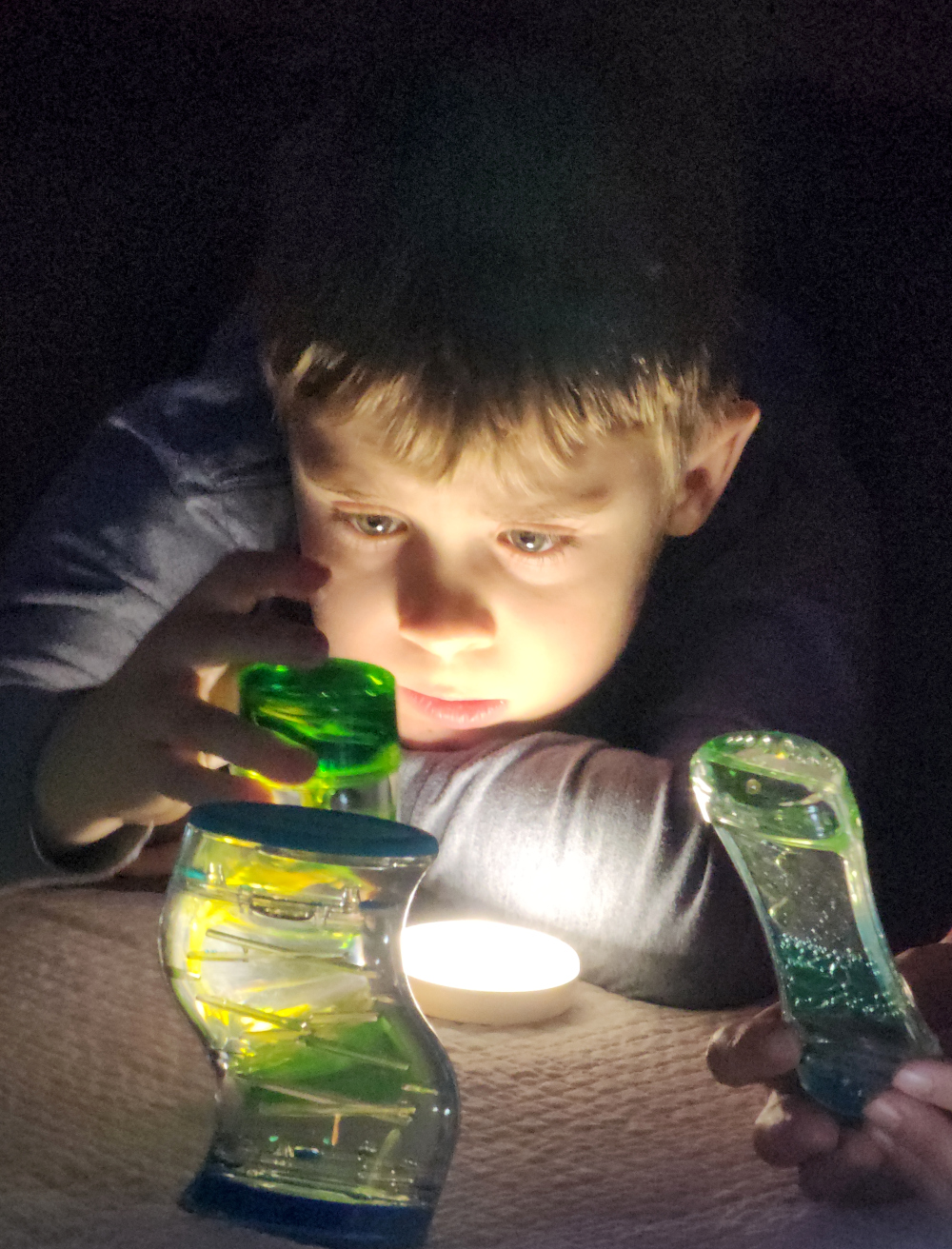
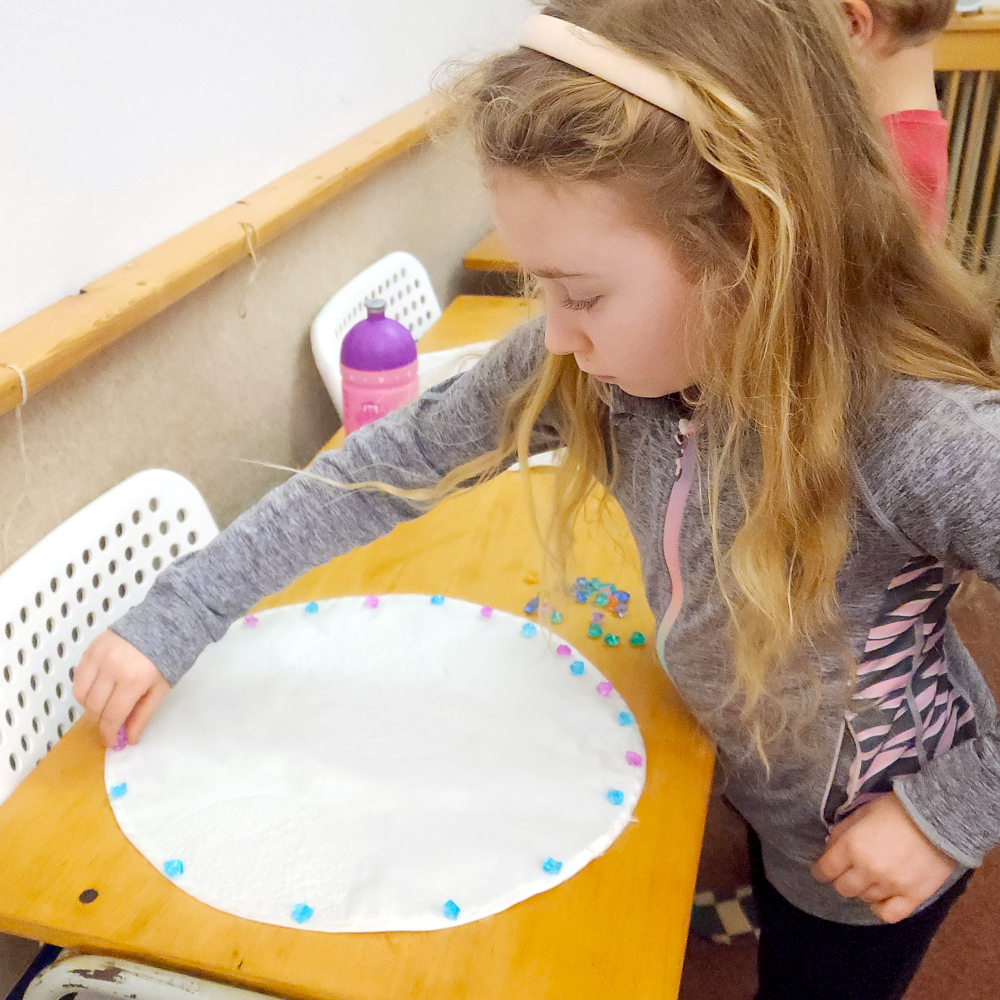
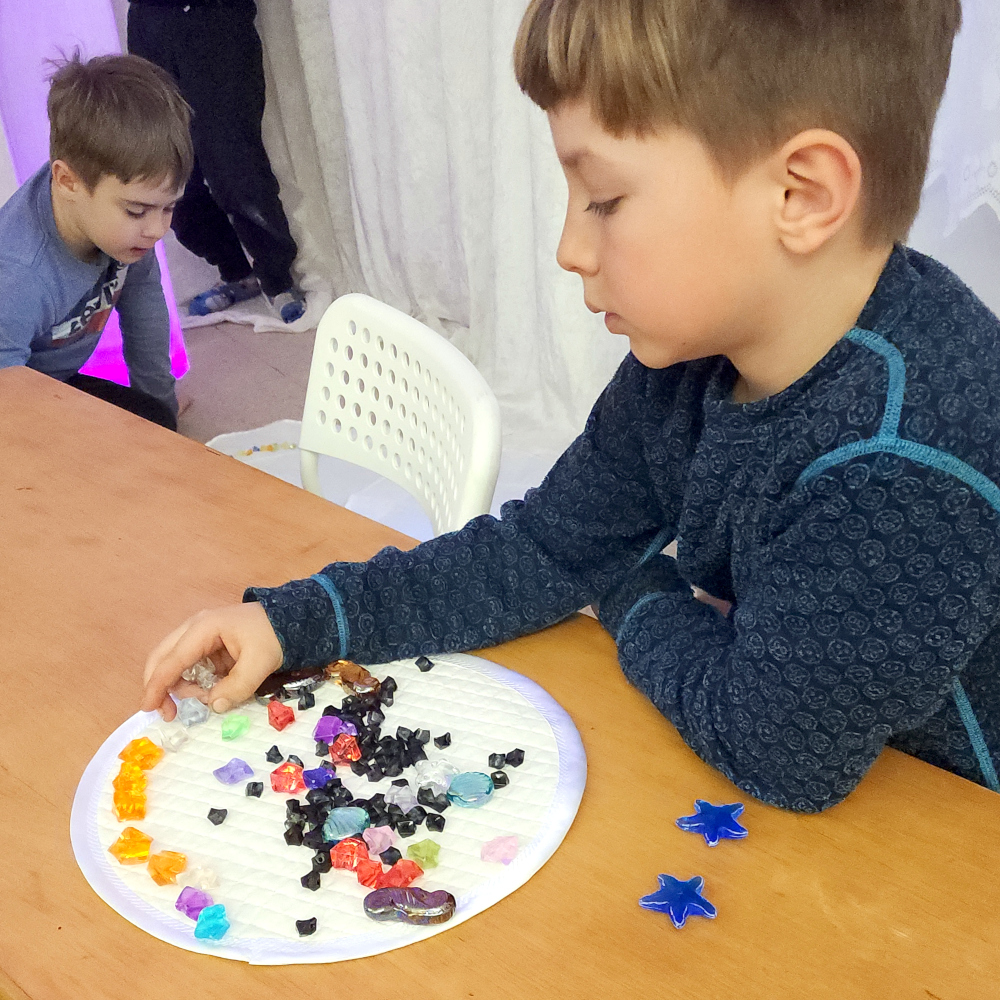
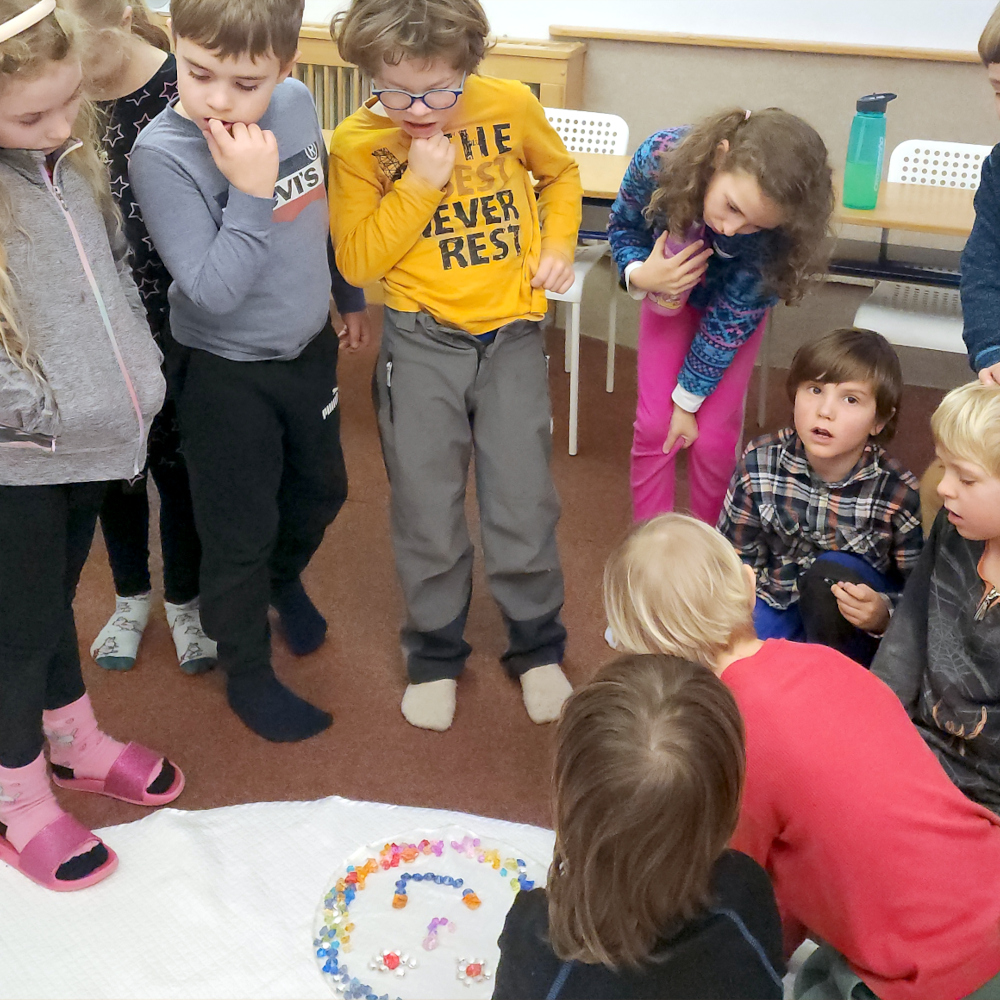
Kimberly observes a Snoezelen session for calming bodies, minds and building social emotional awareness. The students are welcomed at the door by teacher ringing a sound bowl. When they enter the darkened room, peaceful music is playing. They gather round to gaze at lava lamps and discuss their feelings. When the lights come back on they create art pieces by placing beads on circle mats. When they finish they have the chance to explain their artwork and ask each other questions.


Dennis heads off with another class to walk to a park that would have been about half a mile away, if they used miles around here, for art class. In the park, everyone pulls a card with a word on it (in Czech) and makes an image illustrating the word, using various media including crayons, pens and water colors. The students have a source of guidance, because depictions of those items (many of them animals) are located on signage throughout the park.
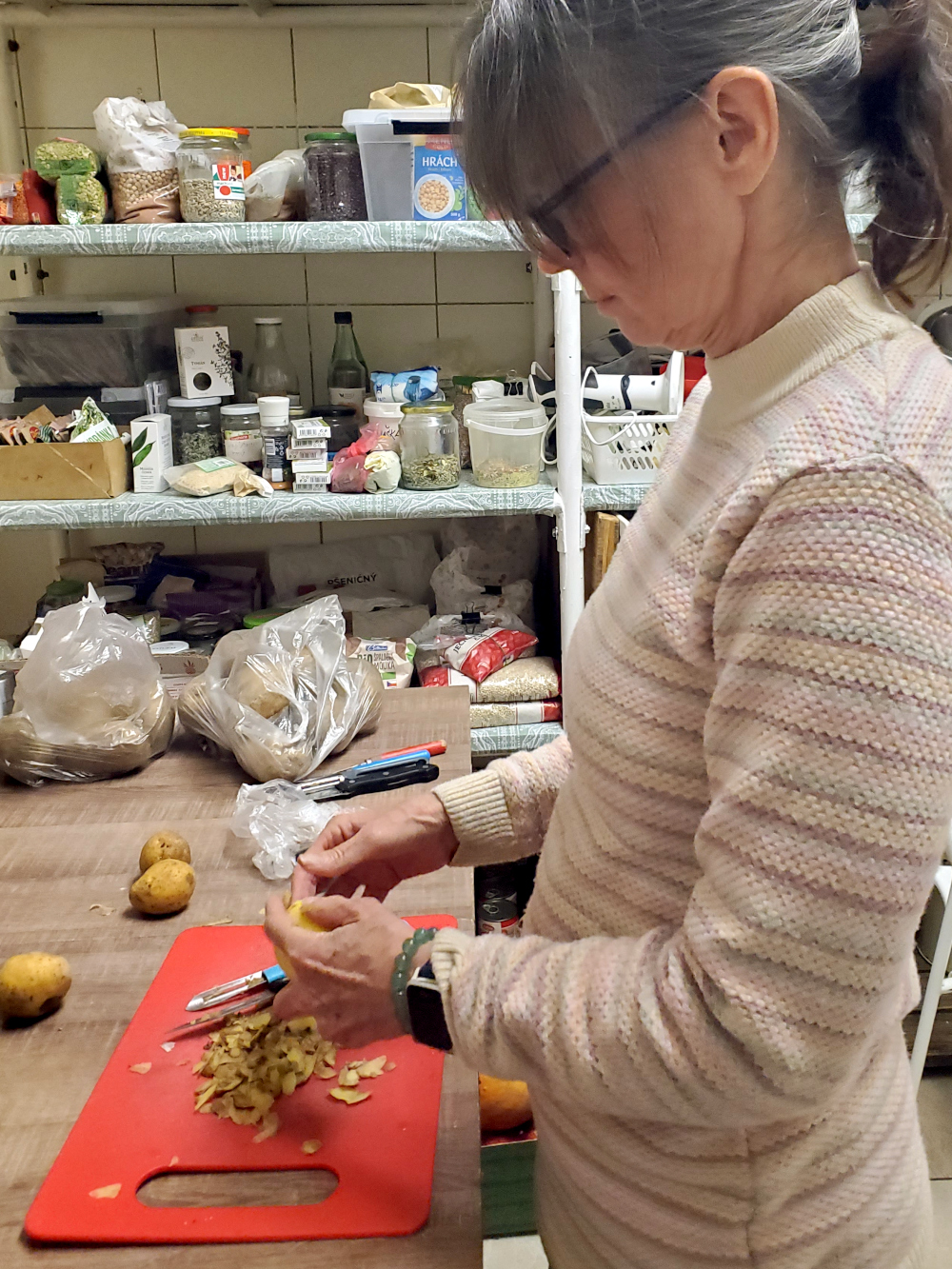
Lunch is provided at the school, and the cook knows that there are vegetarians aboard. And often, there will be leftovers which we are free to partake of for dinner. Nonetheless, we’re issued another stipend of 800 koruna (35 dollars), all in coins this time, to accompany the 500 we were given the day before, to buy any additional groceries we crave.
Our market of choice is a supermarket called Lidl, just down the street. It’s somewhat comparable to Aldi — even to the point of requiring you to bring your own bags — and offers a wide variety of goodies at very good prices. There is a bakery on the premises, and we’ve become quite enamored of baked goods lately. Not sweets, mind you, but somewhat healthier sorts of buns and rolls. And this market churns out quite a few types that are scrumptious.
Moreover, we quickly learn that there is a discount bin for day-old bakery products; and if we arrive when the store opens at 7:00, a.m., the bin is a cornucopia. But we are not the only ones who’ve discovered this; about half a dozen customers will be there every morning, ready to pounce like Black Friday shoppers. One fellow in particular, a seemingly retired gent, will be right there at the head of the line. And as soon as the doors are flung open, he makes a mad dash for it, scooping up a cartload before anyone else can claim a spot at the trough too. If he sees you waiting in line, and senses that you are a bakery competitor, he sizes you up like a WWE combatant in the ring.
The second day on the job, we begin what we’re really best at: working with the students on theatrical activities. That was our bread and butter for several decades in the U.S., and we always relish a chance to jump back into it in a manner by passing the craft on to another generation.
One of the teachers gives us a lift to the town of Brumov-Bylnice, where you can spot the 800-year-old Brumov Castle looming on a nearby hill. The town is home to the nearest major performing arts venue, the Kulturní dům (Culture House), a genuine theatre with a genuine stage (though the seats are of the portable type, and have been cleared out of the auditorium at present).
These youngsters eagerly strut their stuff in a gamut of theatrical warm-ups, games and activities; and we begin teaching them a story to perform for a live audience at an upcoming event. The story is one we call “Silly Boy” (or sometimes “Silly Girl”, as the casting warrants), but we always knew it as “Simple Ivan”. It’s a Russian variant of the classic “noodlehead” story, about a simpleton who tries to follow his mother’s advice, but consistently applies the wrong actions to the wrong situation, with hilarious results. It was one of our favorite tales in our performing days; our version, which we acted out entirely in pantomime, was a big hit with audiences, and we revived it several times. We’ve found that it’s the perfect choice to teach young thespians.
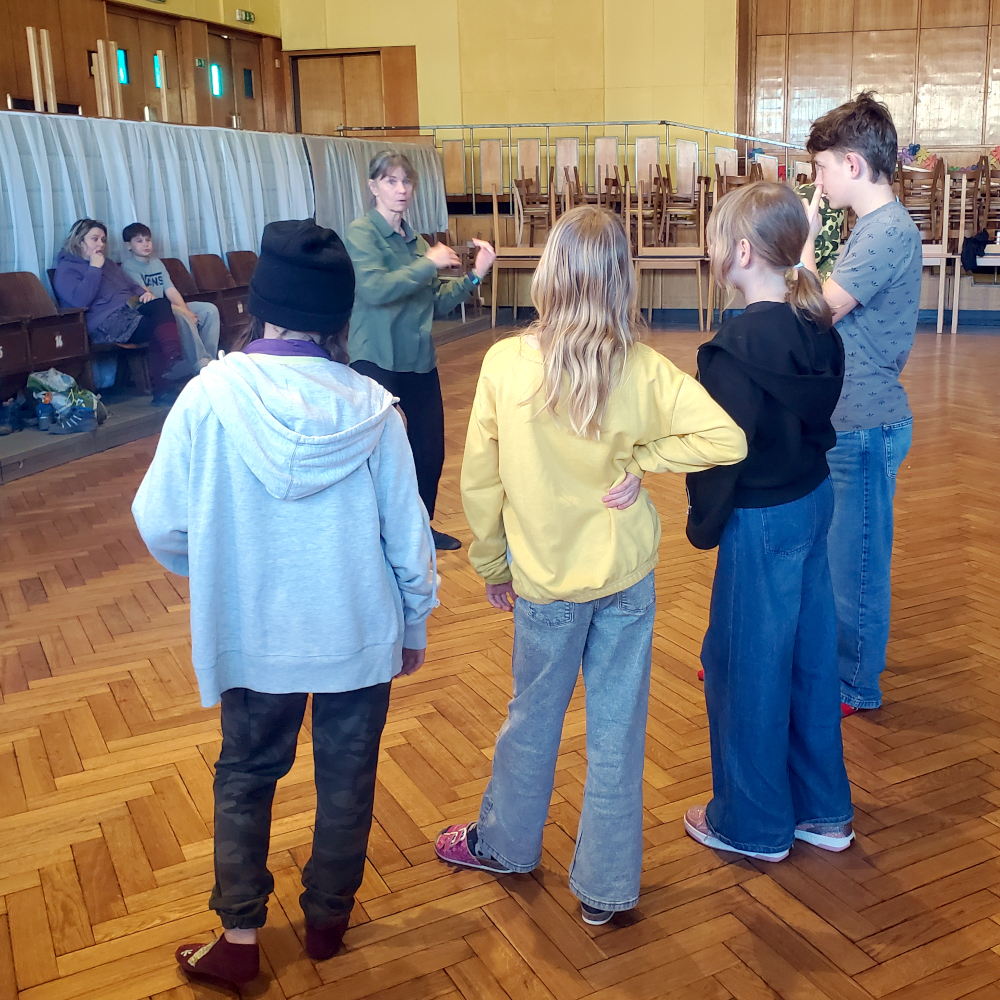

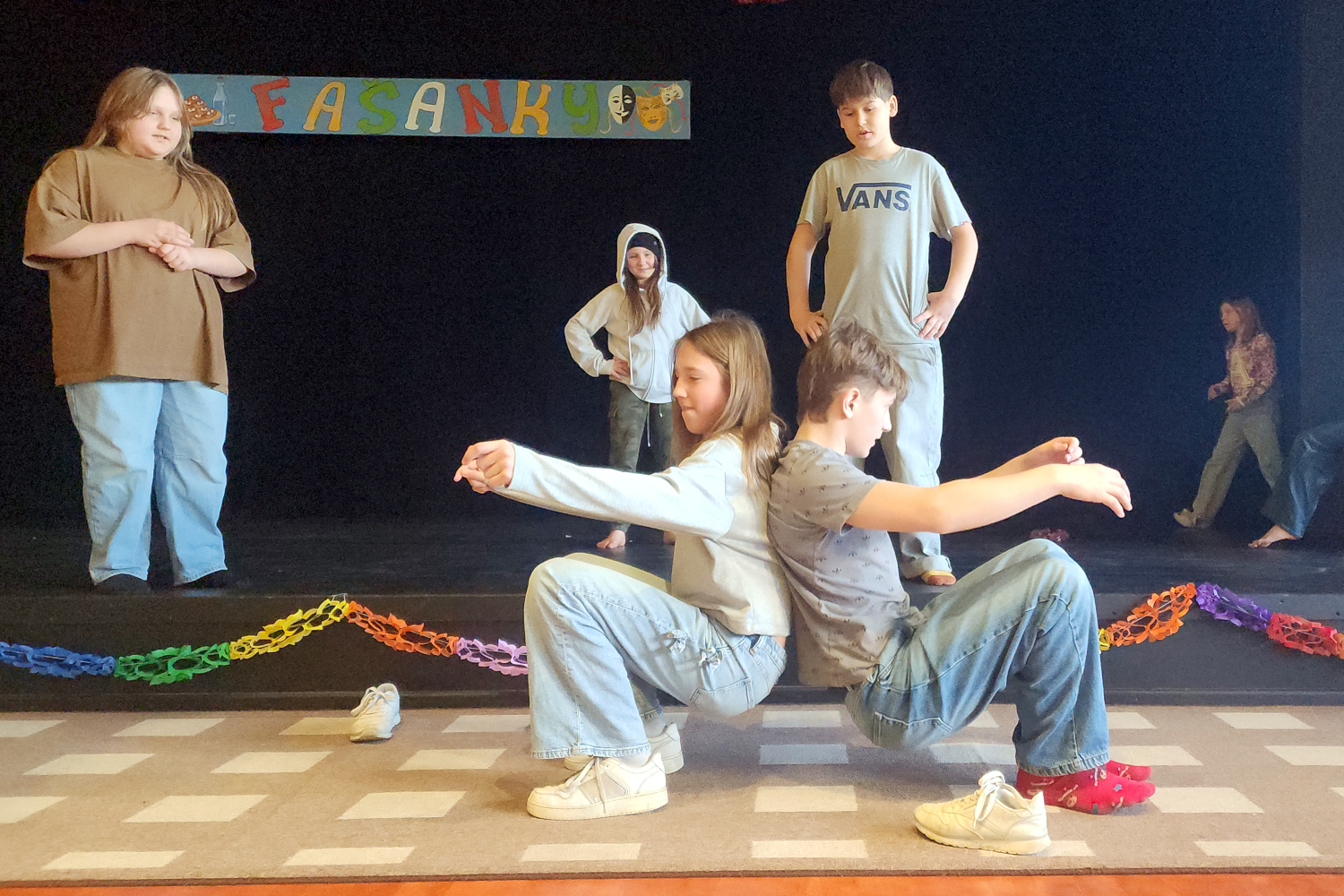
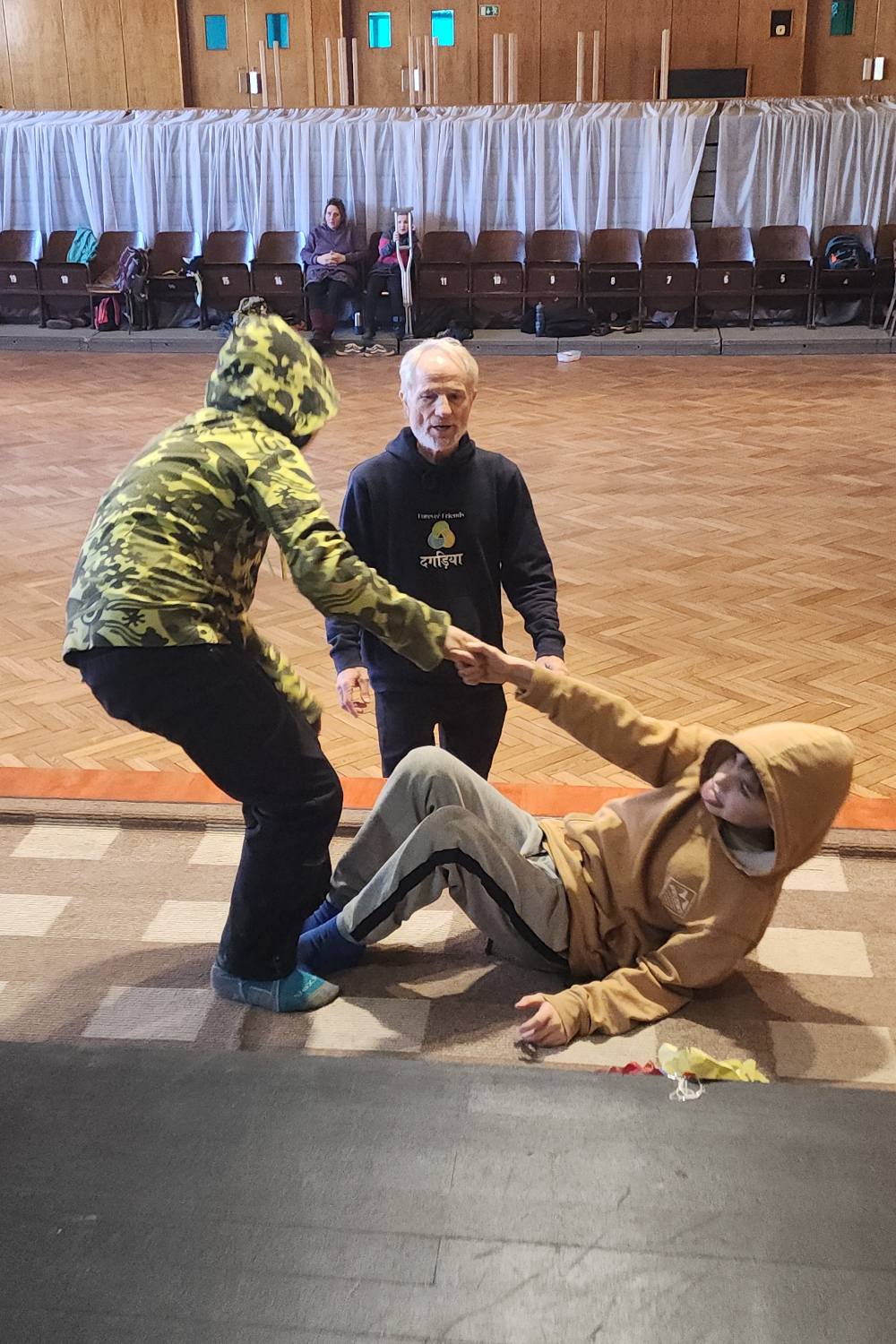
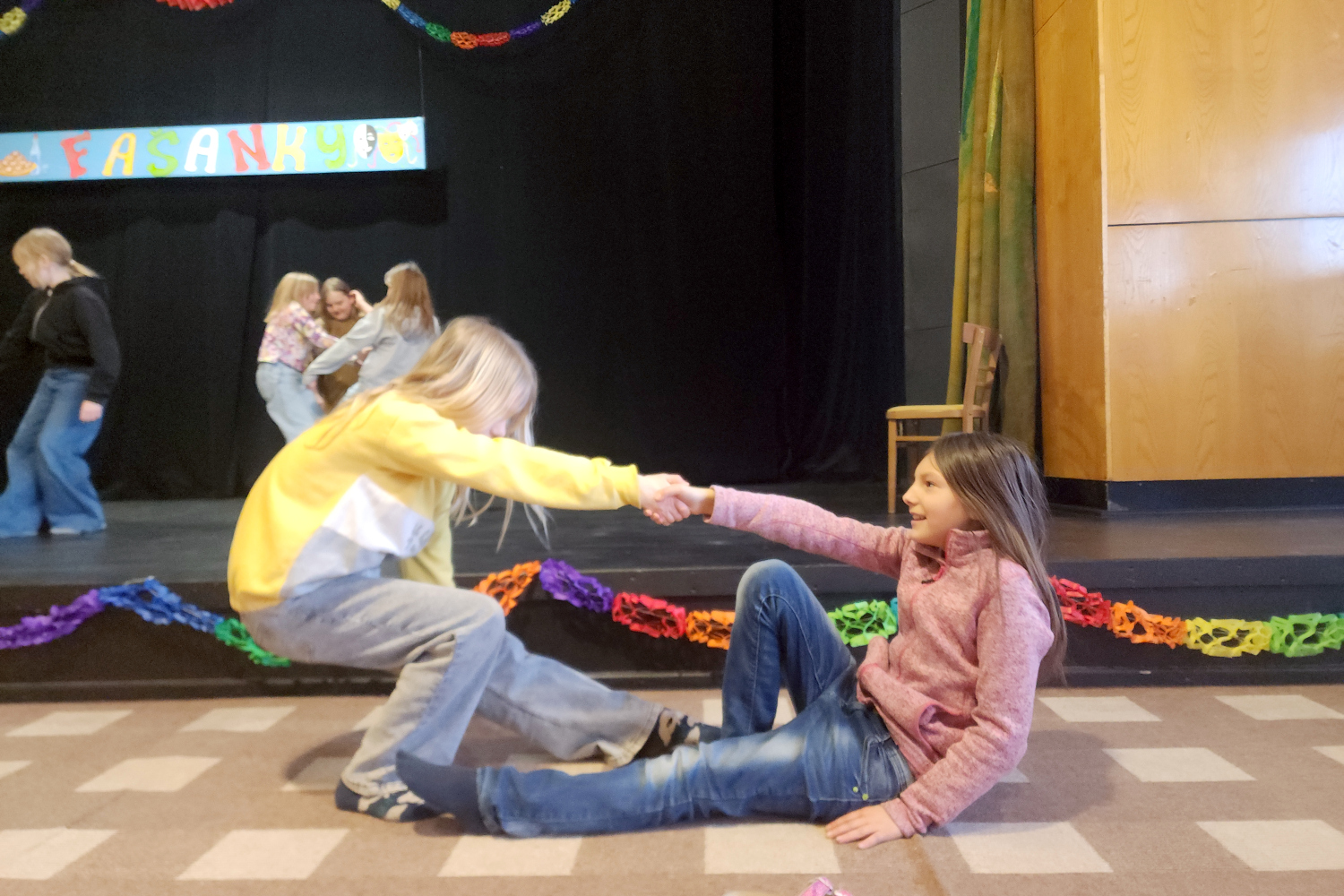
Kimberly also introduces them to a folksy style dance she’s choreographed to the American folk tune “Cotton-Eyed Joe”, which has also become one of our staples. Wherever we go to teach, we have the locals doing a hoedown by the time we leave.
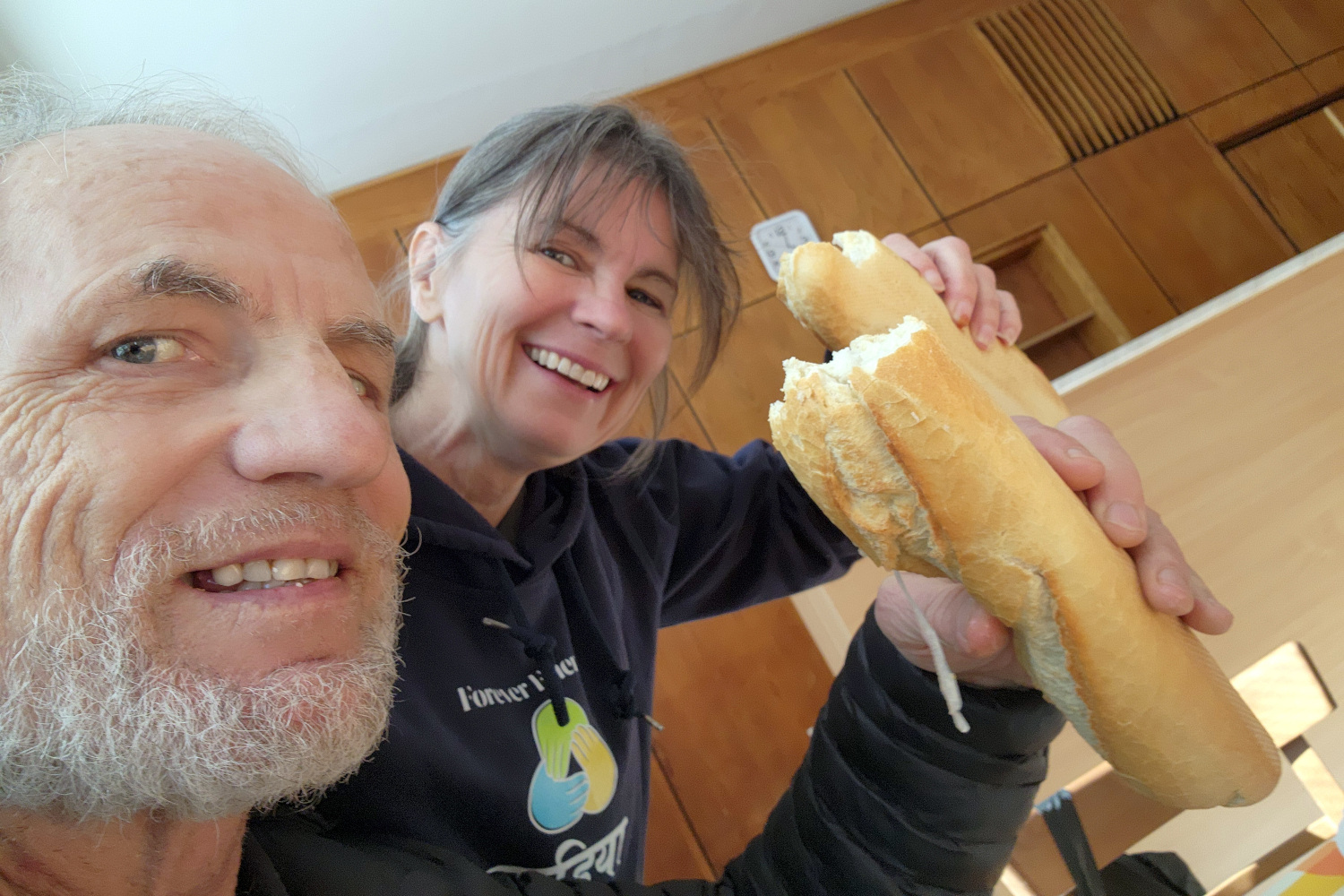
At lunch, rather than go back to school to eat, we have a special treat there at the theatre. In honor of our visit, the teacher and a couple of assistants prepare what they regard as an all-American meal: footlong hot dogs. Aware that we are vegetarians, she’s managed to track down some pretty decent veggie dogs for us, to go along with the meat dogs that everyone else has. In a sense, it’s rather American; but on the other hand, it’s served with cucumbers, sauerkraut, and — of all things — Camembert cheese, making it as much German and French as anything, Still, the combination works surprisingly well, and the concoction ends up being pretty tasty, no matter how you pigeonhole it.
Anyway, the first day exemplifies how volunteering is not just about giving; it’s about being part of a community, learning its quirks and treasures, and leaving behind not only lessons but shared memories. It’s about cultural exchange. And we’ve certainly done that today.
Events occurred: 3/5-6/2025

 world travel with a theatrical flair
Leave a comment