

First Day at Angkor Wat
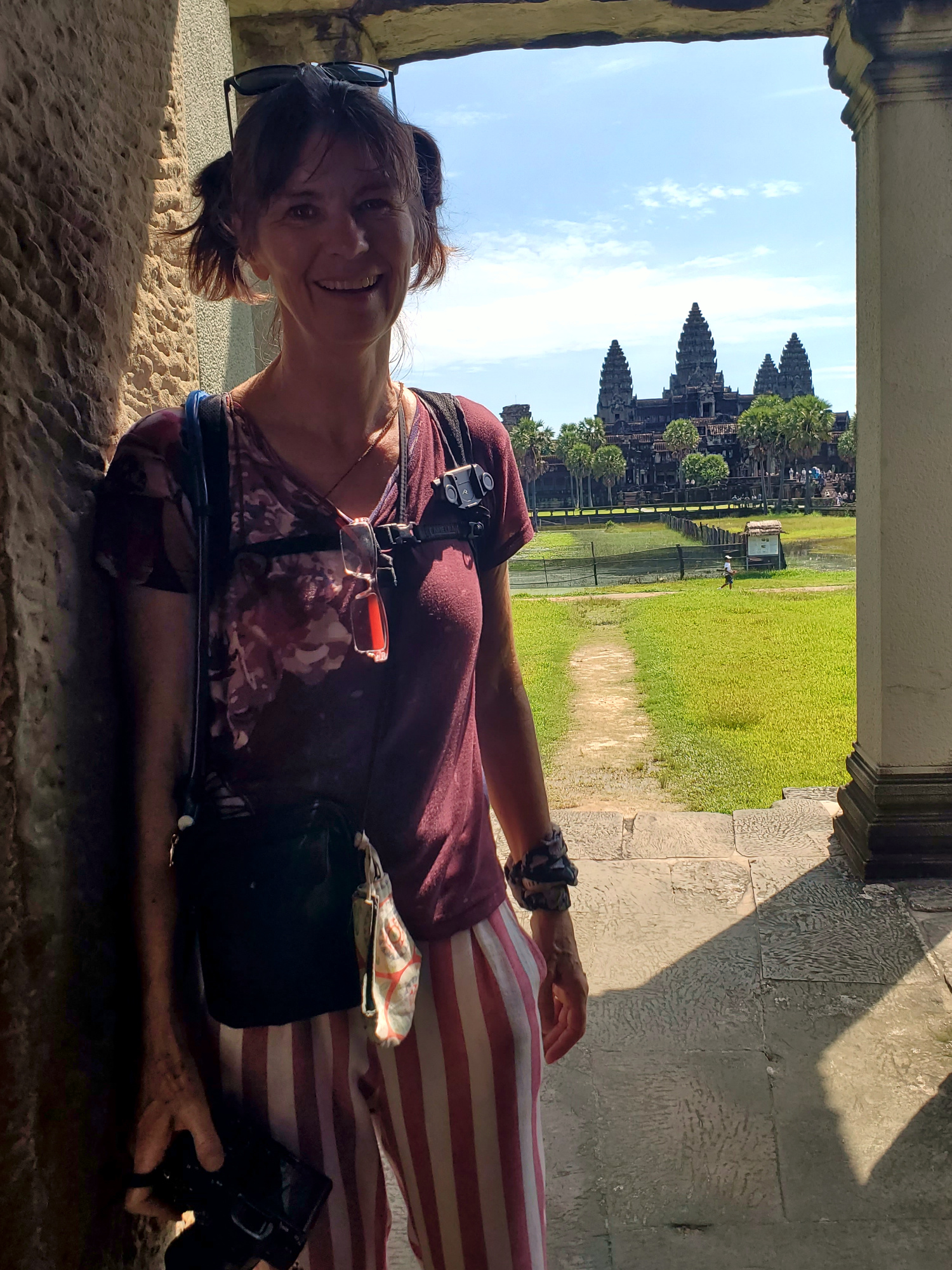
Today was the day. We finally were headed to see one of the world’s most iconic wonders, a site that had been on our bucket list for many years — and now was practically in our backyard: Angkor Wat.

Since it lies several miles outside town, we had to arrange transportation. Fortunately, our school director was eager to drive us out and spend some time exploring the place himself, since he hadn’t been there recently — and there’s just so much to see.
A Ten Day Pass to Angkor Wat
First stop was the visitors’ center, to purchase tickets. There were several options, all of them rather pricey, especially by Cambodian standards — not to mention the standards of shoestring vagabonds. But since this was quite possibly a once-in-a-lifetime experience, we opted for the 7-day pass at 65 dollars each.
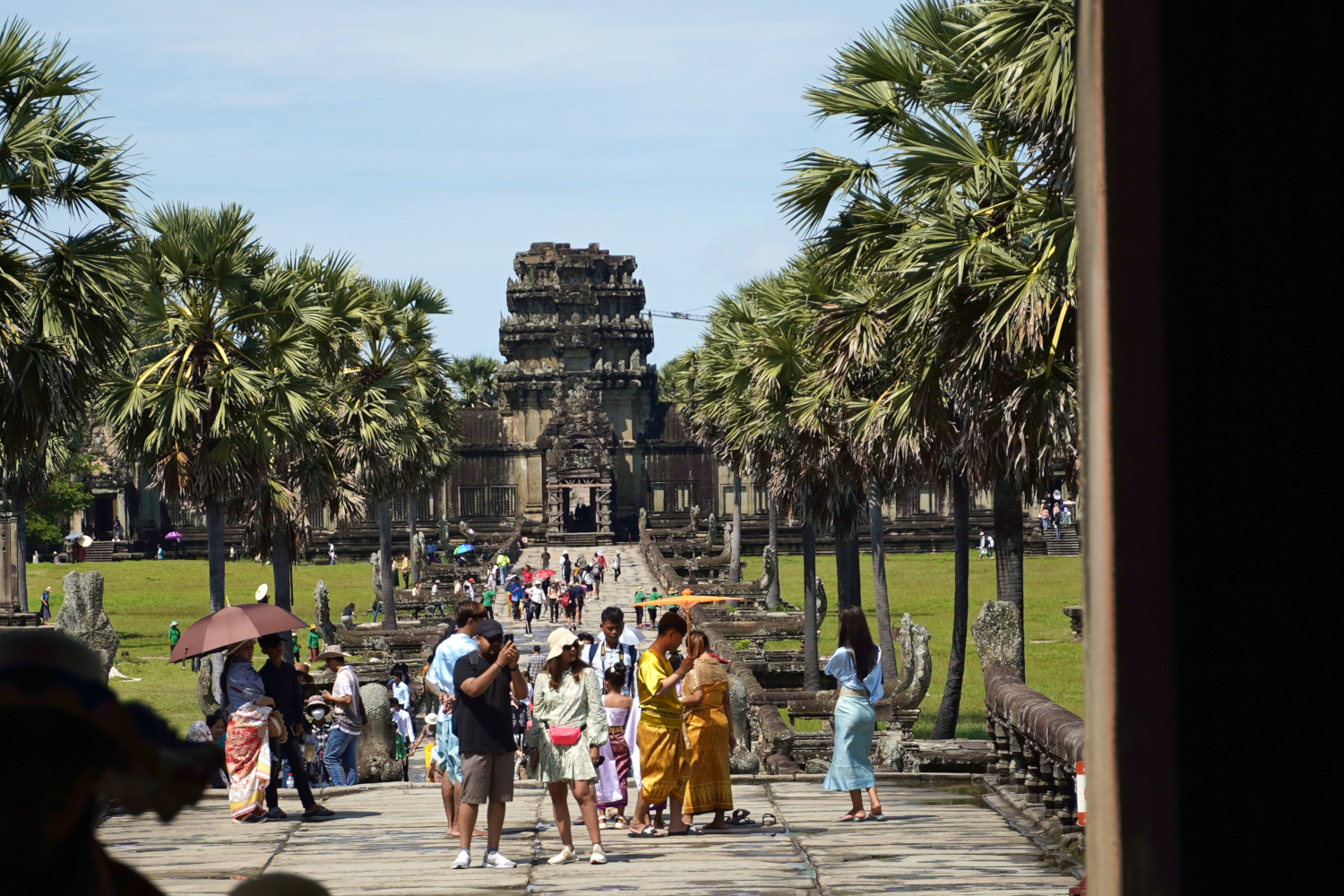
Those seven days could be used anytime within a month, which was how long we’d be in the area. So that would give us plenty of time to hit as many locations as possible, and even come back to some if we so desired. Further sweetening the deal, there was a temporary special that added three free days to those seven. An offer we couldn’t refuse.
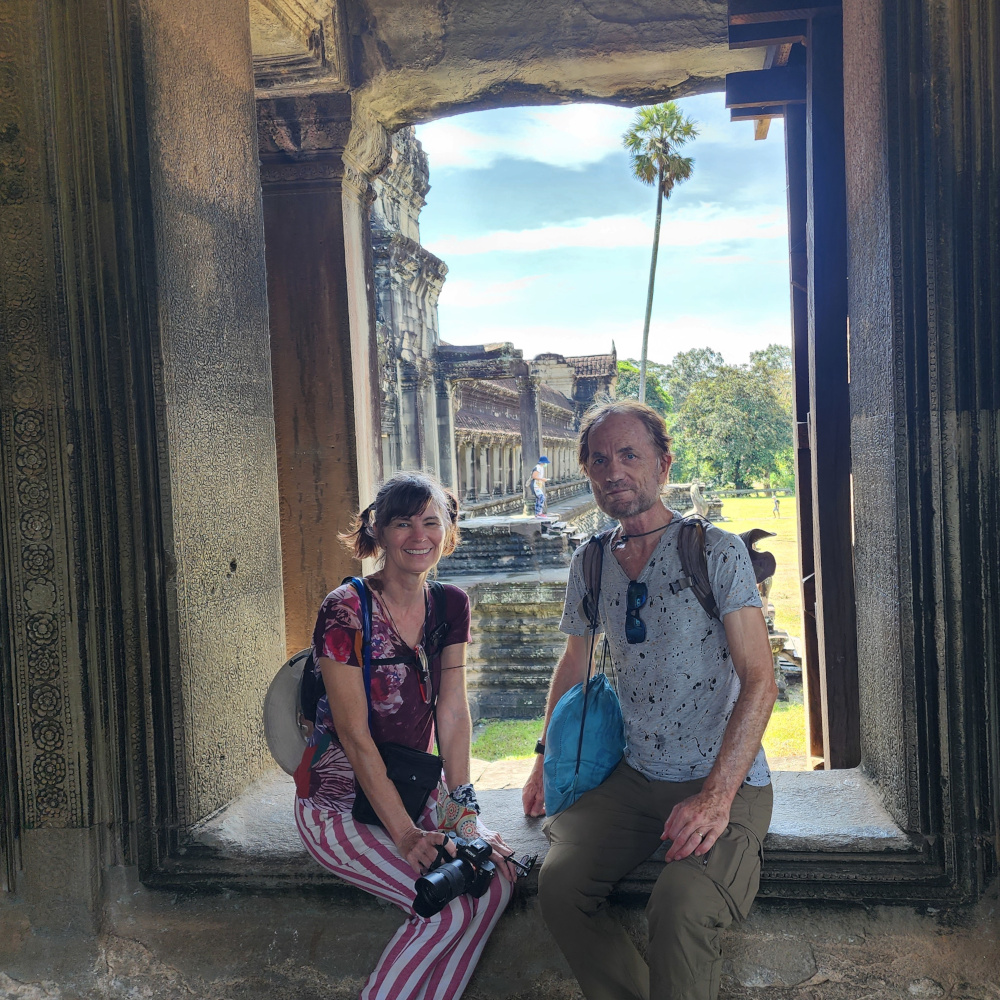
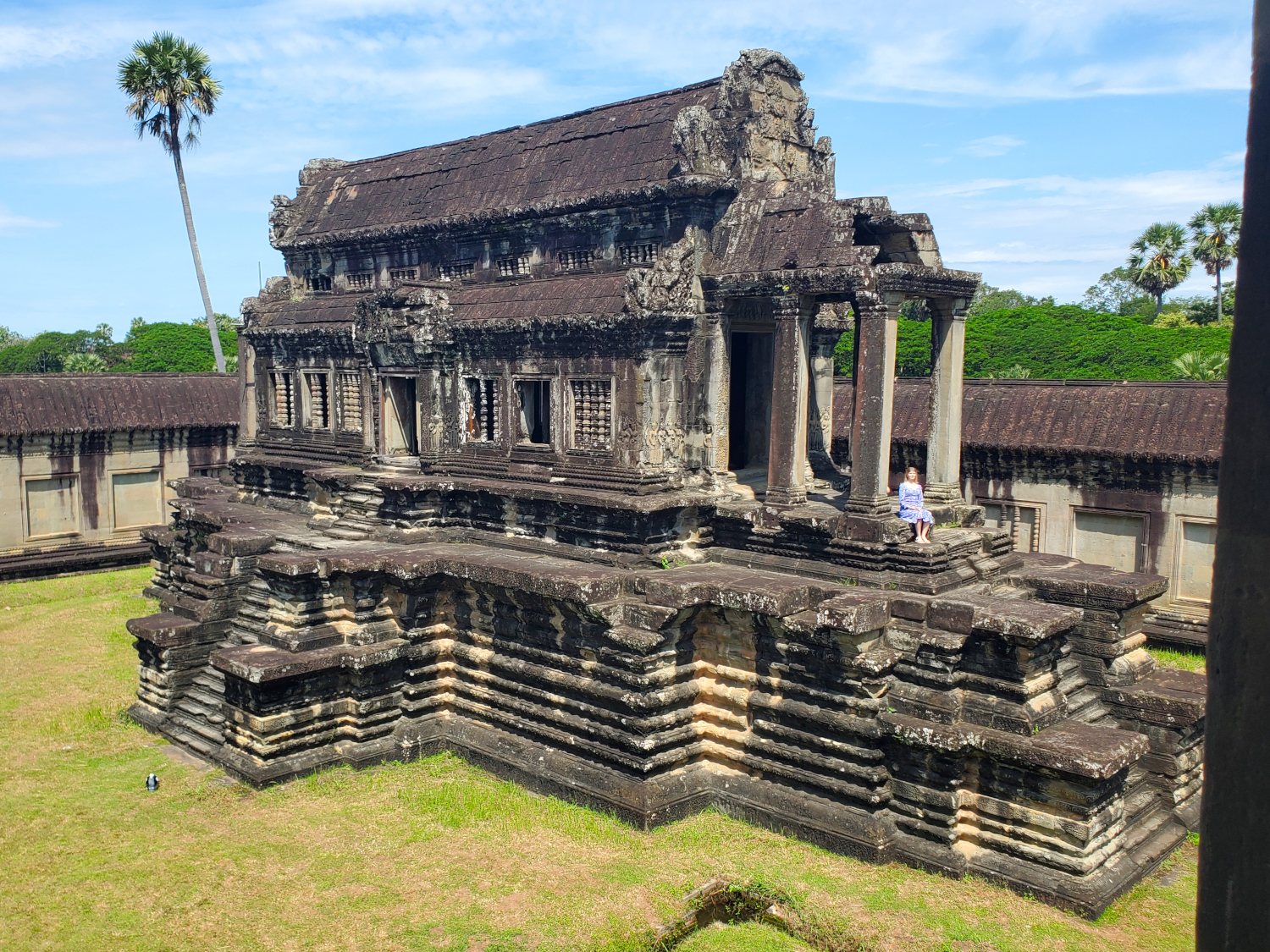
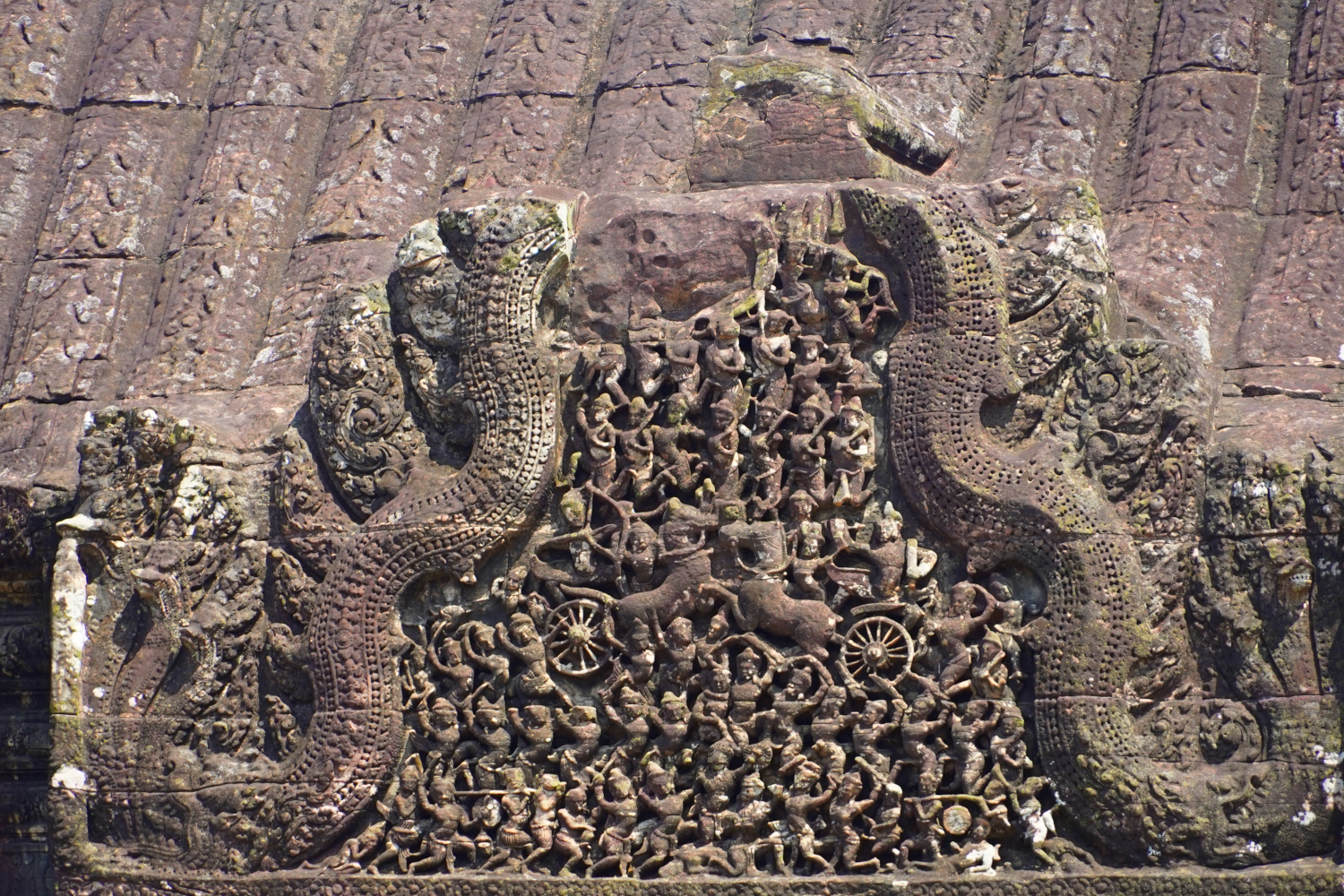
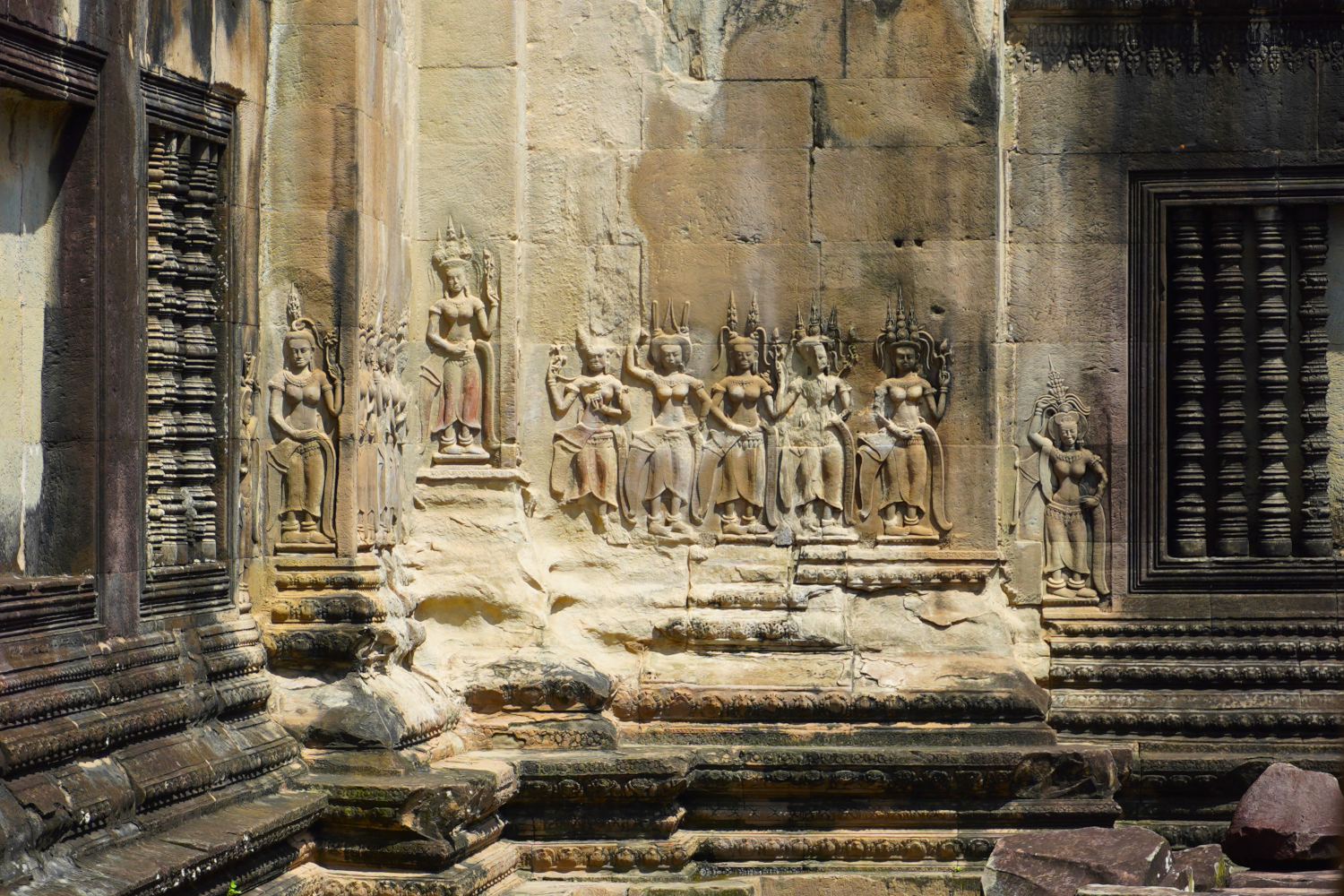
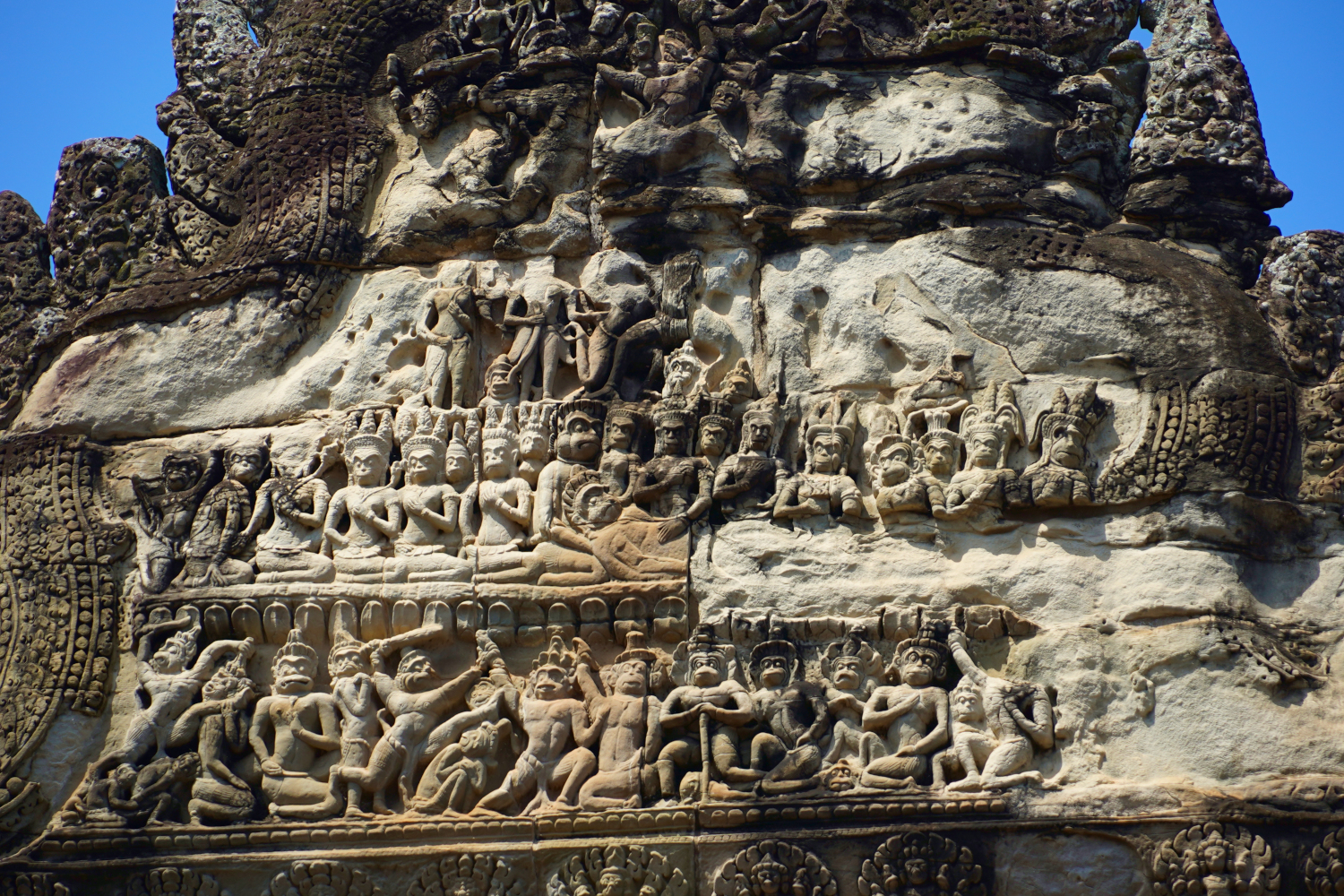
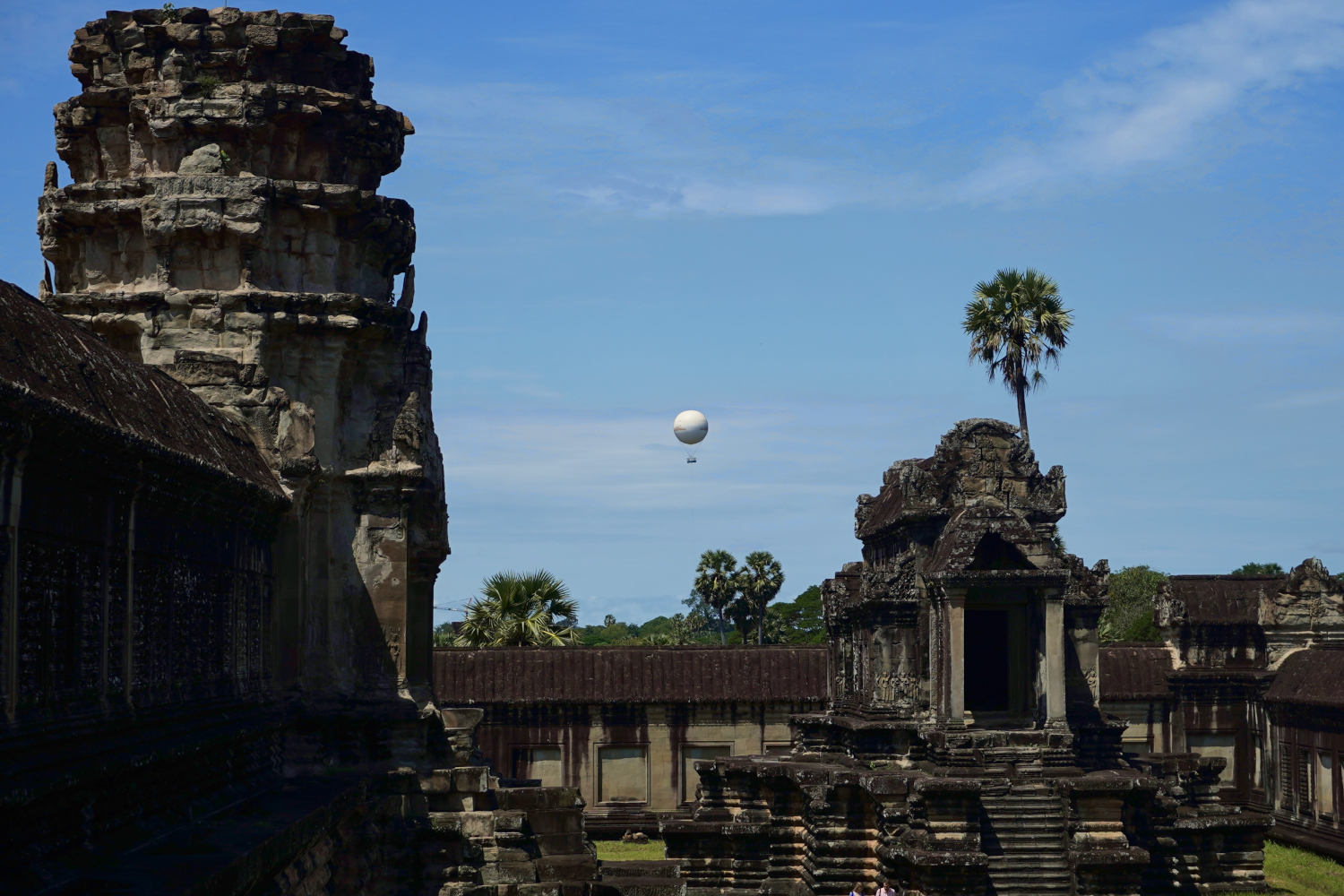
Everybody’s seen Angkor Wat, or at least an image of it. Its likeness even appears on the Cambodian flag, making it the only tourist attraction to be featured on the national banner of any nation in the world.
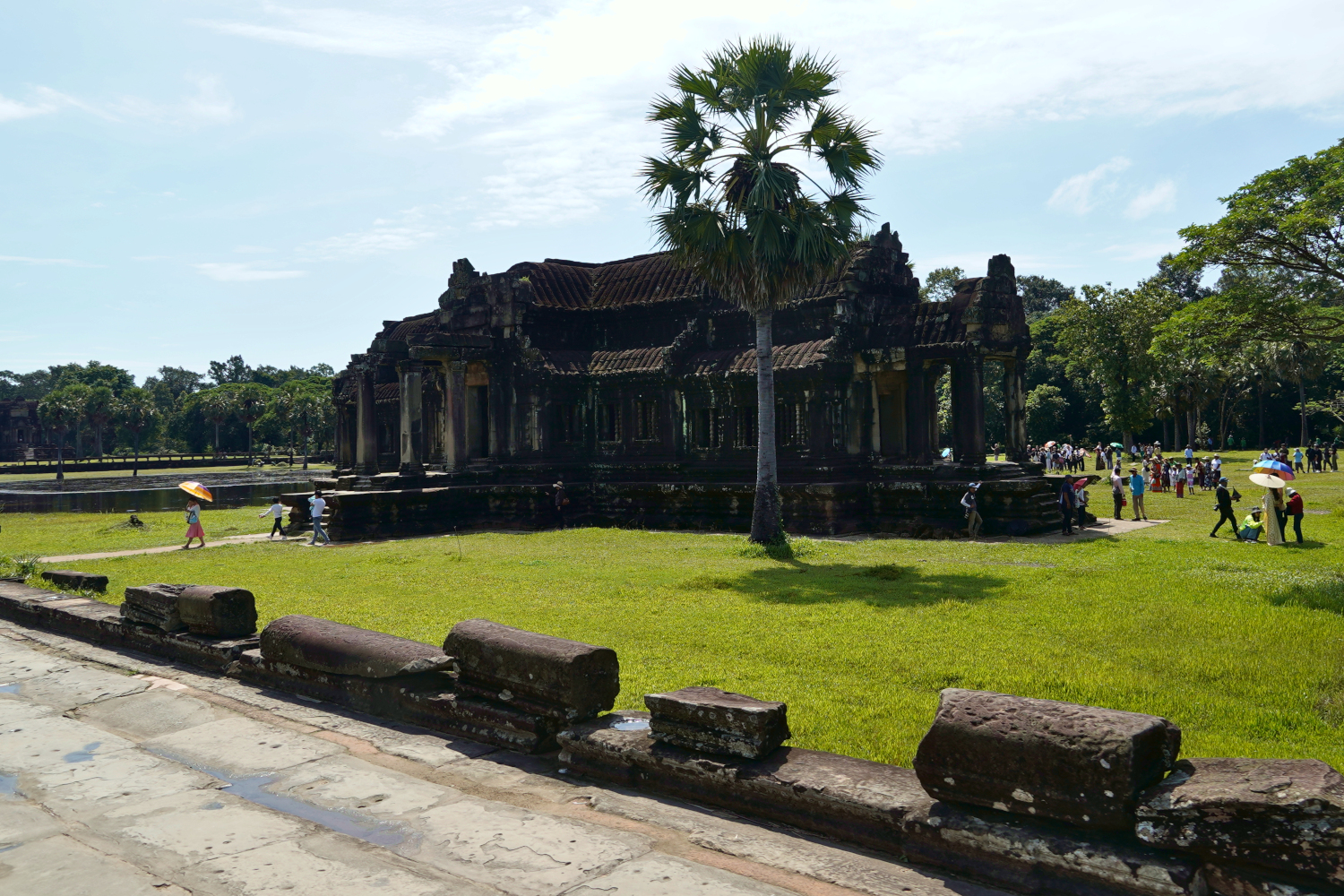
Well, to be more precise, part of it is depicted on the flag and widely known all over the world. A very, very small part. What you always see is one temple out of more than FIFTY, covering an area of about 150 square miles. This was the site of an ancient city — angkor wat means “temple city” in Khmer. The secular structures were made of wood, so they perished long ago. But the temples were stone, so they still stand, albeit some of them in less than mint condition after so many centuries. And since people back then really really loved their temples, there are a lot of them to gawk at today.
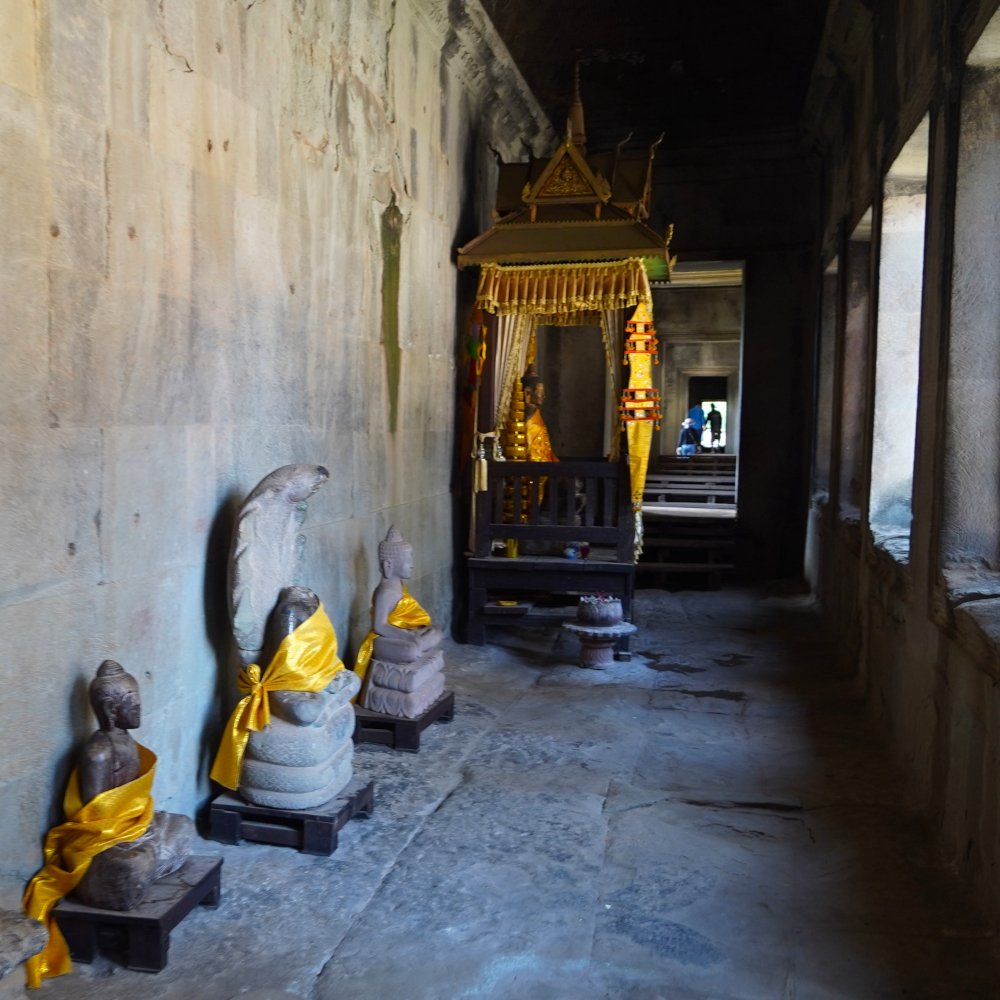
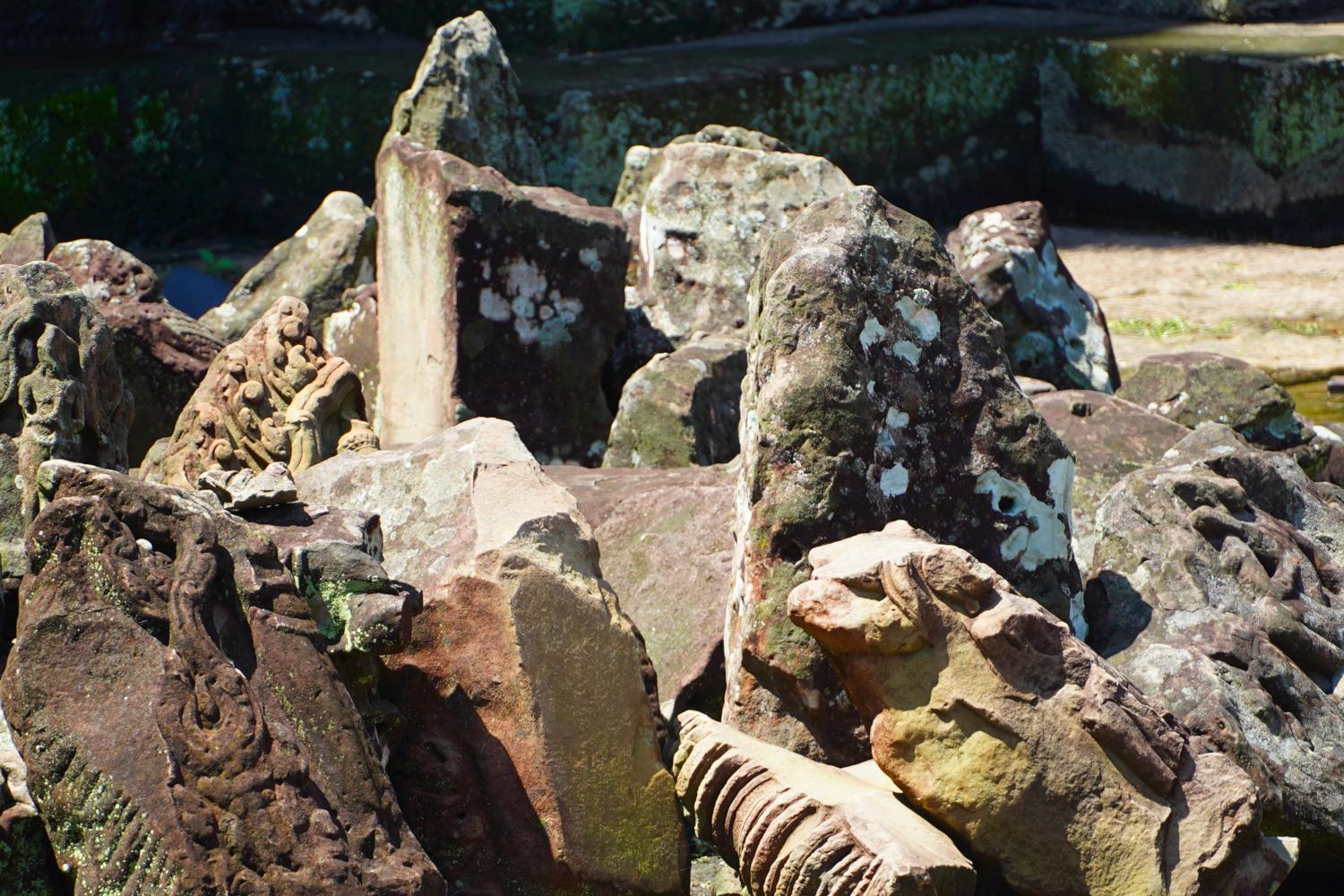
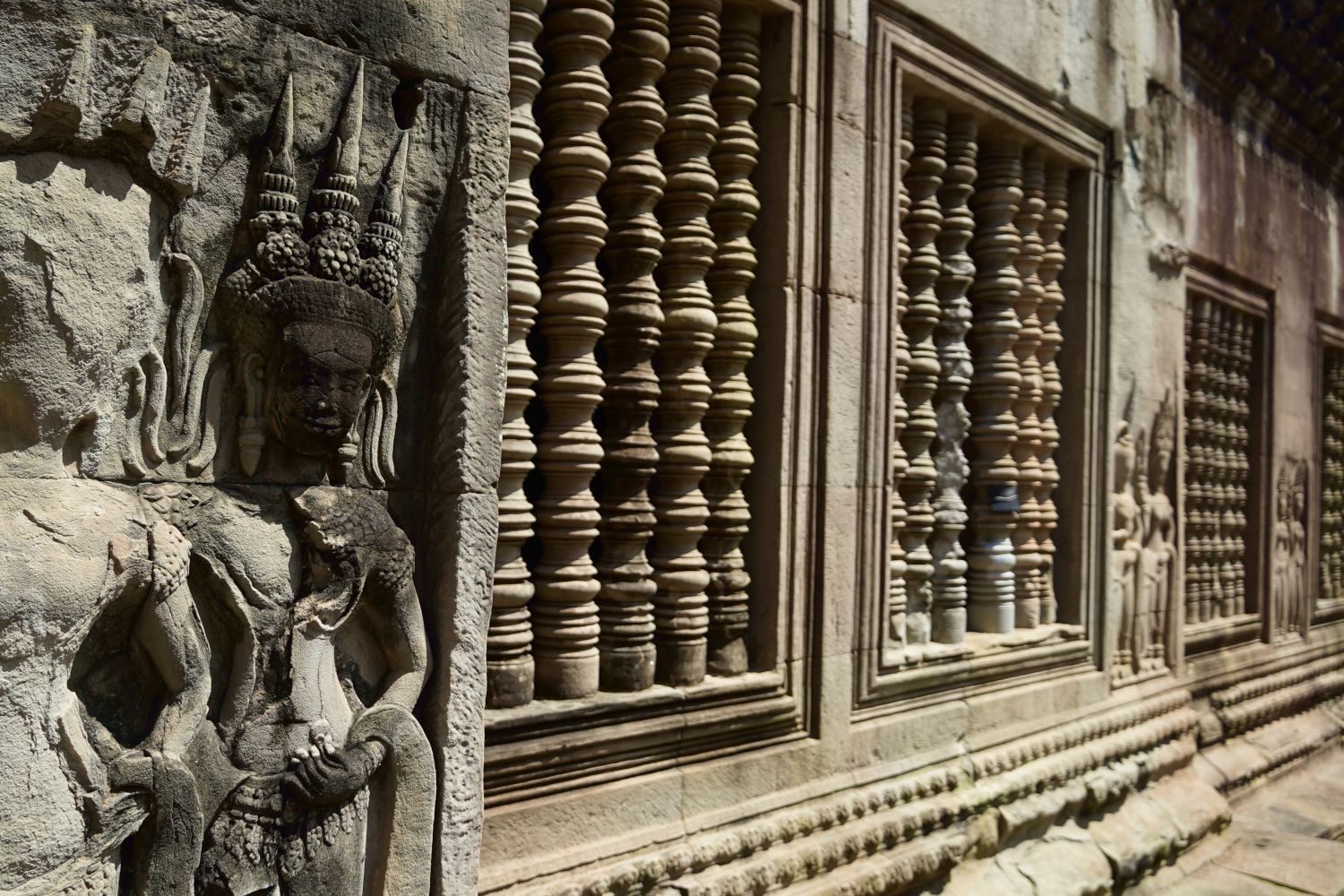
Construction on the temple complex was completed about 1150 CE, making it nearly 900 years old. Originally Hindu in conception, its layout and design details pay tribute to the cosmology and heritage of Hinduism. But the Buddhists took over in very short order, and have run the show ever since. Although Angkor Wat has been a Buddhist sacred site continuously, most of the complex was neglected for many centuries, until it was rediscovered about 100 years ago and reborn as a traveler’s destination.
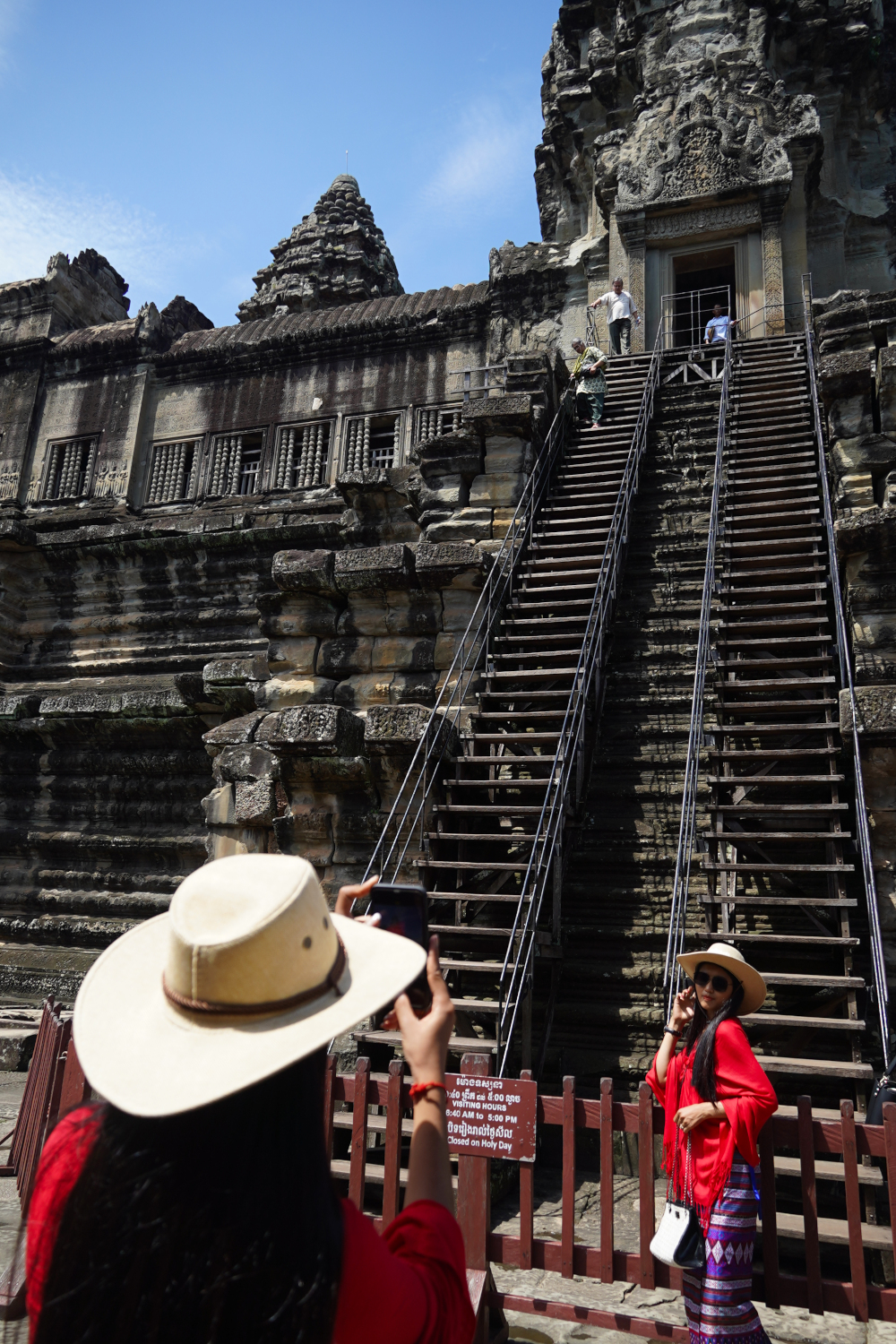
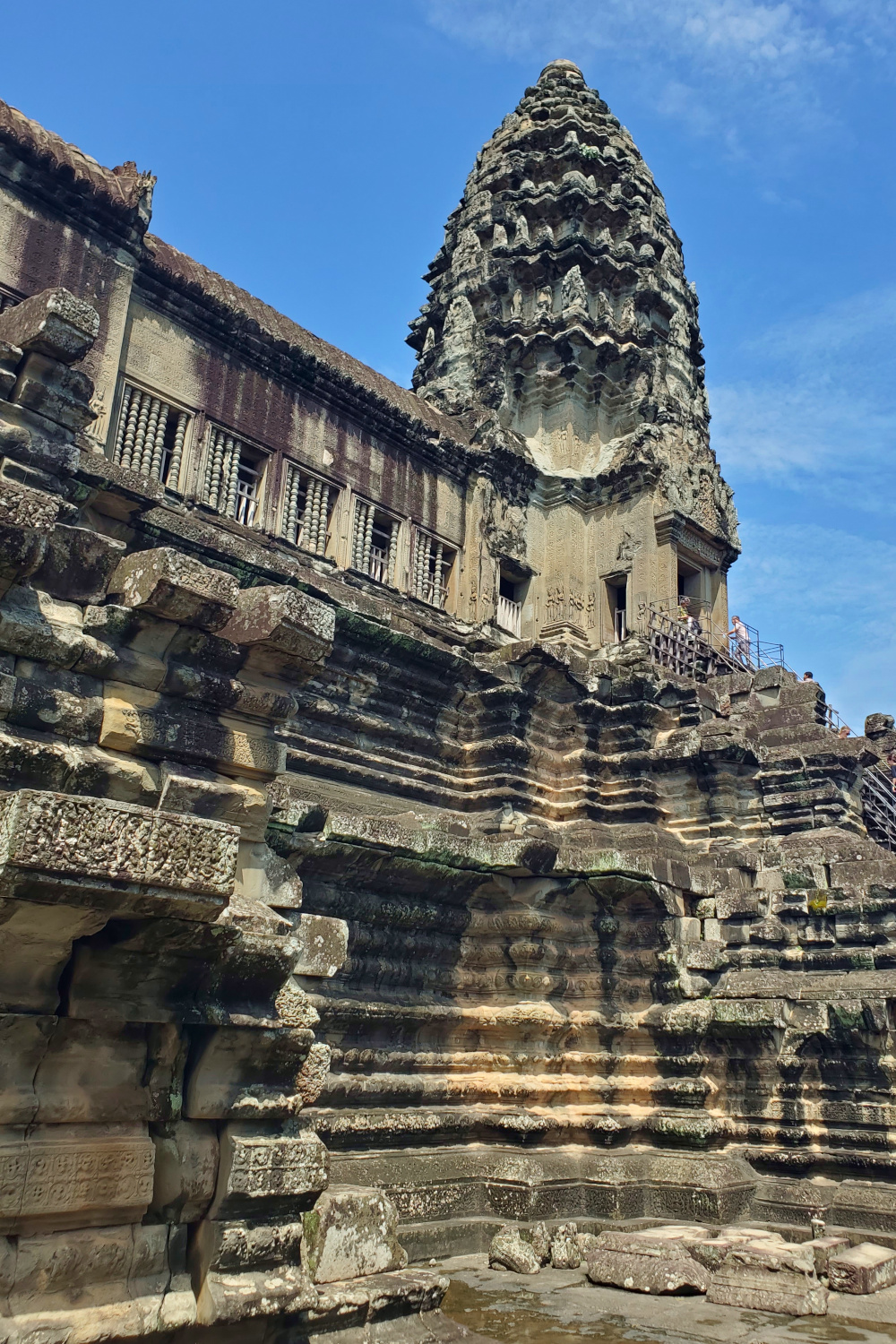
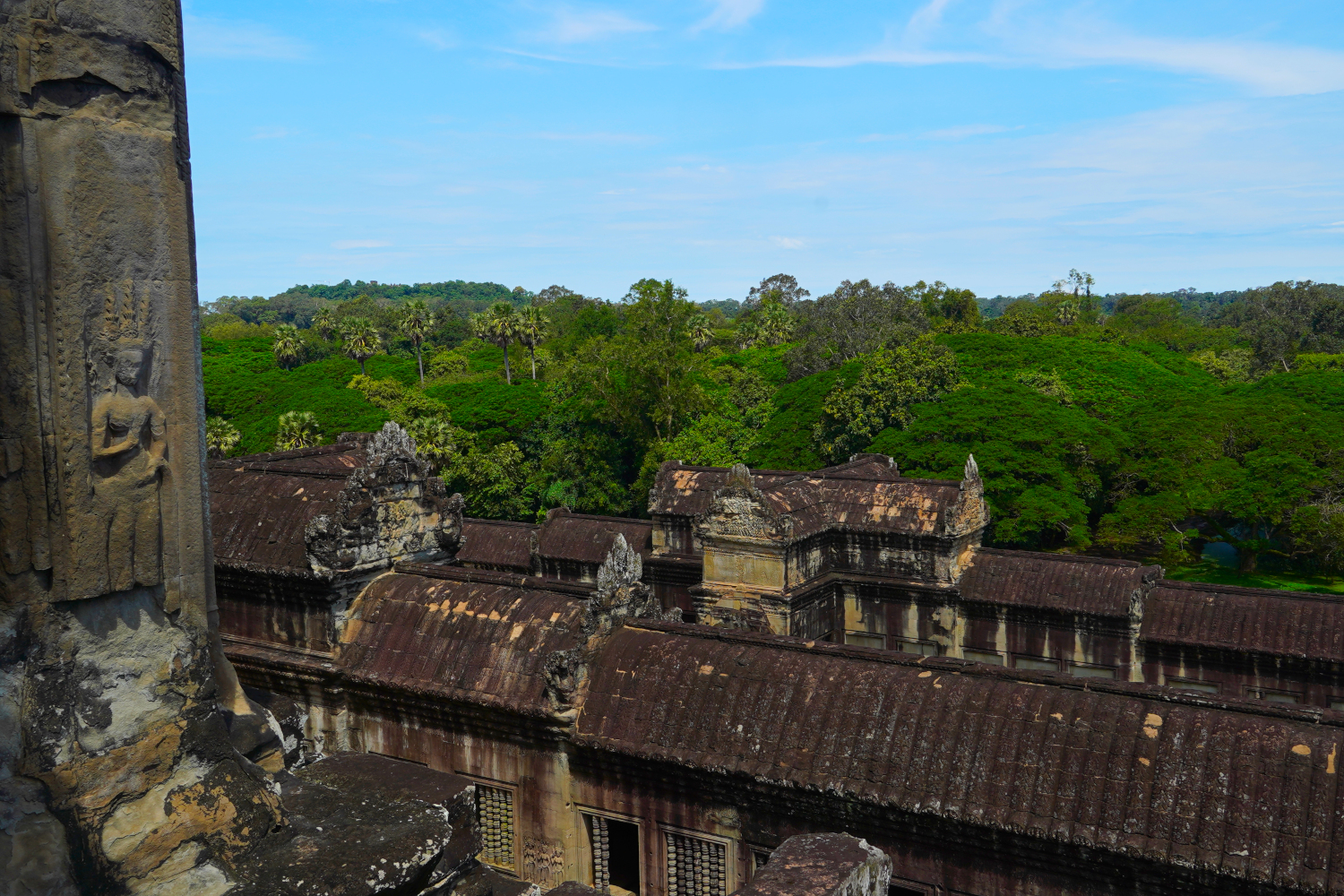
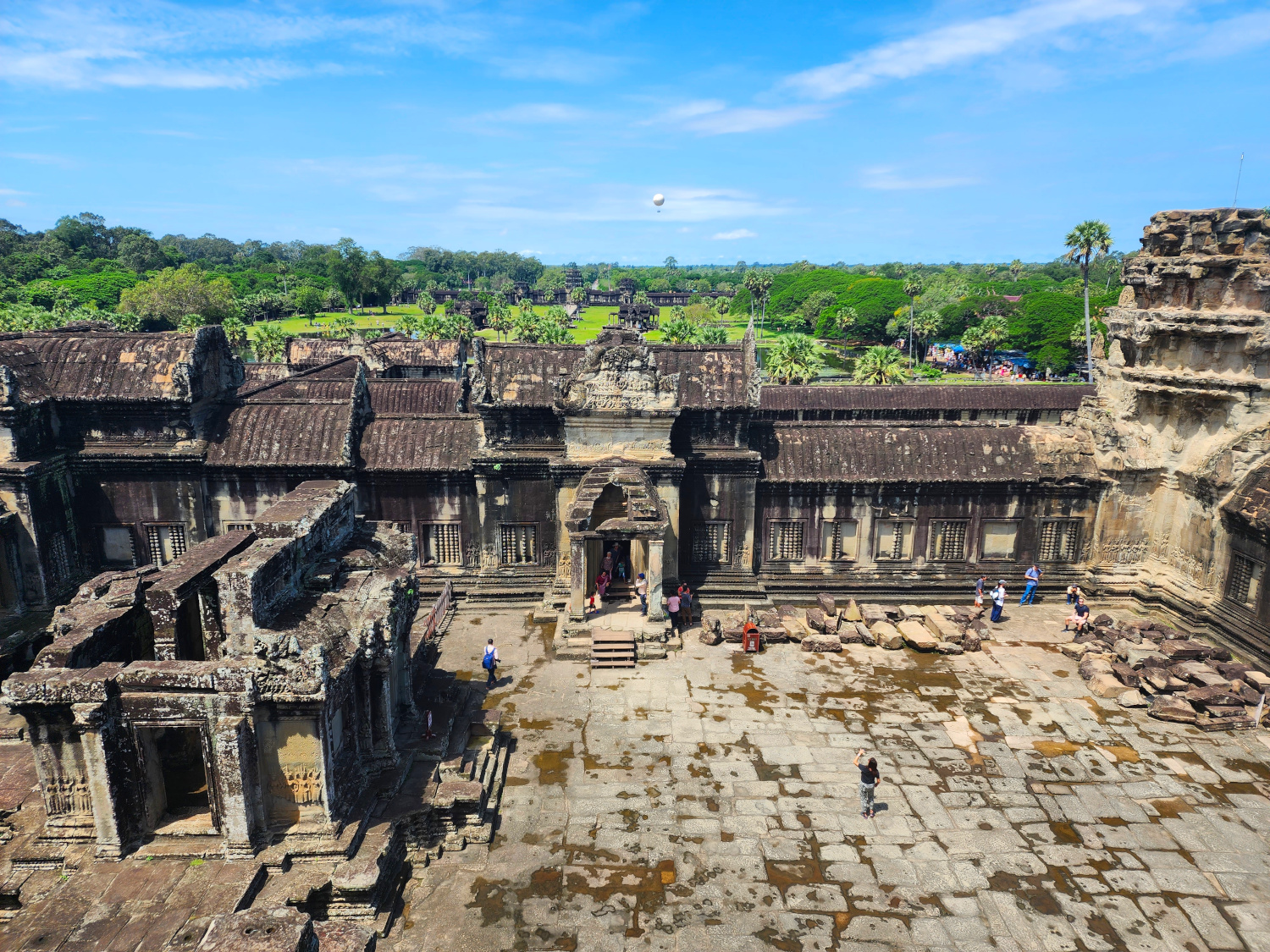
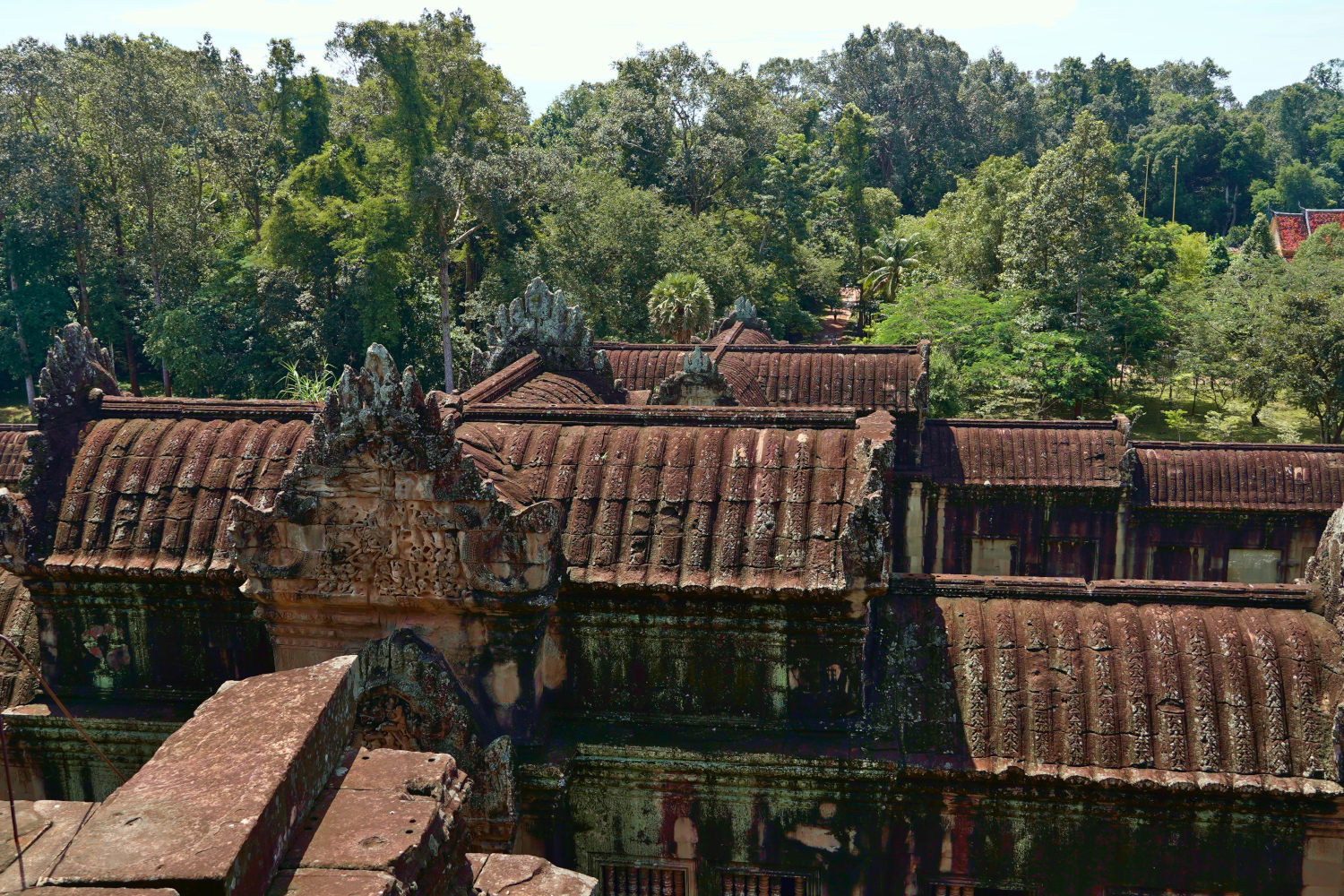
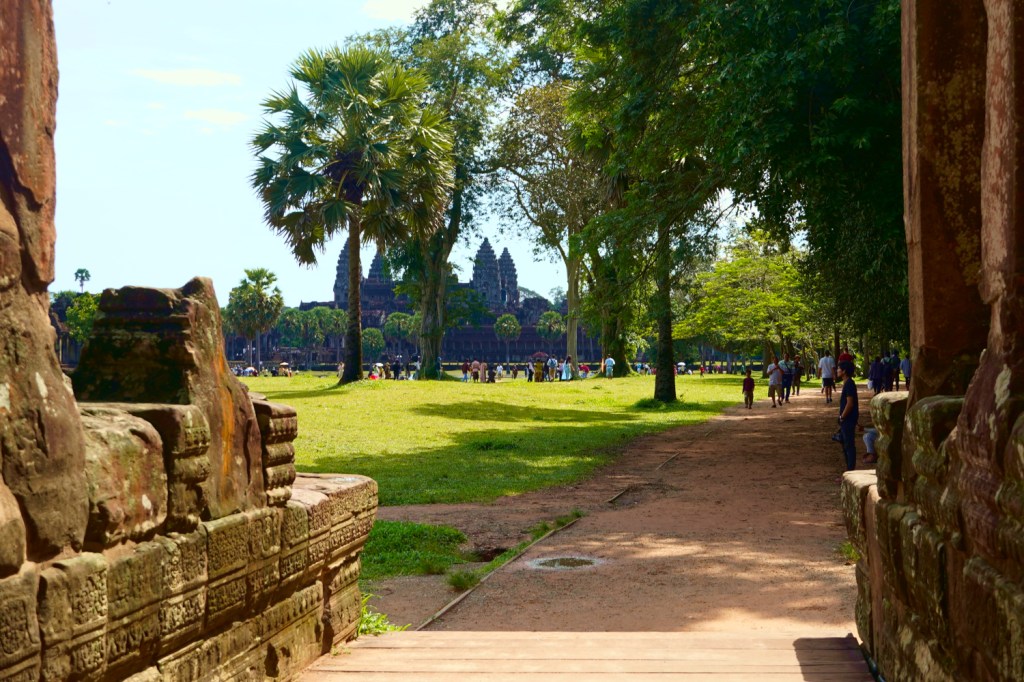
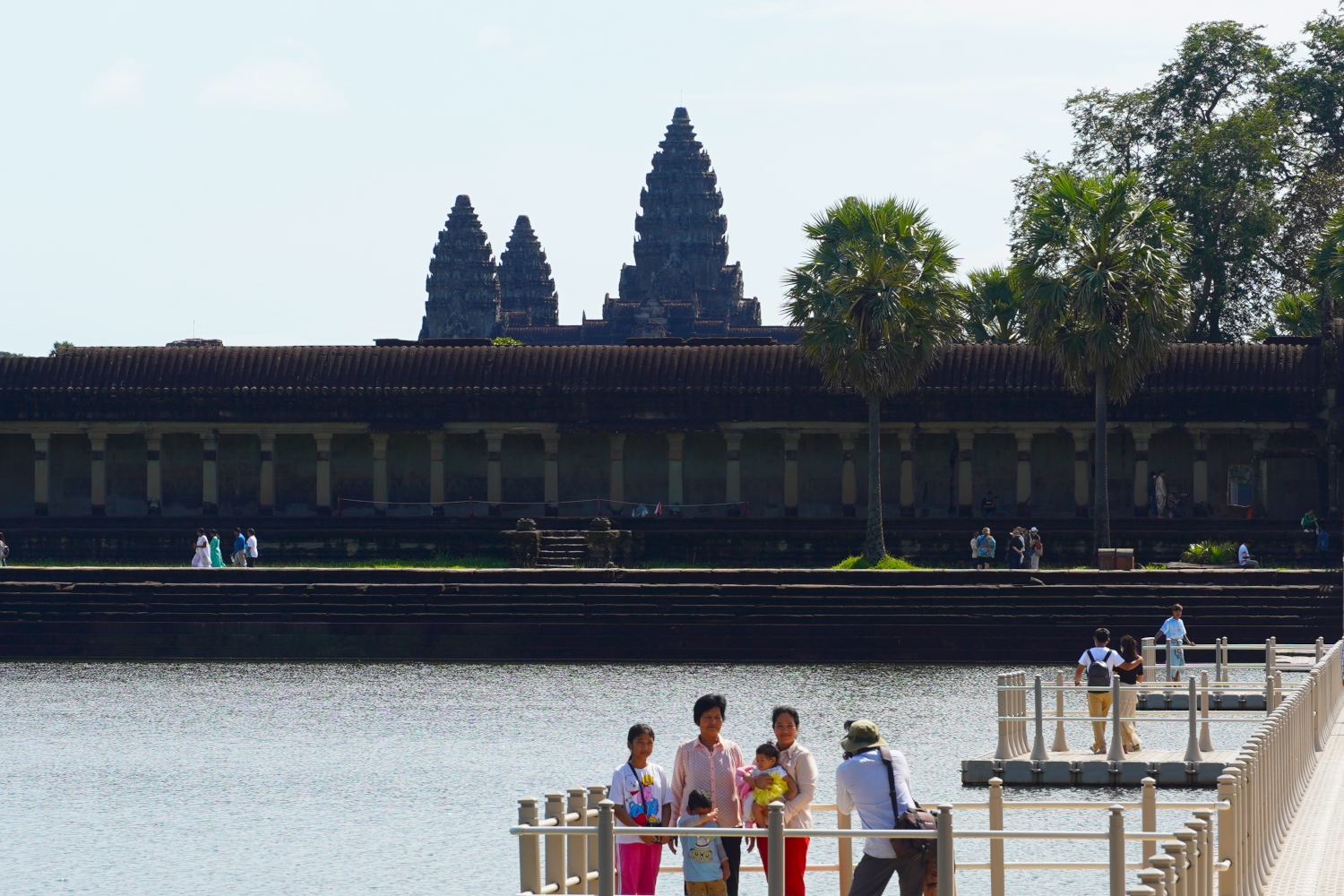
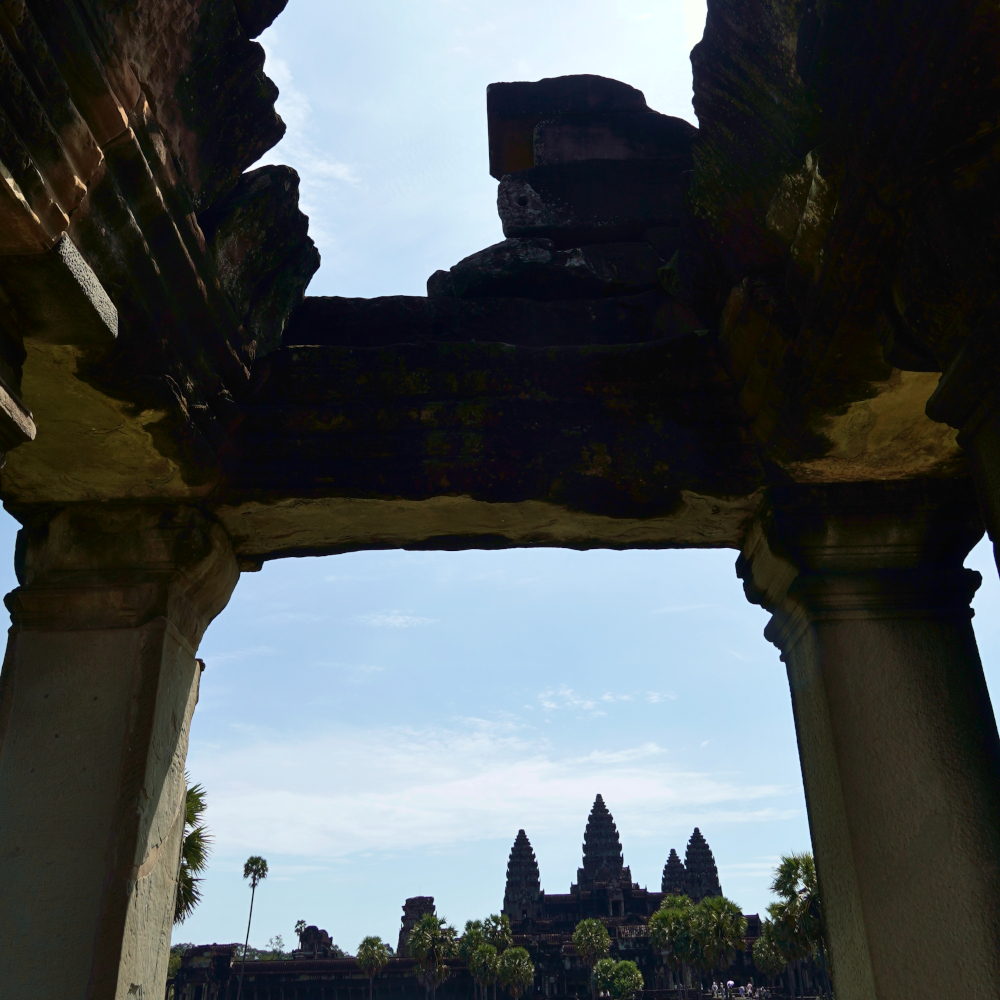
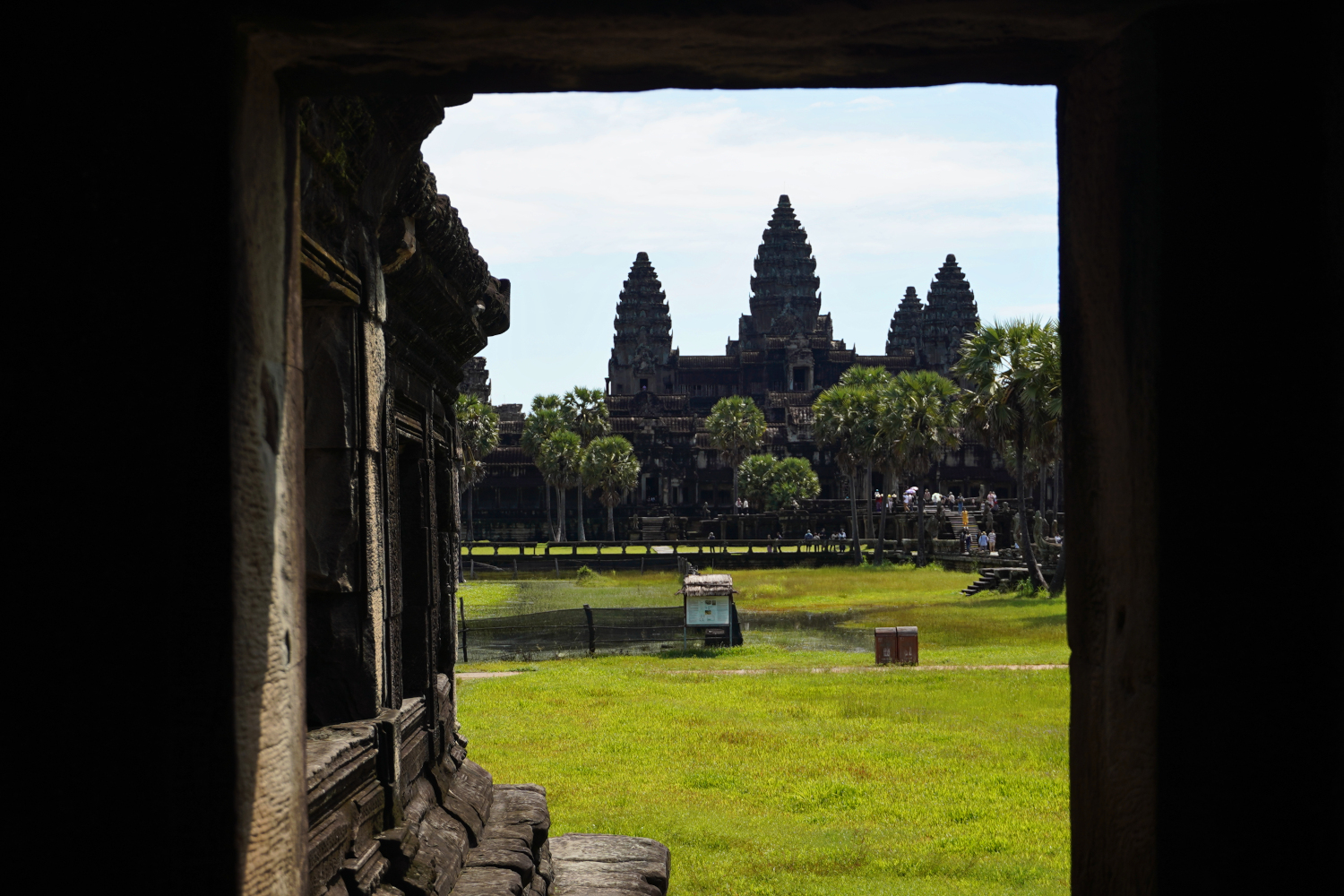
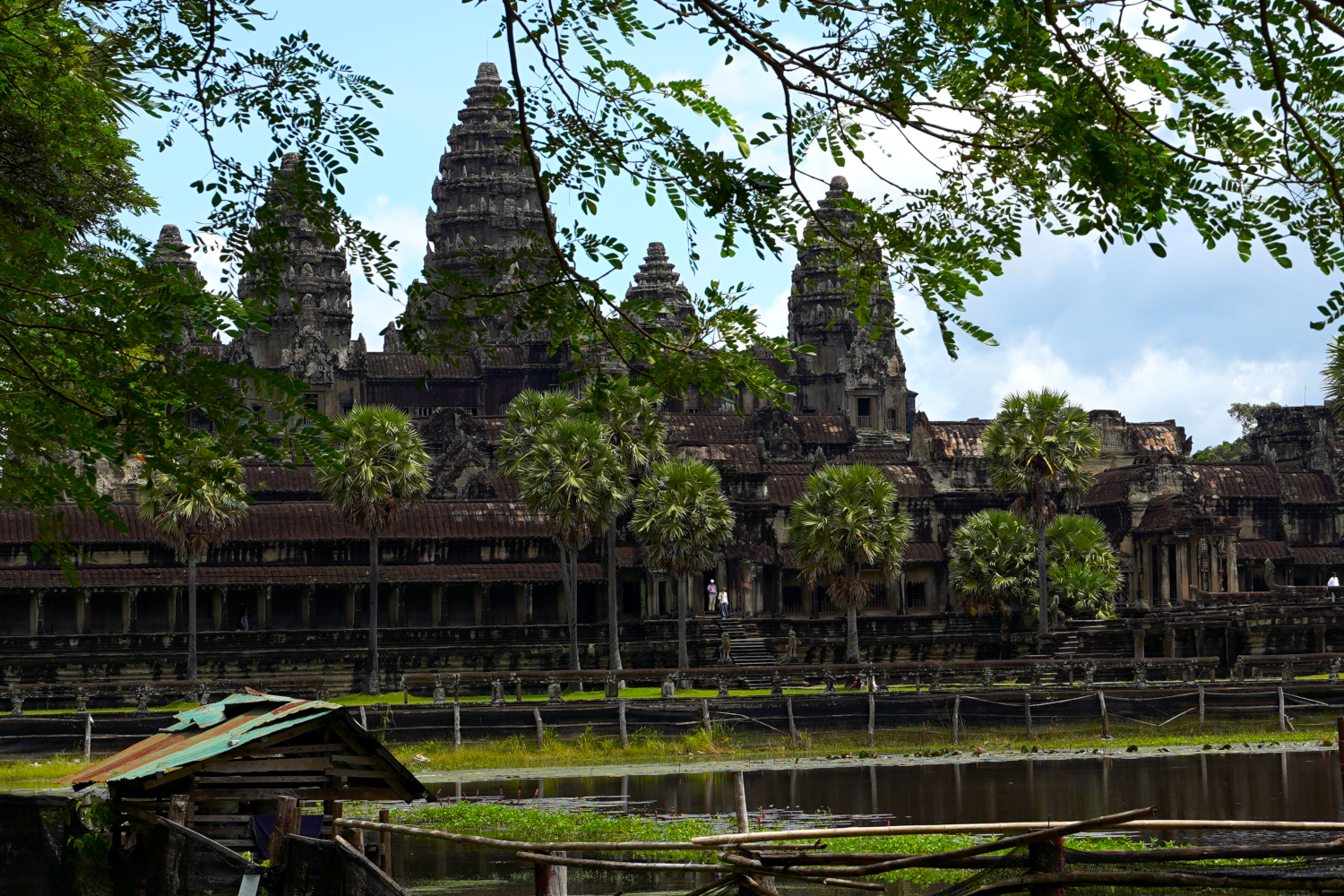
After driving a few more miles, we arrived at the first point on our itinerary: the big enchilada, the famous central temple that hogs most of the publicity shots for this place. It sits on the other side of a huge, square moat, but whatever dragons it may have once harbored are long gone.
At the entrance, we had to wait for quite a while as our companion wandered off in search of a bottle of water — we don’t know why he didn’t have the foresight to bring some along as we did, especially since, as a native, he’s surely aware of how hot the weather gets. After he finally caught up with us again, we learned the reason for the delay: it wasn’t because he had a hard time finding water (there were eager concessioners all over the place) but because he’d learned of a place where he could deposit his laptop for safekeeping. Just why he’d thought to lug along his laptop instead of drinking water to see Angkor Wat is something we never quite grasped.
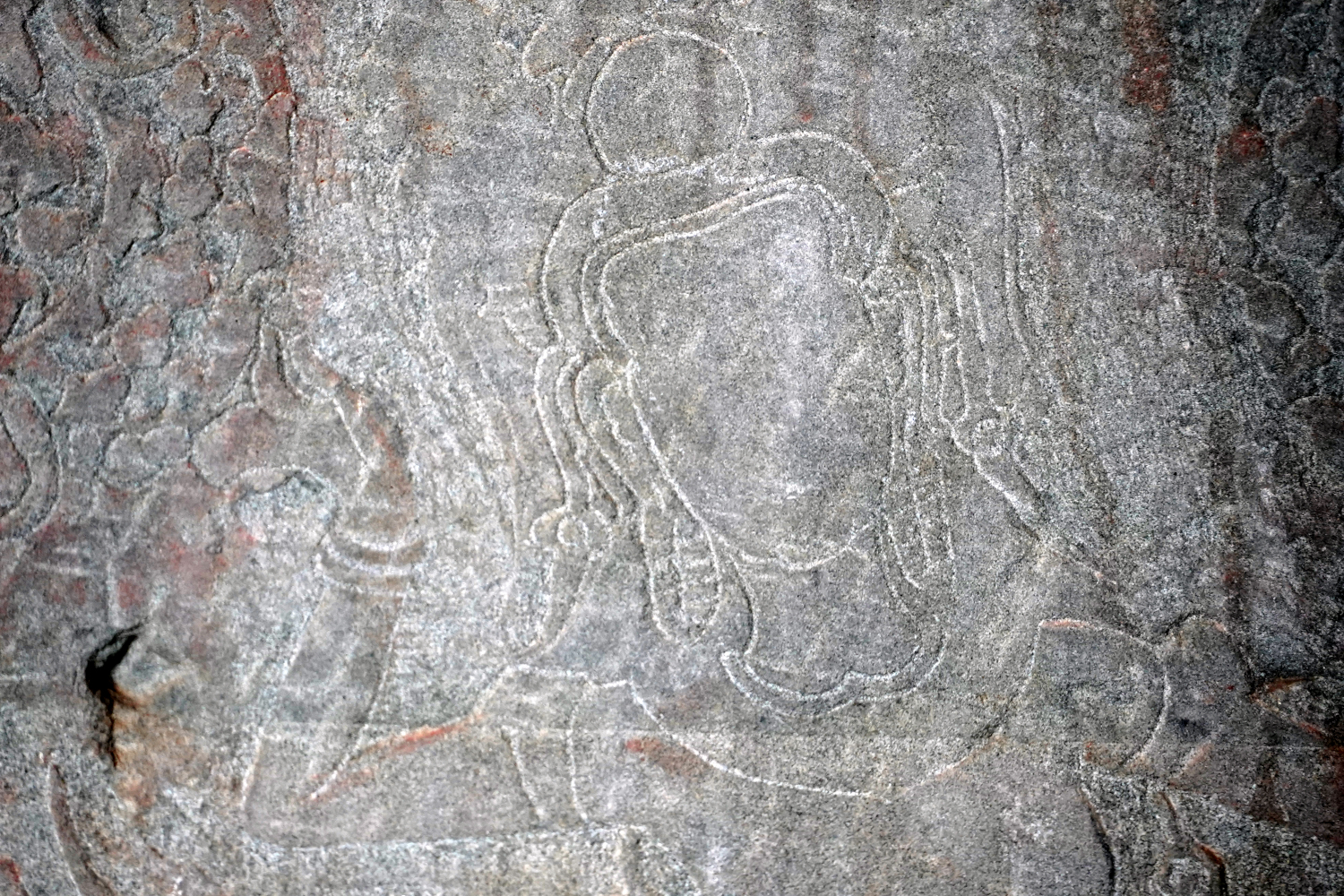

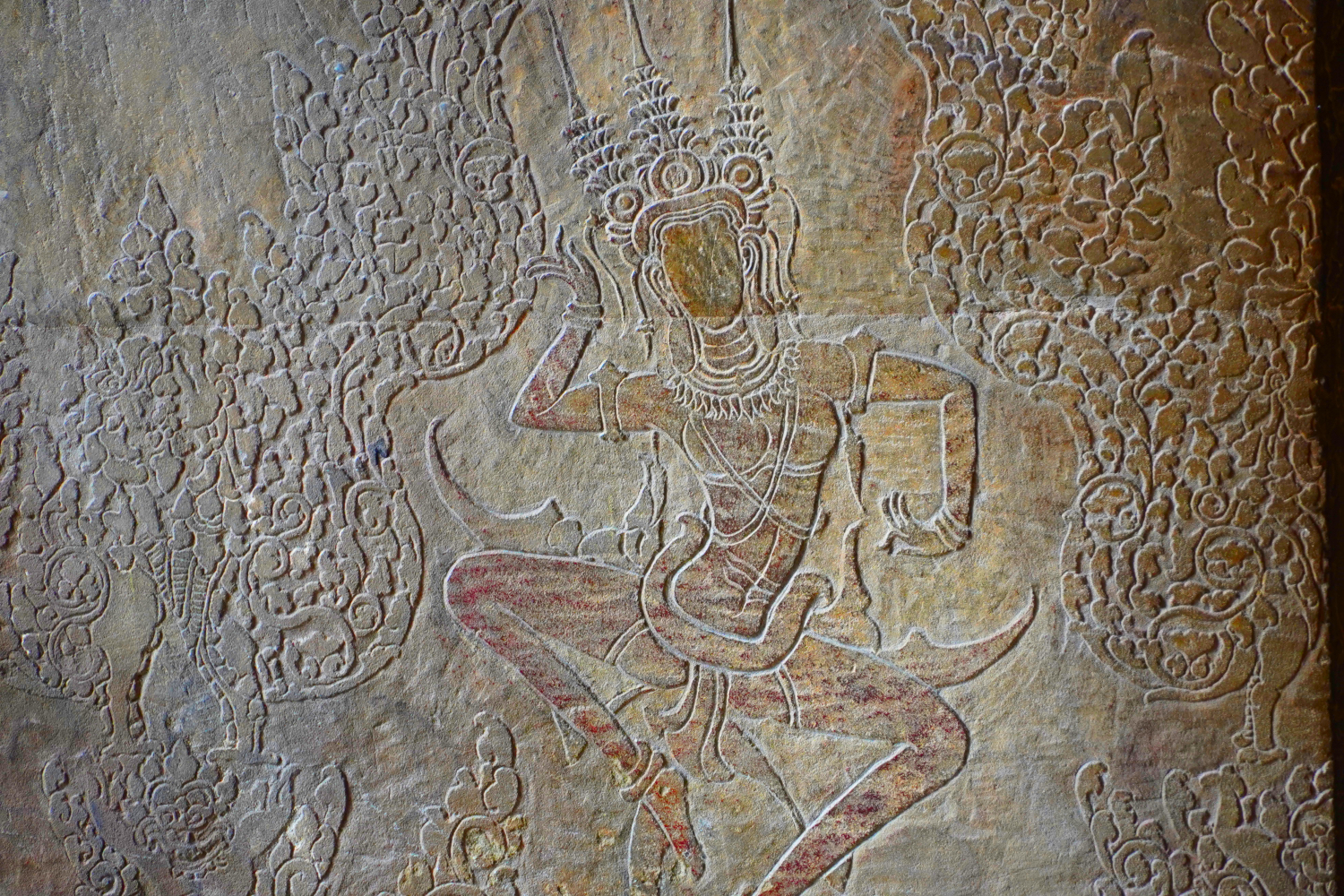

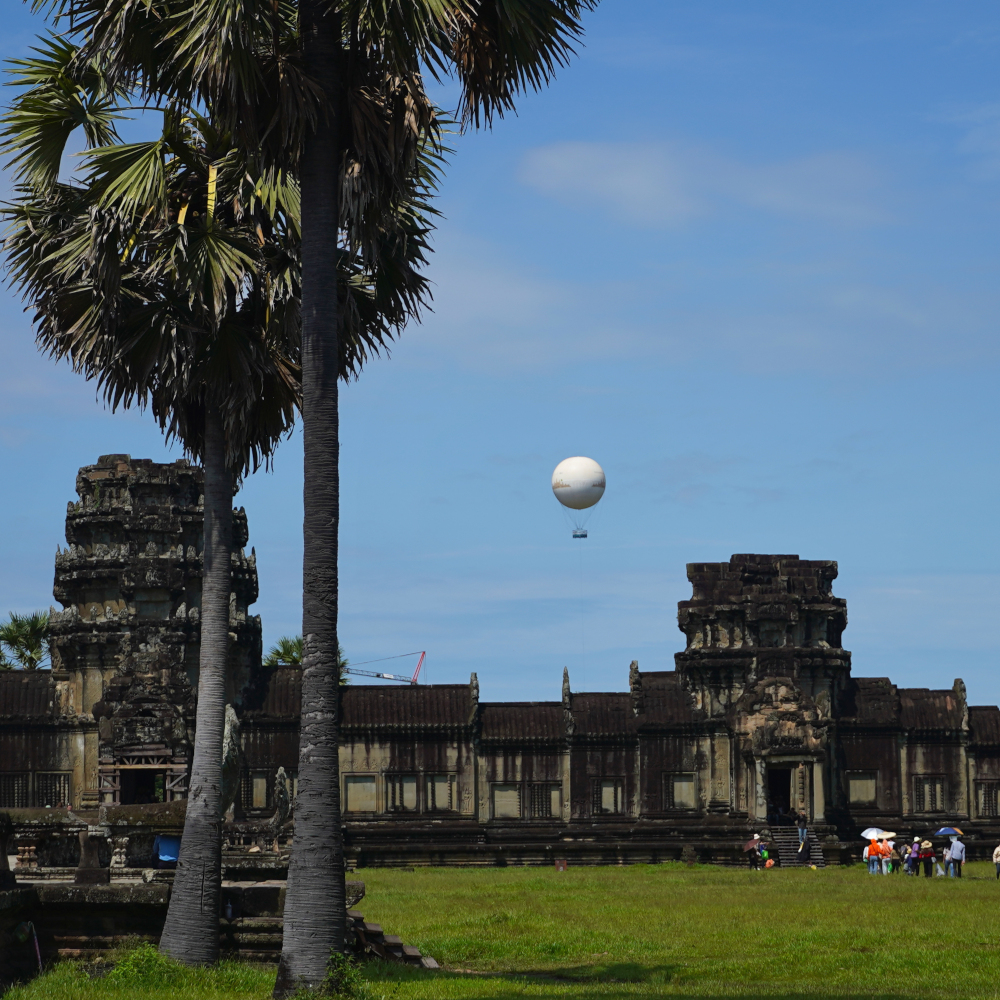
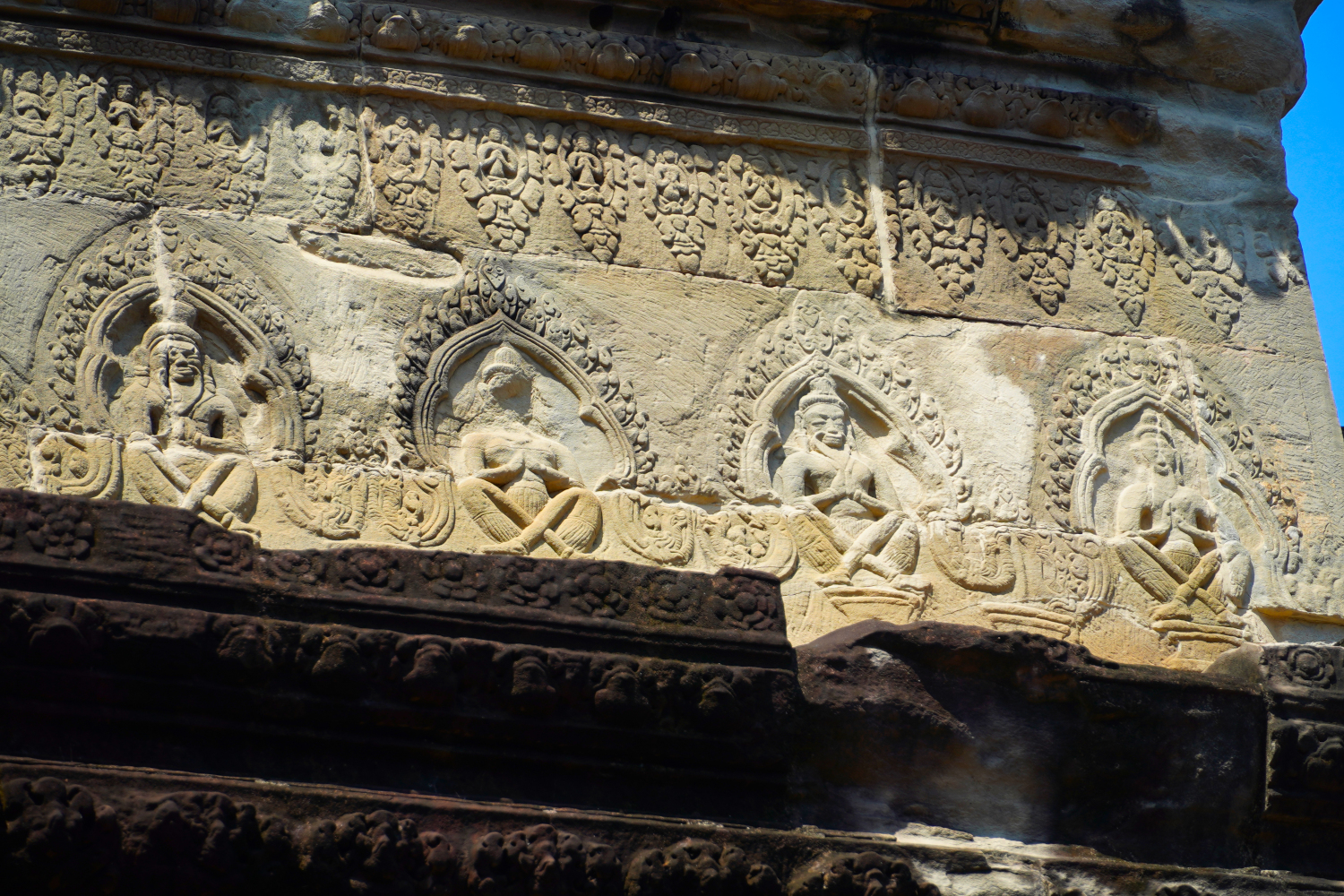
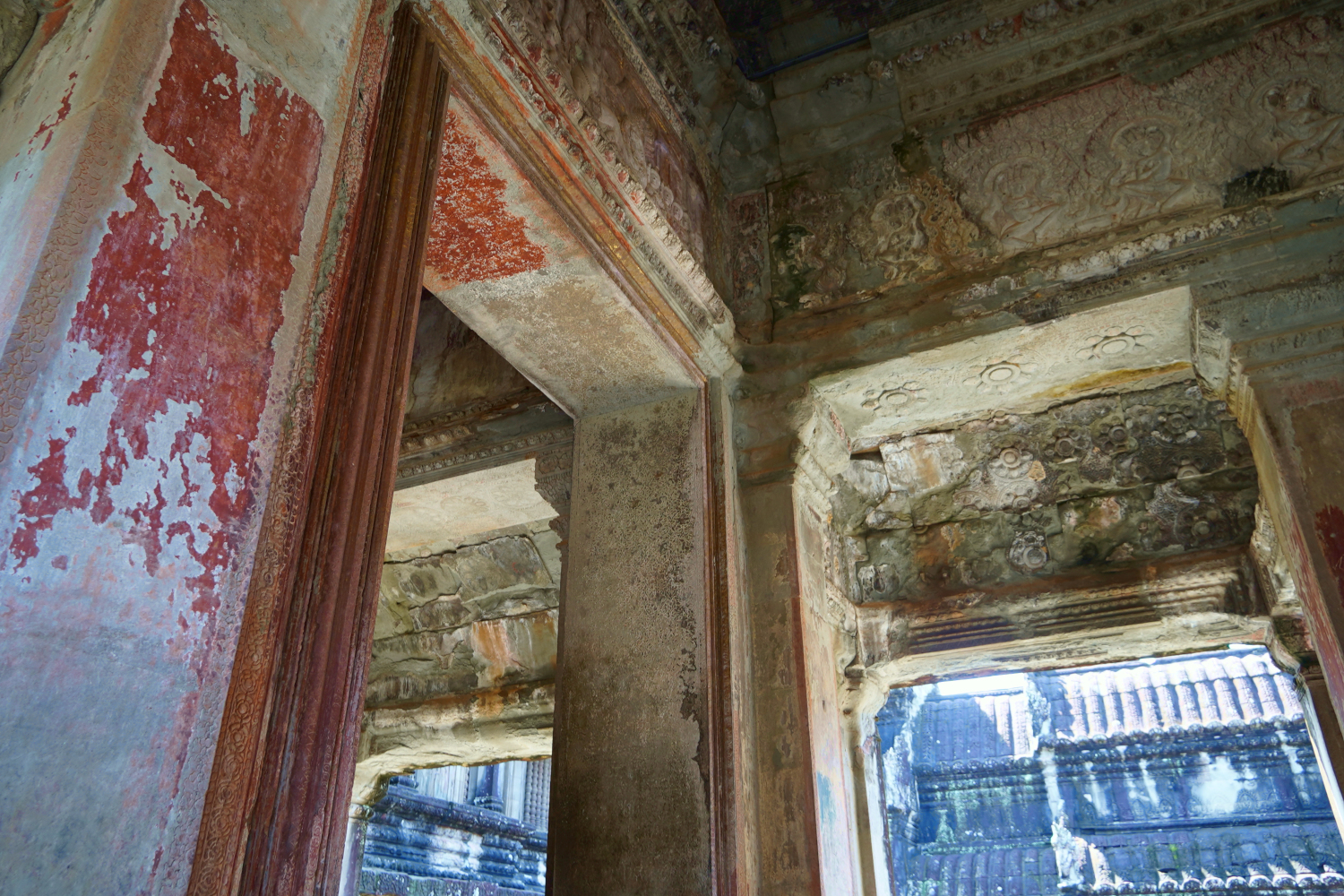
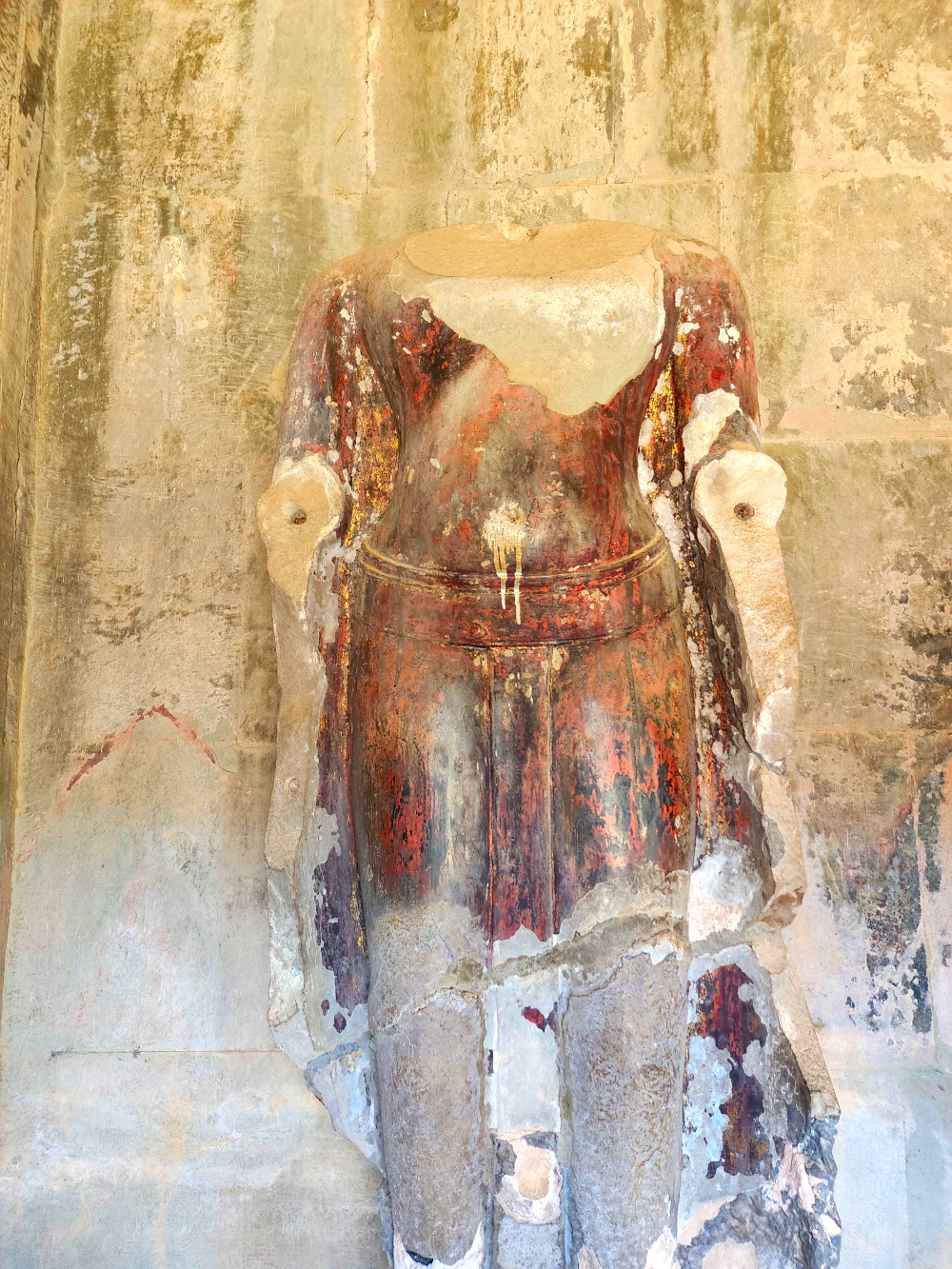
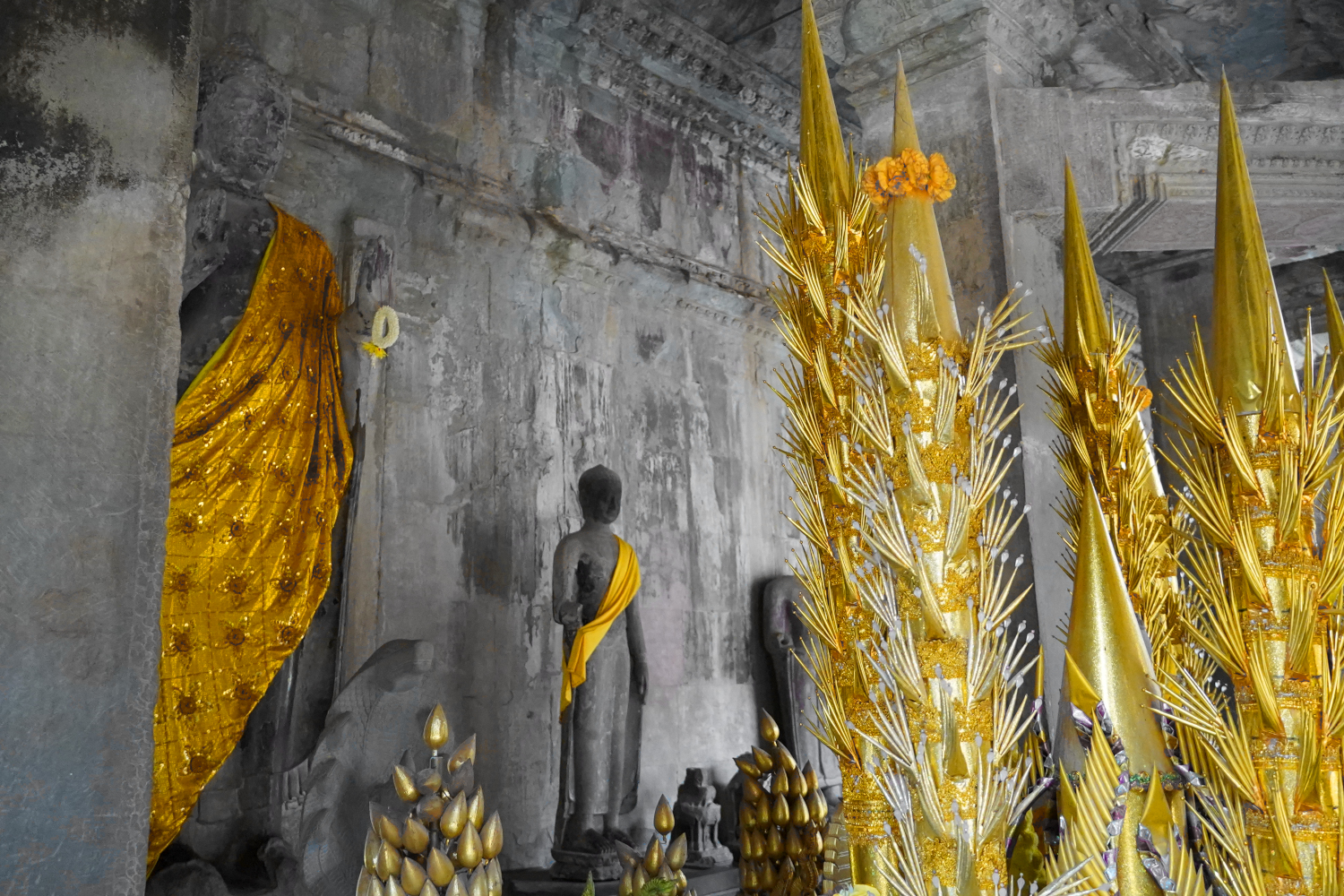
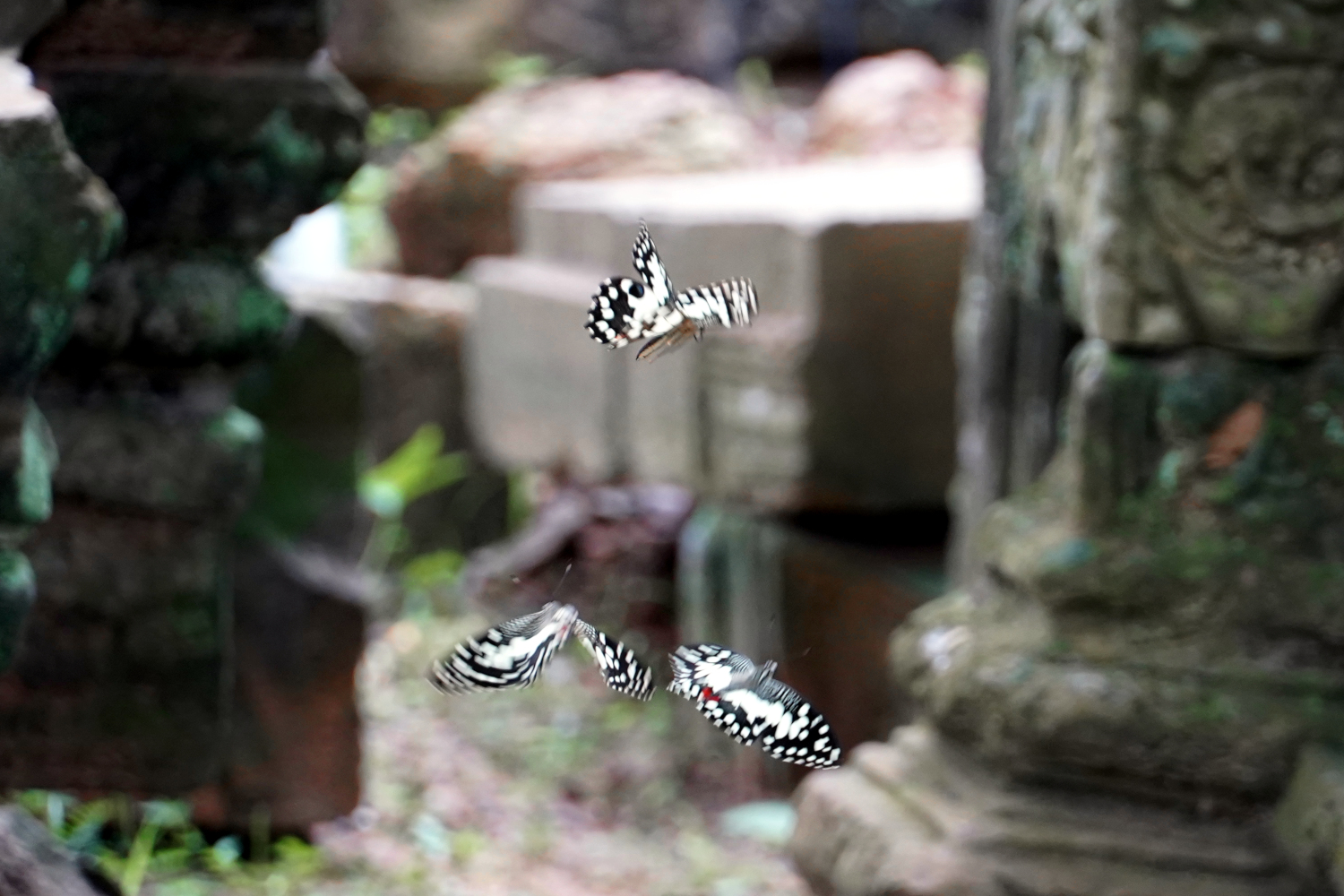
Anyway, the famous central temple certainly lived up to its billing, and then some. No matter how many photos you see, they don’t do it justice. Nothing compares to actually walking through the rocky ruins and getting a closeup look at the infinitely detailed etchings on the walls, spinning out all kinds of stories that you can’t possibly hope to decipher completely. You literally could spend weeks examining this one temple, and probably would still miss something, especially since there are several levels, that you access with some rather precarious looking stairways — ancient but still serviceable and presumably safe enough. (In many, though not all places, modern wooden stairways have been superimposed over the original stone steps, some of which are badly crumbled.)
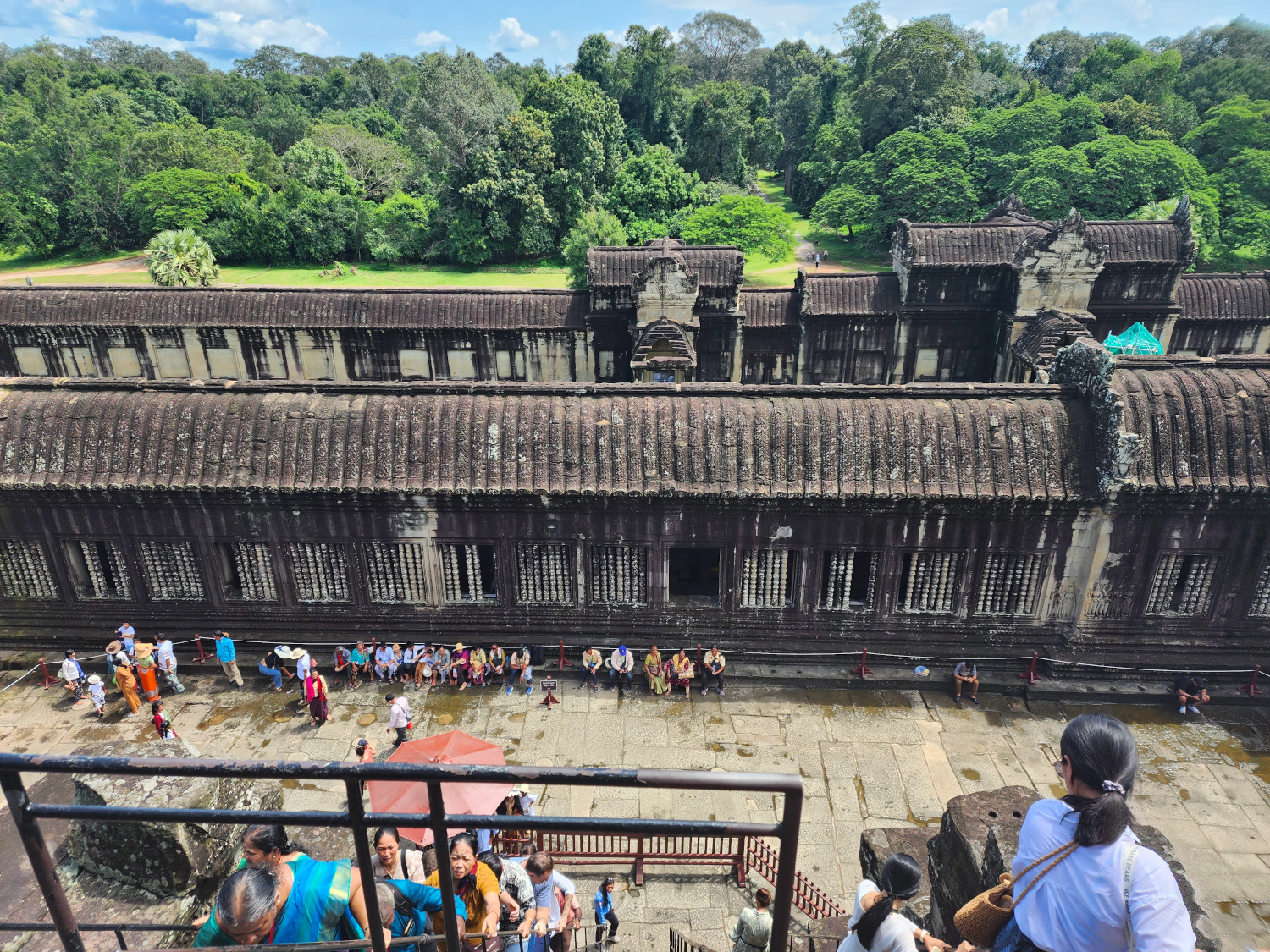
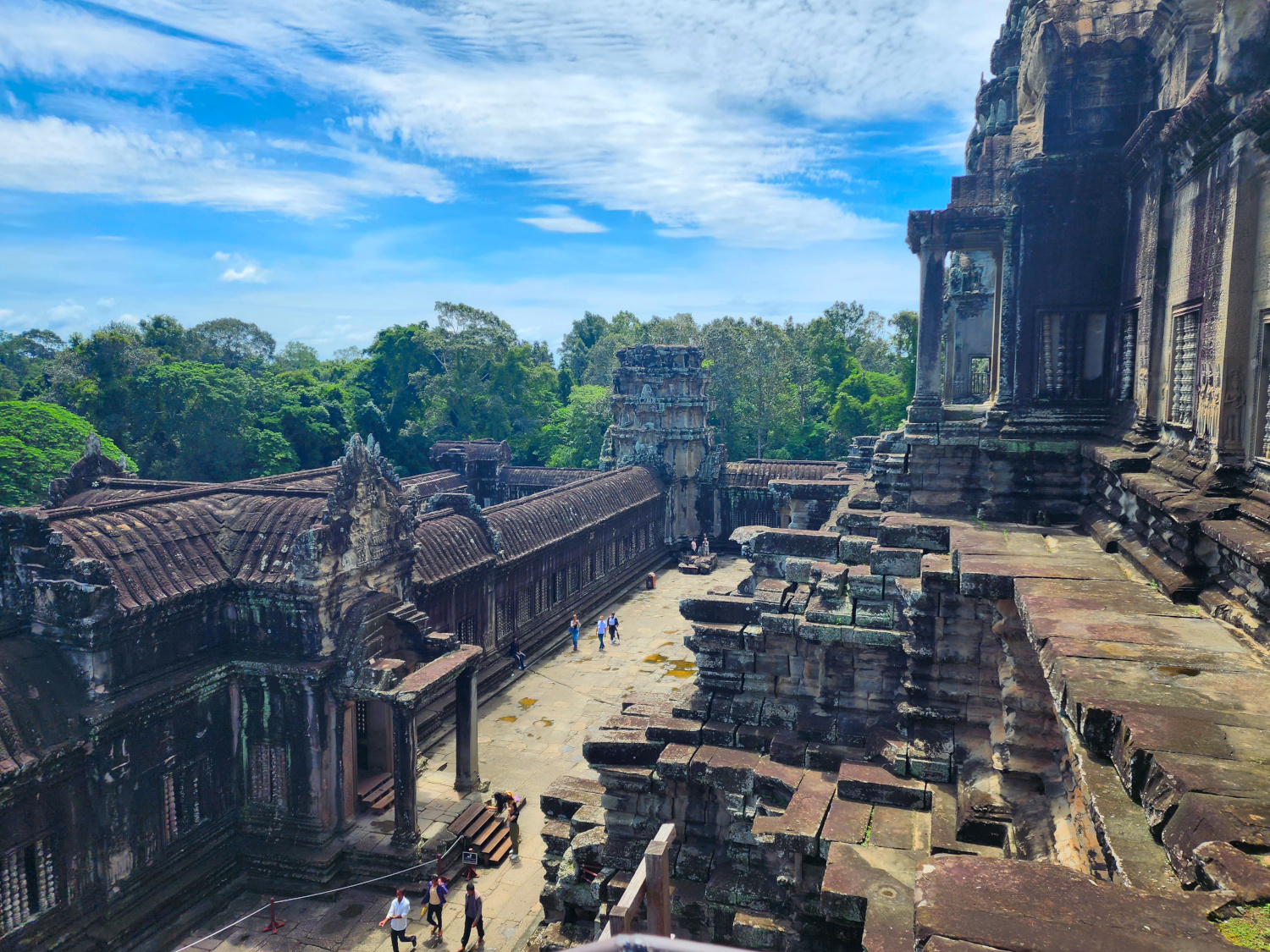
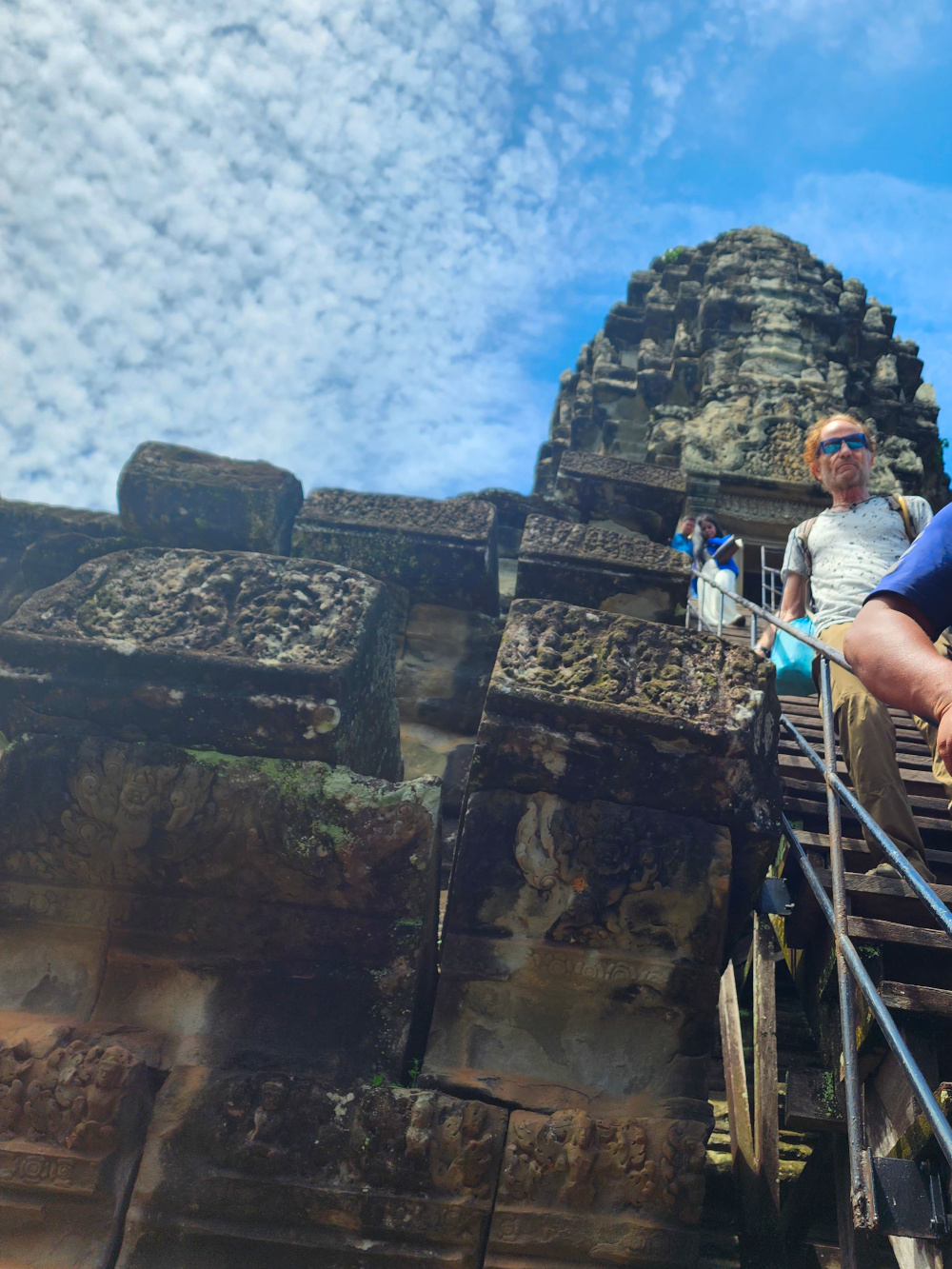

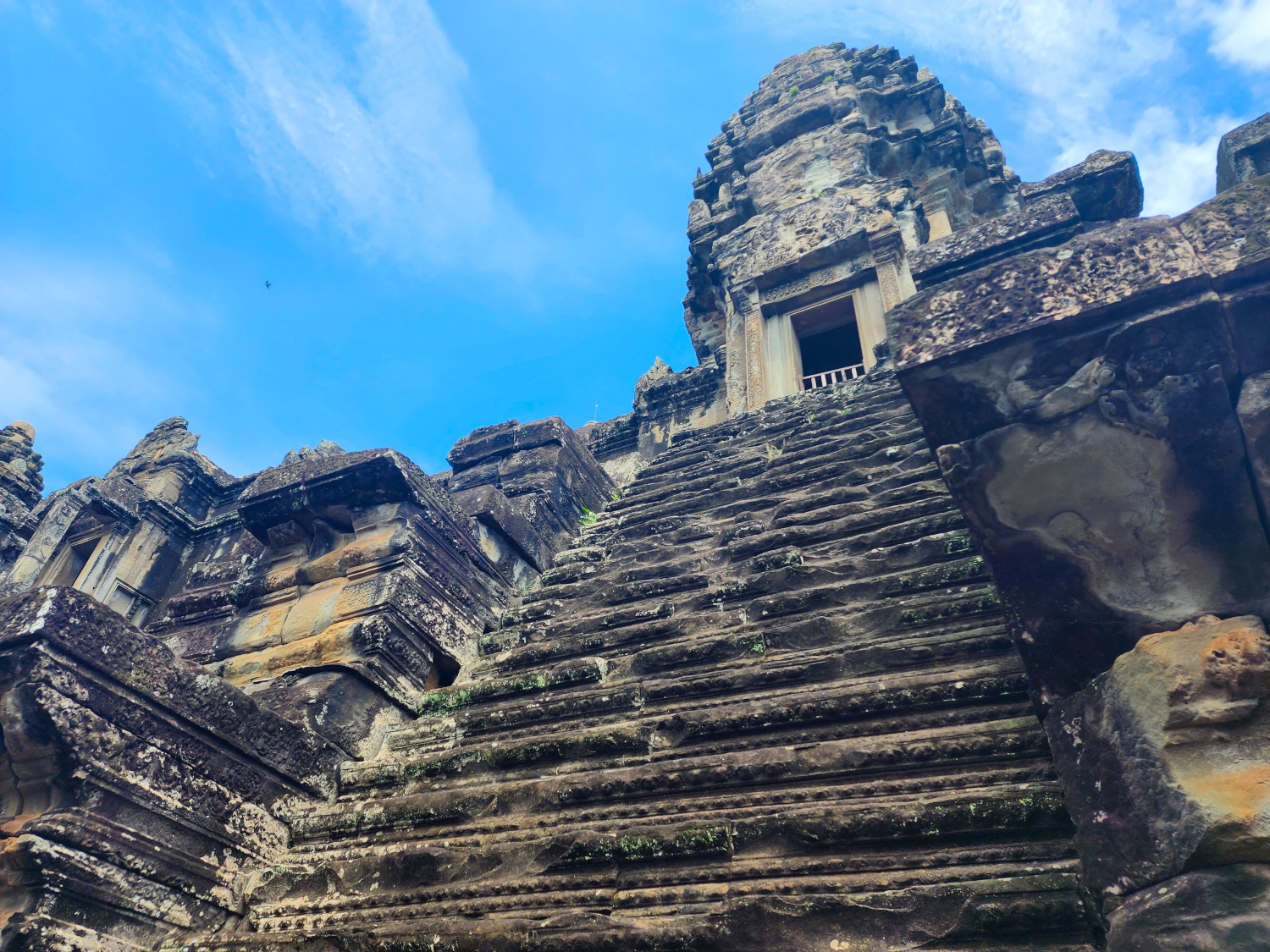
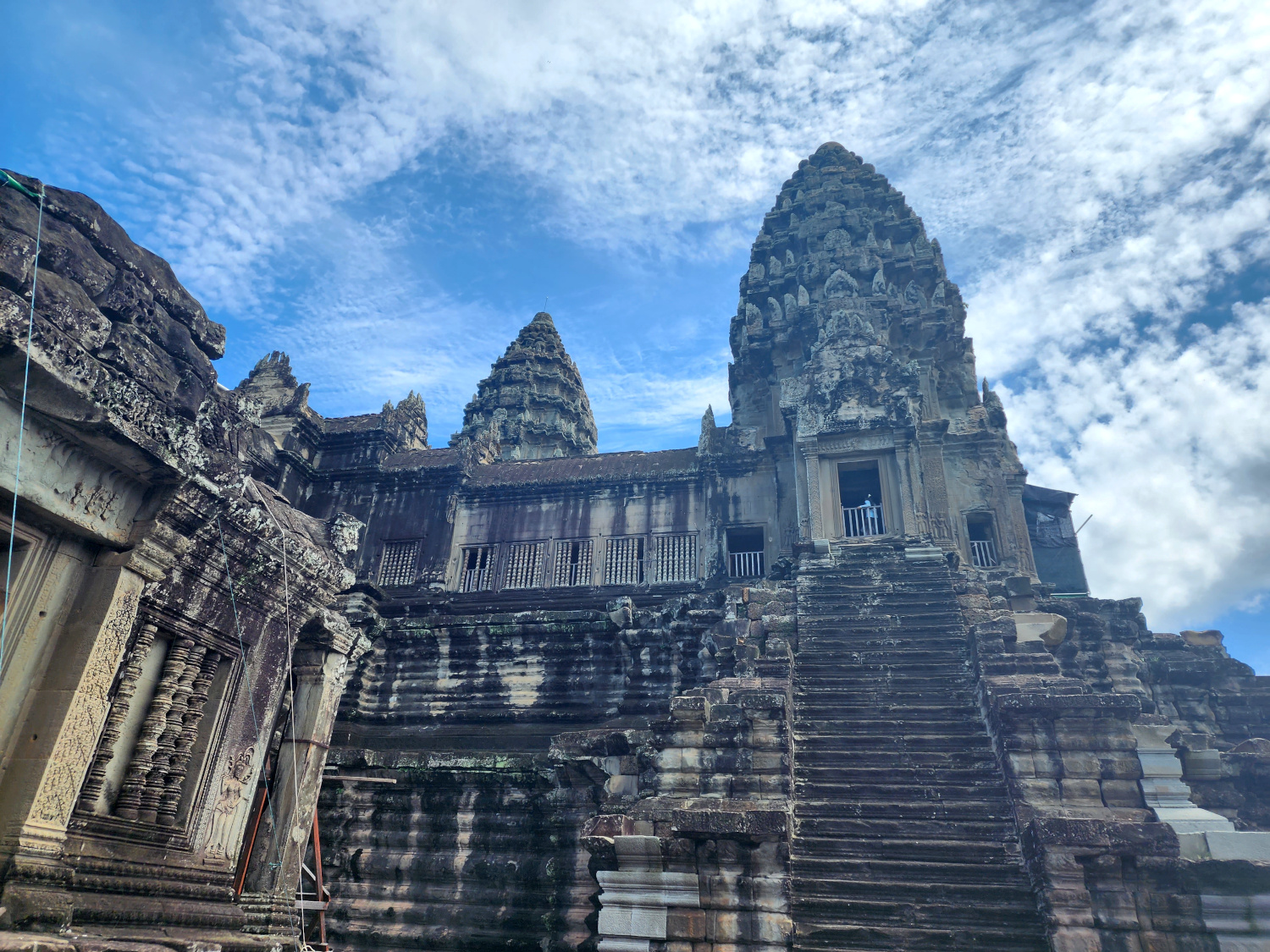
When you get to the upper level, you’re enjoying a view that, in the good old days, was available only to royalty. No meat eaters were allowed on that lofty perch either, but we at least would have qualified for admission on that count.
Once we’d taken in about as much as our senses could handle for the time being, we went to sit in the shade and have some lunch. At a nearby concession stand, we bought what we thought were hazelnuts, but they turned out to be hard and all but inedible as far as we were concerned — we later learned they were actually roasted lotus seeds, a common snack in Cambodia, though we don’t see how. By this time, our school director had bailed out, leaving us to explore on our own. Not to worry, there was other transportation available to get us back to town.
Phnom Bakheng
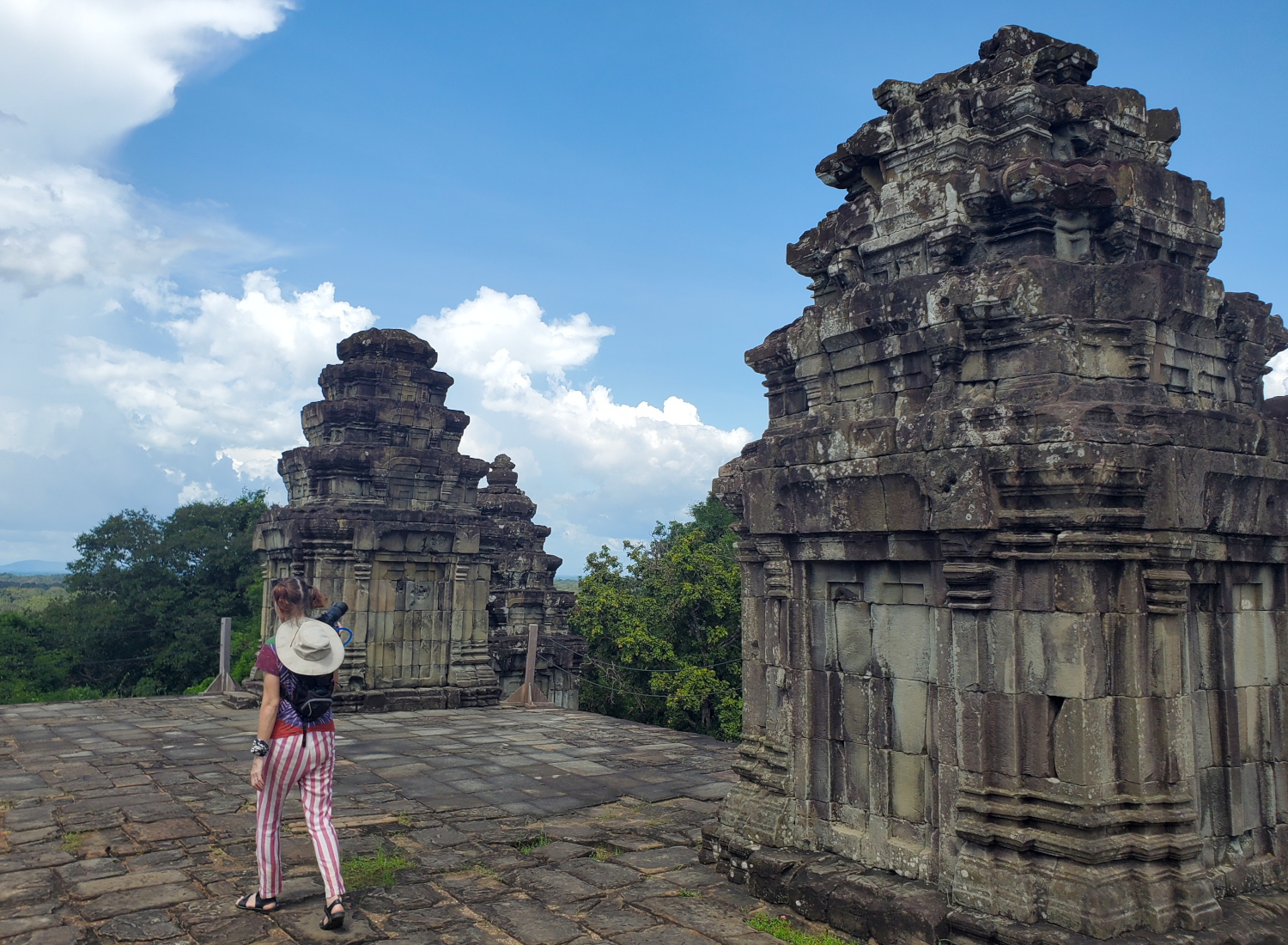
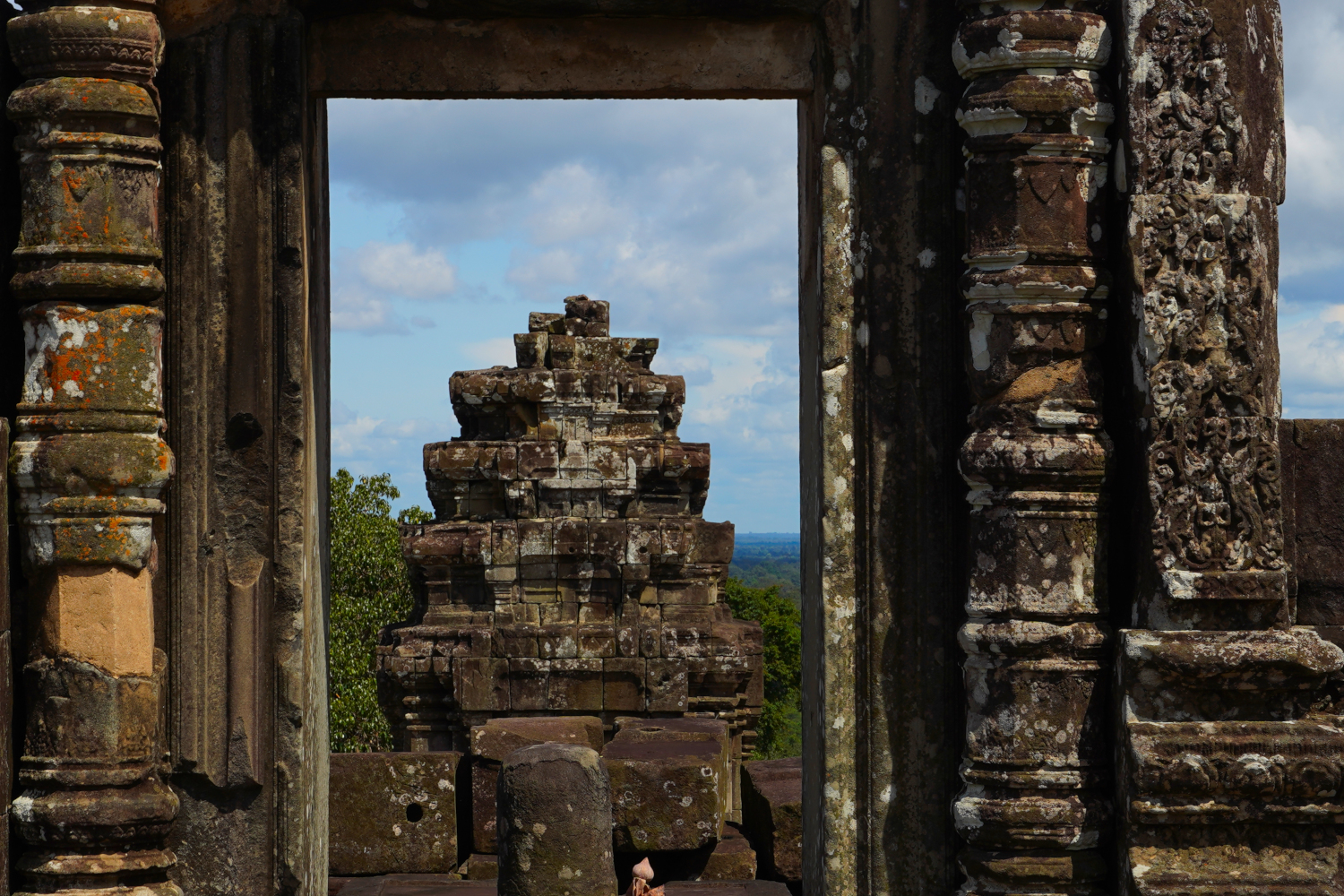
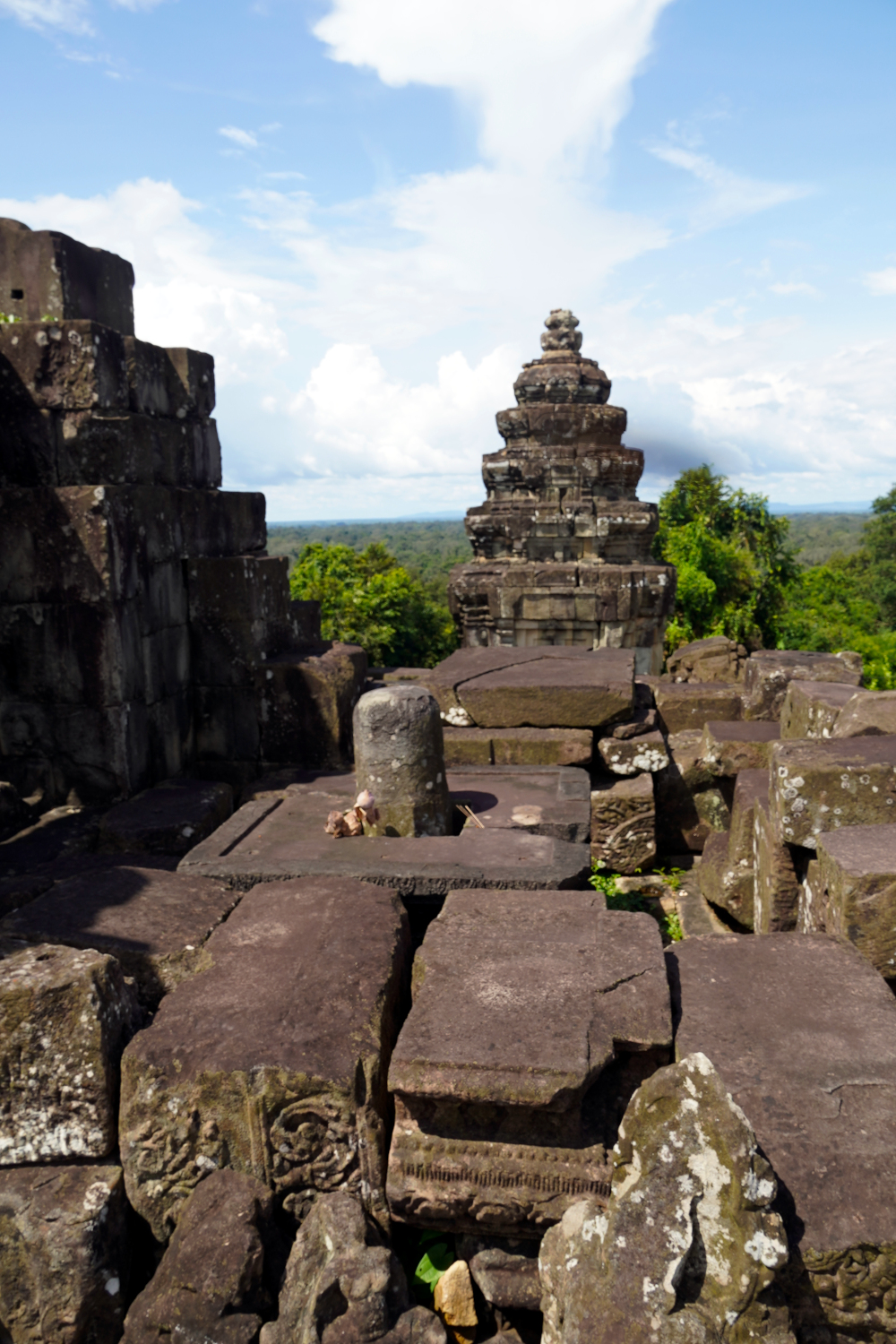
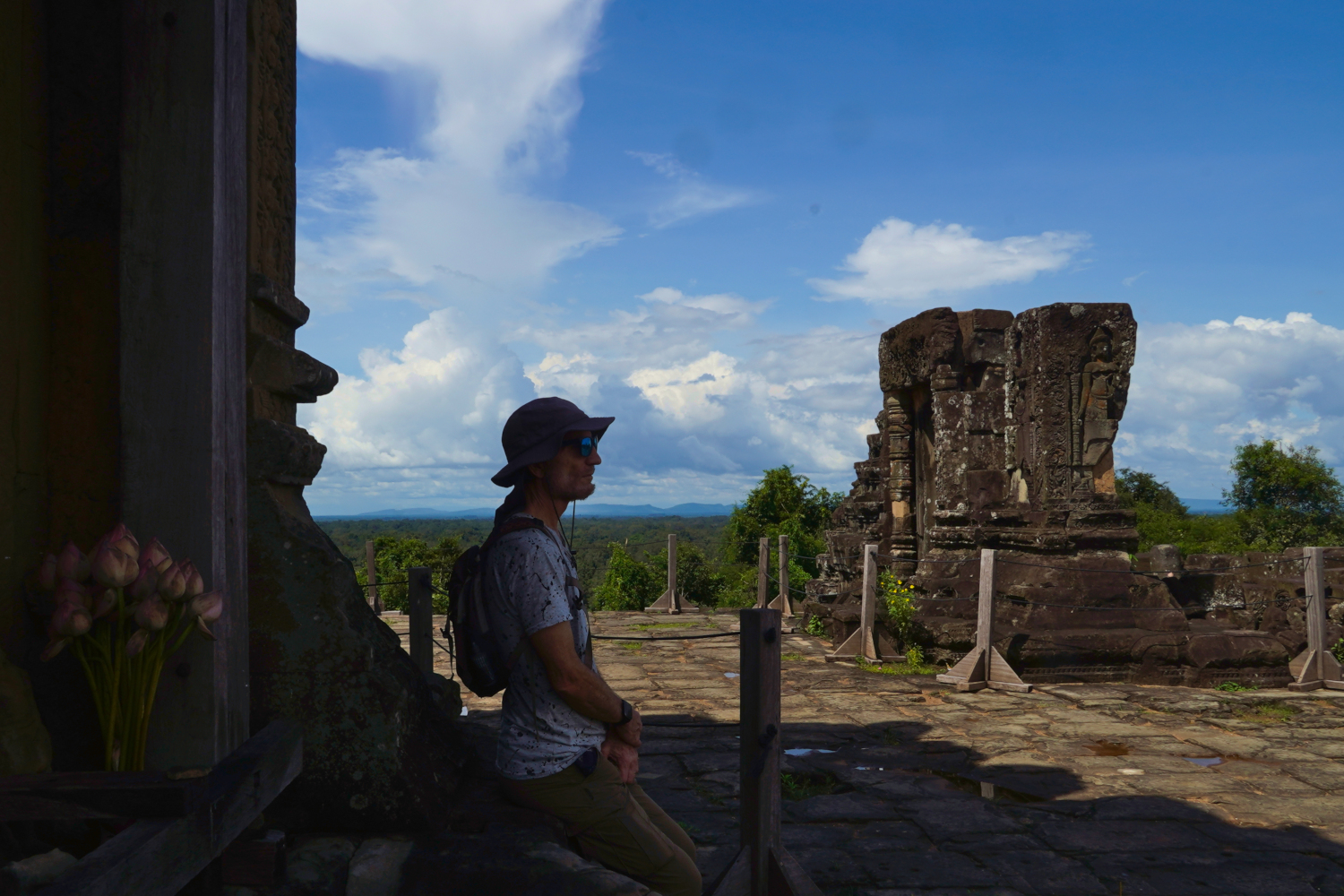
The next structure on our itinerary was called Phnom Bakheng. Not as impressive as the main temple, but it certainly had its own charms. At this one too, we were able to climb to the top. At first we were the only ones up there, but then another couple came up to join us. They also spoke English with an American accent, so we talked to them and learned that they were from Utah.
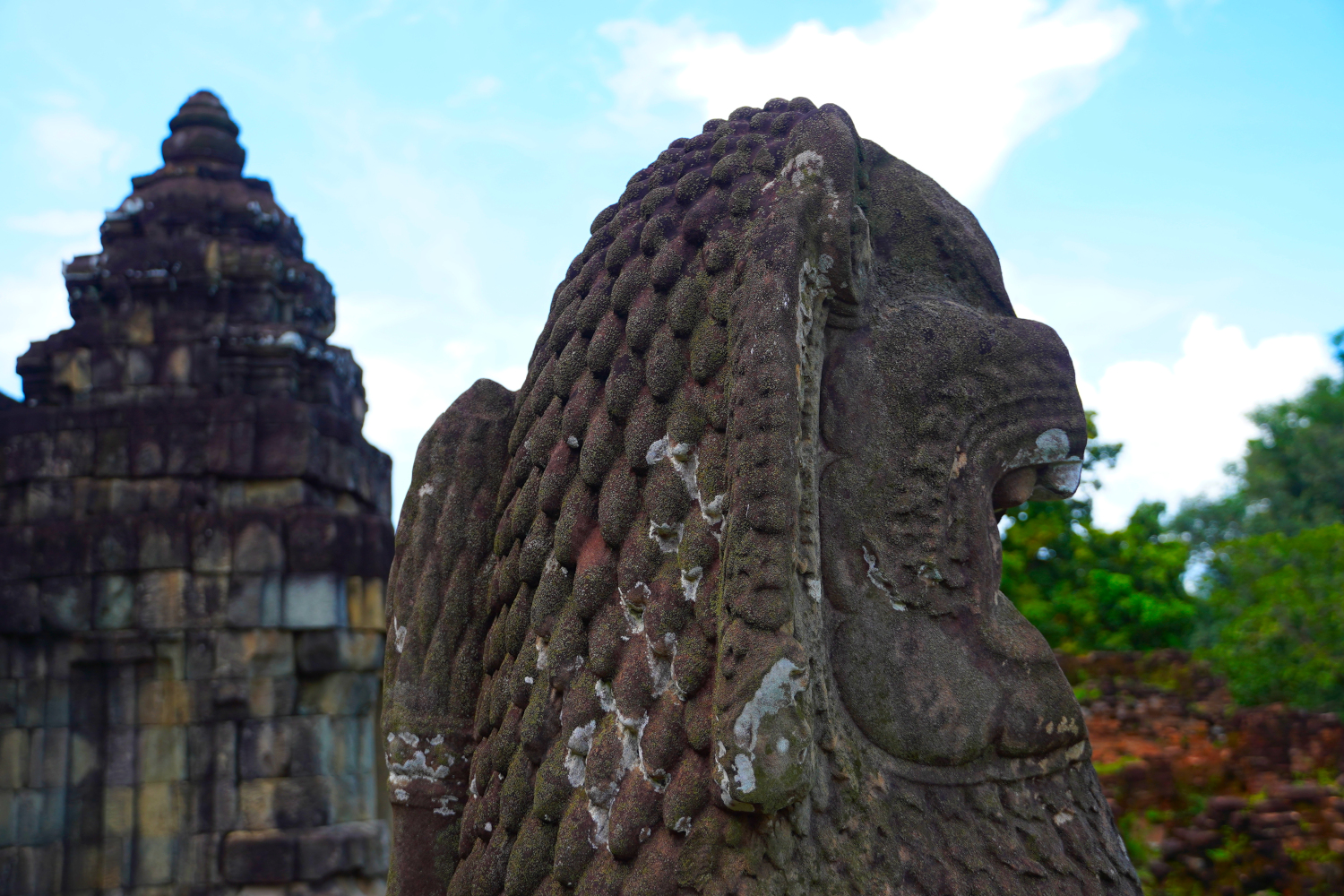
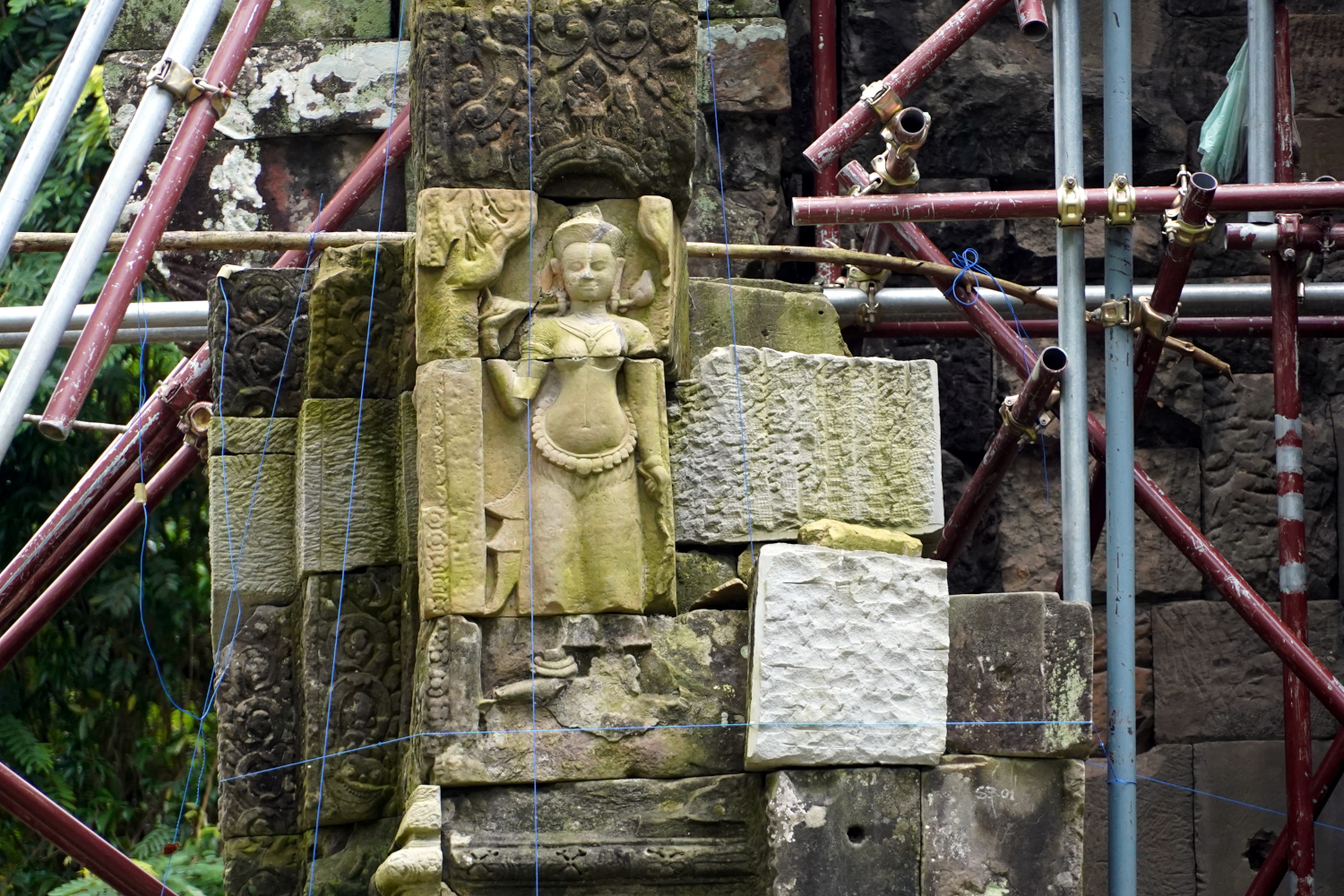
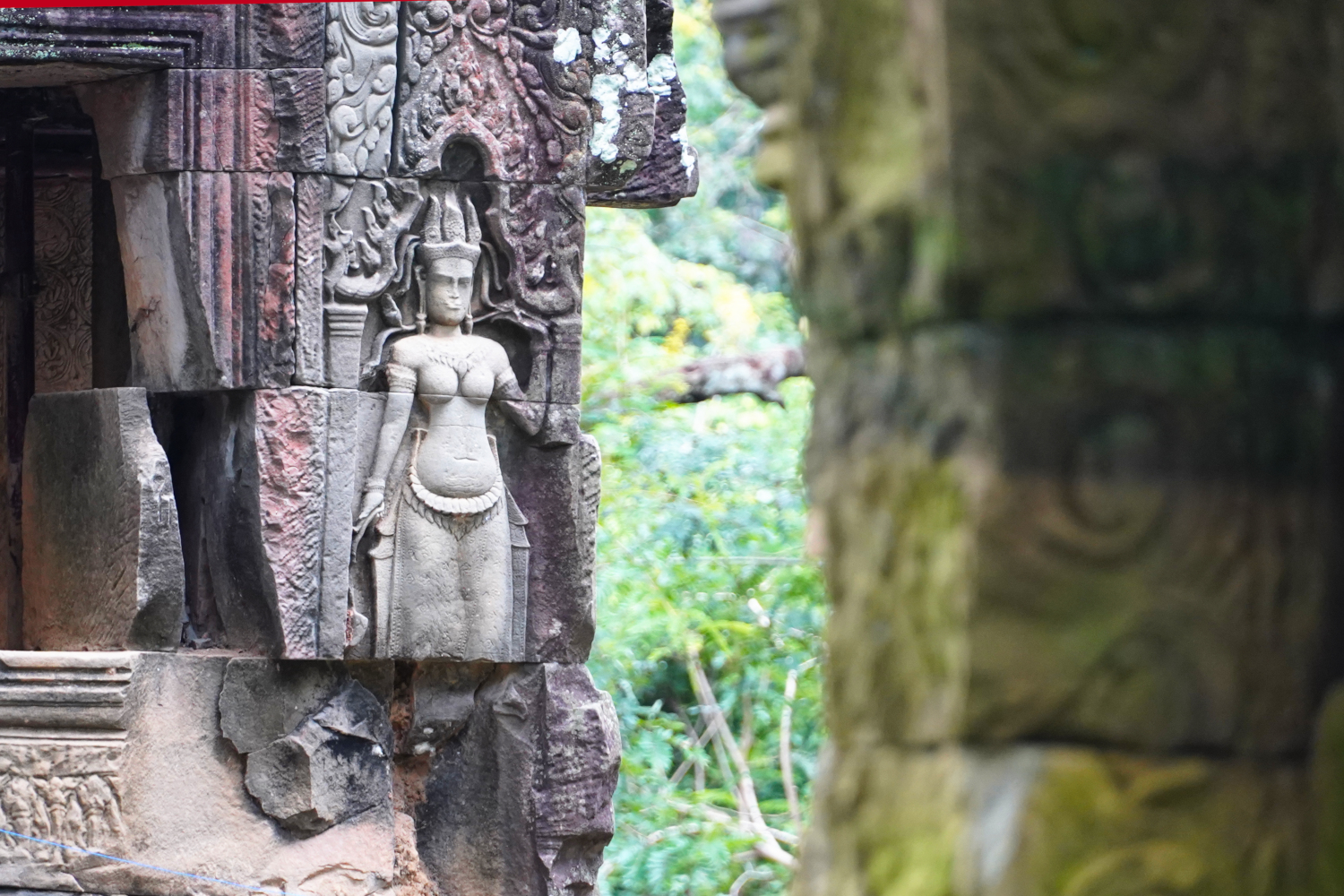
After we’d worn ourselves out sufficiently for one day, we caught a tuk-tuk back into town, after haggling with the driver over the fare. It’s not uncommon for drivers to charge you more to get back home than they did to get you to an attraction in the first place, apparently thinking that since you have to get back somehow, they got you over a barrel.

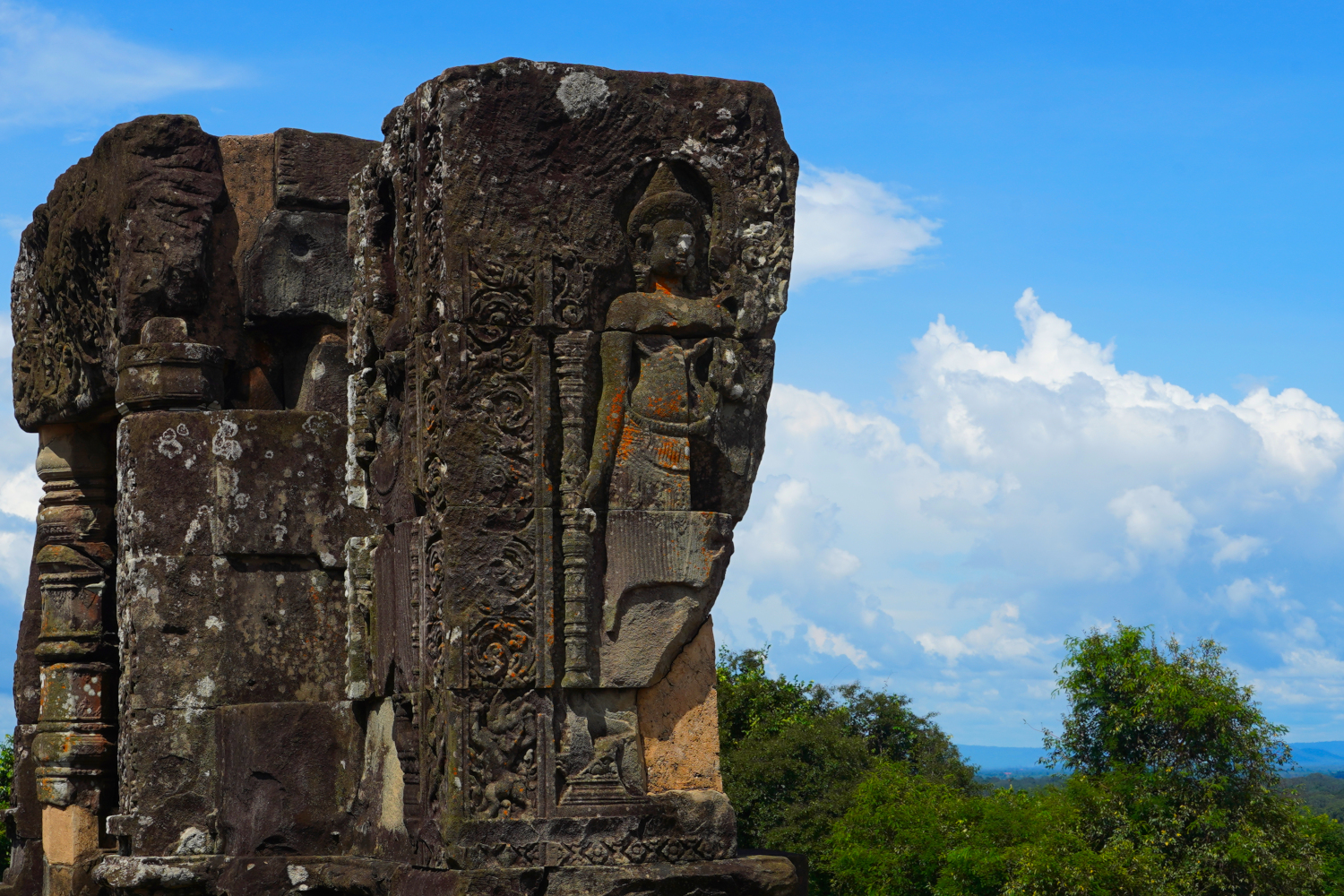
Before going all the way back to school, we stopped in town to do some shopping at an Asian supermarket. (We make that distinction because many of the supermarkets in Siem Reap, as in Phnom Penh, cater to westerners.) That proved to be the difference between getting home dry and getting home soaked to the bone in the downpour we were caught in.
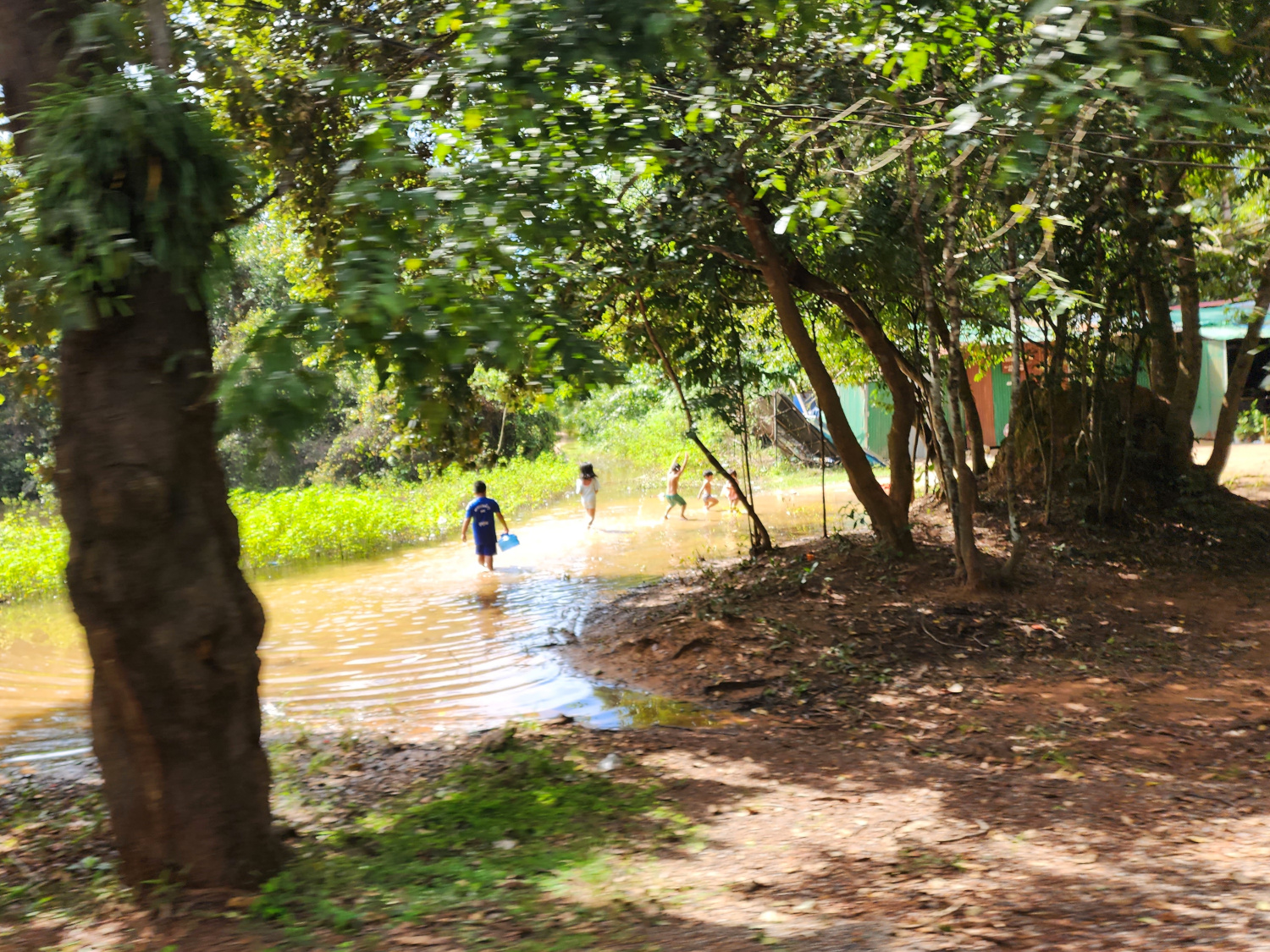
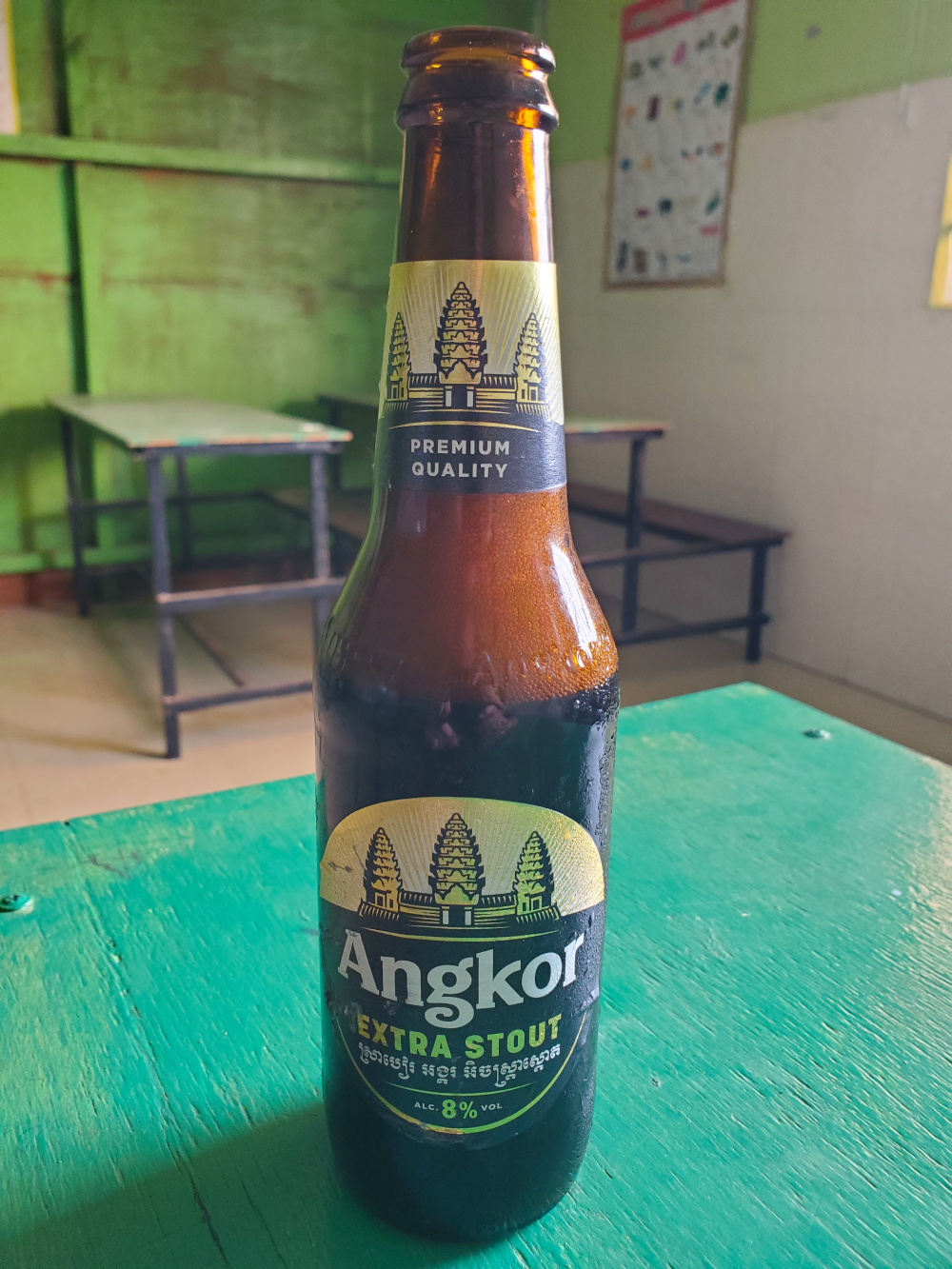
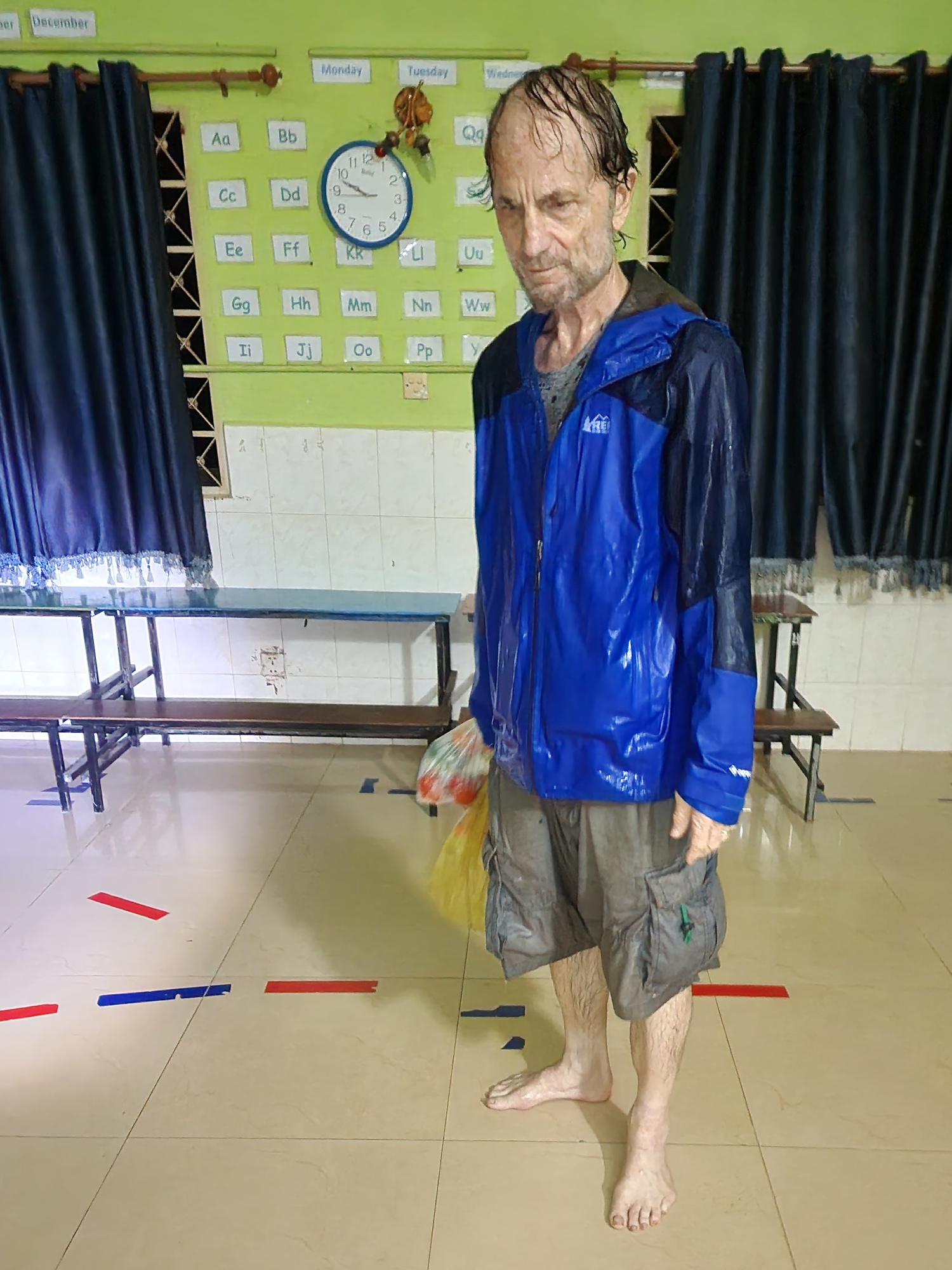
When we walked back into the school, we were dripping. But what a day it had been. Time to celebrate it appropriately– with a bottle of Angkor Stout.
Know Before You Go
- World’s Largest Religious Monument: Angkor Wat is the world’s largest religious monument by area, according to Guinness World Records. The temple complex covers over 400 acres (160 hectares) .
- Temple City: Angkor Wat translates to “Temple City” in Khmer. While Angkor Wat is the most famous temple, the complex encompasses many other structures, originally housing over a thousand buildings.
- Hindu Turned Buddhist: Built in the early 12th century, Angkor Wat was originally a Hindu temple dedicated to the god Vishnu. Over time, it transitioned into a Theravada Buddhist temple.
- Mount Meru Representation: The five central towers of Angkor Wat symbolize the five peaks of Mount Meru, which is considered the home of the gods in Hindu and Buddhist cosmology. The surrounding moat represents the oceans at the world’s edge.
- Intricate Bas-Reliefs: The walls of Angkor Wat are adorned with miles of intricately carved bas-reliefs depicting scenes from Hindu mythology and Khmer history.
- UNESCO World Heritage Site: Angkor Wat was designated a UNESCO World Heritage Site in 1992.
- Multi-Day Visit Recommended: There’s so much to see at Angkor Wat that a single day visit wouldn’t do it justice. Visitors can purchase passes that are valid for multiple days over a one-month period.
- Proper Dress Code: Visitors to Angkor Wat should dress modestly, with shoulders and knees covered.
- Getting There: Angkor Wat is located near Siem Reap, Cambodia. There are many transportation options available to get to the temple complex, including tuk-tuks, taxis, and tour buses.

October 8, 2022


 world travel with a theatrical flair
Leave a reply to Beyond Angkor Wat: Experiencing Cambodia Classroom Life – world travel with a theatrical flair Cancel reply