


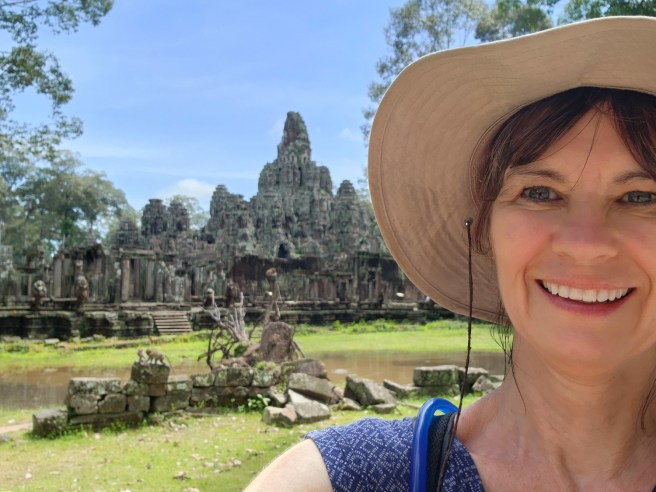
Sigh. Another day, another visit to Angkor Wat. Somebody’s gotta do it. This time, our focus was on the temple called Bayon, which turned out to be one of our very favorites.
Siem Reap Fresh Market Shopping
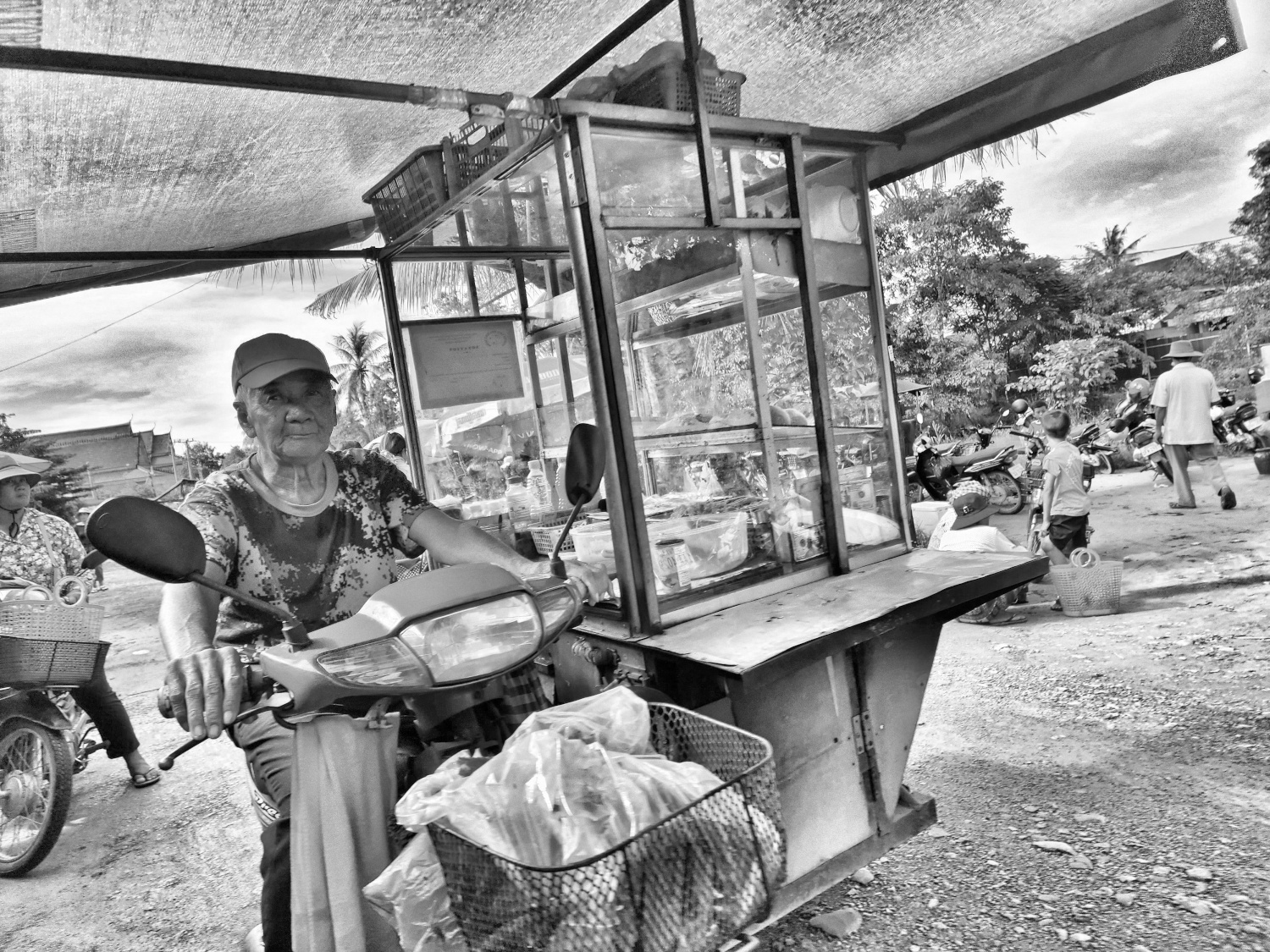
But we began the day with a trip to the marketplace almost directly across the street to get some produce. It was our first time in a Cambodian marketplace, and it was quite an eyeful. And earful. And noseful. We’d been to similar markets in Morocco, but this one was more vibrant, more chaotic, more visceral.
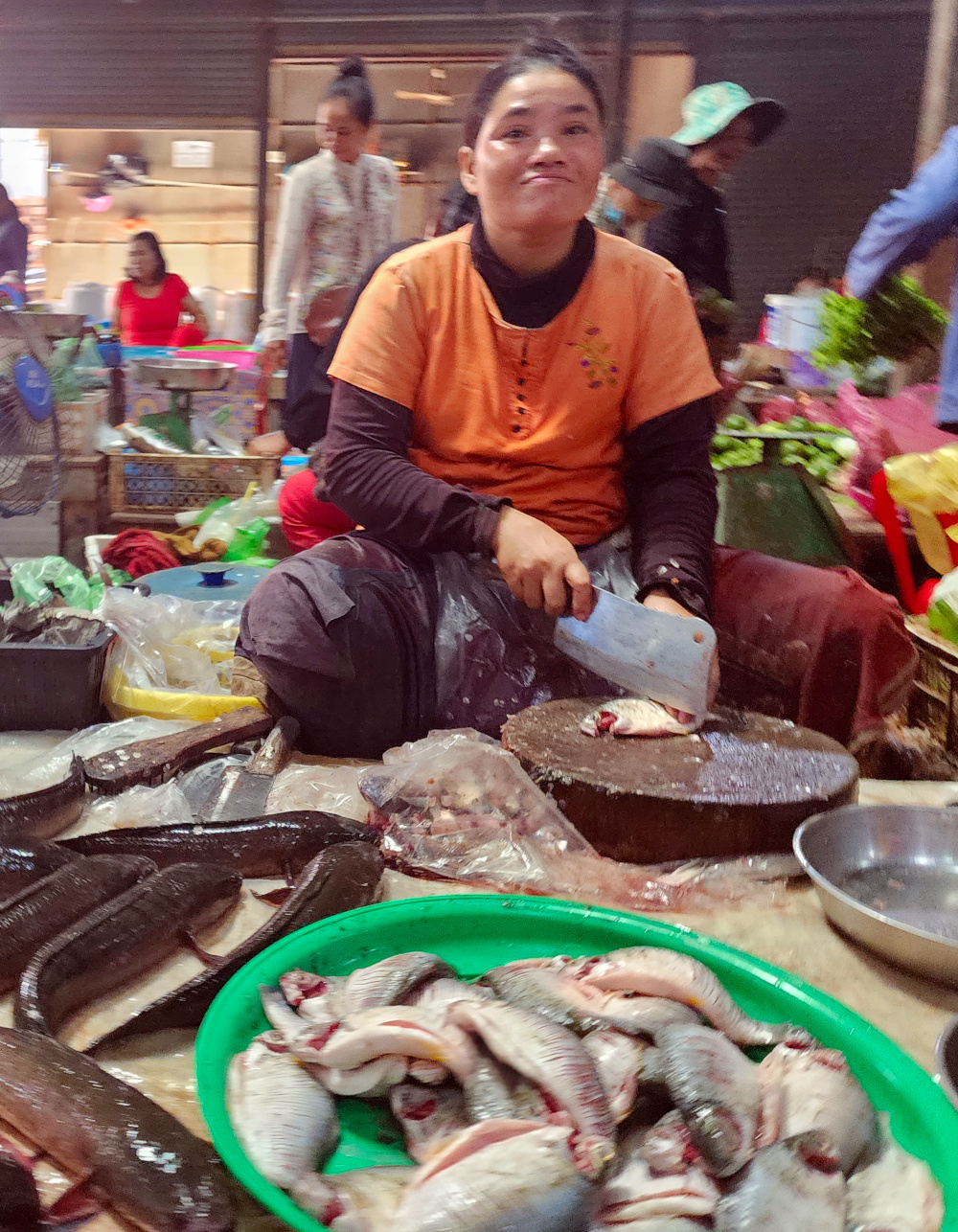
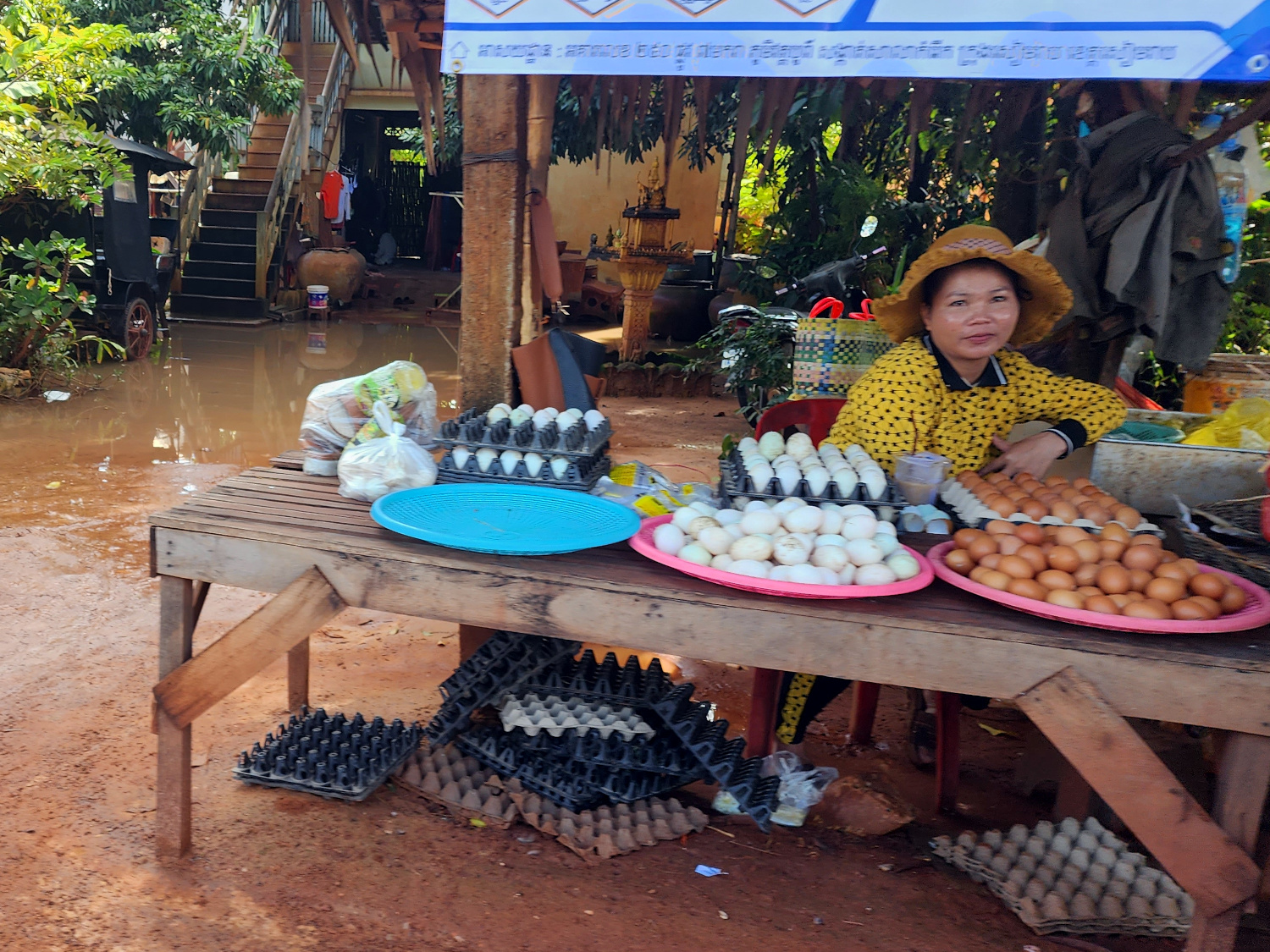
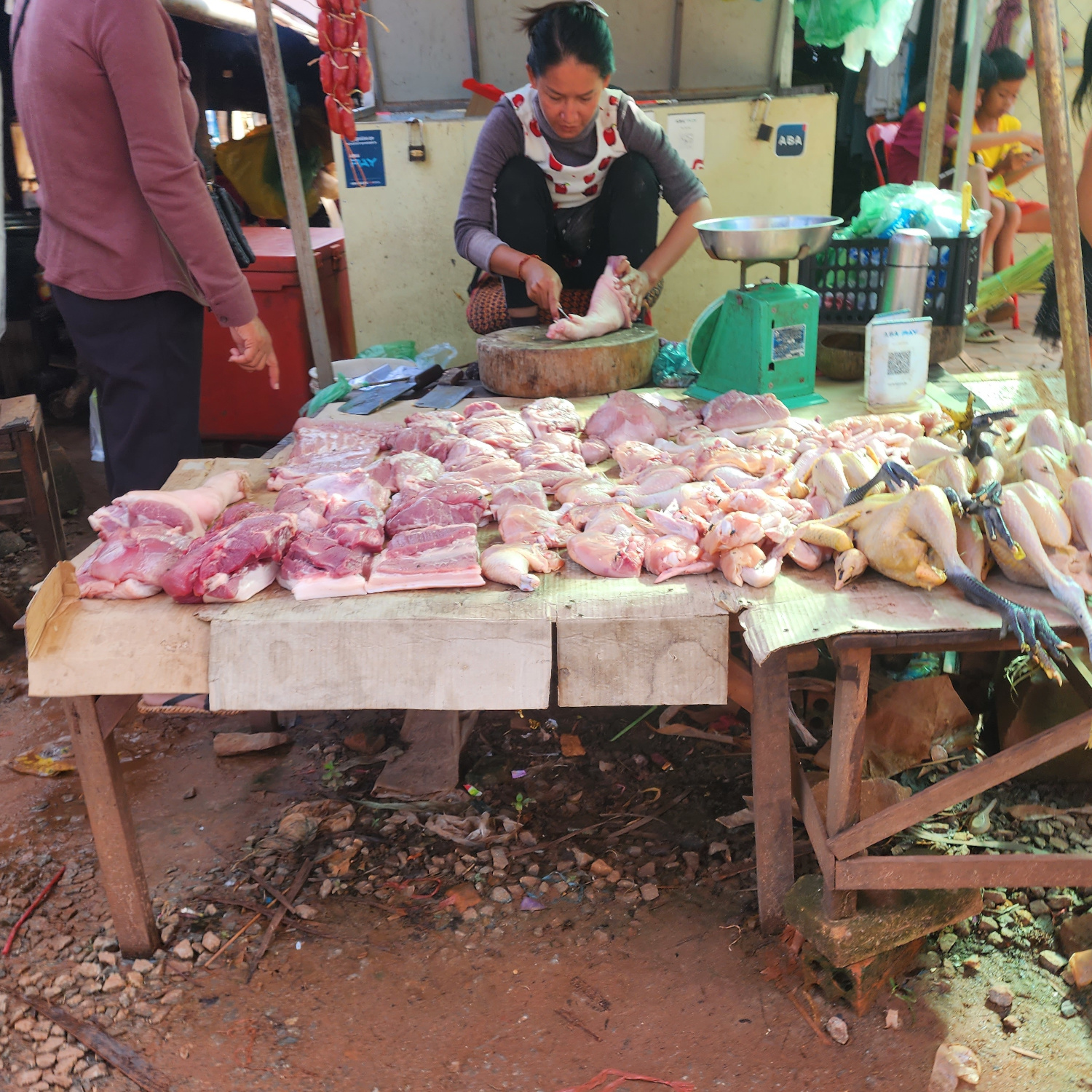
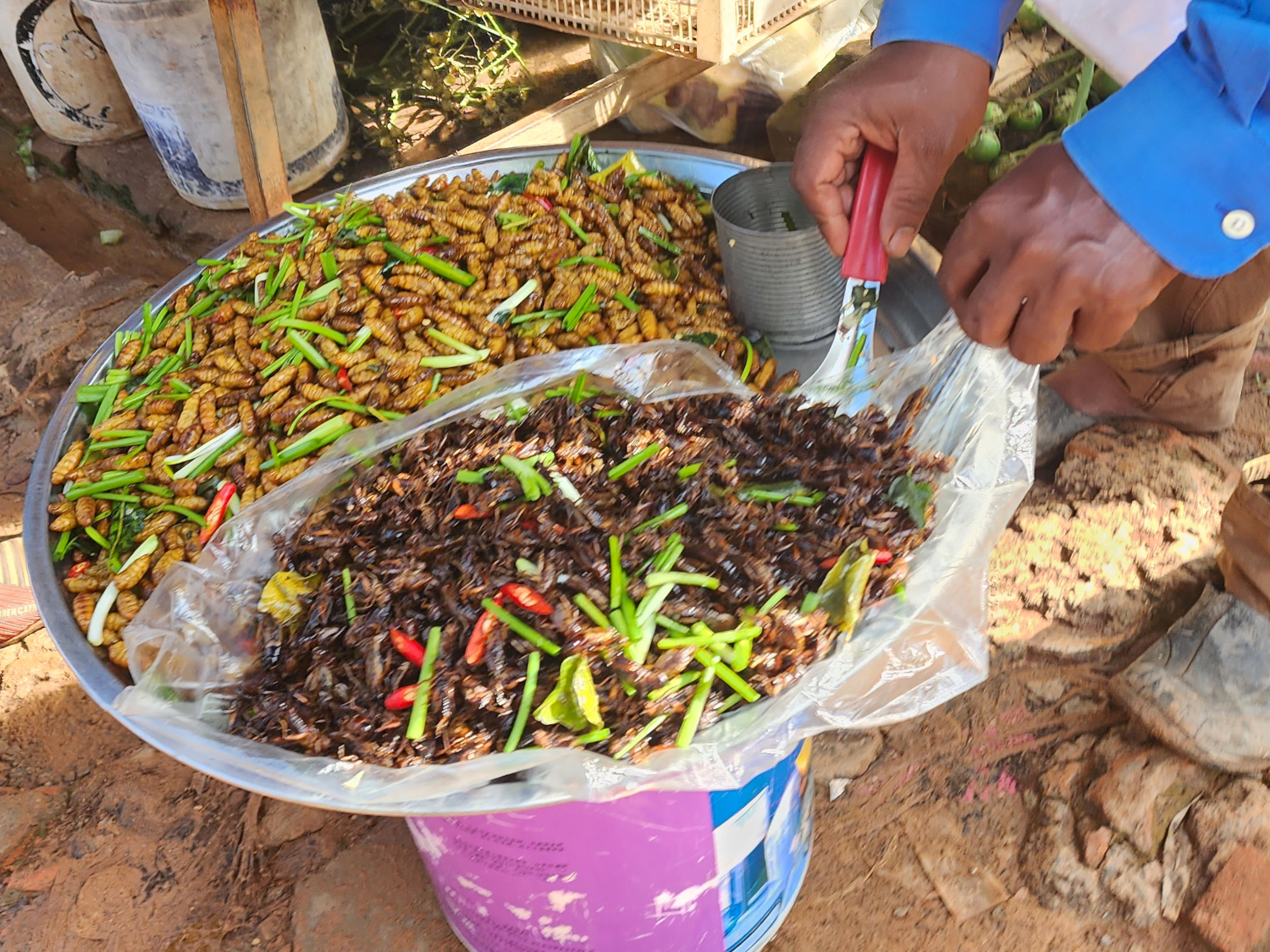
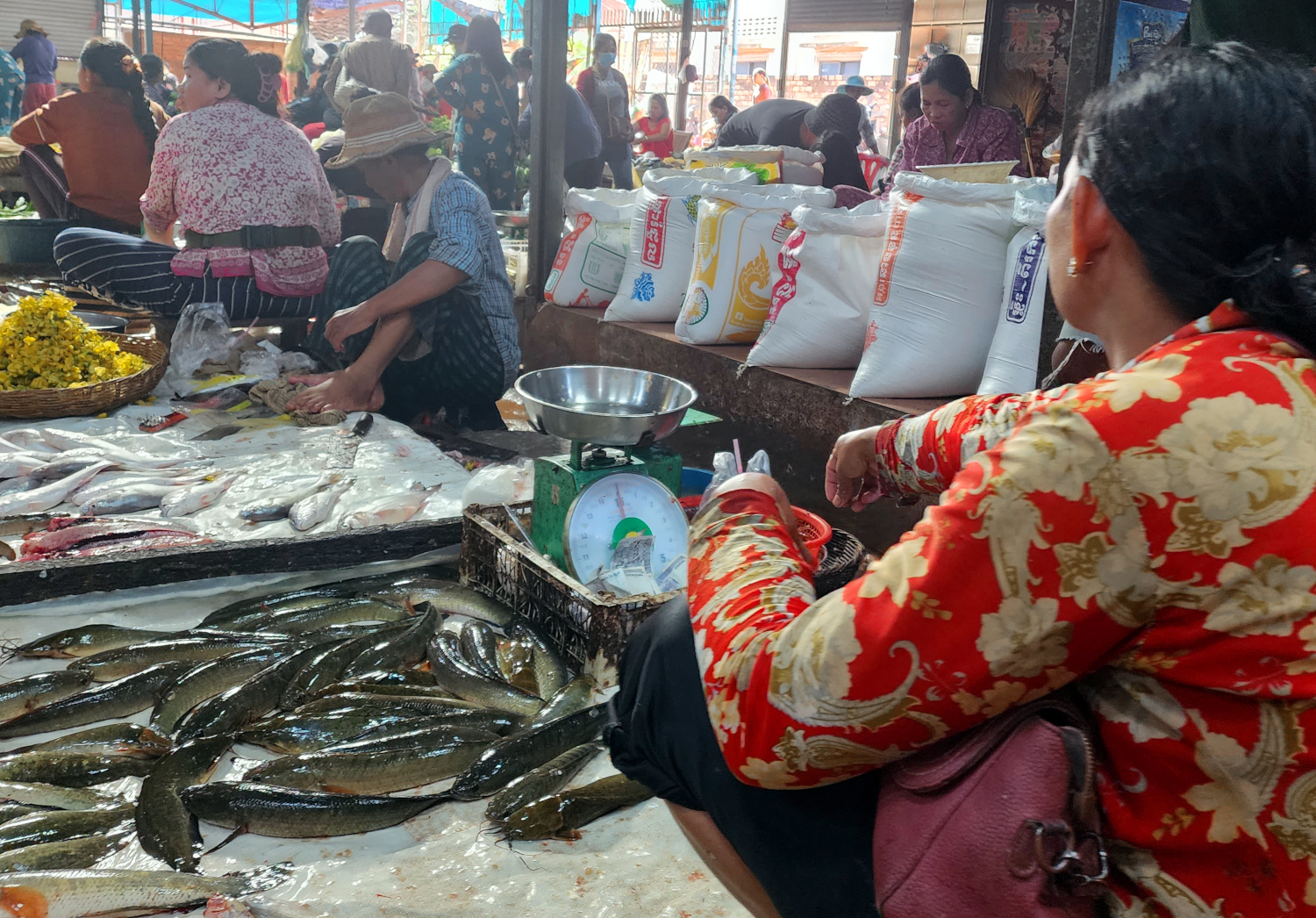
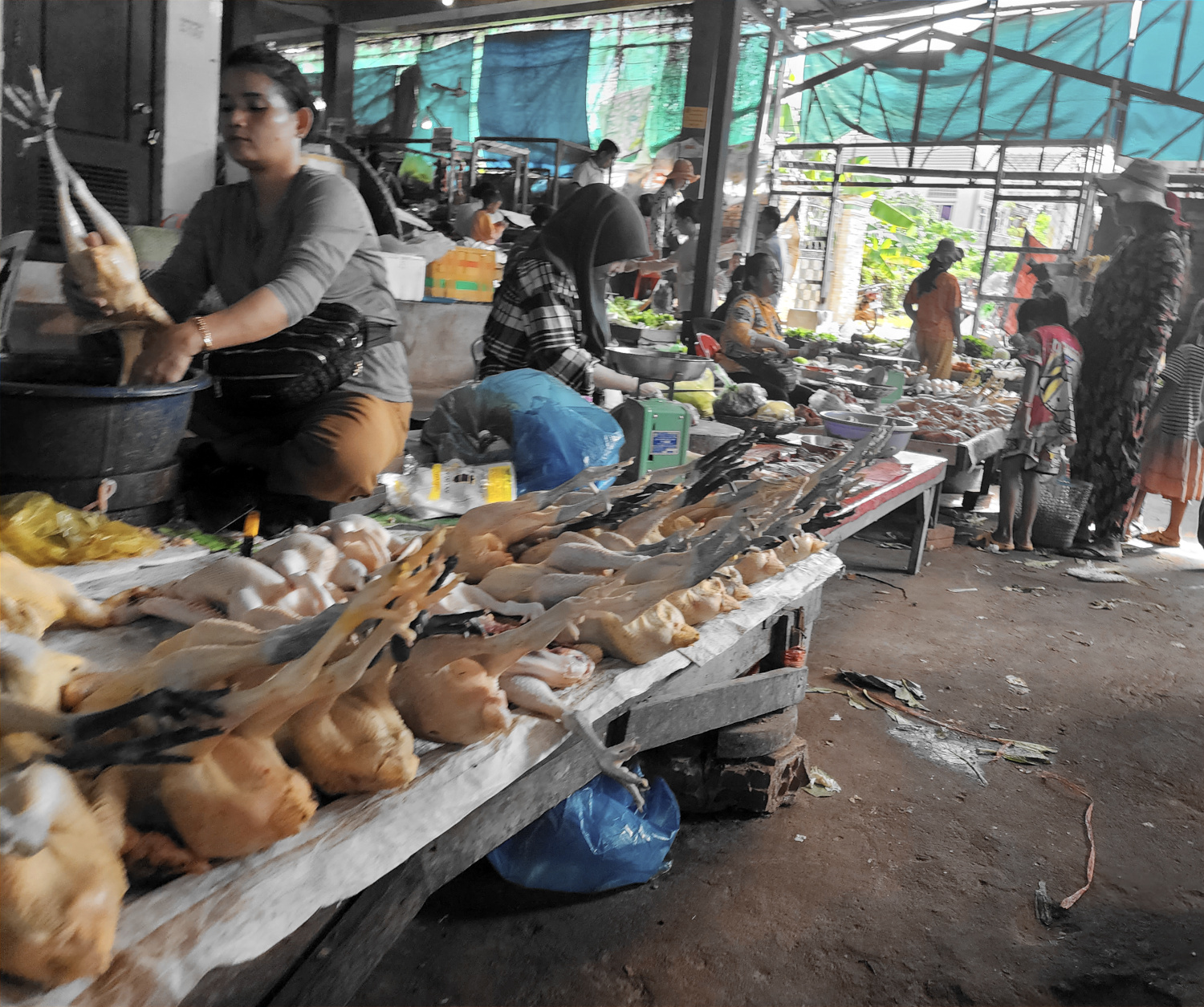

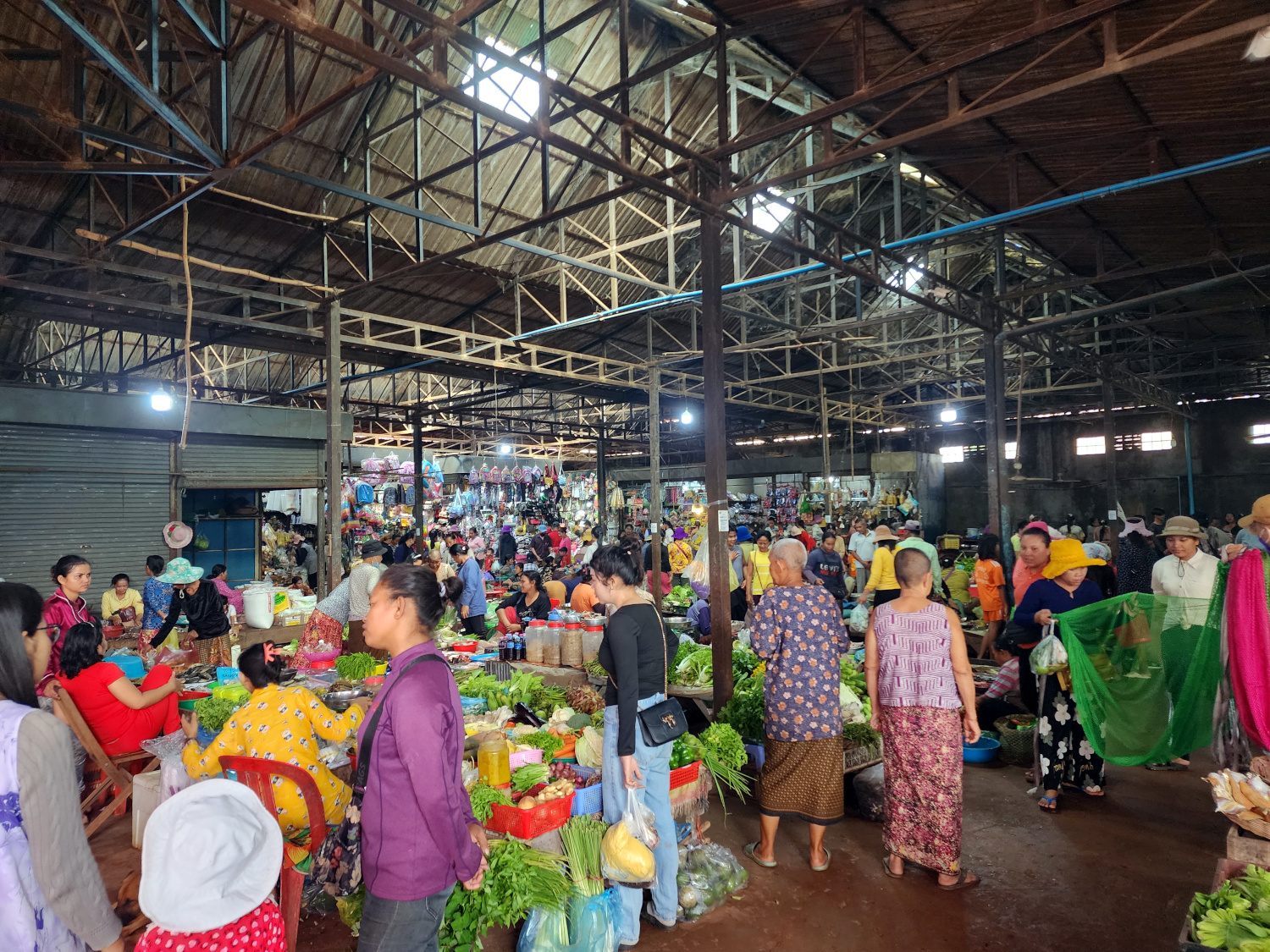


In addition to fruits and vegetables (some of which we couldn’t identify), there were vendors of meat and fish — the latter still alive and thrashing at the beginning of the process. And instead of being in stalls, these vendors would be just on low tables or little platforms on the floor, where they would chop and hack the raw and squirming and bleeding strips of flesh with cleavers.
Wat Po Banteaychey
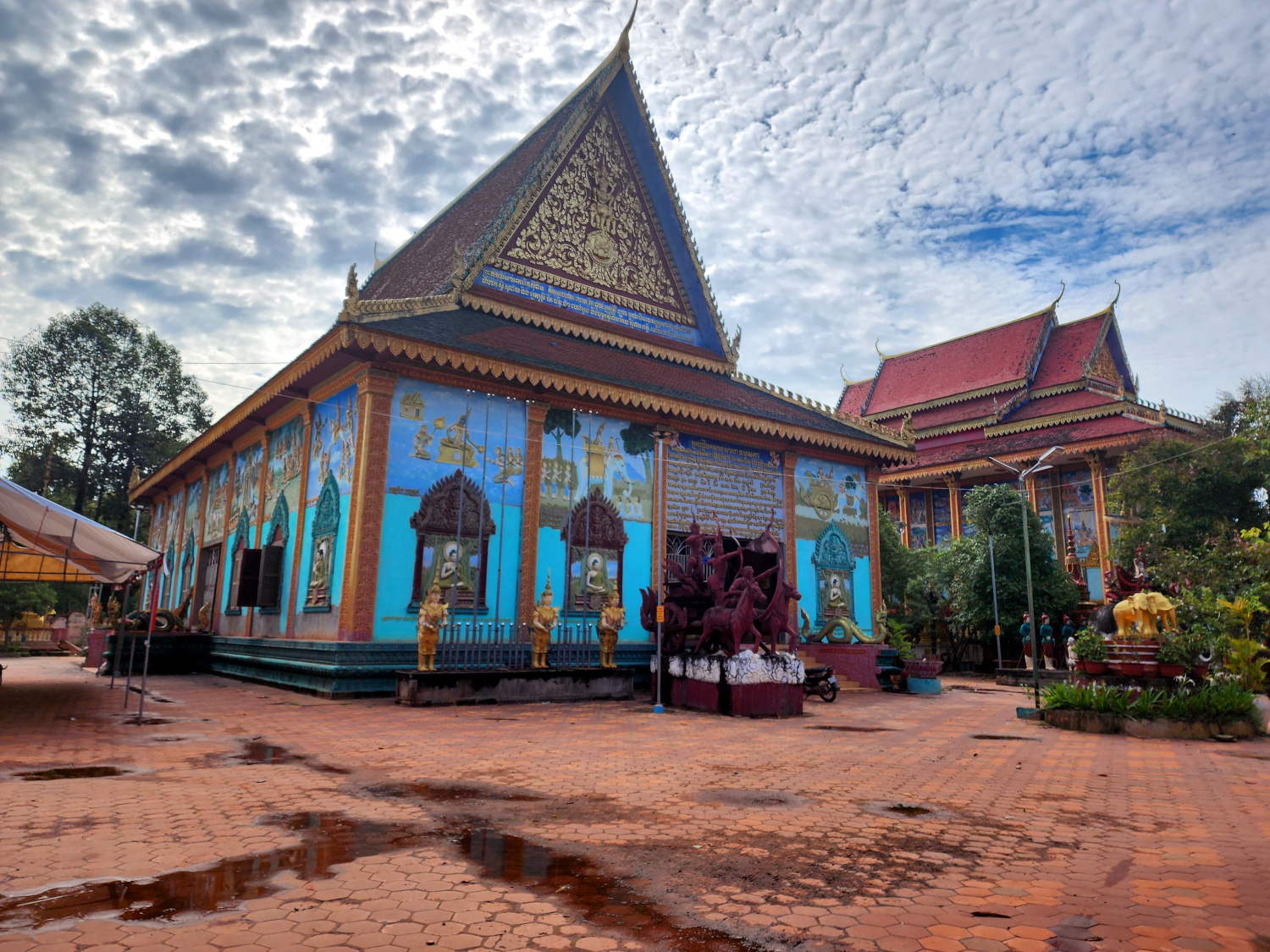
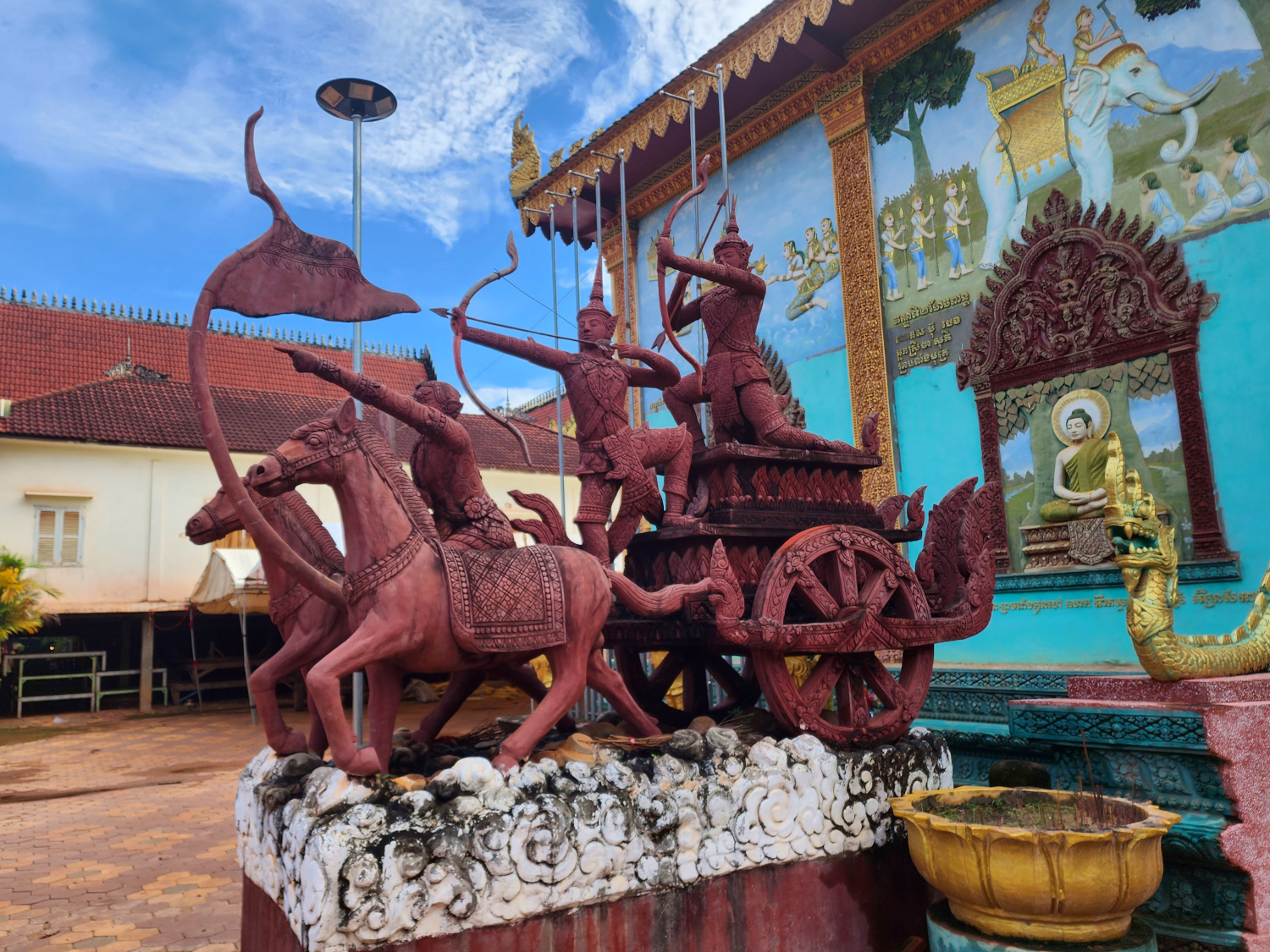
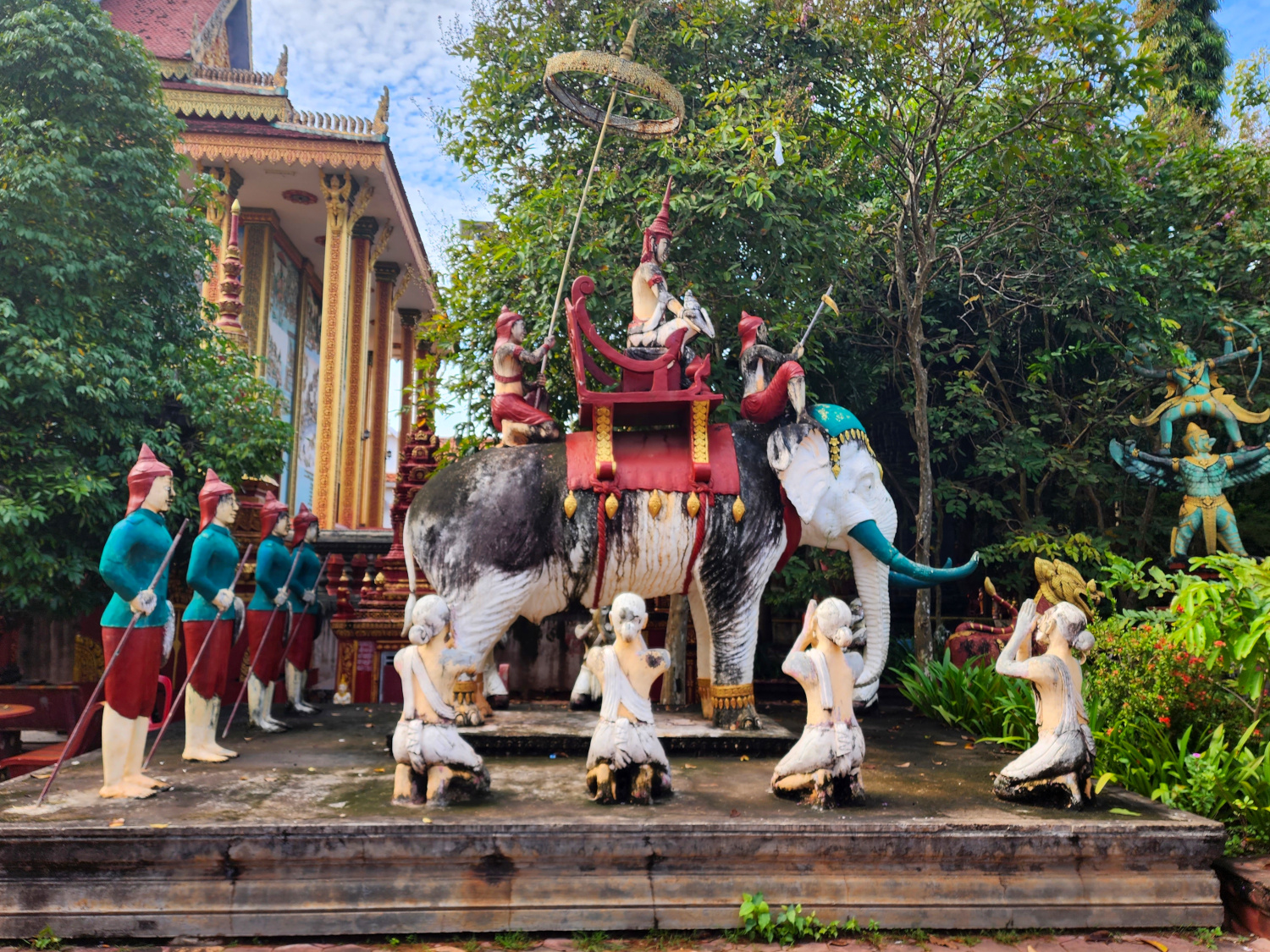
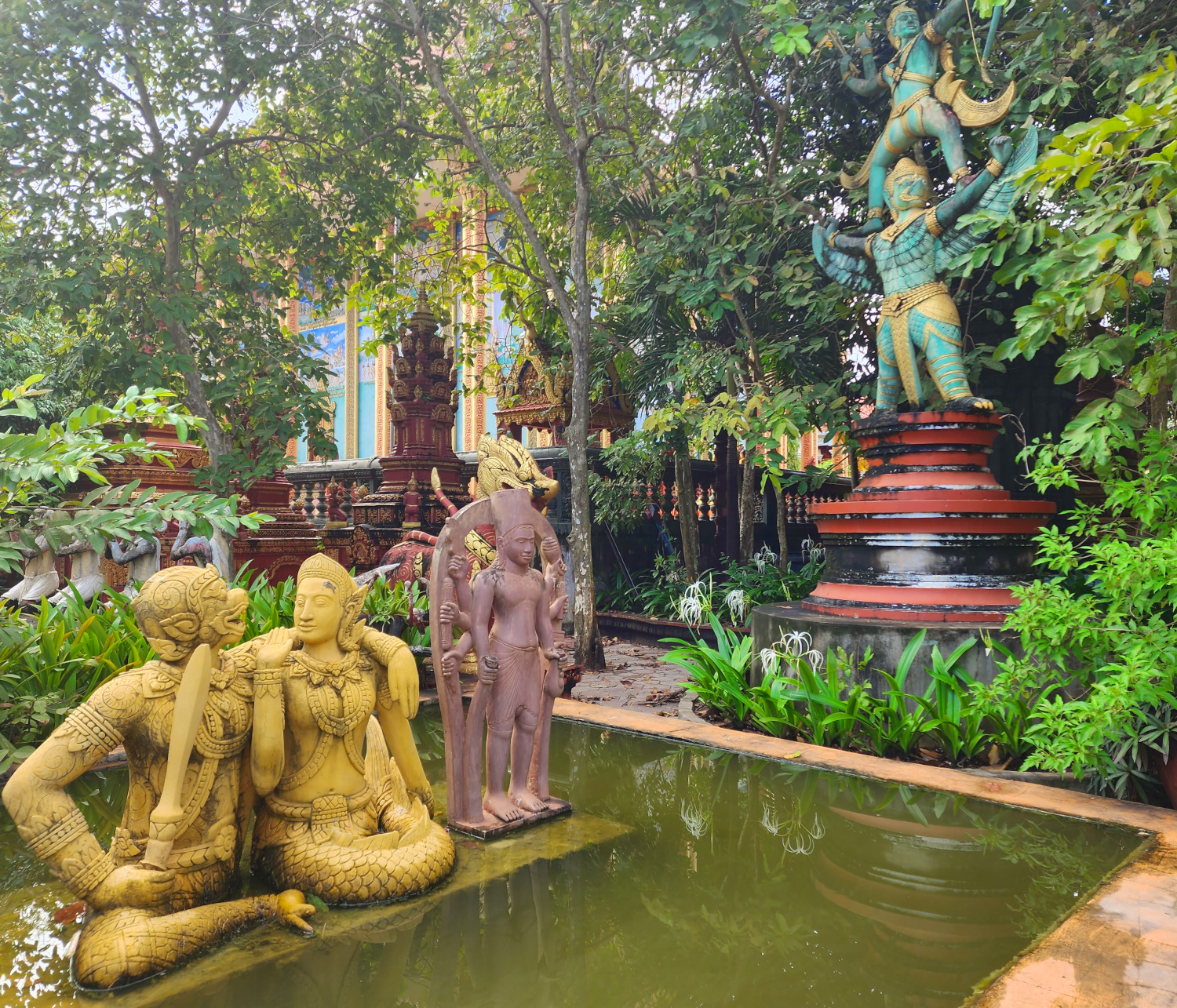
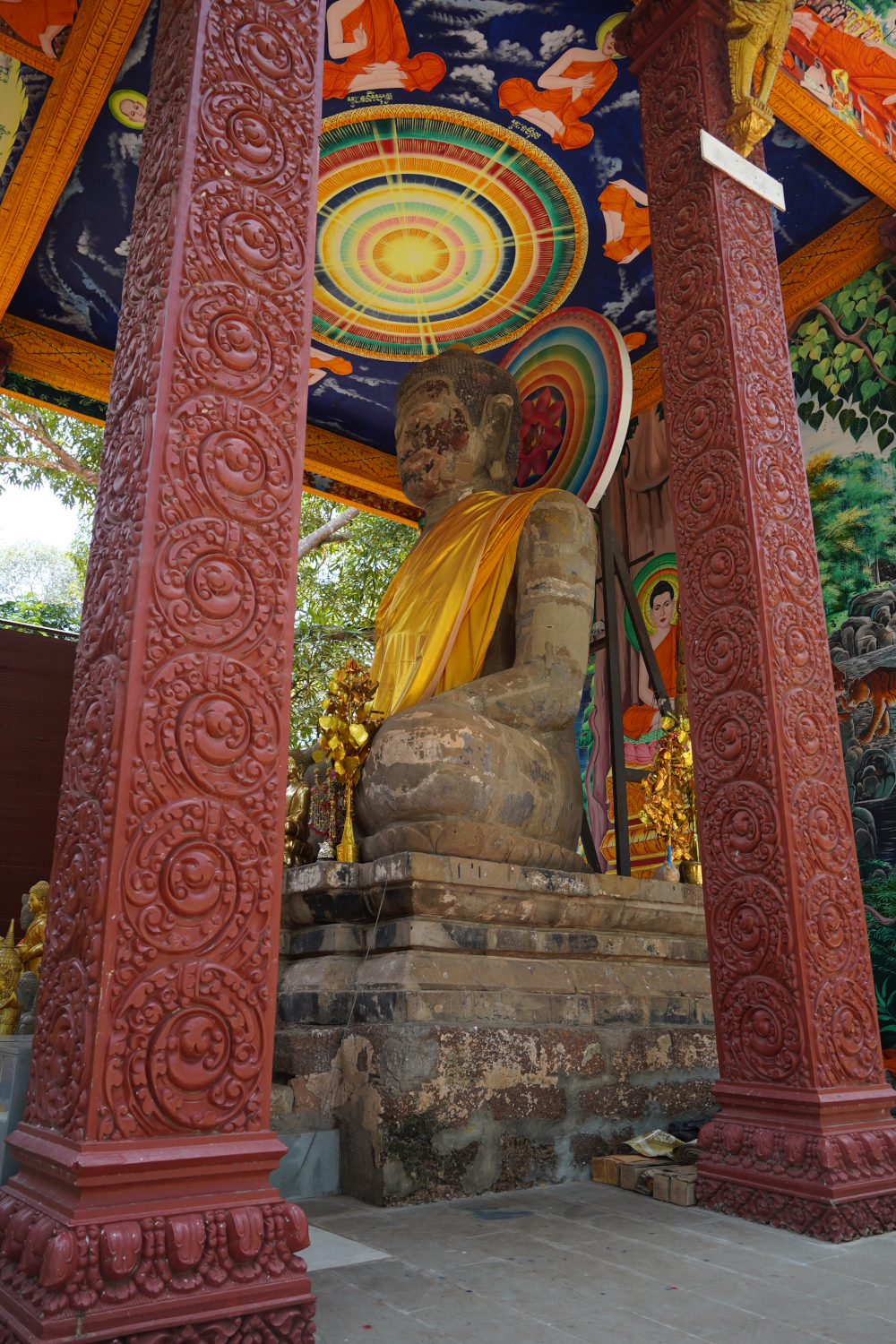
On our way taking the goods back home, we slipped into the nearby temple, Wat Po Banteaychey, to take a peek. Surprisingly, the compound was entirely open to the public, with no security checkpoint, and nobody even seemed to take note of us — except for a few dogs who hung out there. There wasn’t even anyone lurking around to solicit donations. We decided we’d have to come back and examine the place more closely another time.

We also stopped at a little store near us to obtain a 20-liter jug of drinking water — until that time, we’d been relying on the bottles of water that the school where we’d been volunteering had stashed in a storage shed. The shop was tended by a girl who appeared to be about 8 years old — there was no sign of adults who were helping her, or vice versa. While we were there, a man stopped by and bought two cigarettes — not two packs, but two cigarettes — for 50 cents. Selling cigarettes singly is a common practice in Cambodia.
Bayon Wat
Finally we headed out to Angkor Wat, though it took us a while to catch a ride there. We’d been booking tuk-tuks through an app called Grab; but on this occasion we waited a very long time for our ride to show up, so we cancelled it and tried another app, PassApp. This time we got a ride very quickly. Even better, the fares for PassApp were only about half the fares for Grab — which is quite puzzling, since almost all drivers book rides through both of them. The only difference is that PassApp often requires cash payment only. No problem, considering the savings. PassApp became our new passenger app of choice. (Much later, after we’d opened a bank account in Cambodia, it became even more convenient.)
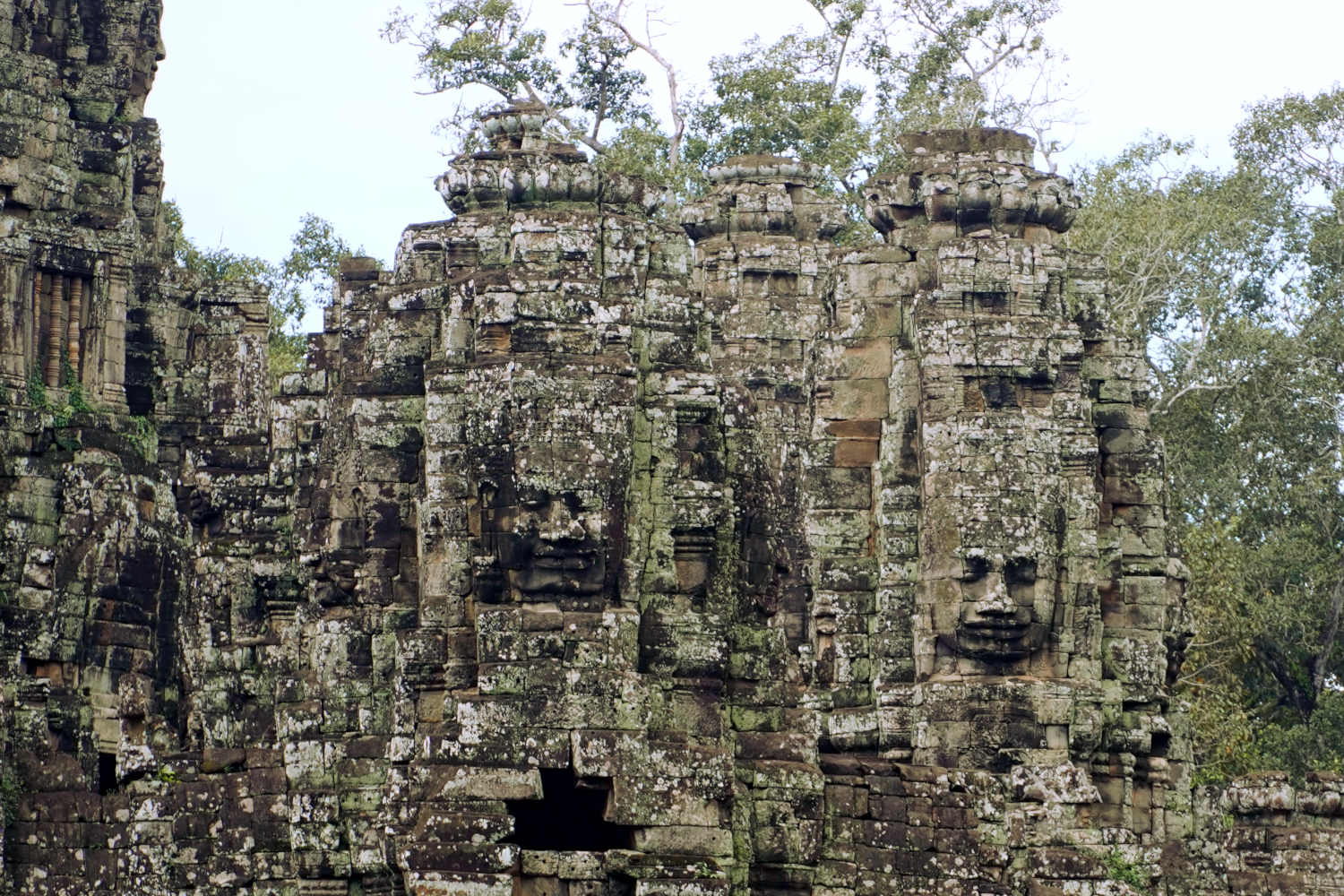
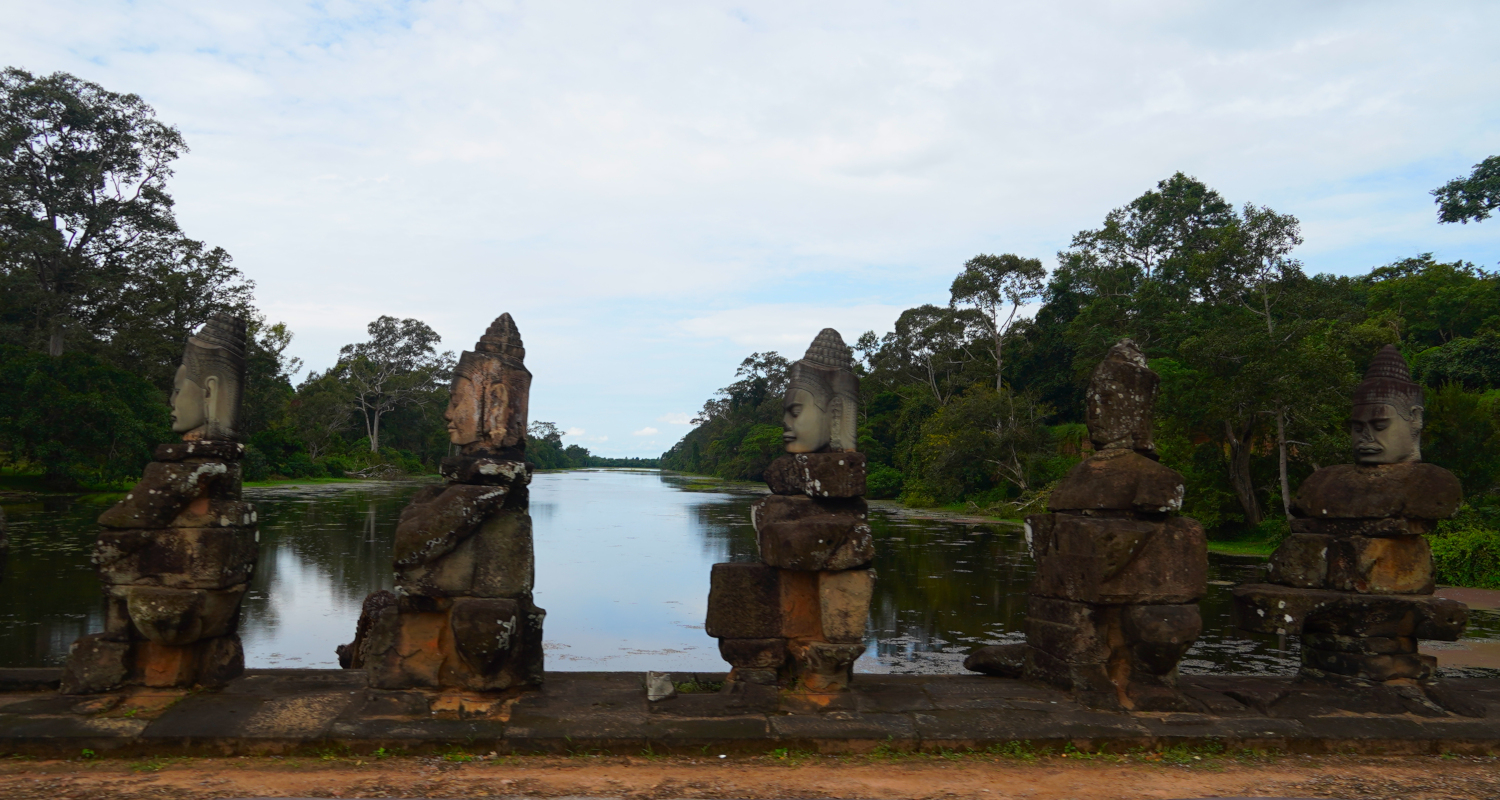
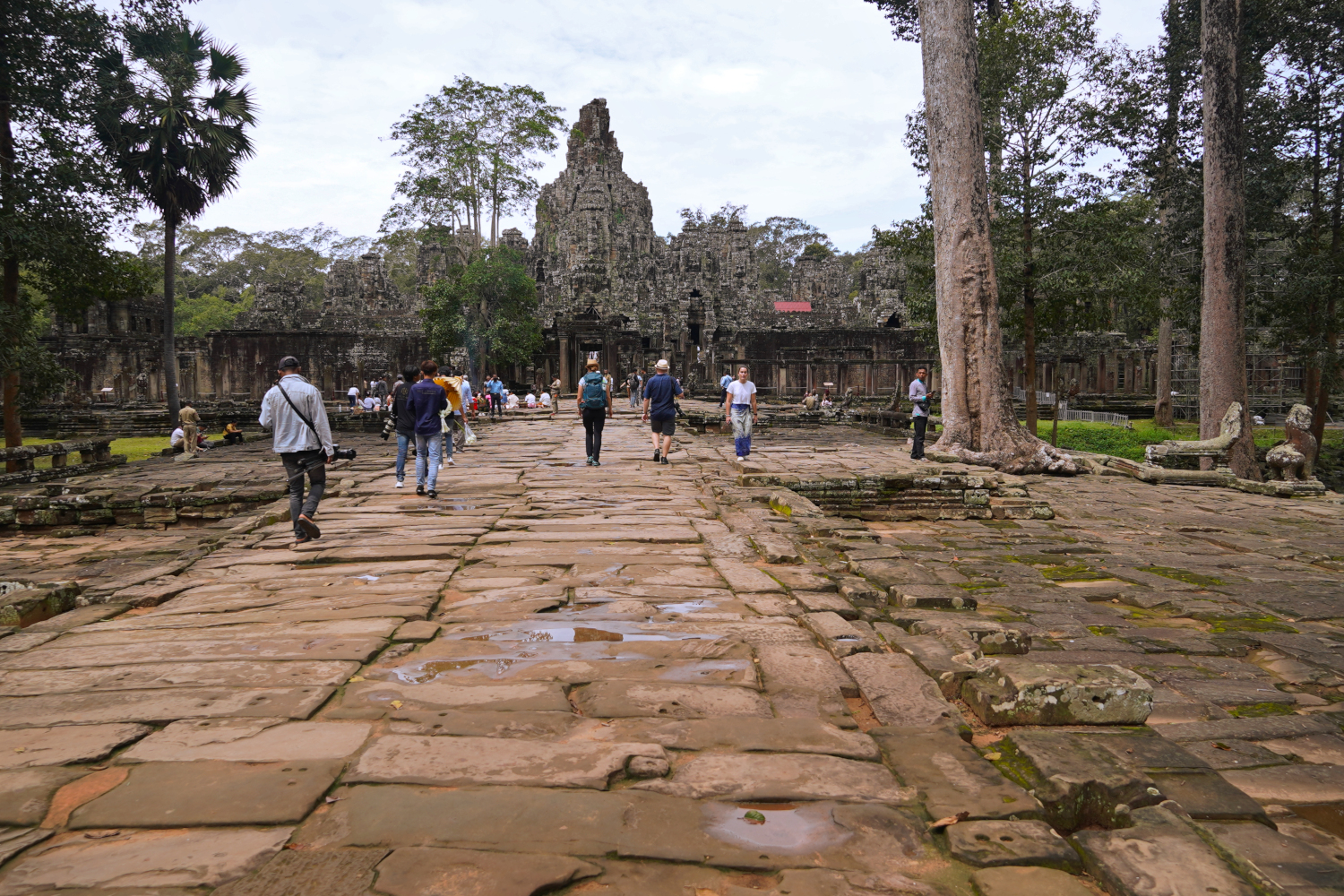


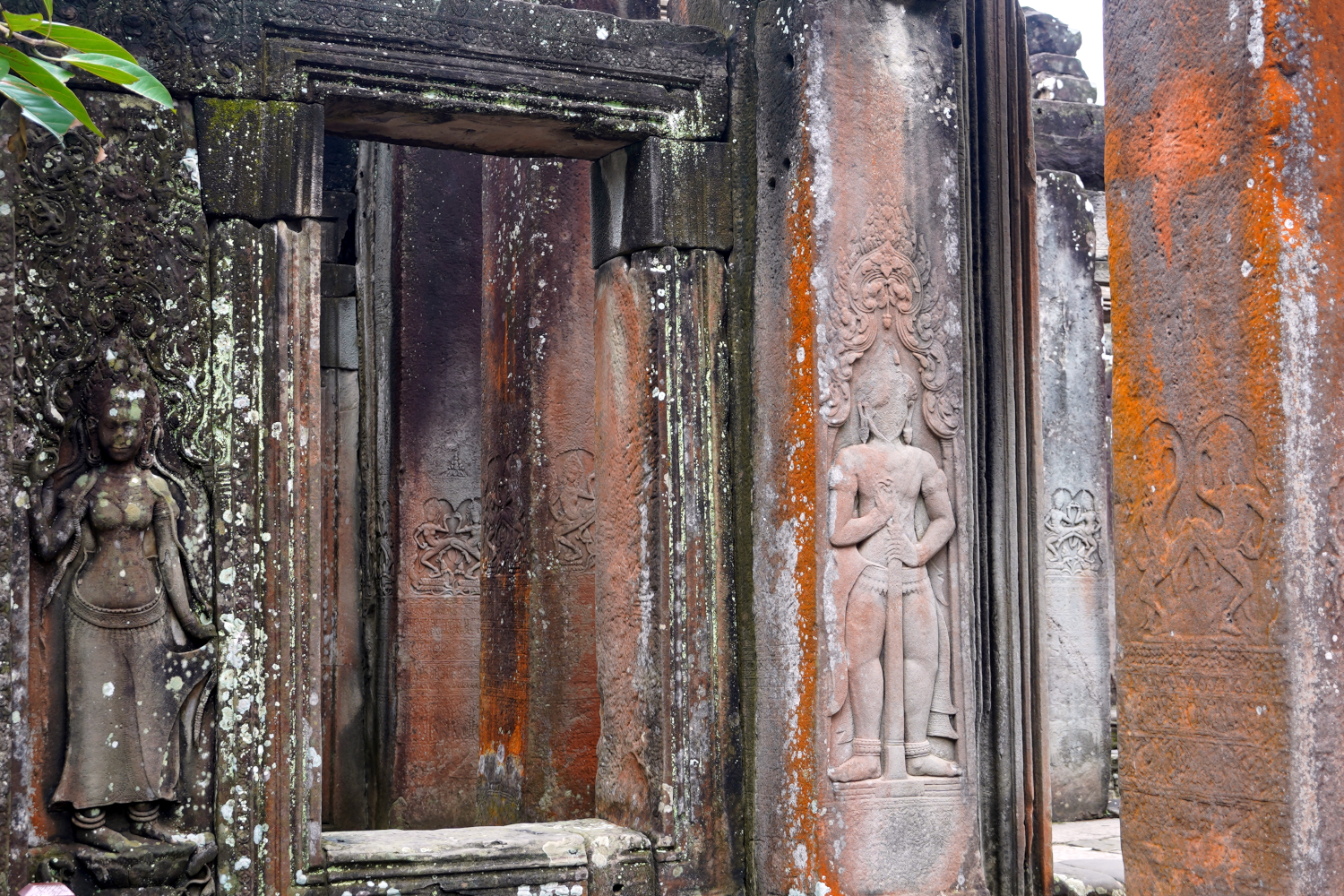
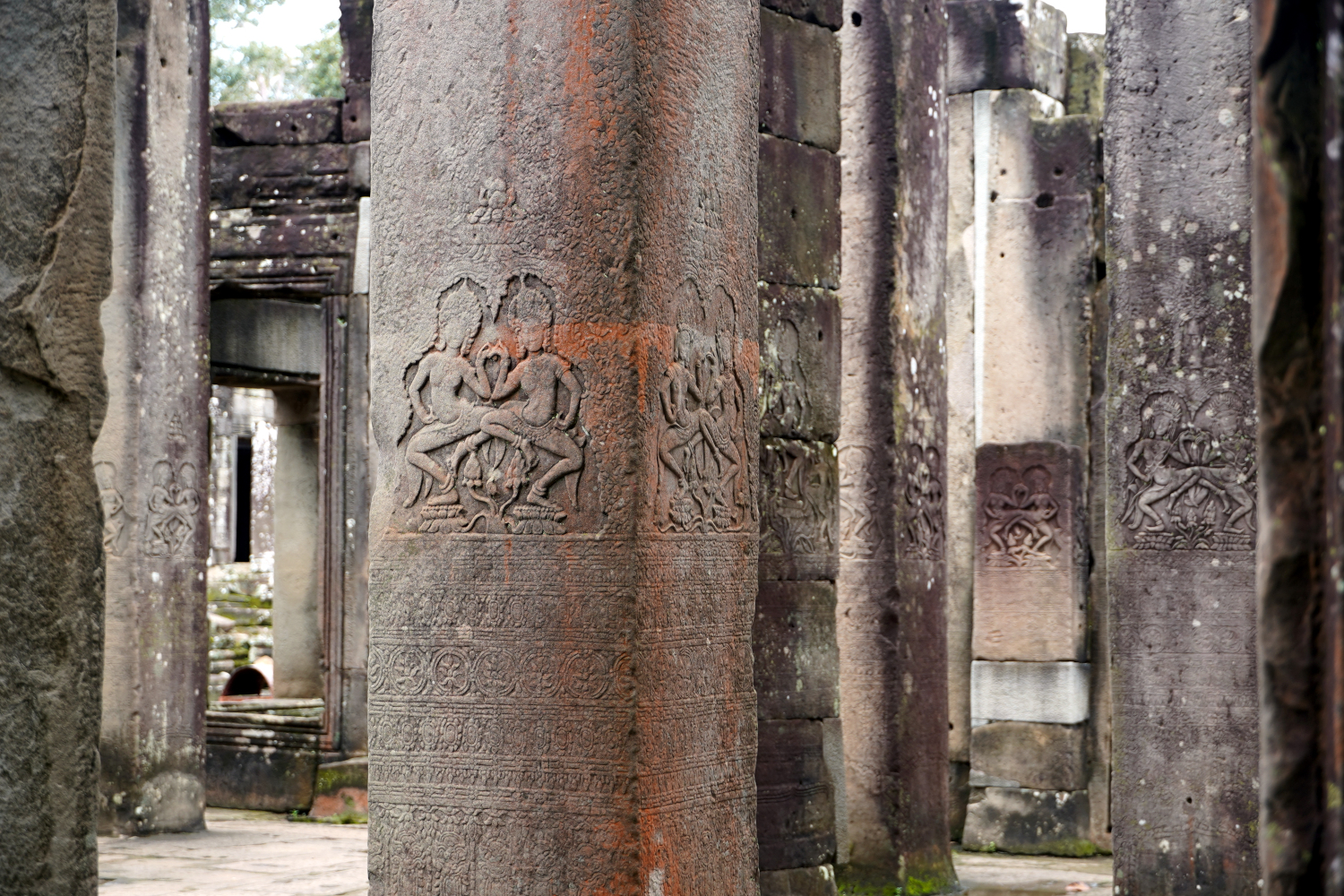
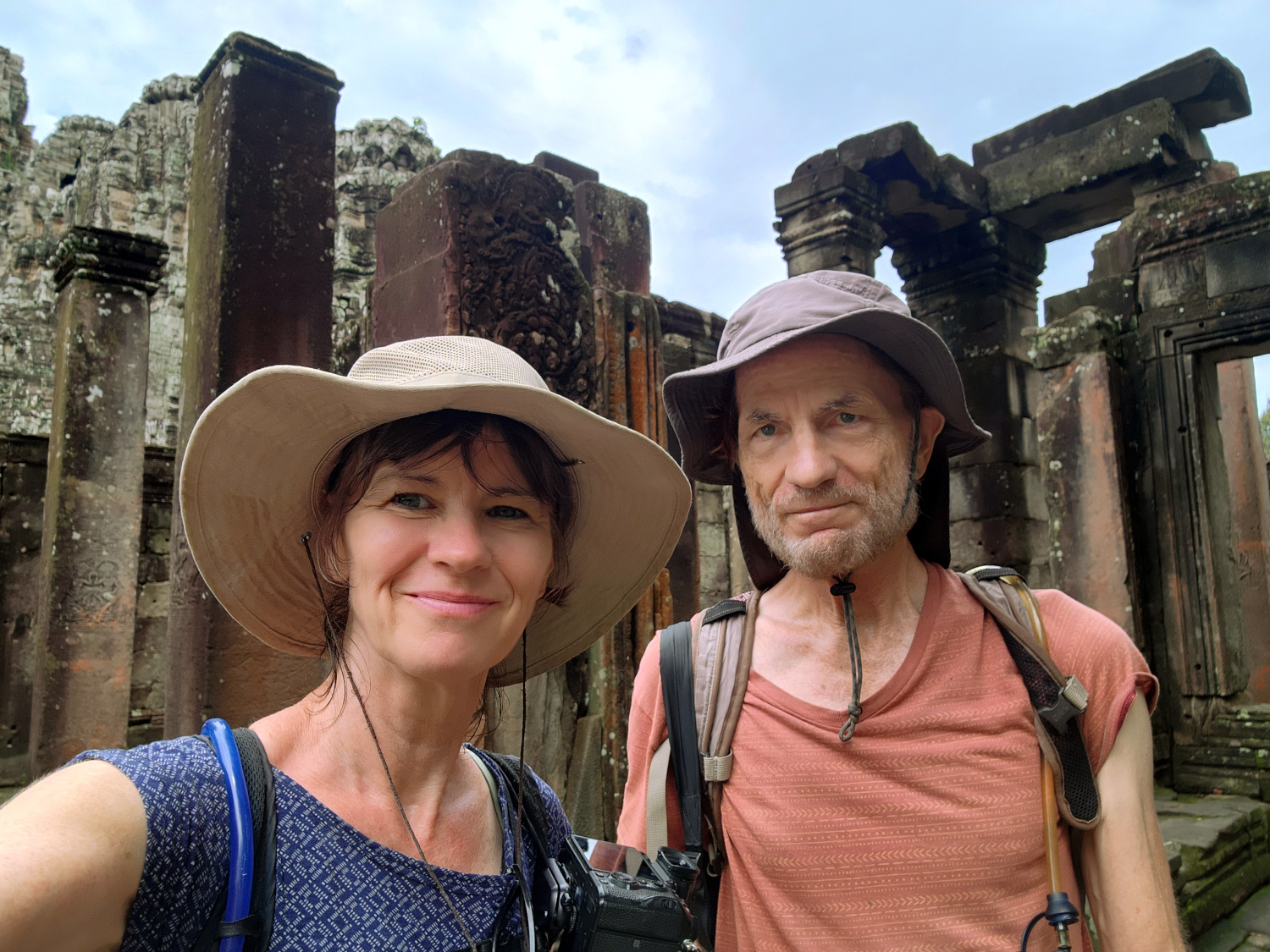
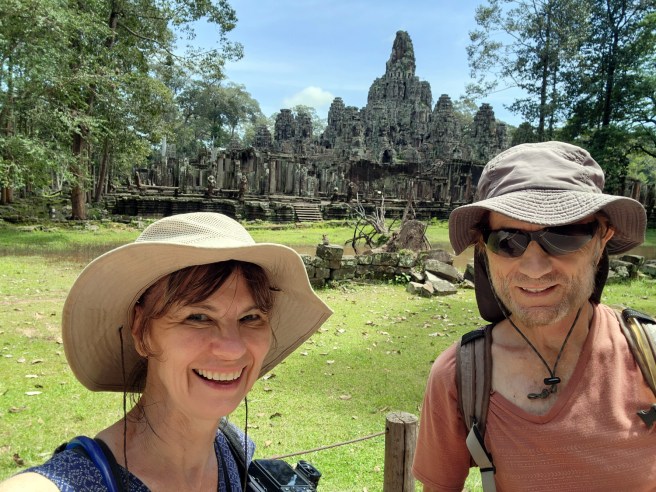
Arriving in front of Bayon, we were immediately struck by (in addition to the Buddhist ceremony of some sort, complete with musicians, that was taking place in front of the entrance) how different it was from the central temple that we’d seen the previous day. It was not as well preserved for one thing, giving it a feeling of being even more ancient (though in fact it’s slightly less ancient). And it’s a different architectural style — apparently what is known as Cambodian baroque, as opposed to the Cambodian classical idiom of the main temple.
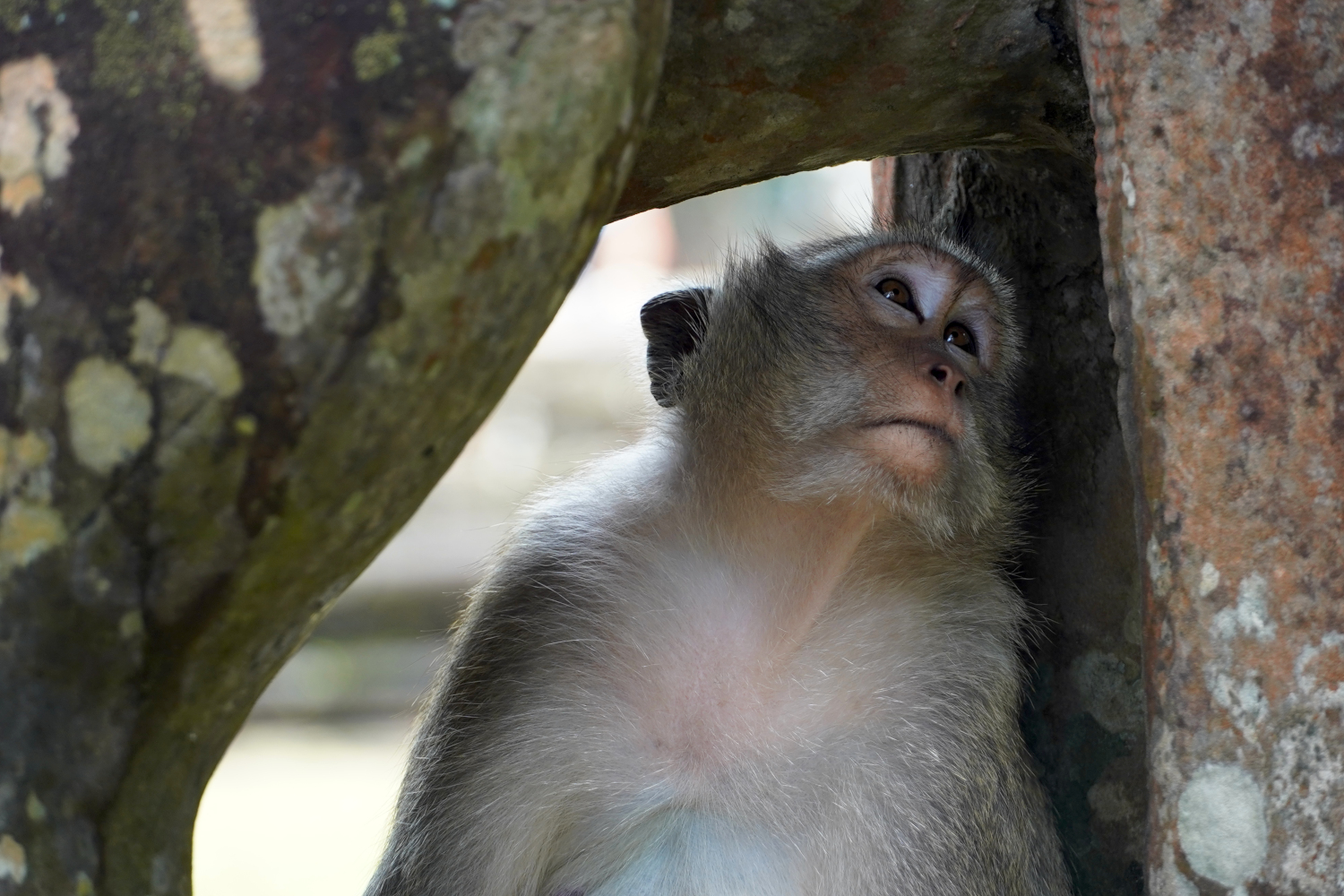

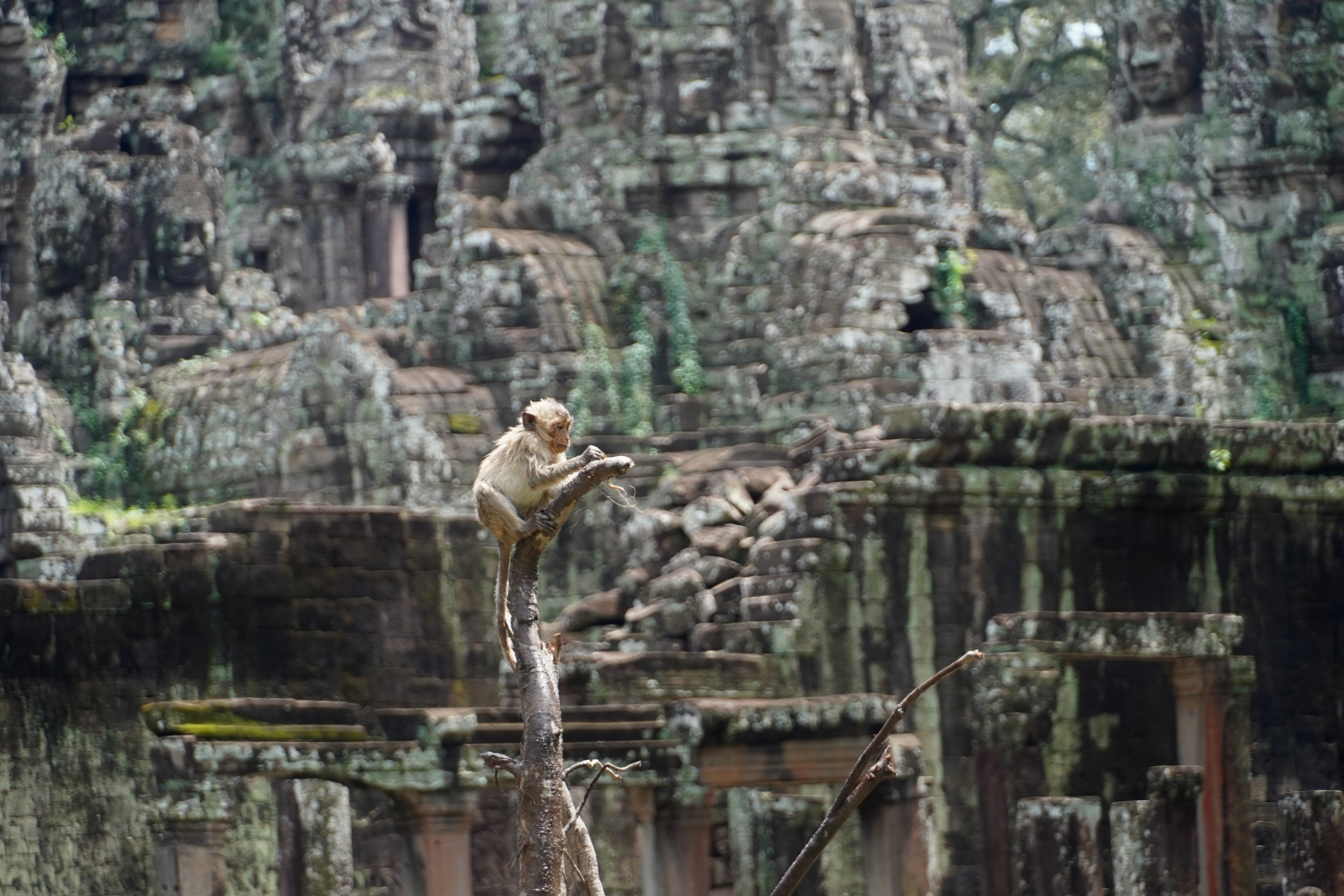
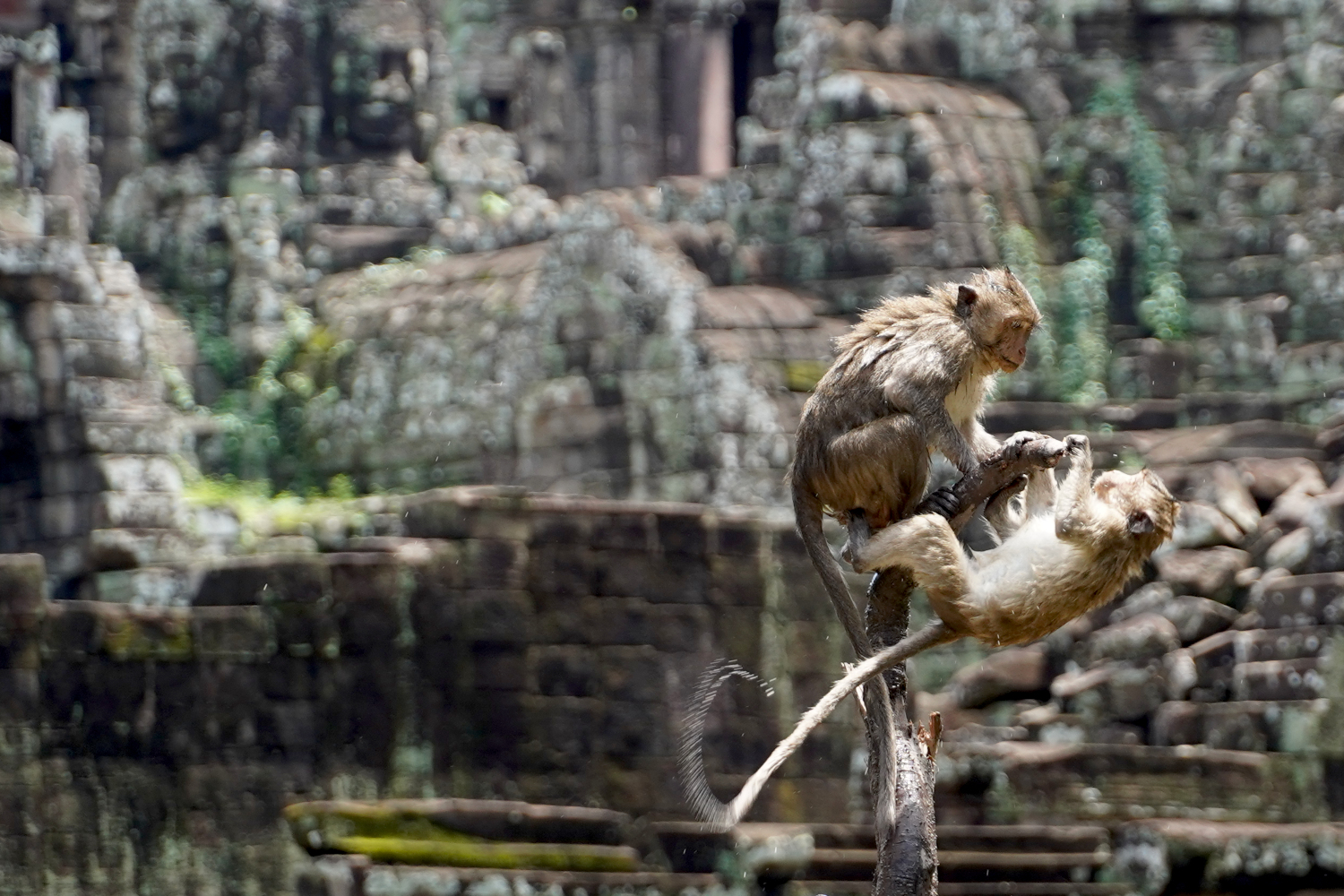
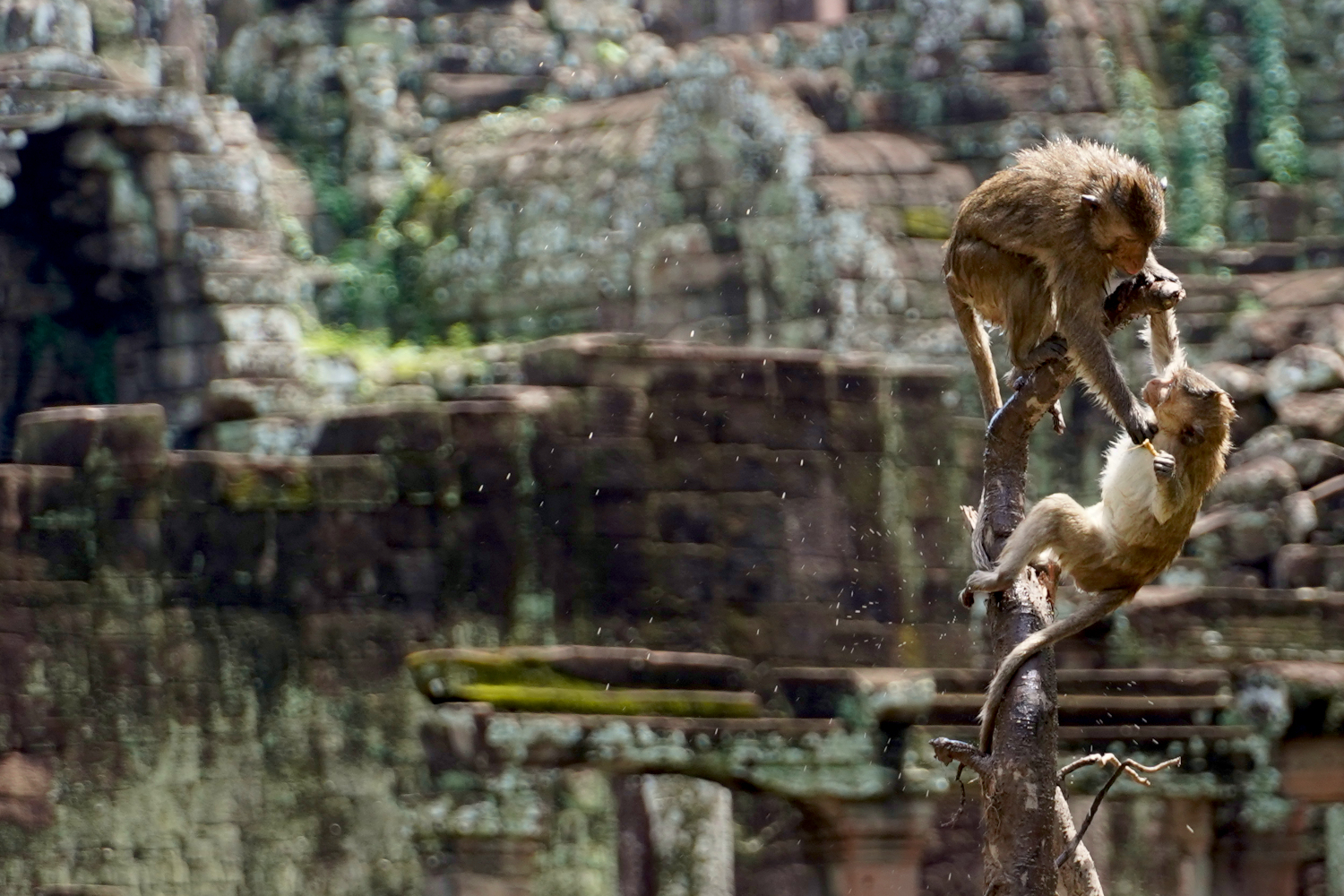
Another thing we noticed right away was the monkeys — at least two dozen of them. There had not been any at the temples we’d seen the day before. It seems they hang out at just a few of the temples, and stay away from the others. At this one, they were making themselves at home in grand fashion. They took a dip in a little pond, then dried off by lying down in the middle of the road, forcing the cars to drive around them or patiently wait for them to move. They also liked to climb onto cars, playing with the people inside them.
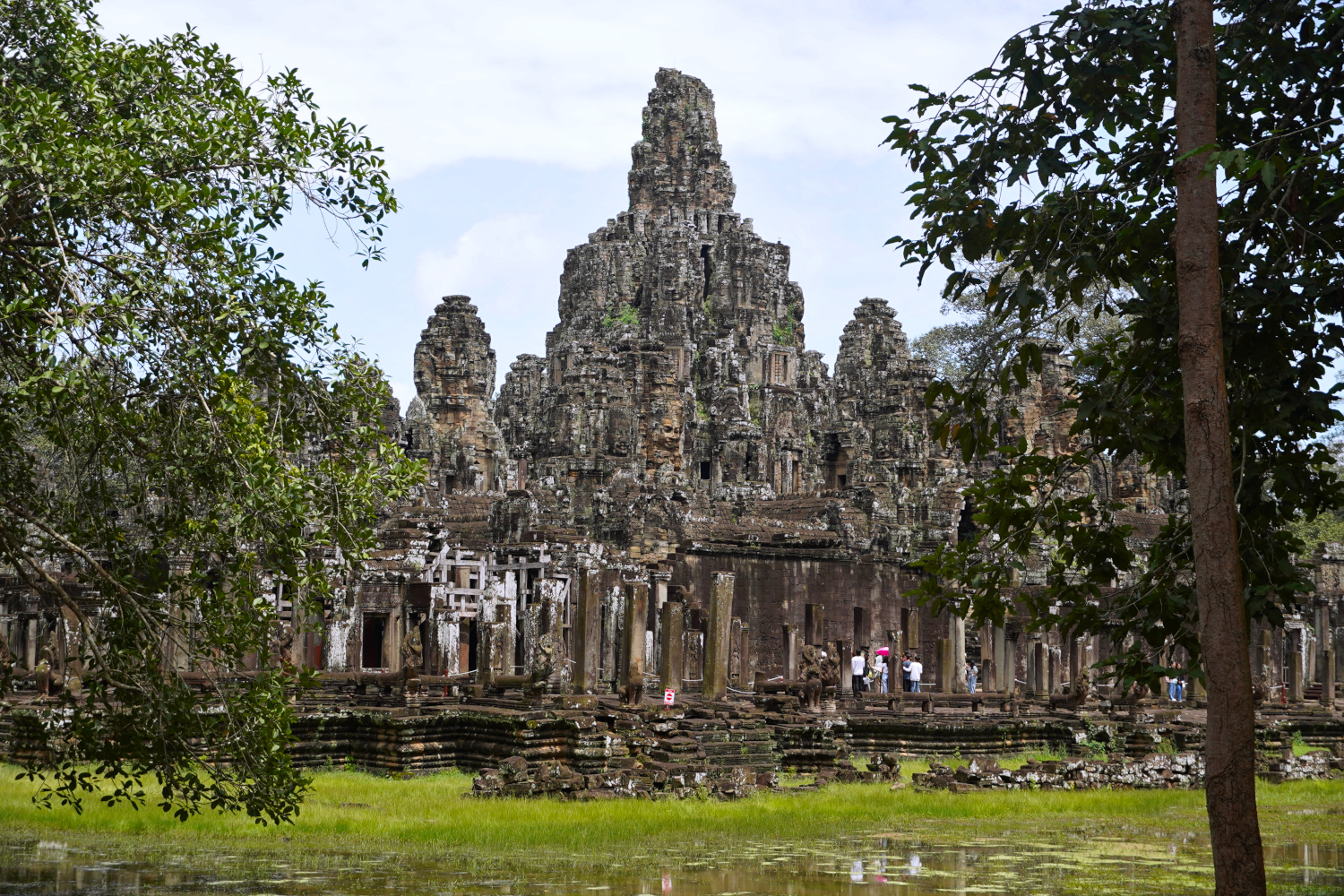

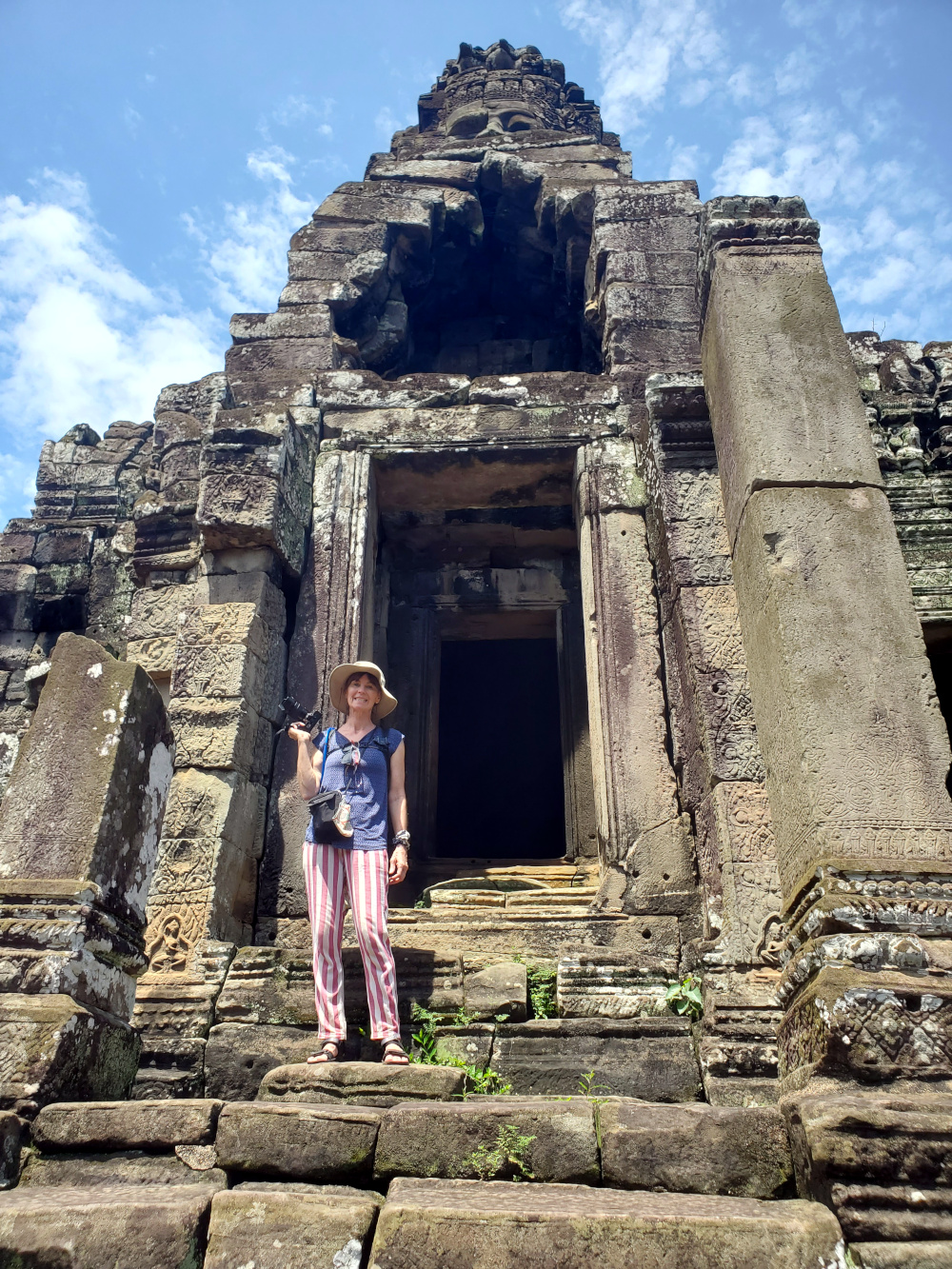
The temple itself was plenty engaging, and to us looked reminiscent of Mayan structures — especially the stone faces carved in conspicuous places all around the outside. But they were actually Buddha faces, though coincidentally they may have been intended to bear a certain resemblance to the king. Around the perimeter were statues honoring four different religions.
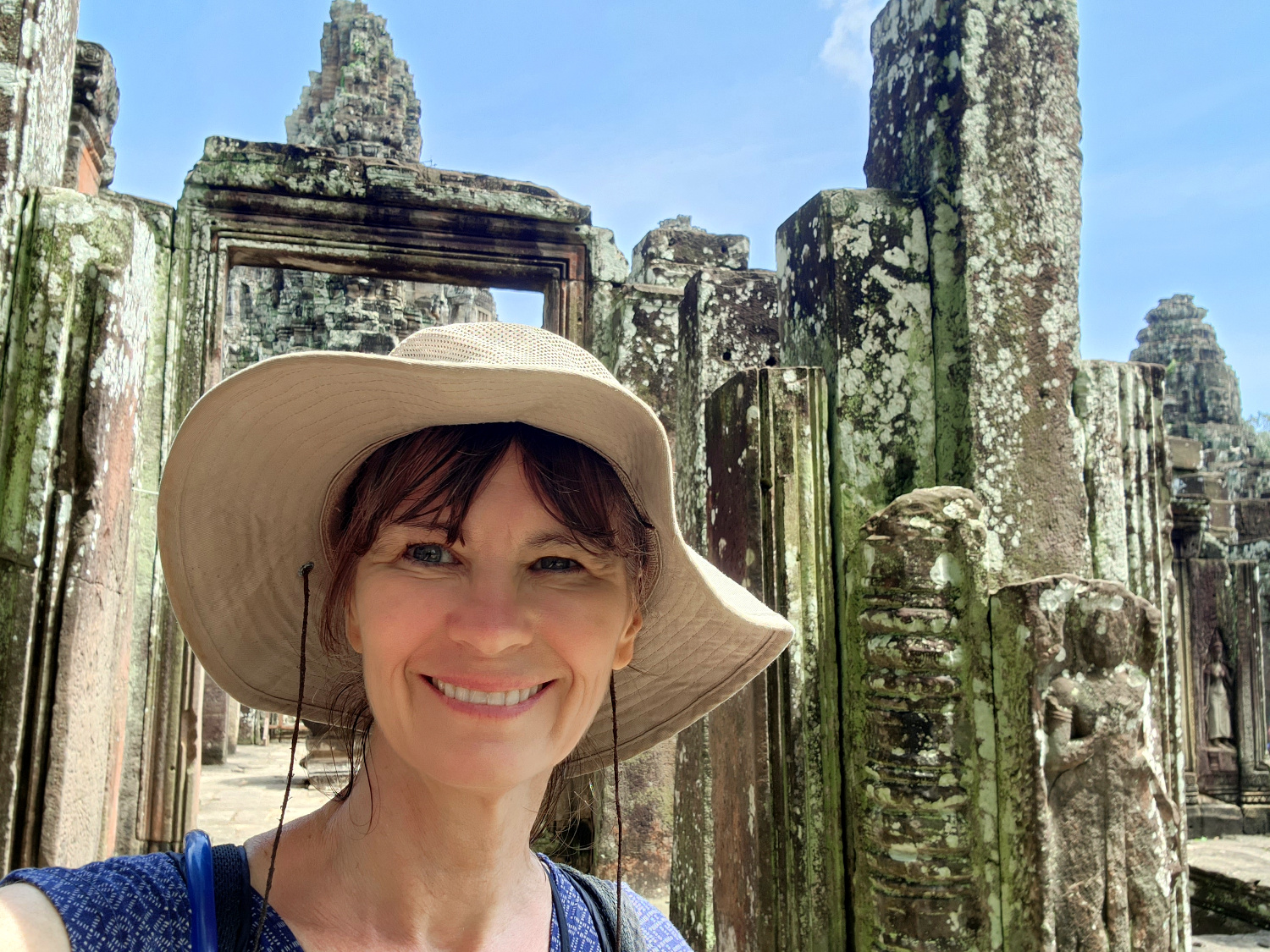
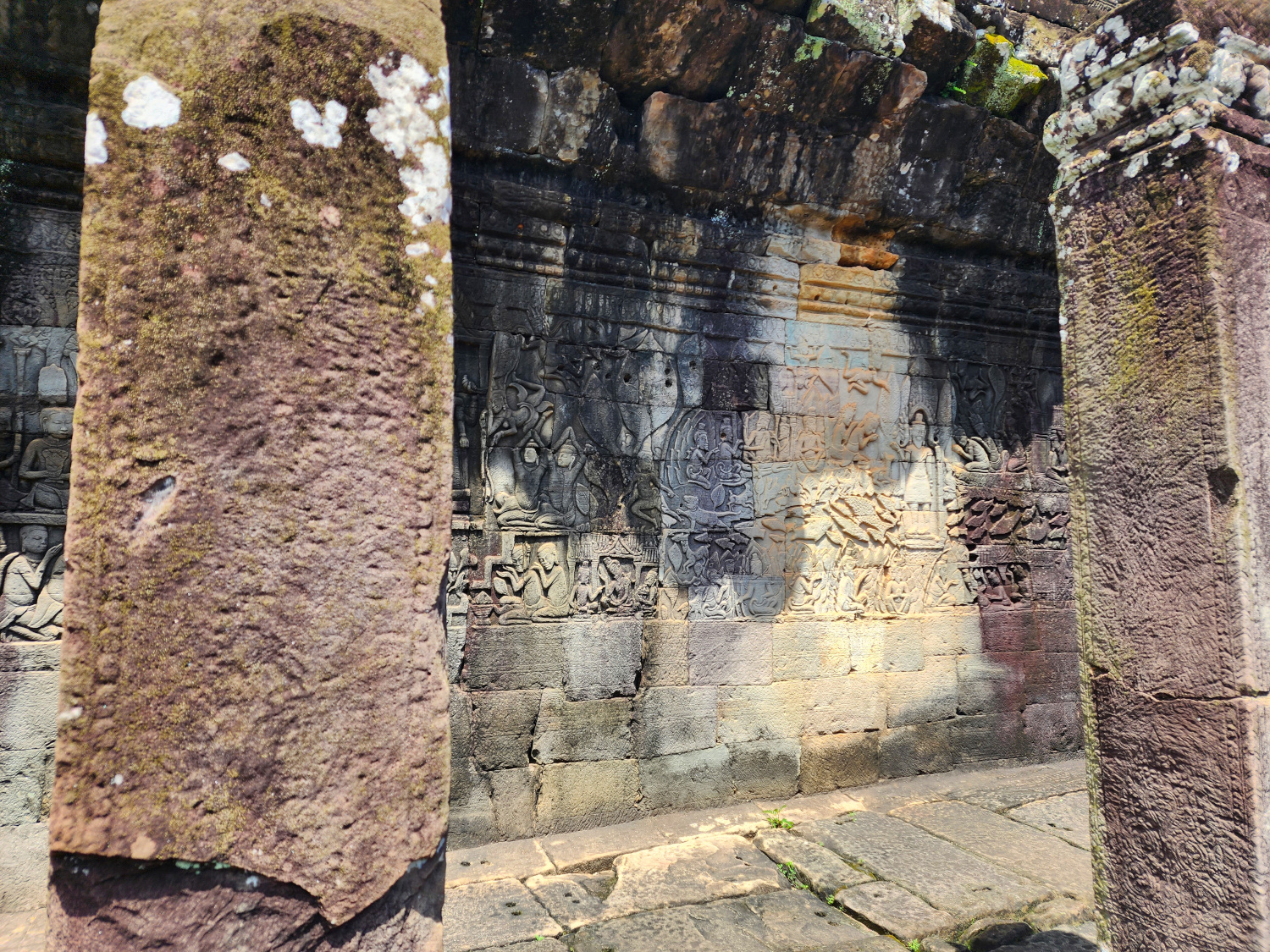
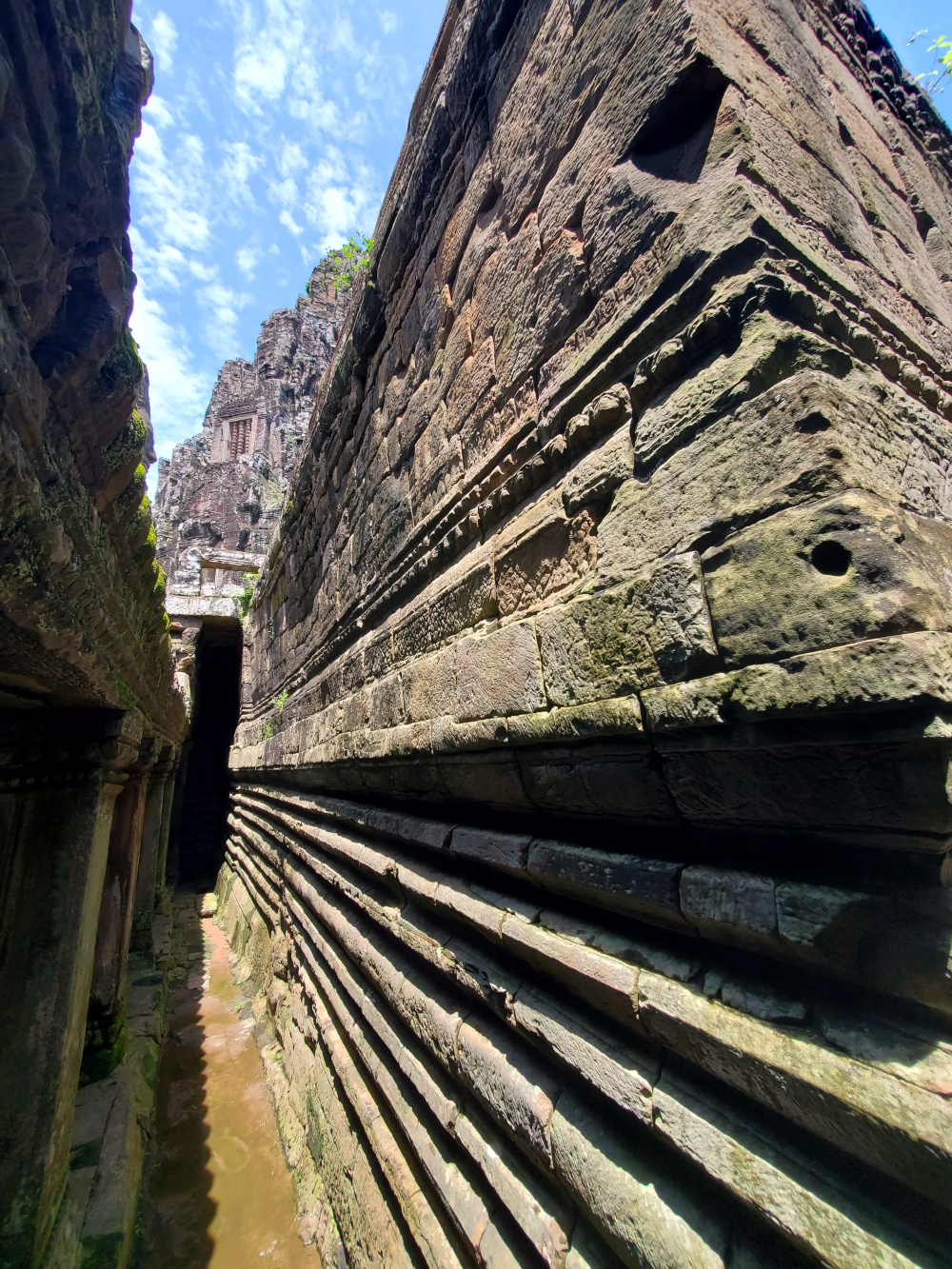
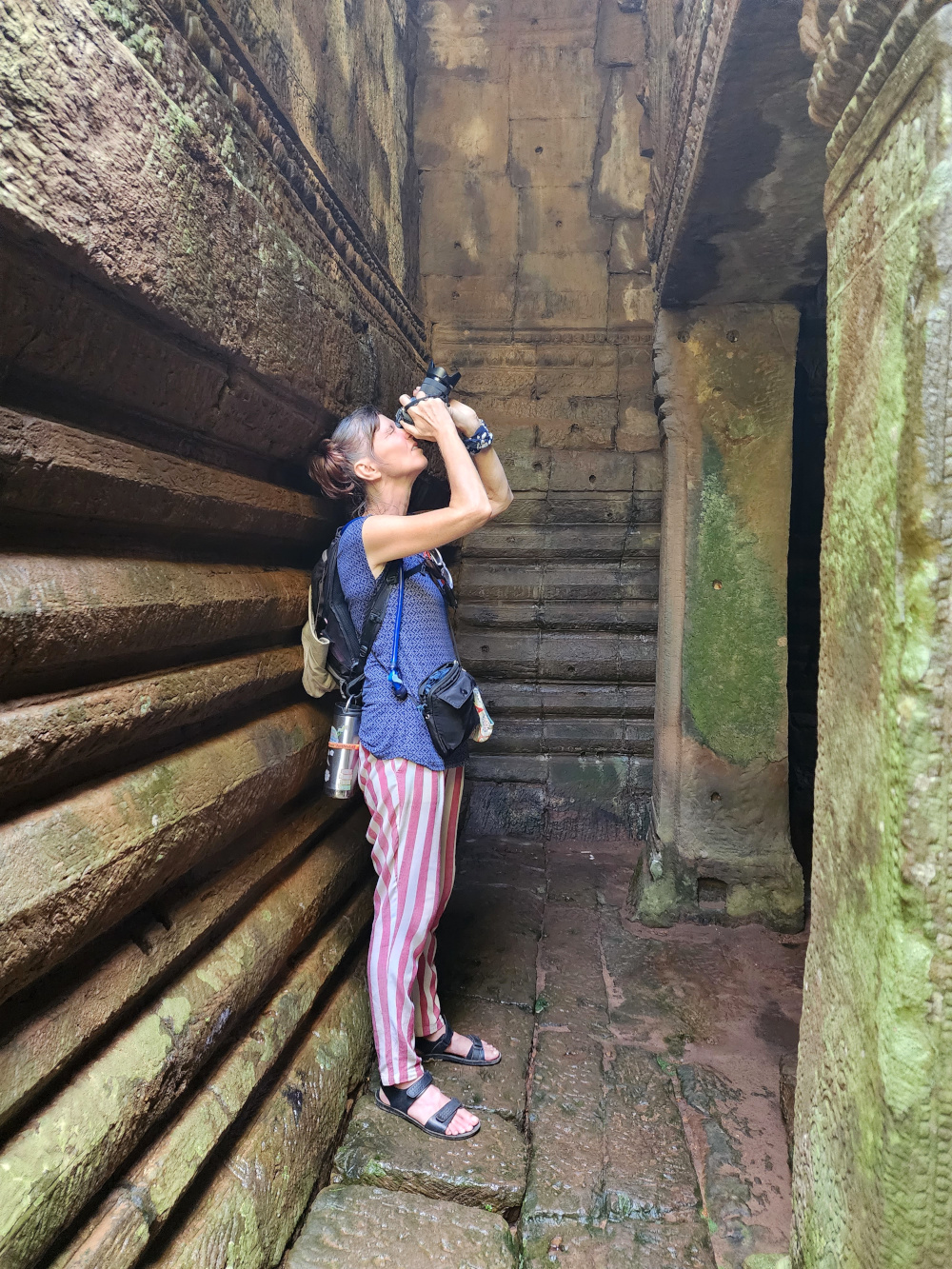
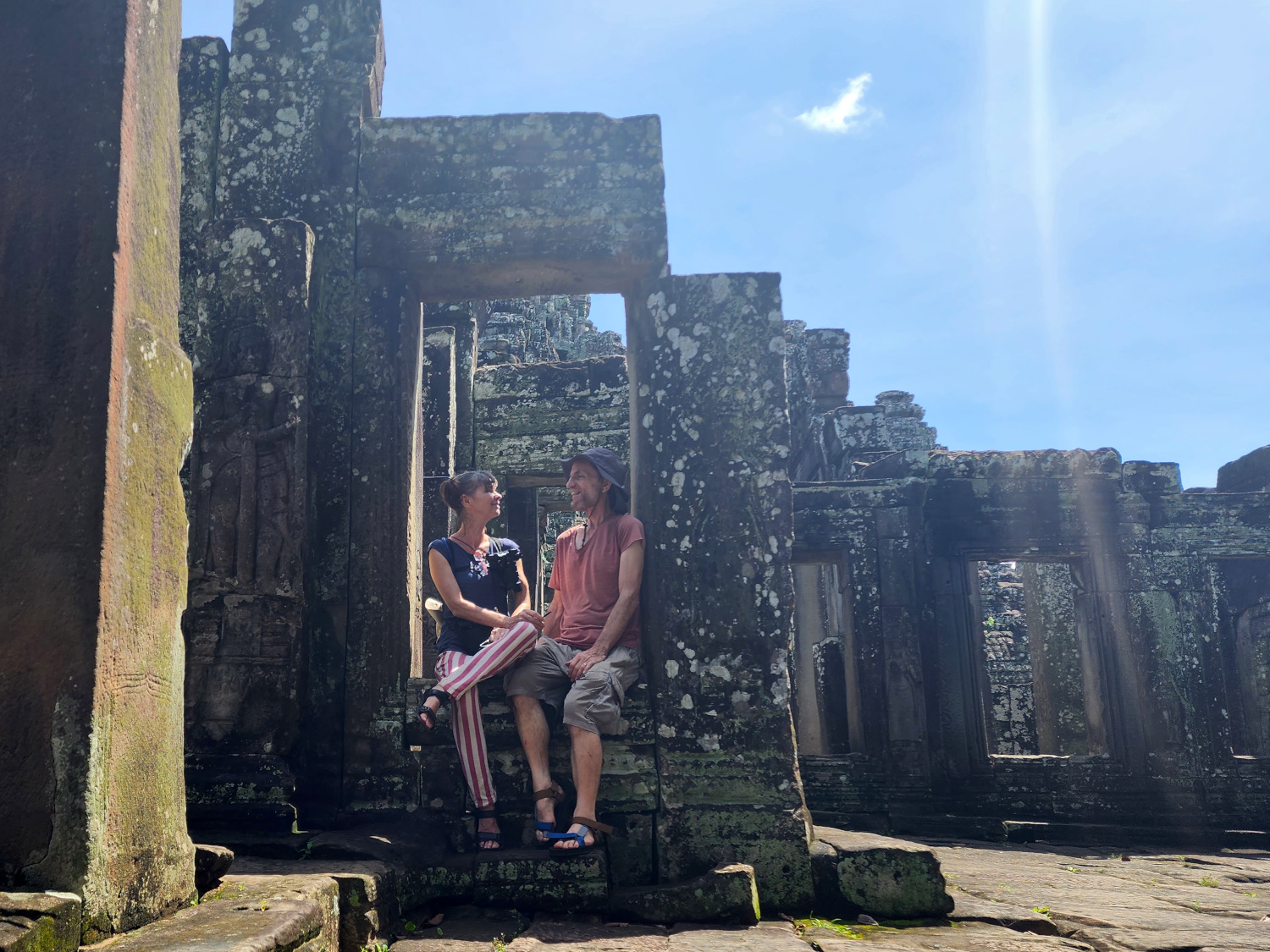
The interior was a maze of ruined architecture, statues and stone murals depicting all manner of episodes from history and legend — including, of course, many battle scenes. There were dozens of these scenes, and even without a PhD in Cambodian history you could spend hours admiring and trying to decipher them.
Phimeanakas Wat


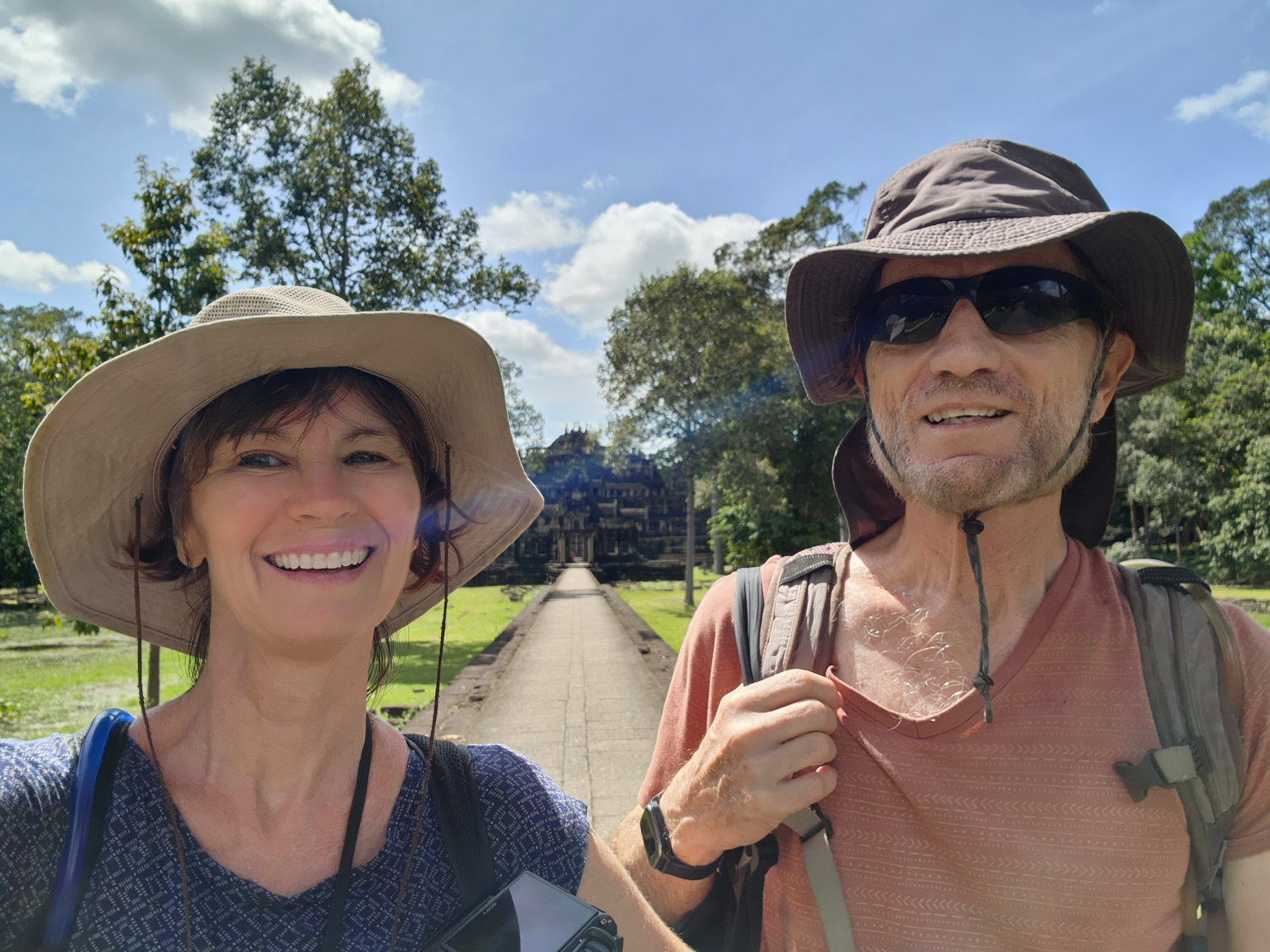
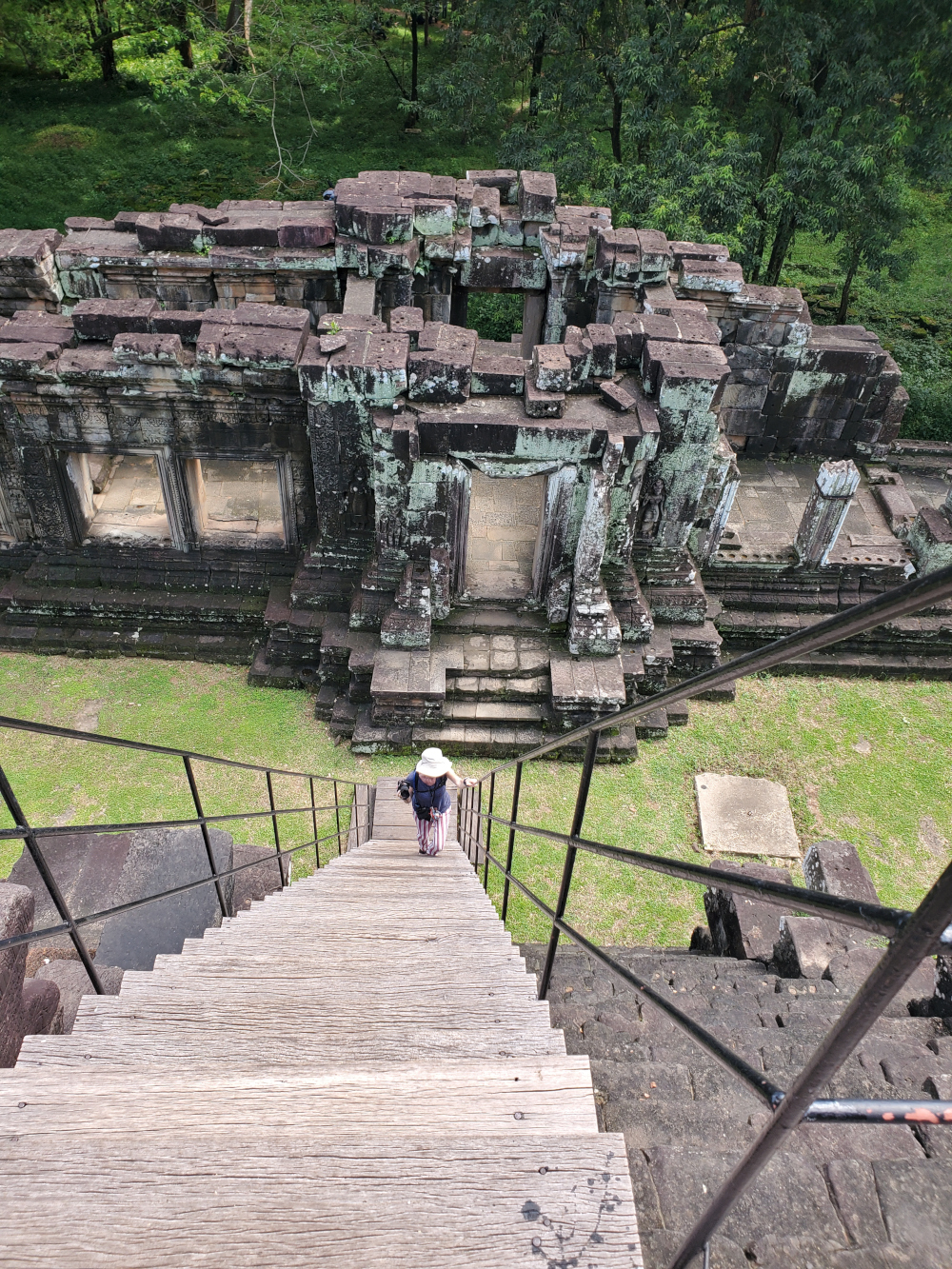
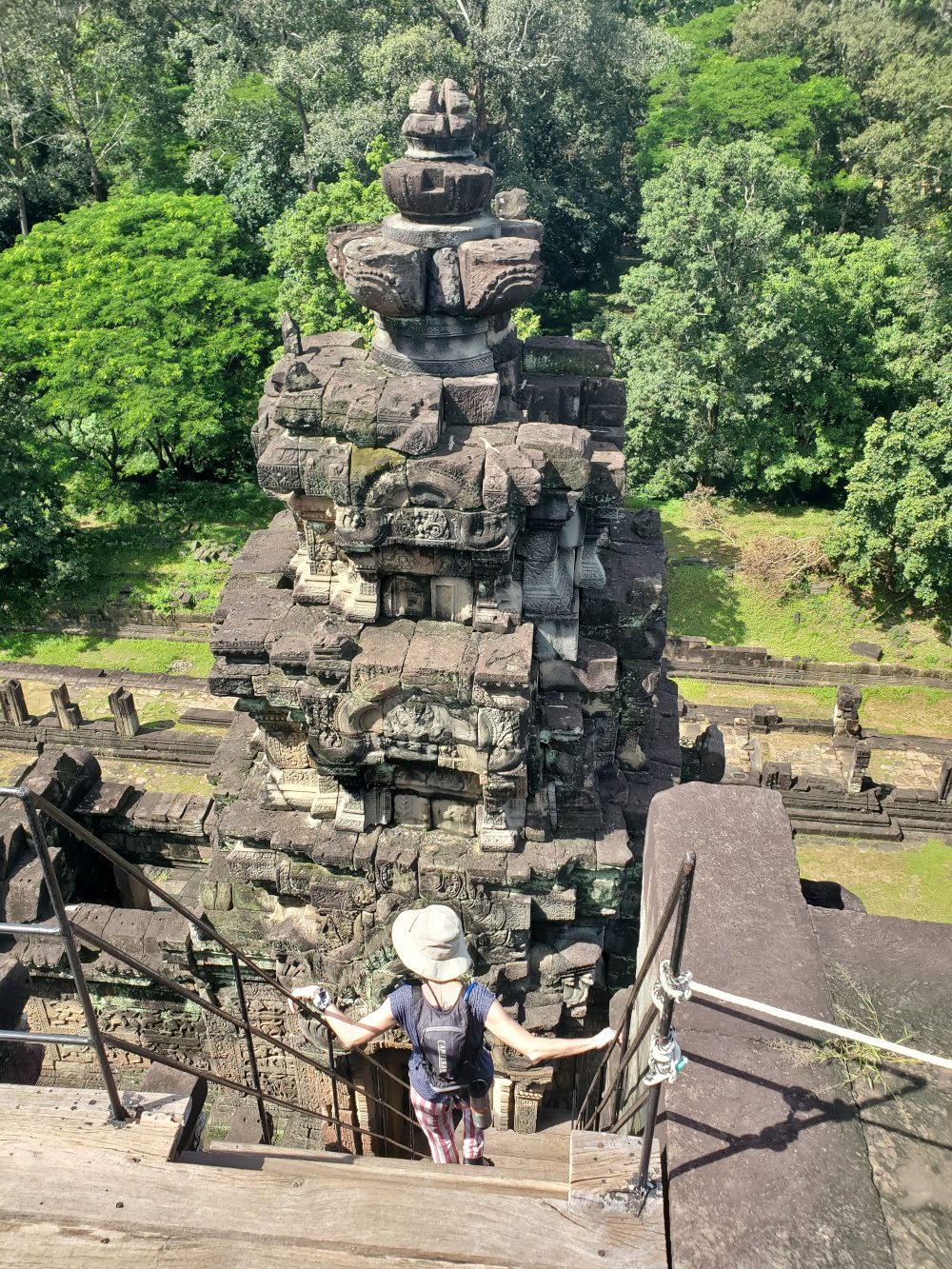
Another temple nearby that we visited was called Phimeanakas, which is the oldest structure we’ve seen yet — it was built before the year 1000. Considerably smaller than Bayon, it consists of three levels forming a pyramid; there was originally a tower on top with a golden pinnacle. Today, there are pieces of the temple and/ or another structure next to the remains — blocks of stone laid out in neat rows as if someone is preparing for a humongous Lego project sometime in the future. This temple, like Bayon, had quite a few stone relief scenes, extending into a labyrinthine pattern.

Catching a Tuk Tuk back to Siem Reap
Finding a ride back from Angkor Wat is sometimes a bit more difficult than finding a ride out there; and the drivers often try to extract a lot more money from you. The driver we found initially wanted 15 dollars, whereas we’d only paid 4 to get there. We talked him down to 17,500 riel (about $4.50). And we were surprised when he agreed to that.
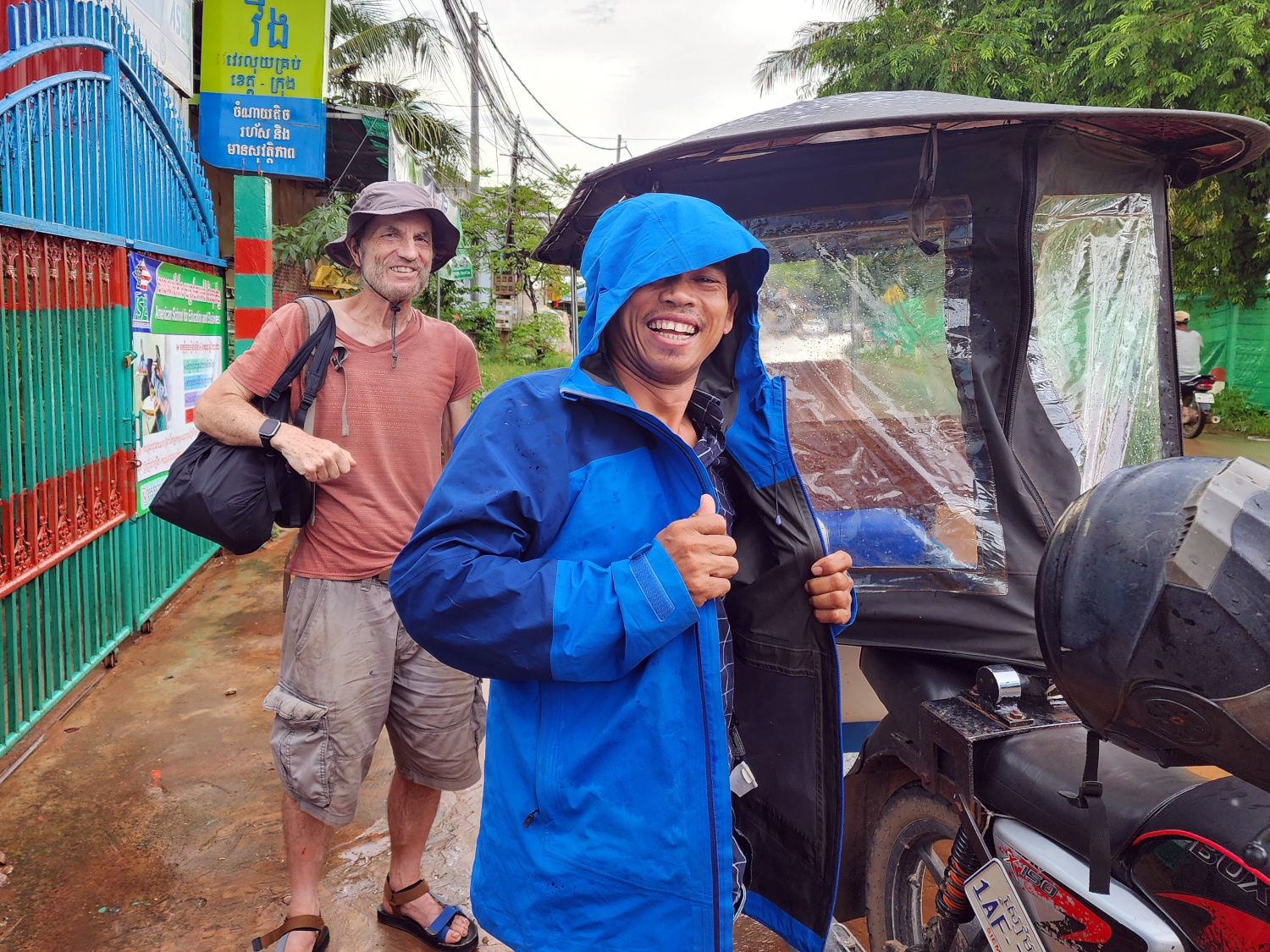
On the way back, the rain began to fall pretty heavily; and the design of the tuk-tuk was such that the driver was out in the open. And since he had no rain gear of his own, Dennis let him use his comfy blue raincoat, for which he was quite appreciative. Cambodians are very hard-working and very poor, so we don’t really blame him for trying to get an inflated fare out of us — especially since there is a common perception that Americans have a lot of money. We were glad to be able to help him out.

5 Intriguing Facts About Bayon Wat
- The Enigmatic Smiles: Bayon is famous for its hundreds of colossal, smiling stone faces carved into its towers. The identity of these faces remains a mystery, with theories ranging from the king himself to representations of Buddha.
- A Buddhist Departure: Unlike many Angkorian temples dedicated to Hindu deities, Bayon is primarily a Buddhist temple, marking a significant shift in the region’s religious landscape.
- A City Within a Temple: Bayon was the centerpiece of King Jayavarman VII’s grand city, Angkor Thom. It was surrounded by public works like hospitals, reservoirs, and bridges, showcasing the king’s vision for his people.
- A Monumental Building Project: Construction of Bayon was a massive undertaking, spanning several years. The temple’s complex maze-like structure, with multiple levels and galleries, is a testament to the architectural prowess of the time.
- Hidden in Plain Sight: Despite its grandeur, Bayon was hidden in the jungle for centuries, only rediscovered in the 19th century. This prolonged isolation helped preserve the temple’s intricate details and enigmatic atmosphere.
October 9, 2022


 world travel with a theatrical flair
Leave a comment