

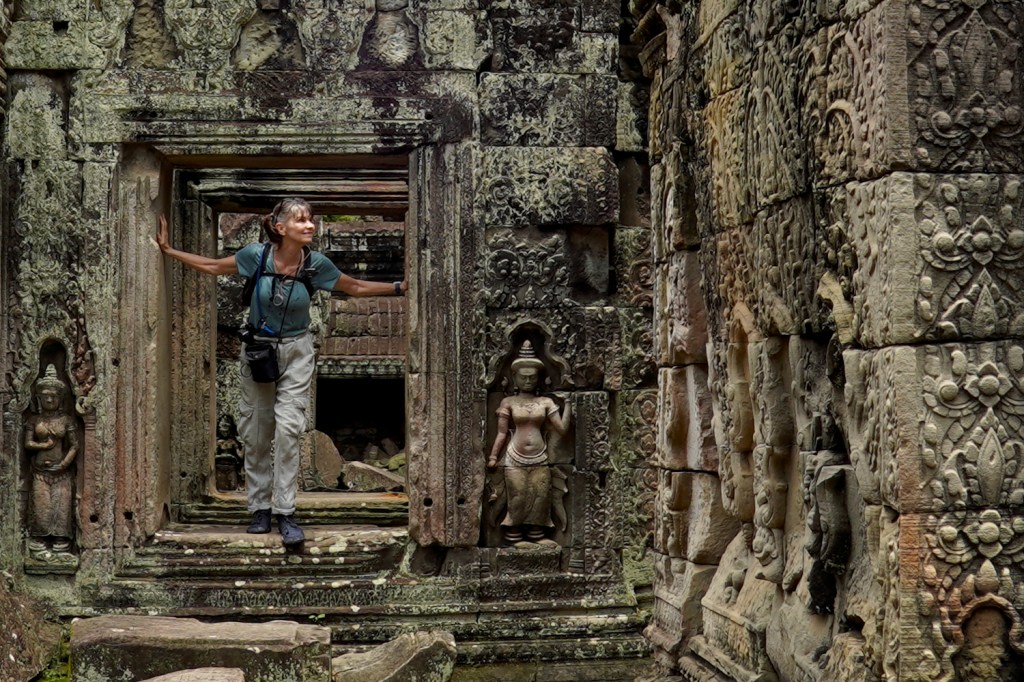
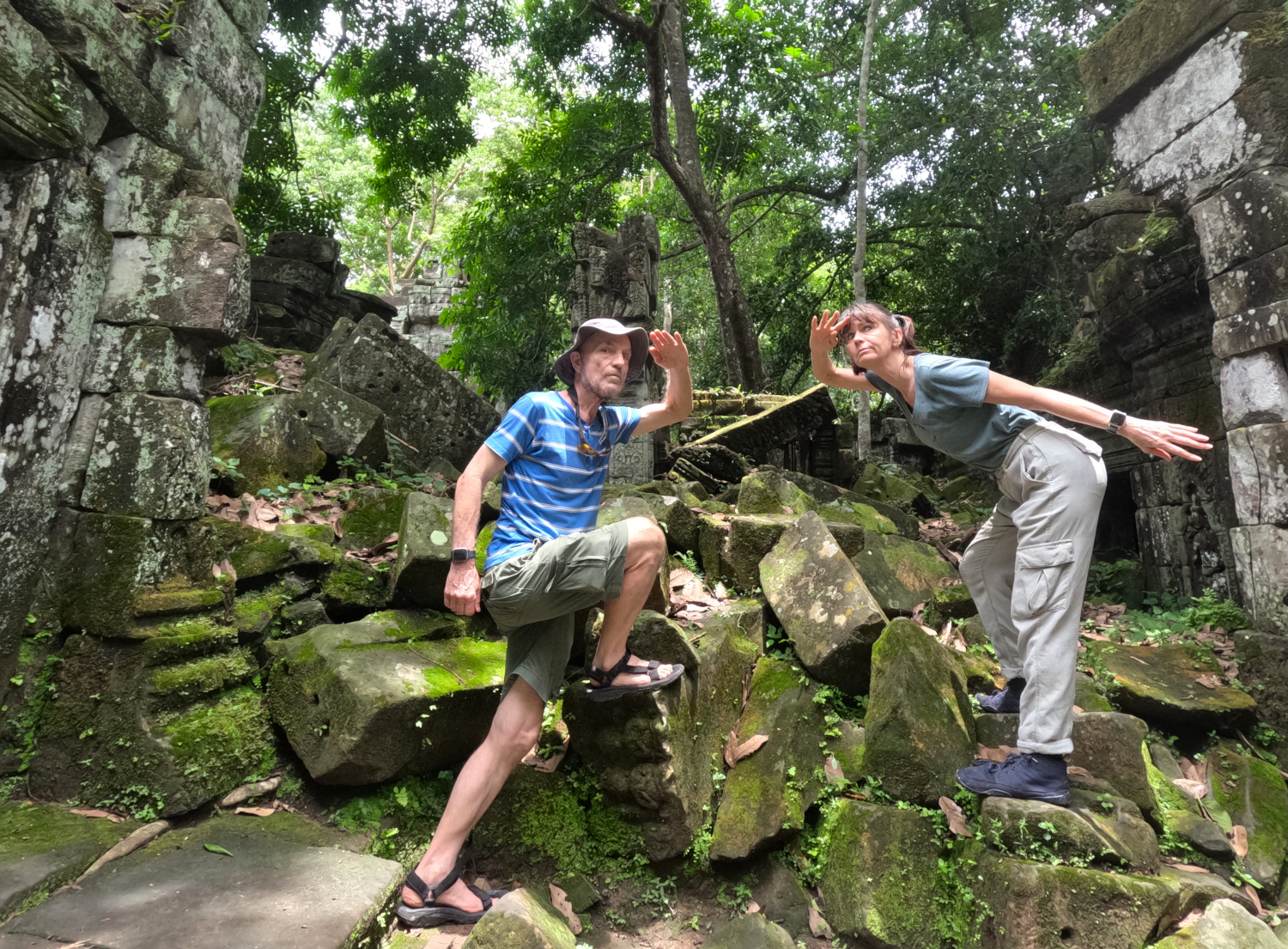
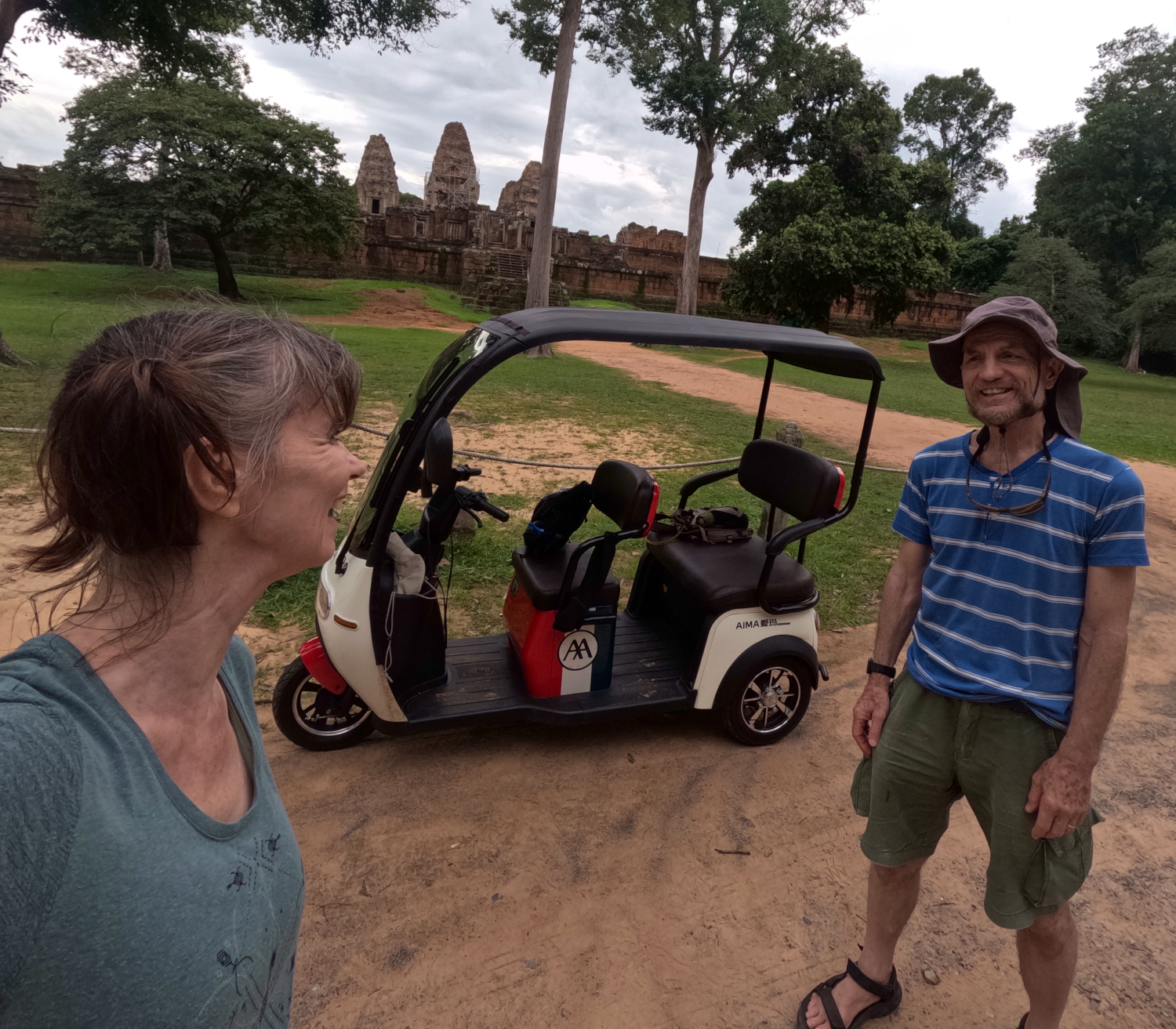
It’s our second day of exploring the Angkor archaeological park in Siem Reap, Cambodia (best known for Angkor Wat). On tap today are three of the lesser known temples. including two that are rather small: Preah Khan, Neak Poan, and Pre Rup. We again rent the little electric cart from Aima rental so we’ll have our own wheels for the day.
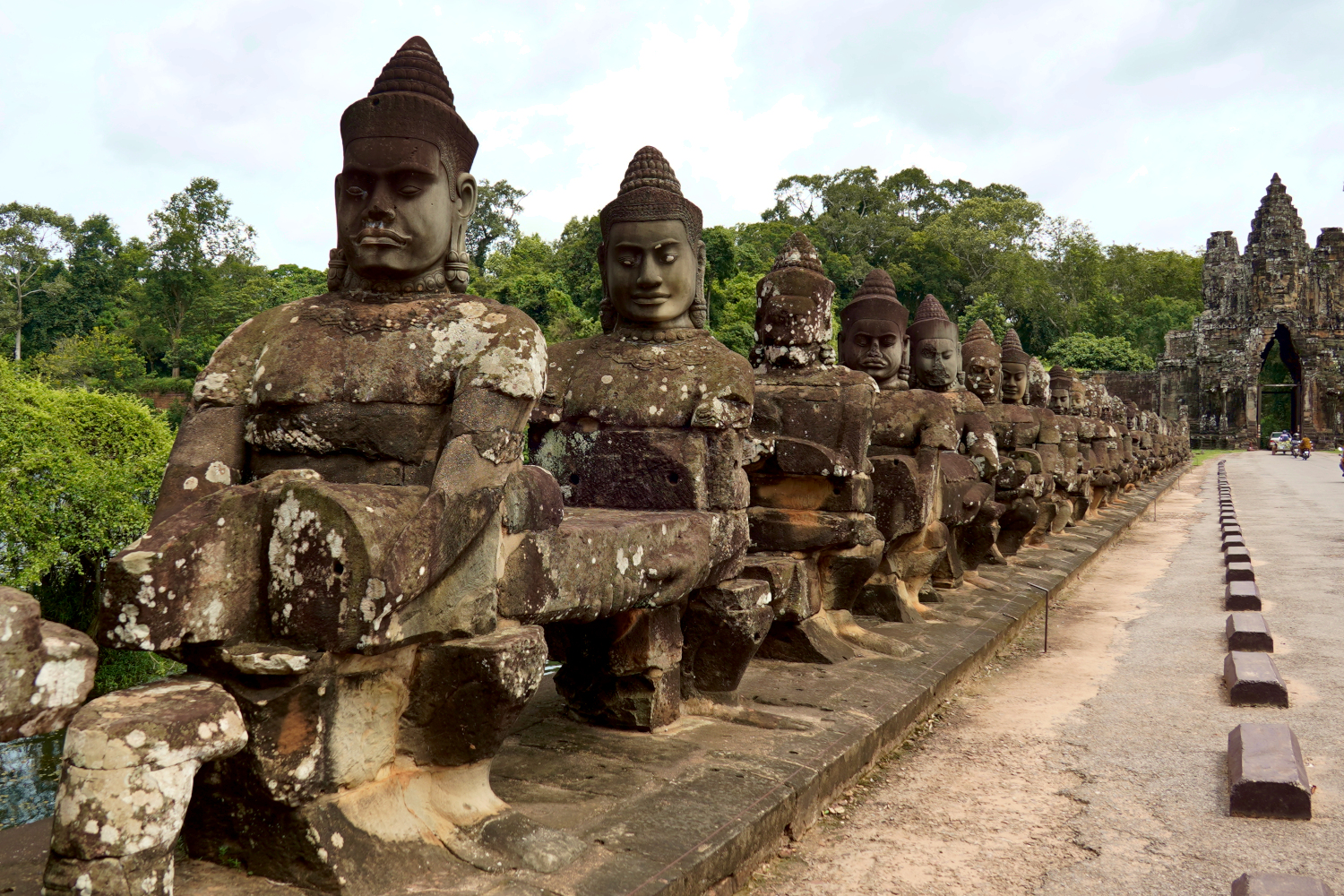
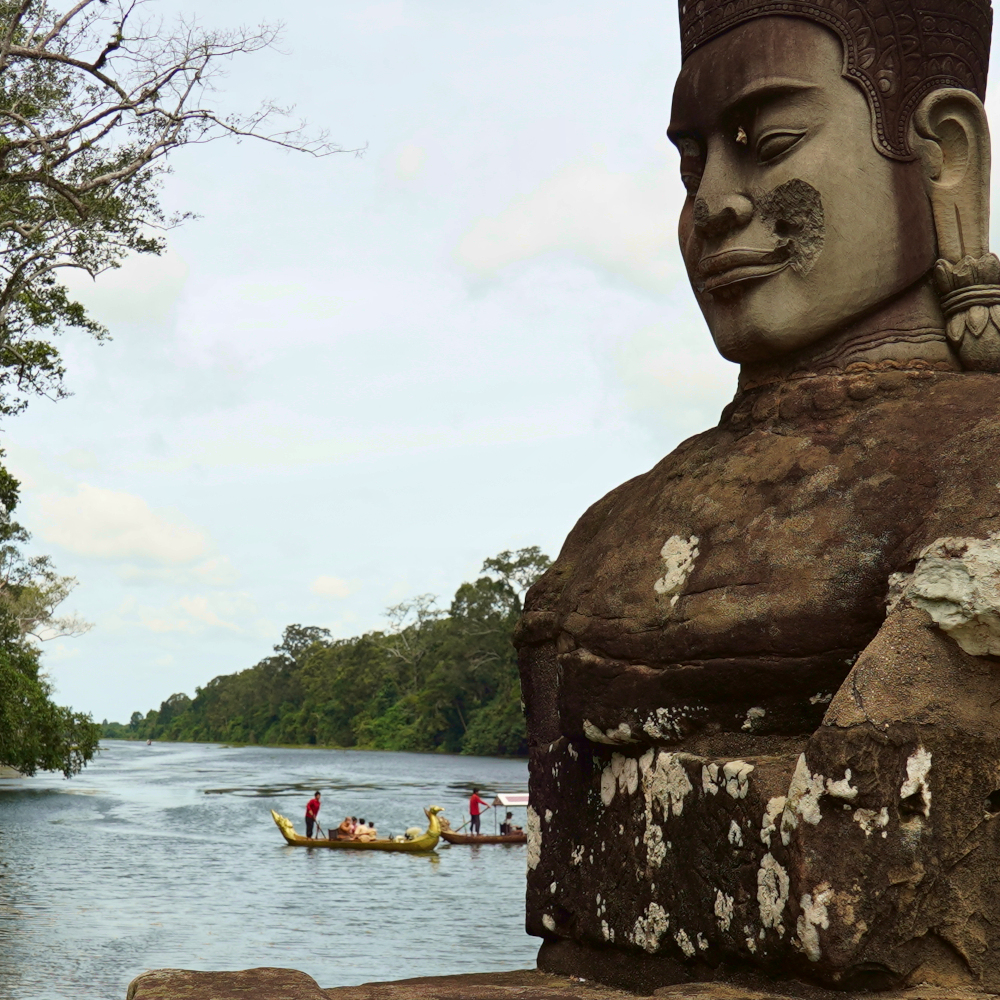

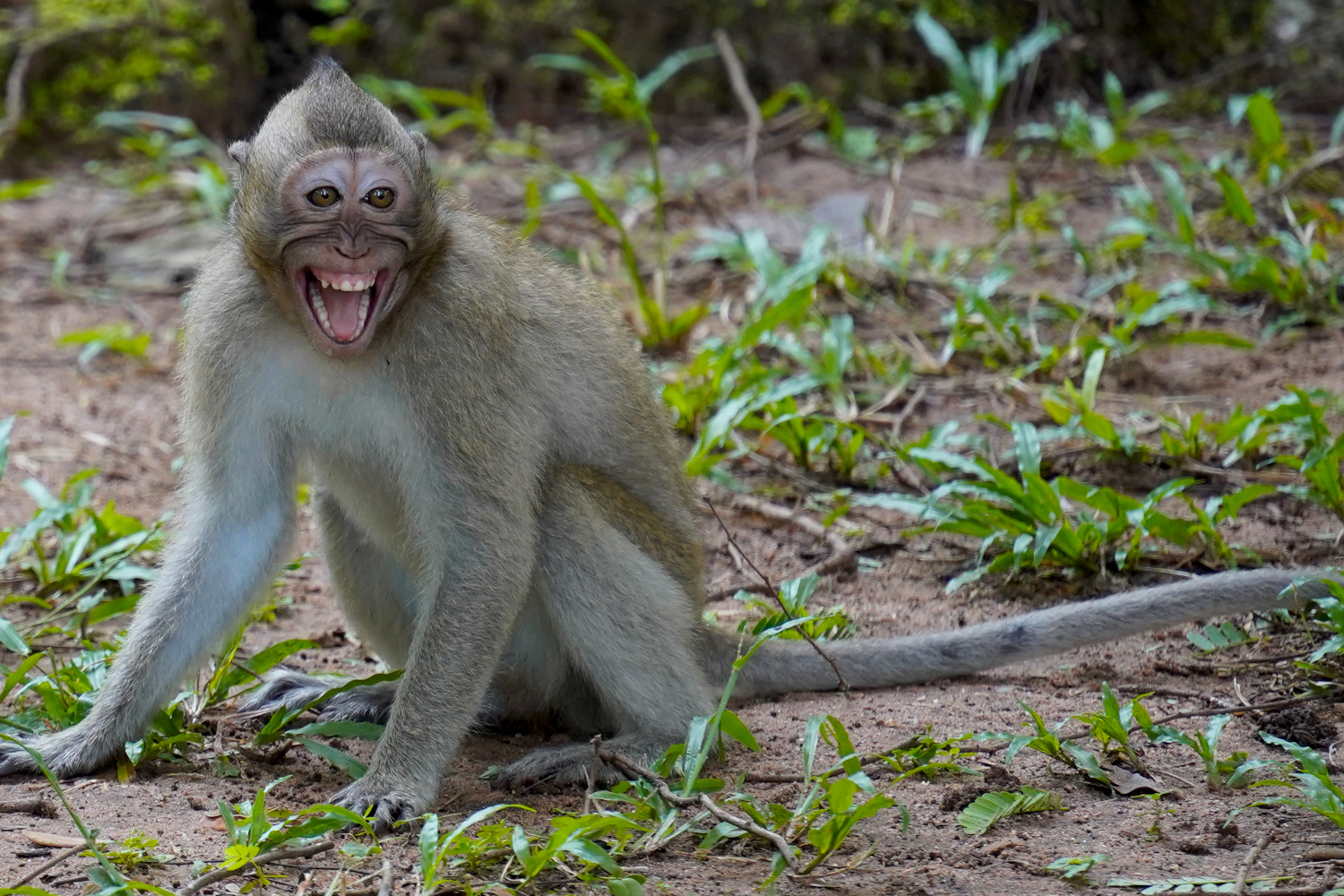
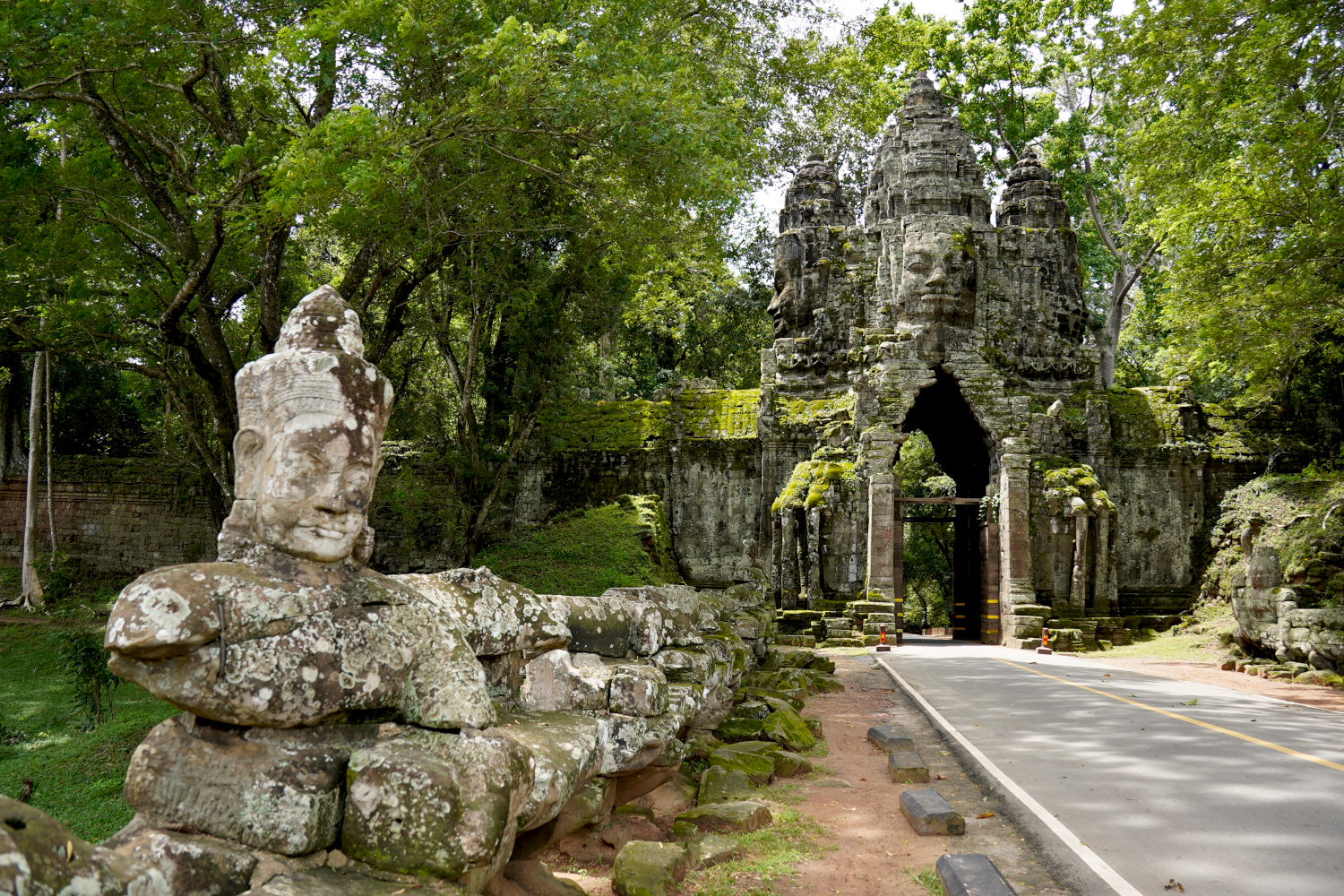
Preah Khan
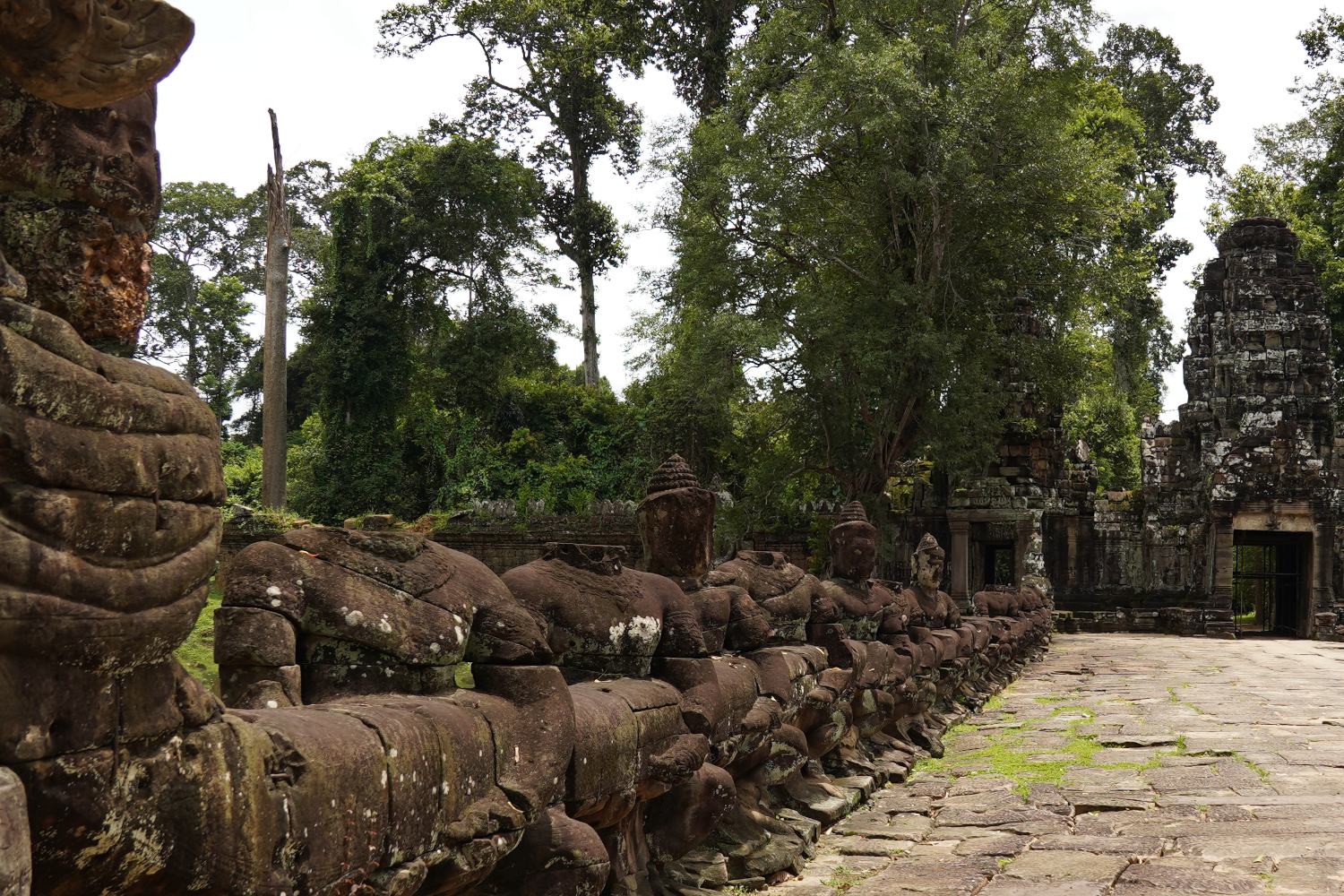
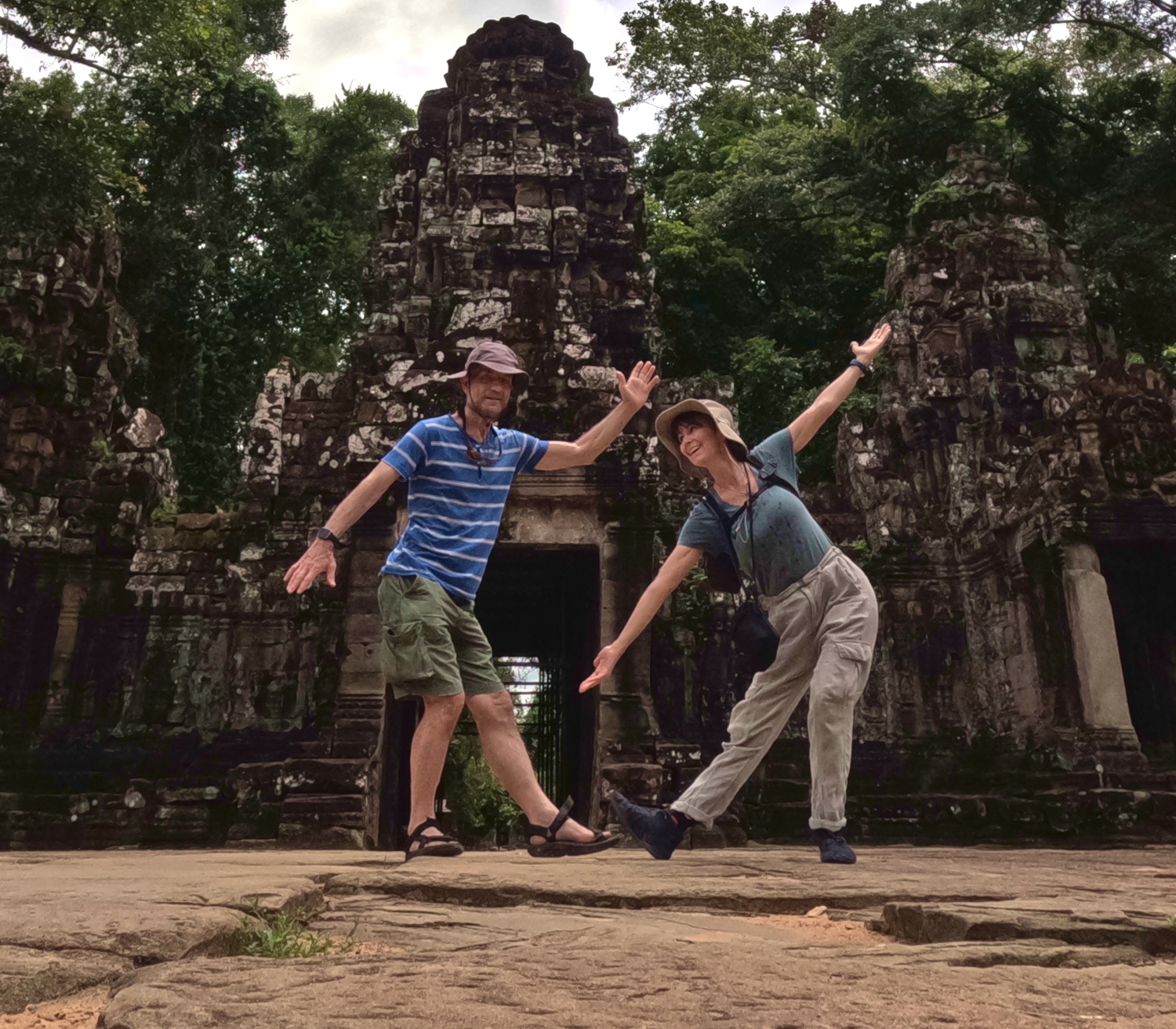
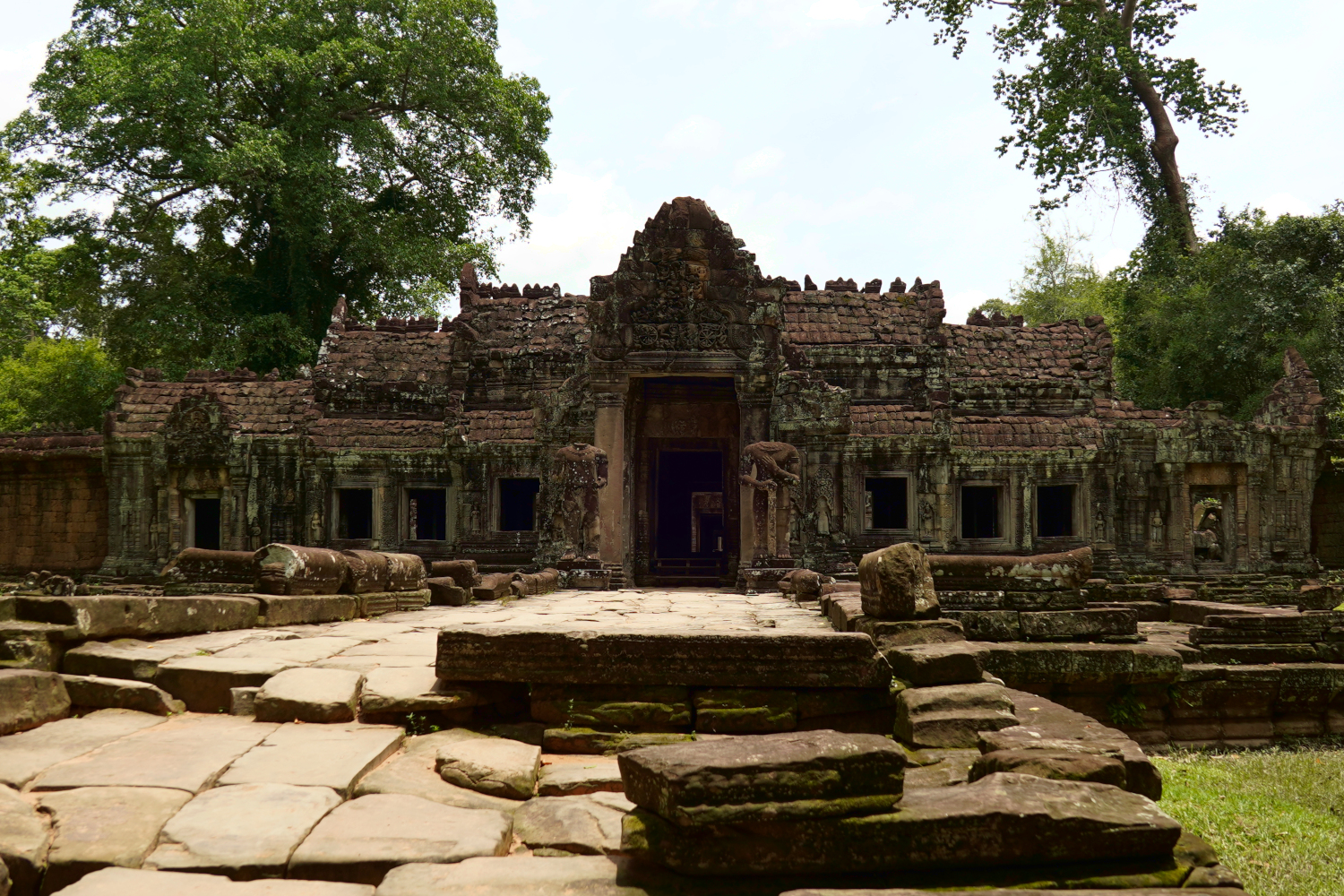
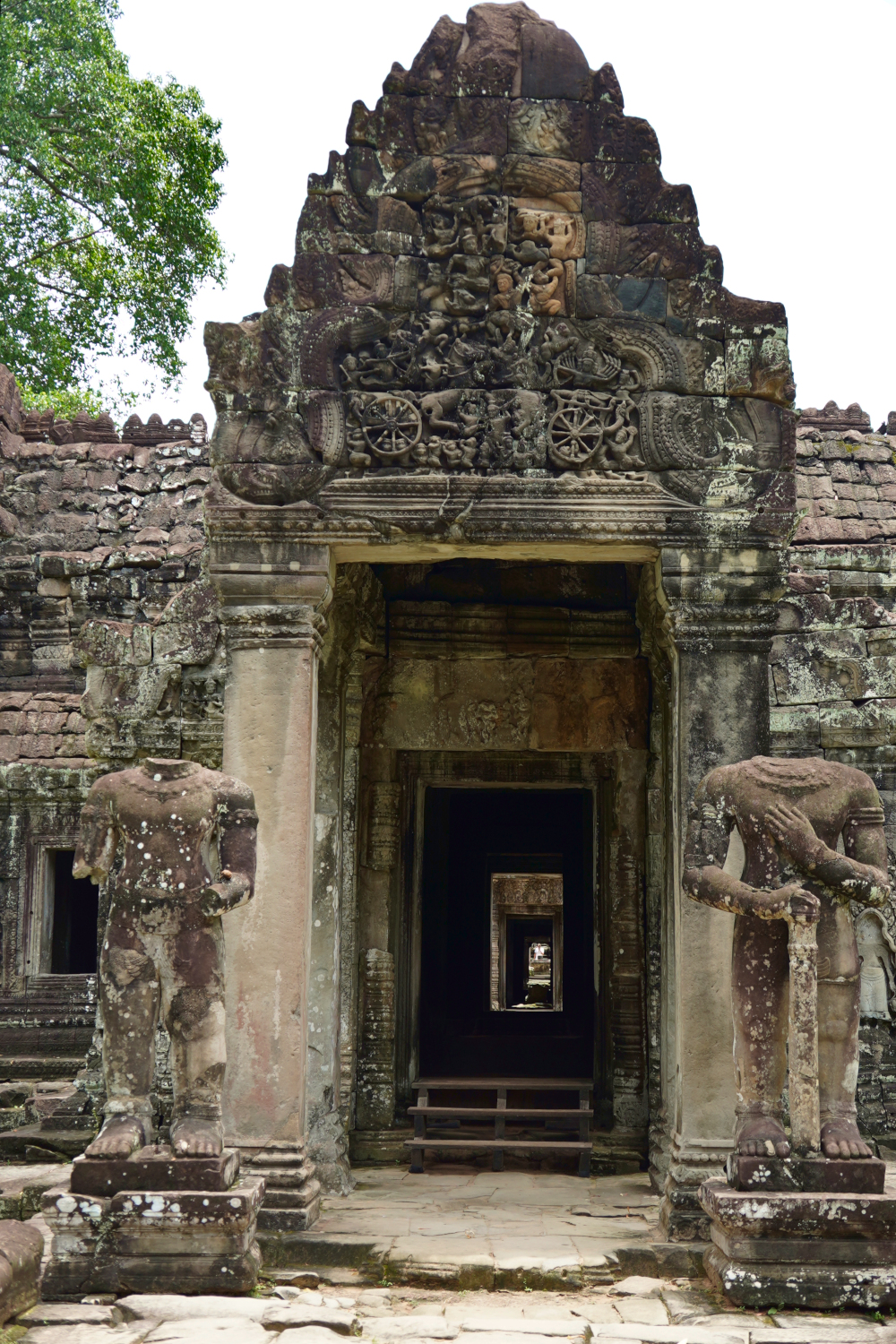
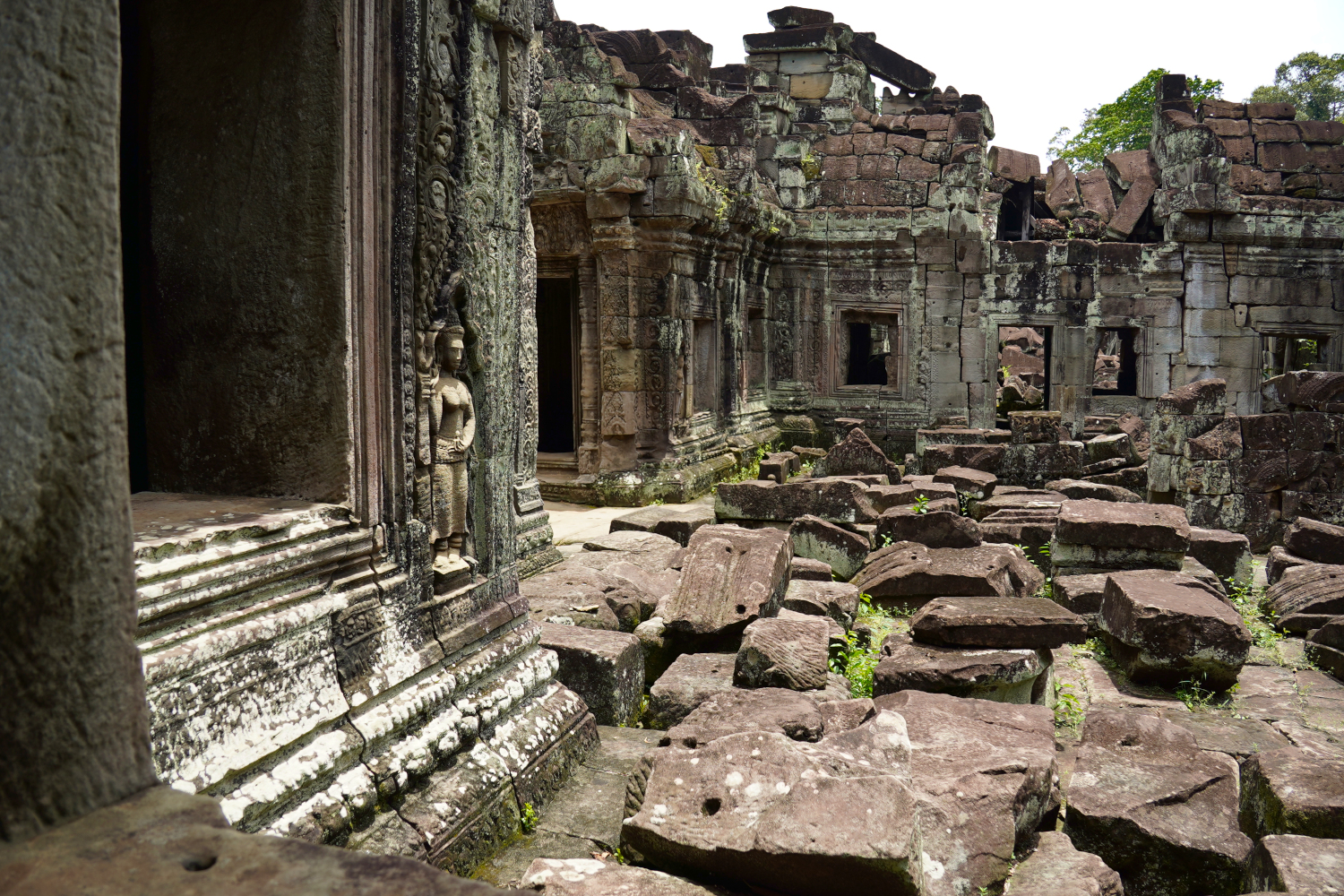
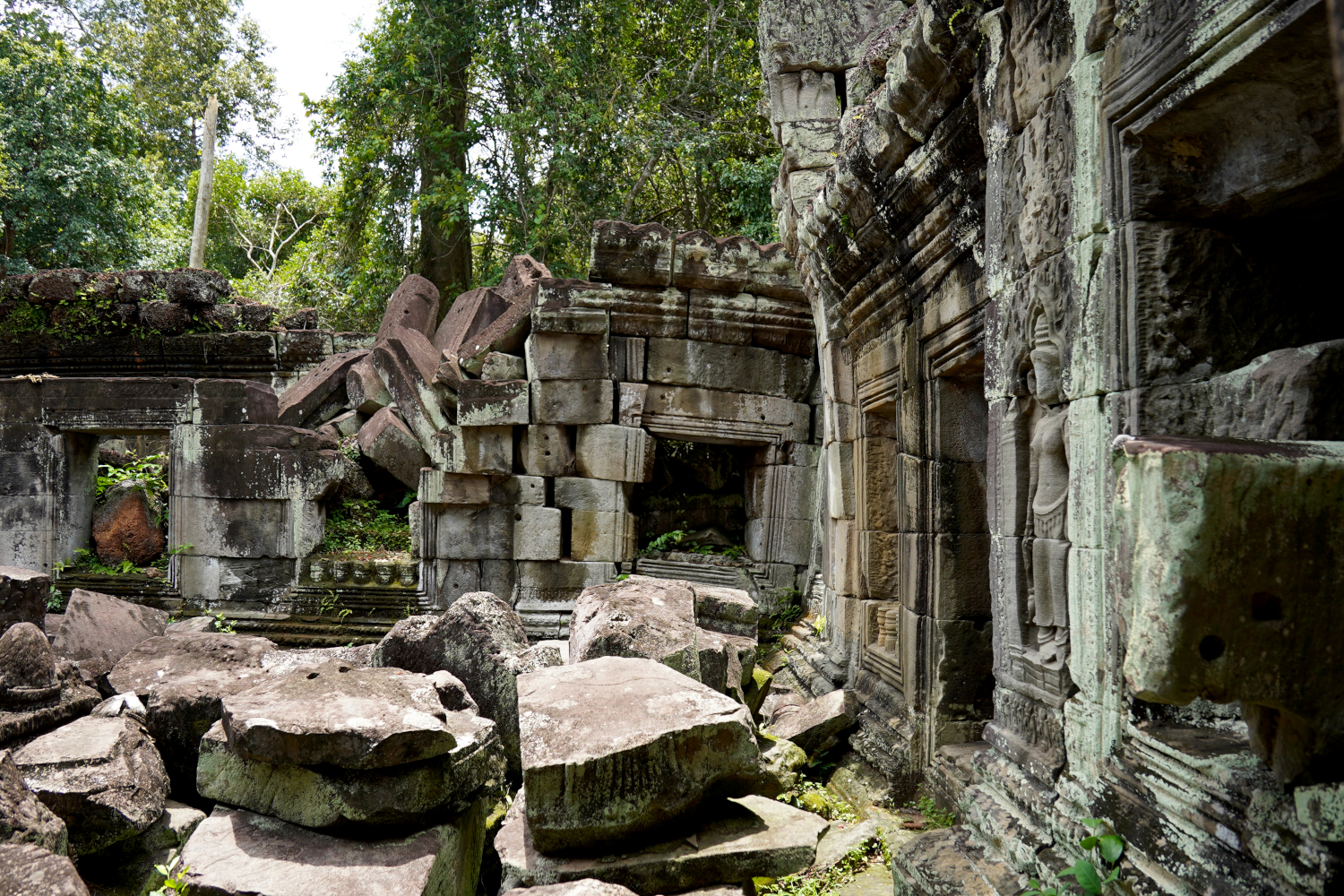
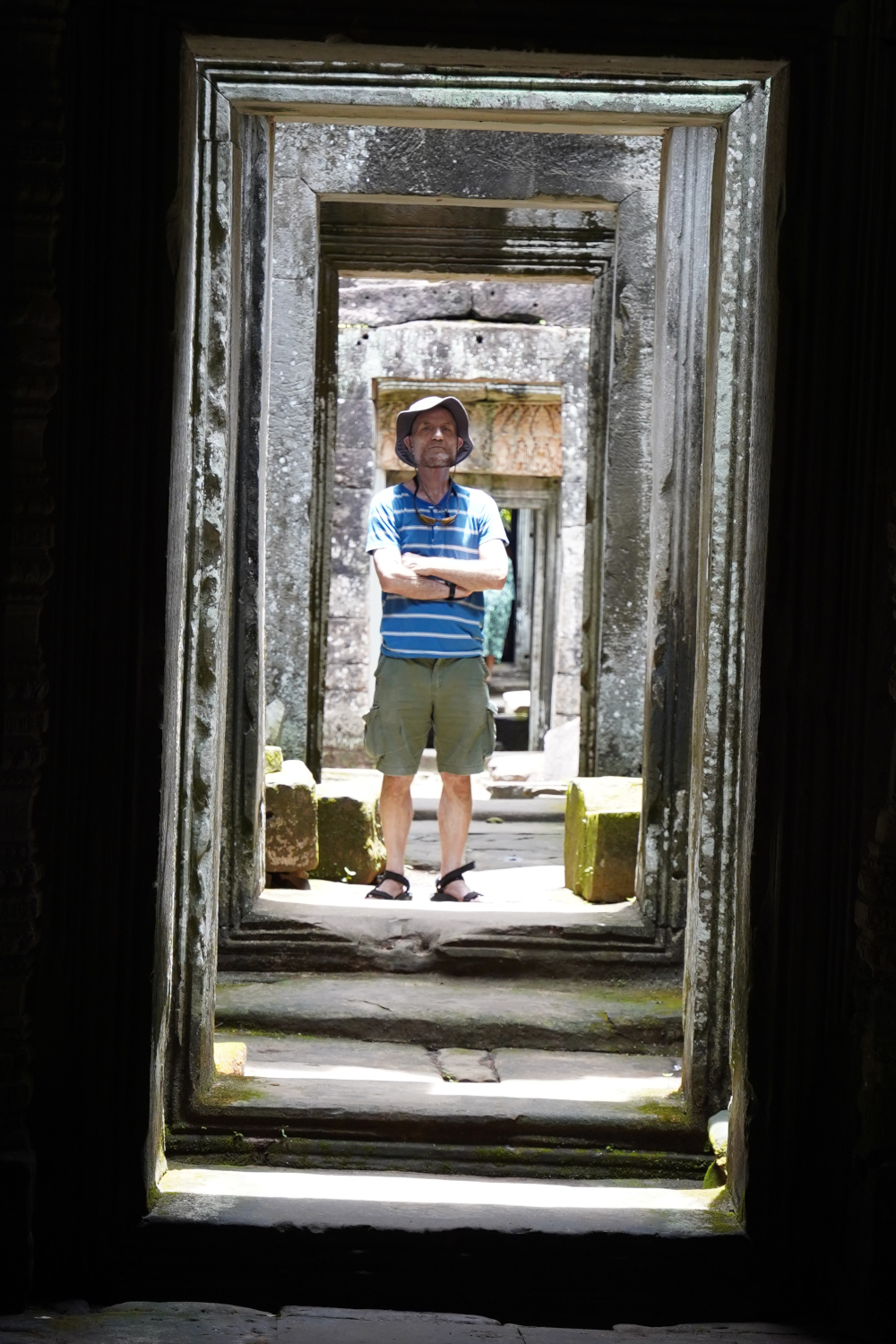
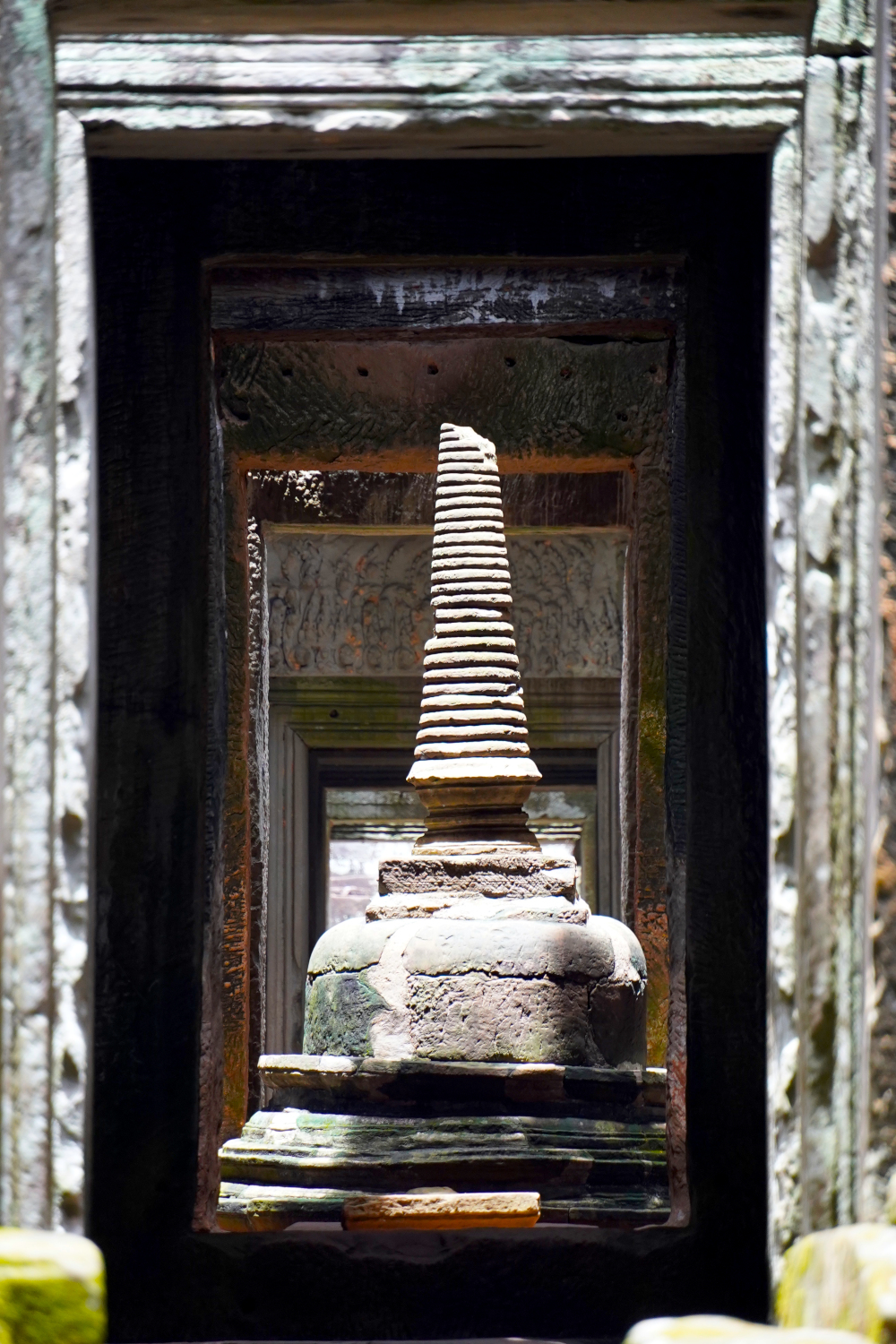
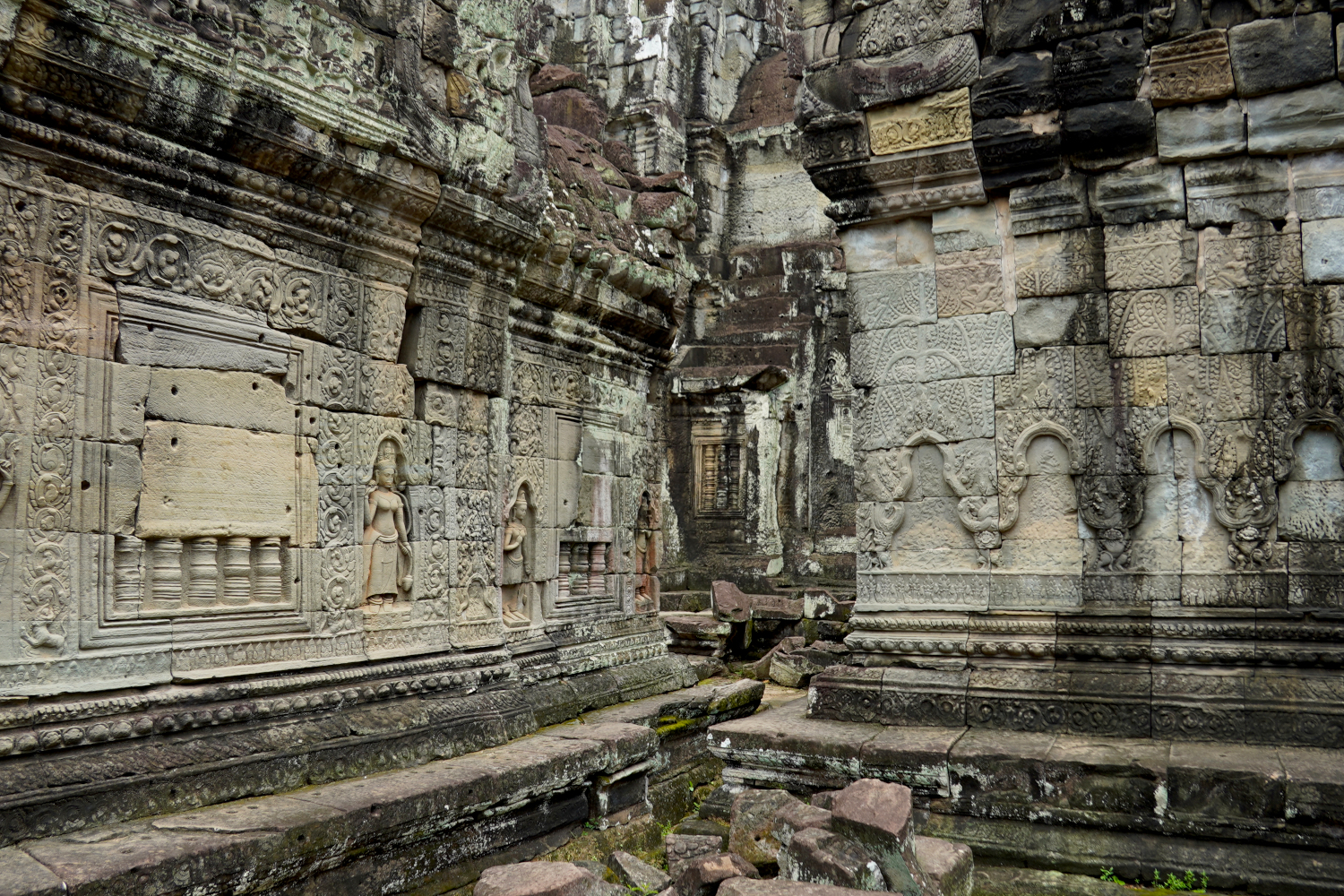
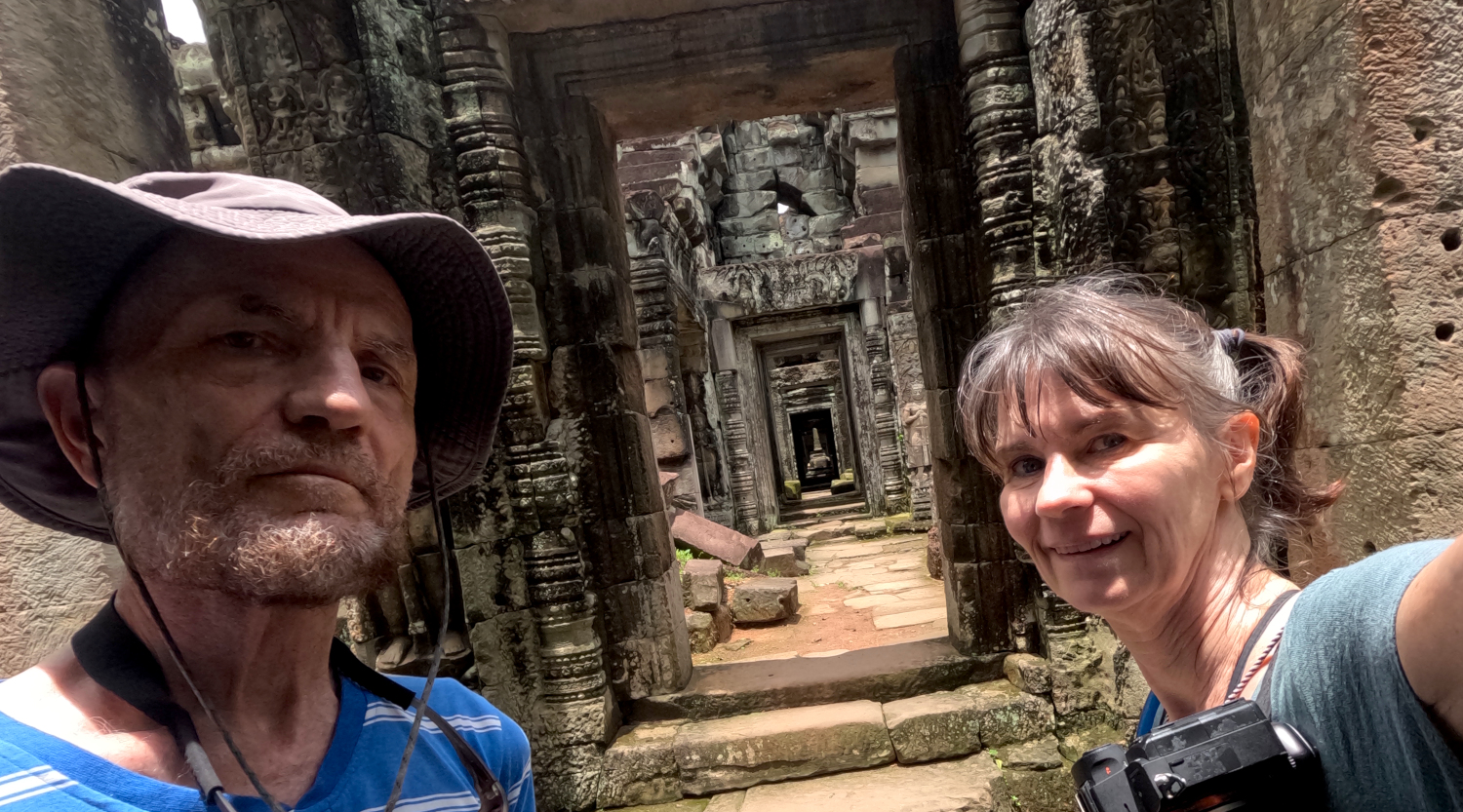
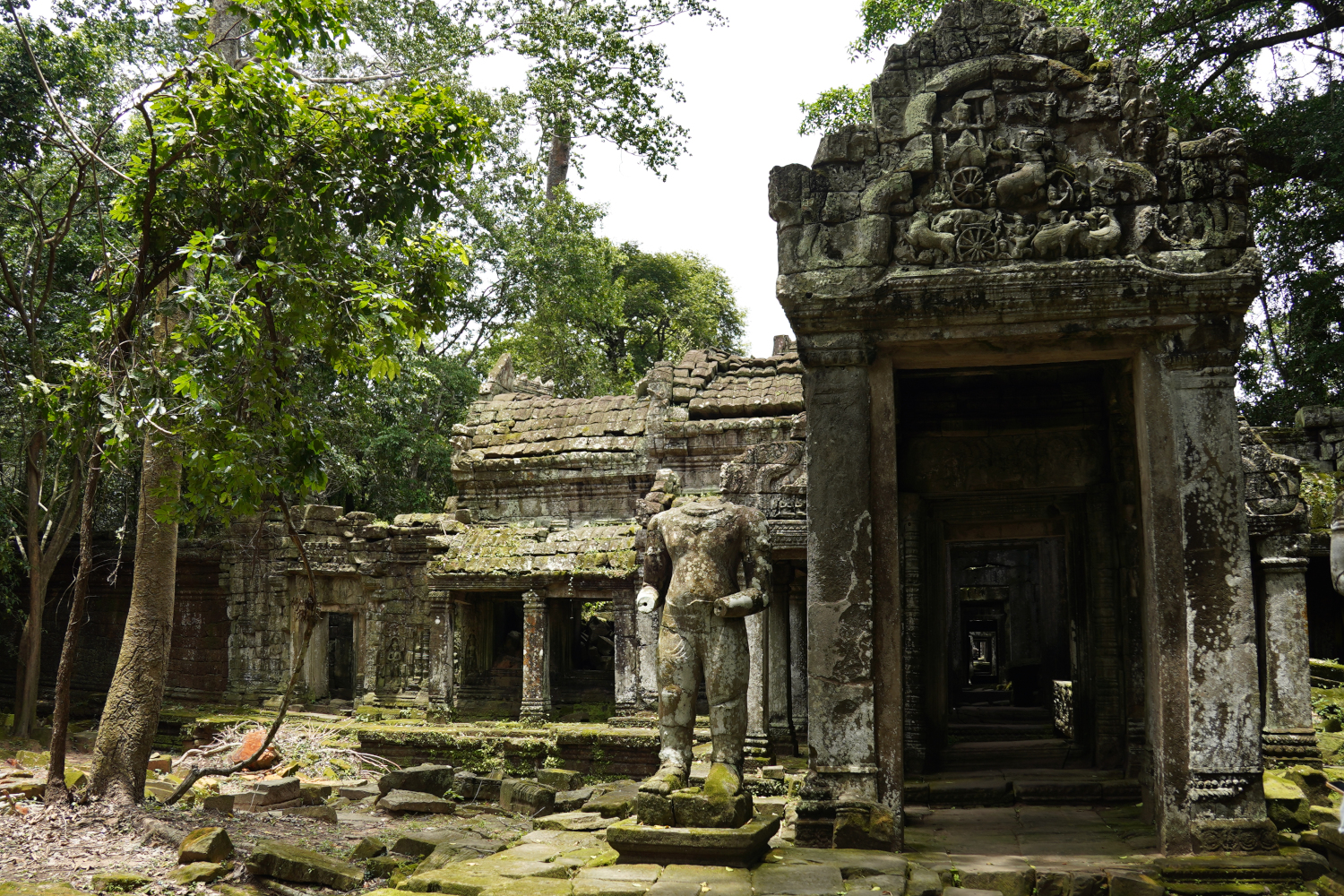
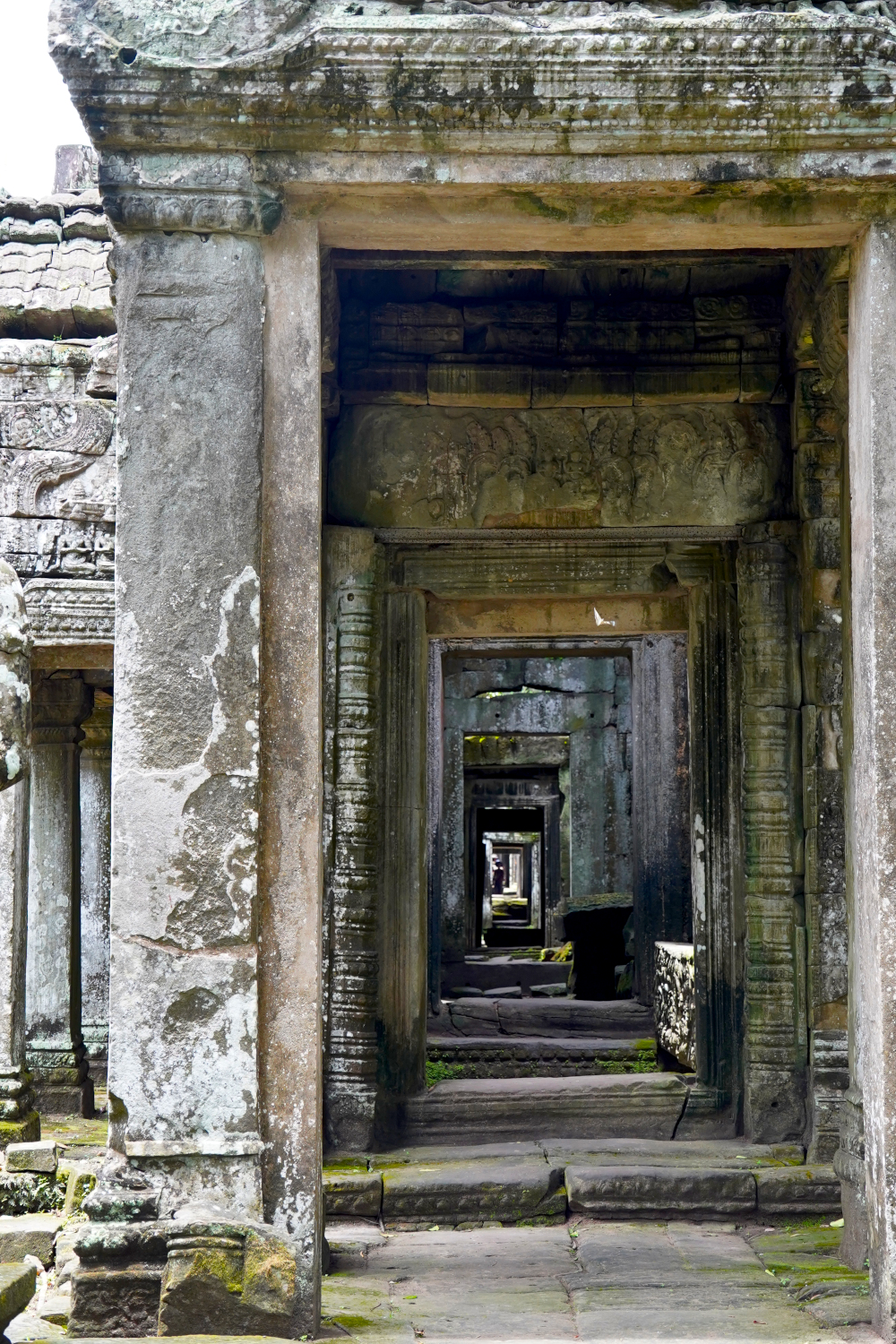
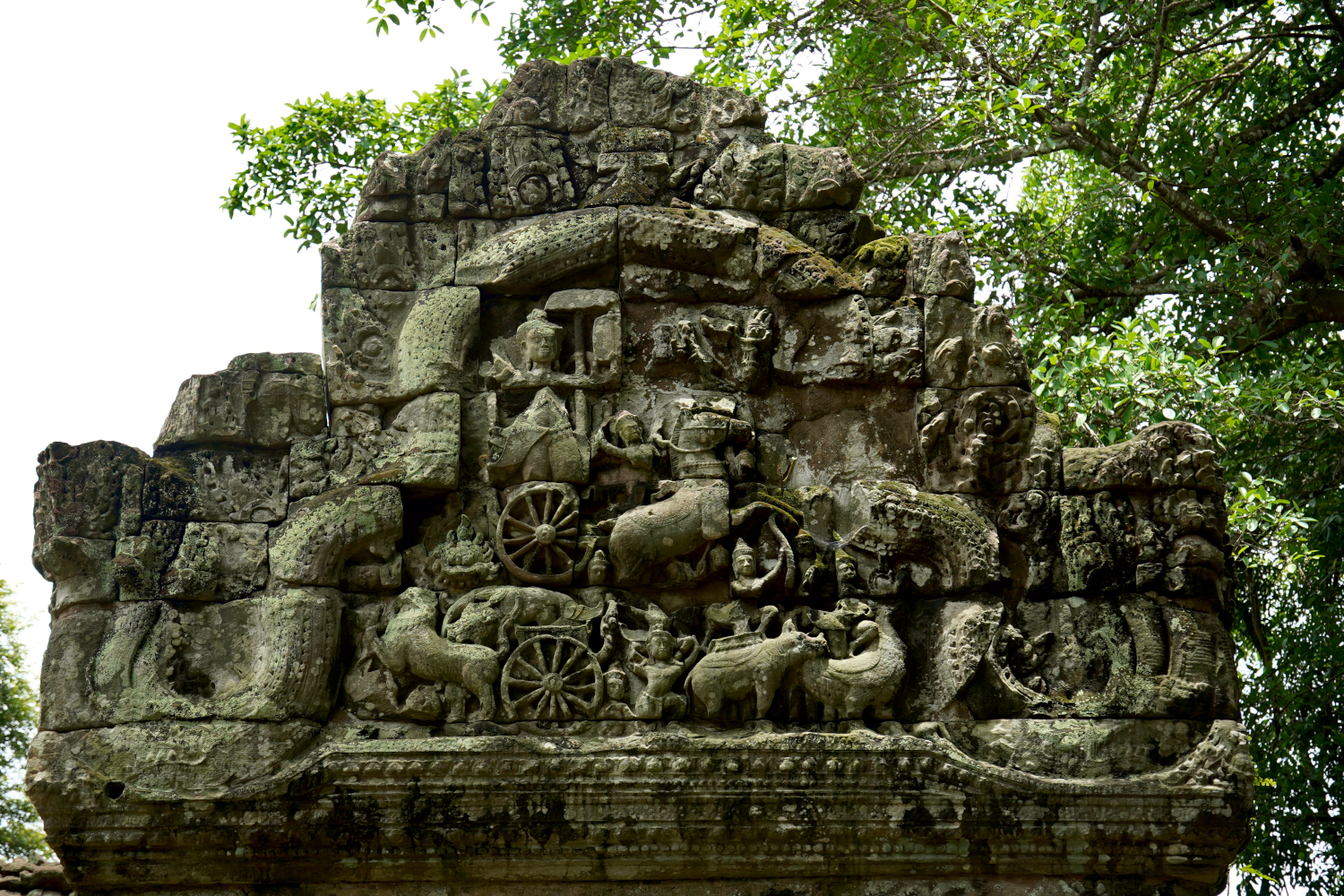
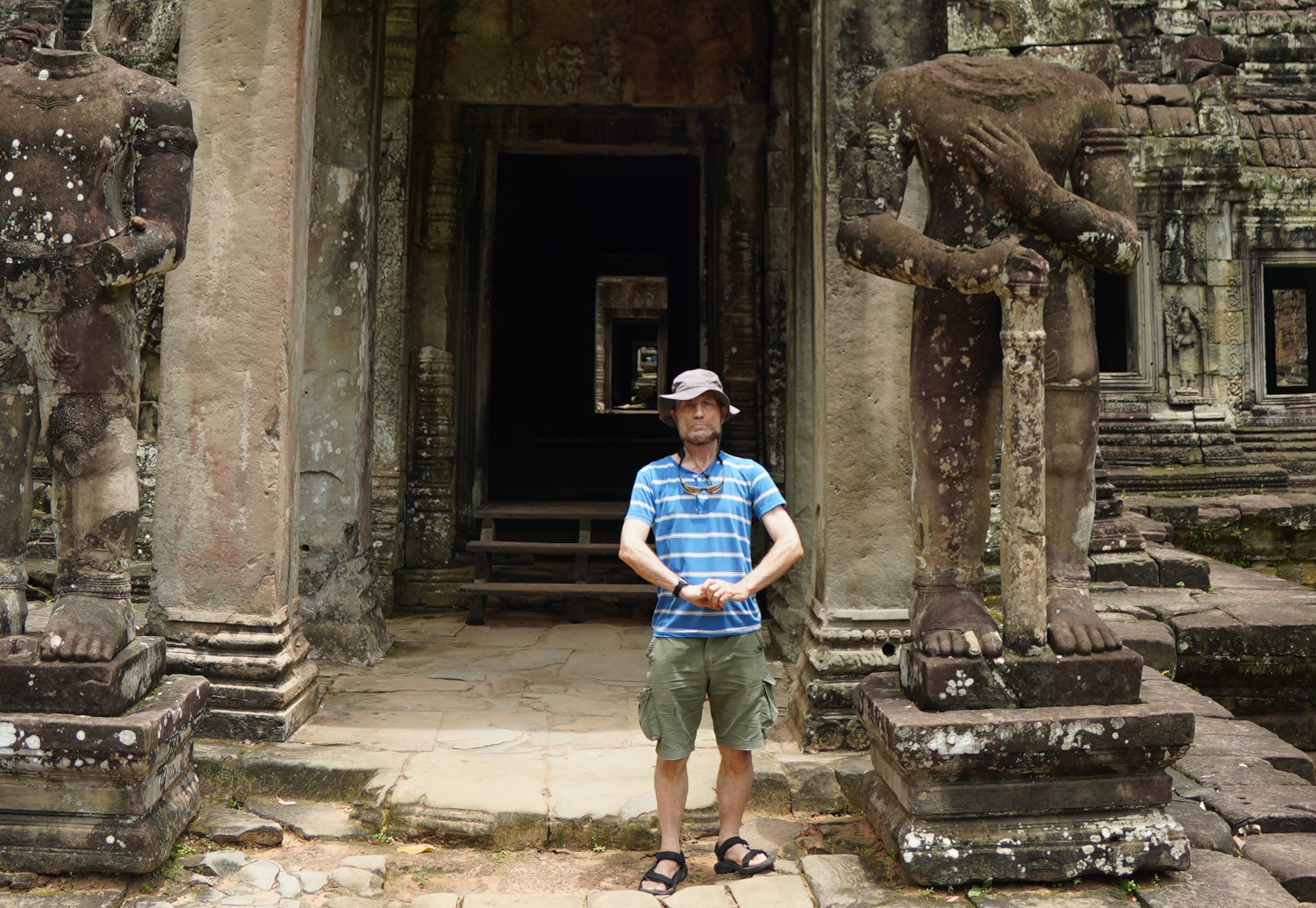
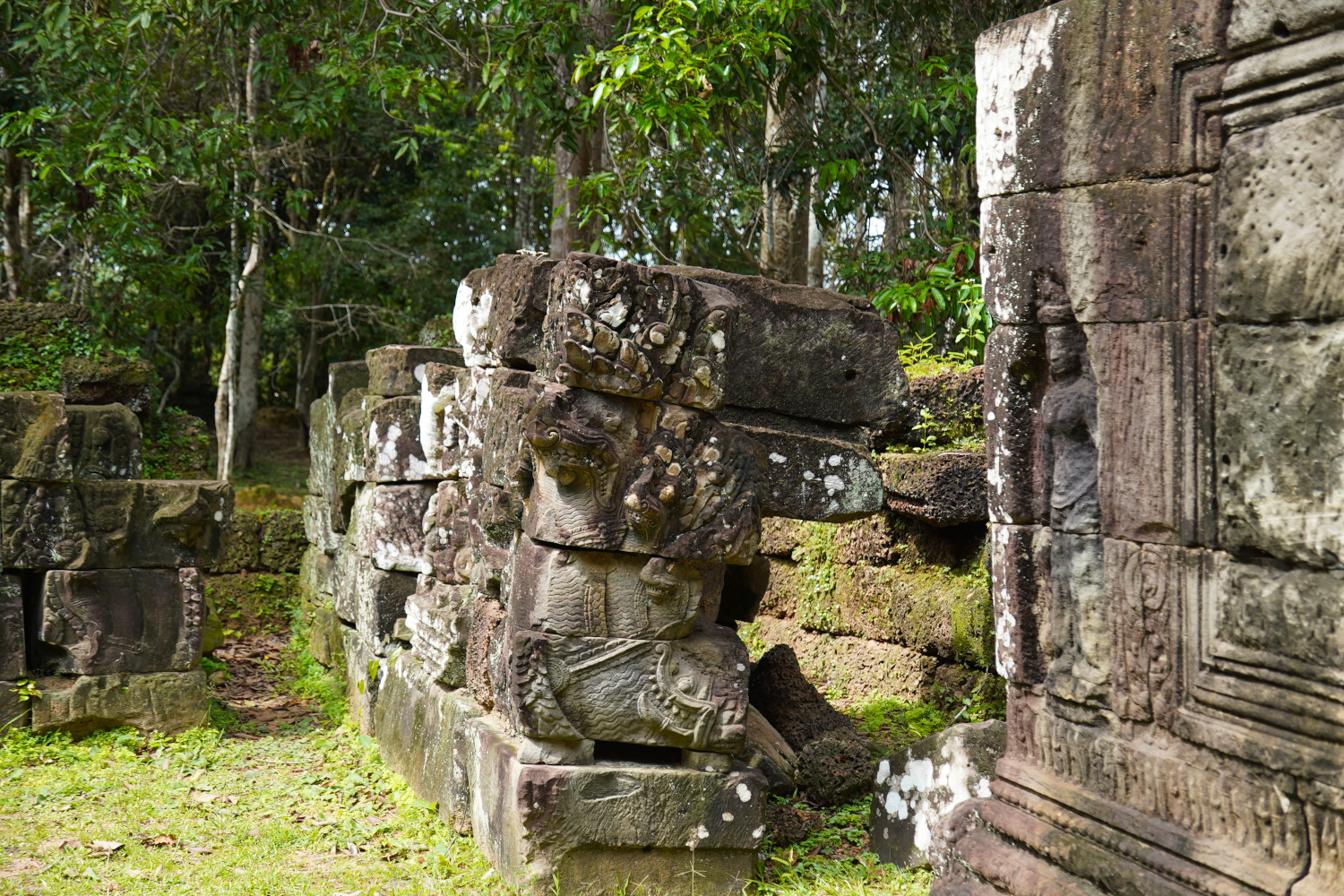
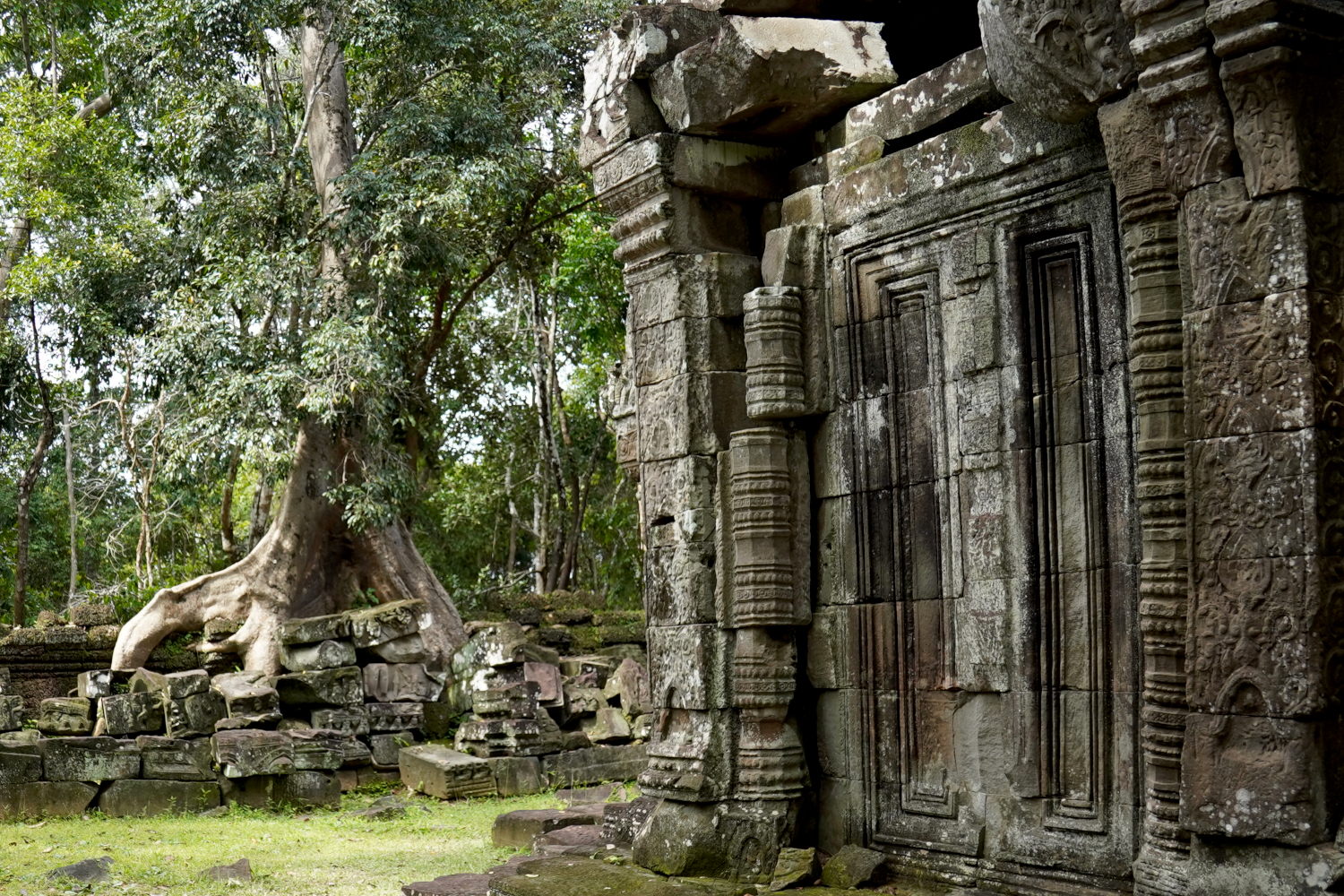
Preah Khan, which means something like “sacred sword”, was dedicated in 1191, and was a Buddhist monastery and university, though it later was retooled to be more Hindu. Its distinctive layout is x-shaped, with a long series of arches in each arm of the structure. You can stand and look through one arch at another arch and through that one, and so on, resulting in a rather surreal vista that seems to trail off into infinity.




Neak Poan
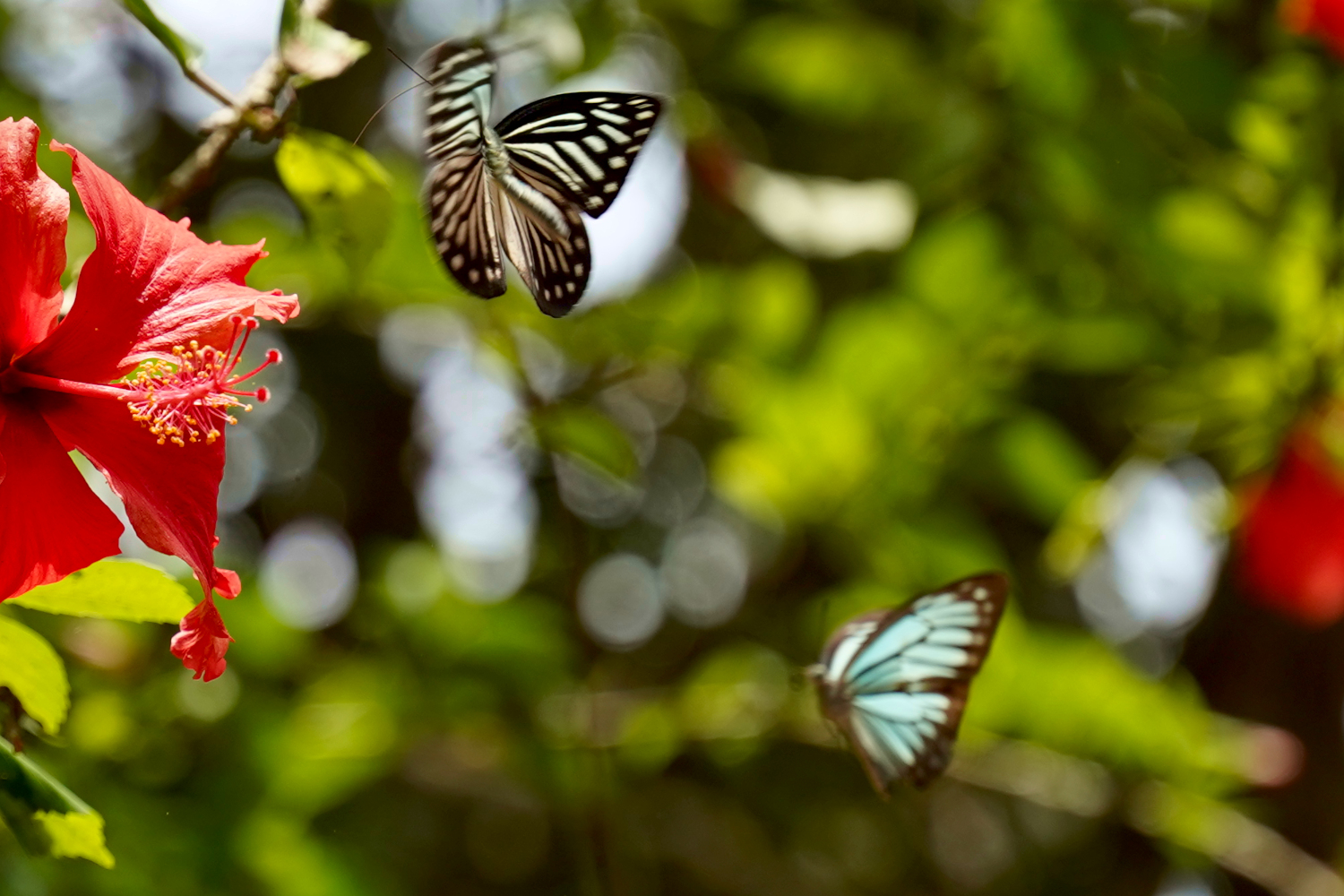
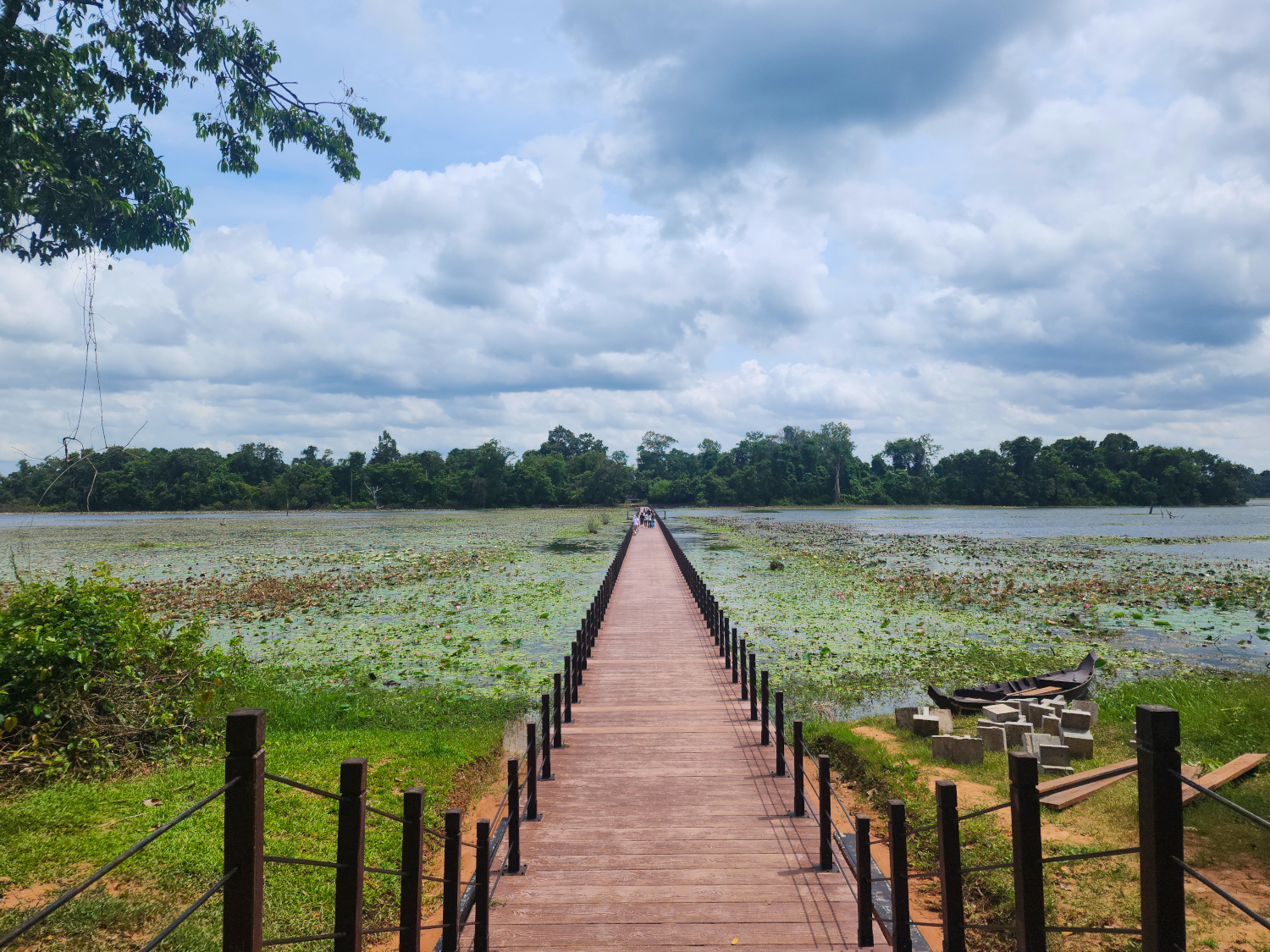
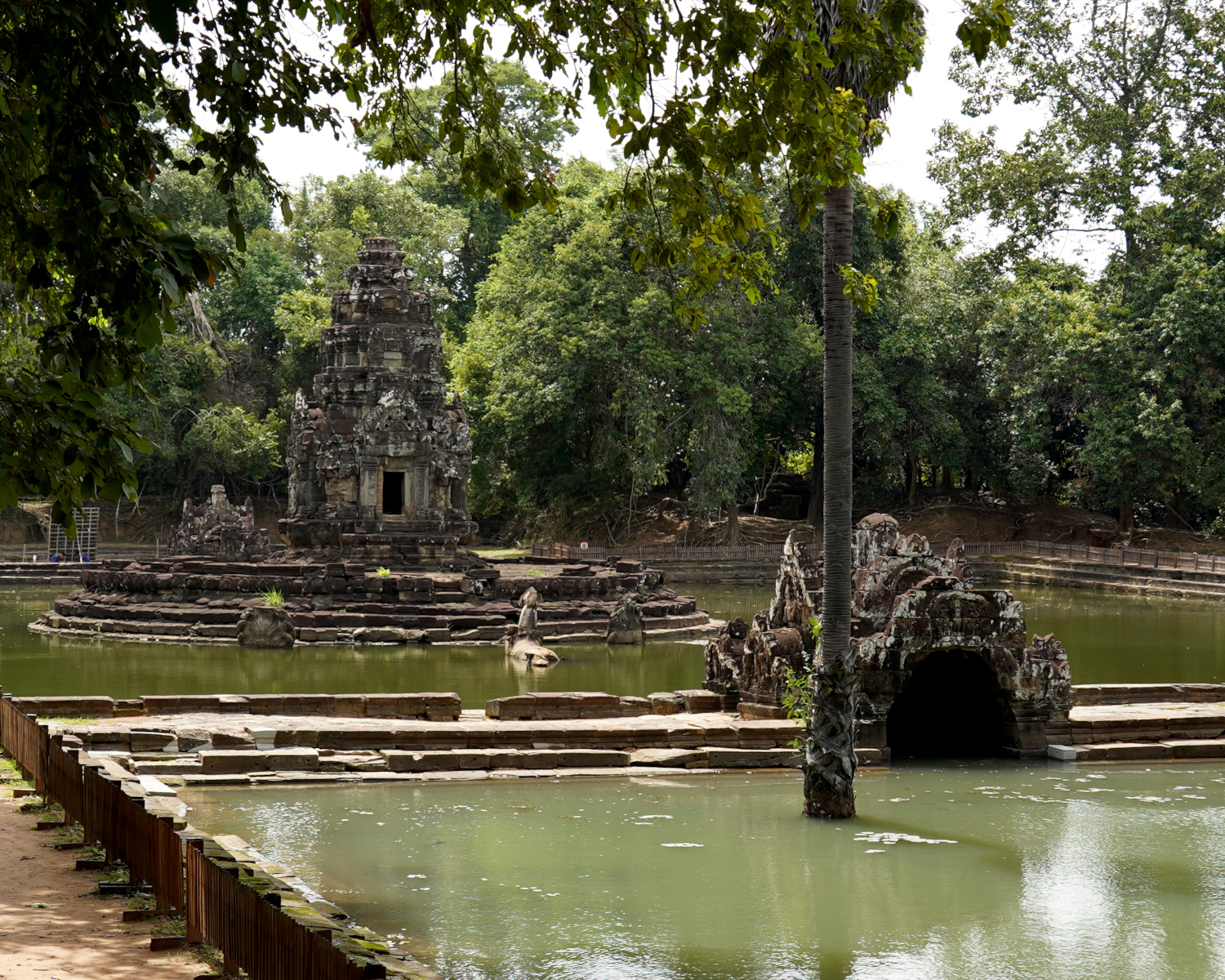
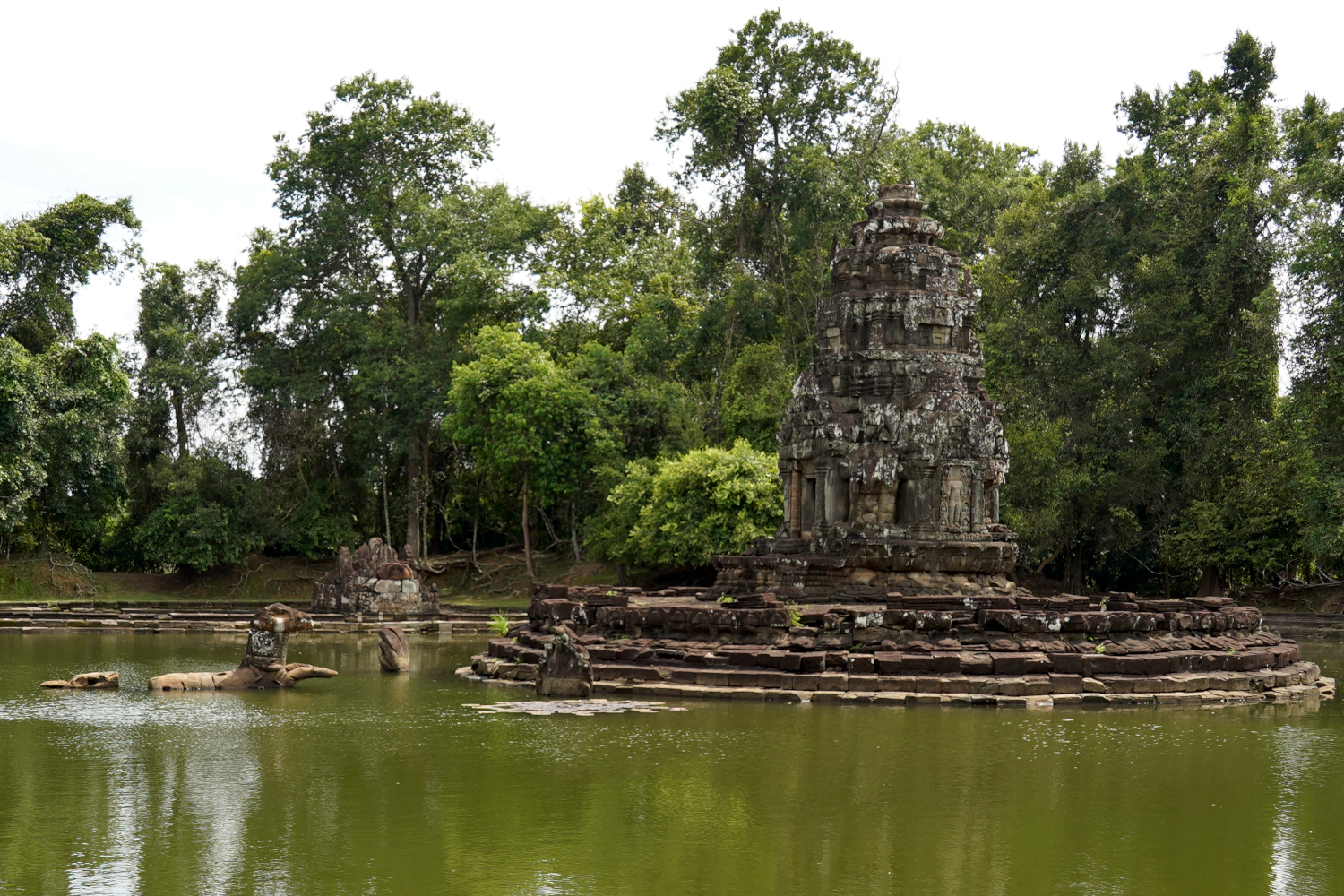
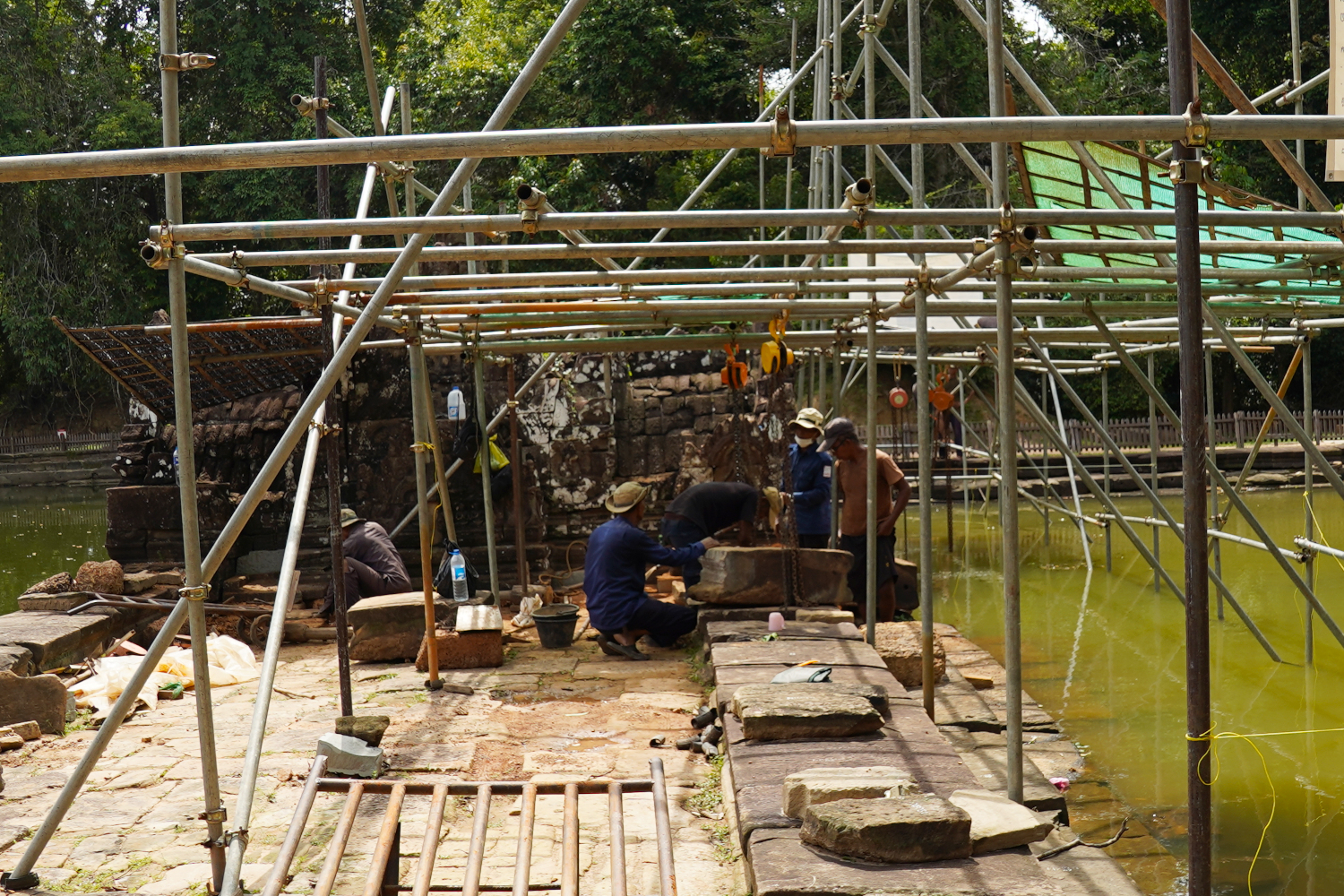
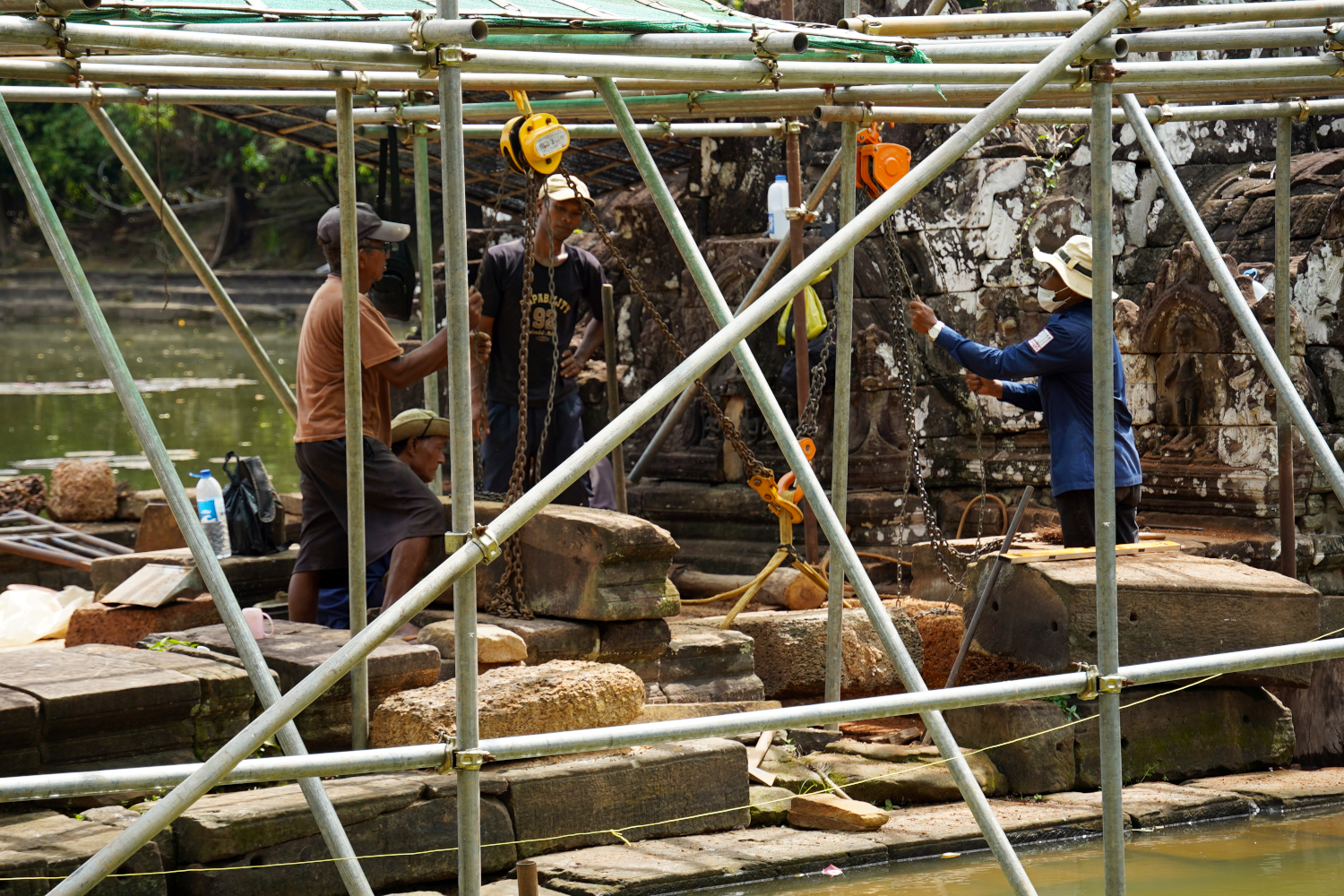
Neak Poan, also dating from the late Twelfth Century, was something of a hospital or health resort. Situated on a little island surrounded by a moat, it was a place where the afflicted could go to bathe in its waters, supposedly to heal whatever ailed them by balancing the “four elements” (earth, wind, fire, and air). There was one pool dedicated to each of these elements, arranged around a central pool. On the day we visit, this complex is undergoing heavy restorative work.



After this we take a break, and, as we did two days earlier, try to eat lunch sitting outside. But once again the vendors hassle us relentlessly, with one woman in particular repeatedly urging us to “buy something”. So we have to get back in our cart and drive to another location to eat while seated in our vehicle, prepared to make a getaway if hustlers invade.

Pre Rup
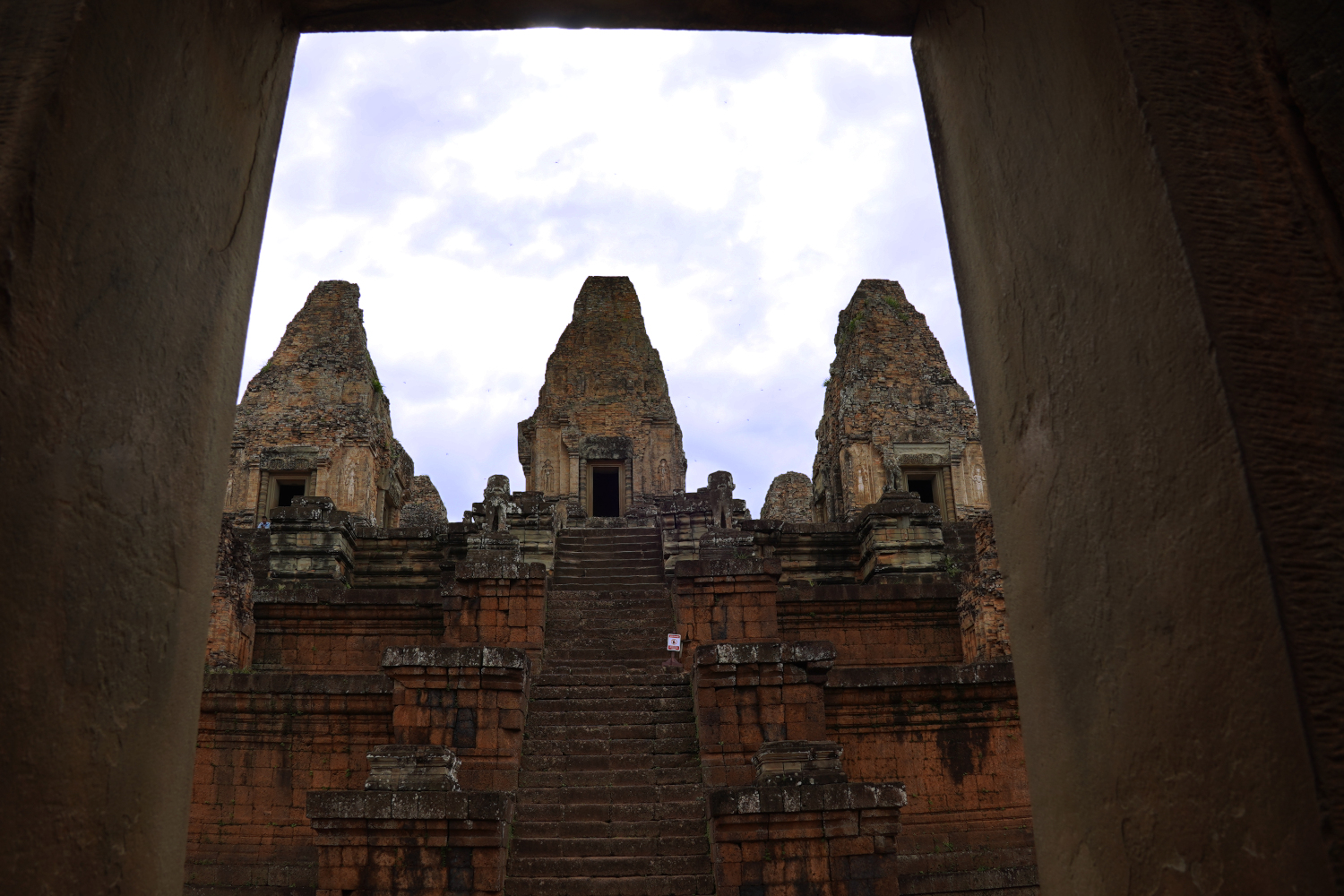
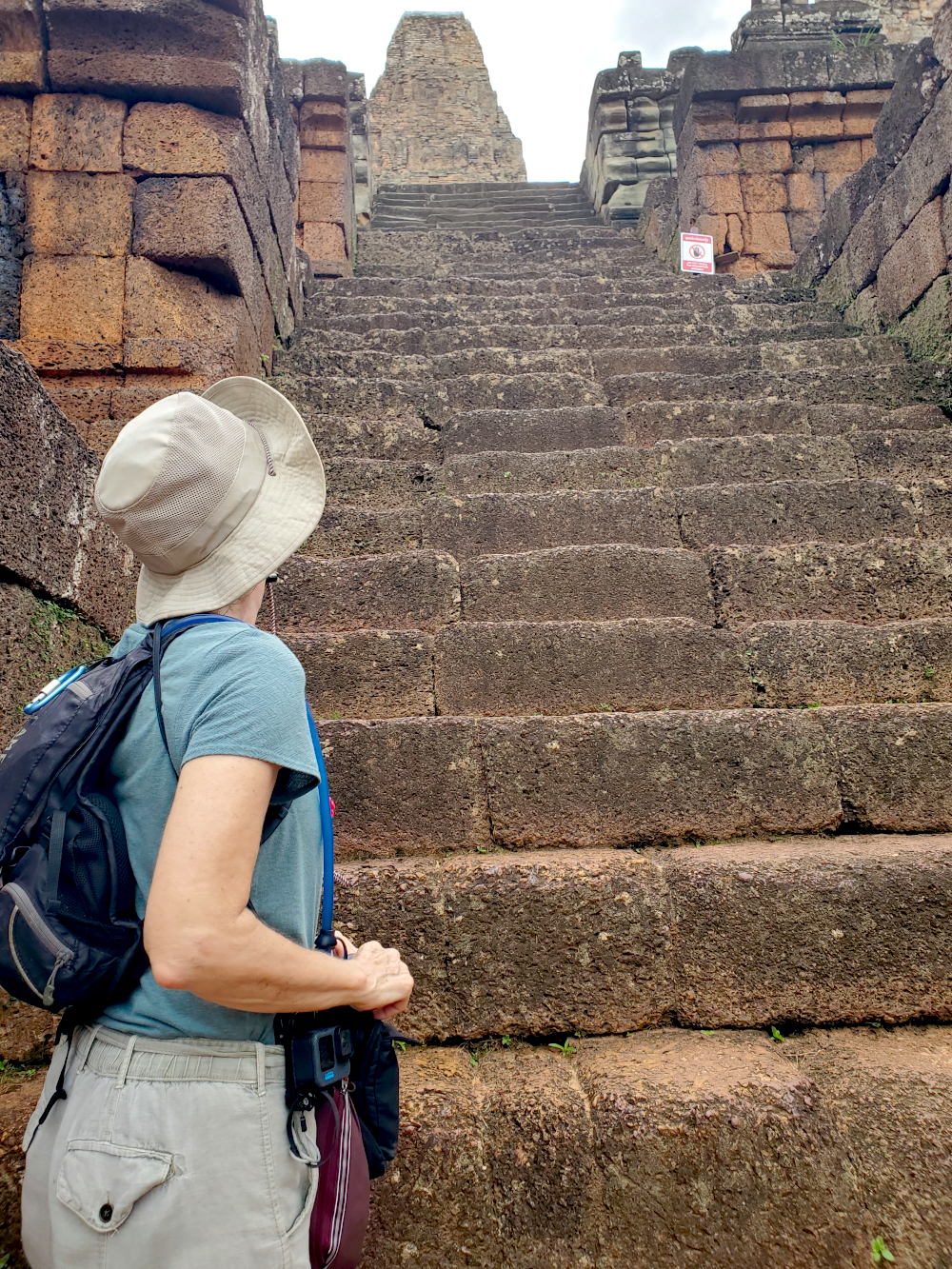
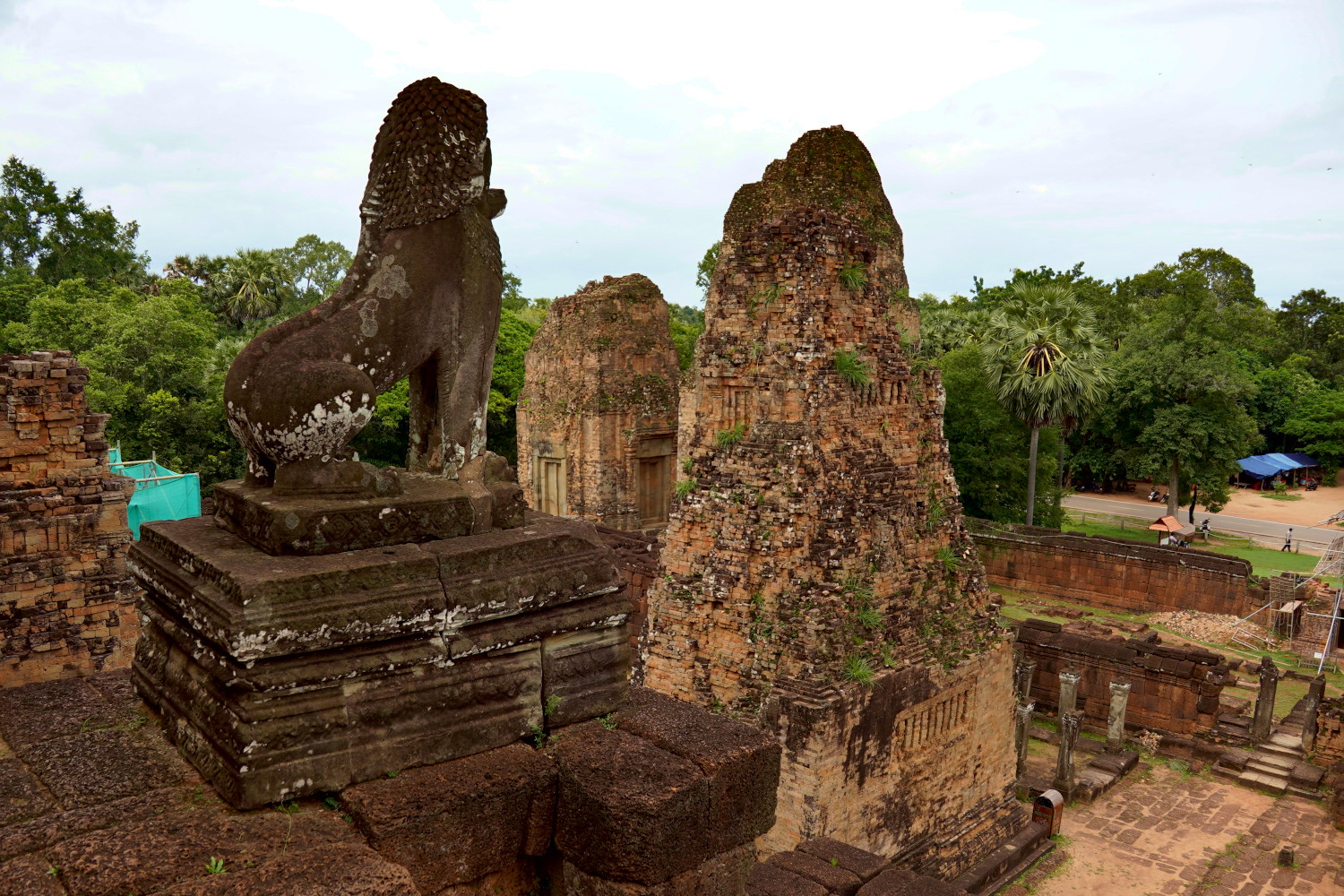
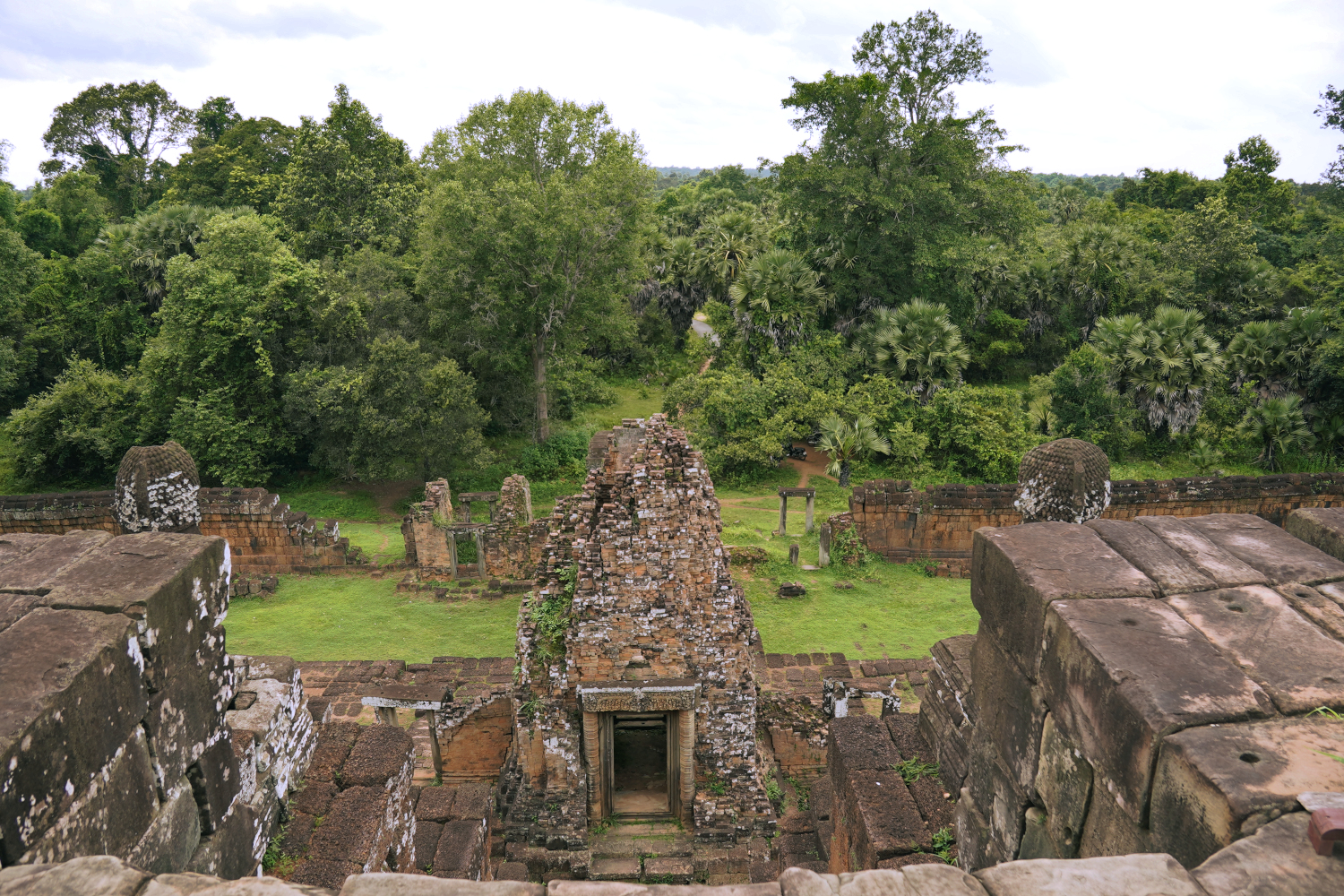
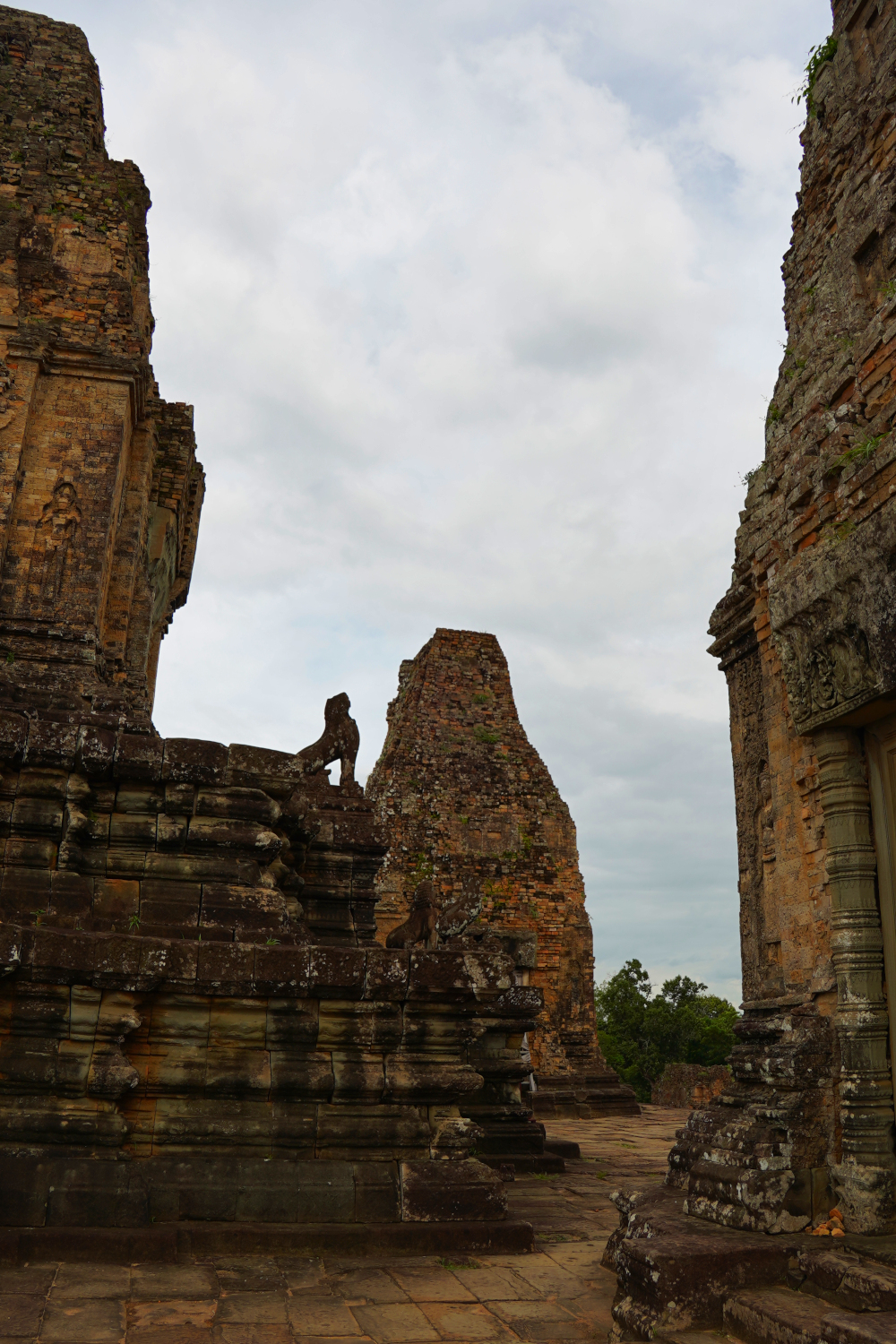
The last site to visit on this day is Pre Rup, which is a couple of centuries older than the others, and was constructed as a Hindu temple, dedicated to the god Shiva. Accordingly, it built up as a pyramid, with steps ascending to each level. The shape symbolizes Mount Meru, the center of the universe according to Hindu Mythology. Incidentally, Pre Rup means “turn the body”, reflecting the tradition that this site was used for funerals, and the ashes of the deceased were scattered in different directions.
Another successful day as amateur archaeologists of Angkor. (Very amateur.) Now we face a very tough decision: narrowing down the choices of ruins to visit on our final day.
9/6/2024

 world travel with a theatrical flair
Leave a comment