


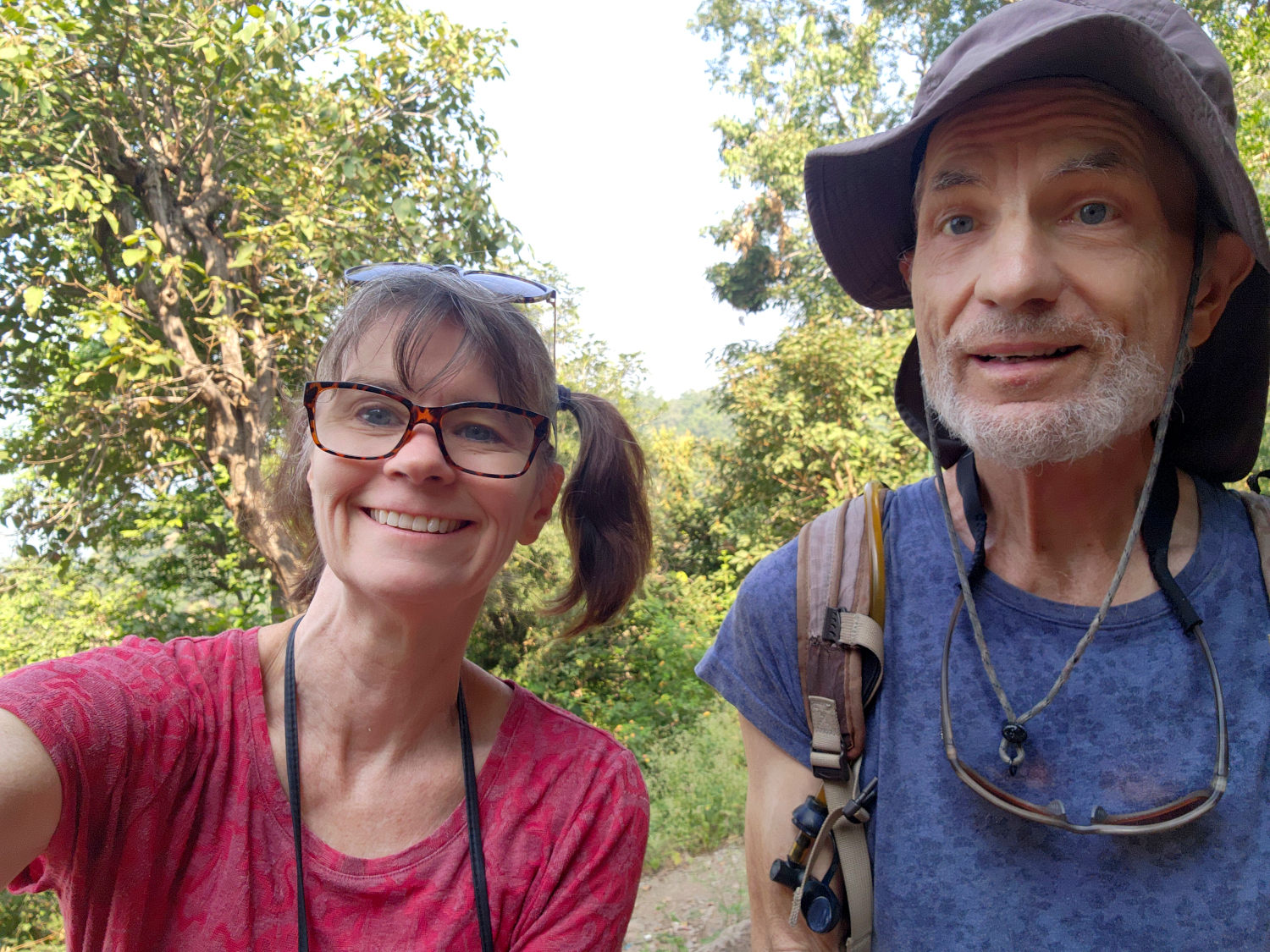
With the Diwali celebration mostly behind us, we had another day to spend in Rishikesh before heading back to Raiwala and getting back to our temporary volunteer jobs as English teachers. As it turned out, the highlight of the day was a mountain hike and the wildlife it contained.
The day begins with a plan to just head back across the Ganga (Ganges) River and explore the ashram-heavy neighborhood over there. At some point, we decide to see if we can locate the so-called Beatles Ashram. That was where the legendary British musical quartet spent several weeks in 1968 studying transcendental meditation under the Maharishi Mahesh Yogi. The ashram itself is no longer active, but we knew that it’s a tourist attraction now. And hey, we qualify as tourists, and we’re certainly attracted.


We get pointed in the right direction by a sign that says “Beatles Stree”, and we head along the narrow “road” along the riverfront, in the opposite direction from where we had traversed the previous day. Then the road curves up toward the mountains and woods, and we start to wonder if we’re headed the right way.

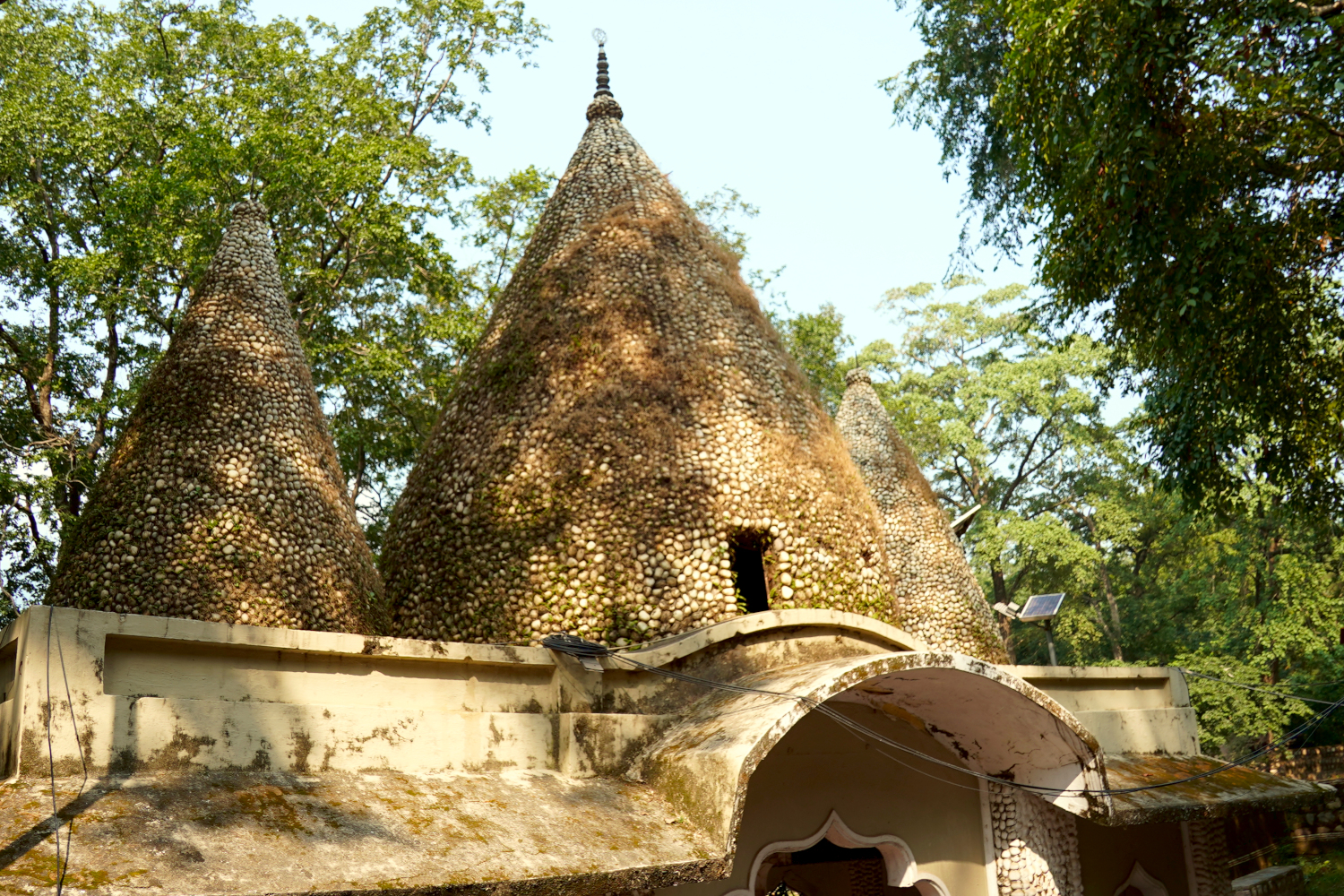
Google Maps does have Beatles Ashram marked on it, but we walk past the point where it is supposed to be, and see no sign of it — which is to say we see no sign posted that says anything about Beatles Ashram. We do see some old dome-shaped structures of intriguing design, but the sign identifies the place as Rajaji Tiger Reserve. After asking some fellow wanderers, we learn that in fact, it is indeed the same place. Were the tigers, we wonder, introduced to the area after the ashram days, or were they here all along, perhaps sneaking onto the property occasionally to startle someone comfortably ensconced in the lotus position?
In any case, we go to the entrance to investigate, and learn that the admission fee is 12,000 rupees (about 15 dollars), at least for us outlanders. So we decide not to devote the time or money to touring it today, but to return on another visit, of which we are certain there will be one.
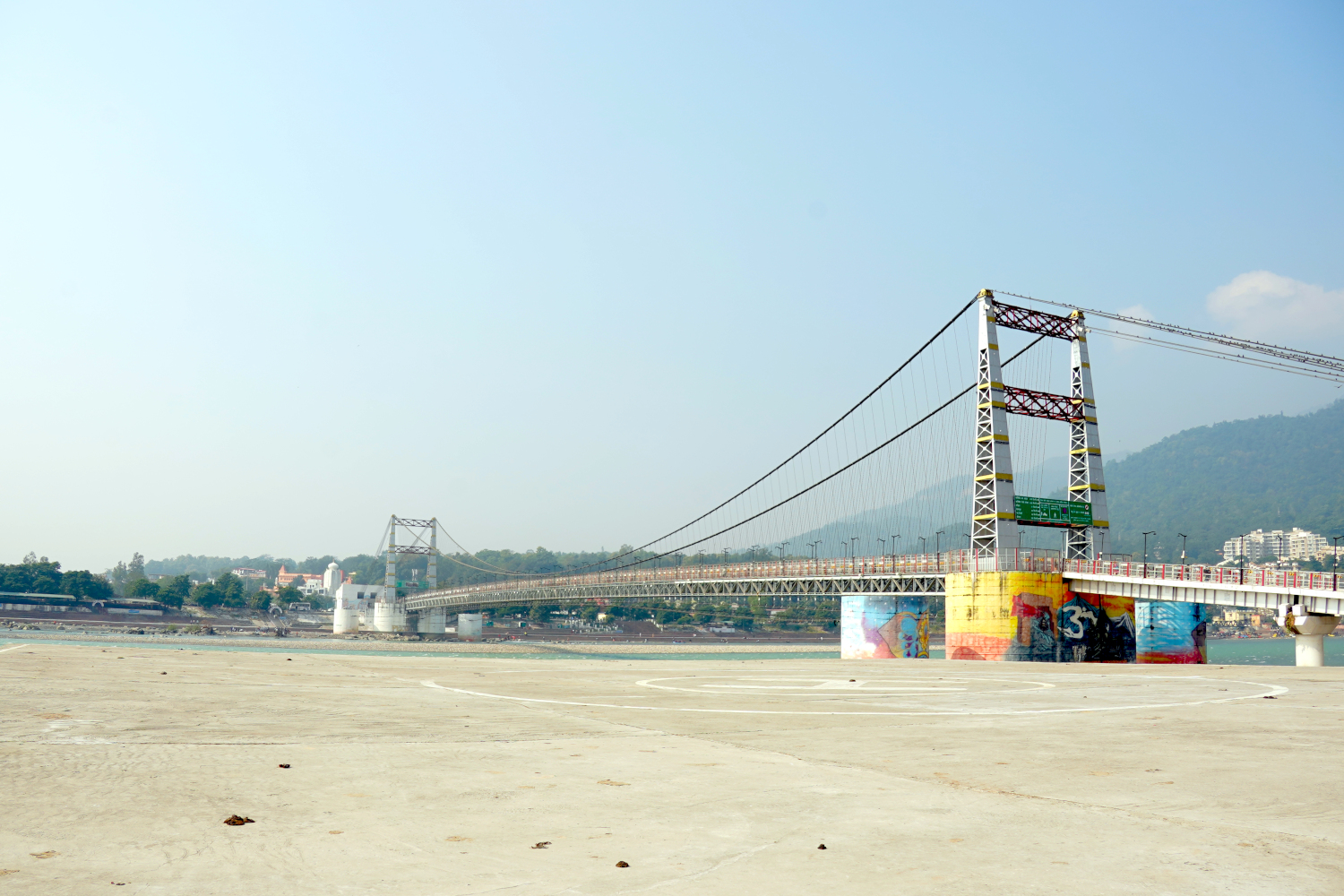

Instead, we feel in the mood to hike up the mountain and — who knows — spot some of the tigers or other wildlife. Or at the very least view some waterfalls reputed to be up near the peak.
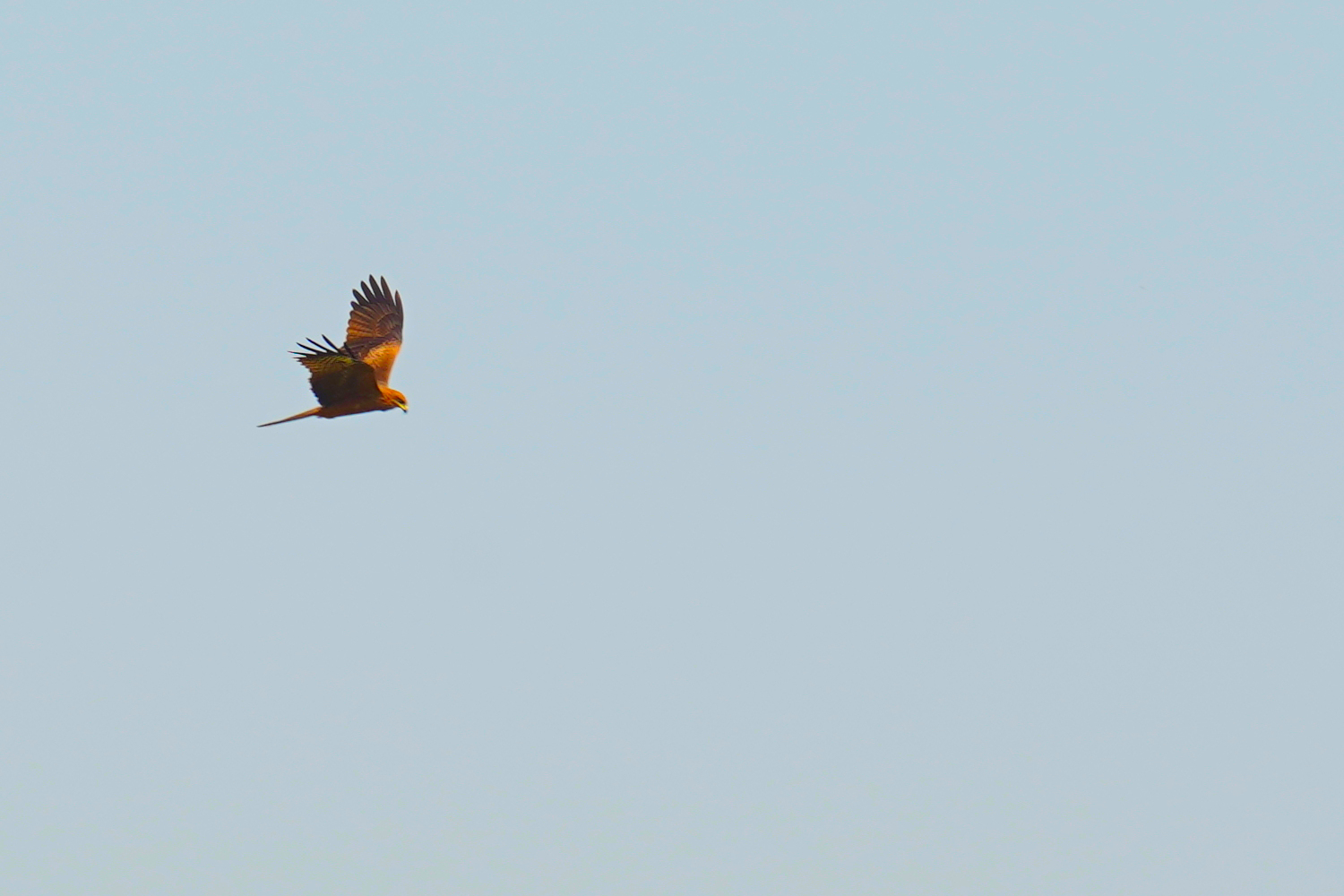
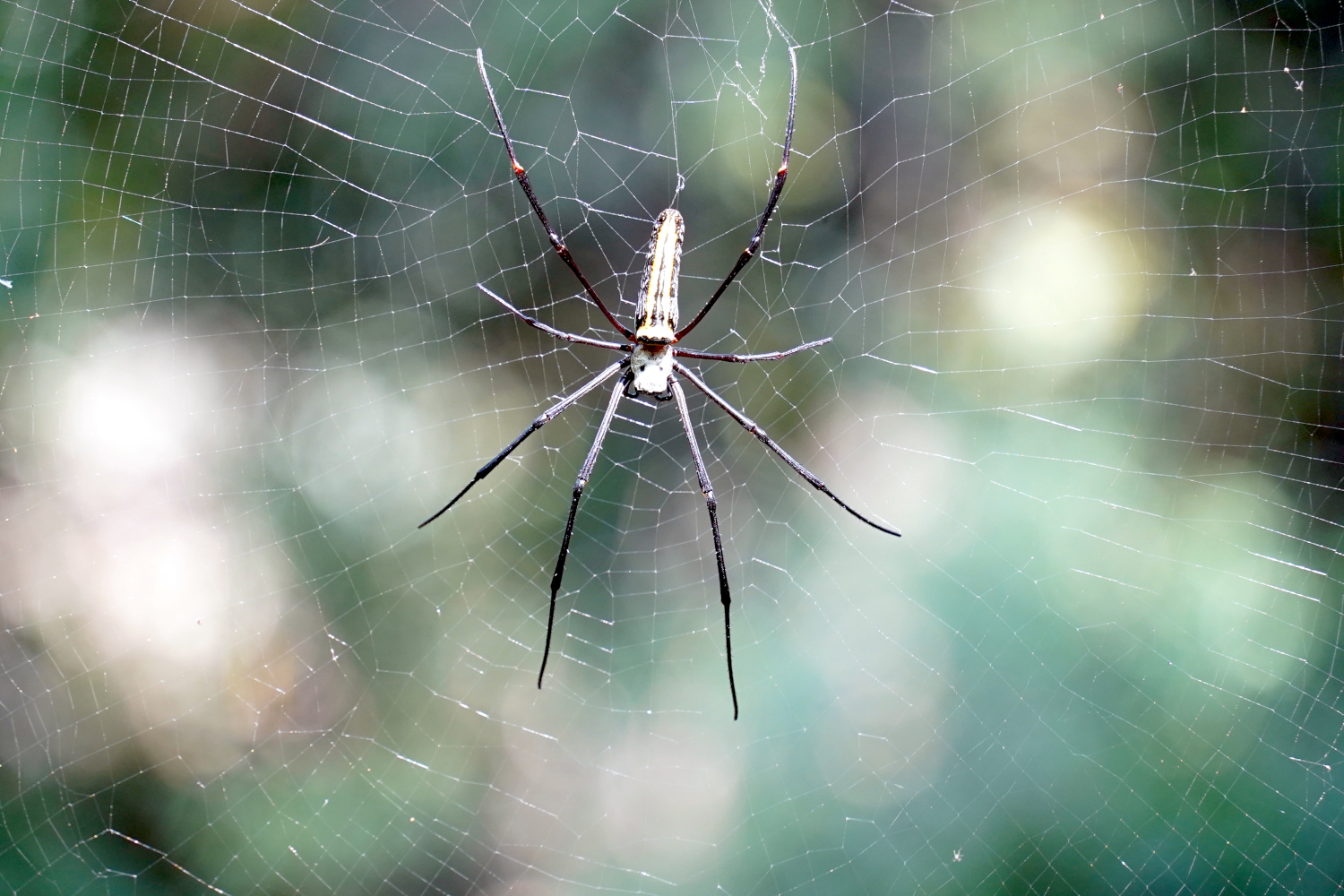

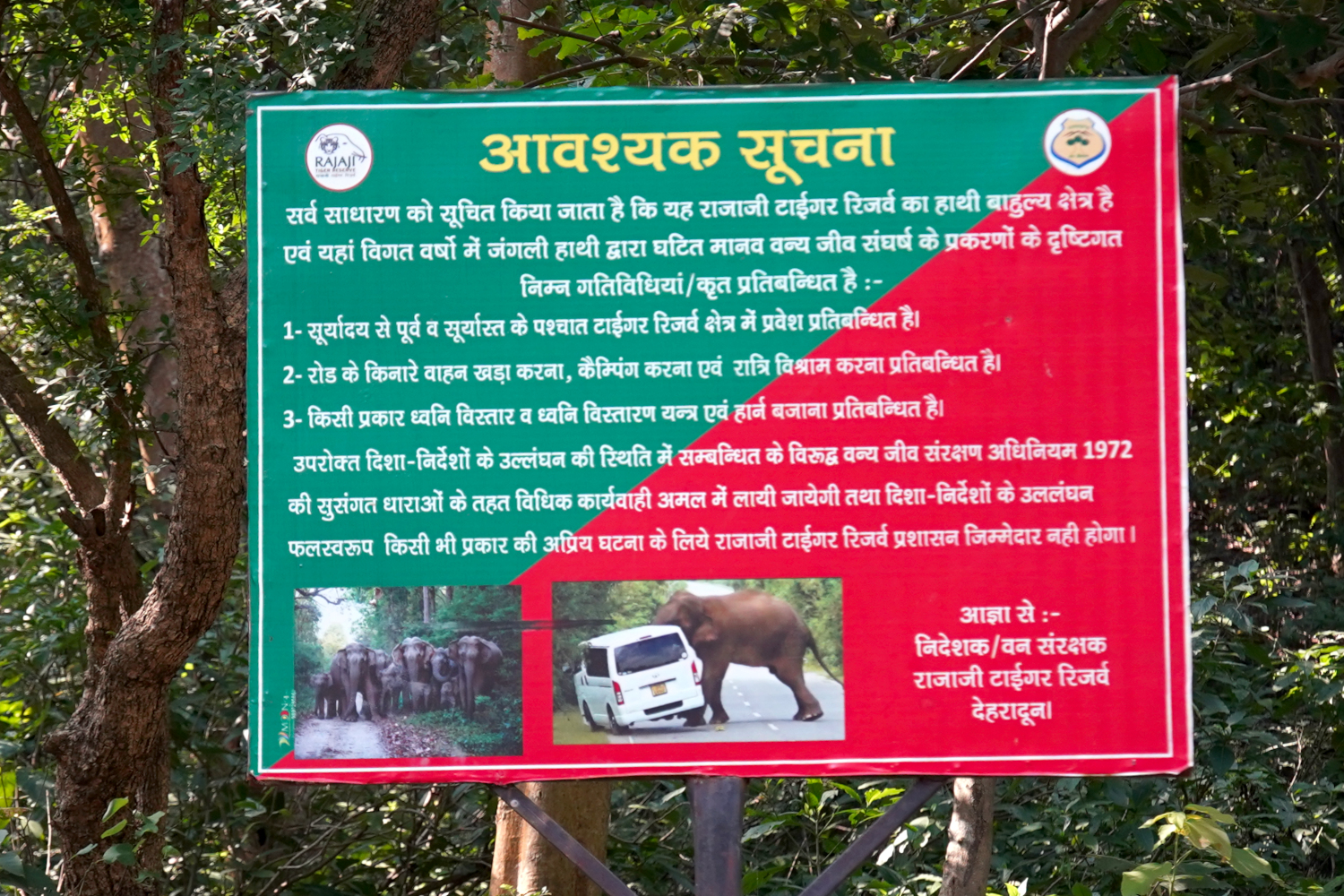
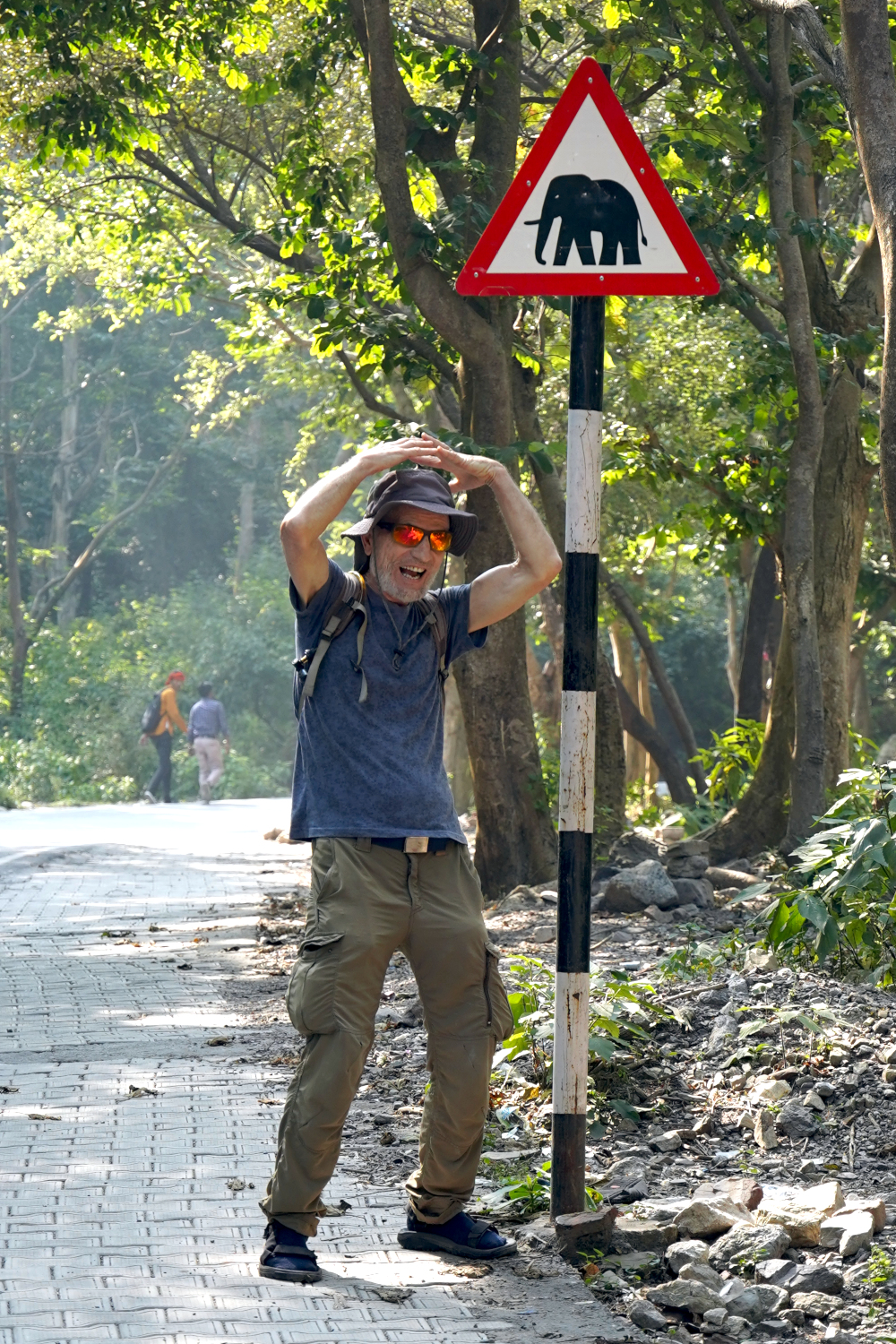
Along the road, we see signs advising that elephant encounters have occurred — and sometimes they didn’t turn out well for parked vehicles. Alas, we see no pachyderms, though we do see what we mistakenly believe is some evidence of their presence that they’ve deposited on the trail. There are also a number of shoes along the trail, and we hope they have been intentionally discarded for whatever reason, rather than left as indigestible remnants when a beast made a feast of the footwear’s owners.

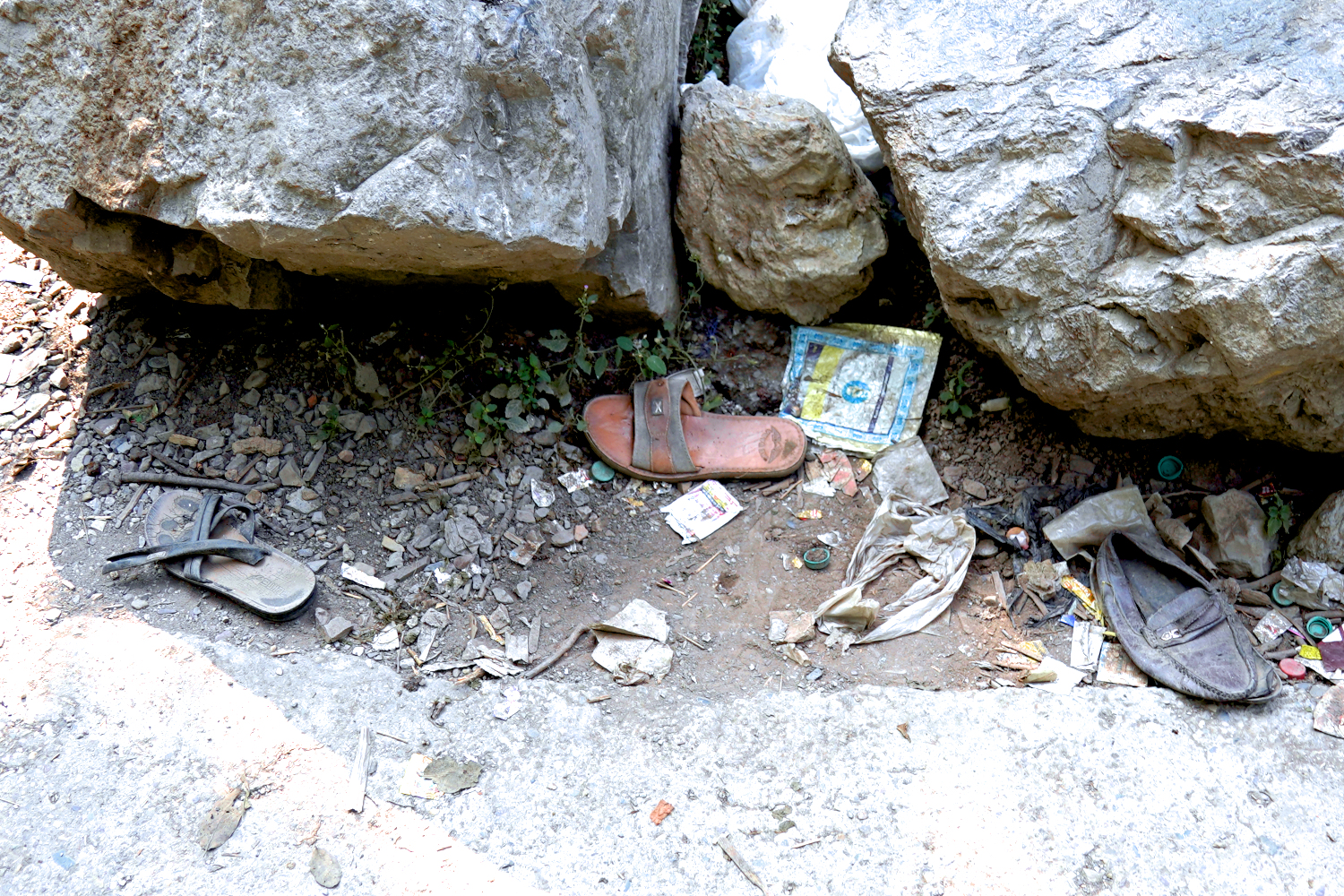

Puzzled by the abundant Mysterious Lost Soles strewn along the path
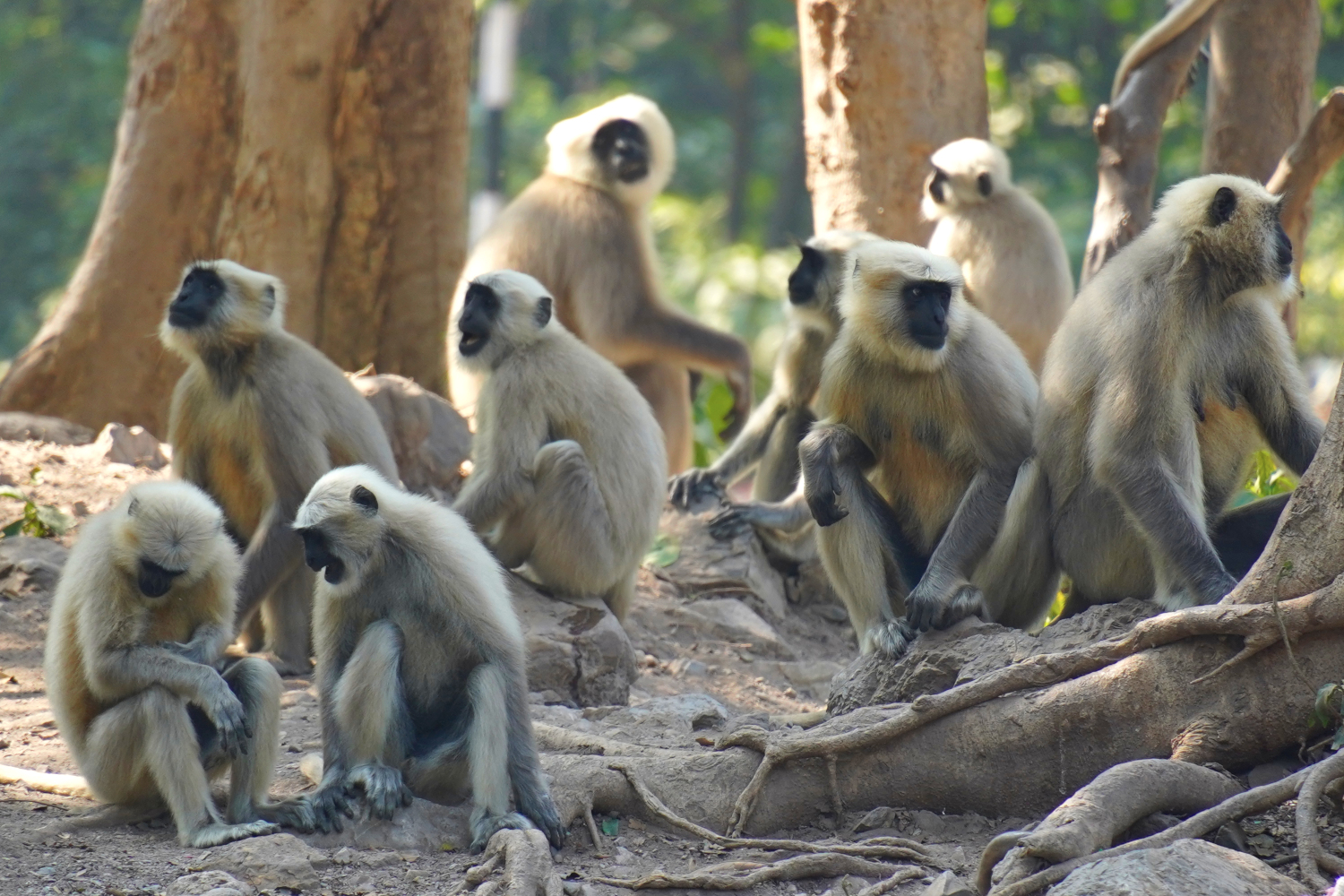
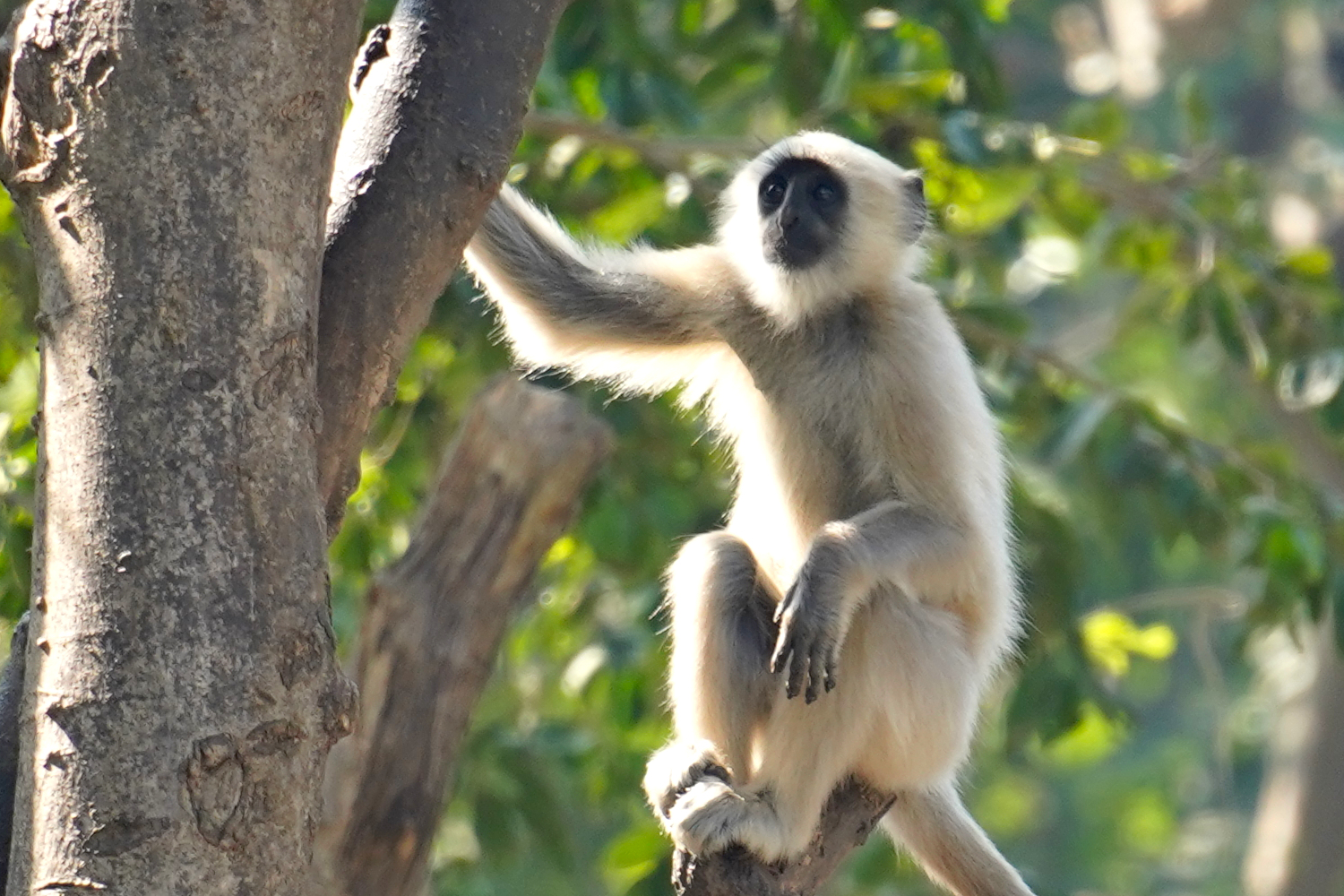
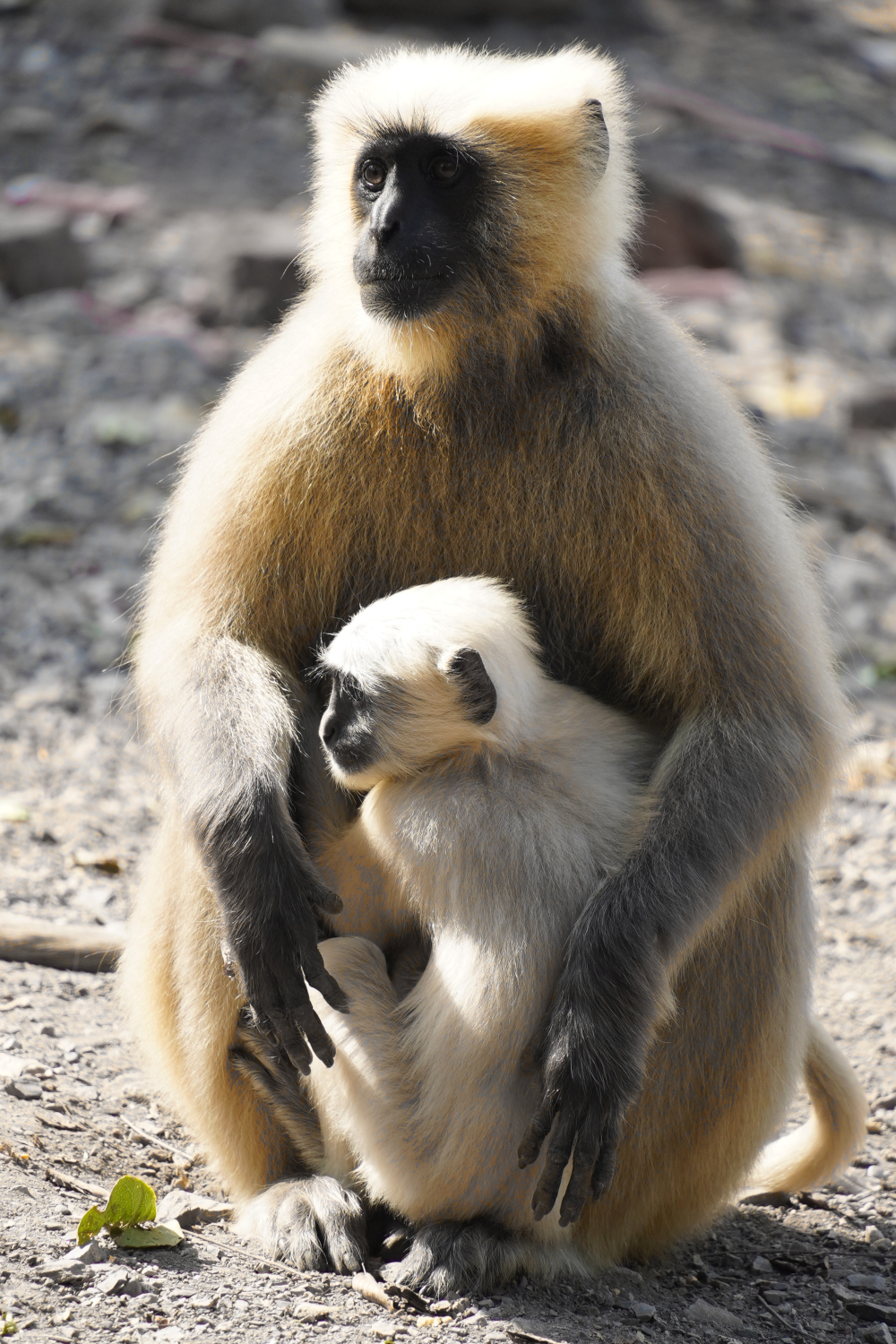
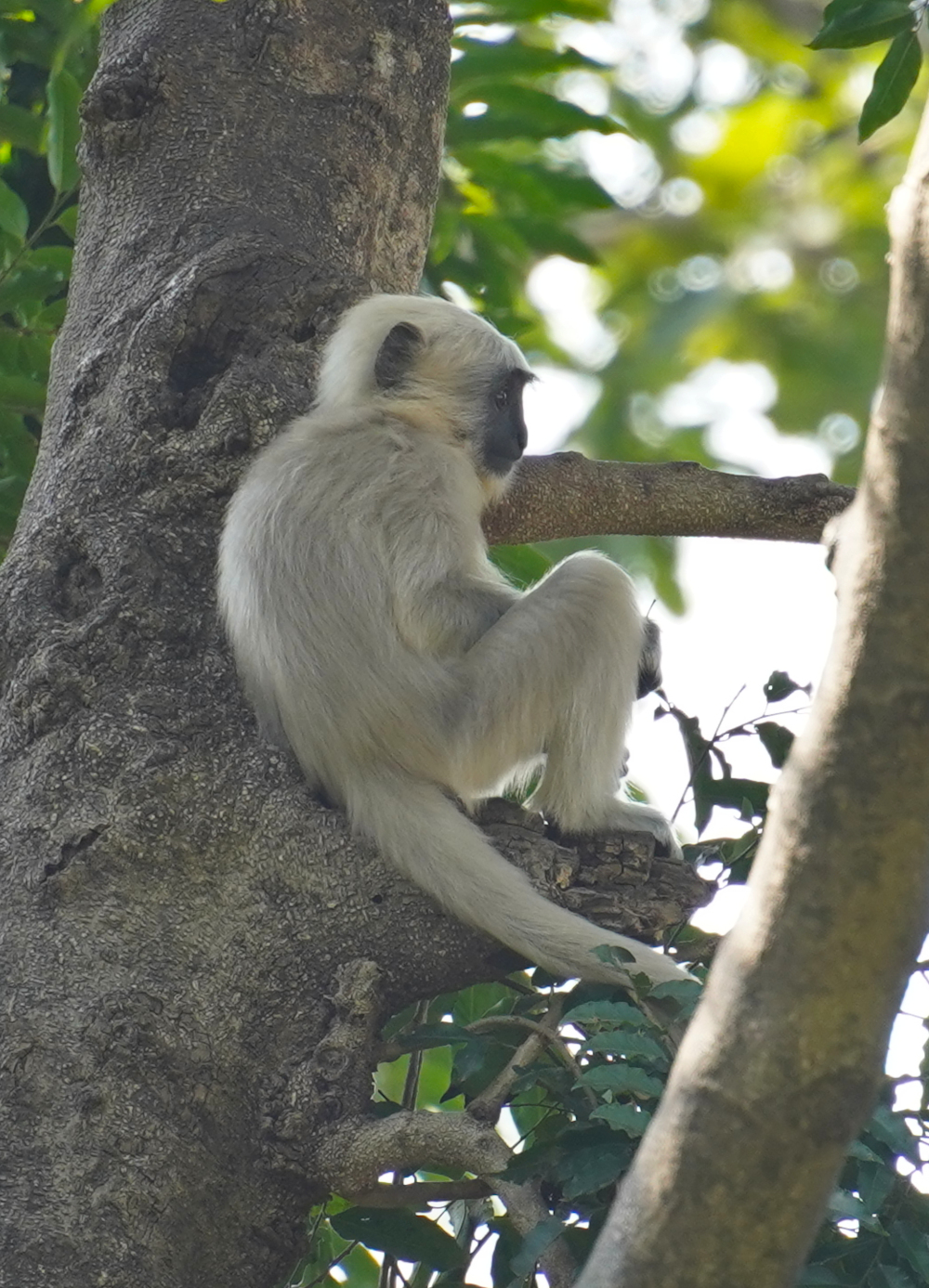
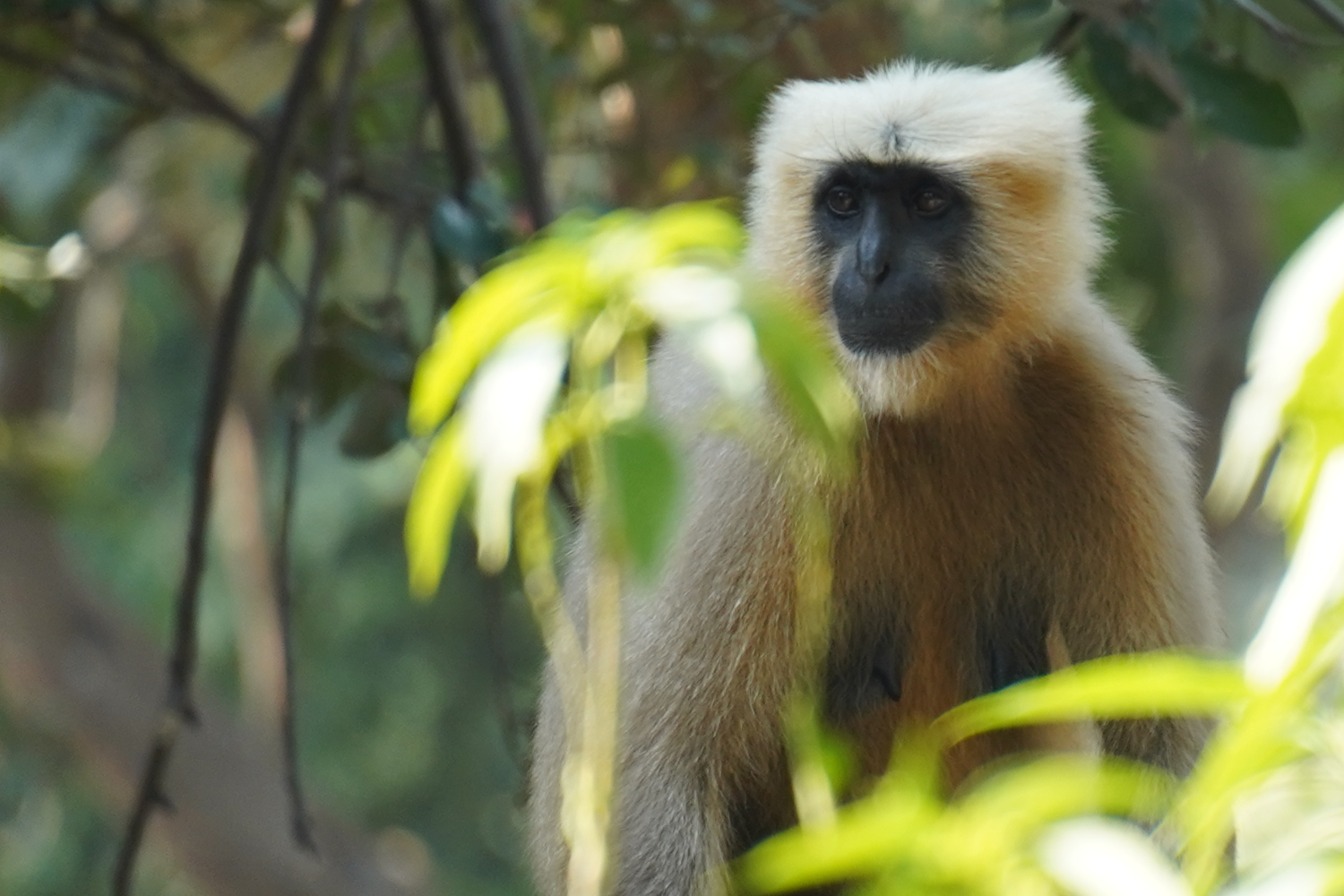
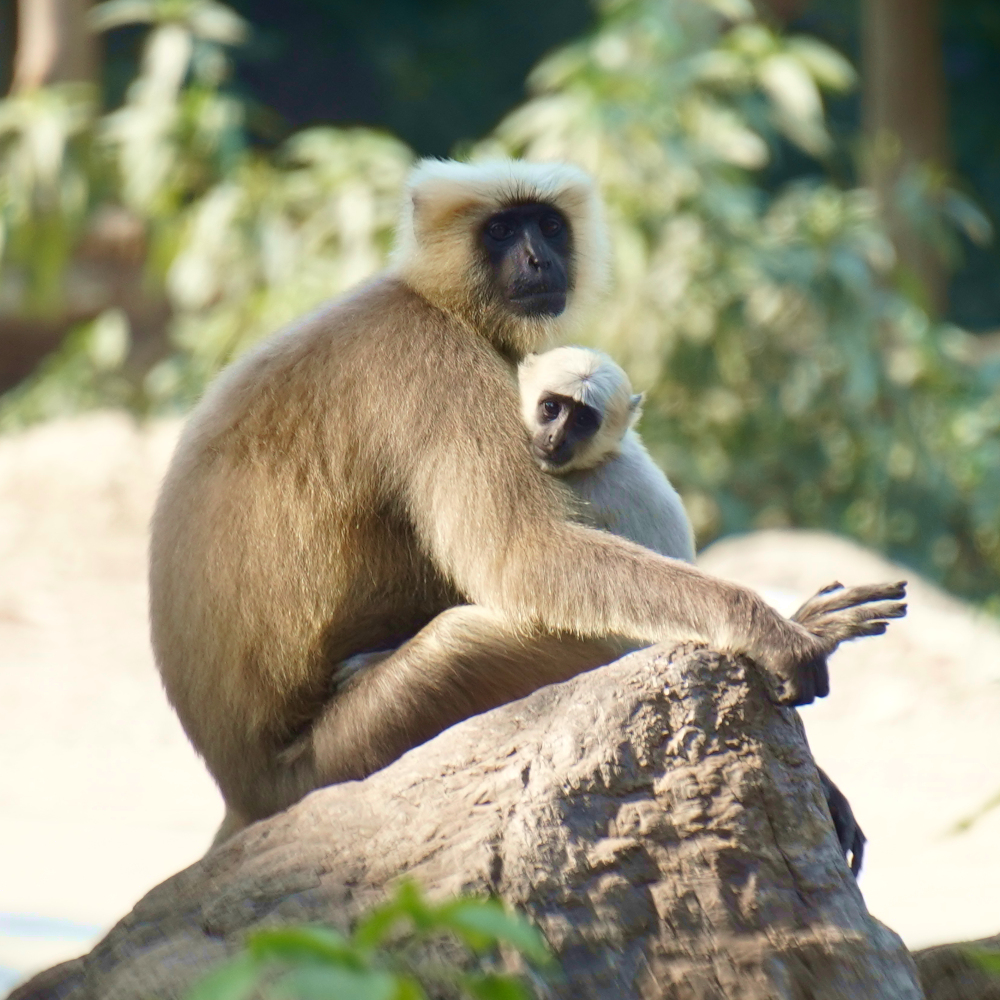
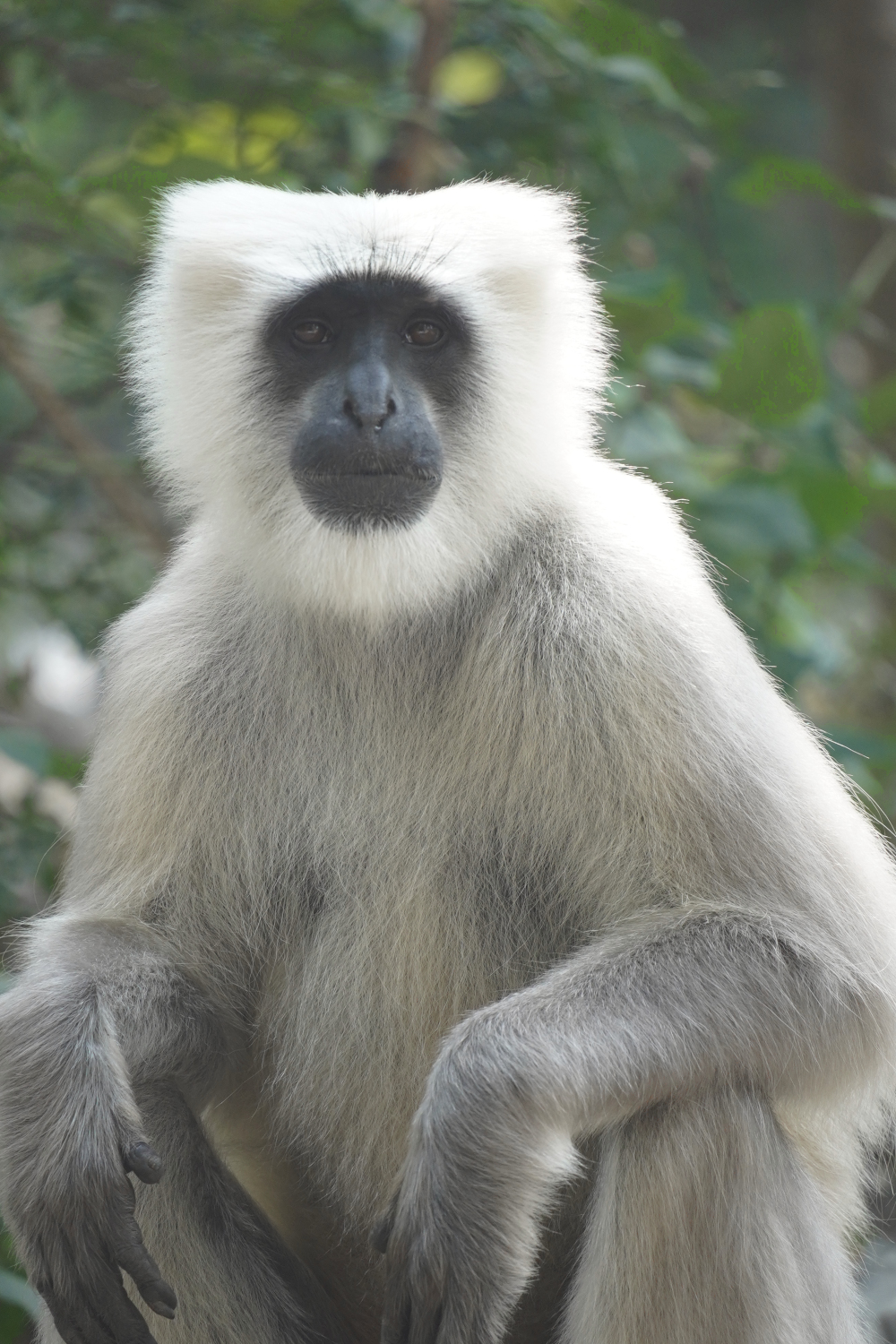
Tarai Gray Langur
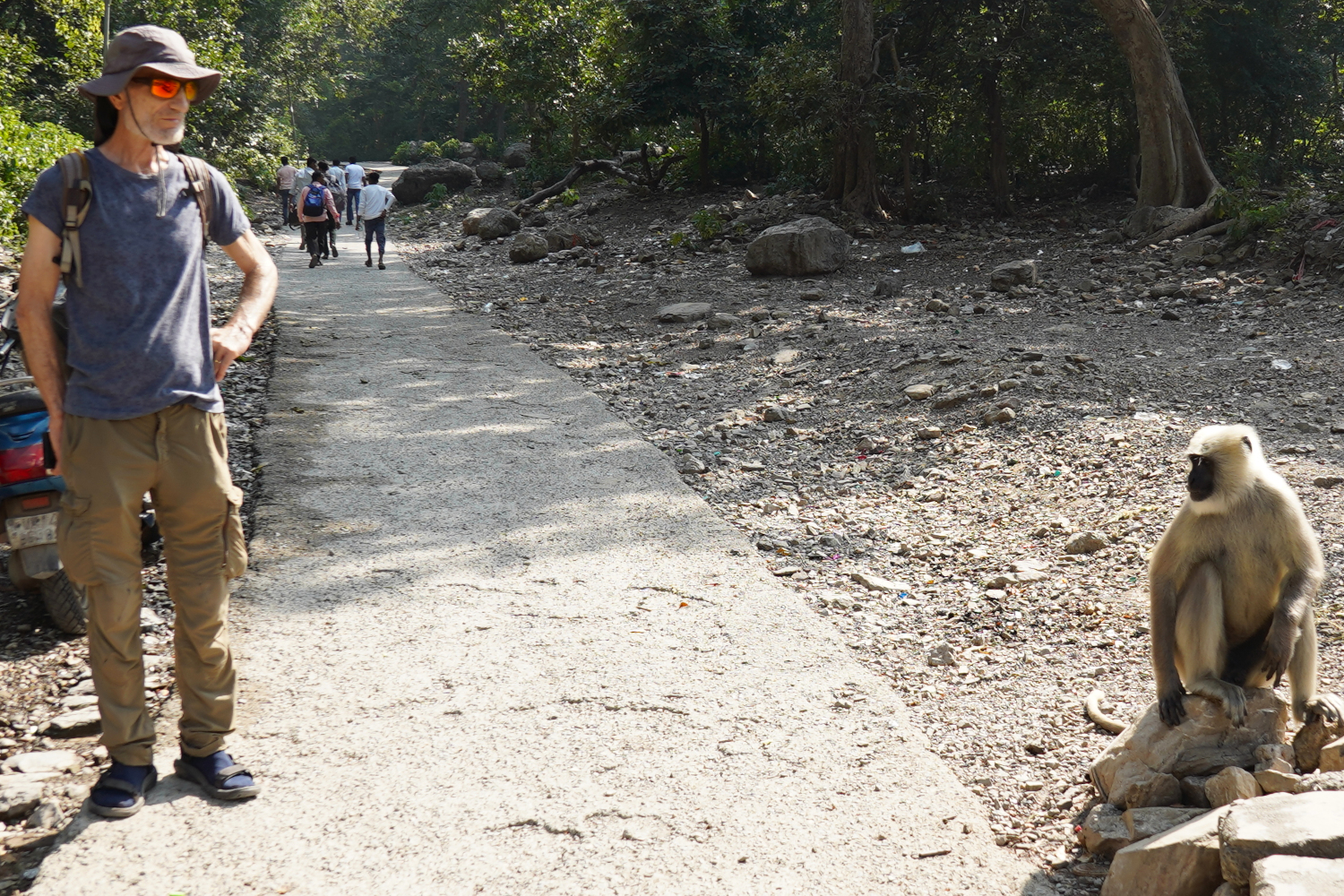
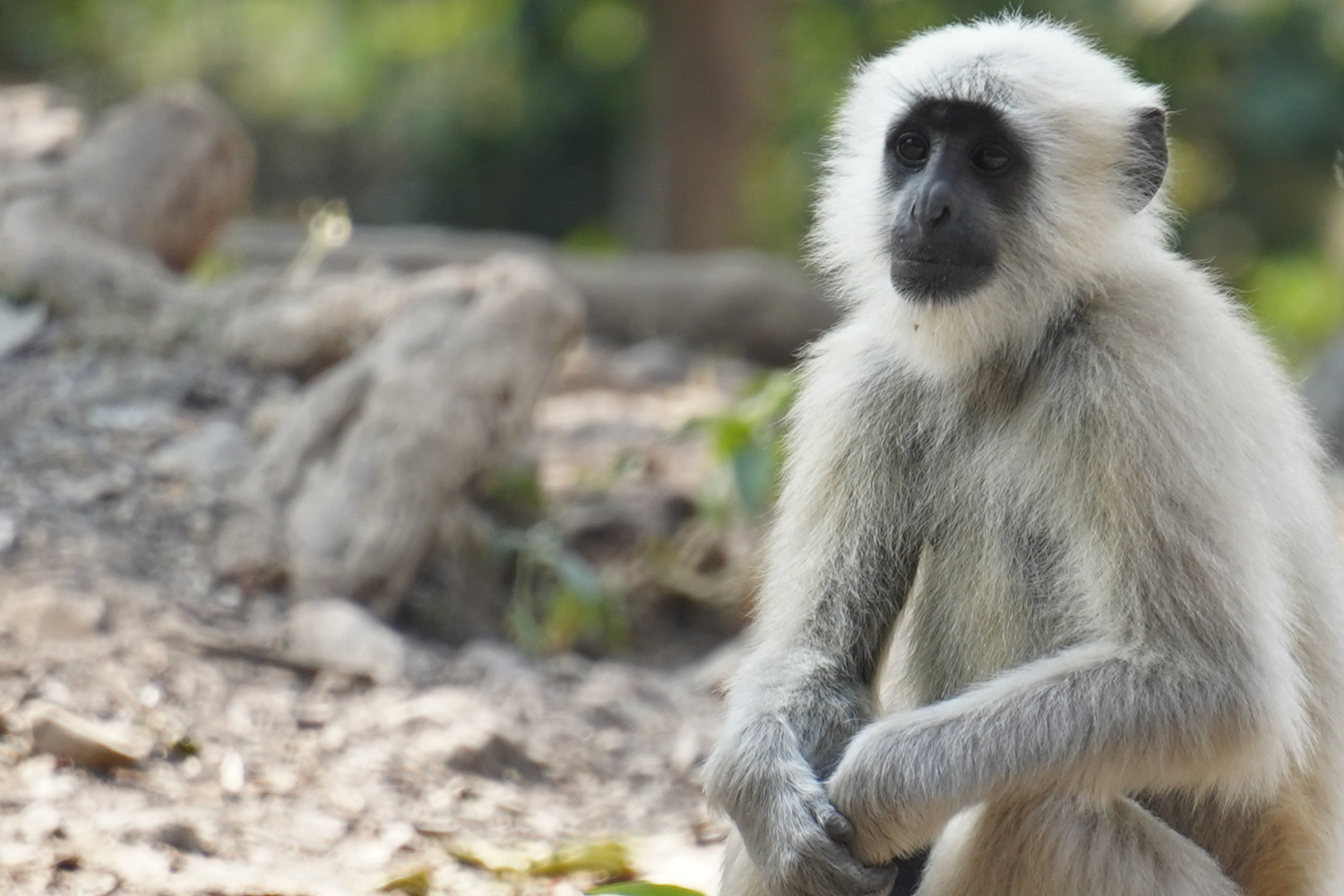
But we do spot quite a few monkeys, a very different variety (the Tarai Gray Langur) from what we’ve grown accustomed to seeing. They’re slimmer and have longer legs, with a grayish fur and lighter-shaded cowl around their faces, rather resembling masks.

The waterfalls we’ve been promised turn out to be a bust, but as compensation we do get a pretty decent panoramic view of Rishikesh and the Ganga, even through the thick haze.

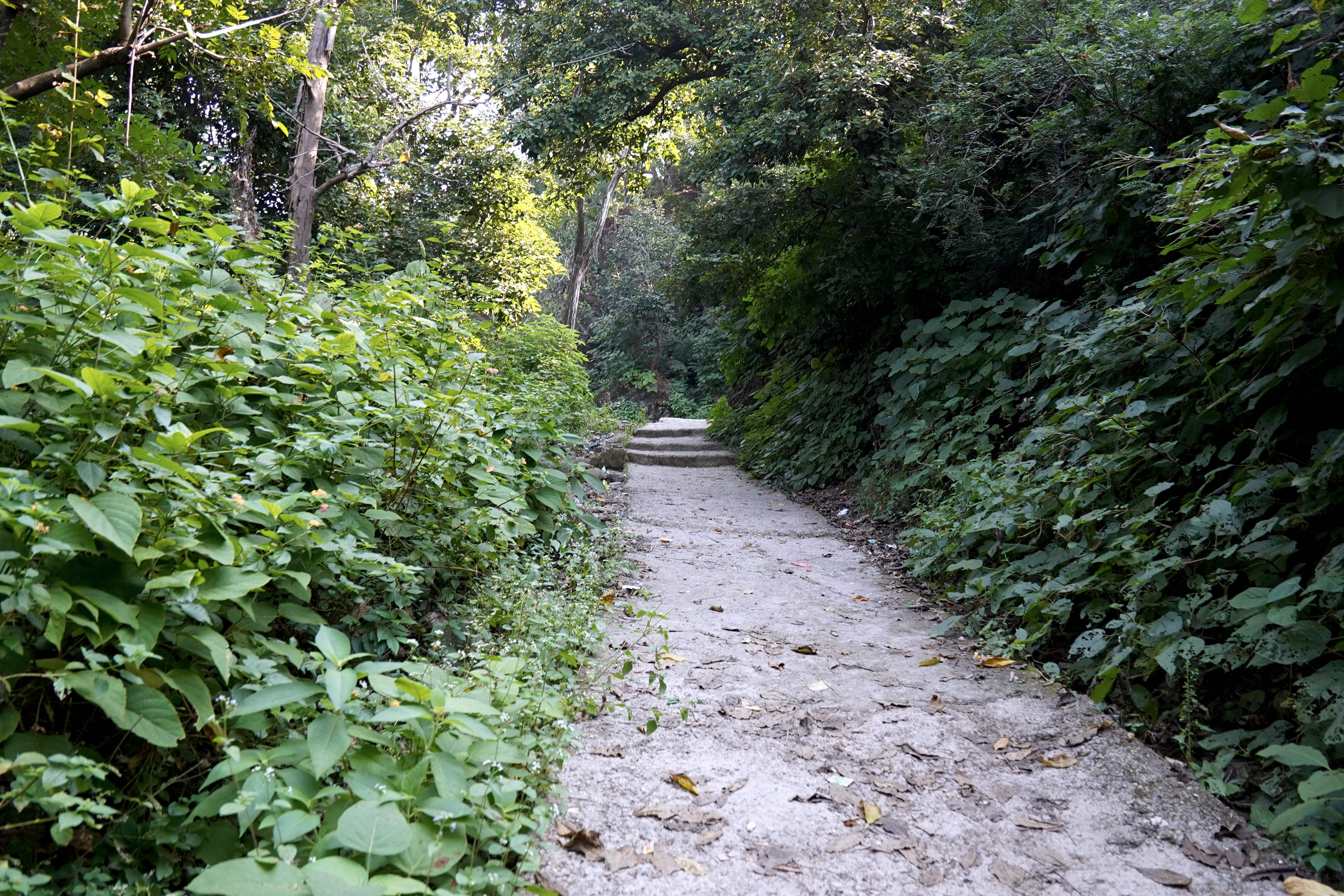
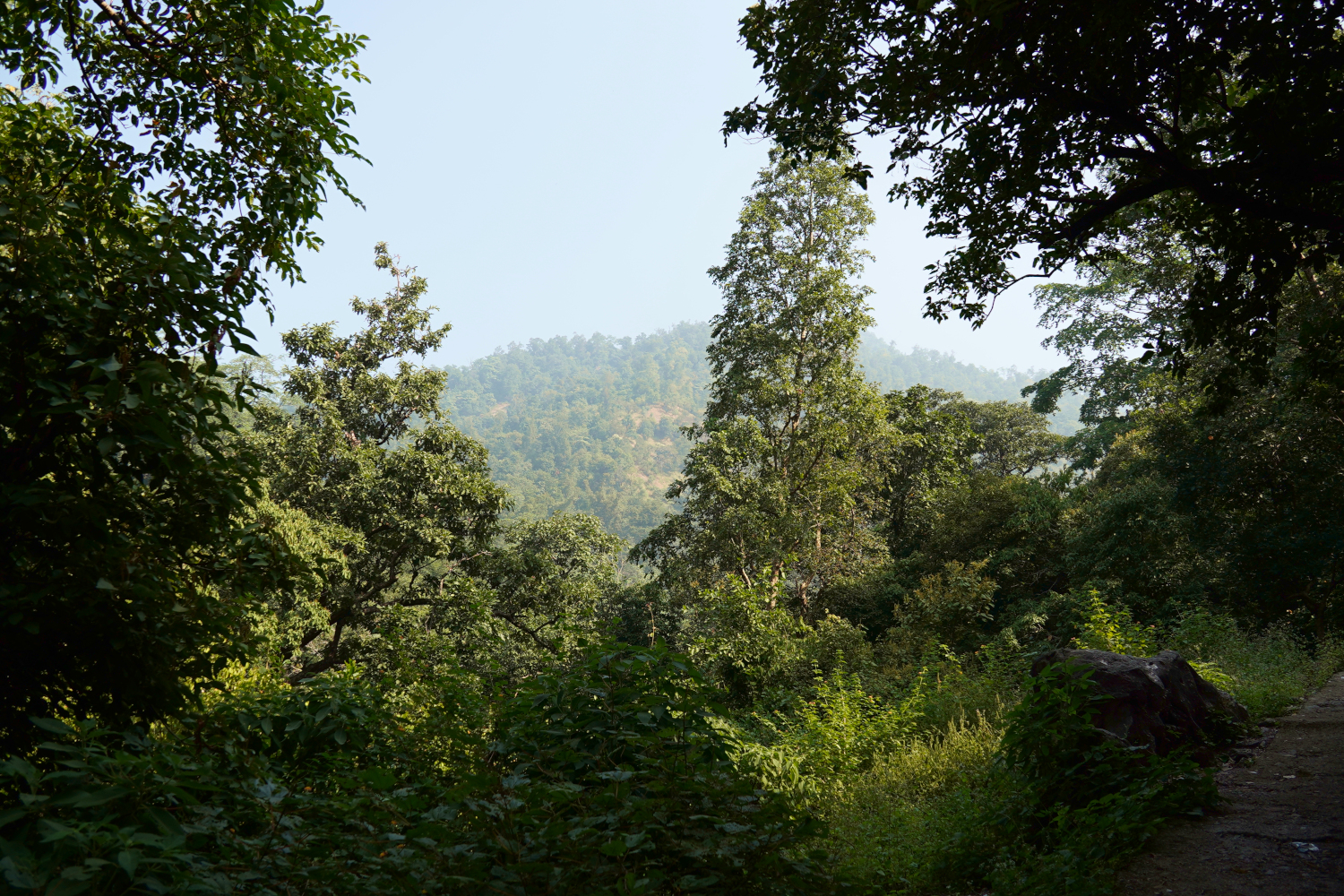

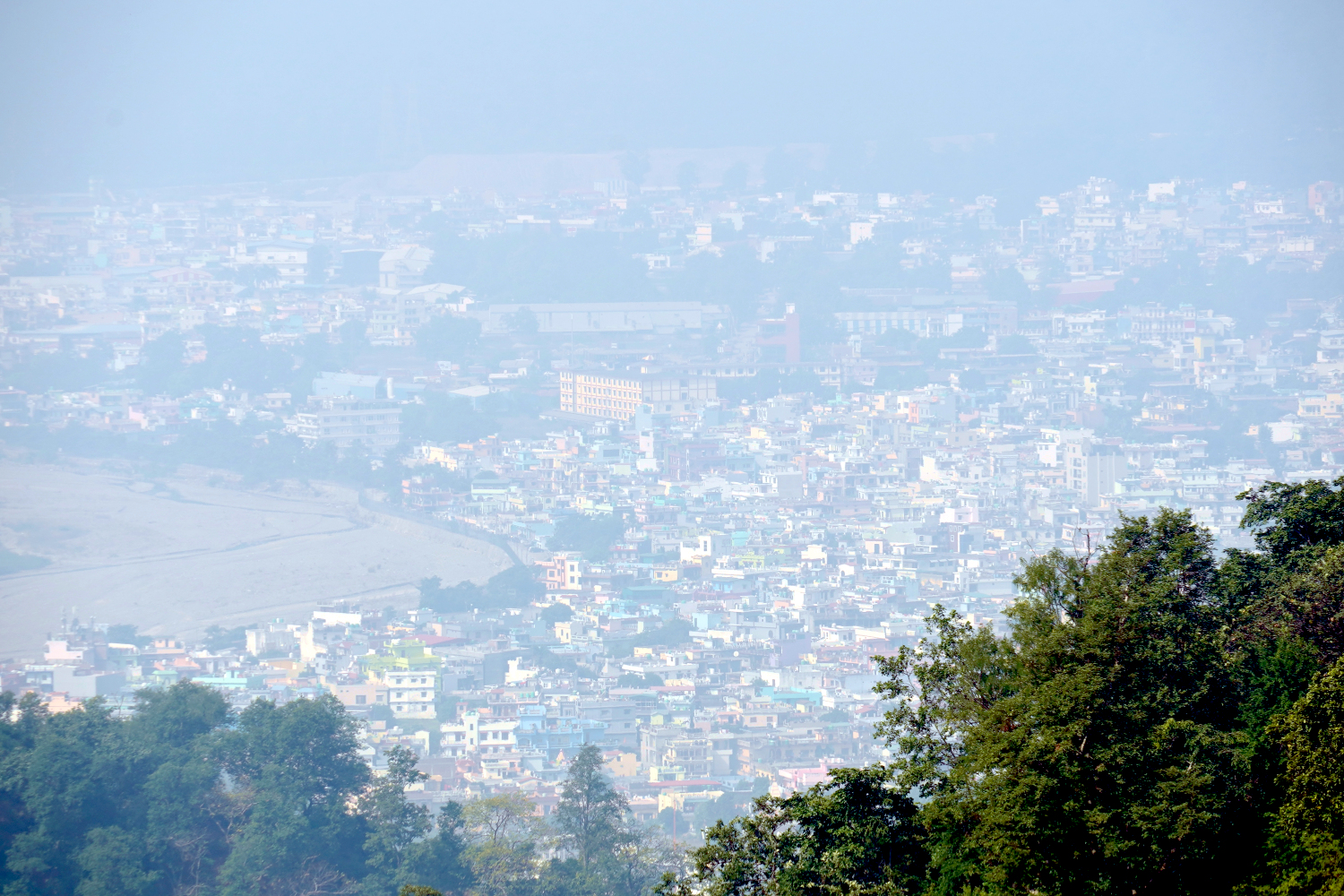
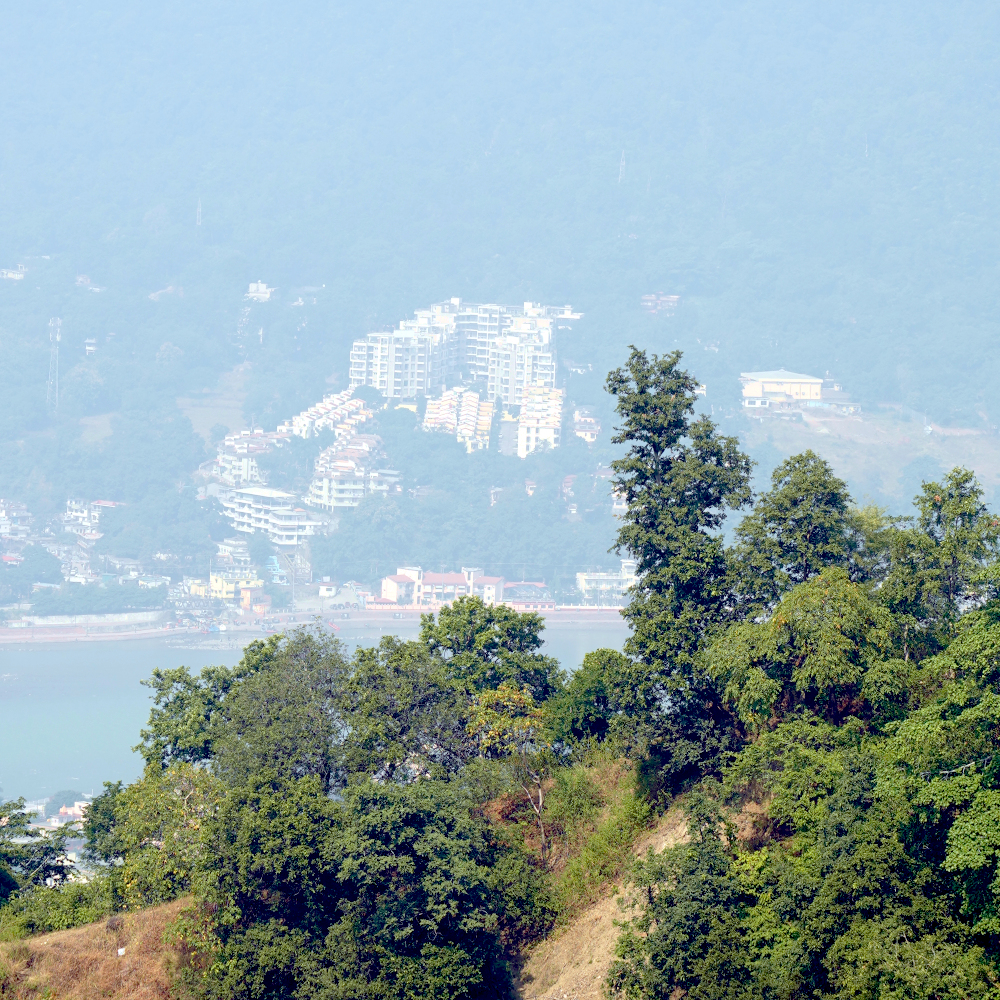
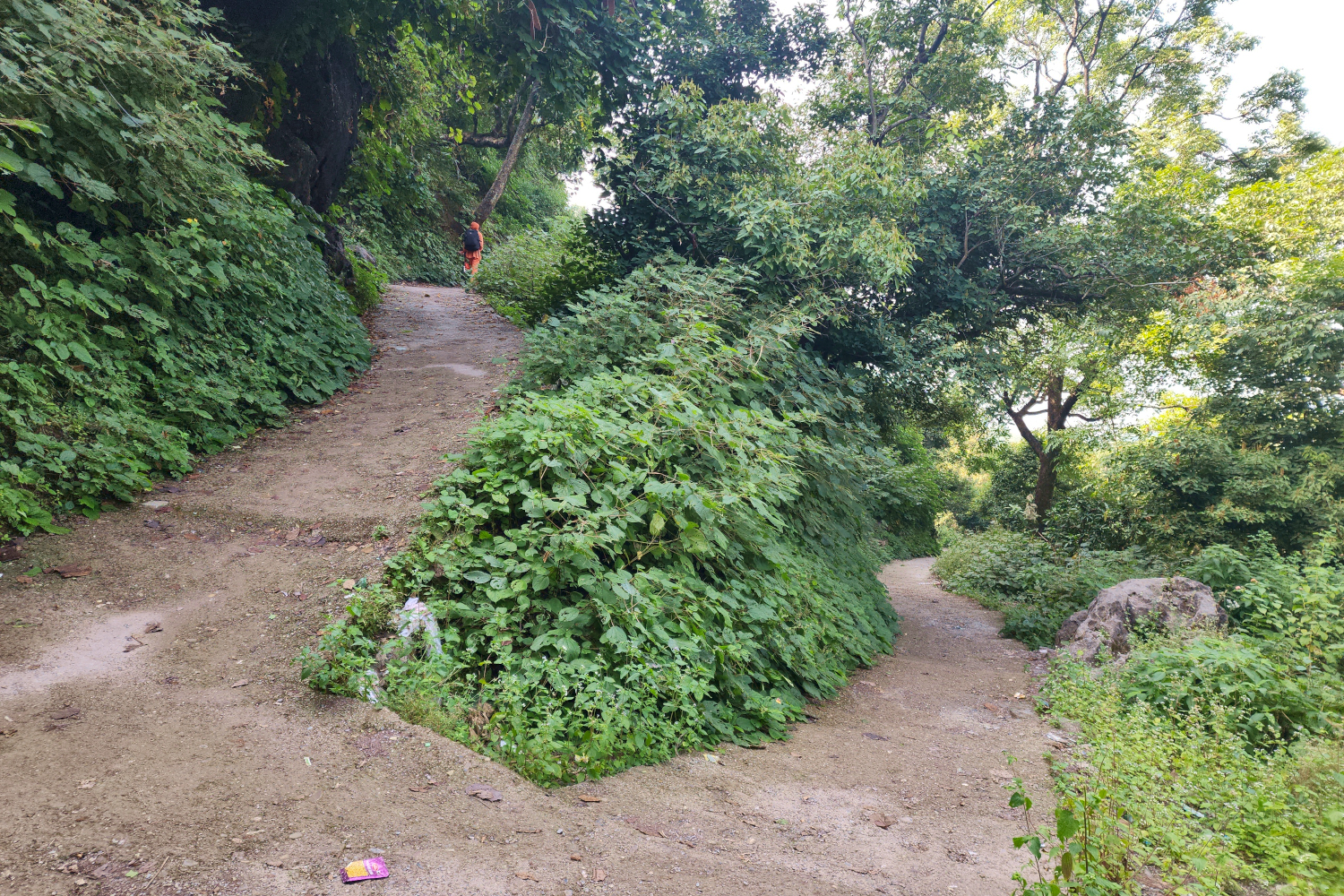
Path up & View of Topovan, “Yoga Capital of the World” from the top
On the way up, we pass women carrying bundles of sticks on their heads, And a number of other people are making the trek up, some seemingly motivated by religious/ spiritual purposes. One man is singing loudly, perhaps a hymn of some sort.
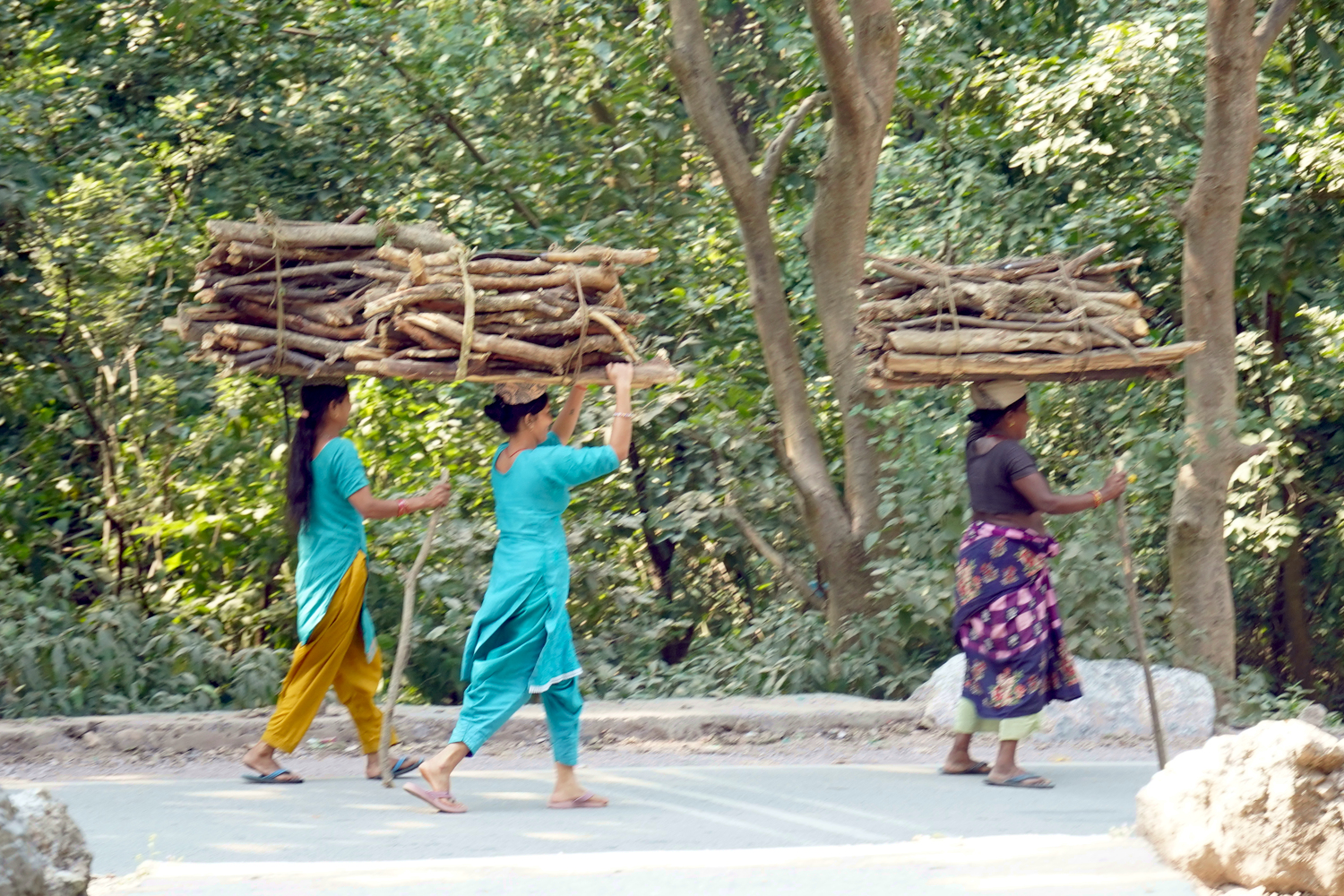
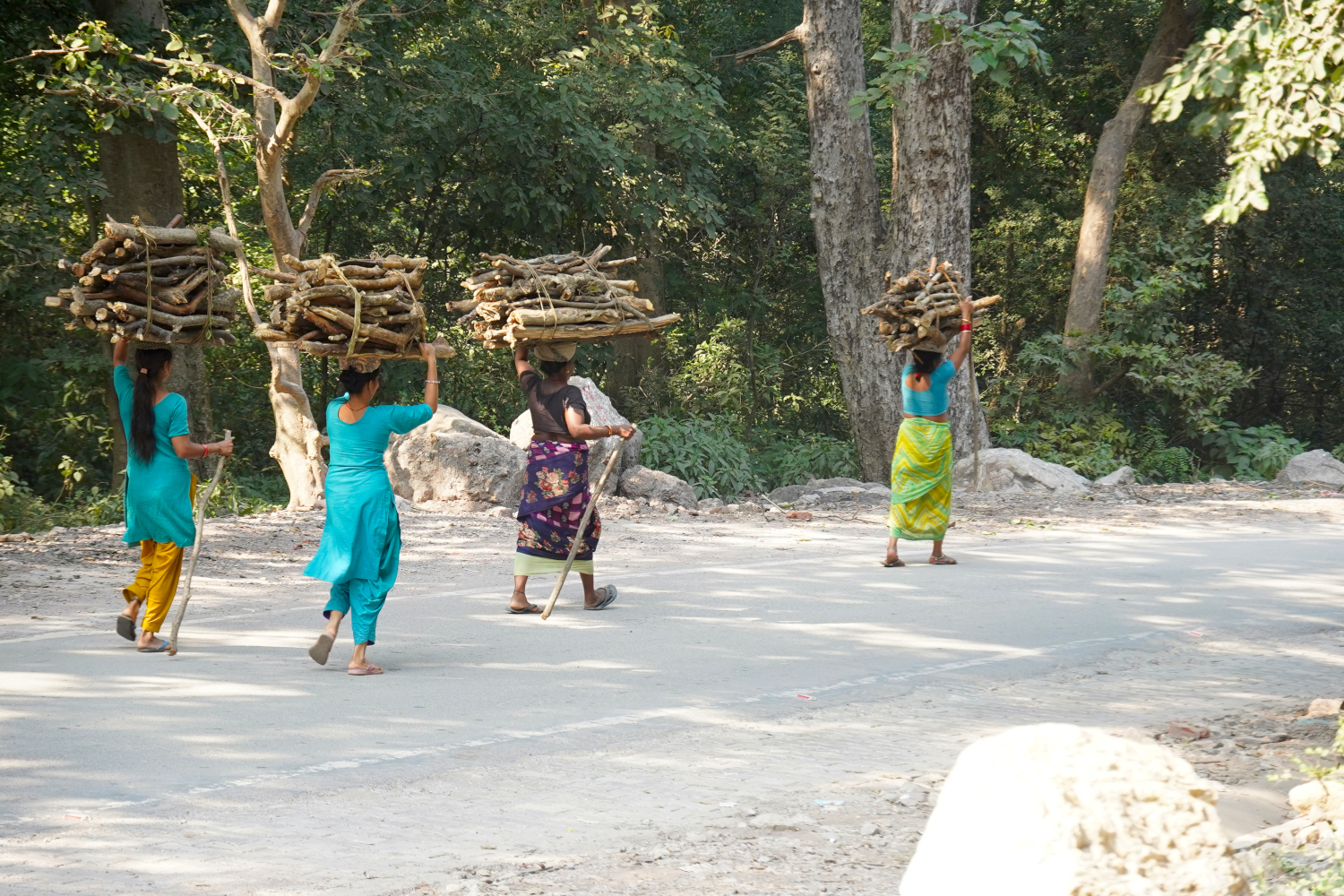
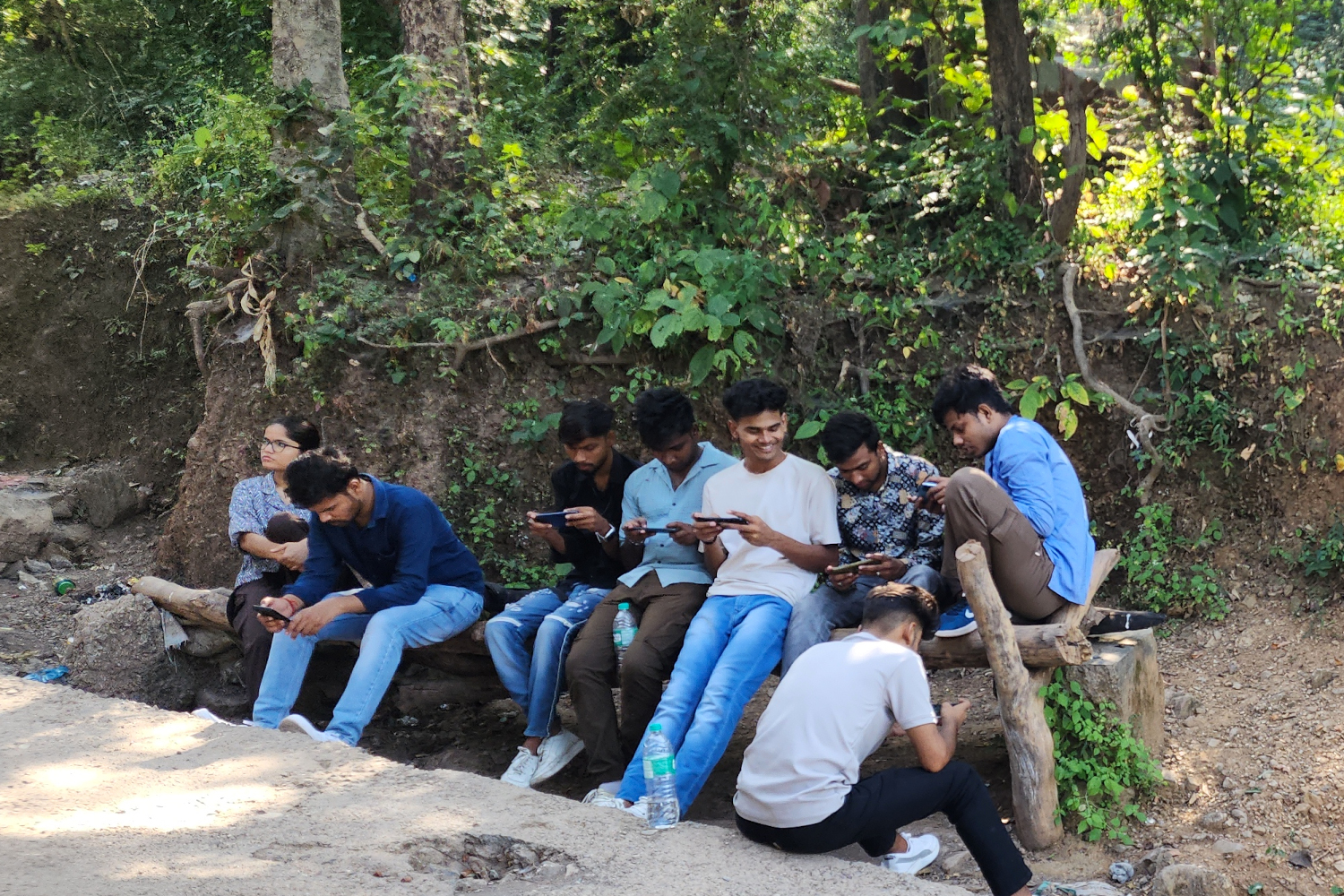
Near the summit, however, there is no temple or ashram, or place to mediate (there may be at the tippy-top, we decided to turn back before the summit, as this was an impromptu hike). All we saw was a concession stand. And a group of young men reading their cell phones, which seems to be the most common sort of devotion these days.
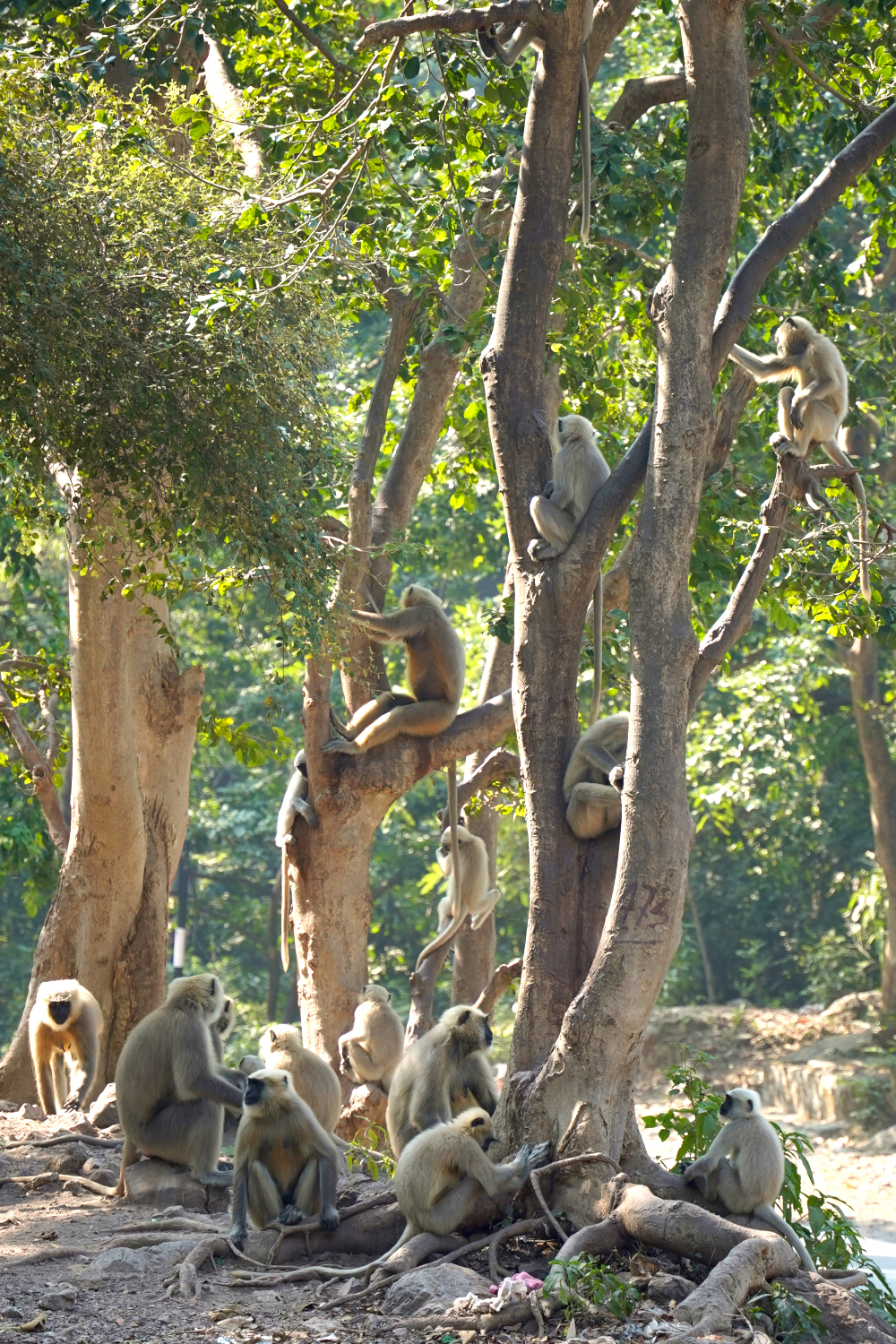
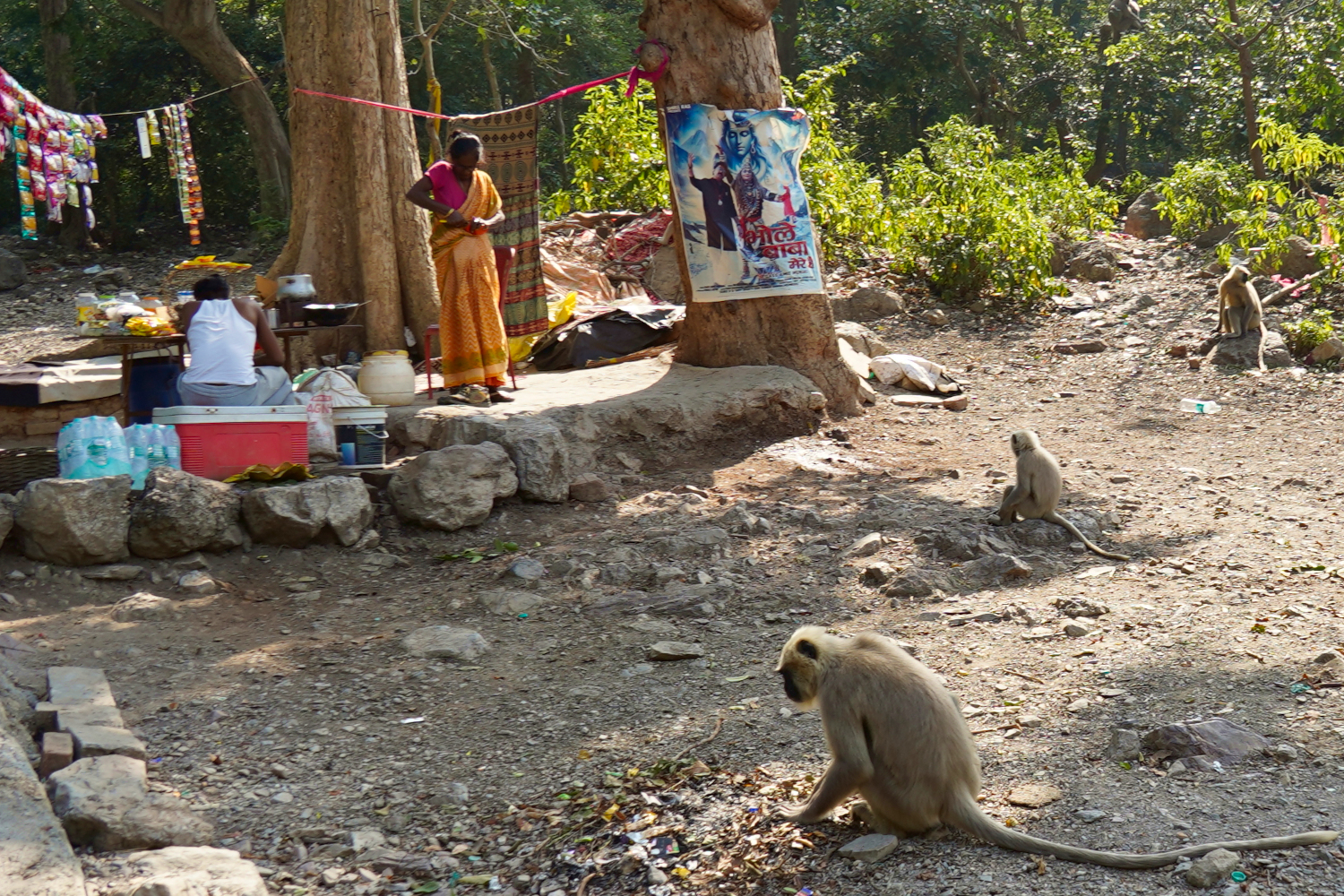
On the way back down we spy more Gray Langurs swarming around a makeshift mom-n-pop store along the path. Of course we pause to admire them.
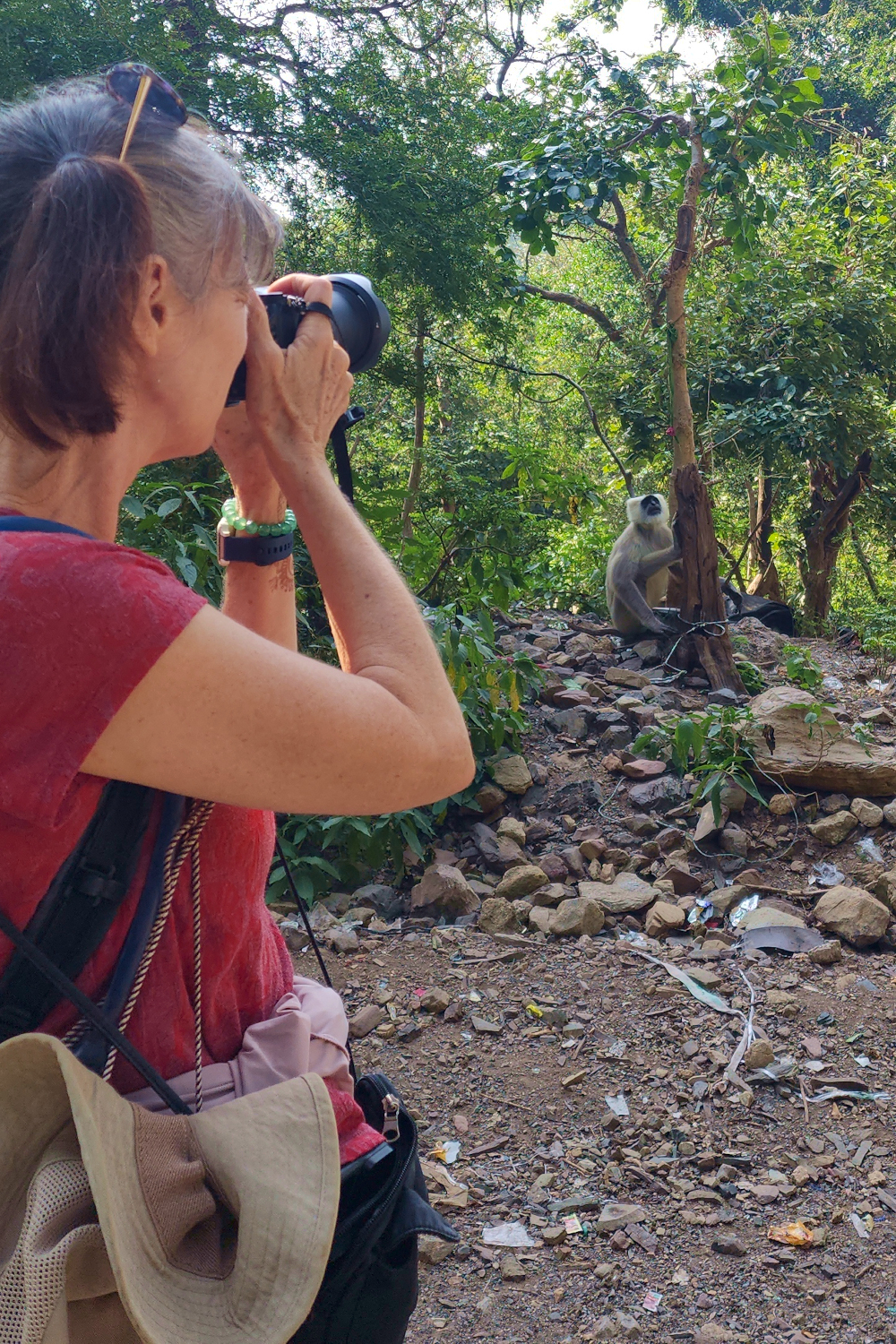

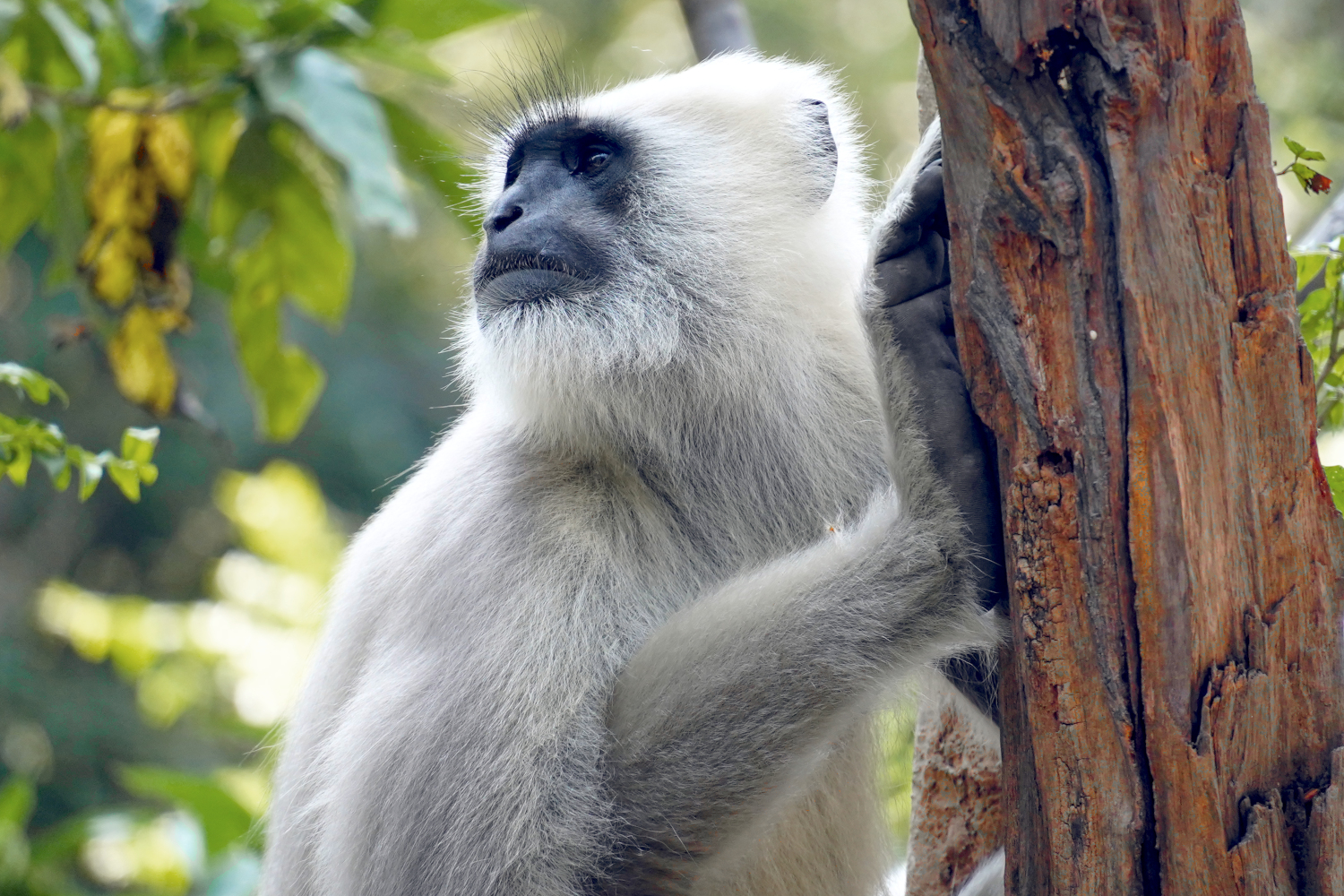
National Geographic Moment with a tribe of Tarai Gray Langurs
When we get back down the mountain, we are quite ready for lunch. So we saunter back along the riverfront to the crowded area with all the stalls and shops and restaurants until we see a restaurant called Jai Neelkamth. that we decide to try. It has an enticing menu, and even a view of the river.
Dennis orders chana masala (a dish made with garbanzos) and Kimberly orders matar mushrooms (naturally, we split these between us), plus a salad (an Indian “salad” is made of raw vegetables usually cucumbers, tomatoes and onions, no lettuce in sight) and missi roti (a slightly spicy flatbread) and add a cup of chai to perk up our sagging gait. It all tastes outstanding, and comes at an extremely reasonable tab. We decide we just might have to return here in the near future and sample some of the other entrees. (Spoiler alert: we do.)
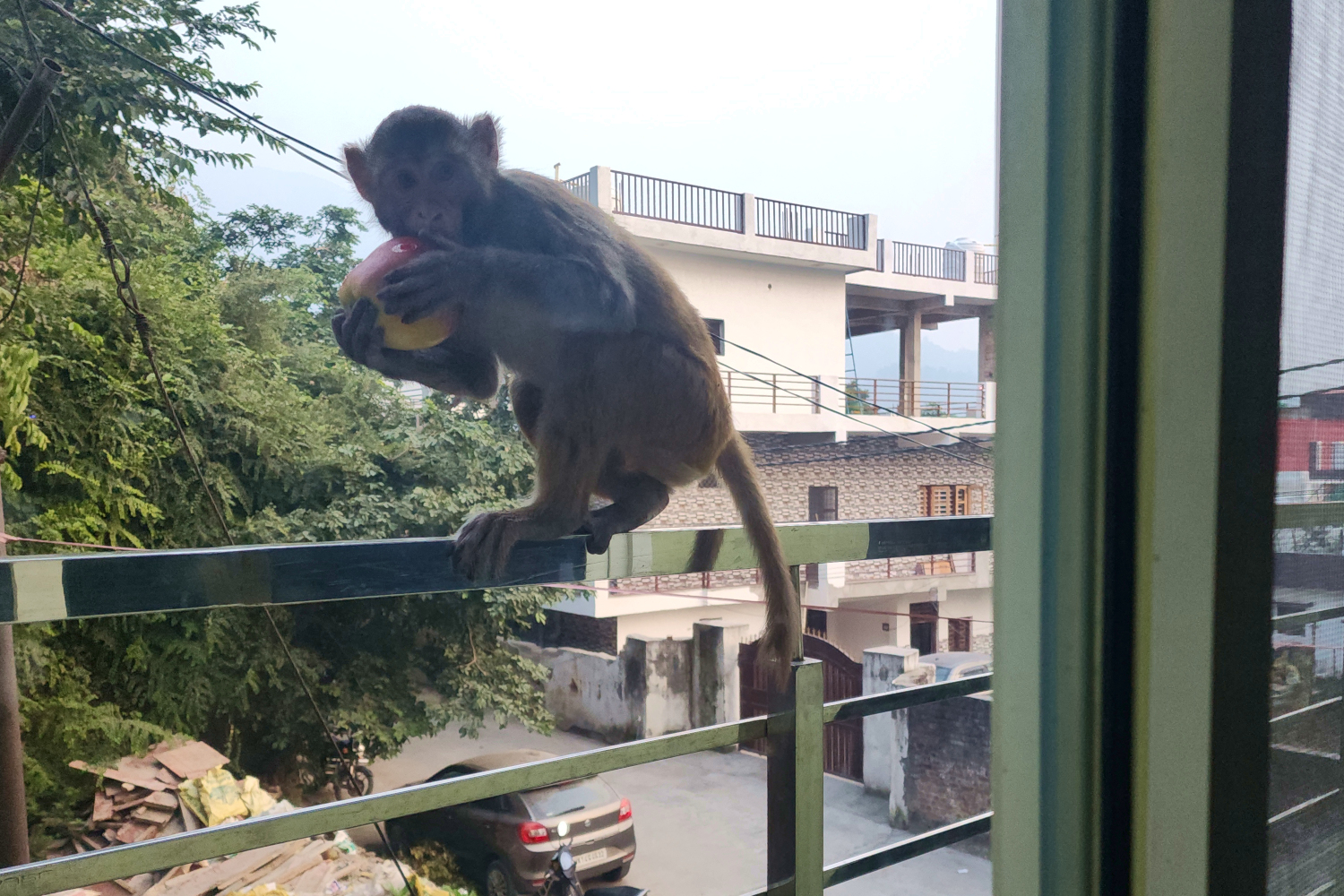
Back at our homestay, we are quite tired from the day’s expedition. But not too tired to be entertained by the monkeys playing on our balcony. When bedtime comes, we’re quite ready to drift off.
Fortunately, we don’t need to sleep in terribly late, because we might have been awakened in the morning by the musical garbage truck, playing a loud, peppy tune as residents hustle out to make their last minute contributions to the load.

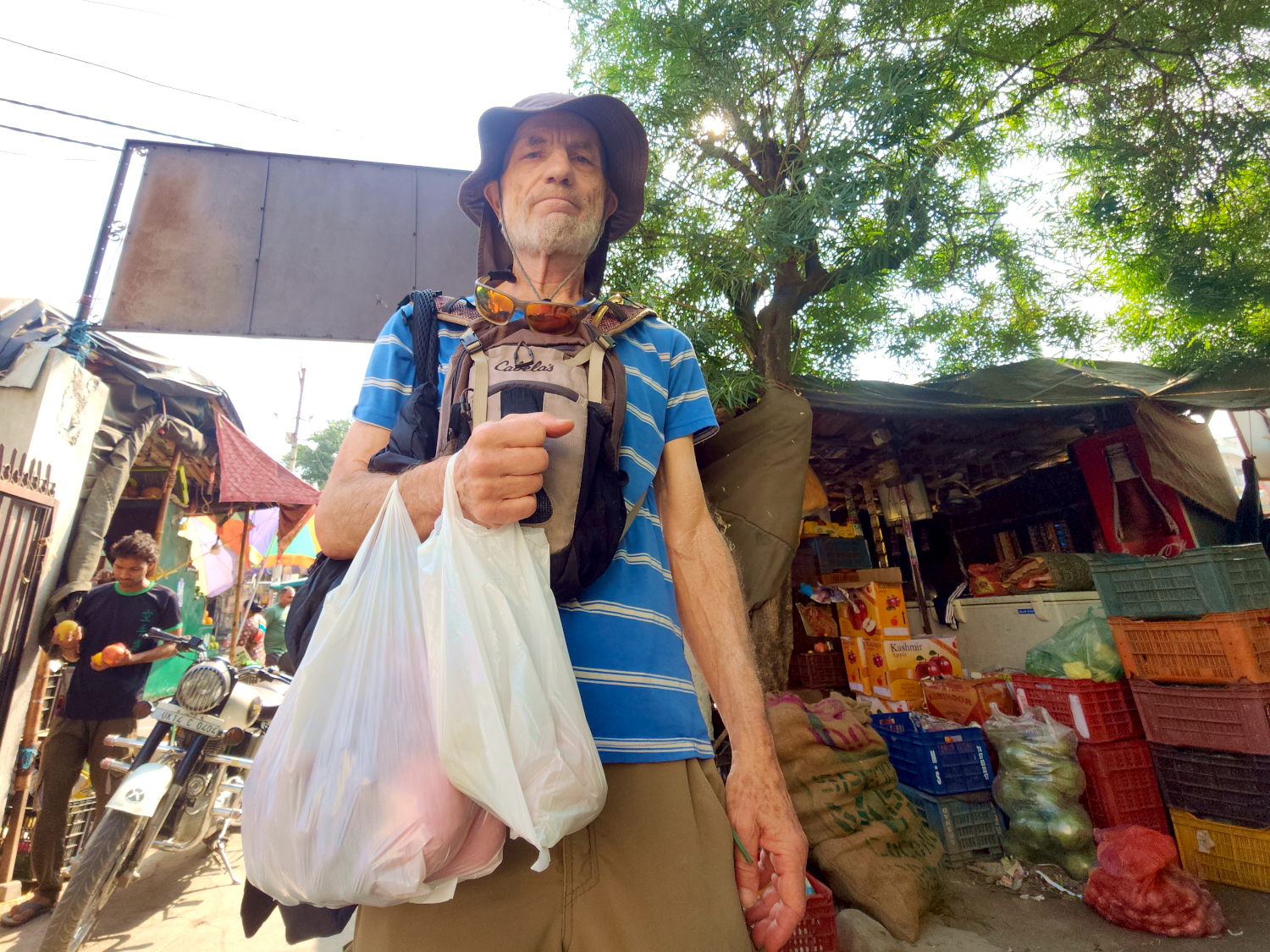
Soon, it’s time to head back into the main part of Rishikesh where, after doing some prospecting for coats as the weather is beginning to get quite chilly (unsuccessful) and produce (successful), we’re prepared to head back to Raiwala. Unable to find a shared ride tuk-tuk, we grab one that we have all to ourselves. So the driver wants 200 rupees instead of 60. But hey, quite often they quote 500 for an exclusive booking, so we consider ourselves lucky. And it’s worth it, the last meager expense in our fruitful and memorable little getaway to Rishikesh.
Events occurred 11/1/2024


 world travel with a theatrical flair
Leave a comment