

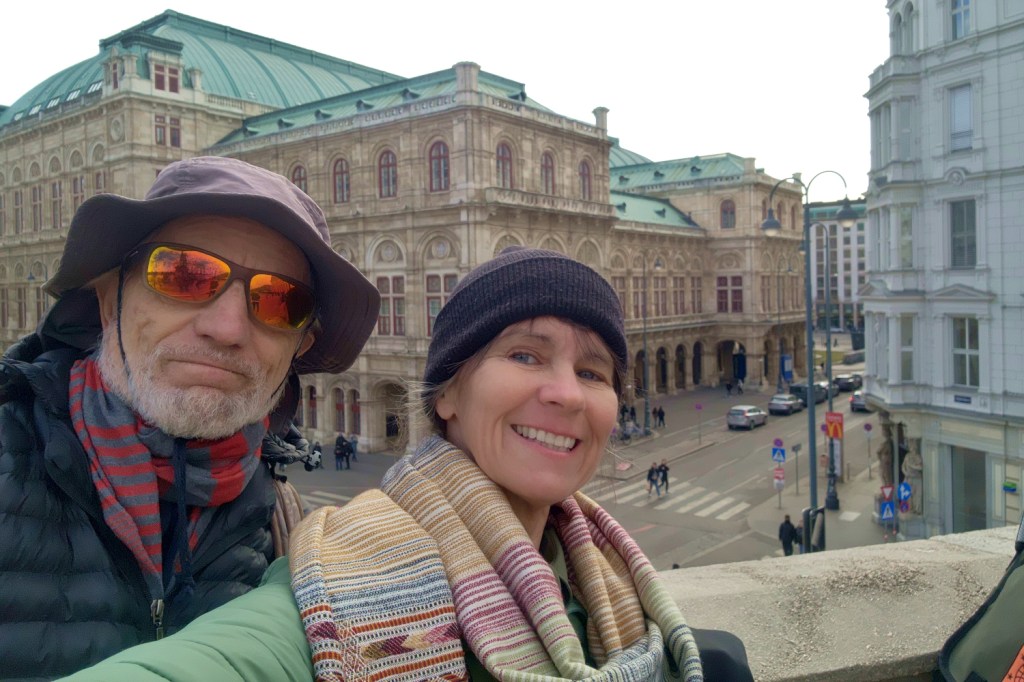
Finishing up our first-ever tour of Athens, we’re off to our next layover, a return to the city of Chocolate Cake — oops, we mean Vienna — which we first visited in 2016. And although the city has its charms of several varieties, what stands out for us is that it’s the home of what is surely the galaxy’s greatest chocolate cake, a dessert that is just about in itself worth a detour to Vienna. Even if you’re going from Bolivia to Antarctica.
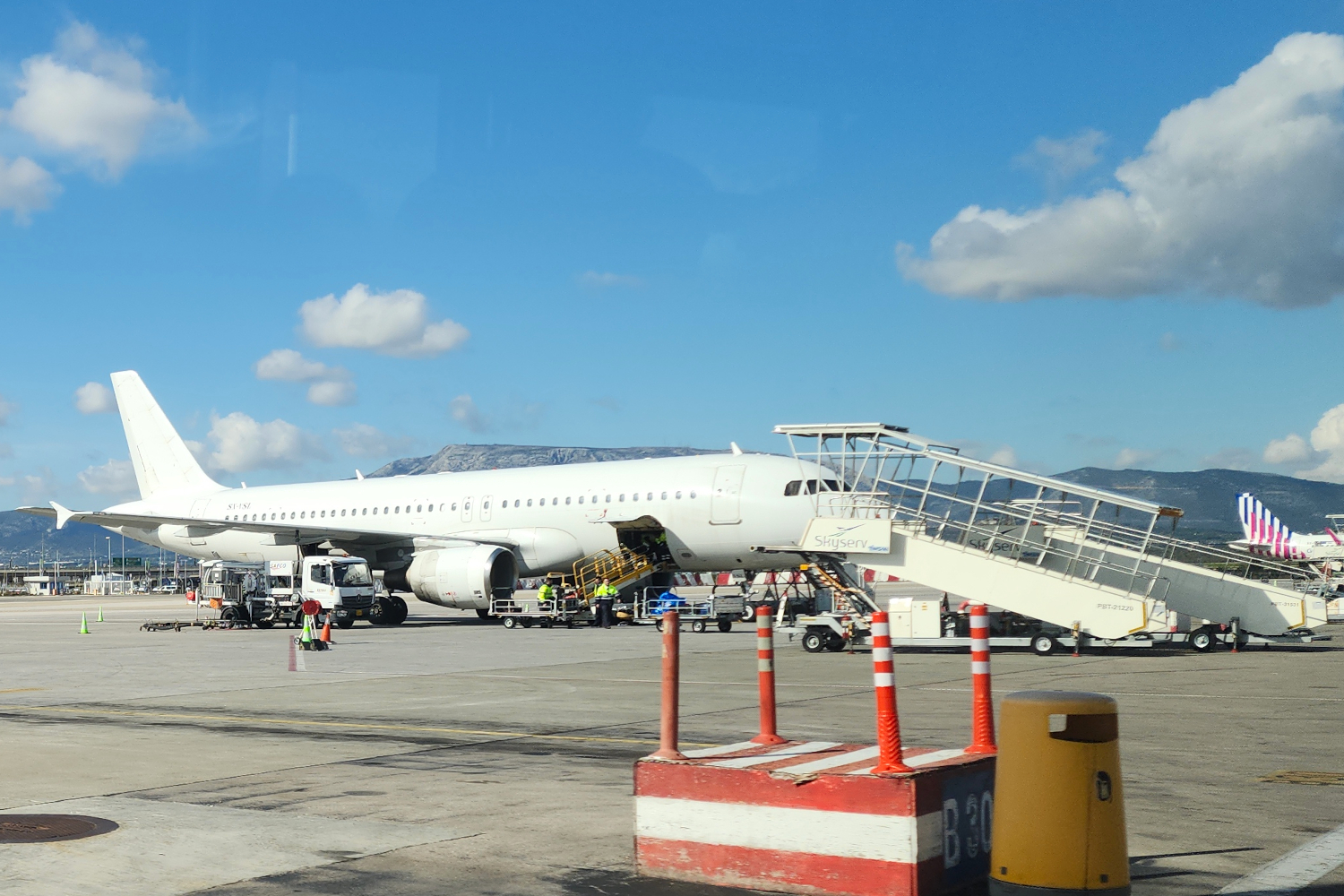
Leaving Athens, the Metro is extremely crowded as usual. The flight to Vienna is smooth enough, though again space is at a premium, since many passengers really push the boundaries as far as baggage limits. The flight attendants are extremely accommodating, which just might be making matters worse.
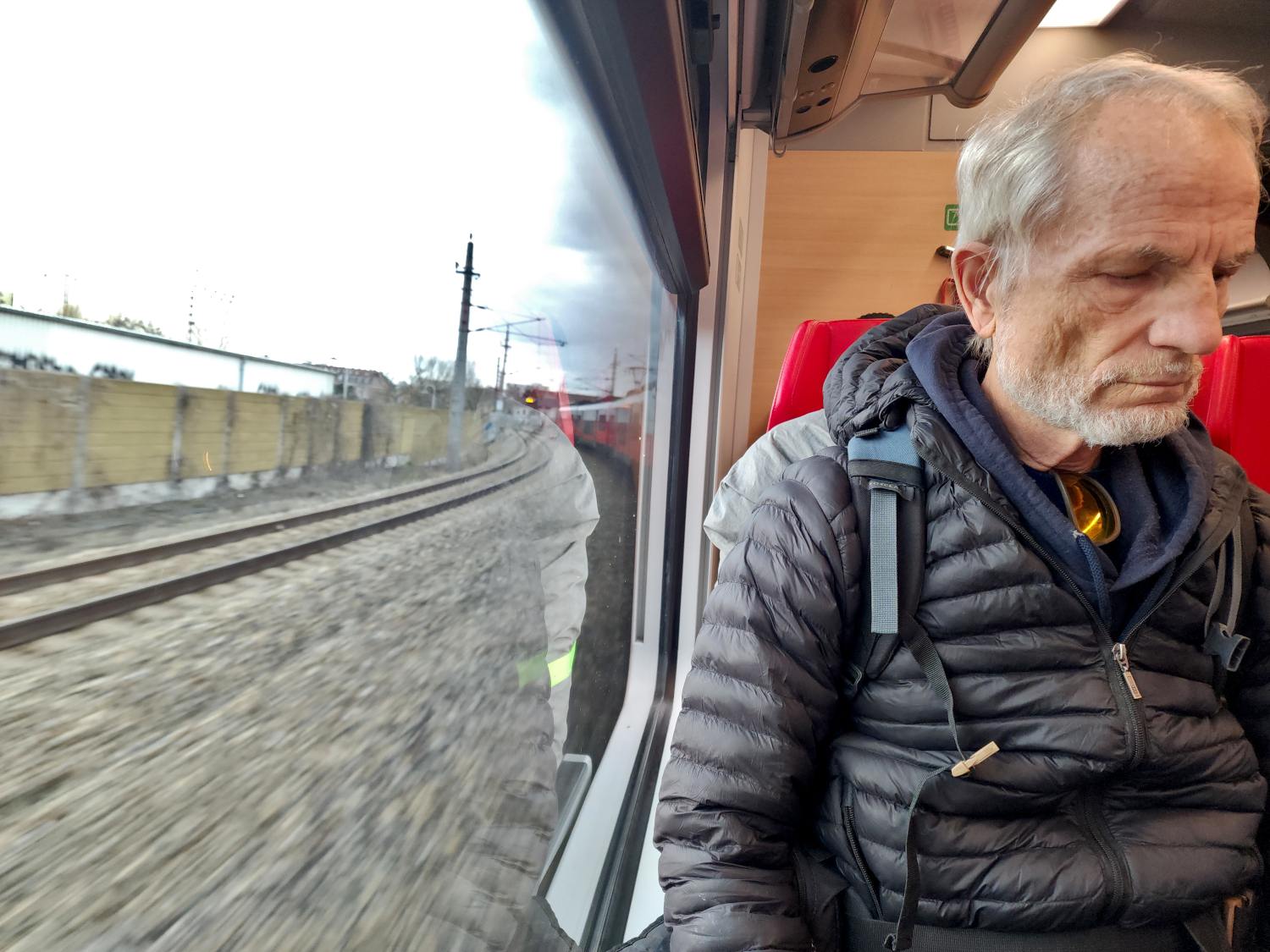
After we land, we don’t have to go through immigration, because we’re traveling between nations in the European Union. We just show our passports to a policewoman, and we’re good. Then we’re on another very crowded Metro, and get off just a couple of blocks from the apartment where we’ll be staying.
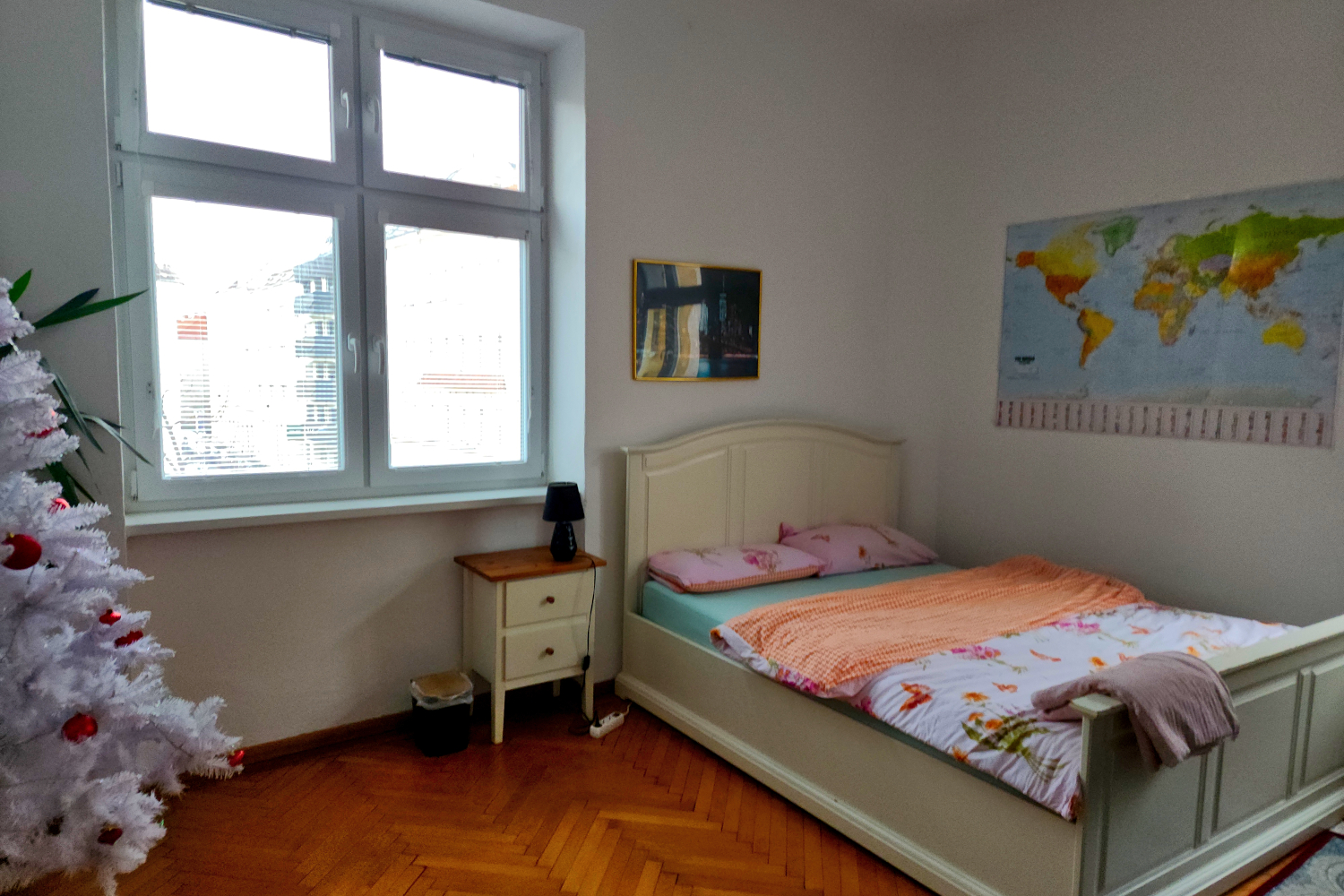
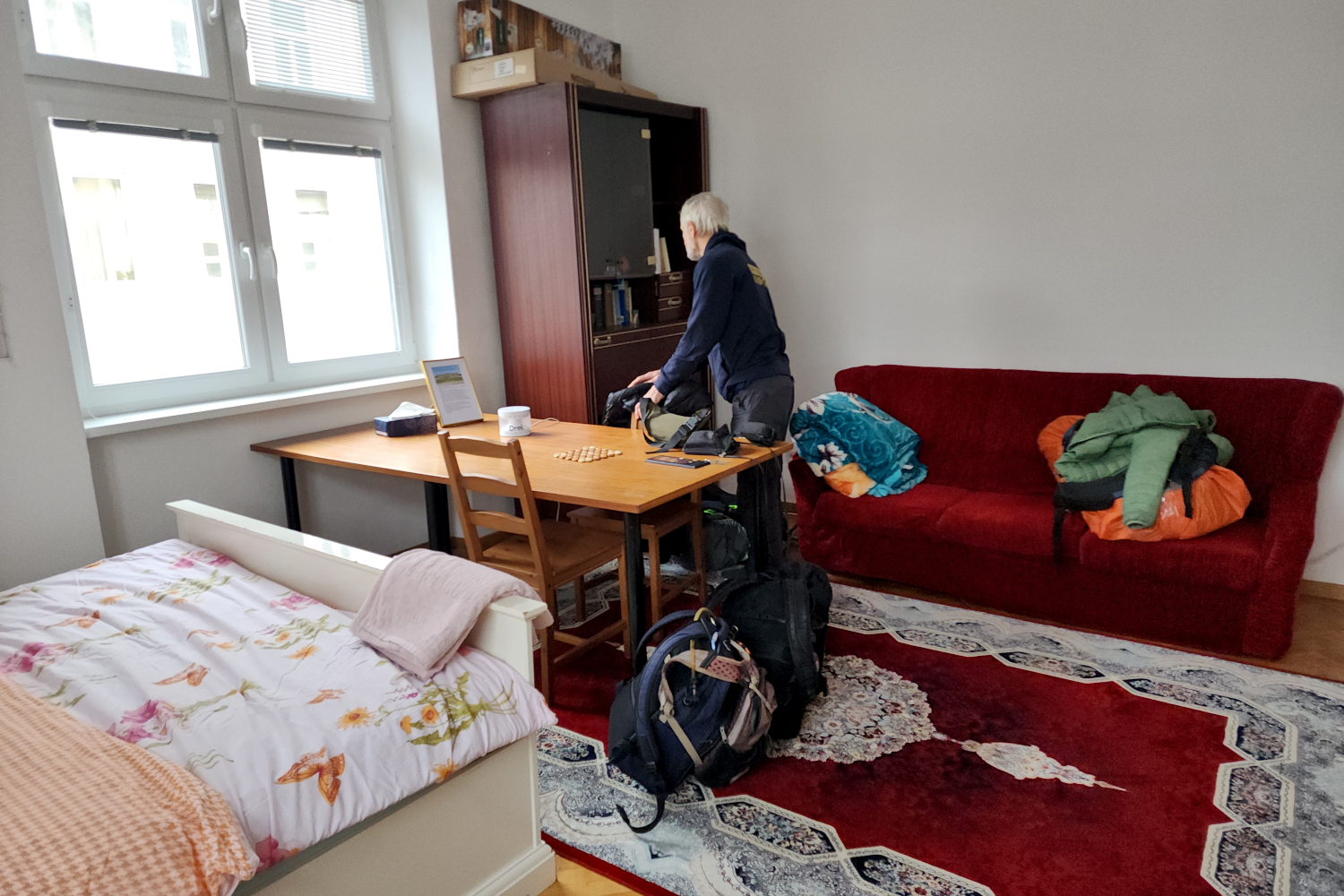
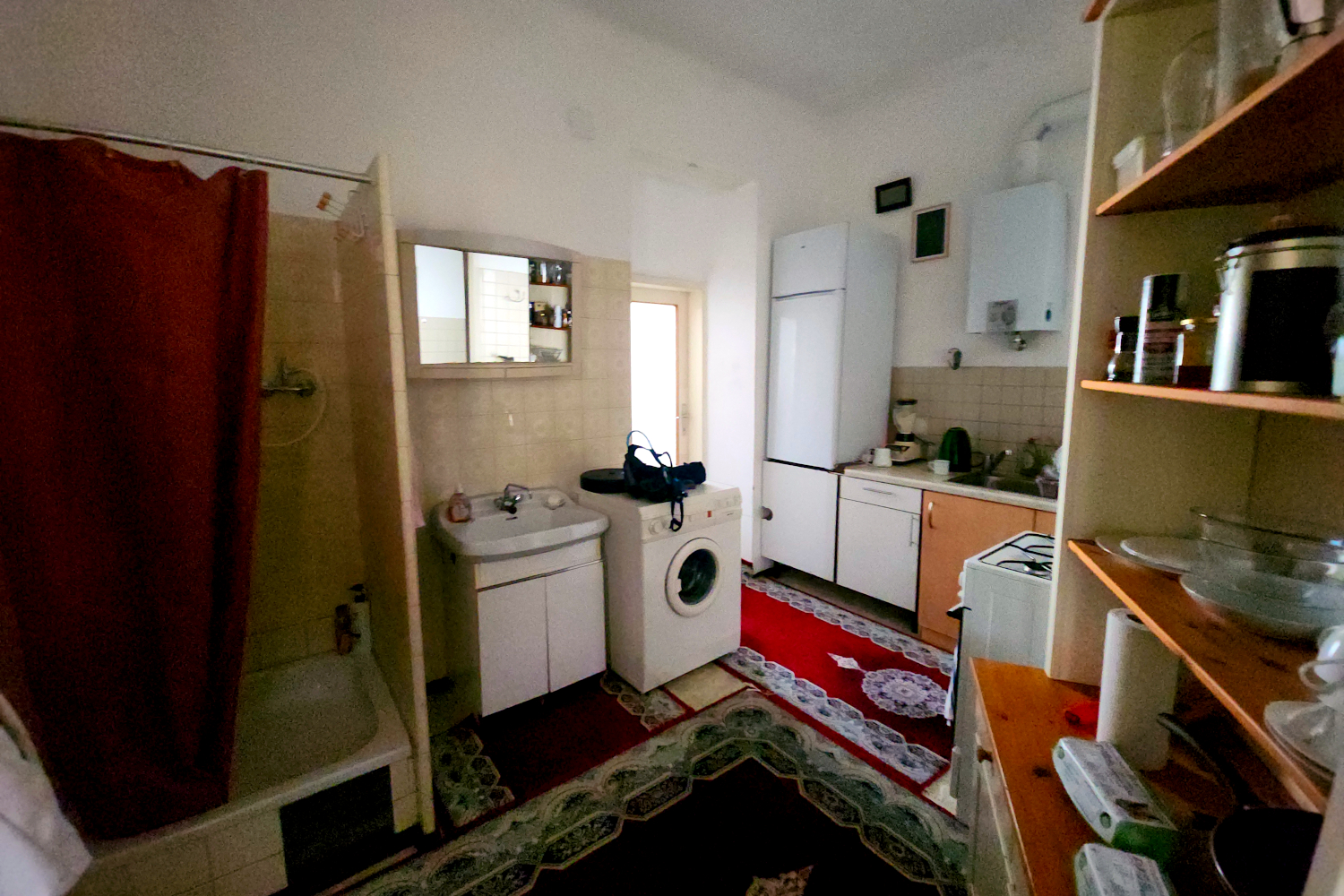
The apartment is on the third floor (which Europeans and Asians call the second floor) of a classic old building with hardwood floors and wooden doors as heavy as railroad ties. We’ll be staying in a large, comfortable room with a Christmas tree still in place (white with red trim) and an electric heater that makes a humming noise, but you get used to it. To get to the kitchen, bathroom or shower, we have to pass through a corner of the host’s bedroom, but he assures us it’s never been a problem, and it isn’t. He’s gone much of the time, and even when he’s there, he’s absorbed in doing his own thing. The oddest thing is that the shower is located in the kitchen — it’s just a little cubicle with a curtain. But again, no problem.
The host’s name is Bagher, and he’s a native of Afghanistan. who came to Austria as a refugee. He learned to speak German at age 16, and then learned English after that; which is amazing, because he’s quite proficient in both, and he isn’t very old. He, like us, is involved in theatre — he’s currently working on a one-man show about his experiences, but unfortunately we won’t be around to see it. He’s also an advanced martial artist, and he showed us a video demo of him doing some highly impressive and very realistic street fighting with a friend.
He alerts us that the following day, Sunday, most of the stores — including all the supermarkets — will be closed. (apparently because of the strong influence of church tradition on social norms) so we go to a local supermarket called Billa Plus to stock up for a couple of days. It doesn’t have a great selection of produce, but it does have quite a few other items we haven’t seen lately.
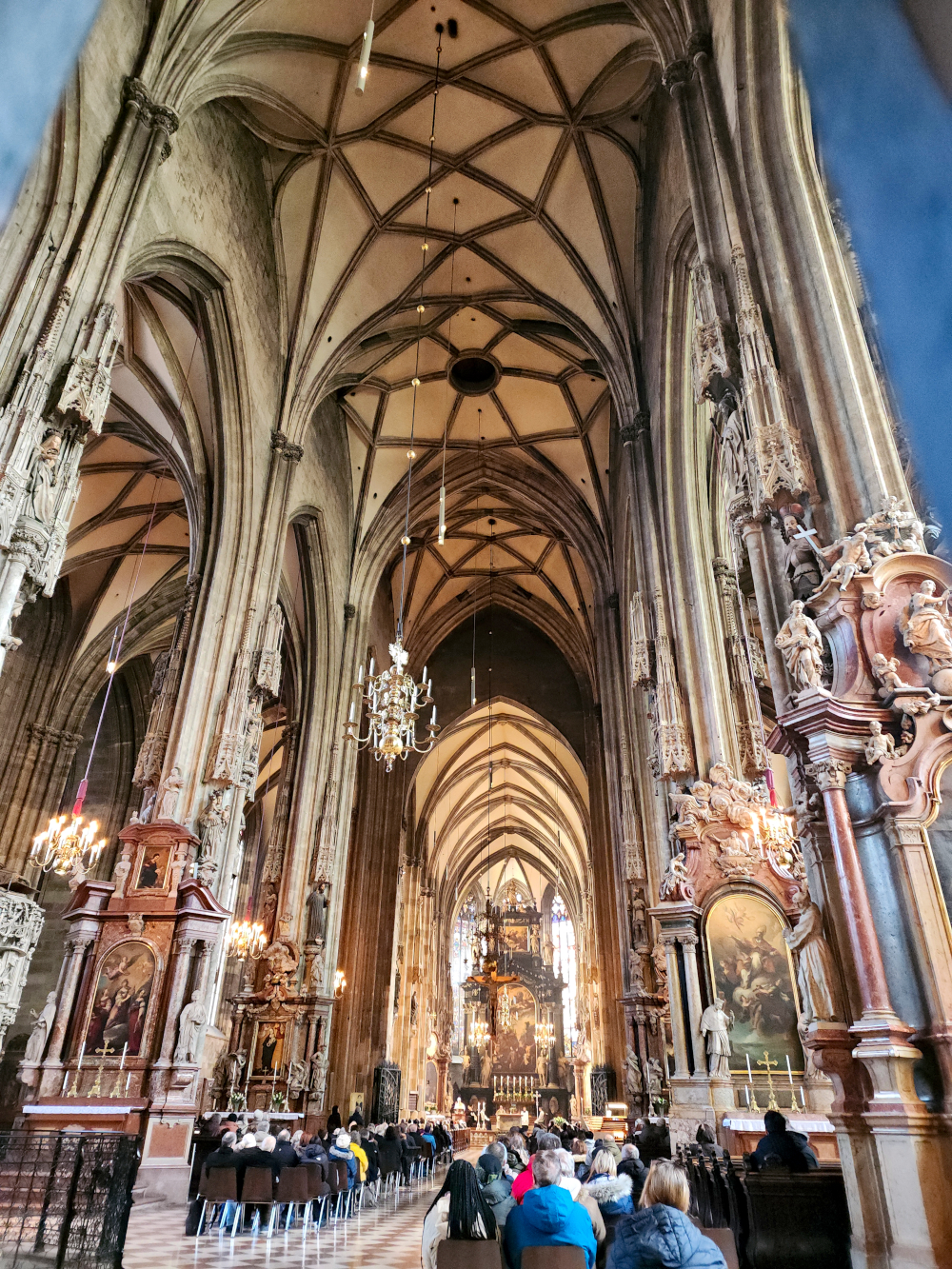
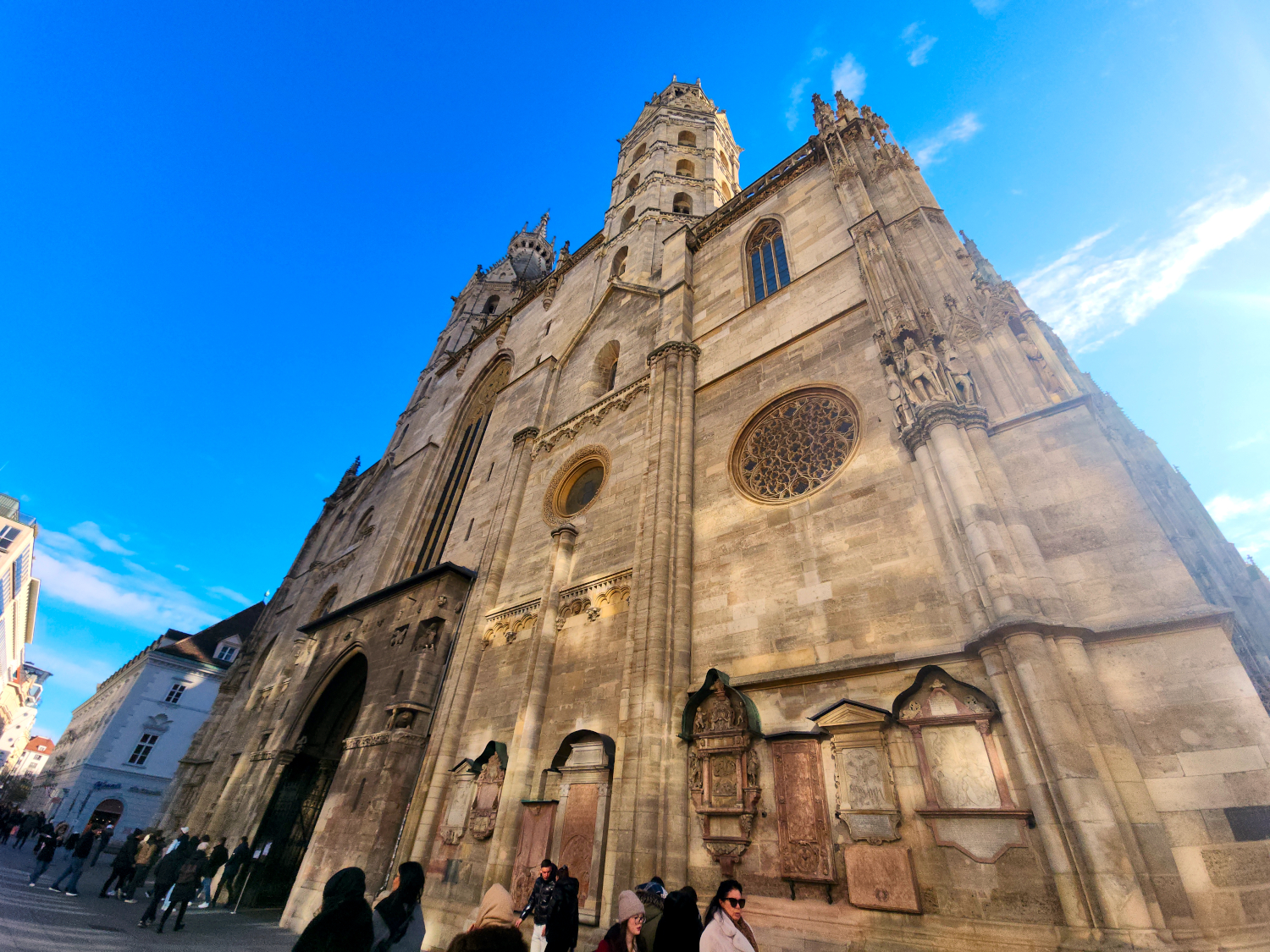
Fortunately, the restaurants and cafes are open on Sunday. And that includes Sacher Cafe, home of the legendary Sachertorte, the chocolate cake at the end of our rainbow. We take a Metro to Stephansplatz. the central square of Vienna. The centerpiece, of course, is St. Stephen’s Cathedral, an imposing Medieval/ Renaissance church constructed in stages between the years 1137 and 1578. A skyscraper before skyscrapers were a thing, the steeple towers over the urban skyline at a height of 448 feet, making it one of the very tallest churches in the world. We peek inside, largely just to warm up, and there is a mass in progress. We’ll come back and examine the interior more closely later.
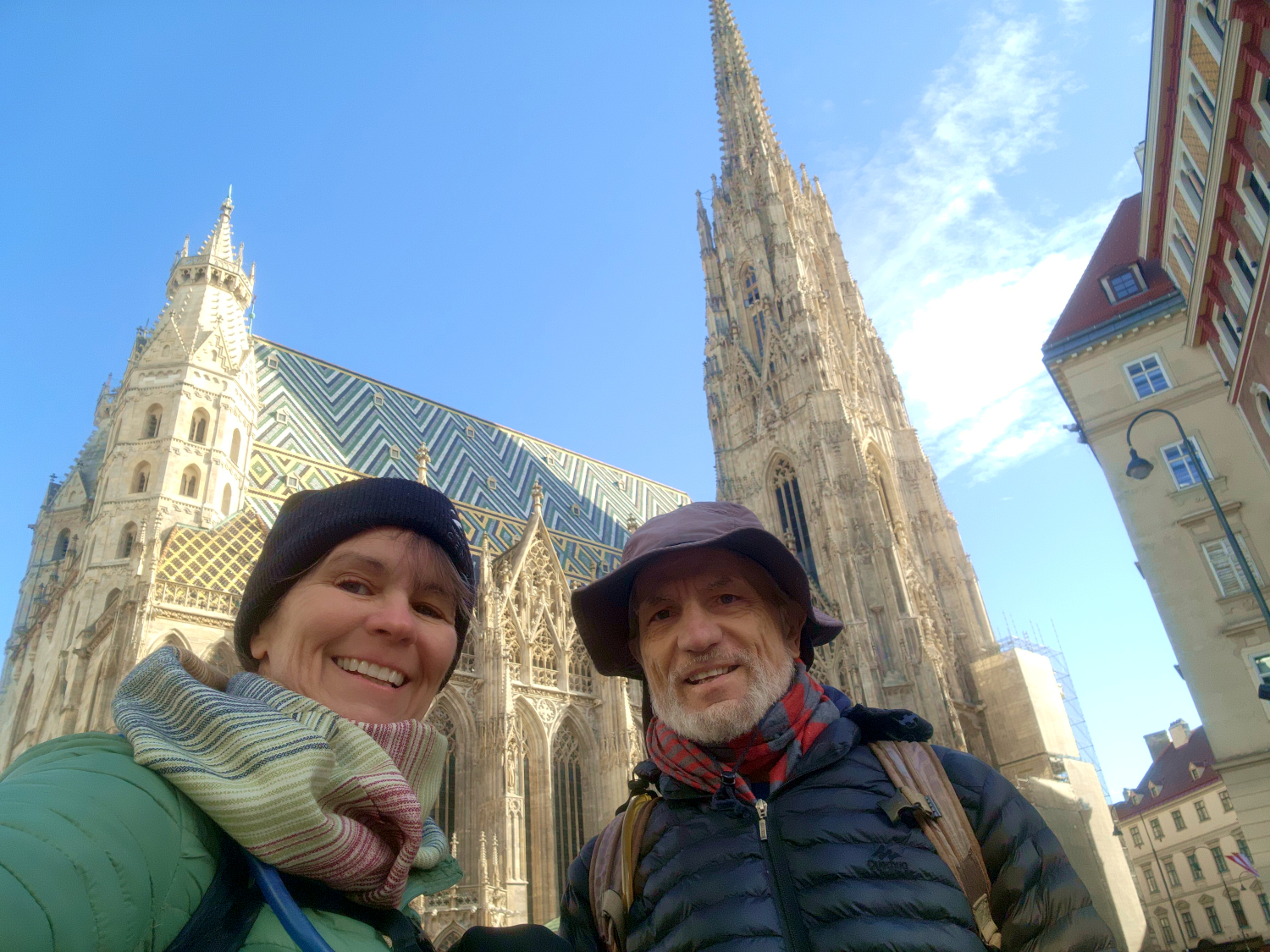
Then we head over to the Hotel Sacher, a 5-star luxury hotel opened in 1876. No, we’re not getting a room; we’re just dropping in to pay our respects (and our money) at the hotel’s Cafe Sacher, home of the aforementioned food of the gods, Sachertorte.
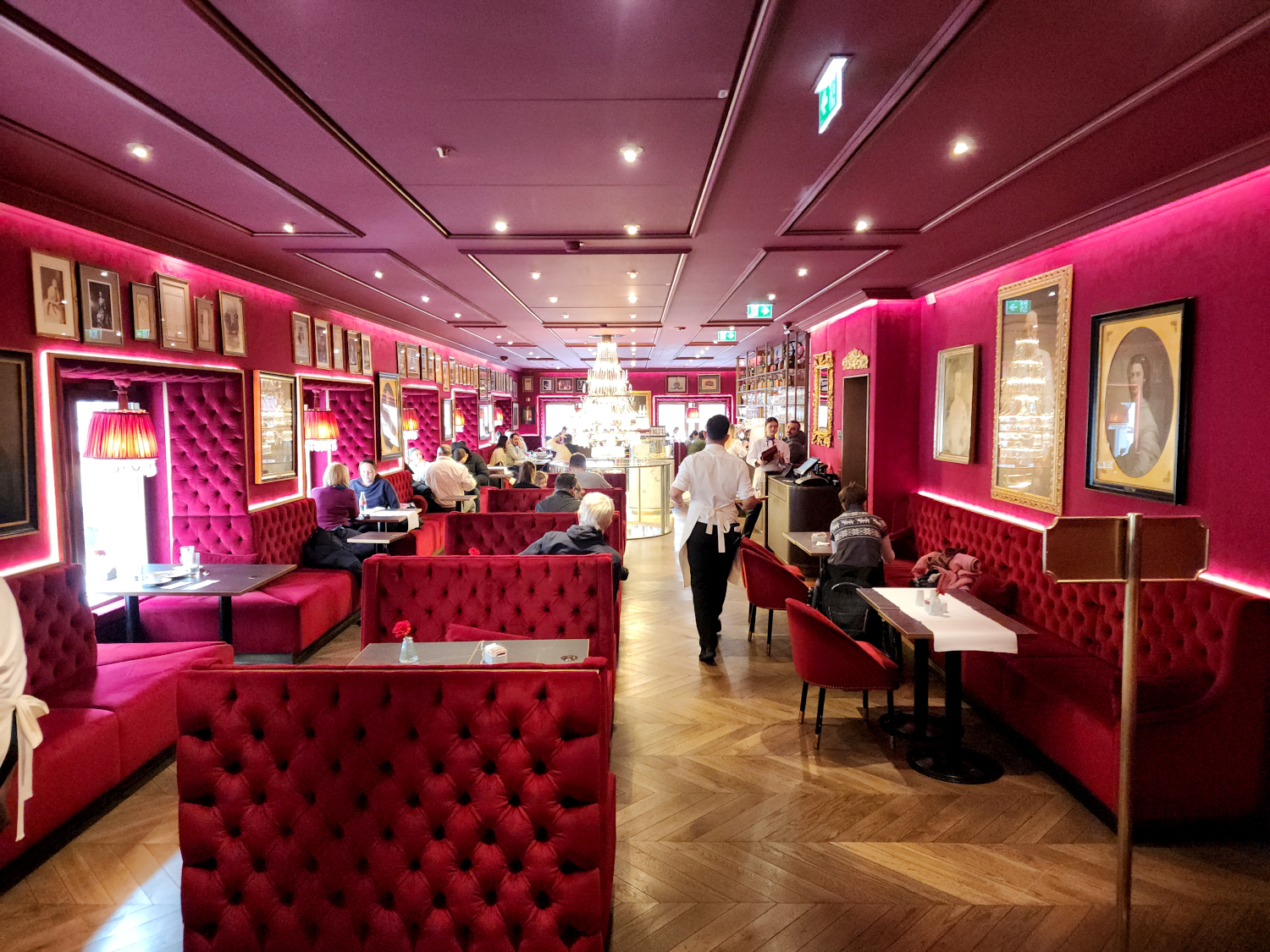
You wouldn’t be wrong if you deduced that after serving this exquisitely elegant treat to the public for several generations, the word has gotten out. There is generally a line outside the door of the cafe, and today, it’s a wait of about 20 minutes in the nippy air outside and the foyer, until we are ushered into the upstairs dining area, resembling a smoking and brandy parlor from the Gay Nineties, with its plush red upholstery, white marble tabletops, quaint portraits and paintings on the walls, and crystalline lighting fixtures.
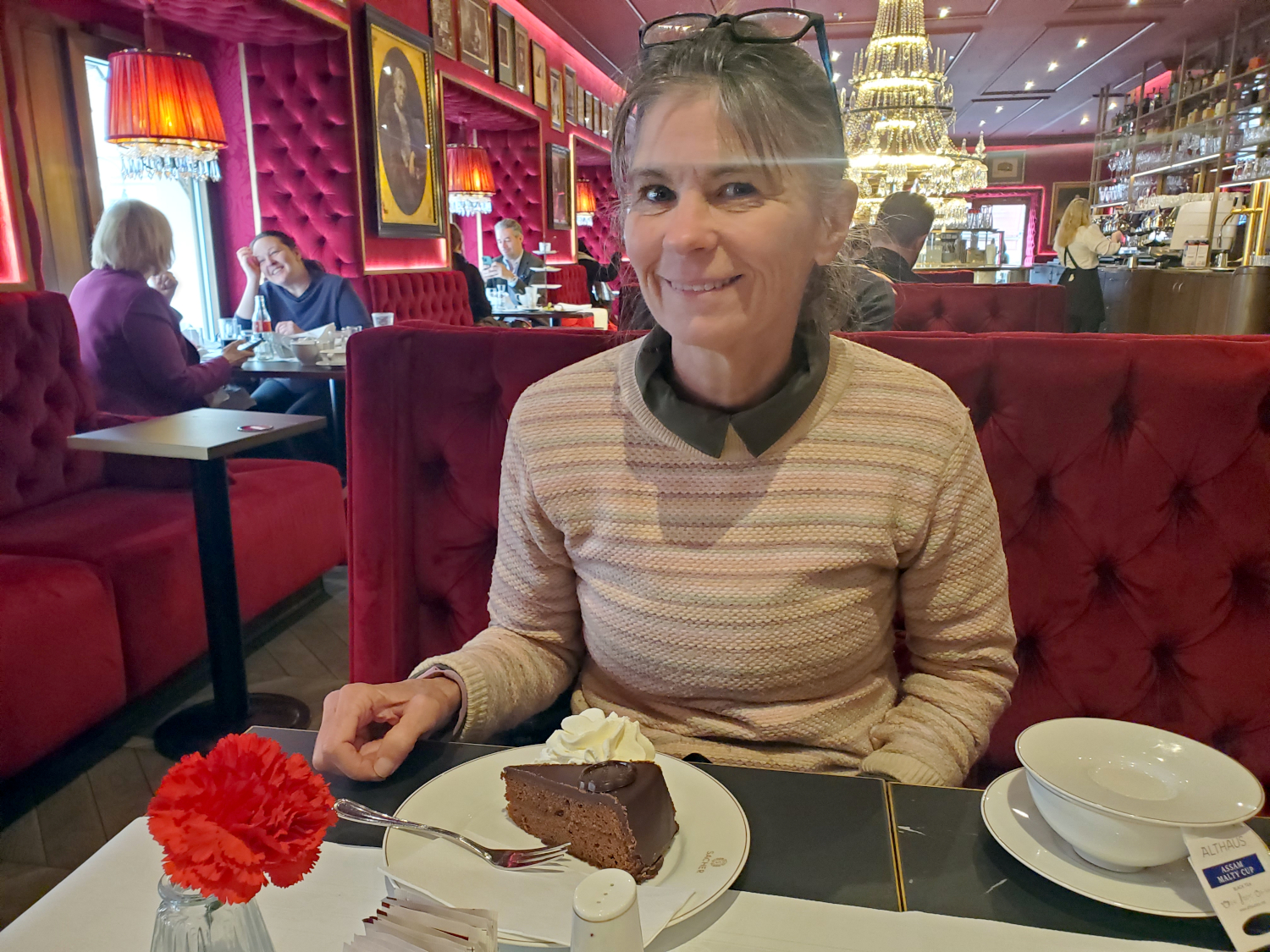

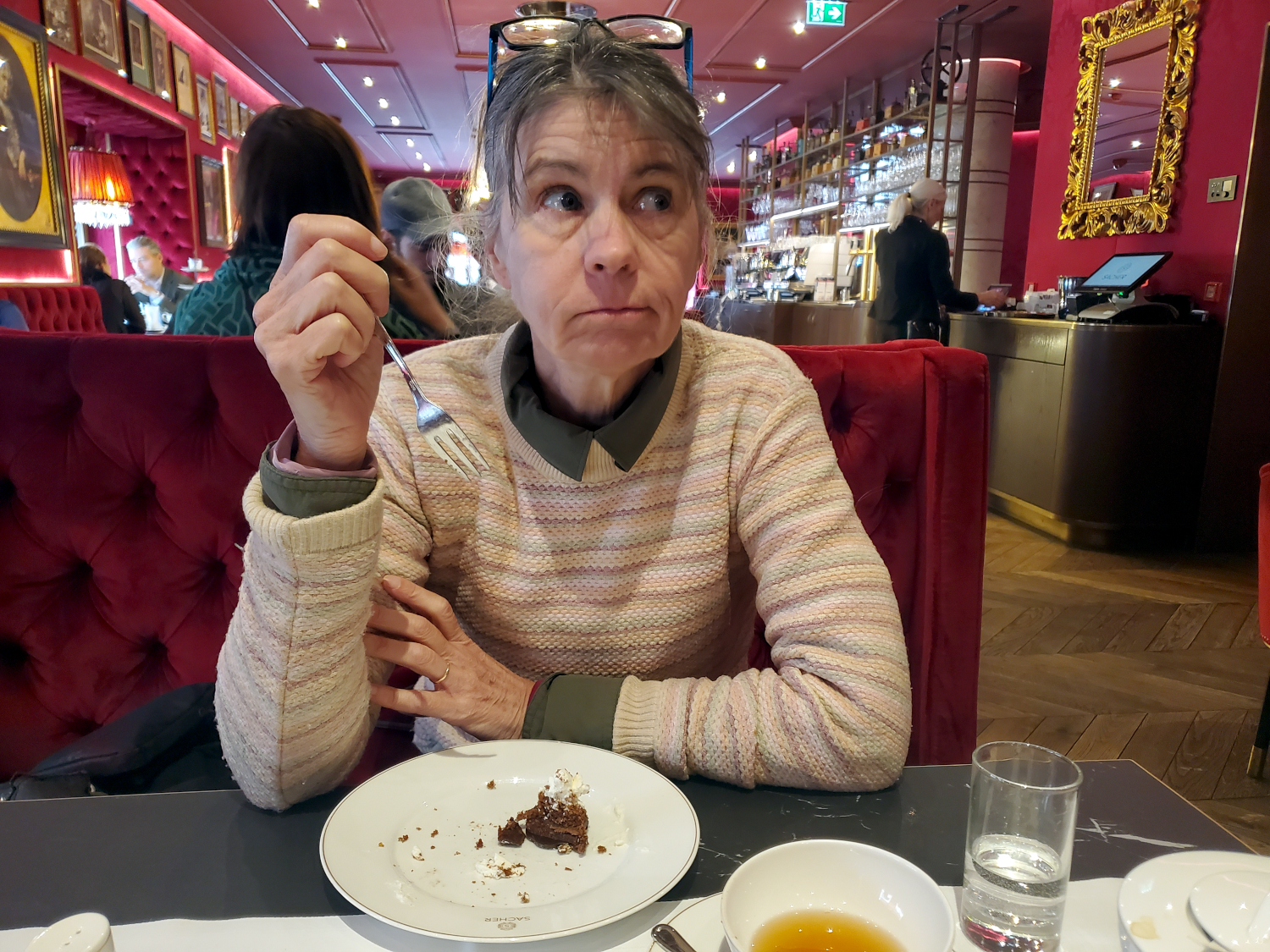
Then we order our torte, and when it arrives, the rest of the world fades away. It ain’t cheap: about 10 euros per wedge of cake, and another 7.5 euros for a cup of tea to keep it company. But you’re not just paying for cake and tea: you’re buying an experience — and a slice of history.
Sachertorte was invented by chef Franz Sacher as long ago as 1832, though it may have been 10 or 15 years later, and apparently created especially for royalty. But it’s been served in Cafe Sacher ever since it opened, which is now something like 149 years and counting.
The exact recipe is a hermetically guarded secret, though its ingredients have been Sherlocked out. It’s a layer of chocolate cake covered by a superb chocolate glaze, with a bit of apricot jam lurking inside somewhere. It all blends together in a swirl of ineffable ecstasy, and it doesn’t come across as being excessively sweet. When you come here, you don’t have chocolate cake; the chocolate cake has you.
Across the plaza from the Cafe Sacher is the Staatsoper Wien (Vienna State Opera), in an opulent and regal building opened in 1869. It’s quite appropriate that these two attractions should be so close together; the torte and opera seem to go together like pearls and lorgnette. The torte is like opera on a plate.
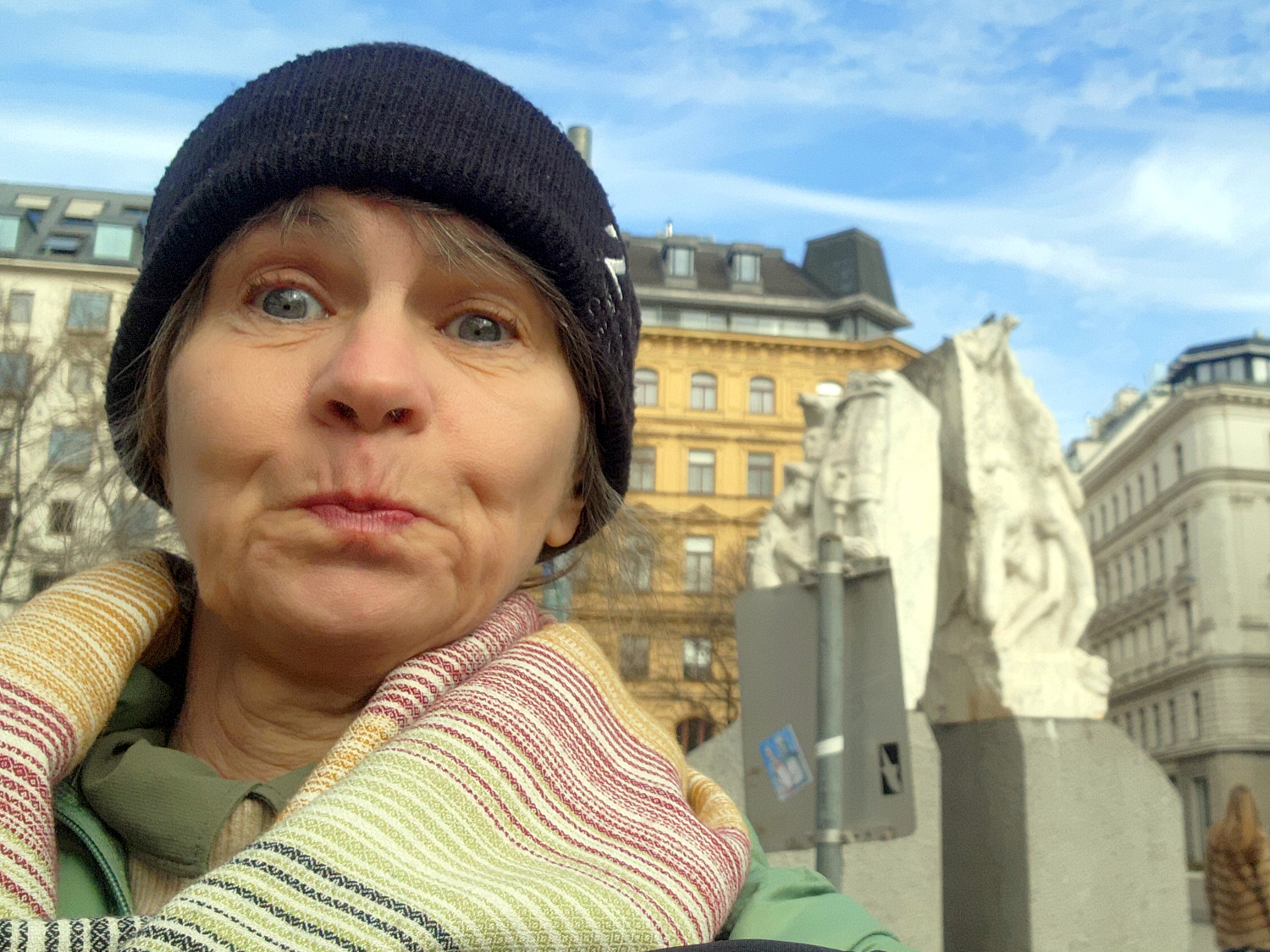
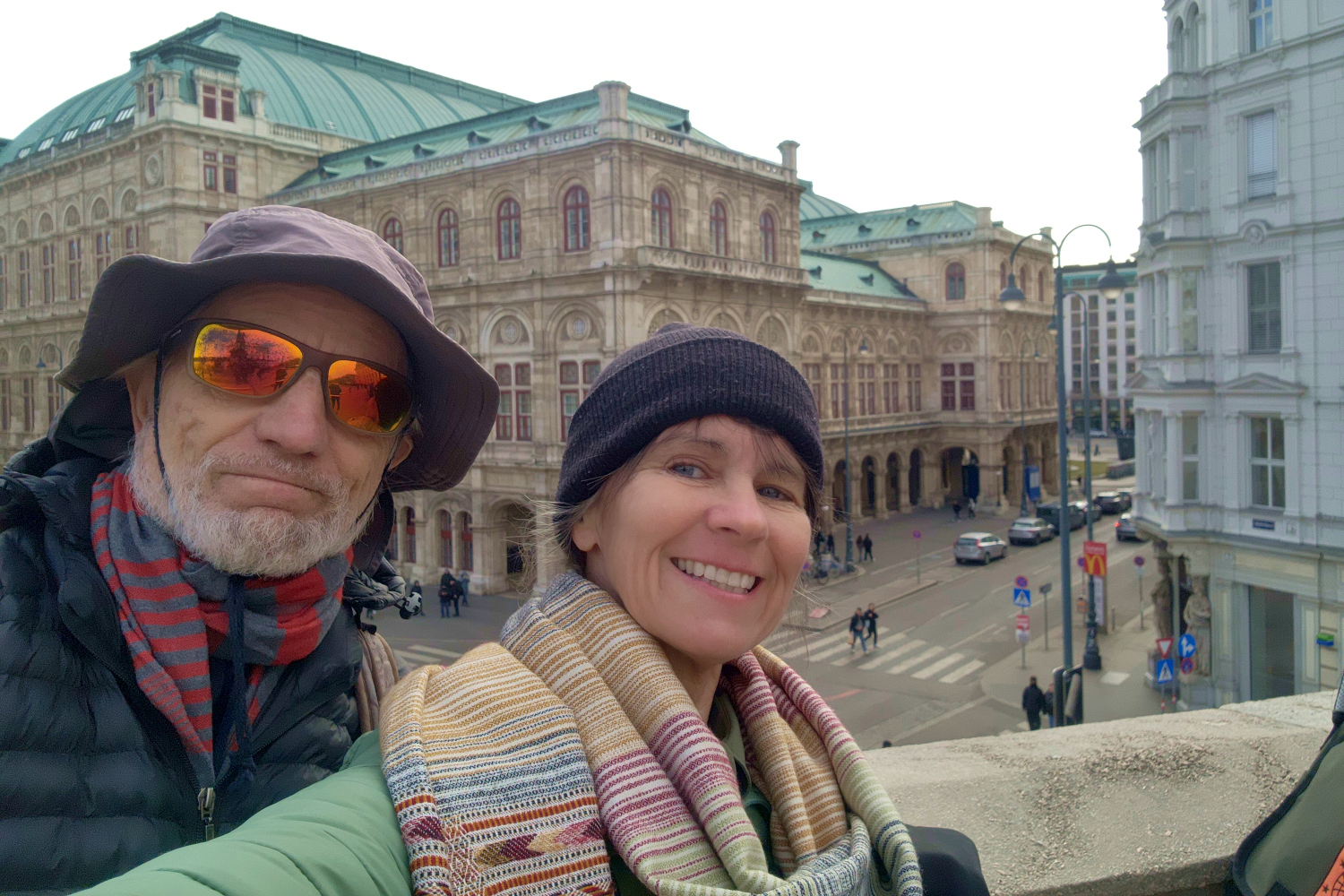
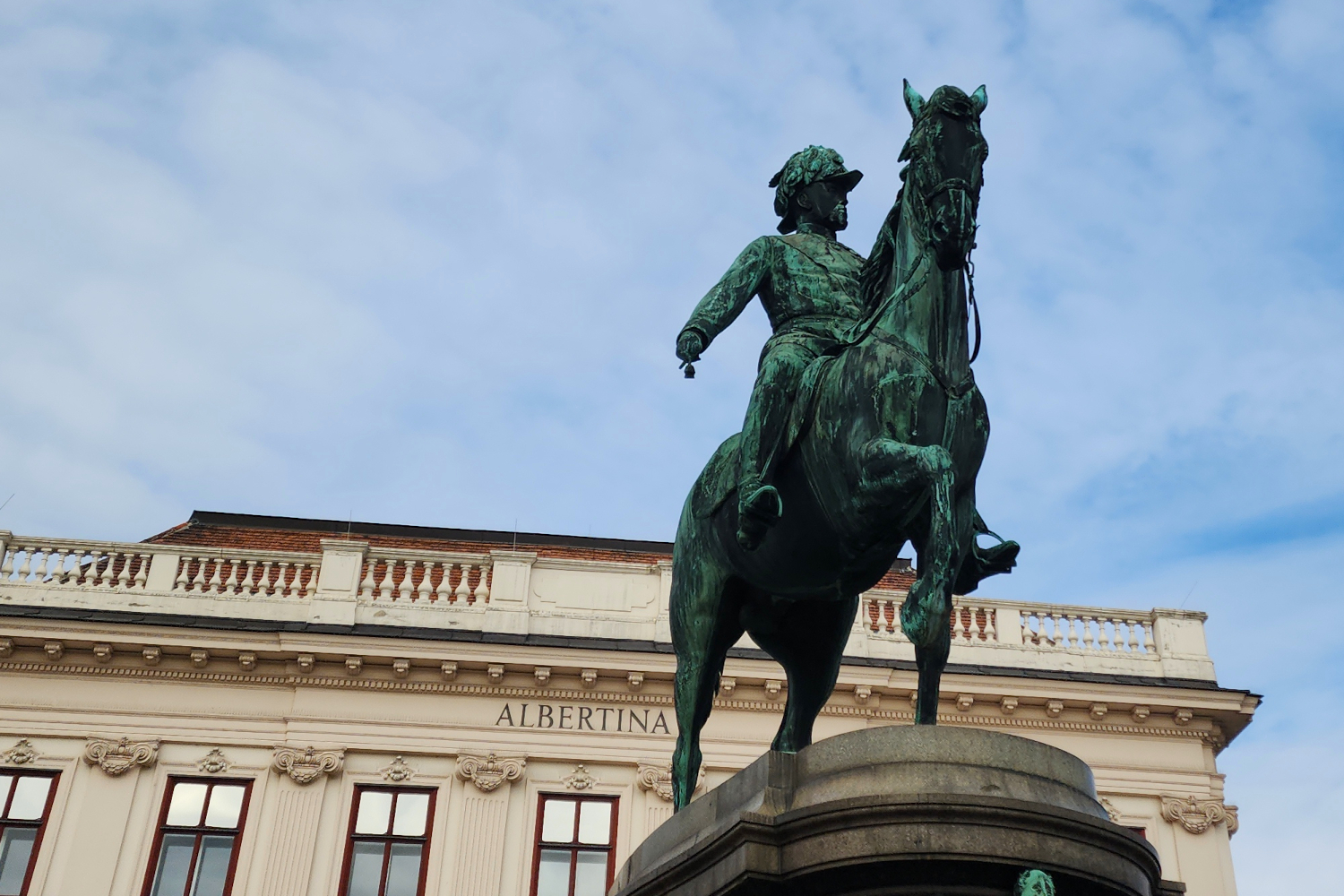
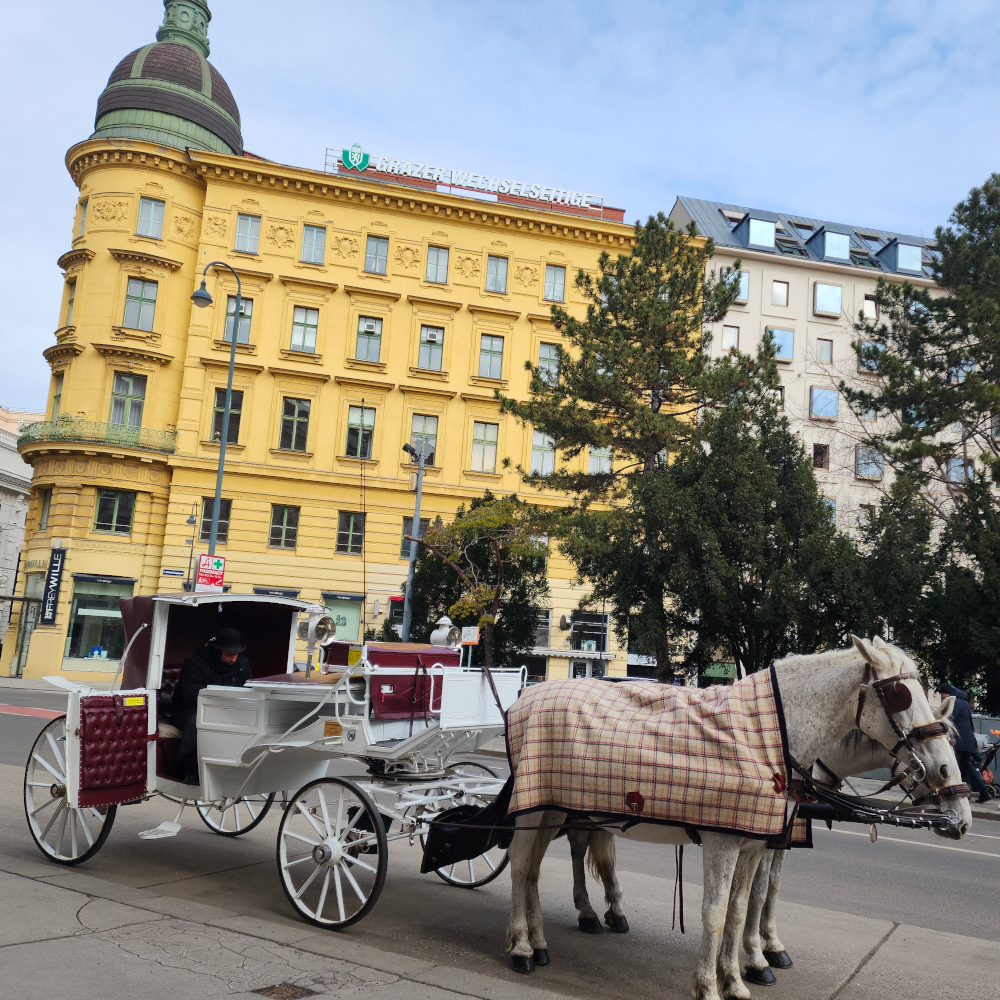
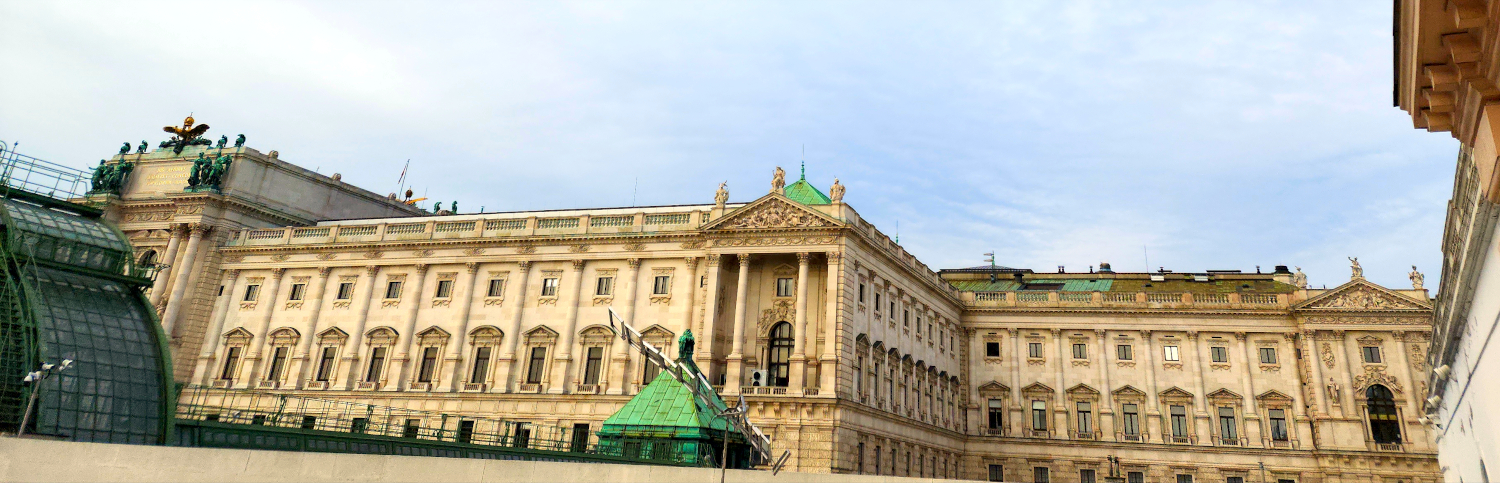

Having sated our appetites for confectionary indulgence (at least for the time) we opt to try out another tourist draw before heading back home. This one is called Time Travel Vienna, which bills itself as a “5-D” immersive experience. We suspect that it’s probably pure kitsch, but we figure it’s worth a shot; and we feel somewhat obligated to investigate it, since our son Zephyr works for a related type of venue back in the States.
It turns out to be… well, not bad at all. Yes, there’s a bit of cutesiness and schmaltzy schlock, but overall it’s quite well done, and both entertaining and informative. a journey through the history of Vienna, from prehistoric times to about 1800.
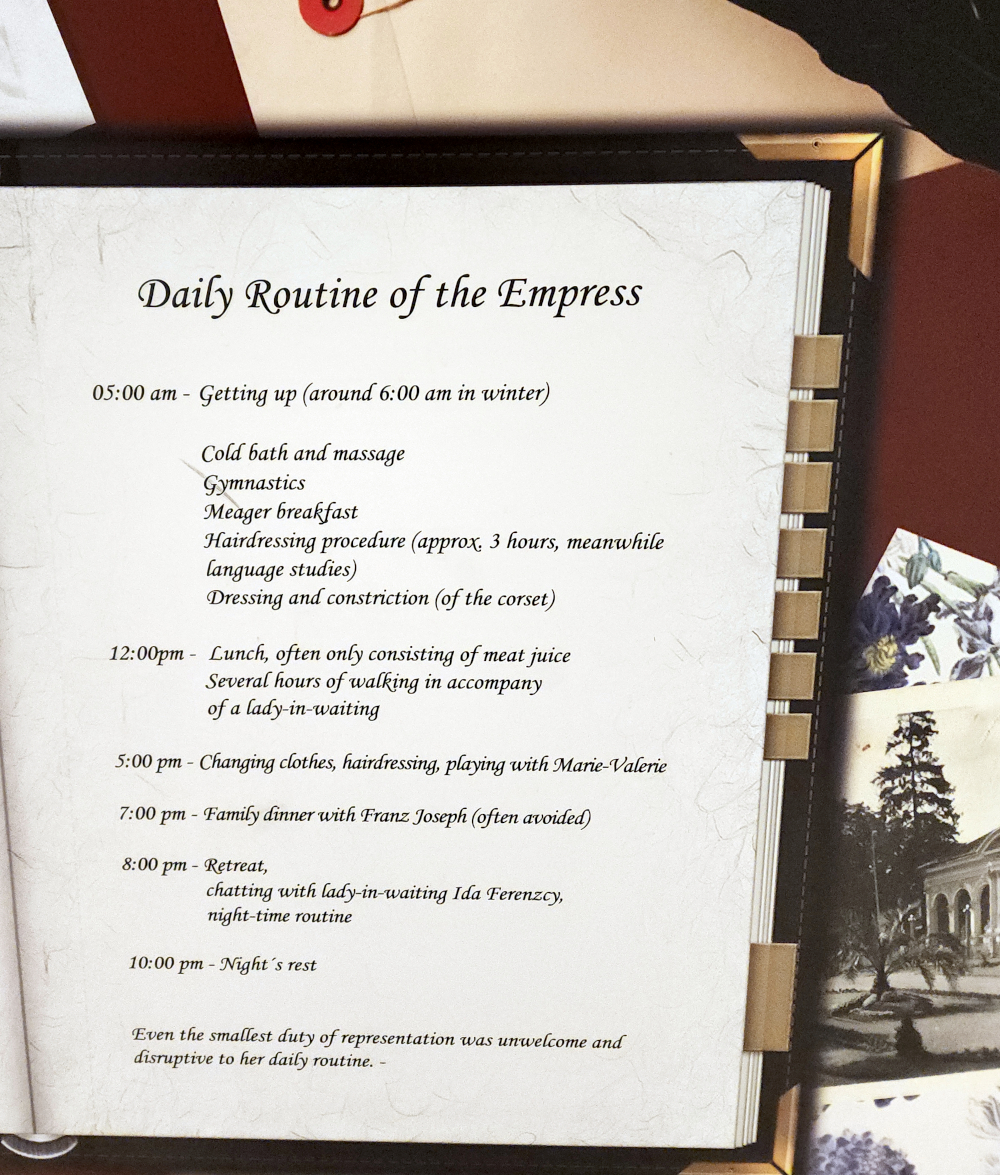
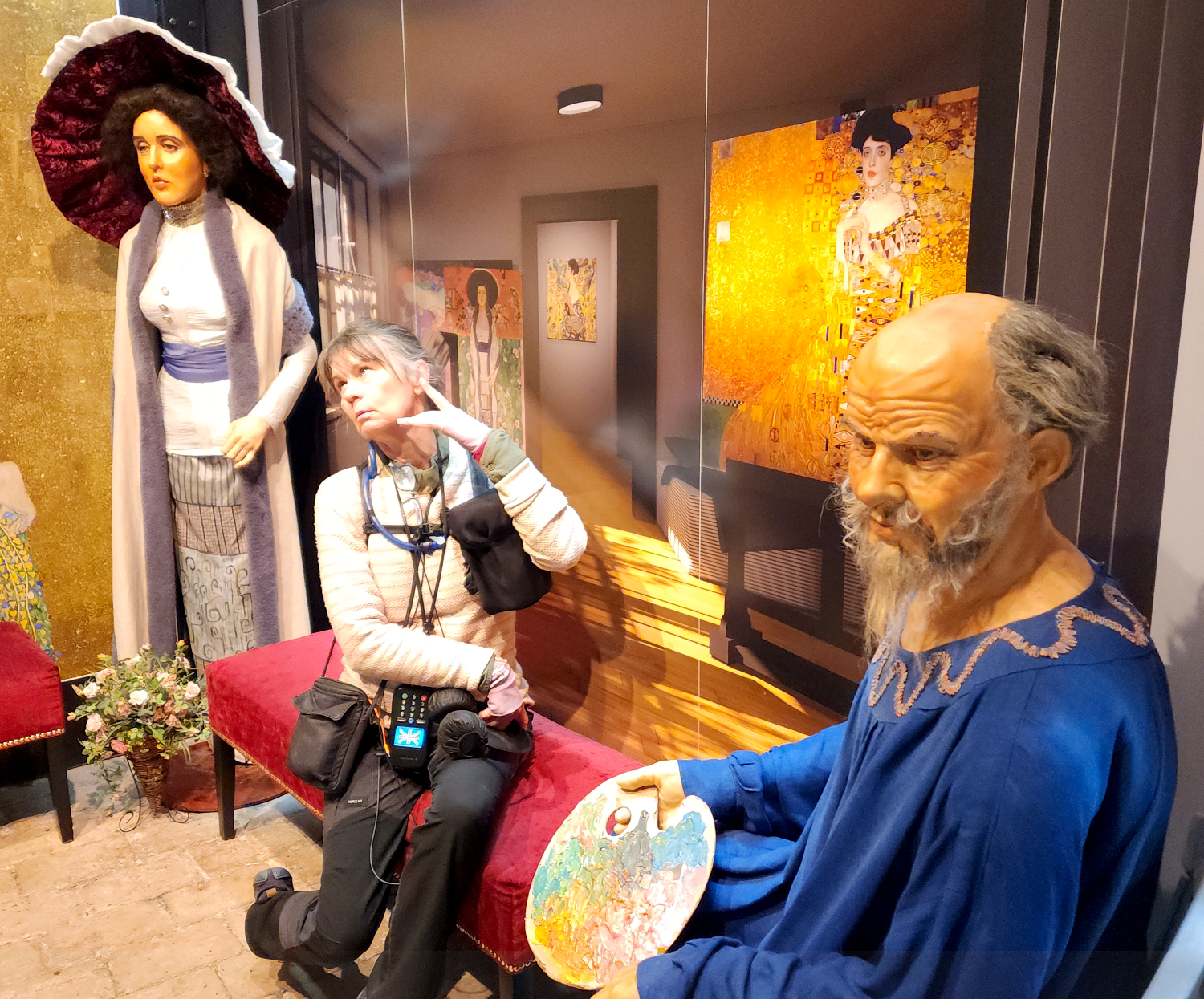

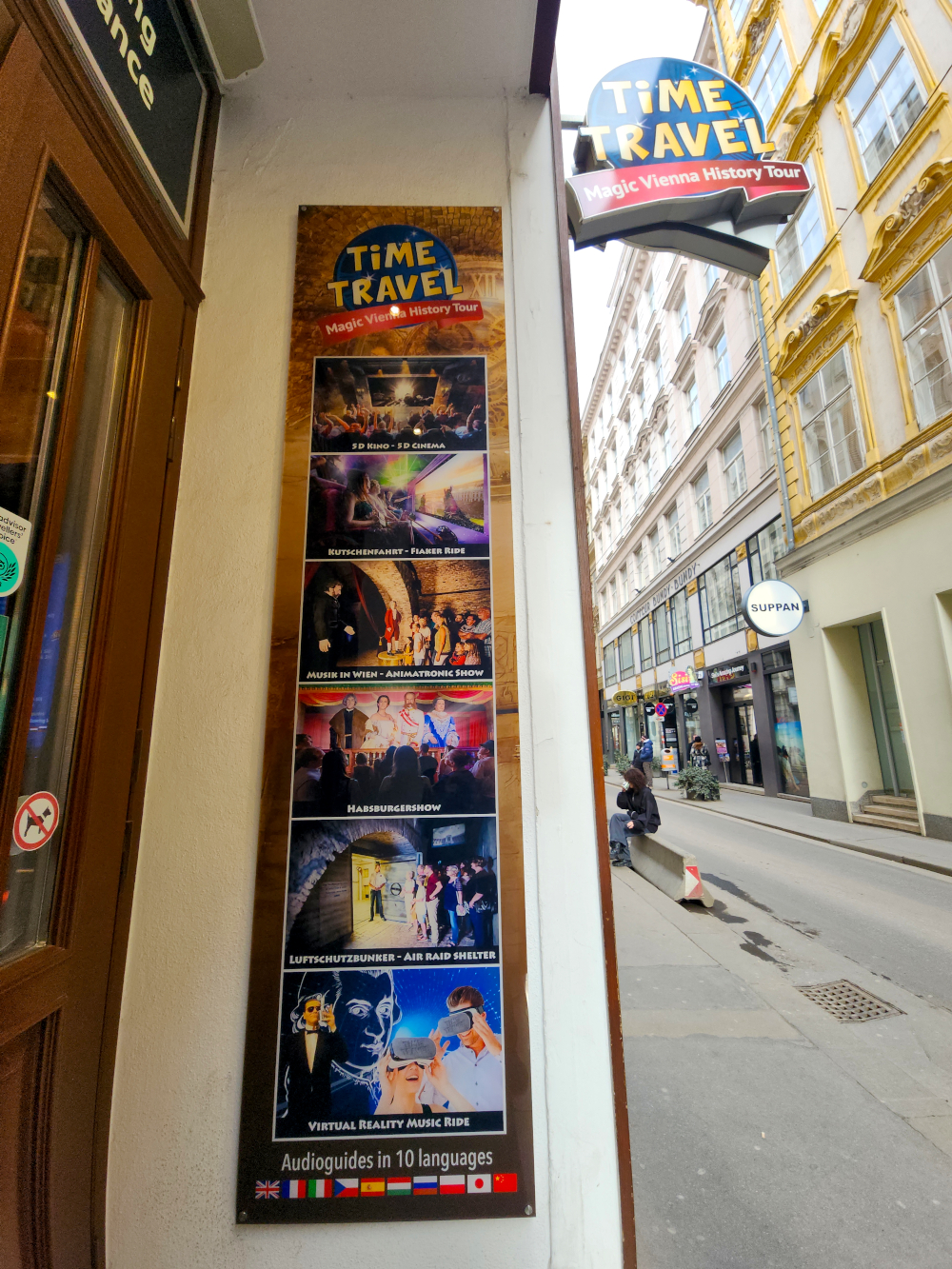
It begins with a “ride” wearing 3D glasses and headphones (because the presentation is available in several languages) before a giant screen on which the cavalcade of history unfolds. Among the nice touches is simulated snow falling on you while it’s also falling onscreen.
Then we go to a chamber filled with some somewhat cheesy animatronic figures (as animatronic figures generally are) representing historical personages such as the Habsburg Dynasty — as well as Mozart and Strauss debating about whose music was better.
In another segment, we walk through what is essentially a museum. And then the crowning glory is a virtual reality experience, in which hundreds of dancers do a waltz (a Viennese waltz, natch) through an enormous ballroom, and scenes of Vienna with contemporary musicians jamming are presented in 360 degree cinema. Quite exhilarating.
And so, with our bellies full of chocolate and our minds swirling with waltzes and imperial ghosts, we wrap up our first day on this flavorful return to Vienna that has enticed and engaged all of our senses. It’s a city that knows how to layer its history like its desserts—rich, refined, and just a little bit mysterious.
Events occurred 2/15-16/2025

 world travel with a theatrical flair
Leave a comment