

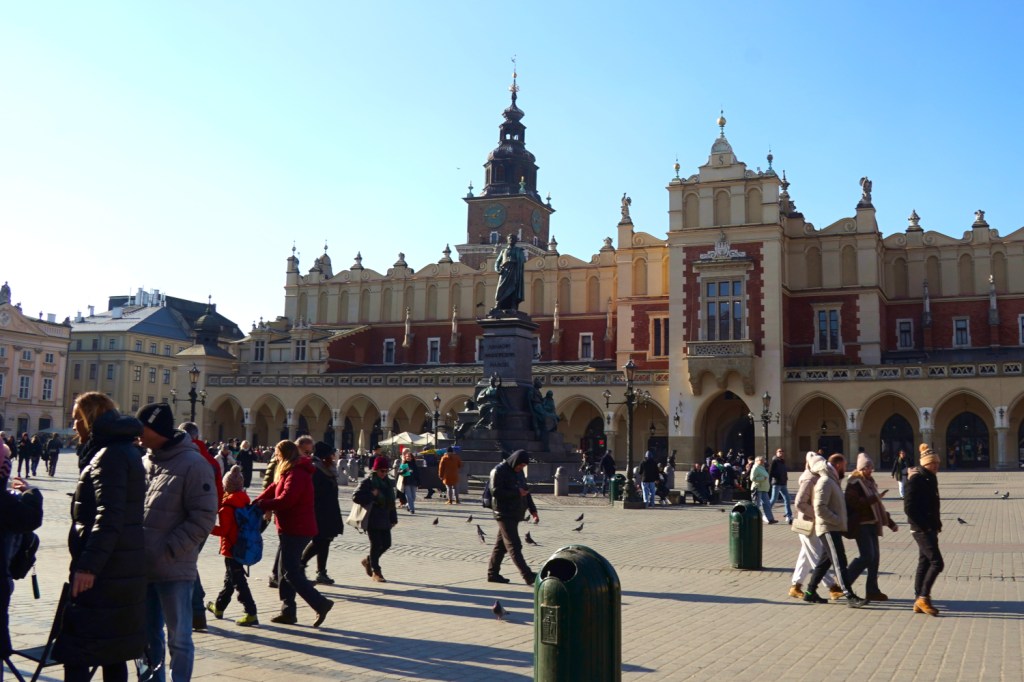
Krakow’s Old Town is the kind of place that makes you wonder if time ever really passes—or if it simply loops, like a certain trumpet call that can be heard there every hour. We arrived not only to marvel at monuments (though we did), nor to chase folklore (though we tried), but to soak in the atmosphere and charm of a bygone age, still quite conspicuous underneath its frilly adornments of modernization.
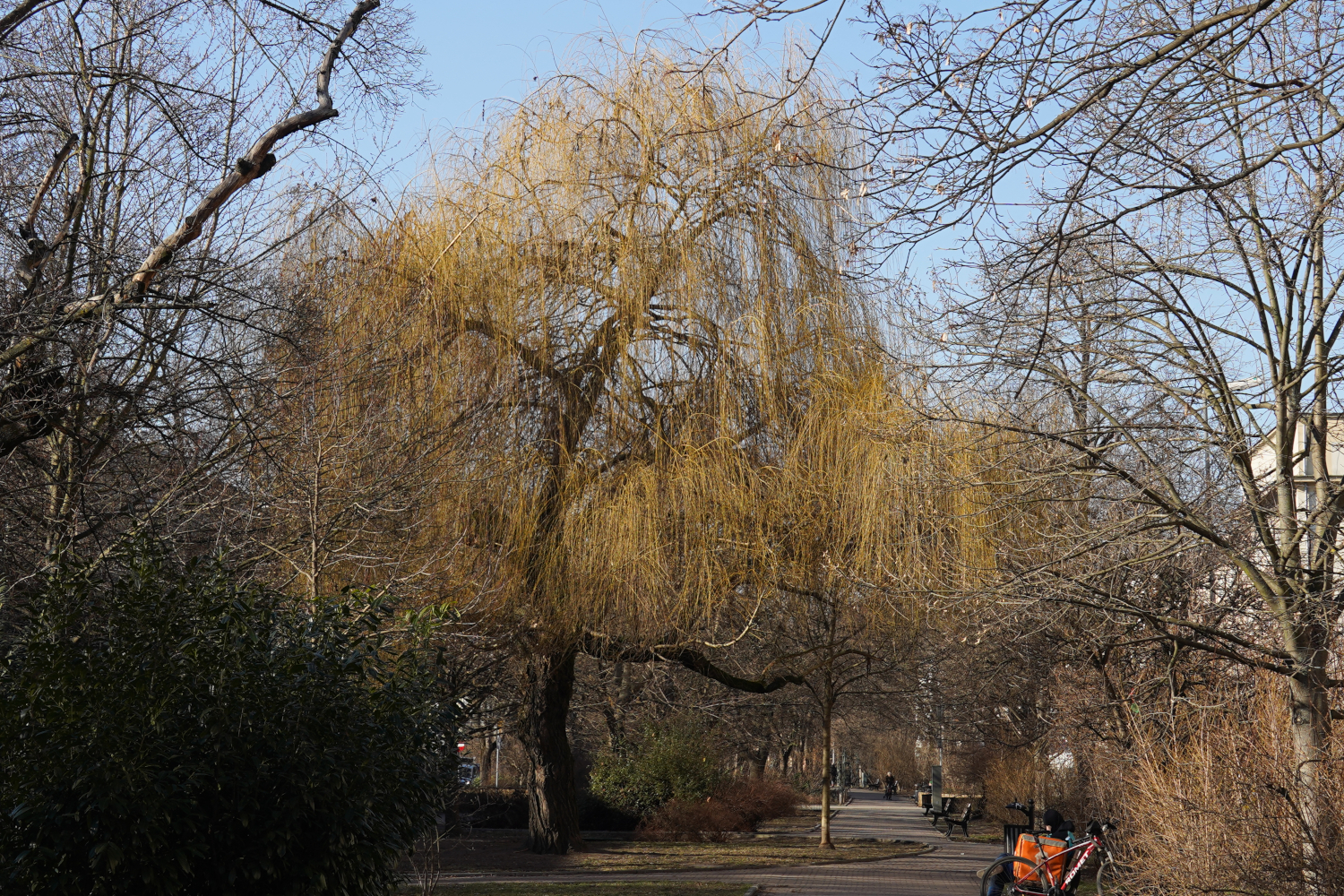
The largest medieval town square in Europe and one of the very first places to be designated a UNESCO World Heritage site, it was the royal government center of Poland from 1038 to 1596, when the King picked up his royal gear and moved his humble pad to Warsaw. But the current edition of the square dates from “only” the Thirteenth Century, when it was rebuilt after damage wrought by an invasion or two. It was originally surrounded by a wall with 46 towers; today, only fragments of that wall remain (very grand fragments to be sure), and the wall’s former location has been established as a rustic walkway of greenery called Planty Park.
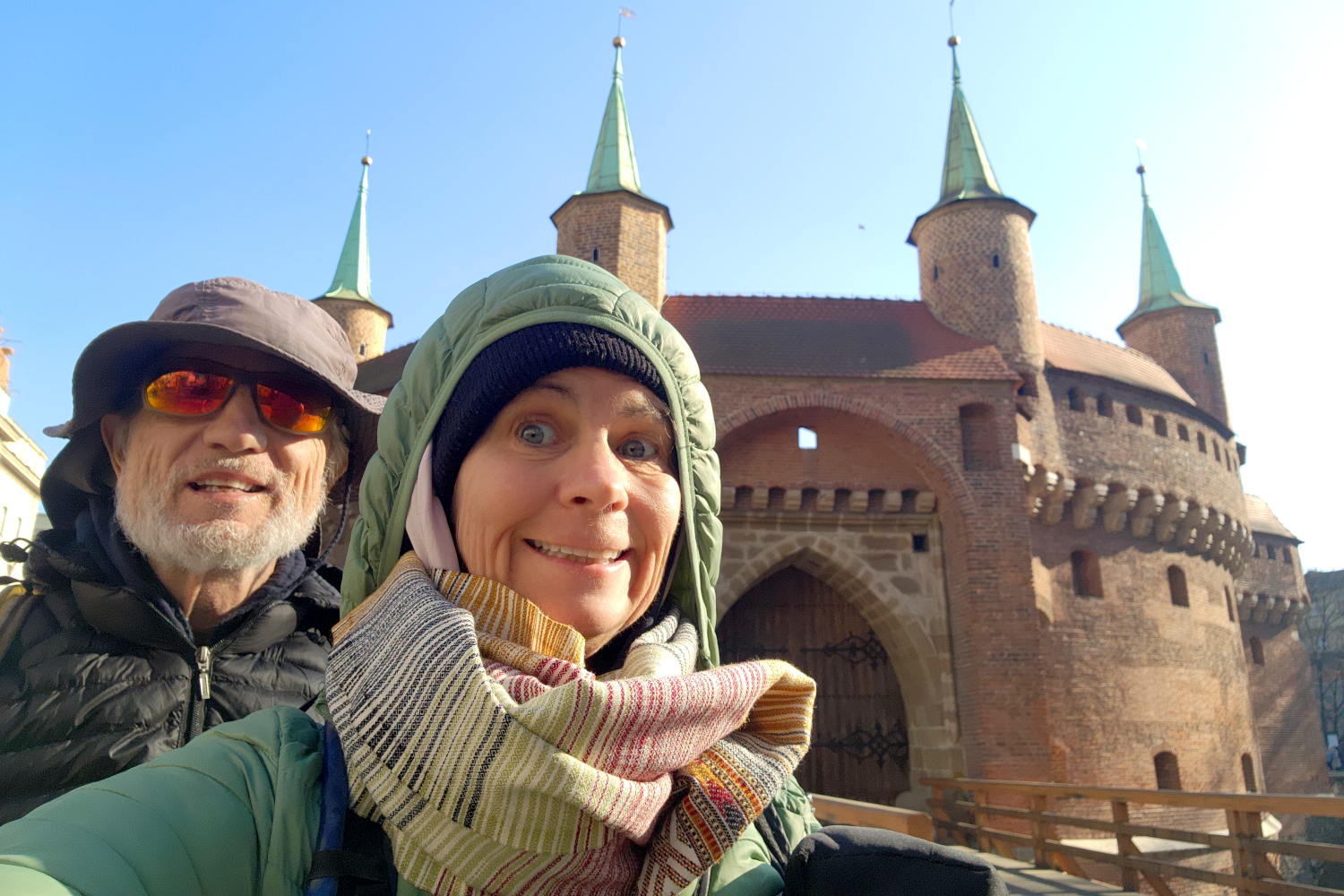
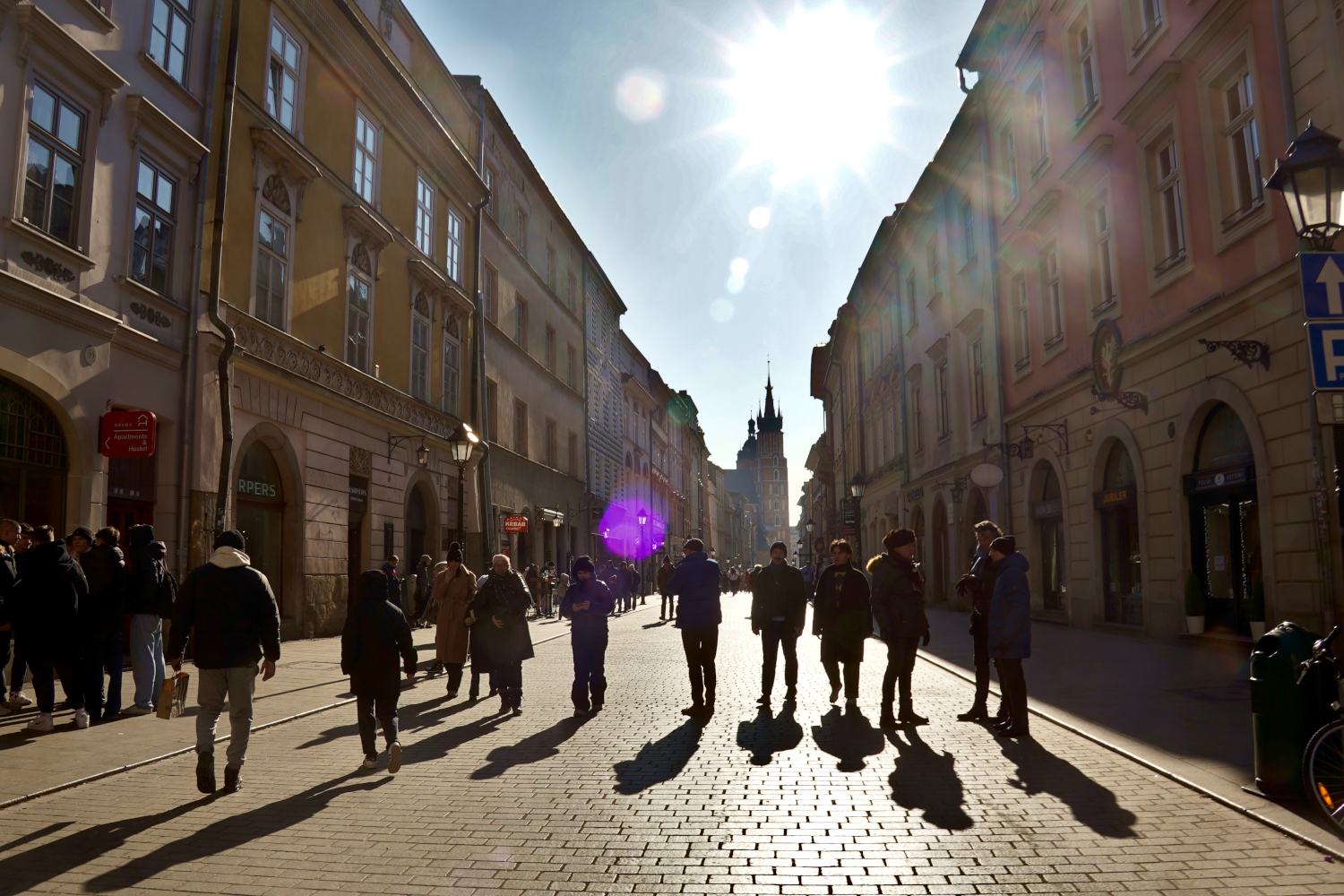

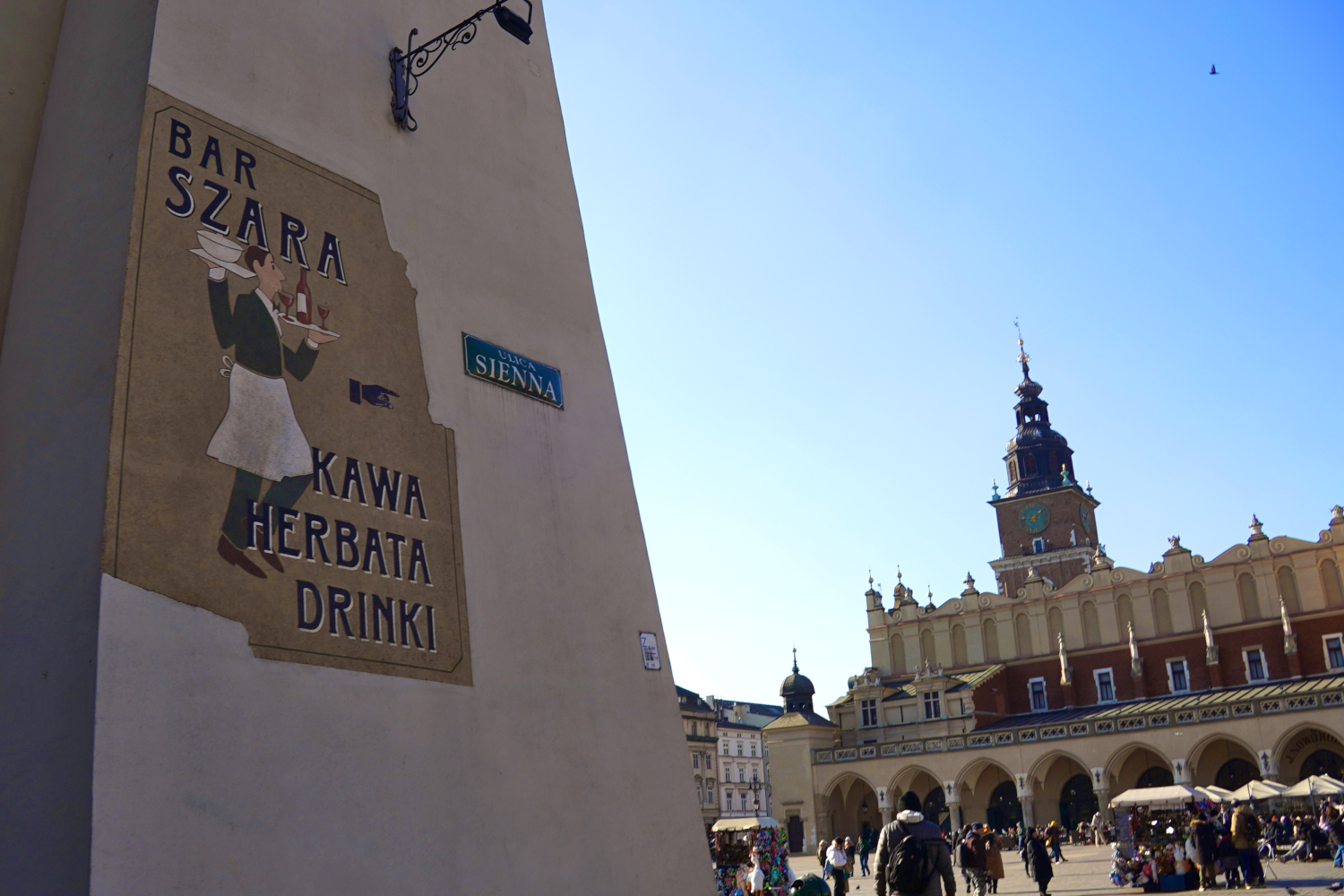
The square still retains many of its structures and features from the Good Ole Days, including the Barbican, which is located at the entrance closest to our apartment. The Barbican, which looks like a miniature castle, was a fortification just outside the city walls, though we don’t quite see the point of having such a Barbie Town fortress separated from the main city proper — to which it was connected by tunnels. It’s surrounded by a moat, though it isn’t big enough to keep a hedgehog out, and has a little courtyard/ arena inside which hosts special events. It’s open for tours at certain hours, but those certain hours apparently don’t include while we’re in town.
There are also other historical and architectural landmarks here, including Cloth Hall and St. Mary’s Basilica, which we’ll get to in good time. And an enticing-looking bookstore, ditto. But on the first day we’re just passing through on a mission: we’re on our way to a mall that is farther away than the mall at the train station, because it has a branch of our bank, Citibank, where we can withdraw more cash without paying a foreign transaction fee. Or so we thought.

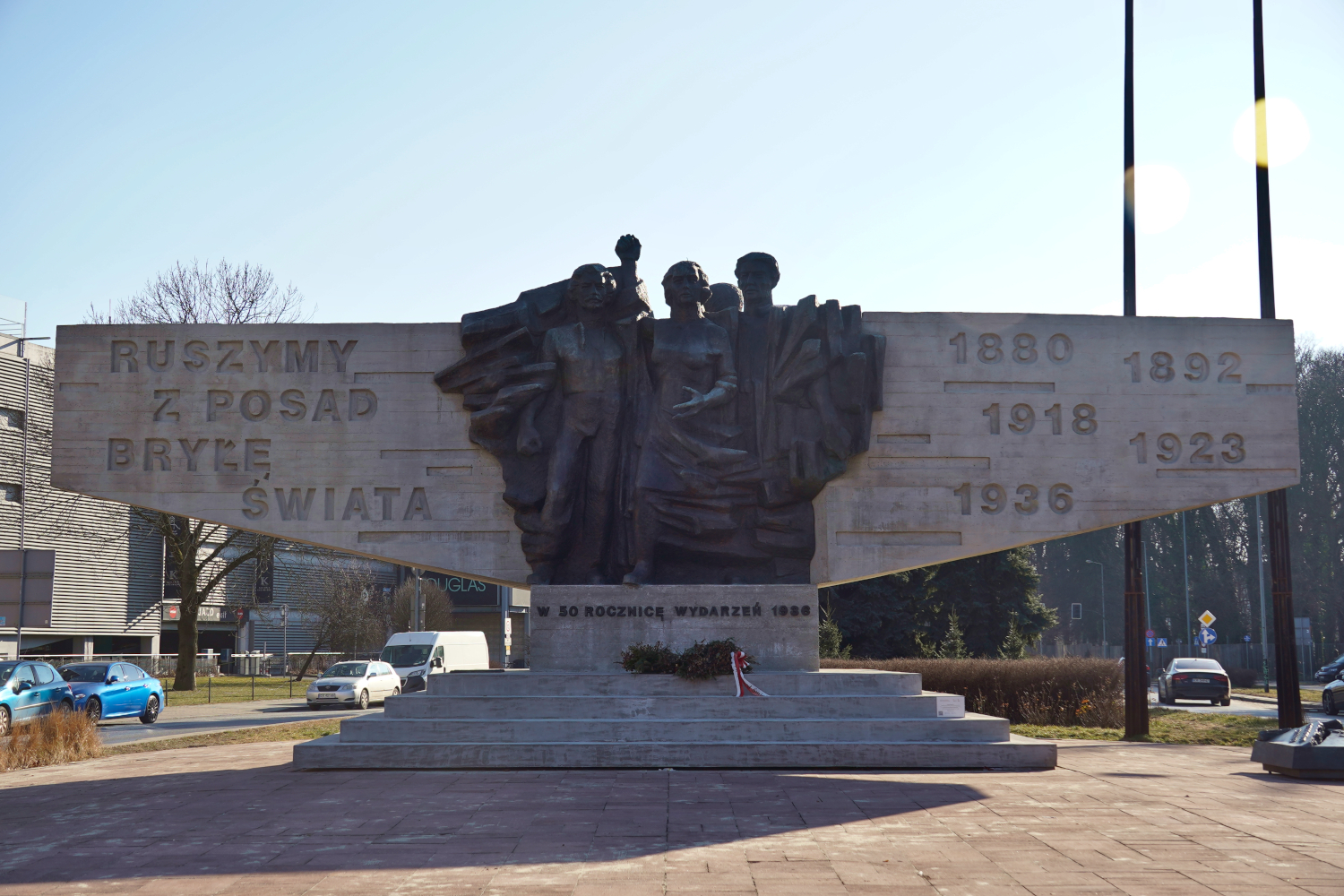
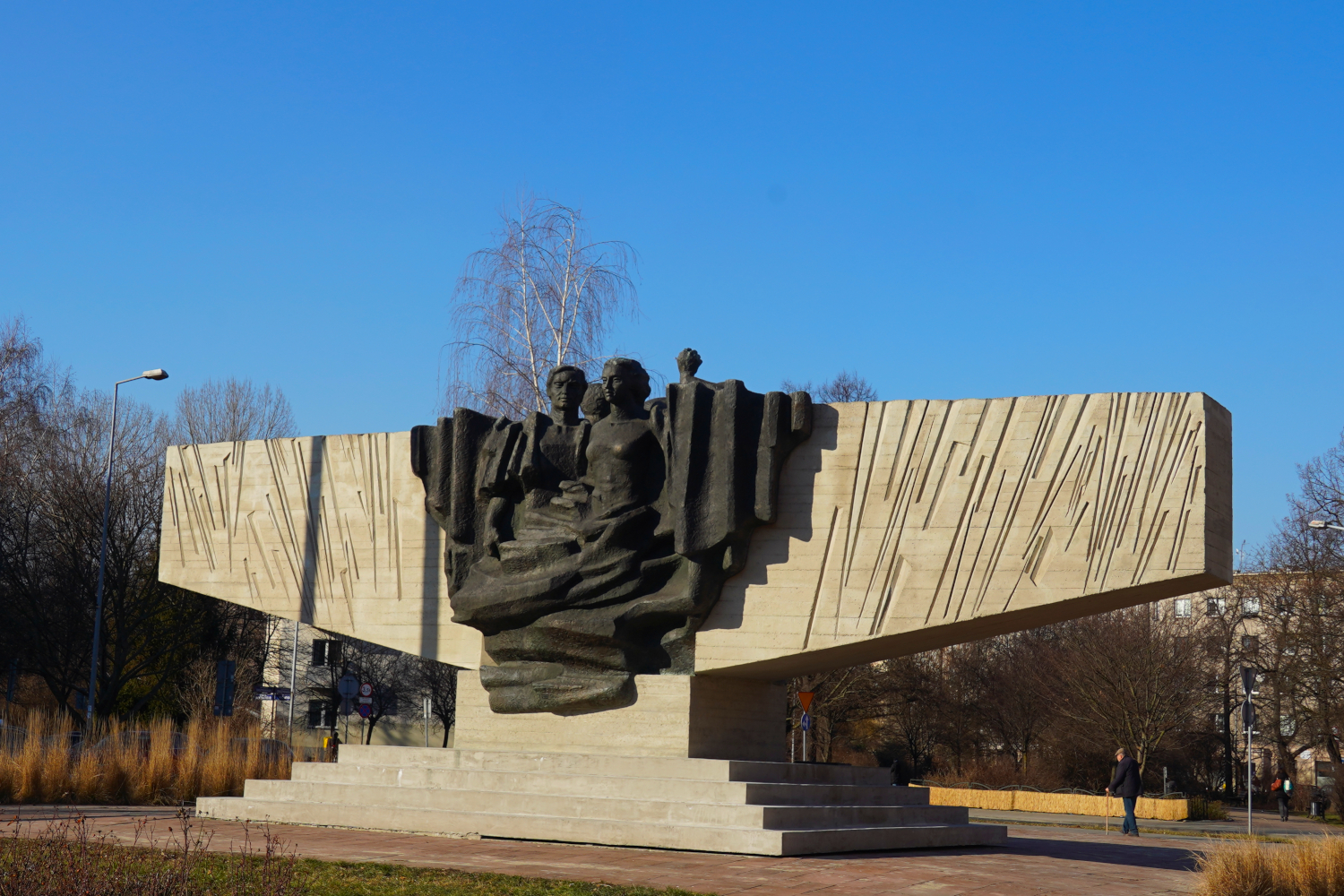
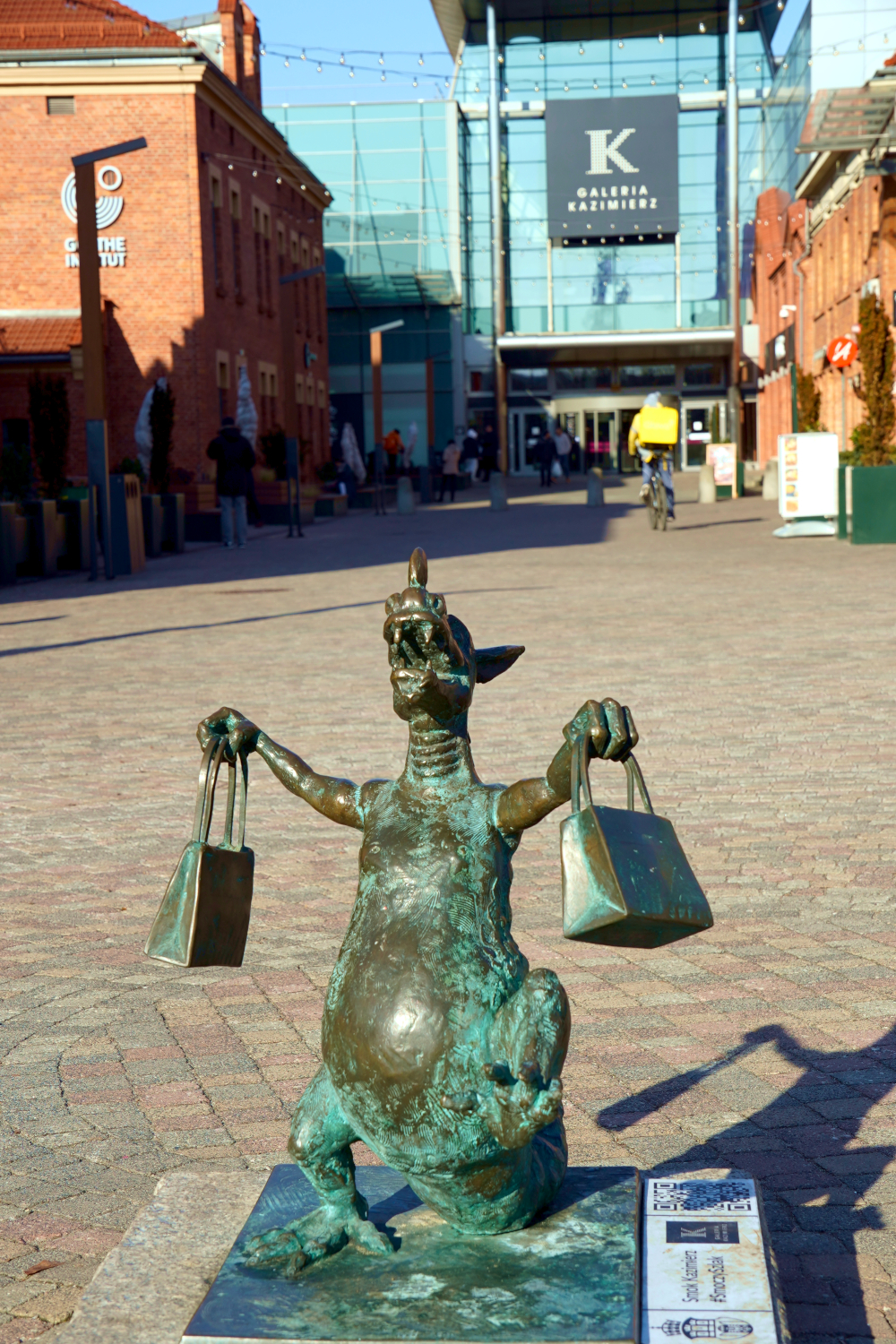
On the way, we pass the Monument To The Militant Proletariat, a tribute to an uprising in 1936 of workers, some of whom lost their lives in the conflict. At the mall, there is a “monument” of a different sort, a caricature of the legendary Krakow Dragon, melded with consumeriist sentiment appropriate to its location.
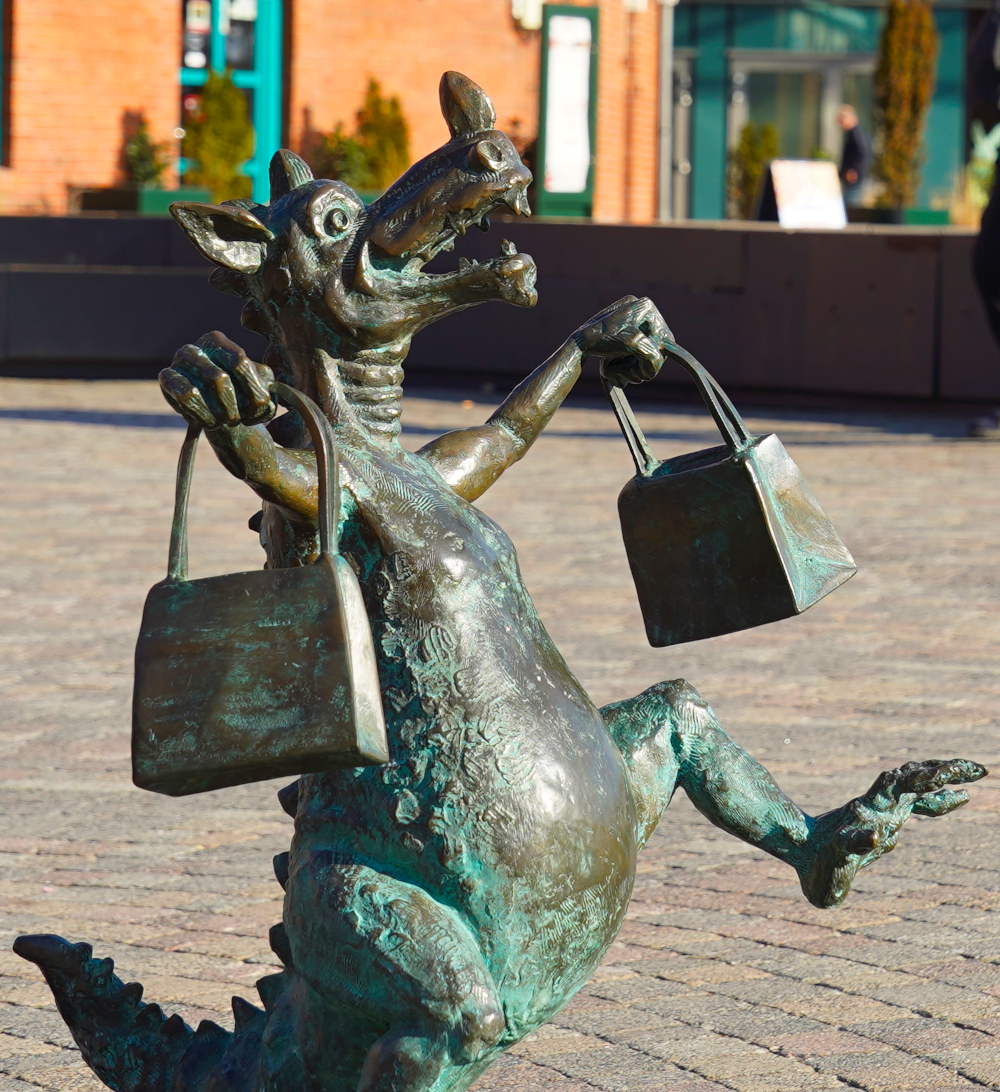
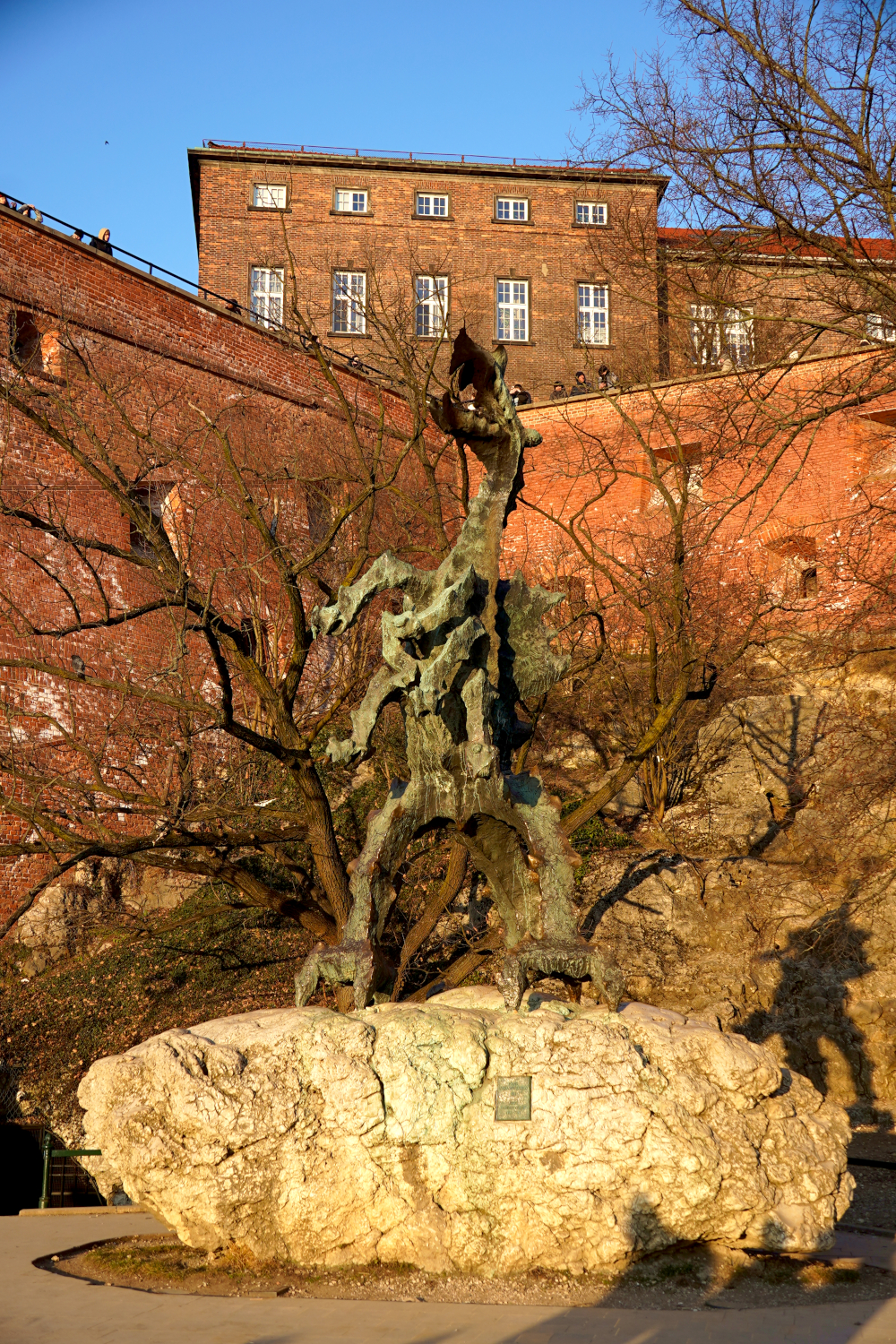
Speaking of the dragon, our next destination is a spot to glimpse the real thing. Well, at least a tribute to the real thing, at the mouth of the cave where the real thing was supposed to have lived centuries ago. (What’s the lifespan of a dragon, anyway.) This is at Wawel (VAH-vel) Hill, overlooking the Vistula (WIS-la) River. We’re quite acquainted with this story — which has come down in many different versions — having performed it onstage numerous times; in fact, it was one of our perennial favorite tales to perform. According to legend, the slayer of the dragon that terrorized the village (before there was a city) was either a king or a boy who may have become king; and in some variants his name was Krak, and the city was named after him. But of course, that’s probably all just a Krak.

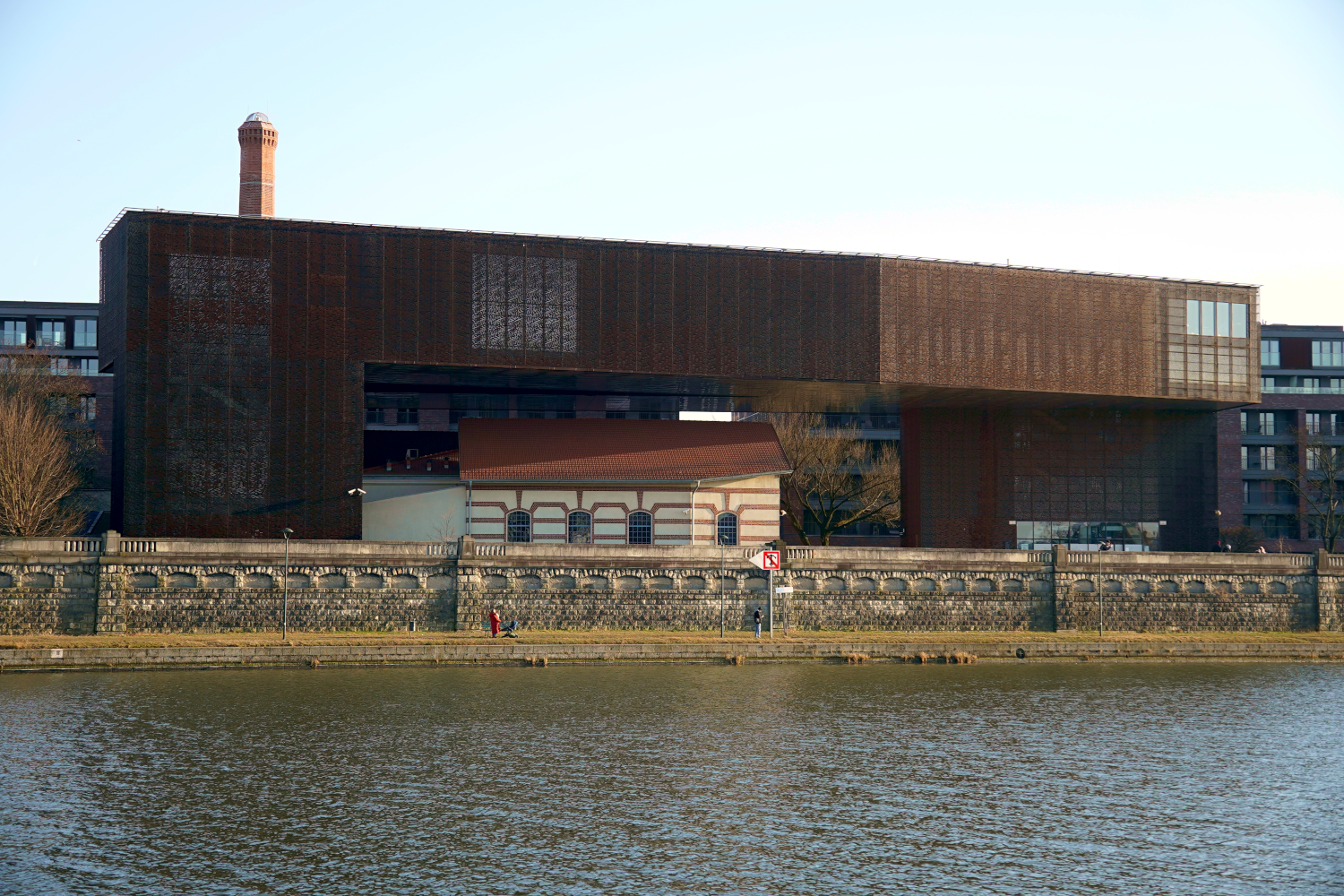
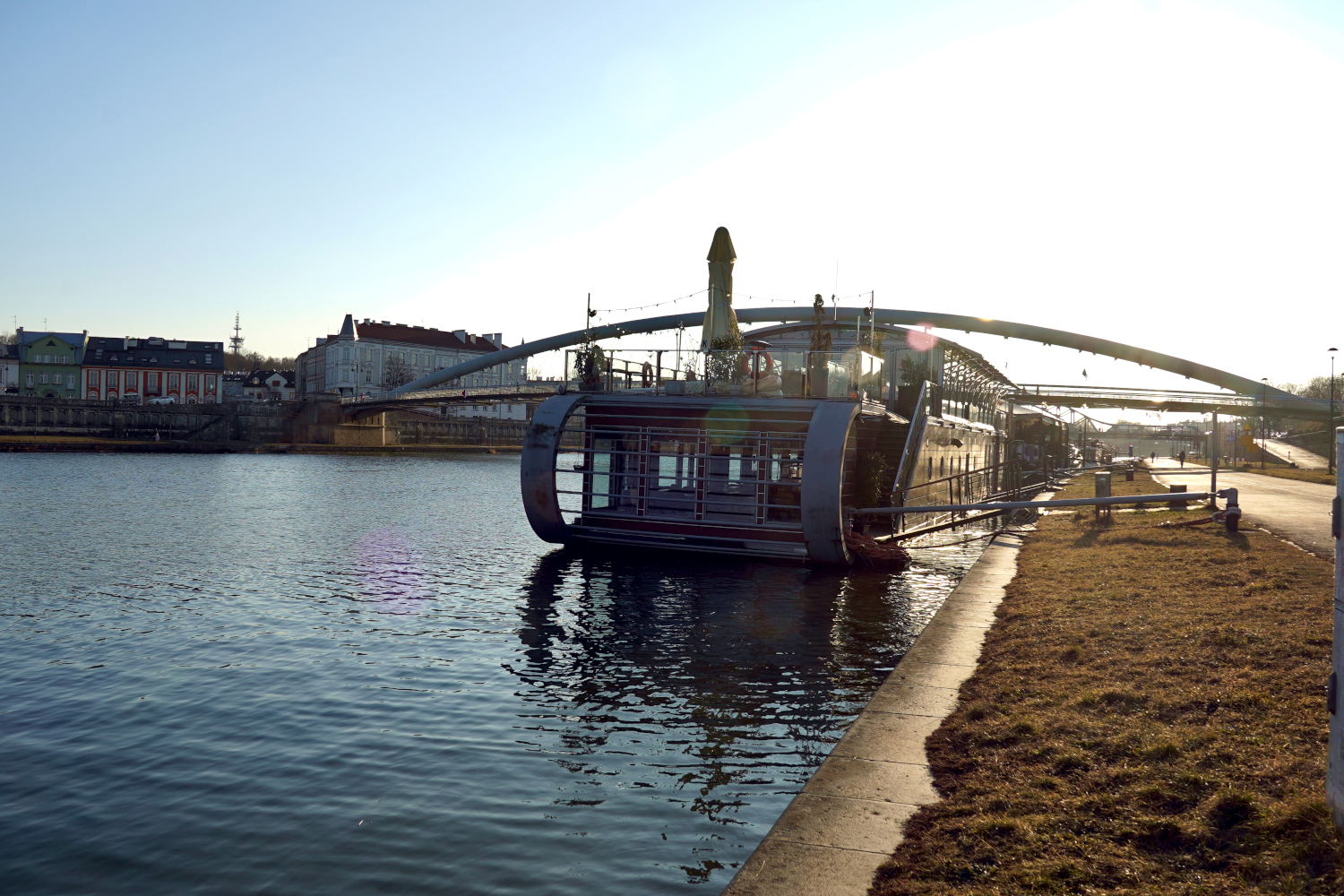
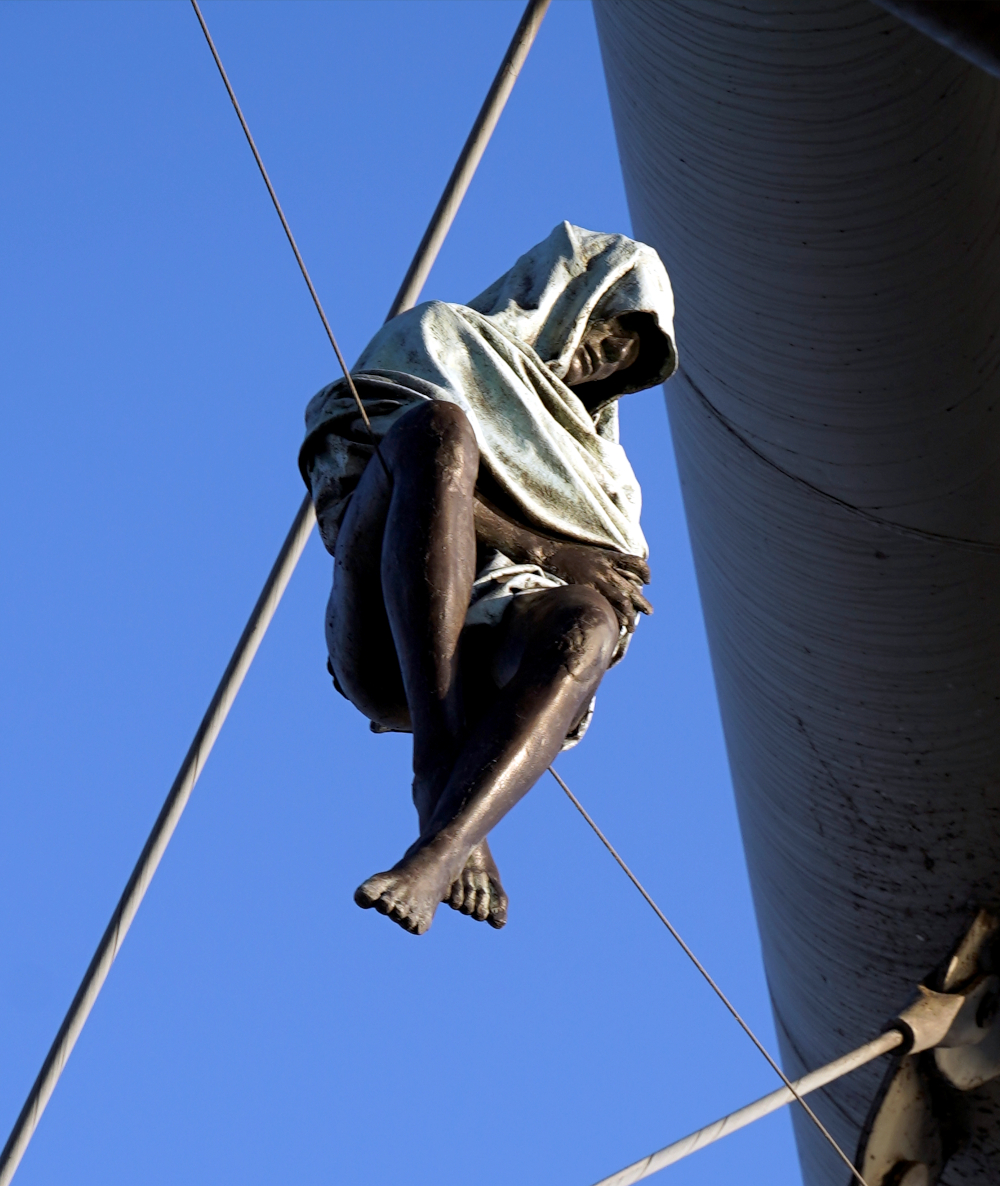
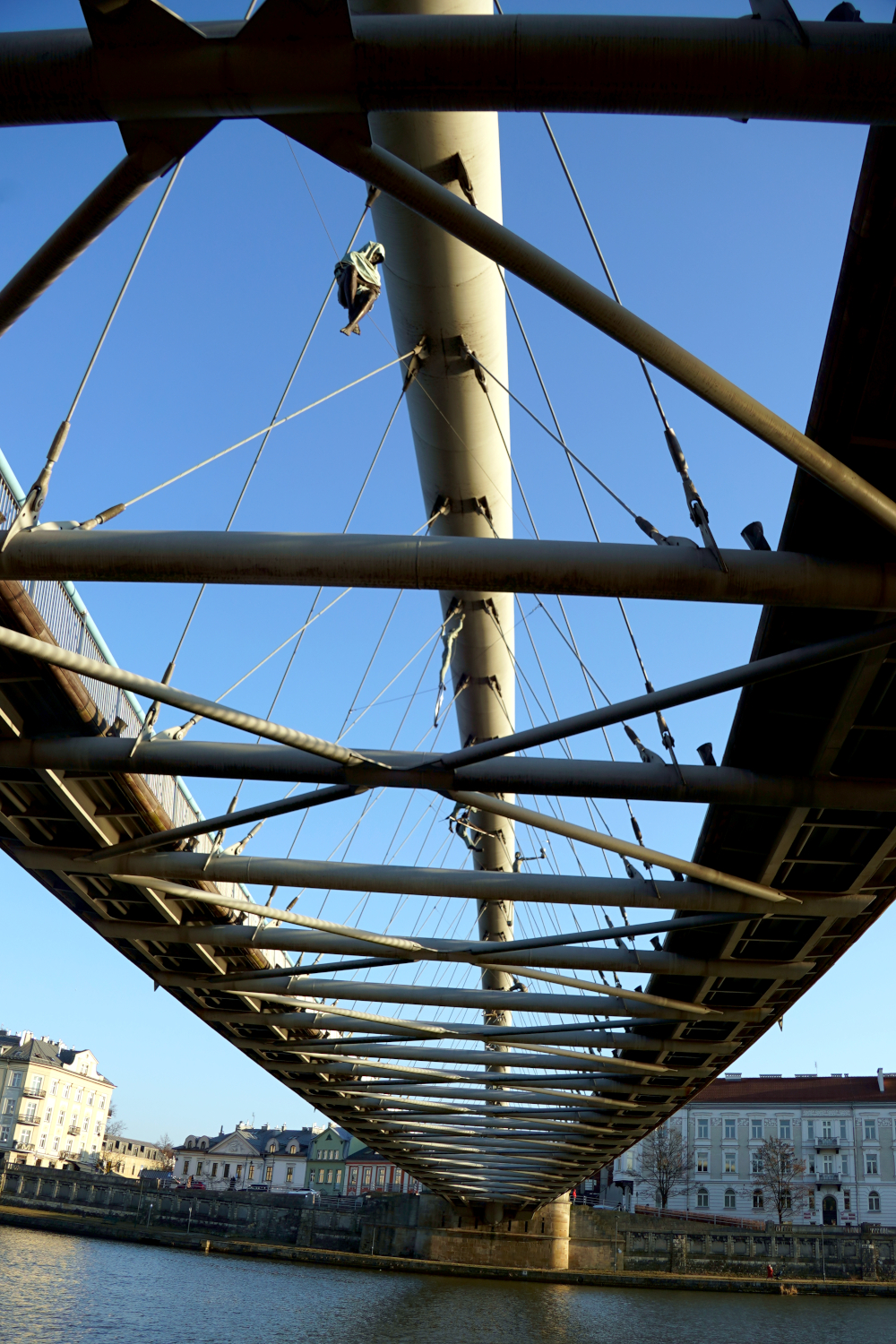
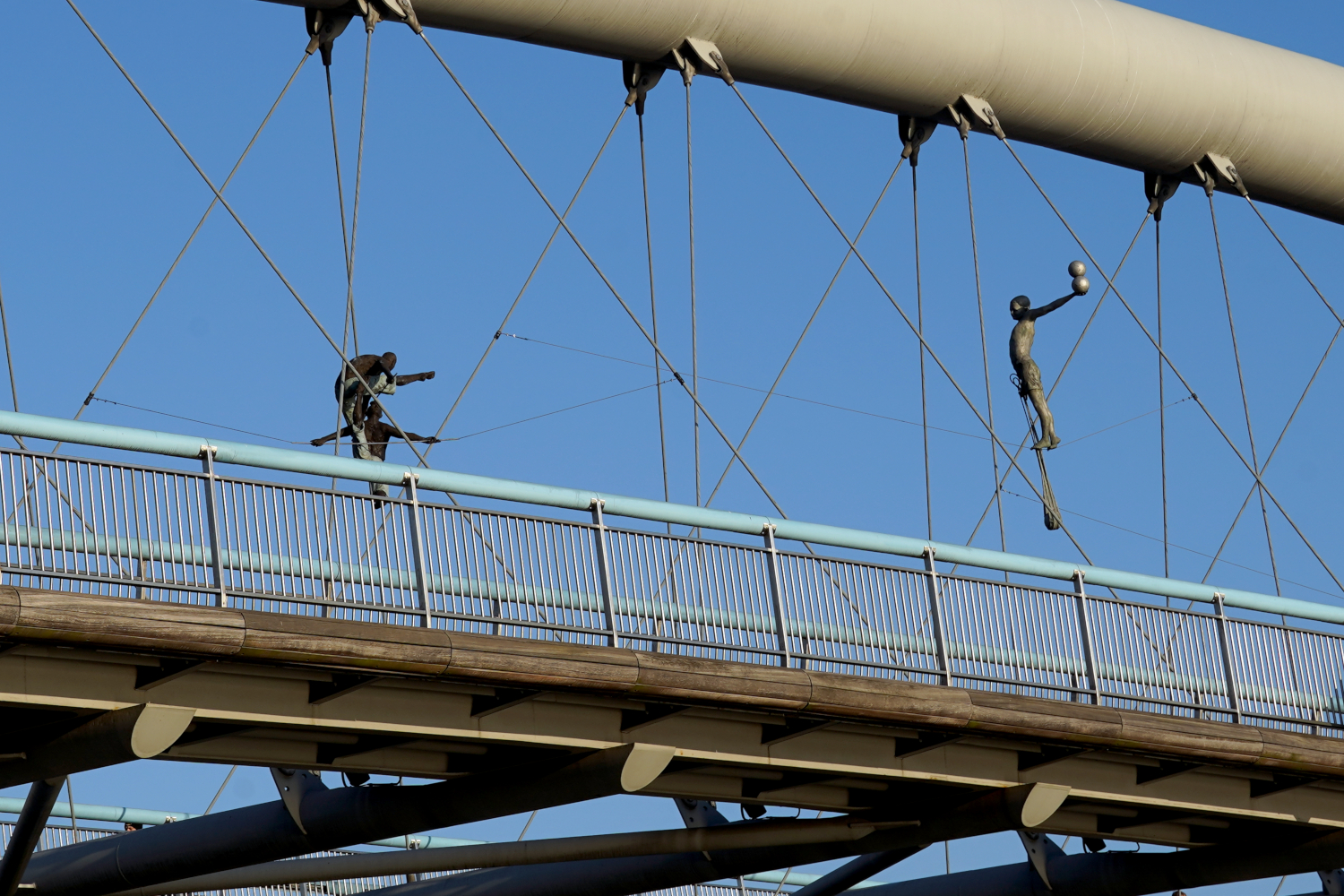
On the way, we pass a bridge over the Vistula with a curious art installation that is easy to overlook, because you have to look over your head. These are on the Father Bernatek Footbridge, which features metal acrobatic sculptures by artist Jerzy Kedziora. They are balancing on wires and performing other gravity-defying stunts that are much easier to do when you’re permanently moored by steel cable.
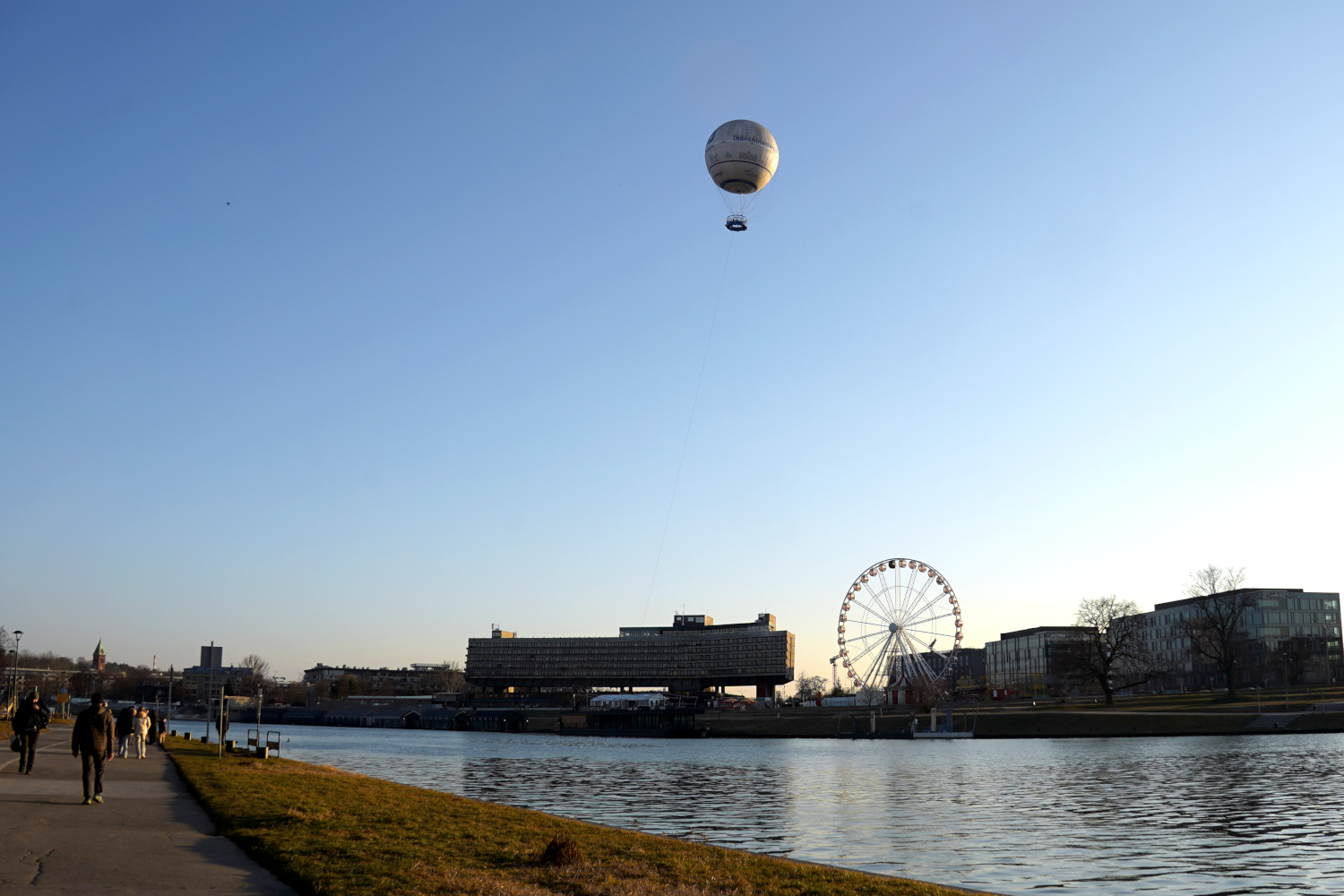
When we arrive at the dragon’s lair, a crowd has assembled, along with a gaggle of souvenir vendors, and the atmosphere of anticipation is as thick as dragon breath. The dragon (Smok in Polish) has become rather fussy with all her centuries of fame, and only makes appearances at certain times of the day, and only at certain times of the year. On our previous visit, which was also in February, she was not slated to greet her fans at all; but we managed to see the fire-breathing display anyway, courtesy of three maintenance workers who happened along and tinkered with the sculpture. But this time, we were here to witness the spectacle in all its glory, with a throng of other appreciative humans.
Except, no. Alas, it’s not to be on this occasion either. For a man who appears to be a street vendor, but also seems to know what the hell he’s talking about, announces in a loud voice and excellent English that “the dragon will not breathe fire today.” So that’s that.

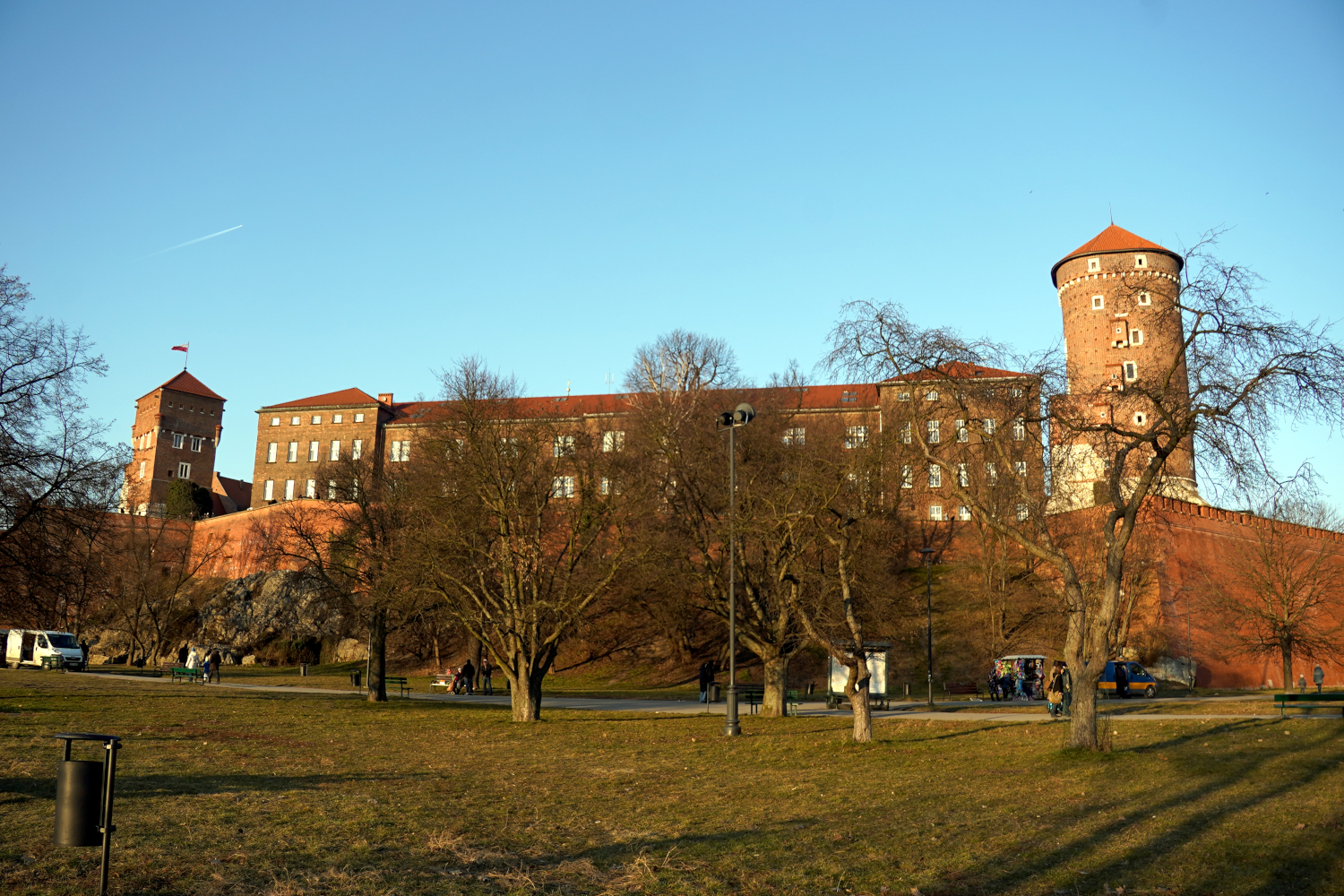
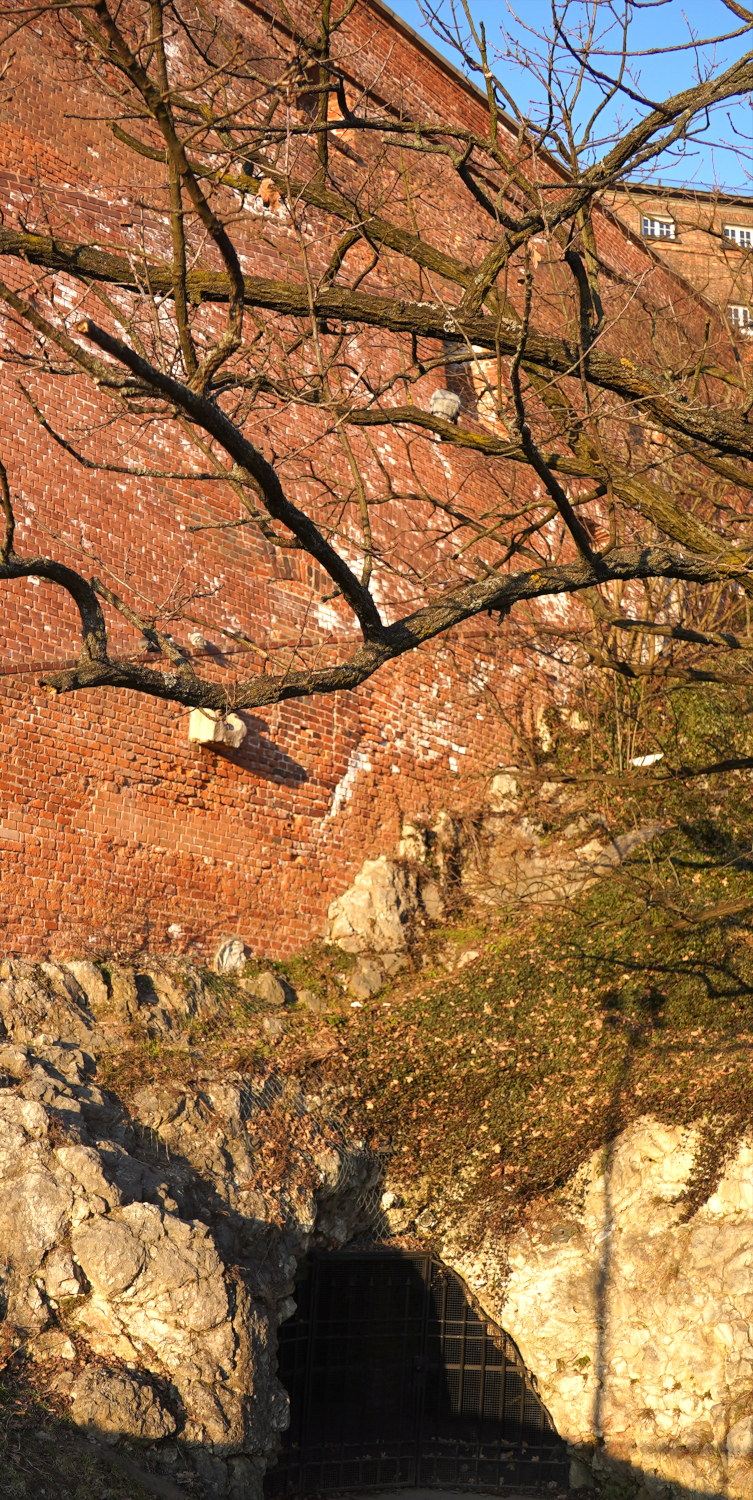
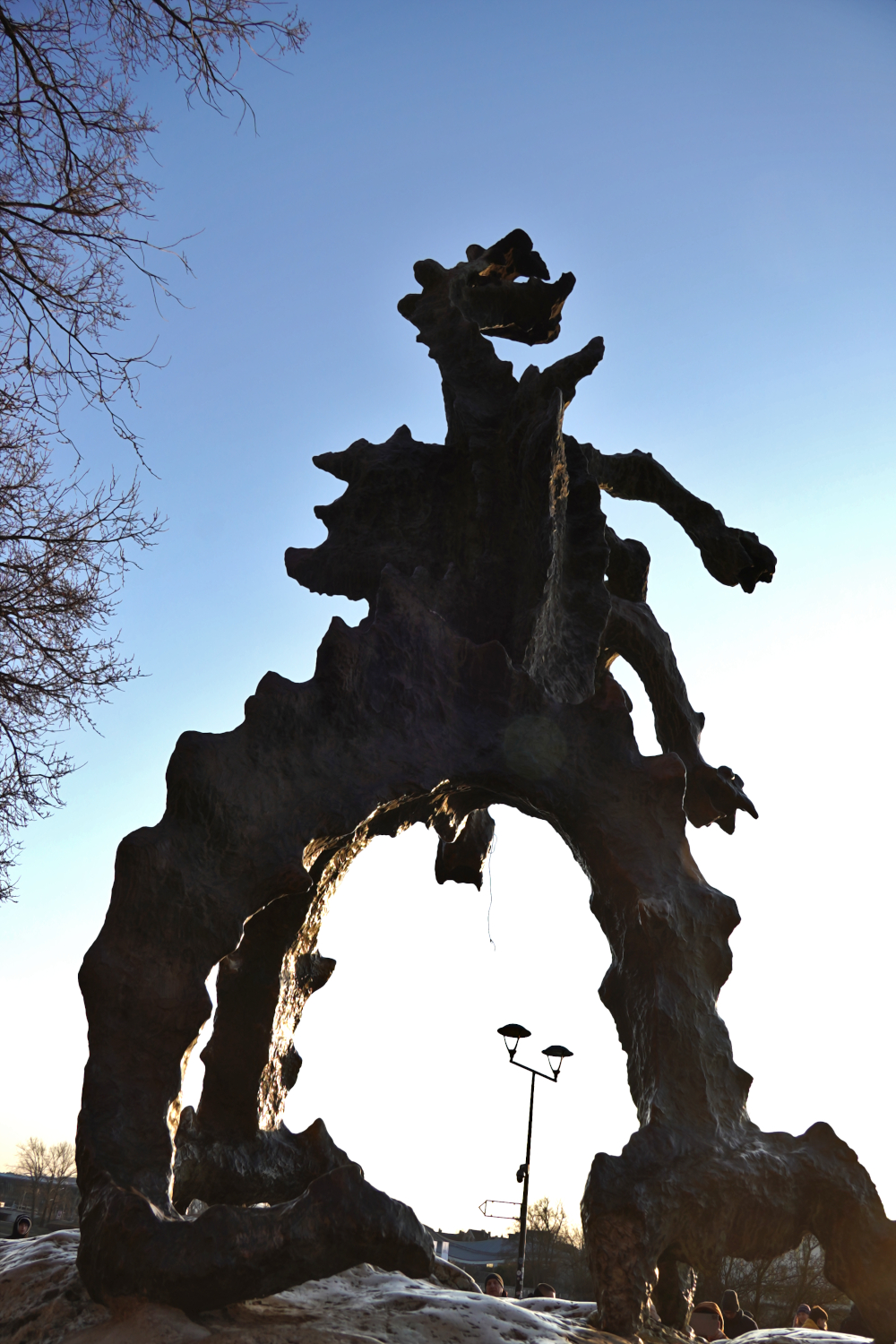
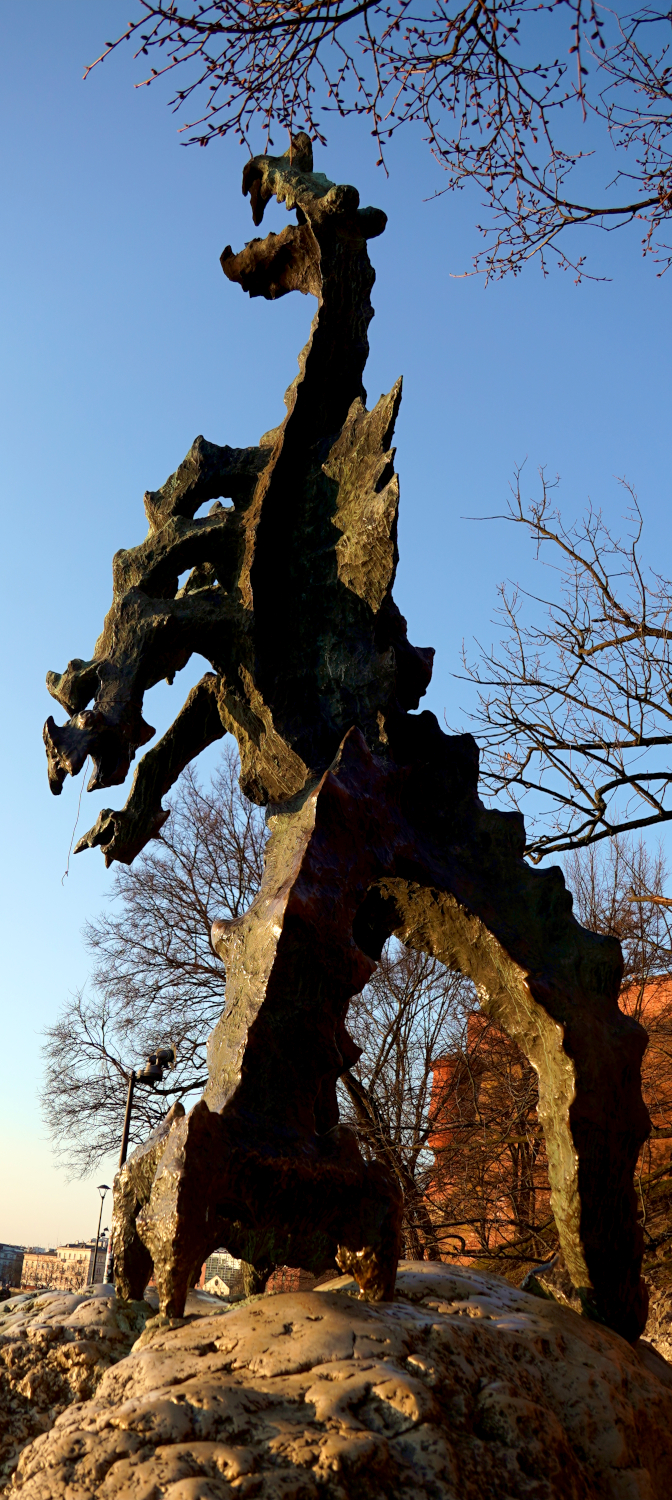
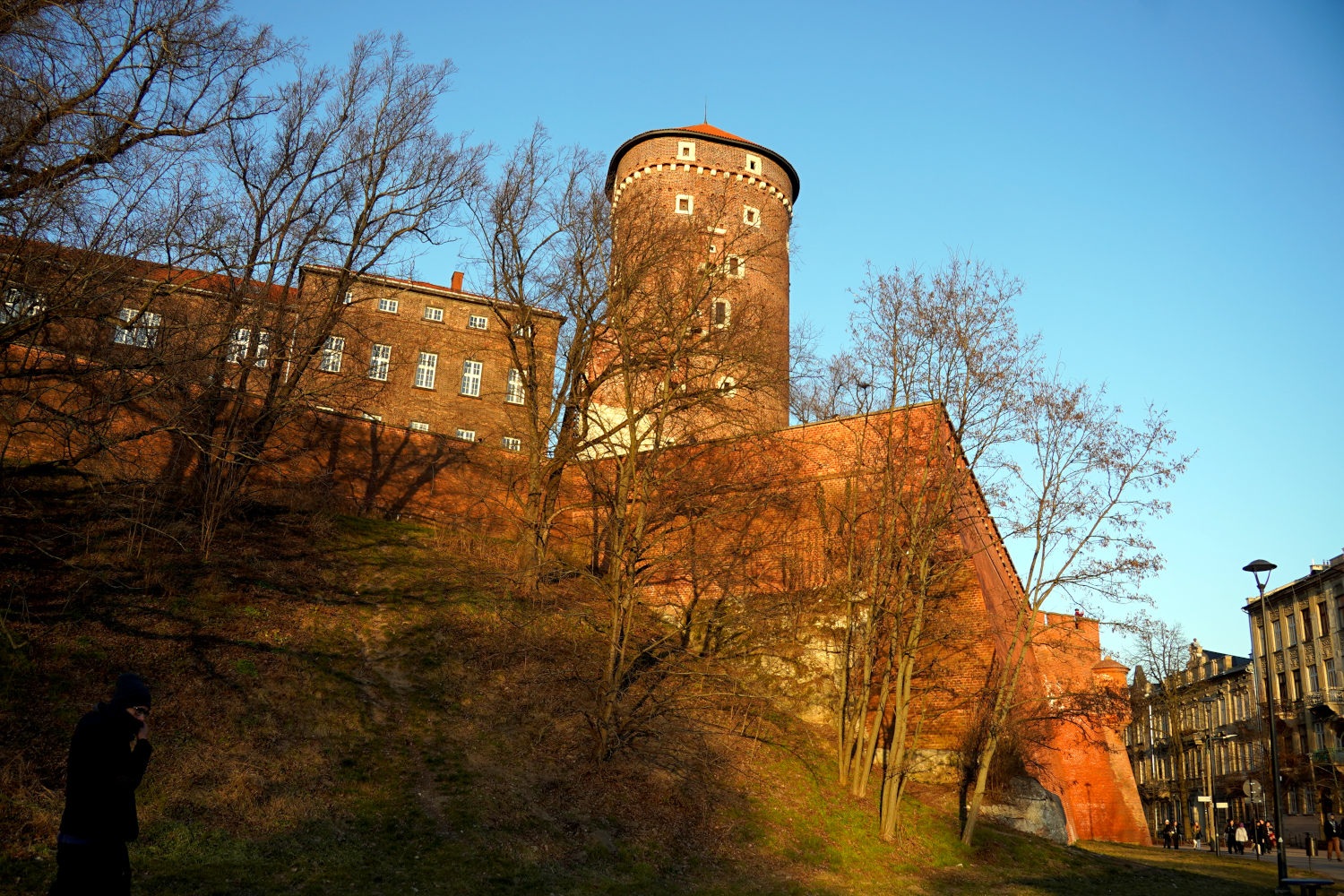
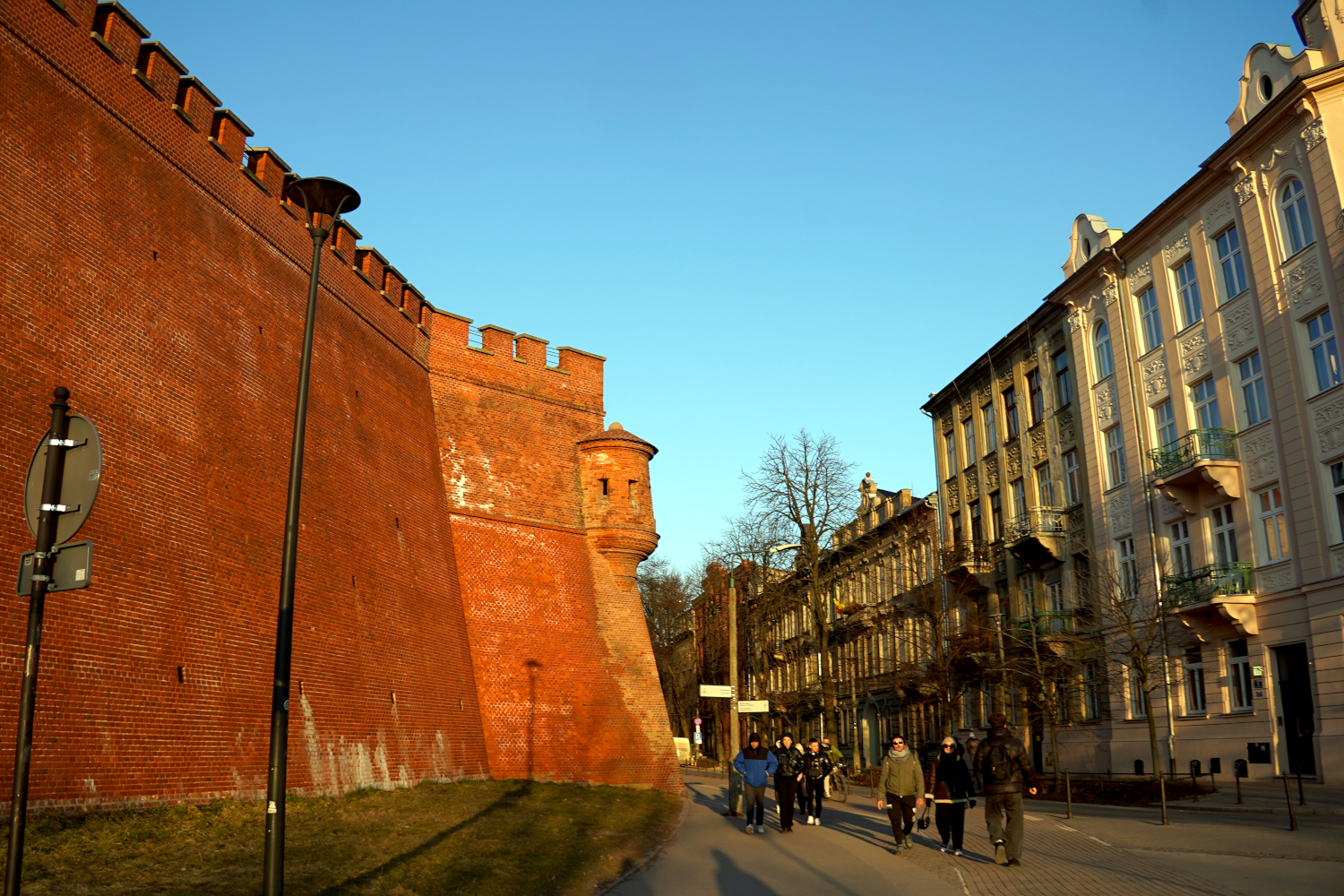
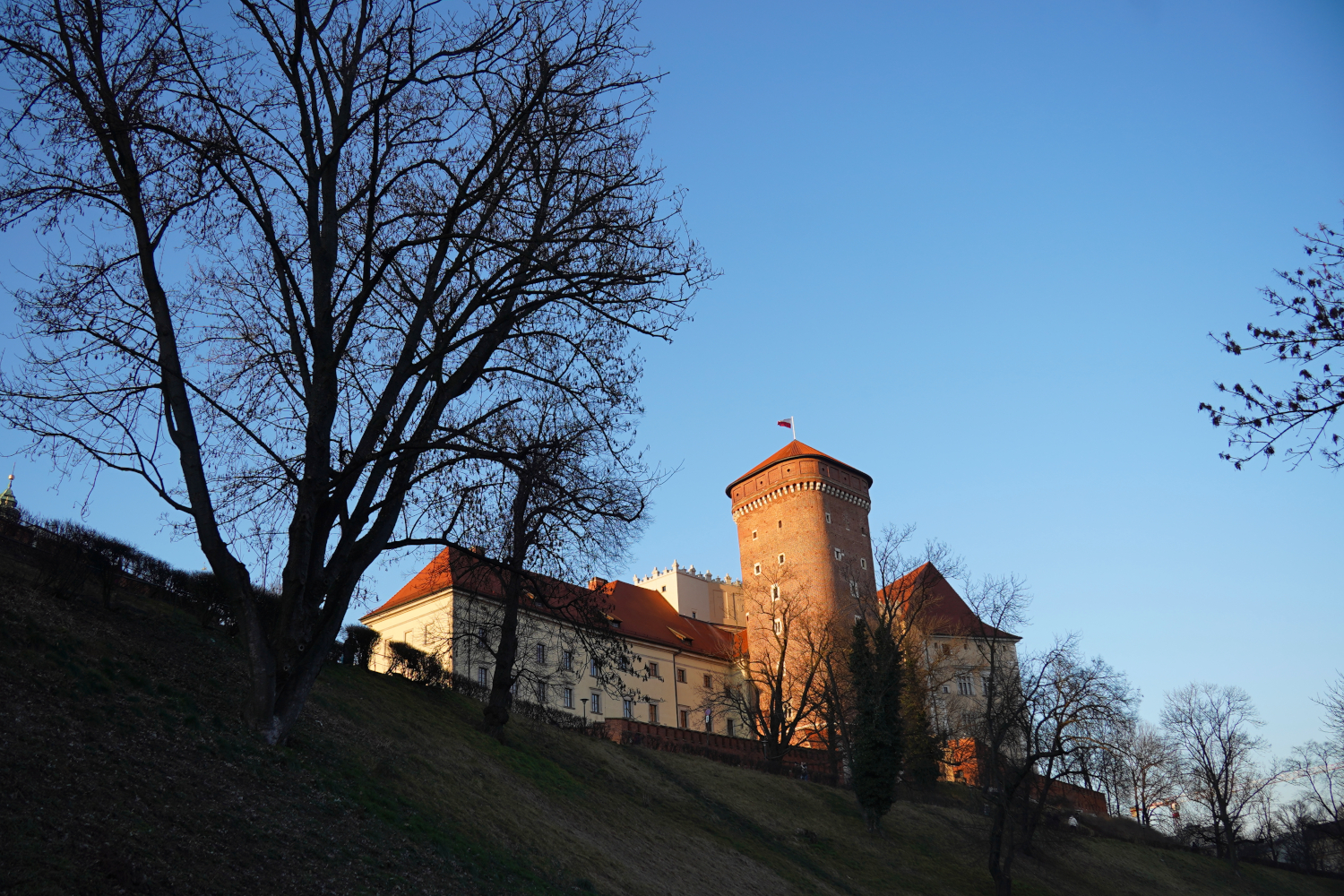
As a consolation prize, we mosey up the hill to Wawel Castle and Wawel Cathedral. The castle, constructed in the 12th and 13th centuries (long after the dragon was slain by whomever), was the official residence of the Polish king for many centuries, but now houses a museum. Next to it is Wawel Cathedral, where kings were coronated. The current cathedral wasn’t built until the 14th Century, making it the new kid on the block; but it sits (or stands, or whatever a cathedral does) on the same site as two previous churches bearing the same name, dating back about a millennium. It was here that local boy Karol Wojtyla, later known as Pope John Paul II, delivered his first mass. (We just might be crossing paths with him again.)

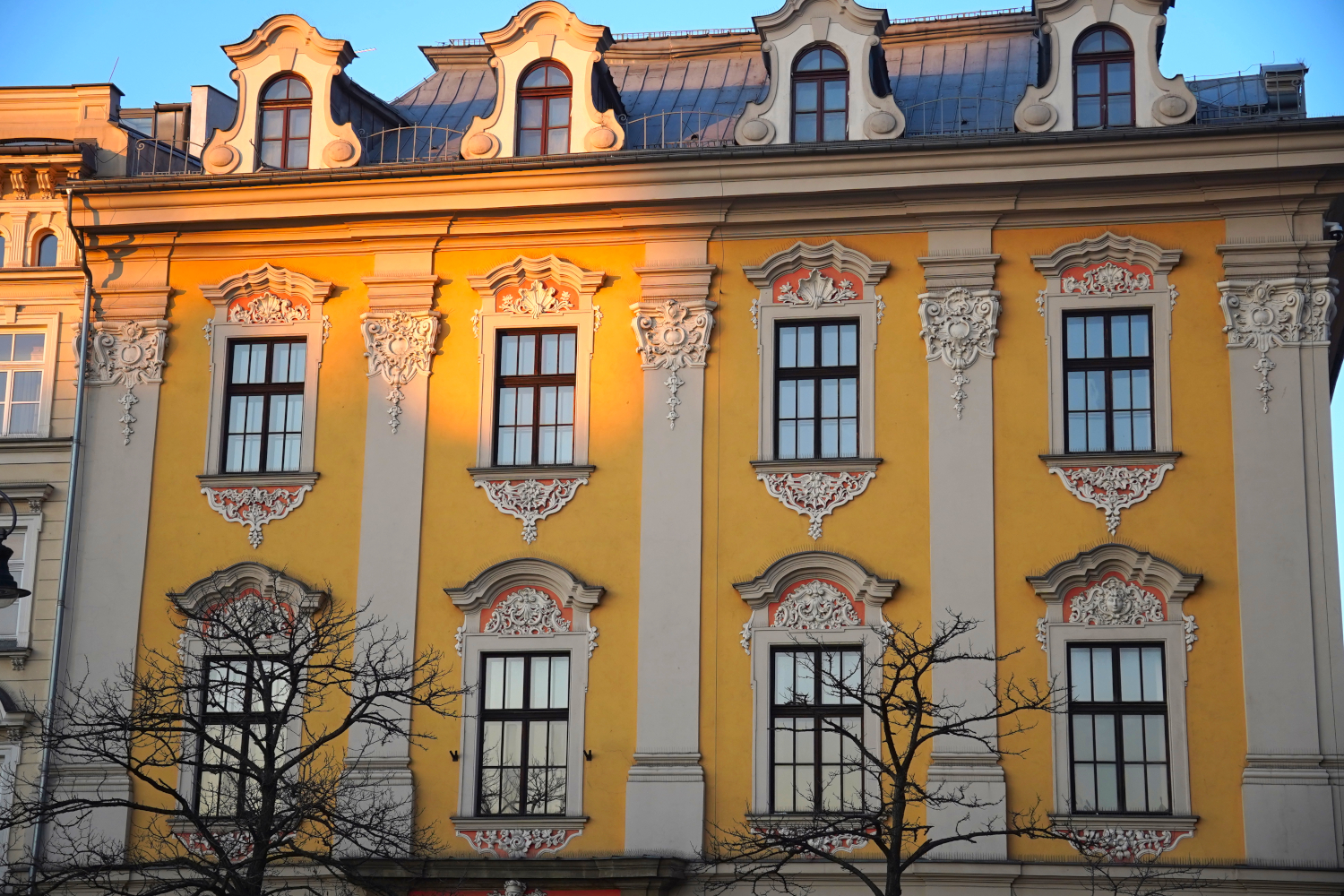
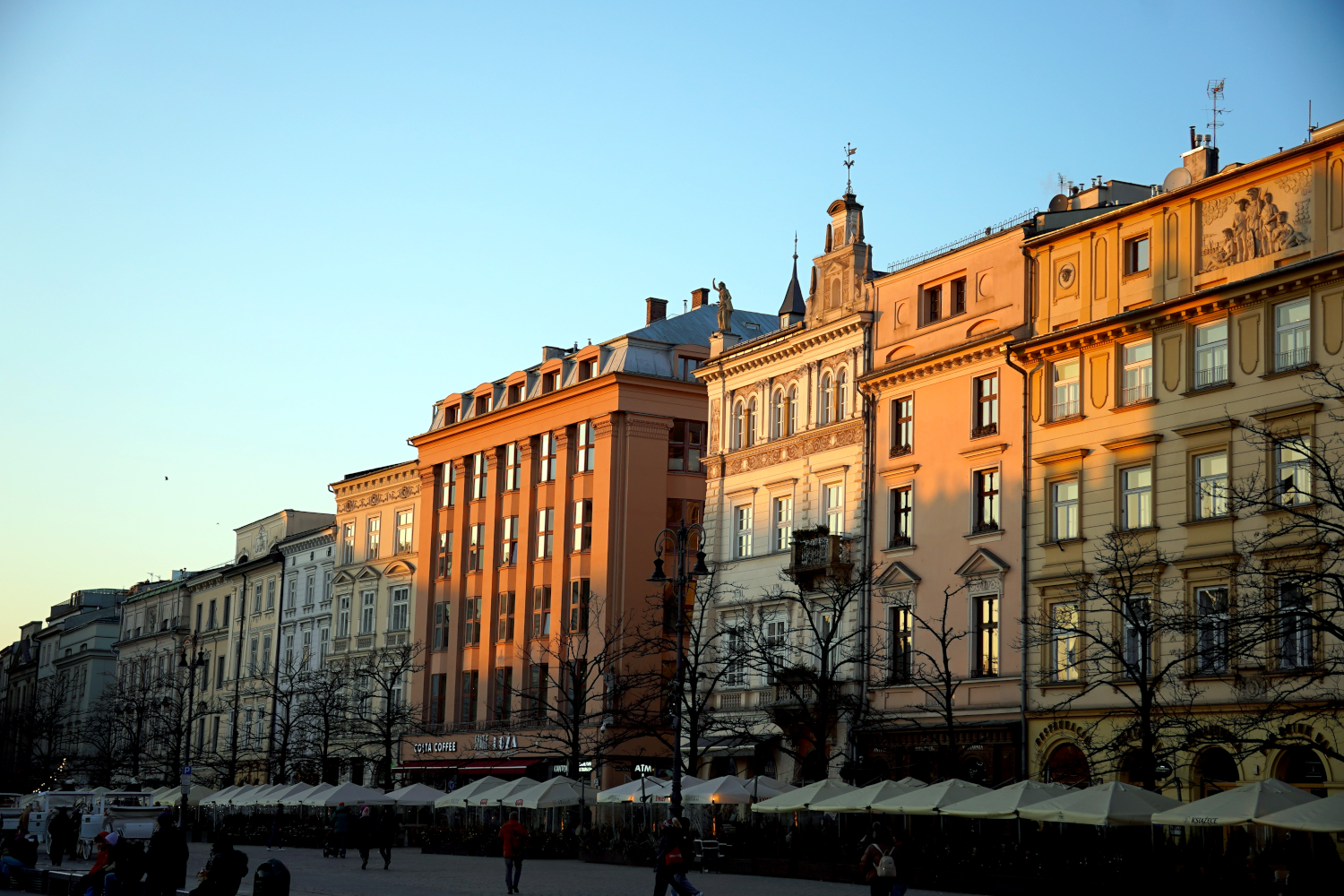
Should we patronize the museum? Hmmm… We mull it over, and ultimately arrive at the same conclusion we did at the Royal Palace in Vienna: we’re really just not that keen on shelling out a bunch of money to get a glimpse of opulence. However, there is a separate exhibit called Lost Wawel, which showcases archaeological finds. That was much more our speed, so we also considered indulging in that. But as it was only going to be open for another hour or so, we thought it best to plan on returning another day to get our Zloty’s worth.
Back at the Airbnb, we have 5 new guests arrive, in 2 groups; and they all have problems checking in , which we help them navigate. First there are 3 young men (two from Ukraine and one from France) who received a message from the host, which they show us, but somehow the bottom part of it got cut off, so they don’t know their room number. They do, however, have all the codes and can access their room key. So they just go around trying all the vacant rooms until they find one that works. Bingo. Later, two young fellows from Turkey arrive, and they can’t figure out how to open the lockbox containing their room key. (It is indeed cantankerous.) So we assist them, and all is well.
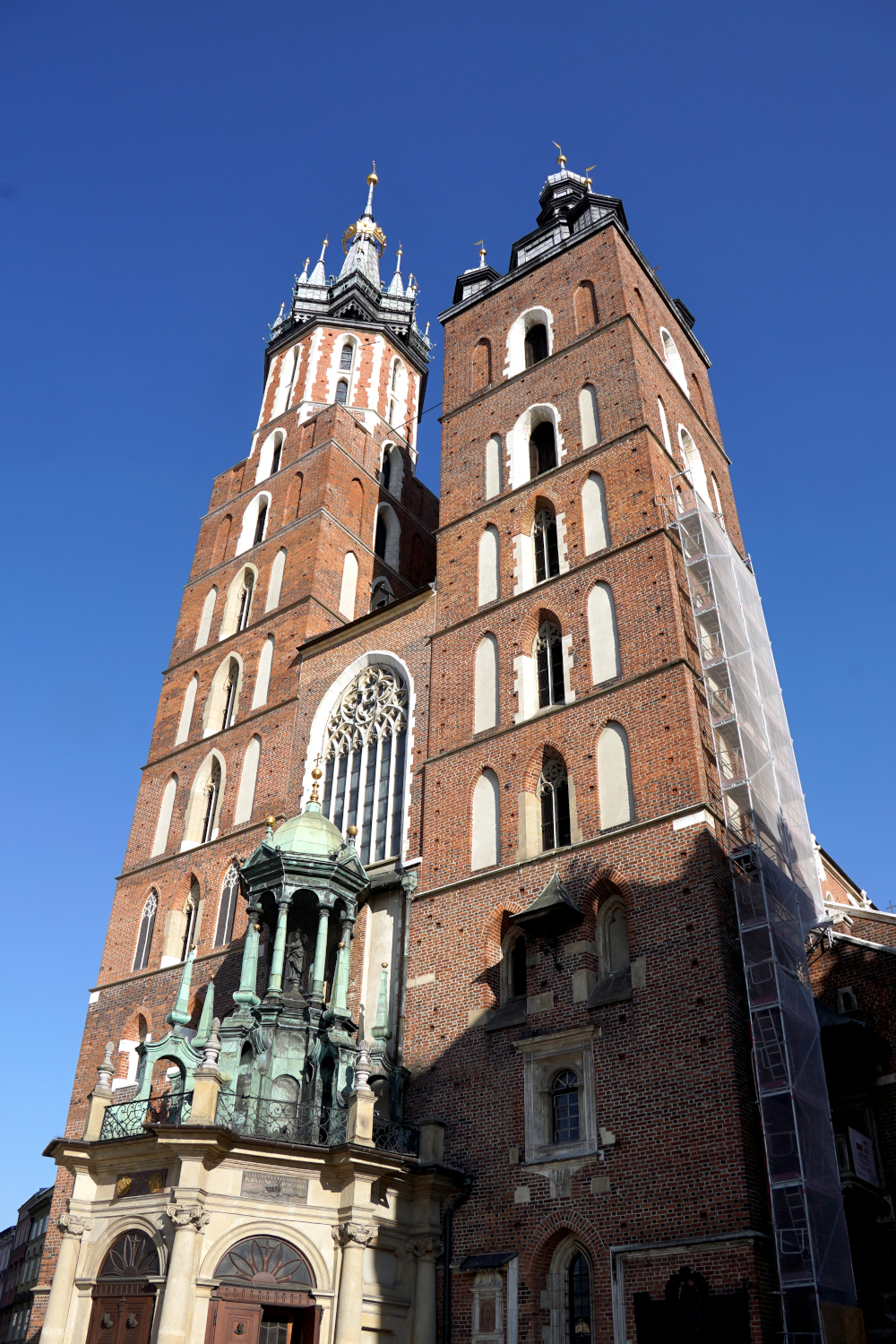
The next day, our target is the crown jewel of Old Town, St. Mary’s Basilica. A distinctive sight on the skyline of this relatively non-vertical medieval quarter, St. Mary’s looms large with its pair of oddly mismatched towers. The first time we ever set foot in Krakow, on a foggy evening, we saw those towers rising up to welcome us, and it was a sight we’ll never forget.
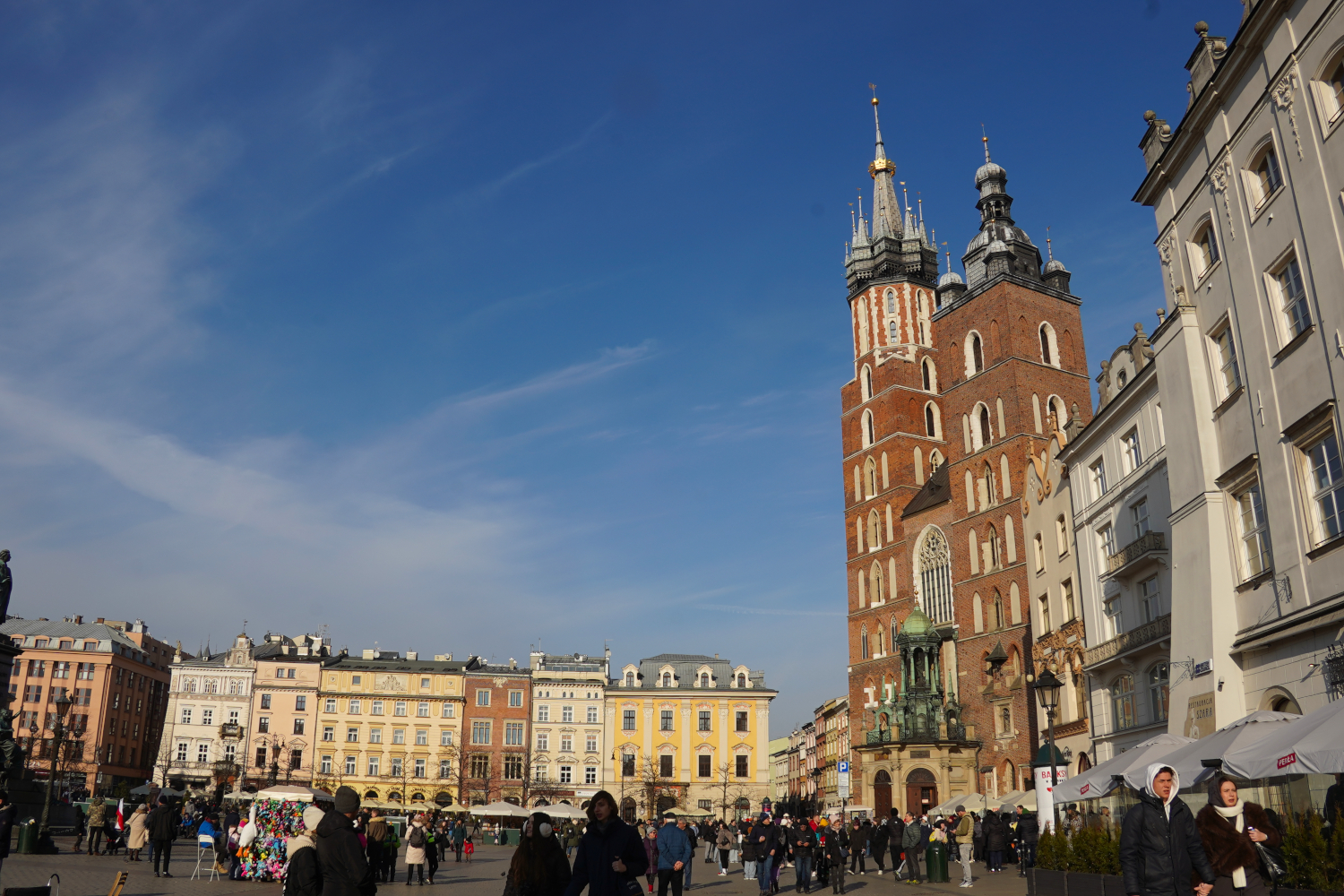
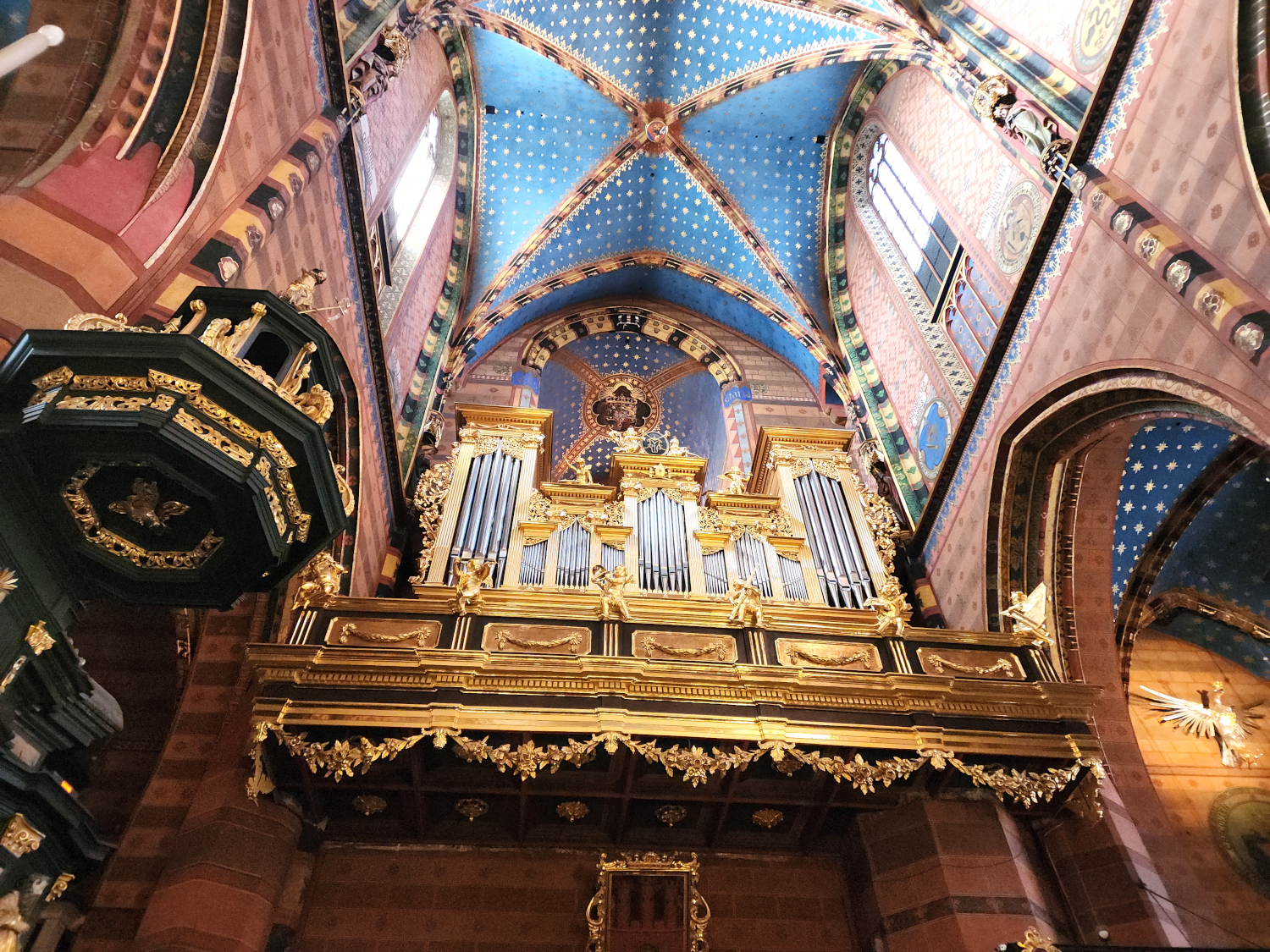
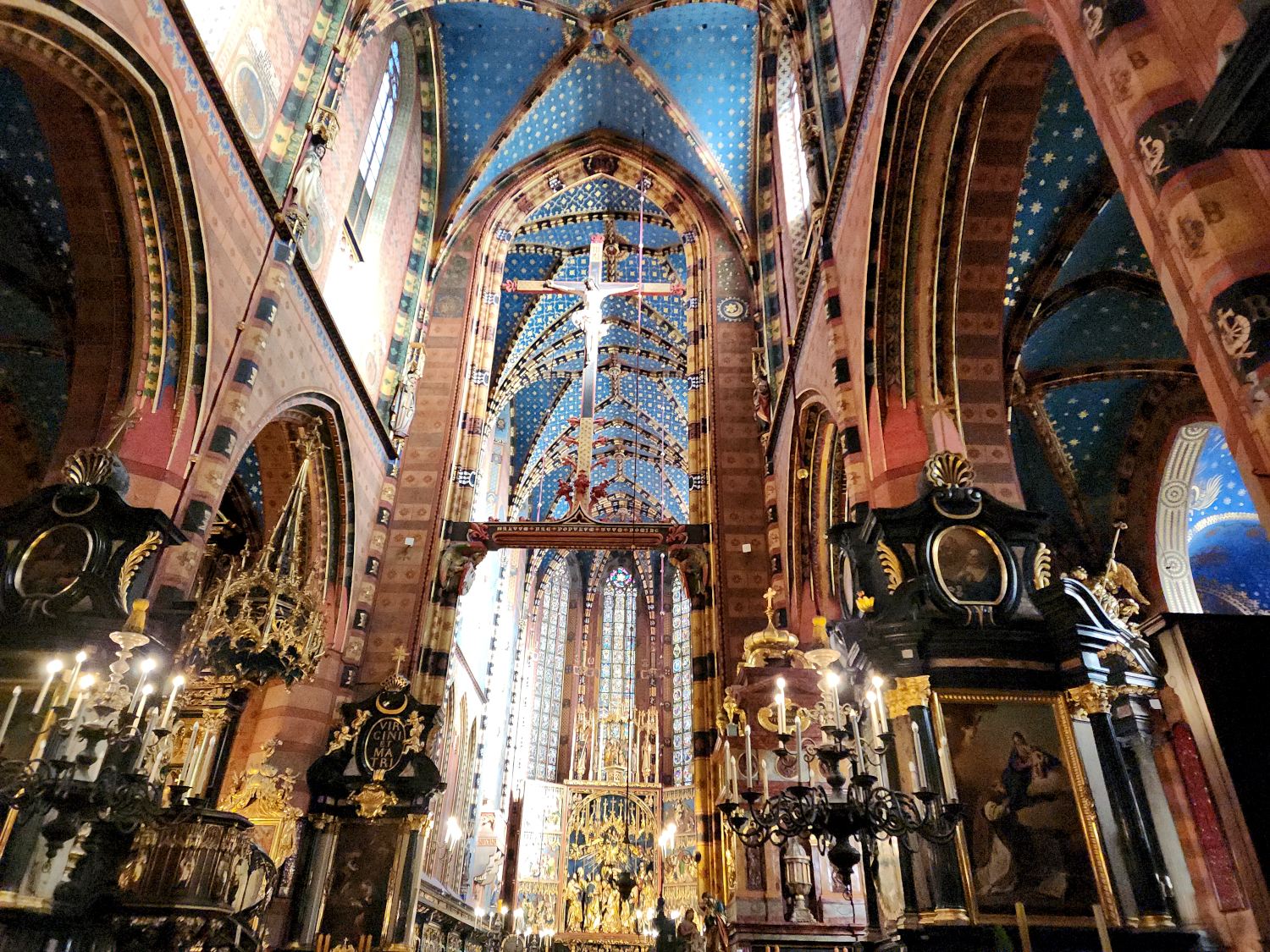
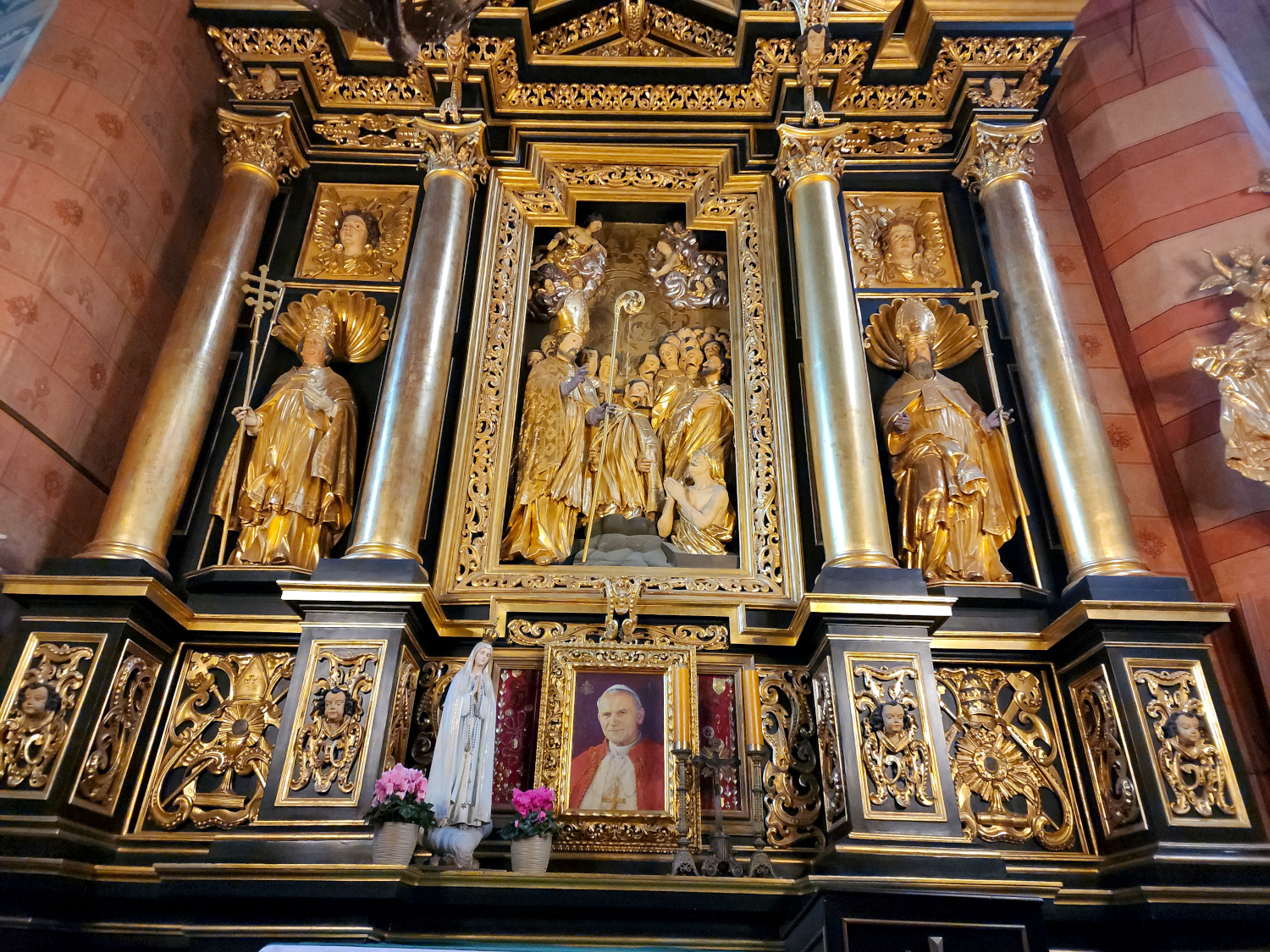
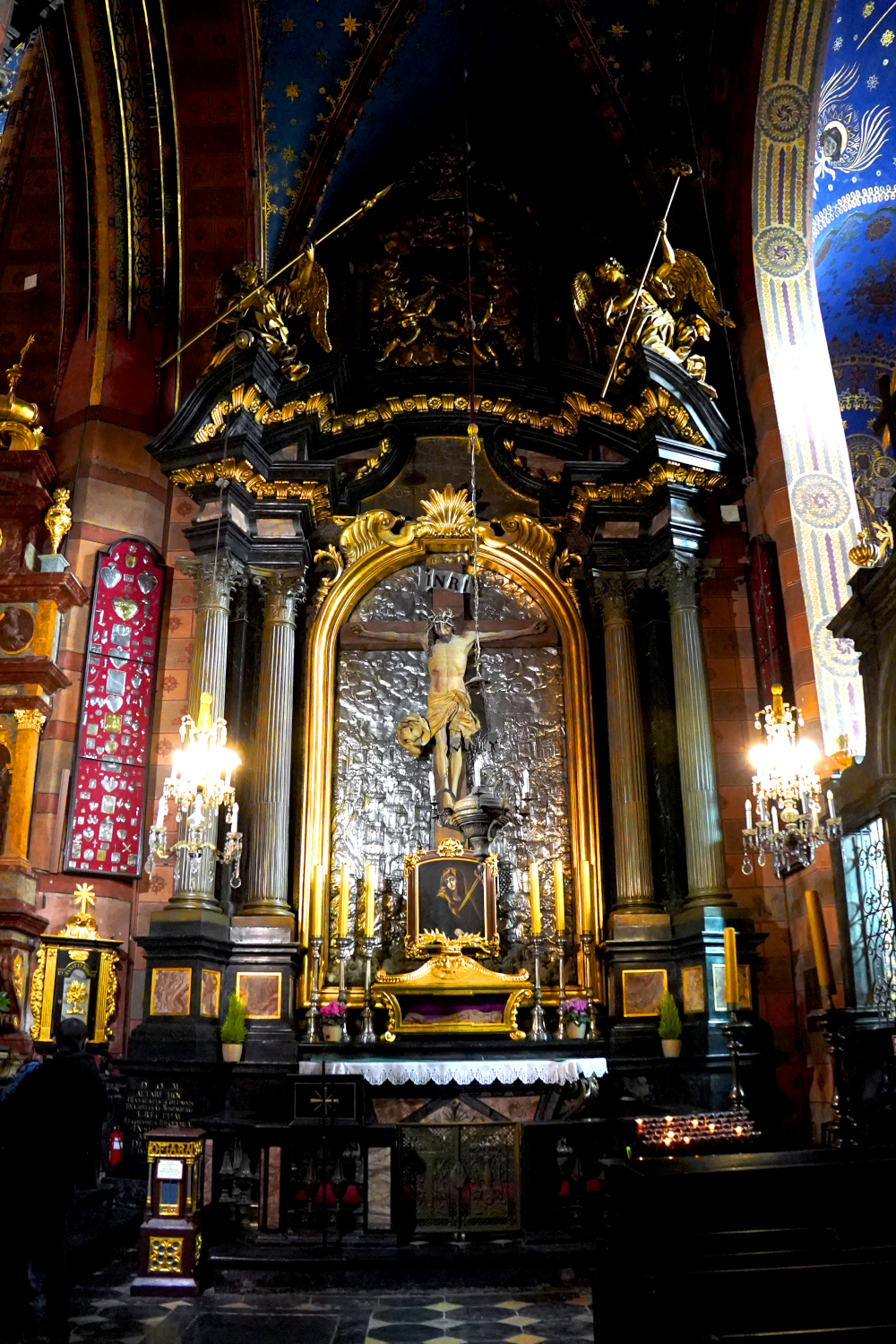
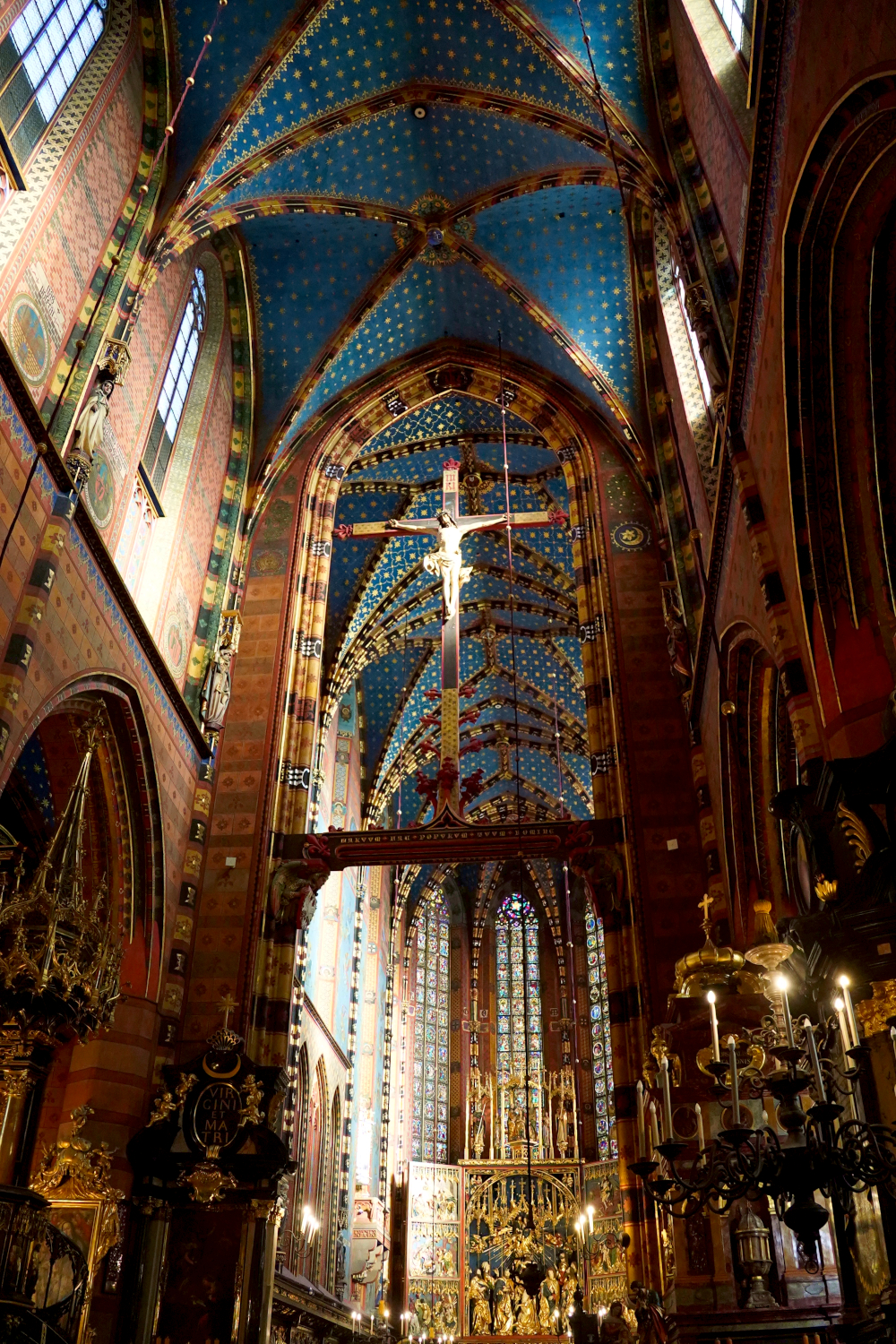
Originally built in the early 13th Century, then rebuilt in the late 13th Century (after an invasion) then re-rebuilt in the mid-14th Century, St. Mary’s is the focal point of a prominent legend, and the site of a cultural ritual that commemorates it. During the 13th Century, so ’tis told, a trumpeter on one of the church’s towers was sounding the alarm during a Mongol invasion of the city, when one of the Mongol arrows struck him in the throat in the middle of his performance. So now, to honor him, a trumpeter in the taller tower plays the same tune every hour on the hour, around the clock and around the calendar — and stops on the same note his legendary predecessor stopped on — or rather was stopped on. (This incident and tradition were popularized in the 1928 young adult historical novel The Trumpeter Of Krakow, which Dennis recalls reading in grade school.)
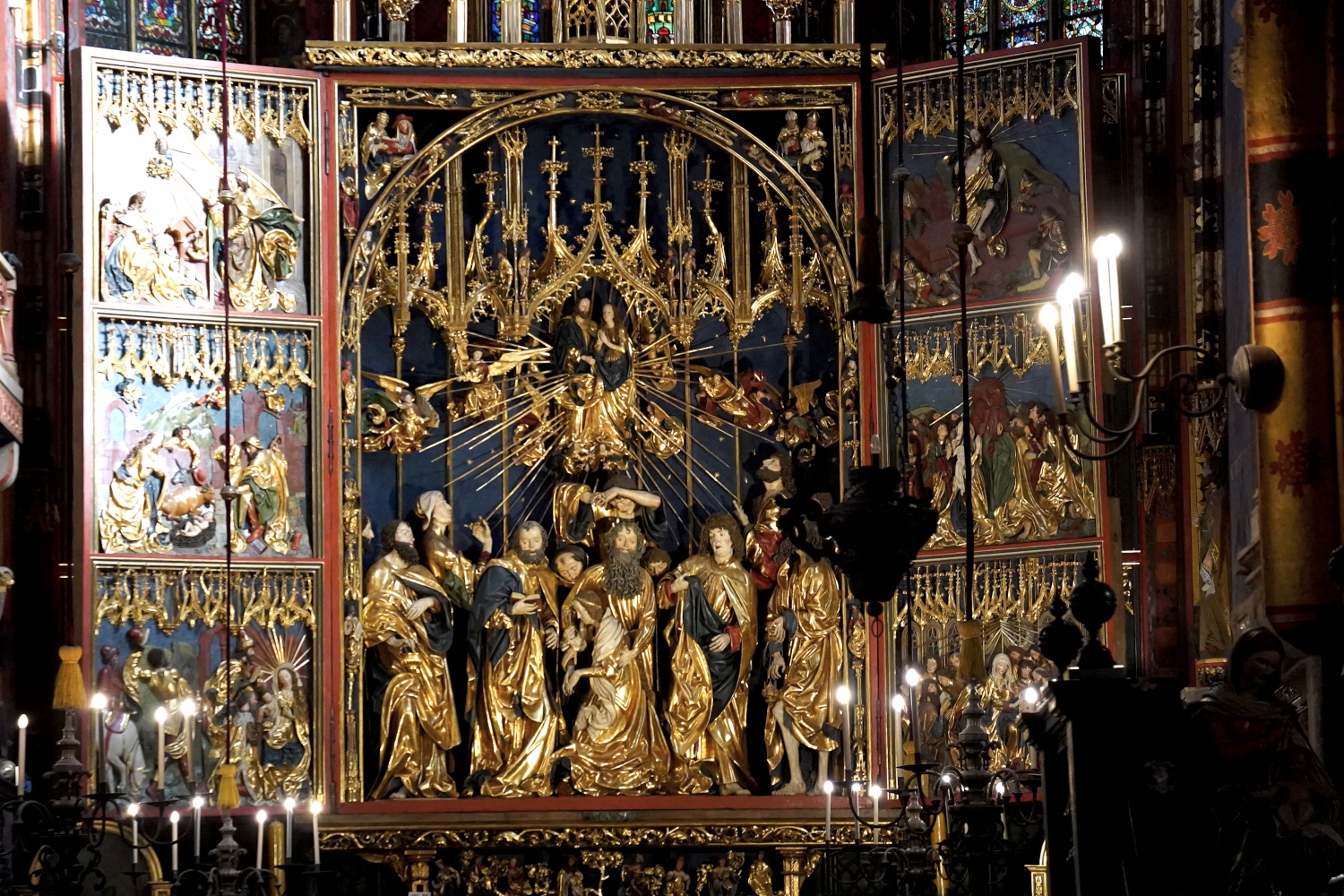
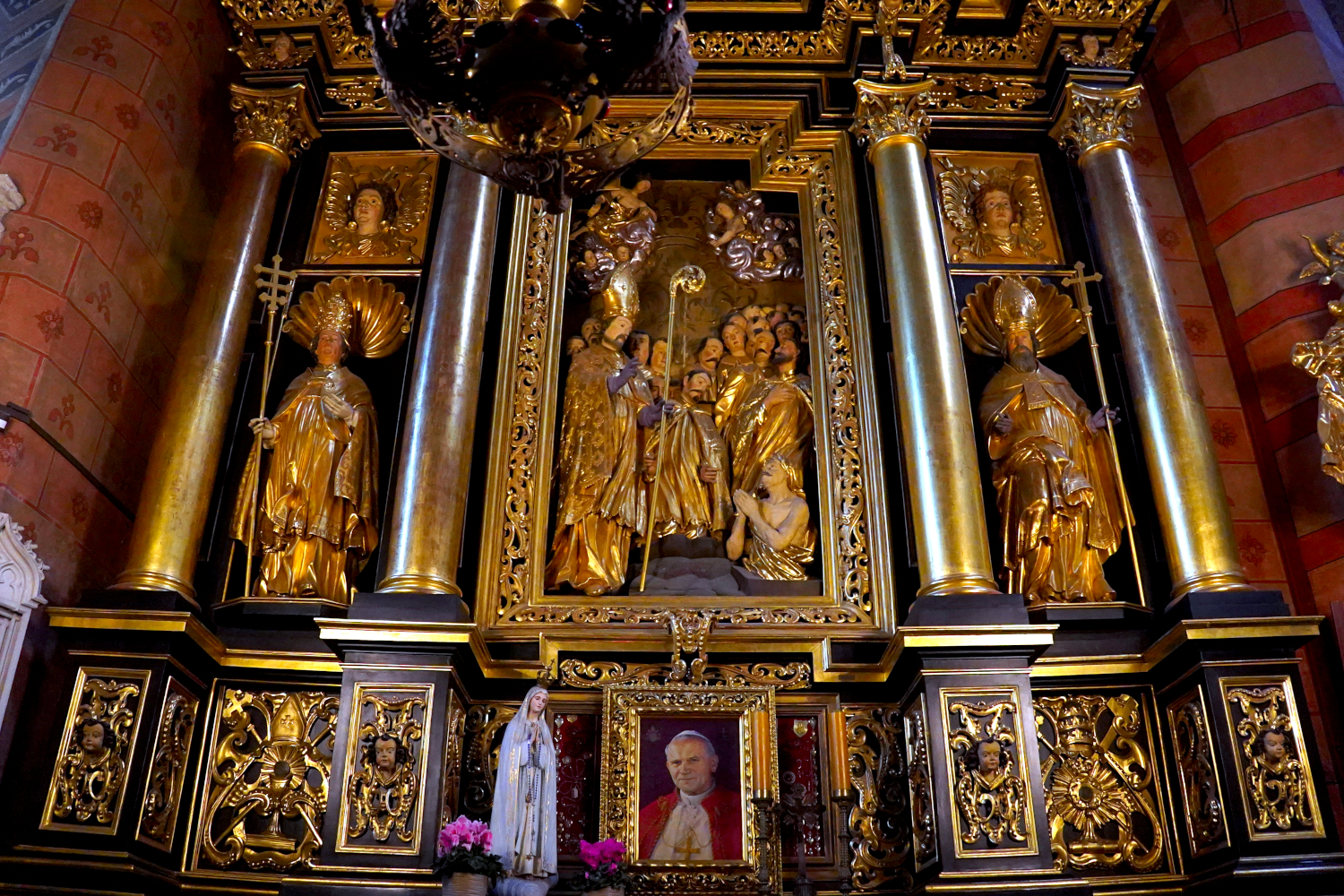
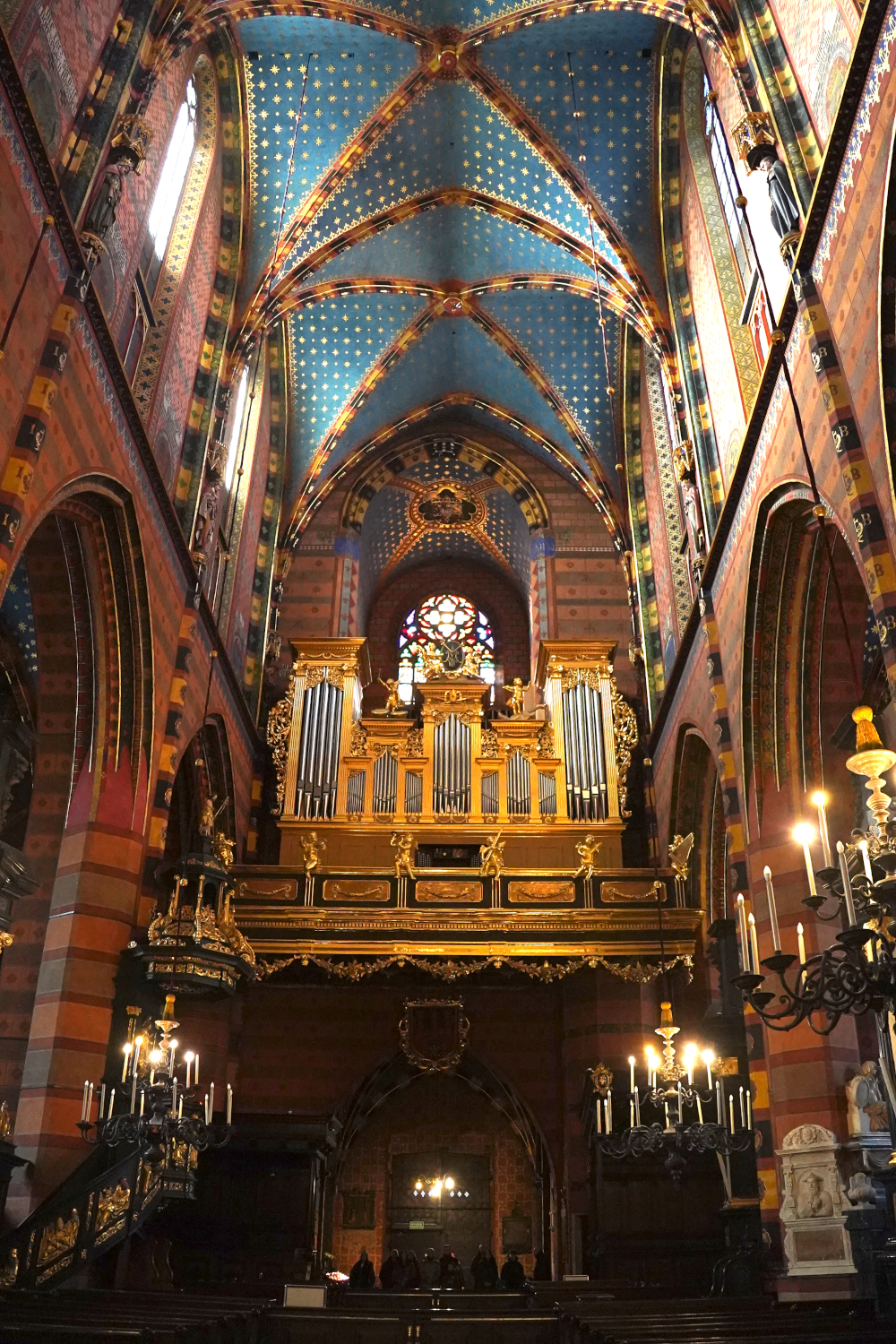
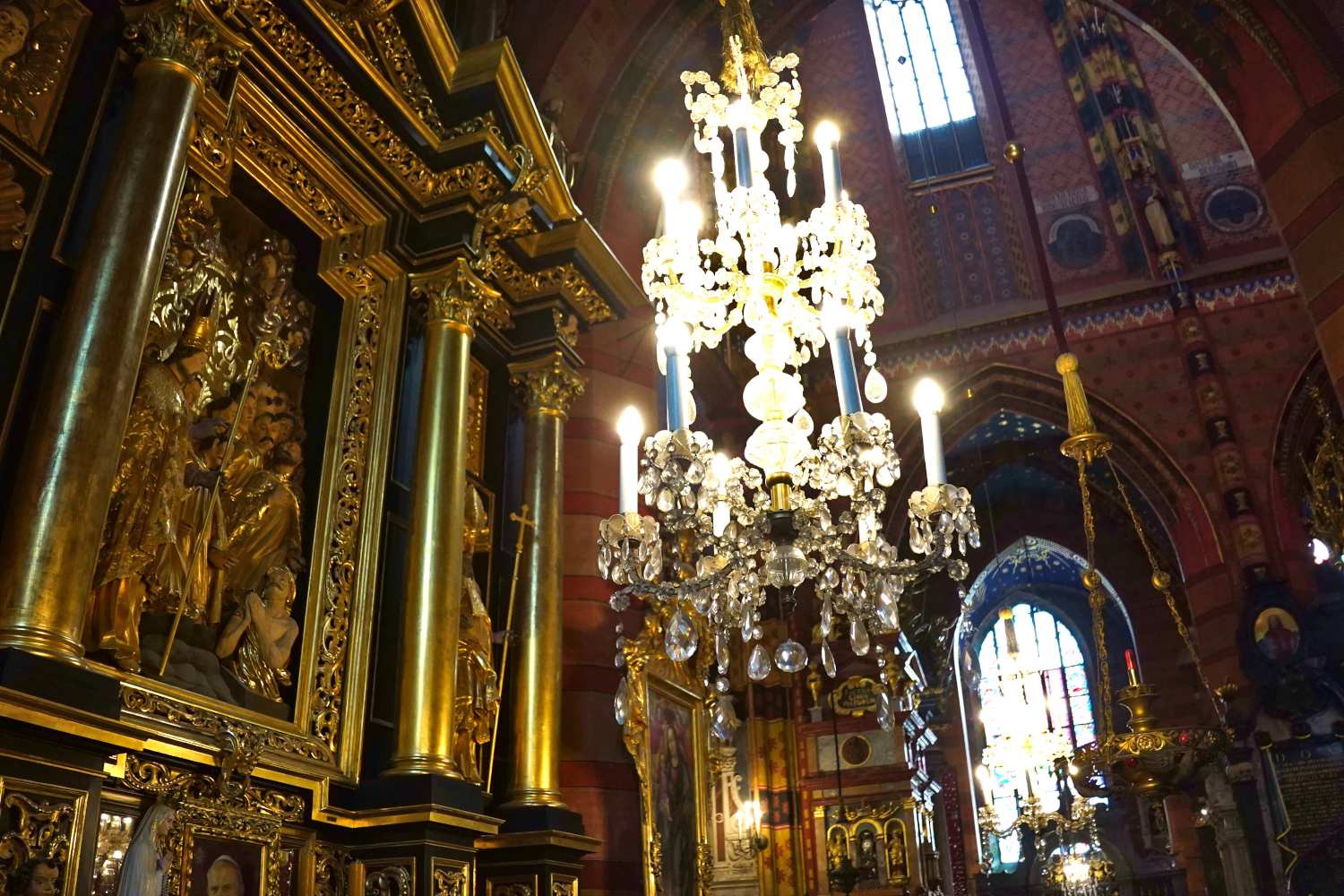
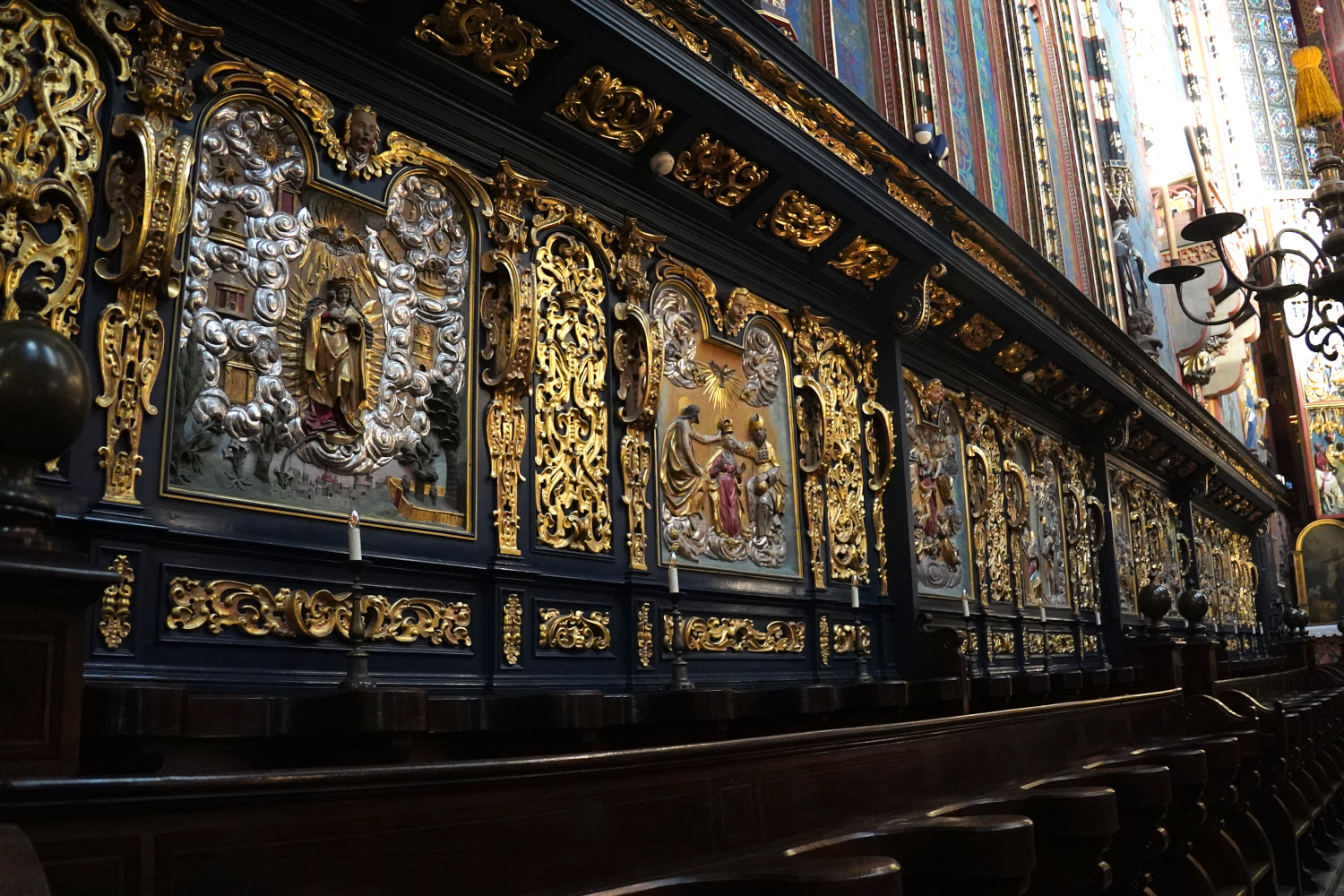
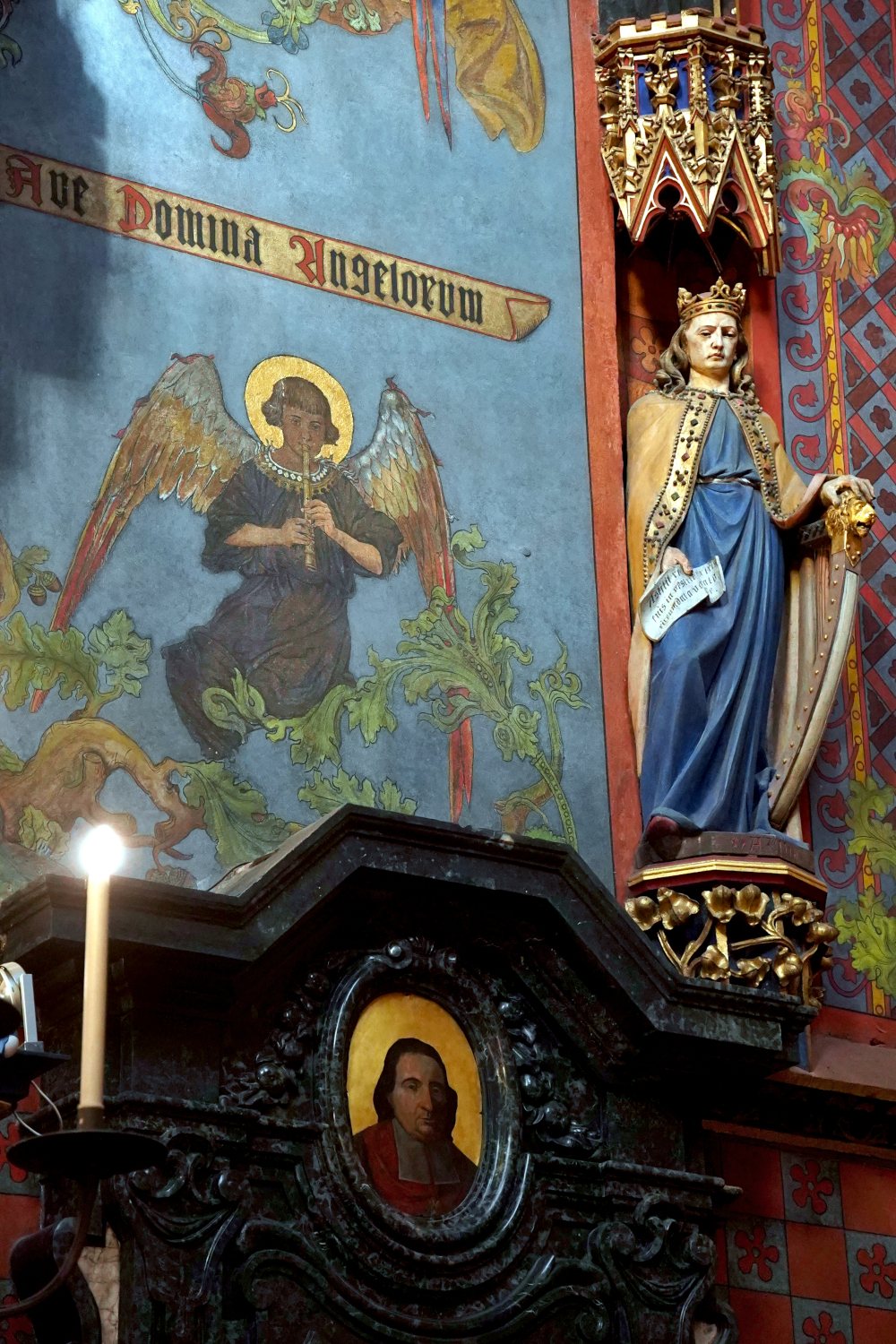
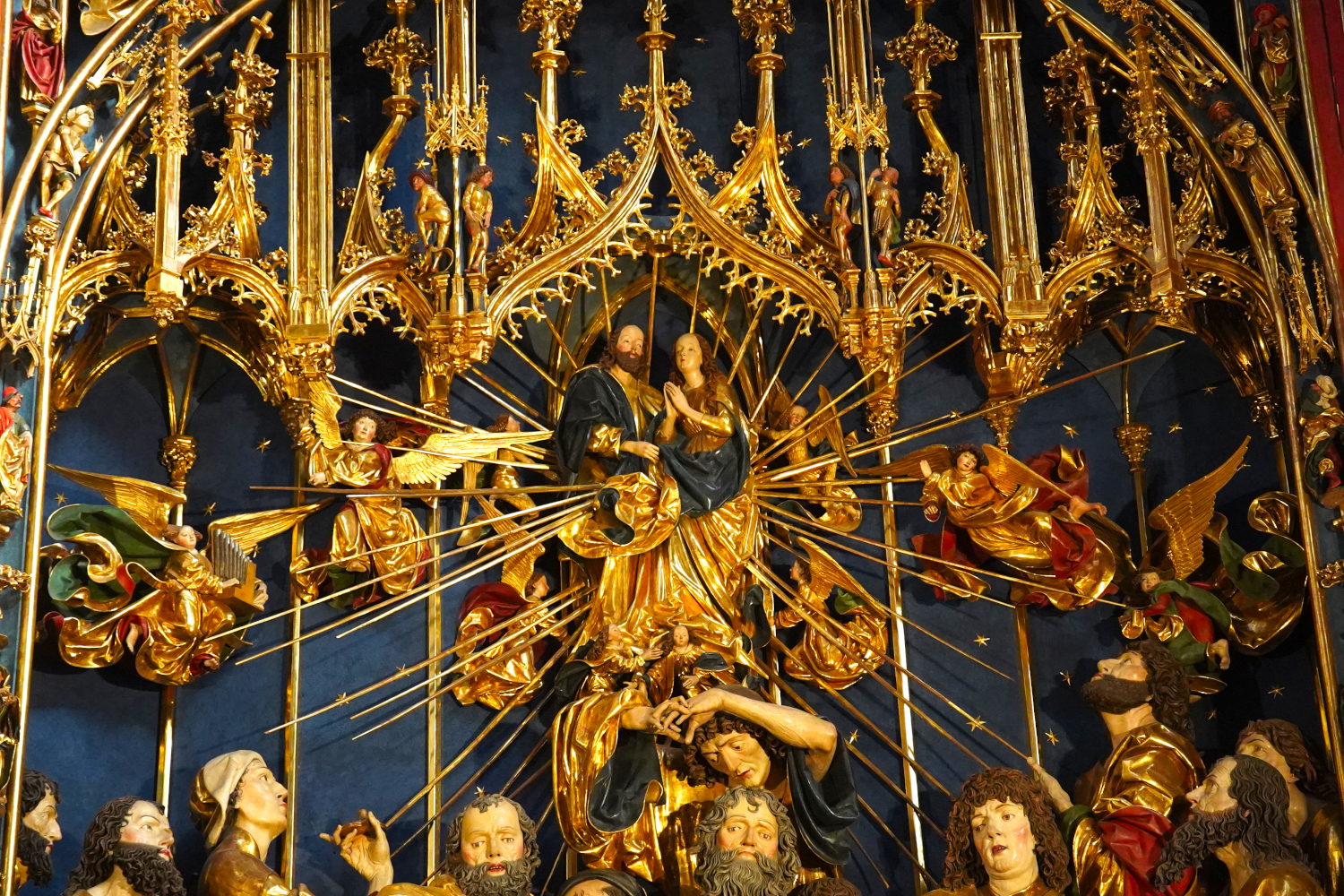

There is a small charge for a self-guided tour of the basilica, but hey. We cough it up and go inside, and what we see surpasses all expectations. We’ve seen the innards of quite a few of the world’s famous houses of worship, and most of them were quite awe-inspiring. But this one just might take the cake, with its richness of detail and especially with its abundant and artistic use of gold — or at least gold paint; it’s likely that there’s little if any real gold incorporated. But the overall effect is quite dazzling.
Walking back through the square, we note how much busier it is now than when we were here 9 years earlier. Is it because of the time of year? It’s only about 3 weeks later, so it shouldn’t make that much of a difference. Were we just lucky then? Whatever the explanation, it seemed at the time that Krakow was a treasure that many tourists had yet to discover. Well, now they’ve discovered it full bore. No longer can we expect to have this gem of a city all to ourselves. But we still love being here, and don’t mind sharing.
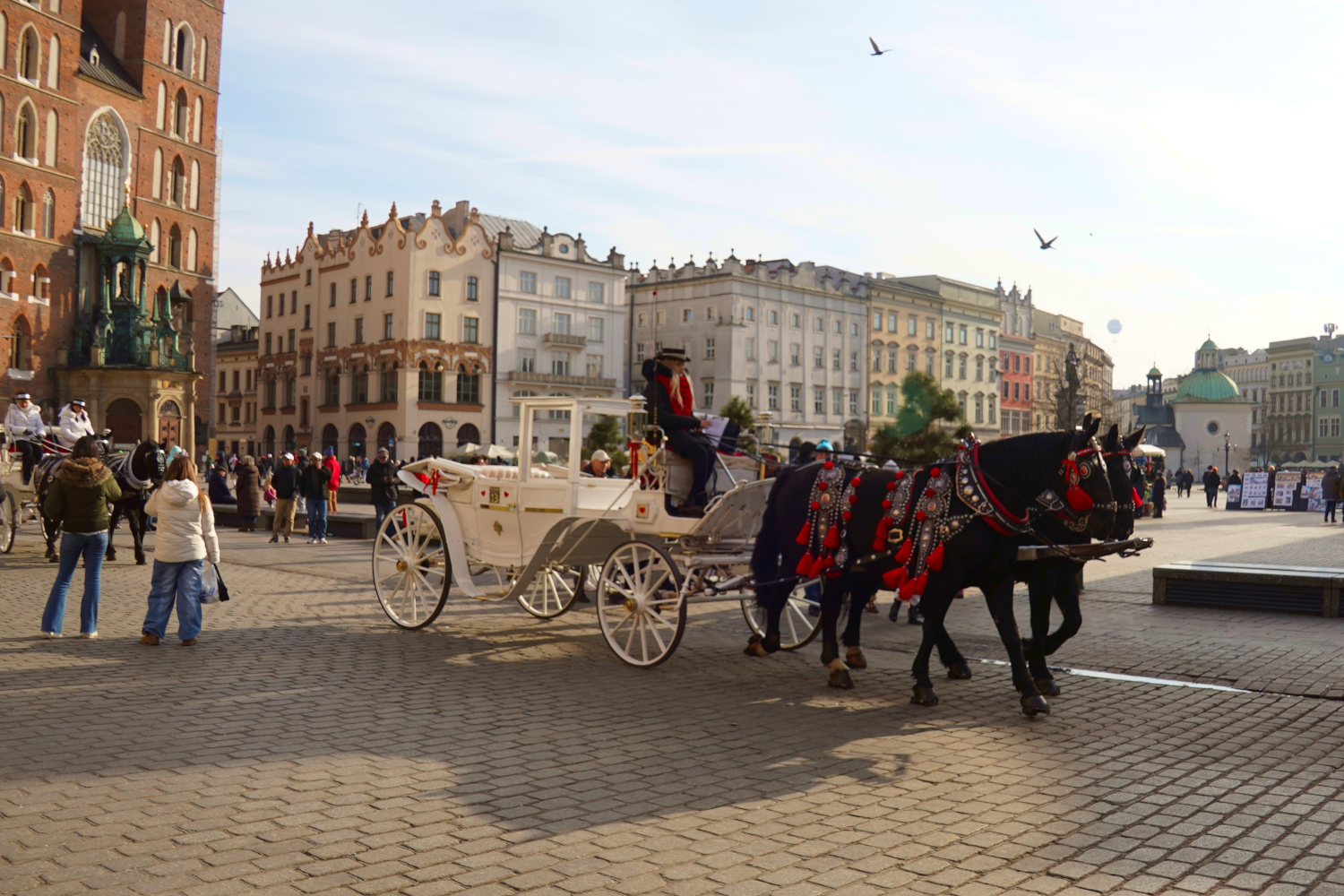
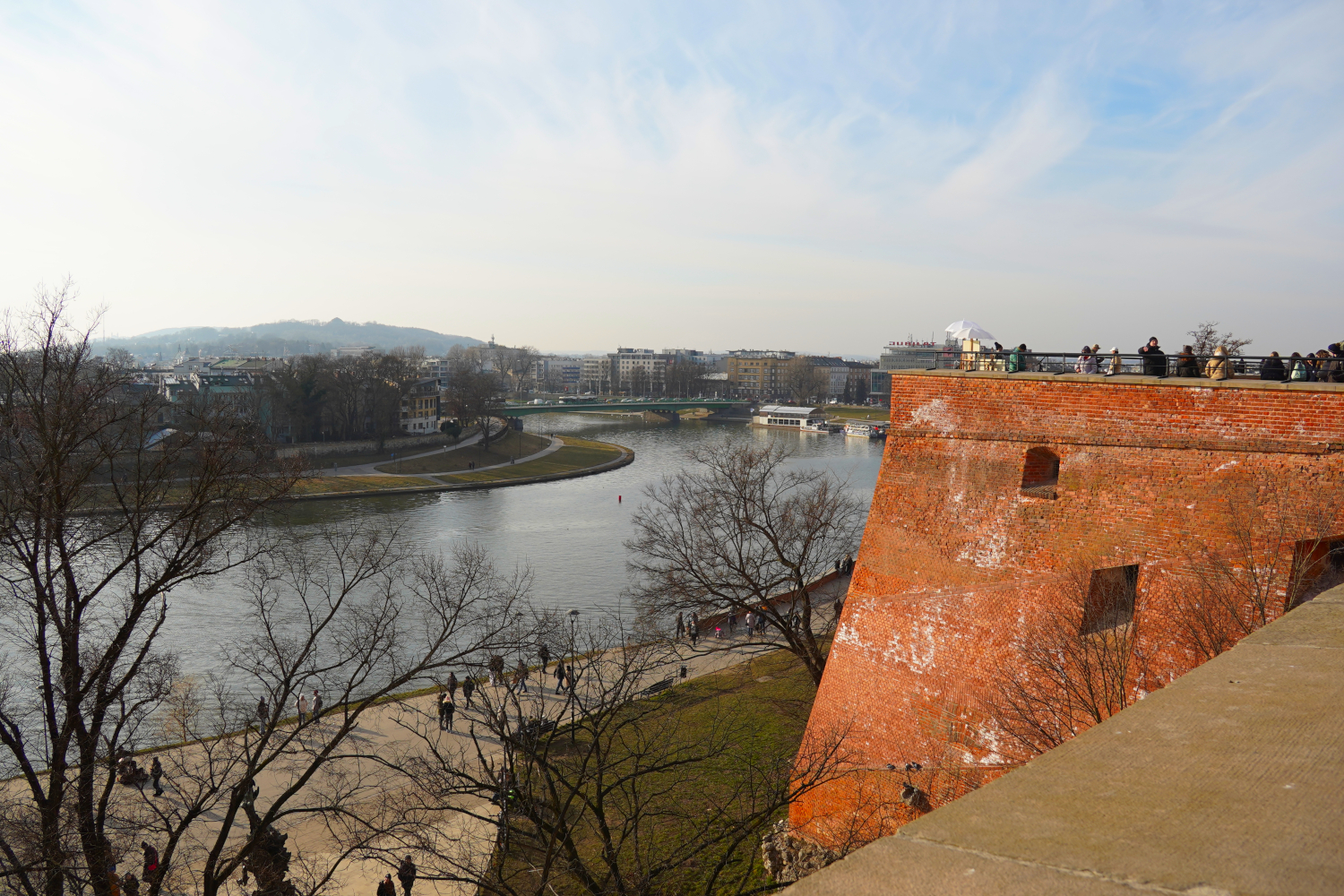
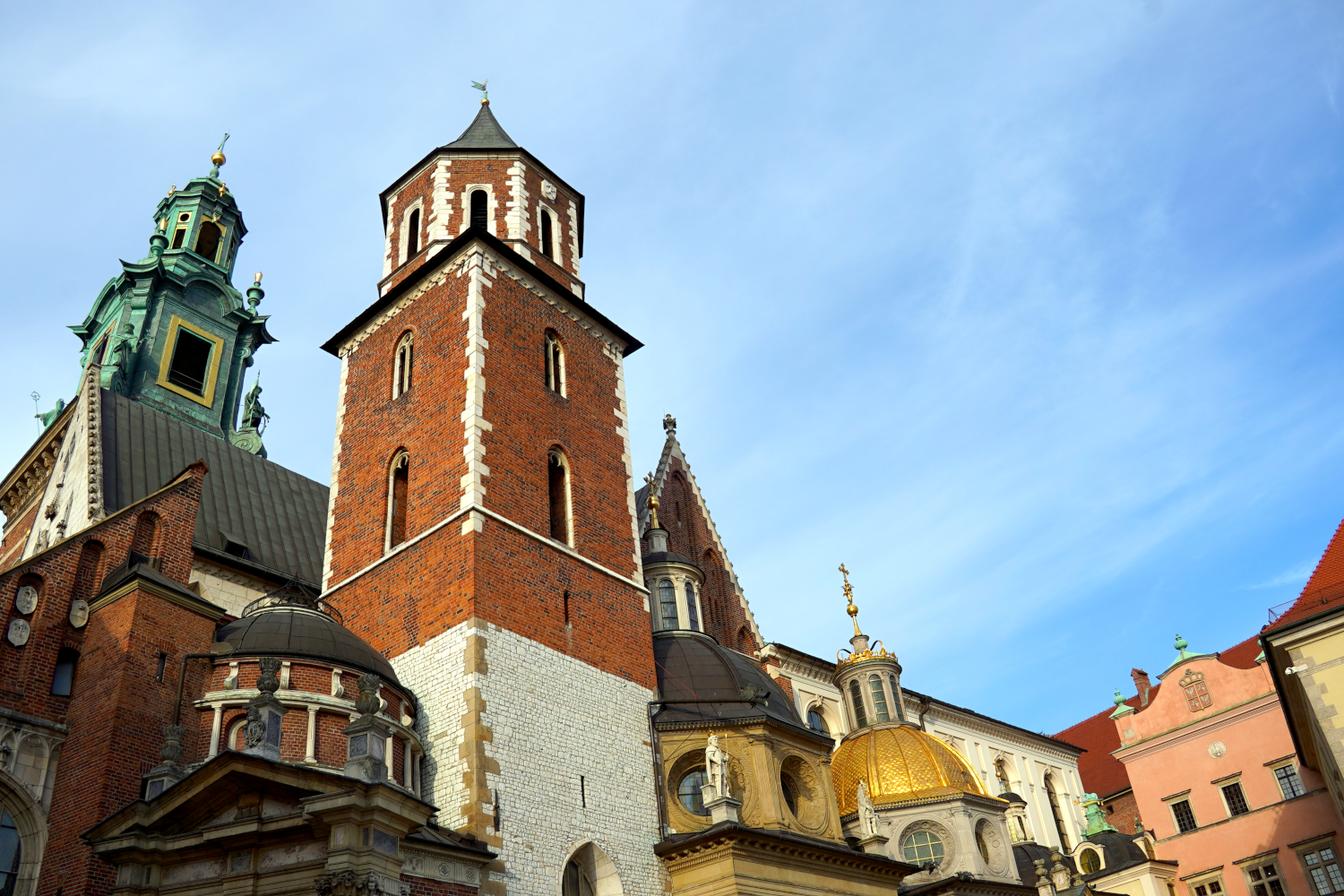

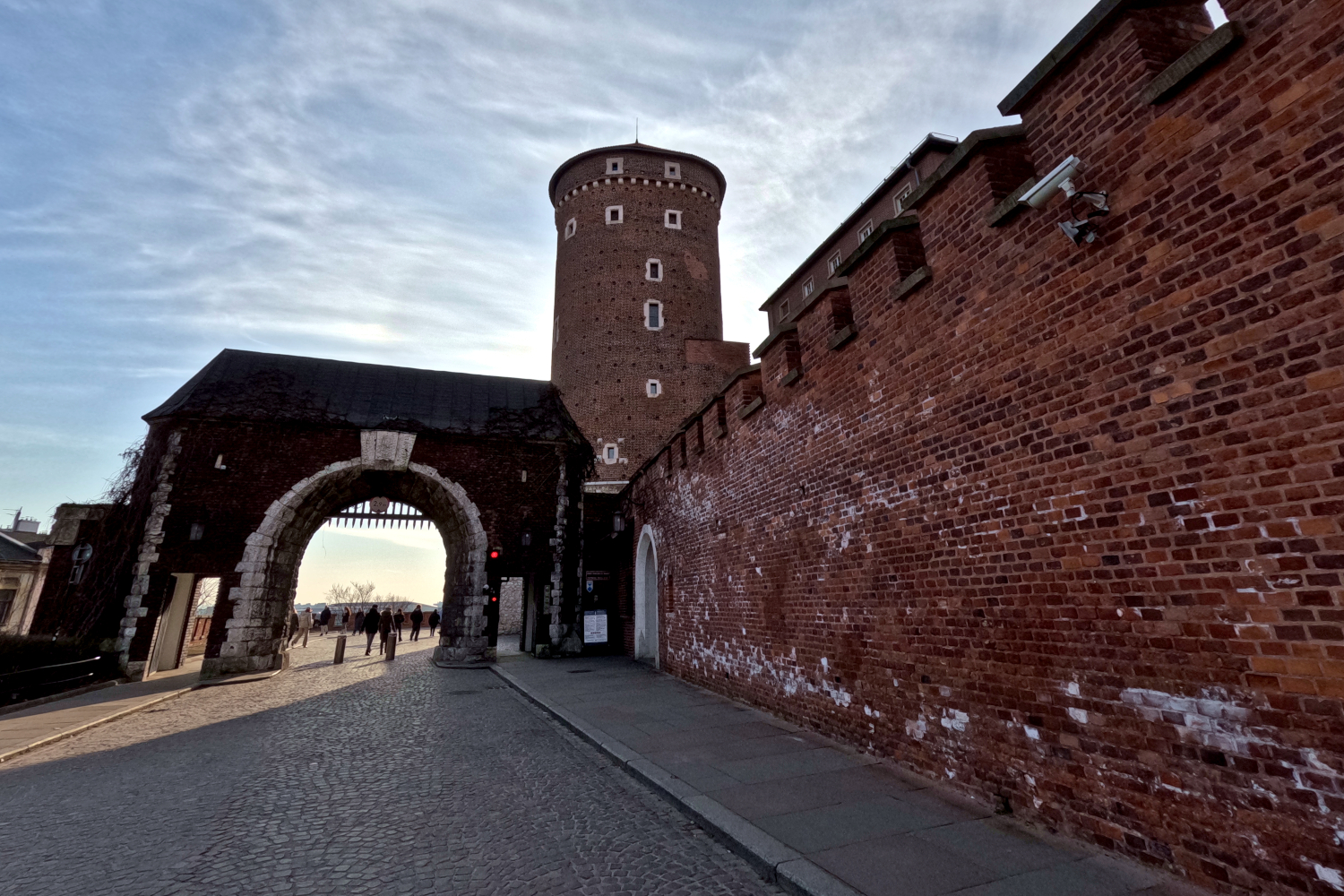
And we’re grateful that Krakow’s Old Town has been largely spared much of the devastation that resulted from various invasions and attacks through the centuries — including the Mongols and the Nazis. Warsaw was not so lucky. But Krakow still retains its medieval charm. And we hope it continues to do so for centuries to come.
Events occurred: 2/20-21/2025

 world travel with a theatrical flair
Leave a comment