

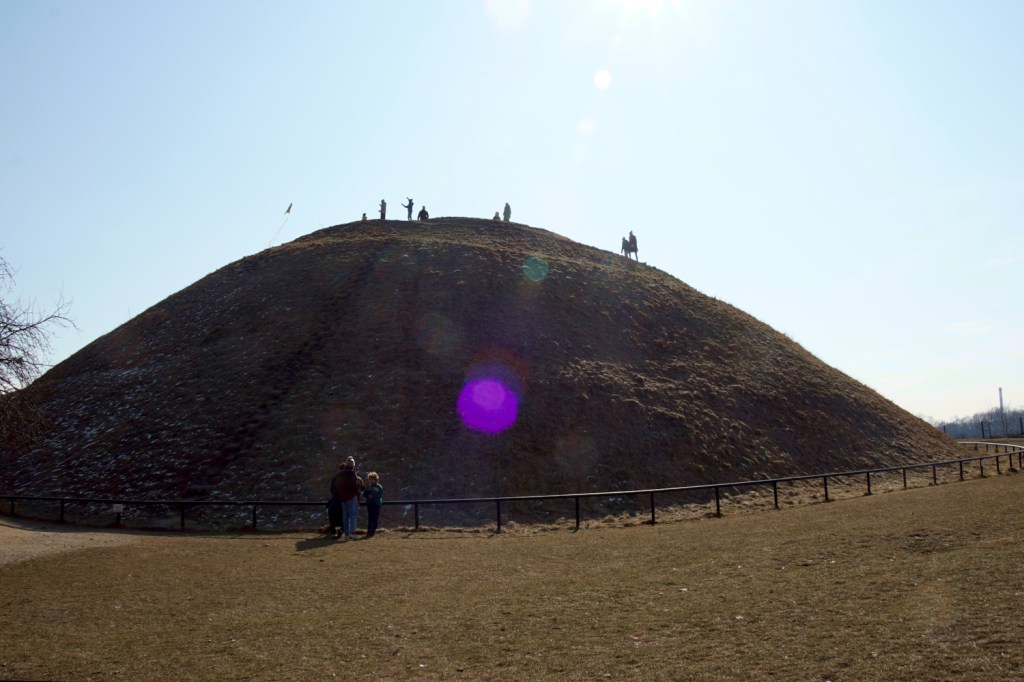
According to legend, the city of Krakow was founded by a prince/ king named Krakus, who allegedly slew the Wawel Dragon. Nobody seems to know exactly when he supposedly lived and slew; the earliest recorded mention of him was in the year 1190, but it was probably referencing oral traditions dating back centuries earlier. His supposed burial site, Krakus Mound, is equally muffled in mystery. But at least it’s easily accessible to visitors to Krakow, which we were; so we had to go check out this mysterious hill for ourselves.
Since it’s only a couple of miles away, we decide to walk there. This takes us through Kazimierz, the old Jewish quarter, and across the river into Podgorze, the Jewish ghetto. Kazimierz was once a separate city, dating back to the 14th Century. When the Nazis invaded, they relocated the Jewish residents to Podgorze. Subsequently, Kazimierz fell into disrepair, and it was not revitalized until about 30 years ago, largely due to the attention drawn to it by the movie Schindler’s List. (Oscar Schindler’s factory was located in Podgorze, and we’ll be inspecting it on another day.)
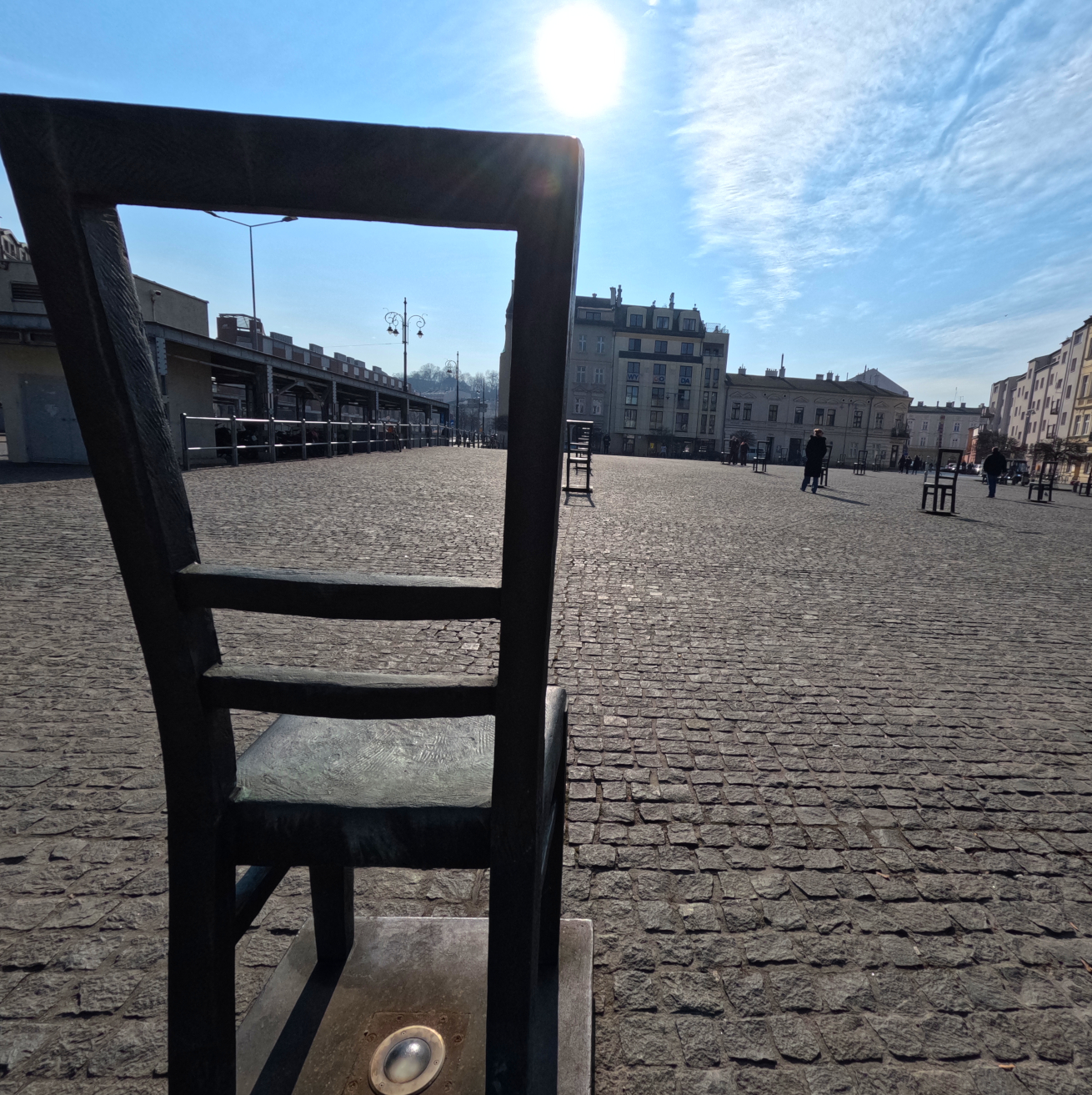
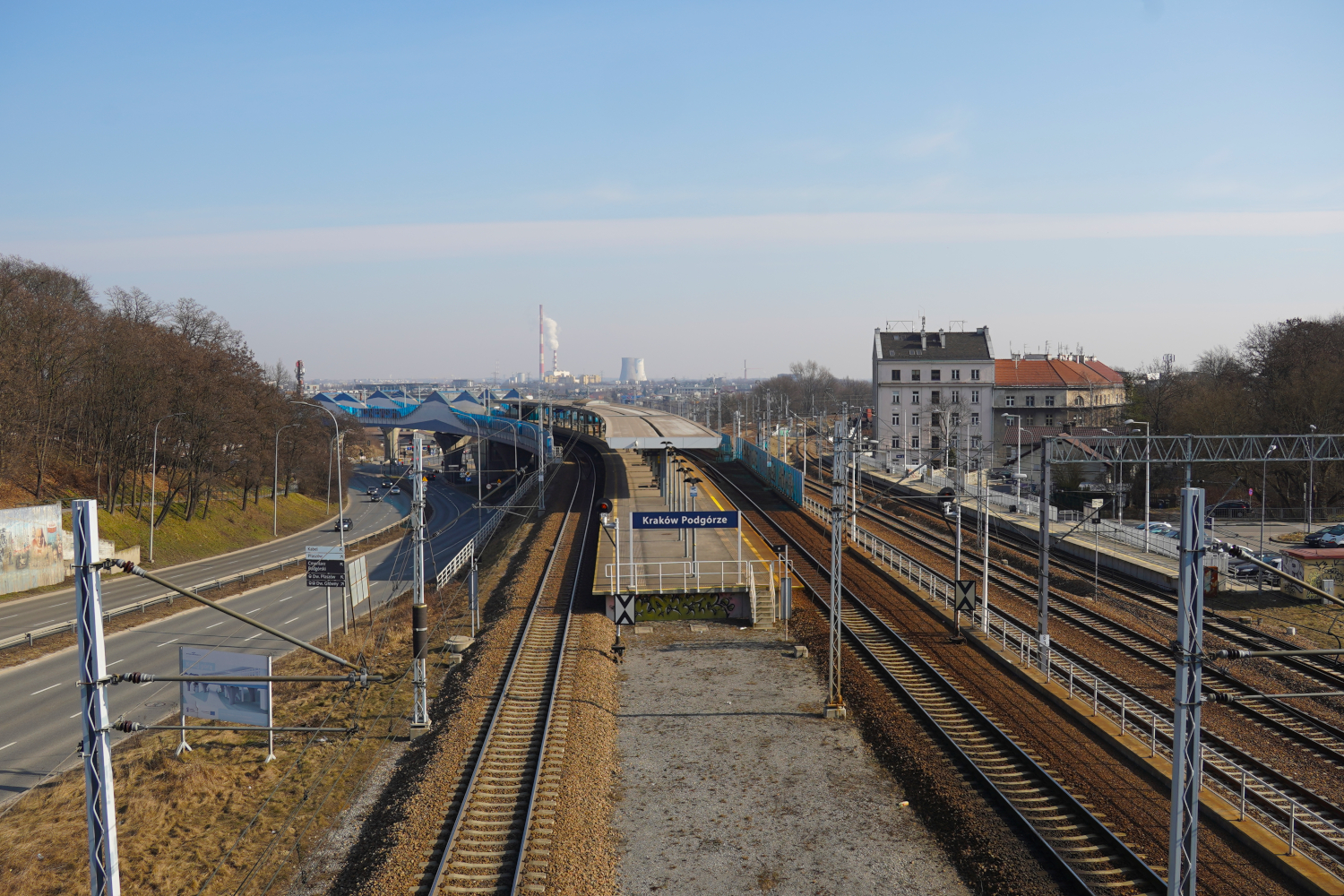

In Podgorze we pass Zgody Square, which was once a thriving marketplace and continued to be a gathering hub for the occupants of the Jewish ghetto. The square is home to the Under the Eagle Pharmacy, which was the only pharmacy open in the ghetto during the Nazi occupation. The pharmacy saved lives by offering free medication, and dispensing hair dye for older Jews to disguise their age, and sedatives that would cause children to sleep and thereby avoid detection. Today, the site is a museum.
More conspicuously, the square is the location of the Empty Chairs Memorial — which brings to mind a similar memorial in Oklahoma City. This installation, unveiled in 2005, consists of 70 bronze chairs, each representing approximately 1000 local victims of the holocaust. A chair is an especially appropriate emblem, since the square is where the Jewish detainees in the ghetto discarded their furniture. At dusk, the plaza is illuminated with soft lighting, causing the chairs to cast appropriately eerie shadows.
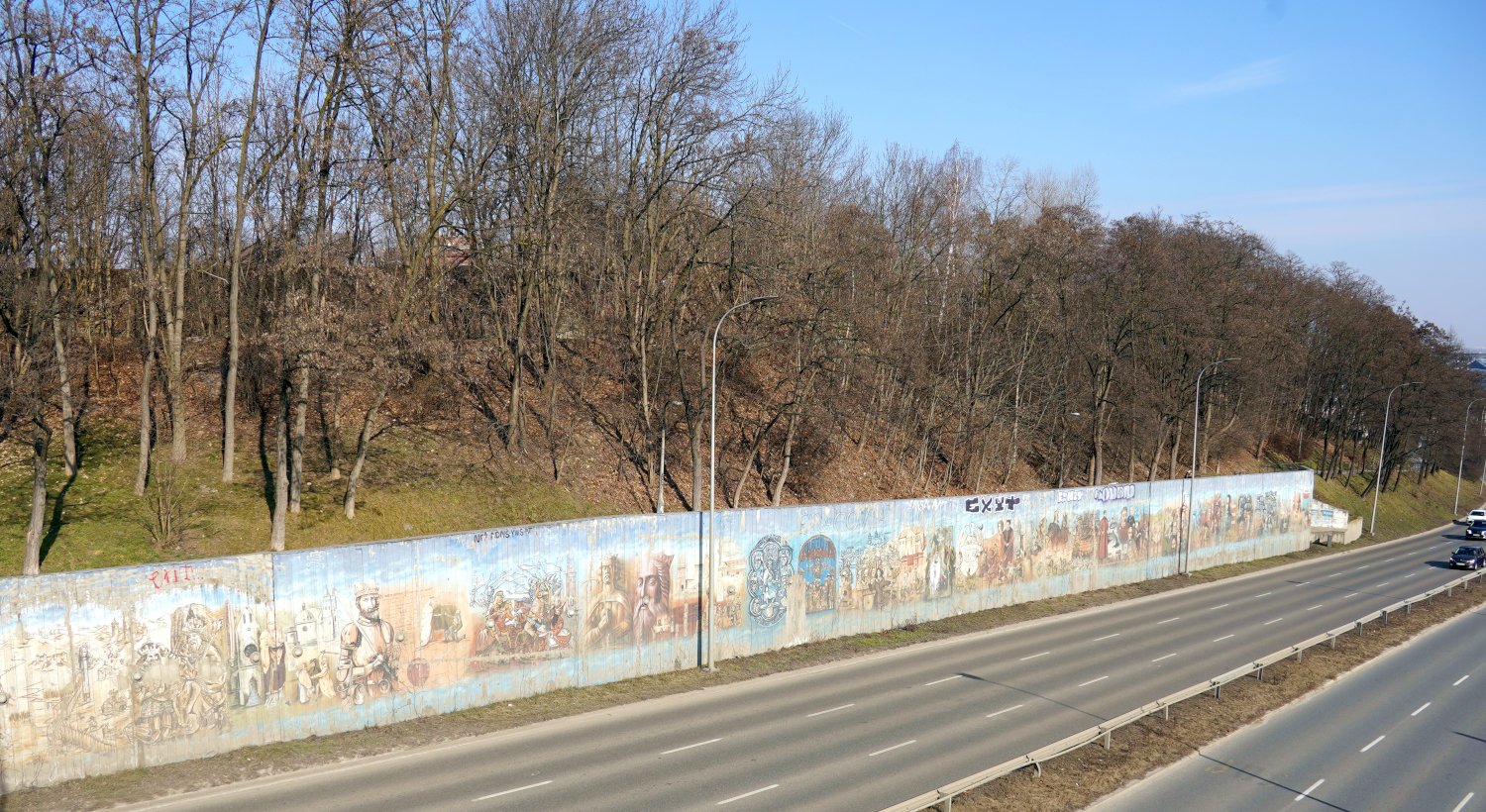
From there it’s just a short distance, past some superbly muraled walls, to Krakus Mound. And the mound is… well, moundish and moundy. It’s a medium-sized hill (52 feet high, and about 200 feet in diameter). A very symmetrical hill. And a hill with not many other features to distinguish it. But the real distinction is its history and lore, as evidenced by some of the archaeology buried within it. (And we’ll be learning more about that on a subsequent visit to a nearby museum). Not only is it uncertain whether this tumulus is indeed the burial site of a possibly real king, or when he possibly may have been really buried here, but apparently it was already here before he may have been buried in it. It may have been built as long as 2200 years ago, and used for pagan rituals.
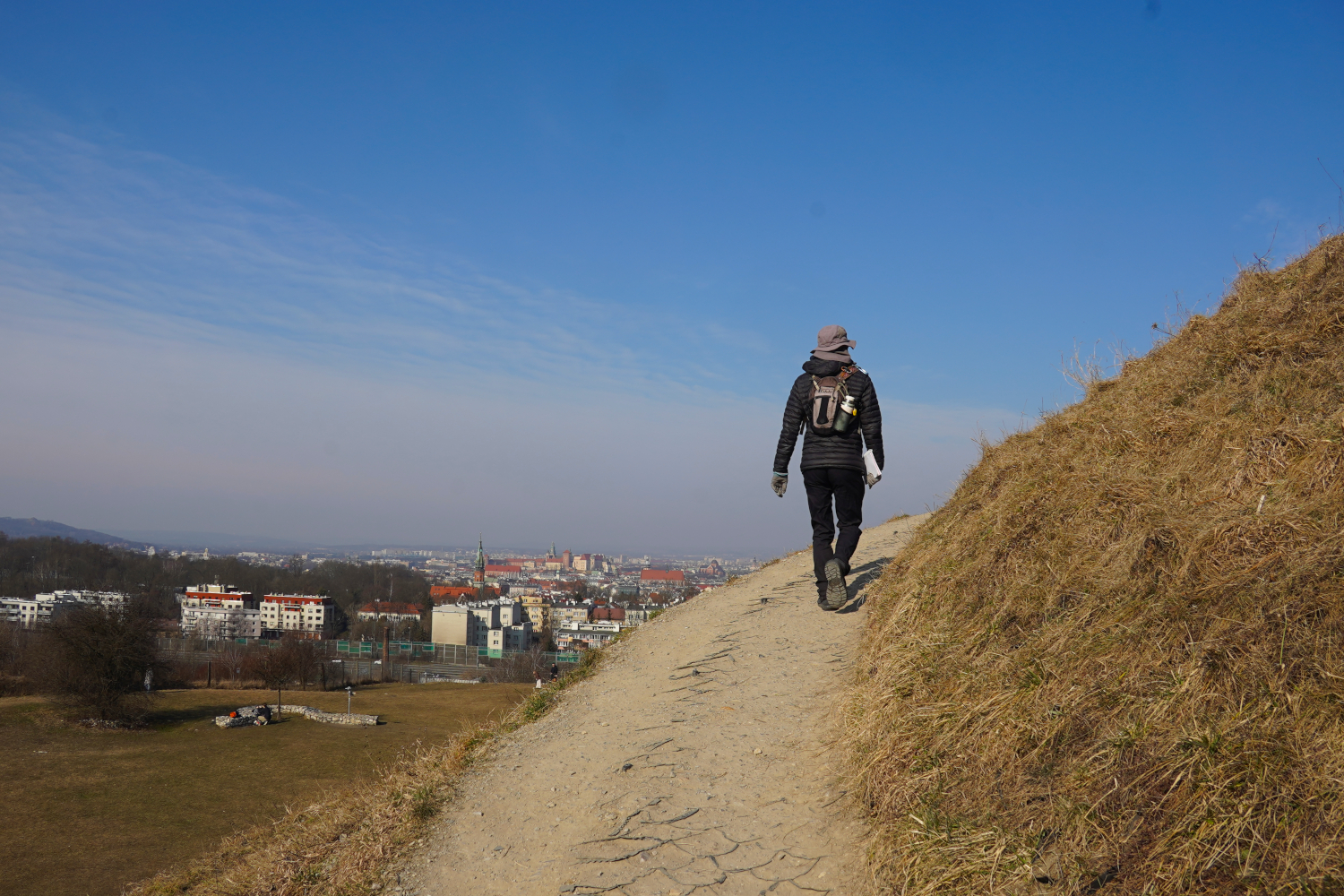

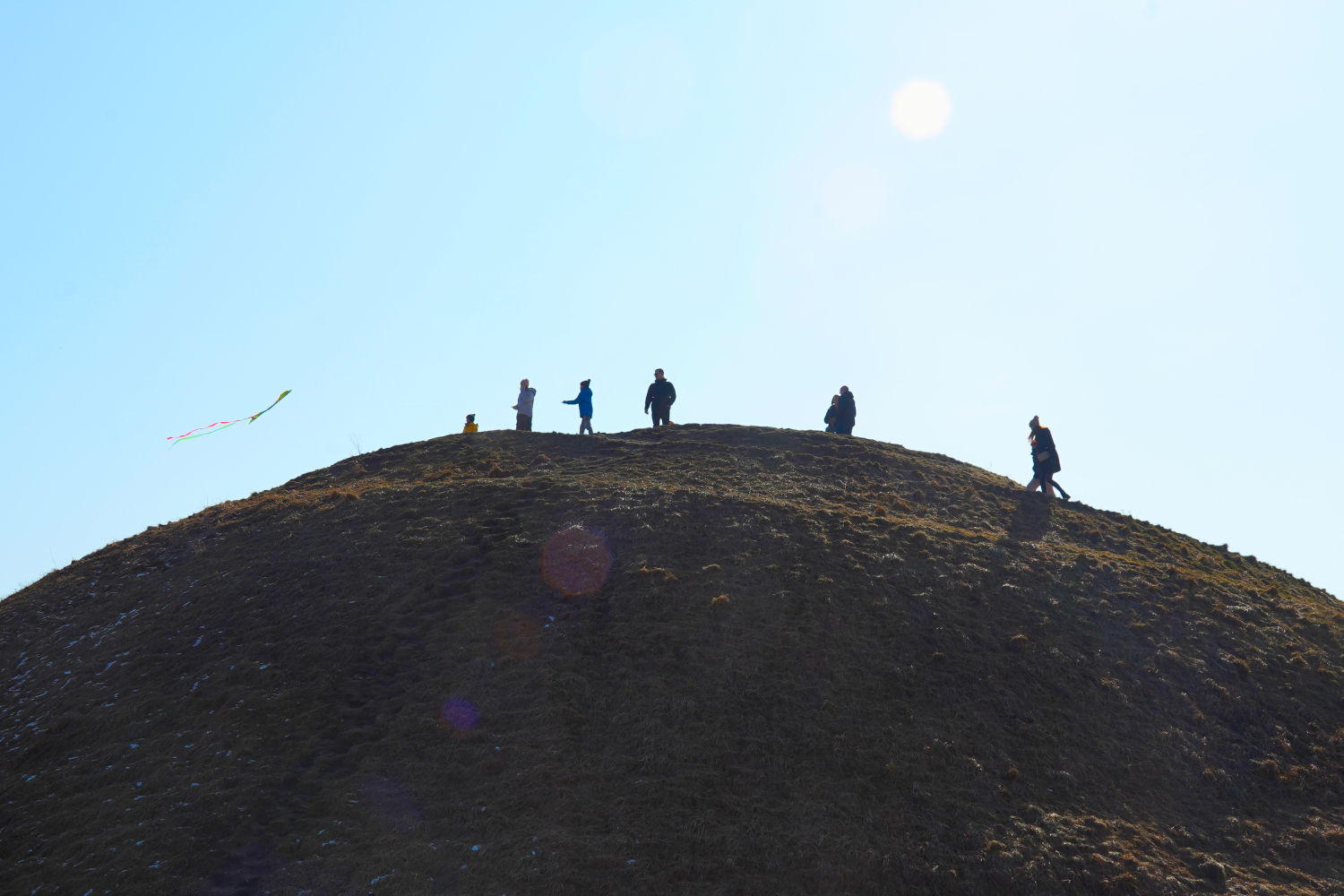

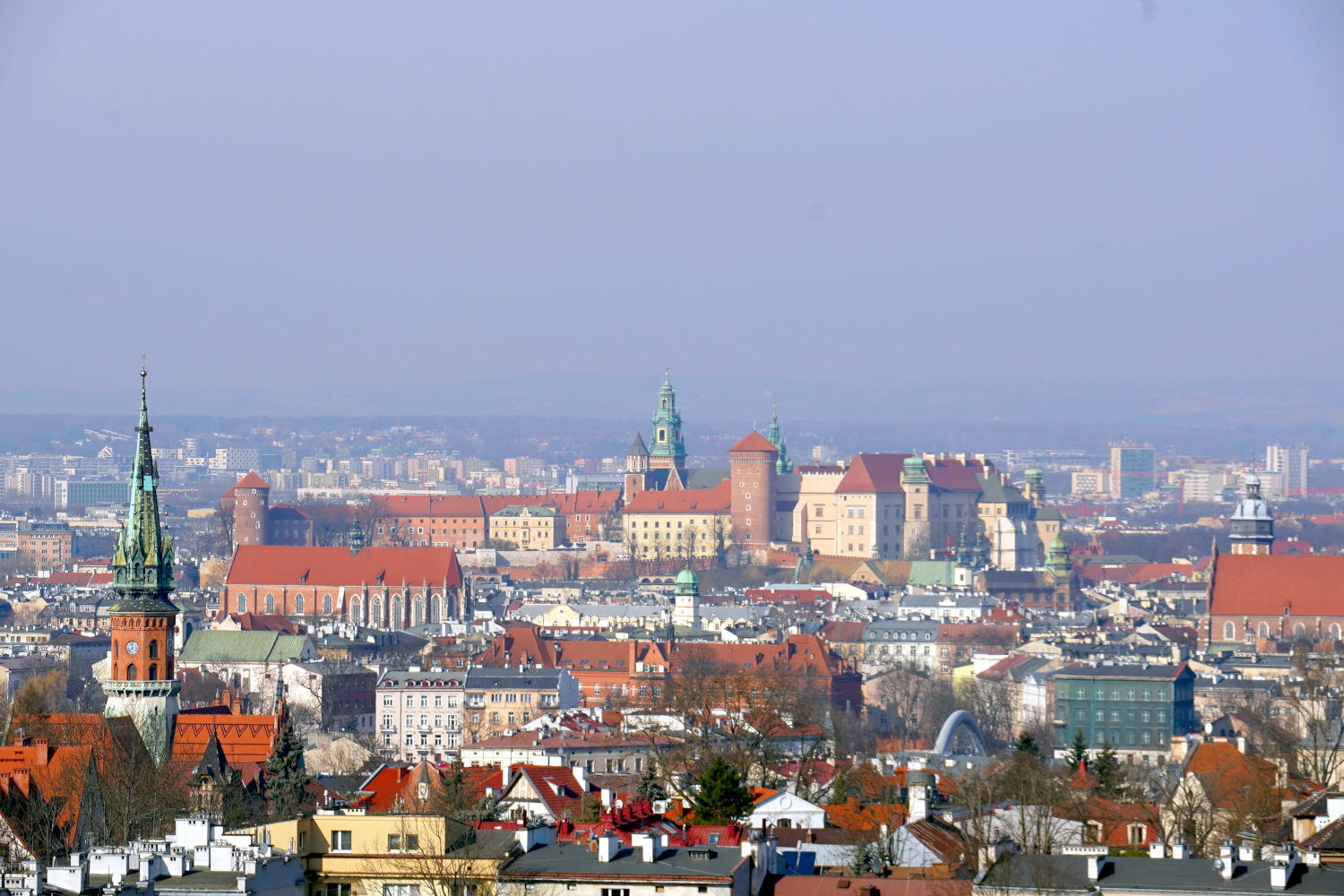
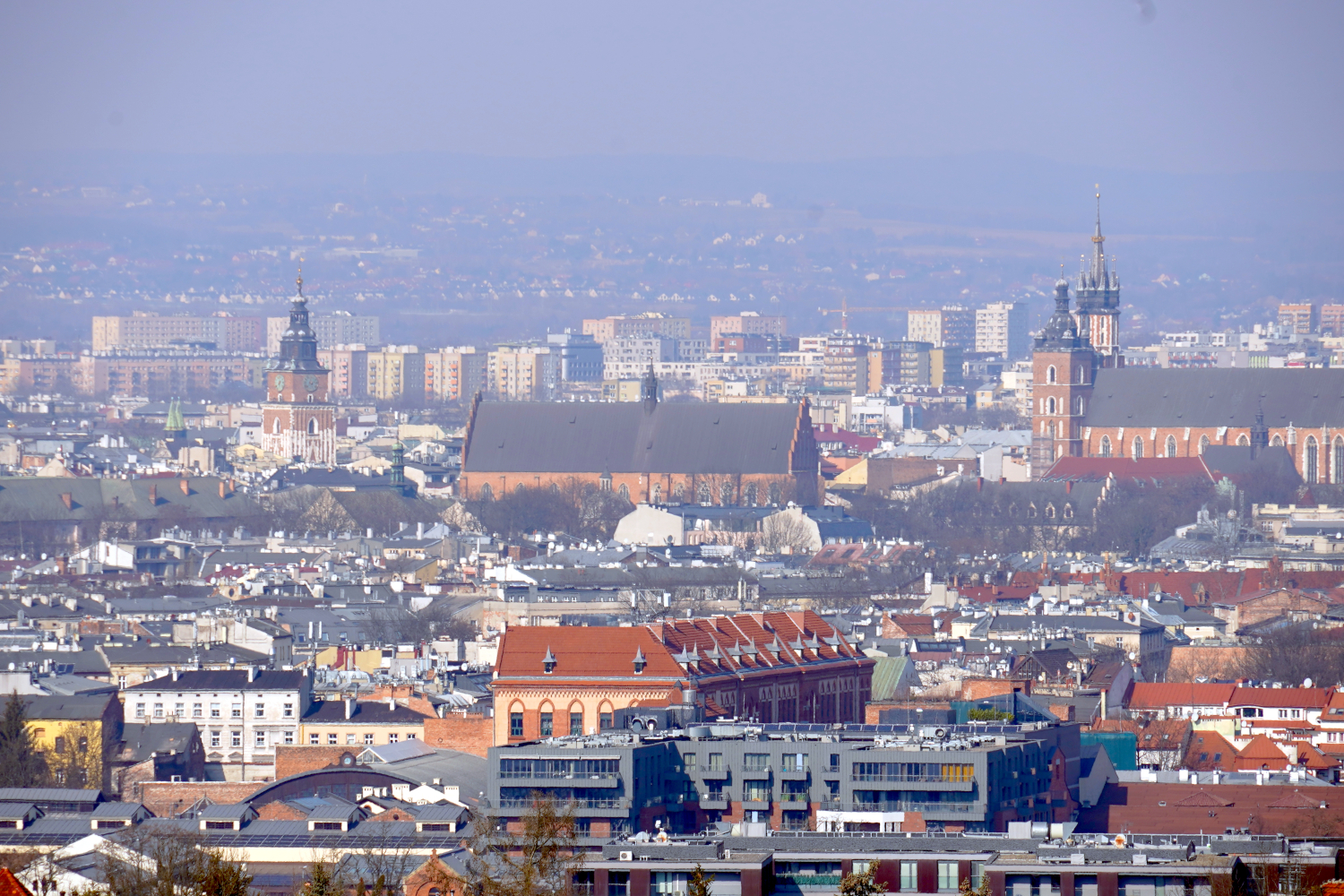
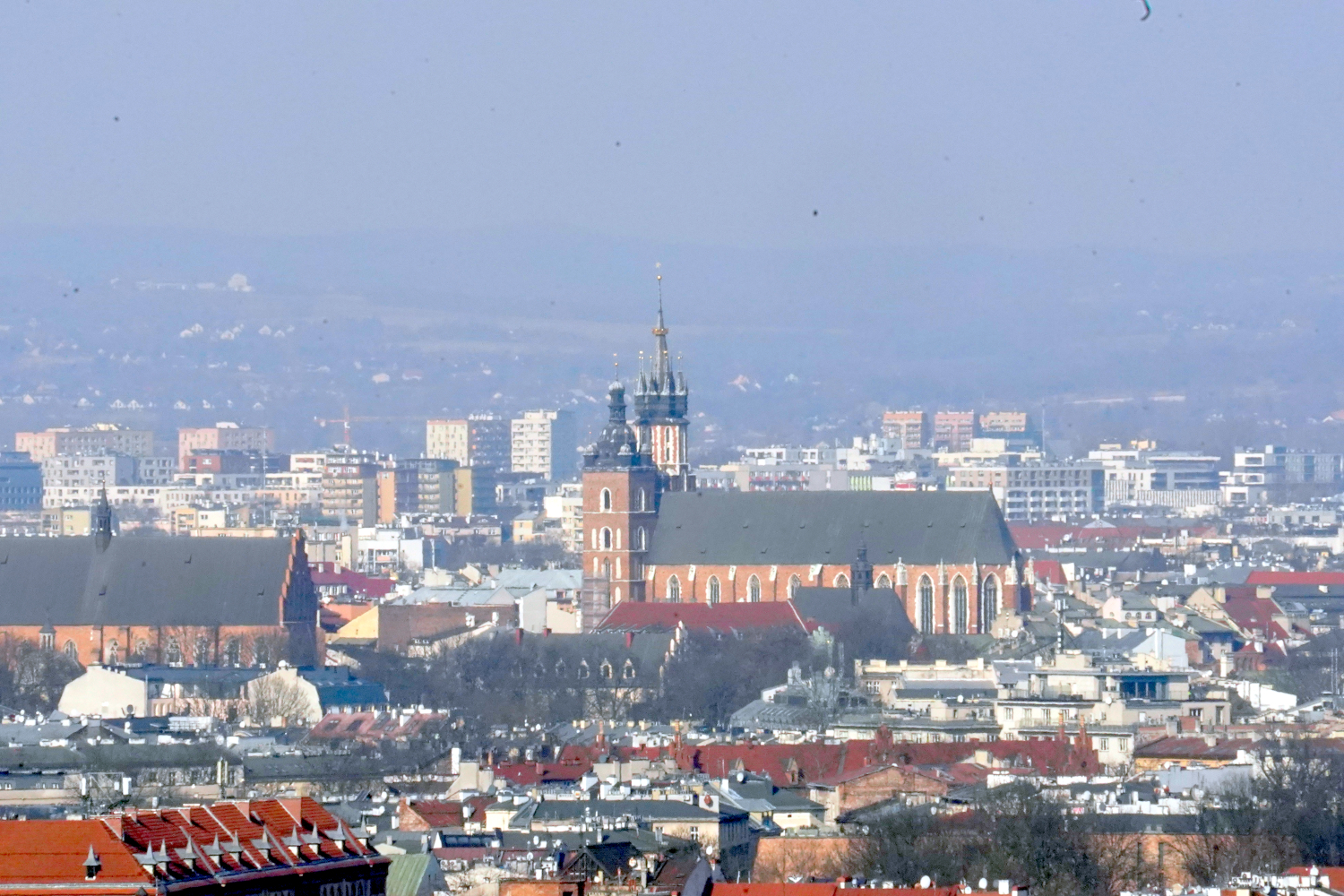
Whatever its original purpose, it’s now a prime lookout. The top offers one of the best 360 degree views of the city, and is an especially good viewing post at sunset; you can see the Vistula River, modern Krakow, and Krakow Old Town with its distinctive spires of St. Mary’s Basilica, among other things. And you can get a visual taste of Liban Quarry, right next door. This is a former limestone quarry, which Nazis mined with forced labor. Half a century later, it was the site of a replica concentration camp constructed as a set for the filming of Schindler’s List. The tops of the watchtowers, visible over trees that have sprouted up since Speilberg and company were here, are just visible enough to entice you to come on down and have a look-see. (And yes indeed, we will be exploring it at close range later.)
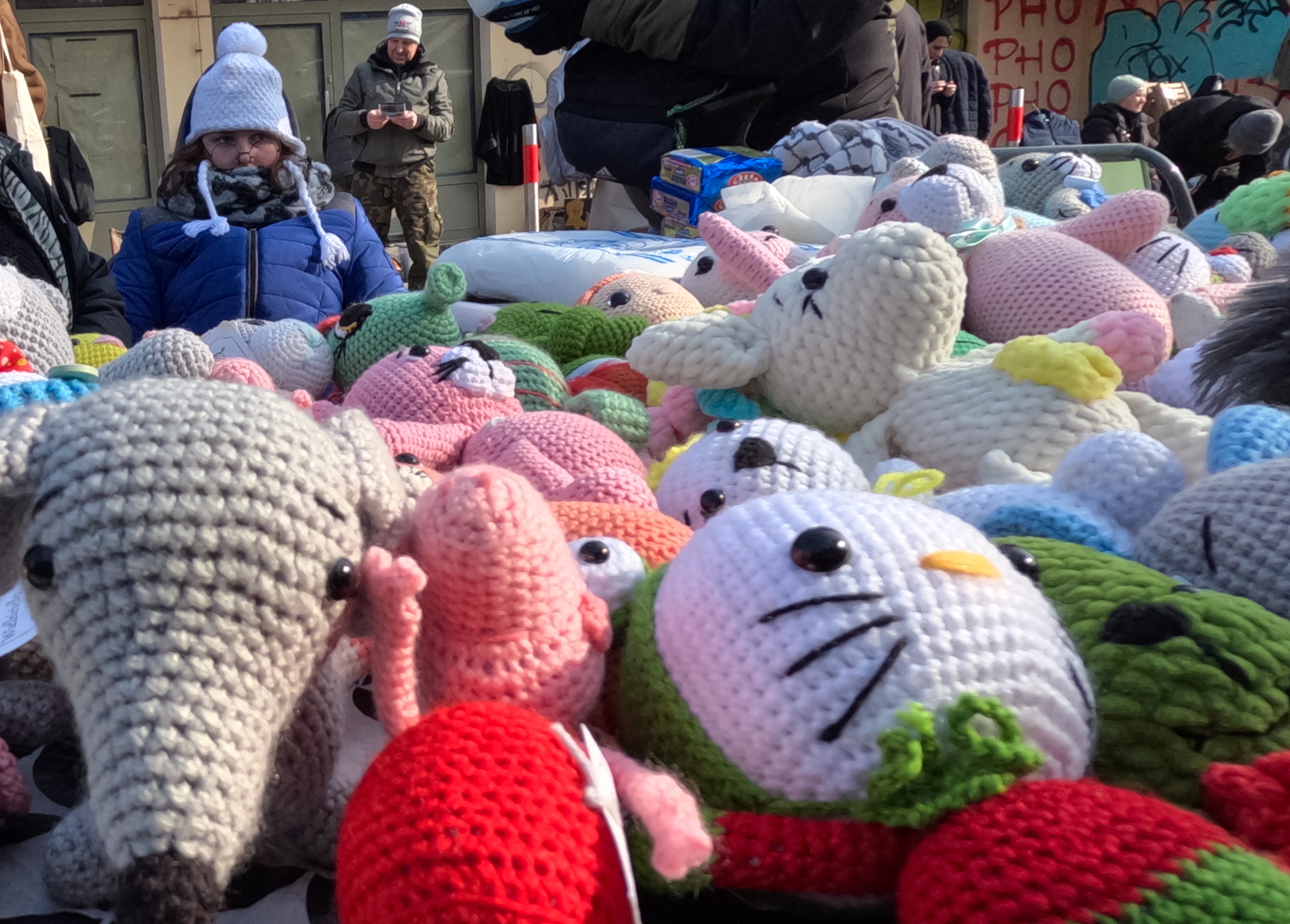
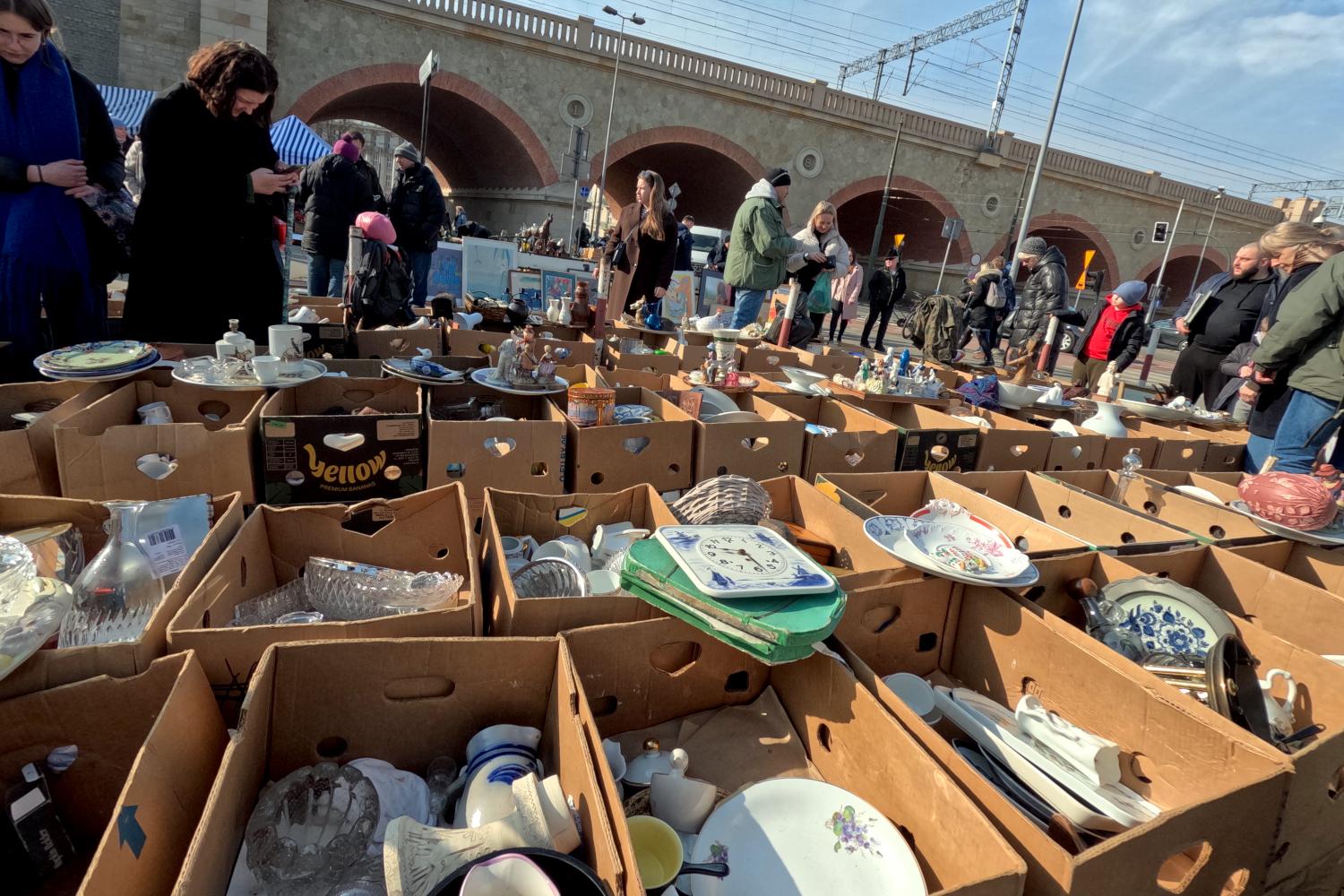
Heading back home after our eye-opening stroll, we come to a sort of flea market that apparently is in operation every weekend. One particular stall causes Dennis to drool and whine: it sells vintage American magazines, such as Life and Look, dating back to the Sixties and even earlier. He would love to scoop up a whole wheelbarrow for them, but his backpack is already packed too tightly to insert even so much as a map. This market is one of the few things open today, this being Sunday. As in Vienna, Krakow rolls up its sidewalks on Sunday. Even in the mall, everything is shuttered. Well, except for the bathrooms, which we’re grateful for.

So we’ve put in a day, or at least a big part of one, getting a feel for the history of Kazimierz and Podgorze, and have whetted our appetites to dig in deeper. And that’s what we’ll be doing on later days, with visits to Liban Quarry, Schindler’s Factory, and the Museum Of Podgorze. See you there.

 world travel with a theatrical flair
Leave a comment